The Lumberjack


Students Serving The Cal Poly Humboldt Campus and Community Since 1929

Tag: government shutdown

  • Temporary solution to bigger problem

    Temporary solution to bigger problem

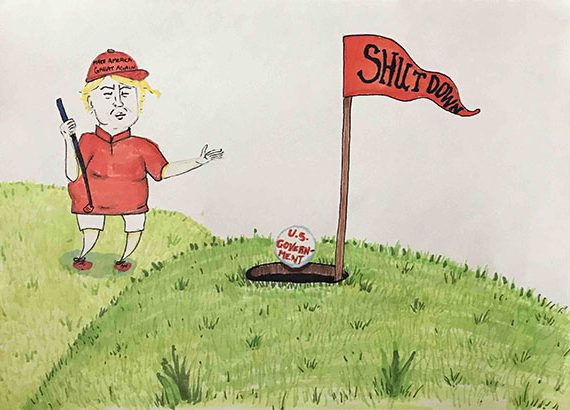
    Longest government shutdown in U.S. history ends temporarily

    After 35 days of the United States’ longest government shutdown, the President has reopened it conditionally. The government reopened today and will be open for exactly three weeks due to a deal the President has proposed.

    If within the 21 days Republicans and Democrats cannot supply a solution to the supposed drug issue at the southern border then the President will continue with his will. In the past year the President proposed the idea of building a wall at the southern border to primarily keep immigrants out from Mexico.

    During this time of the government being open 800,000 government employees will be receiving back pay for any checks that weren’t received. However, as for federal contractors it is not yet clear whether the same can be said for them.

    If built, this wall will cost approximately $5.7 billion. The President plans to get these funds from various different departments throughout the government. As for now, the government has reopened and the wall is something to worry about in the next 21 days, but today all Americans alike rejoice.

  • OPINION: The shutdown of the government helps no one

    OPINION: The shutdown of the government helps no one

    This government shutdown is out of control and it needs to end

    The Government Shutdown of 2018-2019 is the longest shutdown in US history, now being over a month since the shutdown has started. This is due to President Donald Trump’s decision to shut down the government for not funding the Mexican border wall that he’s promised since his campaign. President Trump has promised to prolong the shutdown, going so far as to suggest a year-long shutdown.

    There’s a lot of blame being cast between Democrats and Republicans. Yet at the end of the day, the most affected are the government workers who are going to work without pay and those who rely on government aid like military benefits and food stamps.

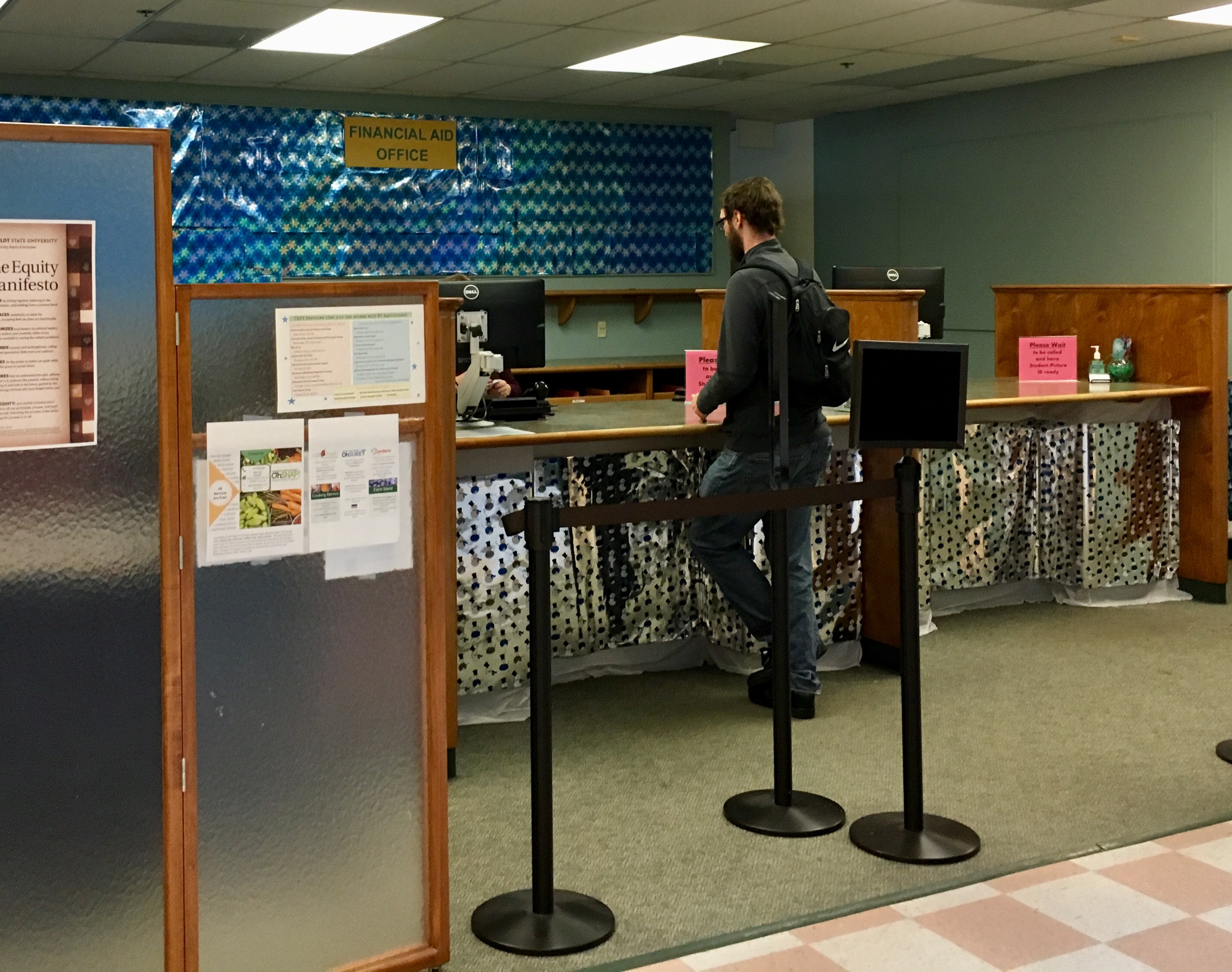
    For students, financial aid disbursement is not affected by the shutdown. However there have already been instances of schools being affected by the government shutdown. Signing up for financial aid requires documents from the IRS, however the department that oversees those documents is shutdown.

    U.S. citizens will also still need to pay their taxes this year despite the shutdown. As a result of the shutdown, the IRS is short on staff. This will lead to longer waits and people are expecting their tax refunds to be late. The IRS has issued an order to have employees work without pay during the tax filing season starting Jan. 28.

    Those who rely on the Supplemental Nutrition Assistance Program will be receiving their food stamps early, around February. The downside is recipients will have to budget what they receive, as there’s no clear indication when recipients will receive their next set of stamps.

    Many national parks have been closed due to shortage of staff, human waste flooding the area and even vandalism. The National Parks Service website does list all the closures and conditions of national parks, but even their website is not up to date because of the shutdown.

    For those who are expecting to take a flight, there is a possibility of waiting in longer lines to enter TSA security checkpoints. Many airports are short on staff because TSA staff are expected to work without pay. While some are promised to receive bonus pay during the government shutdown, many TSA staff are calling in sick.

    Many people from the government have been opposed to the shutdown. Even some Republican members have voiced their concerns. Lindsey Graham (R-South Carolina) and Lamar Alexander (R-Tennessee) have called for a temporary reopening of the government to open negotiations for the wall. It’s surprising, especially from Lindsey Graham, who has been loyal to Trump’s decisions.

    Trump has already signed a bill into law to ensure that government workers who worked on days during the government shutdown are paid for their work. While this is a good thing for those who are working without pay, they still won’t receive pay until after the shutdown ends.

    The only way for a solution to be reached is for negotiations between Donald Trump and the Democratic house, but from what happened on the Jan. 15 and Trump’s offer being rejected, it looks like there isn’t a sight for resolving citizen’s woes. It’s time for Trump to get off his high horse and open the government. He was put into office to help protect and lead the country, but with his actions he is holding the entire country hostage to get what he wants.

  • FAFSA payments remain unaffected during government shutdown

    FAFSA payments remain unaffected during government shutdown

    With the current federal government shutdown looking to continue indefinitely, financial aid disbursements should remain unaffected for now. However, according to Peggy Metzger, director of the financial aid office at HSU, about 50 to 60 students may see some setbacks.

    “The biggest impact is the students selected for verification and not being able to get information from the IRS,” Metzger said.

    The first financial aid disbursements are set to be released on Monday Jan. 14. About 30% of the students who file for financial aid must go through a verification process through the IRS, to ensure that they need the funds they claim. Metzger said that the Department of Education has recently loosened their regulations and that the verification process should be easier.

    “We can work with any students that may need the help,” Metzger said. “As long as the Federal Student Aid office stays open we should be fine. In previous shutdowns, the Department of Education has always stayed open.”

    Operators in the HSU financial aid office have said that they have received phone calls from students inquiring about any possible effects from the shutdown, but the university has yet to issue any sort of formal statement. The lack of notice from the university has some students worried about what may be happening with their disbursements.

    “The university hasn’t said anything, I haven’t got their usual emails,” said Anthony Julien, a senior majoring in zoology. “We got the email that something was due, but we didn’t get anything about [disbursements] being held up. I am concerned about it since the shutdown is going to continue.”

    Steven Schafer, an environmental science and monitoring junior, is also concerned about the shutdown’s effects.

    “I need my money to go to school,” Schafer said. “I need FAFSA. The university probably isn’t going to release a statement. I’m not optimistic about it to say the least.”

    Metzger, who has been employed at HSU for 17 years, said she has been out of the office doing work with the admissions office lately and had not seen the need to release a statement.

    “I had not thought about it, but it may not be a bad idea,” Metzger said. “I am always cautious about causing more questions than are necessary and more worry when there doesn’t need to be.”

    When questioned if the university was doing enough to let students know what was going on, Schafer had this to say.

    “No, they are definitely not doing enough,” Schafer said. “It is so stupid.”

  • Government shutdowns: uncertainty as a price for democracy?

    Government shutdowns: uncertainty as a price for democracy?

    The showcase of the United States’ unique democratic system happened on Jan. 20. It marked the one-year anniversary of a reality TV star’s presidential inauguration. It also highlighted the country’s freedom of speech in the form of a nationwide women’s rights demonstration, as well as the beginning of a short-lived government shutdown.

    Professor Stephanie Burkhalter, a political science professor at HSU who studies communication strategies between Congress and the president, provides more insights on the phenomena of government shutdowns.

    What is a government shutdown?

    A government shutdown occurs when the House of Representatives and the Senate cannot pass an appropriations bill — the technical name for a bill that funds the government agencies — that the president will sign.

    Shutdowns are a uniquely U.S. government thing, because of our constitution, the filibuster rule and our two-party system. The two parties have become increasingly polarized on policy issues and more willing to have a shutdown if they cannot get the policy changes that they think are important.

    What caused this previous government shutdown and why was it so short?

    This answer depends on whom you ask. The consensus from mainstream media sources is that the Senate Democrats caused the shutdown by filibustering and demanding that the Senate markup — the official term for editing a bill — and debate an immigration bill that would create a pathway to citizenship for DACA recipients, known as “Dreamers.”

    Senate Democrats agreed to fund the government through Feb. 8 in exchange for Senate Majority Leader Mitch McConnell’s promise that the Senate will take up an immigration bill in the next two weeks.

    In this shutdown, Democrats were also able to negotiate six years of funding for the Children’s Health Insurance Program. House Republicans had not funded this program in their version of the permanent appropriations bill.

    What does a shutdown say about the administration of President Trump?

    From my understanding, President Trump was ready to make a deal on Jan. 19 to avoid a shutdown, but his advisers scuttled the deal, because they believed that this deal was not tough enough on immigration policy.

    So, this shutdown says less about Trump and more about the partisan politics plaguing our nation’s capital.

    What could happen around Feb. 8?

    [On Feb. 8], the Senate will reconsider a permanent spending bill. If Democrats again decide to filibuster, another shutdown could occur if a deal cannot be reached between Republicans and Democrats on immigration policy.

    Government employees, such as those who work in the National Park Service and the Bureau of Land Management, will not be paid.

    ——–

    Eric Nelson, the manager of Humboldt Wildlife Refuge, an organization managed by U.S. Fish and Wildlife Service, detailed the obstacles a shutdown would impose on the refuge’s operations.

    “In 2013, there was a shutdown that lasted 13 days, I believe,” Nelson said. “Probably the most challenging part of a shutdown is dealing with the uncertainty, and what it can do to schedules and scheduled work.”

    Because shutdowns are often prevented at the last minute, preparing for them is difficult. Fortunately, most shutdowns occurred outside of the spring/summer restoration work season and did not pose big problems for the refuge’s projects.

    If a shutdown occurs on Feb. 8, the refuge will be closed to most of the public. However, independent researchers working on the refuge will be allowed to continue their work, as long as they can access their research site without the help of a federal employee.

    Nelson added that if the shutdown goes on for three to four weeks, the financial challenge of not getting paid will become an issue.

    “Ironically, Congressional members do get paid during a shutdown,” Nelson said.

    Burkhalter also recognizes that a shutdown’s impact is affected by its length.

    “The effects of a shutdown are felt the longer it continues,” Burkhalter said. “Let’s hope that the Senate can make a deal on immigration policy, a permanent spending measure can be passed and we can feel secure that our government is funded through this fiscal year.”

    On the potential of shutdowns that may occur beyond Feb. 8, Burkhalter said that they could happen again when Congress tries to pass appropriate measures.

    “I would not be surprised if a few more shutdowns are headed our way in the next few years,” Burkhalter said.