The Lumberjack


Students Serving The Cal Poly Humboldt Campus and Community Since 1929

Tag: hate speech

  • Jewish Student Group is stronger than hate

    Jewish Student Group is stronger than hate

    by Valen Lambert and Dezmond Remington

    In the lonely strip of land that is the North Coast, Arcata is famed for being a haven for tolerance and relative diversity. Cal Poly Humboldt in particular is a shelter for people of all creeds and beliefs. However, it isn’t immune to hatred. 

    According to the University Police Department, an unidentified suspect vandalized the sukkah set up on the UC quad with an anti-semitic message at around 1:30 pm on Oct. 9. The sukkah, set up for eight days during the Jewish holiday of Sukkot, symbolizes the Jewish people’s dependence on God. No update on the suspect has been reported.

    Student response was immediate. The rabbi for the Jewish Student Group, Chabad took the sukkah down immediately when they realized what had happened. Members of the club were disappointed. President Noach Guttman, who had attended a Jewish private school his whole life, said it was his first time experiencing anti-semitic hate speech ever. 

    “I’ve only found interested people,” Guttman said. “They [say things] like, ‘Hey man, I like your yarmulke.’ I’m like, sweet… I was just disappointed that this happened the day after the largest Jewish massacre since the Holocaust [referring to the Oct. 7 bombing of Israel by Hamas]. That’s what upsets me the most.”

    Despite the act of hatred, Guttman does not have plans to return the favor.

    “I hold no hate for this person whatsoever,” Guttman said. “I truly believe they’re just misinformed… the sukkah has no connection to the state of Israel. It’s a solely Jewish structure… if they understood the gravity of Hamas murdering [about] 1,400 people, I feel like they would have the respect to not say a message like this.”

    Guttman believes that the university has done a good job at supporting the Jewish Student Group through this time, with staff reaching out to Guttman and other Jewish students. Administrators worked with the rabbi to craft the email sent out on Oct. 10. 

    “In keeping with Cal Poly Humboldt’s commitment to maintaining the safety of our campus community, the University has a zero tolerance policy for acts of hate or discrimination against anyone, no matter who you are and where you come from,” said Associate Vice President of Student Success and Dean of Students, Mitch Mitchell. “The incident is an unfortunate reminder that world events often impact our students. We are fully committed to supporting them in any way we can and I want to encourage all students who may need additional support to use the resources that are available to them on campus.”

    Despite repeated efforts to contact other members of the group, no other members would respond to requests for comment. However, Guttman said all other members of the club he’s talked to feel similarly disappointed, but appreciative of the community’s support. 

    “I’ve always been very active about my Judaism,” Guttman said. “I’m very vocal about it. And this is definitely not going to stop. If anything, it’s going to make me louder. You know, I’m still always going to wear my yarmulke. We’re still going to hold our Jewish events. We’re hoping to do a candlelight vigil within the next week or so. This is not going to [distract] us at all. We’re strong people. If anything, I’m hoping it’ll make us stronger.”

  • Give Me More Than Vague Emails on Campus Crime

    Give Me More Than Vague Emails on Campus Crime

    HSU notifications lack conviction or specific plans of action

    If you’ve checked your email at all within the past couple of months, you’ve most likely read one of the several notices Humboldt State University sent to the campus in regards to incidents of vandalism, racist messages or off-campus crimes.

    Just this semester, HSU notified students via email of numerous instances including racist graffiti on Dec. 7, racist vandalism in a residence hall restroom on Nov. 13, anti-Semitic flyers put up around the campus on Oct. 25 as well as on Sept. 17 with an email notification of a stabbing that happened off campus.

    The emails for the first three incidents listed came a day or less after the occurrence and after the police department had found and cleaned up the perpetrators’ messes. However, the notice about the off-campus crime was sent out a month after the crime itself, which was the stabbing of a student on Aug. 26. HSU seemingly weighed in to clarify because, “recent media accounts and headlines about the incident were filled with many different narratives.”

    Each message HSU sends follows a general formula.

    One paragraph is what the University allots for all of these incidents of crime on or near campus. They follow it up with multiple paragraphs about how the University has no place for racism or violence, and provide the usual list of resources students can take advantage of if they need support.

    But aside from erasing the evidence of the crimes and repeating where students can go ad nauseam, they have never taken any direct action to combat the trend that is clearly going on.

    The messages claim that the University Police Department is investigating these issues, but they have not given any further information as to what they actually plan to do to prevent any further instances of hate speech or vandalism in the future.

    Students have a right to get their education at a school that strives for active protection, not just passive written defense.

    Benjamin Zawilski

    El Leñador reported that “the NAACP penned a letter in April of 2018 condemning HSU’s administration for failing to take an active role in addressing racism and safety concerns in the City of Arcata and Humboldt County, thus endangering the lives to whom it extends acceptance letters.”

    HSU students ought to be able to trust the administration of their school to communicate with them in these situations. But the administration’s lack of vigilance and initiative extends even to direct threats to the safety of students. Last April, they took almost a full 24 hours to send a message that a student had committed assault on campus.

    The administration will not show any sign of actually protecting the safety of the students like they claim to until they take real steps to improve their transparency.

    Students have a right to get their education at a school that strives for active protection, not just passive written defense. The first step might be for administration to disclose crimes that have happened before they have absolutely no choice but to do so.

  • Use it or lose it

    Use it or lose it

    By | Reza Sadeghzadeh

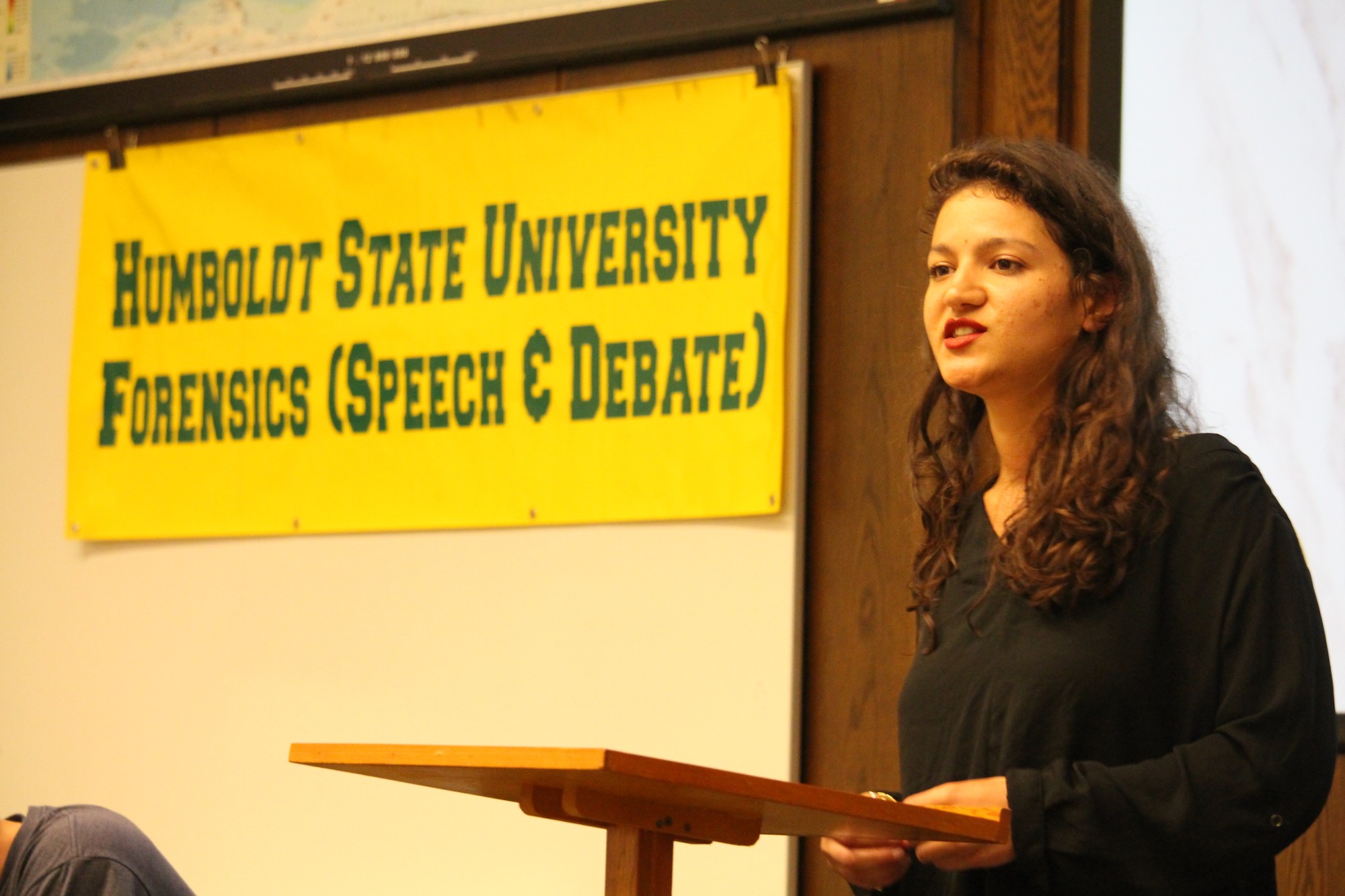
    Why do people have a love and hate relationship with freedom of speech? Well, first of all, everyone enjoys the privilege to express themselves freely. On the other hand, you might come across some “legally hateful” speech. Yes! The law protects hateful speech unless such speech grants a “clear and present danger.” So how do you deal with legally hateful speech?

    You don’t want to condemn hateful speech by restricting the speaker. Instead, it’s more compelling to use more speech to condemn hateful rhetoric. It is unwise to restrict a speaker that is using hateful speech because it makes you look weak.

    It would be wise to use more speech to persuade and enlighten those who use hateful rhetoric. To do this, you must first find out why that individual is using hateful speech. This is the most crucial aspect of using more speech because that’s how you start a healthy dialog. The ability to listen critically is important in this phase of your interaction.

    It’s also important not to interrupt the speaker when finding some points of dispute. Instead, keep in mind what you would refute regarding their rhetorical reasoning to deflate the hate in their speech when it is your time to talk.

    Once you get to know that individual and understand why they use hateful speech, the second phase is explaining why such hateful speech is hurtful and offensive to you. Before you explain your reasoning, it is helpful to briefly introduce yourself. Further, do not be afraid to expose your scars, meaning the struggles you have dealt with throughout your life. People understand what it’s like to struggle, but they might not be aware of your problems. It is important to have this type of dialog so that others know where you are coming from. Ultimately, the process of using more speech would tunefully condemn hateful rhetoric.

    The final step is to establish some commonality with those who use hateful language. This should be easy because humans have so much in common with one another. However, we are unaware of it due to the contemporary state of mass media and modern political rhetoric of “divide and conquer.”

    It’s unfortunate that it takes a major crisis for humans to understand their connection and dependency on each other. We need each other to survive and thrive.

    We do not experience many hateful speeches on our campus, but eventually, we will graduate and become a part of the workforce. Eventually, we will be confronted with hate speech or antithetical ideologies and hopefully, you can use your knowledge to create amicable solutions. Last, I would encourage you to take full advantage of the resources provided by our university to improve your communications skills. Like joining the debate team, student body of government or the university senate.