The Lumberjack


Students Serving The Cal Poly Humboldt Campus and Community Since 1929

Tag: Hoopa

  • Smelting in the water

    Smelting in the water

    Cal Poly Humboldt fisheries professor is working with local tribes to create better fishing stewardship practices.

    By Gabriel Zucker

    Jose Marin Jarrin is a new assistant professor in the department of fisheries biology at Cal Poly Humboldt. He is leading a new form of fishery science in Northern California, using empathy and understanding when talking with impoverished communities. He is originally from South America and he never forgets where he came from. 

    “Being Latinx, I’m also from a historically excluded community,” Marin Jarrin said. “So I saw a lot of similarities.”

    Marin Jarrin was recently awarded a little over $1.1 million from the California Climate Action Seed Grant to research climate change resilience by looking at tribal fishery practices. His goal is to reinvigorate Northern California fishery research, while also building a center that will last for years. 

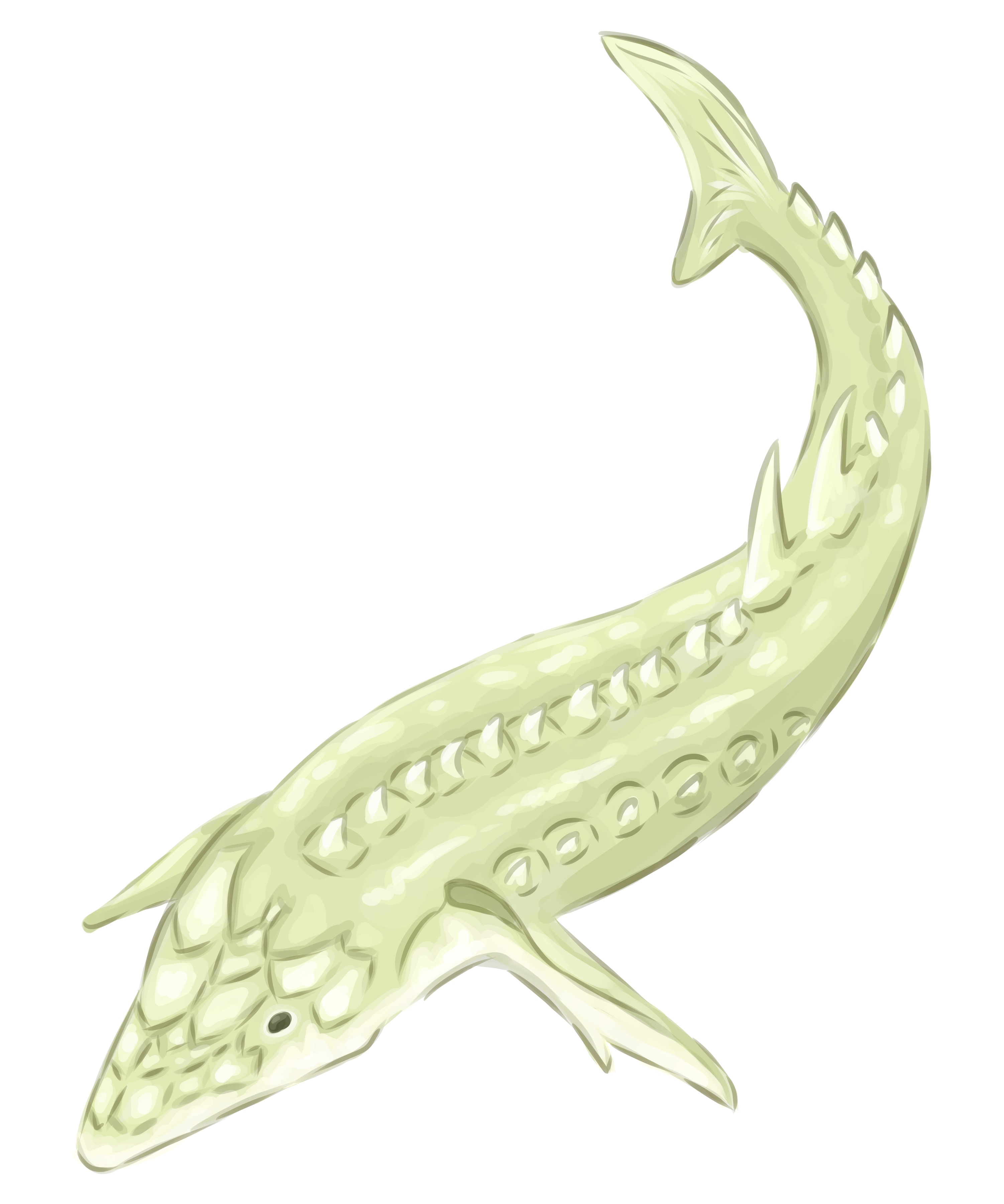
    He is working with the California Department of Fish and Wildlife and multiple local tribes, such as The Blue Lake Rancheria, Resighini Rancheria, Tolowa Dee-Ni’ Nation, and other smaller indigenous communities. Each native group was able to pick a fish that has historical and cultural value to their tribe. The fish that are being mainly researched are green sturgeon and smelt. Five grad students are working with Marin Jarrin, acting as liaisons for the different Rancherias. On top of doing research all over Northern California, the tribes and researchers have a monthly meeting where they go over the progress and find where they can improve.

    Creating a trusting relationship with the Indigenous communities is important. To solidify this relationship, Marin Jarrin signed a data sharing agreement with all of the tribes, giving them final say on what information is published. Historically this has not been the case, and some even admitted they had never been asked to do this before.

    “The researchers would go in, ask the tribes to participate, and then the tribes don’t get a say on how the data is used,” Marin Jarrin said. “And so, one of the things we wanted to ensure is that the tribes had complete ownership of that data. For the most part, they’re not too concerned about fishery species, they’re more interested in preserving their cultural data and history. What they don’t want is for people to just take information from them and disseminate in ways that are sometimes not correct or hurtful to the tribe.”

    Laurie Richmond is an environmental science and management professor at Cal Poly Humboldt. She has worked with the tribes for years, working a quarter time for California Sea Grant as an extension specialist. Where she connects local communities with coastal science knowledge. Her role for the study is in a partner advisory role, where she offers advice and direction when grad students need a new perspective. She has been working with Marin Jarrin since the beginning of the grant and is elated at the way he is going about his research.

    “I think it’s a really new way to be a scientist that I think [Marin Jarrin] is pursuing,” Richmond said. “It’s really exciting and it requires a lot of skills that scientists don’t always have, like building partnerships and facilitating and thinking about ethics. He’s done a great job of trying to learn those things, and he has some of those because of his unique background that he brings as a scientist.”

    To record the biodiversity of the fish in different areas, grad students are using environmental DNA metabarcoding techniques, giving them data about all of the animals that have come into that area.

    “If a fish swims by, it’ll leave its DNA in the water column,” Marin Jarrin said. “If you were to collect a sample and filter out the DNA from that, you can identify what species of fish was there. The idea is that if you then go around taking samples throughout the whole coast, you can identify all the fish – actually, not just fish. From bacteria all the way to mammals.”

    Before conducting this research, they had to work with the California Fish and Wildlife department. The advisor on the grant is Kenneth Oda, a former Humboldt State University student, who is with the Marine Region and works on the State Managed Finfish Research and Management Project. Oda gives advice and helps review the proposals before they are submitted. 

    “I was just asked to be an advisor… we approve protocols, if they’re gonna be taking fish, we need to have that spelled out, and the methodologies as well,” Oda said. “We review their permit application and then approve it. I also help them with protocols regarding surf perch and red tail.”

    Olivia Boeberitz, one of the graduate students on the team, just moved to Humboldt. She chose Humboldt partly because of this research project, and the opportunity to work closely with Indigenous tribes. She has been studying fisheries since 2020, focusing on fish that inhabit both freshwater and green water. This made the transition from inland to coastal easier. 

    “I’m working specifically with Blue Lake Rancheria on green sturgeon… I’m designing a project to get some baseline information on how green sturgeon are using Humboldt Bay,” she said. “There hasn’t been much of any research, at all, of green sturgeons in this area.”

    Boeberitz is in the methods phase of her research project. She is running through a couple ideas for data collection. She wants to use acoustic receivers, alerting if any previously tagged fish are using these areas. She is also planning to use satellite tags  on fish off the coast. None of the actual research will be conducted until the summer.

    Right now, she is most excited about working and meeting with the tribes. She has worked with tribes before, but never one on one.

    “I see and talk to them very frequently,” Boeberitz said. “As soon as I produce any drafts for my proposal, as soon as I come up with a schedule, they’re going to be incorporated every step of the way. Their feedback is both incredible and extremely valuable. I’m working on this project for them, they’re the center of this project. They’re guiding me – giving the guidance they need to start putting together what our goals are.”

    Marin Jarrin is changing how people view the scientific process. He is finding paths of communication that are not usually seen in western science. He is not just doing research, he is creating positive social change.

    “I want to help communities that have been historically excluded, to be better – better informed and the different techniques and methods they could be using to manage their fisheries,” Marin Jarrin said. “We want to empower people right. Our community to tribal communities, but to the community at large in the far north of California, so that they feel they are more capable of being stewards of their resources. But also, the students that we bring, we want to prepare the best students we can because they can go out… and bring this idea of diversity, equity, and inclusion to the next job that they take.”
  • Indigenous activism brings down Klamath dams

    Indigenous activism brings down Klamath dams

    Harrison Smith

    The Klamath salmon have been granted a reprieve. After decades of activism by Indigenous people, four of the six dams on the Klamath are finally coming down. Pacificorp, corporate owner of the dams slated for removal, was denied a renewal of their operating license by the Federal Energy Regulatory Commission in November of last year.

    The Klamath Basin is one of the largest watersheds in the continental United States. Melting snow in Oregon’s Cascade Range mixes with runoff from Crater Lake, frigid waters flowing south and west to fill Klamath Lake. In past years, Klamath Lake’s cold, high-nutrient water tumbled to the coast, providing habitat for dozens of salmonid species.  

    Until the dams were built. 

    “They haven’t had any salmon in over 100 years,” said Regina Chichizola, director of Save California Salmon. “The Karuk Tribe no longer has spring salmon even for their spring salmon ceremonies.” 

    Salmonid populations in the Klamath Basin have seen a staggering 95% decline since Copco 1 was built in 1918 and those numbers only continued to fall as the basin was strangled by the next three dams. 400 miles of river habitat have been either partially or completely blocked to fish passage, and Klamath salmonids were on the path to extinction. 

    “Having that acknowledgement is a really big deal, because it’s not just acknowledging that this is a bad deal the river’s been given, but also us as well,” said Brook Thompson, restoration engineer for the Yurok tribe. “And that our voice does matter. Sometimes when you protest, in activism work, it feels like nothing’s gonna change and no one is hearing you, and that’s the case; it feels like we were finally heard.”

     Thompson is a descendent of both Yurok and Karuk tribes, and a Ph.D. student. 

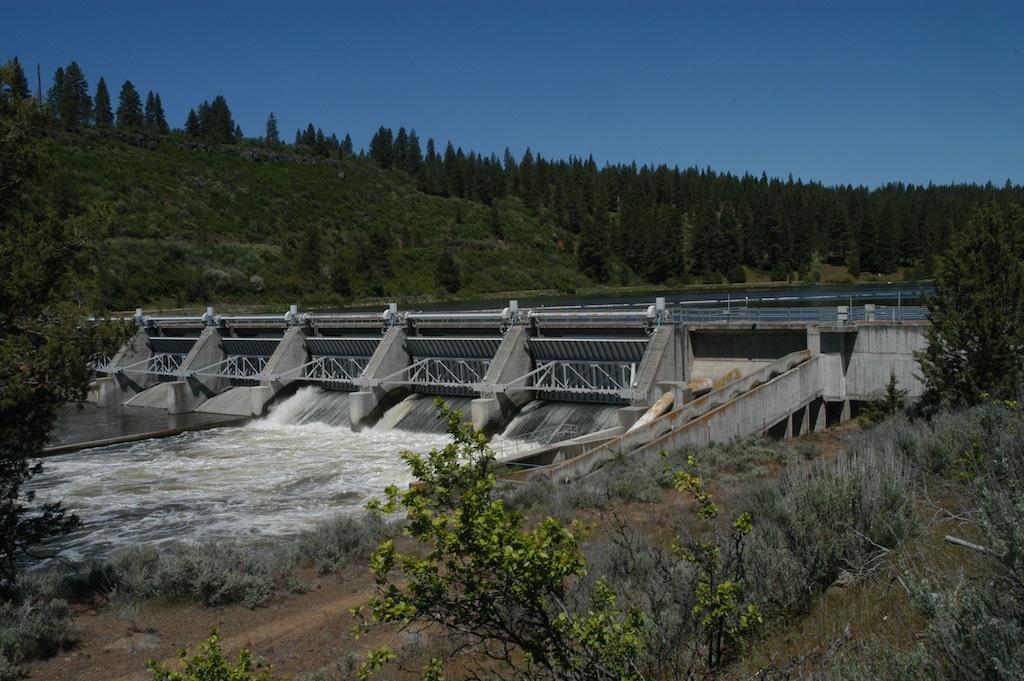
    There are currently four dams on the Klamath river. Copco 2 (1925) is slated for removal this year, followed by Copco 1 (1918), J.C. Boyle (1958), and Iron Gate (1964).  

    Photo courtesy of Regina Chichizola | Molli and son Chas smoke salmon over a firepit.

    Negative impacts

    The negative effects of the Klamath dams are numerous and interconnected. By slowing down the river, the dams allow the water to heat up in the sun. 

    “With that warm water, you get less dissolved oxygen, which the fish need to breathe,” said Thompson. “You get increased blue green algae blooms, which when they die, they take up dissolved oxygen, which, again, means less dissolved oxygen for the fish.” 

    The dams also cause the river to cut into the riverbed, by locking its flow into a narrow channel and preventing it from connecting to the wider floodplain.

    On September 19th, 2002, dead Chinook salmon began washing up on the banks of the Klamath. During the next week, over 60,000 adult Chinook would wash up on the banks of the river like a rotting carpet.

    “It was the day after one of the ceremonies,” said Thompson, who was present at the catastrophe as a child. “I was the same size as the salmon I saw the bodies of on the shore.” 

    This can be directly linked to the dams’ effects on the Klamath. The closely-packed conditions of the migrating Chinook and high water temperatures were a perfect environment for parasite Ichthyopthirius multifilis and bacteria Flavobacter columnare, which together ravaged the salmon population. Low flow from Iron Gate dam, due to irrigation runoff, was found to be a primary cause in the Fish Kill. 

    Indigenous sovereignty 

    The Yurok, Karuk, Hoopa, and Klamath tribes have been fighting for their rights to river governance and access for over a century. 

    “We’re fighting for our cultural sovereignty, making sure that we’re upholding our responsibility as human beings to make sure that we’re making this world a livable space for not just humans,” said Charley Reed, education director for Save California Salmon and descendent of the Yurok, Karuk, and Hoopa tribes. 

    Before colonization, Indigenous people depended on the Klamath as a primary source of food, with an average salmon intake of 450 pounds of fish per person per year. Today, that number has dropped to under a pound. 

    Activism

    In 1973, Yurok community leader ‘Aawokw Raymond Mattz took the issue of Yurok fishing rights to the U.S. Supreme Court and won. However, state and federal agencies continued to crack down on Indigenous fishing well into the 1970s. This sparked a period of protest now called the Fish Wars. Anti-dam protests continued sporadically for decades, but gained renewed purpose after the 2002 Fish Kill, according to Reed.

    “To get the U.S. to do things you have to sue them,” Thompson said. “That’s actually how we got the fishing rights back from my neighbor when I was a kid.”

    In the 2000s, dam protesters spent one week of every month traveling to protest. Reed’s father was deeply involved with the movement for decades. Protest efforts in the wake of the Fish Kill led to the founding of Save California Salmon, a nonprofit organization founded, operated, and led by Indigenous people. SCS along with other groups focused the energies of the Klamath Tribal communities onto the dams. In 2004, dam owner Pacificorp filed to relicense the four dams on the Klamath. This provided an initial objective for the activists—stop the relicensing. 

    The activists took a multi-pronged approach to the campaign for the dams’ removal. They applied public pressure on lawmakers and dam owners, as well as working with state and federal officials. 

    Activists traveled to Scotland in 2004 to demonstrate against the parent company of Pacificorp, Scottish Power, during a shareholders meeting. In 2005, Scottish Power sold Pacificorp to Berkshire Hathaway and activists continued the pressure.

    “2006 or 2007 was the first year we went to the Berkshire Hathaway shareholders meetings,” Chichizola said. “And even before that, we went to Pacificorp headquarters in Portland…. A big part of it was the community pressure for sure. Every step of the way, the community was there.”

    In response to the continued activism, the Berkshire Hathaway board changed the rules of their Q&A sessions in 2008 to forbid questions about the Klamath dams. 

    Activists succeeded in lobbying the California and Oregon governments to require extensive renovations of the dams before they could be relicensed — a major victory. The Klamath Basin Restoration Agreement (KBRA) between the states would have demolished the dams years ago and reallocated water for irrigation. It was killed in the house by republican congressmen Doug Lamalfa and Greg Walden. 

    In 2016, parts of the KBRA were salvaged to create the Klamath Hydroelectric Settlement Agreement. The KHSA was passed without congressional approval, but its passage was followed by another period of bureaucratic snarls that were only resolved last year. After relentless pressure from all sides, it proved far more expensive for Pacificorp to relicense the dams than to remove them. 

    In November of 2022, the Federal Energy Regulatory Commission denied Pacificorp’s license to operate its Klamath River dams, and the dams came under the jurisdiction of the Klamath River Renewal Corporation (KRRC). FERC credited Tribal activism for the government’s decision to decline Pacificorp’s license renewal. 

    Photo courtesy of Regina Chichizola | A pair of stalwart activists demonstrate in Scotland, 2005.

    Demolition and restoration

    Copco 2 is scheduled to be demolished this year, but much restoration work remains to be done before the basin is whole again.

    Extensive preparation must be completed on more than 400 miles of river that have been cut off from the greater watershed for the better part of a century, mostly on the lower river. The KRRC was created to carry out the restoration work. 

    “We’ve been collecting seeds for the last few years and then we’re growing plants,” Thompson said. “These native plant species will have a chance to take hold before invasives come in.” 

    Work must also be done to reconnect the river to the system of ponds and tributaries which fed it historically. All this will eventually restore habitat and favorable conditions for salmonids, according to Thompson.

    “All that habitat needs to be restored and that’s going to be creating more woodfill, creating different types of flow, so [salmon] can chill out in slower ponds or move up faster streams and try to get different types of food,” said Thompson.

    The Elwha Dam removal in Washington could give some insight into the Klamath’s future. 

    “As soon as a year after the Elwha dam removal, which happened just over 10 years ago, you saw salmon that were returning above the dam to breed, which is kind of crazy, because they haven’t been going there for generations,” Thompson said.

    For Reed, the victory felt bittersweet. It comes after many long decades of teeth-pulling effort, marked by the passage of loved ones and community members — stymied by corporate and governmental roadblocks.

     “There’s so many people who weren’t there that day that had passed on, but were very much a part of that effort in those early years,” Reed said. “If it wasn’t for them, it’d be really hard to imagine how we would have kept that momentum going, how we would have kept up the fight. It’s very much intergenerational.” 

    Reed plans to teach his daughter to fish when she’s old enough. By then, restoration efforts will be well underway.

  • Hoopa Valley High School fire

    Hoopa Valley High School fire

    By Iridian Casarez

    Three buildings at Hoopa Valley High School were engulfed in 40 foot flames early Monday morning.

    According to Times Standard, Hoopa Valley High School’s auto shop, wood shop and choir room went up in flames due to a “suspicious” fire. An investigation is underway by the multi-agency Humboldt County Arson Task Force.

    Hoopa Volunteer Fire Department Chief Amos Pole said to the Times Standard that the fire was deemed suspicious due to the way the fire spread from each building.

    Authorities arrived at the scene around 3 a.m. where they were able to prevent the fires from expanding. It took the Hoopa Volunteer Fire Department two and a half hours to put out the flames.

    There were no fire personnel injuries.

    According to the Times Standard, the three buildings that were burned were closed down due to mold infestations. The Klamath-Trinity Joint Unified School District had spent a lot of money on renovations and designs for the building to be reopened mold-free.