The Lumberjack


Students Serving The Cal Poly Humboldt Campus and Community Since 1929

Tag: housing and residence life

  • Limited university housing almost full

    Limited university housing almost full

    by Dezmond Remington

    Every morning the sun rises, every evening it sets, and about a quarter of the way through every spring semester, the housing website crashes when a couple thousand desperate students all attempt to turn in their applications for the next year. It’s a pattern that never fails, and this last go-round was no different. 

    Student Kristin Tran was one of many affected by the crash. They had to wait two hours when the application opened to get it turned in, missing class in the process to make absolutely sure it went through when it could. 

    “It was definitely really crazy and super chaotic,” Tran said. “I am registered with SDRC too, so I have accommodations, but because of the shortages, they said they’ve also had to be super selective about who gets certain accommodations now, because they simply don’t have enough room for everyone… it’s just kind of scary.”

    Nabbing a university-sponsored spot is not easy. According to Housing Assignments Coordinator Carly Strand and Executive Director for Auxiliary Operations Stephen St. Onge, it’s entirely first-come first-served, although it isn’t just one long list. Applicants are sorted into gendered lists. If they’re comfortable with co-ed housing, that is also taken into consideration. 

    As of March 22nd, 2,335 students had applied for the 2,406 beds in university housing, which includes all on-campus housing and all of the ‘bridge’ hotel housing. However, St. Onge and Strand said they were working on getting more housing, although from where specifically they couldn’t say. 

    There were 1,500 applications for university housing from returning students, who are all competing for 911 beds. They will find out on March 29 if they got a spot. They’ll find out where that spot is later in the spring. Strand advised returning students to avoid panicking about housing in the meantime. 

    Incoming freshmen will learn if they got housing in June. As of March 22nd, about 700-800 freshmen had applied for the roughly 1,500 beds on campus mainly reserved for them in Canyon, Cypress, and the Hill. The number will rise as the Fall 2023 semester draws nearer. 

    St. Onge said that in a typical year about 25% of the applications are canceled. The application is free to submit, and some applicants may end up attending a different school. However, St. Onge also said that the freshmen cancellation rate this year may be closer to about 20% because the campus’ new polytechnic status has made it more desirable.

    Setting up student housing in local motels has been tough. According to St. Onge, it takes about six to eight months to scout a location and lock down a deal with the owners. It costs the school $100 a day to house a student there, although the residents are charged about $20 a day—the lowest rate of any university-provided option aside from three-person dorm rooms.

    “The university is subsidizing housing for students because it is committed,” St. Onge said. “It is committed to providing safe and affordable housing for students.”

    Tran doesn’t feel that the university’s first-come first-served policy reflects that mission well. 

    “They want to double enrollment,” Tran said. “It’s going to get a lot worse until they deal with it and deal with the fact that their growth is kind of unsustainable right now.”
  • Cal Poly Humboldt students outraged over housing crisis

    Cal Poly Humboldt students outraged over housing crisis

    by August Linton and Camille Delany

    On Feb. 4, CPH quietly updated the housing website without any notice to on-campus residents, leaving returning students to find out for themselves that they should not expect to live in the dorms or campus apartments for the remainder of their time at Humboldt. 

    On-campus housing will not be provided for any returning students. All on-campus housing will be reserved for new freshmen or transfers, starting in Fall ‘23. Should continuing students try to access housing through the university, they will be placed in temporary, off-campus housing.

    “There was absolutely no email about it,” student Valeria Reggi said. “We found out by checking the website, which they updated with no warning.”

    Due to a preexisting housing shortage that has left many students houseless, temporary options were explored in 2022 with the housing of over a hundred upperclassmen in the Comfort Inn motel. 

    A Feb. 6 email update stated that “because of the program’s success, we are excited to share that you now have the Super 8 and Motel 6 in Arcata as housing options managed by Cal Poly Humboldt.” 

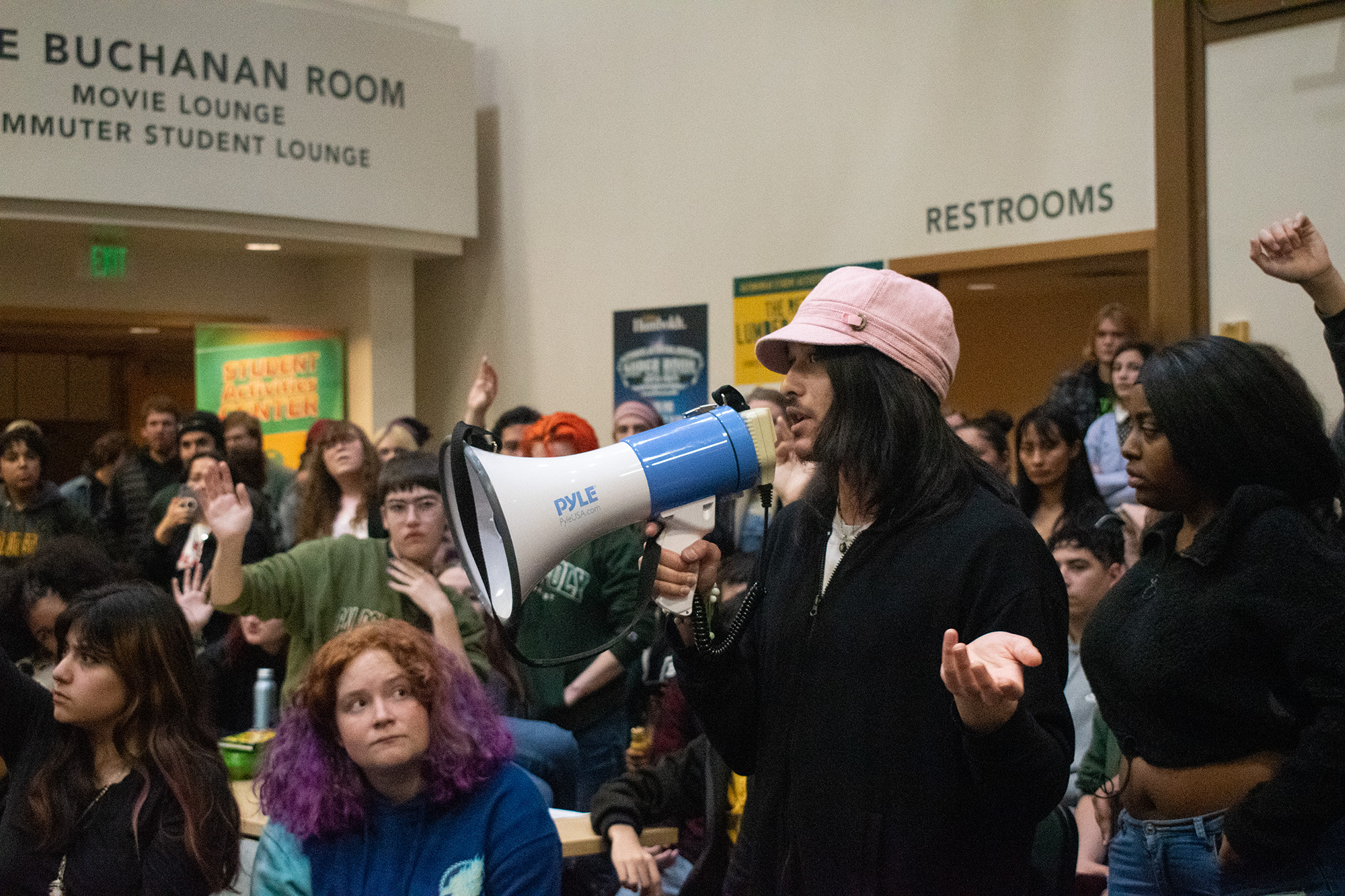
    The email panicked current students, many of whom expected to return to on-campus housing in the fall. This prompted an immediate response. A post circulated on social media inviting students to gather that night to organize. At the meeting, a large crowd of students filled the Gutswurrack, voicing their concerns with over-enrollment and planning a protest scheduled for Wednesday, Feb. 8. 

    Filling every square foot of available standing room, students even packed onto the balcony. Organizer Lars Hansen spoke using a megaphone, and called on members of the crowd to voice their opinions on the new policy.

    “We wanna know what’s going to happen to our housing, what’s going to happen to our community, and what’s going to happen to Humboldt,” Hansen said.

    “I can’t fathom why you guys are accepting this many students when you can’t support them,” student Julia Kurtz said. 

    She questioned the logic of reserving the on-campus housing for freshmen and incoming transfers. 

    “If you are proud enough to put your current students in that housing, you should be proud enough to put new students in that housing,” Kurtz said. 

    Humboldt has a well-documented problem with student houselessness, a situation that some students said the new on-campus housing rules will make worse.  

    “I can just sleep in my car on campus, because that’s not any shittier than living in a motel, and it’s 10 to 15 times cheaper,” student Sam Mah said.

    Many are considering dropping or transferring out of Humboldt in the wake of this announcement, according to students in attendance. 

    “You have capacity that’s limited and you’re putting no limit on the flow,” Jack Williams said.

    Some raised concerns that the massive influx of students into the community without adequate on-campus housing to support them would strain relationships between students, the University, and the community. 

    “It seems like you just shift responsibility of building up infrastructure onto the community,” Alan Cooper said.

    One of the main issues brought up by students was the lack of basic amenities at proposed housing locations. The rooms at the Comfort Inn don’t have kitchens, which poses a serious problem for students on EBT and those with dietary restrictions. 

    Students with disabilities are concerned with accessibility at the temporary housing locations. They also raised the issue that those who gain access to on-campus housing through their accommodations would be outed as disabled to their peers.

    “Every single upperclassmen that has disabilities or problems with mental health, what the fuck are they going to do with us?” one student asked. 

    Photo by Cash Rion | Students from all walks of life show up for the student homelessness protest at Cal Poly Humboldt on Feb. 6.

    The University administration was represented at the meeting by the newly appointed vice president for Enrollment Management & Student Success, Dr. Chrissy Holliday, as well as Indian Tribal and Educational Personnel Program (ITEPP) coordinator Sasheen Raymond and Stephen St. Onge, Humboldt’s Executive Director of Auxiliary Services.

    Several of the students speaking purposefully gave admin a chance to respond to their comments, but often their response was lost, drowned out by the large crowd and interrupted by jeers. Holliday especially struggled to be heard over the crowd completely filling the Gutswurrack.

    They offered little reassurance or explanation of substance, but expressed their sympathy for students impacted, and their commitment to hearing student perspectives.

    “We will come and get beat up over it if we need to,” St. Onge said. 

    He explained that they were being required by the CSU to enroll more students in order to get funding. 

    “Now you need to hit this FTE [full time enrollment] and draft a plan to do it,” St. Onge commented. “We’re looking at some different options, hopefully in a week or two we’ll have some more information.”

    Recent rumors and apparent email leaks indicate that the University is considering the purchase of a barge that would moor at the Eureka docks and house 650 students. At one point during the meeting, alleged evidence of the barge plan was airdropped to attendees’ smartphones. 

    University officials did not respond when asked for comment.

    At the end of the day, the damage to morale was already done. Students felt betrayed by the administration. The school’s liberal reputation and reported recent influx of cash seemed incongruous with what many perceived as a shocking disregard for the housing policy’s impact on continuing students. At the end of the meeting, there was a call to bring the protest to the Arcata City Hall on Feb. 16.

    “I thought ‘this is a school that’s going to see me, that’s going to hear me,’” Haley Kitchman said. “I’ve lived in motels and it’s traumatizing. It’s not easy, and it’s not okay.”

  • Lack of communication between maintenance and students leads to awkward moments in the Cal Poly Humboldt dorms

    by Alina Ferguson

    Submitting a maintenance request is a mysterious process here at Cal Poly Humboldt. The procedure goes something like this: submit a request and two weeks later, someone will bang loudly on your door. Do you get confirmation emails? Not in my experience. 

    Unlike other rent-paying, contracting-holding people, students do not get full tenant rights, which normally stipulate 24 hour notice before repairs. My complaint is not with the maintenance staff, but rather with the lack of a system for notifying students about maintenance in their dorm.

    Last semester, my roommate was coming up the hill to Creekview and saw some man in our room! Naturally, she was freaked out—who was this strange man, and why was he in our room? As it turns out, he was there to fix the window. 

    I worked online from my dorm every Saturday from 9 am to 1 pm, and one day someone barged into my room during a work call to “fix the lights.” I asked if it needed to be done at that exact moment, and the maintenance man responded with “yeah.” So, inconvenienced and with all my other roommates still sleeping, I did an hour of work in my bathroom. My laptop was precariously perched on the toilet, my phone was scrunched against my ear and my shoulder, and I was sitting cross legged for an hour. My feet fell asleep, so I had to crawl back to my room like some horror movie villain, hair in my face and phone in my mouth, grunting from the pinpricks in my feet. 

    This semester, I submitted a request to put a bar across my top bunk. A week later, someone banged on our front door while my roommate was taking a nap and my housemates were out. What could we do? Well, he said he would come back in half an hour, and an hour later, he was back. 

    Though, it’s not always that they take weeks. My roommates and I put in a request for our microwave and electrical outlet to be fixed and that same day, someone arrived. I came home to the door ajar and the microwave disassembled like a butcher had just gone to town on it, tools scattered across the countertop. I tiptoed to my room, and my roommate muttered, “Maintenance is here to fix the microwave and electrical.” I asked if she had gotten an email or call beforehand, and of course the answer was no.

    The maintenance team themselves are not at fault. The staff here do a brilliant job; they work efficiently and are always friendly. They work hard to make sure that all our requests are fulfilled and they do an excellent job of repairing whatever is broken. 

    But I have some ideas to improve the maintenance process. There needs to be a system for alerting students to maintenance work in their living spaces. Normally, as a tenant, someone who pays rent and has a rental contract, you are entitled to 24 hours notice when anyone is entering your unit or room for non-emergencies. Student tenants should be granted the same courtesy. I pay to live here, and I signed a contract; we all did. 

    Sending an email is all it takes. Just send me an email with the name of the maintenance worker, the approximate time they will arrive, and what they will be fixing. While I understand that there are a lot of students here, I believe we need more communication between dorm residents and staff. It is about respect for both the students and maintenance staff. 

  • Comfortable at the Comfort Inn

    Comfortable at the Comfort Inn

    by Angel Barker

    Dorm life is an important part of the college experience, but what happens when your university does not have adequate housing for its population? They turn a hotel into a residence hall. The Comfort Inn in Arcata, located in the Valley West area, is now home to almost 100 upperclassmen students.

    The housing shortage is nothing new in Arcata. For students like Gabriela Mendez, a transfer student majoring in psychology, finding off-campus housing was unsuccessful.

    “I was hoping to find last minute housing off campus,” Mendez said, “but there was nothing.” 

    Mendez has a roommate in the hotel, as all rooms are double occupancy. Each is supplied with two beds, desks, and dressers.

    When asked her opinion about what it is like living in a hotel, Mendez said, “People can say ‘you don’t get the full college experience,’ and like, the college experience might be cool because I am a transfer student, but I am just grateful to have housing.”

    Osiel Palomino, a returning sophomore majoring in environmental studies and management, had the same reaction. 

    “If it wasn’t for that room, I would have held off on going back to school for another semester,” Palomino said. 

    Palomino lived on campus his freshman year in 2019-2020 right before the COVID-19 pandemic, and moved home and took a break from school until classes were back in person.

    Sarah Neumann, a business administration exchange student from Germany, is Mendez’s roommate.

    “We made a good situation,” Neumann said. “I like it because I think we have more space and privacy, especially with our own bathroom.”

    “One thing that I really love is each room has their own shower and bathroom. You don’t have to share one bathroom with the whole halfway, you avoid those problems,” Palomino said.

    In addition to each room having their own bathroom, they also have free amenities like linens, a minifridge, a microwave, TV with cable, housekeeping services, continental breakfast everyday, Wi-Fi, and pool and gym access.

    Compared to living in a freshman dorm on campus, Palomino said that living in the hotel still feels relatively the same.

    “You still feel the college experience because everyone living there is students,” Palomino said. “You still feel like you’re on campus even though you’re not.” 

    A large banner welcoming Cal Poly Humboldt students and the friendly front desk staff also help with that feeling.

    Staying connected can be difficult, but the RAs and the Office of Housing and Residence Life are hard at work to help the students feel included in campus life.

    “The RAs have little events, to make it feel like the real dorm college experience,” Mendez said.

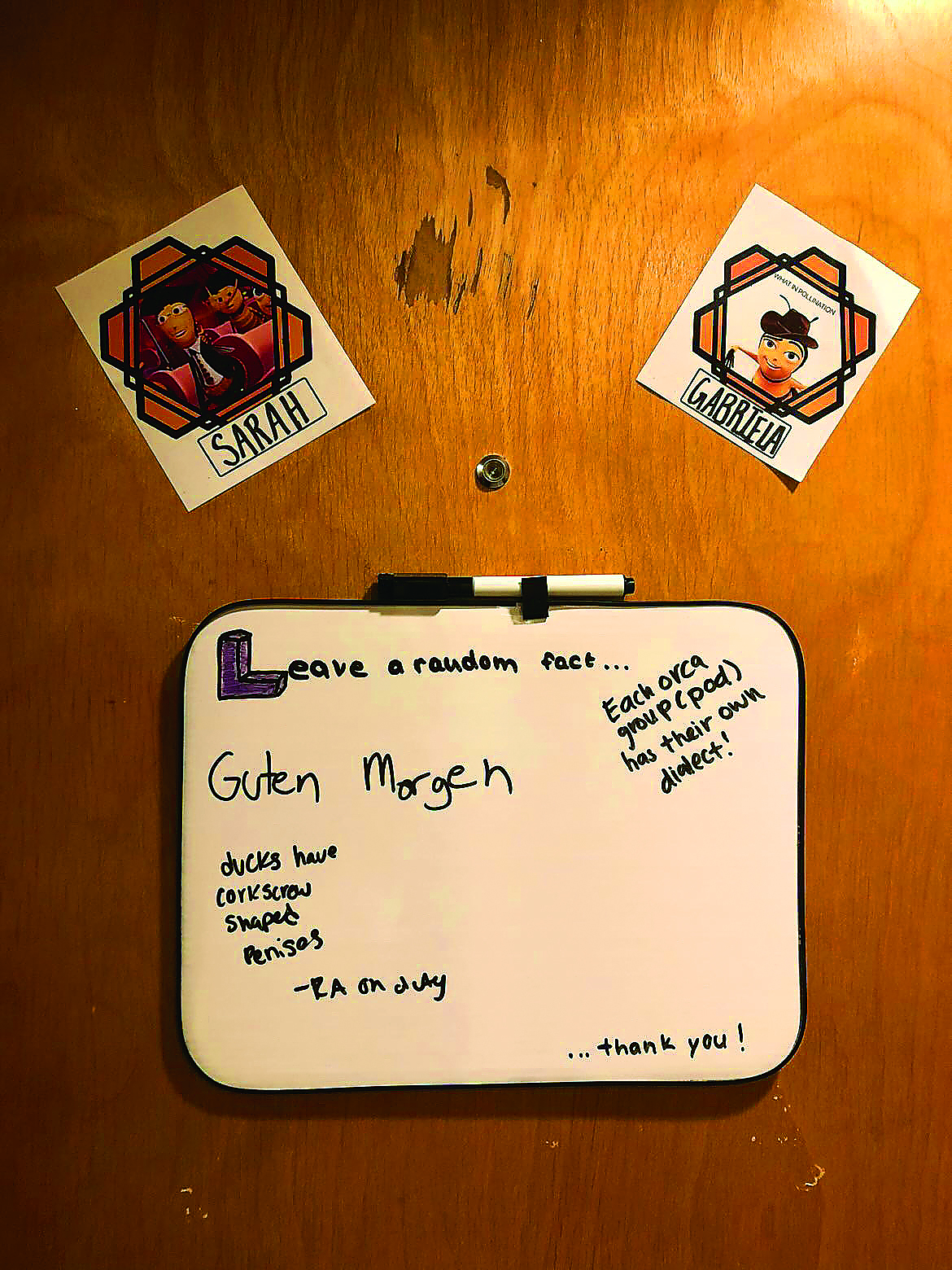
    Neumann and Mendez even bought a whiteboard for the outside of their door.

    “People can just write anything, so we can still communicate with others when we don’t always see them,” Mendez said.

    Overall, students are satisfied with the University and the Comfort Inn solution to the housing shortage.

  • Why do Cypress residents need an All Access meal plan?

    by Shane Jarvie

    I find it extremely redundant that Cypress residents are required to own an All Access meal plan. When I’ve asked school officials why they’re needed, they’ve just responded, “Cypress residents are required to have one of the All Access meal plans. Upperclassmen living areas that do not require a meal plan are College Creek and Campus Apartments, both of which have shared kitchen areas.”

    I’m a junior who’s lived on campus for three years now, and Cypress has the best kitchen out of every residence hall I’ve seen. Yes, even better than the one in College Creek apartments. Having lived in College Creek apartments as a sophomore, I’ve found that Cypress has more counter space and many more cabinets for storage space. The Cypress kitchen has offered my suitemates and I enough room and resources to cook for 20+ people once a week for Cypress eighth floor’s “family dinners,” where both sides of the floor come together for a weekly feast.

    A suite on Cypress can house up to twelve students, so I’d understand if we were required to have a meal plan due to the number of suitemates who share the kitchen. However, I can’t understand why we’re required to have an All Access meal plan.

    As a student working in the housing department as a Resident Student Services Assistant, I’ve had the opportunity to study each housing option and meal plan that the school offers. The more I learn, the less it makes sense that Cypress suites require an All Access meal plan.

    For anyone who isn’t aware how the on-campus meal plan system works, here’s a quote directly from the Meal Plans page on our campus housing website: “All living areas require a meal plan except College Creek and Campus Apartments. Residents of the Hill, Canyon, Cypress and Creekview Suites are required to have one of the All Access meal plans. Residents of Creekview Apartments are required to have any one of the meal plans.”

    The cheapest All Access meal plan is the 5-day All Access plan. It’s $5,000 per academic year, and contains all access meals to the J five days a week, including 300 Flex dollars and 66 or 62 meal exchanges per semester. (The housing website says 66, the dining website says 62.)

    One of the alternative meal plans that I’ll be using as a comparison is the Lumberjack 125. This meal plan that Cypress residents don’t have access to costs $3,500 per academic year, provides 125 meals in the J (which is honestly still more than enough J food for me), has 525 flex dollars, and 31 meal exchanges per semester.

    As someone who isn’t impressed with the food that Chartwells has to offer at the J, I’d much rather have the Lumberjack 125, which has 225 more flex dollars and costs $1,500 less per year!

    If I can’t convince school officials that Cypress residents should have access to the other meal plans available, I at least want an adequate answer to why we shouldn’t.

  • Resident Advisors struggle to keep dorm life normal

    Resident Advisors struggle to keep dorm life normal

    Due to the transition to online, campus life is lonelier than ever this semester

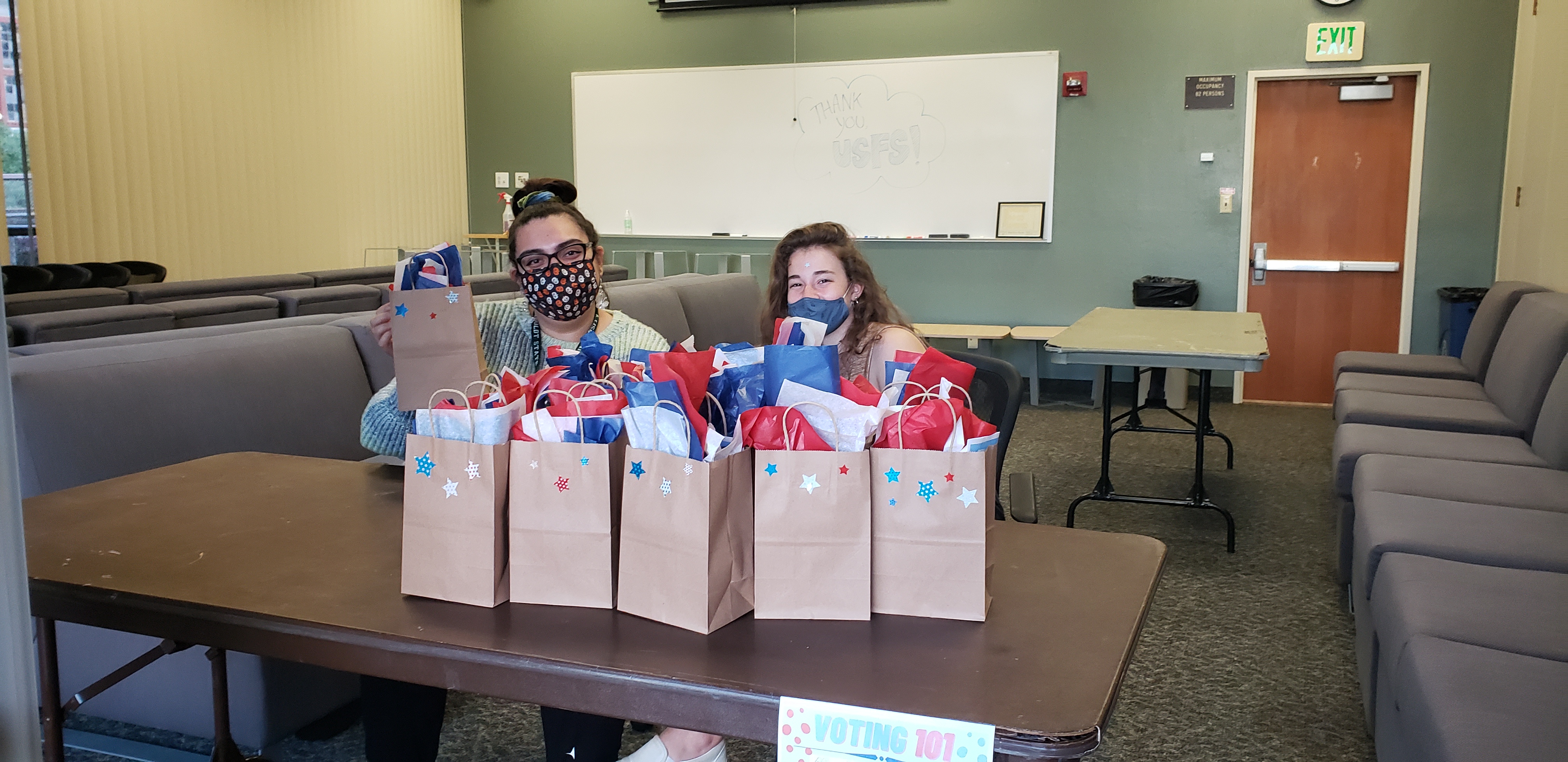
    Social distancing policies forces Resident Advisors to rely on tools like social media and video-chatting to stay in touch with students. To make up for the lack of in-person events, housing is putting on several Grab-N-Go programs this semester, where students pick up supplies and participate in door decorating competitions from the safety of their dorms.

    Generally speaking, RA responsibilities include daily room and floor rounds, enforce housing policies and provide connections to resources for students in their building.

    Stephen St. Onge is the associate vice president for student success at HSU. According to Onge, the RA job responsibilities have not changed, besides the move to online.

    The most notable impact of the pandemic on RAs has been on the ability to encourage students to engage with the campus community.

    “They are still doing outreach to their residents virtually,” Onge said. “They are still doing duty rounds, the programming, they are just doing it a little bit differently.”

    Victor Garcia Balderas is a second year RA. Balderas feels the blackouts of last fall and the transition to online in the spring has prepared him as an RA.

    “Because it is my second year as an RA, I feel I have a grasp of how things work,” Balderas said. “I’m flexible and have been hit with so many random events like last year when we had the blackouts.”

    Last semester, Balderas worked with new students. In contrast, this semester he works with returning and transfer students. Balderas says these students tend to already have established their own communities, making engagement much more challenging.

    Director of Residence Life Donyet King believes engaging with students during a pandemic just requires some outside of the box thinking.

    “We have to get really creative about it,” King said. “Initially when programs were held online, people were still adjusting to the pandemic.”

    Despite the efforts of housing to fabricate a sense of normality, the single occupancy policy, while necessary, generates an unavoidable sense of isolation for dorm students.

    “I’ve gotten lonely and a little bit sad,” Balderas said. “I feel like I am alone.”

  • Laundry machines on campus that rarely work

    Laundry machines on campus that rarely work

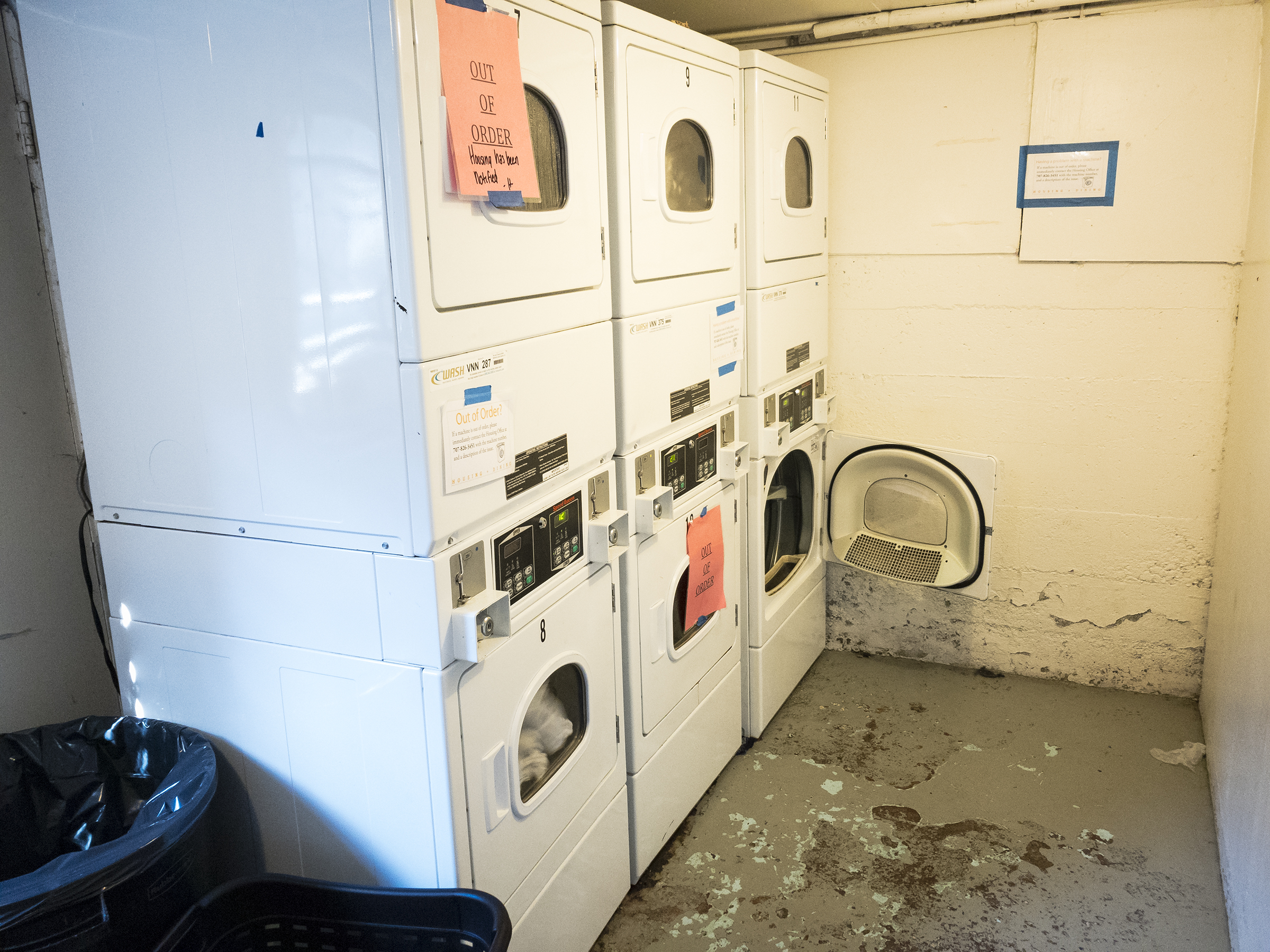
    When it comes to the Humboldt State University campus laundry rooms, students are never surprised when they spot an “Out of Service” sign on one of the machines.

    HSU senior Robert Matthews is accustomed to seeing that sign when he walks into the laundry room.

    “I’m never really surprised to see at least one or two machines that are broken down when I’m doing laundry,” Matthews said. “It does get annoying to have a machine that is broken down, and all you can do is call the company in order to have it fixed. Even if you call them, it would take a long time for the machines to be fixed.”

    Many students who live on campus are irritated when they cannot do laundry due to broken machines. This is especially annoying when on-campus laundry rooms have limited machines that need to serve over 2,000 students who live on campus.

    Stephen St. Onge, the Housing & Residence Life director, explains why the laundry machines stay broken for a long time.

    “The company that we bought the machines was from a company called Wash, which is located in San Francisco,” St. Onge said. “When a machine would break down, we would call the company to send someone down to fix the machine… but sometimes it would take awhile for someone to come down here at Humboldt.”

    According to St. Onge, the contract with Wash ended this year.

    “With the contract ending with Wash, the school now owns all the washing and drying machines on campus,” St. Onge said. “What this allows us to do is to self-service the machines ourselves. Students will eventually notice the improvements in laundry machine maintenance in the future.”

    St. Onge also expressed plans to make washing and drying free for students living on campus in the future.


  • Living in a windowless room

    Living in a windowless room

    Video by Ian Thompson.

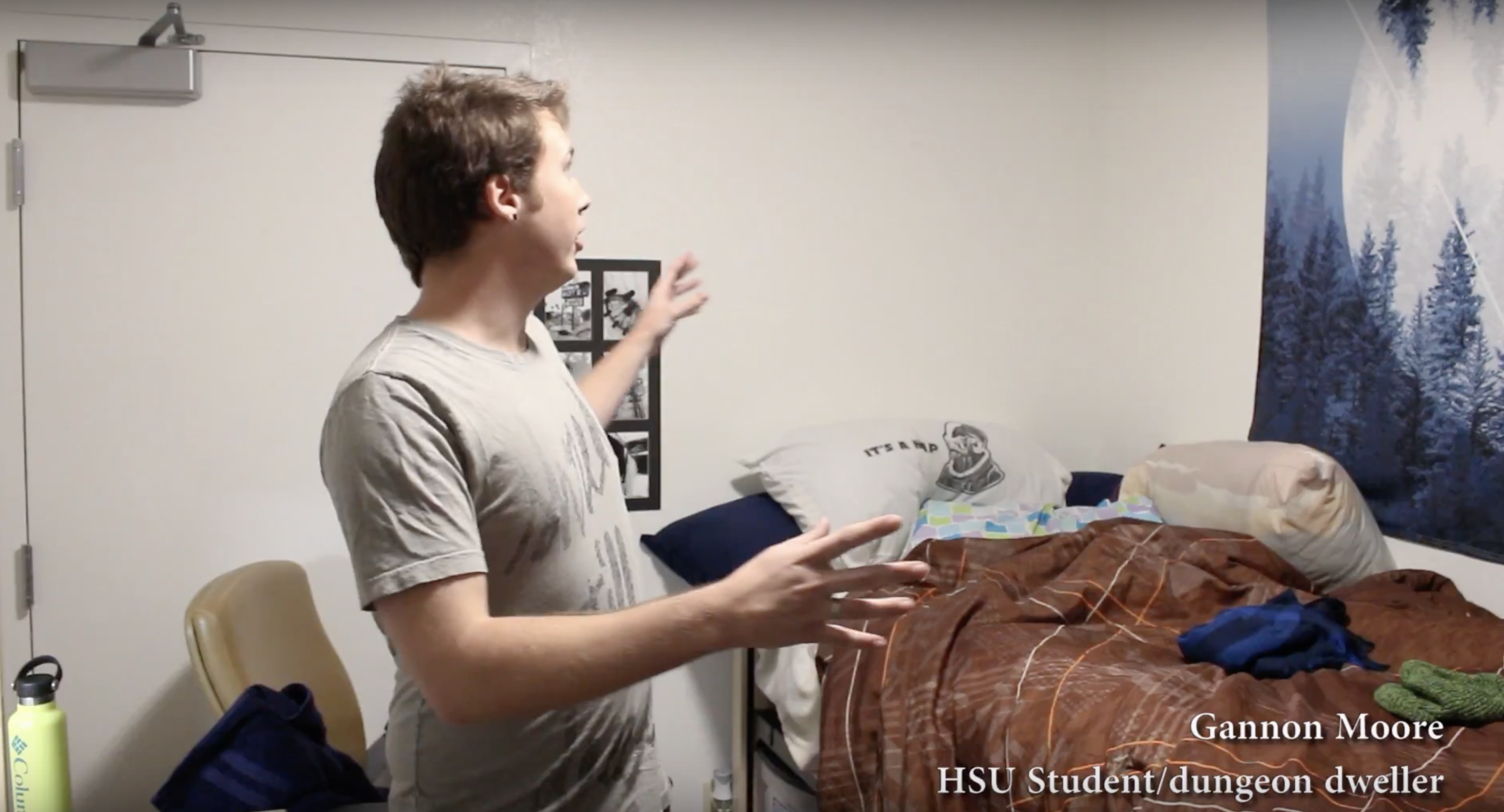
    HSU student Gannon Moore was excited to have his own room for the first time, but his excitement didn’t last long. It died out when he saw his assigned windowless bedroom for the first time.

    “As soon as I got there a lot of those hopes were dashed, everything was dashed,” Moore said.

    In the summer of 2016, HSU housing and residence life decided to convert 23 kitchens in Juniper and Laurel at Creekview into bedrooms with no windows to accommodate more student housing.

    The Director of Housing and Residence Life Stephen St. Onge said these rooms were built because of the urgent need for housing. He said that housing is not trying to capitalize on it, but only trying to combat the issue of homelessness.

    Freya Mitchell is an international exchange student from the United Kingdom. She also was assigned a similar bedroom with no windows. Freya Mitchell was disheartened when she arrived this past August to her windowless assigned room after a long flight from the UK.

    “Is this what I came for? Why have I flown all this way to this tiny room? It’s a bit claustrophobic and you can’t have any natural air flow in it,” Freya said

    David Mitchell is Freya’s father and is an architect from the UK. He said he was shocked to know that there are dorm bedrooms with no windows.

    “We [his family] were surprised that they even have that sort of room, to be honest,” David Mitchell said. “We’ve paid for a legitimate room and what we’re getting is a storeroom.”

    He said windowless bedrooms like the ones in Creekview are illegal in the UK. In his opinion, those rooms shouldn’t have been used as bedrooms.

    As an architect, David Mitchell thinks that there are several fundamentals that are wrong with such bedrooms, one of which is the lack of natural daylight and natural air flow.

    “I don’t think that room should be used as a bedroom,” David Mitchell said. “I think their [HSU housing] decision to convert that room is driven by money. I think it’s driven by profit.”

    Freya’s mom, Michelle Mitchell, also doesn’t think it’s acceptable to have a room without a window.

    “Our friends would say ‘how’s Freya getting on in America?’ and we say she’s living in a cupboard,” Michelle Mitchell said. “Everybody we spoke to about it was horrified.”

    After several efforts have been made by Freya, her family, and the HSU’s international students office, Freya was assigned a different room with windows.

    “I didn’t wanna stay in that room it was horrible,” Freya said. “I just can’t believe that they’ve got rooms like that.”

    According to the international residential code, bedrooms are required to have windows or a second door for air ventilation, natural light and to be used as an escape in case of an emergency. Though the 23 converted bedrooms in Juniper and Laurel at Creekview don’t have a window, they have another exit door that leads to the outside.

    Patricia Rivera is another student who moved into Mitchell’s windowless room after she moved out. Rivera lives right across the hallway from Moore and both of them agree that their small converted windowless bedrooms lack proper ventilation and have no natural light.

    “It gets really stuffy within like five minutes,” Rivera said. “It’s constantly dark no matter what’s in there.”

    When the heat is turned on in Moore’s suite, his room gets very hot compared to other rooms in the suite due to the insufficient ventilation.

    “My room gets boiling hot because there’s no ventilation,” Moore said. “All the heat from the vent gets into the room and just sit it has nowhere to dissipate to.”

    Moore used to open the door that leads to the outside to get some fresh air, but he can’t prop the door open anymore.

    “I can’t leave my door open because the RAs say ‘you gotta close your door, you can’t leave your door open’ even if I’m in the room.” Moore said.

    Moore said he’ll sometimes wake up sweating from his overheated room.

    “When I’m overheating at night, I have to open my door, go walk out into the hallway and just stand there,” he said. “I stand there sometimes in my boxers because I’m freaking overheating and I have nothing else to do.”

    Both Mitchell and Moore agree that living in a room like this affected their mental health. Moore noticed that he started to get frustrated easier than ever before.

    “I started getting angrier and it’s honestly because I’m not seeing any natural light,” he said. “It’s like I’m in solitary confinement.”

    Before Mitchell was relocated and during the time she was in one of the windowless bedrooms, she tried to stay away from her room as much as possible.

    “I didn’t spend much time in the room really I stayed out as much as I could,” Mitchell said. “You’re going to go crazy if you stay there.”

    J.D. Andreas is another student also currently living in one of the converted windowless bedrooms. He said he wakes up not knowing what time it is because it’s always dark in his room.

    “You wake up, you don’t know if it’s midnight, you don’t know if it’s 3 p.m. because it’s just pitch black in there,” Andreas said.

    Andreas and his suitemates found humor in what they called “messed up things.”

    “My roommates and I were always like ‘yo I’m going to take a nap in J.D’s room. I don’t know if it’ll be three hours or 18,’” Andreas said.

    Moore’s girlfriend, Hannah Klein, calls him Harry Potter because he lives in a “cupboard,” she said. He said his windowless room also became an inside joke for him and his friends.

    “Anytime anybody complains about their room,” Moore said. “We tell them at least you have a window, at least you don’t have the dungeon room.”

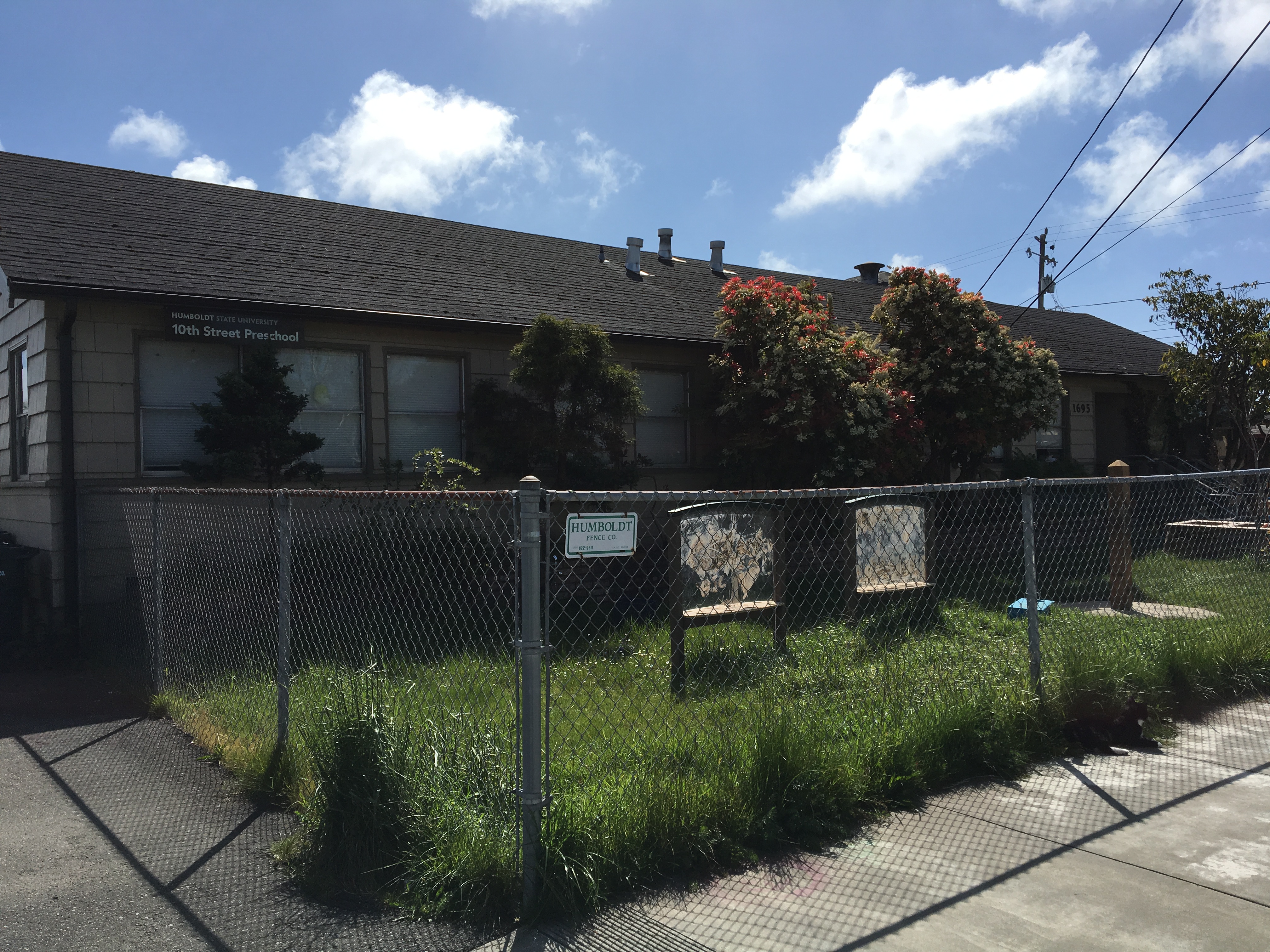
  • Humboldt cuts child care services

    Humboldt cuts child care services

    By Charlotte Rutigliano

    For the past three years, the university has been operating two different child care centers, one located on campus at the corner of 14th and B streets and the other at the end of 10th street.

    According to Steve St. Onge, director of Housing and Residence Life and manager of the children’s centers on campus, the centers have been running on a deficit budget for about three years. The deficit is caused by the extra expenses from the 10th street center, which is why the university has made the decision to close the children’s center on 10th Street on May 12.

    “With the overhead, administrative costs, the cost for teachers benefits and salaries, we could not make that extra center work,” St. Onge said.

    In a press release issued by the university, the total number of children served at the 14th street center will drop from 122 to 88.

    Kaila Swearington is senior child development major who worked at the 10th street location “I was really angry,” Swearington said.

    The 14th street location will still stay open and serve 88 children. According to St. Onge this close will have more of an impact on the community members who use this university services because current students, faculty, and staff have higher priority.

    St. Onge said the goal is to not negatively impact students, faculty, and staffs who need the service so they can keep up doing the good work that they’re doing at HSU.

    “We really have to focus on our values, the reasons that we exist,” St. Onge said, “and that is to support the academic success of our students on campus.”