The Library Cafe lifted its shutters for the first time in several years on Friday, Feb. 26. The cafe serves delicious coffee blends from Muddy Waters Coffee Co. as well as pastries, veggie wraps, drinks, and more.
Recent biology graduate Kate Mendoza was just hired by the private company Chartwells Higher Ed to work at the newly reopened cafe.
“Chartwells is really awesome,” Mendoza said. “Honestly, they work really well with students from what I’ve seen.”
Mendoza’s go-to drink is the cappuccino.
“I usually like to do the cappuccino,” Mendoza said. “It’s just espresso, steamed milk, and a lot of foam. I think the foam is my favorite part.”
Mendoza’s coworker Ahmad Shah, a senior majoring in communication, recommended the hazelnut mocha.
“I like a hazelnut mocha,” Shah said. “Sometimes coffee is a little bit bitter. The sweetness helps balance the bitterness of the espresso.”
Communication senior and Learning Center academic peer coach Kas Colwell ordered a vanilla latte with two espresso shots from the Library Cafe on March 3.
“I’m so glad y’all are open again,” Colwell said to Mendoza while ordering. “It’s exponentially improved my quality of life.”
After getting her drink, Colwell sat down at a nearby table in the dining area. As a library employee, she appreciates how easy it is to get to the cafe.
“It’s the convenience because I literally work in the library, so it’s on my regular route,” Colwell said. “I don’t have to go walking somewhere else to get coffee.”
The Library Cafe is available to all Cal Poly Humboldt students and faculty and is currently open on weekdays from 7:30 a.m. to 5 p.m.
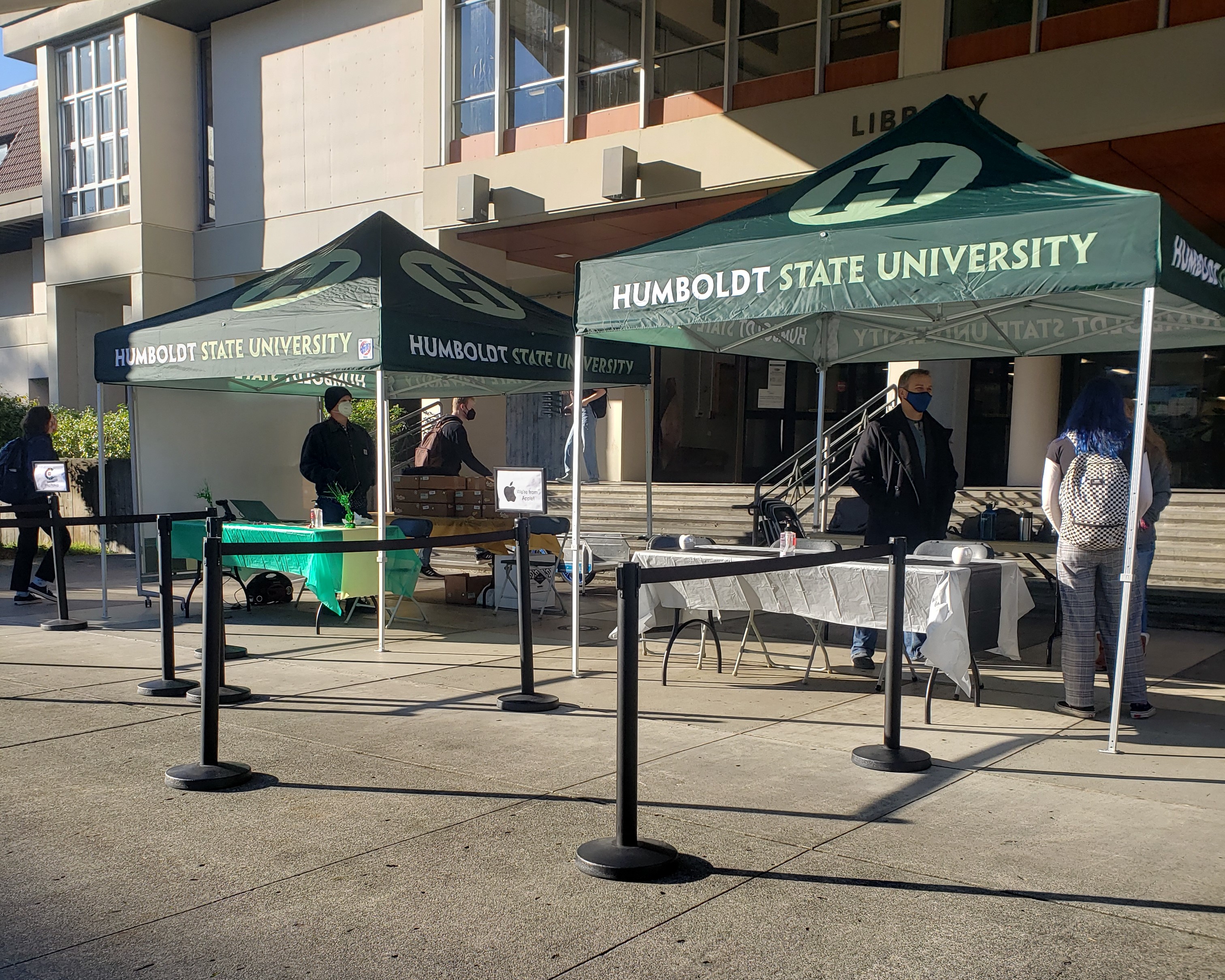
Humboldt State University set up tents in front of the library and gave out free iPads to incoming freshman and transfer students on Jan. 19.
The iPads were provided by the California State University Connectivity Contributing to Equity and Student Success (CSUCCESS) Initiative. CSUCCESS was created by the CSU in partnership with Apple. It debuted at HSU’s campus last fall and returned this semester.
Oceanography junior and transfer student Angelina Mayo got an iPad from CSUCCESS. She just transferred from Shasta College, where she worked as a tutor while attending school. A student that she tutored during the time used an iPad to take notes.
“I think it was just an incentive, and I wanted to try it because I saw a student at Shasta College use it and help keep her organized,” Mayo said. “She was more prepared for our tutoring sessions than some of my other students because of keeping her files together.”
HSU Library Student Assistants adorned the cardboard iPad boxes with HSU stickers. Stickers that are free for the taking at the Information Technology Services desk on the first floor of the library. Mayo stuck a green ‘H’ sticker on the h-button of her keyboard.
Photo by Alexis Valtenbergs | Apple Senior Account Manager Jenni Beck (back) helps transfer student Angelina Mayo (front) set up her free iPad outside the library on Jan. 19.
“I signed up for EOPS and got ‘swag,’ that’s what they called it,” Mayo said as she typed in her HSU ID and password on her new iPad. “And amenities.”
One of the amenities that Mayo opted for was the free iPad.
The goal of the CSUCCESS Initiative is to make technology more accessible to higher education students in the CSU system, especially in the backdrop of the ongoing COVID-19 pandemic that relegated students and faculty alike to remote Zoom classes.
“The biggest reason for that is to ensure equity and access,” Apple Higher Education Senior Account Manager Shawn Vandergriff said. “To provide the same level of technology to every student.”
According to Vandergriff, HSU has provided iPads to approximately 700 HSU students since CSUCCESS came to campus last semester. His goal is to bridge what he referred to as the ‘digital divide’ in higher education, which is often overlooked.
Eligible HSU students get to keep their free iPad throughout the duration of their academic career at HSU. Apple Care insurance will cover up to two instances of breakage, according to Vandergriff.
The CSUCCESS program is expected to return to HSU again in the fall.
“As long as we have a budget to do that, I can see it happening into the future,” HSU Customer Care IT Consultant Andy Pierce said.
To learn more about CSUCCESS at HSU, visit its.humboldt.edu/csuccess.
For the first time since 2017, the HSU library is fully open to students.
The HSU library reopened on Jan. 18th after the completion of the Seismic Retrofit project. This project was undertaken to reduce structural damage from seismic activity.
Changes to the library are mostly structural apart from the lower floor, which underwent a complete remodeling. This included repainting, new carpet and flooring, and new window coverings. A new sprinkler system was implemented throughout the entire building as well as new roof tiles and lighting.
Jason Maugh was the Project Manager and was brought on board to work for HSU in 2016. This project has been in the works for years before this and was originally brought to attention in the 90s. According to Maugh, In 1993 CSU did an evaluation of all of HSU’s buildings and found that the library posed a risk to the general public in the event of serious seismic activity. They were not able to provide the funding for fixing this problem until 2015, over 20 years later.
The project was dragged on for even longer after the completion of the original plans in 2020.
“The state fire marshal looked at the changes as a building addition which triggered sprinkling the whole four story building,” said Maugh. This is the reason the library has been in construction for so long, since the school did not originally plan on putting in new sprinklers and had to request additional funding from CSU. Despite the arduous process, the library is now mostly complete and much safer in the event of a serious earthquake.
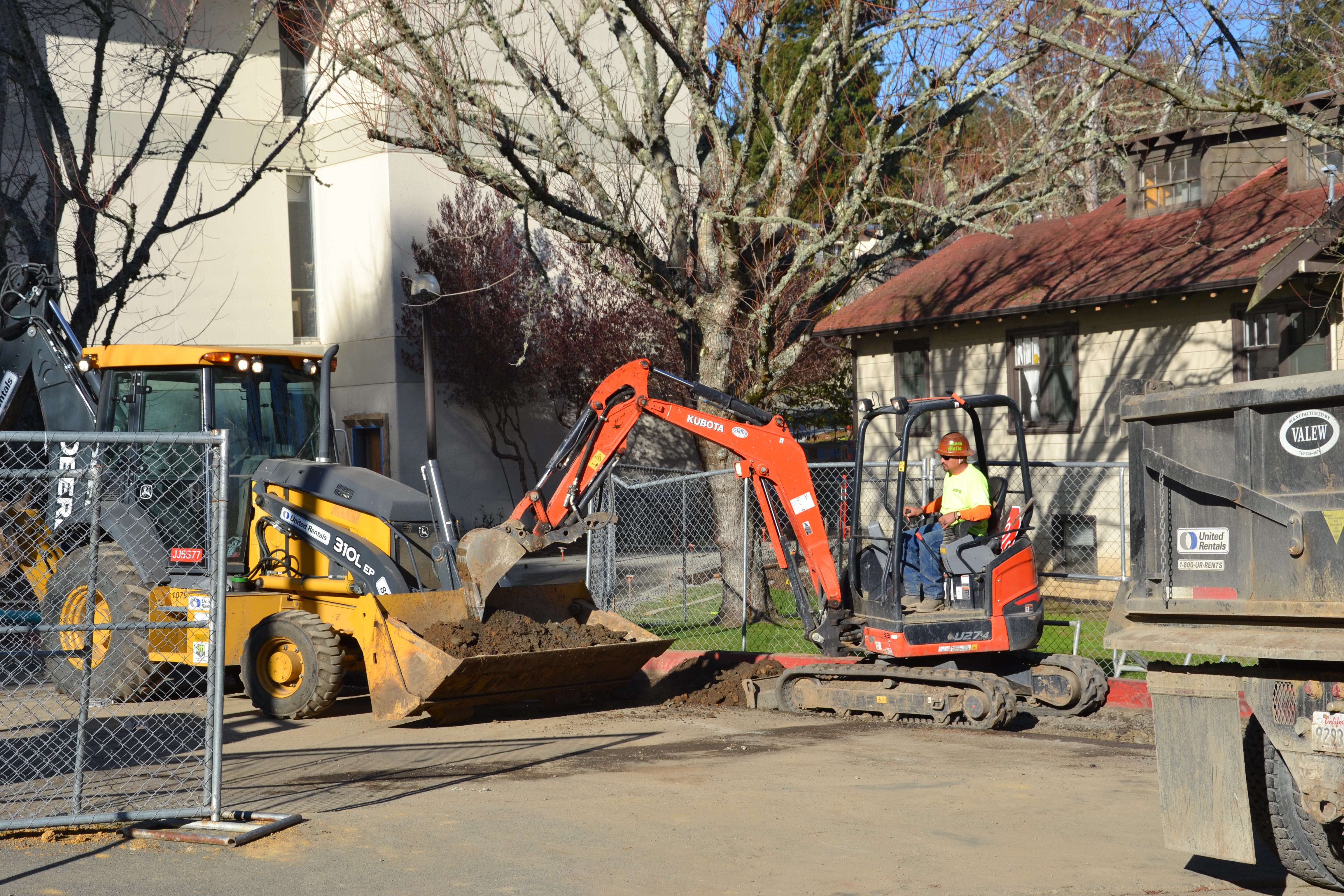
There is still some exterior construction being undertaken but it has no impact on students’ accessibility to the library and all facilities are available to students regardless.
Due to recent spikes in COVID-19 throughout Humboldt county, access to the library has been limited exclusively to HSU students and faculty for the foreseeable future. Each student must have their student ID ready in order to access the facilities.
The library undergoes seismic retrofit construction
Humboldt State University’s library has been under construction since 2018 when the contract was set and planned in 2015. The construction project is for the library and the theatre arts buildings on campus, both buildings were not safe regarding seismic activity.
Jason Baugh, HSU project manager, has been communicating between the contractors and campus on the seismic retrofit project for both buildings.
“Building safety is to keep these buildings maybe not 100% secure, standing and occupiable after a major earthquake, but getting everyone out safely,” Baugh said.
The overall goal was to have it safe for seismic activity but other projects and delays started to pile on as time progressed.
“The California building code changes every three years, the chancellor’s office for the CSU also has their own internal code review and it’s basically mirroring what the California building code is,” Baugh said. “They have their standards where they want all their buildings to adhere to and so that changed and as we submitted plans for review, we missed the code cycle and everything had to be re-evaluated.”
Setbacks such as new seismic code, modifications in original plans and lower level issues with the foundation have led to longer construction time than anticipated. Recently the project got sprinklers in the library.
“There was a few areas of the lower library basement, and basically it was where books, some of the special collections library books that they don’t use on a daily basis but are archived for various reasons,” Baugh said. “For some reason, only that area was sprinkled.”
Changes to the project made the years of construction go on longer than originally thought. The overall budget for the project of both buildings was $20 million plus add ons of almost $4 million dollars.
Daytime construction has increased due to COVID-19 restrictions. Cyril Oberlander, HSU’s library dean, has been overseeing and delegating people to new temporary areas of work.
“It also created new opportunities, rather than waiting for the sprinkler project for a couple of years,” Oberlander said. “It’s something we can do now because no one is in the building which is pretty good.”
Since the library will most likely be closed in the spring semester due to COVID-19, construction will continue at a faster pace. Oberlander is hopeful that students and all HSU personnel will enjoy the new library when things are back to normal.
“Thank goodness they really were resilient through it because it’s finishing up now,” Oberlander said.
Jaime Clough, a senior at HSU, had trouble in the previous semester with construction noise and communication of the project’s finishing time.
“I was in the library every single day. I was there on weekends. I basically lived in the library and it was kind of tricky,” Clough said. “I mean sometimes you have to go through random doors, sometimes the stairwells are closed and you have to go around the backside. You’d be sitting in the nice quiet corner trying to study for finals and all of the sudden there’s a jackhammer on the wall right next to you.”
Construction is set to be finished around June of 2021. With construction schedules and the library closed, construction could be finished before the fall 2021 semester.
“June is my goal, I think it’s realistic, as I kind of indicated you don’t know till you dive into things especially with retrofit projects,” Baugh said. “Hoping for the best, I think the end of June is a realistic date and that we may have a month buffer of working through any problems.”
You’ve seen it. You’ve heard it. You’ve become annoyed by it. When will it end?
The seismic retrofitting project in the Humboldt State University library is a five-year project of additions and renovations to the library that aims to ensure the safety of the building in the event of a major earthquake. Much of the work of the project is done or is underway.
The completion date of phase three of the project, which includes improvements and expansions to the basement of the library, has been moved to April 14—although there is a chance that it could get moved back again. Much to the dismay of students and faculty, this means jackhammering and drilling will continue throughout the coming weeks. Director of Planning, Design and Construction, Mike Fisher, pointed to a number of factors contributing to the delayed timeline.
“We have to excavate through a number of existing conditions, and through that action, we reveal things we didn’t know about,” Fisher said.
An example Fisher mentioned was the stairs in the library needing to be redone as his workers discovered that the original stairs were poorly designed.
“It’s little instances like that that compound to lead to a time delay,” Fisher said.
Fisher went on to talk about the permitting process.
“During the project, we were moving through permitting and one of the jurisdictions having authority is the Office of the State Fire Marshal,” Fisher said. “Their permitting process took much longer than expected and we had to halt production until we could get that permit secured.”
Fisher also said he and his crew have been working on retrofitting the theatre arts building alongside the library. They considered the theatre arts building to be a higher priority building, as it’s home to regular instruction.
Deema Hindawi, a senior at HSU and a co-coordinator at the Multicultural Center, is one of many directly feeling the effects of the construction. She said it’s hard for her to function in the MCC both as a student and a co-coordinator because she has had meetings interrupted by construction noise.
As a critical race, gender and sexuality studies and criminology double major, she has found it difficult to function because she has been constantly battling jackhammering and drilling.
“It sucks that we don’t really get much of a say in it and it somehow always comes back onto us.”
Maya Habis
Hindawi also noted that there used to be a sign on the side of the MCC that was placed there as part of the retrofitting project without taking into consideration the impact of its words.
“Having people look at that sign is really uncomfortable, especially when you identify as a part of a marginalized community and having to see the sign that constantly is blaring in your face that reads, ‘No trespassing,’” Hindawi said.
Maya Habis, a junior critical race, gender and sexuality studies major and also a co-coordinator at the MCC, echoed much of what Hindawi said.
Habis added their own two cents on being moved around to the bungalows and back.
“It sucks that we don’t really get much of a say in it and it somehow always comes back onto us,” Habis said. “We kind of get put in between these two things—it’s an ultimatum.”
Dean of the University Library, Cyril Oberlander, said he likes to see himself as part of the student body. He has been told and has noticed for himself that students are not enjoying the noise in the library. He wanted to make it clear that he understands the difficulties of the noise. He invited students and faculty to voice their displeasure with him directly along with suggestions for how he and his staff can make being in the library a better experience for all.
Humboldt State Special Collections offers the opportunity for community members to preserve their history
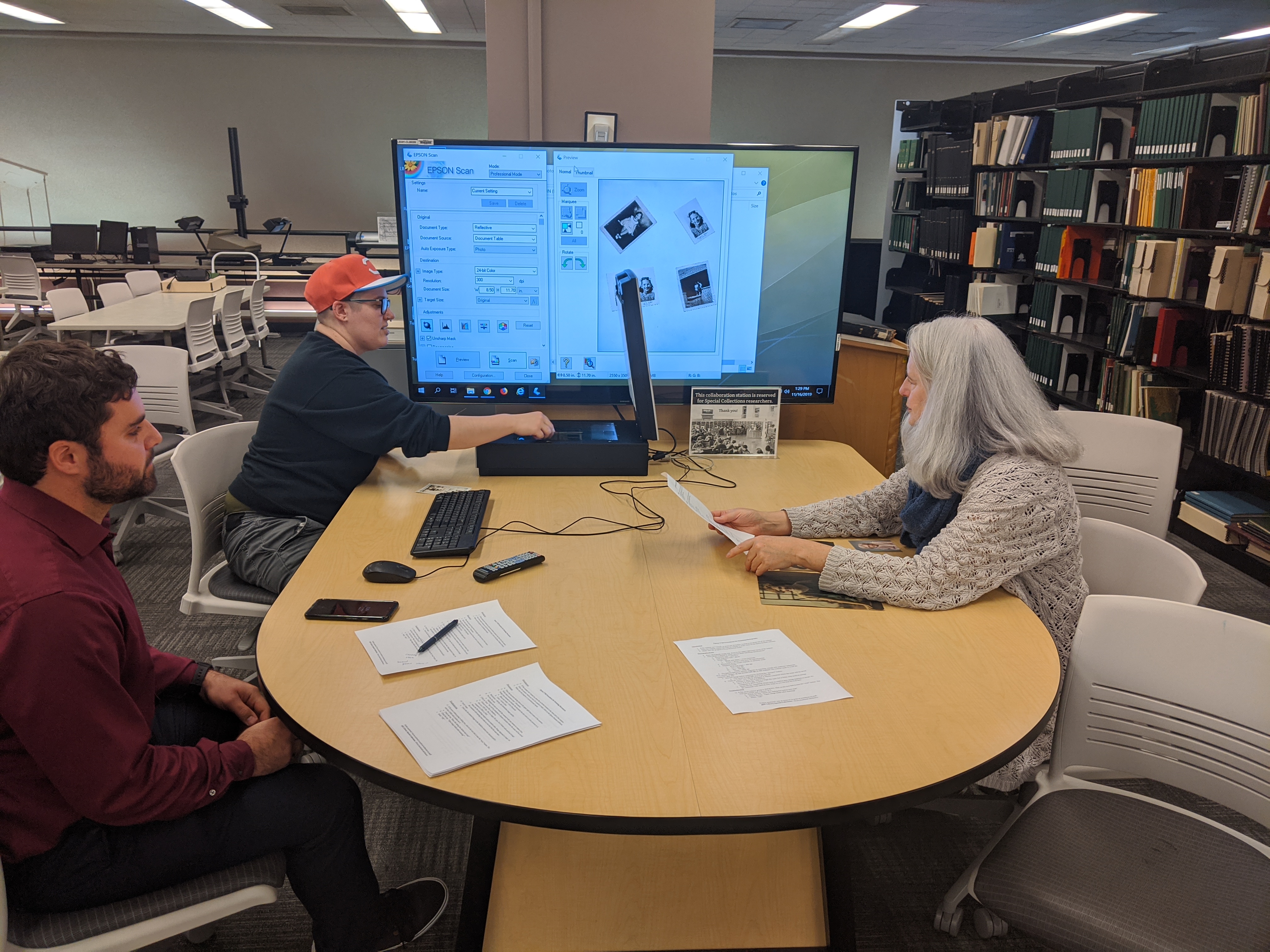
On Saturday the HSU library played host to Humboldt History Digitization Day, an event that gave students, staff and community members the opportunity to take photographs and documents and save digital copies for free.
Digital copies are a great way to save backups of personal documents and photos from deterioration. The cost of a photo scanner can get into the hundreds of dollars, and not everyone has an understanding of photoshop and other programs that can be used to crop and edit the digital copies.
During this event, archivers were available to directly assist in the use of the scanner and photoshop courtesy of the libraries Special Collections division.
Special Collections Instruction Librarian Louis Knecht was available to assist the public in digitizing their documents, as well as share some insight on the impact of archiving Humboldt history.
Knecht saw the event as an opportunity to expand peoples’ digital literacy, as well as a way to archive history.
“If you have any kind of family photos, or documents, that aren’t in digital form, digitize them. That’s your family history, you don’t want to lose that, that’s precious stuff.”
Erin Sullivan
“HSU is a center of technology in what is a relatively rural environment that is Humboldt County,” said Knecht.
Erin Sullivan, an English professor at HSU, stopped by with a thick binder of her family history and was excited to start preserving the past. She had four generations of photographs, from Irish immigrants on her father’s side, to the pioneers on her mother’s side that were living on the plains.
“If you have any kind of family photos, or documents, that aren’t in digital form, digitize them,” Sullivan said. “That’s your family history, you don’t want to lose that, that’s precious stuff.”
She wasn’t afraid to learn the process, and was happy to share her appreciation of the assistance she was given.
“I have never used any fancy digital equipment,” said. Sullivan. “I scan things for teaching purposes, but not high quality scanning.”
Humboldt has benefitted from archiving history in the past, such as recording the protests of the Gasquet-Orleans road, whose inception began in the early 60s.
“I think it takes away HSU as just relevant to students, staff and faculty,” said Knecht. “It opens the door to more community engagement.”
Bing! Flight attendants, please prepare for take-off
We are now departing from the Humboldt State University library.
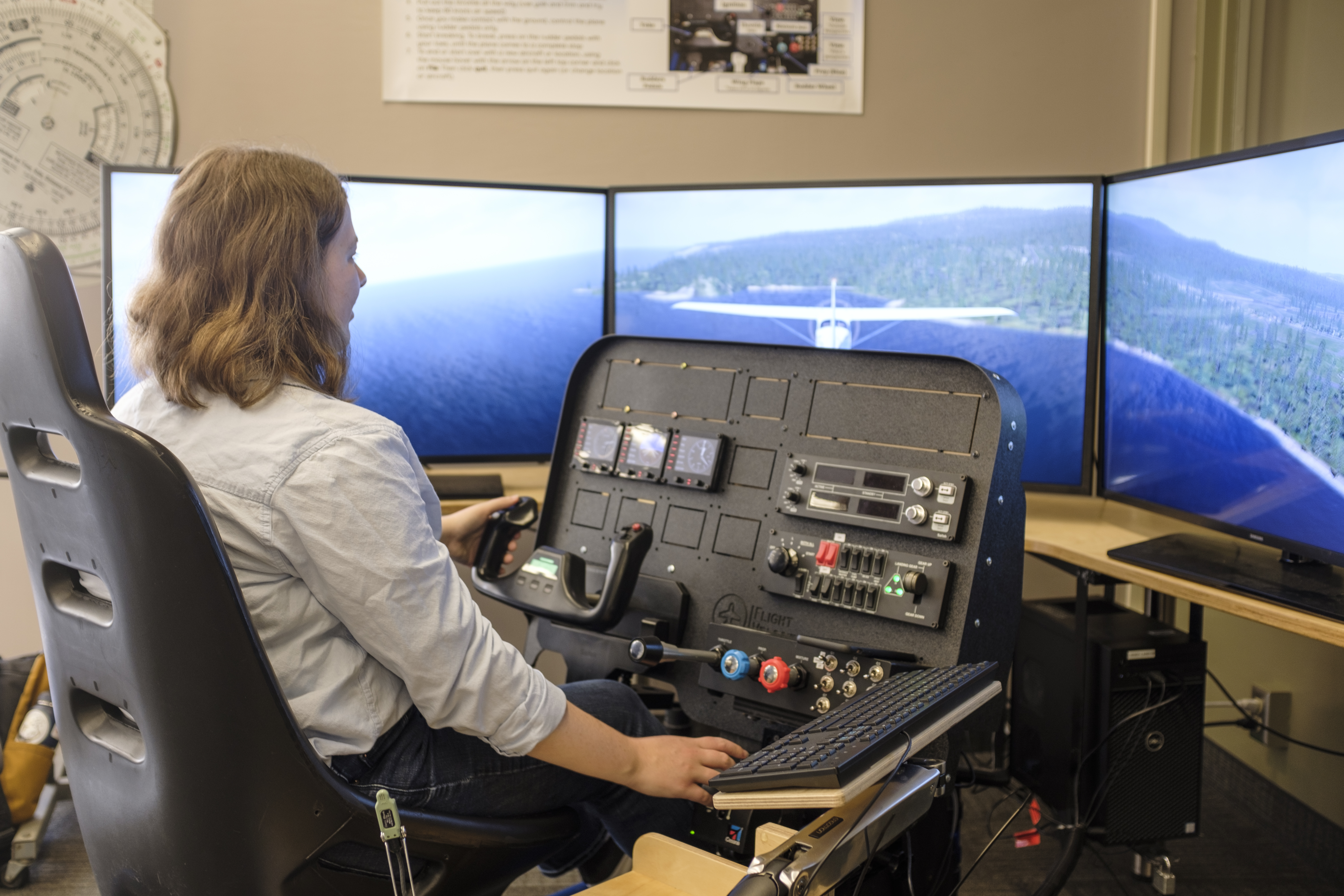
Since fall 2018, Humboldt State University’s PC Gaming Club planned, fundraised and constructed a flight simulator for anyone to use. Students, faculty, staff and community members can learn how to fly an airplane by practicing in the simulator on the third floor of the library.
“The amazing thing about simulations is that it’s designed to simulate real life,” Sarah Livingstone, president of the PC Gaming Club, said. “You are still having the same neural connections and the same wavelengths in your brain to replicate that. So then when you do step inside a real airplane, you are doing all the exact same things; you know how to do everything correctly.”
The control wheel or “yoke,” juts out from the instrument panel of the flight simulator. | Photo by Michael Weber
The simulator features all the levers, buttons, instruments, windows and pedals that one would see in a real-life cockpit. Library pilots can choose their airplane model, airport location, flight conditions and other variables within the software, Microsoft Flight Simulator X.
Step-by-step instructions are posted nearby so that anyone may start the simulation solo. Livingstone said the club wants to hire a trained student to teach the public to operate the simulator and hire a flight instructor to allow anyone to obtain a real pilot license.
“We’re looking into working with extended education to bring forward this flat ground school program that would help students get their pilot’s license at HSU.”
Sarah Livingstone
“We’re looking into working with extended education to bring forward this flat ground school program that would help students get their pilot’s license at HSU,” Livingstone said.
Just like getting a license to drive a car, the two requirements for a pilot’s license—as defined by the Federal Aviation Administration—are to pass a written test and record 40 hours of flight practice with a professional.
David Marshall, the advisor to the PC Gaming Club, said a pilot-in-training may save a significant amount of money for the 40 hours of practice by using a simulator rather than a real, gasoline-consuming airplane.
A nearby supplemental book for pleasure reading rests on the flight simulator desk at the Humboldt State University Library on Sept. 23. | Photo by Michael Weber
“The cheapest airplane is right around $100 an hour. On top of that, you get another $30 an hour for your instructor,” Marshall said. “So every hour, an airplane costs $130. In the simulator, if somebody else builds it for you, it’s just an instructor and it’s $30 an hour to put book time.”
The club is searching for more funding to provide a classroom to study the written test and a professional instructor for the simulator.
Livingstone said they are looking into purchasing the final flight instruments, headphones, a new cover for the chair and a pillow for younger pilots-in-training to access the simulator.
The project started one year ago when Marshall said he required the club to create a project with a positive, meaningful and educational experience.
“I suggested gently that gaming is really simulation,” Marshall said. “And there’s a lot of stuff we can do in simulation.”
The club then raised $10,000 for the furniture, chairs, equipment, computer and software by writing grants, fundraising and working with community members that provided some equipment and furniture.
Livingstone said the simulator caught the attention of HSU President Tom Jackson, Jr. and Provost Alex Enyedi, who are both aviators. Livingstone encountered unexpected enthusiasm when she met with Jackson.
“It was supposed to only be a 40-minute meeting, but it ended up being an hour and a half,” Livingstone said. “He was having so much fun.”
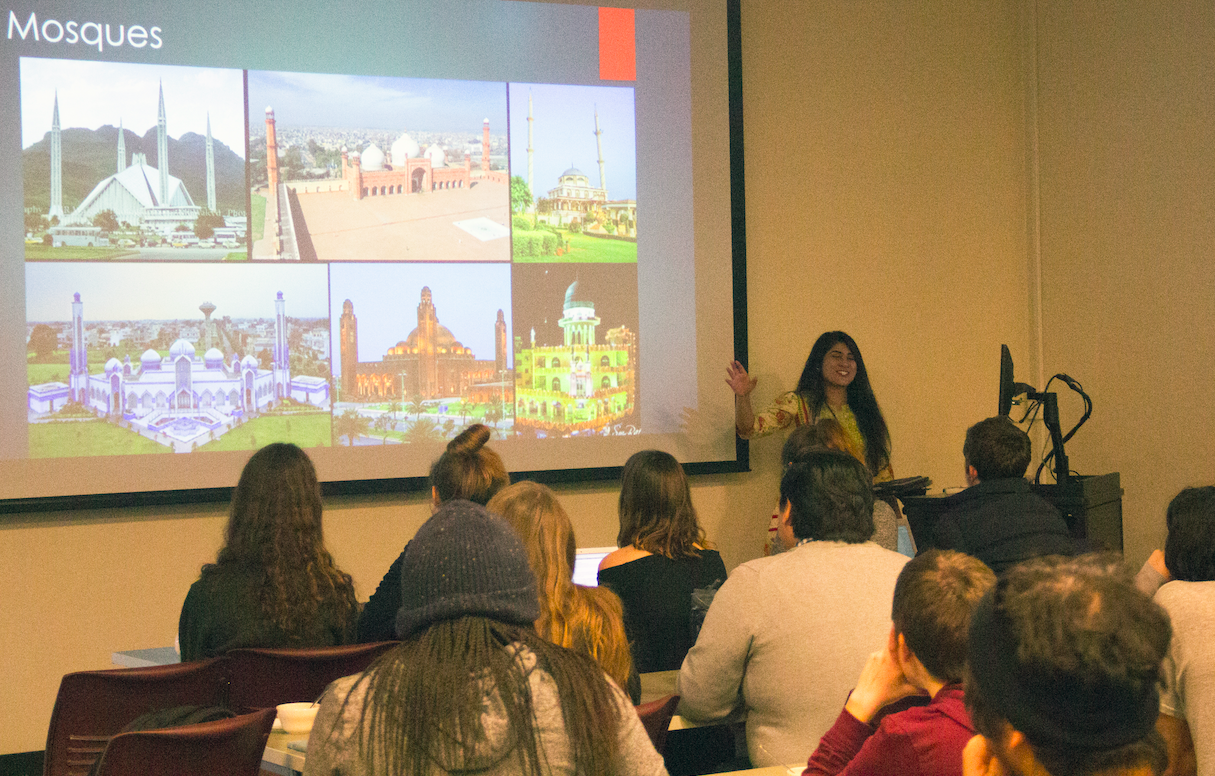
A collective gasp was heard across the HSU Library Fishbowl after Pakistani exchange student and Humboldt State business major Archana Nilhani made a shocking statement.
“You can go to jail just for celebrating Valentine’s Day there,” Nilhani said.
Nilhani delivered an insightful presentation on her home country of Pakistan during Global Cafe on Tuesday.
The presentation is part of a semester-long series put on by HSU Clubs & Activities and Associated Students, known as the Global Cafe.
With 61 students in attendance, attendees were offered coffee and a traditional Pakistani dessert known as gulab jamun at the entrance.
The presentation consisted of basic information about Pakistani geography, the different cultures within the country and a brief look into the history of how Pakistan came to be. The presentation went so far as to even address certain social justice issues in Pakistan and contrasted them to issues we have to deal with in the United States.
Nilhani was excited to be at HSU and enjoyed her experience as an international ambassador. She also shared what she planned to do with her experience as a business major.
“I want to help blend cultures through clothing and fashion design. I am really lucky to be here on a scholarship,” Nilhani said. “The government wants me to pursue my dreams.”
Of the many students in attendance, Gary Ploenus, an international student from Germany, looked forward to this event.
“Being an international student myself, I thought it would be very interesting to not only learn about other cultures, but see how Americans react to learning about other cultures,” Ploenus said.
Molly Kresl is a coordinator for the Clubs & Activities office.
“The school has been trying to do a better job [of] getting international students engaged in the student life,” Kresl said. “We are hoping to give current HSU students a chance to understand other cultures and see what they are like.”
Kresl hopes to include presentations by people of indigenous descent for the next semester and also encourages students to approach her if they want to do their own presentation.
The next Global Cafe, presented by an Italian HSU student, will be on March 21 in the same location at 5 p.m.
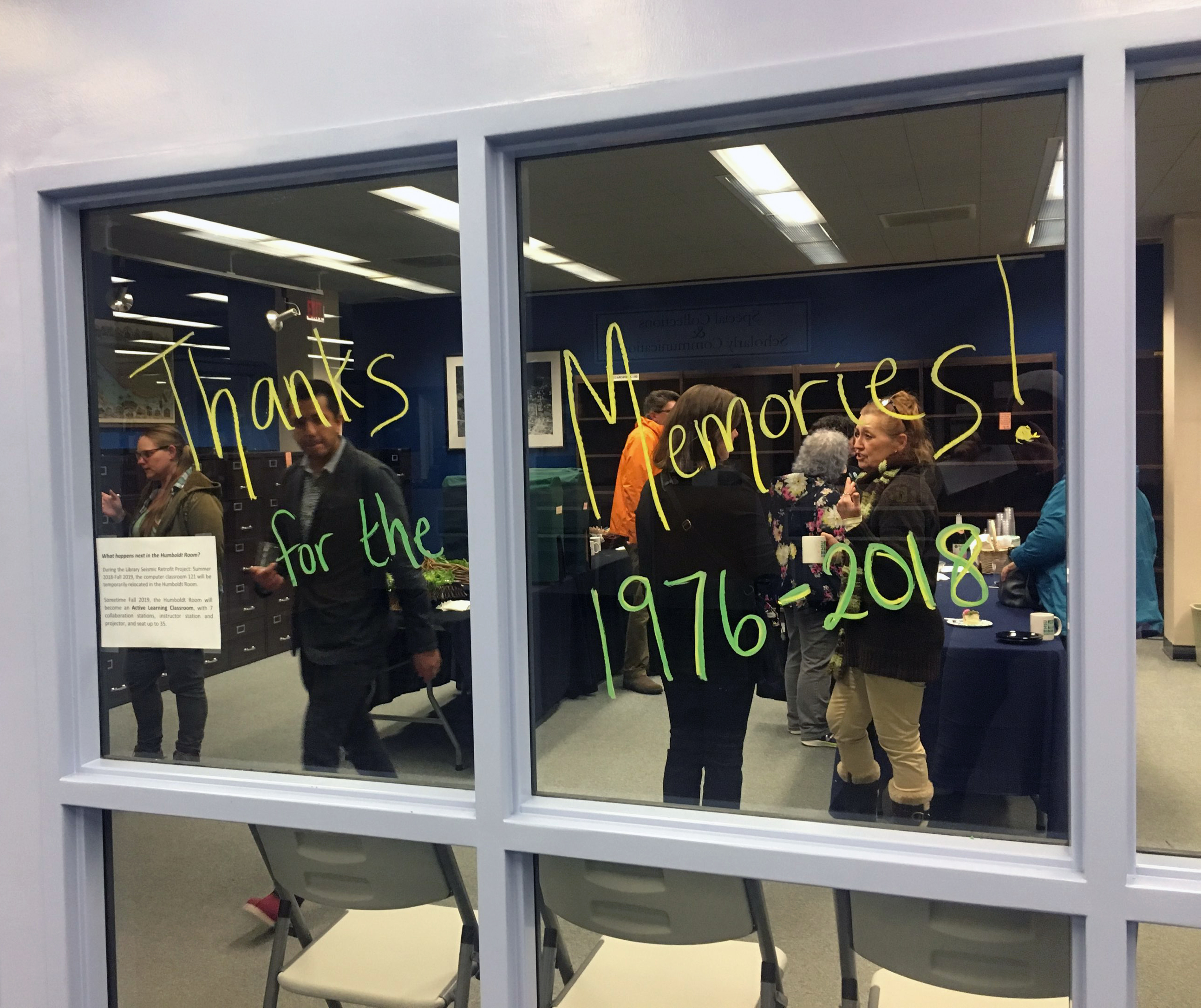
Humboldt State students now have access to more research materials than ever before. On Feb. 27, the HSU library hosted the grand opening of the new special collections section, previously contained to a tiny room on the third floor.
“It’s one of the biggest archives north of Sonoma,” HSU librarian Carly Marino said.
The special collections section is home to archived materials about many local topics of interest, including natural resources, native peoples, the fishing and logging industries, history of local buildings and the history of HSU.
“This is the spot where students and members of the community do research,” Marino said. “We’ve had people fly in from Germany to learn about the redwoods.”
With HSU currently in a budget crisis, this expansion of the special collections section was made possible primarily by grants and private donations from the Van Kirk family and retired librarian Joan Berman.
One of the ways the HSU library is working to make the resources more accessible is by digitizing many of the materials.
“When I came in here for the first time, it was very archaic,” Jorge Ambriz, HSU Early Outreach Department staff and former library scholar intern said.
Ambriz works with a team of people to do the painstaking task of digitizing some of the books and materials in special collections. It has taken them up to four months to digitize one book. But Ambriz finds the work and access to the material valuable, especially for history students.
“As students, we sit for months and months learning methods and theories,” Ambriz said. “This place lets you put those methodologies into practice.”
HSU Library scholar intern Alex Childers has also been working hard on digitizing materials and making them more accessible. Childers and other interns are working on a project adding historical articles, photos and letters to Redwood National Park’s Researching the Redwoods.
“It’s going to raise awareness for not only students, but also the community,” Childers said. “This is a really great place to start for research about anything. People use it for independent research, projects or for fun. ”
Special collections is on the third floor of the HSU library.
Hours are Monday 1-7 p.m. and Tuesday-Friday 1-4 p.m. or contact Carly Marino carly.marino@humboldt.edu for an appointment.
This website uses cookies to improve your experience. We'll assume you're ok with this, but you can opt-out if you wish. Cookie settingsACCEPT
Privacy & Cookies Policy
Privacy Overview
This website uses cookies to improve your experience while you navigate through the website. Out of these cookies, the cookies that are categorized as necessary are stored on your browser as they are essential for the working of basic functionalities of the website. We also use third-party cookies that help us analyze and understand how you use this website. These cookies will be stored in your browser only with your consent. You also have the option to opt-out of these cookies. But opting out of some of these cookies may have an effect on your browsing experience.
Necessary cookies are absolutely essential for the website to function properly. This category only includes cookies that ensures basic functionalities and security features of the website. These cookies do not store any personal information.
Any cookies that may not be particularly necessary for the website to function and is used specifically to collect user personal data via analytics, ads, other embedded contents are termed as non-necessary cookies. It is mandatory to procure user consent prior to running these cookies on your website.