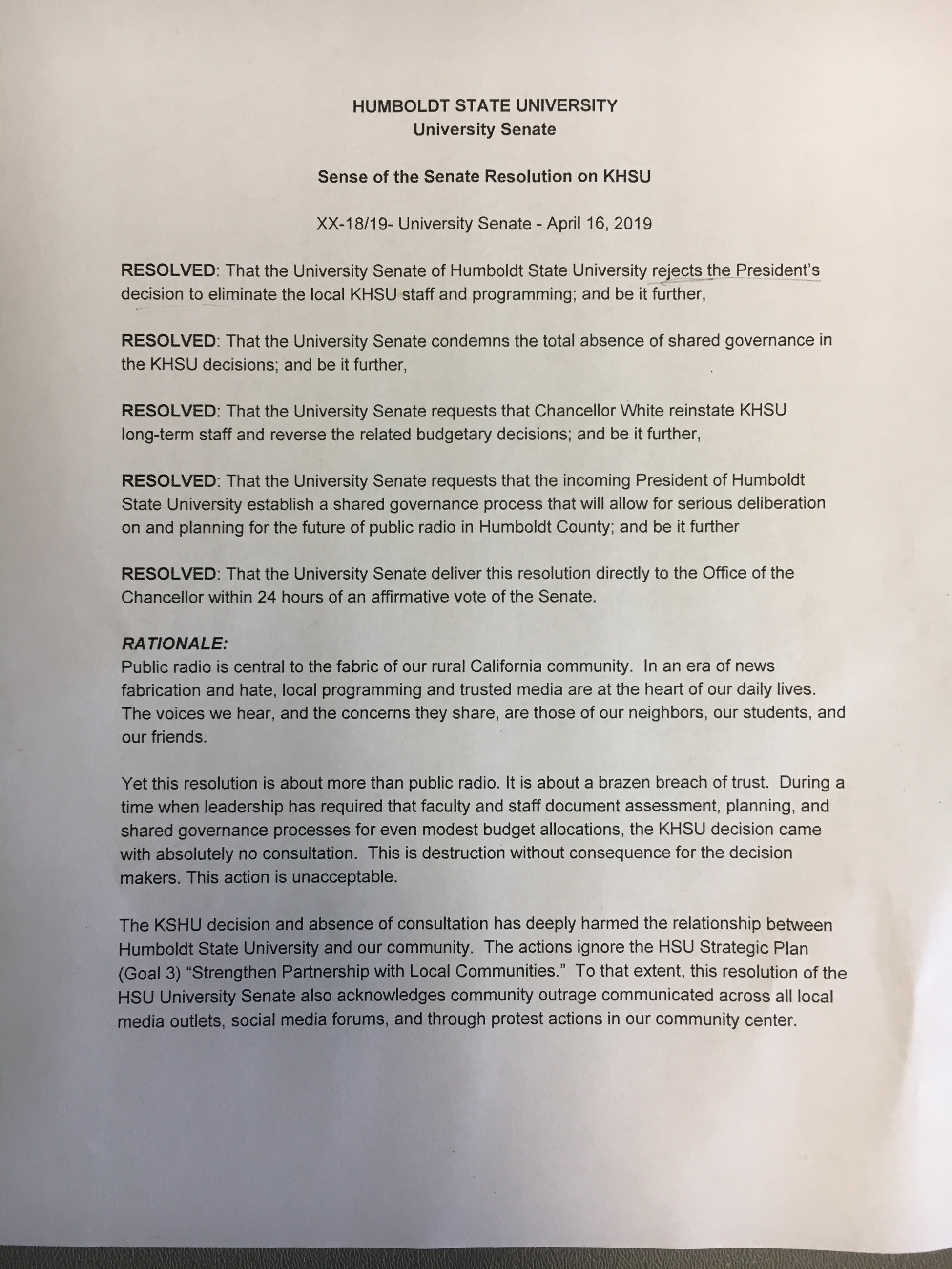
Humboldt State senate condemns actions taken against community radio
Humboldt State University Senate voted to pass a resolution condemning the actions of the Rossbacher administration to gut KHSU. The resolution passed with 75% in favor of, 7% opposed, and 18% of the senators abstaining.
Two amendments will be added that address preventing the sale of the items and library of KHSU and for the archived work to be returned to the creators. Missing from the Senate meeting were HSU President Lisa Rossbacher and Craig Wruck, Vice President of University Advancement.
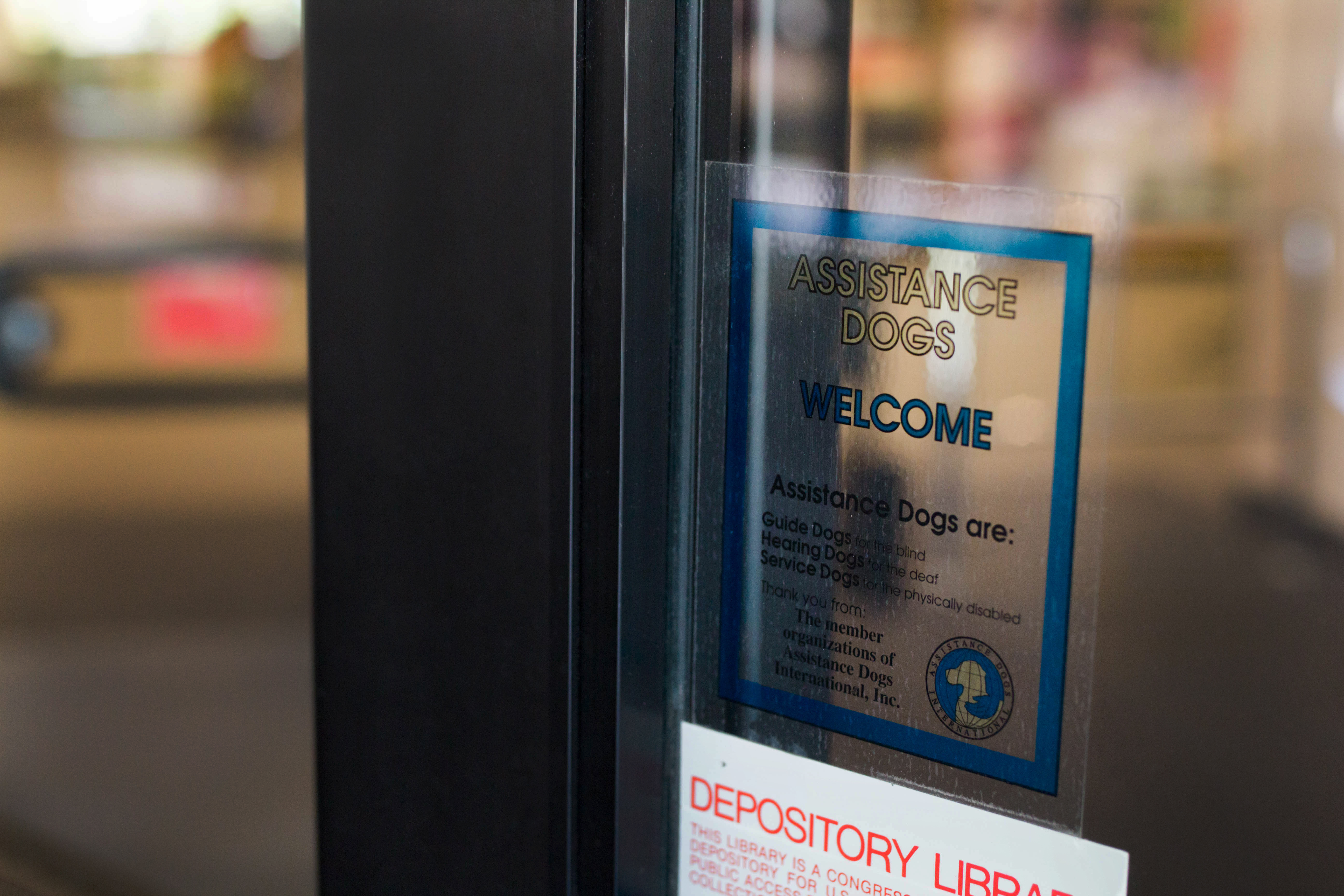
The HSU campus is not a zoo. After attending this university for almost four years I’m inclined to disagree with that statement for a variety of reasons, but those who carry that sentiment have made their voices heard. Last semester the HSU Senate passed a draft resolution banning all animals except service animals from campus buildings. Who does this policy affect? Everyone really, but three groups in particular.
The first group is made up of those who have certified service animals. Service animals go through a vigorous training regiment and are considered “working” animals who assist people with disabilities. Various examples include calming individuals with PTSD, alerting others if the owner is having a seizure, etc. Service animals are trained to perform a task specifically related to the disability the owner has.
Michelle Meyers with her seizure alert dog, ” Roody.”
The second group is made up of the people who have emotional support animals. There are a few distinct differences between emotional support animals and service animals, but I will only outline two. The first is that emotional support animals are intended to help treat persons with psychological and emotional disorders. Whether or not these qualify as legitimate disabilities is something that mainstream society continues to argue about. The second difference is that emotional support animals don’t go through a vigorous training program, they are essentially prescribed by a licensed medical professional as a way to ease the symptoms of the patient’s disorder.
Kimber Nguyen and her emotional support anima, “Duke.”
The third group is probably the largest of the three. These are the people who bring their pets to class because they can. When a dog jumps up onto a food surface in the Depot or leaves behind a steamy pile of excrement, these are the people that passerbys think of. Based on the comments made during the HSU Senate meeting when this resolution passed, this is the group that is being targeted by the new pet policy.
The problem with this policy is that it uses broad measures to target a specific group of people and in the process, causes substantial damage to students with real and pressing needs. These are the students who depend on emotional support animals to make it through a tough class, or to even get there in the first place. Companionship is a powerful thing that enables human beings to do incredible things, but it’s at times necessary to achieve the ordinary. Because sometimes the ordinary becomes the impossible, but an impossible that can be diminished by a familiar friend doing what any friend would do, which is to offer support.
This policy is also cruel towards the emotional support animals themselves. The policy mandates that emotional support animals be caged or kenneled while their owners are in class. Does anyone have class all day? Both the owner and the emotional support animal lose out in this arrangement. But this collateral damage is readily accepted in an environment where members of the HSU campus are tired of dealing with students who have abused the tolerance towards animals on campus.
One of the worst things about this policy is that it doesn’t have to be crafted this way. Emotional support animals can be allowed in classrooms, and they should be. But the easiest solution to the host of issues that animals on campus have created is the current version of this policy. Supposed “modest revisions” are being made, but I’m skeptical that will amount to more than the correction of a typo.
The other awful aspect of this policy is the lack of student input. During the HSU Senate meeting when this draft resolution passed, multiple Senate members expressed the need for student input to formulate a better pet policy. When it comes to this policy, it’s not that the HSU Senate isn’t listening, it’s that the student body isn’t talking. Don’t “sit down, be humble” stand up, don’t mumble!
Through a variety of voices and action, HSU students and staff have created amazing programs and initiatives to address a variety of issues and interests such as : Check It (a nationally renowned movement to eradicate sexual assault and violence), KRFH (a FM college radio station that reels in awards every year), and WRRAP ( a waste reduction program which has reduced waste by 50% since 1996!). There is no reason that animals on campus cannot be met with the same type of creative and effective measures, but there is an explanation as to why that isn’t happening – I’ll let you finish that thought.
This website uses cookies to improve your experience. We'll assume you're ok with this, but you can opt-out if you wish. Cookie settingsACCEPT
Privacy & Cookies Policy
Privacy Overview
This website uses cookies to improve your experience while you navigate through the website. Out of these cookies, the cookies that are categorized as necessary are stored on your browser as they are essential for the working of basic functionalities of the website. We also use third-party cookies that help us analyze and understand how you use this website. These cookies will be stored in your browser only with your consent. You also have the option to opt-out of these cookies. But opting out of some of these cookies may have an effect on your browsing experience.
Necessary cookies are absolutely essential for the website to function properly. This category only includes cookies that ensures basic functionalities and security features of the website. These cookies do not store any personal information.
Any cookies that may not be particularly necessary for the website to function and is used specifically to collect user personal data via analytics, ads, other embedded contents are termed as non-necessary cookies. It is mandatory to procure user consent prior to running these cookies on your website.