The Lumberjack


Students Serving The Cal Poly Humboldt Campus and Community Since 1929

Tag: Humboldt State University

  • Music of the Moment 3

    Music of the Moment 3

    For better or worse, Big Sean is likely gone for good.

    After taking a three year hiatus, following luke-warm reception to his 2017 album “I Decided,” and an overwhelmingly negative response to the collaborative album he released later that year with Metro Boomin – ironically titled “Double or Nothing” – Big Sean’s new album “Detroit 2” marks a permanent step away from superstardom.

    Sequel to the 2012 mixtape “Detroit,” part two – the album version – delivers a much different experience in almost every regard. Each project boasts features from some of the biggest artists in the game at the time and each project features interludes from three highly respected entertainers, however, the similarities end there.

    Previously rapping about fame, fortune and the fast-life, with 2017’s “I Decided.” Sean took his music in a new direction of peace, positivity and personal growth. Doubling down on these new themes in “Detroit 2,” Sean delivers his second solo-album in a row without an undeniable hit-record like “I Don’t Fuck With You” or “Clique.”

    Leading up to the release of “Detroit 2,” Sean set the tone releasing “Deep Reverence,” featuring the late Crenshaw king, Nipsey Hussle. On the track, Sean opens up about his overblown beef with Kendrick Lamar, the baby he lost and thoughts of suicide. Sean, only displays this level of vulnerability once more on the song “Lucky Me,” where he speaks to his public break-up with R&B singer and current girlfriend Jhené Aiko and having been diagnosed with heart disease at 19-years-old. These topics are all left at the surface level and unfortunately, we never get to hear directly how Sean feels about any of it – only that he’s gone through it.

    After focusing an entire album around the theme of reflection with “I Decided,” Sean captures his life path and what it’s cost him with an effortless delivery, resembling conversation, on the track “Everything That’s Missing.” Along with “Guard Your Heart,” “Full Circle” and “Feed,” in which he focuses on the conflictions within fame. These are the songs where Sean is in his element.

    On the flip side of things, time and time again on this project, Sean falls short of a hit-record – lacking the undeniable catchiness factor on the song “Harder Than My Demons,” not giving Post Malone the entire chorus of “Wolves” or letting Travis Scott give up half-way through the hook on “Lithuania.” For someone with as much experience as Sean, it’s as if he’s actively trying to avoid a hit.

    Fortunately, Sean saves the best for last, ending the album on an extremely high note, beginning with the song “Don Life,” featuring a strong verse from Lil Wayne and sampling the legendary Michael Jackson’s classic song “Human Nature.”

    For the next track, “Friday Night Cypher,” Sean recruits 10 fellow Detroit MCs to rap over eight different beats that mostly cater to each artist. Sean delivers two of his best performances of the album on these songs and the latter is a moment not soon to be forgotten by fans of hip-hop.

    With “Detroit 2,” Sean delivers a project more honest and open than anything he’s released before but at the cost of the quality of his music. After three years off, Sean’s musical abilities remain unchanged and his concept of quality has suffered. Most songs are ruined by a bad flow here, a lazy hook, poor arrangements or overproduction that make them hard to listen to outside of the context of the album.

  • Students Find Creative Ways to Pass Time in Quarantine.

    Students Find Creative Ways to Pass Time in Quarantine.

    An inside look at how Humboldt State students’ are staying busy with pandemic hobbies.

    Just because life has begun to resemble a sci-fi movie, doesn’t mean students aren’t having fun. Abiding by COVID-19 protocol, students are cooped-up indoors more than usual. While video games, Netflix and sleeping becoming more common in the household, others have chosen instead to spend their time creatively.

    Rebekka N. Lopez, a music education major at Humboldt State University, was the drum major for the Marching Lumberjacks in the spring. When classes were brought online and health-guidelines were put in place, the Marching Jacks’ season was cut short and they remain on the bench this semester. Undeterred, Lopez continues to practice through quarantine.

    “That’s what I did almost every day this quarantine,” Lopez.

    Lopez enjoys practicing as a hobby and intends to pursue a professional career in music. Recenty, she’s been learning to play new instruments.

    “I play a couple, I play the flute and the saxophone mostly and, I’m still learning other instruments like ukulele, guitar, clarinet and piano,” Lopez said. “It’s my job to know even more than that so I’ve got a long way to go,” Lopez said.

    Hobbies are not only great outlets for self-expression, they can also make it easier to co-exist with the anxious attitude of the difficult times we live in. HSU psychology major Madelynne J. Avila uses some of the extra time she has during quarantine to practice singing.

    “For me personally, singing has always been an outlet for you know relieving stress and just kinda getting my mind off of whatever may be going on right now,” Avila said.

    Along with singing, Avila also enjoys volunteering. In the spring, before quarantine, she volunteered at her local animal shelter and at a local wildlife rehabilitation hospital. Once quarantine started, volunteer opportunities were no longer available. She was able to transfer into the education department at Lindsay Wildlife Experience and continues helping those in need.

    “Volunteering has been something that I’ve really wanted to do for a while, and really kinda just go all into it,” said Avila.

    Jared Schroter, a sophomore at HSU, is an Eagle Scout with the Boy Scouts of America, the highest rank earned by completing various tasks and demonstrating expert survival skills. Schroter is also a leader in the Venture Scouts program, composed of male and female scouts between the ages of 14 and 21.

    “I started to make a crew when I was 18 because I aged out of Boy Scouts,” Schroter said.

    As the president of crew 200, Schroter continues to plan and hold meetings over Zoom, keeping him more or less occupied most days. Schroter also enjoys outside activities like golf to fill in gaps during the day.

    “I’m horrible at golfing but I’ve become somewhat decent at it now,” Schroter said.

    Being stuck inside for long periods of time is not healthy, so for students willing to follow social-distancing guidelines, like anthropology student Scarlet Chapman, they can still experience the joy of nature.

    “I’ve been getting out a lot, spending a lot of time in nature,” Chapman said. “Been trying to put my phone down more.”

    One of Chapman’s new quarantine hobbies is drying flowers. She got inspired to spend her time more creatively when she saw friends posting their hobbies on social media.

    “I saw a lot of gardening on Instagram,” said Chapman. “And I was like ‘oh that looks fun’, so I’ve been adding to my garden outside,” Chapman said.

    Quarantine can be an opportunity for personal growth for those willing to work for it. Finding the silver lining and keeping yourself on track will help repel negativity and boost morale.

    “Just to know that even during quarantine you’ve improved on something or you’ve like gotten better at a certain skill, I think that’s really great for personal morale and you can only get so much from watching a show,” Lopez said.

  • More Layers, More Protection?

    More Layers, More Protection?

    Humboldt State demands double masking on campus, does more layers equal more protection?

    You’ve probably read the headlines: Wearing a Mask Prevents the Spread of COVID-19. But which mask you choose could affect how protected you and others really are.

    Masks were first mandated in Humboldt County on April 24 when Health Officer Dr. Teresa Frankovich introduced an order requiring all members of the public wear facial coverings while inside a facility other than their residence. Since Humboldt State University was required to close campus prior to that, the university announced safety precautions on Aug. 4, which included wearing face coverings with at least two layers of 100% cotton. This was done in conjunction with the reopening of campus for the fall semester.

    The Centers for Disease Control and Prevention (CDC) urges people to wear masks with at least two or more layers of washable, breathable fabric. Masks need to be worn covering both your mouth and nose at all times.

    Director of News and Information Aileen Yoo stated, “HSU is following recommendations from the CDC. Its website is also a great resource for information on different types of protective gear.”

    Karen Wilkinson, Joint Information Center representative, said, “The county looks to the California Department of Public Health and the CDC for guidance.”

    According to the Association of American Medical Colleges (AAMC), “studies have shown a double-layer cloth face covering was significantly better at reducing the droplet spread caused by coughing and sneezing, as compared to a single-layer one.”

    Mark Wilson, a microbiology professor at HSU believes that “the main goal of mask wearing is to reduce the emission of droplets and aerosols from a person infected with the coronavirus, by trapping emitted droplets in the fabric. Mask-wearing can reduce the transmission of airborne diseases like coronavirus.”

    Wilson added that when deciding on the type of masks, “the tighter the weave of the material, and the more layers it has, the more effective it will be at filtering out particles.”

    May Chu, an epidemiologist at the Colorado School of Public Health, as quoted by NPR said, “a good option is a mask made of two layers of a tight-weave fabric with a built-in pocket where you can place a filter.”

    A University of California, San Francisco article reported that based on a simulation, researchers predicted that 80 percent of a population who wear masks would reduce the spread of COVID-19 more than being on lockdown. Further, the Institute for Health Metrics and Evaluation projected that 33,000 deaths could be prevented by October 1 if 95 percent of the population wore masks in public.

    Many researchers have looked into N95 masks which are made out of many layers of fine polypropylene fibers. They are able to block at least 95% of small airborne particles but only when worn correctly. Though they are proven to be effective, the short supply should be reserved for medical professionals and first responders.

    A recent Duke study rated a fitted N95 and a three-layer surgical mask as the top two protectors, followed by two layer cotton masks.

    According to an article by Science Daily in July, a team of Australian researchers did a study comparing the effectiveness of single and double layer cloth face coverings. They used LED lighting to film the airborne droplets. Their results showed that double layer face coverings prevented more droplets from spreading.

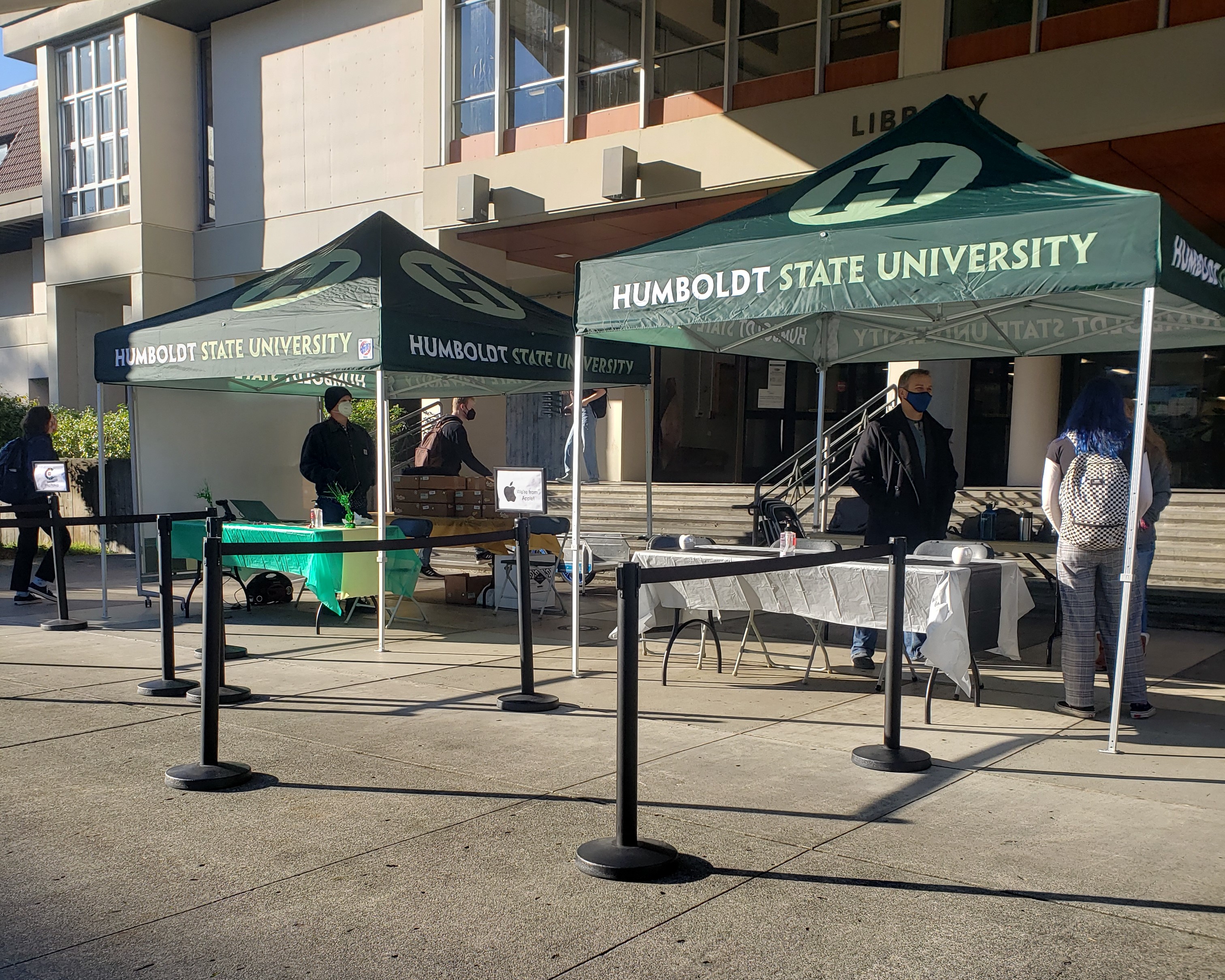
    HSU students can be provided with double layer masks at the campus Police Department, the first floor of Student and Business Services building, Jolly Giant Commons, College Creek Market and the Parking Kiosk.

  • The Ethnic Studies Bill is a Blessing

    The Ethnic Studies Bill is a Blessing

    Ethnic Studies will thankfully become mandatory for all California State University students – as it should be.

    College is meant to be the epi-center of uncomfortable conversations, meeting people we normally wouldn’t and learning about the world. How does one go through college and not participate in education regarding the systemic oppression impacting those around you?

    Assemblywoman Shirley Weber proposed Assembly Bill 1460, which requires all enrolled California State University students take a 3-unit ethnic studies course.

    Governor Newsom signed the bill on Aug 17.

    This was a monumental decision to be made because ethnic studies require students to learn about various cultures’ histories, struggles and successes.

    Since we were in grade school, we learned about Christopher Columbus discovering America, that Thanksgiving was when the pilgrims and Native Americans sang kumbaya while eating turkey and potatoes, and that George Washington had wooden teeth. The history we were taught when we were younger was just one point of view, one perspective, and that was the white man’s point of view.

    I didn’t even learn about my own Black history until I attended college and took an African-American History course. That’s when I learned that Christopher Colombus did, in fact, not discover America, because he never made it to what is now considered America. He came across the Caribbean and was rescued by the natives because he was found drowning. I think we all know what he did after that. The first Thanksgiving was pretty much the pilgrims killing the majority of the native Indians, pillaging their land and then having a feast on it. Now George Washington’s teeth? They were actually made of hippo ivory and his own slave’s teeth. Great guy.

    Taking ethnic studies courses will force you to unlearn the lies you were taught growing up and relearn the facts, the stories, the culture and how it all impacts these groups today. It doesn’t take a rocket scientist to know that people of color had a history of oppression that still takes place to this day. Denial of that is pure ignorance.

    We need ethnic studies more than ever. With various protests going on nationwide, there should be no excuse as to why you wouldn’t know what each one stands for. From Black Lives Matter movements to ICE detention centers, and from racist COVID-19 statements to Indigenous lands being destroyed, we need to acknowledge what has been happening and understand that it is not okay. This is where the necessary education comes in.

    Lucky for us, Humboldt State University has an amazing ethnic studies program run by phenomenal professors. From the introductory courses to the Dialogue on Race, having these conversations are extremely important and should have been mandatory a long time ago.

  • The Complex Interface of Humans and Wildfires

    The Complex Interface of Humans and Wildfires

    How fire suppression is a mixed bag in Humboldt County

    Every fire season, blankets of smoke roll over Humboldt County. Here on the coast, that’s as close to wildfires as some of us get. But our practice of fire suppression is a relatively new state for our woodlands and the lack of fire is taking its toll on the county.

    “Humboldt county’s interesting. Most of the county really hasn’t experienced much fire over the last few decades,” said Jeffery Kane, associate professor of fire ecology and fuels management at Humboldt State University.

    High levels of rainfall and a more temperate climate contribute to a lower risk of fire, but that doesn’t mean fire isn’t a natural part of Humboldt’s environment.

    “When there are ignitions, and there are ignitions here from lightning and humans from time to time, they are usually fairly easy to put out,” Kane said. “That nice fog layer, that’s going to moderate fire behavior.”

    Inland Humboldt county is not as protected by our temperate, coastal environment. But Kane said that quick fire suppression may not be the safest or most environmentally friendly way to manage wildfire in the long term.

    “The thing that we know is most effective is to treat areas with a combination of thinning and burning,” Kane said.

    The suppression of small wildfires can make future fires more difficult to control. Dense canopies and the buildup of dry fuel makes fire more dangerous. By thinning the forest, the trees become less tightly packed. When the canopy has more gaps, fires spread slower. Then after the canopy is thinned, a prescribed burn can take care of the natural dry fuels and remaining debris created from thinning. Thinning and burning can make an area less vulnerable to uncontrolled wildfires.

    Although Humboldt is relatively protected, this area still would see wildfire activity every few years if not for the relatively recent introduction of American colonizers. Due to the danger of wildfire to settlers and property, wildfire is almost completely suppressed.

    Disturbance Ecology Professor Rosemary Sherriff studies the impact fire suppression has on local woodlands. She thinks there can be a balance between protecting settled areas and letting wildfires run their course.

    Lightning strikes and Indigenous burning would have introduced fire to local oak woodlands. These woodland areas suffer without the fire that shaped the ecosystem.

    “In the past few years we’ve had fires that have gone into more urban areas, a lot of it stemming from more wildland areas,” Sherriff said. “There’s been a substantial amount of urban-woodland interface and these are really extremely hazardous places to live.”

    In addition to providing more fuel to fires, the removal of wildfire has come at the cost of native biodiversity. Removing a natural phenomenon that was encouraged by local Indigenous tribes has consequently impacted our landscape. Local ecosystems are adapted to wildfire and removing fire allows fire sensitive species to grow without natural inhibitors.

    “Inland we have oak woodlands, for example, that historically would have had a lot of fire,” said Sherriff.

    Lightning strikes and Indigenous burning would have introduced fire to local oak woodlands. These woodland areas suffer without the fire that shaped the ecosystem.

    “What we’ve seen is a lot of encroachment of native douglas fir into these oak woodlands,” Sherriff said. “So there’s been a loss of the oak woodland open areas.”

    This loss of oak woodlands can be seen throughout Humboldt County. This destroys native biodiversity. But fire suppression is not the only consideration.

    “Fire suppression has certainly shaped the landscape,” Sherriff said. “We can’t disregard the fact that settlements and communities and ranches and homeownership and the cannabis that’s happening also shapes and reshapes the landscape and can contribute significantly to shifts in fire behavior.”

    The balance between human settlement and fire suppression is a difficult medium to reach.

    “It becomes extremely tricky when it’s someone’s livelihood,” Sherriff said. “It’s very easy to sit at the university and say ‘yeah, more fire on the landscape’ but it’s extremely hard to make it happen with all the structures and policies in place.”

    Lenya Quinn-Davidson is an advisor for the University of California Cooperative Extension. One of her projects is the Humboldt County Prescribed Burn Association. It’s a loose cooperative of land owners and community members that implement prescribed burns. While structures and policy is slow to change, they’ve proactively decided to put fire back into their land themselves.

    “A lot of people want to use prescribed fire,” Quinn-Davidson said. “By the time we’re actually there lighting the fire, there’s already been a ton of work making sure that it’s safe, effective and that it won’t get out of control. It’s not like we’re just going out and lighting things off.”

    Prescribed burning is a tool that landowners can use for fuels management, invasive species control and habitat restoration. The encroaching firs that Sherriff studies are a main target of controlled burn.

    “We’re losing our oaks at a pretty astonishing rate,” Quinn-Davidson said. “So a lot of the landowners that have oak woodlands really want to use prescribed fire to get in there while those firs are small and kill the firs. The oaks survive just fine because they’re very fire adapted.”

    Though douglas firs are native, there are some invasive species that landowners can keep back with prescribed burns. There are invasive species of grass like the medusa head that smother local grasslands. Ranchers want to make sure their cattle grazing lands are free of medusa head.

    “It creates this thick thatch that prevents other plants from growing, so it turns into this homogeneous field of grass that nothing can eat.” Quinn-Davidson said. 

    Fire is necessary for keeping our natural landscape healthy and biodiverse. Where forest and human settlements meet, controlled burning can help maintain a healthy habitat with less danger to human life. With those buffer zones established, wildfire can be allowed to burn in a controlled manner, establishing a careful balance between fire and safety. 

    Quinn-Davidson thinks getting to a meaningful scale of fire management will take a combination of state intervention and owners taking control of their land.

    “It’s a real community thing.” Quinn-Davidson said. “People just love it.”

  • Defund HSU’s Police Department

    Defund HSU’s Police Department

    Incidents of racism from the former UPD Chief, past examples of excessive force from current officers and a shrinking university budget.

    In recent months, demonstrations against police brutality and the killing of Black and Brown people have increased. Black Lives Matter protestors have called not only for the demilitarization of police but for a move towards defunding the police and reinvesting those funds to community-centered organizations for public safety.

    On Sept. 4, Humboldt State University students and other community members met at the Arcata Plaza in support of defunding HSU’s campus police department. As of last quarter, HSU’s University Police budget sits at over 3 million dollars a year. The University Library sits just below 3.5 million dollars a year.

    According to the HSU’s Annual Security Report for 2018, 89 percent of law enforcement on campus consists of drug and alcohol referrals. UPD made a single drug-related arrest in 2018. The other 11 percent of cases reported were theft and assault. Referrals are basically reports filed directly to HSU that are not criminal but often result in administrative action. This job is something expected of R.A.’s who report alcohol use as referrals.

    Incidents of racism from the former UPD Chief, past examples of excessive force from current officers and a shrinking university budget

    With the existence of the Arcata City Police, and their own $6 million dollar budget, the necessity of an entire force for these offenses leaves the HSUPD as an utter redundancy.

    HSU student and Check-It staff member, Shelley Magallanes, compiled research about complaints against HSUPD for use of excessive force and shared it on their Instagram. Currently on the payroll is Delmar Tompkins who has been involved in two accusations of police brutality, cases were settled for $135,000 and $43,000. As well as Justin Winkle who was involved in an incident of excessive force that left the victim dead in his jail cell hours later. The City of Eureka settled this case for $4.5 million.

    Former University police Chief Donn Peterson resigned on May 31 while he was on leave and under fire from a multitude of accusations including racist remarks and manipulation of crime statistics. Peterson served as police chief of UPD for six years and to assume that his actions are that of “one bad apple” just doesn’t do this issue justice. His actions exemplify the prevalence of a racist culture that pervades the criminal justice system.

    The nationwide movement for defunding the police has been sparked by the way that force is used and applied recklessly to BIPOC. This comes after a long history of police operating as a militant arm of white supremacy and working to disproportionately incarcerate POC, leading to further widespread racial inequities. Allowing the persistence of unjust systems on campus, while alternatives are proven to work more effectively at promoting public safety is negligent. We have an opportunity to work towards a more just and equitable campus through the many organizations that we already have established.

    HSU is facing widespread budget cuts, losing funding to the array of vital multicultural centers, diverse academic programs and student-led organizations, the UPD budget and existence looks especially obsolete.

  • How Not To Be Bitten By A Kitten

    How Not To Be Bitten By A Kitten

    Please prepare to be prey

    Congratulations, a baby feline has recently come into your life. If they’re anywhere from 2-18 months, they bite. They see you as prey. Because you are prey. You always have been. You always will be. Yet, you are also their servant and being bitten can interfere with your duties. After a lifetime of servitude, I have learnt to minimize these attacks and I am willing to divulge my secrets to you.

    Squeak: I have no idea how to do this, but according to the internet, it works.Tell them that you are hurt by their actions. Cry loudly in a high-pitched voice. Leave them in your room while you go over to your neighbors’ yard and let their cat rub your legs. Go back home and shower in shame.

    Diversions: If you have an old scarf, tie or ribbon lying around, wave it to your kitty. Move in a jerky pattern but stay in the same spot. This will attract their attention and give them a location to pounce. You can also get toys on a string attached to a stick, but they’re easily chewed through. The ferrets are nice and sturdy, but might not always appeal to your kitty aesthetically. Ask your overlord what their favorite color is. Cats can see shades of blue, grey and green, and perceive some other colors as purple.

    Wear armor: Thick socks, hoodies and blankets will soften the blows, especially when warm from the dryer. When armored, wiggle your toes until they pounce. Now you are free to perform your duties with your supreme royal attached to your feet.

    Play dead: Do not try this on a dog, but it seems to work well with cats. Let your limbs go limp and hide under the covers. Ensure that there are no gaps their majesty can squeeze into and wait until they settle on top of you and fall asleep. If for some tragic reason you are not in bed, hide your arms behind your back. Depending on their mood, this comes with the risk of getting your face pounced on. If you sense this is about to happen, make a sudden, full body move. This will startle them long enough for you to grab the nearest toy and throw it far away.

    When all else fails, resign yourself to a life of being the cat’s quarry. You are a chew toy and you will get chewed on. You chose this, because you know that life without an apex predator in it is not a life worth living.

  • Humboldt State Students Voice Concerns Over Racial Casting

    Humboldt State Students Voice Concerns Over Racial Casting

    Students come forth after witnessing and experiencing racial typecasting within Humboldt State’s Theater Department.

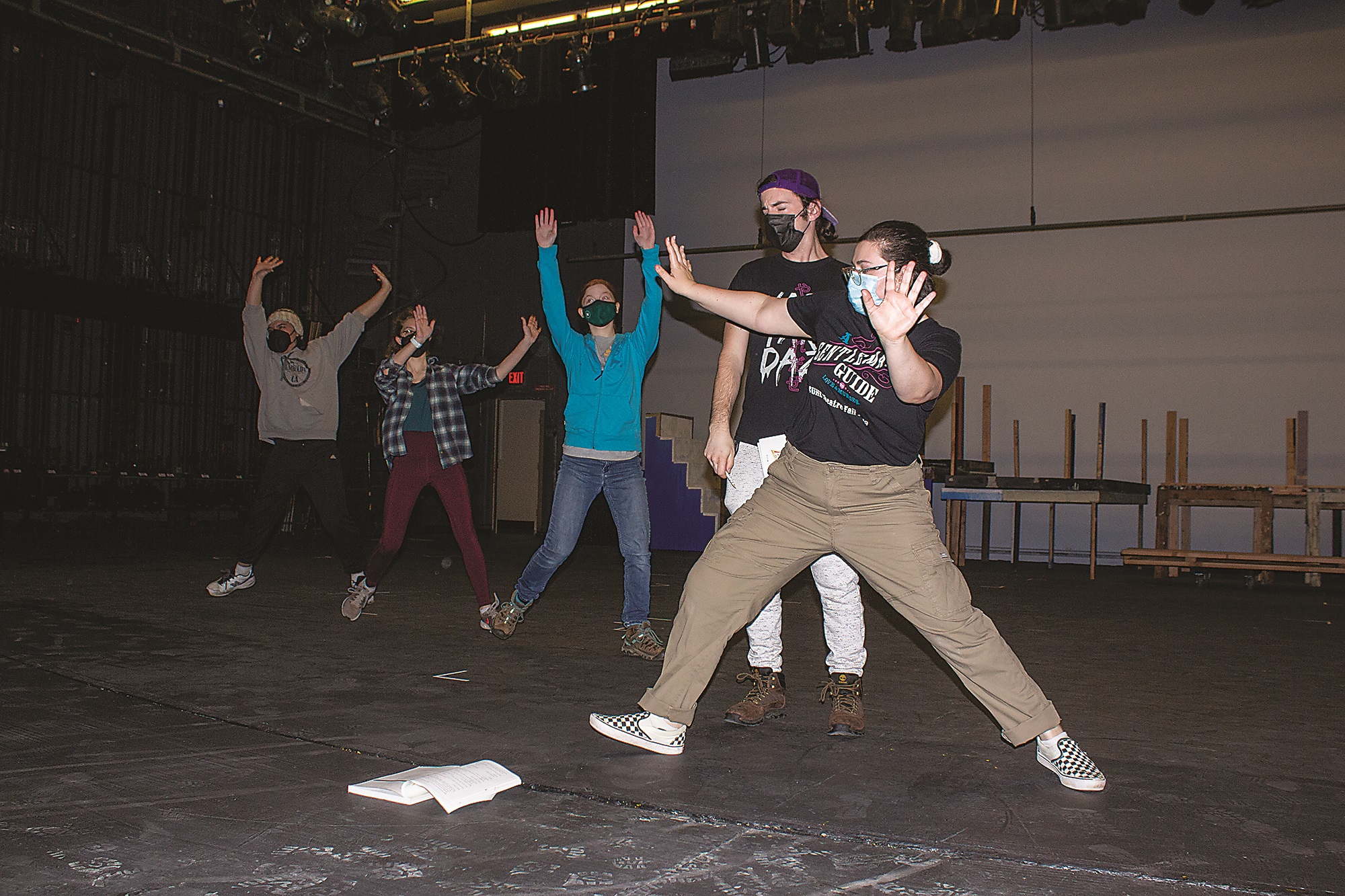
    While COVID-19 leaves the world silent, Humboldt State University theater students are trying to raise their voices and create change. Reports of racial typecasting and the wrong types of inclusivity began to surface and the students decided to work together to create a better program for future students.

    “We’ve definitely had issues in terms of racial casting,” said senior theatre major Jaiden Clark. Clark is President of Alpha Psi Omega, a theater based fraternity at HSU.

    “The higher ups in the department and the faculty try to be inclusive in the wrong ways,” said Clark.

    Part of the issue was the selection of shows. According to Clark, there is a volunteer committee where students and faculty pick which shows will be done. Although it is voluntary, Clark mentioned in a few cases of shows being catered to people who are in the committee.

    “Anyone needs to be able to have a say,” said Clark. “I think it would cool to have a more democratic system.”

    HSU senior AJ Hempstead, a double major in theatre and religious studies, has faced discrimination when accepting roles for shows.

    “People are trying to be more inclusive, especially at HSU, I get more roles,” said Hempstead. “I was offered a role because of my acting level but also because they needed someone with a specific skin color.”

    “I would really like to see shows where it doesn’t matter the race or gender of the actor playing the role,” said Clark.

    Clark and Hempstead both agreed they wanted to see more shows being chosen that had characters that could be played by anyone, so the audience is sent a more equal message.

    “Colorblind casting is not actually a thing, there’s no such thing as colorblind anything because people are going to see.”

    Jaiden Clark

    “What are they doing, what messages are being sent here and where are those messages coming from,” said Hempstead.

    Hempstead wants the audience to look at what was represented onstage and think about the decisions that were made with casting, rather than produce shows that had to have a certain type of person.

    “Colorblind casting is not actually a thing, there’s no such thing as colorblind anything because people are going to see,” said Clark. He noted the faculty needs to be more color-conscious instead.

    Hempstead’s idea for improvement involved wanting to see a more active teacher assistants program where higher level students could help teach other students along with professors.

    “Teachers aren’t the enemy in any of this that’s happening,” Hempstead said. “We want to work with them as much as possible. We empowered our students, we empowered our community and that didn’t mean taking power from them. I see that power struggle.”

    Clark agrees with Hempstead, believing that open discussion can alleviate feeling uncomfortably and create progress.

    “It’s a really important time for people to talk about what worked and what they liked and what made them uncomfortable and what shouldn’t be done again,” said Clark. “When change is needed in the theatre industry, you have to start in universities. If we are behind Broadway, then we have to catch up because our people are just the people who aren’t there yet.”

    Associate Professor and Theatre Program Leader Troy Lescher responded to the rumored racial typecasting in an email. He asked for clarification if it were about racial representation onstage.

    “These processes are imperfect and are very prone to mistakes. Theatre is also a living art that relies on human storytellers,” Lescher said in an email. “Race, gender, age, physical attributes and vocal qualities are among dozens of casting considerations that impact representation onstage.”

    In response to what HSU is doing to ensure racial typecasting will not continue, Lescher said he would listen to a student if they felt racially typecast and would try to find an alternative learning opportunity for them with the director.

    “Afterward, I would bring this matter to the Season Selection Committee (which is composed of faculty, staff, and students) so that we could collectively work to strengthen our process,” Lescher said in an email.

    Lescher acknowledged the challenge of racial representation in casting and believes the program is guilty of not following through.

    “I believe there have been instances when our program has not exercised the cultural competence necessary to best support our students and their learning,” Lescher said in an email. “Critical awareness of and cultural sensitivity to matters of representation are important to our program and we continue to learn and to strengthen.”

  • Graduating Into Uncharted Waters

    Graduating Into Uncharted Waters

    HSU graduates attempt to navigate a world turned upside-down by COVID-19

    In May, Humboldt State University graduated hundreds of students, as it does every year. Unlike past years, graduates didn’t get to shake hands with their respective dean and receive a diploma on-stage in front of their friends and family. Instead, the class of 2020 was graduated over a mass-Zoom call.

    Claire Matulis graduated last May with a degree in psychology. She recalls the graduation experience as passable but regrets not witnessing it firsthand.

    “It was interesting to have the Zoom graduation,” Matulis said. “I still had my family on, we had a Zoom going on watching the slideshow and there was a part of me that kind of wished I had the in-person graduation.”

    For former HSU film major, Will Schorn, this was only the beginning of a long and winding road to finding a job. Schorn had an internship with the HSU football team as a videographer but got axed when the program was cut. He’s since gotten back on the market, looking for similar positions.

    “With COVID impacting so many sports, especially if you’re not playing at the top level – if it’s not professional sports – it’s been really difficult to find a job filming sports right now,” Schorn said.

    “It’s difficult for people to feel like they’re building community now because, like, I’m sitting here in my room by myself talking to a screen and even though I know I’m communicating to a person, there’s a different feeling to communicating this way than it would be sitting face-to-face.”

    Madison Hazen

    Other students have had less trouble finding work, even if it is remote work. Madison Hazen is one recent graduate who fits that bill. An anthropology and religious studies double-major, Hazen was able to land a job in English-language learning support and reading intervention support for elementary school students, through the AmeriCorps company. While Hazen feels very fortunate to have found a job at all, she’s not too fond of working in a virtual setting.

    “At the school I’m at, I’m going to have like forty-plus coworkers, who are people I’m not going to see face-to-face at all,” Hazen said. “I think it’s difficult to feel kind of like you’re fully becoming integrated into that work environment.”

    Although Hazen remains optimistic for the future of former students but admits that she misses interacting with other people in a physical space.

    “I definitely took it for granted as a student and having the physical community taken away or being removed from the physical community really helped me appreciate it,” Hazen said. “It’s difficult for people to feel like they’re building community now because, like, I’m sitting here in my room by myself talking to a screen and even though I know I’m communicating to a person, there’s a different feeling to communicating this way than it would be sitting face-to-face.”

    Like Hazen, Matulis was able to find a job in her field. Working as a child and family specialist for a non-profit called Evolve Youth Services, Matulis acts both as a mentor and a therapist for adopted kids. Unlike the others, Matulis is remaining in Humboldt for the time being.

    “I love Humboldt and I’m actually really grateful that I’m here in the time of the pandemic,” Matulis said. “My family is in much more populated areas in L.A. and Riverside and Ventura. Here out on the trail, I don’t have to worry about there being as many people and I feel like everybody is very conscious of wearing their masks and keeping their distance, so I feel grateful to be here.”

  • Music of the Moment 2

    Music of the Moment 2

    The long awaited return of God’s son, Nas.

    Regarded unanimously as one of the greatest rappers of all time and by many as having created the best hip-hop album to date with his 1994 debut, “Illmatic,” Nas has returned at the age of 46 with his studio album, “King’s Disease.”

    More than eight years since his last full-length album, “Life is Good,” Nas has been more active than usual in the last few years. In June 2018, Nas released his seven-track “NASIR” album, executive produced by Kanye West, then followed it up with “The Lost Tapes 2” compilation album in July of 2019.

    To set the tone for his new album, Nas released the lead single, “Ultra Black,” boasting the beauty of black life, a theme which is felt throughout the album and heavily featured on songs like “27 Summers,” “10 Points,” and the title track. In these songs, Nas lays down the definition of a true king: someone who is willing to work their way to the top, leave their baggage behind them and give back opportunities and knowledge to their people. In other words, a leader not a ruler.

    Produced entirely by Hit-Boy, with occasional assists from other producers, “King’s Disease” features a mixture of old school beats on songs like “Full Circle” and “Car #85” and more modern instrumentals on tracks like “Til the War is Won” and “Spicy,” a New York anthem featuring hometown rappers Fivio Foreign and A$AP Ferg. To compliment the tone of the tracks, Nas recruits features for over half the songs on the album, including unlikely appearances from Travis Scott’s new artist Don Toliver and Big Sean on the track “Replace Me.” Nas also reunites his old group, The Firm, to please fans of the old-school, with nearly four minutes of uninterrupted bars, on the track “Full Circle.” The features that stand out the most, however, both in terms of their quality and the surprise of hearing their voice alongside Nas on a song are Lil Durk with “Till the War is Won” and Anderson.Paak with “All Bad.”

    As Nas fans have come to expect, he delivers more of the signature story-telling style that caused hip-hop to fall in love with his music. He brings you into his world like no one else can with the songs “Blue Benz” and most especially “Car #85,” as Nas reminisces on life in the hood. Forever a part of him, mentions or allusions to the hood appear on the majority of the album, most powerfully on the track “Till the War is Over.” In this song Nas expresses his sympathies for single mothers and especially those who’ve had to bury a child, while Lil Durk provides the perspective of one of the children caught up in the streets.

    Following the longest break between proper full-length albums in his career, Nas lays all his cards on the table, dedicating entire tracks on “King’s Disease” to addressing the ugly, prejudiced state of the world and reflecting back on his 27 summers in the game with “The Definition” and “The Cure.”

    Around 7,500 people in the world can be considered one in a million with “King’s Disease,” Nas proves once again that he’s one of a kind.

  • Tension and Fear Among the Board of Directors

    Tension and Fear Among the Board of Directors

    A tense emergency Board of Directors reveals conflict between faculty and Administration.

    Tempers flared when an emergency Zoom meeting by the University Board of Directors turned into verbal arguments and accusations between several members on the call.

    The Aug. 28 meeting held by the University Center Board of Directors and open to the public originally set forth to tackle various agenda items and approve of new members.

    The two items that took up a majority of the meeting, however, where the firing of the UC’s legal counsel and changes the administration has made that affect facilities managed by the group.

    When the meeting was opened to public comment, student employees of the Humboldt Bay Aquatic Center stated that they were being asked by HSU to leave their offices. Center Activities Manager Bridget Hand confirmed this information, stating that employees were given little notice to clear their offices.

    Vice President of Enrollment Management Jason Meriwether and Acting Executive Director Todd Larson stated that the reason for departure was so that the building could prepare for renovations. Meriwether said that the space may be used for other departments in the meantime.

    Gracie Olivia, a student employee at HBAC, said that the job offered leadership roles and was a vital part of the community.

    “I want the board and everyone attending this meeting to understand the importance of the Center,” said Olivia.

    “Why are wholesale changes being made before the program review? The loss of HBAC as a public facility is a real loss to the community.”

    Financial Officer Gregg Foster

    With no office to operate out of, both Olivia and Hand noted that they would not be able to offer equipment rentals.

    Faculty Representative Steve Martin and Financial Officer Gregg Foster expressed confusion and anger at the circumstances. According to them, the UC board was uninformed of the entire situation.

    “Why are wholesale changes being made before the program review?” said Foster in the Zoom chat. “The loss of HBAC as a public facility is a real loss to the community.”

    In an email, Martin continued to express his frustration at the situation.

    “I’m concerned that employees of HBAC say that they can’t provide services to students safely and effectively because of the changes that were implemented over the summer, said Martin. “Changes that were implemented without first consulting the University Center Board.”

    Meriwether expressed his surprise with the board, stating that proper written notice was provided to former UC Executive Director Dave Nakamura. Martin said during the call that Nakamura was fired by the administration before being able to properly brief the UC Board.

    Further complicating the matter was the lack of legal representation for the UC Board regarding these actions, as the attorney for the group had been let go by Larson.

    The attorney from Erikson Law Firm, which had represented the UC Board of Directors since 2017, had refused to help draft a proposal with Larson to present to the Board. Larson also said the attorney had also violated a written contract agreed upon by the two, which to Larson “raised some red flags.”

    Foster, Martin and other members of the Board said that this was a decision that should have been run solely by the Board itself.

    Martin said that even if the action was legal, it raised moral and ethical flags about Larson and his actions put the board in a state of unease.

    These actions have created a fear among faculty members outside the board as well, that discouraged faculty members from speaking up.

    “Like everyone else in my position, we fear retaliation from an administration that is overreaching and abusing their power,” said one source close to the situation, who wished to remain anonymous. “If you are receiving PC responses from others, it’s because we are all very worried about what we are witnessing. We have been given specific language to use when speaking with the media and that language only reflects that of the administration’s story.”

    The next UC Board meeting is scheduled for Sept. 10.

  • HSU student journalist travels to Portland to capture Black Lives Matter Protests

    Kris Nagel captures chaotic social demonstrations with photojournalist and professor Mark Mckenna

  • Face coverings are vital to preventing spread of COVID-19

    Face coverings are vital to preventing spread of COVID-19

    Humboldt State University taking necessary first step by requiring students and faculty to wear face coverings on campus.

    Humboldt State University, after being closed since March, has reopened six months after the COVID-19 outbreak in the United States. HSU was approved by the California State University system to offer “limited face-to-face courses this fall,” according to the HSU website. Considering the circumstances, HSU is taking the right precautions to keep both the students and faculty safe.

    The university announced safety precautions on Aug. 4, which includes wearing face coverings with at least two layers of 100% cotton. These are required on campus at all times, both indoors and outdoors. HSU will provide students with face coverings at the campus Police Department, the first floor of Student and Business Services building, Jolly Giant Commons, College Creek Market and the Parking Kiosk.

    Other precautions include practicing social distancing of six feet at all times when possible, refraining from gathering in groups, staying away from crowds, frequent washing of hands with soap and water and using hand sanitizer when soap and water are not available. The commitment to the precautions established by HSU represents a social responsibility that keeps us safe, as long as we follow them.

    Although wearing masks is uncomfortable, research has shown that they prevent transmission of coronavirus when worn correctly. The Centers for Disease Control and Prevention states that the spread of COVID-19 mainly results from settings where people are in close contact with each other, so the use of masks are especially effective in environments such as universities.

    Different kinds of masks “block [the] virus to a different degree, but they all block the virus from getting in,” said Dr. Monica Gandhi, an infectious disease physician at the University of California, San Francisco, to The New York Times. No matter what type of face coverings people wear, it is still much more protective than not wearing one at all.

    It’s also important to wear masks correctly, covering both one’s mouth and nose at all times. They need to be secured to the face without being too loose or too tight, making sure people are still able to breathe. They also need to be worn hands-free. Working at a grocery store during this pandemic, I’ve seen multiple people’s masks fall to their necks and they try to hold it up to their face, which leads to the spread of particles. Touching masks is unsanitary, so washing hands with soap and water is critical. The risk of spreading respiratory particles is much higher if the mask is not worn correctly.

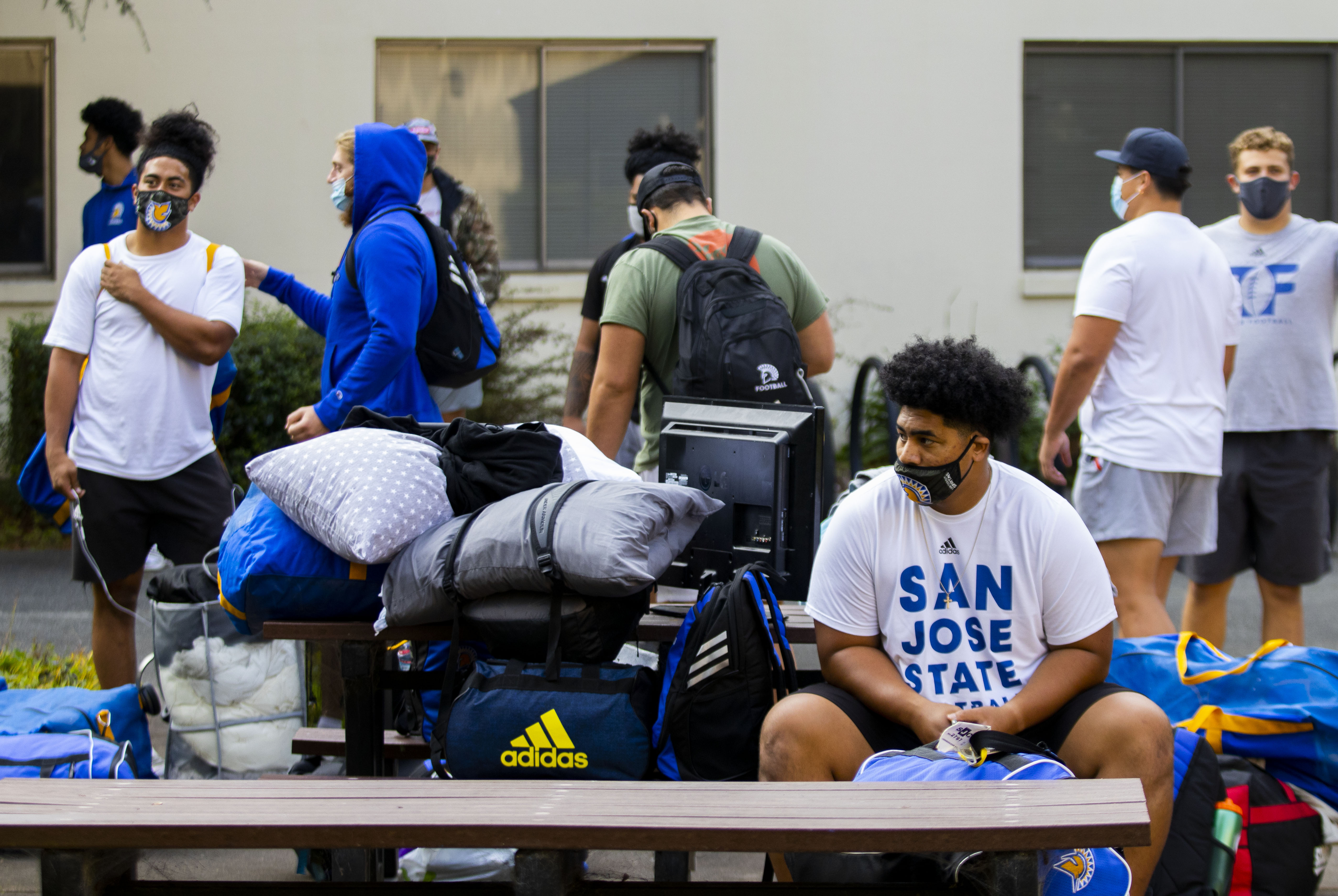
    Masks are only one of many protocols HSU has enforced. Students were instructed to follow safety protocols on Aug. 15 when over 200 of the 800 students moved into on-campus housing. All students were expected to self-quarantine for 14 days following their move-in day. Considering the risks of the spread of COVID-19, the university made the correct decision to reduce the number of students allowed to live in on-campus housing. It was also decided to make all rooms single occupancy.

    Following health protocols is crucial, especially during a global pandemic. Wearing masks on campus has been mandated for all students and faculty members, and will be a major part in limiting the transmission of COVID-19. It will be especially important this fall when some students and faculty will be taking part in hybrid learning, which includes limited face-to-face contact.

  • Living on Campus during a Pandemic

    Living on Campus during a Pandemic

    Humboldt State University reopens campus and student housing for new incoming students.

    Universities across the nation are experiencing a drop in enrollment this year due to COVID-19 and Humboldt State University is no exception. With around a thousand new students moved into single-occupancy rooms on Aug. 17, HSU remains determined on reopening campus and providing student housing for the fall semester.

    Among those returning is second year HSU student, Bryce Hunt. Hunt lived on campus prior to in-person instruction ending and he knew he would be returning to campus.

    “I had already made my decision internally,” Hunt said. “I knew a majority of my friends were coming back up and I needed to get out of my home and my hometown.”

    For Hunt, the adjustment to life on campus during the pandemic has been fairly easy. While he admits the absence of resources such as in-person advising has been a hindrance, he feels the school is taking strong protective measures.

    “I like that they’re offering free coronavirus testing,” Hunt said. “They’ve been open about the fact that they have had cases.”

    Hunt feels that campus is safe as long as everyone takes proper precautions and follows the advised county health guidelines.

    “Even with everything going on, I want to be here, because I’m happy here.”

    Adrian Black

    “I feel fairly comfortable,” Hunt said. “I know I’m taking the protective measures so I can to be safe. I don’t think it’s bothering me as much as it did after spring break.”

    Adrian Black, a second year student at HSU, is staying off-campus but remaining in Humboldt. Without any in-person classes, Black made their decision partially out of want, and partially out of need.

    “I don’t really have any other place to live,” Black said. “My parents don’t have room for me. Besides, I really like living here. Even with everything going on, I want to be here, because I’m happy here.”

    While they had previously considered not returning to HSU after last semester’s disorganized attempt at online classes, Black decided to give this semester a try. Driven by both a passion for learning and a fundamental hunger for something to do, Black returned. However, they’re disappointed in the lack of resources and social-outlets available to students.

    “A lot of the charm of being a student is being on campus, interacting with students and faculty,” Black said. “I feel like clubs and such are going to be lacking since we can’t do in-person meetings. It limits what types of clubs are allowed and accessible and puts a damper on social lives.”

    With students and faculty better prepared for online classes, new precautions in place and the world adjusting to a new reality, they believe that it can be a good semester.

    “I have high hopes, and I hope that by next year, things will have gotten better,” Black said.

  • Students Stay Home Scared to Learn in Pandemic Times

    Students Stay Home Scared to Learn in Pandemic Times

    Students stay home this semester with concerns of health and quality of education.

    In the midst of the global pandemic, Humboldt State University students have chosen to stay home and attend classes virtually or not at all this semester, citing living expenses, health concerns and quality of education as factors in their decisions. Given most classes will only be offered virtually this semester, there’s much less incentive to be present on campus.

    Ahead of their return, the HSU health department informed students of the risk in coming back to campus and the new safety protocol including wearing masks, practicing social distancing and a mandatory COVID-19 test followed by two weeks of self-quarantine upon arrival.

    Calista Tutkowski, an environmental science major, is one of the students staying home and continuing her education online. Tutkowski’s family lives in Colorado and she decided coming back to campus wasn’t worth the risk. In her time on campus, Tutkowski made lots of friends that were also from out of state/from all over the country

    “All of them coming back to one place felt like a recipe for disaster,” Tutkowski said.

    While Tutkowski’s lab-classes were deemed deserving of in-person instruction this semester, her concern outweighed her desire to return.

    “It just wouldn’t feel like a safe environment,” Tutkowski said.

    In Colorado, she’s employed as an essential worker and frequently has to interact with customers that don’t abide by social-distancing protocols. Tutkowski also has the financial advantage of staying in her parents home and avoiding the cost of out-of-state tuition with the cost of housing in California, it wasn’t worth her return.

    “It’s like pulling teeth with some people,” Tutkowski said. “I could just be making money here if I stayed home.”

    Oliver McVay, a psychology student, online learning was never an option. The shift to online-instruction last semester in response to the initial outbreaks of COVID-19 cases, students like McVay, who suffers from a learning disability, were left to fend for themselves.

    “There wasn’t a lot of face-to-face stuff,” McVay said. “It was more just, here’s the assignment, turn it on canvas by this day at this time.”

    McVay experiences difficulty teaching himself the material and felt he wasn’t receiving the education he paid for, so he decided to take the year off.

    “Last semester, I didn’t really learn anything from my online classes,” McVay said. “I just felt like it wasn’t benefiting me.”

    Former HSU student, Chase Ervin, also found learning online too challenging in the spring and decided not to return for the fall.

    “I knew that online schooling was going to be difficult,” said Ervin. “I went from like all A’s to all B’s and C’s.”

    Students like Ervin and McVay require a proper learning environment to tap into their potential.

    “I was lacking a lot of focus,” Ervin said. “There were a lot of distractions at home that I wouldn’t necessarily have at school.”

    Whether students patiently await their return to the classroom or carry on pursuing an online education, it’s clear the virtual teaching methods do not benefit or cater to all students.

  • HSU Cultural Center Budget Slashed

    HSU Cultural Center Budget Slashed

    Associated Students leaves student body devastated after significant reductions in cultural center’s budget.

    Two months ago, Associated Students released its proposed budget for the 2020-21 school year at Humboldt State University. Included in this budget were major budget cuts to on-campus cultural centers such as the Multicultural Center and the Eric Rofes Multicultural Queer Center.

    For the budgeting process to begin, A.S. applications are submitted by various campus-based clubs to the A.S. Finance Committee, previously known as the Board of Finance. From there, the committee reviews all the incoming applications and after holding public appeals, creates a Recommended Budget that is sent over the A.S. Board of Directors, a mix of A.S. elected representatives and faculty advisers. The Board of Directors then holds another round of public appeals, drafts a revised Recommended Budget and sends it over the A.S. president, who promptly turns it over to the campus president for official approval.

    David Lopez, the Associative Vice President of A.S. and a sophomore at HSU, emphasized that he still greatly values the cultural centers but they will be funded differently.

    “We really appreciate them for the work they do,” Lopez said. “So to make sure that they continue to do that work still because we’re not funding them, we’re doing it through the clubs grant, and we’re forming this grant process to be as neutral as possible with funding student organization needs.”

    Lopez is personally leading the charge for these new clubs grants, which aim to support student organizations like the Asian Desi Pacific Islander Collective and the Women’s Resource Center in a reduced capacity.

    One thing that factored into the decision by Associated Students to sever the cultural centers’ funding was the Apodaca v. White lawsuit that took place between a pro-life student organization at CSU San Marcos and CSU San Marcos’s Associated Students. The pro-life student organization claimed that it was being discriminated against by CSU San Marcos because requested funding for a pro-life speaker was denied while other groups were recieiving the same funding. The final ruling by a federal court was in favor of the student organization, arguing that the funds that come from student fees need to be allocated in the most viewpoint neutral way possible. The CSU Chancellor’s office has yet to clarify what this means.

    For Lopez, this new funding procedure is radical but also necessary given the circumstances.

    “We’re supporting the greatest amount of viewpoints and opinions possible,” Lopez said. “The plan for this club grant is to further diversify the opinions on campus per Apodaca v White and to err on the side of caution while awaiting the Chancellor’s interpretation of Apodaca v White.”

    Lopez recognized that he and his staff are working with a limited financial capacity and therefore need to distribute funding in a way that will keep clubs satisfied and avoid a lawsuit of their own.

    “What’s happening is we’re being faced with the choice of either becoming a club or becoming absorbed into an administrative or academic department.”

    Amanda Huebner

    “Our total budget is less than eight hundred thousand dollars,” Lopez said. “Meaning that by not funding in a viewpoint neutral manner, we are potentially risking over a fourth of our budget, a fourth of student fees that could go to things like our Club Grants Committee or that could go to other campus resources if we were to risk not funding in a most neutral way possible.”

    Celene Gonzalez is an HSU grad student in the psychology program and an El Centro employee. She has worked closely with the cultural centers and has seen their collective downfall over the years.

    “What gives me hope in what I had seen in that time is that students were getting really connected with each other,” Gonzalez said. “They were finding their communities. It is not shocking to me that the school felt the need to kind of push that down a little bit.”

    Gonzalez is disheartened by the disconnect that has been formed between her and these students through said budget cuts.

    “I feel like our work gave us a way to connect with one another and I feel like our activism gave us a way to connect with one another,” Gonzalez said. “That it’s going to be hard to maintain and it’s going to be hard to ask of them when I know that they aren’t being compensated for that work.”

    The Eric Rofes Multicultural Queer Resource Center is getting hit hard by the extreme budget cuts. Concerned about the future of her cultural center, Amanda Huebner, a rangeland and social sciences senior and an employee at the ERC, wants to see it remain in the state that it’s in already.

    “What’s happening is we’re being faced with the choice of either becoming a club or becoming absorbed into an administrative or academic department,” Huebner said. “So I think there has been dialogue by students in the past that this would be a bad move being absorbed by a department or by an administrative department because it would make the group not be as student-run.”

    In other words, the absorption of the ERC into another department would be ill-advised because there would be more faculty interference in how it would be managed, and that wouldn’t align with the goal of this cultural center of being a student-led one.

    Student leaders like Katherine Nguyen who work in the cultural centers are frustrated with the fallout from all of this. Nguyen doesn’t feel like the administration cares about its marginalized students.

    “Are you going to be supporting your cultural centers, are you going to be supporting your students?” Nguyen said. “I’m not confident about that and I’m tired of just being told by admin, like: ‘Oh, you got it wrong, like we actually care about you. We’re going to figure out a way,’ but it’s like if you did, why didn’t you make a plan? Show that you’re invested in students.”

    When it comes to the shrinking budgets for the various cultural centers, neither the students nor the administration can be totally satisfied. After the Fall 2020 census, the A.S. cumulative budget will be reevaluated.

  • Anti-Immigration Graffiti Found In Arcata Plaza

    Anti-Immigration Graffiti Found In Arcata Plaza

    Anti-immigration graffiti was spray painted outside the corner of Cafe Brio and The Heart Bead store in the Arcata plaza.

    “Trump 2020” as well as “Get out of America” were plastered around the sidewalks just outside of Cafe Brio and Heart Bead. It was reported to APD by Heart Bead store owner, Kim Alveraz, on Aug. 16 and the graffiti was later washed off on Aug. 18.

    APD sergeant, Brian Hoffman, said that the anti-immigration messages were not a hate crime. The APD said that they are not able to open an investigation until suspects are reported. If anyone does witness vandalism or have information on a possible suspect(s), it can be reported to APD at 707-822-2424.

  • All aboard the plague ship

    All aboard the plague ship

    Reopening the school in any capacity must have been the worst idea possible. There was not enough preparation for letting students come back to Humboldt State University. While it is understandable that every student has their own reasons for living on campus, the risks are high. HSU President Tom Jackson made it clear that suspending move-in dates and face-to-face instruction until a later date was prejudice and not necessary.

    With cases spiking in recent days, the community is at risk. In a press release from the Humboldt County Joint Information Center, people between 20 and 29 have the highest percentage of new COVID-19 cases locally. Young adults are becoming the primary carriers of COVID-19 and are spreading it unknowingly.

    Humboldt County Health Alert recently rose to a Level 3, which means “High Risk- Many cases with conditions for community spread, with many undetected cases likely. Limit everyday activities to increase safety.”

    Opening up the university to a thousand students in a single week is like pouring salt on a fresh wound. Although Arcata is open to tourism for the economic stimulation, the town was not ready for it. When Arcata first opened back up to the locals, the cases were low and stable. Then tourism started to pick up. Travel has put the community in danger and is a contributing factor for the rise in cases.

    There is a large elderly and retiree population in Arcata and surrounding communities, like Eureka and McKinleyville. Humboldt County Public Health Officer Dr. Teresa Frankovich stated that the transmission can, in time, contribute to increased exposure for older individuals who are of higher risk of serious disease and even death.

    Letting a large amount of students move in during the middle of a pandemic in a small town was not a good judgment call. The protocols and guidelines put in place by HSU can go wrong in various ways.

    While the single occupancy rooms for student housing were supposed to be a way to shelter in place, there are common areas that the students will share with their housemates such as the living room, kitchen and bathrooms. On the Humboldt State Campus Ready website, it was vaguely mentioned that these common areas will be limited and if violations persist, they will be restricted. But with student housing employees matching one to every hundred students, the likelihood of knowing these violations are occurring are nearly impossible.

    With five students and one faculty member having tested positive, HSU has made COVID-19 testing mandatory for student residents throughout the semester. However, the Student Health Center states on the Campus Ready website that testing will be done “in a limited capacity due to a nationwide shortage of tests.”

    Regarding limited face-to-face instruction, the administration is putting the responsibility on the students to ensure they stay healthy. If a student were to test positive for COVID-19 while at HSU, it would be their fault for not following the guidelines to satisfaction, instead of the university’s for being open. The best way to keep students safe is to not have contact with other students. That risk became a reality when a thousand new, incoming students decided to move on campus.

    Dr. Frankovich and President Jackson should not have agreed to open the campus in the first place back in June. There had to have been consideration of the possible influx of cases during the summer months with tourism. Not to mention, fall and winter months correspond with the influenza season. Incoming students will not just be battling COVID-19 but also the flu, the symptoms of which are almost identical.

    There were a lot of important individuals that conversed in making these decisions. Unfortunately, the people being put at risk obviously weren’t a part of the conversation.

  • How Non-Lethal are Less Lethal Weapons

    How Non-Lethal are Less Lethal Weapons

    Protestors injured by non-lethal weapons in Eureka following protests against police brutality.

    On May 31 in Eureka a protest against police injustice ended late into the night with officers using pepper-spray projectiles to assist in the arrest of an individual suspected of vandalism. An additional protestor was arrested for attempting to prevent the first arrest.

    Several protestors attempted to pull the individual out of police custody. This resulted in police firing on the rest of the crowd. Capt Brian Stevens of Eureka PD addressed the incident to the public in a video posted to Lost Coast Outpost.

    “Given the escalating circumstances and the safety risks to the officers … They began firing [pepperball projectiles] into the ground in and around the crowd trying to back the crowd off,” Stevens said.

    Sam Papavasilliou, a 22-year-old Humboldt State University student and former Lumberjack writer, was in attendance that night and was among 30 or so protestors fired on by police. Papavasiliou described how the crowd was cut off in the front and back by several police vehicles while passing by Dutch Bros on the north side of Eureka.

    Officers first addressed the crowd to tell them they would be attempting to arrest an individual suspected of vandalism. At 10:33 p.m. this attempted arrest was met with resistance from several protestors.

    “One protestor got shot in the ear with [a pepperball]. They were bleeding and they were really yelling at the officer that they didn’t do shit and they said ‘I can’t hear right now,’” Papavasiliou said.

    Pepperball rounds are amongst a large host of “non-lethal” weapons used to disperse crowds deemed riotous. Pepperball rounds are designed to explode on impact leaving a cloud of OC (oleoresin capsicum), the same ingredient used in pepper spray. It is advised that they are not aimed at the eyes, face, throat, or spine as death has occured when these inappropriate areas have been fired on.

    Rubber bullets are another method of crowd control that fall under a classification of “non-lethal” weapons known as KIPs (Kinetic Impact Projectiles) along with bean bag rounds, pellet rounds, and sponge rounds. In their assessment of “non-lethal” weapons and their safety The Physicians for Human Rights organization argues that “At close ranges, levels of lethality and patterns of injury of some KIPS become similar to those of live ammunition. At longer ranges, KIPs are inaccurate and indiscriminate. Some KIPs are lethal in close range and ineffective at longer distances which make safe use difficult.”

    The problem really comes down to KIPs being too inaccurate at longer ranges to correctly target individuals and areas of the body they are aiming for, and that the injuries sustained at close range can penetrate the skin, break bones, fracture the skull and explode the eyeball.

    Police also rely on chemical irritants (CIs) for crowd dispersal, namely tear gas and pepper spray. Pepper spray is made of a chemical derived from peppers that inflames the afflicted area on contact causing the burning sensation.

    “Officers and deputies were on scene with more or less paintball guns that shoot a paintball projectile that is filled with a powdered OC,” Stevens said.

    Symptoms after exposure to these agents include temporary blindness, respiratory inflammation, increase in heart rate and blood pressure. People with respiratory or heart conditions are at an increased risk of more serious injury or death.

    Other “non-lethal” weapons include pepper spray, bean bag rounds, tear gas and flash bangs just to name a few. When used correctly, these weapons are a less dangerous alternative to shooting people with actual guns, but mistakes in their applications can leave victims with wide ranges of injury.

  • Music of the Moment

    Music of the Moment

    The hip-hop community rallies behind the Black Lives Matter Movement

    When footage of an unarmed black man named George Floyd being murdered by police officer Derek Chauvin was uploaded to the internet on May 25, Black Lives Matter protests began erupting across the country and throughout the world. Given the role hip-hop plays in the black community, it’s natural that protesters adopt anthems from the genre to fuel their cause.

    In the weeks following Floyd’s death, several members of the hip-hop community took their frustrations to the studio and created new anthems to further fuel the protests, notably including FTP by YG, Other Side of America by Meek Mill and The Bigger Picture by Lil Baby, all of which are raw reflections of the artists’ real experiences as black men living in America.

    An unlikely protest anthem came from the late Pop Smoke, who was gunned down in his Los Angeles residence earlier this year. Thousands of New Yorkers took to the streets of Manhattan during the initial protests, chanting the words to the former rapper’s hit song “Dior.”

    To celebrate Juneteenth, the holiday commemorating the abolition of slavery in the United States, Beyoncé released her own Black Lives Matter anthem, “Black Parade.” On July 31, she delivered an entire visual album titled “Black is King” celebrating the African race throughout history.

    When the protests were at their height, another song from Beyoncé’s 2016 album “Lemonade” titled “Freedom,” featuring Kendrick Lamar, was also being played across the country. Along with Lamar’s own song, “Alright.” Another artist with a critically acclaimed album celebrating Black excellence in “To Pimp A Butterfly,” Lamar has remained suspiciously silent since the protests broke out, beside participating in the Compton Peace Walk.

    Regarded alongside Lamar as one of the best and most progressive rap artists of the era, J.Cole chose a different path that landed both him and Lamar on the list of Twitter cancellation campaigns.

    Afterwards, Cole admitted in a tweet, “[he hasn’t] done a lot of reading and [doesn’t] feel well equipped as a leader in these times.” Cole released a song on June 16 titled “Snow On Tha Bluff,” addressing both his own ignorance of the plight of his people, and the criticisms of an unnamed Black woman, quickly discovered to be Chicago rapper, Noname. On the track, Cole compels Noname to preach her knowledge rather than shame those unwilling to speak up and to share it with audiences outside of those that already have access. Cole’s “queen-tone” lyric, however, muddied the message with accusations of policing a Black woman’s tone and inspired a response track from Noname with “Song 33,” in which she questions how he could write about her in a time of such international tragedy.

    As the Black Lives Matter movement carries into the fall, hip-hop continues to celebrate its roots, most recently with the release of the first official, full-length Nas album in over eight years, “King’s Disease,” preceded a week by his own Black Lives Matter anthem, lead single “Ultra Black.”

  • A Simple Favor, Wear Your Mask Correctly … Please

    A Simple Favor, Wear Your Mask Correctly … Please

    Wearing a mask correctly shouldn’t be a hassle or the worst part of your day.

    All I ask is, “Ma’am, can you please put your mask over your nose?” “Sir, your mask needs to be worn at all times. Thank you.” “Yes, masks are required here.”

    When a mask is being worn correctly, it has to cover both the mouth and nose. Think of it this way, the mask is meant to prevent any respiratory droplets from spreading to other people and elements around you. These particles come from your mouth and nose.

    These face coverings aren’t much, but they are one of the best defenses we have, alongside staying home and social distancing. Now, who would have thought that such a simple and minuscule request can cause such hostility and chaos?

    I’m a retail worker in a small business. I wear a mask, over my mouth and nose, for five hours a day and expose myself to locals and tourists. Some days, I’ll be in contact with 20 people and other days, I can be in contact with close to 100 people.

    I will never understand why people try so hard to fight against wearing face masks correctly.

    I fear for my life and sanity every day. There are crazy stories circulating around the internet of customers harassing and assaulting workers for trying to enforce these health orders. A retail worker in Modesto was brutally attacked, a crazy lady in Trader Joes in North Hollywood making a huge scene and the worst, most extreme case I have heard so far, a security guard being shot and killed.

    My co-workers and I always brace ourselves for whatever may happen for calling someone out. We have gotten glares, we’ve been ignored, ridiculed and even belittled just for asking someone to wear a mask or wear it correctly. We have had out-of-state tourists obnoxiously defy the rules we have set for our store, for them to then leave our store and express how much they hate California’s rules.

    C’est la vie de 2020.

    I will never understand why people try so hard to fight against wearing face masks correctly.

    There have been customers that have come in and complained of not being able to breathe with the mask on. My solution is to stay at home. If you cannot breathe with a mask on, you’re already vulnerable and should not be outside. If you’re bothered at the thought of wearing a face covering for 10 minutes in a small gift shop, maybe you shouldn’t be out and shopping for home decor.

    In order for many of these small businesses to be open, they needed to be approved by the state. My boss had to fill out a very lengthy form to re-open her business. She had to describe every action we, as employees, would do to ensure we are all safely navigating this pandemic.

    If you see any shop with state/county paperwork taped in their front window, they had to apply to re-open as well. If a customer or employee ends up testing positive, the entire shop has to be shut down.

    These face coverings are for the safety of yourself and those around you. This isn’t a time to be individualistic, this is a time where you need to put your ego aside and realize that your selfish actions can potentially harm a business, a person next to you or the family they go home to.

    Wearing your mask correctly to cover both your nose and mouth won’t kill you, but refusing to do it at all can.

  • Humboldt State Proceeds with In-person Instruction

    Humboldt State Proceeds with In-person Instruction

    With President Jackson and Dr. Frankovich at opposite ends of agreement on in person classes, students caught in the middle feel COVID-19 is inevitable.

    As Humboldt State University moves forward with a hybrid fall 2020-21 semester, starting online before transitioning to an in-person format from Sep. 8 until Nov. 6, community leaders are unsure about the future safety of students on campus.

    In a recent set of emails between HSU President Tom Jackson and Humboldt County Health Officer Dr. Teresa Frankovich, made available via Freedom of Information Act requests to the Lost Coast Outpost and North Coast Journal, at times the two leaders appeared at odds with how to proceed with the semester.

    Frankovich stated concerns with students returning to dorms and classes, mainly that enclosed shared spaces like dorm kitchens and bathrooms presented an increased risk of spreading infection. Frankovich asked for a possible pause to the start of the semester, so that COVID-19 testing labs within the county could properly prepare for the increased influx of new and returning students.

    Jackson replied within the same email chain initially with confusion about the timing of the sudden request before attempting to reassure HSU was following all local and state ordinances regarding proper social distancing and safety.

    During the Aug. 18 media availability briefing, Frankovich addressed the emails stating “Let me make one thing clear: This is not a case of ‘othering’. It is a case of trying to make safe choices for the entire community in the midst of a pandemic. This is about trying to juggle competing needs for testing resources across skilled nursing facilities, agricultural settings, tribal communities, local public schools, businesses and organizations, and the community as a whole.”

    Frankovich also reiterated that the Humboldt County Health Office was still confident in HSU’s plans and ability to handle the situation, praising the HSU planning team for their continued effort.

    “I think they’re working on constructing an environment that is as safe as possible considering the pandemic that we’re in,” Frankovich said.

    Those plans were put to the test when on Aug. 17, as students began moving into the dorms, a campus-wide email was sent out stating that HSU had it’s first confirmed COVID-19 case.

    By the end of the week, two more students and a faculty member tested positive as well, though emails state that the faculty member’s case was not connected to student move-ins.

    While the identities of those who tested positive are being withheld for privacy, an email notification sent out on Aug. 20 said “HSU is working closely with Humboldt County Public Health, which will determine whether there are members of the campus community who need to be advised of their contact with affected people.”

    Testing will continue for students who have moved in during a fourteen-day quarantine period to ensure safety.

    Blake Hefner, a biology major and resident advisor for the College Creek dorms, expressed both concern and hope after reading the initial emails regarding the first confirmed case.

    “If they’re willing to bring students during a pandemic, we are going to see how they are going to handle that and how they are going to value our lives,” Hefner said.

    Lori Alcantara, a journalism major, said that as soon as she saw the email, she went to show her roommate.

    “We were both kinda surprised that it was so quick,” Alcantara said. “At the same time, I feel relieved that they’re keeping track and not just trying to pretend that it isn’t happening.

    Alcantara felt comfortable with the idea of in-person classes, trusting the students around her and the university to accept the new social responsibility of sanitizing workplaces and classrooms. Alcantara had one in-person class for the fall semester and stated that the professor had already reached out and reassured students that proper cleaning will occur before students arrive and when they leave.

    “I think what will matter then will be everyone’s ability to clean after themselves, use hand sanitizer and wear their masks,” Alcantara said. “I think if everyone could do that… then I’m not particularly worried.”

    Frankovich said during her media availability briefing that “…the presence of this case doesn’t change our plan going forward except that we want to make sure we are doing the testing and trying to monitor progress on isolation quarantine should it occur.”

    Hefner felt that the cases meant that students had to step up to the occasion and help shoulder the responsibility and pressure.

    “It’s a lot of realizing that this is bigger than us as people,” Hefner said. “Moving back means you’re part of a community now, and being part of that community you have to respect the guidelines that are going to take place.”

  • Humboldt State Students Stand Up And Stand Out Against Racism

    Humboldt State Students Stand Up And Stand Out Against Racism

    Actions are being taken to bring about change in a country dominated by racism and police brutality

    Fueled by the Josiah Lawson case and the George Floyd murder, Humboldt State University students are taking to the internet and the streets in protest of systemic racism. Students and community members alike are actively displaying their pent-up anger and fear surrounding being marginalized.

    Kiara Mixon, a fourth-year psychology student, has been trying to educate herself and those around her about what’s going on. Namely, she has been sharing different resources with people who are unaware of the Black Lives Matter movement and watching documentaries about racism to get a deeper insight into it.

    While she hasn’t really been going out in the streets and protesting, she has still seen both sides of the movement.

    “I see people who are of color protesting and, truthfully, it means a lot that those people are standing up when it’s an issue for them as well,” Mixon said. “But I’ve also had people who aren’t really speaking up or haven’t said anything or don’t really have a personal opinion on the matter and that makes me a little bit uncomfortable because you never know where they’re standing.”

    Senior psychology major Edwin Rosales has become more outspoken and animated in the wake of the revamped BLM movement. He lives with his mother’s side of the family and has gone back and forth with them about everything going on.

    “After talking with them, it’s kind of difficult to talk to them about it because they’re very, you know, still in the olden ways and are very ignorant about it,” Rosales said. “So, I’ve had to be outspoken about it and be like ‘You know what? You’re not understanding the cause’ or having to explain to them what it is.”

    Rosales has carried his new-found, forthright persona around racism into the land of social media as well.

    “I never really posted about that stuff,” Rosales said. “I’m not helping if I don’t say anything, and so if I am posting about something, maybe someone will read it and maybe someone will help in some way.”

    Julianne Blandford is a senior majoring in child development. She is feeling a lot of mixed emotions in the midst of the string of racist events that have occurred from the George Floyd murder to the leaked video of three HSU students making racist taunts toward Black people. She is attending protests and doing everything she can to move the conversation about racism along.

    “It is my time to sit down and listen and also stand up for those who can’t speak,” Blandford said.

    Blandford recognizes her own status but also wants to work with those who are being suppressed.

    “I’m seeing it as an opportunity to continue to create change, create a more peaceful place to live, create new systems that aren’t founded upon racism, and a world where no-one has to live in fear,” Blandford said.

    “We need to redistribute resources and really build communities.”

    Dr. Ramona J.J. Bell

    Dr. Ramona J.J. Bell, a critical race and gender studies professor, believes that there are a number of factors to look at that are feeding into a racist America.

    “We’re a country where we put so much money into our military, but there’s people without health care, so we concentrate on, you know, defending the country,” Bell said. “But we have to reconfigure and reimagine what that really means to defend the country, to defend America.”

    Bell emphasized the importance of unifying communities in a country where the opposite is happening at the hands of the police.

    “We need to redistribute resources and really build communities,” Bell said. “When you are killing black folks in communities and the police are killing us, that’s not building our community — that’s killing our community. So we have to look at ways in which we can build America because our country was built off the backs of Black people, particularly during the Holocaust of enslavement.”

    Bell recognized a need for change in America when it comes to race and embraced the protests that have spawned from it.

    “We have to revisit America’s notion of belonging and we have to revisit race in America,” Bell said. “There’s never been a real conversation about race and racism in America. And I think the protests going on all over the country, all over the world are telling us something’s wrong and it needs to be fixed.”

    More than anything, Bell emphasized that we are all in this fight together, no matter the color of your skin.

    “That’s part of the fight. That’s part of the struggle to get people to understand that Black lives matter,” Bell said. “It’s about letting us be free to live lives like America has promised.”