The Lumberjack


Students Serving The Cal Poly Humboldt Campus and Community Since 1929

Tag: Humboldt

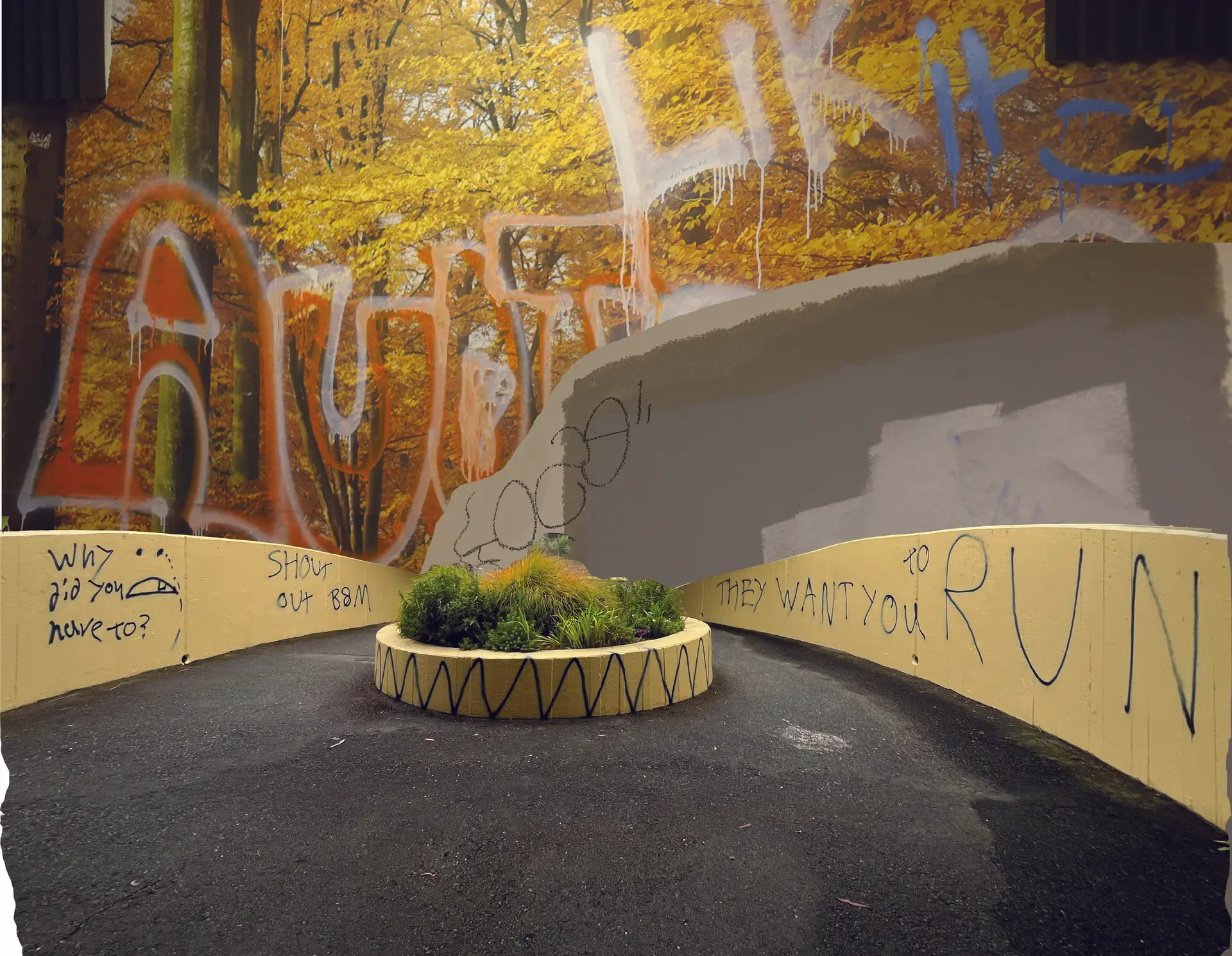
  • Graffiti persists after pricey cover-ups 

    Graffiti persists after pricey cover-ups 

    Bodhi Haugen

    A few strokes of a paintbrush can erase someone’s tag from a campus wall, but not without a financial toll. Last year, across Cal Poly Humboldt those cleanups totaled 360 hours of labor and $33,209 in costs.

    Graffiti on campus, as well as cover-up jobs from Facilities Management (FM), can be seen in bathroom stalls, under bridges and on walls inside and outside buildings. From small doodles to larger pieces, the relationship between artists and FM has been a source of frustration for each other. 

    FM received 245 work orders and requests related to graffiti removal in 2025 according to the department. Mike Fisher, associate vice president of FM said staff encounters graffiti on a nearly daily basis. Removing it can require pressure washing, sanding, repainting or replacing the affected surface.

    When asked what was most commonly seen written around campus — whether it be political statements, people’s tags or gibberish. Fisher said, “It runs the gamut.” 

    Graffiti has been an issue for FM, but some students enjoy the extra color seen around school. Caden Tablada, a junior accounting major, sees a difference between graffiti and vandalism — even when it’s on campus though he rarely sees it around. 

    “Graffiti is definitely not vandalism. Vandalism is like actively trying to worsen something and not try to add any artistic value with your piece,” Tablada said. “Say if it’s on some blank wall, then that’s not vandalism. You know, that’s just adding a little bit more color to campus.”

    Robby Bennett, a senior theater arts major, grew up in San Francisco seeing a lot of graffiti and understands how graffiti as an art can go both ways.

    “I think all graffiti is vandalism,” Bennett said. “Obviously, some vandalism is crude and some is more artistic, but graffiti is definitely vandalism. Sometimes I see it and I think it’s a shame someone has to clean drawings of penises off the wall. Sometimes I see it and I think it’s nice art or a message.”

    When asked whether or not artists consider this relationship between FM and graffiti, Bennett was skeptical. 

    “Probably not or if they do they probably look at it with an us vs. them,” Bennett said. 

    He also described why vandalism could be an outlet for a lot of students, explaining its recurring practice.

    “I think a lot of people who do it just do it to break the conventions of society without being punished,” Bennett said. “Let out some steam.”

    The relationship with artists and FM will continue to be an uphill battle on campus. According to Fisher, FM views graffiti as vandalism regardless of what is written or drawn. The department would rather direct their energy towards issues that could better campus rather than addressing the writing on walls and stalls.

    “Our FM employees take a lot of pride in their work and pride in this University,” Fisher said in an email on Sept. 29. “Anytime vandalism occurs, it takes away from other positive things we could be doing.”

    Bodhi is a reporter and news editor for the Lumberjack. You can reach him at bgh27@humboldt.edu

  • Women’s tie, Men’s heartbreaking loss

    Women’s tie, Men’s heartbreaking loss

    Sadie Shields

    Cal Poly Humboldt’s women’s soccer team fought hard against Cal Poly Pomana ending in a 0-0 draw Sunday morning, while the men’s team fell short to the Broncos 3-2 after giving up two goals in the final 11 minutes of the game at College Creek Field.

    Both games were part of the Senior Day Cal Poly Clash, with Humboldt having recognized Breauna Mello, Kylie Elliano, Edwin Monterrosa, Seth Uson, Elijah Espinoza and Robert Somerville who will be graduating at the end of this school year. 

    While the women’s game ended in a tie of 0-0, Ari Beddoes recorded six saves which kept the score the same throughout gameplay. Cal Poly Pomona applied pressure throughout the opening half, but Beddoes was able to stop all five shots aimed at the goal to keep the match scoreless. After the first half Humboldt put the pressure on Pomona having attempted seven shots in the second half to no avail. Lucy Al-Chokhachy, Hayden Anderson and Nicole Beauchemin each placed an attempt on the target, while the Lumberjacks were able to generate three corner kicks during the second half. 

    The Jacks’ defense remained steady even at the opposite end of the field. As Beddoes made her sixth save, she was able to complete her second shutout after keeping the score tied during the Cal State LA match on Friday. Pomona was able to finish with a 20-8 advantage in shots on the goal, with the Broncos only able to place six attempts on the goal compared to the three for Humboldt. This draw moved Humboldt Women’s soccer to 5-3-4 overall and 3-1-2 in CCAA play. 

    The men’s team fared worse on Sunday after losing a 2-1 lead late into the game. Pomona first scored in the first half with Hector Arellanes scoring to give the Broncos a 1-0 lead going into halftime. The Jacks’ responded quickly with Shota Lam scoring with 42  minutes left in the game to tie 1-1. The Lumberjacks then took the lead soon after when Ethan Gyenis scored off a bombastic assist from Luke Gomes. This allowed Humboldt to hold the lead 2-1 until the Broncos tied the game with 10 minutes left. The Jacks stayed unlucky when the Broncos scored again with 3 minutes remaining, earning a 3-2 win. Humboldt men’s soccer finished with nine shots, having put seven of those nine on target. Goalkeeper Edwin Monterrosa recorded five saves during the game. 

    Sadie is a reporter with an interest in covering and taking photos for sports and science. Reach her at sls331@humboldt.edu.

  • Bonded by uniforms

    Bonded by uniforms

    By Jacqueline Zuniga

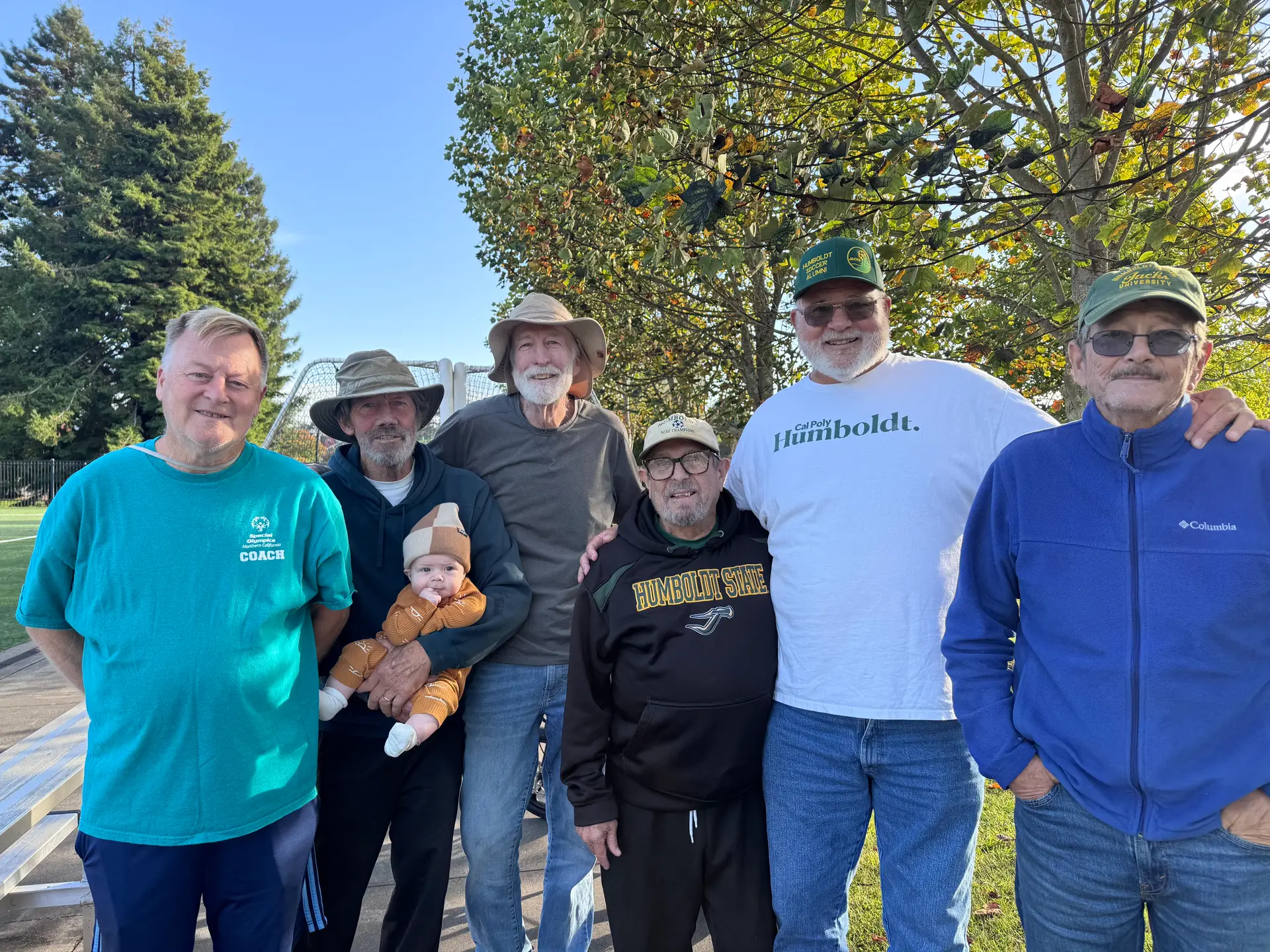
    For Humboldt’s men’s soccer alumni, watching the current team brings back memories of muddy fields, long road trips and friendships that have lasted decades post-graduation. 

    David Hurley was part of Humboldt’s first recruiting class in 1974. During his time, players practiced on patchy fields, played on a small baseball diamond and traveled in personal cars or a 12-seater van. On away games, they sometimes stayed in people’s homes or slept on gym floors to save money. 

    “We had some really tough conditions,” Hurley said. “We really pretty much bonded with each other around it.”

    Today, the program has a turf field, locker rooms, quality uniforms, assistant coaches and hotel accommodations. Hurley said alumni are proud to see those changes. 

    “We’re just really happy that that’s occurred. It makes us feel fulfilled, you know, ’cause we were the foundation of that,” Hurley said.

    But better facilities have not made the competition easier — Humboldt still competes against schools with larger recruiting pools in large cities. It’s a struggle to get players out to Humboldt.

    Mark Wheatley, who played from 1977 to 1981, has watched the program’s skill level and facilities develop. He said the skill level of soccer has grown across the board. Noting that players have spent years honing their game. 

    “You can tell these are guys that have been doing nothing but soccer their whole lives,” Wheatley said.

    Though some people think Humboldt’s team doesn’t have the best record, Chuck Huntington sees it differently.

    “A lot of folks focus on, you know, what the record is, but it’s really not about that. It’s about the different things that you accomplish as a team, whether or not it’s a lot of wins or a few wins or whatever,” Huntington said.

    For Huntington, the connections created through the program when he first got here were what helped him adjust to being away from home for the first time. 

    “You get a lot more out of the sport than just winning games,” Huntington said.

    That sense of connection continues through the Bob Kelly Award, named after the first men’s soccer coach, created by alumni to recognize a player for academics, character and commitment to the program. “[we wanted the award] to sort of connect the alumni a little more strongly with the current players, and then to acknowledge sort of the program’s history, that emphasized a lot more than just wins and losses.” Huntington said, “team spirit, grit, academics, Bob Kelly, who was our coach… emphasized the academics a lot more than he emphasized the soccer”

     Lyle Wilks knows what it means to be a player and athlete. He played at Humboldt in the late 70s before returning to the program years later as an assistant coach, where he spent 28 years around generations of players and won Humboldt’s only championship in 1994.

    For the alumni, the program’s ultimate success is measured beyond the field.

    “We still get together…,” Hurley said. “There’s a bond that exists between guys who put this uniform on.”

    Jacqueline is the super duper cool sports editor, social media manager for LJ and news manager for KRFH.

  • Miranda’s rescue suspended again, questions still unanswered

    Miranda’s rescue suspended again, questions still unanswered

    By Jacqueline Zuniga

    Angry protesters stood outside the Humboldt County Courthouse Oct. 3 following last week’s action, calling for Humboldt County officials to remove remaining animals from Miranda’s Rescue. Founder Shannon Miranda posted a statement on his website on Oct. 2, stating that the rescue was temporarily closed while it updates its operating permits. 

    The conditional use permit and coastal development permit were suspended on Oct. 1 because the rescue failed to meet the terms of a compliance agreement with Planning and Building. A county letter from Planning and Building quoted by the Lost Coast Outpost said that Miranda failed to submit the grading permit required to deposit enough dirt to raise dog kennels at least a foot above flood elevations. The letter offered county assistance with relocating the remaining animals. 

    Marianna Mullins, a protestor at the courthouse and an independent Sacramento animal rescuer, has been raising concerns since May 2013. She first went to social media to voice her concerns. She later hired a private investigator and they both interviewed witnesses in 2013 and 2014. They alleged that dogs were being shot and buried under the radar. She acknowledged that the investigation lacked physical evidence at the time.

    “I told Shannon in 2013 that it didn’t matter how long it took, the truth would come to light,” Mullins said. “Now it’s here, but at what cost? How many lives were lost? How many people are devastated? And how broken is the community?”

    Mullins continued documenting her concerns through a Facebook page established in Jan. 2014 called Truth Behind the Lies Miranda’s Rescue 2013. She said she received a cease-and-desist letter that year.

    “I wasn’t believed,” Mullins said. “The community was convinced that I was vindictive and that I was a liar.”

    Mullins said stories were written about her by the Lost Coast Outpost that said she was running a “smear campaign,” but 12 years later those stories have been corrected and the publication has apologized. More recent discoveries of mass dog graves appeared to support concerns she could not prove in 2013.


    Hilary Mosher, a protester at the courthouse said she was advocating for the animals and families who couldn’t be there.

    “We want Shannon Miranda stopped, we want him to lose his 501(c)(3) nonprofit status, because he’s in violation of his mission,” Mosher said. “This mission, according to the Attorney General’s Office of charitable organizations, is to have a no-kill shelter where animals are adopted, and he is doing almost the opposite of that.” 

    A 501(c)(3) organization is a U.S. nonprofit organization that is recognized by the IRS to be federally tax-exempt and eligible to receive tax-deductible charitable contributions. 

    Rick Kircher, another protester at the courthouse, stated that in 2003 a conditional use permit was written for the shelter and contained eight requirements — five of which remained incomplete in 2026. For the last 23 years, the shelter had been operating in noncompliance according to the Eureka Times Standard. 

    “The sheriff’s department is in charge of the cruelty complaints,” Kircher said. “So this has been an ongoing issue, and they’ve just been kicking the can down the road. Nobody’s addressing it.” 

     Mullins described reports of dogs found with visible bullet wounds and blood coming from their ears. Some graves were also left uncovered due to the state of decomposition the animals were in. This left her in shock.

    “What really caught me when I read this, and I also heard it in the press release, is that they are in the final resting place. They’re not,” Mullins said.“This is not the resting place. This is a mass grave.”

    Jacqueline is the super duper cool sports editor, social media manger for LJ and news manager for KRFH.

  • Flying is not fun

    Flying is not fun

    By Jacqueline Zuniga

    I left the Arcata-Eureka Airport, in Mckinleyville, at 6:30 p.m. — it was the easiest flight I had. Arriving at the San Francisco International Airport, I spent nearly $50 on food because I was not going to starve. That was the first sign of how poorly my trip was going to go. I sat near my gate laughing out loud at reels, not knowing it would be the last time I laughed until I reached my family days later.

    Getting on my flight, the lady next to me decided it was annual Piss Off Jackyday. She took forever removing everything from her bag when boarding and woke me up five times going to use the restroom during our four-hour flight. 

    My connecting flight had a two-hour layover in Chicago O’Hare. It was 5 a.m. and the airport was packed, so I documented my experience on my close friend’s story about how many people there were during that time. As a college student, I care what I spend money on, so when I treated myself to a coffee that damn near drained my bank account I wasn’t expecting it to make my already awful morning worse with the worst coffee ever. On the bright side, it’s like United Airlines knew my experience with them was going bad – no one was assigned to sit next to me. I was able to finally read and relax. After more than 12 hours of traveling, I finally landed on the other side of the country, where an hour-and-a-half commute waited for me. After all that, I arrived at my aunt’s house at 1 p.m., saw my mom and ate real food.

    After a chill family reunion, I woke up at 4 a.m. to relive the nightmare one last time. After briefly believing my flight was double booked, the flight attendants solved my issue. Sadly. The problem didn’t end there. I got seated next to a man who used his huge leather jacket as a blanket, which spilled into my seat taking over my armrest. I felt like a sardine in a can, making me uncomfortable the whole flight. 

    On my last United Airlines flight the app confused me, saying I had 54 minutes to get to my gate. Unfortunately, that was actually the time it was going to take me to arrive at my gate — my next flight was boarding in 14 minutes. I had to get from A23 to B58, so I took the airport train and walked what felt like miles to board my flight. 

    Everyone on that flight decided to talk to the person next to them. No shade to them, but the people in front of me were yelling and laughing, which pissed me off. Why are we being so loud on a flight? Have we forgotten airplane etiquette? Two hours of chatter and laughter at an absurd noise level was not fun. Their joy of making absurd plans at such a loud level made me miserable. 

    May we not forget: not everyone wants to hear your loud conversations. If you need to get up 15 times during a flight, buy an aisle seat. And United, as a broke college student, I don’t want to pay an extra $60 not to sit in the middle. What was supposed to be a relaxing journey through the clouds became a red-eye flight straight from hell. 

    Jacqueline is the super duper cool sports editor,social media manger for LJ and news manager for KRFH.

  •  Show Me the Body bring heavy music with a heavy message

     Show Me the Body bring heavy music with a heavy message

    By Will Bishop

    The campus lit up the fog overhead like a soft orange signal pulsing in a hazy gray. A lighthouse drawing in 16 new bodies from all across the world. From Montréal to Bangkok, four bands hailing from the furthest reaches of the world had found themselves here. Show Me the Body’s national tour was well underway when they decided to add one more date, Sept. 29, Kate Buchanan Room, Cal Poly Humboldt. 

    The crowd was thin amid the opening set from Canadian band Truck Violence. Still, they spared no quarter, filling the negative space with a maelstrom of negative-minded post-hardcore sludge that fits rather neatly into the incredible and actually real genre descriptor “pigfuck.” A lone jersey-clad mosher carried the anemic audience — windmilling and donkey kicking with energy and ferocity equivalent to around 40 people.

    Following a brisk 20-minute set, Brooklyn-based digital hardcore outfit Lip Critic took the stage and proceeded to stomp it into the ground with a pummeling synth-driven performance. The most gonzo and colorful of the night’s performers, the quartet executed sample-driven synth-freakout mayhem on the back of a dual drummer percussion section. At one point frontman Bret Kaser strode out into the crowd, bisected it with a mic cord, then proceeded to swing the cord like a jumprope — audience members gleefully accepted the challenge.

    Now, if you were starting to tire of all of the “post” and “digital” prefixes being assigned to your beloved hardcore, if you just wanted that straight-ahead no-caveats hardcore, Bangkok-based outfit Whispers was the band for you. It was certainly the band for our beloved Jersey Guy, who was throwing roundhouse kicks like he was fighting for his life in a Bruce Lee movie. A rather one-to-one vibe match for the large projection of kickboxing matches which backdropped the group. The crowd reached a fever pitch during this set, swelling and metastasizing into a grotesque mosh hivemind. In the words of lead singer Nitisart “Mike” Chaiburi, “This is a hardcore show who gives a fuck!”

    Headliner Show Me the Body took the stage, met with rapturous applause and the aroma of countless very sweaty people. Frontman Julian Cashwan Pratt tore through the set with minimal banter, electing instead to focus on the screaming and the rapping and the distorted banjo playing. His intensity grew as the sheen of sweat on his face accumulated, stepping away from the mic and hulking around the stage like a glistening bald ape. Crowd members near the front sang along to nearly every word — barking out “Radical left, it compels me to fight!” on the bruising “Eat For Peace,” then chanting along to the mesmerizing alienation anthem “Arcanum.” This full-throated devotion proved that the band had indeed made the correct choice in making a little pit stop on the long road from Seattle to San Francisco.

    Kaser, in a post-show interview, reminisced on the nostalgic qualities of playing college shows — Lip Critic having formed in 2018 during their time at the State University of New York at Purchase.

    “I love playing colleges still because it’s like — it feels a little bit back to our DIYish roots where we used to just pull up to house shows, blow the PA and leave,” Kaser said. “So, as close as I can get to that. It’s always got some sentimental value.”

    Kaser went on to espouse the importance of unity through music.

    “Live music is all about being surrounded by a group of people that you feel like you identify with and you feel safe around and supported by,” Kaser said. “That’s kind of what we aim to do is like, have a space for catharsis and celebration. A place where we can kind of all unify against some real nasty bullshit that’s going on outside of the music venues where we have fun.”

    Towards the end of Show Me the Body’s set, Pratt delivered something of a retroactive thesis statement for all that came before. Summarizing the night’s blistering atmosphere with one simple phrase.

    “It’s all love.”

    Bio: Will Bishop is a reporter and copy editor. He can be reached at wmb84@humboldt.edu or via dynamic encounter in the wild.

  • Porch Fest

    Porch Fest

    By Barley Lewis-McCabe


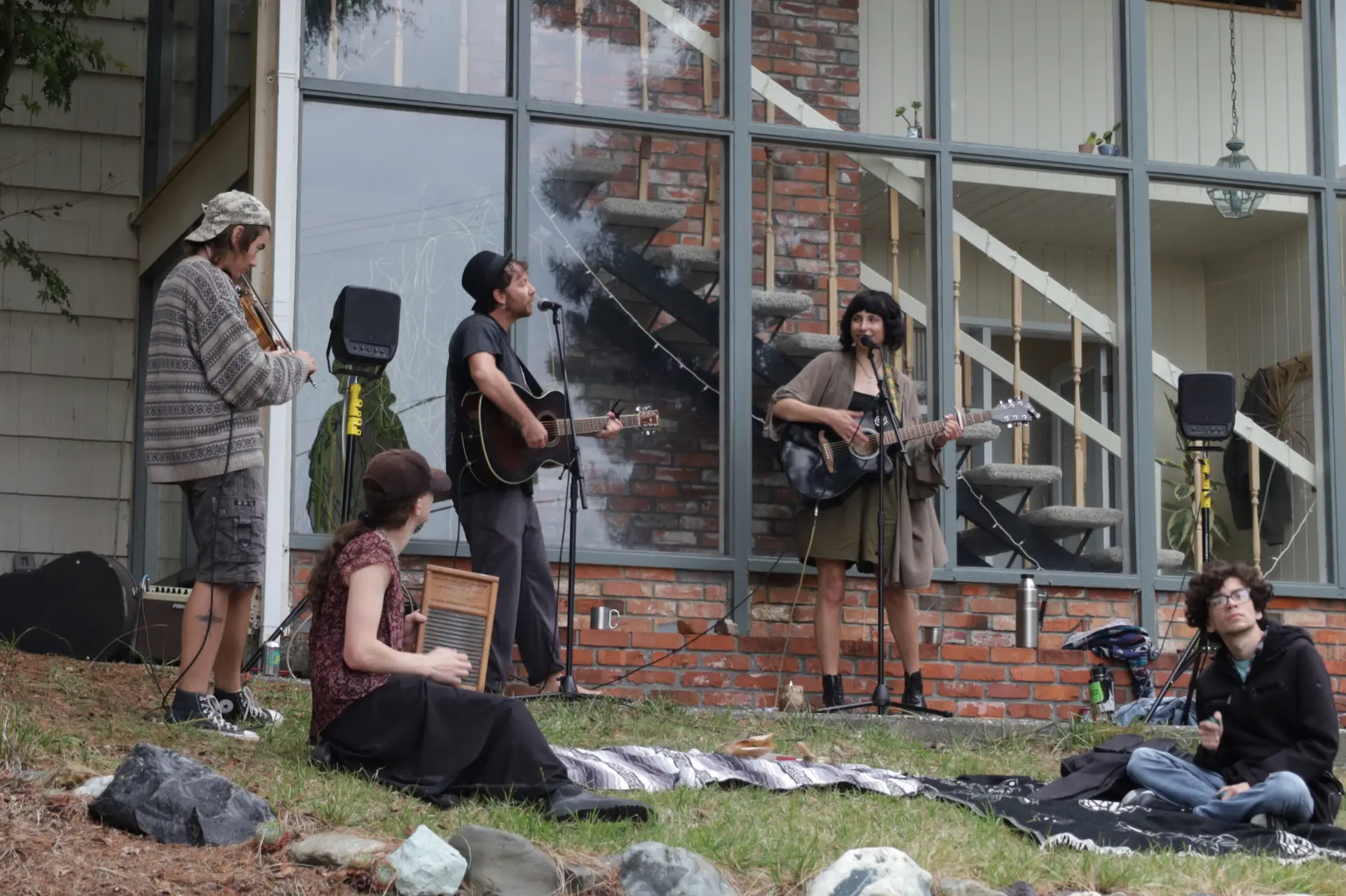
    Atop one of Sunny Brae’s highest slopes, on a grassy porch encircled with rocks, duo Trinket and ,Kween — accompanied by some of their musician friends — serenaded a crowd of people standing or dancing, elbow to occasionally swinging elbow, on the curve of the road. They sang authentically, they were able to encapsulate the Humboldt young adult experience in all its strange ways — good times and bad times existing all at once. A crowd of strangers became friends amidst a shared catharsis. It was folk punk.

    Porchfest is an annual free music festival, taking place on Oct. 4 this year, where Sunny Brae’s residents with the nicest porches invite musicians to play on their front steps. 75 bands ranging from funk, punk, Indonesian percussion, fog rock and even acoustic niche-hypothesis world music — a term coined by the band ANH (acoustic niche-hypothesis). In the interactive musical museum that was Porchfest, folk music was particularly popular. 

    “Being able to like, be there and speak and share what I’m feeling is just so powerful for myself and for the people around,” Trinket said. “That’s the appeal of folk music and why it’s branched out to like so many different genres, because it still retains that freedom of expression and freedom of emotion while also being able to like, go down these different paths of music. That’s something I really love about Porch Fest.” 

    Folk is, of course, an incredibly wide-ranging genre. It’s earnest and heartfelt, it’s occasionally electric, it’s Americana. Emmett Bonds, a forestry master’s student, sees it in this very same intersecting sort of way.

    “There’s something about folk music that is just very representative of the sort of American experience and the sort of melancholy homegrown aspect of it,” Bonds said. “It’s sort of romantic. It’s sort of depressing. There’s something there.”

    Lilli Willows, senior psychology major, guitarist and lead singer for performing band Half Wing, described their music as “Dream Folk,” something exemplified by the band’s carefully structured soundscape. Slow and otherworldly guitar licks played alongside a soft and drawn out fiddle, underscored by a steady and low-key rhythm section — perfect theme music for a space cowboy riding a weird horse on the billowing plains of Alpha-Colorado. 

    There were few desires that couldn’t be fulfilled by the neighborhood hosts. If you wanted lemonade or some baked goods there was a kid waiting to sell it to you, it wasn’t much harder to find an ice chest offering beers or a soda. At any show people would greet their neighbors like long lost family, embracing each other in their arms and sharing in the music.

     Willows believes folk music is particularly popular in Arcata since it ties into a culture of respect for our community, saying it, “tickles our values.”

    “I think behind folk is this feeling of community, this togetherness that you don’t find in other music. It’s more accessible…” Willows said. “A lot of different music fits into that genre. I’m going to say, folk music is almost like storytelling music. It touches into a deeper tradition of music where music isn’t like a commodity, but [freely] shared,”

    Trinket felt right at home playing on someone else’s porch, saying that the beauty of Porchfest was in its similarity to the most popular folk music stage in America, the street corner.

    “I really like busking. I really like setting up on a street corner and playing. Porchfest is kind of like that, right?” Trinket said.
“There are some people who live here — who are awesome people — who’re like, ‘Hey, do you guys want to just like, play at our house?”

    Barley is the good-timing Editor In Chief of The Lumberjack, as well as a jack of all trades news writer. Contact him for any reason at bl258@humboldt.edu

  • Women’s Resource Center and Pelican Bay students discuss preventing sexual violence 

    By Marielle Winuk

    Cal Poly Humboldt students at Pelican Bay State Prison met Oct. 1 on Zoom to discuss sexualized violence prevention and how to build a culture that supports survivors. The conversation stemmed from an end sexualized violence course taken by the students at Pelican Bay.

    A lot of students at CPH and Pelican Bay struggled to find the space to talk about sexualized violence and patriarchal narratives growing up, they agreed there is a growing need for these conversations.

    Women’s Resource Center Program Director Namixtulu Esteva discussed how a lot of students have reached out, feeling unsafe in need of spaces to have conversations about sexualized violence.

    A central theme in their discussion was that supporting survivors requires patience and solidarity. The Title IX process can feel daunting and overwhelming for survivors to navigate. Being survivor-centered means listening and offering resources, without pressuring someone to seek help before they are ready. 

    “It’s really just about how the person feels and how they’re willing to accept your help or not,” Esteva said. ”It’s so easy for society to try to justify action because it’s so instilled and engraved in the way that we operate as people.”

    The discussion turned to the ways everyday language and media can normalize objectification of women. While taking the course at Pelican Bay, one of the students talked about the prison culture norm of decorating your room with photos of women. They said that it reflected women as a commodity and objectified them. His seven-year-old daughter called him on FaceTime and asked him if this is what he thinks of women. This opened the conversation between him and his roommate to rethink their day-to-day actions.

    Participants acknowledged that calling out harmful behavior can be uncomfortable, but staying silent can contribute to a harmful cycle. While taking the course, students analyzed their methods of communication and language surrounding how they talk about women. Recognizing misogyny in music, movies and conversations they have with others can help deconstruct previous misogynistic ideas. 

    The conversation highlighted how masculine stereotypes play a role in sexualized violence. Hegemonic masculinity describes cultural ideals that associate manhood with dominance, control and emotional toughness. Those expectations can make vulnerability seem like weakness, discouraging men from talking openly about sex, harm, or their own behavior. When difficult topics are treated as taboo, it can be harder for people to recognize harmful conduct, support someone who discloses an experience, or take responsibility for their actions. 

    “We need to be holding these spaces for students to be able to just like, unapologetically… show up there and not have to feel shame for having these conversations,” Esteva said. 

    All of this is addressed in the annual Take Back the Night event held in April. Take Back the Night is an international event about unity and making space for survivors. The movement started in the 1970s with local rallies and marches from feminist activists who felt unsafe in public spaces at night. 

    “It not only addresses sexualized violence, but it addresses partner violence, different subtopics of sexualized violence, like domestic violence and gendered violence,” Esteva said.  

    It takes an entire community to help change the culture around sexualized violence. Holding spaces for people to talk about their experiences and learn from others is needed now more than ever.

    Marielle is the layout editor with an interest in sports and elections. Contact her at mmw146@humboldt.edu.

  • Medieval Fest: Courage and Community

    Medieval Fest: Courage and Community

    By Tara Linderborg-Cordry

    Medieval Festival of Courage brings students, locals and artists alike to travel back to the Medieval Ages. Oct. 2nd and 3rd, 2026 marked the 24th year that the event brought community members together to celebrate art, food, culture and of course, courage. The festival is organized by the Coastal Grove Charter School Parent Organization to raise money for Coastal Grove and other Humboldt County schools. There was something for everyone, from children’s games or a boffer pitt, to revelry and a bar for the adults. 

    Many attendees took the opportunity to show off their best medieval garb — dressing as their favorite medieval and fantastical characters. Dressed in their own costume of a brocaded vest and headpiece, Phoebe Hughes appreciated the creativity and work involved in creating a good costume.

    “I love seeing the creative way people take their own personal spin on what medieval means,” Hughes said. “It says, arguably, more about the person than anything that they could tell you.” 

    A diverse craft market featured vendors coming from all over Humboldt County to showcase their work. An assortment of on-theme goods and foodstuffs were available for browsing or buying. Medieval costume pieces like handmade corsets or prop swords could be found, for people to add on to their costumes or buy one on the fly. Vendors were in on the fun as well, with many choosing to decorate their booths to further the immersive experience. Attendee Elise Edell, who donned a fifth century style gown, found that the vendors helped to bring the event to life. 

    “I love the roleplay aspects,” Edell said. “Especially the vendors will get really into it, which is really cute.”

    Local dance groups, puppet shows, musical performances and many more acts, brought the festival to another level. Music act Celtica Nova drew a large crowd, including a separate crowd of people dancing arm in arm near the front of the stage. Bagpipes and electric guitar joined to create a unique blend of celtic music and classic rock.

     Later in the day, aerial silks artists displayed impressive acrobatics and shows of strength throughout their performances — including drops and torpedo-like spins. The performers had costumes of their own, featuring sparkly makeup and patterned leotards.

    Drawing the biggest crowd overall was a full contact jousting group.  the Imperial Knights. People filed in, eager to cheer for their knights, as two fully armored men and their equally impressive horses rode into the arena. Both sides of the crowd became increasingly riled up as the Knights began their full contact jousting show. The two mounted riders charged at each other, javelins in hand as they attempted to hit the other’s shield plate. 

     The joust came to a conclusion when both knights dismounted their steeds and engaged in a full-force mock sword fight. A mock decapitation from Sir Russell brought Sir Kaiser to his knees and the sword fight to an end. Sir Russell emerged victorious as the crowd greeted their champion.

    Tara Linderborg-Cordry is a Journalism student and reporter with the Lumberjack. She is a Humboldt local, and is pursuing a career in Public relations. When she’s not writing, she’s usually at the beach with her dog, Murphy.

  • Margins in Red at Reese Bullen Gallery

    Margins in Red at Reese Bullen Gallery

    by Winter Music

    At the Reese Bullen Gallery, you can see Margins in Red, an art exhibit by acclaimed artist Kirk Maynard. Maynard’s work has been shown at universities such as Princeton University and Queens College, as well as museums like The Newark Museum of Art, Montclair Art Museum and the Springfield Museum of Art. Until Oct. 18, Maynard’s work is being displayed right here at Cal Poly Humboldt.

    Margins in Red combines two series —Periphery, created mostly with oil pastels — and Red — featuring mixed media with photography, sculpture and collage elements. While both are visually distinct, the exhibit mingles them in a way that allows viewers to appreciate each piece while also seeing the connecting themes between each piece and series.

    Periphery focuses on themes of identity and mental health. The use of oil pastels and lighting reflects emotional vulnerability and internal conflict that can be brought on by experiencing racism.

    Red has imagery directly pertaining to systemic racism — most notably redlining. Redlining is the discriminatory practice of only allowing African Americans to live in specific communities with few financial services available. This has led to communities of minorities living in areas with underfunded schools, unavailable hospitals and little to no infrastructure maintenance. The series features photos shaded red, sculptures of communities divided by red paint and collages. 

    The gallery’s reading area included The legacy of structural racism: Associations between historic redlining, current mortgage lending, and health, a scientific article published by Elsevier detailing the health effects of those forced to grow up in historically redlined districts. It also included the Humboldt Geographic article California’s Former Sundown Towns Face Up to Racist Legacies by Michael Christmas, which explains some of the historical and contemporary racism in Humboldt County.

    Winter Music is a junior English major and copy editor for the Lumberjack. You can reach her at wlm38@humboldt.edu.

  • It’s Time to Turn Off the Big Light

    It’s Time to Turn Off the Big Light

    By Tara Linderborg-Cordry

    Classrooms, the doctor’s office, even the campus library, all have one thing in common: blinding, fluorescent overhead lighting. These lights — often referred to as the big light — are a common intergenerational conflict. At least some of us have memories of being disappointed as kids when the lights came back on after quiet time. The question is, what makes these lights such an assault on the eyes?

    Light directly affects our internal clock. The National Institutes of Health (NIH) found that light is the strongest environmental signal for our circadian rhythm. Artificial lights can disrupt this cycle, causing fatigue and lack of sleep. For many, bright lighting can also cause physical discomfort and headaches. More lighting doesn’t necessarily mean better lighting; multiple studies have found that fluorescent lighting can lead to eye strain, decreased attention and in some cases even lower test scores.

    These huge overhead lights are used as if everybody has the same needs, but we all have different sensitivities. Smaller and softer individual lights let people control their personal workspace, making people feel more comfortable and productive. Preventing sensory overload also helps to make spaces more accessible for those with light sensitivities. 

    Big lights also make a space feel too harsh; softer lighting is more inviting when entering a new space. Places of business often use fluorescent light to increase visibility, but businesses with ambient light feel welcoming, people want to shop where they feel welcomed.

    Natural light should be used more often; opening windows and doors can help to air out a room, but can also reduce the need for overhead lighting. This, of course, reduces unnecessary electricity use. With gas and electricity prices climbing higher, limiting your use of lights could dramatically reduce your monthly electricity costs. Rooms can be well lit without blasting white light into every corner. 

    Schools are a great example of this; students will spend hours under fluorescent lighting, with no way to control their environment. Imagine how much more comfortable your classrooms would be with flexible lighting.

    As a culture, we rely too much on overhead lighting, even though we have much more sustainable and comfortable lighting options. It’s time to switch to better, more efficient lighting. 

    Tara Linderborg-Cordry is a Journalism student and reporter with the Lumberjack. She is a Humboldt local and is pursuing a career in Public relations. When she’s not writing, she’s usually at the beach with her dog, Murphy.

  • Miranda’s Rescue reopening shocks community

    Miranda’s Rescue reopening shocks community

    Bodhi Haugen

    Frustrated community members protested on Sept. 28 at the Humboldt County Courthouse to raise awareness about Miranda’s Rescue resuming operations after its permit suspension was lifted by the Humboldt County Planning and Building Department. 

    Jenna Moore monitored trail cameras on Shannon Miranda’s – founder of Miranda’s Rescue – property prior to the investigation; she noticed that every five to 10 days giant holes alongside mounds of dirt were being tampered with. Moore was notified on her phone on April 26 with footage showing Miranda on the property.

    “It was the video that you’ve probably seen — the one of him driving the tractor dumping the dogs — and because I had gone to the sheriff’s department before that and they didn’t do anything, we knew we had to go in,” Moore said. “So when I saw that video, obviously I lost my cookies, very emotional of course, and I called Jennifer, and I just said we’re going in tonight, we’re gonna dig, and we met right before dark and did what we needed to do.”

    Jennifer Raymond is an animal rights activist and owner of the neighboring property to Miranda’s rescue. Moore touched on how her protest was less about rushing the investigation and more about her frustration with the Humboldt County Sheriff’s Office’s lack of communication.

    “It angers the community that we are getting nothing,” Moore said. 

    The rescue is again accepting animals and has resumed adoptions. As part of the agreement that allowed the permit to be reinstated, Miranda’s Rescue agreed to stop using the illegal expansion of the northern parcel on its property where animals were killed and remove the building from the premises. The rescue said it will also no longer operate a veterinary or euthanasia facility.

    Samantha Smith, a senior political science major adopted a dog from Miranda’s Rescue named Ted in 2024 and reminds everyone what adoption means to her after hearing about the dead dogs at the rescue.

    “Ted, for us, after hearing all these stories, he’s not just a rescue, but he was saved too,” Smith said. “And I think that that’s really important to keep in mind that when you’re adopting an animal, you could be saving them from potentially horrific situations such as this.”

    Protesters call on other counties to stop sending animals to the rescue, advocate for transparent communication with the Sheriff’s office, bring justice to Miranda and shut the rescue down for good. This permit reinstatement has fueled criticism from community members who remain concerned about the multiple violations previously cited against the rescue. This has not been the first protest at the courthouse since the initial investigation. 

    In an official statement on the Miranda’s Rescue website posted in June, Miranda claims the business’s morals have always been followed despite media coverage and online commentary.

    “Miranda’s Rescue is a no-kill rescue,” Miranda said. “We do not euthanize animals simply to make space. However, as we state on our website, there are rare circumstances in which euthanasia may be necessary — when an animal is suffering from a terminal condition or when it poses a serious, ongoing danger to people or other animals. In those situations, we make the most humane and responsible decision we can, always with public safety and animal welfare in mind.”

    Ashley Elwell, who worked at Miranda’s Rescue in 2012, described Miranda’s unethical behavior and frustration amongst animal lovers.

    “Justice needs to be served, and his acts were fraudulent,” Elwell said. “I’m from Fortuna, and it’s a bad representation that justice is not being served because we are an animal community, and the way he went about doing things was out of greed.”

    As of Sept. 29, Miranda’s Rescue will remain open. Miranda has no charges against him at this time. There will be another protest held at the Humboldt County Courthouse on Saturday Oct. 3 from 11 a.m. to 3 p.m.

    Dan Close, a protester and Humboldt County resident, talked about his frustration with the lack of punishment Miranda received and the shock behind a permit reissue.

    “I don’t know what it takes to rise to a felony and get charged, but it’s shocking to see them reissue a permit for operating a facility,” Close said. “It’s hard to deny the evidence, and doing this to a couple of dogs is enough to get you shut down. It’s kind of amazing that it has to be hundreds, not even to get you shut down.”

    Bodhi is a reporter and news editor for the Lumberjack. You can reach him at bgh27@humboldt.edu
  • Week without driving sure beats parking

    Week without driving sure beats parking

    Barley Lewis-McCabe

    The first day of October marks the beginning of the National Week Without Driving, an event encouraging drivers to experience the barriers non-drivers face in a car-centric world. Learn about and enjoy the pleasure of walking, rolling, biking, bussing and so much more.

    Morgan King, university climate action analyst and Cal Poly Humboldt sustainable transportation committee chair said,

    “One of the goals of the week without driving is to get those folks making decisions around mobility and transportation to actually experience what it’s like to be a non-driver,” King said. “For me, my pie in the sky [goal] is that our university president, our vice presidents, participate and try it out,” King said. “They’re the ones that ultimately have the decision-making [power] and influence how new parking is built and how funding for things like transit is diminished.”

    Building and maintaining parking lots is incredibly expensive. King cited parking feasibility studies the university conducted with outside firms, saying that it would be much more beneficial to improve infrastructure to help students get to campus without using a car instead of making it easier for them to park. 

    Fifth-year interdisciplinary studies major Meg Hatcher has a car and a bike but chooses to walk to school every day. Hatcher finds it hard to talk about student access to transportation without acknowledging proposed cuts to university-funded transportation services.

    “I think students’ access to transportation and bus lines being cut are very much linked.
I don’t know what the answer is, except keep running buses because students need to get places and community members need to get places,” Hatcher said. “So, I am pro-public transportation.” 

    Ishan Grewal, a senior general biology major lives at the Hinarr Hu Moulik (HHM) complex but struggles to find parking near his dorm, so he parks his car on campus and relies on shuttles to and from HHM. 

     “It can be a hassle to get back and forth just because the bus and shuttles got defunded; it’s like the scheduling’s been kind of funky… The schedule is posted on physical paper, but they don’t follow it to the T,” Grewal said. “Sometimes I’ll be waiting there for 20 minutes and I’m like, okay, well, screw this.
I just walk and I literally get to campus before the bus shows up.” 

    King described how building more parking isn’t the catch-all solution it may seem. 

    “Generally, it can be an issue for some to find parking on campus,” King said. “But does that mean that we build more parking, or instead do we invest in transit, pedestrian and bike infrastructure to alleviate parking constraints?”

    Barley is the good-timing Editor In Chief of The Lumberjack, as well as a jack of all trades news writer. Contact him for any reason at bl258@humboldt.edu

  • Primetime kept me in my seat

    Primetime kept me in my seat

    Barley Lewis-McCabe

    It’s 2006, Tamagotchis dangle comfortably from rearview mirrors. Natasha Beddingford’s latest single, “Unwritten” is taking the world by storm, the “great war on terror” is at its height and millions of Americans tune in every Wednesday at 9 p.m. to try to unravel the mysteries of the island in Lost. There’s something new on TV; Dateline – one of the most reputable TV news shows of the era is bringing you a gritty look into the burgeoning menace of online pedophiles, hosted by Emmy Award-winning journalist Chris Hansen. This is To Catch a Predator (TCAP). 

    Primetime – directed by Lance Oppenheim is phenomenal and at times hard to watch for all the right reasons. It’s a claustrophobic and personal look into the burden of being America’s premier pedophile hunter, while also doubling as an introduction to the bastardization of news media in an oversaturated entertainment field. 

    In the film’s first act, NBC executive Jeff Zucker – himself – lays it out straight for Hansen – Robert Pattinson – Americans are tired of fiction, they want real action that plays on their deepest fears. Audiences don’t want a fantastical version of their world; they want the harsh reality they hope they’ll never experience. There’s only one journalist who can find a story and abandon any ethical principle to hook people in, Chris Hansen.

    Everyone in Hansen’s sphere confronts the dark side of their virtuous fight and grapples with the underbelly of what they’re doing — soon everyone is pushed as far as they can go, as the film explodes into a conclusion that leaves you hanging. While it is a fictionalized story of the classic American television program, Primetime creates its own world — very similar to ours — with all of the same events and same people, they just act a bit differently than they really did. Pattinson delivers a volcanic performance as a righteous and furious Hansen fighting a seemingly supernatural, Lynchian evil that corrupts men and must be beaten out, publicly. He’s balanced out by Andie Bender – Merritt Weaver – his mild-mannered producer who’s more focused on keeping their show afloat than catching a white-whale of a predator. While this is applicable to any cast member, Weaver’s performance especially was grounded, passionate and didn’t just jump off the screen, but sat in the seat next to me and ate my popcorn.

    Dan Plumb – Skyler Gisondo – is a struggling musical theater actor who gets his big break as pedophile bait on TCAP, alongside experienced decoy Del Harvey – Phoebe Bridgers – in her debut film role. Primetime doesn’t ignore the emotional, physical and theatrical work that went into a show like TCAP. 

    The minimal score and heavy emphasis on natural sound kept me on the edge of my seat for nearly two hours straight. The camerawork was unique and engaging; the CRT tint and 4:3 aspect ratio led to a film that felt both dated and timeless. Oppenheim’s love for analog horror was clear by the third act and executed perfectly. 

    Primetime is a movie that could not have come at a better time. In my humble journalistic opinion, this is the movie of the year and Hansen could really benefit from a media ethics class.

    Barley is the good-timing Editor In Chief of The Lumberjack, as well as a jack of all trades news writer. Contact him for any reason at bl258@humboldt.edu

  • Lumberjacks dig deep to remain undefeated at home

    Lumberjacks dig deep to remain undefeated at home

    By Marielle Winuk

    The Lumberjacks were full of vengeance last week; playing at home, they set the record straight against Menlo College and Cal State Monterey Bay. After what should have been easy wins on the road two weeks ago, the Lumberjacks returned home with their first losses since starting conference play. 

    Head volleyball coach Angela Spoja attributed the losses to unexpected injuries and long travel days. 

    “We had some injuries, and we still have those people out and we had to figure out what our best lineup was going to be,” Spoja said. “Because those injuries happened right before we played last week, I don’t think we had the time to kind of work through it. Had we been able to do that, I think it might have been a different outcome.”

    In addition, most of the teams in the California Collegiate Athletic Association (CCAA) have the luxury of playing against schools near them. There are clusters of schools in the Bay Area as well as in Southern California. 

    Humboldt has the disadvantage of traveling five plus hours every week to games, which is taxing on the players. They are away from their normal food, in hotel beds and spending long hours away from school. 

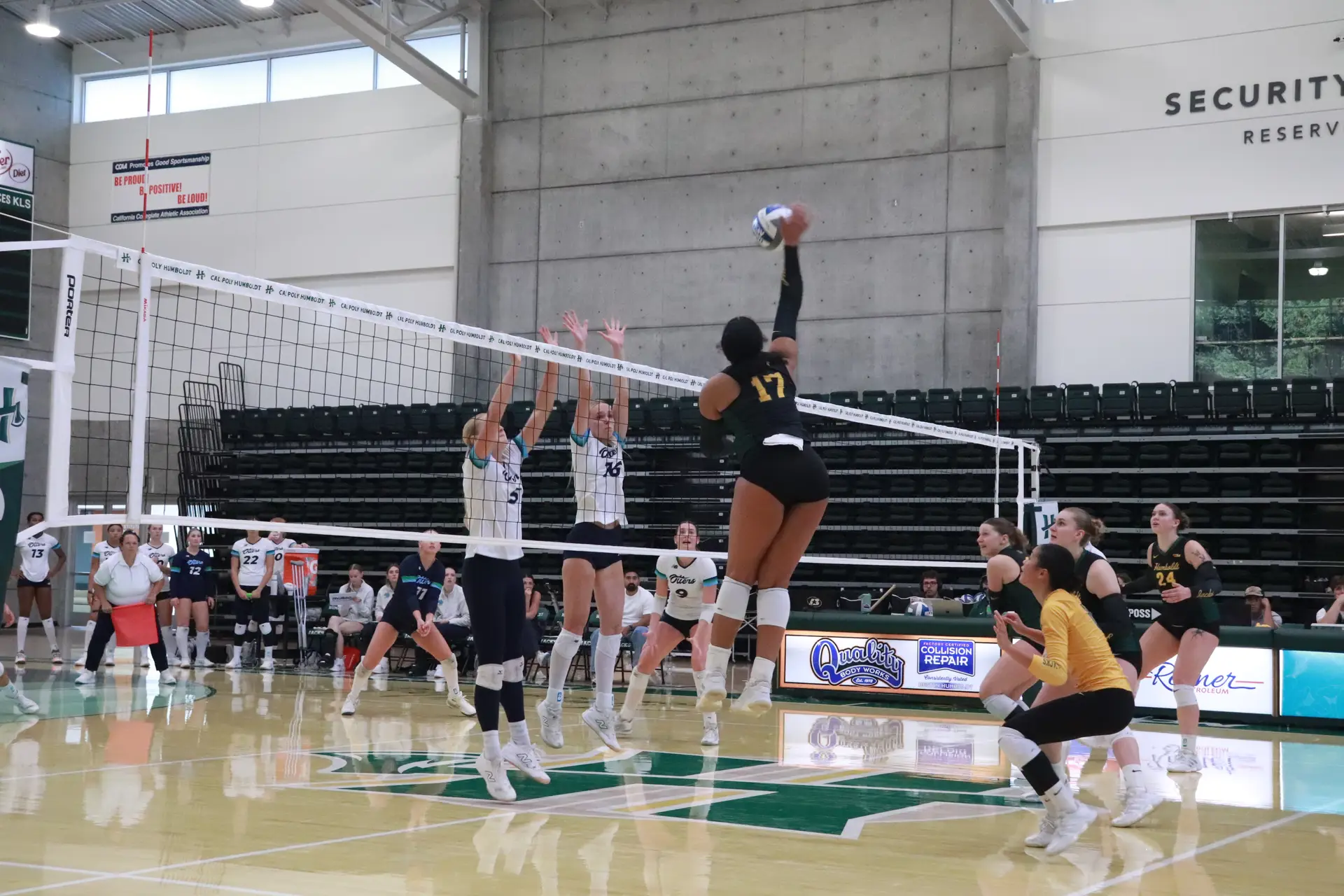
    When the Jacks returned home, they spent the bulk of their practice on blocking and court positioning. This was substantial to the Jacks’ performance, as they delivered 15 solo blocks in five sets against Menlo when at home. Phoebe Bland delivered her sixth solo block of the game to clench the game winning point. 

    “It felt really good. Really fulfilling, honestly,” Bland said. “We worked on specifically blocking all week, so we totally did show up.” 

    Despite beating Monterey and Menlo on the second go around, because it was a bye week in the National College Athletics Association (NCAA), neither win will count towards the conference record. During the scheduled NCAA bye week, teams can focus on recovery and have a break from traveling. The Lumberjacks’ record in conference games remains 2-2. 

    Their achilles heel this season has been closing games in the third set. The Jack’s momentum dies down and smaller errors start occurring more frequently. 

    “It just takes some time,” Spoja said. “You’re about to win, you play a little bit tight. We’re working on staying loose.”

    The young team is hungry to remain undefeated at home, and is working to improve their conference record on the road next week against San Bernardino and San Marcos. 

    “I’m hoping for some upsets,” Bland said. “We’re gonna go in hard. We’re gonna study, study, study film, and we’re gonna see what we can give them.”

    Marielle is the layout editor with an interest in sports and elections. Contact her at mmw146@humboldt.edu.

  • The elevators of doom 

    The elevators of doom 

    By Alba Galvan

    If this campus had any more hills or staircases, they would need to hand out climbing gear with our student IDs. Walking around campus – even when you know the best routes to your classes – still feels like pure cardio punishment. So when my phone notifies me I’ve hit 5,000 steps before lunchtime, I just want an elevator to carry me up a few floors to my next class. Instead, what should feel like a break from walking, always feels like a game of “Is this elevator about to give up on me?” 

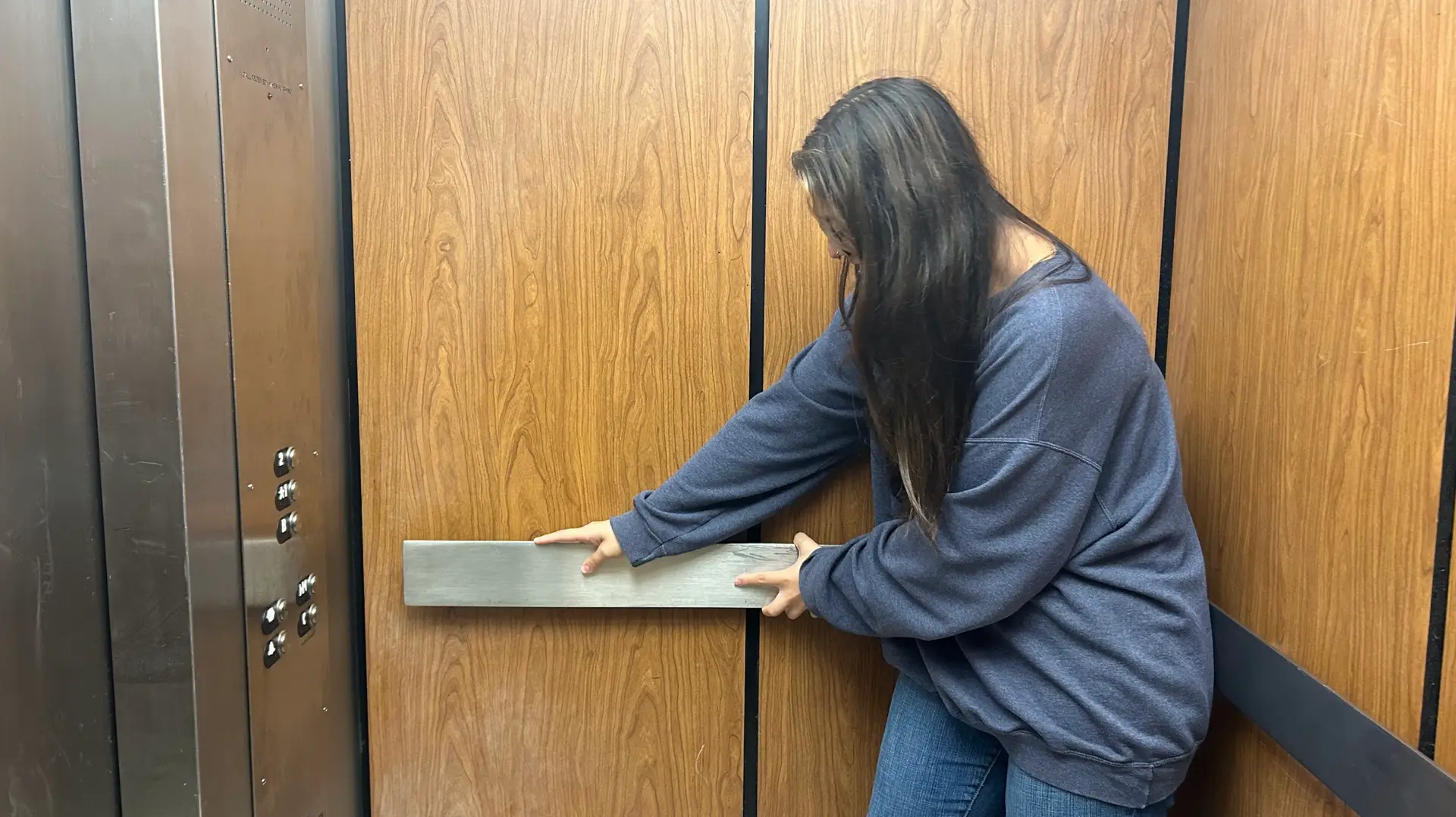
    Realistically, I want to believe the school keeps the elevators up to date so we won’t get stuck between floors for a few hours like that student at the Hinarr Hu Moulik dorms last spring semester. The elevators in these new dorms scare me more than any other elevator on campus. After passing the first and second floors, one of the elevators starts making a screeching noise so bad it sounds like my car’s brake pads when they’re down to the bare rotor. The other elevator is always out of order, creating traffic in the early hours as students try to make it down to the first floor for their 9 a.m. classes. 

    Over at the Jolly Giant Commons, going from the first floor to the fourth is fine. My issue is the elevator that takes you from the fourth to the fifth floor. I take the elevator to avoid sweating and breathing heavily after what feels like 50 flights of stairs. The elevator moves at a painfully slow pace; by the time I get to the top, the students who chose the stairs have already left the area. Then there’s Founders Hall; did you know there was an elevator there? But what’s the point after already hiking up four flights of stairs? It feels like more than half the buildings on campus have hidden routes and elevators; take Gist Hall, for example. I had to look at a map to realize there was one, and trust me, it was very well hidden. 

    The only elevator on campus that actually works perfectly is at the Business and Social Sciences (BSS) building; it’s smooth, fast and doesn’t make scary screeching noises that make me wonder if I’m going to sue the school for getting stuck in the elevator. But honestly, that’s the bare minimum after having to make your way up a hill that feels like treadmill incline level 12 just to reach the doors. 

    After hearing people say “you’ll get used to it” for years, I can confirm I have not gotten used to it, navigating this campus to avoid climbing stairs should not be this difficult. BSS has proven that a normal, non-terrifying elevator is possible, so why does every other elevator on campus feel so terrifying? And why must a majority of the elevators on campus be hard to find? 

    Alba is a reporter and opinion editor for the Lumberjack. She enjoys listening to people’s opinions with an open mind. You can reach her at agg83@humboldt.edu.

  • UPD BYTES

    UPD BYTES

    Compiled by Bodhi Haugen

    This information is from Cal Poly Humboldt Police Department daily media logs. These reports are edited for clarity.

    Tuesday, Sept. 22

    8:30 a.m. – Disturbance

    A man on a small bike was seen riding around lot G-12 yelling obscenities. 

    5:49 p.m. – Camping Violation

    Caller reported a hammock hung in the trees at the top of Cypress Hall. Upon arrival, the hammock was not determined to be a camp and was submitted for removal.

    Wednesday, Sept. 23

    10:30 p.m. – Suspicious Circumstances

    Hammock was found east of the depot loading dock, south of the top of Cypress Hall.

    Thursday, Sept. 24

    1:49 p.m. – Patrol Check

    Caller reported a patrol check after seeing someone collecting garbage and going through dumpsters at Feuerwerker House.

    Saturday, Sept. 26

    9:28 p.m. – Suspicious Person

    Caller reported 15 people trying to get into the fire pump room at the Hinarr Hu Moulik Complex. They were last seen near Highway 101 and were unable to be located on arrival.

    11:36 p.m. – Suspicious Person

    A man was seen pulling on the doors to the Music B building late at night.

    Monday, Sept. 28

    4:48 p.m. – Patrol Check 

    A report was made about a possible DUI driver entering campus near LK Wood Blvd. The vehicle wasn’t able to be identified when officers were on the scene.

  • From Forest to Table: Foraging in Humboldt

    From Forest to Table: Foraging in Humboldt

    By Tara Linderborg-Cordry

    Foraging is the practice of collecting wild foods like berries, edible plants and mushrooms. Many use foraging as an affordable way to supplement their diet with natural foods and plant medicines. Humboldt County has many factors which make it a hot spot for foraging. CJ Herman is a senior environmental science and management major and president of the Mycology Club.

    “We’re on the coast, so it’s very nice and damp here in the fall,” Herman said. “We get a lot of rain.”  

    You can often find mushrooms and other edible plants hiding within the damp soil of Humboldt’s forests. Humboldt’s wild foods range from huckleberries, to coastal mussels. We also have a wide variety of edible mushrooms, including chanterelles, lobster mushrooms and king boletes. 

    Humboldt has a strong environmentally conscious culture, with many organizations raising climate awareness. Cal Poly Humboldt also maintains one of the highest percentages of students enrolled in Biological Science majors compared to other California universities. 

    Kevin Alvarez, a senior environmental science and management major and Mycology Club treasurer, talked about how Humboldt County has a lot of eco-friendly individuals. 

    “We find a lot of cool mushrooms because a lot of people are into it as well,” Alvarez said.

    Herman discussed what beginners should know about foraging, suggesting that you should take only small amounts, and always identify a plant or mushroom before consuming it. Bringing a small paper bag can help with collection, and going with friends can make the experience more enjoyable. Identification is the most important part of foraging, a mistake can mean ingesting a toxic plant or fungus. 

    “The worst mistake is assuming that you know it already,” Herman said. California has many toxic plants and mushrooms including the Death Cap Mushroom (Amanita phalloides). Herman recommends using the iNaturalist app for identification and always bringing a field guide when foraging. 

    Foraging on Public Lands involves following rules to preserve the local environment and ecosystem. Many parks restrict how much you are allowed to collect. It is always recommended to stay on trails to avoid damaging any plants or wildlife. 

    “There can be a lot of foot traffic, since a lot of people are into mushrooms,” Alvares said. “So I would recommend staying as close to the trail as possible,”

    Herman and Alvarez discussed how foraging can be a great way to connect with your neighbors and get some tasty treats along the way. 

    “There’s definitely a community wherever you are,” Herman said. The club encourages people to connect with others who are interested in mushroom hunting and other foraging. 

    Tara Linderborg-Cordry is a Journalism student and reporter with the Lumberjack. She is a Humboldt local, and is pursuing a career in Public relations. When she’s not writing, she’s usually at the beach with her dog, Murphy.

  • Gilla Band stab the light fantastic

    Gilla Band stab the light fantastic

    Will Bishop

    Everyone has a different reaction to grief. Some expect it to be immediate, a fast-acting chemical agent triggering some latent resting sadness. Others think it’ll be slow, a dreary uneventful trudge until you find some material piece of a person and it stabs you clean through your foot. For Gilla Band frontman Dara Kiely, grief has been more like a radiation chamber.

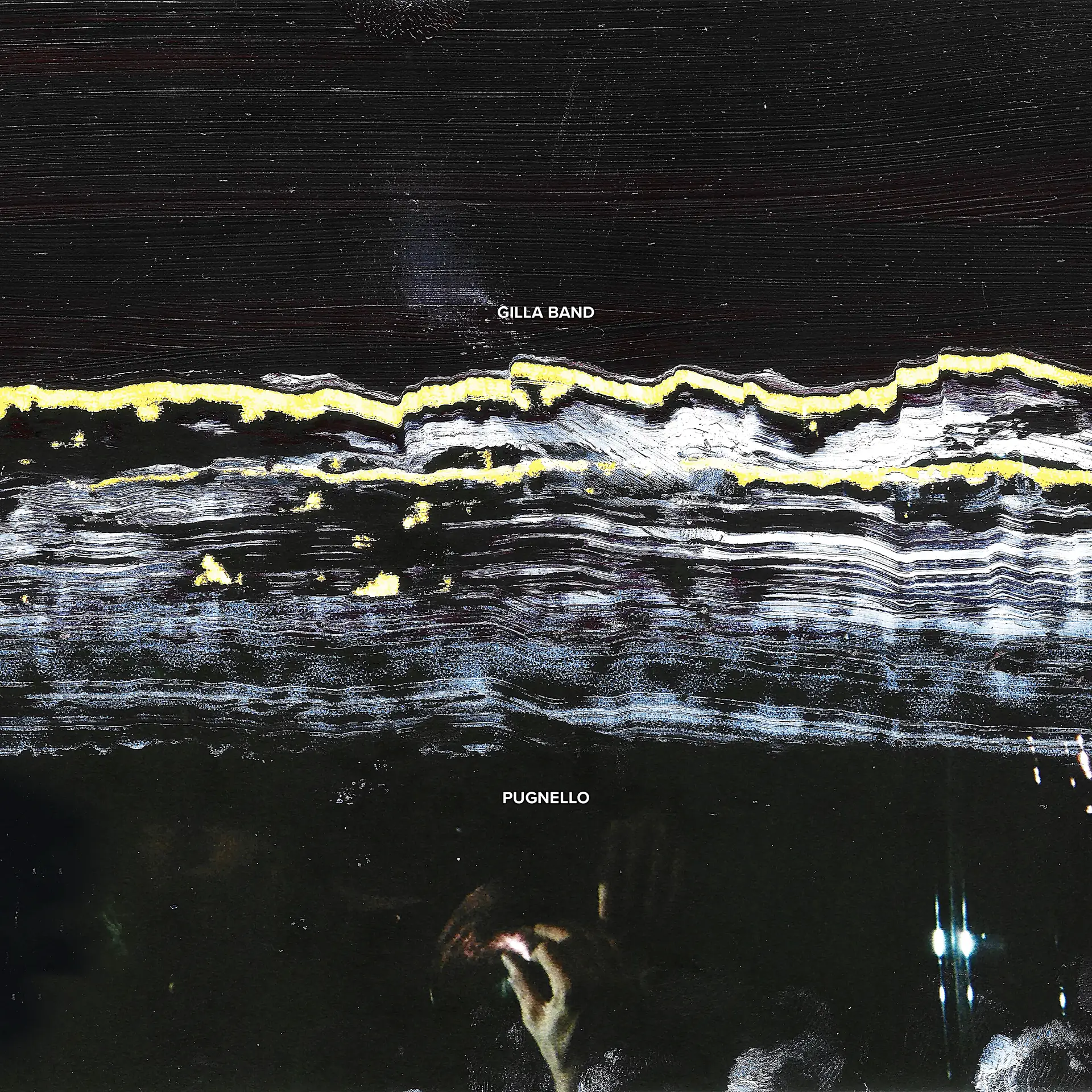
    Pugnello, Gilla Band’s fourth album and first since the death of Kiely’s father, demonstrates a band in the throes of a seemingly horrific episode. A smorgasbord of motormouthed pop culture references, misappropriated turns of phrase and anguished screams — it’s akin to listening to the self-deifying ravings of a man on a bus at 3 a.m., but filtered through the band’s signature weaponized noise, you start to feel that maybe he is god.

    At times, the album strips away its conspiratorial mise-en-scène style and lays bare some bleak emotional truths. Track three is titled “Alogia,” meaning poverty of speech, a common condition of schizophrenia. Towards the end of the song, when Kiely declares “All scarlet alogia,” it’s as if he’s characterizing it as a transmittable sickness or a flower in bloom. “At the Gallop,” the album’s bleakest track, swaps out Kiely’s vocal theatrics for a monotoned robot voice. “I’m dead to lots of people. Even to the ones I love.” it drones.

    Kiely’s mental health struggles have been no secret — resulting in cancelled shows, stints in the hospital, a period where he lived in a tent in his parents’ backyard and, yes, a brief dalliance with believing himself to be god — it wasn’t until recently that he was diagnosed with schizophrenia. “Prolix,” the opening track on their 2019 release The Talkies, prominently featured a recording of Kiely suffering a panic attack, leading to a pervasive feeling that there was something happening to Kiely. On Pugnello opener “The Angelus,” Kiely feels much more like the something that’s happening. Exploding outward, rather than collapsing inward.

    Where the band truly makes this outpouring of madness its own is in its whimsically unhinged lyricism. Painting in absurdist emotional vulnerabilities against a canvas of undulating distorted mayhem. The kaiju industrial stomp of “The Megazord” could have you convinced you’re listening to a very serious and very intense song — until Kiely starts screaming, “I assembled the Megazord!” and it becomes abundantly clear he’s talking about a Power Rangers action figure. This is also not the sole Power Rangers reference across the album.

    With a boundary-pushing lineup at his back — comprised of guitarist Alan Duggan, bassist Daniel Fox and drummer Adam Faulkner — Kiely could easily lose himself to self-seriousness. The auditory assault on display is staggering. At times akin to getting battered by syncopated steel rain. Yet, in a paradoxical turn, it’s Kiely’s frantic screeds of dissociative rambling that root the album in normalcy. There’s a core friction between the mundanity of the subject matter, the spontaneity of its delivery and the hostility of its backdrop that makes Pugnello infinitely compelling and fresh. 

    Gilla Band — employing spinelike rhythmic structures, then dipping them ever deeper into vats of boiling metallic flesh — have pushed their trademark blend of post-punk, industrial techno, noise rock and no wave to new heights. Tracks like “Alogia” have a slinky danceability to them, with synths like lungs heaving up and down and strutting percussion. The deranged polyrhythmic groove of “Crisp Pop,” supplemented by smothered screams and a snappy bassline, is a vertebrae-snapping good time. Provided you don’t mind if, when you cut the proverbial rug, it sounds a bit like it’s wailing in pain.

    Will Bishop is a Cal Poly Humboldt journalism major. He is prone to writing essays about things that bother him and fictional works about things that also bother him, but in different ways.

  • Rabies!

    By Nico Patakidis

    On Sept. 29, the University sent out an email notification about rabies-infected bats having been discovered in Humboldt County — as well as an infected bat on campus.

    Rabies is a deadly virus that is spread through direct contact with an infected animal, such as scratches, bites or saliva when coming into contact with an open wound. The virus can only be transmitted through mammals, domesticated and wild. If you have come into direct contact with a rabies-infected animal, immediately go to the nearest emergency room. Rabies has a 99% fatality rate among infected humans who do not receive treatment in a timely manner before symptoms are present. 

    Signs of an infected animal can include behavior changes, such as nocturnal animals being active during the day, aggression, being unafraid of humans or appearing stunned. Physical signs of rabies infection can include foaming at the mouth and excessive salivation. 

    Domestic animals such as dogs, cats, etc. are capable of transmitting rabies. Ensure that your pets are vaccinated for rabies and exercise caution when taking pets outside to prevent them from coming into contact with wildlife. Contact with rabies-infected bats is the leading cause of rabies exposure in the U.S.; however skunks and raccoons can also be common sources of rabies. 

    Should you encounter wildlife – especially bats –  on campus that are injured, ill or dead, do not attempt to make contact with it. Immediately notify the University Police Department at (707) 826-5555. If you have recently handled wildlife or a bat has been in your home and you have not received a rabies vaccination, contact your medical provider. Students may contact Student Health & Wellbeing Services at (707) 826-3146.

    Nico is a reporter with an interest in covering local government and political affairs. Reach him at np211@humboldt.edu.

  • Creatine, more than your muscles

    by Marielle Winuk

    Creatine is a muscle recovery and enhancement supplement that’s been getting a lot of attention lately. Mass marketing on social media platforms from companies like Bloom and Sports Research has influenced people to try it and see if they reap the advertised benefits. 

    Creatine is sourced in muscle tissue and naturally consumed through meat, poultry and fish. There are roughly 0.2-0.5 grams of creatine in those food sources. Your body produces about 0.5 grams — half the size of a jellybean — in your liver, kidneys and pancreas daily.

    According to the National Library of Medicine, the daily need of creatine is 2-4 grams. The average supplement dose is five grams per day and, when taken consistently, results can be noticed in about two weeks. Creatine pulls water directly into the muscle cells, making your muscles appear fuller and facilitating growth. 

    Jack Stewart, Student Recreation Staff and recent graduate of Cal Poly Humboldt, started taking creatine in high school and noticed results in a week. 

    “I don’t know how much of it was in my head, but it felt like within the first few weeks, I was already getting a little bit stronger,” Stewart said. “Weights move easier.”

    When creatine enters the body, it goes to the bloodstream and is absorbed into your muscles to help produce energy quickly. Monohydrate creatine is the most common and easiest for your body to absorb. 

    The benefits go beyond muscle enhancement. Creatine can help brain function and cognition according to Cal Poly Humboldt athletic nutritionist Taylor Bloedon. It supports brain function during periods of stress, aging or sleep deprivation. Creatine can also improve short-term memory, attention and processing speed. 

    Jacob Allen, a grad student in Kinesiology, experienced notable changes while taking creatine

    “It felt a lot easier to kind of relax and sleep without any short disturbance,” Allen said.

    While there are many potential advantages to taking creatine, Bloedon mentions anytime you are enhancing muscle proteins, hydration is key.  

    “Anytime you’re increasing your lean mass or you’re having an enhancement of muscle proteins, synthesis or even recovery, you pull in water into the cells with you,” Bloedon said. “Creatine helps enhance it, and so that means you need a mixture you’re hydrating well enough.” 

    While the standard dose is five grams, some people choose to do a loading phase where they take ten grams for a week to see results faster. 

    “Unless [you] really have to optimize recovery from workouts or you’re really trying to enhance your lean mass gains in a shorter period of time, then you could do the loading,” Bloedon said. “But the things you look out for are just more muscle cramping — kind of aches and pains in there with the dehydration that can come along with it.”

    The generally unflavored powdered supplement is relatively cheap — ranging from $20 to $30 for about 60 doses. Aside from the powdered supplement, creatine is sold in gummy form, sports drinks and gels. Creatine is allowed in the NCAA and it can be a helpful supplement for athletes’ recovery. It’s important to note that you should talk to doctors and keep tabs on your health when trying a new supplement to make sure it is benefiting your body. 

    Marielle is the layout editor with an interest in sports and elections. Contact her at mmw146@humboldt.edu.

  • Back to School With Renegade Review

    Back to School With Renegade Review

    by Winter Music

      It’s back to school at Froth with Arcata’s resident rebellious drag troupe, Renegade Revue! On Sat. 19 at 8 p.m. jocks, nerds, teachers and cheerleaders, or people dressed like them, assembled to create an 80s school burlesque fantasy. The sold-out show featured eight drag kings and queens, each with their own take on the school tropes we’ve all seen in movies. Nostalgia, mixed with hot and heavy burlesque, meant dollars and praise were thrown after each move made and each piece of clothing stripped.

    So, what makes people go on stage with more makeup than clothes? Burlesque performer Alora Devora, a sixth year psychology and interdisciplinary dance studies major, took to the stage in her school girl costume. 

    “The reason I do drag and burlesque is because it brings me back into my body,” Devora said. “It gives me confidence and I believe it also gives other people confidence seeing people do what is scary.”

    The desire to inspire people in the audience was shared by many of the night’s performers, but that wasn’t the only reason people felt the need to put themselves out there. 

    Cocky Muffington is a drag king and host of the King of Drag watch parties at The Summit. Depicting the classic jock with too much of daddy’s money — complete with a cigar and smoking jacket — he’s found what keeps bringing him back to the stage.

    “I do drag for the gender euphoria. I didn’t really experience gender dysphoria before I started drag,” Cocky said. “Once I did drag, I never wanted to get out of the makeup right? I never wanted to take off the packer. I’m like, oh, this feels really good — like really it’s been missing from my life.”

     Renegade Revue seeks to provide performers and viewers alike with a safe space to express themselves and build confidence. While performers express their femininity, masculinity and sexuality as a whole without fear of judgment, viewers are encouraged to take inspiration and live their lives to the fullest.

    “The most important thing you can do in your lifetime is become yourself,” Master of Ceremonies, Olivia Gambino, a Cal Poly Humboldt anthropology alumni and local burlesque queen said. 

    As the night came to a close, performers and audience members reflected on the nature of what was just experienced. The radical nature of satirizing gender roles, embracing camp, thinking about the effort that those here and before us have put in to preserve this art and keep sharing it.

    “Oh, we’re glamorous little cockroaches. We’ll just show up in any little corner. Sweetie, we would be jumping off of washing machines and dryers, doing the splits, doing a death drop at the Eastside Laundromat if we could,” Gambino said. “If you wanna get into it but you don’t know how, we’ll have you kitting, we’ll have you stage manage, we’ll put you somewhere. You belong with us. If you feel like you belong with us, you belong”

    So don’t be scared, go out to that drag event, throw some cash when they dance, maybe even get involved. These spaces exist as a safe place to explore self expression, so try that new thing, wear that weird outfit; just do it with love, kindness and respect.

    Winter is an English major and copy editor with an interest in covering local community events mostly focusing on music and art.

  • Community cleans up the coast big time

    Community cleans up the coast big time

    By Nico Patakidis

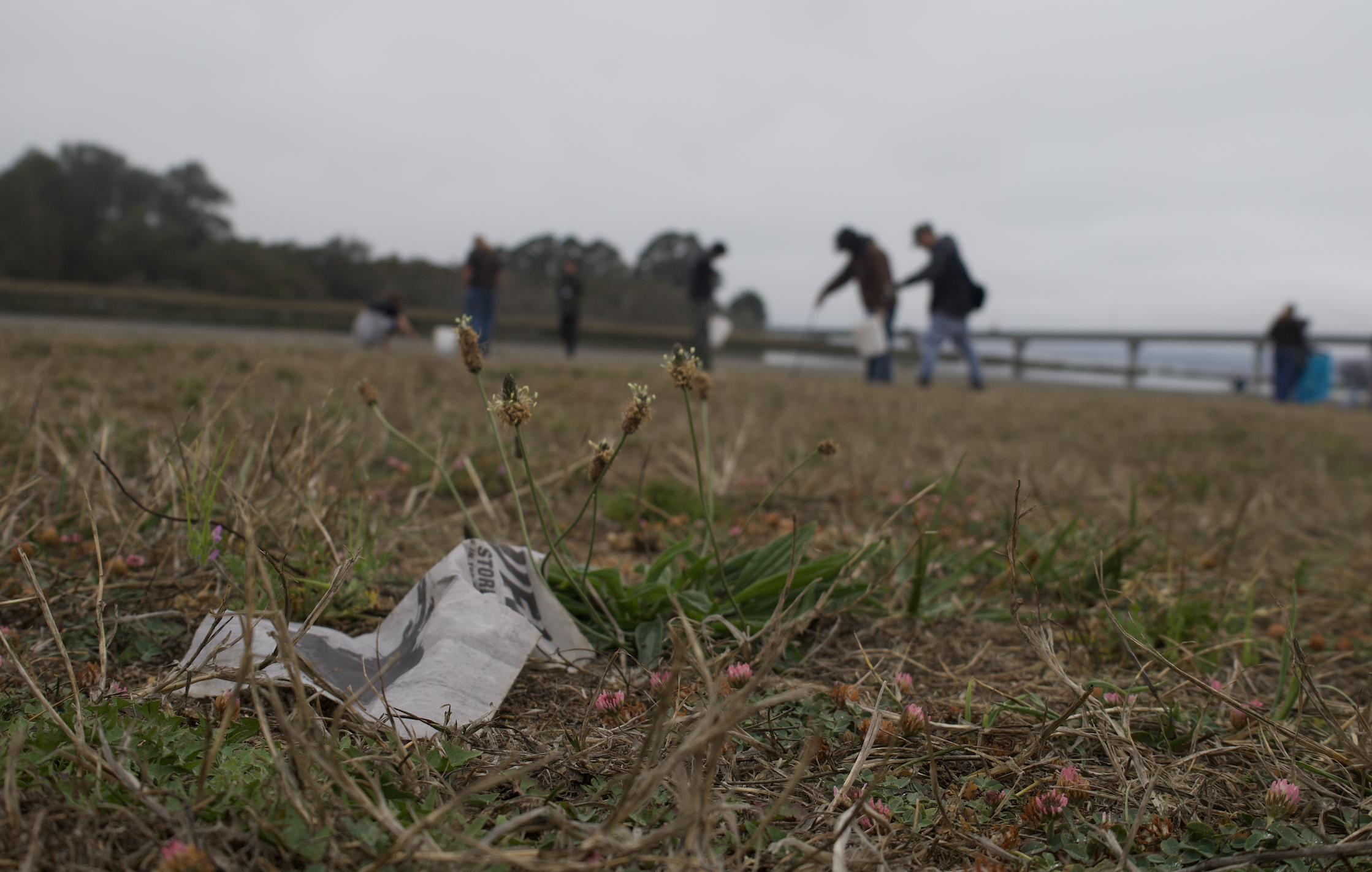
    2026 marks the 42nd year of Coastal Cleanup Day, California’s largest annual volunteer event dedicated to removing trash from beaches and inland waterways statewide. 

    For this year’s Coastal Cleanup Day on Sept. 19, the Cal Poly Humboldt chapter of Surfrider Foundation came together at the Humboldt Bay Aquatic Center to clean up trash along the bay shore. Surfrider Foundation is a non-profit organization that advocates for protecting our oceans, shorelines and marine life. 

    Beginning at 10 a.m., Surfrider members and volunteers gathered at the Aquatic Center before splitting into groups to divide and conquer the trash polluting the bay. In partnership with Outdoor Adventures, cleanup volunteers took to kayaks and paddled around the bay, picking up trash floating on the water. Having never been in a kayak before, sophomore marine biology major Christian Hutchin grabbed a paddle, a bucket, and got right to cleaning up. 

    Those who weren’t paddling the bay grouped up to walk the shoreline with buckets, empty soil bags and a sheet to track their trash. The sheet listed various kinds of trash: plastic cups, bottle caps, cigarette butts and more. Surfrider co-president and business marketing major Riley McDaniel said the trackers are reviewed after the event and recorded by the Surfrider Foundation headquarters, allowing them to focus efforts on eliminating certain kinds of trash that appear most on the trackers. 

    In addition to Surfrider members, plenty of community members showed up to contribute as well. Surfrider member and junior archeology major Zoe Good-Brummer attended cleanup days in the past and found the work to be rewarding and therapeutic. This time, she brought along her friend Lauren Sherfy, a junior wildlife major.

    “I just wanted to do my bit for my community, for the environment and help keep it clean as best we could,” Sherfy said. 

    Surfrider also partnered with the natural resources club, bringing in another group of individuals that are passionate about the environment to assist with beach cleanup. Natural resources club member Jess Ricketts was brought one step closer to her goal for this year, to make a difference and clean up the environment in any way– big or small. Beyond cleaning up the coast, volunteer and junior art education major Taylor Roberts enjoyed the community-oriented aspect of the event. 

    “Being at school here… just how lovely and accepting this community has been inspired me to want to give back to it, make my way to be a part of it and make a positive change,” Roberts said. “And I guess to help everyone around, including the fish.” 

    The day ended at 1 p.m. with 460 pounds of trash being picked up along Humboldt Bay, made possible by a total of 100 volunteers. Co-president of the Surfrider club and senior molecular biology major Mia Riordan said that the club usually hosts a coastal cleanup day once a month, but the turnout has never been so large. 

    “I have never seen even a quarter of this many people at beach cleanup,” Riordan said. “It’s really awesome to see such a community wanting to work together to keep our oceans safe and our beaches clean.”

    Nico is a reporter with an interest in covering local government and political affairs. Reach him at np211@humboldt.edu.