The Lumberjack


Students Serving The Cal Poly Humboldt Campus and Community Since 1929

Tag: Lisa Rossbacher

  • Memes, Genocide and Teaching in a Pandemic

    Memes, Genocide and Teaching in a Pandemic

    With life disrupted, lecturer Kerri Malloy perseveres with flexibility and humor

    A professor noticed students often left Kerri Malloy’s class laughing. One day the professor asked what he was teaching.

    “Oh, that’s my genocide class,” Malloy said.

    Malloy teaches courses in the Humboldt State Native American studies department on colonialism and genocide. With such somber subjects, Malloy relies on humor and honesty to engage students. Now that classes have gone online during the pandemic, Malloy has employed those traits, alongside plenty of flexibility, to keep students connected.

    “The hurdle is going to be maintaining that connection with the students,” he said.

    He created class blogs for students to post what they want—questions, memes, dog or cat or reptile pictures. Glance through Malloy’s Instagram, Twitter or Snapchat accounts, and you’ll find lots of memes, like one he posted April 3 on Instagram:

    “The year 2020. Brought to you by the letters W, T & F.”

    “I think you have to walk into it—at least my plan is to walk into it—with an incredible amount of flexibility.”

    Kerri Malloy

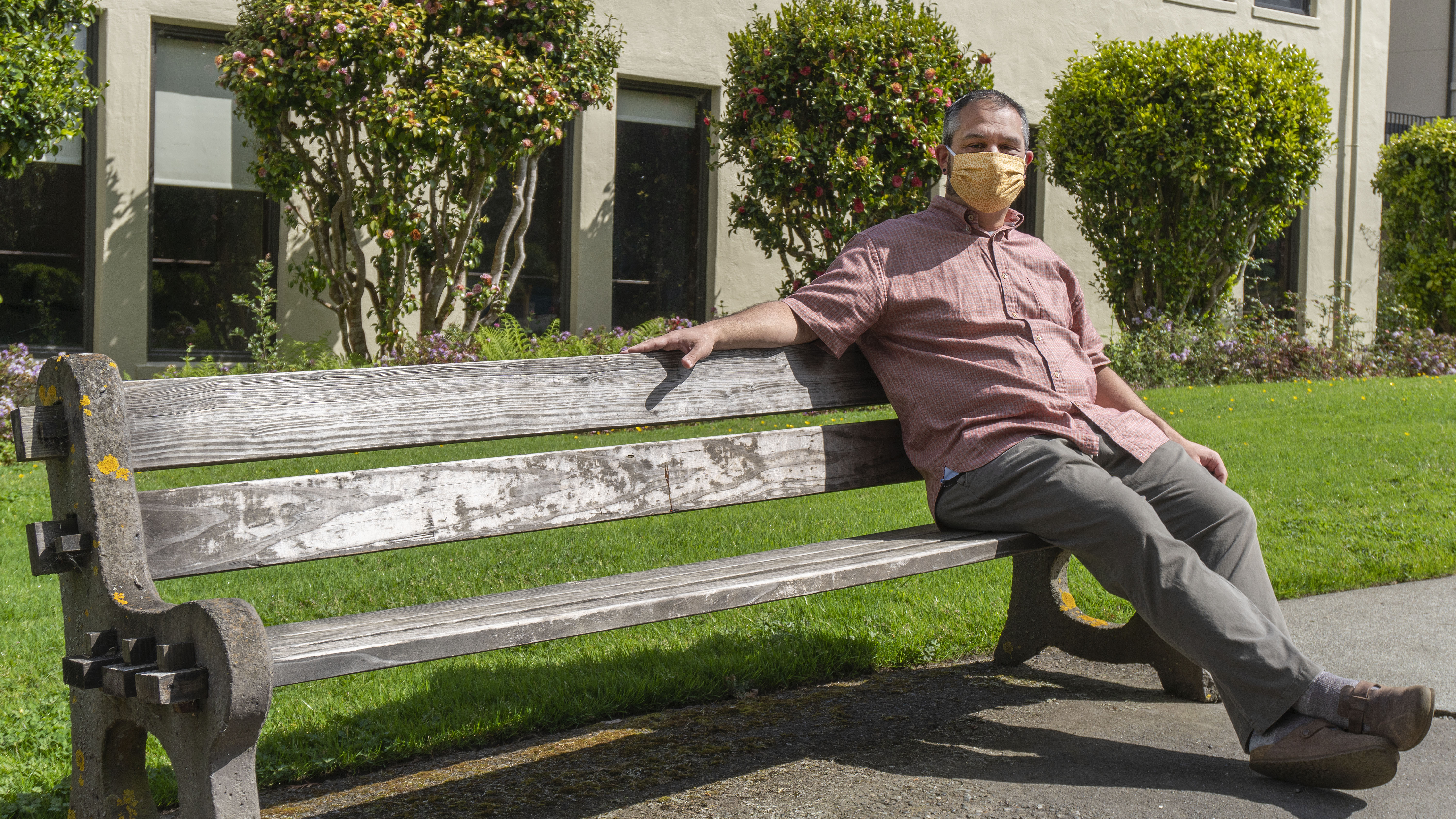
    “I love a good meme,” he said in one of two Zoom interviews. He sat in his home office. Behind him, family photos and a Star Wars Yoda action figure topped a bookshelf. He wore glasses and a button-up shirt.

    Memes dominate Malloy’s social media accounts, but there’s more to the accounts than humor. They make him accessible to students. He receives messages on those accounts about class, and he replies happily.

    “There are times where I’m like, ‘Why am I doing this?’” he said. “And then I realize, I’m getting to see a different side of students, and my colleagues, too.”

    Malloy also emphasized the importance of flexibility.

    “I think you have to walk into it—at least my plan is to walk into it—with an incredible amount of flexibility,” he said. “And let them—let the students—help guide where we’re going to go.”


    Yurok and Karuk by heritage, Malloy was born on the Oglala Lakota Reservation in South Dakota, but he grew up on the Quinault Indian Nation Reservation in Washington.

    Marlon Sherman, chair of the HSU NAS department, knew Malloy from working together for the Yurok tribe. Sherman and Malloy have a family connection, as Sherman grew up on the Oglala Lakota Reservation where Malloy was born.

    “If it wasn’t for Kerri, there might not be a NAS department right now.”

    Marlon Sherman, chair of the Native American studies department at Humboldt State

    After working together for the Yurok tribe, Sherman and Malloy parted. About six years ago, Sherman asked Malloy to come to HSU to teach two courses for a semester.

    Shortly after Malloy came on board, Sherman had to take time off. He had cancer. Sherman returned in about a year, but Malloy became program leader and helped steer the department. Sherman said Malloy basically did all the work and helped the department hire two professors.

    “If it wasn’t for Kerri, there might not be a NAS department right now,” Sherman said over the phone.

    Malloy said Sherman was too generous, but there’s no doubt that Malloy works, a lot—so much so that Sherman joked it might be illegal.

    Malloy wakes up around 4:30 a.m. every day. He gets up so early partly because he finds those early hours productive, and partly because his back is built on metal rods and pins that make lying flat for too long unbearable. He’s not exactly sure how he damaged his back—maybe a car accident—but he had to have surgery that put him out of commission for three years.

    He estimated he’s on eight to 10 HSU committees, from the University Resources Planning Committee to the Diversity, Equity and Inclusion Committee. Malloy does this while teaching multiple classes as a lecturer—a position with an uncertain future amid HSU’s projected enrollment decline and budget cuts. He joked when asked how he has the time.

    “People usually don’t like my answer,” he said. “How do I have the time? A calendar.”

    Kumi Watanabe-Schock, a 23-year HSU employee, works in public programming and as the library media coordinator. She first met Malloy when he was an HSU student getting degrees in economics and Native American studies.

    Since then, Watanabe-Schock has worked with Malloy on committees and for classes. Every time she talks to Malloy, he seems to be attending workshops or giving talks around the world. She praised his willingness to help out.

    “He’s not good at saying, ‘No,’” she said over the phone. “I don’t know if he’s that way with everybody, but when you ask him to do a favor he always follows through and he always says, ‘Yes.’ So I really am appreciative, yeah. He’s a good person.”

    When not working, Malloy is more private. He has a husband and three dogs. He has two sisters and 14 nieces and nephews he tries to see every year. Around 8 p.m. every night, he tries to unwind. Maybe he’ll watch some TV, or maybe he’ll read a book about genocide. Fun.


    While COVID-19 has pushed teaching online, Malloy has found his courses as relevant as ever.

    A key concept in Native American studies is survivance, a portmanteau of survival and resistance. Survivance is about the living of Native American lives in the present tense. By surviving, Natives resist, and by resisting, Natives survive.

    Malloy said people must fight right now to have their voices heard, like many Natives must do at all times. He said individual voices humanize current events and prevent people from kicking the ball of reality down the road.

    On that note, Malloy told a story. Last summer, he taught Native history in a program that spent two days in Auschwitz I, the main site of the Nazi concentration camp. One day he stopped and looked out a window. The bizarreness of the situation dawned on him. Here they were, decades later, standing in a place of horror and trying to learn from it.

    A window at Auschwitz I, the main site of the Nazi concentration camp on August 20, 2019. | Photo courtesy Kerri Malloy

    Later that night he received an email from then-HSU President Lisa Rossbacher. She was checking in, so he wrote back.

    “If we can educate in such a place of incredible horror and death, we have the ability to change the world,” he remembered writing. “We really do. If we can actually go into these places and find this incredible darkness and turn it into something that allows us to reach out to other human beings and get us to talk to each other and push the things that really don’t matter aside, I think we can do this.”

    To get people to talk, Malloy uses humor, which he said can get us past anything—and Malloy does seem capable of getting past anything. It seems strange to call research on genocide a passion, but Malloy approved the descriptor.

    “Passion’s a good word for it, actually,” he said. “You’ll find that for those of that this is what we do, it is a passion.”


    Every student interviewed for this story agreed on a few descriptions of Malloy. He’s open and funny, they said, and he can be brutally honest. They warned against getting into an argument with him.

    “If you’re gonna have an argument with him, you better have good stats and have all your ducks in a row, because you’re not gonna win Kerri in an argument—I’ve tried,” HSU biology major Michelle Navarette said over the phone.

    “And he told me, like, ‘You can’t let the system fuck you up and throw you down.’”

    Michelle Navarette, Humboldt State biology major

    Navarette, a senior, first had Malloy for a 9 a.m. general education course. Once she got to know him, she tried not to miss his class. Since that first course, she’s tried to have a course with him every semester.

    Navarette’s appreciation of Malloy goes beyond the classroom. She said she was losing her job last semester due to discrimination from her boss. She didn’t know what to do, so she went to Malloy.

    “He sat me down and was like, ‘You know what, this is just a portion of how life is,’” she said. “’You’re gonna have these obstacles all the time.’ And he told me, like, ‘You can’t let the system fuck you up and throw you down.’”

    When she thinks of Malloy, she remembers his honesty.

    “I think he was like the first person to tell me, ‘This shit is going to be hard.’”


    As a lecturer of general education courses, he usually has to work for the attention of students. He goes into his courses hoping for students to leave with more questions than answers. Students have told him he gives too many assignments, but no interviewed students said Malloy graded harshly.

    “My philosophy,” he said, “is if I can get one brain cell to function per student on an assignment, we’ve succeeded.”

    Malloy once had a student he didn’t think he had triggered any brain cells in. Malloy said the student believed everyone should be committed to a single belief. Malloy respected the devotion, but he worried about the implications.

    About a year after the student left his class, Malloy received a message on one of his social media accounts. The student wanted to know if a site he shopped on looked like a hate group.

    “I went and checked the site out and went, ‘Yeah, this is definitely an organization that supports anti-Islam—very Islamophobic,’” he said.

    The student thanked him and decided to shop elsewhere. Malloy remembered that as a success.

    “It’s when you see those little things, you’re like OK,” he said. “Even at some small level, we were able to plant some idea, some seed that is getting people to think differently, or at least question.”


    Like many of Malloy’s students, Joshua Overington, an HSU environmental science senior, only took Malloy’s introductory Native American studies course for a general education requirement.

    The class was so good Overington signed up for more. He eventually worked with Malloy on the Northwest Genocide Project, an online archive Malloy manages.

    Overington also worked with Malloy on a research project on Tuluwat Island for HSU’s IdeaFest, which led into a research paper Overington is now finishing.

    “He is incredibly passionate in what he does and he is uncompromising in his views,” Overington said over the phone. ”If Kerri feels something or has an opinion, he always speaks his mind and really, he’s always the one who’s honest and puts himself out there. And that’s not something I see at all in other teachers.”

    “If we can make those connections on that level, this is much more understandable. And then we get to be more willing to go, ‘Alright, maybe I need to look in the mirror.’”

    Kerri Malloy

    Malloy likes to tell people teaching about genocide is fun. People usually give him a blank stare and change the subject. But if asked, Malloy will elaborate.

    “And what it means is not fun as in, ‘Yay, happy stuff.’ It means that it’s fundamental,” he said. “Atrocity is a fundamental part of the human existence. Peace is a fundamental part of the human experience. It’s understandable—we can understand why it happened, how it happened, what needs to be done to prevent it. And it’s necessary.”

    Malloy knows most people don’t want to talk about atrocities all day. To get past that, Malloy said we have to be willing to look at ourselves.

    Malloy tries to relate concepts directly to his students. He sometimes asks if students curate their social media profiles—do they post every photo they take? They admit they do some curating, and he suggested history books do the same.

    “If we can make those connections on that level, this is much more understandable,” he said. “And then we get to be more willing to go, ‘Alright, maybe I need to look in the mirror.’”


    Malloy teaches because he believes we’re all here to learn. He admits his own ignorance and encourages others to do the same. That openness to learning is perhaps what makes Malloy love his job. His willingness to let students guide his classes is perhaps what makes students love him.

    “I tell my students this directly: ‘This is not my class,’” he said. “’This is yours. You guys are the ones who are paying for it. I am just the tour guide on this expedition.’”

    Malloy always ends each of his classes—each chapter of the expedition—with the same message.

    “Go out and learn something,” he tells his students. “Go out and breathe.”

  • Hold Those in Power Accountable

    Hold Those in Power Accountable

    We all need to be aware of the consequences of our mistakes. And that means owning up to them, too. 

    You learn by your mistakes. This doesn’t mean you intentionally make mistakes in your everyday life, but it means that you learn from them and try your best to own up and do better the next time around. We must take responsibility for our actions and hold ourselves and others accountable.

    The Mueller Report was recently released, detailing Donald Trump’s campaign involvement with Russia. But instead of holding himself accountable to his actions, he has instead chosen to go back to his original tactic of tweeting and vocally voicing his denial of the report and the related evidence. Trump has intentionally diverted attention away from the Mueller report by calling it “politically motivated,” and painting himself as the victim.

    Despite the years of investigation that went into the report, many are in denial of its authenticity. Some supporters have gone as far as writing the report off as “written by Angry Democrats and Trump Haters” while they downplay the damning evidence that says otherwise.

    It’s important to acknowledge those who are in denial of the mounting evidence and to acknowledge those who claim the report is incorrect or untrue despite the evidence proving the opposite.

    With Lisa Rossbacher’s departure looming and the announcement of the next Humboldt State University president, we want to highlight some of the issues brought up when it comes to those not taking into account the effects of their actions. On the president’s webpage, it claims that she wants to focus on key areas, “supporting student success, providing a welcoming environment for our diverse community, ensuring we have the resources needed to fulfill our mission and expanding partnerships, both on- and off- campus”.

    While that may be the case, there are multiple things that President Rossbacher has done that show otherwise. She had significant involvement in shutting down the football program, there has been a complete lack of acknowledgement of the racism in the school and campus community and the majority of anti-immigrant rhetoric on campus. To top it off, Rossbacher and the committee decided to gut KHSU without warning and the Arcata community isn’t too happy either.

    We are all human. Every day we make decisions and their consequences may not be immediately known to us or others. There can be immense pressure on an individual to make a decision in the heat of the moment, but when the consequences of that decision come to reality, it is important to acknowledge any mistakes, own up to them and work to rectify the issues.

    A bit of modesty can go a long way, because mistakes and failures are a natural part of life. As editors, we see and make plenty of small, seemingly irrelevant mistakes: misplaced commas, poor grammar and spelling errors. When a writer at the Lumberjack hands in an article, they have tried their best to catch their own mistakes but it is a show of modesty to allow us editors to mark up their work so the final presentation is handsome and polished. Even then, mistakes slip through the cracks and we try our best to see to them all.

    We should hold those in power to the same standards. If we at the Lumberjack expect our writers and editors to edit their work and try their best to catch their mistakes, then the Humboldt State community needs to hold Lisa Rossbacher accountable for her inaction just as much as the country needs to hold Donald Trump accountable for his. People in power should not get a pass simply because of their position.

  • HSU president search update

    HSU president search update

    CSU Chancellor Timothy White sends update regarding ongoing HSU president search

    A message containing an update for the Humboldt State University President search was sent campus wide today. According to CSU Chancellor Timothy White the eighth HSU president will be announced May 22, 2019. This will be in between the end of the spring semester and beginning of summer session classes when no students will be on campus.

    The last update from the administration was when they held an open forum for the first meeting of the Trustee’s Committee for the selection of the president on February 4, 2019. The Lumberjack has been unable to speak with Lisa Rossbacher on her departure as of yet.

    Rossbacher will retire at the end of June after a controversial five-year run as HSU president. Under her presidency HSU lost their football team, the Third Street Art Gallery, the community radio station KHSU and not to mention what many observed as a lack of responsiveness for the April 15, 2017 fatal stabbing of HSU criminal justice major, David Josiah Lawson.

    According to the press release the search is “on track” and there has been interest to fill the position of HSU president across the country. Finalists will be chosen and ultimately interviewed by the full Board of Trustees.


    The press release is as follows:

    Sent on behalf of the CSU Office of the Chancellor:

    The search for the next Humboldt State University president is on track. From a sizeable group of candidates that included interest from across the country, the search committee has culled the pool to a handful of semifinalists.

    From that group, finalists will be interviewed by the full Board of Trustees. We are on schedule to announce the eighth HSU president on May 22, 2019.

    A growing and thriving HSU is key to the prosperity of the North Coast community. It provides transformational educational opportunities and generates a substantial economic impact for the region.

    Thank you to everyone who attended the forum on campus or who has shared input about the knowledge, skills or experience requisite of the next campus president. Your feedback has been invaluable as we work diligently to identify the next HSU president.

    Timothy P. White
    Chancellor

  • Editorial: Thank u, next

    Editorial: Thank u, next

    Who will be the next HSU president?

    When President Lisa Rossbacher announced in October that this spring will be her last year serving as president of HSU many wondered who will be the one to take her place.

    We’re already reaching our end of the school semester and there is still no word as to who will serve as HSU’s president. The last we’ve heard of the search publicly was back in February when there was an open forum for the search for the next HSU president, but there was still no announcement on who’s next.

    However, what’s more convenient is that the announcement of HSU’s next president will be after spring graduation. You know, when most students will not be in campus until their summer or fall semester starts. It’s convenient since there won’t be many students at that point voicing their opinions of the new president.

    President Rossbacher has been a controversial president, with the cutting of the football program, the administration’s lack of acknowledgment when it comes to racism around the community and the closing of the third street art gallery and KHSU’s shut down just to name a few things that don’t paint a positive picture for Rossbacher’s image. Many students, community members and faculty have spoken out against President Rossbacher’s actions and lack of taking action.

    While we’re happy to finally see an end to Rossbacher’s leadership there needs to be more transparency as to who will take on her role next. We don’t know if the next president will improve upon HSU’s issues and demands, resume the same leadership tactics as Rossbacher or be an even worse president than Rossbacher.

    With that in mind we should know who HSU’s next president is going to be at this point in our semester. We should know if our next president will stand with their students, faculty and community.

    We don’t want a president who will just stay quiet from the students’ and the community’s demands while cutting programs that meant a lot to the community and former alumni. Thank you Rossbacher for not completely burning HSU down to a crisp but, who’s next?

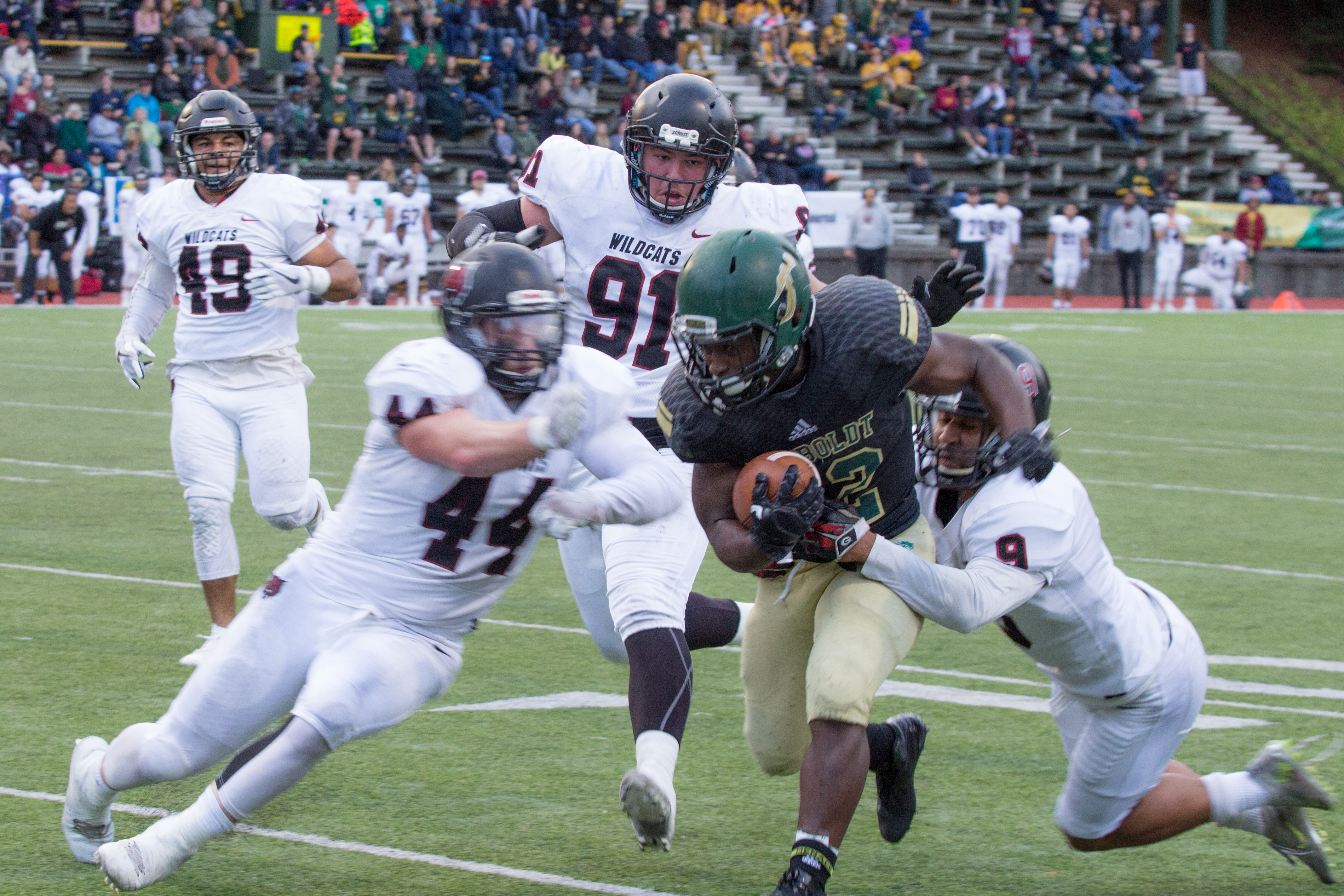
  • EDITORIAL: Football program cut will create ripple effect

    EDITORIAL: Football program cut will create ripple effect

    Loss of football program also means loss of diversity, opportunity

    Lumberjacks football has been a staple of Humboldt for over 90 years. But this season will be the last for the foreseeable future and this community is losing more than just a team.

    Football brings more to the table than just sports. Student-athletes chose this school to pursue their education and to chase their dream of playing college football.

    Terminating Jacks football will be the conclusion of a program that has been a part of Humboldt since 1924, not long after HSU’s founding. The program has seen some standout stars and big-time players along the way. Lumberjacks 2017 All-American offensive lineman Alex Cappa was selected 94th overall by the Tampa Bay Buccaneers in this year’s NFL draft.

    HSU says they do their due diligence to remain somewhat ethnically balanced while bringing in students from all over California. This practice is misleading as the university’s surrounding areas have many racial undertones. The football team is one part of the school that was true to HSU’s message of inclusivity.

    Where there were once young men of all races working diligently towards the same goal, there will no longer be. The locker room that once brought men together will be empty.

    HSU will honor scholarships for eligible players through the 2018-19 academic year, and coaches and staff will also help players contact other programs. At the end of the season, players will get a full release, which means they could choose to play at another institution.

    President Lisa Rossbacher called it an unfortunate but necessary step in addressing the University’s structural deficit and protecting the school’s core academic mission. In her “mission” she has neglected a big part of what is supposed to make this university great.

    The closing statement of our mission states: “We help individuals prepare to be responsible members of diverse societies.”

    Less than four percent of HSU’s student population is African American and less than two percent of faculty are African American. Where is the diversity? Where is the care for the individual student?

    HSU has experienced lower enrollment over the last two years. Fall enrollment has dropped by more than 400 students. This dip has had a measurable impact on the budget and the loss of football will expectedly lead to an additional decline in enrollment, which in turn will bring less people of color.

    While getting rid of the football program could possibly be the right decision fiscally, the loss will be felt by many. People may not have ever met, had it not been for the football team. Familiar faces will change into strangers faces. What once brought a sense of camaraderie to this campus will now no longer exist.

    HSU hopes that contributors and boosters will continue to support HSU athletics but the $200,000 or more increase in contributions last year was for football. Loss of the football program will have a long-term ripple effect. Where and what gets hit the hardest remains to be seen.

  • Lumberjack editors meet with Rossbacher, part II

    Lumberjack editors meet with Rossbacher, part II

    The Lumberjack editors met with the president of Humboldt State University, Lisa Rossbacher, on March 23. The Q&A was largely centered around budget cuts and social issues that impact the local community, especially HSU students.

    This is part II of the meeting which mostly concerns social issues. Part I, which focuses on HSU budget cuts, can be found HERE.

    On social issues:

    Lora Neshovska (managing editor): “There are students facing homelessness and discrimination. How can we address social justice issues of students beyond our financial worries?”

    Rossbacher: “I think there are a number of things the university is doing to help with those basic needs that are really the underpinning to ensure student success. There’s a whole program happening here, many of them under the umbrella of Oh SNAP! Things like the food pantry that we have [or] students having access to EBT.

    We were one of the first campuses in the country to provide that kind of access. That started in late 2016 [and] over seven million tons of food have been redistributed on campus that would otherwise have gone to waste, so that helps. Some of the community meals that are being prepared – that I know Wayne Brumfield always cooks for – that sort of thing, being able to redirect J-points that are left over to help other people. Those are some examples in terms of food security. We just got some money from the chancellor’s office that will help us do more in terms of just food security on campus.

    In terms of housing, it’s a real issue because [of] where we’re located, the limited houses in stock that we have here. We’re doing some things with that, too. One of them is, I’m sure you know, Chante Catt has been hired as a homeless student advocate. She was involved in that organization of homeless student advocates, but she’s now officially working so that students who are in need of housing can contact her. I know right after she started doing that, immediately she placed four people. So that helps, too.

    We’re looking at the possibility of building new student housing. The university is looking at new residence halls off campus, and then there’s this outside developer who’s looking at The Village. Whatever it takes to get affordable, safe [and] not-too-far-away housing for students is a good thing.

    There’s also a program that we’re starting up in conjunction with some agencies within the area. I think it might be called the ‘nest program’ or ‘silver nest program,’ where there are seniors in the community who have a bedroom [and] extra space who would really like for company, for safety [and] a little bit of help around the house, who are willing to rent those spaces to students. That becomes a real collaboration with the larger community in a way that addresses multiple needs.

    I know it’s incredibly frustrating. I mean, I’m incredibly frustrated by seeing all the basic needs that we have here at Humboldt that are not being met. It’s sort of good news and bad news that we’re ahead of the curve of the system. We get pointed to as a place where we’re doing a really good job of trying to address those needs, which is good that we’re being proactive about it and making change. But if we’re among the leaders, we look at our frustration and the problems we still have, it makes you worry about other campuses.”

    Stella Stokes (life and arts editor): “I am an ITEPP student and my parents, who are HSU alumni, were also ITEPP students. There was an article about you in the Lost Coast Outpost on Feb. 7 that said ‘Rossbacher has been appointed to lead an initiative to increase the number of students from Tribal Nations who enroll and graduate from the California State University system.’ Why were you appointed over someone who is indigenous?”

    Rossbacher: “That roll is for president in the Cal State system. In fact, some people saw that and said, ‘Wait a minute, we thought Leo Canez was doing this, because he’s our new Native Recruiter.’ This is part of an initiative that was an across-the-sea issue, and it has representatives from more than half of the campuses. Adrienne Colegrove-Raymond has been a representative at HSU to this group. I convene the meetings, but I’m not responsible for this alone. It’s with a whole group of people.

    This statewide group will be meeting here on campus on April 4. The people can come to that. [People] from all over the state will be able to participate in the California Indian Conference, which is also here on campus [on April 5 and 6]. What we really hope is they stay until [April 7], which is when Big Time is. We actually have four days of Native American events happening.

    Back to your question of why I was appointed. Ultimately, when the chancellor asked me to do that, it came down to the two presidents at the campuses that have the largest Native [American] communities around them. It was Humboldt State and San Marcus. Humboldt State has the highest percentage of Native American students of any campus in the system. It’s not the largest absolute number, but we have the highest percentage. We have strong connections with the Native [American] community. It came down to the two of us who were presidents of those two campuses. We talked together and both us said to the other, ‘If you want to do, I’ll be happy to help you.’ We were trying not to step on each other’s toes. She said, ‘I’m really overcommitted right now. I will be glad to help you, but I’d appreciate it if you would do it.’ I said, ‘Of course.’

    Also, I didn’t know this before, but Rollin Richmond, who was the president before me, was in the same role for a number of years. So there’s a history of Humboldt State being in this role.”

    Ahmed Al-Sakkaf (news editor): “Rumor has it you live in Kansas. For the record, where do you live?”

    Rossbacher: “I live in McKinleyville.”

    Megan Bender (opinion editor): “Around 2016, you had issued a statement that was taken badly by the HSU community. You also issued an apology statement afterward. How can we address that to [David Josiah Lawson‘s] situation. People are frustrated by the inadequate support of the community, as well as HSU. What are you doing to create change in the right direction, as far as racism is concerned?”

    Rossbacher: “Let me back up just a minute to talk about when Josiah was killed. The university did everything we could to support his friends [and] his family. We worked closely with the police department to be sure that they were having access to witnesses or anyone who could help solve this murder. We’ve all been frustrated by what feels like a lack of progress.

    I ask, and I know I’m not the only one, the people in the city of Arcata about what’s going on, where are we and is there anything we can do to help? It’s a terrible tragedy. It’s something that affects so many of us, myself included every day. I think about wishing there was something we could do. I sat through every preliminary hearing.

    Ultimately, right now, it’s [on] law enforcement. It’s a criminal justice case. It’s something we can’t actually do anything about. It’s not in our hands. I asked as recently as last Friday, ‘When are we going to know something?’ It’s hung up in the process. You have as much information as I do. It’s highest priority for us. It’s not necessarily highest priority for the state to process the evidence, because there’s no one being held waiting for a trial. That’s what gives other cases a higher priority. We’re living with it every day. It’s just the way the process works.

    I want to make another point. I believe deeply in justice for Josiah. I think about it in two different ways. Actually, it’s two forms of the same way.

    One of them is resolving the case, figuring out what happened and just getting closure on that. Until that happens, it’s so hard for the community, for his family and for his friends. So there’s that aspect of justice. But I look at it from a bigger picture, too. I think what justice for Josiah should also mean to us is making sure that we have, as a larger community, a situation that is equitable, just and fair. [A situation that is] devoid of any discrimination – racial, ethnic, gender inequities or injustices. I think a piece of that, which is something I’ve been committed to involves some aspect of working with people on campus or in the city of Arcata. I see that as a long-term, systemic solution to the question of, ‘Where is the justice for Josiah?’

    If we could create a just, equitable [and] fair community in this region together, that would be a fitting tribute to Josiah and what he would’ve done with his life. I see justice for Josiah in a couple of dimensions, but I think there’s a big picture where the world will continue well beyond when the case is actually resolved.”

    Neshovska: “Do you think there’s racism in Humboldt County?”

    Rossbacher: “I think that in any environment where we have such different demographics, it’s inevitable. No, it’s not. I take that back. It’s not inevitable. Yes, and I have seen evidence of that myself. Demographics of the student population of Humboldt mirrors the state of California. The student population of Humboldt is similar to the demographics of this state. The demographics of Arcata and Humboldt County are very different.”

    Neshovska: “Isn’t there more than three percent of black people in California though? There’s only three percent here.”

    Rossbacher: “I know, yes.”

    Neshovska: “So it doesn’t exactly mirror the state of California.”

    Rossbacher: “Yes, I take your point.”

    Stokes: “One of the main problems about Josiah’s death is that students of color fear for their own lives or feel uncomfortable. They stop going to parties, some are just scared. How do you keep students of color safe?”

    Kyra Skylark (science editor): “To add on to that question, you said that affordable and safe housing is one of your main goals. I personally know friends who went to that party [where Josiah was murdered] and left the school afterward. People don’t feel safe, specifically students of color, which is why they fought for the Arcata council meetings to talk about why they don’t feel safe. What do you think we should be doing as Humboldt State to better address this issue? Why haven’t you gone to more of those meetings to hear students?”

    Matthew Hable (editor-in-chief): “The one-year vigil for Josiah is next month. Do you plan on attending?”

    Rossbacher: “Yes. There are two parts – there’s on campus and off campus. What I hear is that students are more likely to feel safe on campus than they do off campus.”

    Skylark: “Personally, as someone who has lived on campus during the last election, I got to hear ‘kill the fags’ and ‘reinstate Jim Crow.’ I did not feel safe on campus.”

    Rossbacher: “I understand. And yet, we’re a campus where we have to protect free speech. You all know that more than most. One of the aspects of creating safer spaces has to do with lighting. I know Wayne Brumfield has been doing walks around campus to identify places that need better lighting. We installed some of those over the winter break. There’s an interesting conversation with the City of Arcata about that, because they have ordinances about – it’s a dark city – as a way to not create light pollution. But the negative affect of that means we have less lighting, therefore areas that feel less safe. The city is working through that.

    There’s also an interesting set of conversations about surveillance cameras. There are a couple of dimensions to that. One of them is that if the police do it, particularly in Arcata, they have to maintain some of that tape for five years. And a lot of the businesses around the plaza, they particularly like to have surveillance cameras. The city sees real value in having the individual businesses, having their own cameras, because they can control them. They only have to keep them for a week or something. That’s enough time for the police to say, ‘We want to see what happened last night or even last week without having to keep the data for five years.’

    Meanwhile, the staff on this campus do not want security cameras, because they think – and this is the unions – they think the surveillance footage is going to be used to see if they’re actually doing their jobs, [as a way] to spy on them. [We have] all of these different dynamics working. That’s not the only solution, but it’s an example of the kind of complexities we get into. That doesn’t fully answer your question?”

    Skylark: “I don’t think that fully answers my question. There are issues on a social level that are making people feel unsafe. What is the school doing to make people feel safe on a social level? What are you doing to create change on an educational level?”

    Hable: “Are you saying there’s a lack of engagement right now?”

    Skylark: “Yeah.”

    Rossbacher: “We’ve had some events that addressed that. We had a day-long session last summer that really got into many of those issues.

    Skylark: “But no one is here during the summer. Those events are missed by the majority of the people.”

    Neshovska: “I think it’s also important to note that, not only as a president of our university, as a university as a whole, how do you make yourself available to these people who genuinely fear for their lives and want to be heard by somebody of power? They want somebody like you to hear them out and for you to say, ‘I’m here for you and I understand.”

    Rossbacher: “I seek out those stories. I listen to them carefully. I’ve been doing a lot of reading. I can share my recent readings with you, both books and articles on it.

    I made sure back in January, the leadership of the university went through micro-aggression workshops. It’s about awareness, how to counteract and keep that from happening. It started out [by] asking faculty and staff. I knew the way to bring credibility to that is to not only say that ‘I’ve done it,’ but that the senior leadership team, vice presidents and all the deans went through that. It was taught by Christine Mata and Roger Wang. It touched on micro-aggressions and white fragility. So I, as Lisa Rossbacher, also participate in the community dialogue on race. I learned a lot from those opportunities, too. I make it a point of going to sessions I know are going to make me feel uncomfortable. They say you should do it at least three times a week. You put yourself in uncomfortable situations.

    In a larger context, we are a place that’s about education. One of the things I value most about the opportunity to work in the university is the chance to learn. I’m around smart people who have a lot to teach me. There’s a lot I can learn. If I’m not putting myself in the kind of position that you as students, where you’re being asked to put stuff out there and being evaluated on it – that’s why I write as much as I do. You write, you’re putting it out there and people are going to criticize it. It’s just a reminder of what students do every day. I’m a student, too.”

    Bender: “Is there anything you think we missed that you would like to share with us?”

    Rossbacher: “We have spent literally years building up to the visit that we had this week.”

    Bender: “So that exit interview is a summary and they’ll be giving you another report later?”

    Rossbacher: “It was an oral summary. They said we’ve got some things we want to – [they provided] accommodations and recommendations. There are some things we’re doing really well and some things that we need to work on. Diversity was one of those [things we need to work on].

    Al-Sakkaf: “People were banging on the door at Siemens Hall during the WASC meeting. How did they feel about that?”

    Rossbacher: “They were a little worried. They are all experienced people, and they work on campuses where student feel strongly about issues as well. They said, ‘We were surprised, but we weren’t surprised.’ They took it in stride.”

    Bender: “Do you think some budget suggestions will come out of this report?”

    Rossbacher: “I think what they will say is the university needs to have a sustainable budget. We need to balance our budget and figure out how we’re going to move forward. I’m sure they’re going to say that.

    Neshovska: “How long can we go with this budget deficit? What happens if we don’t solve the budget?”

    Rossbacher: “We will solve it.”

    Gabe Rivera (sports editor): “Is there a person you normally contact to inquire about Josiah’s case? Who is that person?”

    Rossbacher: “I talk to lots of people. I talk to Tom Chapman, the chief of police of Arcata.”

    Neshovska: “In 20 years, is my degree going to be useless? What’s going to happen if the budgets cuts aren’t resolved?”

    Rossbacher: “We’re going to solve this problem. One of the things we haven’t talked about is the need to increase enrollment. That’s not going to solve all of our problems. It’s going to help with a lot of them. I want to assure you that this is not a limited growth. I’ve done an analysis that’s still being worked on, that’s still very much a draft. I want to know what the carrying capacity is for the campus for enrollment, taking a lot of different dimensions. In the big picture, what that tells us is 8,000 is probably about the right number, [which] is a little bit more than what we have now. Our goal is to grow back up that size, but not way beyond that. The goal is to have 15,000 students, and that is not the case.”

    Neshovska: “That sounds complex. We want to increase enrollment, but we don’t have student housing. We need more money to increase safe and affordable housing, but we need to increase enrollment to solve the budget crisis.”

    Rossbacher: “Increasing retention rate is probably the most important thing you can do for enrollment right now. Partly, it’s bringing in new students. Even more important is keeping the students who are here.”

  • Lumberjack editors meet with Rossbacher, part I

    Lumberjack editors meet with Rossbacher, part I

    The Lumberjack editors met with the president of Humboldt State University, Lisa Rossbacher, on March 23. The Q&A was largely centered around budget cuts and social issues that impact the local community, especially HSU students.

    This is one of two transcriptions of the meeting that revolves around HSU budget cuts. The second half, which focuses on social issues, will be published on March 28.

    Matthew Hable (editor-in-chief): “What is a typical day like for you?”

    Rossbacher: “When I get to campus, I take a few minutes to check in with people – the provost office, the Vice President of Student Affairs office – checking in on where I know there have been issues.

    Then I usually have a series of meetings. They will often be back to back until six or seven o’clock. I guess what’s significant is what those meetings are about. I meet with all the vice presidents at least every other week, some of them every week. It’s a combination of them telling me what’s going on, getting advice or, in some cases, decisions [on], ‘What should we do about this?’ or ‘I haven’t a clue of what to do. What kind of advice do you have?’ We talk through it.

    Some of it is information, some of it is problem solving and some of it is decision making. And that goes in both directions, because I ask them for advice, too.

    Some of [the meetings] are with groups. Today, we had a three-hour meeting with the cabinet, which is the vice presidents [and] senior leadership at the university. Before that, I did a debrief with all the people involved in the logistics of having [WASC] here to see ‘How did that go? What worked? What didn’t work? Let’s take some notes for ourselves.’ So when they come back in three, five, eight or 10 years, we remember what worked or didn’t.”

    Lora Neshovska (managing editor): “Do you mind elaborating on what worked or didn’t work with WASC?”

    Rossbacher: “Yes. Some of the biggest issues were the communications with the person handling the logistics of the visiting team weren’t as strong as they could’ve been. So [they] assumed we knew some things we didn’t, like the team room was the conference room over at Siemens Hall. That was supposed to be the working room. We still had a lot of meetings in there, which was inappropriate because they had all of their confidential materials. They covered up the big conference table with notes, and it wasn’t appropriate to have a meeting with groups in there. So, we had to scramble.

    Similarly, they got here and said, ‘Did we mention to you that the chair of the visiting team needs to talk to the chancellor?’ No. The chancellor was in a meeting with the board of trustees. So we had to scramble around and find a few minutes for the chair to talk on the phone [with] the chancellor. So a lot of issues were just that kind of miscommunication. [WASC] took it all in stride. We dealt with it.

    We thought we had all the contingency plans in place to get them here, because they all heard about how difficult it can be to fly into Humboldt County. The closest ones were coming from the Bay Area, but there were people coming from Southern California, Arizona and Hawaii. Four of the six team members flew to get here. None of them arrived in the flight they were originally booked on. Two of them arrived in the later flights and the other two ended up driving from San Francisco. So one of the weird things about the exit meeting is that we knew that was an issue, but they didn’t believe it when we told them how difficult it would be. But by the time they got here, they understood that. They were all scheduled to fly out at 11 a.m. from Arcata today, but yesterday and the day before, that flight was cancelled. They were really worried about getting out. That’s why the meetings this morning were so early. Originally, the public meeting was going to be at eight, and they pushed it to 7:30 a.m. so that they could hit the road at eight [and] drop back to San Francisco. They didn’t want to take a chance.”

    Hable: “As you know, HSU students organized a walkout protesting the budget cuts on March 21. Students are having a hard time believing the ‘Students First‘ agenda. My two-part question for you is, where were you during the protest? How would you respond to not just students, but staff and faculty who are frustrated with this institution?”

    Rossbacher: “I was in a series of meetings, ranging from the theatre arts building, to the library, to the arts building [and] to the student services building.

    I understand the frustration people have for all of us to wrap our minds around the budget. This is something that did not happen overnight. It’s not because of misuse of funds. It built up over a number of years. The pieces of the budget problem come from spending more money than we have, basically, and [it] happening year after year. Historically, when we’ve overspent, we have had reserves. We can then get through the year.

    On the one hand, that’s a wonderful thing, because it meant that we can protect the areas being impacted by the budget reductions. But we’ve used up the reserves. We can’t keep doing that. For those of you who have been in the budget meetings, someone pointed out that the reserves is about $6.2 or $6.3 million. That’s less than one month of payroll, so we can’t keep spending it down.

    Let me mention one other reason. One of the reasons why we [shouldn’t] draw down reserves, [but] to build them up, is that a couple of years ago, the Cal State system was given the authority by the state legislature to issue bonds. That’s good news, because that means we don’t have to compete with other state agencies for building projects. The board of trustees can issue their own bonds. When they ordered for them to do that for a campus, the campus has to be able to come up with at least 10 percent of the cost of the project.

    If we want a new science building, we might have to come up with [up to] $10 million just to put in our piece of that to be able to get additional money for the project. So we’re motivated not just to have some reserves to protect us against overspending, but those reserves are what we need to be able to get new buildings on campus.”

    Hable: “Where do those reserves come from?”

    Rossbacher: “Internal funding. Money we don’t spend. Half of our money comes from our state allocation, which goes from the governor, to the state legislature, approved by the state governor, to the chancellor’s office [and] to the campuses in the Cal State system. Think of it as coming from the state allocation.

    Neshovska: “Where does the rest of the money come from? What can be done to build up those reserves?”

    Rossbacher: “The other half comes from tuition. Right now, in the [CSU] system, about half the operating dollars come from the state allocation and the bounty of the other half comes from tuition.

    Neshovska: “If you can’t increase funding from the state allocation, would the solution be to increase the tuition?”

    Rossbacher: “Or spend less.”

    Gabe Rivera (sports editor): “Scholarships of Humboldt State student athletes have been cancelled. Why were they taken away?”

    Rossbacher: “The scholarship money for student athletes primarily comes from fundraising – donors who give money specifically to athletics. Because athletics this year is running about a $900,000 deficit, [which] has to be picked up by the state, we’re trying to channel as much of the fundraised dollars toward the operational aspects of it rather than going directly into scholarships.

    Rivera: “Would the programs be cancelled if the scholarships stopped coming in?”

    Rossbacher: “I see how you make that connection, but I wouldn’t do it quite that way. It’s operational dollars that are really needed to continue to offer the athletics program. If you want to talk about athletics in general, we can do that.

    Rivera: “Were you aware of coach Rob Smith’s retirement before you made the decision to keep the football program? What affect would that have had in your decision?”

    Rossbacher: “I was not aware that he wasn’t thinking about that. I was surprised when I heard the announcement.”

    Ahmed Al-Sakkaf (news editor): “Associate Director of Housing Facilities Steve McKenzie also planned to retire, but his position was eliminated early. Dean of College of Natural Resources and Sciences Richard Boone resigned, effective June 30, but was let go early. Why was Boone’s resignation sped up?”

    Rossbacher: “When you resign, you can suggest a date, but you can’t always pick it.”

    Al-Sakkaf: “WASC pointed out how there’s a lot of interim positions in the university. Now you hired an interim dean to replace Boone.”

    Rossbacher: “One of the ways to look at this is, ‘Why are people in interim positions?’ In some cases, it’s because we’re in the middle of a search. For example, we have an Interim Vice President of Student and Administration. We’re in a search that we’ll come to a conclusion very soon. It’s just a transitional thing. The Vice President for Student Affairs, Brumfield, has ‘interim’ in the title, but he’s going to be here next year, too.

    Interim implies that we have a lot of turnover. When you look at every individual case, everyone makes sense and provides more stability than we would have otherwise.

    There are some other people right now who have ‘interim’ in their title, but it’s because we had a vacancy. We look around on campus and thought, ‘You know what, we have someone really good for this position right now.’ It’s a growth opportunity. We want to put that person in this job for now. We can’t just appoint someone without ‘interim’ in the title unless we do a full-scale search. It’s a matter of equity and fairness.

    We have some people who have ‘interim’ in their title, because we have confidence in them and that job right now. That’s a limit of two years. We can have people with ‘interim’ in their title before we do a search. Sometimes it’s because we got the right person. We want them doing that right now.”

    Kyra Skylark (science editor): “There are professors within the sciences who are retiring soon. Apparently, some of their positions are not going to be filled. What is happening to those classes after they retire? Also, you said that a new science building might be built in the near future. If there’s money being cut within the science department, why are we spending money to construct another building?”

    Rossbacher: “If you’re a science major, you know what the science buildings look like. No matter what, they need to be at least renovated, upgraded or preferably replaced. Whether we’re able to build an entirely new building or if it’s a matter of knocking one down is a separate set of questions. But the deans of all the departments have been charged with looking at the courses that we’re offering for next year, and taking a really hard look at what the courses are, students’ needs and making sure those are being offered in the most efficient way possible.

    There’s a wide range of ways that’s happened. Part of it is looking into DARS. That’s going to be a critical tool for being able to project what classes students need. It’s an incredibly important tool to match up student demand, students’ need for courses and what the departments offer. It’s looking at how many students are interested in a class and matching the size of the class with space available.

    Obviously, there’s a point beyond which it doesn’t make sense to grow, and you need to have multiple sections. [We need to make] sure we are being efficient [and] offering courses frequently as we need to for students to be able to get them. In some cases, that may mean we’re offering some of the required courses more frequently than some of the elective courses less frequently.”

    Skylark: “How are you deciding what classes are needed for the students?”

    Rossbacher: “I am not directly involved in that. It’s department chairs working with deans who are also working with the provost office.

    I want to be careful that we are not getting rid of courses, options or programs without doing a thoughtful analysis of what they are, what the student interest is in that. We have many years of data in enrollments and things like that.

    Over the next year, we are planning to do an assessment of every program at the university. That’s just not academic programs, that’s administrative programs, too. That’s my office, too. We have the data that helps us understand how effective they are, how well they’re meeting the needs of students and then we’ll be able to make some informed decisions about whether we need to consolidate, shrink or expand.

    One of the goals of the budget planning process [is] not just to cut the budget down to, ‘We’re only studying what we have.’ We’re also trying to put the university in a position where we can strategically invest in strong and new programs. It’s not just chopping to be able to maintain what we’ve got. It’s also making sure we have the resources to be able to invest in the future.

    I know that a number of years ago we went through what was called ‘program prioritization,’ which I think got a bad reputation. It’s a way of figuring out which programs need to be eliminated, decreased in size, maintain the way they are or invest in. I want to be sure that this university is a place where we can invest in new programs and growing the programs.”

    Skylark: “How are you able to do that with the budget cuts?”

    Rossbacher: “By continuing to be strategic about how we reduce in reallocating money. You’ve all been to the website of URPC? One of the things they look at is the strategic budget and strategic investments. In some cases, it’s a matter of finding efficiencies. It’s a matter of identifying ways to realize additional money. In some cases, it’s additional revenue and figuring out how to invest that into new programs.

    First, we have to balance the budget. As additional resources come in, you can start strategically thinking about where to invest them.”

    Neshovska: “So essentially the first step is trying to balance the budget from all these places in order to build it back up and increase revenue.”

    Rossbacher: “Yes, that would’ve been a better way for me to say it in the first place.

    You can think about it from your personal checkbook. If you’ve overspent, first you need to get the spending under control. But as you get your next paycheck, you got the basic needs covered. Then you have to think about what you’re going to do with that extra money, where you’re going to invest in it.”

    Neshovska: “Once we do balance the budget, where can we rely on external resources?”

    Hable: “Going off of that, I realize your salary is public records, but you approximately make half a million dollars per year, including benefits. The provost makes roughly a quarter of a million dollars per year. How much of that money do you invest into the university?”

    Rossbacher: “The salary is right. The other pay, I’m not sure where that number comes from. Some of it is housing allowance. Half the president in the Cal State system, houses are provided for them. I don’t get free housing, I get a supplement for that. But the benefits part, that’s my healthcare.

    Hable: “Your salary was part of the frustration at the protest. While you make that much a year, students are upset that they are walking away with a large debt.”

    Rossbacher: “One of the things that I think is real special about Humboldt State is the focus that we have here on environmental and social justice. Students at Humboldt State are committed to making a change in the world. Our graduates literally do that all over the world.

    I think that’s something really important that this university does something valuable for our graduates. I worry that we’re not following the continuum that gets us to effective change in the world. It begins with protest, and that form of activism. Being a change agent moves from that to dialogue, discussion, collaboration and collective problem solving for a collective impact. And that moves to the actual change.

    I worry that we’re not serving students well by having all of that change process stuck in the protest part. It’s something that concerns me about the protest that we had on Wednesday. It doesn’t move from the protest to the discussion, the collaboration, problem solving and then effective change.

    What I see, and what I think is important for this university, is to model how we follow that whole process.”

    Al-Sakkaf: “How do you feel about having ‘shame’ written across your face on a flyer and distributed around campus?”

    Rossbacher: “Disappointed and frustrated. At some level, I understand, but I’m not sure what the point of that is.”

    Al-Sakkaf: “The point is your paycheck.”

    Rossbacher: “So if I work for free, it doesn’t solve the university’s budget problem.”

    Hable: “Students walk away with $20,000 to $40,000 in debt. Personally, I am walking out of here with $22,000 in debt when I graduate in May. There are parts of this university where I feel frustrated, where I did not get my money’s worth.”

    Rossbacher: “Can you give me an example?”

    Hable: “I’m an example of a student where we have that knowledge of how much you get paid per year, but students are going into debt. People are getting fired, let go or what have you. That’s where the frustration comes from. I was at Siemens Hall on Wednesday. People were angry and there was a dialogue. It was a protest, but there was also a dialogue.

    Rossbacher: “There was?”

    Hable: “Yeah, but it was an angry dialogue. Students were pretty outraged. I know it’s not the most diplomatic way of handling it, but people feel that way. I think that’s where the ‘shame’ comes from.”

    Rossbacher: “I graduated from college with debt. I spent my first year after I graduated – I lived under $2,000 the whole year. [My parents said] we can help you some as an undergraduate, [but] not completely. When I graduated they gave me a backpack, a jackknife, a subscription to Science magazine and they said, ‘Good luck.’ I’ve been there, too. I understand.”