The Lumberjack


Students Serving The Cal Poly Humboldt Campus and Community Since 1929

Tag: marine life

  • A Guide to Exploring Humboldt’s Tide Pools

    A Guide to Exploring Humboldt’s Tide Pools

    As the tides of Humboldt County creep up and down our beaches, the ocean takes turns covering and uncovering a small area of coast. This region is called the intertidal zone. It spends some of its time underwater, but it’s exposed to us land-dwellers for exploration when the tides recede far enough. Pools trapped in between rocks stay put as the rest of the ocean leaves them behind. These pools offer a small look at what we’re usually missing beneath the waves.

    There’s some fascinating sea life to find if you know where to look. Classics of ocean exploration like anemones, barnacles, mussels, and sea stars cover the rocks. Sea slugs, scientifically termed ‘Nudibranches,’ are the graceful and colorful pop stars of the tide pools. They slowly dance through fronds of kelp. It can be difficult to suppress the urge to punt the odd football-like gumboot chiton across the tide pools. There are fish so well matched to the bottom of the pools that it often takes movement to spot one.

    The best part is that none of the wide variety of animals you’re likely to come across in the tide pools are capable of hurting you. A crab might give you a bit of a pinch if you pick it up. Sharp barnacles on rocks could scrape you up if you fall. The purple urchins that dot the lower intertidal are often blunt-spined and harmless to a shoed explorer. Watch your step, but more for their sake than for yours. Marine mammals like seals and otters sometimes hang out on rocks near tide pools. Approaching marine mammals or interacting with them is illegal, but more for their protection than yours. So long as you don’t eat any of the brightly colored nudibranchs, you’re safe from everything except poor decision making.

    Keeping three points of contact when climbing over slippery rocks will lessen the chance of dramatic falls into cold pools of water. Avoid rock climbing in favor of staying as low as possible to the ground. This prevents falls from being worse than they could be. Stepping on kelp is a one-way-ticket to slipping face-first onto a rock covered in sharp barnacles. Waterproof boots, warm clothing, and a camera that won’t be ruined if you drop it in a tide pool are all good equipment.

    So, with all that in mind, when and where can you go? Luffenholtz Beach and Palmer’s Point are two of the best locations near HSU. Both require climbing up and down stairs set into a cliff. Conditions should be just right for the ideal trip. Small waves, an early low tide, and a low chance of rain are your best bet.

    There are usually two low tides and two high tides in one day. You should go early enough for the tide pools to still be cold. The first low tide of the day is the best for seeing cool critters. The closer to dawn, the better. Low tides of 0.3 feet or lower are good bets. Any morning tides into the negatives are worth planning for. Plan your trip to center around the low tide. If you arrive 30 minutes before the low tide and leave 30 minutes after, you’ll get to appreciate all the lowest parts of the tide. You can download a local annual prediction tide table from the NOAA tides and currents website.

    But an early low tide with good weather does not necessarily guarantee a safe outing. Wave size and frequency are important too. The smaller the better, and waves above more than a few feet are enough of a reason to call the trip off. Exposed sites like Luffenholtz require greater caution with wave height. Ideal conditions being somewhere under three feet. Palmer’s point is a bit more sheltered, but waves over five feet are still dangerous. While you’re picking up the tide charts, NOAA also has marine weather forecasts so you can check conditions before you go.

    Now that you’re prepared for the tide pools, make sure the tide pools are ready for you. Each pool is like a little community of critters. Don’t be a Godzilla to the intertidal Tokyo. Never turn over rocks and try to keep your boots from treading too much into the ocean’s domain. Critters in the tide pools have evolved the best disguises to fool predators for eons. You never know what you’re stepping on.

    Instead of stepping in a tide pool, just sit down by one and stare at it. Keep an eye on the ocean and be mindful that the tides will move in eventually. What looks like an empty pool will soon reveal itself to be two nudibranchs, three juvenile rockfish, a kelp crab, and a gumboot chiton you’ll have to resist the urge to pick up and hail mary into the ocean.

    All photos taken at Palmer’s Point and courtesy of Julie and Mike Kelly.
  • The dangers behind marine debris

    The dangers behind marine debris

    Along the coast, you can free your feet in the sand and enjoy the beautiful sounds of the ocean. But enter the water and you, like many marine creatures, may find yourself entangled in fishing gear or waste plastic.

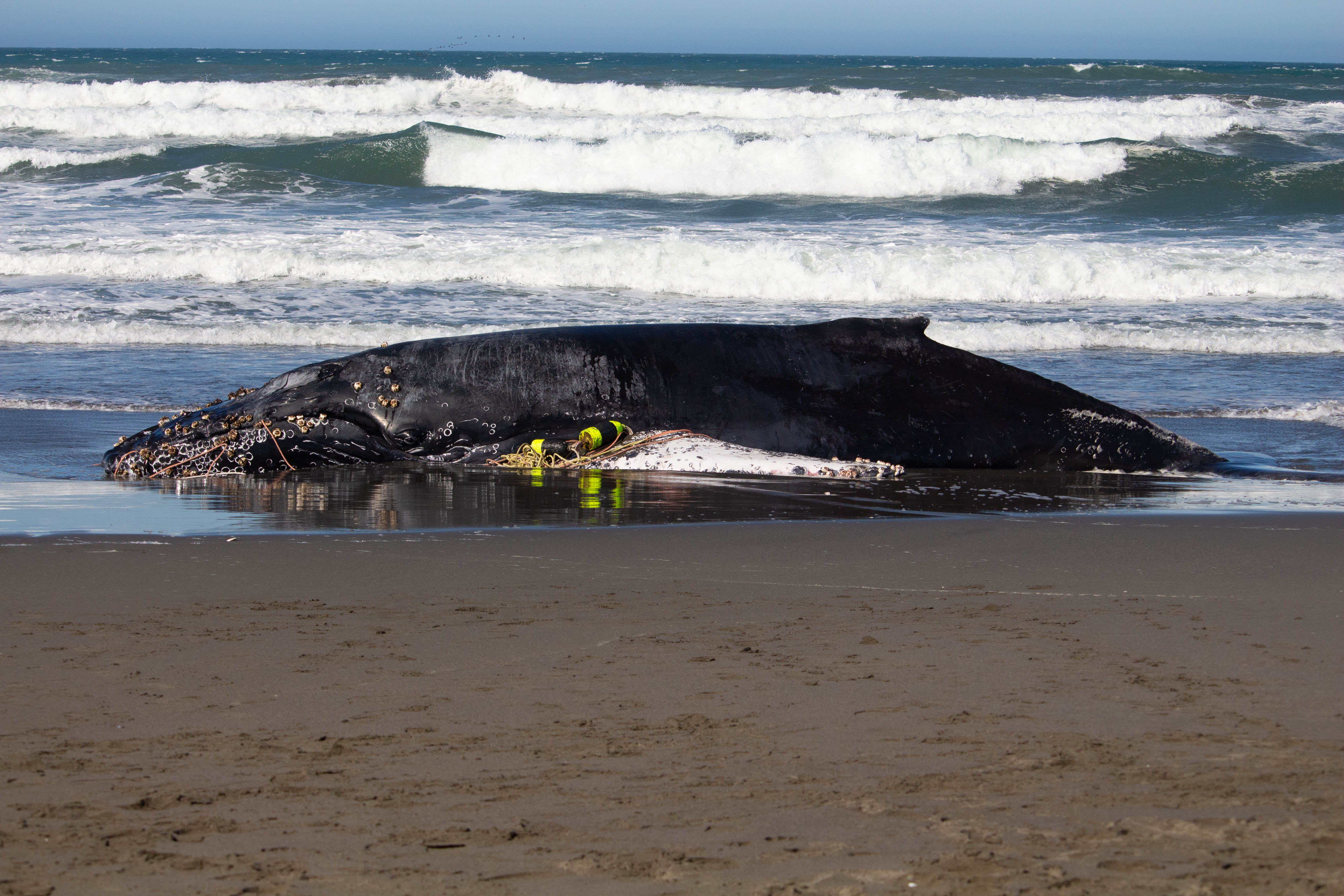
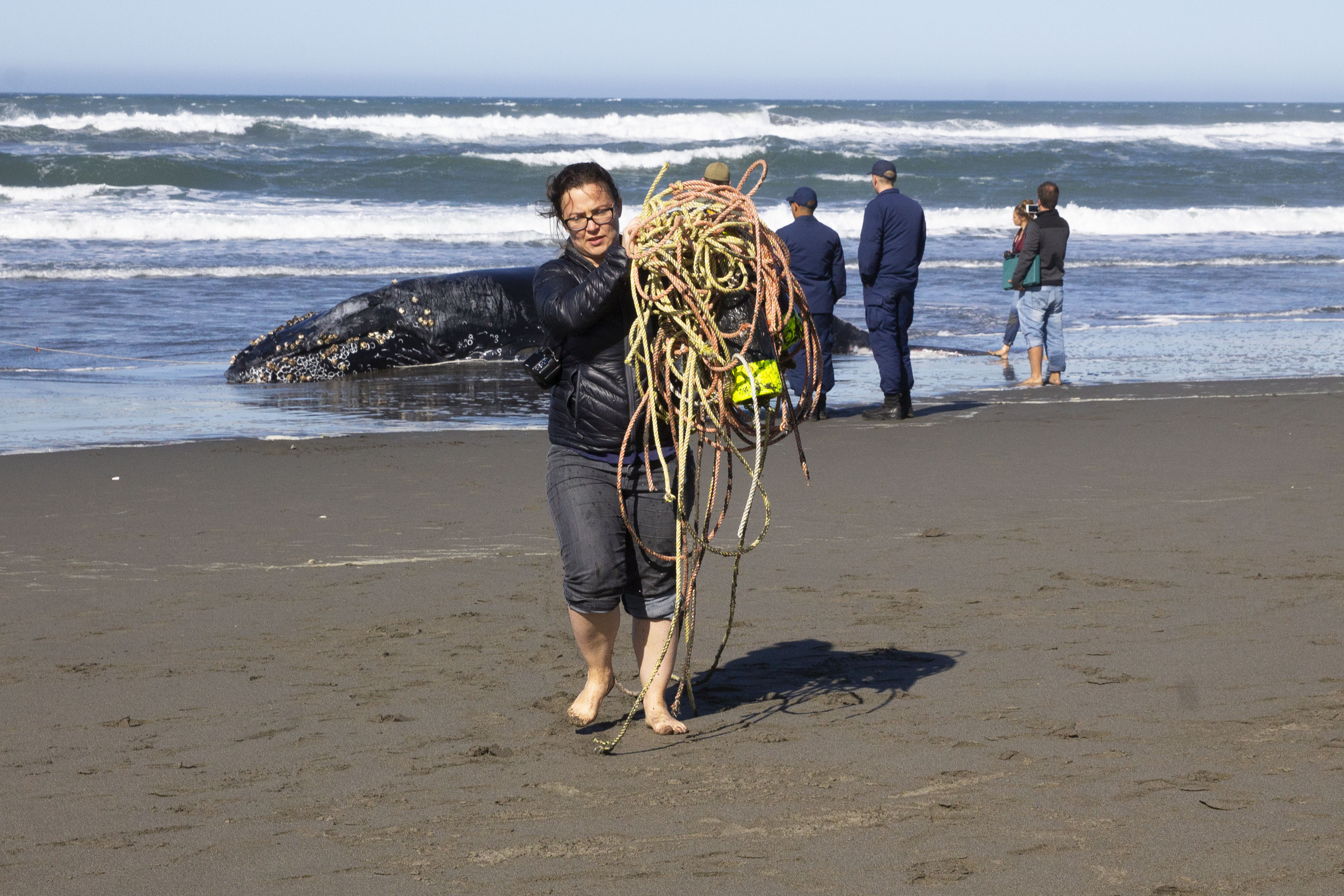
    As many may remember, a whale near Crescent City was found tangled in fishing equipment on shore. Two of HSU’s very own Marine Mammal Program went down to help. Despite efforts, the whale was unable to make it.

    This experience is like many others globally.

    According to NOAA Fisheries’ website, “Entangled animals may drown or starve because they are restricted by fishing gear, or they may suffer physical trauma and infections from the gear cutting into their flesh.”

    The reason this is such a killer? Fishing gear counts for the largest percentage of plastic in the oceans.

    Sea Shepherd Global wrote on their website, “Approximately 46% of the 79 thousand tons of ocean plastic in the Great Pacific Garbage Patch is made up of fishing nets, some as large as football fields, according to the study published in March 2018 in Scientific Reports, which shocked the researchers themselves who expected the percentage to be closer to 20%.”

    Ghost nets are nets that have stranded from their boats and continue catching marine life, tangling them and often creating mass bundles of nets.

    On Humboldt State’s Marine Debris webpage, a study they mention called “A Comparison of Plastic and Plankton in the North Pacific Central Gyre” by C.J Moorea, S.L Moorea, M.K Leecaster, and S.B Weisberg, explains that “in the North Pacific Gyre the mass of plastic out-weighted the mass of plankton (small marine organisms) by six times, despite the fact that the number of individual organisms was five times higher than the number of plastic pieces.”

    But it gets worse.

    “The same study found that 98% of plastics found were polypropylene/monofilament line (fishing lines), thin films and unidentified plastic fragments,” The HSU Marine Biology website says.

    “Lost/broken fishing gear such as netting and fishing string can entangle and kill large marine life such as sea turtles, dolphins, sharks, etc.,” Anna Caro, a third-year marine biology major at HSU, said in an email. “Most get trapped and struggle to escape, which usually makes the entanglement worse killing the marine life.”

    This means that while there is a demand for seafood, there is a risk of fishing gear becoming lost and potentially causing harm.

    “Scientists have still struggled to figure out the extent of the microplastics problem. Microplastics are being eaten by marine life and poisoning them, but not only is it terrible for the fish it is terrible for anything eating the fish including humans,” Caro said.

    Caro was able to learn more regarding marine debris through education at HSU in biology seminars and classes.

    Humboldt State also works closely with NOAA Fisheries to keep the oceans healthy and research them. Students can work with the Office of Response and Restoration’s Marine Debris Program to reduce waste and learn how to keep the oceans clean.

    Pacific Northwest Regional Coordinator Andrew Mason from NOAA expressed the issues of marine debris, especially fishing gear. Not only is this a marine loss, but an economic loss as well.

    350 species found entangled in marine debris, including all 7 species of sea turtle, 27.4% of seabird, and 39.8% of marine mammals, according to Mason.

    “It’s reaIly only these moments where we have our large sea life that are tangled up and it really brings awareness to the issue… it’s heartbreaking,” Mason said.

    Mason says that the problem itself stems from humans and extends beyond just lost fishing gear.

    “The scope of the issue is global, and for people to understand not just what they do on a boat, but it’s all of the waste we generate,” he said.

    But the issue can be worked on, and hopefully fixed. People can participate in cleaning events, as well as picking up debris if it is safe for them to do so.

    If debris is too large, like a ghost net, you can call the Department of Fish and Wildlife and inform them of the debris so it can be professionally handled. As well, if you find an entangled animal, call for help instead of handling it alone, as you or the animal may get hurt.

    But just picking up trash isn’t enough.

    “Stop use of single-use plastics and find ways to reuse our waste, recycling should not be the first choice since many plastics do not get recycled,” Caro said. It starts with striving for a zero-waste lifestyle and being aware of your waste and trying to find uses for it before trashing it.”

    NOAA also funds grants to clean up the marine debris.

    “Removal is treating a symptom, prevention is treating the root cause,” Mason said.

    For Mason, education is the key, providing people the sources to understand how to properly use fishing equipment as well as giving the general public information about how to discard their waste correctly.

    “The number one best way to address this problem and to help is to prevent these items from ending up in our marine environment,” Mason said.

    Education can teach people who may not live directly in contact with the ocean how they are affecting the ocean.

    “The ocean is key to our way of life and messing with the ecosystem can have unexpected impacts we are not yet fully aware of,” said Caro.

    “Everything is connected,” Mason said. “Everything we do has an impact.”

  • Beached Whale on Samoa Peninsula

    Beached Whale on Samoa Peninsula

    Despite help from wildlife responders, the whale has died

    A humpback whale was found washed ashore on the south end of the Samoa Peninsula early Wednesday morning.

    Eureka resident Berkeley Kijsriopas was on her morning beach walk with her mother and found the whale. It appeared to be wrapped up in a large fish net.

    The pair made a quick call to animal rescuers from HSU’s Marine Wildlife Care Center. Animal rescuers, including HSU’s Dawn Goley, were the first to arrive on the scene, followed by Samoa Peninsula Fire District and the National Oceanic and Aeronautic Administration.

    Humboldt Wildlife Care Center staff rehabilitation Lucinda Adamson was at the scene to help keep people away from the whale as marine biologists worked through an effective plan to cut ties from the whale without harming it.

    Locals gathered with their dogs on leashes and phones in hand as they tried to capture the moment without stressing the whale or the wildlife responders. 

    “Those from NOAA here are working with people from around the country to figure out the best way to help the whale and keep the people safe,” Adamson said. “I’ve just been helping to get gear and people back to keep the whale’s stress down.”

    Earlier today, there seemed to be no serious concerns that the whale may lose its life, but according to Goley and reporting by the Lost Coast Outpost, high tide isn’t until after 8 p.m. tonight and as time passes its chance of survival slims.

    People will continue to work on getting the whale back out to the water as soon as possible, and despite high tide’s timing, there is a chance of the whale floating back out before then.

    “They’ve been cutting some of the lines from him,” Adamson said. “But they’ve been doing a lot of assessments and just trying to get him back out there safely.” 

    Update: The whale has successfully been disentangled, but rescuers are waiting for the tide to rise to ensure he gets back out in the water.

    Update: The whale is still on Samoa beach, but it is alive. Goley remains on the scene, and has been accompanied by sheriff’s deputies and game wardens along with the marine mammal rescuers.

    Update, Thursday 9 p.m.: The whale has died. Goley, along with members of the Northcoast Marine Mammal Center and the NOAA, conducted health assessments, determined the whale wouldn’t make it through yet another night out of the water and decided humane euthanasia was the whale’s best option.