The Lumberjack


Students Serving The Cal Poly Humboldt Campus and Community Since 1929

Tag: money

  • Unpacking Black Joy with Kirby Moss

    Unpacking Black Joy with Kirby Moss

    By Carlina Grillo

    If money is the root of all evil, when do people feel joyful about it? Kirby Moss, a professor and head of the journalism department at Cal Poly Humboldt, asked nearly 20 students and community members last Tuesday, Feb. 13. It left people stumped. 

    Topics discussed were Black representation in the media, feelings around finances and money, how to navigate being a first generation student while saving money for college, and hypotheticals about splurging on a life experience or saving and investing said money. 

    Rather than lecturing, Moss guided a conversation by asking plenty of thought-provoking questions. 

    “We’re in college, this is an academic setting, this is a setting of intellectual exploration. Do you think we should be learning more about money or not?” Moss said. “This conversation today is about money, but it’s not about material stuff. It’s about autonomy, it’s about options.”

    Aundrea All’love is a community member and business owner who was invited to share their experiences. One experience they have as a Black business owner is balancing mental health and community value, while still recognizing their worth and being paid a sustainable amount. 

    “From going from homeless, to some stability, to slowly growing my business now, the biggest shift I did was to focus on what brings me joy. Having faith in my ability and understanding my value,” All’love said. “I have been choosing more opportunities to make money and less scrumping down on my savings.”

    Jeremiah Keys is a sophomore at Cal Poly Humboldt who shared experiences about college being the foundation for the rest of his life. 

    “It’s not just going to be college then careers. It’s like college, then another college, then career and then struggles in between those things, but I’m still going to get through it,” Keys said. “Providing for my family and friends suits me, because I love doing it. That’s the expression that we love. Do something that suits you, but don’t push yourself to where you end up judging yourself more and more and more, and not looking at all the good that you’ve already done and all the good you can possibly do in the future.”

    This event was a part of a month-long series of events for Black Liberation Month, held by The Umoja Center for Pan African Student Excellence. For more information on upcoming events the Umoja Center can be found on Instagram at @umojahumboldt.

    “Money is not power. It’s all about us,” Moss said.

  • Betting on the Super Bowl Doesn’t Always Pay Off

    Betting on the Super Bowl Doesn’t Always Pay Off

    Clarifying the legality of betting on the Super Bowl

    When you think of Super Bowl betting, you might think of a couple friends harmlessly betting $50 on their hometown team. But Super Bowl betting is illegal in California.

    In 2015, the Association of Government Accountants estimated that people illegally wagered around $145 billion on sports betting. The AGA seeks to increase government accountability and transparency, according to its site.

    Clearly, even if it’s invisible to most, a lot of money is being illegally transferred through sports betting.

    Under California Penal Code 330, California state law says that gambling is illegal, with the exception of Native American reservation casinos, card clubs, charitable gambling, horse wagering and the California State Lottery.

    On Sunday, Feb. 2, the San Francisco 49ers will play the Kansas City Chiefs for the 2020 Super Bowl. Whether you’re watching the game or just going to a party to eat barbecue, you probably at least know someone that’s going to be watching, and more than likely, know someone placing a bet on the outcome of the game.

    In California it’s illegal to bet on the Super Bowl or sports of any kind, but people bet on the game anyway. In the 1990s the prohibition on sports betting began and all sports betting became illegal nationwide.

    Congress passed the Professional and Amateur Sports Protection Act in 1992, which banned governmental entities from legalizing sports wagering.

    Yet in a 2018 United States Supreme Court case, Murphy v. National Collegiate Athletic Association, the Court overturned PASPA due to its conflict with the Tenth Amendment.

    “Congress can regulate sports gambling directly, but if it elects not to do so, each State is free to act on its own,” Justice Samuel Alito said.

    Online betting is a popular form of wagering on the Super Bowl, but when you go to place a bet, you have to confirm your state of occupancy—thereby restricting Californians.

    Under California Penal Code 330, California state law says that gambling is illegal, with the exception of Native American reservation casinos, card clubs, charitable gambling, horse wagering and the California State Lottery.

    “Every person who plays or bets at or against any of those prohibited games, is guilty of a misdemeanor, and shall be punishable by a fine not less than one hundred dollars ($100) nor more than one thousand dollars ($1,000), or by imprisonment in the county jail not exceeding six months, or by both the fine and imprisonment,” the code says.

    So if you plan on betting on this upcoming game, know what you’re getting yourself into.

  • Editorial: Follow the Money

    Editorial: Follow the Money

    Companies outed on social media for funding political advocacy groups

    A long list of companies that use profits to fund pro-Trump advocacy groups was recently published to several social media sites.

    This scandal begs an important question, are our purchases worth it if they support a larger cause, or person, we might not necessarily support ourselves?

    Companies including SoulCycle, Equinox, CVS and Taco Bell were just a few of those exposed on Twitter and Instagram.

    SoulCycle and Equinox were the first two companies to feel the heat. Equinox was quickly trending on Twitter but for all the wrong reasons. With hashtags such as: “#BoycottEquinox” and “#BoycottSoulCycle,” both companies went under fire from paying subscribers.

    The social media frenzy didn’t go without notice for long, as both gym facilities soon released a public disclaimer on social media. Both claimed that the day-to-day operations are in no way affected or influenced by the owner, Stephen Ross, and his political affiliations.

    The boycott continues as news of Ross hosting a fundraiser for Trump in the Hamptons surfaced with tickets costing as much as $250,000.

    SoulCycle and Equinox were not the only major players under scrutiny.

    The boycott hashtag trend lives on with CVS. “#BoycottCVS” was created as the company donated $35,000 to the Trump Victory PAC (Political Action Committee), becoming one of four biggest donors involved in the reelection campaign. Additionally, they donated $500,000 to America First Policies in 2018.

    America First Policies, is a “non-profit organization supporting key policy initiatives that will work for all citizens in our country and put America first,” however, Mike Pence’s face is the first thing you see upon opening the homepage of the website; giving a strong indication of who is involved and what political beliefs are represented.

    Recently, the organization has been accused of being racist, homophobic, sexist and anti-Muslim after several outbursts containing these sentiments from the advocacy director were found online.

    Taco Bell, specifically the Taco PAC, is reportedly one of four companies to donate the most to the Trump election campaign in 2016. In regards to the 2020 election, however, no donations have currently been made to the Trump PAC.

    There are larger consequences to the spending decisions we make. This new information should make us challenge our mindfulness behind the actual value behind a purchase, knowing our money, in a way, is going toward supporting a larger cause. Ultimately, losing leverage and control over our money and what it is funding is an uncomfortable reality.

    However, between public disapproval and social media boycotts, the power in being a consumer is important to remember. Consumers have the power to persuade companies. All the recent public outcry towards Taco Bell has coincided with the withholding of any 2020 campaign donations from them and that is no coincidence.

    Regardless, the power of being a consumer is something we often forget and take for granted. The next time you find yourself in a Taco Bell drive-thru, ask yourself: is the taco really worth the dollar?

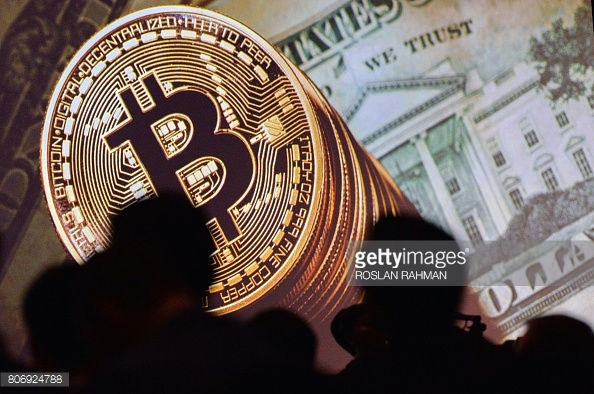
  • Is a bitcoin bubble ready to pop?

    Is a bitcoin bubble ready to pop?

    By | Robert Brown

    Bitcoin gained $2,000 during the last week of November, causing internet exchange sites to freeze up as people attempted to buy whatever amount of Bitcoin they could afford.

    If asked, the majority of people would more than likely not know what Bitcoin is, despite the fact that it is the most well known and widely used cryptocurrency, valued at over $10,000 per coin. A debate has sparked online whether or not Bitcoin is experiencing a bubble.

    Many financial analysts and cryptocurrency experts say Bitcoin will continue to rise through the summer, reaching $40,000 by August. Others say it will crash and become worthless, causing people to lose all of the money they have invested. Since its creation, people have continuously claimed that the Bitcoin bubble will pop every time it has reached a new high. People said the bubble will pop when it reached $100, and again when it reached $1,000. Now that it has reached $10,000, many predict the same invevitable outcome.

    As if that wasn’t enough to peak a person’s interest, there is a very mysterious element to Bitcoin. Bitcoin is the first decentralized digital currency invented in 2009 by an unknown person using the name Satoshi Nakamoto. Although some claim the real creator may possibly be Artificial Intelligence. The revolutionary software is open-source and peer-to-peer, and is considered to be the future of technology. Transactions take place between users directly, are verified and recorded in a public ledger called a blockchain.

    There is a unique Bitcoin culture that has been created with new lingo, specific technology and intricate knowledge of how the system works. The nuances of authentication, how to buy, sell and trade, managing wallets and vaults, mining coins, Tether’s and Bitcoin’s blockchain is enough to make any computer nerd think they have died and gone to heaven. The real question is whether or not Bitcoin is a medium of exchange or a tool for the purpose of growing sovereign wealth.

    “It’s both, it is a safe store of value. Fiat currencies are collapsing when measured against Bitcoin,” technology entrepreneur and researcher Steve Outtrim said. “In the Greek Financial crisis in 2014 the opposition leader suggested converting their entire economy to Bitcoin. If they had done that, Greece would have repaid all its debt already and the Greek citizens would be the world’s richest people.”

    Bitcoin has generated a unique ecosystem in which many people are willing to trade and accept it while remaining anonymous. Although it may be disconcerting not to know who is behind the currency or even who its users are, some people perceive Bitcoin to be more valuable than other currencies in that it is a better option for certain purposes, such as digital transfers and use across borders. Also, because there is a cap of 21 million set on the total number of Bitcoins that will ever exist, the currency cannot be devalued through inflation.

    Another key benefit of Bitcoin is known as censorship resistance, which is its ability to be used for transactions that could normally be censored by other payment networks or by government. Julian Assange is well known for leaking out cables of controversial information with Wikileaks during the 2016 election cycle. In retaliation to his leaks, he was blocked and boycotted from receiving funds or donations through any bank, PayPal or other financial institutions. Bitcoins were used to keep him and his organization running.

    Bitcoin was originally used for underground transactions, such as black market trafficking on the dark web. It has become a target for regulation by the United States government, requiring exchanges such as Coinbase to turn over financial information and the identities of over 14,000 users to the IRS. This recent move has made black market traffickers switch to a more anonymous cryptocurrency called Monero.

    Bitcoin has no central control, no central repository of information, no central management and no central point of failure. However, there are two sides of the coin. On one side, Bitcoin is decentralized, taking power away from big banks and the Federal Reserve. On the other hand, it is a fertile ground for predators to scam people out of their money. With the increase in regulation also comes legitimization, which will likely bring more people wanting to buy, sell and trade Bitcoin without the fear of being hacked or scammed.

    Security is a major factor with digital currencies. Millions of dollars in Bitcoin have been scammed, swindled, hacked and stolen from people. One of the greatest in Bitcoin history was the Mt. Gox exchange scandal, involving 800,000 missing Bitcoin worth over half a billion dollars. Recently, over $31 million in Bitcoin was stolen out of a Tether treasury wallet. The address the Bitcoin was sent to happened to be the same address that was responsible for stealing 19,000 Bitcoin from Bitstamp exchange in 2015.

    With the rise of Bitcoin, different products, businesses and services have popped up to support cryptocurrency. These include loan services, brokerage firms and exchanges, ATM’s, Tether’s and external wallets to safely store Bitcoin and other cryptocurrency. One of the more popular wallets is made by Trezor and costs about $100 or a paper wallet can be created for free at bitaddress.org. MyTime, Stream and Brave Browser are other cryptocurrency platforms that have sprouted up that expand the open-source concept, helping people to diversify their own income by converting music, art, video and energy into cryptocurrency which can then be converted into U.S. dollars if desired.

    It’s only a matter of time before all currency is digital. Many countries are developing cryptocurrency, like Kyrgyzstan, Japan, China and Russia with their CryptoRuble. Large investment firms are adding cryptocurrencies to people’s portfolios if anything were to ever happen to the U.S. dollar, which has been speculated to be on the brink of collapse for many years.

    Currency experts like RT’s Max Keiser claim that cryptocurrencies like Bitcoin could eventually replace the U.S. dollar. However, Bitcoin claims to have been created to exist alongside the U.S. dollar – one being used as currency, and the other being used as an investment tool for raising funds.

    BitcoinCash CEO Rick Falkvinge said in an interview on RT’s Sophie & Co. that the U.S. dollar will collapse under its own weight. All Bitcoin needs to do is survive the collapse. He also said that when the value of Bitcoin rises to $2 million per coin, comparing it to the U.S. dollar won’t even be viable. That is because the dollar won’t be worth anything at that point, and won’t be a base of comparison anymore.

    Any way you look at it, it’s apparent that capital flight is occurring. In economics, capital flight occurs when assets or money rapidly flow out of a country or currency due to an event of economic consequence. People are fed up with the Federal Reserve and the U.S. economic dominance over the world, inspiring them to invest in other currencies.

    The U.S. Government has taken notice and is trying to come up with ways to continue to receive the necessary tax dollars from people under their jurisdiction. One idea is for the U.S. government to issue its own form of cryptocurrency tax coin that would be required to be purchased by citizens in order to remain in good standing.

    Internet data mining expert Clif High mines the internet with a web bot he designed, collecting billions of data points to produce forecasts of the future called Predictive Linguistics.

    When asked about financial markets, High says, “We’re screwed. The equity markets in our data sets are highly manipulated. So, if you ask will there be a crash? I say there already is a crash. Everybody that is not part of the financial system at the top end is currently living in a depression, and the media does not acknowledge this.”

    Whether or not you understand exactly what Bitcoin is or how it works makes little difference. All that matters right now is if you have some and how much of it you have. Part of what is driving the Bitcoin market into a frenzy is people’s fear of missing out. A person who bought $100 worth of Bitcoin in 2010 would be worth over $70 million today.

    On the edge of a new precipice, where technology blends with virtually everything in reality, it is expected that cryptocurrency will be an integral part of the future evolution of humanity. We could be witnessing the greatest wealth transfer in the history of mankind.

    As with other forms of investing, it pays to do your research. Be careful with who you do business with or give your money to. Before you start trying to live the Bitcoin life, calculate the risks and rewards, and never invest more than you are willing to lose. One of the more popular and safest internet sites to invest in cryptocurrencies is Coinbase.

    High says, “With cryptocurrency, we are going to be able to say for the first time in history that great fortunes are being made, without their being a great crime.”




  • Students’ J-point money washed away

    Students’ J-point money washed away

    As the end of last spring semester approached, sophomore Tonita Johnson, 19, had around $600 of leftover J-points on her meal plan. During the last weeks of the semester, Johnson was trying to spend her remaining points by paying for her friends who had used up all of their J-points.

    “I paid for other people who ran out of J-points,” Johnson said, “I had to get rid of $600, I got it down to $92.”

    Last year alone, $82,513 worth of unused J-points expired. HSU meal plan J-points expire at the end of every spring semester. Every year a number of students lose their leftover points. These already expensive points are nonrefundable and can’t rollover to the summer semester or the following school year.

    IMG_2885.JPG

    Like many other students, Johnson took out a loan to pay for the gold plan she had last year. Students pay $1.96 for every $1 they get on the gold plan. The plan costs $5,544 while students only get $2,832 worth of J-points. $1,416 for each semester. This hidden,

    prepaid cost is known as a fixed cost.

    Johnson lost $92 of J-points, but adding the fixed cost fees she paid for when purchasing the plan brings her total loss to $180.

    “That money would have gone towards my books and other stuff that I needed for this semester,” Johnson said.

    Besides buying things for friends, before heading home to Los Angeles, Johnson spent some of her J-points buying things from the on-campus markets and left them at a friend’s house in Arcata that caught on fire this summer.

    “My friend house caught on fire, a lot of those things that I’ve bought from all around got destroyed in the fire,” Johnson said. “Everything is gone. They lost a lot of stuff, I lost some of my stuff.”

    HSU does not refund students any part of their remaining meal plan balance.

    “They [HSU] should refund the points. I feel they have the ability to refund the points,” Joey Mularky, president of Associated Students, said.

    Sahil Barot, a 19-year-old international student from India, said it’s a waste of money.

    At the end of last spring semester, he had over $280 leftover points on his meal plan. He spent some of his remaining points on things from the on-campus markets, but still lost around $70 worth of J-points that expired. IMG_2909.JPG

    “It was sad. It’s a lot, it’s a big amount,” Barot said. “With that money, I could buy my stuff for a month. My food, groceries, milk or cereal or vegetables and fruits I could buy it for a month.”

    Barot’s family owns a farm in India where they grow cotton, potatoes and tobacco. His father helped him pay for the meal plan with their farm income savings. His father also took a loan to pay for his education.

    “My father saved some money for me,” Barot said. “My father took a loan from a bank and got money from the farm.”

    In a school where over 50 percent of student come from low-income families, there are no plans to consider refunding student for their unused meal plans money. This brings up the question, what does student who needs that money do?

    IMG_2976.JPG
    Brian Thompson (Cashier) checking out items for a student at the college creek marketplace. Photo credit: Ahmed Al-Sakkaf

    “The answer to the question ‘What do student who need that money do?’ I don’t have a good answer for that,” said Ron Rudebock, the director of Dining Services. “Life is not fair sometimes.”

  • HSU students share their thoughts on the tuition increase

    HSU students share their thoughts on the tuition increase

    Jacqueline Gomez, junior, engineering "It was like a slap in the face because they're not telling us where the money's going. And I know Lisa [Rossbacher] got a salary increase. So she can get a salary increase, but we have to pay more tuition?"
    Jacqueline Gomez, junior, engineering “It was like a slap in the face because they’re not telling us where the money’s going. And I know Lisa [Rossbacher] got a salary increase. So she can get a salary increase, but we have to pay more tuition?”

    Brian Taylor, freshman. "If it was going somewhere to actually improve my time here, that'd be okay. But I'd want to know exactly where the money is going. I obviously don't want to pay the extra money because I'm already going to have a lot of debt for four years of something I don't even necessarily want to do, but I have to do because that's what society has put in front of me.”
    Brian Taylor, freshman. “If it was going somewhere to actually improve my time here, that’d be okay. But I’d want to know exactly where the money is going. I obviously don’t want to pay the extra money because I’m already going to have a lot of debt for four years of something I don’t even necessarily want to do, but I have to do because that’s what society has put in front of me.”

    Dèsha Arthur junior computer science. "I don't think it's justified. I don't think it's valid. The benefits that it's going to bring - I don't think the students think it's worth while to charge us more. If you're raising tuition you should be benefitting the students more.”
    Dèsha Arthur junior computer science. “I don’t think it’s justified. I don’t think it’s valid. The benefits that it’s going to bring – I don’t think the students think it’s worth while to charge us more. If you’re raising tuition you should be benefitting the students more.”

    Sarah Dunn, junior, religious studies. "I just think it's bulls**t because it's not going to fund something worth funding. No one - no student at least - is going to benefit from it. The CSU system just seems as corrupt as the government that runs it.”
    Sarah Dunn, junior, religious studies. “I just think it’s bulls**t because it’s not going to fund something worth funding. No one – no student at least – is going to benefit from it. The CSU system just seems as corrupt as the government that runs it.”

    Khalil Robinson,senior, zoology and biology. "My biggest issue is that there isn't enough transparency with what they're doing with the money going towards tuition. They say we need it to build facilities to get more reach with the students. But then when the time comes we're like 'where is it? Why aren't we getting longer library hours? Why do people in the dorms have to pay for toilet paper?'”
    Khalil Robinson,senior, zoology and biology. “My biggest issue is that there isn’t enough transparency with what they’re doing with the money going towards tuition. They say we need it to build facilities to get more reach with the students. But then when the time comes we’re like ‘where is it? Why aren’t we getting longer library hours? Why do people in the dorms have to pay for toilet paper?’”

  • The Vote is In, Tuition Goes Up

    The Vote is In, Tuition Goes Up

    By | Maricela Wexler

    On March 22, the California State University Board of Trustees voted 11-to-8 to increase student tuition for the 2017-18 academic year by $270 for undergraduates.  There are over 100,000 more students enrolled in the CSU system today than in 1985 and concurrently funding has decreased by 2.9 percent. The state’s gradual abandonment of CSU funding commitments has pressured the Board of Trustees to find alternative financial support for institution services.

    The recent vote came as a blow to students and their families statewide who are already struggling with the costs of education.  The CSU system is a public institution that relies on state funding to provide high quality education for its students. (jump)  With diminishing state support, universities increasingly rely on students and their families to fill the void.

    An increase of $270 for the 2017-18 academic year is especially tolling for the large number of low-income students currently enrolled in the CSU system. According to a report commissioned by CSU Chancellor Timothy White, 1 in 10 CSU students today experience homelessness during their college career and one in five do not routinely have enough food. Amidst rising living costs, the state of California is investing $6,888 per student in the California State University system as opposed to the $11,607 it invested in 1985.

    The recent Board of Trustees decision strengthens pre existing barriers to higher education for current and prospective low-income students. Additionally, the quality of education students receive is compromised due to insufficient resources. As detailed in the California Faculty Association Spring 2017 report, “Equity Interrupted”, instead of providing a system designed to maximize access and quality for the benefit of the state of California, CSU’s are shrinking access to higher education because of increased tuition, and failing in its duty to support the new generation of CSU students so that they will help our state prosper in the 21st century.

    Cost of tuition is not the only thing that has changed in California over the last 30 years. According to the CFA report, the CSU had over 150,000 more students in 2015 than it had in 1985, a student body increase of 64 percent over those 30 years. In 1985, 63 percent of the CSU student body identified as white, and only 27 percent identified with another ethnic group. By 2015, this changed to 26 percent and 62 percent, respectively. CFA Associate Vice President Dr. Cecil E. Canton said in front of the State Assembly in 2016, “as the student body of the CSU became darker, funding became lighter.”

    Students around the state have been advocating for the CSU system to reclaim its title as the “people’s university” by demanding  free, safe, inclusive, and quality higher education. Students opposing tuition hikes are now moving attention towards the updated budget proposal to be submitted by Governor Jerry Brown’s office this May. Those fighting tuition hikes have not lost hope. There is potential for the Board of Trustees to vote against tuition hikes in the future, which could put pressure on the state to increase the education budget. Other proposals and bills have surfaced, including Assembly Bill 393 which would prohibit California State University and the California Community Colleges from increasing tuition and any mandatory student fees until the end of the 2019-2020 school year.

    Student groups currently focusing on this issue at Humboldt State University include: M.E.Ch.A., HSU Green, I.N.R.S.E.P., Double Dare Ya, Humboldt Unity Coalition Front, and Associated Students of HSU, and Power Up!. To find out more about the recent tuition hikes, relevant upcoming legislation, and how the CSU Board of Trustees operates, visit the Cal State website.

    Maricela Wexler submitted this piece on behalf of Power-Up! A student advocacy group at HSU. Power-Up!

    Photo of HSU’s Power Up! members discussing organizing strategies and tactics to address unequal access to higher education. Photo courtesy of Maricela Wexler
    Photo of HSU’s Power Up! members discussing organizing strategies and tactics to address unequal access to higher education. Photo courtesy of Maricela Wexler

  • The textbook hustle

    The textbook hustle

    Saving money on pricey textbooks

    By: Domanique Crawford

    The study, “Student Watch: Attitudes and Behaviors toward Course Materials: 2015-2016 Report,” reports that campus stores remain the top source for course materials purchases, with 80 percent of students in the fall and 73 percent in the spring acquiring units from the on-campus retailer.

    Students are willing to pay the exuberant bookstore prices for the sake of convenience of a one stop shop for all scholastic supplies and saving time on receiving the text.

    According to HSU’s cost calculator the average cost for books and supplies is $1,660. With a little bit of extra planning these alternative methods of purchasing scholastic texts are just as convenient as ordering from the Bookstore and offer more affordable prices.  

    1. Online Rentals- Renting a book online textbook providers are often cheaper than bookstore prices. You might be cautious about the cost of shipping, but most sites provide free return shipping. An added benefit for online rentals are that some of these websites offer access to e-book version while you’re hard copy is being delivered. Websites like Bigwords.com let you enter the text’s ISBN number and generates a comparative price list with various online sellers. Some of the most popular textbook ordering sites include: Amazon.com, Chegg.com, and Half.com.
    2. Book Swaps- HSU is a small community and you will inevitably share classes with the people in your major. Form a bookswap. Maybe a friend already has the textbook that you need just collecting dust. Offer a trade off.
    3. Ask your professor-  Professors understand that students can’t always afford the high cost of the required text and will sometimes have extra copies they can loan. Also, be sure to ask your professor if the most current issue of the text is necessary. You can save a lot of money buying an earlier model of the book.
    4. Info Boards- Check the info boards near the class in which the text is required. Students who no longer need their book might post flyers selling their old copies for reasonable prices.
    5. Check the Library- If you are really pinching pennies you might just want to check if the library has a copy of the text and photocopy the sections you need. As the cost of the copies can get expensive depending on the number of pages, you might want to try scanning the book and emailing the pages to yourself. Mind copyright laws!