The Lumberjack


Students Serving The Cal Poly Humboldt Campus and Community Since 1929

Tag: NOAA

  • The dangers behind marine debris

    The dangers behind marine debris

    Along the coast, you can free your feet in the sand and enjoy the beautiful sounds of the ocean. But enter the water and you, like many marine creatures, may find yourself entangled in fishing gear or waste plastic.

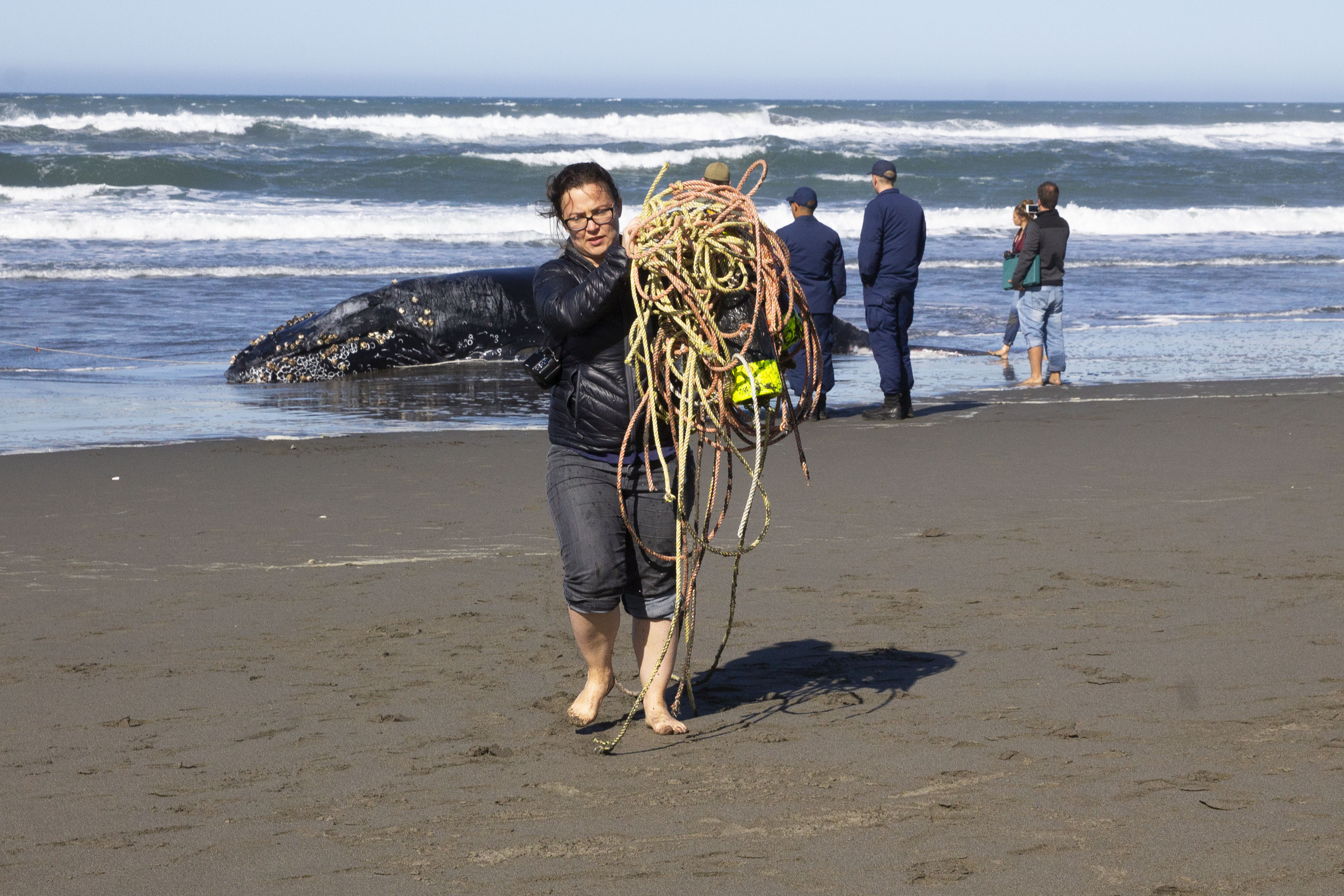
    As many may remember, a whale near Crescent City was found tangled in fishing equipment on shore. Two of HSU’s very own Marine Mammal Program went down to help. Despite efforts, the whale was unable to make it.

    This experience is like many others globally.

    According to NOAA Fisheries’ website, “Entangled animals may drown or starve because they are restricted by fishing gear, or they may suffer physical trauma and infections from the gear cutting into their flesh.”

    The reason this is such a killer? Fishing gear counts for the largest percentage of plastic in the oceans.

    Sea Shepherd Global wrote on their website, “Approximately 46% of the 79 thousand tons of ocean plastic in the Great Pacific Garbage Patch is made up of fishing nets, some as large as football fields, according to the study published in March 2018 in Scientific Reports, which shocked the researchers themselves who expected the percentage to be closer to 20%.”

    Ghost nets are nets that have stranded from their boats and continue catching marine life, tangling them and often creating mass bundles of nets.

    On Humboldt State’s Marine Debris webpage, a study they mention called “A Comparison of Plastic and Plankton in the North Pacific Central Gyre” by C.J Moorea, S.L Moorea, M.K Leecaster, and S.B Weisberg, explains that “in the North Pacific Gyre the mass of plastic out-weighted the mass of plankton (small marine organisms) by six times, despite the fact that the number of individual organisms was five times higher than the number of plastic pieces.”

    But it gets worse.

    “The same study found that 98% of plastics found were polypropylene/monofilament line (fishing lines), thin films and unidentified plastic fragments,” The HSU Marine Biology website says.

    “Lost/broken fishing gear such as netting and fishing string can entangle and kill large marine life such as sea turtles, dolphins, sharks, etc.,” Anna Caro, a third-year marine biology major at HSU, said in an email. “Most get trapped and struggle to escape, which usually makes the entanglement worse killing the marine life.”

    This means that while there is a demand for seafood, there is a risk of fishing gear becoming lost and potentially causing harm.

    “Scientists have still struggled to figure out the extent of the microplastics problem. Microplastics are being eaten by marine life and poisoning them, but not only is it terrible for the fish it is terrible for anything eating the fish including humans,” Caro said.

    Caro was able to learn more regarding marine debris through education at HSU in biology seminars and classes.

    Humboldt State also works closely with NOAA Fisheries to keep the oceans healthy and research them. Students can work with the Office of Response and Restoration’s Marine Debris Program to reduce waste and learn how to keep the oceans clean.

    Pacific Northwest Regional Coordinator Andrew Mason from NOAA expressed the issues of marine debris, especially fishing gear. Not only is this a marine loss, but an economic loss as well.

    350 species found entangled in marine debris, including all 7 species of sea turtle, 27.4% of seabird, and 39.8% of marine mammals, according to Mason.

    “It’s reaIly only these moments where we have our large sea life that are tangled up and it really brings awareness to the issue… it’s heartbreaking,” Mason said.

    Mason says that the problem itself stems from humans and extends beyond just lost fishing gear.

    “The scope of the issue is global, and for people to understand not just what they do on a boat, but it’s all of the waste we generate,” he said.

    But the issue can be worked on, and hopefully fixed. People can participate in cleaning events, as well as picking up debris if it is safe for them to do so.

    If debris is too large, like a ghost net, you can call the Department of Fish and Wildlife and inform them of the debris so it can be professionally handled. As well, if you find an entangled animal, call for help instead of handling it alone, as you or the animal may get hurt.

    But just picking up trash isn’t enough.

    “Stop use of single-use plastics and find ways to reuse our waste, recycling should not be the first choice since many plastics do not get recycled,” Caro said. It starts with striving for a zero-waste lifestyle and being aware of your waste and trying to find uses for it before trashing it.”

    NOAA also funds grants to clean up the marine debris.

    “Removal is treating a symptom, prevention is treating the root cause,” Mason said.

    For Mason, education is the key, providing people the sources to understand how to properly use fishing equipment as well as giving the general public information about how to discard their waste correctly.

    “The number one best way to address this problem and to help is to prevent these items from ending up in our marine environment,” Mason said.

    Education can teach people who may not live directly in contact with the ocean how they are affecting the ocean.

    “The ocean is key to our way of life and messing with the ecosystem can have unexpected impacts we are not yet fully aware of,” said Caro.

    “Everything is connected,” Mason said. “Everything we do has an impact.”
  • Sprinkles Expected for Spring Break

    Sprinkles Expected for Spring Break

    Rains look to rush in this upcoming weekend

    Cold clouds creep on the horizon, waiting for students to flee Arcata before dumping rain on the city. The days of sunny skies and warm weather may come to a damp halt at the beginning of spring break.

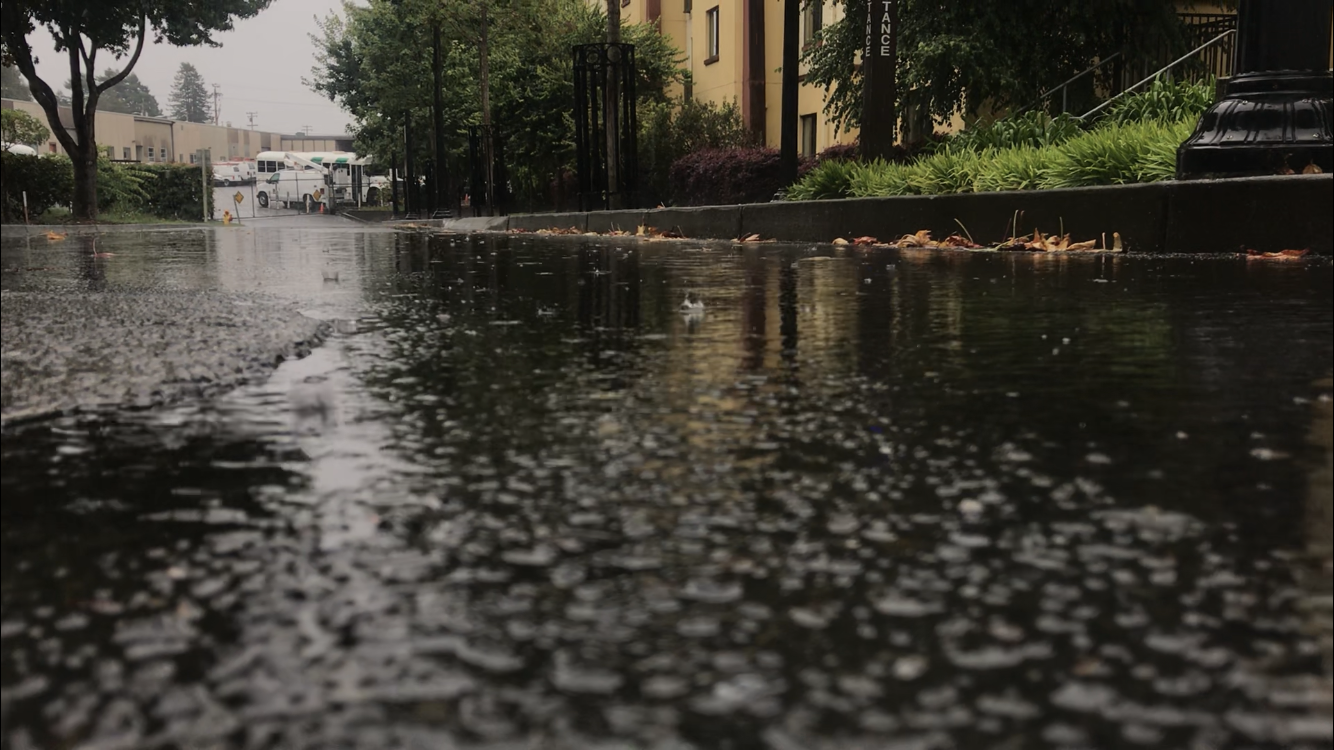
    Spring is here, and it’s wet. This coming weekend, rain is forecasted to fall on Humboldt State. Break is just around the corner and inclement weather may be a downer for partying students, so be sure to check the weather before the rager starts.

    This helpful graph, built by weatherspark.com, shows the average daily chance of rain in Arcata throughout the year. | Graph by Weatherspark

    To prepare for the break, The Lumberjack science section reached out to the National Oceanic and Aeronautic Administration office and asked a meteorologist what we can expect. It may get cold.

    According to Brad Charboneau, one of those NOAA meteorologists, we’ve still got a couple more cold months ahead of us. We’re not out of the chill yet, even though the spring season is when temperatures start warming up.

    “I check the weather often either with the NOAA weather app or by looking at the sky. If it looks questionable or if the sky is darker than usual, check it.”

    Mattea Roberts

    For curious weather geeks, the NOAA station uses a number of sensors and measuring devices to record weather events. For example, they use a tipping bucket rain gauge that measures hundredths of an inch. Each time the bucket fills, the bucket tips over and records a tic. The more tics, the more water. Easy as that.

    Mattea Roberts probably appreciates meteorological instruments like the tipping bucket. A freshman studio artist at HSU, Roberts takes advantage of NOAA science by using their weather app. She said it was a good idea to check the weather if the sky looked questionable.

    “I check the weather often either with the NOAA weather app or by looking at the sky,” Roberts said. “If it looks questionable or if the sky is darker than usual, check it.”

    Roberts also said she brings a rain jacket or an umbrella to school every day, just in case it does rain. She’s probably going to be prepared for whatever the climate has to throw at her this weekend.

    “I can tell you right now, it’s gonna be nice and warm up until Friday,” Charboneau said. “On Saturday, believe it or not, we’re gonna have a shift to cooler, more showery weather that will last through the weekend.”

    Charboneau said the rain isn’t going to be very intense from the perspective of the rivers, but the conditions may make the weekend less than ideal if students have outdoor plans.

    One of Charboneau’s colleagues, Meteorologist Ryan Alyward, explained how NOAA forecasts weather. He said as a meteorologist, his job is to pay attention to what’s going on in the sky and diagnose the conditions. Understanding what’s happening now allows him to make a prognosis of what weather conditions will be.

    Using a program he called Ensemble, meteorologists input real-time data and get a large number of weather predictions. The predictions are future weather patterns that may or may not happen, and it is his job to use these to make a forecast of the weather. The trick is to look at the similarities in each model, because together, those similarities make the most likely prediction.

    The current models, beyond the wet weather forecasted in Arcata, include snow in the mountains east of the city. Charboneau said although snow is more common in January and February, it’s not unheard-of in March.

    “We’re looking for the potential of snow—low-level snow—which will impact the passes going east,” Charboneau said. “It is likely to see some snow over the weekend. Those are the main threats over the weekend.”

  • Beached Whale on Samoa Peninsula

    Beached Whale on Samoa Peninsula

    Despite help from wildlife responders, the whale has died

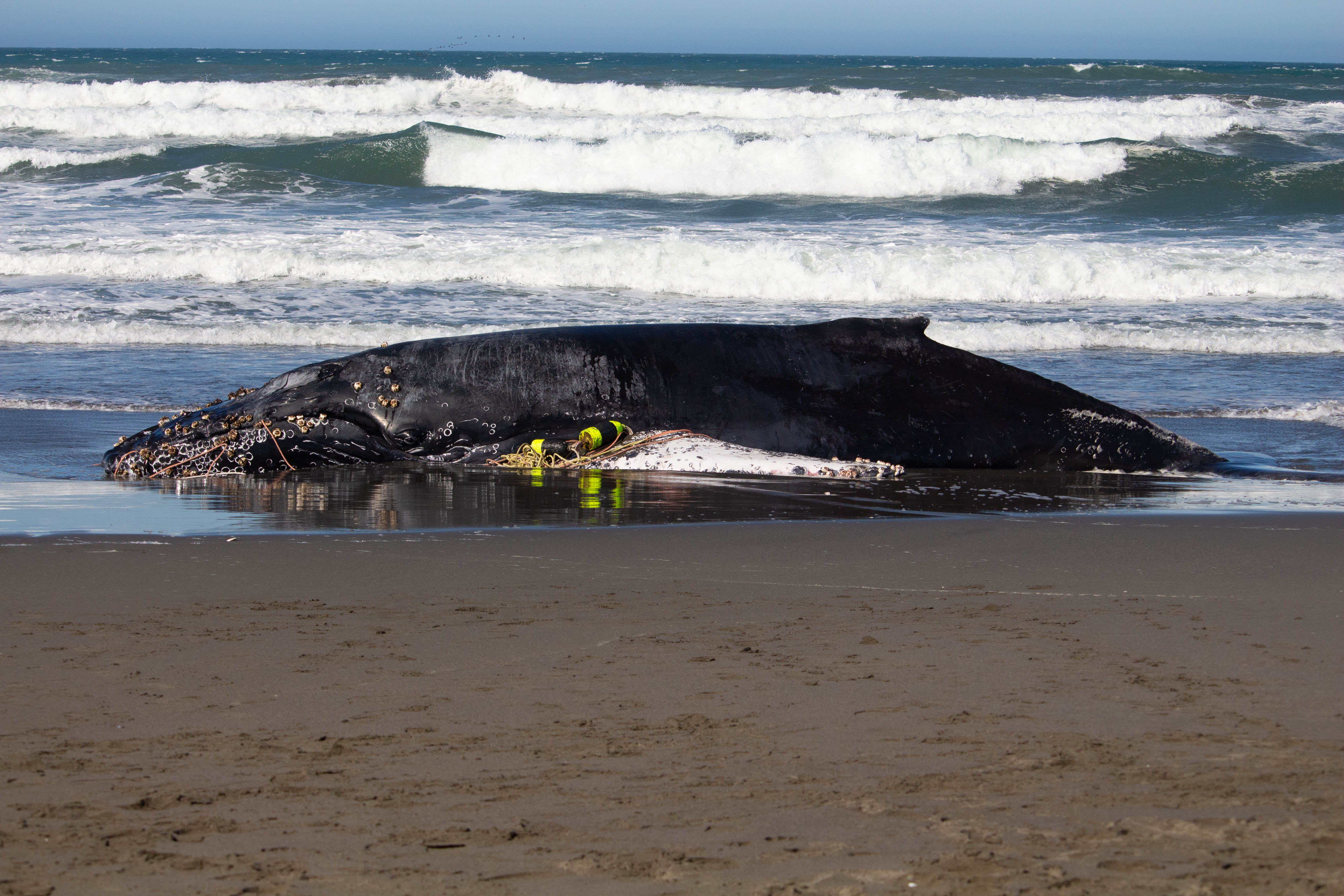
    A humpback whale was found washed ashore on the south end of the Samoa Peninsula early Wednesday morning.

    Eureka resident Berkeley Kijsriopas was on her morning beach walk with her mother and found the whale. It appeared to be wrapped up in a large fish net.

    The pair made a quick call to animal rescuers from HSU’s Marine Wildlife Care Center. Animal rescuers, including HSU’s Dawn Goley, were the first to arrive on the scene, followed by Samoa Peninsula Fire District and the National Oceanic and Aeronautic Administration.

    Humboldt Wildlife Care Center staff rehabilitation Lucinda Adamson was at the scene to help keep people away from the whale as marine biologists worked through an effective plan to cut ties from the whale without harming it.

    Locals gathered with their dogs on leashes and phones in hand as they tried to capture the moment without stressing the whale or the wildlife responders. 

    “Those from NOAA here are working with people from around the country to figure out the best way to help the whale and keep the people safe,” Adamson said. “I’ve just been helping to get gear and people back to keep the whale’s stress down.”

    Earlier today, there seemed to be no serious concerns that the whale may lose its life, but according to Goley and reporting by the Lost Coast Outpost, high tide isn’t until after 8 p.m. tonight and as time passes its chance of survival slims.

    People will continue to work on getting the whale back out to the water as soon as possible, and despite high tide’s timing, there is a chance of the whale floating back out before then.

    “They’ve been cutting some of the lines from him,” Adamson said. “But they’ve been doing a lot of assessments and just trying to get him back out there safely.” 

    Update: The whale has successfully been disentangled, but rescuers are waiting for the tide to rise to ensure he gets back out in the water.

    Update: The whale is still on Samoa beach, but it is alive. Goley remains on the scene, and has been accompanied by sheriff’s deputies and game wardens along with the marine mammal rescuers.

    Update, Thursday 9 p.m.: The whale has died. Goley, along with members of the Northcoast Marine Mammal Center and the NOAA, conducted health assessments, determined the whale wouldn’t make it through yet another night out of the water and decided humane euthanasia was the whale’s best option.

  • What’s up, weather?

    What’s up, weather?

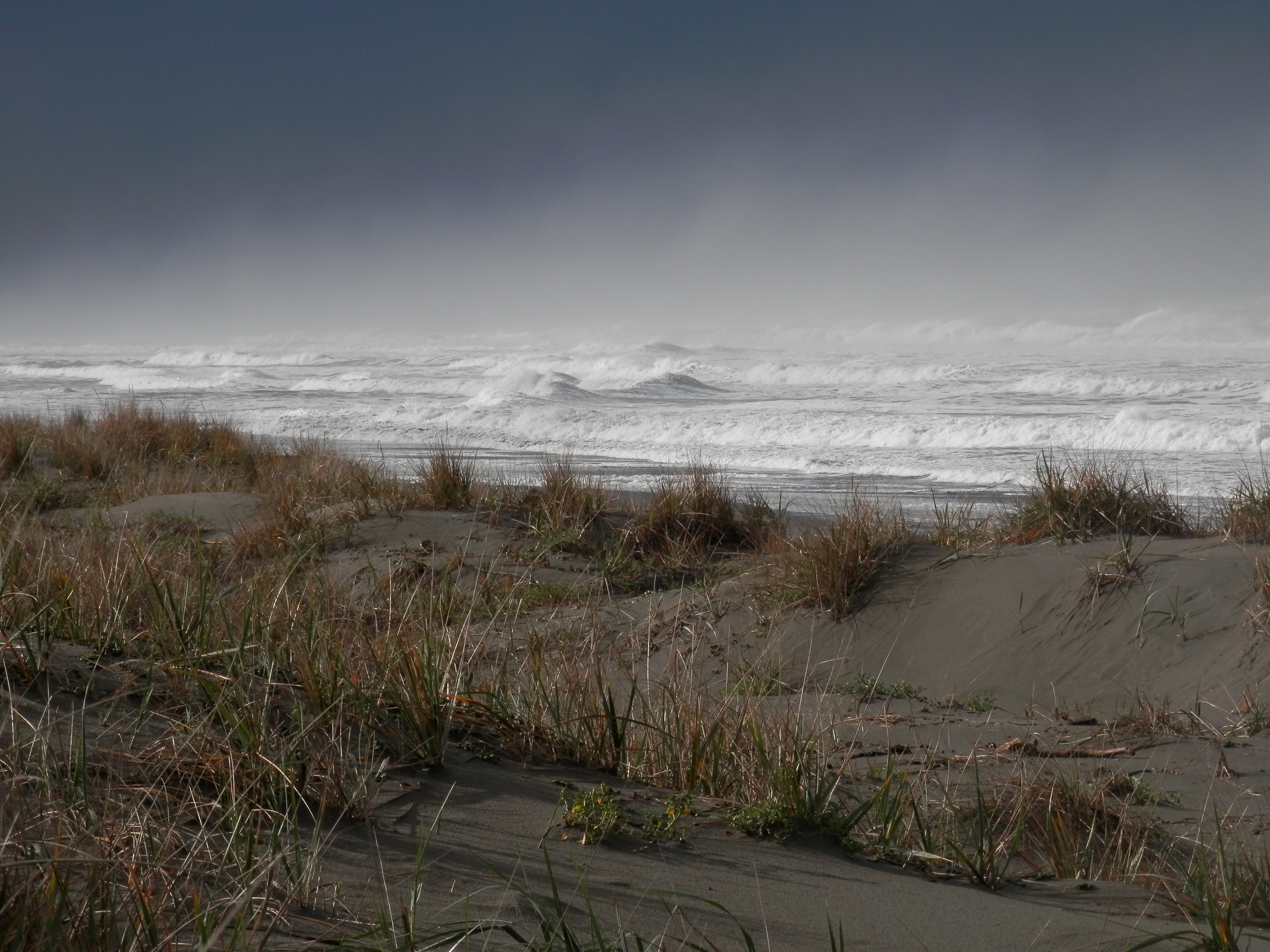
    Well, winter is most definitely here. Rain, hail, snow, strong winds and waves nearing 30 feet shook the Humboldt County coastline this week.

    Source: Eureka NOAA

    The National Oceanic and Atmospheric Administration (NOAA) has issued several hazard warnings throughout the week, such as a hazardous seas warning, a winter storm warning for Northern Trinity County and winter weather advisory in Eastern Trinity County.

    The entrance to Humboldt Bay was closed to any and all inbound and outbound vessels due to the high surf on Jan. 18. It opened the following morning, according to the Humboldt County Office of Emergency Services.


    (Tweet: Humboldt County Office of Emergency Services)

    ******

    “The ocean is the earth’s largest wilderness, but it’s clearly more wild here in Humboldt,” ecological restoration student at HSU Gabe Roletti said.

    The Humboldt County coastline and much of the Pacific Northwest are lined with trees and steep beaches, unlike Southern California’s gentle, broad beaches. The average water temperatures here in Humboldt are also much cooler.

    “SoCal is mellow and a little underwhelming,” Southern California native and HSU environmental science student Mike Leone said. He said that in Humboldt, he feels “more surrounded by crazy elements of nature like the big waves and wind.”

    Despite cold, unforgiving conditions, to go or not to go is not the question for some outdoor enthusiasts, but rather to, “Go big or go home,” local resident and surfer Greg Masessa said.

    Jokes aside, Masessa said that in reality, he really doesn’t put much thought into surfing behemoth waves. He just surfs, because it makes him happy.

    In order to practice reasonable precaution during swells like these, Masessa said that he surveys the conditions before going out and will often surf in a more sheltered area, such as a protected cove.

    ******

    A small craft advisory is in effect through late tonight, according to NOAA. A gale warning is in effect from late tonight through Saturday morning. We should be seeing hazardous seas throughout the week.

    Therefore, it’s especially important for all beachgoers to remain vigilant and practice caution when in or near large surf. In addition, beachgoers should always remain aware of sneaker waves.

    View the graphic below for basic information on sneaker wave safety:

    Source: NOAA. Illustration by Michelle Meyers.

  • Surfing giants in Humboldt

    Surfing giants in Humboldt

    Waves upwards of 20 feet tossed and turned against the Humboldt coastline this week.

    According to the National Weather Service Marine Forecast, a small craft advisory is also in effect until Sunday afternoon. While the first big swells of the season are already arriving, the winter swell season has merely just begun.

    With more swells and even bigger waves on the way this season, it begs the question:

    How do such massive waves come to be?

    According to the National Oceanic and Atmospheric Administration (NOAA), water does not actually travel in waves. Waves are merely the transfer of energy, moving from one neighboring water molecule to the next.

    The NOAA says that waves are most commonly generated by wind. Wind-driven waves, or surface waves, start out when changes in temperature produce a change in air pressure. Air then follows its natural path, moving from an area of high pressure to an area of low pressure. This movement is referred to as wind.

    As the wind blows across the ocean’s surface, it generates ripples. This happens in a similar way to how ripples are created when you blow over the surface of a cup of water. These ripples increase in intensity to eventually become waves.

    What determines the size of a wave?

    The NOAA says that the size of these waves are determined by three main factors:

    Wind Speed: How fast the wind is blowing.

    Wind Duration: How long the wind blows.

    Fetch: Distance over water that the wind blows in a single direction.

    The biggest waves occur when wind speed is at its highest, wind duration is at its longest and when fetch is long or unlimited.

    There are several other factors that can affect wave size in a certain area, some of those factors include:

    Swell Direction: The direction in which the swell originated from.

    Ocean Floor Topography: Forms or physical features on the ocean floor.

    Tide: Rising and falling tides are caused by a gravitational attraction between the earth, moon and the sun.

    Why are these big waves in Humboldt?

    “It is because the storms that come out of the North Pacific are incredibly powerful,” said Dr. Jeffry Borgeld, Oceanography professor at HSU who specializes in Geological Oceanography. These storms “can be as energetic as a tropical storm, typhoon or a hurricane.”

    Despite the cold, powerful and often unforgiving conditions, there are a few individuals that can be seen bobbing amidst the chaos and gliding over the massive surf.

    HSU psychology student William Doudna is one of them.

    “There’s something very cleansing about surfing that if i don’t do it, i just don’t feel comfortable in my own skin,” said Doudna. “I feel like a better person every time I come out of the water.”

    Video by Michelle Meyers.