The Lumberjack


Students Serving The Cal Poly Humboldt Campus and Community Since 1929

Tag: Online Classes

  • Symptomatic and want to teach online? Steer clear of Cal Poly Humboldt

    by Liam Gywnn

    Dr. Christopher Aberson came into contact with COVID-19 the weekend before he was supposed to teach. He requested the school let him teach over zoom and his request was denied. The school would not let him switch his modality despite the Omicron surge and the numerous COVID-19 cases reported on campus.

    “I was told I was not authorized to change modality. After several emails, clarification came that I could not move online. I have symptoms. I am well enough to teach. Not allowed to,” said Dr. Aberson.

    Dr. Aberson is the Professor of Psychology at Cal Poly Humboldt and came into contact with the virus after one of his son’s friends tested positive. He claims that this issue is larger than his individual case.

    “My issue with the surge has and continues to be that faculty who agreed to teach in person are not being allowed to change to online. Faculty agreed to teach in person at times when it seemed we had gotten over the hump and were headed toward a better situation,” said Dr. Aberson in an email, he continued. “In both the fall and spring semesters, as I understand it, most requests to change to online were denied. Both semesters began during surges.”

    Dr. Aberson has been outspoken about a number of issues on campus and believes that could be playing into why he wasn’t allowed to teach online.

    “I have been outspoken about under-compensation of chair duties — it is a full-time job but during the summer and other off times, we are grossly under-compensated for our time. Also, campus safety and working conditions during both the delta and omicron surges,” said Dr. Aberson.

    The California Faculty Association (CFA) negotiated a Memorandum of Understanding (MOU) with campus administration regarding teaching during COVID-19. The document was signed by CFA and Cal Poly Humboldt management. Dr. Aberson presented a passage from the MOU that explicitly supports his position.

    “During the time that an employee may be waiting for an appointment or for testing results every effort should be made for them to be able to work remotely,” states the MOU.

    Prior to Dr. Aberson’s situation, the CFA had already made an official statement addressing the administration and their lack of leniency.

    “No faculty member should be forced to work in conditions that put themselves or their loved ones at risk, especially when there are alternatives,” states a press release provided by the CFA.

    CFA Humboldt president Loren Cannon still supports this idea and thinks the administration needs to be more flexible in situations like Dr. Aberson’s.

    “We have urged that Administration approve all such requests for temporary, or sometimes permanent change in modality,” said Cannon.

    Cannon acknowledges that for some cases transitioning to online can be difficult, however for many other classes transitioning online for a week or two is relatively easy.

    “I believe that at this time, as we still are not ‘in the clear’ of this incredible health crisis, we need to trust each other and make decisions that recognize the complexity of individual context,” said Cannon.

    Leadership has yet to make an official statement regarding the MOU breach and has also failed to respond to our request for an interview.

  • New schedule for spring semester classes

    A look at the spring semester schedule for online and in-person classes

    On Nov. 2, Humboldt State University informed the student body on how classes were going to be conducted in the spring 2021 semester. Classes will start online and move in-person up until spring break, where classes will switch back to online for two weeks before going back to in-person for the rest of the year.

    HSU Provost Jenn Capps says this is essentially the same type of schedule as last year.

    “We landed at probably the same amount of face-to-face time for students, but what we did is that there is probably more hybrid courses that have a little face-to-face component versus more limited full face-to-face classes,” said Capps.

    The biggest challenge was working around spring break in the middle of the semester and planning for the return of students from the break.

    “Folks are gonna wanna go home for spring break and come back and how do we have safe reentry back to campus,” said Capps.

    A question was brought about possible moving spring break to a different time or completely removing it and ending a week early.

    “So I did actually take that question to Senate and to Associated Students and asked their perspective, as well as faculty and staff,” said Capps. “That feedback informed that we should not move it, that we should just leave it where it was. Maybe the only consensus was, please don’t take our spring break away, which I totally understand.”

    Students were uncertain about the schedule but enjoyed some of the safety aspects factored into the decision to start online. Kyra Cherry, a biology major at HSU, is one of those students who appreciated the safety precaution.

    “I think that in the beginning having virtual instruction only, is pretty good especially since we don’t know where everyone is coming from, who all they’ve been around,” said Cherry. “So, I think that’s important.”

    After spring break, the on and off switching between virtual and in-person instruction forces students to adjust for two weeks and switch again.

    “I also think that it’s a pretty decent window of time before the face-to-face instruction,” Cherry said. “But I think that after that, since it starts switching back and forth between virtual and face-to-face, that’s kind of an issue with scheduling with certain students.”

    For Cherry, changes in class schedules as a result of switching between face-to-face and virtual threw off her personal schedule.

    “I had a class where some unfortunate things happened and the course got switched up quite a bit and I had to reevaluate what I was doing for my class, cause I already had my weekly schedule of when I would do what for each class set,” said Cherry.

    Environmental studies major, August Andrews, prefers face-to-face learning and an in-person, social environment.

    “To be honest, I prefer in-person stuff. It’s just the connections you can make and the learning style,” said Andrews. “Personally I’m managing with online classes, they’re not terrible, but at the same time it’s not nearly as preferable in my opinion to in person classes or even some kind of hybrid class.”

    He does have concerns regarding COVID-19 and how it would fare in the winter months.

    “The only concern I share is that, at least from what we know from the Coronavirus that it thrives more in the winter months, but other than that I’m actually really excited about [the schedule] and I do miss the partial face-to-face classes,” said Andrews.

    There are university policies set to catch COVID-19 cases early when students return for the spring semester.

    “Students living on-campus will be required to be tested and students residing off-campus will be encouraged to seek testing if they are returning to Humboldt county for spring (from home that was outside of the county) or if they fail their self-wellness check,” said Capps in an email.

    Capps is very happy with how students have stepped up during this semester and continued to wear masks and socially distance.

    “I’m really proud of how we did and hats go off to our students and our faculty and our staff,” said Capps.

  • Students contemplate not returning for spring semester

    Students contemplate not returning for spring semester

    HSU exclusively reverts back to online instruction on Nov. 9 and students aren’t happy

    As Humboldt State University transitions back to exclusively utilizing online instruction starting Nov. 9, students return home for the holiday season. Traveling students are faced with the difficult decision to return to campus for the spring semester.

    Diego Celis is a cellular molecular biology major with two semesters left until graduation. Celis has off-campus housing and a kitchen job in Humboldt. He expects to return for next semester after spending the holidays with family.

    “I think my biggest incentive [to come back] is definitely just to have my freedom up here,” Celis said. “I do have family back home, but I can’t move back home because I have a dog and my family is all split up, so there’s not really anywhere that I can move back to.”

    Online instruction had a significant impact on Celis’ education which reflected most prominently in his grades. He felt online learning created a disconnect between lecturers, students and information retention.

    “I hate it. I hate it so much,” Celis said. “It’s not immersive. It’s pretty disconnected. They’re just sending you information and your absorbing it all as best you can, kind of teaching yourself.”

    Judith Escobar, a zoology major, originally decided to come to HSU because of its positive reputation regarding hands-on learning. Escobar has found online learning especially obstructive to her education and lab work.

    “I can’t really learn how to work with the tools and the instruments correctly,” Escobar said. “Right now, for chemistry and biology I’m just looking at my professors doing the lab and it doesn’t really do me any justice.”

    Diego Naranjo, freshman at HSU, lives in the dorms. Naranjo feels the greatest impact from online learning on the lack of social interaction with classmates.

    “Online has been pretty tough,” Naranjo said. “I think socially, I kind of depend on going in class and having a different setting, so that’s been really difficult.”

    Without any in-person classes this semester, Naranjo feels disappointed in the college experience currently offered by HSU.

    “I kind of thought there would still be activities that are encouraged,” Naranjo said. “I just wish there was more stuff going on.”

    Despite the experience falling short of Naranjo’s expectations, the times he spends mingling with like-minded learners, makes him grateful he choose to come to Humboldt.

    “My head space has changed and my mentality towards school has changed a lot,” Naranjo said. “Being up here has definitely changed my perspective on a lot of stuff that I don’t think I would’ve had, had I stayed in my hometown.”

    Naranjo plans to return to Humboldt in the spring, after heading home for the holidays.

    “[Learning online] really taught me how valuable in-person stuff is and human connection is,” Naranjo said. “I don’t think this is gonna end any time soon, so I just hope that the school gets better at moving with it, rather than kind of waiting it out for things to go back to normal, which it seems like is happening right now.”

  • COVID-19 hits student parents with a hurricane of obligation

    COVID-19 hits student parents with a hurricane of obligation

    Humboldt State students with children carry the weight of multiple educations this semester

    Carrie Tully is a single mother in the graduate program at Humboldt State University. Having completed all of her course work in the spring, Tully holds down two jobs and assists in her daughter’s education while completing her own graduate thesis.

    “I haven’t been doing very much thesis work at all,” Tully said. “Things are really not going as according to what I thought my plan was gonna be when I entered grad-school.”

    Tully’s daughter attended preschool last year through HSU’s Children Center. This year, she’s attending Fuente Nueva Charter School where all of her instruction is online.

    “It’s hard for her, it’s hard for me, of course. Children her age need socialization and that’s mainly what they are supposed to be doing in school right now,” Tully said. “It’s really nearly impossible for them to do that via Zoom.”

    Beyond her daughter’s quality of education, Tully is stressed about her daughter’s emotional education suffering.

    “I don’t have the financial or mental ability to be able to be 100 percent present for her all the time,” Tully said. “That’s the hardest part. She needs attention, I need space to do good work and it clashes.”

    Between Tully’s two jobs, her thesis project and playing a leadership role in HSU’s food sovereignty lab project, she spends the majority of her day in Zoom meetings. After a full day, Tully has little energy to give her daughter and she is usually greeted with an explosion of a mess.

    “Cars, toys, cards, books, stuffed animals everywhere,” Tully said. “That’s when parents have mini panic attacks. Like, I’ve been on Zoom all day long and I just need to take a break and sit down but I can’t because my couch is covered in stuff.”

    Tully said the lack of personal space in constantly being around each other also proves challenging at times.

    “Just like any relationship,” Tully said. “You need to be able to be apart in order to really appreciate that love.”

    Between managing work and her daughter’s progress in school, Tully has had to sacrifice a great deal of time she originally planned to spend on her thesis.

    “To me, the most important thing that I need to be focused on right now is my child’s education,” Tully said. “Because I’m in my mid thirties and I have my education. I have my career things that I’m working on. I can go with the flow.”

    Carrie Tully’s daughter Kallie Gregg attends kindergarten virtually from her room this semester. | Photo by Carrie Tully

    Sayde Mendes is a business major and mother of three children, ages 2, 9, and 11. Thanks to the transition to online classes, on top of parenting responsibilities and pursuing her own education, Mendes has to provide an education for her children.

    “No matter how much teachers try and how much they do,” Mendes said. “There’s still quite a hefty reliance upon parents.”

    In her senior year of high school, Mendes was date raped and suffered a brain injury when she was rehydrated too rapidly at the hospital. The injury caused her to lose control of her motor skills and forced her to relearn all functions virtually. Mendes also suffers an intellectual disability, impairing her power to both pursue her own education and her childrens’.

    Mendes’ husband spends the majority of his waking hours at work, leaving her with little time and energy to complete her own responsibilities like work, school and providing for her children.

    “I feel like I have to kind of push them away sometimes, because I need to be present for my class,” Mendes said.

    While HSU only offers tutoring to students and not their children, the Childcare Center continues offering its services to student parents five days a week at approximately 50 percent capacity to meet COVID-19 protocols.

    Grants are available to students whose incomes qualify for reduced or no cost for childcare, through California’s Early Head Start program.

    According to Director Steve St. Onge, the most challenging part of operating during the pandemic is keeping the children in line with regulations.

    “I gotta tell you, having a 2 and 3 year old wear masks is not easy,” Onge said.

    Onge’s daughter attends kindergarten two days a week for two hours, leaving him as the majority role in his child’s education this year.

    “I think I would speak for many of us parents of children in school that are also working,” Onge said. “Our days start earlier and end later. We’re still getting the job done, it’s just taking us a lot longer to do it.”

  • COVID-19 Cancels Fall 2020 Face-to-Face Instruction

    COVID-19 Cancels Fall 2020 Face-to-Face Instruction

    Face-to-face instruction for Humboldt State’s fall 2020 semester has been canceled due to COVID-19. California State University Chancellor Timothy White announced Tues. May 12 that instruction will primarily be offered online. A virtual plan is expected to be implemented into the entire CSU system as the possibility of a second COVID-19 wave of cases is predicted.

    “Our planning approach will result in CSU courses primarily being delivered virtually for the fall 2020 term,” Chancellor White writes in a CSU press release. “With limited exceptions for in-person teaching, learning and research activities that cannot be delivered virtually, are indispensable to the university’s core mission and can be conducted within rigorous standards of safety and welfare.”

    Academics that can not make the direct translation to an online format, such as artistry and laboratory classes, will be conducted through a hybrid approach which limits in-person contact as much as possible and continues to emphasize online instruction. 

    HSU, along with other CSU systems, are subjected to differing class standards based on the level of necessity placed behind face-to-face instruction. The fall semester is projected to primarily remain online, however, updates and further information will be announced later in the week.

  • KRFH Survives the COVID-19 Shutdown

    KRFH Survives the COVID-19 Shutdown

    The Student-Run Radio Programs Remain on Air

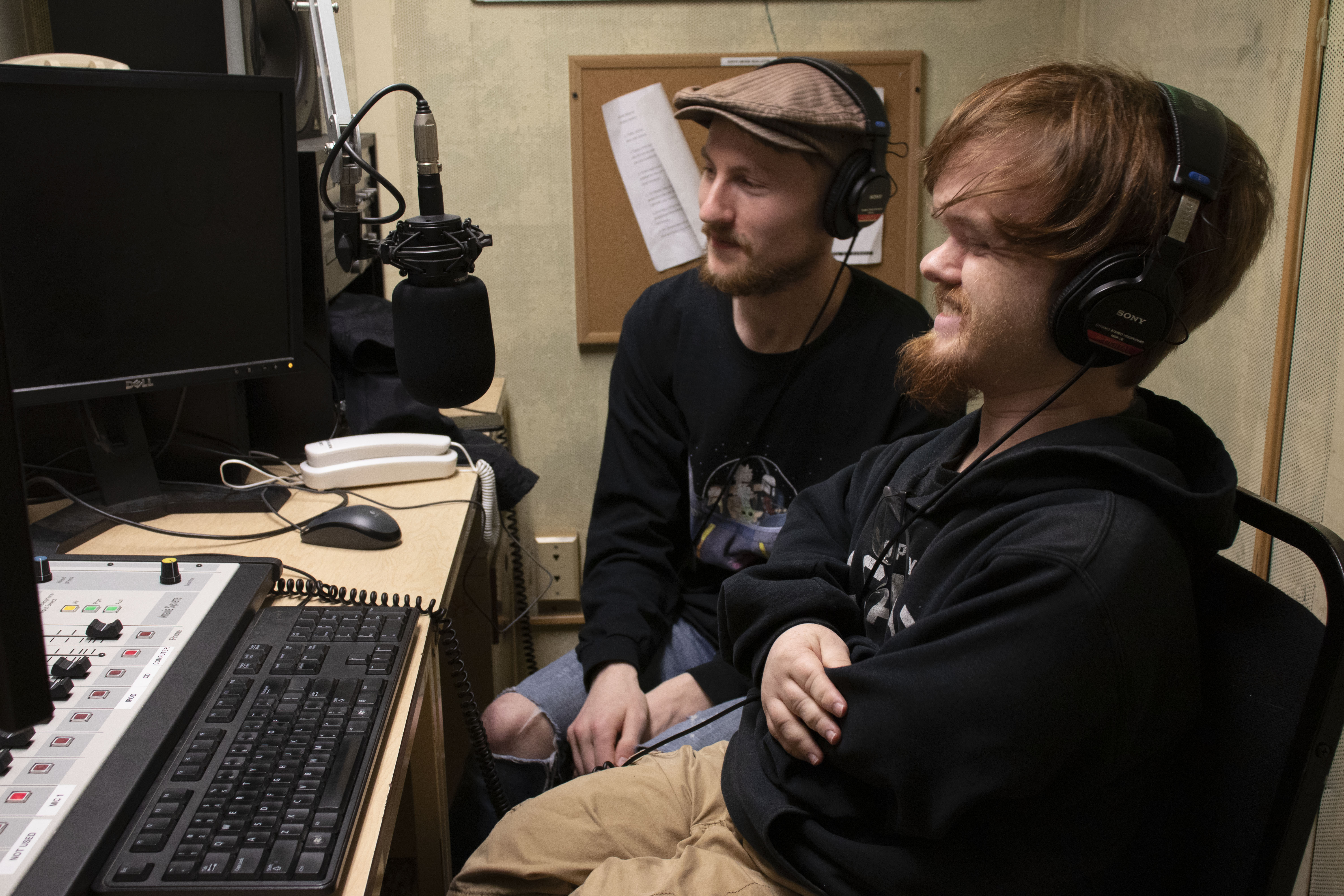
    Despite in-person instruction coming to a halt in the wake of COVID-19, student-run radio shows are still an option for KRFH students. For students not interested in going to great lengths to produce a weekly show, there is an alternative.

    When Humboldt State University first transitioned to online instruction following spring-break, KRFH students were given the option to continue doing shows, as long as they comply with strict CDC regulations. This includes leaving three-hour gaps between shows, having only one student in the booth at a time and wiping down everything inside the booth before and after shows.

    The new protocol lasted less than two full weeks before students were no longer allowed back in the booth. Instead, they were given the option to pre-record shows.

    Ayrton Flaherty has a show with Debate Team coach, Aaron Donaldson, called “Debate and the News.” It was the first show at HSU to utilize Zoom while broadcasting live over the air-waves having Donaldson contribute from the safety of his home and Flaherty sit in the booth for their final live shows of the semester.

    “It’s hard to do radio if you’re not in the station,” Flaherty said. “I guess cause we do a talk show, we’re able to get away with that. Because, rather than having music and occasionally talking, it’s talking and occasionally having music for us.”

    Flaherty has found pre-recorded shows to be far more forgiving, with options to edit and re-take segments. However, they have created hours of post-production time that wouldn’t exist with live shows, in addition to hours they spend on pre-production. But, both Flaherty and Donaldson believe their show is worth the effort.

    “I think all the DJs feel a little bit of a responsibility to stay involved, because otherwise there’s the chance that KRFH could get shut down if people aren’t showing interest.”

    Shelley Magallanes

    “This education is as important as ever,” Donaldson said. “The resources, as always, are very vulnerable and threatened, and students should get involved if they think it’s important.”

    Shelley Magallanes hosts multiple shows on KRFH and they completely agree with Donaldson. Magallanes only intends to attend the class if it’s offered in-person next semester, although, they still might sign up if the program is in danger.

    “I think all the DJs feel a little bit of a responsibility to stay involved, because otherwise there’s the chance that KRFH could get shut down if people aren’t showing interest,” Magallanes said.

    They don’t think the course should be offered next semester if students can’t meet in person, unless that would put the future of the program in jeopardy.

    “If we’re just doing it the way we’re doing it right now,” Magallanes said. “Then the main reason to hold onto the class is just to ensure that later semesters, it still gets put on.”

    Anwaar-Khabir Muhammad is in his first semester with the radio and based on his experience, he doesn’t think the course should be offered next semester unless classes resume in-person and on campus.

    “The radio station in and of itself is the learning experience,” Muhammad said. “I understand trying to maintain a sense of familiarity, but if that maintenance comes at the expense of the student’s overall learning experience, don’t do it!”

    Alice Peterson won best show at KRFH last year with her program, “Ear Hugs.” The program mixes lighthearted discussion with relaxing tunes.

    “Sending out your part and being a storyteller and providing that comfort and that service,” Peterson said. “It just makes you feel good.”

    Since live shows have been taken away, Peterson forgets to attend her Zoom classes and turn in her alternative assignments, which are a five-minute weekly update that are aired on KRFH of students describing how they are navigating their lives through these stressful times.

    “I kept forgetting to do my recording,” Peterson said. “Which was weird for me, because with the radio shows I never missed a show.”

    As a result of missing classes, Peterson was unaware of the option to produce pre-recorded shows. As a senior without a graduation, she takes solace in the fact that she can at least put on a final show.

    With administration still waiting to make an official decision about how classes will be conducted next semester, the future of KRFH remains uncertain and at risk.

  • Students Struggle to Stay Motivated

    Students Struggle to Stay Motivated

    COVID-19 rages through US as students struggle with online schoolwork

    Humboldt State University transitioned to online instruction for the rest of the semester on March 26. Since then, some students have had a hard time staying focused and motivated in online classes.

    Deana Lopez, a third-year zoology major at HSU, admitted that this hasn’t been an easy transition.

    “I feel overwhelmed with the amount of emails professors and instructors are sending, and everything seems all over the place,” Lopez said. “I have been neglecting my school work so much that I forget that I still have classes. I’ve missed quizzes and assignments already because it’s so easy to forget that I have to do them without a professor reminding me.”

    Third-year psychology major Madeline Baker said she was having a tough time staying motivated without face-to-face instruction.

    “Not being able to have classes in person further discourages me,” Baker said. “Holding classes through Zoom has been easier for me in contrast to pre-recorded lectures, but they still aren’t the same. Not having that in-person connection alters the learning environment in a way that makes me feel disconnected from my overall learning experience.”

    Not only are students dealing with the move from face-to-face instruction to online classes, but they also have to manage the stress of living in a pandemic. With many students moving back home, there’s added family stress as well.

    Not only do I feel like my beginning of therapy has been interrupted, but the full college experience for this semester.”

    Madeline Baker

    Lopez was feeling pressure from school alongside tension from life in general.

    “I know I can find the motivation, but everything is hectic at the moment,” Lopez said. “My grandma recently passed away so there was that on top of the COVID-19 situation, and a lot of family problems have occurred as well. I’m trying to get myself and my surroundings organized before I can actually put all of my focus into school.”

    No matter how good a job professors are doing, online education doesn’t appear to be the same. For the students, it’s not just the classes they feel they’re missing out on, but the whole college experience.

    Meanwhile, the state of the world may be taking a toll on student mental health.

    “The resource I would like to use most right now is CAPS,” Baker said. “Before all of this happened, I finally decided to go in and begin appointments, something I feel like I’ve needed to do for a while now. I feel like that has now been interrupted for me. I had a private safe space provided to speak with someone and learn to cope with things. Given my current housing situation, I do not have a private enough space in which I would feel comfortable confiding in someone and work through my personal feelings and issues over the phone or video. Not only do I feel like my beginning of therapy has been interrupted, but the full college experience for this semester.”

    Many students are also dissatisfied about paying full-price tuition for resources they won’t be able to access for the rest of the semester.

    Kayla Rodenburg, a third-year English major, thinks the tuition price doesn’t add up with all classes now online.

    “I do feel like the tuition price is too high for online classes,” Rodenburg said. “Online university is dirt cheap and we are paying CSU prices for that which is kinda ridiculous in my opinion. I’m pretty sure many parts of our tuition fund things on campus that we now don’t have access to, so I hope some type of refund happens, even though it’s kind of a stretch.”

  • Tuition Refund Petition Reflects Student Experience

    Tuition Refund Petition Reflects Student Experience

    With labs, classrooms and most facilities on campus closed, what is being done with student tuition?

    After Humboldt State University canceled in-person classes three weeks ago, students created a change.org petition calling for a reimbursement of tuition. With 2,000 students and supporters rallying behind it, perhaps HSU will bring their concerns into the conversation. Regardless of the administration’s acknowledgement, or lack thereof, HSU students are and will be experiencing a drop in the quality of their education.

    As a journalism major, our classes haven’t been heavily impacted, but our access to the university spaces we all pay for is not as integral as for majors like art, dance, theatre and lab sciences.

    Bryan Gambrel, a kinesiology major at HSU, said the switch to online labs has affected his motivation to learn the material. With an inability to use the lab spaces, the only way to show comprehension of the reading material is through quizzes.

    “My difficult class has become now something that’s based off of reading rather than three hours of experimenting in a lab,” Gambrel said. “I’m not even sure how they can credit it for your GE.”

    Lindsey Miller, an HSU freshman, signed the petition. She is a part of the environmental resources department and is taking a chemistry lab course this semester. With the switch to online classes, lessons consist of videos of the professor completing the experiment. She felt like this semester’s labs were a little more challenging than her first semester.

    “Without having that hands-on experience in the lab, I don’t know when people are gonna learn it again.”

    Raili Makela

    “I was only kinda picking up on it before spring break,” Miller said.

    Raili Makela is a fourth year marine biology major at HSU. This semester she had signed up for two labs and two lectures that have now been transitioned into online courses. Makela noticed the switch to online labs has made understanding the concepts more difficult.

    “It’s because of that hands-on learning that I really start to understand the other material,” Makela said.

    While she has learned a lot from her earlier labs and can work from that knowledge, she is worried about how those getting their first lab experience will be impacted.

    “Without having that hands-on experience in the lab, I don’t know when people are gonna learn it again,” Makela said.

    The situation we are in is reasonable. There isn’t another option that would keep our students, staff and faculty as safe as the current measures we have in place, but it is our money that’s no longer being spent to keep the doors open. Our tuition is not a goodwill donation. It is an exchange for the resources provided by the institution, and if those resources are not being provided, then we are getting shortchanged on our education.

  • Student Athletes Suffer Amid COVID-19 Cancellations

    Student Athletes Suffer Amid COVID-19 Cancellations

    HSU student athletes share grief at abrupt endings

    Humboldt State University and the California Collegiate Athletic Association canceled sports for the spring semester back in March due to COVID-19. Student athletes have been left to deal with the aftermath.

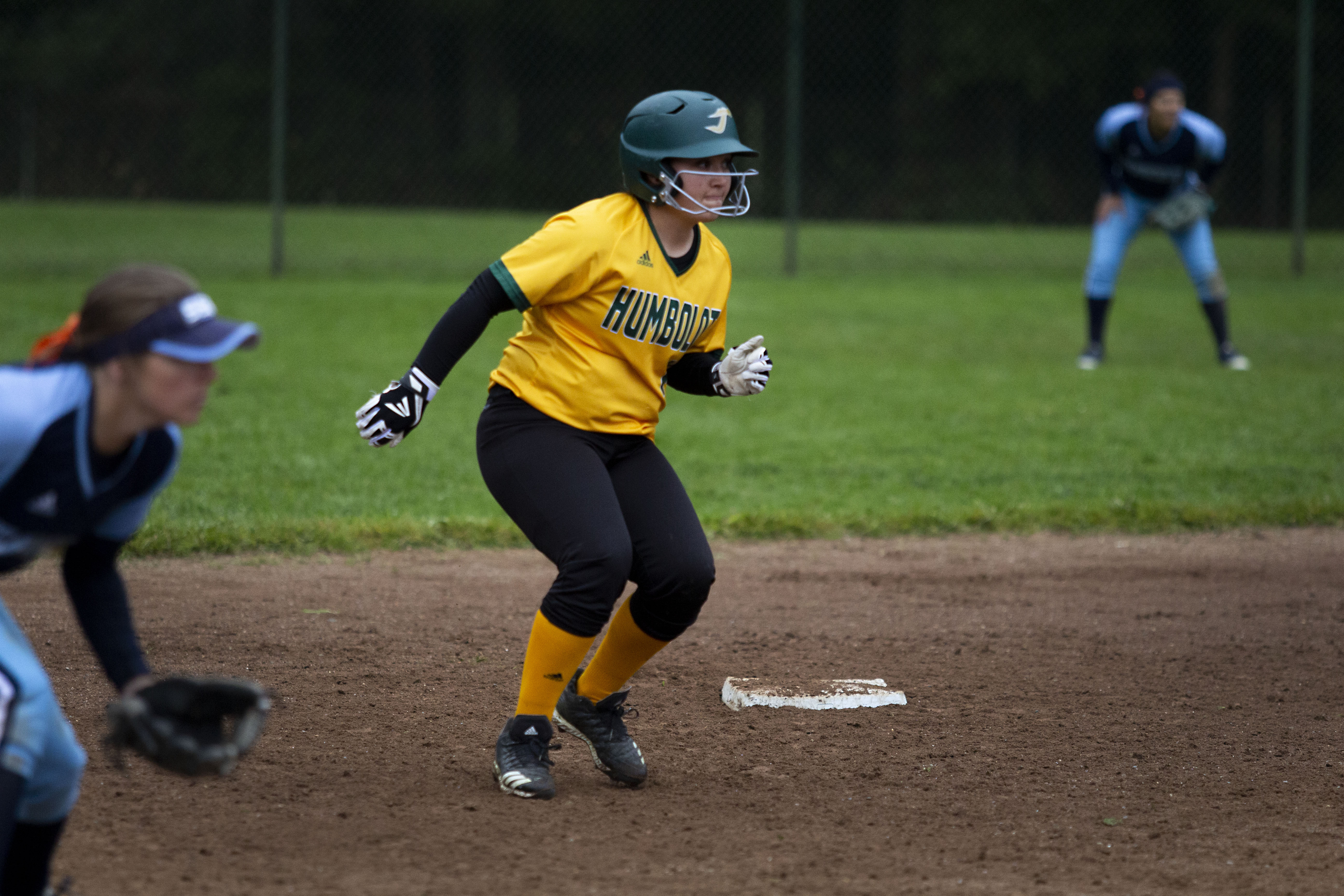
    Mariah Kalamaras is a graduating senior and a member of the HSU softball team. The softball season came to an end less than halfway through.

    “This was my last season playing a sport that I truly love, and to have it cut short so abruptly is devastating,” Kalamaras said. “I felt like the world was ending.”

    Following the NCAA’s decision to cancel winter and spring championships, the current sports landscape has been flat, with professional sports also forced to come to a halt. Fortunately for spring athletes, the NCAA will be granting eligibility relief, provided students remain enrolled while participating in athletics.

    Sydney Oliver is a senior and captain of the HSU club cheer team. Although the basketball season had already wrapped, the cheer club would have continued to meet for practice through the end of the academic year.

    “I have dreamt of walking across that graduation stage since I was a little kid.”

    Sydney Oliver

    “It’s kind of sad that I can’t see my teammates and help influence them to do better, as well for them to push me,” Oliver said. “Because we did a lot of working out together.”

    Senior athletes were in for another disappointment when HSU also canceled the 2020 commencement ceremony. Kalamaras said she felt like she’s missing out on a rite of passage.

    “I have dreamt of walking across that graduation stage since I was a little kid,” Kalamaras said. “To hear the song, wear the gown, to hear your name and to hold that diploma high into the air and say, ‘I did it! I made it.’ It makes all the sleepless nights, all the hard work on the long road trips, all the class time, and all the stress worth it.”

    The shutdown has also had significant impacts on the daily lives of student athletes. Students have gone without school and sports—and work, for some—but they’re also encouraged to avoid gathering with friends to comply with social distancing.

    “Now that it’s not an option to see them, it’s kinda like you wanna see them,” Oliver said. “As opposed to when it was an option and you could see them anytime, and you’re like, ‘Oh, I’ll see them tomorrow.’”

    “Since all of the classes are online, it’s basically on us, the students.”

    Gabrys Sadaunykas

    Students are also now forced to finish their semesters online. As a kinesiology major, Oliver wasn’t stressing the change.

    “I like my subject, so it’s not hard for me to still be passionate about it,” Oliver said.

    Other students are less enthusiastic about the shift online. Gabrys Sadaunykas is an international student from Lithuania and a basketball player at HSU.

    “Since all of the classes are online, it’s basically on us, the students,” Sadaunykas said.

    Although Sadaunykas’ season was already finished, he’s stuck here until the end of May.

    “Of course, it’s hard, because all of my friends are back with their families and I’m here by myself basically,” Sadaunykas said. “But it’s a nice place. I like Humboldt—it’s got a lot of nature.”

    Not for the reasons athletes were expecting, COVID-19 has created an unforgettable 2020 spring season.

    “It has taken so much away and although I understand that this global shutdown is necessary, it doesn’t make it hurt any less,” Kalamaras said. “I won’t be able to play my sport at this high level ever again. I won’t get to walk across a stage to show the world I got my diploma. I don’t get to go out and experience all [of] this great place I have had the privilege to call home the past two years.”

  • Online Learning Isn’t for Me

    Online Learning Isn’t for Me

    Online classes don’t feel like real learning and stifle student motivation

    Spring semester has turned into one of the worst semesters of my life, and online classes aren’t helping.

    Don’t get me wrong, online classes are nice to clear up some room in your schedule for work or other classes. They are still classes and shouldn’t be forgotten. I’ve taken at least one—but no more than two—online classes per semester.

    But online classes usually have a set schedule. Something like: discussion posts due Monday, comments due Wednesday and a quiz every Friday, plus a project like an essay or media presentation due at some point in the semester. Online classes that start at the beginning of the semester allow both the professor and students to be prepared for the whole semester.

    Online classes that start in the middle of the semester? Yeah, those aren’t for me. They’re also not what I paid for.

    None of us know what is going on right now and we’re all taking it day by day, but when your professors start to panic, you start to panic. Some professors know what they’re doing and let you know everything right away, while others don’t know what to do or don’t know how to use Zoom or record online lectures.

    It took me a minute to learn how to use Zoom, and although I appreciate the service and enjoy seeing my classmates’ faces, it’s awkward. It’s just a big FaceTime where your professor is trying to make the education worth your money. And just like in an everyday classroom, not everyone talks in the Zoom sessions. Zoom sessions always seem to glitch and are mostly only useful for group discussions, critiques and presentations.

    We’ve all lost motivation, and quite frankly, it doesn’t even feel as if we’re in school anymore.

    I learn better on paper and in person. I realize a lot of work is done on computers and submitted on Canvas, but being in a classroom and taking notes while a professor is lecturing is how something sticks in my head. There are too many distractions at home that I can’t get away from that just make it even harder to learn.

    Social media tells me that a lot of people feel the same way. Even though we get to be home and work at our own pace, most of the time being at home just makes us not want to work.

    We’ve all lost motivation, and quite frankly, it doesn’t even feel as if we’re in school anymore. Having to remind myself is getting pretty annoying.

    With all of this said, I know we should probably be grateful we’re still getting some kind of education. This is my last semester of college, and although I’m not a fan of how it’s ending, I’m grateful I won’t have to take any more online classes.