The Lumberjack


Students Serving The Cal Poly Humboldt Campus and Community Since 1929

Tag: police brutality

  • It’s not just the Capitol Police

    It’s not just the Capitol Police

    As the world watched from their televisions on January 6, we witnessed scenes unfold before our eyes that were, to many, unimaginable: supporters of President Trump swarmed the steps of the U.S. Capitol Building, then proceeded to break in and advance as far as the Senate Chamber. 

    In the build up to the attack, Trump and his allies delivered speeches near the White House reaffirming his baseless claim that the election was fraudulent and that they must fight to overturn the election results.

    As rioters made their way past the barricades and through the doors, one thing was clear: at the time of the attack, there were few attempts made by police to stop the rioters. This comes as a sharp contrast to the Black Lives Matter protests that took place just this past summer, in which peaceful protestors were frequently met with violent police intervention.

    According to The Armed Conflict Location & Event Data Project that took place May 1 to November 28, 2020, Black Lives Matter protesters were significantly more peaceful than right wing groups, but law enforcement resorted to using force in 51% of Black Lives Matters demonstrations they engaged with, while only restoring to using force in 34% of right wing demonstrations they interacted with during the same period. 

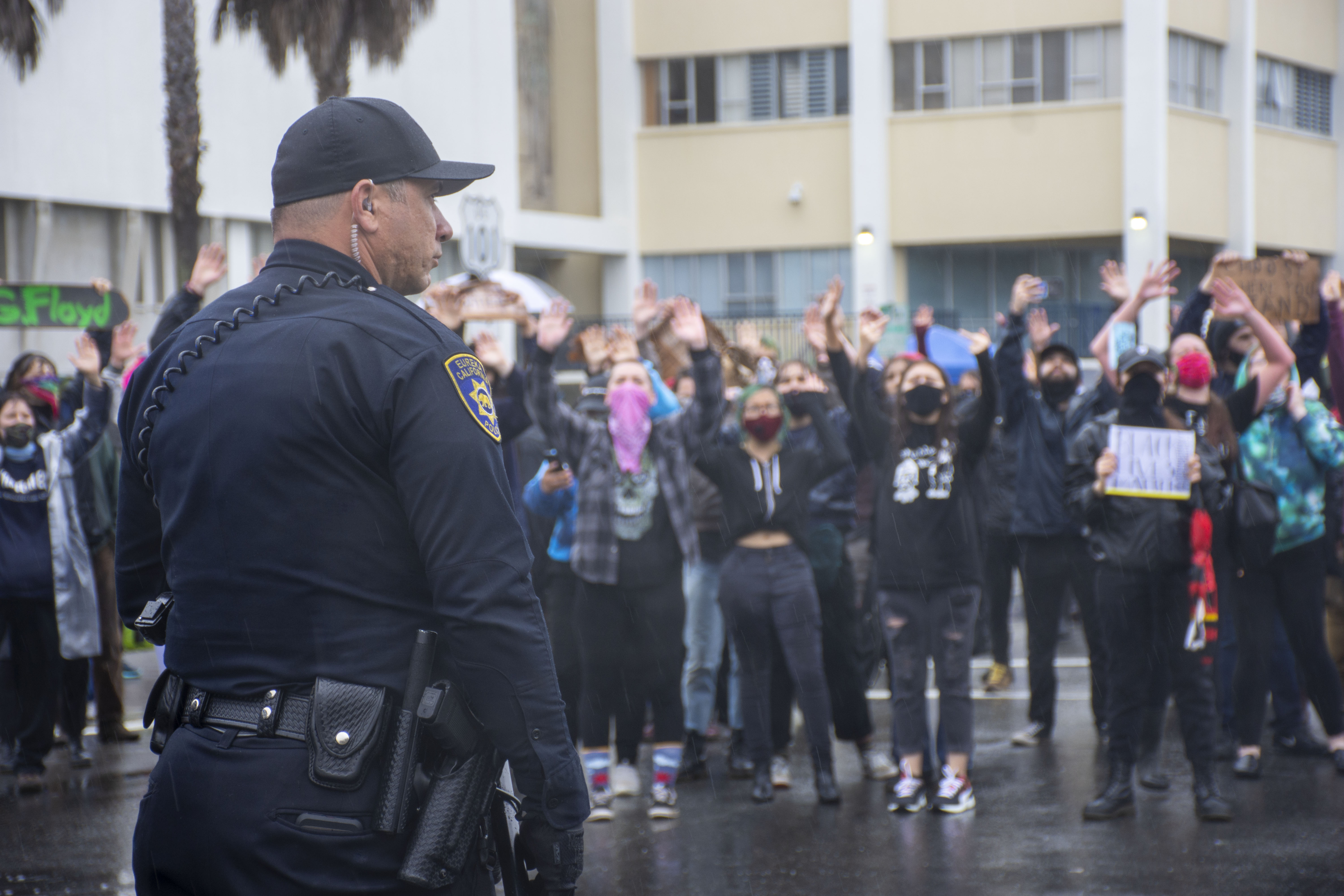
    These statistics confirm what many activists already knew. The Lumberjack has documented the Eureka Police Department using more force against protesters in Eureka this past summer than the capitol police used when an attack was made against the capitol. The police use more force against journalists documenting protests than when right wing groups raided the capitol building. 

    On January 6, it took the National Guard four hours to deploy from the D.C. Armory from the time that the mob began making their way from where Trump was speaking. In contrast, in June at the height of the Black Lives Matters protests, there were about 1,700 National Guard members from Washington D.C. alone who were mobilized to respond to the demonstrators. 

    The feeble response from authorities in Washington D.C. to the attack on the Nation’s Capital is another undeniable example of racial biases that remain alive and thriving in this country. Our police protect white domestic terrorists and continue to endanger the lives of Black protesters advocating to have their voices heard and their equality recognized. 

    It is a message to all of the activists who choose to speak out against police brutality and all the journalists who cover the efforts of activists. Even here in Humboldt County activists face police brutality for daring to ask for an end to police brutality. Meanwhile, police open the gates across the country for violent extremists. The department might be different, but the institution is the same.

    It will take a dramatic institutional change in how the country approaches law and law enforcement to begin to dismantle the structure of white supremacy. The attack on the capitol showed the world that the institutions of law in D.C. need to change, but we have the same institutions here at home. Humboldt needs to change, too.

  • HSU student journalist travels to Portland to capture Black Lives Matter Protests

    Kris Nagel captures chaotic social demonstrations with photojournalist and professor Mark Mckenna

  • How Non-Lethal are Less Lethal Weapons

    How Non-Lethal are Less Lethal Weapons

    Protestors injured by non-lethal weapons in Eureka following protests against police brutality.

    On May 31 in Eureka a protest against police injustice ended late into the night with officers using pepper-spray projectiles to assist in the arrest of an individual suspected of vandalism. An additional protestor was arrested for attempting to prevent the first arrest.

    Several protestors attempted to pull the individual out of police custody. This resulted in police firing on the rest of the crowd. Capt Brian Stevens of Eureka PD addressed the incident to the public in a video posted to Lost Coast Outpost.

    “Given the escalating circumstances and the safety risks to the officers … They began firing [pepperball projectiles] into the ground in and around the crowd trying to back the crowd off,” Stevens said.

    Sam Papavasilliou, a 22-year-old Humboldt State University student and former Lumberjack writer, was in attendance that night and was among 30 or so protestors fired on by police. Papavasiliou described how the crowd was cut off in the front and back by several police vehicles while passing by Dutch Bros on the north side of Eureka.

    Officers first addressed the crowd to tell them they would be attempting to arrest an individual suspected of vandalism. At 10:33 p.m. this attempted arrest was met with resistance from several protestors.

    “One protestor got shot in the ear with [a pepperball]. They were bleeding and they were really yelling at the officer that they didn’t do shit and they said ‘I can’t hear right now,’” Papavasiliou said.

    Pepperball rounds are amongst a large host of “non-lethal” weapons used to disperse crowds deemed riotous. Pepperball rounds are designed to explode on impact leaving a cloud of OC (oleoresin capsicum), the same ingredient used in pepper spray. It is advised that they are not aimed at the eyes, face, throat, or spine as death has occured when these inappropriate areas have been fired on.

    Rubber bullets are another method of crowd control that fall under a classification of “non-lethal” weapons known as KIPs (Kinetic Impact Projectiles) along with bean bag rounds, pellet rounds, and sponge rounds. In their assessment of “non-lethal” weapons and their safety The Physicians for Human Rights organization argues that “At close ranges, levels of lethality and patterns of injury of some KIPS become similar to those of live ammunition. At longer ranges, KIPs are inaccurate and indiscriminate. Some KIPs are lethal in close range and ineffective at longer distances which make safe use difficult.”

    The problem really comes down to KIPs being too inaccurate at longer ranges to correctly target individuals and areas of the body they are aiming for, and that the injuries sustained at close range can penetrate the skin, break bones, fracture the skull and explode the eyeball.

    Police also rely on chemical irritants (CIs) for crowd dispersal, namely tear gas and pepper spray. Pepper spray is made of a chemical derived from peppers that inflames the afflicted area on contact causing the burning sensation.

    “Officers and deputies were on scene with more or less paintball guns that shoot a paintball projectile that is filled with a powdered OC,” Stevens said.

    Symptoms after exposure to these agents include temporary blindness, respiratory inflammation, increase in heart rate and blood pressure. People with respiratory or heart conditions are at an increased risk of more serious injury or death.

    Other “non-lethal” weapons include pepper spray, bean bag rounds, tear gas and flash bangs just to name a few. When used correctly, these weapons are a less dangerous alternative to shooting people with actual guns, but mistakes in their applications can leave victims with wide ranges of injury.

  • Humboldt State Students Stand Up And Stand Out Against Racism

    Humboldt State Students Stand Up And Stand Out Against Racism

    Actions are being taken to bring about change in a country dominated by racism and police brutality

    Fueled by the Josiah Lawson case and the George Floyd murder, Humboldt State University students are taking to the internet and the streets in protest of systemic racism. Students and community members alike are actively displaying their pent-up anger and fear surrounding being marginalized.

    Kiara Mixon, a fourth-year psychology student, has been trying to educate herself and those around her about what’s going on. Namely, she has been sharing different resources with people who are unaware of the Black Lives Matter movement and watching documentaries about racism to get a deeper insight into it.

    While she hasn’t really been going out in the streets and protesting, she has still seen both sides of the movement.

    “I see people who are of color protesting and, truthfully, it means a lot that those people are standing up when it’s an issue for them as well,” Mixon said. “But I’ve also had people who aren’t really speaking up or haven’t said anything or don’t really have a personal opinion on the matter and that makes me a little bit uncomfortable because you never know where they’re standing.”

    Senior psychology major Edwin Rosales has become more outspoken and animated in the wake of the revamped BLM movement. He lives with his mother’s side of the family and has gone back and forth with them about everything going on.

    “After talking with them, it’s kind of difficult to talk to them about it because they’re very, you know, still in the olden ways and are very ignorant about it,” Rosales said. “So, I’ve had to be outspoken about it and be like ‘You know what? You’re not understanding the cause’ or having to explain to them what it is.”

    Rosales has carried his new-found, forthright persona around racism into the land of social media as well.

    “I never really posted about that stuff,” Rosales said. “I’m not helping if I don’t say anything, and so if I am posting about something, maybe someone will read it and maybe someone will help in some way.”

    Julianne Blandford is a senior majoring in child development. She is feeling a lot of mixed emotions in the midst of the string of racist events that have occurred from the George Floyd murder to the leaked video of three HSU students making racist taunts toward Black people. She is attending protests and doing everything she can to move the conversation about racism along.

    “It is my time to sit down and listen and also stand up for those who can’t speak,” Blandford said.

    Blandford recognizes her own status but also wants to work with those who are being suppressed.

    “I’m seeing it as an opportunity to continue to create change, create a more peaceful place to live, create new systems that aren’t founded upon racism, and a world where no-one has to live in fear,” Blandford said.

    “We need to redistribute resources and really build communities.”

    Dr. Ramona J.J. Bell

    Dr. Ramona J.J. Bell, a critical race and gender studies professor, believes that there are a number of factors to look at that are feeding into a racist America.

    “We’re a country where we put so much money into our military, but there’s people without health care, so we concentrate on, you know, defending the country,” Bell said. “But we have to reconfigure and reimagine what that really means to defend the country, to defend America.”

    Bell emphasized the importance of unifying communities in a country where the opposite is happening at the hands of the police.

    “We need to redistribute resources and really build communities,” Bell said. “When you are killing black folks in communities and the police are killing us, that’s not building our community — that’s killing our community. So we have to look at ways in which we can build America because our country was built off the backs of Black people, particularly during the Holocaust of enslavement.”

    Bell recognized a need for change in America when it comes to race and embraced the protests that have spawned from it.

    “We have to revisit America’s notion of belonging and we have to revisit race in America,” Bell said. “There’s never been a real conversation about race and racism in America. And I think the protests going on all over the country, all over the world are telling us something’s wrong and it needs to be fixed.”

    More than anything, Bell emphasized that we are all in this fight together, no matter the color of your skin.

    “That’s part of the fight. That’s part of the struggle to get people to understand that Black lives matter,” Bell said. “It’s about letting us be free to live lives like America has promised.”

  • Protests Occur in Arcata After George Floyd’s Murder

    Protests Occur in Arcata After George Floyd’s Murder

    Protesters gathered at Arcata City Hall and the plaza to speak out against police brutality and racism

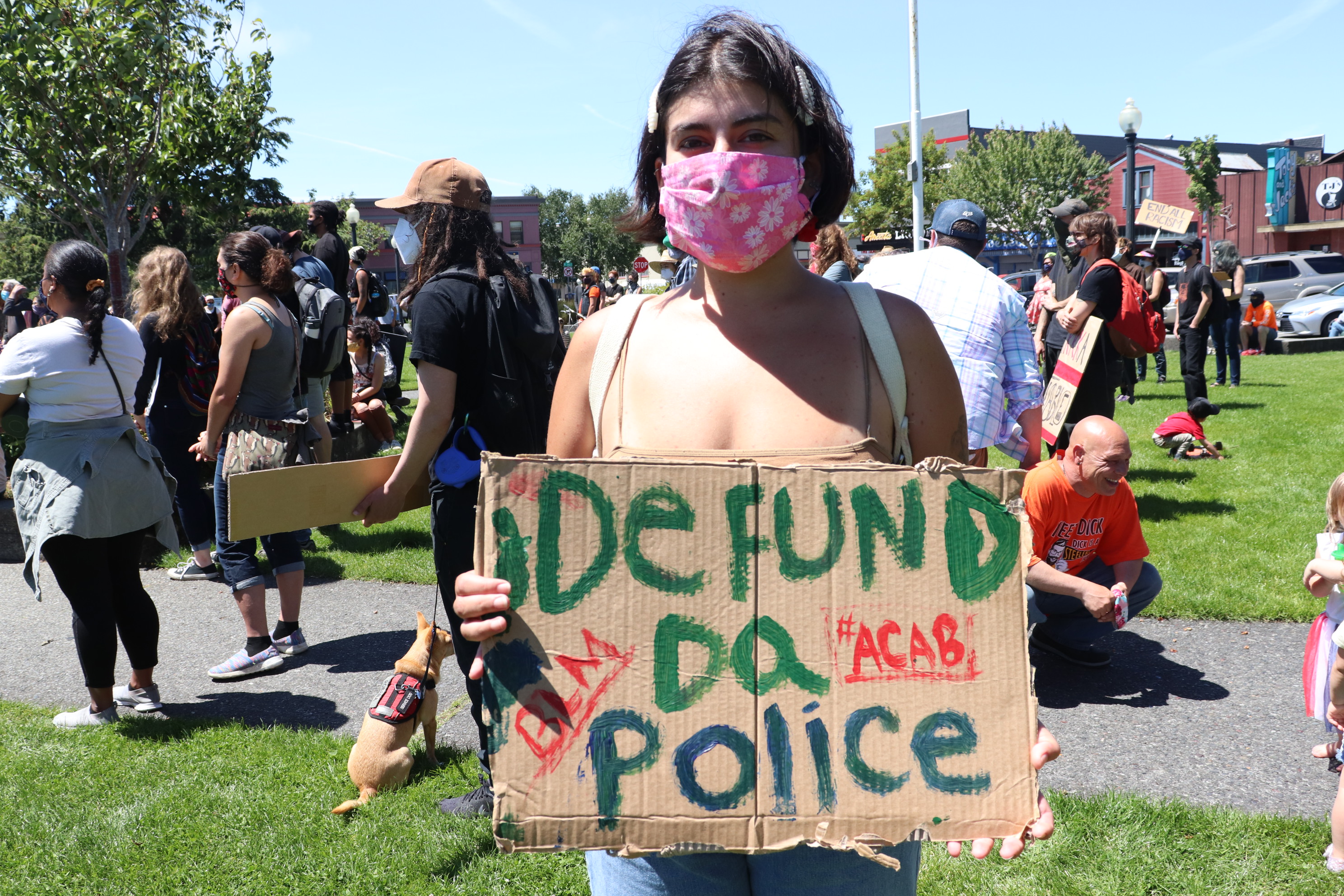
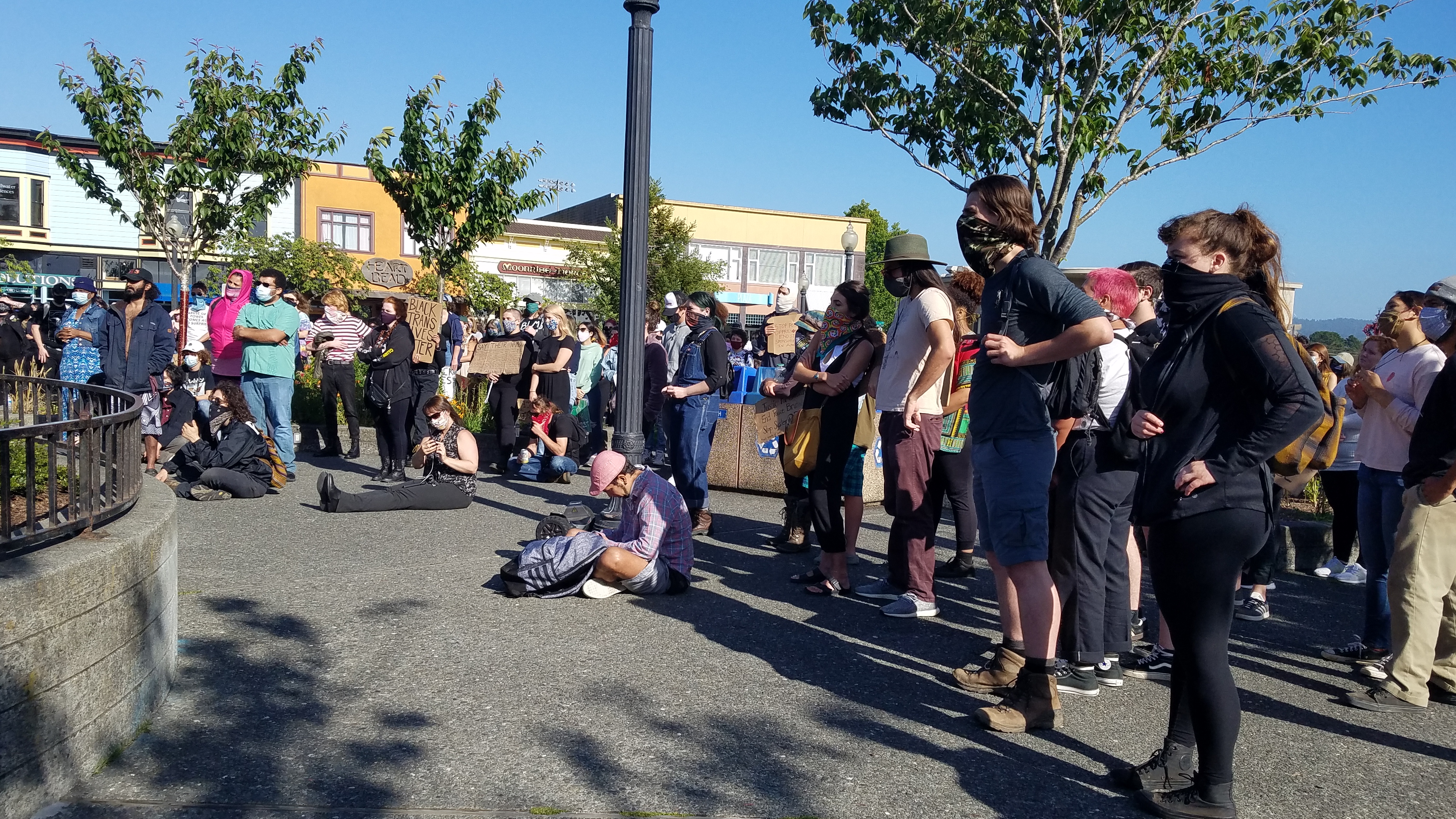
    Peaceful protesters gathered in Arcata on June 1 to continue their demonstrations against police brutality and racism across the nation. People gathered around Arcata City Hall, bringing signs and wearing facemasks while listening to members of the community speak.

    Demonstrators spilled off of the lawn and into the streets, taking a moment of silence in remembrance of George Floyd and Black lives that have been unfairly and unjustly taken in police custody.

    A moment of silence for George Floyd outside Arcata City Hall on June 1 | Video by Thomas Lal

    As demonstrators marched toward the plaza, they chanted in unison, “no justice, no peace,” which quickly became a rallying cry across the country.

    Protesters marching to the Plaza, chanting “No Justice. No Peace” on June 1 | Video by Thomas Lal

    There was no police present at the gathering which encouraged community members to stand up and share their stories in the center of the plaza where the President McKinley statue used to be. Community members rallied together and demanded for better education on racial issues and systemic injustices. Allies were called upon to do more than simply showing up to rallies and to exercise their rights to reinforce just advocacy.

  • Eureka Protests Erupt After George Floyd Murder

    Eureka Protests Erupt After George Floyd Murder

    Eureka protesters gathered in front of the Humboldt County Courthouse

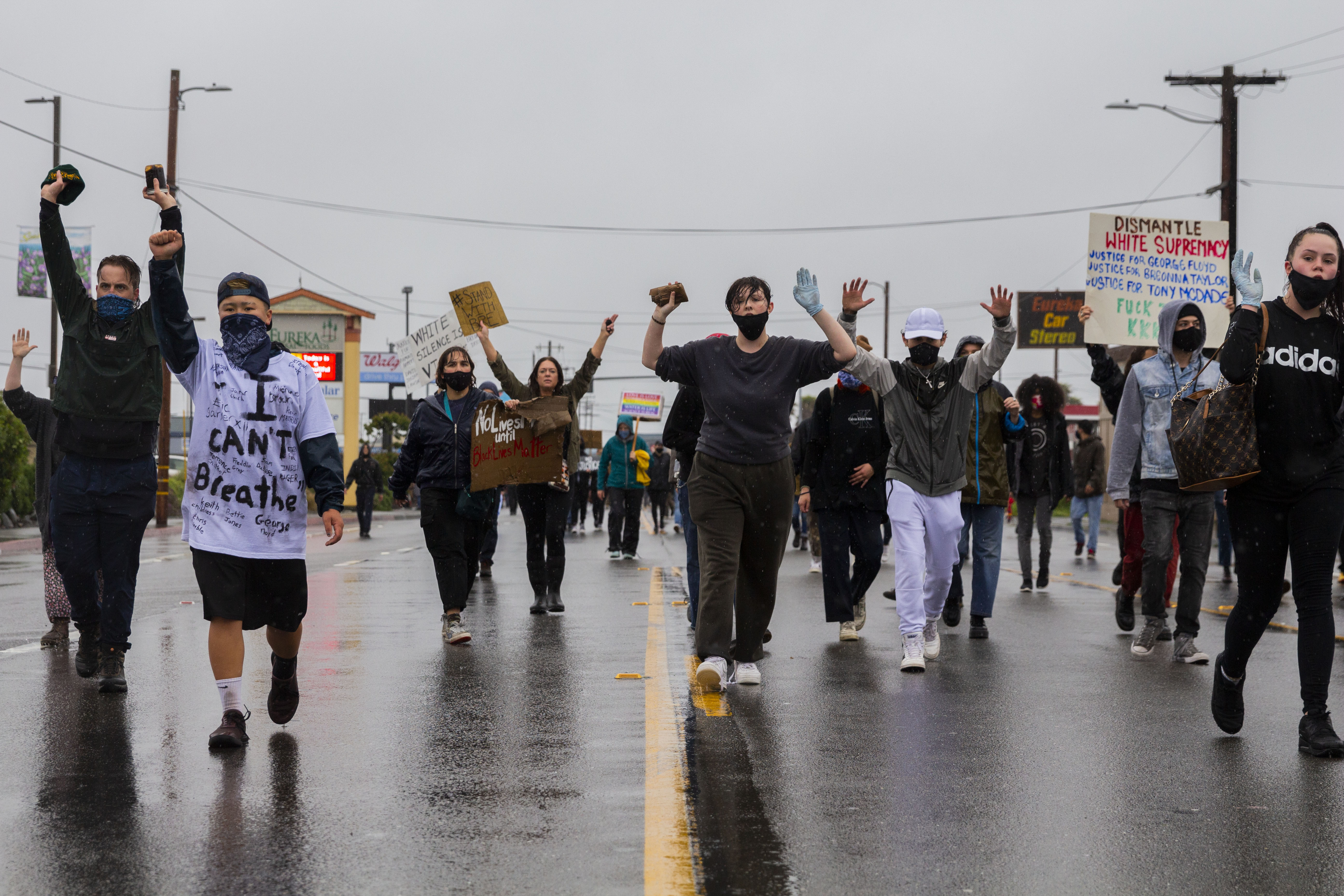
    Hundreds of community members gathered in the rain outside of the Humboldt County Courthouse, Sat. May 30, to protest the death of George Floyd who was murdered while in police custody in Minneapolis, MN. From 3 to 10:30 p.m. demonstrators marched through Eureka up to the Slough Bridge, back through town and then down Broadway. Law enforcement was largely cooperative with demonstrators, blocking intersections as people made their way through traffic. Chants could be heard the entire way even as groups split up and went to various parts of the city. 

    As the group returned to the courthouse tensions flared at the sight of several police vehicles, which were soon removed from the scene. Eureka Police Chief Steve Watson was present at the protest and spoke with demonstrators as the crowd dispersed and headed away from the courthouse. These demonstrations in Humboldt are some of countless that have sprung up across the nation following Floyd’s murder. 

  • We still don’t feel safe

    We still don’t feel safe

    Racial discrimination on campus is rampant

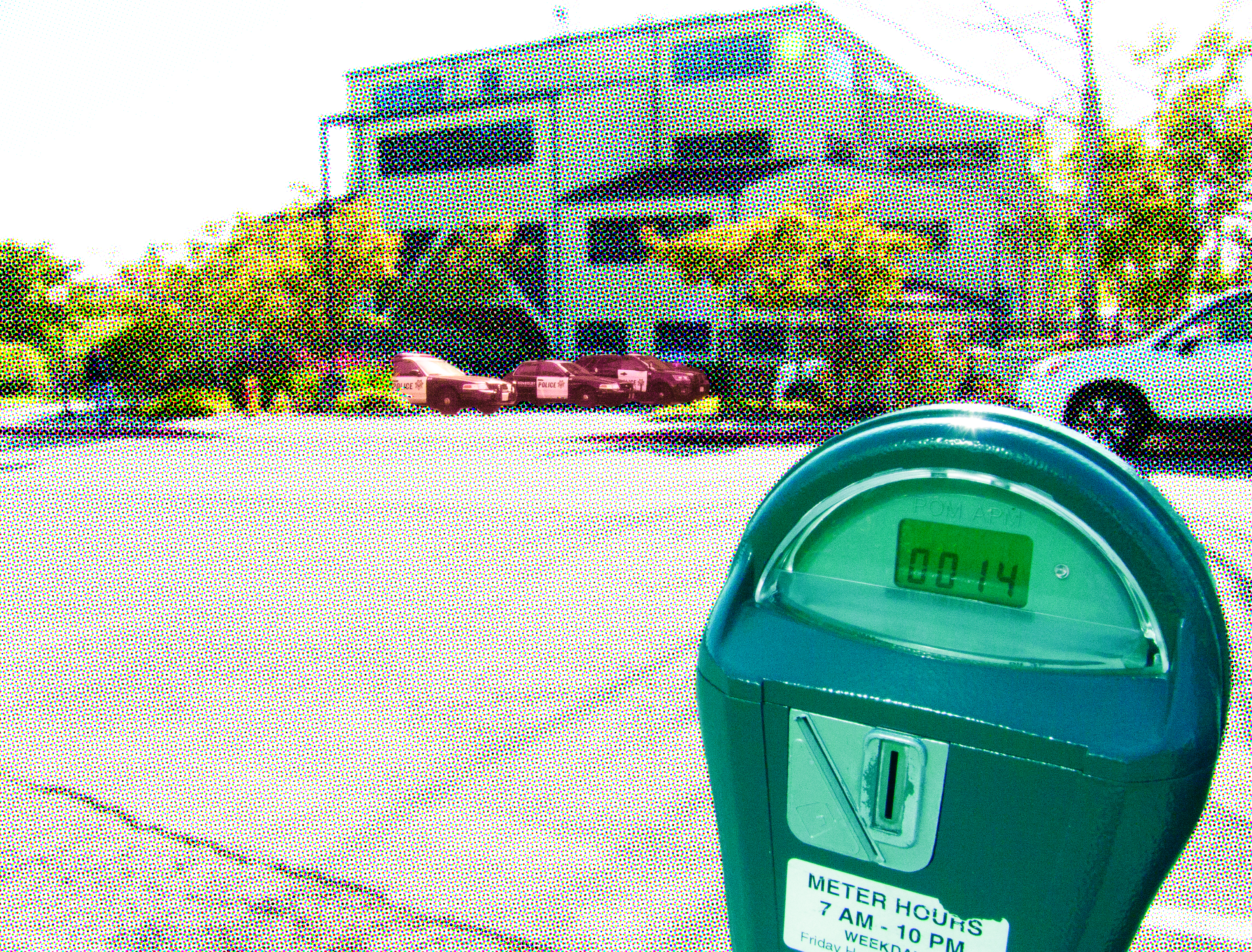
    I, Skye Kimya, believe I was detained on Feb. 14 over a $40 on-campus parking ticket because of the color of my skin.

    Around 8 a.m. that morning, I walked out of a building on the northeast side of campus to find two parking officers giving me a ticket for where my car was parked.

    After getting into a small verbal altercation with these parking officers, I realized it wasn’t worth the argument. I asked them to give me the ticket and let me go about my day.

    The parking officers were not happy with me driving off while they were still giving me my ticket, and before I knew it, Humboldt State police Chief Donn G. Peterson was pulling me over in an undercover vehicle.

    Within minutes, another University Police Department vehicle arrived to the scene. I was interrogated for approximately 10 minutes by two officers on each side of my car about the incident that had just occurred. After the officers spoke with each other for a few minutes, another cop car pulled up, and UPD officer Delmar Tompkins made his way to my driver side.

    “Please step out of your vehicle and put your hands behind your back,” Tompkins said.

    “Excuse me? I don’t understand,” I said.

    I was told I was being detained under suspicion of assault with law enforcement. After questioning this accusation, I was told I was a threat at that time and needed to be detained for the safety of the officers because they did not know the full story yet.

    Confused and scared, I got out of the car, did what Tompkins asked me to do and began to cry like a baby as he placed me in the back of his cop car.

    Imagine being detained and told you are a threat, under suspicion of assault, by a white officer twice your size. Imagine feeling confused and alone. Imagine questioning what could possibly happen next.

    When you grow up trying to understand the purpose behind discrimination, you begin to notice how common it is and wonder if it will ever go away.

    At times, you lose hope for your children’s generation. Yet other times, you want to become the greatest activist that has ever walked this planet, in order to actually make things right for those future generations.

    Students at HSU don’t feel at home. We don’t feel as though there are people by our side, and we don’t see the amount of people of color around campus that the HSU pamphlets and website photos presented to us when we were deciding which university to attend.

    According to HSU’s “fast facts,” the incoming class of fall 2016 consisted of 549 Hispanic/Latino students, 51 African American students, 31 Asian students, 11 American Indian students and four Pacific Islander students.

    Additionally, the entire fall 2016 student body consisted of 2,869 Hispanic/Latino students, 271 African American students, 279 Asian students, 89 American Indian students and 20 Pacific Islander students.

    With a student body total of 8,503, you can imagine what it is like to see only 270 other faces similar to yours on one side, and only 88 other faces similar to yours on the other side.

    Hispanic and Latino students made up almost 35 percent of the entire student body that same year. Seems like a reasonable amount, right?

    HSU actually receives funds from the U.S Department of Education ever since they became a Hispanic-Serving Institution at the start of the fall 2013 semester.

    To become a Hispanic-Serving Institution, the university has to have an undergraduate full-time equivalent enrollment of at least 25 percent Hispanic students, and HSU was at 26.6 percent for the fall 2013 semester.

    HSU continues to flaunt a great amount of diversity that it does not have. These incoming students, like many of us who were once in their shoes, attend HSU and slowly begin to witness and experience how diverse this campus and community is truly NOT.

    Just the other day, the NAACP Eureka Branch called out HSU and asked them to stop recruiting students from minority-majority neighborhoods until changes are made around campus and within the community.

    A majority of the students of color who have attended HSU for at least two academic years have experienced some type of discrimination, whether it was verbal, physical or emotional.

    In 2013, Tompkins had a civil lawsuit filed against him by a Fieldbrook man who alleged he was the victim of a brutal assault back in January 2012. It turns out the Fieldbrook man wasn’t lying and the Cal State University system paid him $135,000 to keep him quiet.

    As students of color at this university, how are we supposed to feel safe if our own UPD officers don’t do things the right way and have our back?

    Cases like the murders of HSU African American students Corey Clark (2001) and David Josiah Lawson (2017) are still unsolved to this day, and we as students have not seen enough action taken by our president, UPD and even the Arcata Police Department.

    Students of color do not feel safe, nor protected here. The NAACP Eureka Branch is right and something has to change before HSU tries to drag more students of color to this campus.