The Lumberjack


Students Serving The Cal Poly Humboldt Campus and Community Since 1929

Tag: Rachel marty

  • If It Wasn’t Already Obvious, We Need Universal Healthcare

    If It Wasn’t Already Obvious, We Need Universal Healthcare

    The U.S. healthcare system isn’t built to handle a pandemic because it’s not built to help everyone

    A 17-year-old boy from Lancaster, California died in March due to COVID-19 complications. After having serious respiratory problems the boy went to an urgent care facility. The facility denied care due to lack of insurance. While en route to the closest public hospital, the boy went into cardiac arrest and died hours later.

    “But by the time he got there [the local public hospital], it was too late,” Lancaster Mayor R. Rex Parris said.

    After the boy passed, doctors confirmed he had COVID-19.

    The tragic death of this 17-year-old boy shows the obvious divide and unfair treatment within the U.S. healthcare system. If the boy had been insured or affluent enough to pay upfront for whatever treatment he needed, he would have received care and possibly still be alive.

    There are 6,146 hospitals in the United States. Some are community owned, some are owned by the state or government, and some are privately owned.

    According to 2018 data from the American Hospital Association, 58% of community-owned hospitals in the U.S. are non-profit. Out of all U.S. hospitals, 21% are for-profit.

    There is a distinct separation in our healthcare system, but it’s not just about where hospital funding comes from and goes. Hospitals also differ when it comes to if patients actually receive healthcare.

    In 1986 Congress passed the Emergency Medical and Treatment Labor Act, which restricts all hospitals from denying care to patients based on a lack of insurance or ability to pay. But this hasn’t stopped privately owned hospitals from denying care to uninsured patients. In a pandemic, this can have deadly consequences.

    “We cannot and will not close our eyes to the economic consequences of this crisis.”

    Netherlands Prime Minister Mark Rutte

    Universal healthcare works to prevent these situations. The Netherlands has universal healthcare and is taking a completely different approach to dealing with COVID-19.

    March 16, Netherlands Prime Minister Mark Rutte made an address to the nation.

    “The reality is that in the near future a large part of the Dutch population will be infected with the virus,” he said.

    He went on to introduce a concept called group immunity.

    “Those who have had the virus are usually immune afterwards,” he said. “Just like in the old days with measles. The larger the group that is immune, the less chance that the virus will jump to vulnerable elderly people and people with poor health. With group immunity you build, as it were, a protective wall around them.”

    This is similar to what United Kingdom Chief Science Adviser Sir Patrick Vallance calls herd immunity. Herd immunity is the idea of letting the population be exposed and eventually become immune.

    Although the Netherlands has closed some facilities like schools and restaurants, that might not be the case for long. Rutte believes a lockdown will not stop COVID-19. He also has much more confidence in the Netherlands’ hospitals and healthcare system than the U.S. has in its own systems.

    “We build immunity and ensure that the healthcare system can handle it,” Rutte said. “With the aim that nursing homes, in-home care, hospitals and especially intensive care units are not overloaded. So that there is always sufficient capacity to help the people who are most vulnerable.”

    “We cannot and will not close our eyes to the economic consequences of this crisis,” Rutte said near the end of his speech.

    Rutte is obviously concerned with the economy of his nation, but he also seems relatively confident that the Netherlands healthcare system could support their entire population if infected by the virus. It’s important to note, the Netherlands pays for their universal healthcare services through taxes as well as a monthly premium payed by individuals.

    This is very different from the current situation in the U.S. By all accounts, our healthcare system couldn’t handle the whole population getting infected by the coronavirus. Hence the need to flatten the curve.

    Even with social distancing rules in place, cities like New York are struggling to find personal protective equipment or have enough intensive care unit beds for infected patients. Whether or not herd immunity is an effective or morally acceptable approach, the U.S. healthcare system isn’t built to handle it because it’s not built to help everyone.
  • How to Sew Your Own Face Mask

    How to Sew Your Own Face Mask

    A step-by-step guide to making face masks

    Although N95 face masks are the only masks proven to protect against COVID-19, companies and people across the nation are rushing to their sewing machines to help produce protection for frontline healthcare workers.

    New York City Governor Andrew Cuomo asked companies to shift their operations to make face masks and ventilators at a press briefing March 20.

    “I’ll fund a new business if you can make these products,” Cuomo said. “I’m trying to make these products. If you are in this line of work, we need masks. If you are making clothing, figure out if you can make masks. I’ll fund it.”

    Deaconess, an Indiana healthcare provider, has also asked the public for help to produce masks. They released a video tutorial in which they show how to sew a surgical face mask that complies with the Centers for Disease Controls and Prevention guidelines.

    Hand-sewn masks compliant with CDC guidelines are permitted to be used by healthcare workers, but the masks are still considered a last resort by the CDC.

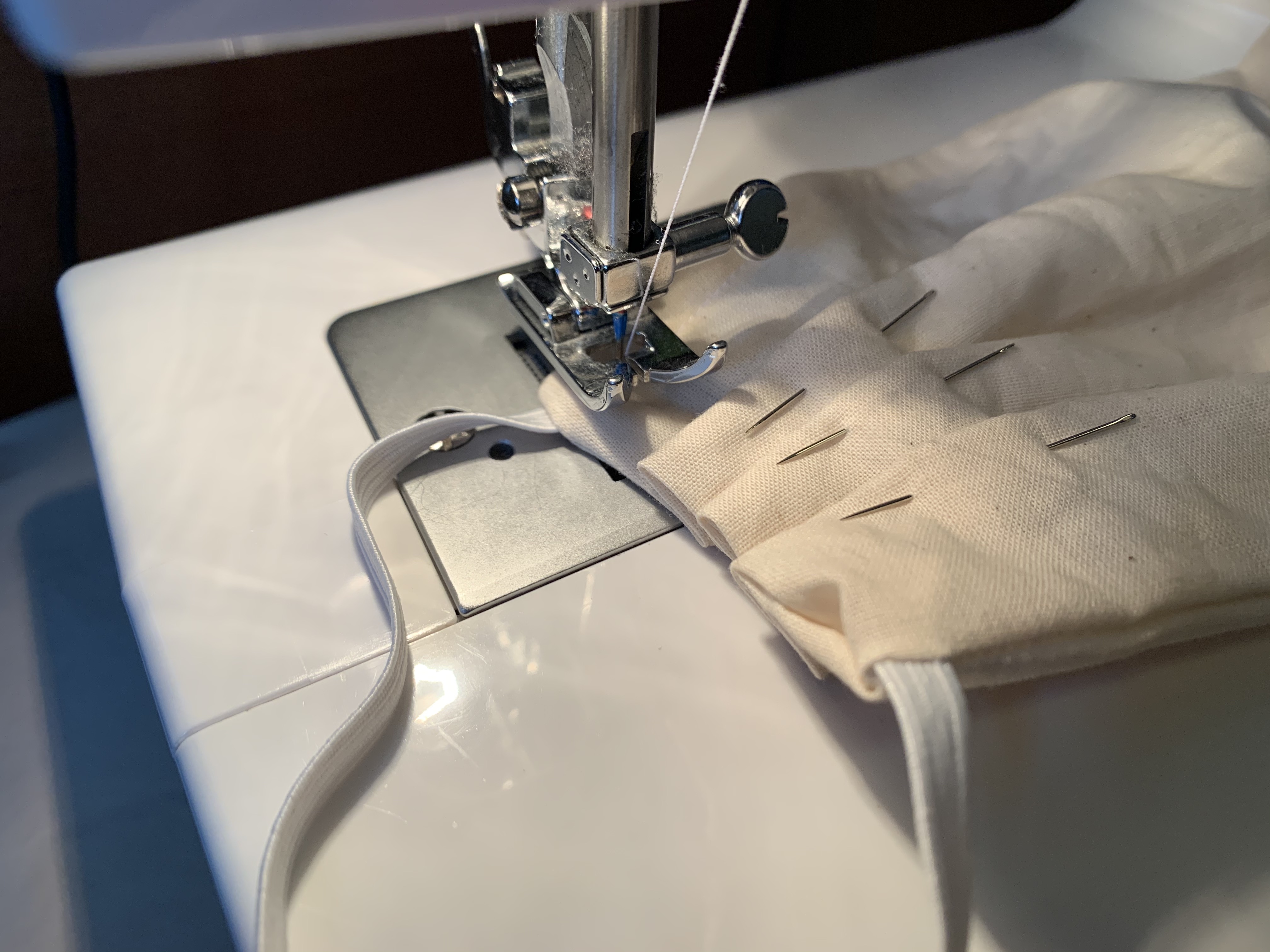
    Considering the dire circumstances, a homemade mask is better than no protection at all. Here’s how to hand sew a face mask (all photos by Rachel Marty):

    Materials needed:

    • Two pieces of 7-inch elastic
    • Two sheets of 9-inch by 6-inch tightly woven and recently-purchased cotton
    • A sewing machine
    1. Pin the two sheets of cotton fabric together and start sewing around the perimeter, leaving a quarter of an inch for the edge.
    2. At every corner, stop and place the end of the elastic in between the seam, making sure you place the straps horizontally on the 6-inch sides. The straps should go behind the ears, not vertically, or the straps will rest above your mouth and chin.
    3. Make sure to leave your perimeter undone. Leave an inch or two so you can turn it inside out.
    4. Turn inside out.
    5. Make three tucks on each side of the mask and pin them in place. Make sure they are going in the same direction on each side.
    6. Again, sew around the perimeter of the mask, leaving a quarter of an inch on the edge. Repeat twice to make sure it’s secure.
    7. And you’re done!
  • Dr. Asao Inoue Looks to Lead Academic Revolution

    Dr. Asao Inoue Looks to Lead Academic Revolution

    Inoue confronts the supremacist ideas within American academia

    From unkind flyers to nasty messages written on bathroom walls, Humboldt State University has dealt with its fair share of acts of hatred and racism.

    Asao B. Inoue, a professor and associate dean at Arizona State University, studies student writing assessment, race and racism. In a Social Justice Summit talk and an exclusive interview with The Lumberjack, Inoue pondered how a university can be anti-racist and address white supremacy.

    “I was asked to come here and give a talk at a workshop, and I love doing that—it feels like an important part of the public work that I do in the academy,” Inoue said. “I help teachers think about ways to do social justice projects in their class, particularly around literacy classrooms and the grading evaluation and feedback of student literacy projects or writing.”

    Inoue’s objective is to change the ways professors think about language and white language supremacy, and to start a revolution within the American grading system.

    “My scholarship and research is in writing assessment and racism studies and the intersection of those two things,” Inoue said. “This [workshop] is an extension of that by trying to engage with writing faculty, English faculty and the curriculum.”

    Inoue described white supremacy as a condition in which a particular group’s dialogue dominates others.

    Inoue said white supremacists are often middle to upper-class people from the East Coast that attended an elite school. Inoue said these conditions collectively make up the identities of white supremacist perpetrators.

    “It’s rarely, if ever, anybody else but that group of people from their particular material conditions in life that produce a certain language, which we tend to call standard or proper English,” Inoue said.

    Inoue called out academia for actively perpetuating racist standards. He said the American grading system reaffirms racist ideals and practices through assigned curriculum.

    Inoue said proper English can be especially problematic in academic settings.

    “There’s lots of research that shows that we don’t actually agree about what that standard looks like,” Inoue said. “But I’m talking about when the rubber meets the road and you have to grade a paper based off of this, or decide whether something is consumable for the public. That’s where we start to have a lot of disagreements.”

    Inoue called out academia for actively perpetuating racist standards. He said the American grading system reaffirms racist ideals and practices through assigned curriculum.

    “I don’t want one to confuse me calling the system racist, with me calling people racist,” Inoue said. “[Professors] are thinking about the disciplines they have to teach and they’re not always thinking about, ‘How do I teach this?’”

    One of the structural flaws within the educational system that Inoue noted was that professors fail to question the academic system and how it reaffirms practices of white language supremacy.

    “It’s difficult to be critical of a system that has really benefited you,” Inoue said. “It seems like everything is working.”

    Inoue said the façade of the education system being equally supportive can be convincing enough that people don’t see the flaws. Inoue said many professors inherit the practices that were inflicted upon them, and because those practices worked for them, they assume they work for others.

    “It’s a fairly narrow economic and social bandwidth of people, so that means that all those practices are fairly narrow and the language practices are fairly narrow,” Inoue said. “So it doesn’t really leave a lot of room for considering differences or changes or being critical about those things.”

  • Vegan Cannabis-Infused Brownie Recipe

    Vegan Cannabis-Infused Brownie Recipe

    Learn how to bake and get baked

    This cannabis-infused brownie recipe uses coconut oil as a butter substitution and base for a vegan cannabis butter.

    Coconut oil is a great replacement for butter and absorbs cannabinoids in the same manner.

    The first step is to make the “cannabutter.”

    Depending on how much marijuana you use, your brownies can have a higher or lower dosage of THC. When making cannabis-infused products, always be cautious of your dosage and measurements.

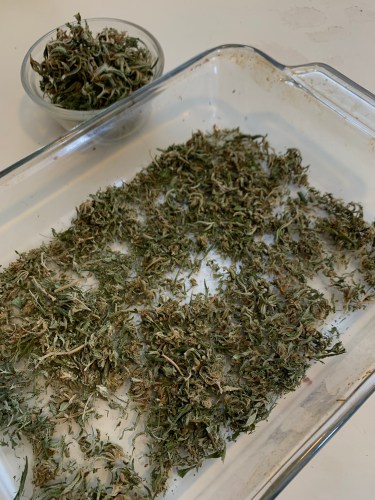
    Start by decarboxylating the marijuana.

    The decarboxylation process is simple: spread marijuana out on a tray and place it in an oven preheated to 245 degrees for 30 minutes.

    This is an essential step. Decarboxylation heats up the cannabis flower and allows the body to absorb the cannabinoids, essentially activating the cannabis. This process happens instantly when marijuana is smoked, but when making edibles it must happen slowly to preserve the product and not burn it.

    The next and longest step is to infuse the coconut oil with the decarboxylated marijuana.

    Throw the coconut oil and decarboxylated marijuana in a sauce pan and let it simmer on the lowest heat setting for three hours.

    Heat on the lowest heat setting ensures your oil will be fully infused and that the baked marijuana will not burn.

    Don’t leave the house or kitchen when you are infusing your oil. Three hours is a long time, but leaving your stove unattended is dangerous and could potentially start a fire.

    After three hours your coconut oil will no longer be clear and will have a deep green color to it.

    The next step is to separate the cannabis-infused oil from the actual cannabis. To do this, use a cheesecloth.

    A regular strainer’s holes are too big and will leave you with little bits of marijuana in your oil. Using cheesecloth on top of a strainer is the best course of action and will ensure your oil is as pure as possible.

    Next, measure out however much oil you need for your brownie recipe.

    It’s important that the coconut oil does not sit out for too long or the oil will become dense and harder to incorporate into the mix. No worries if your oil does set up. Just reheat it.

    As for eggs, almost every brownie recipe out there calls for them, but just like butter, there are some great substitutes you can use. Applesauce is a good substitute, which is what this recipe uses, but you can also use mashed-up bananas or yogurt.

    Finally, mix all of your ingredients together, pour it out into a pan and put it into the oven.

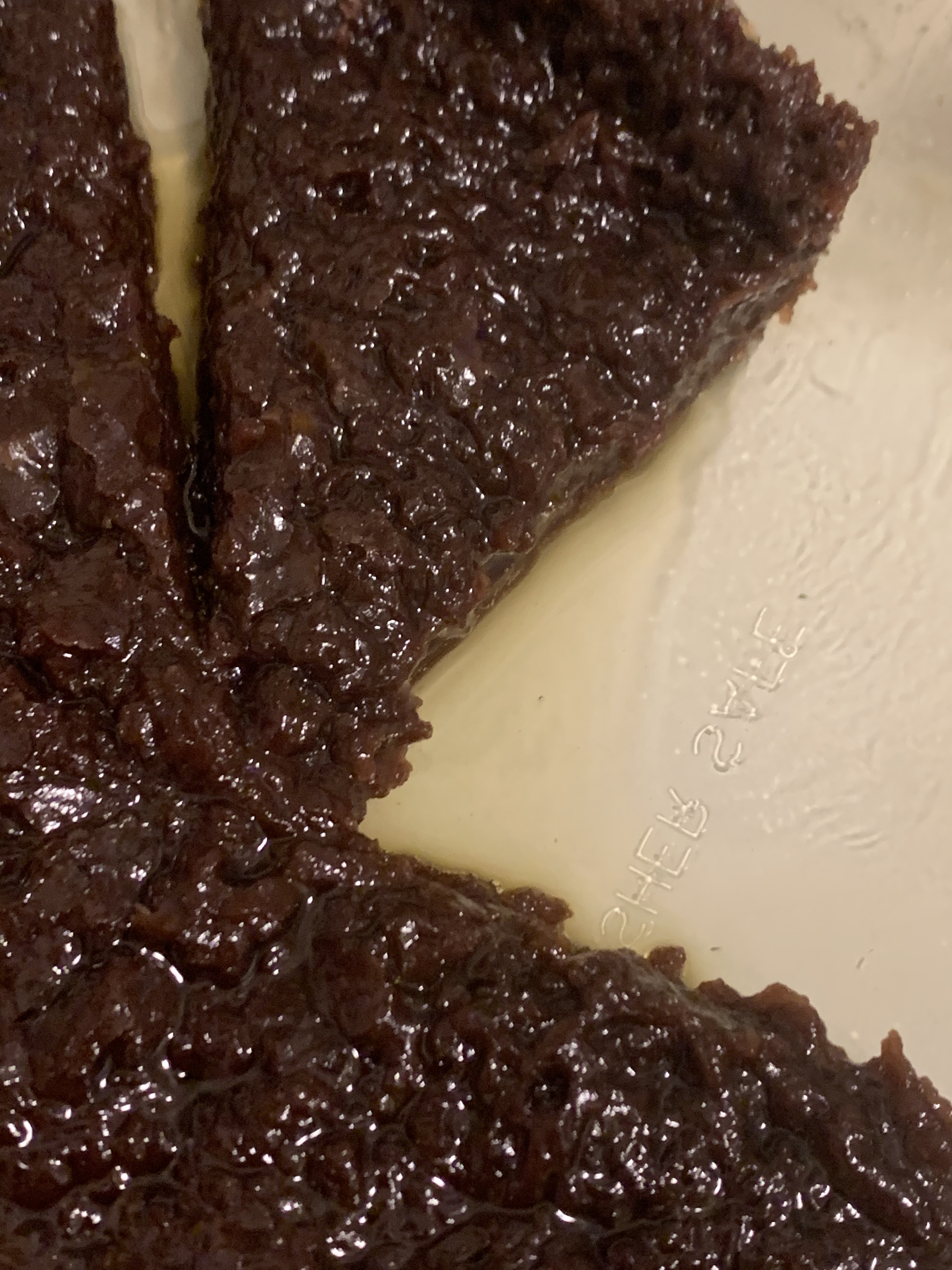
    When your brownies come out of the oven, they may look soft or even underdone, but let them rest in a cool space for 10-15 minutes and they will set. Fresh out of the oven, the coconut oil will be very apparent on the top of the brownies and make them look oily, but as they cool the oil will absorb and become denser.

    Again, be careful of your dosage when consuming any cannabis-infused product.

  • Stoners Bake Snacks with Scientific Hacks

    Stoners Bake Snacks with Scientific Hacks

    Finding more creative ways to use cannabis

    Edibles or cannabis-infused foods are a common way to consume marijuana. The process of making edibles, just like baking brownies, is a science. The primary psychoactive compound in marijuana is called cannabinoids. When making edibles, you infuse a fat with cannabinoids to activate the chemical.

    Mark Wilson, a Humboldt State University professor with a Ph.D. in microbiology, genetics and toxicology explained that cannabinoids are fat soluble and don’t break down in water.

    “Some substances are water soluble and some substances are fat soluble,” Wilson said. “THC is primarily composed of carbon-carbon bonds and carbon-hydrogen bonds, so it can’t interact well with water, but it can interact well with fats and oils.”

    This characteristic of THC, tetrahydrocannabinol, limits what can be turned into an edible. THC can’t steep in hot water for weed tea. Marijuana would need to be steeped in hot milk instead, where the THC would break down and bond with the milk fats.

    “Things that dissolve into our fat tend to remain in our system much longer. That is, they slowly diffuse into fat, and slowly diffuse out. The fat acts as a sort of absorption compartment. That makes it detectable in drug tests for weeks.”

    Joseph Szewczak

    Many people use butter as the main fatty ingredient in edibles. Dairy-based fats are a good option for infusing cannabinoids, but lactose-free alternatives are also solid options, including coconut and olive oil. Bacon fat can absorb cannabinoid infusions too, if you’re looking for a savory option.

    Joseph Szewczak, an HSU professor who studies and teaches comparative physiology and physiological ecology explained the physical changes to the body when people eat cannabis-infused fats rather than smoking cannabis plants.

    “Things that dissolve into our fat tend to remain in our system much longer,” Szewcxak said. “That is, they slowly diffuse into fat, and slowly diffuse out. The fat acts as a sort of absorption compartment. That makes it detectable in drug tests for weeks.”

    Whether inhaled or eaten, the THC enters the blood stream and messes with brain-cell functions in a unique way. Since THC is shaped like a chemical in the brain, the brain recognizes the chemical and allows to alter normal brain function. That chemical usually tells brain neurons to rest, but THC forces the brain to keep firing, which leads to deep thoughts, increased creativity and anxiety.

    In light of these effects, it’s important to understand what’s going to happen after eating an edible. First, since the body takes some time to digest edibles and since their THC is stored in fat, the high lasts longer. Second, the nature of THC and marijuana may lead to discomfort or anxiety, or may lead to creativity and fun, but that’s dependent on many factors.

    Co-Director of the Humboldt Institute for Interdisciplinary Marijuana Research Josh Meisel is researching the significance of set and setting, or who you’re with and where you are, and how those things impact a high.

    “People’s negative experiences may be influenced by edible use,” Meisel said. “But set and setting may be as influential or more influential than the psychoactive properties of the substance itself.”

  • Kirby Moss Illustrates the Significance of Black Joy

    Kirby Moss Illustrates the Significance of Black Joy

    Journalist and Professor Kirby Moss, Ph.D, presents new book on Black joy

    Editor’s note: Kirby Moss is a professor in the journalism and mass communication department. Moss has taught and currently teaches members of the editorial staff of The Lumberjack. The author of this article is a journalism student, but has not had any classes with Moss.

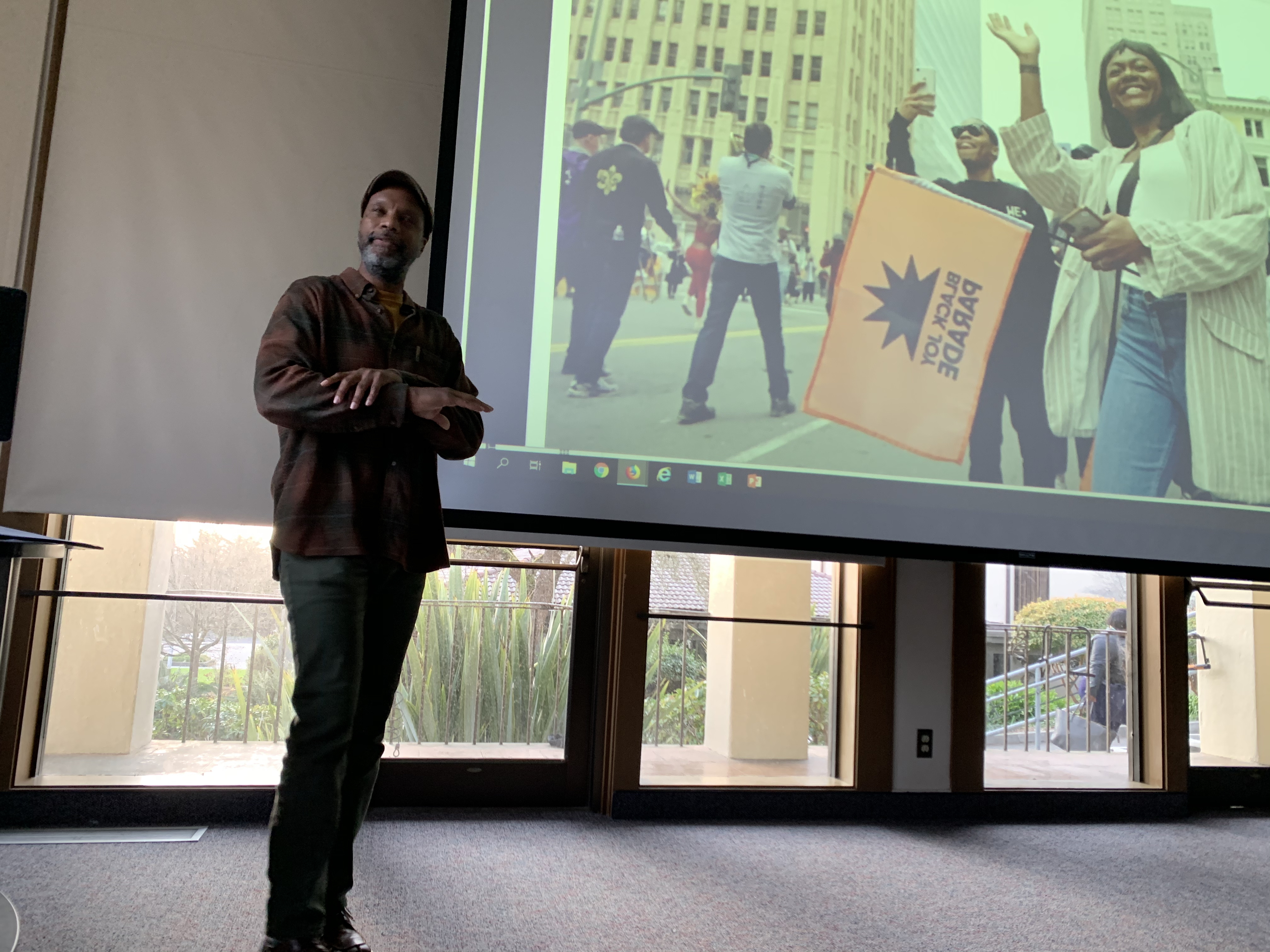
    Kirby Moss, a mass communication professor at Humboldt State University, held a talk on campus about black joy Feb. 20, a topic he is currently researching for his new book, “Black Joy.”

    Moss’s first book, “The Color of Class,” discussed the paradox of privilege and talked about race and class in ways that aren’t often discussed. The assumption that white privilege comes along with the absence of poverty is a significant topic in his book.

    “It’s so much more than overcoming a group of oppressors or getting past what they’ve categorized us as. It’s overcoming stuff within ourselves and being able to appreciate moments of joy and share those moments of joy.”

    Toni Maggi-Brown

    “We don’t normally associate poverty with whiteness,” Moss said. “We don’t normally associate joy with Blackness.”

    In his new book, Moss rejects the assumption that Blackness consists of unhappiness and tragedy.

    Toni Maggi-Brown, an HSU student who attended the discussion, supported Moss’s emphasis in liberating the narrative that surrounds Black culture.

    “It’s so much more than overcoming a group of oppressors or getting past what they’ve categorized us as,” Maggi-Brown said. “It’s overcoming stuff within ourselves and being able to appreciate moments of joy and share those moments of joy.”

    Moss acknowledged the struggles in his life, but argued that ultimately it’s been full of joy.

    “I’ve had a lot of fun times, joyful times, right in the midst of the hood,” Moss said.

    Moss’ focus is the unacknowledged pleasures of being Black, but he also talked about how his joy is sometimes seen as weakness or is unacceptable by his culture.

    “I ain’t Black enough because I’m talking about joy,” Moss said.

    Moss questioned the way we measure Blackness. With his new book, Moss is attempting to shed light on the joys of Blackness while emphasizing that embracing joy doesn’t make you any less Black.

  • Betting on the Super Bowl Doesn’t Always Pay Off

    Betting on the Super Bowl Doesn’t Always Pay Off

    Clarifying the legality of betting on the Super Bowl

    When you think of Super Bowl betting, you might think of a couple friends harmlessly betting $50 on their hometown team. But Super Bowl betting is illegal in California.

    In 2015, the Association of Government Accountants estimated that people illegally wagered around $145 billion on sports betting. The AGA seeks to increase government accountability and transparency, according to its site.

    Clearly, even if it’s invisible to most, a lot of money is being illegally transferred through sports betting.

    Under California Penal Code 330, California state law says that gambling is illegal, with the exception of Native American reservation casinos, card clubs, charitable gambling, horse wagering and the California State Lottery.

    On Sunday, Feb. 2, the San Francisco 49ers will play the Kansas City Chiefs for the 2020 Super Bowl. Whether you’re watching the game or just going to a party to eat barbecue, you probably at least know someone that’s going to be watching, and more than likely, know someone placing a bet on the outcome of the game.

    In California it’s illegal to bet on the Super Bowl or sports of any kind, but people bet on the game anyway. In the 1990s the prohibition on sports betting began and all sports betting became illegal nationwide.

    Congress passed the Professional and Amateur Sports Protection Act in 1992, which banned governmental entities from legalizing sports wagering.

    Yet in a 2018 United States Supreme Court case, Murphy v. National Collegiate Athletic Association, the Court overturned PASPA due to its conflict with the Tenth Amendment.

    “Congress can regulate sports gambling directly, but if it elects not to do so, each State is free to act on its own,” Justice Samuel Alito said.

    Online betting is a popular form of wagering on the Super Bowl, but when you go to place a bet, you have to confirm your state of occupancy—thereby restricting Californians.

    Under California Penal Code 330, California state law says that gambling is illegal, with the exception of Native American reservation casinos, card clubs, charitable gambling, horse wagering and the California State Lottery.

    “Every person who plays or bets at or against any of those prohibited games, is guilty of a misdemeanor, and shall be punishable by a fine not less than one hundred dollars ($100) nor more than one thousand dollars ($1,000), or by imprisonment in the county jail not exceeding six months, or by both the fine and imprisonment,” the code says.

    So if you plan on betting on this upcoming game, know what you’re getting yourself into.

  • 4 Pietastic Baking Tips for the Holidays

    4 Pietastic Baking Tips for the Holidays

    Four tips to make baking a pie that much easier

    The holidays are ideally a pleasant time spent with family or friends, sharing gifts and eating good food, but the festive days are only as good as the desserts. If you are a baker or simply enjoy the act of baking, here are a couple tips to help you complete your holiday pie with ease and perfection.

    1. Make sure your ingredients are fully incorporated. Things like butter or salt are easy to forget about, but they are crucial to the composition of the pie. Cooking is a science, and if you mis-measure or mis-incorporate your ingredients, the whole pie can be ruined.

    2. The pie crust is the most delicate and intricate part of the pie. Try making the crust from scratch. Pre-made pie crusts can be good, but homemade is better. As long as you use a good quality butter you are left with a wonderful, flaky and crisp crust. When mixing the butter and flour of the dough, don’t over do it! Pie dough is made flakey by layering the butter and flour on top of each other, but over-mixing the dough can cause too much gluten to form and can make the crust hard. Fun fact, leaving small clumps of unmixed butter in the dough makes it flakier.

    3. Cooking your pie can come with some trial and error. Always make sure to have aluminum foil handy because the middle of the pie cooks slower than the rest, in which case the top starts to darken and can become too crisp. Layer a sheet of aluminum foil on top of the pie to avoid the edges from from overcooking. In this situation, you can do what I did and cut a hole smack dab in the middle of the foil. This technique protects the edges of the crust from burning while the middle of the pie cooks.

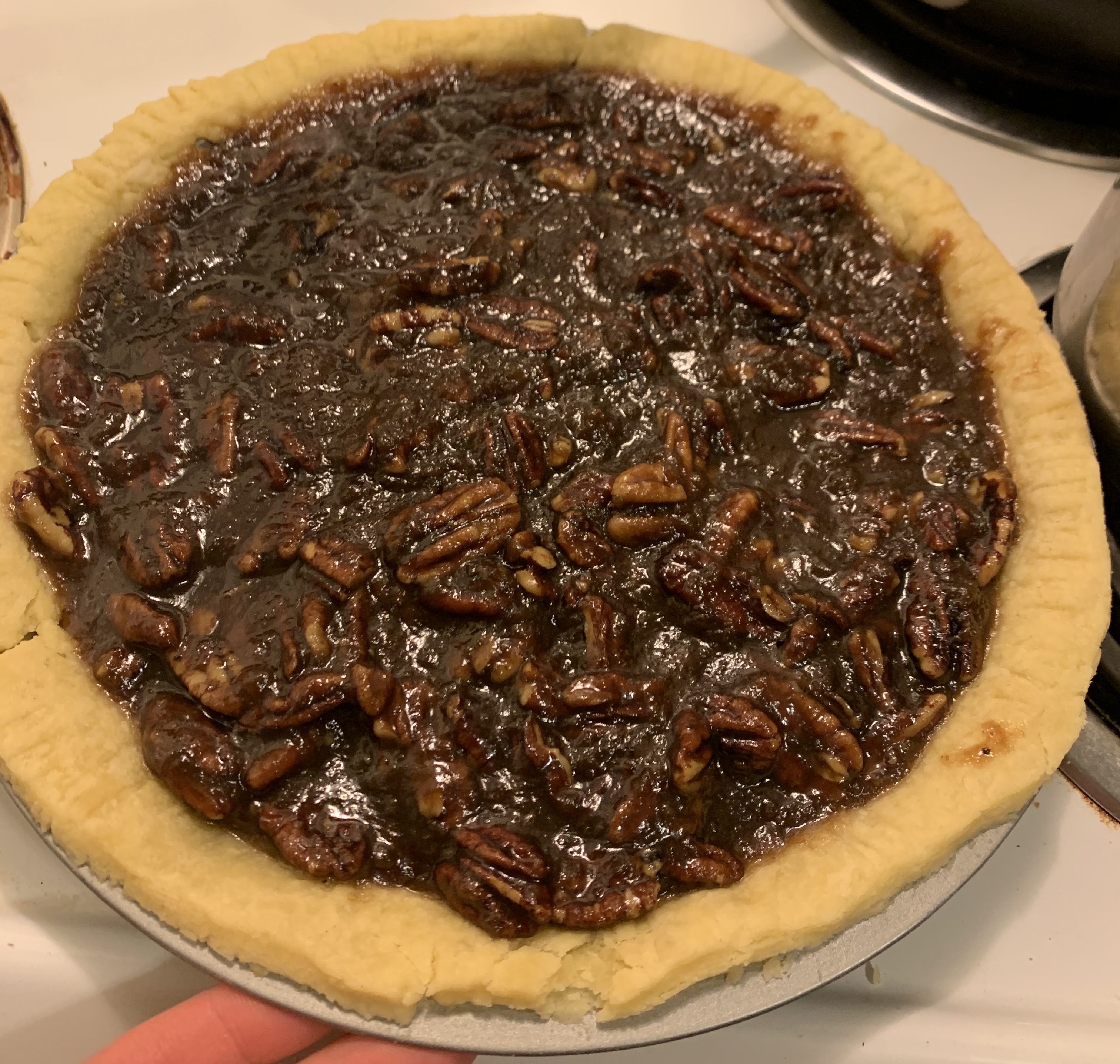
    4. The last tip I have is the most important. Don’t be afraid to use seasonings and spices. For a pecan pie, nutmeg and cinnamon turn out to be great additions. Seasoning can make or break your pie. Even a little pinch of salt can accentuate the flavors in the pie. Of course, don’t over do it. Remember, you can always add more, but you can’t take any out. Choose the best spices for your pallet and always be cautious of people’s food allergies.

  • Humboldt Degree Value Lowest in CSU System

    Humboldt Degree Value Lowest in CSU System

    Georgetown study shows HSU graduates receive lowest pay over 40 years

    Humboldt State University has the lowest earnings for graduates out of all 23 California State Universities, according to a recent Georgetown study.

    The study said the average HSU student makes $752,000 within 40 years after graduating, which makes HSU the lowest earning CSU on the list. The average for other CSUs was around $1 million. For comparison, Chico State students reportedly made $1,018,000, while CSU Los Angeles students averaged $1,019,000.

    The study measured the value of a college degree in net present value. According to the study, NPV is how much a sum of money in the future is valued today. According to Telegram.com, “this metric includes costs, future earnings and the length of time it would take to invest and earn a certain amount of money over a fixed horizon.”

    “I believe it’s very important to think about the fact that the 30, 40, 50 years of a person’s working life are a lot more satisfying if it’s a job you enjoy and allows you to do the things you are passionate about.”

    Alison Holmes

    This fixed horizon is split into increments of 10, 15, 20, 30 and 40 years. This number is calculated by subtracting the amount of money a person can make at a minimum-wage job over that same time period, as well as taking into account student loans. This number contrasts against working a job that doesn’t require a degree. The result is the return on one’s investment.

    Alison Holmes, associate professor in the Department of International Studies at HSU and a participant in the development of the career curriculum for the arts and humanities, believes the study isn’t taking enough into account.

    “The frame of this research is clearly about size of income over the years after graduation,” Holmes said. “And while I would never say that is unimportant, I believe it’s very important to think about the fact that the 30, 40, 50 years of a person’s working life are a lot more satisfying if it’s a job you enjoy and allows you to do the things you are passionate about.”

    40-Year-Net-Present-Value-of-Degree

    Gina Kelble, an HSU freshman who sees herself going into environmental law, expects to make a decent living.

    “I’ll probably end up going to [University of Colorado] Denver or CU Boulder for grad school,” Kelble said. “I have connections back at home through past internships, so those will be stronger than my Humboldt ones.”

    Kelble is confident in her ability to get into grad school and dodge the bullet of making the average income of an HSU graduate.

    “The study also makes the point that it’s about knowing yourself or, put another way and as I say to students, choices have consequences,” Holmes said. “There is nothing wrong with wanting money, if that’s lots and lots of money or just basic financial security. But you need to be clear that jobs have a pay scale. As a society we can work to get better pay for people, but for now, it is important to think about jobs with a very clear understanding of the pros and the cons of that choice.”

    Holmes said that while money is a necessity, it stands among many others things that should be taken into account.

    “As long as we send students into the world prepared to do what they want to do and always striving to fulfill their amazing potential, I am not going to spend too much time worrying about a study based on a scale based on the size of a paycheck,” Holmes said.

  • Only One Location at Humboldt State Accepts EBT

    Only One Location at Humboldt State Accepts EBT

    College Creek Marketplace is the only location on campus that accepts CalFresh food benefits

    Humboldt State University is one of the first universities to accept Electronic Benefit Transfer cards.

    According to Iran Ortiz, a 5th year student and Oh SNAP! employee, options on campus are limited to where students can spend their food stamps.

    “The only place on campus that accepts food stamps, or CalFresh benefits, is the Marketplace,” Ortiz said.

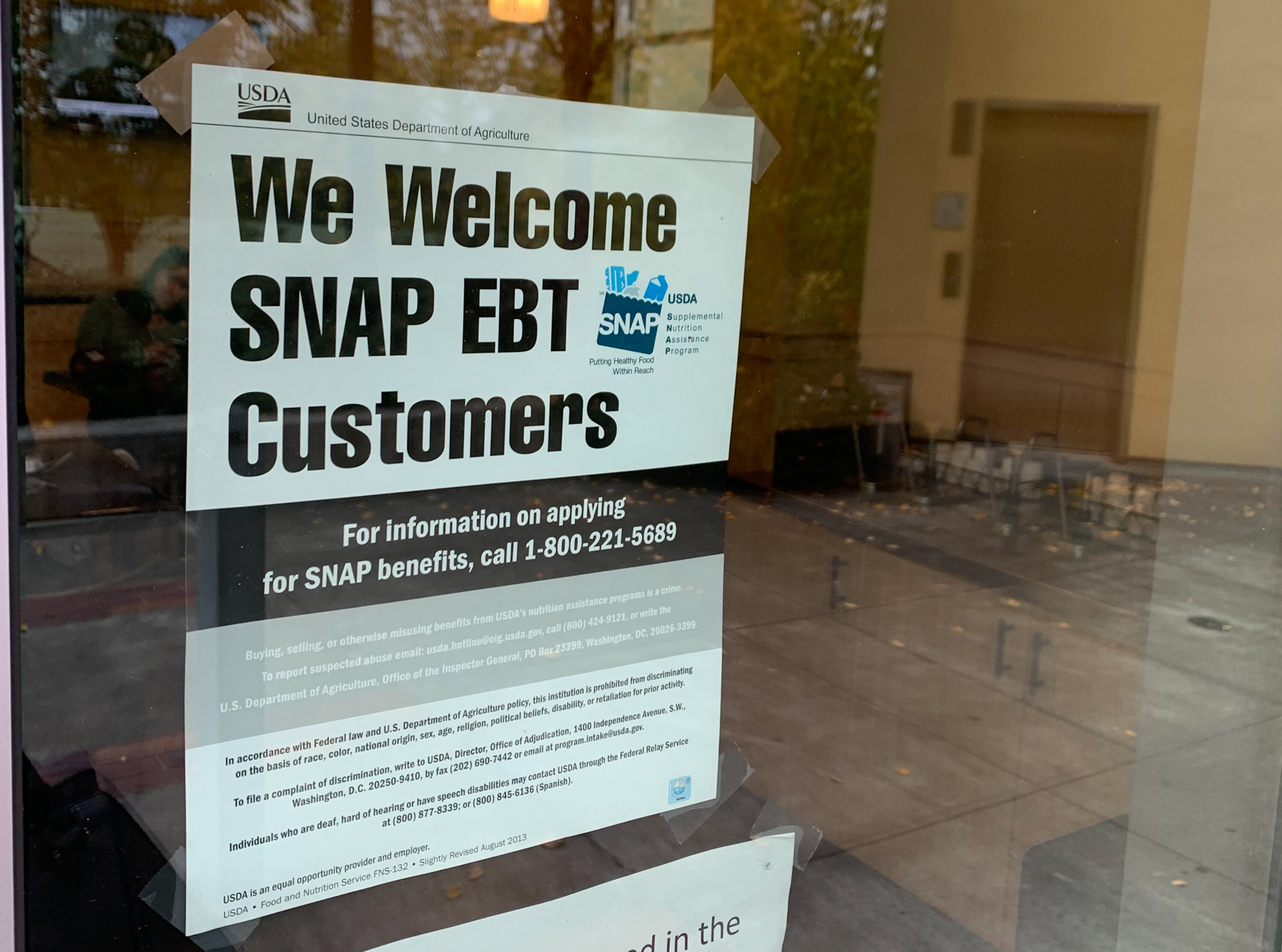
    CalFresh, previously called food stamps and federally known as the Supplemental Nutrition Assistance Program, is a U.S. Department of Agriculture run program that provides eligible households with an EBT card that works like a debit card.

    According to CalFresh’s website, EBT cards can be used at most grocery stores and farmers markets, but benefits are meant to be supplemental and not intended to meet a family’s entire food need.

    The process to sign up for CalFresh can be tricky if doing it by yourself. But Oh SNAP! is student-driven with a mission is to increase HSU students access to food and they can help with the process of signing up for EBT.

    “Although we are not eligibility workers, so we can not determine benefits or how much you get, we can help you out throughout the whole process of CalFresh. We’ve been trained by CalFresh workers to know the whole process and all of that.”

    Iran Ortiz

    Ortiz explains how her and other Oh SNAP! employees can help students sign up.

    “The process for students is different because they abide by student eligibility requirements,” Ortiz said. “Although we are not eligibility workers, so we can not determine benefits or how much you get, we can help you out throughout the whole process of CalFresh. We’ve been trained by CalFresh workers to know the whole process and all of that.”

    Sara Olsen is a third year with previous experience with Oh SNAP! who remembers some of the requirements of signing up for EBT benefits through Oh SNAP!

    “The people who help, volunteer and work for Oh SNAP! are very helpful and will give you paperwork to fill out,” Olsen said. “Which they will then fax in office if you’re ready.”

    Olsen explains that after submitted the paperwork, CalFresh will call and set up a phone interview. After deemed eligible for the program, an EBT card is sent in the mail.

    Alexandre Sicaud is the manager of the College Creek Marketplace and doesn’t know the exact reasoning behind the Marketplace being the only place to accept EBT on campus.

    “We used to only have one EBT scanner, then we upgraded to two,” said Sicaud. “But as for why we’re the only place on campus, it might have to do with the fact that we’re the largest grocery operation.”

    CalFresh benefits are provided to help pay for groceries. In fact, hot foods can not be purchased with an EBT card in an effort to promote healthy and nutritious alternatives.

    If you need help filling out CalFresh paperwork, head to the Oh SNAP! office located in the Recreation Wellness Center, room 122.

  • Fashion Forward: Halloween Style

    Fashion Forward: Halloween Style

    Secondhand stores and DIY costumes make great options for spooky season

    Any secondhand store can acknowledge that people don’t wear costumes for just one night, they recycle and reuse the pieces for other occasions and sometimes even the next year’s Halloween.

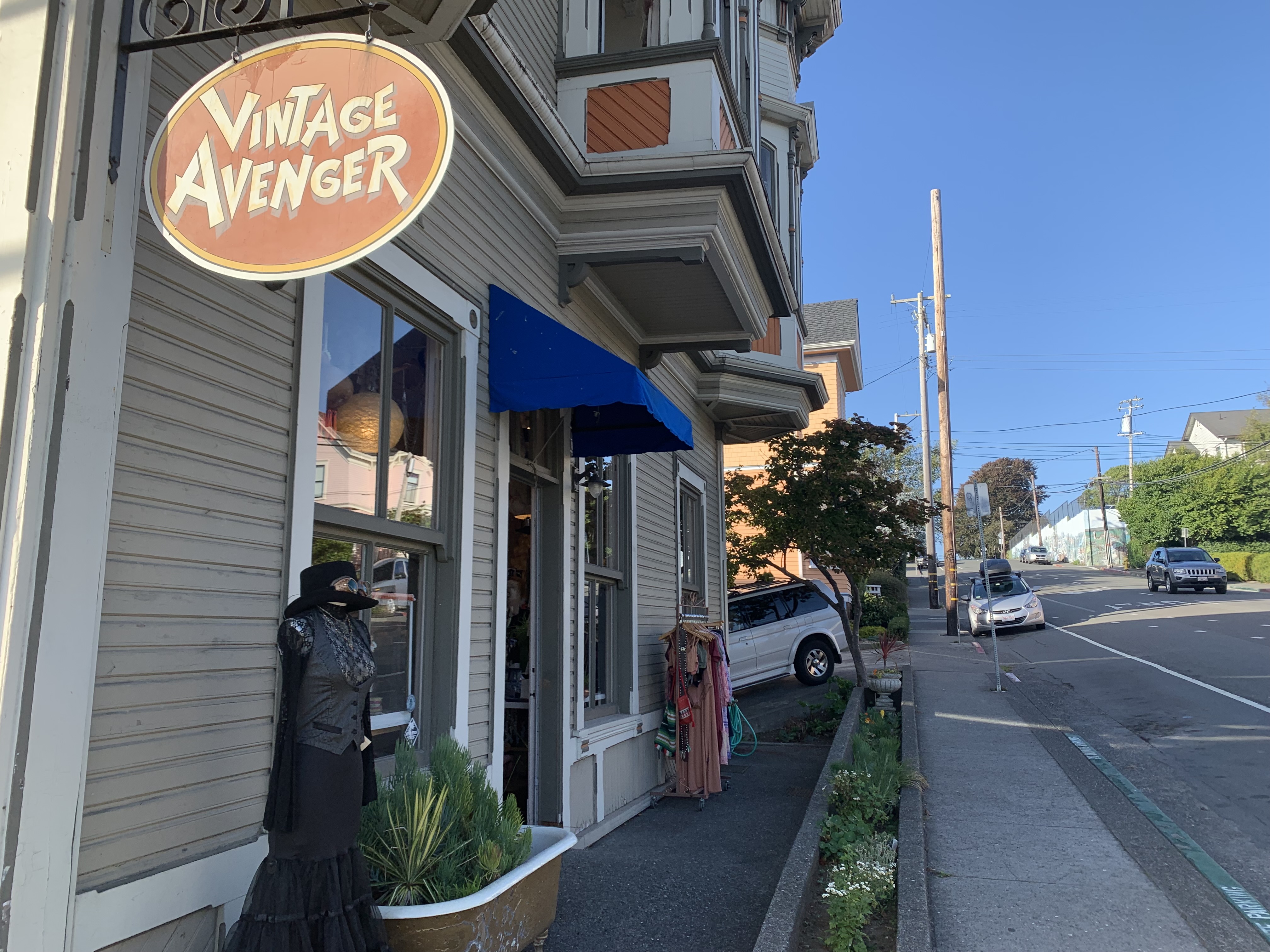
    At the intersection of 11th and H Streets in downtown Arcata sits Vintage Avenger. This vintage boutique sells primarily secondhand items. Walking into the shop, you may be surprised to see some of the treasures hidden within.

    Behind the counter sits the owner, Nancy Tobin, who says that people in Humboldt like their costumes to be more unique than the plastic packages you may get from a superstore.

    “People don’t really like ready made costumes anymore,” Tobin said. “They kinda like pieces they can wear, like ethically sourced items you can wear for other occasions, not just specifically for a costume.”

    Vintage Avenger can be your first stop in finding a costume for Halloween. They have some items you can wear as everyday fashion, too. | Photo by Rachel Marty

    Ready made costumes, the ones packaged in plastic and sold in stores, are generally designed to match and work together as a unit. This makes the individual pieces of the outfits harder to reuse and style with other items.

    “We try to be as much into recycling as we can,” Tobin said. “Anything gold, silver, sparkly sells fast.”

    Vintage Avenger’s racks are stuffed with up-cycled pieces, fur coats and exotic dresses, and the racks tie in to the extravagant patterns that decorate the walls of the store.

    Tobin said her concept of up-cycling costumes causes her to arrange the store accordingly and make decorative pieces visible to the daily shopper.

    Humboldt State student Jennyfer Bonfil said her costume this year will be mixed of up-cycled materials and new purchases.

    “I am going to be a DIY version of Mother Nature,” Bonfil said. “I shopped at Forever 21 online and SCRAP [Humboldt] for my costume.”

    Another college student, Rose Meyers says she made an effort to not go shopping this year.

    “I’m going to be one of the PowerPuff girls with my roommates,” Meyers said. “And we’re making [the costumes] ourselves.”

    Shopping locally is great way to support the community and local economy, but online shopping is another option to look for costumes if you intend to buy. Ordering online can be perfect for simple basics such as blank t-shirts and tank tops that you may need to build your DIY costume, but you can often find entire pieces if you look for them.

    When buying online, be cautious about sizing and cheaply made items. Also make sure to consider the shipping cost and time factors. In general, companies can send items within five to seven days, but if you need something expedited, expect shipping cost to increase for one to two day shipping.

    While cost can be a priority, especially for college students, make sure you’re purchasing from reliable places. Sometimes you can get lucky and find something that closely resembles a more expensive version of pieces found in-stores, but understand that there are drawbacks to cheap costs and cheap clothing.

    With Halloween just over a week away, now is the time to get those costumes together. So shop around, check out a few local shops, make something out of clothes you already own to lessen the stress on the environment and your wallet, or buy online for a (possibly) quick fix. Whichever you choose, remember to respect people and cultures, be safe and have fun.

  • Humboldt Lacks Medi-Cal Resources

    Humboldt Lacks Medi-Cal Resources

    When dentists don’t take Medi-Cal, it forces individuals to travel to seek treatment

    For any students dealing with dental issues while attending Humboldt State, I suggest you plan out time to take off from your courses and work to go home and have it dealt with. The sad truth is that the proper resources don’t exist in Humboldt County, and traveling great distances to receive medical attention isn’t actually that uncommon.

    When I was 11, I ran face-first into a pole and broke my front tooth in half. Followed by days of crying and constant mirror checks, I would switch between laughing at how stupid I felt I looked to uncontrollable sobbing. I couldn’t eat anything cold or my whole face would be met with a violent sensitive reaction. The only option I had as a self-conscious 11-year-old was to replace the broken tooth with a filling and hope it looked as normal as possible, so that’s what I did.

    While the sensitivity eventually subsided, a year later the filling fell out. Again, I was hit with overwhelming sensitivity and due to my being a pre-teen, I was also terribly embarrassed. Every time the filling fell out after, it would be remade. I figured it was time to find a permanent fix and my dentist told me I would eventually need a veneer.

    Veneers are what Instagram models and celebrities have on their teeth to make them look like perfect pearls. Basically, it’s a thin layer of material that’s placed directly over the tooth and protects the natural tooth’s surface, making your smile flawless.

    “The sad truth is that the proper resources don’t exist in Humboldt County, and traveling great distances to receive medical attention isn’t actually that uncommon.”

    I was scheduled to receive a single veneer. This is because I only needed one tooth fixed, but in large part because they are terribly expensive. I was told that getting just one was risky, as it has to be perfectly engineered to match the rest of my teeth. I was willing to take the risk.

    This past semester I was hit with that same violent sensitive feeling in my tooth but the filling hadn’t fallen out. It seemed that the filling was slowly deteriorating and I began to feel it everyday. The tooth slowly turned a different shade and began to chip away. I knew that I was going to need an even better permanent fix. This meant looking at getting a full set of veneers.

    My normal dentist and physician are five hours away. Not a horrible distance, but not next door. I knew for this procedure I would have to leave and miss some days of school, but I wanted to explore my options first.

    I went to the campus health center to see if they could help me with my sensitivity or lead me in the right direction to begin services with a local dentist. I was met with two nurses that seemed disappointed to tell me that the center couldn’t help much with dental issues. They prescribed me a numbing cream and gave me a list of local dentists.

    Of the local dentists, only one took Medi-Cal, California’s Medicaid program. This was disheartening as it was my only insurance but I made an appointment anyway. The facility was called the Open Door Clinic Dental and was located in Eureka.

    The appointment was short and they told me I needed a root canal. Unfortunately, the clinic doesn’t provide the procedure and they gave me another list of dentists, more specifically endodontists, that could help me. As I called around, I realized that none of the dentists listed accepted Medi-Cal either and I was faced with the reality that I was going to have to travel back home to seek treatment.

    While I understand that Eureka, Arcata and McKinleyville are small, I think there should be more medical professionals that accept Medi-Cal in Humboldt County.

    Medi-Cal is a free state program. It’s what you sign up for if you can’t afford other insurances. Because it’s a state program you’d think it’d be more widely accepted, but it seems to be the other way around. Kind of defeats the purpose, doesn’t it?