The Lumberjack


Students Serving The Cal Poly Humboldt Campus and Community Since 1929

Tag: Research

  • Research vessel brings students face-to-face with ocean creatures

    Research vessel brings students face-to-face with ocean creatures

    by Brad Butterfield

    Originally printed April 26, 2023

    Two diesel engines churn out over 1000 horsepower into the frigid waters of the Humboldt Bay just after 8am on April 22. On-board, a small team of students, professors and crew members enjoy the calm waters of the Woodley Island Marina before entering the rolling Pacific. Though 49 years old, Cal Poly Humboldt’s science vessel, The Coral Sea, has gone through many rounds of facelifts over the years and is nearly unrecognizable from her original form of 1974. With the 2008 refitting of two new diesel engines letting out a steady hum into the misty Pacific air and a recent paint job displaying ‘Cal Poly Humboldt’ in perfect white text on the forward bow of the ship, the old girl looks and sounds like a much younger yacht.

    Before exiting Humboldt Bay’s enterprising mess of wave-dissipating concrete blocks, Captain Jim Long kills the engines. Oceanography students donning hard hats carefully deploy a long fishnet and heavy metal trawling doors.

     The Coral Sea’s wild years have been long left in her wake. She was bought by the then-named ‘Humboldt State University’ in 1998. Though obediently committed to science now, echoes of her wild years can be found around the boat. Kept behind a metal door on the port side of the deck, a paper copy of a 2017 article in the North Coast Journal titled: Past Lives of the Coral Sea details the vessel’s younger and more wild years. 

    One time owner of the boat, Ronald Markowski, used the boat in the 1980’s as a, “floating headquarters from which he radioed instructions to a team of pilots coming in from the Bahamas,” Sam Armanino writes in The North Coast Journal. Those pilots were pawns in a much larger scheme which smuggled cocaine and marijuana from Colombia into Florida and eventually, the greater United States. Eventually, these unlawful escapades would lead to a 45 year sentence for Markowski and the seizure of the Coral Sea by The DEA. The long arm of the law would later use the Coral Sea in an operation coined: The Albatross Sting, which saw the yacht rigged with audio and video recording equipment. The operation hinged on the cooperation of former Markowski associate, Frank Brady, who would lead to the downfall of the sting when the DEA discovered he had, “continued to smuggle cocaine under their noses,” Armanino writes in the NCJ.

    Decades beyond her drug-days, now associated with Trinidad’s Telonicher Marine Lab, the Coral Sea’s massive a-frame arm, with a capacity for 5,000lbs, guides in the students’ systematically laid out fishnet released ten minutes prior. Today, Oceanography 260 students are out on the last of their cruises for the spring semester, focused on marine biology. 

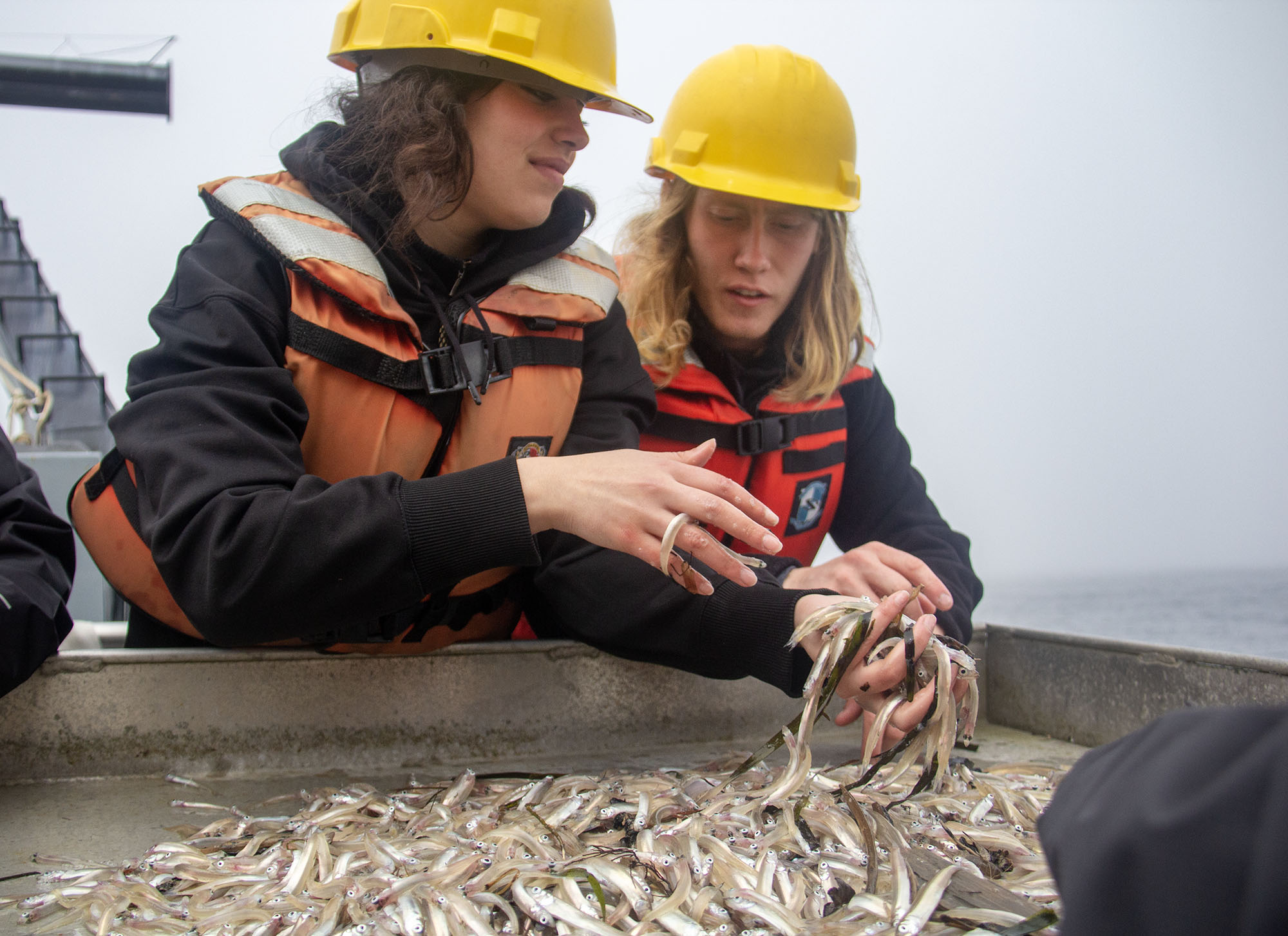
    Adjacent to  modern flat screen navigation monitors, student Maddy Ho is filling out a worksheet tallying the living organism totals (hand counted by the students) that were caught in the first trawl of the day. Top of the list shows: 138 Dungeness crab, 147 shrimp,  27 ctenophores, or comb jellies.  

    Photo by Alex Anderson | Oceanography student Miriam Cima holds up squid that was caught using one of the R/V Coral Sea sampling nets.

    “We do four cruises per semester,” Ho explains. “Biological, geological, chemical and physical.” 

    Powering three miles out into the open ocean, the Coral Sea was finally home again, riding growing waves. Those not quite at-home made good on Captain Jim Long’s advice given at 8:00 a.m. before leaving the marina. 

    “If you’re going to get sick – it goes over the side. Try to do it on the downwind side,” Long said. 

    As a couple of students stood queasy on the starboard side of the sturdy yacht, Trinity Abercrombie explained the critical role the Coral Sea plays in education. 

    “I don’t think that I would be into this major as much as I am if it weren’t so hands-on. The Coral Sea is definitely a hands-on experience and you get to be in the field working as soon as you join the major.” Abercrobie said before adding, “ It gives you a perspective on your future – like what you’re actually going to be doing in the field later on.”

    In between exercises carried out by students of oceanography 260, a small team of students conducted the first series of measurements as part of their year-long senior project. One member of this team, Simon Kurciski, served six years in the Navy, completing many long submarine missions. His longest stint below the surface, Kurciski said, was 51 days. Now though, Kurciski’s time at sea serves a much different purpose. 

    “We are comparing the effect of different photosynthesizers in the water on the chemistry of the water surrounding them,” said Kurciski. “Specifically we are looking at the effects that eelgrass in Humboldt Bay and kelp up in Trinidad have on perimeters like acidity, dissolved oxygen, total carbons, CO2.”

    Kurciski and his team methodically gather water samples from two meters below the surface, then transfer the water into empty beer bottles. The amber tint of the bottles coupled with mercuric chloride added by Marcos Moreno gives the researchers a time capsule of sorts. The tint blocks light from further affecting the biological material.

    “The reason we are adding these chemicals is to essentially stop the biological processes,” Moreno explains. 

    While the sampling is conducted exclusively off of the California coastline, Kurciski emphasizes that the results will reflect the real world implications of human-caused climate change. One test result that specifically interests Kurciski is the samples’ pH.

    “Since the industrial revolution the ocean has increased in acidity by around 30%. That’s huge. We’re already living in an ecosystem that has been dramatically altered by humans in every way,” says Kurciski. “We’re trying to catch up and understand the effect of the changes that we’ve already brought.”

    “The sad thing about climate change -and broadly, human-caused changes- is that a lot of the change is already locked in… deep ocean water circulates very slowly,” said Kurciski. “The oldest deep ocean water can be up to 1000 years old – in the Pacific. That extra carbon that we’ve put in there – that isn’t going anywhere.”

    The future of the Coral Sea will again be determined in-part by an arm of the US government – though this time it’s not the DEA. Instead, hawk-eyed regulators in California will play a large role in the Coral Sea’s future. 

    “The CA air quality resources board is mandating that we replace all of our engines – we have five engines,” Long explains from the ornate bridge of the ship. He’s been working on the Coral Sea for fifteen years, serving as captain for three. “We’re looking at a half million to a million just for new engines by 2025. And then we still have an old boat. So we are trying to decide what to do to go forward. There’s going to be some big changes coming.” Importantly, Long assured, “The Coral Sea is not going anywhere.”
  • HSU Mycology Club Identifies Mushrooms for National Research Project

    HSU Mycology Club Identifies Mushrooms for National Research Project

    Students at HSU participated in the iNaturalist-sponsored Mycoblitz to contribute to the North American Mycoflora project

    Humboldt State University’s Mycology Club is collecting samples of mushrooms and sending them to Purdue University for DNA testing.

    In association with iNaturalist, the Humboldt Bay Mycological Society and the North American Mycoflora Project, the Mycology Club is helping a national team of scientists record the location and species of as many fungi as possible.

    The North American Mycoflora Project will allow the scientific community to compile and use a huge amount of knowledge and data about the identity and location of macrofungi in the United States.

    “The sheer quantity of data getting piled in will give [scientists] a better idea of where species grow in the world. Sometimes people find species in a place where they were thought to be gone thousands of years ago.”

    Lucas Burton

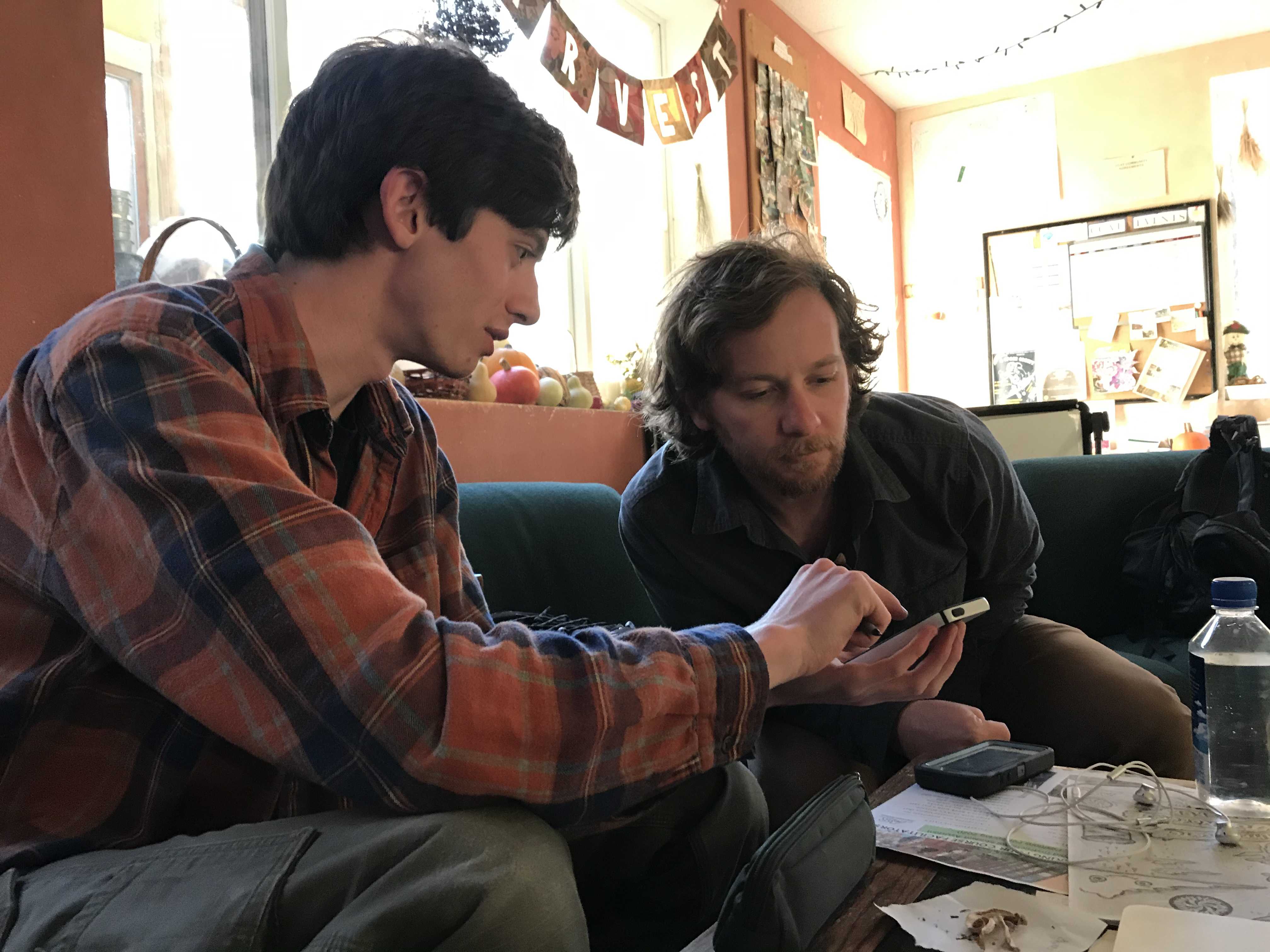
    Mycology Club members Lucas Burton and Caleb Von Rossum spent a cold Monday afternoon documenting their mushroom samples in the bottom of the Campus Center for Appropriate Technologies. Burton and Von Rossum recorded their amateur identifications of the mushroom and the date and location where it was found on a little slip of paper that would travel with their specimen.

    “We are using iNaturalist,” Burton said. “We upload a photo and GPS location, and people from all over the world can come together and help us positively ID it.”

    iNaturalist is a popular tool for biologists and botanists who want to take advantage of citizen science for data collection. Von Rossum mentioned a lot of people in the club record their mushroom finds on iNaturalist, but Burton and Von Rossum were taking it to the next level by mailing in their samples.

    “The sheer quantity of data getting piled in will give [scientists] a better idea of where species grow in the world,” Burton said. “Sometimes people find species in a place where they were thought to be gone thousands of years ago.”

    Mycology Club President Austen Thibault worked with the Humboldt Bay Mycological Society to get the Mycology Club participating in the Mycoblitz, the official iNaturalist mushroom-recording event.

    “Contributing to the Mycoblitz, you could easily be one of really just a few thousands of DNA specimens ever taken in the history of the globe. And for the rare specimens, your name will be saved with the specimen forevermore.”

    Austen Thibault

    The Mycoblitz was a national week long mushroom foraging event which challenged citizen scientists to record the location of as many mushrooms as they could. Participants rummaged through undergrowth for mushrooms and submitted pictures of their finds on iNaturalist. Locally, the Mycology Club was encouraged by the Humboldt Bay Mycological Society to participate.

    The Mycological Society offered a thorough training on iNaturalist and mushroom identification to prepare participants for the Mycoblitz challenge. The data and specimens that were gathered will be sent to Purdue University for DNA testing so they can be incorporated into the North American Mycoflora Project.

    “Contributing to the Mycoblitz, you could easily be one of really just a few thousands of DNA specimens ever taken in the history of the globe,” Thibault said. “And for the rare specimens, your name will be saved with the specimen forevermore.”

    The Mycology Club meets every other Wednesday in the Campus Center for Appropriate Technologies at 5:00 p.m.

  • Inspiring the Next Generation of Anthropologists

    Inspiring the Next Generation of Anthropologists

    Assistant Professor Gordon Ulmer, Ph.D draws from his real world research experience to inspire students

    As human hands built roads hundreds of miles long, erected cities covering hundreds of square miles and developed rich, diverse cultures, the experience of human beings has changed and morphed. The evolution of our experiences is researched and studied by the scientific discipline called anthropology.

    The world in which humans live seems regular. It’s easy to believe our towns and cities are areas humans have always been, but that’s not the case. Our roads, transportation, electricity generation and super markets are easily taken for granted.

    For generations, humans have worked hard to turn the world into the convenient form it is today.

    Understanding the scope and scale of humanity is a vast task that requires cooperation between anthropologists and a great number of other scientific and social disciplines.

    In an effort to explore questions about how humans interact with their landscape, Humboldt State Anthropology Professor Gordon Ulmer has committed his academic life to the study of environmental anthropology.

    Anthropologists are generalists. We’re like ecologists. We borrow and we pull and draw upon all kinds of other fields. That’s part of what makes anthropology, I think, one of the best disciplines.

    Gordon Ulmer

    “I look at the relationship between precarity and pollution,” Ulmer said. “[It’s] people’s insecurities and instability in life, contingent labor and how that relates to living and working in a polluted waterscape. The anthropological discipline is about human’s variation, bio-cultural variation across all times and all places.”

    Ulmer typically works with communities who live near polluted water. He investigates coastal areas, rivers and surface waters which are contaminated with everything from sewage to gold mining byproducts. His primary research takes place in the Peruvian Amazon and Costa Rica beaches where he researches how humans contribute to and interact with polluted waters.

    Ulmer’s duty, like most scientists, is to answer questions. The questions that he’s asking, however, are not questions that any one discipline can answer.

    More recently, Ulmer has worked with biologists in Costa Rica as he learns at what extent locals are impacted by polluted runoff on their beaches. Ulmer uses methods ranging from on-the-ground surveys to biological analyses of water samples to answer that question. His use of an array of methods equips him and his colleagues to do good science.

    “Anthropologists are generalists,” Ulmer said. “We’re like ecologists. We borrow and we pull and draw upon all kinds of other fields. That’s part of what makes anthropology, I think, one of the best disciplines. We can collaborate with and also build upon the work of other people.”

    Ulmer is teaching this mindset to his students. At HSU, Ulmer teaches a number of cultural anthropology classes that, according to his students, are really awesome.

    Sophie Maga and Rhiannon Cattaneo are both enrolled in one of Ulmer’s classes: Living in the Anthropocene. Maga shared why she thought Ulmer is such a benefit to HSU’s anthropology department.

    Sophie Maga and Rhiannon Cattaneo are both cultural anthropologists enrolled in Ulmer’s class “Living in the Anthropocene.” | Photo by Collin Slavey

    “I think it’s Gordon’s content in general,” Maga said. “He’s one of the first professors here really diving deep into the Anthropocene and environmental crises and structures that we really need to be looking at that anthropology has lacked.”

    Maga and Cattaneo both said that Ulmer has brought something new to the anthropology department. His teaching methods encourage students to think critically about class readings to prepare them for in-depth conversations.

    “He’s very socratic,” Cattaneo said. “His class is very discussion based. It forces you to use the class time to really think about and process the readings you do.“

    Preparing his students to think and process knowledge is preparing his students to be anthropologists. According to Ulmer, by encouraging deep critical thought, he is equipping his students to contribute to anthropology’s task of understanding the scope and scale of humanity. His students appreciate it.

    “For me, he is a symbol of hope because I see him as an advocate for the next generation of students,” Cattaneo said. “The way he’s approaching [teaching] is very democratic, open and informed, so I think he’s having a very positive impact.”

  • Adventure in aquaponics

    Adventure in aquaponics

    By | Charlotte Rutigliano

    On a warm Friday afternoon, student volunteers help trim eight different varieties of basil leaves for a study headed by undergraduate Fisheries Biology major Bryan Lester.

    Lester is studying which strain of basil grows the fastest using this aquaponics facility, he completed his second trial on Friday. The stains grown in the study are dark opal, holy, Italian large leaf, lemon, lime, spicy globe, sweet Genovese, and Thai.

    CRaquaculture - 01.jpg
    Fisheries Biology student volunteers trimming basil leave to be weighed Photo credit: Charlotte Rutigliano

    A study he might not have been able to do without the help of Coast Seafoods, Hog Island Oyster Co., and Taylor Shellfish. According to assistant professor of Fisheries Biology Rafael Cuevas Uribe, past donations from Ameritas faculty ran out this past summer.

    “The donation we received from these local businesses will help run the facility for about a year,” Cuevas Uribe said.

    Since HSU starting leasing this facility, which belongs to the Humboldt Bay Harbor District, around two years ago Cuevas Uribe and the student volunteers have grown pak choi, lettuce, cilantro, chard, spinach, arugula, kale, and cabbage.

    Cuevas Uribe started this program to help teach students about what aquaculture is and how to maintain and grow in a system like this. CRaquaculture - 06.jpg

    “Aquaponics is an educational tool,” Cuevas Uribe said, “students often run their own research projects, like what Bryan is doing.”

    According to Cuevas Uribe, aside from evaluating growth rates of plants, one of the other student-run research projects was evaluating the growth rates of the fish by changing their diets. A diet that normally consists of pellets made from fish meal, fish oils and other types of oils.

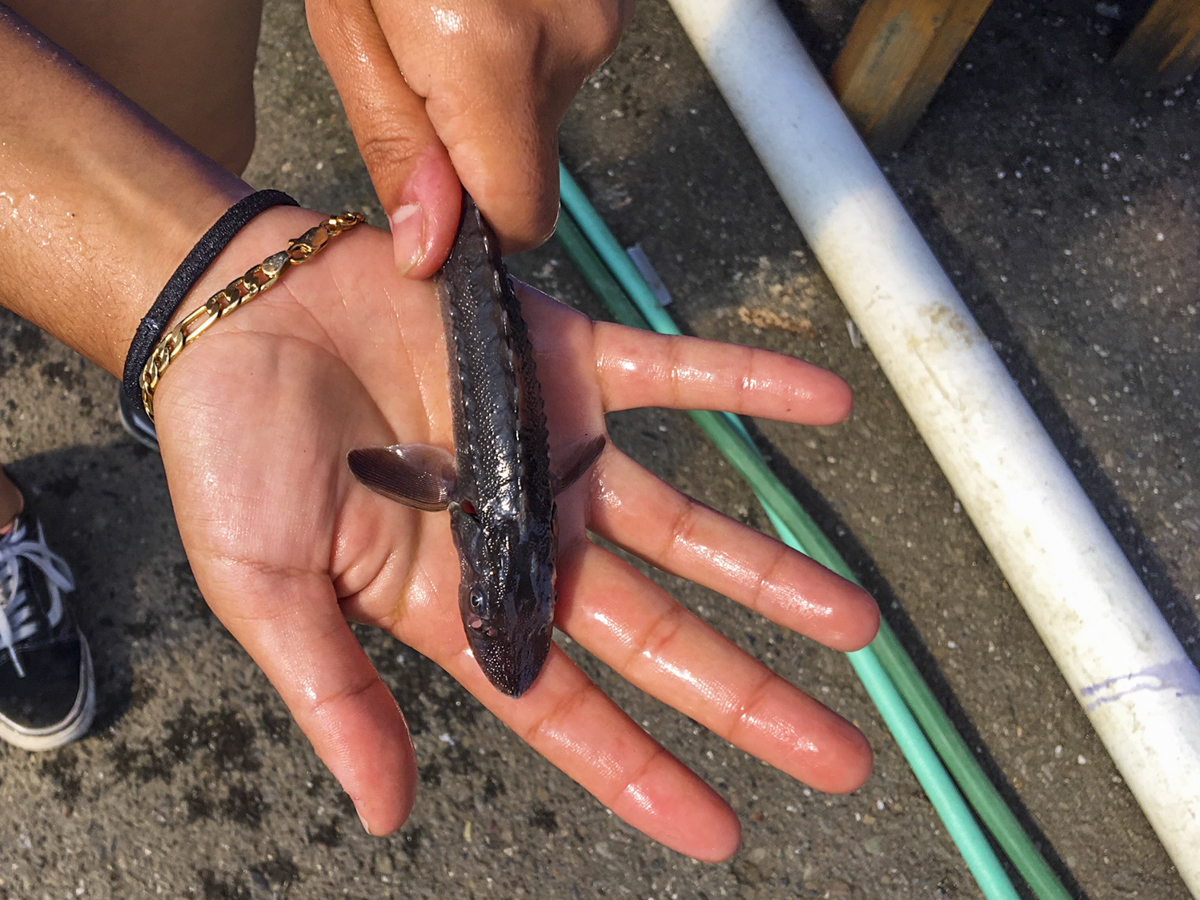
    “This study evaluated the growth and feeding habits of the white sturgeon,” Cuevas Uribe said, “the students gave them a fish-free organic diet, and the results from that study were presented at a national conference.”

    According to Cuevas Uribe, they get the white sturgeon from a fish farm in Galt, Ca.

    “We have about 80 sturgeons that are 2-years old,” Cuevas Uribe said, “and another 400 sturgeons that are a few months old.”

    Cuevas Uribe said that the fish are separated by their biometrics or their size, and student volunteers like senior Fisheries Biology major Alexis Harrison come down to the facility once a day to check on the water quality of the fish.

    “We come down to check the oxygen levels, the temperature, the pH levels, ammonia levels, nitrite levels and nitrate levels,” Harrison said.

    According to Cuevas Uribe, the fish help circulate the water for the plants. The water from the tanks the fish are held in is filtered by a polygeyser bead filter that holds bacterias that have nutrients the plants prefer.

    “It’s a very symbiotic relationship,” Cuevas Uribe said, “even the waste drained from the filter, is strained and reused as soil for the plants.”

    Cuevas Uribe said that everything that is grown at the facility is either taken home by the student volunteers or donated to the open community garden or the Food for People food bank in Eureka.

    Lacy Ogan communications manager with Pacific Seafood, a company who has hired several HSU students as interns to work with the company because of this facility. Ogan said that companies are dedicated to the success of this program.

    “They are in the process of helping to find a long-term funding source,” Ogan said, “so their resources can be focused on increasing internship programs.”

  • HSU Library Faces $150,000 in Budget Cuts

    HSU Library Faces $150,000 in Budget Cuts

    By Erin Chessin

    About $150,000 is being subtracted from the HSU Library due to extreme budget cuts the school is facing.

    This means that $80,000 is coming out of library staff positions and $70,000 is coming out of the library’s research collection, including books, databases, and journals.

    Students and staff will start to feel the impact starting July 1 when the budget cuts will take effect.

    LOLibrary2
    HSU students working on computers at the HSU Library. | Photo by Liam Olson

    Cyril Oberlander, the Dean of the University Library, said he wants to assure students that the school is making its budget cut choices in favor of the students.

    “We have to be strategic about our budget cuts in the end and decide what is most likely to help students out the most,” Oberlander said.

    The library’s biggest concern is to make sure students have all the resources they need to succeed in their education. This means providing more textbooks on reserve, improving the technology, and putting in more tables for students to work at.

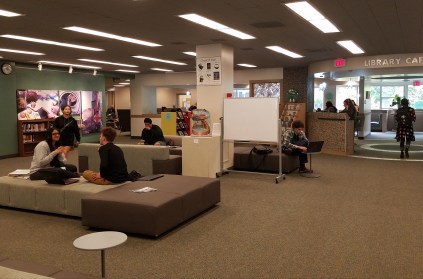
    Recently the library has made new additions to the second floor of the library by adding big screens for students to hook up their computers to and collaboration tables with charger ports in order to make the library environment easier to study.

    The Dean of the Library’s goal is to keep student jobs in the library.

    “I would like to hire more students in the library,” Oberlander said. “Student employment is great for retention and many students are dealing with debt.”

    HSU Financial Affairs has to make budget cut choices amongst its departments, and unfortunately, the school cannot hold off the debt any longer.

    LOLibrary3
    Students working and sitting in the HSU Library lobby. | Photo by Liam Olson

    “We only have a budget that stretches so far and this is the year we have to make cuts,” Oberlander said.

    According to Oberlander, there are two reasons the school is facing debt. One reason is out of HSU’s control.

    “Federal and state funding for higher education has been gradually decreasing over the years,” Oberlander said.

    The second reason for the debt is the school’s overspending. A meeting was held on April 9 where the HSU Center Board of Directors met to discuss the debt issue.

    “During the last five years, the University has been overspending and this year the deficit is at $4.1 million,” Peg Blake, the VP of Enrollment Management and Student Affairs, said in the meeting’s release statement.

    LOLibrary4
    HSU students working in the HSU library. | Photo by Liam Olson

    Hundreds of students flow in and out the library every day, many relying on the computer software, databases, and textbooks on reserve to get their degree. Jocelyn Barber is a junior environmental engineering major who relies on the library to get a hold of pricey textbooks required for a class.

  • Student Strategies: Research

    Student Strategies: Research

    By Liam Olson

    Research is necessary for almost any academic thing you do. Whether it is a research paper, project, or sometimes even a forum post, they all require some sort of background information.

    For junior psychology major Liz Espinoza, research is important for academic work. She uses some of the library databases on the library’s website that are specific to her major to help her get the right information for her work. Not only that but she said that Google Scholar is helpful for sifting through research as well.

    “It’s [research] the only way to test a hypothesis,” Espinoza said.

    Senior zoology major Nicole Gutierrez has a few tips as well for navigating the large amount of research out there. She said that while looking at normal articles on the web, it is important to look at the website source and make sure it is a credible publication. It is also important to look at the author of the source to make sure that they have background on the subject area they are talking about.

    Gutierrez uses the large selection of library databases to more easily find credible research. One tip she has for students who need help figuring out if an article is peer reviewed is to click on the peer reviewed option in the search criteria of the research databases.

    “Stick to research databases so you know you’re getting credible information,” Gutierrez said.

    However, the library website is the not the only place to find resources for research. The library also offers in person research help with a librarian at the Library Research Help desk. Special Collections Librarian Carly Marino, is one of the librarians that helps students at the help desk. She said that the Research Help desk offers students help with developing research topics, learning how to search the library databases, and making citations.

    “It’s a one stop shop for research needs,” said Marino.

    One of the tips Marino gives students is to keep searches down to keywords to get the most relevant search results. She also recommends to look at subject specific research guides put together by the Humboldt State librarians. These guides help students get a starting point for beginning research in the subject they are writing about.

    Special Collections Librarian Carly Marino is one of the librarians that helps students at the research help desk | Photo by Liam Olson

    According to Marino, the library also has various SkillShops available for free to students. Some of these upcoming SkillShops teach students how to make citations and bibliographies which are an essential skills to learn for research papers and projects. The upcoming SkillShops can be found on the HSU library website.

    With these tips and tricks as well as the large amount of resources available, you’ll easily be able to get an A on that final paper.