The Lumberjack


Students Serving The Cal Poly Humboldt Campus and Community Since 1929

Tag: Samoa Dunes

  • Beached Whale on Samoa Peninsula

    Beached Whale on Samoa Peninsula

    Despite help from wildlife responders, the whale has died

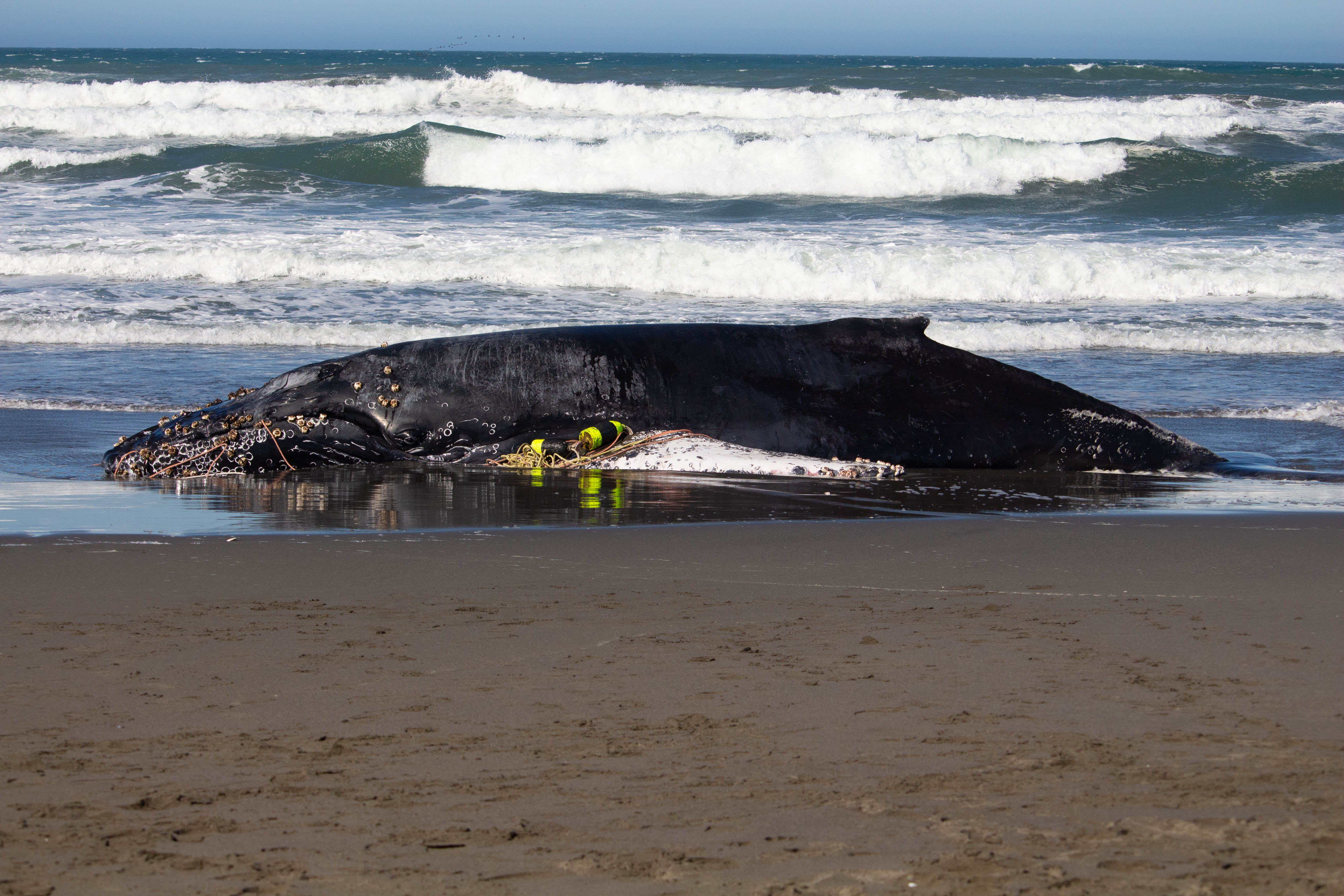
    A humpback whale was found washed ashore on the south end of the Samoa Peninsula early Wednesday morning.

    Eureka resident Berkeley Kijsriopas was on her morning beach walk with her mother and found the whale. It appeared to be wrapped up in a large fish net.

    The pair made a quick call to animal rescuers from HSU’s Marine Wildlife Care Center. Animal rescuers, including HSU’s Dawn Goley, were the first to arrive on the scene, followed by Samoa Peninsula Fire District and the National Oceanic and Aeronautic Administration.

    Humboldt Wildlife Care Center staff rehabilitation Lucinda Adamson was at the scene to help keep people away from the whale as marine biologists worked through an effective plan to cut ties from the whale without harming it.

    Locals gathered with their dogs on leashes and phones in hand as they tried to capture the moment without stressing the whale or the wildlife responders. 

    “Those from NOAA here are working with people from around the country to figure out the best way to help the whale and keep the people safe,” Adamson said. “I’ve just been helping to get gear and people back to keep the whale’s stress down.”

    Earlier today, there seemed to be no serious concerns that the whale may lose its life, but according to Goley and reporting by the Lost Coast Outpost, high tide isn’t until after 8 p.m. tonight and as time passes its chance of survival slims.

    People will continue to work on getting the whale back out to the water as soon as possible, and despite high tide’s timing, there is a chance of the whale floating back out before then.

    “They’ve been cutting some of the lines from him,” Adamson said. “But they’ve been doing a lot of assessments and just trying to get him back out there safely.” 

    Update: The whale has successfully been disentangled, but rescuers are waiting for the tide to rise to ensure he gets back out in the water.

    Update: The whale is still on Samoa beach, but it is alive. Goley remains on the scene, and has been accompanied by sheriff’s deputies and game wardens along with the marine mammal rescuers.

    Update, Thursday 9 p.m.: The whale has died. Goley, along with members of the Northcoast Marine Mammal Center and the NOAA, conducted health assessments, determined the whale wouldn’t make it through yet another night out of the water and decided humane euthanasia was the whale’s best option.
  • Goodbye Moonstone, hello rising sea levels

    Goodbye Moonstone, hello rising sea levels

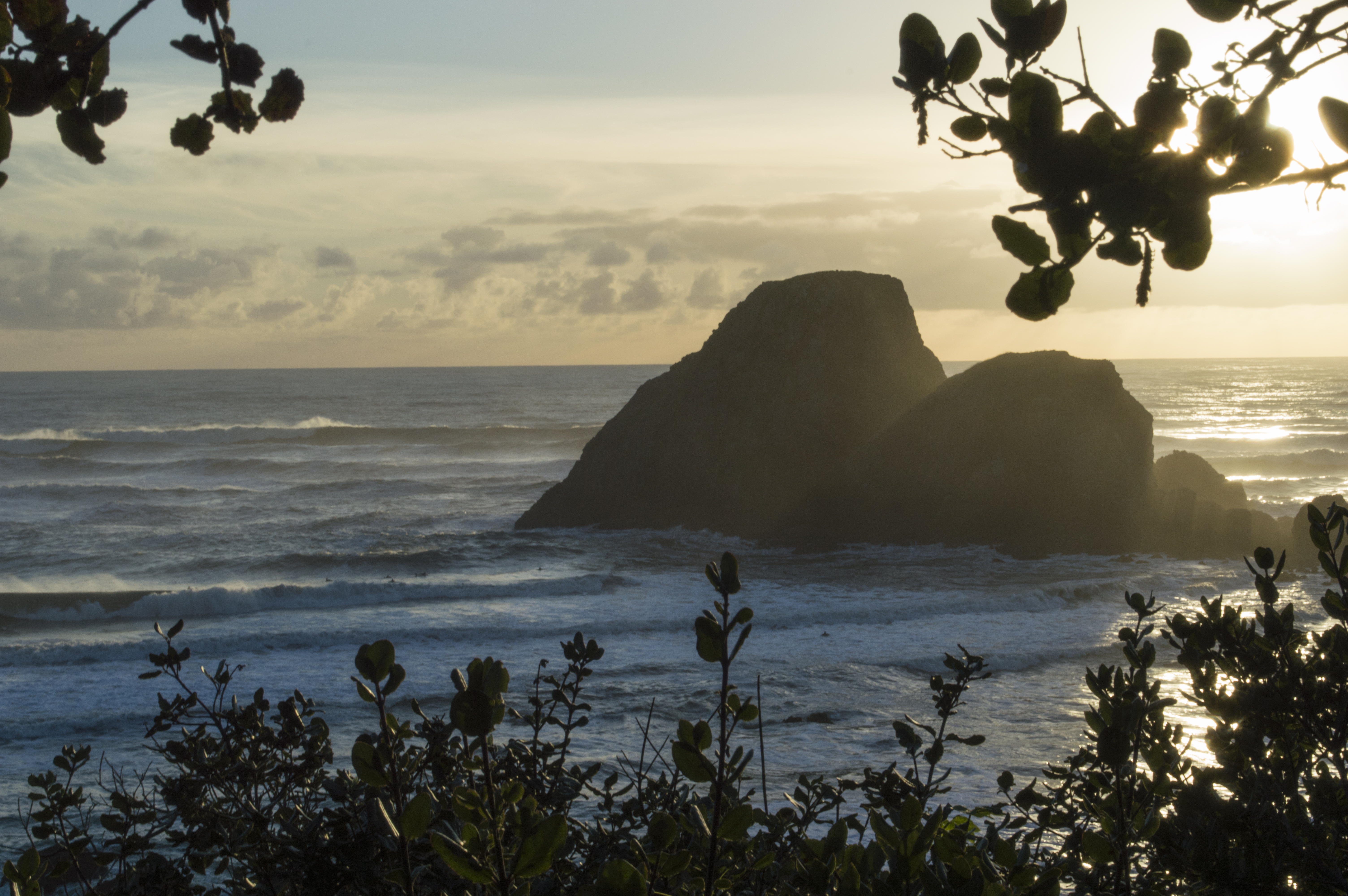
    Picture Moonstone Beach. The sun is setting, creating a silhouette of Camel Rock against a watercolor sky of vibrant pinks and oranges. The ocean is at peace, beautifully calm and picturesque. Now imagine the beach in fifty years or so.

    Moonstone Beach is gone.

    Due to rising sea levels and changing weather patterns, the beach at Moonstone no longer exists.

    Jennifer Savage, the California Policy Manager for Surfrider Foundation, was able to paint a picture of what Moonstone Beach will look like when we fast forward a couple years.

    “It’s not miles and miles of wide open beach on the north side, so I’d imagine that the modeling would predict that the Camel Rock area and the Moonstone area would be the first to disappear,” said Savage. “Then Clam Beach going down toward the Mad River mouth, because it’s wider and broader, may last a little bit longer.”

    moonstone
    Graphic by Kyra Skylark

    A representative for the Surfrider Foundation and an avid surfer and wave lover herself, Savage works to keep the waves clean and preserve the oceans and coastlines worldwide.

    “Essentially, even if we have just a few inches of sea level rise, it’s a vertical. It’s not just the oceans getting closer, it’s that they’re getting taller,” said Savage. “How that affects different places depends on the geography, the weather patterns, the ocean’s current patterns, and a lot of different things.”

    The repercussions of climate change can only be predicted to a certain extent, but there are numerous studies and research constantly happening to determine how our oceans are being influenced and how the could be affected in the future.

    “With Moonstone Beach, we already know that during the King tides the beach is completely covered,” said Savage. “The King tides give us a pretty good preview of what the future will look like.”

    Daniel O’Shea an Oceanography professor specializing in Geological Oceanography was able to provide greater insight on the King tides.

    “The King tides are a play on the words spring tides,” said O’Shea. “Every two weeks, we get what are referred to as spring tides around the new and the full moon, where the tides spring up higher.”

    “Around the winter and summer solstice, we get the highest and the lowest tides of the year, and those are called the King tides,” said O’Shea.

    The King tides show the physical changes to the coastline we can expect in the coming years as climate change continues to alter sea levels.

    “They’re [the King tides] going to be the normal high tide in 15-30 years,” said O’Shea.

    What we currently consider the extreme high tides will become our new normal, and the changes are coming faster than we can anticipate.

    Kim McFarland, the Executive Director of Friends of the Dunes explains how the dunes are being impacted by climate change.

    “We’re doing a climate ready study through the U.S. Fish and Wildlife services, it’s a climate change resiliency study,” said McFarland.

    By measuring how the sand dunes are moving and reacting to changes in the climate, researchers can predict how the environment will change and how far back the dunes will travel.

    “What they’re looking for is how the sand moves through the dunes, because during the winter time when it is wet the sand doesn’t move as much,” said McFarland. “What does happen is we have winter storms, and the storm surges are getting more frequent and more intense and that’s most likely a result of climate change.”

    As the climate changes and sand is continually displaced and moved from the foredune backwards, the dunes themselves will move backwards, potentially displacing buildings and homes near the area.

    As sea levels rise it’s not just the beaches and the local natural environment that will be affected, homes and businesses will be greatly impacted.

    Eventually, individuals with homes and business in the Humboldt Bay will have to be relocated. Homes within the King Salmon area are often flooded during the winter high tide times, so as sea levels rise, those residing within the area and areas nearby will have to move.

    “The key thing is to identify the most vulnerable places and what kind of infrastructure exists in those places and then figuring out what can be moved,” said Savage.

    As we continue to impact the environment, predicting the outcomes of climate change in the ocean and along the coast is very imprecise.

    “What we do know is that the sea is rising and we are not going to be able to stop it, at best we will be able to slow it down,” said Savage. “We’re not preparing for it fast enough.”