Here’s how HSU received the trees and where you can find them
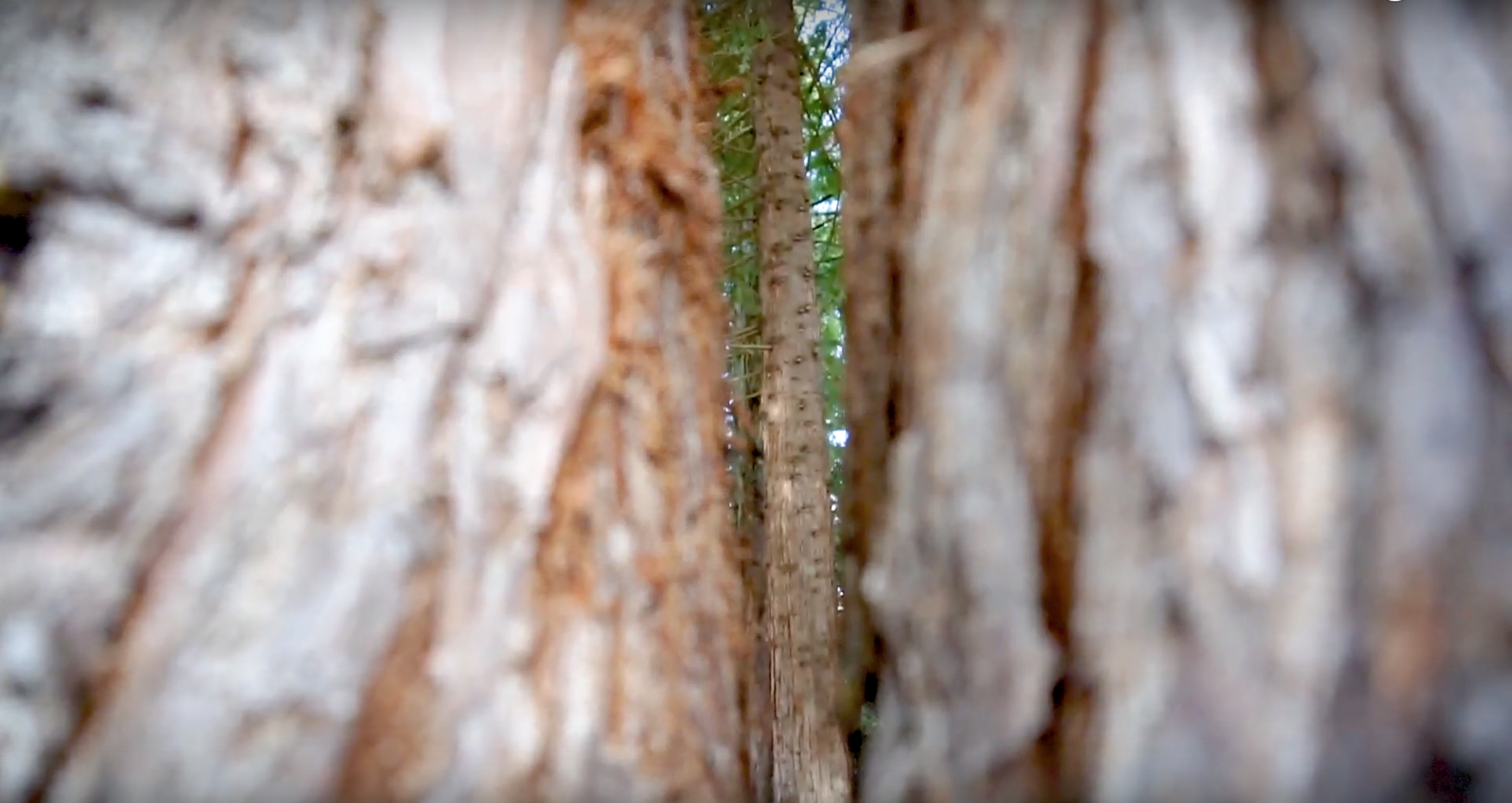
Humboldt State University has a handful of redwood trees grown from seeds that went to the moon.
In 1971, astronaut Stuart Roosa brought around 500 tree seeds with his personal items on the Apollo 14 NASA mission to the moon. Roosa intended to test the seeds to see if space radiation would affect their germination. While he never set foot on the moon, he orbited the moon 34 times while his colleagues walked the lunar surface.
When Roosa returned, he sprouted most of the seeds. NASA then sent the seedlings around the world. Around 1976, HSU received a handful of redwood seedlings and planted them around campus. Some of those trees remain near the theatre arts and natural resources buildings and near the Campus Center for Appropriate Technology and Facilities Management.
Researchers at Sahlgrenska Academy in Sweden have managed to generate cartilage tissue by bioprinting stem cells using a 3D bioprinter. Researchers found a procedure that ensured cell survival from printing so they could multiply. This allowed researchers to develop a protocol that causes the cells to differentiate to form cartilage. The bioprinted tissue is not only able to repair cartilage damage, but can be used to treat osteoarthritis, a condition where joint cartilage degenerates and breaks down.
A team of researchers at the Children’s Hospital of Philadelphia in Philadelphia, Pennsylvania have engineered a fluid-filled “biobag” that allows premature lambs to develop in an artificial womb. Alan Flake, a pediatric surgeon and the head of the research team said his goal is to help premature infants with this artificial womb. It may be a while before it’s implemented in hospitals. Flake estimates that human testing is at least three years off.
The Cassini spacecraft, which has been circling Saturn for the past 13 years, skimmed over the planet’s largest moon, Titan, last Saturday. Titan’s gravity will pull Cassini into the narrow gap between Saturn and its innermost ring, a place where no man made satellite has gone before. The spacecraft will enter that gap about once a week until Sept. 15, when it will crash into Saturn and be destroyed.
An archeological research team headed by study leader and paleontologist at the San Diego Natural History Museum, Tom Deméré, said they’ve found signs of ancient humans in California between 120,000 and 140,000 years ago. This is more than one hundred thousand years before humans were thought to exist in the Americas. If the research team’s findings are correct, their findings at the Cerutti mastodon site could rewrite the history of humankind.
This website uses cookies to improve your experience. We'll assume you're ok with this, but you can opt-out if you wish. Cookie settingsACCEPT
Privacy & Cookies Policy
Privacy Overview
This website uses cookies to improve your experience while you navigate through the website. Out of these cookies, the cookies that are categorized as necessary are stored on your browser as they are essential for the working of basic functionalities of the website. We also use third-party cookies that help us analyze and understand how you use this website. These cookies will be stored in your browser only with your consent. You also have the option to opt-out of these cookies. But opting out of some of these cookies may have an effect on your browsing experience.
Necessary cookies are absolutely essential for the website to function properly. This category only includes cookies that ensures basic functionalities and security features of the website. These cookies do not store any personal information.
Any cookies that may not be particularly necessary for the website to function and is used specifically to collect user personal data via analytics, ads, other embedded contents are termed as non-necessary cookies. It is mandatory to procure user consent prior to running these cookies on your website.