The Lumberjack


Students Serving The Cal Poly Humboldt Campus and Community Since 1929

Tag: Student Disability Resource Center

  • Question For Facilities Management

    by Carlos Pedraza

    On Wednesday, Sept. 14th the Cal Poly Humboldt Facilities Management and Smith Group in Nelson Hall presented their physical campus plan for expanding the campus to the community. The plan is in the discovery phase. 

    The forum was led by Associate Vice President of Facilities management Mike Fisher. A full work plan was shown beginning with the forum and ending in July 2024 when the final plan will be presented. 

    During the forum, students and community members asked questions of plans. A major concern from the community was housing. Throughout, there were questions and shouts about housing. When Fisher addressed the question and made the point that the University wants to work with the town of Arcata, a man in the crowd shouted, “It’s been a problem for 40 years,” referring to the housing crisis in Humboldt county. 

    Ed Fitzgerald, a retiree who has lived in Humboldt since 1973, said, “Adding more housing on the existing infrastructure is not a good idea, we need more infrastructure.” 

    In regard to housing, Fisher said, “You find a lot of the housing inventory has been absorbed by single family homes by non-students and that’s driving difficulties.”

    Fisher went on to state that to solve the housing problem will require a community effort with the university.  

    Candance Kelsey, a Humboldt alumni and local business owner, inquired how the plan would keep money local and in the community. Fisher responded, explaining there is public bidding and other opportunities for smaller businesses to work with the university. 

    “When there are suitable candidates that can [fulfill the bid], then they’re in the running,” Fisher said.

    Staff from the Student Disability Resource Center also brought up accessibility issues on campus and maintenance of current housing. Another question asked by a student was the plan for gender neutral and inclusive bathrooms. 

    The student speaker said, “I have to go five minutes away to use the bathroom for my classes.” 

    Audience member Arlene Wynn also asked for shower facilities for gender neutral students. 

    Rosa Sheng, a presenter from Smith Group, responded, “In our work as architects, the next phase of design is the inclusive all gender design.” 

    She explained how the planning wants to add gender inclusive bathrooms and lactation rooms in the new buildings and current ones. 

    Throughout the meeting students entered and left as classes started, repeatedly asking for the hour-and-a-half long forum to be at a more appropriate time for students and those who work 9 to 5 jobs. Fisher acknowledged the comments.

    The physical campus plan website is the point of contact for students, community members, and organizations to express their concerns or views to the University.

  • Retention Rate on the Rise at HSU

    Retention Rate on the Rise at HSU

    More Humboldt State students are electing to stick around, but there’s still work to be done

    Corrections: a previous version of this story incorrectly quoted Casey Park as saying “We’re absent as an institution.” The quote should have said “We were absent as an institution.” The story also wrongly included “interim” in Jason Meriwether’s title.

    Humboldt State revealed more students were staying on its campus rather than taking off for other schools or ventures in a Jan. 31 press release.

    Tracy Smith, the director of the HSU Retention through Academic Mentoring Program, said she was proud of the work she and her peer mentors have accomplished over the years.

    “I think Humboldt sincerely believes that whether students decide to stay at Humboldt or not is really a product of our entire campus community and off-campus community,” Smith said. “RAMP really is designed to support incoming students and them finding a place where they feel a connection.”

    “85 percent of new first-year students said if they were given the option to choose a college again, they ‘probably’ or ‘definitely’ would attend HSU again.”

    National Survey of Student Engagement, spring 2019

    A study done in conjunction with HSU by the National Survey of Student Engagement in spring 2019 provided some data on student perceptions of HSU.

    “85 percent of new first-year students said if they were given the option to choose a college again, they ‘probably’ or ‘definitely’ would attend HSU again,” the study said. “And 89 percent of first-year students said their overall experience was ‘good’ or ‘excellent’, compared to an overall CSU system rate of 84 percent.”

    Jason Meriwether, Ph.D., vice president for Enrollment Management, said a few things have contributed to the increased retention rates, including Enrollment Management staff and related faculty streamlining the registration process and connecting students with support services—all in an attempt to create a sense of belonging for students.

    “It’s the experience but it’s also the listening and packaging it into one,” Meriwether said. “So, all of that is about looking at the students and giving them what they’re asking for first, and using the resources that we have to create an experience for the student.”

    Meriwether said his staff’s hard work has paid off by meeting student needs.

    “We have to be aligned with what students are expressing that they need and putting ourselves in a position to support students,” Meriwether said.

    “There wasn’t attention given to the most affected and traumatized students. And those are the students who went back to where we recruit from and said ‘Humboldt is not a place for me,’ and ‘Humboldt is not a place for you.’”

    Casey Park, HSU alumna

    He noted a growing trend at HSU of transfer students outnumbering first-time freshmen. HSU has needed to move around campus resources to accommodate the influx of transfer students.

    “It’s about being nimble and seeing where the student population is going and meeting those needs,” Meriwether said.

    Meriwether added that in recent months, the Student Disability Resource Center and cultural centers have received major face-lifts, which, in turn, have opened up more doors for students.

    Casey Park, an HSU alumna, was glad for the rising number of retained students, but said the campus administration’s past actions around retention shouldn’t be ignored as a new wave of measures are enacted. Park is an Associated Students coordinator, but gave her perspective only as an alumna.

    “We are still going to need to reconcile the years where we were neglectful of students,” Park said. “It’s going to take a lot of really good decisions to hold ourselves accountable for that and kind of be like, ‘We were absent as an institution.’”

    Park said the HSU administration’s inaction regarding the Josiah Lawson case and other events affected previous student perceptions of HSU.

    “There wasn’t attention given to the most affected and traumatized students,” Park said. “And those are the students who went back to where we recruit from and said ‘Humboldt is not a place for me,’ and ‘Humboldt is not a place for you.’”

  • A story of resilience

    A story of resilience

    By | Ian Benjamin Finnegan Thompson

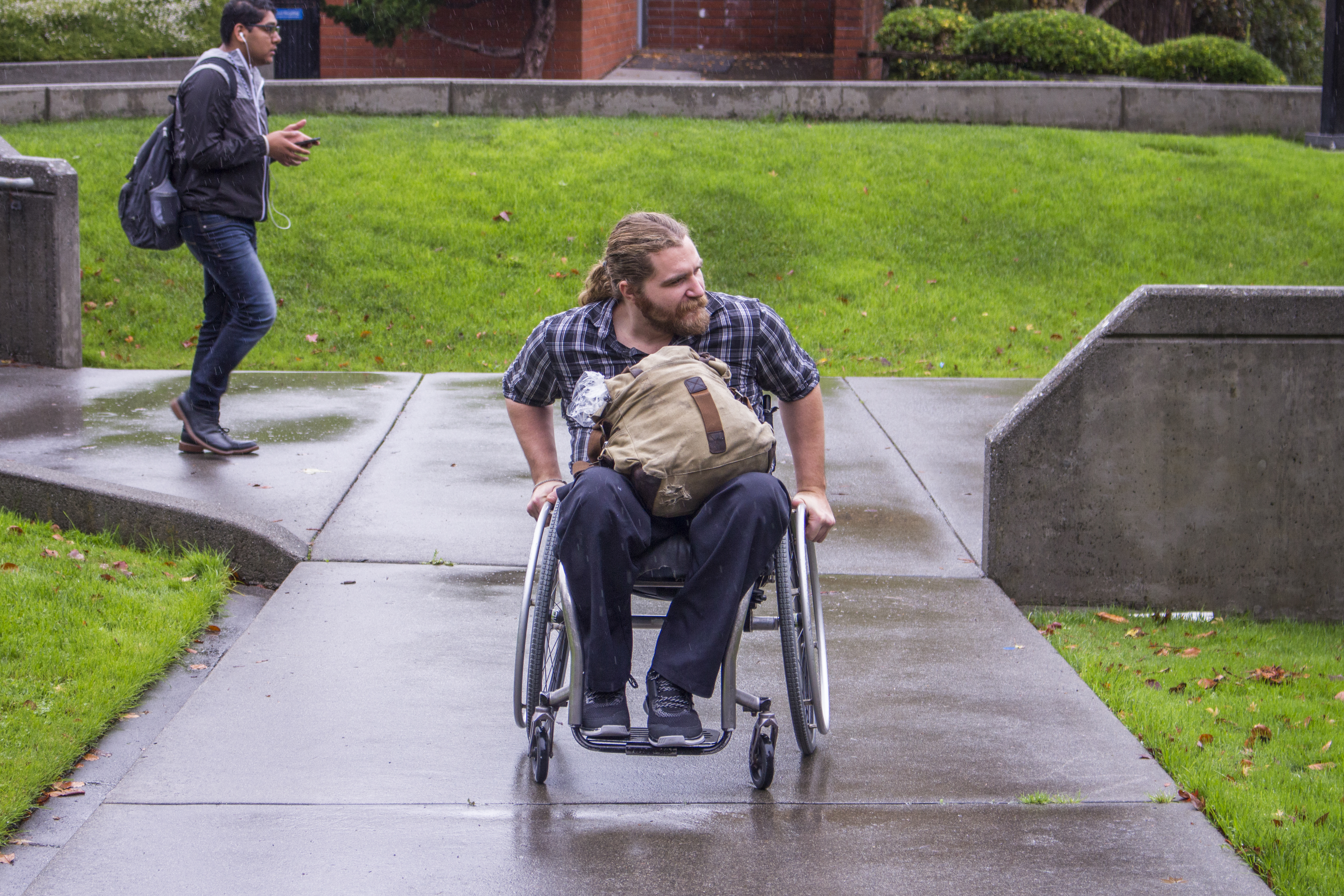
    Jeremy Meed’s strength is tested every time he hauls himself up into his truck from his wheelchair. Meed lifts his whole body weight up into the passenger seat of his truck every night to sleep in his vehicle. His feet swell up from sleeping upright. All his personal belongings lie in the passenger seat and the cab of the truck. Since the beginning of summer, Meed’s truck has been his home.

    Thompson.Ian.Feature-5920

    “Using the bathroom, not having a comfortable place to sleep and not being able to cook,” are some of the hardest parts of living in his truck said Meed.

    When Meed first moved out to Humboldt from Ohio he lived on campus at the College Creek apartments. Unfortunately, this semester his financial aid was only enough to cover his tuition.

    Meed is part of possibly up to 15% of HSU students who are homeless according to a survey done by Chant’e Catt of the HSU Homeless Students Advocate Alliance in 2016. Meed is also physically disabled making it even more difficult to find housing in an area with an already severe housing shortage.

    At the age of 16 Meed ran away from home with his girlfriend from South Carolina in his Subaru. Somewhere on the outskirts of Atlanta Meed fell asleep at the wheel and crashed his car. The next thing Meed remembers is waking up in a hospital.

    “I woke up with a tube in my chest and I couldn’t feel my legs,” said Meed.

    Since then Meed has been paralyzed from the chest down.

    Meed used to sleep in his truck on campus until University Police Department told him it was illegal to do so. Now Meed finds places away from people’s homes to park his truck and sleep. He doesn’t feel safe staying at the homeless shelter in Eureka and said he wouldn’t feel safe parking near the shelter either.

    Meed is continuing to look for housing but it’s difficult for a low income paraplegic to find housing in a county that the Humboldt County Grand Jury in 2015 said has a “critical lack of affordable housing”.

    There is the Humboldt County housing section 8 voucher waitlist Meed was hoping to get onto which helps low income non elderly disabled residents with rent but the voucher waitlist has been closed now in Humboldt County for over two years.

    According to Affordable Housing Online there are around 1,500 affordable low income apartments available in Humboldt County. But according to the U.S. Census Bureau, roughly 20% of Humboldt County residents are living in poverty. That’s 20,000 people.

    Many of the low income apartments available are upstairs making them inaccessible to Meed. Others don’t have the proper bathroom door width for a wheelchair to fit into.

    Now in his second year as a music major, Meed spends his days practicing his guitar at the music department. He picked up his love for guitar while living in Ohio with his family around seven years ago.

    Meed also works at the Humboldt State University Testing Center which helps students registered with the Student Disabilities Resources Center take tests and also provides a space for make up exams.

    “I try to stay out of my truck as much as possible,” said Meed.

    Meed said that Humboldt State University complies to ADA standards but doesn’t do much more than that.

    Getting around campus is another test of strength for Meed.

    “The hills are the hardest part,” said Meed.

    Meed’s wheelchair is a manual chair, meaning it’s push powered, not electric.

    “An new electric wheelchair costs about $5,000.” said Meed. “Some insurance companies will help pay the cost, but they will only help replace the chair every five years,” said Meed.

    In spite of the adversity Meed goes through on a daily basis getting around the aptly nicknamed hills and stairs university in a wheelchair and living in his truck, Meed is determined to continue his education and graduate within the next three years. The resilience he displays is honorable.

    “I’m a unique situation,” said Meed.

    In an area like Humboldt with an obvious shortage of low income housing, it’s necessary that situations like Meed’s be addressed so others like him can get the support they need to live in Humboldt and continue their education.

  • A campaign for things unseen

    A campaign for things unseen

    By | Charlotte Rutigliano

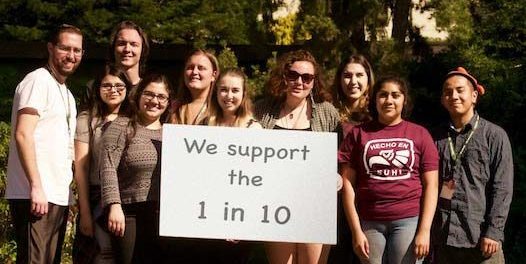
    At HSU, one in ten students have a disability. Most have a registered disability that is non-apparent.

    According to Kevin O’Brien, director of Student Access Services and Student Disability Resource Center, approximately 80 percent of disabilities are non-apparent. This includes chronic health issues, learning disabilities, attention deficits, or psychological disorders that are not immediately obvious.

    “Because disabilities aren’t always apparent, we want to get the word out about this,” O’Brien said. “There’s more than just visual disabilities.”

    This is the first year the Student Disability Resource Center has done this specific campaign. According to O’Brien, past years have been much more dramatized.

    “There was one year that some professors were in a wheelchair for an entire day,” O’Brien said.

    O’Brien said that they try to do something like this campaign every year in the month of October because October is Disability Awareness month.

    The Student Disability Resource Center partners with Tri-County Independent Living center to put on the campaign.

    “We try and encourage self-advocacy for students,” O’Brien said.