The Lumberjack


Students Serving The Cal Poly Humboldt Campus and Community Since 1929

Tag: student housing

  • University promises on-campus housing for returning students following backlash

    University promises on-campus housing for returning students following backlash

    by Angel Barker, August Linton, and Dezmond Remington

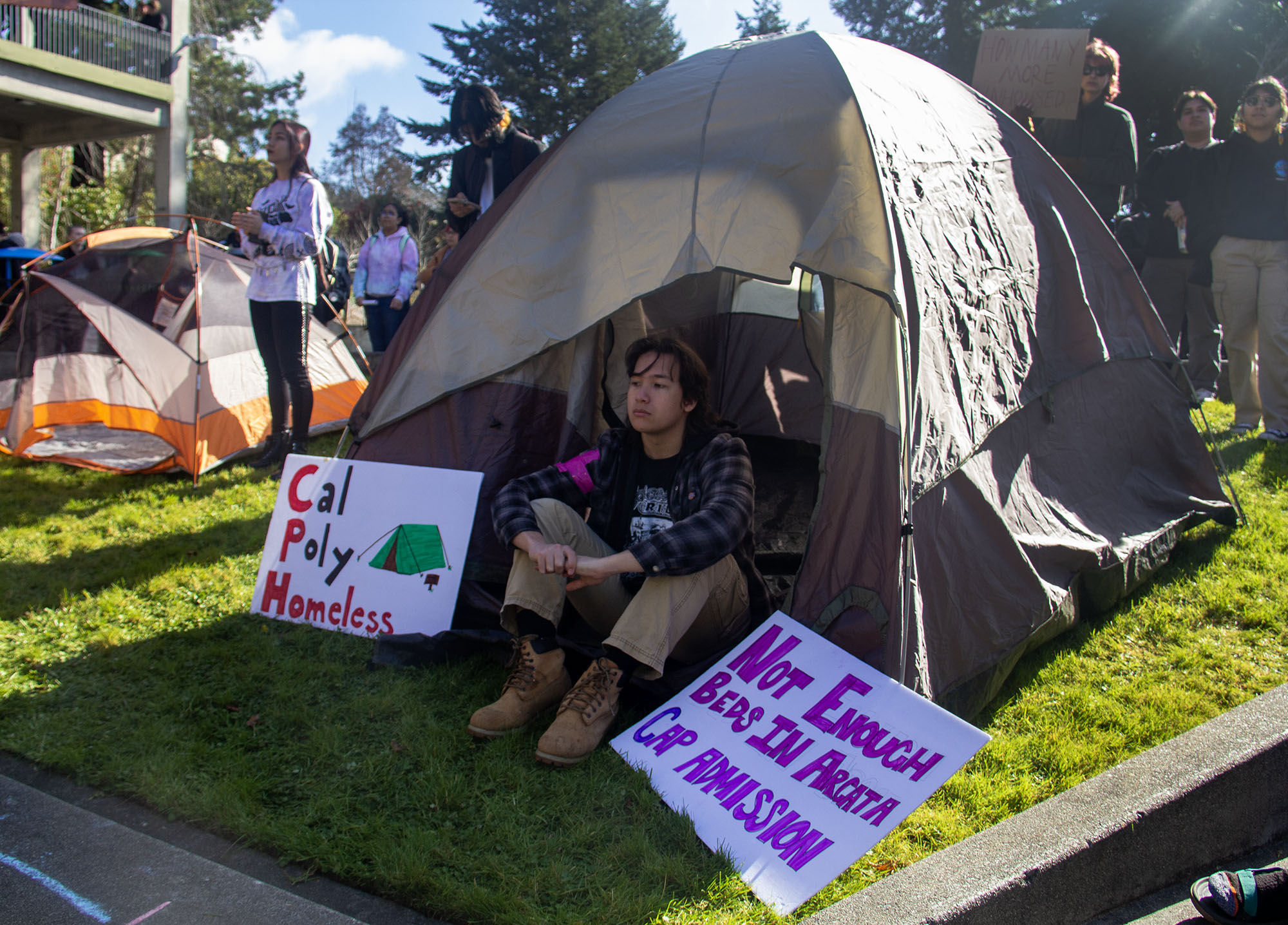
    A housing protest on Feb. 8 in the U.C. quad drew hundreds of frustrated students, many of whom stayed for several hours. Dozens of students used the open mic to share their thoughts with the crowd about the housing crisis, and the impact of the university’s recent announcement that returning students would not be offered the option to live on campus in the fall.

    In the end, the University relented, announcing on Feb. 10 that 600 on-campus beds in Creekview and the College Creek apartments would be reserved for returning and transfer students. In a meeting of the Associated Students Board of Directors, CPH Executive Director of Auxiliary Services Stephen St. Onge provided other updates on the University’s ongoing plans for student housing in Fall 2023.

    Students will not be penalized for leaving on-campus leases early, and will receive partial refunds if they choose to live elsewhere.

    St. Onge said that the University is working on an amenity package for those students who will be living in the ‘bridge housing’ off campus. There are no details yet on what this package will include, or when this information will be available. The housing website explains that students are collaborating with admin on this.

    Students were frustrated by the lack of concrete answers provided by St. Onge on some pressing subjects, as he avoided speaking definitively on any topic outside of specific updates on housing. 

    At the Feb. 8 protest, Ashe Kolden talked about their experience with being homeless. They moved up to Humboldt right as classes were starting in 2020 with their partner. They weren’t able to find a place to live, so for a period of a whole month they lived in a tent with their partner in a campsite in Samoa. The housing coordinator on campus wasn’t able to help them, but they were eventually able to independently find a spot they could afford. 

    “I’m really lucky to have a tent, I’m really lucky to have a camping stove, and I’m really lucky to have [been homeless] while school wasn’t in,” Kolden said. “I’m imagining students living in those situations while school is in….I’m just scared for every student here who’s going to have a similar experience that I did, because 99 beds at the inn is not enough for all the students who are about to be kicked off campus.”

    Plenty of people simply let their feelings loose about the decision, condemning the university administration. University president Tom Jackson in particular was a target, even though he was not present. One student yelled, “Tom Jackson, if you’re listening, fuck you, you’re a little bitch.” 

    Some of the comments were more hopeful. Associated Students At-Large Representative Gerardo Hernandez spoke to the crowd, saying that the Associated Students were there to help. 

    “What I say to [a fifth of CPH students being homeless] is, that’s bullshit…we’re here to advocate for you,” Hernandez said. “We’re all screwed…we need to stand together.”

    Chrissy Holliday, Vice President for Enrollment Management and Student Success, says the University’s goal is to provide roughly 1000 off-campus beds for returning students, adding an additional 650 beds. Where those beds will be located is unknown.

    The themed housing communities on campus, including Rainbow/Gender Inclusive, Sankofa House, Native American Living, and La Comunidad will maintain their number of students, including returning students, according to St. Onge.

    “There are groups from, I would say, some of the more vulnerable populations, members of the BIPOC community, LGBTQ community, foster youth,” St. Onge said. “We will save spots on campus for them to continue on campus should they desire.”

    Lower-level administrative positions have been on the front lines of the university’s response to controversy in the wake of last week’s housing announcement. 

    “I know I, myself, the folks who work in housing, our campus administration, we hear the concern, and we feel it,” Holliday said. “None of this is anything that we do lightly. We are doing everything we can to put the pieces together for our students in a way that alleviates as much of the concern and the negative impact as we can.”

    “There’s not going to be as many beds as will probably fill the need, but we are going to open some up,” St. Onge said.

  • Comfortable at the Comfort Inn

    Comfortable at the Comfort Inn

    by Angel Barker

    Dorm life is an important part of the college experience, but what happens when your university does not have adequate housing for its population? They turn a hotel into a residence hall. The Comfort Inn in Arcata, located in the Valley West area, is now home to almost 100 upperclassmen students.

    The housing shortage is nothing new in Arcata. For students like Gabriela Mendez, a transfer student majoring in psychology, finding off-campus housing was unsuccessful.

    “I was hoping to find last minute housing off campus,” Mendez said, “but there was nothing.” 

    Mendez has a roommate in the hotel, as all rooms are double occupancy. Each is supplied with two beds, desks, and dressers.

    When asked her opinion about what it is like living in a hotel, Mendez said, “People can say ‘you don’t get the full college experience,’ and like, the college experience might be cool because I am a transfer student, but I am just grateful to have housing.”

    Osiel Palomino, a returning sophomore majoring in environmental studies and management, had the same reaction. 

    “If it wasn’t for that room, I would have held off on going back to school for another semester,” Palomino said. 

    Palomino lived on campus his freshman year in 2019-2020 right before the COVID-19 pandemic, and moved home and took a break from school until classes were back in person.

    Sarah Neumann, a business administration exchange student from Germany, is Mendez’s roommate.

    “We made a good situation,” Neumann said. “I like it because I think we have more space and privacy, especially with our own bathroom.”

    “One thing that I really love is each room has their own shower and bathroom. You don’t have to share one bathroom with the whole halfway, you avoid those problems,” Palomino said.

    In addition to each room having their own bathroom, they also have free amenities like linens, a minifridge, a microwave, TV with cable, housekeeping services, continental breakfast everyday, Wi-Fi, and pool and gym access.

    Compared to living in a freshman dorm on campus, Palomino said that living in the hotel still feels relatively the same.

    “You still feel the college experience because everyone living there is students,” Palomino said. “You still feel like you’re on campus even though you’re not.” 

    A large banner welcoming Cal Poly Humboldt students and the friendly front desk staff also help with that feeling.

    Staying connected can be difficult, but the RAs and the Office of Housing and Residence Life are hard at work to help the students feel included in campus life.

    “The RAs have little events, to make it feel like the real dorm college experience,” Mendez said.

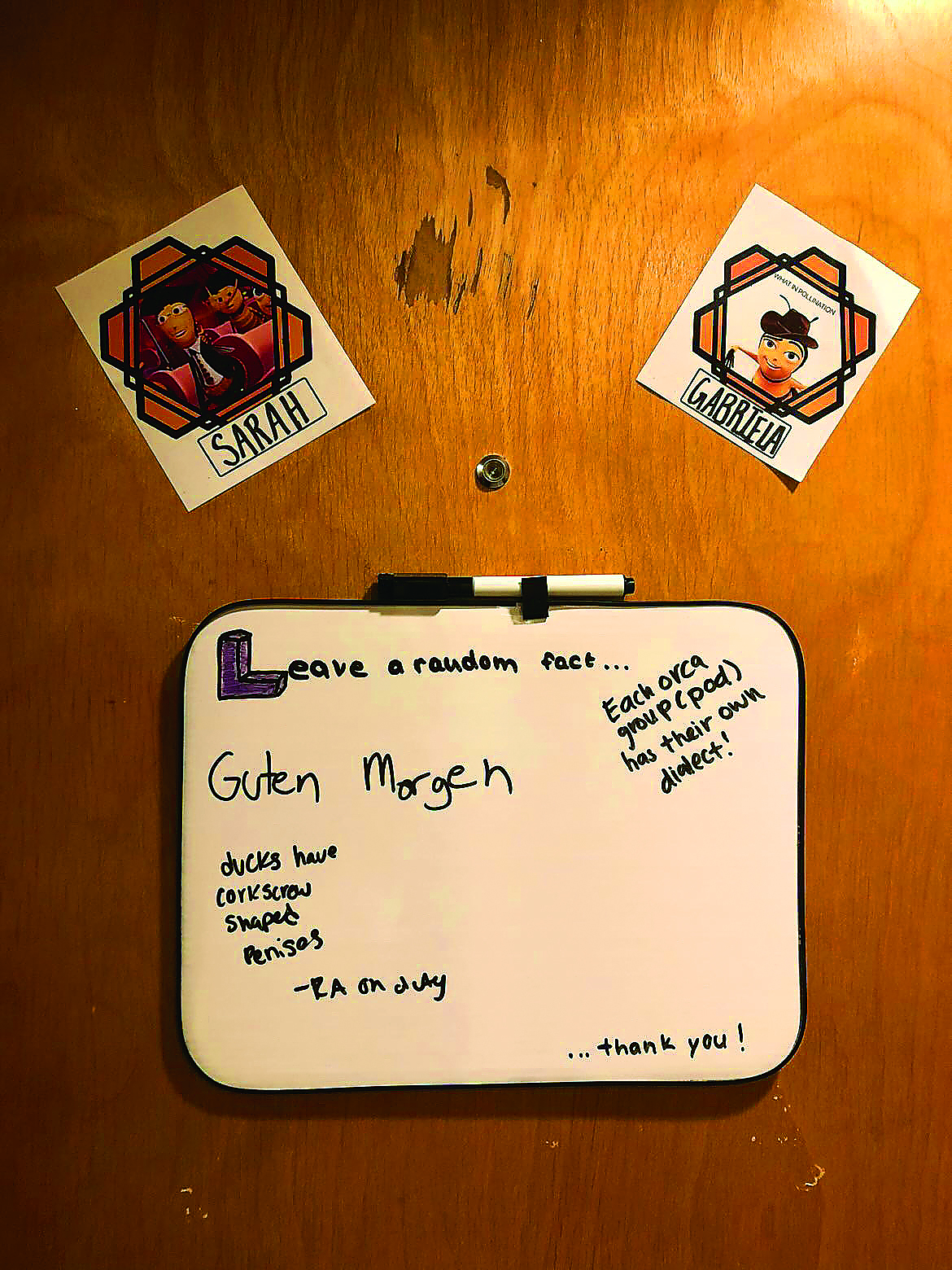
    Neumann and Mendez even bought a whiteboard for the outside of their door.

    “People can just write anything, so we can still communicate with others when we don’t always see them,” Mendez said.

    Overall, students are satisfied with the University and the Comfort Inn solution to the housing shortage.

  • Nimby threatens Cal Poly Humboldt student housing

    By Gabriel Zucker

    The California housing crisis can be summed up with one question: to build or not to build? The status quo has always favored single-family homeowners. The recent win for NIMBY (Not in My Back Yard) over UC Berkeley has brought light to the biggest problem California college students are going to face for the foreseeable future: the lack of affordable housing.

    California Governor Gavin Newsom passed a stack of bills focused on fixing the California housing crisis. The biggest bill was Senate Bill Number 9, which allows a four housing unit on a single-family lot. This prioritizes affordable housing for future generations and moves away from the outdated practice of single-family zoning.

    NIMBYs are local homeowners against affordable housing in their neighborhoods. They argue that their home values will drop and they will lose the peacefulness of single-family-owned housing communities if affordable housing structures were built in the area.

    The California Supreme Court sided with NIMBY in a court case against UC Berkeley, going against California’s push towards affordable housing. This forced the school to cut admissions by 2,500 students for the 2022 fall semester. NIMBY won because they argued that UC Berkeley was accepting more students than they could house.

    College students all over California are beginning to feel the effects of the housing crisis. Demand is rising while the options are dwindling. There is a lack of options and if this does not change other colleges will soon be forced to cut their enrollment.

    NIMBYs recent win highlights the division between single-family housing communities and the growing need for affordable housing. College towns are at the epicenter of this issue. College campuses will never be able to house their entire student population. Students rely on the surrounding community to find housing.

    The NIMBY movement is fighting against this change, wanting to preserve a way of life that does not exist anymore. The single-family home is not possible anymore in a changing climate and ever-growing homeless population. NIMBYs are clinging to their current comfortability instead of adapting to the needs of the next generation.

    Cal Poly Humboldt Students will soon feel the effects of this landmark decision. The influx of new students is a great thing for the university’s status but the campus will soon face tough decisions if they do not adapt to the changing times and work with the community to build more affordable housing in the surrounding area.

    A giant problem this semester has been the lack of parking on campus. Students must park farther and farther away from their housing because of the increase of students and stagnation of parking spaces. I had to spend months trying to find an apartment off-campus this past semester. There are already tell-tale signs of the strain the student body is putting on the schools’ resources. If UC Berkeley is a sign of things to come we must adapt before it is too late.

  • Parking Pain Persists

    Parking Pain Persists

    For me, the start of the spring semester means the return of the eternal struggle to find a parking space. Many Cal Poly Humboldt students, both on and off campus, are finding it difficult to find a parking space. Even those of us who usually walk to campus are impacted by a lack of parking.

    The parking situation on and around campus is absolutely abysmal. Campus parking permits and metered parking are expensive and purchasing a campus permit does not guarantee that you will find an open parking space. $157 a semester is a lot of money to pay to not be guaranteed a spot to park. I know students who live on campus who can’t even park outside of their own dorms. I’ve talked to commuter students who have to move their cars multiple times a day to avoid being ticketed.

    You would think that living in an off campus house within a short walking distance of the school would resolve any parking issues. However, parking is still a huge problem for my roommates and I. One side of our street is 4-hour parking from 7 am to 5 pm, intended for students to be able to park off campus and walk if they don’t have a campus parking permit or if campus parking is full. The other side of the street is reserved for vehicles with residential parking permits. I have four roommates and we all have cars. That’s five vehicles that we have to try and fit in our parking zone, which we also share with our neighbors.

    Photo by Nina Hufman | The parking zone in an off campus neighborhood in Arcata, California.

    We can usually fit four of our cars in front of our house if we park as close to the edges of the residential zone as possible. Because my neighborhood is so close to campus, there are usually several student vehicles parked in the 4-hour zone. I often come home to find that our residential parking is full. I am then forced to parallel park, very poorly might I add, across the street from my house.

    Parking, specifically parking enforcement, is something my roommates and I commiserate about almost daily. We sit in our kitchen, talking about how much we hate the guy who enforces parking on our street. He’s a jerk, he takes his job way too seriously, and I honestly think he has it out for my brother. It feels like he targets our street, and my brother’s car specifically.

    He literally stopped my brother in the street to ask him which car was his and tell him that it’s illegal to remove chalk from the tires of your car. He kept moving his little, three-wheeled car in front of my brother to prevent him from walking away. During this interaction, he was in the way of one of my other roommates who was trying to park. Imagine being a middle aged man having beef with a 21-year-old who’s just trying to park in front of his house. That feels like an inappropriate interaction to have with an “authority” figure. As a college student who is just trying to get an education, the last thing on my mind is fighting with parking enforcement.

    I can’t help but think, if I’m fed up with the parking situation, it must be absolutely enraging to have purchased a campus parking permit, but never be able to park. It’s not the students’ fault that they’re parking in my neighborhood. To be honest, it’s a very convenient distance from campus, especially if you can’t park any closer. The real problem is that campus parking is so scarce.

    Cal Poly Humboldt students pay a lot of money for parking to only be able to park on campus sometimes. The issue doesn’t only impact the campus. Student vehicles overflow into the surrounding neighborhoods, creating a lack of parking for everyone who lives nearby.

  • Humboldt’s Hostile Housing

    Humboldt’s Hostile Housing

    By: Rachel Marty

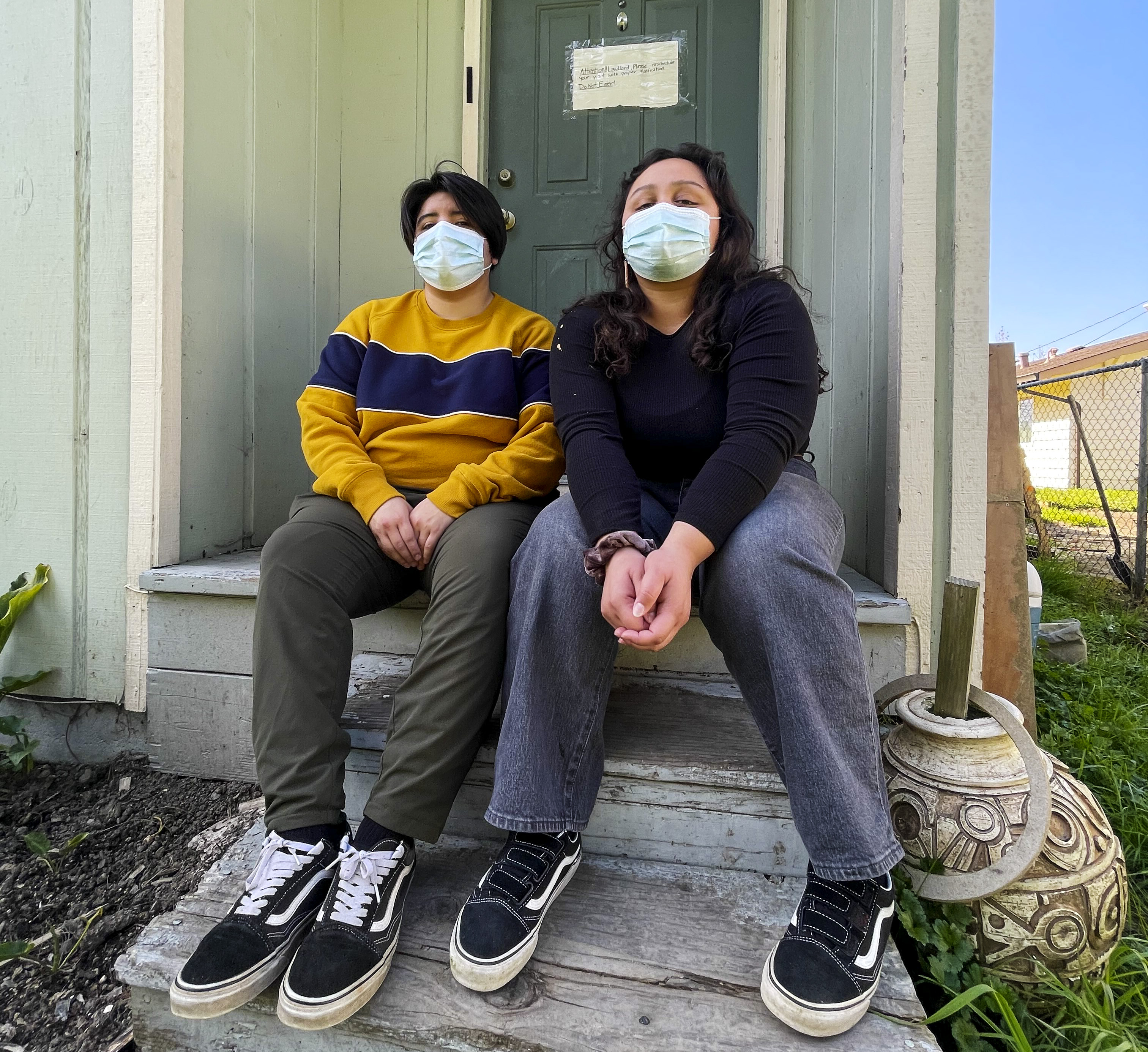
    “I was cleaning and found that mold had covered the entire under part of my mattress and also my belongings,” Charlena Valencia said. “There was also visible infected mold on my clothing.” 

    Valencia, a Humboldt State student, grew worried after finding large amounts of mold in her home as well as beginning to break out in a concerning rash. Valencia said the rash started on their hands. They were originally treating it as eczema and assumed it was due to repeated hand washing and sanitizing. Soon the rash spread to their entire body and they seeked further medical advice.

    With medical confirmation from a physician that mold was the cause of their health issues, the student brought up the situation to their landlord. The student claims the landlord showed no concern and an explicit negligence of the matter. 

    Valencia and their partner, Joelle Montes, spoke at the Arcata City Council meeting on Feb. 3 pleading for more strict regulations for landlords.

    “Myself and others would like to see regulations put in place to protect the community from these types of situations,” Montes said. “The students are an obvious important part of this community and economy, they should be recognized for their contributions. All tenants should be valued and protected.”

    The two HSU students also brought up the electric and gas hazards they struggled with, including a gas leak.

    “My partner and I had no functional heating and after spending night after night in the freezing cold and recent storms, I finally called PG&E myself,” Montes said. “We might not have ever known we had a leak if I did not do that.”

    Due to the gas leak, the apartment was red tagged and they were immediately evicted. According to The City of Arcata’s Substandard Housing Renter Guide a landlord must provide other housing accommodations in this type of situation. 

    “If the inspector find that problems to be so hazardous as to create an immediate threat to life or limb, the City may proceed with eviction due to the hazardous conditions,” the Substandard Housing Guide says. “Eviction would be an extreme case, and if it were to happen, it is the obligation of the landlord to provide temporary lodging.” 

    “She only got us one day at a motel,” Montez said. 

    The students had to make their own accommodations after that one night. Luckily, Valencia and Montez had a friend offer them a room to temporary stay in. Although they now have safe temporary housing, the situation continues to put extreme stress and pressure on the two students. 

    “This whole problem has really affected my academics. I had to literally drop all my classes to deal with all of this,” Valencia said. “We’re students, how are we supposed to work and do academics on top of all this?” 

    Council member, Emily Goldstein, responded to the two students through the Zoom city council meeting with a hopeful acknowledgement of their hardships. 

    “Very impressed with you young people willing to stand up for yourselves and I think it’s something as a council we should really consider looking into infractions for rental properties and safety standards for our renters in Arcata,” said Goldstein. “Their story I think we all know is not unique and that’s really unfortunate.”

    It’s encouraging to see officials recognize students like Valencia and Montes, and Goldstein’s not the only one stepping up.

    A new program led by the university’s Off-Campus Housing Coordinator, Chant’e Catt, aims to better the relationships between landlords and tenants. It hopes to help out students in situations like Valencia and Montes. It’s called the Good Neighbor program and it’s been in the works for over two years.

    Catt says the program was born through a lot of ground-up community research. They held half a dozen town hall meetings on the topic. 

    “We invited landlords, students, community members, pretty much anybody that has to do with housing to come in and talk about their experiences with housing,” Catt said. 

    They found that a lot of tenants need resources to help them understand how to rent, what their rights and responsibilities are, and what the process is actually like.

    “Sometimes our families can’t teach what it’s like to be a good tenant. Sometimes we don’t get the information we need in our family systems to adult well,” Catt said. 

    But being a good tenant is only half of it. Being a good landlord is crucial in building strong community relationships. It’s a landlord’s duty to provide a habitable living environment. 

    While this may be true, we also know that some landlords don’t even deal with tenants housing related issues. Students like Valencia and Montes complain about landlords that simply ignore their complaints of mold, gas leaks, or lack of electricity. 

    Prioritizing housing related issues, following all the city regulations and creating habitable conditions for tenants are important practices to form good relationships within our community. The problems we see between landlords and tenants stem from systematic issues and a lack of understanding on both sides. Programs that aid in educating tenants and landlords, such as the Good Neighbor program have the potential to be extremely beneficial to our community. 

    “Landlords have equity and they are taking a chance and a risk renting to people,” Catt said. “Sometimes people don’t know how to take care of their place, but there are also landlords out there that don’t follow proper rules.”

    There needs to be stronger tenant-landlord relationships, as well as better regulated consequences for both parties. Regardless of their behavior, tenants often do not get their deposit back, meanwhile a neglectful landlord seems to have minimal consequences. 

    “Beyond the law and all that, we’re human. We should not be having people sleeping in mold infested bedrooms or exposed to gas leaks or broken heating in 30 degree weather,” Valencia said.

  • COVID-19 Testing for Move-in Day

    COVID-19 Testing for Move-in Day

    Move-in day is Feb 19, and the Student Health Center is preparing to test the many students returning to campus after winter break. Due to the sharp rise of COVID-19 cases in California at the end of 2020, the school pushed back the date for students to return to their dorms. Now, hundreds of students from all over are returning to HSU and the Student Health Center is getting ready to test all of them, particularly if the planned return to limited face-to-face classes begins in the fall semester.

    According to HSU spokesperson Grant Scott-Goforth, the school has been testing constantly to keep an eye on campus COVID-19 cases.

    “They have been administering a few hundred tests per week, but that’s expected to go up as students move back and face-to-face classes commence,” Scott-Goforth said. “The Health Center has conducted a total of 5,013 tests since they began testing.”

    All this comes not long after a new strain of the virus, which is more contagious, was first reported in Humboldt County. While Humboldt had been lucky enough to have relatively low rates of positive cases, those numbers have steadily increased and pushed the county into the highest restrictive COVID tier. This comes at a time when many still do not qualify for vaccines and those who do have difficulty getting them.

    HSU is anticipating about 350 students which may increase the number of positive significantly. According to Scott-Goforth the positivity rate on campus is relatively low.

    “The positivity rate is 1.3% among students, and has increased slightly since testing began,” Scott-Goforth said. “For comparison, the positivity rate for Humboldt County is 4.03% and statewide it’s 6.9%.”

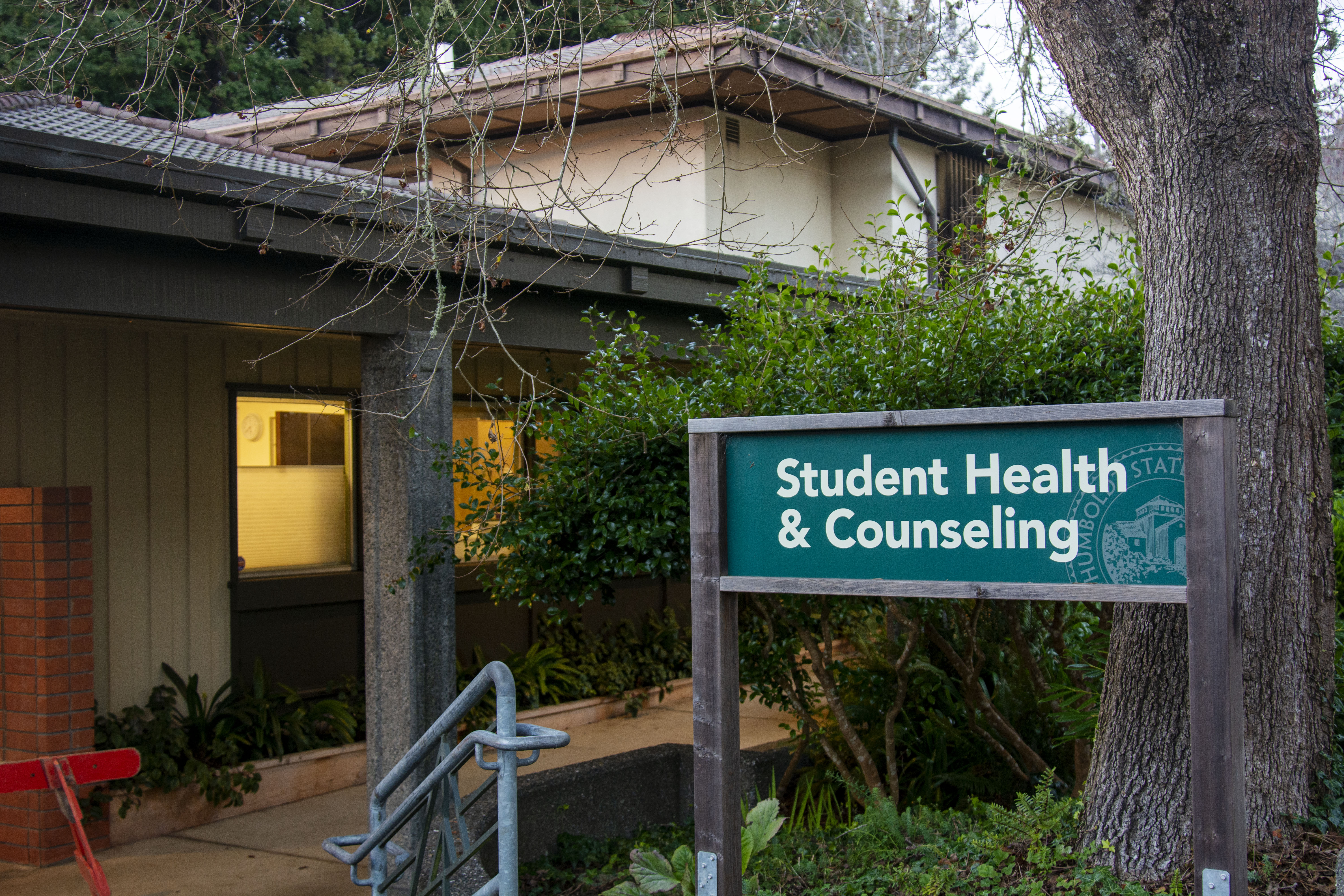
    Continued lockdown means the negative effects on students’ mental health are likely to continue as well. According to Student Health Operations Coordinator Elizabeth McCallion. The counseling office is maintaining several programs made to help students deal with stress and to socialize with other students on campus.

    “We have two support groups that students moving back on campus would particularly benefit from,” McCallion said. “The first is Breaking Isolation, which is focused on finding support, connection, and understanding in this time of social distancing. The second is the living on-campus support group, which is a great group for building community with others living on campus.”

    The links to both support groups can be found on the Counseling web page.

    Despite the risks and challenges of living on campus during the pandemic, many students remain hopeful that the school will provide adequate safety precautions to keep them from getting sick or helping them if they do with quarantine rooms and medical care. HSU student America Hernandez thinks the school is doing a decent job at keeping students safe.

    “I do think they are doing a good job,” Hernandez said. “Since they require COVID tests to move in and encourage self-evaluation of symptoms.”

  • The Village is back

    The Village is back

    Controversial student housing gets another attempt in Arcata

    In August of last year Arcata City Council voted against a proposed housing development called Village Student Housing Project, or simply “The Village.” Although the city council opposed The Village project, they reserved the notion that if changes were made in development plans they would reconsider, that time has come.

    “What we are trying to do on the 30th is to bring community back together,” David Loya, director of community development for Arcata, said. “We want to get a sense of the concerns with the council and provide a working environment so our community can provide feedback to the council.”

    Humboldt County, along with the entire state of California, is falling short for affordable housing while the wealth gap between rich and poor grows larger. According to the nonprofit Housing Association of Northern California, the state is short of 1.5 million affordable rental homes. Humboldt County needs 3,300 new housing units with 1,300 of those being for low-income residents, according to the California Department of Housing and Community Development. Loya said the staff at Arcata City Hall is excited to continue dialogue on The Village and that they support the project because of the housing crisis we are in.

    “Students can’t find housing in Arcata,” Loya said. “They look to McKinleyville or Eureka and the city needs to play a role in fighting for student housing.”

    The Village’s proposal was brought before the city council six times before being shut down by a split vote of two for and two abstaining with one vote absence. The city council received hundreds of letters and tens of hours of public testimony from divided community members. The original development plan for The Village was to be an off-campus student-only housing project, but city council members wanted the project to integrate more than just HSU students.

    City council member Susan Ornelas said in a letter written to The Village developer, David Moon, that “while we need student housing, we need every kind of housing in this community. We need professor housing, we need millennial professional housing, we need housing for young families.” Loya said Ornelas had discussions almost immediately with AMCAL after the project was opposed, addressing concerns with marketing housing instead of only student housing.

    “The project was critiqued by quite a bit of people because of its expense,” Loya said. “But the reality is it’s expensive to live anywhere in Arcata with the average rent being $600-650 per room. The apartments on Foster Ave. are upwards of $800 which isn’t really affordable to students, but that’s where they’re finding to live.”

    According to the City of Arcata, the project owner has reconsidered its development plans and has modified the project to include both open market and student oriented development as well as other “substantial changes.” Loya said the meeting will be open to the public and the developers will be there to answer questions.

    “We would love to hear students talk at the meeting and tell us any ideas they have about the project,” Loya said.

    City council meeting on The Village will be January 30, 2019 | 5:30 – 7:30 p.m. | Arcata City Hall Council Chamber | 736 F Street

  • Letter to the editor

    Letter to the editor

    New Student Housing Community in the Works for Lumberjacks!

    Dear Editor:

    I’m pleased to announce that The Village, a new housing choice, is in the works for students attending Humboldt State University. As you probably know, HSU currently has room on campus for only about 25 percent of the students enrolled, which has made it difficult for HSU students to find housing year after year.

    According to a report funded by HSU, the Arcata housing market is so constrained, some students sleep in their cars or camp in the woods while they look for housing. There is currently demand for roughly 800 new student housing beds in order to address students’ housing insecurity and to support their academic pursuits.

    After various inadequate attempts to increase housing options, the city is now on the verge of having the most viable new housing choice for students in many years.

    The Village isn’t just another apartment building, it is planned as a purpose-built student housing community only half a mile from campus that specifically meets students’ needs with academic amenities such as spacious study rooms, computer lab and presentation room for individual or group study and collaboration, a fitness center with on-demand fitness programs, outdoor community space and secure covered bicycle parking. The Village will also have 24-hour professional on-site management, as well as peer mentorship from resident assistants that will be responsive to students’ needs. This property will also include many sustainable features including solar power, a bicycle-share program and electric vehicle charging stations, and will be built to environmentally conscious Leadership in Energy and Environmental Design (LEED) Silver standards.

    The Village will help improve the reputation of the Arcata community by creating more healthy competition in the housing market and energizing the local economy that is largely fueled by HSU and its students, and will introduce more diversity into the housing mix to reflect the diversity of today’s students and their needs.

    Despite the many positive benefits The Village will bring to the community, there are those who are actively trying to prevent current and future Lumberjacks from making The Village their home while attending HSU.

    If you are in support of the positive housing choice The Village will offer to HSU students and the community of Arcata and want to find out more, please visit this website: https://www.thevillagearcata.com/. You can also contact the Arcata City Council and let them know you support more student housing in Arcata, especially purpose-built student housing communities like The Village.

    It’s all about choices. Your support of this project can help ensure The Village is able to offer HSU students an exciting, new place to call home, and one that HSU students deserve.

    Percival Vaz
    Chief Executive Officer
    AMCAL Equities, LLC

  • Letter to the editor: We want student housing, but not the AMCAL way

    Letter to the editor: We want student housing, but not the AMCAL way

    Author Maureen J. Jules is a former HSU student and active member of Arcata Citizens for Responsible Housing.

    Dear editor:

    AMCAL, a large corporation from Southern California, wants to join the Arcata housing scene, claiming to help students find affordable, off-campus housing that is convenient for walking and biking to class. However, it is no accident that in 2012, AMCAL jumped into the profit-driven student housing market that’s worth $200 billion dollars. Since then, its luxury student housing projects have made rents even less affordable. AMCAL’s projects have exploded into college towns throughout California and Texas. Not surprisingly, similar corporations have carried this profiteering trend across the nation.

    The effect of these privatized dorms increases rent for everyone and isolates students from the larger community. In Flagstaff, Arizona, for instance, private dorms have resulted in less affordable housing for all.

    “At $700 a bedroom in most student complexes, that effectively sets the price of a three-bedroom apartment at $2,100 a month,” the editorial board of the Arizona Daily Sun said. “That means a family of four should be earning $6,500 a month to afford that rent (30 percent of income) while the median income in Flagstaff is well below that.”

    Now, AMCAL is at our doorstep, where they hope to finance the construction of a 700 to 800-bed, yet highly restrictive dorm complex off campus (think gated, enforced quiet hours, corporate residential assistants and no alcohol or legal recreational drugs). I oppose their student housing project called The Village.

    Since I love HSU students, how can I possibly oppose student housing? We are a college town and our students are cherished, valued, vibrant and intelligent community members. Students help define Arcata and they have just as much a right to live here as anyone.

    That said, Arcata is a small town hemmed in by the bay, the farmland bottoms and the forest. I also have a serious shortage of housing and buildable land.

    The property eyed for The Village is a rare, eleven-acre parcel surrounded on three sides by non-commercial residential neighborhoods. The site is not ideal for dorms, because there is no easily accessed grocery store and it is far from downtown. Plus, it is on the opposite side of Highway 101 from HSU, yet nowhere near the Northtown footbridge. This means those supposedly “convenient” walking, biking and driving routes to both classes and shopping will take The Village residents through congested and convoluted areas, like the Sunset/LK Wood intersection, several limited access trails and neighborhoods without adequate lighting or sidewalks. Furthermore, The Village plan would only provide about 300 parking spots for 700-800 beds, and residents who need cars would have to pay extra for parking.

    This project would increase student housing, but only for those who can afford to live in upscale dorms where limited parking costs extra. These new off-campus dorms would lack all the conveniences and services on campus, including access to campus police and meal plans.

    Greenway Partners is a consulting firm working on an alternative with ACRH. They are working together with over 150 ACRH members to create a pro-housing, pro-density and pro-infill alternative. I want our housing alternative to include apartments that HSU students will enjoy renting. I hope student apartments will be mixed in with other uses: light retail and single-family homes, some with mother-in-law units which HSU students might also like renting.

    When students fledge the coup, I want them to have access to more neighborhood housing where they can easily get to know the non-student community. Dorms belong on or next to campus, not plunked down in distant neighborhoods absent of food and shopping. It isn’t that I don’t want student rentals or students for neighbors; I don’t want AMCAL dorms. We can build community by living together, working side by side and getting to know one another. You, the students, are our community and Arcata should be the village, not AMCAL.

    Arcata Citizens for Responsible Housing is actively seeking student input and can be reached at: arcatacrh@gmail.com

  • City of Arcata plans for future student housing projects

    City of Arcata plans for future student housing projects

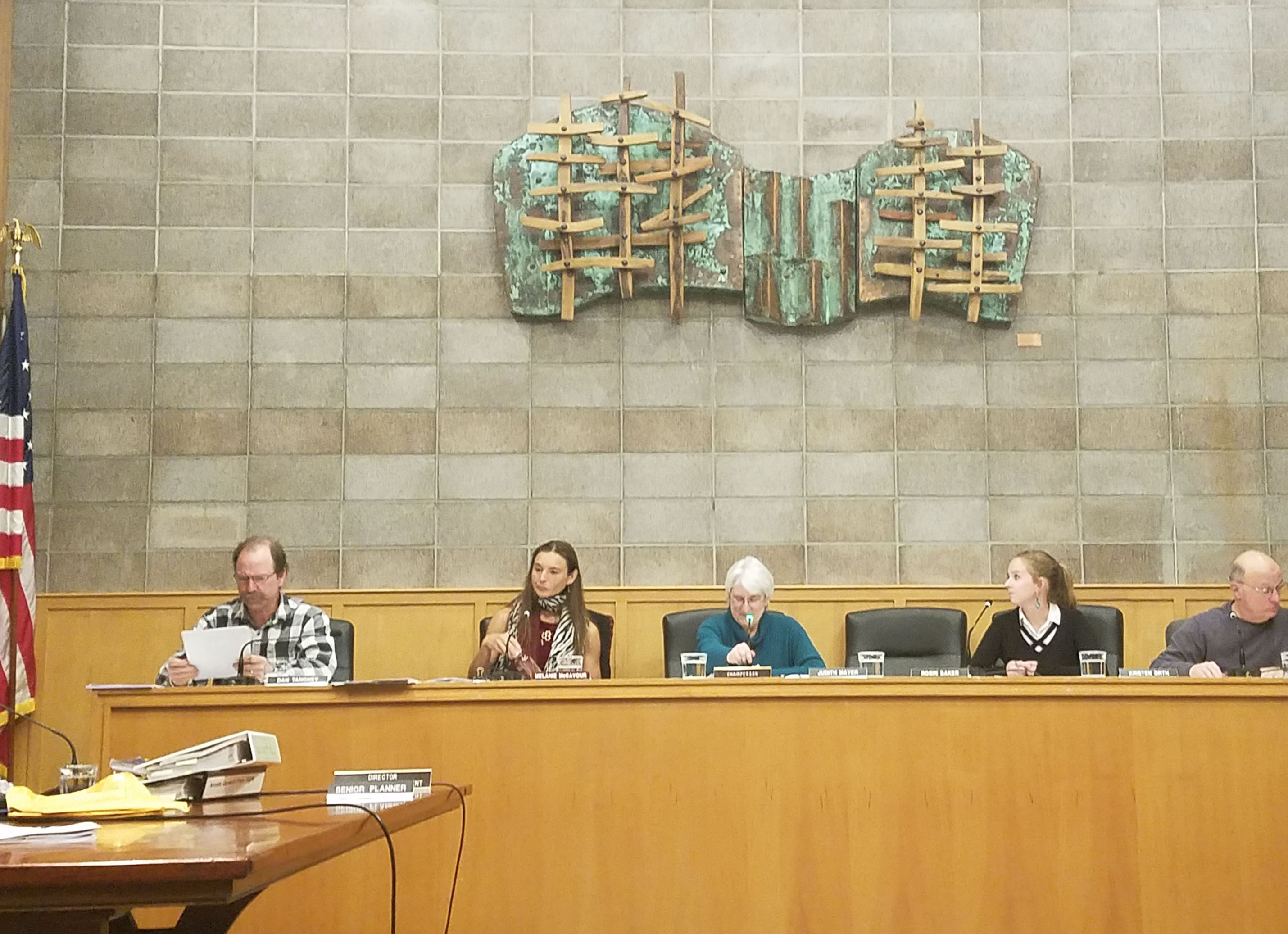
    City of Arcata’s planning commission met on Feb.13 to discuss construction projects that are in progress around town. Details of a future project located at the end of St. Louis Road and Eye Street, known as The Village Student Housing Project, were also discussed.

    “We know that there is a need for student housing,” City of Arcata’s director of community development David Loya said.

    Patrick Shanahan of Humphreys & Partners Architects reviewed the projected plan for the site, as this was the seventh continuation of these hearings.

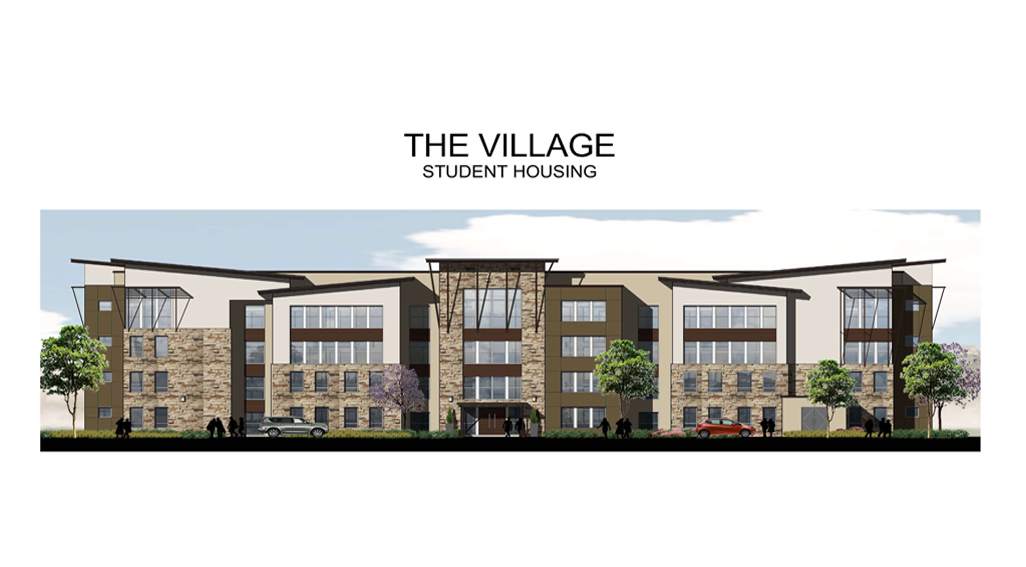
    The plan is said to be four buildings of around 210 units each. They will be a suite of four single units with a common kitchen.

    The commission agreed on Feb. 13 that two of the buildings would be four stories tall and the other two would be three stories tall. The project is designed specifically for students so it will include study rooms and recreation areas.

    “We want the recreation areas to be a highlight of this project,” Shanahan said.

    The commission has recognized the eco-friendly interests of many Humboldt State students and has made sure solar panels, as well as other options to use sustainable energy to power these buildings, are available.

    “I would like to see more edible plants on the plan,” Melanie McCavous, commissioner for the City of Arcata, said. “I know there is a strong desire from students to find sustainable food.”

    While the public hearing was once again continued to another date, the commission is confident they will be able to make a recommendation to the city council after the next hearing.

    “We are going to need more information from the developer before we can really agree on a decision,” chairperson of the planning commission Judith Mayer said.

    While construction is still waiting for approval to begin, it is looking bright for future HSU students to have more possibilities for housing.