The Lumberjack


Students Serving The Cal Poly Humboldt Campus and Community Since 1929

Tag: subculture

  • Goth Night at Richard’s Goat

    Goth Night at Richard’s Goat

    by Cherish Fulcher

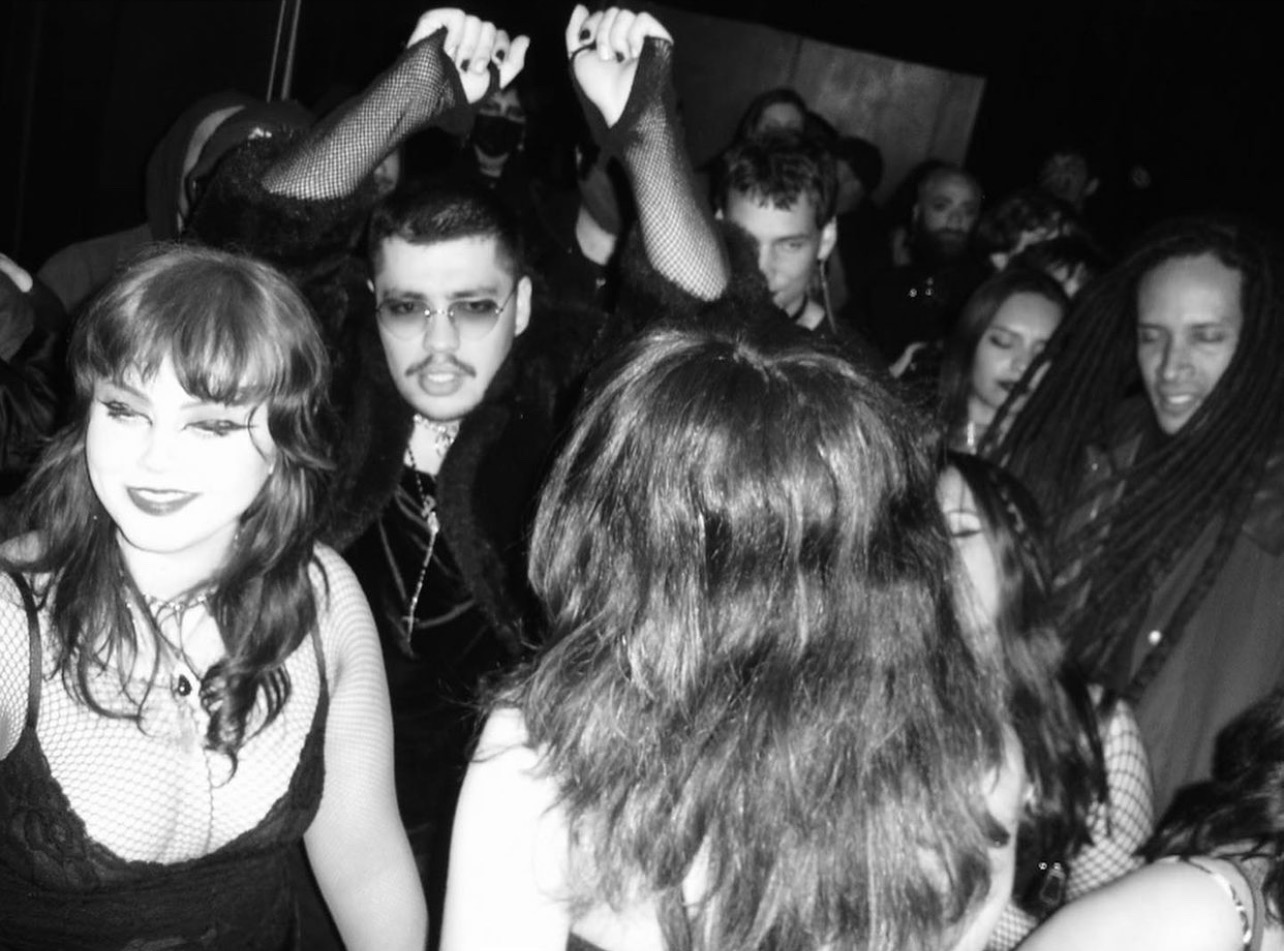
    Photo by Lexi Rangel | (left to right) Lalo Rivera, Gigi Salazar, Chris Servi, and Josie Licavoli pose for a photo at Goth Night at Richard’s Goat on Feb 25.

    On Friday, Feb. 25, Richards’ Goat Tavern & Tea Room hosted its first ever Goth Night, created by recent Cal Poly Humboldt graduate Jamie Cocking. The event was a tribute to the Goth subculture, which originated in the United Kingdom in the early 1980s. The subculture is open ended, yet is heavily saturated with darker tone aesthetics and music.

    “I think goth subculture is all about expressing yourself in your truest form,” Cocking said. “Since I’ve lived here and have turned 21, I haven’t found any clubs or events with the music that I love to dance to, so I just decided to do it myself.”

    Being a small town, Arcata is not well-known for its nightlife. However, contributions to the scene, such as Goth Night, keep it going.

    “I just wanted to create a space where people could dress up as much as they wanted and not feel like they are sticking out like a sore thumb,” Cocking said. “Because for me, I mean everyday is Halloween.”

    Richards Goat will be hosting another Goth Night on April 9.

  • Punk Patchwork

    Punk Patchwork

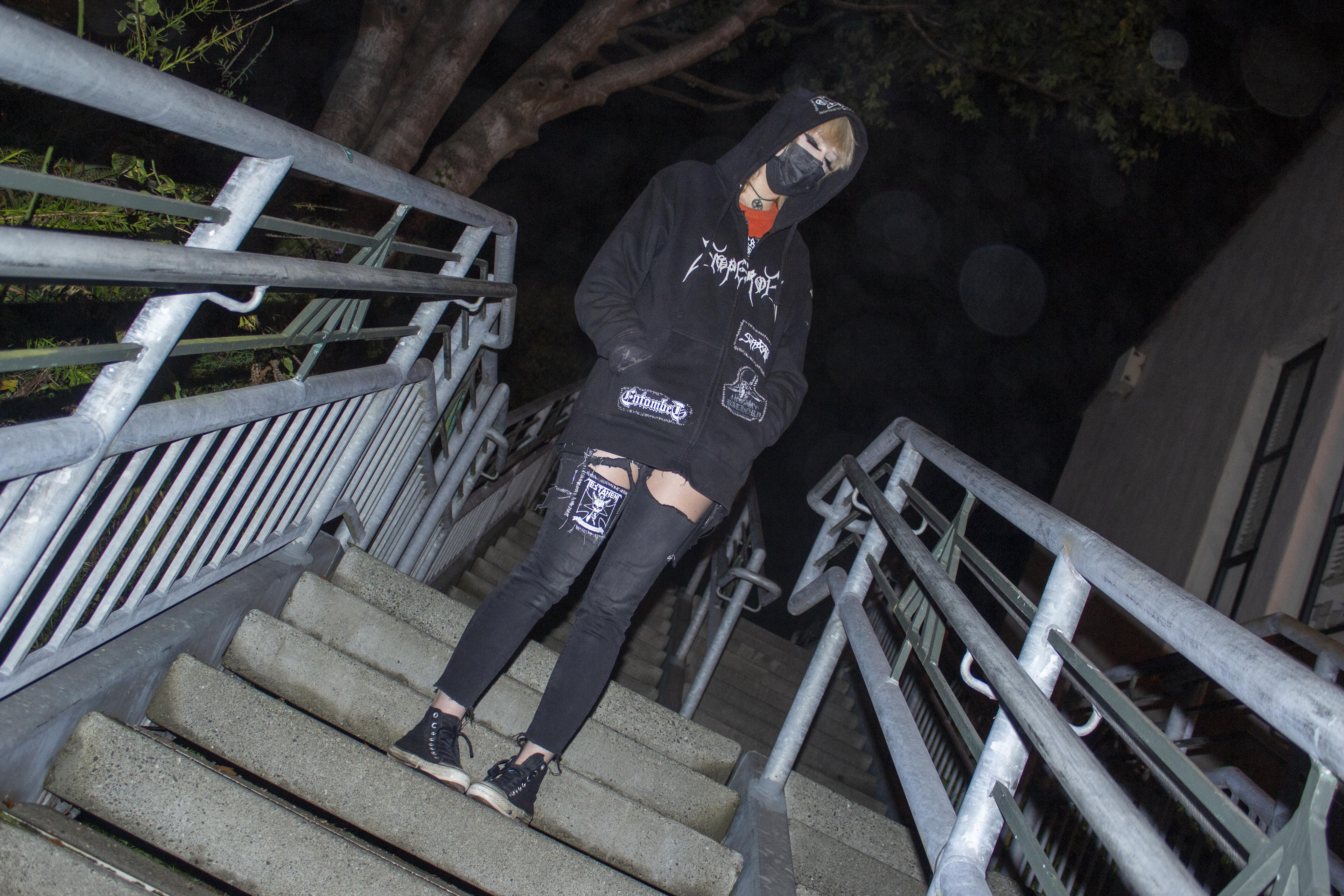
    About half of Xoë Sioux’s wardrobe is covered in scraps of fabric, plastered with the names and logos of various bands and bits of art.

    “The whole thing about punk is to dress your own way, how you want to look and not fit into society’s views of you, and so a big part of it is like creating your own clothes,” Sioux said.

    Wearing patches on their clothes identifies Sioux to other members of their subculture.

    “Other punk kids, or metal kids, or anybody in the subgenre- if they see it and they appreciate it, then that makes me happy,” Sioux said.

    According to Sioux, the history of decorating clothes with patches dates back to the origin of punk itself in the 70’s and 80’s.

    “People were creating patches for all the bands that they liked, like The Clash, Discharge, Sex Pistols unfortunately,” Sioux said. “They started stitching them onto their clothes to create a statement.”

    Patches also serve as free advertising for the bands they represent. Nat Cardos, who came up in the southern California punk scene and now plays in several local bands, explains the process.

    “You have these punks who buy your patches at your show that you make yourself,” said Cardos. “When they sew them on people will see them, and be like, oh, what’s that band.”

    In addition to the aesthetic value they add, patches also help extend the longevity of garments. When the original fabric gives way, a patch can allow one to continue wearing the item of clothing for years to come. Many punks have taken to using more durable dental floss to secure their patches rather than sewing thread.

    “I like the look of it, and they stay together way better in my opinion,” Sioux said. “And they make me smell good because I smell like mint.”

    Sioux’s favorite patch is from a band called Bathory, her favorite band of all time. The band took inspiration from the Countess Elizabeth Báthory de Ecsed of the former Kingdom of Hungary, who was infamously convicted of torturing and killing hundreds of girls and women, in what some say was an effort to retain her youth. The patch, in classic alternative style, depicts a disembodied goat head above the band’s name in gothic script.

    For the people that wear them, patch jackets can be a chronicle, the time and place where each patch was attached forever sewn into the fabric. Cardos recalls exactly what their first patch was as it is still on one of their jackets.

    “I bought it online, and you’re probably going to have to censor this, but it says: ‘fuck all crooked cops, may their corpses rot,’” Cardos said. “It’s my favorite patch I own.”

    Cardos says that patch-making is an integral part of the DIY subculture within punk. In addition to buying patches that bands sell as merch, most also make some of their own patches. There is no set method.

    “A lot of people make them using either screen-printing ink and canvas, or a lot of people also will just use sharpie if they have a light enough fabric for it,” said Cardos.

    Sioux has some guidelines for others looking to get into wearing patches.

    “It’s really fun to dress weirdly, and dress out of the norm, and patches make you look really cool,” Sioux said. “But I definitely highly recommend listening to the music that you’re putting onto your clothes, nobody likes a poser.”
  • This Week: Campus & Community Dialogue on Race

    This Week: Campus & Community Dialogue on Race

    A week of open dialogue to learn about cultures within the Humboldt community

    This week, Humboldt State kicks off its annual Campus & Community Dialogue on Race workshops. Starting Nov. 4 and lasting through to Nov. 8, the theme is Dismantling & Deconstructing To Build.

    Lectures and workshops offer an opportunity for people to come together and have an open dialogue to learn about subcultures within the community. The workshops are open to all students, faculty and locals.

    Programs cover topics such as intersectionality, racial justice, mental health, election activism and more. A wide variety of workshops are offered throughout the week and provide plenty of opportunities to participate. Workshops include an Intro to Social Justice Seminar, an overview of Critical Muslim Studies and a Dia De Los Muertos celebration that includes food and movies.

    Several guest are scheduled to speak in the Kate Buchanan Room, University Center 225, during this event. Assistant Professor of Anthropology at Stockton University Nazia Kazi, Ph.D. speaks on Tuesday, Nov. 5. Director of the Center for Diversity & Inclusion at Sacramento State University John Johnson, Ph.D. speaks Thursday at 5 p.m. Professor and Associate Dean of the College of Integrative Sciences and Arts at Arizona State University Asao Inoue, Ph.D is scheduled to speak Nov. 8 at 10 a.m.

    The CDOR started in 1998 as a recognition of America as a diverse society. Their mission statement fleshes out the intent of the multi-day event.

    “The vision of Campus & Community Dialogue on Race is to achieve racial, social, and environmental justice,” the statement says. “The program’s mission is to promote and facilitate social and environmental change by engaging a diverse range of individuals, communities, and viewpoints to explore the impact of racism and its intersections with all forms of oppression.”