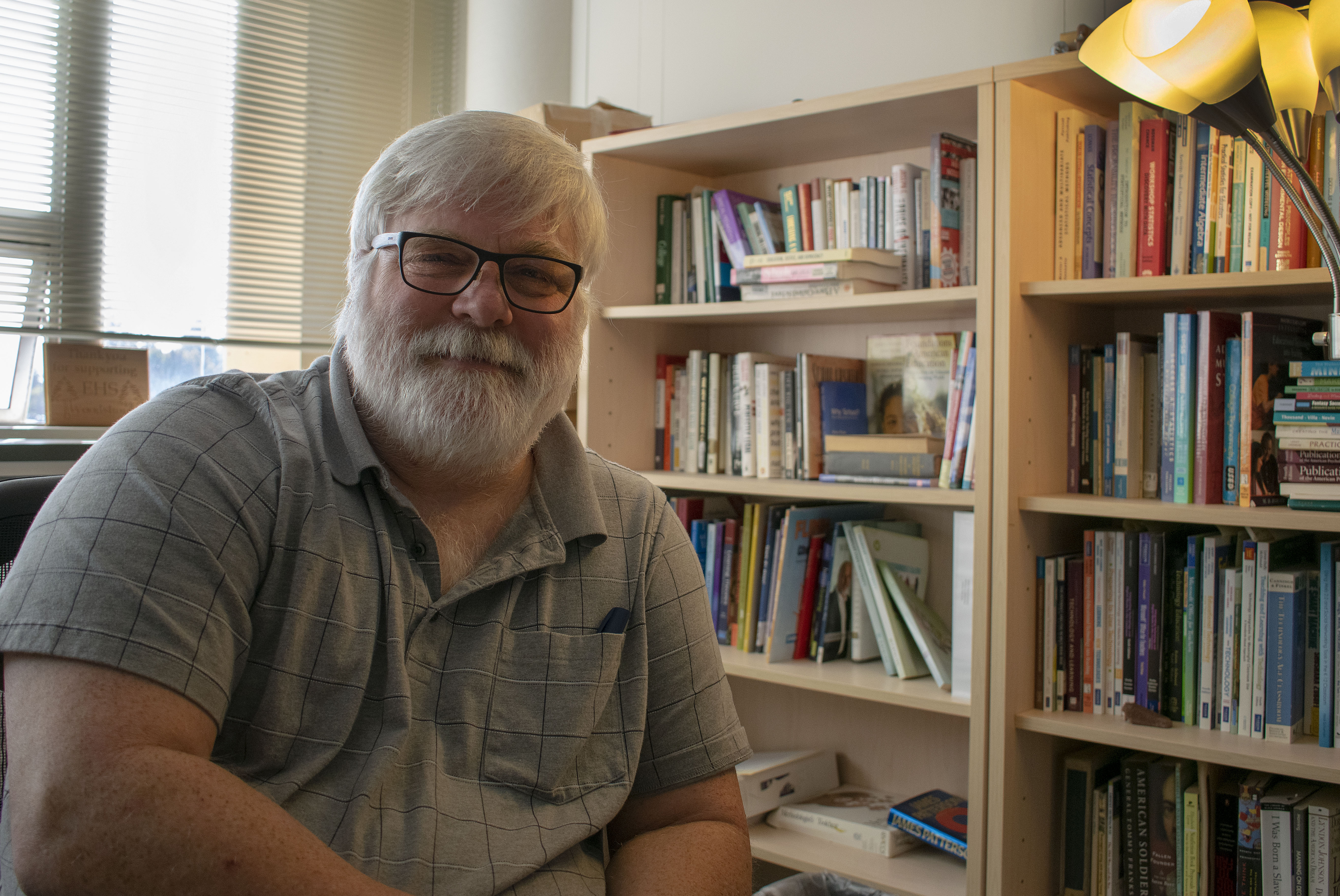
Dr. Christopher Aberson came forward to the Lumberjack with a story about how he was symptomatic and asked to teach online but was denied the opportunity and asked to teach in person instead. Provost Jenn Capps responded to these accusations after Aberson’s story was released. Capps claims that a majority of the time teachers are allowed to change modality, however, they have to meet certain requirements.
According to Capps, a professor seeking a modality change has to be verifiably ill and then has to seek approval from their department head to change modality. In cases like Aberson’s where the department head is the one asking, they have to seek approval from Capps directly. Capps couldn’t speak on Aberson’s case specifically due to confidentiality reasons, yet she was able to speak on similar hypothetical situations.
“I’d say eighty percent of the time a request for a change is being granted, when it’s not being granted, it’s because perhaps a person is operating off of being afraid or they are like ‘something could happen therefore I don’t want to teach in person I’m just going to shift my course online and I’ll let you know when I wanna come back,’” Capps said. “Well, that’s not somebody who is sick and that’s not the agreement that was made with the students.”
Aberson never tested positive for COVID-19 but he did claim he was symptomatic. In times where COVID-19 takes up the majority of the conversation, people are still getting sick with other illnesses and it can be confusing when symptoms of one illness overlap with COVID-19 symptoms. According to Capps and school policy, just coming in contact with COVID-19 is not enough to warrant staying home or teaching online.
“For students, faculty, and staff our current policy is that if you are vaccinated and you come into contact with somebody with COVID and you’re masked and vaccinated, that doesn’t mean that anything needs to change,” said Capps, continuing. “What you need to do is continue about your work and life and monitor and keep doing wellness checks, and if you start to experience symptoms then you get tested and isolate.”
Strangely enough, that is what Aberson was trying to do according to his accounts of the event. He came into contact with COVID-19, started feeling symptoms, and then requested a modality change. Aberson was under the impression that his request was possibly denied due to him being outspoken against different school policies. When asked about whether this was a genuine possibility, Capps firmly denied any bias in the deciding process.
“Oh of course not, that would be all kinds of wrong,” Capps said. “It’s just really centering on a couple of things, making sure the student gets the instructional experience that they desired and making sure that faculty and staff and student health is protected.”
Dr. Christopher Aberson came into contact with COVID-19 the weekend before he was supposed to teach. He requested the school let him teach over zoom and his request was denied. The school would not let him switch his modality despite the Omicron surge and the numerous COVID-19 cases reported on campus.
“I was told I was not authorized to change modality. After several emails, clarification came that I could not move online. I have symptoms. I am well enough to teach. Not allowed to,” said Dr. Aberson.
Dr. Aberson is the Professor of Psychology at Cal Poly Humboldt and came into contact with the virus after one of his son’s friends tested positive. He claims that this issue is larger than his individual case.
“My issue with the surge has and continues to be that faculty who agreed to teach in person are not being allowed to change to online. Faculty agreed to teach in person at times when it seemed we had gotten over the hump and were headed toward a better situation,” said Dr. Aberson in an email, he continued. “In both the fall and spring semesters, as I understand it, most requests to change to online were denied. Both semesters began during surges.”
Dr. Aberson has been outspoken about a number of issues on campus and believes that could be playing into why he wasn’t allowed to teach online.
“I have been outspoken about under-compensation of chair duties — it is a full-time job but during the summer and other off times, we are grossly under-compensated for our time. Also, campus safety and working conditions during both the delta and omicron surges,” said Dr. Aberson.
The California Faculty Association (CFA) negotiated a Memorandum of Understanding (MOU) with campus administration regarding teaching during COVID-19. The document was signed by CFA and Cal Poly Humboldt management. Dr. Aberson presented a passage from the MOU that explicitly supports his position.
“During the time that an employee may be waiting for an appointment or for testing results every effort should be made for them to be able to work remotely,” states the MOU.
Prior to Dr. Aberson’s situation, the CFA had already made an official statement addressing the administration and their lack of leniency.
“No faculty member should be forced to work in conditions that put themselves or their loved ones at risk, especially when there are alternatives,” states a press release provided by the CFA.
CFA Humboldt president Loren Cannon still supports this idea and thinks the administration needs to be more flexible in situations like Dr. Aberson’s.
“We have urged that Administration approve all such requests for temporary, or sometimes permanent change in modality,” said Cannon.
Cannon acknowledges that for some cases transitioning to online can be difficult, however for many other classes transitioning online for a week or two is relatively easy.
“I believe that at this time, as we still are not ‘in the clear’ of this incredible health crisis, we need to trust each other and make decisions that recognize the complexity of individual context,” said Cannon.
Leadership has yet to make an official statement regarding the MOU breach and has also failed to respond to our request for an interview.
Where we were, what went wrong & how we build a brighter future
This is a letter to the editor from Humboldt State University Education Department Chair Eric Van Duzer, Ph.D. It has been edited only for minor punctuation and grammar style preferences.
As I reflect back on nearly 30 years at Humboldt State University, first as a student and then for the past 20 years as a faculty member, I wanted to share some of the thoughts that I have about HSU’s current situation and where the campus might go from here.
As a student I experienced a remarkable education where faculty were fully invested in my intellectual and personal development. There were so many opportunities to explore areas of interest and develop new ones. I have spent many hours trying to encapsulate the nature of the schooling I experienced in a way that would really represent the experience.
The best analogy I have been able to come up with was that HSU offered a graduate education to undergraduates. The small classes typical of graduate school encouraged faculty to fully invest in their student’s growth. The university, set so far from the oversight of CSU headquarters in Long Beach, offered a great deal of flexibility to shape our experiences.
This would be impossible today. In those days HSU had the third smallest class sizes in the 23 campuses of CSU. But more than that, it had a unique faculty ethos that reflected nearly 100 years as a student-focused institution that exalted excellence in teaching above all else.
I was the first student CEO of the Institute of Industrial Technology, a self-supporting club that allowed us to use the skills and knowledge we were developing to grow in business acumen, engage in manufacturing and light construction on campus as well as conduct experiments for local agencies. In its second year, Bill Wilkinson used the institute to earn enough profit making desks for campus offices that it paid for several pieces of expensive equipment for the department.
This would be impossible today. In those days HSU had the third smallest class sizes in the 23 campuses of CSU. But more than that, it had a unique faculty ethos that reflected nearly 100 years as a student-focused institution that exalted excellence in teaching above all else.
Faculty came to campus because this is where they wanted to spend their career. Unlike most universities where faculty play academic hopscotch building their resume through research reputations and earning ever-higher salaries as they bounce from college to college, HSU faculty built their reputations on teaching. These were inherently local reputations, not very valuable if one wanted to move on, but rather a reflection of the values and attitudes associated with a culture of excellence in the service of students’ intellectual growth.
As anyone who has worked with university budgets will tell you, graduate education is expensive. That is why through the first 100 years, the administration and other services were done on a shoestring. It was common for a variety of upper administrative positions to be filled by faculty who served temporarily. Staff was thin and overworked and processes were slow and inconsistent.
What happened? In the early 2000s the CSU was facing the onslaught of a Generation X student bulge. Chancellor Charles Reed decided the best strategy to deal with this situation was to homogenize campuses so that if a student could not get into Sacramento State because it was impacted, they could simply go to another campus and get a similar experience.
Yet, the campus, with significant leadership from the faculty, focused its significant resources on classroom instruction, and through that dedication, produced exceptional graduates who were deeply committed to HSU when they graduated.
I remember an administrator in the early years telling me that he had been in a restaurant on the East Coast and overheard a group of students talking at a nearby table. He was so impressed with their sophistication and the values they held he found out where they came from and immediately applied for a job at HSU.
He was the first person hired under then-president Rollin Richmond to manage our enrollments in the early 2000s. The diversity on our campus is a credit to him and Richmond, who reached out across the state to bring in students from urban areas. Sadly he became disillusioned and left. So did most of the faculty leaders.
What happened? In the early 2000s the CSU was facing the onslaught of a Generation X student bulge. Chancellor Charles Reed decided the best strategy to deal with this situation was to homogenize campuses so that if a student could not get into Sacramento State because it was impacted, they could simply go to another campus and get a similar experience.
Shortly thereafter the upper administration received inflated titles and significant raises in an apparent effort to reduce resistance. Then the attack on the faculty began.
Naturally, faculty on campuses such as HSU who were proud of their traditions and niche identities resisted. Fiercely. At one point, three campus presidents, including Rollin Richmond, suffered through votes of no confidence by their faculty as they implemented this strategy.
To achieve the required changes in the face of faculty resistance, campuses, including Humboldt, began shifting to a corporate structure of top down management. Faculty who had held a privileged position in campus life were systematically reduced to workers with only a symbolic voice in campus decisions. The administration turned its focus inward towards improving the functioning of the bureaucracy. They eliminated administrators such as Rick Vrem, an ethical provost, who refused to implement changes that hurt the traditional focus on instruction.
Vrem was replaced with a provost who had no such compunction. Shortly thereafter the upper administration received inflated titles and significant raises in an apparent effort to reduce resistance. Then the attack on the faculty began. Nearly 80 faculty positions were eliminated over several years and during the same time period, a similar number of new staff positions were created and filled to support administrative functions.
Over the majority of the intervening 15 years, budget reductions for academic programs have been the norm: reductions in staff, program availability and courses. This year it was a 6% cut, last year another and many like it before. The funds have been shifted to an ever-expanding variety of administrative initiatives.
Now we sound more like a parks and recreation office than a university. Come for the redwoods, the beaches, the bike riding—that is wonderful and I love it, but it is not why people pick a university.
We spend nearly 68% of our budget on administration and campus facilities. Despite the results of a study commissioned by Rollin Richmond’s administration that showed the two most important factors that cause a student to come to HSU are quality of education and availability of the program they are interested in, both have been repeatedly attacked, sliced and diminished.
It is surprising that no one seems to notice that every time we cut academic programs, fewer students want to come here. And when fewer students come here, the budget suffers and HSU responds by cutting academic programs even more severely—a cycle the faculty in 2004 described as a “death spiral.”
As we address our current crisis and try to figure out what we need to become in order to grow back to a sustainable enrollment, we might want to engage in some soulful reflection. What would cause a 20-year-old to come to a place five hours from major centers of civilization and spend four years with us? What do we have to offer them that is so valuable, so different from what they can get at any of the other CSU campuses which are closer, cheaper and offer a great deal more college life in the community?
We stopped selling the small classes and close academic relationships with faculty when the hypocrisy became too much to bear as campus priorities shifted. Now we sound more like a parks and recreation office than a university. Come for the redwoods, the beaches, the bike riding—that is wonderful and I love it, but it is not why people pick a university.
When I arrived here as a faculty member in 2000 we had one staff member, John Filce, doing institutional research. He was wonderful and badly overworked. I am sure he still is. Now we have nine staff members listed in the directory in the Office of Institutional Effectiveness, including a vice president. I am sure their work is valuable, but to pay for it we had to cut 64 class sections.
Today, we are an organization of inflexible rules and their keepers.
We have proliferated the bureaucracy, which is unfortunately necessary to achieve top-down control of a professional organization. Had our leadership studied industrial technology with me, they would know what companies in the 1970s learned: that this form of management is ineffective and inefficient in a professional organization.
To achieve control requires monitoring, which in turn requires more staff. For a top-down organization, where the vast majority of employees serve at the will of their manager, fear prevents innovation and compliance is key. Before the shift to this model, administrators were problem solvers. In fact, the standing joke in those days was that everything was an exception. Faculty, staff and administrators had the flexibility to serve the needs of students even when it required bending the rules.
Today, we are an organization of inflexible rules and their keepers. It has greatly diminished the effectiveness of the organization and its ability to make decisions that best serve our students. The resulting bureaucratic culture has seen a proliferation of forms, rule books and rigid adherence to often dysfunctional orders.
This is no way to run a university. Perhaps a grocery store, but not an organization of 500 highly educated experts with thousands of years of collective experience. Top-down decision-making, particularly when the president and upper administrators are drawn from institutions that do not share the culture and values of the campus, is inherently poor compared to what would be possible if faculty once again had a meaningful voice in campus affairs.
No student has ever come to HSU because we have a wonderful registrar’s office or because the president’s office is fully staffed. These only matter when they impact the quality of the education a student receives.
The proof of this is apparent everywhere at HSU. When Rollin Richmond came, he had no interest in what made HSU special. Like a white suburban principal coming to a school in Watts, he thought he knew what needed to be done to remake the university into his vision of a modern institution. That ignorance has cost us immeasurably. Today we face the consequences. The failure to fundamentally change direction of subsequent presidents has simply deepened the mess. We now have a new president, perhaps we can find a new vision.
In my view there are two key concerns that need to be addressed from a rational and values-driven perspective. First, an effective budget model that allows funding to follow enrollment is essential to support growing programs while shifting resources to where they will best serve student needs and interests. This can refocus the campus on providing the service/product students come here for—classroom instruction—and it is essential.
There are so many amazing faculty and academic staff here. They are people with a heart for their students, struggling in a system that constrains and conflicts with their efforts. Let their voices guide the future and we may yet have one worth celebrating.
No student has ever come to HSU because we have a wonderful registrar’s office or because the president’s office is fully staffed. These only matter when they impact the quality of the education a student receives.
Second, we have to decide how we are going to rebuild the excellence we once were known for in our student’s academic programs. The day Rollin Richmond refused to give the Outstanding Faculty Award to a physics professor (selected by the faculty based on his ability to delight and inspire students) because that professor had not published, is the day we snuffed out the soul of the old HSU campus.
Now we need to find out what animates us in ways that provide an experience worth the isolation, cost and struggles required to live in this remote community. Redwoods are not enough; we need a reinvestment in education.
I am retiring from HSU at the end of this May. I am sad to see what has happened to my university. There are so many amazing faculty and academic staff here. They are people with a heart for their students, struggling in a system that constrains and conflicts with their efforts. Let their voices guide the future and we may yet have one worth celebrating.
Humboldt State professors and lecturers stunt their favorite fits
We’ve talked to students on campus about their fashion statements. But what about teachers?
Opinions Editor Delaney Duarte asked some professors and lecturers on campus to show us their favorite looks, tell us their hobbies and give some insight into their dream jobs.
Jessica Rismiller
Psychology Lecturer
Originally from: Cincinnati, Ohio
Clothes: Sweater is from Tj Maxx, skirt is from Hot Knots in Arcata, Scarf is from North Coast Co-op and boots are from Nordstrom Rack.
If Rismiller wasn’t teaching, she would work in the field of applied behavioral analysis providing behavioral intervention services for individuals with developmental disabilities and their families/supporters.
Hobbies: Running, hanging out with her dog, meditation, ceramics, hiking/camping and traveling.
Jessica Rismiller. | Photo by Delaney Duarte
Marlon Sherman
Native American Studies Professor and Department Chair
Originally from: Pine Ridge Reservation in South Dakota
Clothes: Shoes were purchased at a shoe store in Eureka, shirt from a store in Santa Cruz, pants from San Francisco and undershirt from a store in Boulder, Colorado.
If Sherman wasn’t teaching he would pick up the guitar again or find a boy band to sing in.
Hobbies: Sleeping on the couch, writing a chapter in a book he is working on.
Marlon Sherman. | Photo by Delaney Duarte
Nikola Hobbel
English Education and Poststructural Analyses
Originally from: Westberlin, Germany
Clothes: Purchased dress in London on a summer vacation, shoes bought online from Ninewest, ring is from Sol to Sol in Arcata, earrings are by Gilbert Castro from Arcata Artisans.
If Hobbel wasn’t teaching she would be a librarian or work in a kitchen because she likes to cook.
Hobbies: Hiking, going to the beach and hunting for agates.
Nikola Hobbel. | Photo by Delaney Duarte
William Gannett
Physics Lecturer
Originally from: Portland, Oregon
Clothes: Flannel is from Lands End, jeans are Levi’s, shoes were purchased at Nordstrom Rack and he bought his watch online.
If Gannet wasn’t teaching he would be doing physics research or try and be a National Geographic photographer.
Hobbies: Wildlife photography, and hiking with his wife and son.
William Gannet. | Photo by Delaney Duarte
Michelle Cartier
Film Professor
Originally from: Burbank, California
Clothes: Pants and shoes are from Zappos, shirt from men’s section of H&M, belt was a gift and hat is from AMPT Skate Shop.
If Cartier wasn’t teaching she would be a poet or filmmaker.
Hobbies: Traveling, eating, writing and being on the local roller derby team.
Michelle Cartier. | Photo by Delaney Duarte
Ryder Dschdia
History Lecturer
Originally from: Santa Cruz, California
Clothes: Shoes are from Plaza Shoe Shop in Arcata, shirt is from JackThreads, pants are from Kohl’s, tie was a gift from his sister and coat was a gift from his brother.
If Dschdia wasn’t teaching he would be working in the food industry or become a professional photographer or reporter.
Hobbies: Rock climbing, disc golfing, cycling and hiking. Dschdia also likes playing Dungeons and Dragons on his switch, PC and console.
Ryder Dschdia. | Photo by Delaney Duarte
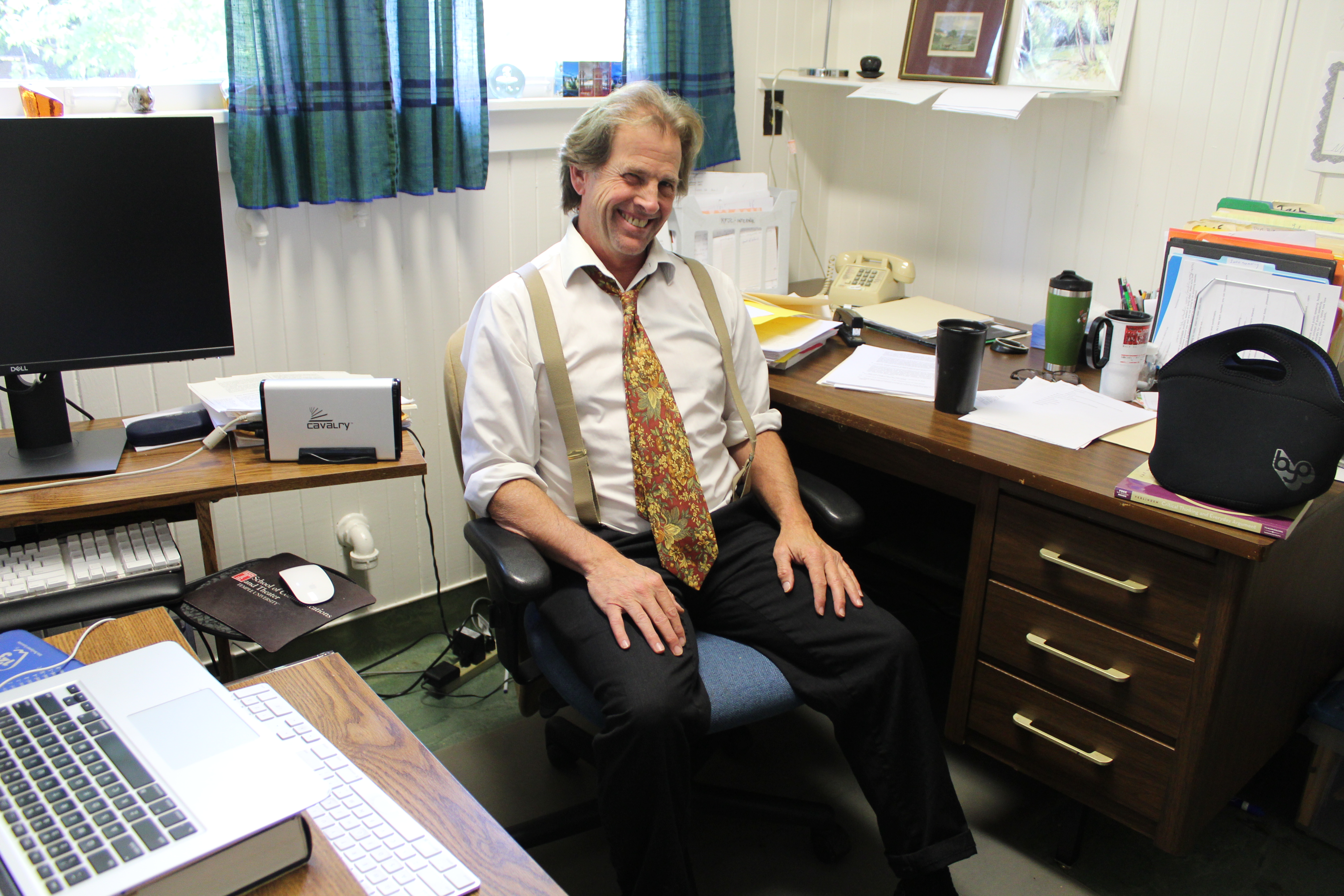
Ross MacKinney
Communications Lecturer
Originally from: Washington D.C.
Clothes: Tie and suspenders found while thrift shopping, pants are from Costco, shoes are from Abraxas Shoes and Leather in Eureka and his shirt was a gift from his son.
If MacKinney wasn’t teaching he would be a professional storyteller.
President Donald Trump has donated all of his earnings as President of the United States to the National Park Service. Trump donated $78,333, his first salary installment which covers the first 10 weeks he’s been in office. $78,333 is 0.005% of the money Trump’s budget would cut from the National Park Service.
President Trump wants to warn China that the clock will run out in North Korea when they meet in Florida later this week. President Trump would like Chinese President Xi Jinping to take a tougher stance on North Korea regarding the country’s nuclear program.
On Monday President Trump signed legislatures to diminish many Obama-era regulations. One of the legislatures included issue about education and school performance. One of President Trump’s new legislation scraps new requirements for programs that train new K-12 teachers and rolls back a set of rules outlining how states must carry out the Every Student Succeeds Act, a bipartisan federal law meant to hold schools accountable for student performance.
President Trump signed a legislative on Monday that repeals the Federal Communications Commission’s privacy protection for internet users. The new legislature would diminish the landmark policy from President Obama’s time in office. President Obama’s policy would have stopped internet providers from collecting, storing, and selling data from internet users without their consent.
This website uses cookies to improve your experience. We'll assume you're ok with this, but you can opt-out if you wish. Cookie settingsACCEPT
Privacy & Cookies Policy
Privacy Overview
This website uses cookies to improve your experience while you navigate through the website. Out of these cookies, the cookies that are categorized as necessary are stored on your browser as they are essential for the working of basic functionalities of the website. We also use third-party cookies that help us analyze and understand how you use this website. These cookies will be stored in your browser only with your consent. You also have the option to opt-out of these cookies. But opting out of some of these cookies may have an effect on your browsing experience.
Necessary cookies are absolutely essential for the website to function properly. This category only includes cookies that ensures basic functionalities and security features of the website. These cookies do not store any personal information.
Any cookies that may not be particularly necessary for the website to function and is used specifically to collect user personal data via analytics, ads, other embedded contents are termed as non-necessary cookies. It is mandatory to procure user consent prior to running these cookies on your website.