The Lumberjack


Students Serving The Cal Poly Humboldt Campus and Community Since 1929

Tag: The J

  • Humboldt students struggle to find housing

    Humboldt students struggle to find housing

    by Ollie Hancock

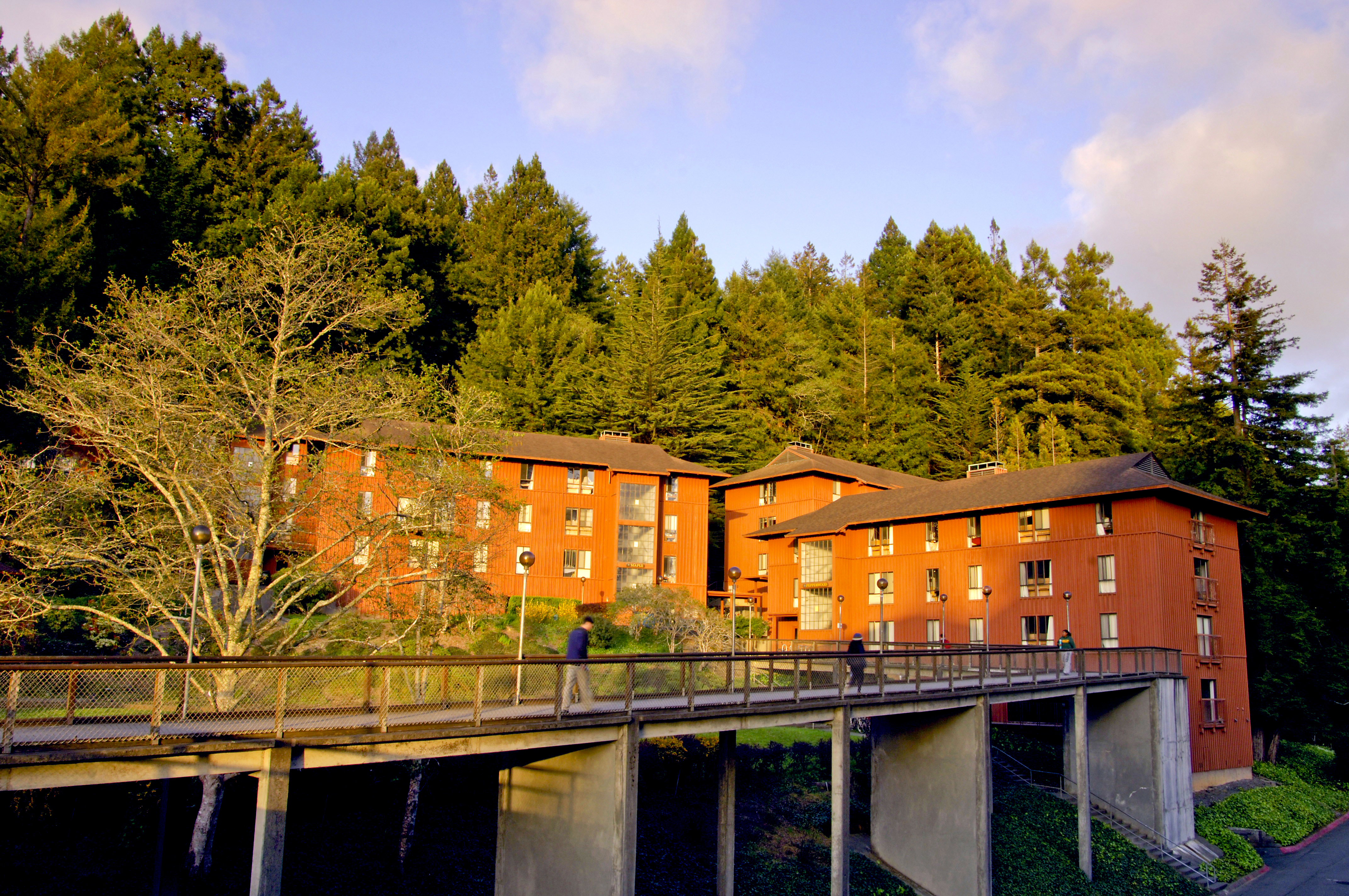
     In August of every year, a new batch of students fills the dorms, apartments, and homes in Arcata neighborhoods. Overbearing parents pilot SUVs in a line around the block on check-in day. Students scramble through Craigslist listings in search of a last-minute opportunity. It’s no secret there is a housing shortage in Arcata, but the new polytechnic designation will increase demand. Cal Poly Humboldt expects to double in enrollment in the next six years. There are plans to build infrastructure, but they won’t be available until 2025 at the earliest. During this in-between period, the school will provide “bridge” housing. Steven Onge, a representative of Housing and Residence Life, explained the plan to master-lease nearby hotels to house students in the meantime. 

    “We’ve been working with it for over a year [and] we’ve developed relationships with several hotel owners and property managers,” Onge said. “This property was nice. There’s a pool there, and laundry is included, so we think the location was good, and the amenities are good.”

    This academic year, the Comfort Inn will house almost 98 students with amenities like maid service and free continental breakfast. Residence Life is doing their best to make it a genuine college dorm experience with group dinners. Students can take the bus to campus in about 10 min. 

    “We’ve got some vending machines which will have fresh food in them, and we’ll do weekly community dinners and events to support students,” Onge said. “I’m hoping to get a food truck that we can use.” 

    Students still aren’t convinced. Kirby Marks, a nonbinary student, was made to choose between staying in male or female dorms when the gender-neutral dorms were unavailable in their building.

    “I had to call them, and I was like, ‘I have no choices. There is no housing for me to choose from. I will not be able to live on campus. What’s going to happen?” Marks said. “So I had to change my gender marker to male so that I could actually get into housing.”

    Opportunities for housing off campus are few and far between. Senior Humboldt student Zack Gamble says the high demand for housing allowed landlords to take advantage of students. 

    “It’s too easy to be a bad landlord out here,” Gamble said. “You don’t have the opportunity to turn down a place because you might not get another one for a few months.You have to take what you can get no matter how run-down decrepit it is.” 

    Since moving to Humboldt, Gamble has experienced his fair share of shakey Humboldt housing, from dry rot-ridden houses that shift with every earthquake to out-of-code heaters that require DIY maintenance. Gamble thinks the school should look critically at how the polytechnic designation will impact housing. 

    “You can’t increase your student base every year but have nowhere to put them,” Gamble said.

  • Student employees unhappy with the university

    Student employees unhappy with the university

    Students show up to work despite stress, non-payment and fear of unsafety

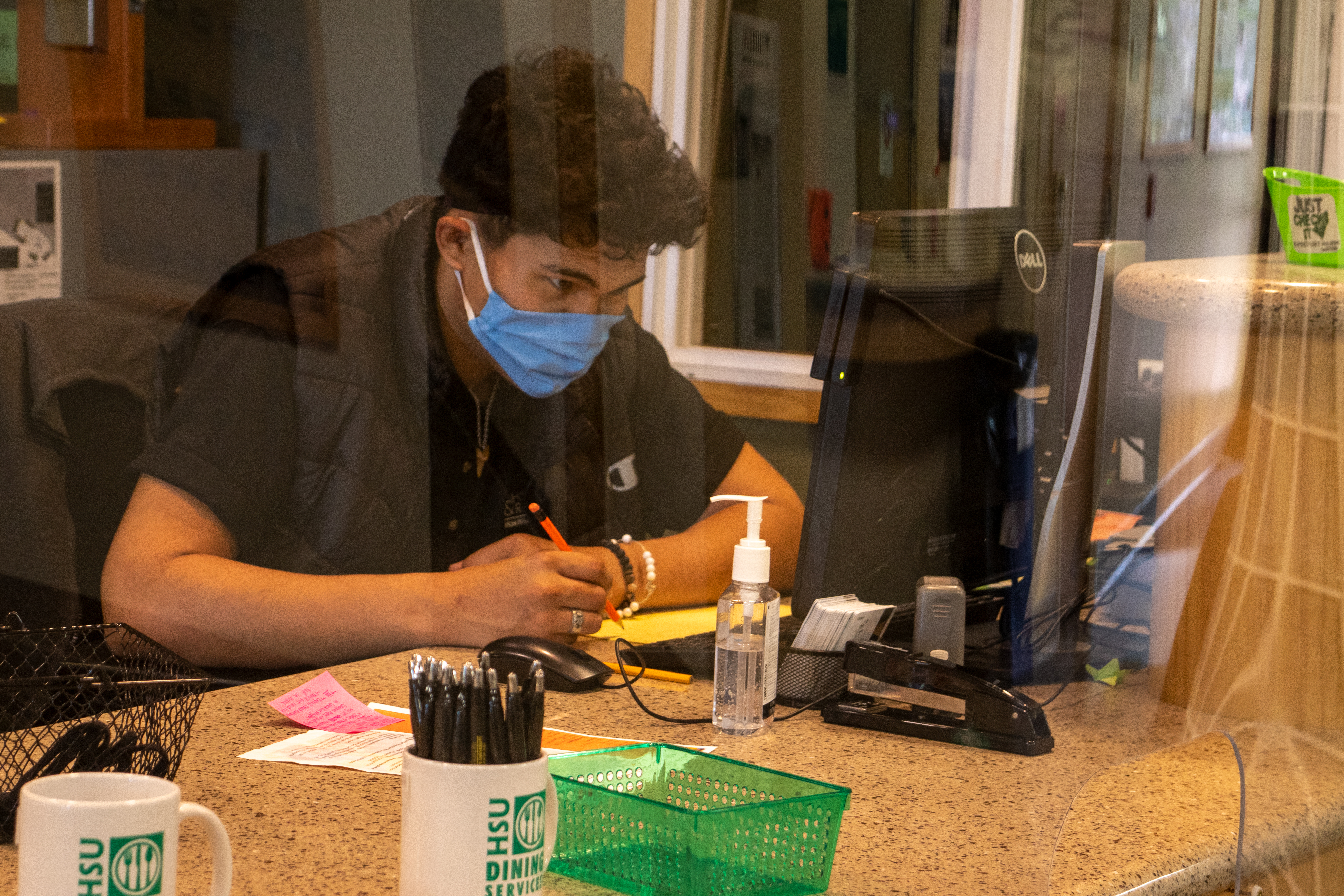
    José Juan Rodriguez Gutierrez is a second year Resident Student Service Advisor at Humboldt State University, which mostly involves providing general student assistance and taking phone calls. This semester, Gutierrez and the other RSSAs’ jobs added pandemic precautions.

    “We have new cleaning procedures at the start of every shift. We also have to get tested as employees,” Gutierrez said. “We also have followed the two week quarantine before any of us started working [and] if anyone leaves the county, that’s still being required.”

    When the pandemic began in the spring, Gutierrez and the other RSSAs were put on paid leave for the rest of the semester while the university developed a strategy for fall. For students like Gutierrez, returning home to Los Angeles wasn’t an option, so he spent the summer working odd jobs and searching for a long term back up plan.

    “If anything, LA was a lot worse during the pandemic,” Gutierrez said. “I decided it would be safer to stay up here and if school couldn’t employ me, I was gonna apply to some of the other local areas.”

    With education virtual this semester, many of the other RSSAs decided not to return to campus, reducing the staff to approximately half of what it was in the spring. According to Gutierrez, the most challenging part of the transition has been not having the authority to enforce proper pandemic protocols.

    “It’s been pretty disturbing seeing like groups of eight people hang out together since the first week,” Gutierrez said. “It takes like three, four days to get your [COVID-19 test] results and I think that even before people got them, they were already hanging out, walking in and out [of our building], and that is something that concerned me and many of my other co-workers.”

    Within his department, however, Gutierrez feels precautions are being taken very seriously and he takes comfort in the extra procedures that initially felt like a drag.

    “I feel like before this, we live in a society that was so set on doing things no matter what you felt, like your personal being did not matter,” Gutierrez said. “The fact that we can kind of rely on each other, that we’ve taken care of ourselves and we’re trying to do everything we can to stay safe, I feel like that’s been really rewarding and I feel that the sense of respect to ourselves and to others gets carried on out of this pandemic.”

    Lee Chase, Critical race, gender and sexuality studies major, got a job this semester as a Teacher’s Assistant in his department, after not receiving an offer to return to the the J dining services. The TA position offered a small pay increase. It wasn’t made clear, however, that he was being paid from a stipend that would max out.

    “That wasn’t communicated to me at the beginning of the semester,” Chase said. “I think ultimately it will be way below minimum wage if it becomes a stipend or if they’re not able to figure something out.”

    Along with likely receiving less compensation than he signed up for, Chase has yet to receive his first paycheck as of the first week of November.

    “I’ve been having a lot of trouble with paperwork cause usually they do this stuff in person, so it’s been really slow,” Chase said. “I would have expected them to be more organized in regards to payment and getting paperwork done and like, communicating.”

    Setting aside payment issues, Chase appreciated being able to conduct his work entirely online. Working from home, however, began to interfere with Chase’s education.

    “I put my camera off in my classes and just grade.” Chase said. “It’s simple work, you can kind of just get it done, but it does take time.”

    Along with grading, Chase also writes weekly assignments and collaborated with the professor in creating this semester’s midterm.

    “I feel like I’m learning a lot from just having to create questions and re-engage with the readings.” Chase said. “I’m learning a lot too just about what is expected in papers and responses and how to communicate what is expected to people, which is helping me in my other classes I think.”

    Destiny Aguilera, theatre arts major, worked at the Depot in the spring but was transferred to the Marketplace this semester after the Depot didn’t reopen. Like the RSSAs, dining service workers were not given notice about jobs until moments before the school year started. For Aguilera, this made the summer especially stressful.

    “To work on campus and to have that financial support was definitely a big factor [in staying].” Aguilera said. “Also, my partner and I didn’t have the funds to move back to Southern California [or] Minnesota where they live, so we had to figure out how to make it work up here.”

    New management and a significantly reduced staff presented additional challenges at the Marketplace this semester. In Aguilera’s case, this means sacrificing some of their rehearsal time in the theatre department to accommodate a less flexible work schedule. What really bothers Aguilera is HSU’s laid back approach to the threat of COVID-19.

    “A lot of the people who work on campus, like at the Marketplace, weren’t told that we had to come in and get testing done in any aspect,” Aguilera said.

    Aguilera also has serious concerns about serving students who don’t respect the social distancing protocols dictated inside the Marketplace. With a full schedule of classes and limited local opportunities available, however, Aguilera doesn’t have another option.

    “The honesty policy works, unless someone decides to be dishonest and that factor is always a little bit scary,” Aguilera said. “A lot of us don’t live on campus, we go home to other people and families and stuff. We don’t get to go home and just isolate and it’s hard when students disrespect the policies on campus.”
  • Students are dining in during the COVID-19

    Students are dining in during the COVID-19

    Students survive COVID-19 by cooking for themselves and avoiding college cafeteria

    Whether they live on or off-campus this semester, students are facing new challenges in just about everything they do and dining is no exception. Meal plans are offered to students living on the campus at a steep price, but this semester students have resorted to cooking for themselves.

    Humboldt State University botany major, Zeen Vincent, purchased a mini-meal plan but finds cooking in his dorm more affordable and enjoyable.

    “It’s just easier to cook at home and just buy groceries once a week than it is to go out and eat all the time.” Vincent said.

    Although the pandemic has turned trips to the grocery store into an uncomfortable mission, Vincent hasn’t allowed it to affect him much. When he does prepare food, it’s often raw ingredient based meals or snacks.

    “I’ve been making a lot of sandwiches,” Vincent said. “I am making burgers tonight so that’s kind of special. I usually don’t eat that on a daily basis.”

    HSU freshman, Jesse Barragan, lives on campus and has the green meal plan which is recommended for students who plan to cook on the weekends. Barragan eats at the J cafeteria weekly but is forced to occasionally cook when the J lacks in vegan options.

    “Sometimes for dinner they may not have a lot of options,” Barragan said. “Maybe like a few sautéed squash and rice but usually it is good.”

    With more vegan and vegetarian options than most places, Barragan is able to eat well on a budget. Barragan’s meals involve easy-cooking in his dorm kitchen, using mostly veggies and produce.

    “Lately I’ve been eating a lot of potatoes, squash, tomatoes and salads,” Barragan said.

    Although most students who came back to campus moved in at the end of Aug., HSU junior Vanessa Odom, stayed to pursue a work opportunity on campus.

    “There were no dining services,” Odom said. “The J and everything closed back in March after spring break.”

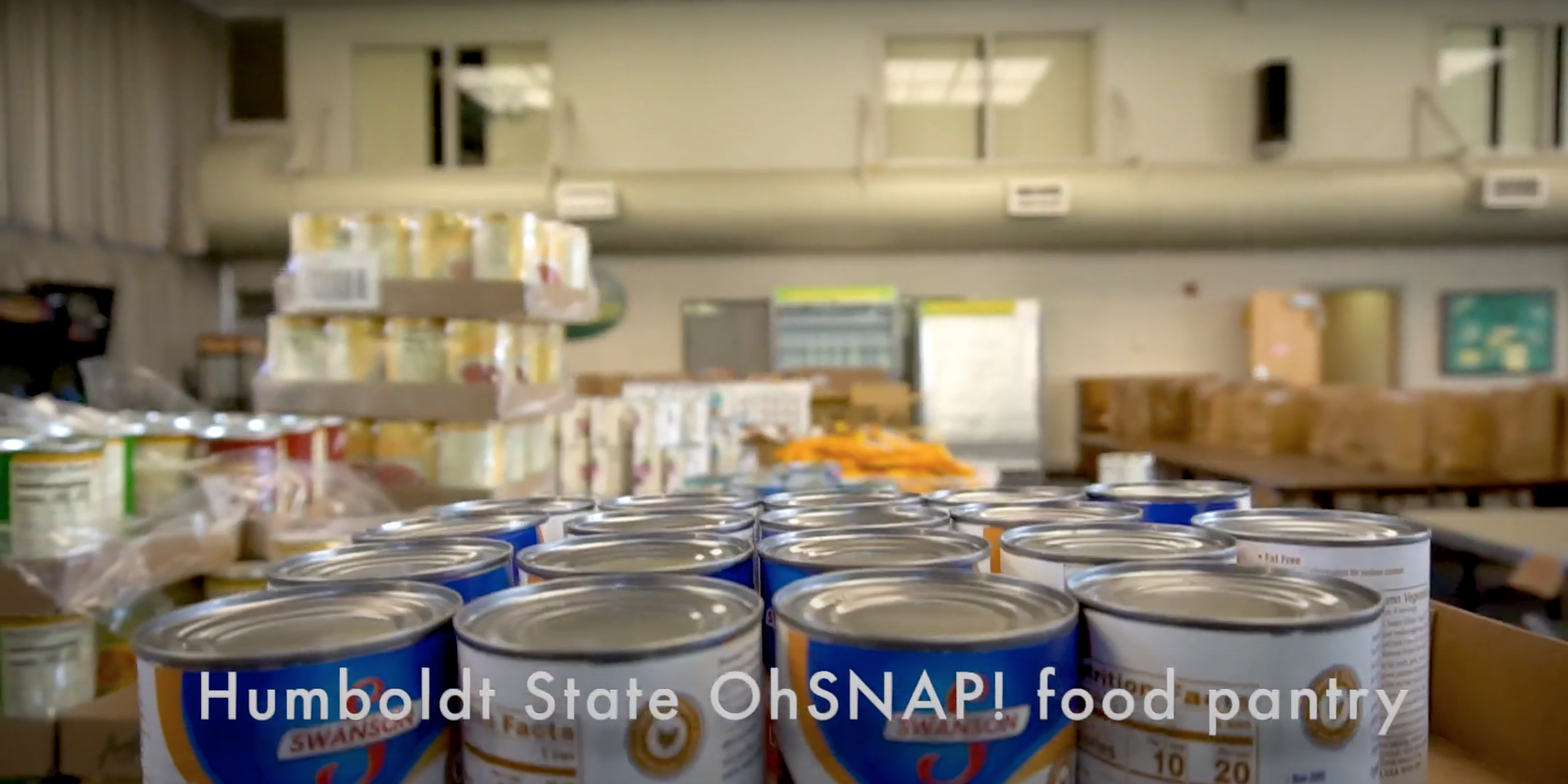
    Odom discovered they could acquire free food from the Oh SNAP! program. Receiving mostly raw foods, Odom took the opportunity to sharpen their cooking skills.

    “I really enjoy cooking for myself,” Odom said. “Obviously it’s a life skill to have and I’ve learned a lot about different kinds of cooking.”

    Richard Shilts is a sophomore at HSU and has a job at Domino’s Pizza in Eureka. He applied shortly after moving back to Humboldt and has been working as a delivery driver since July.

    “I work just about every day of the week,” Shilts said. “I work about 30 hours. I was working like 40 before school started.”

    Shilts’ main concern is work interfering with his education but the job pays too well to quit. Unfortunately, Shilts puts up with customers that are unwilling to abide by COVID-19 protocol, putting himself at a powerless, higher risk of getting sick.

    “I can’t do anything about it,” Shilts said. “I just have to deliver to them.”

  • Students Rely on OhSNAP! in Pandemic

    Students Rely on OhSNAP! in Pandemic

    On-campus food pantry provides for students in need

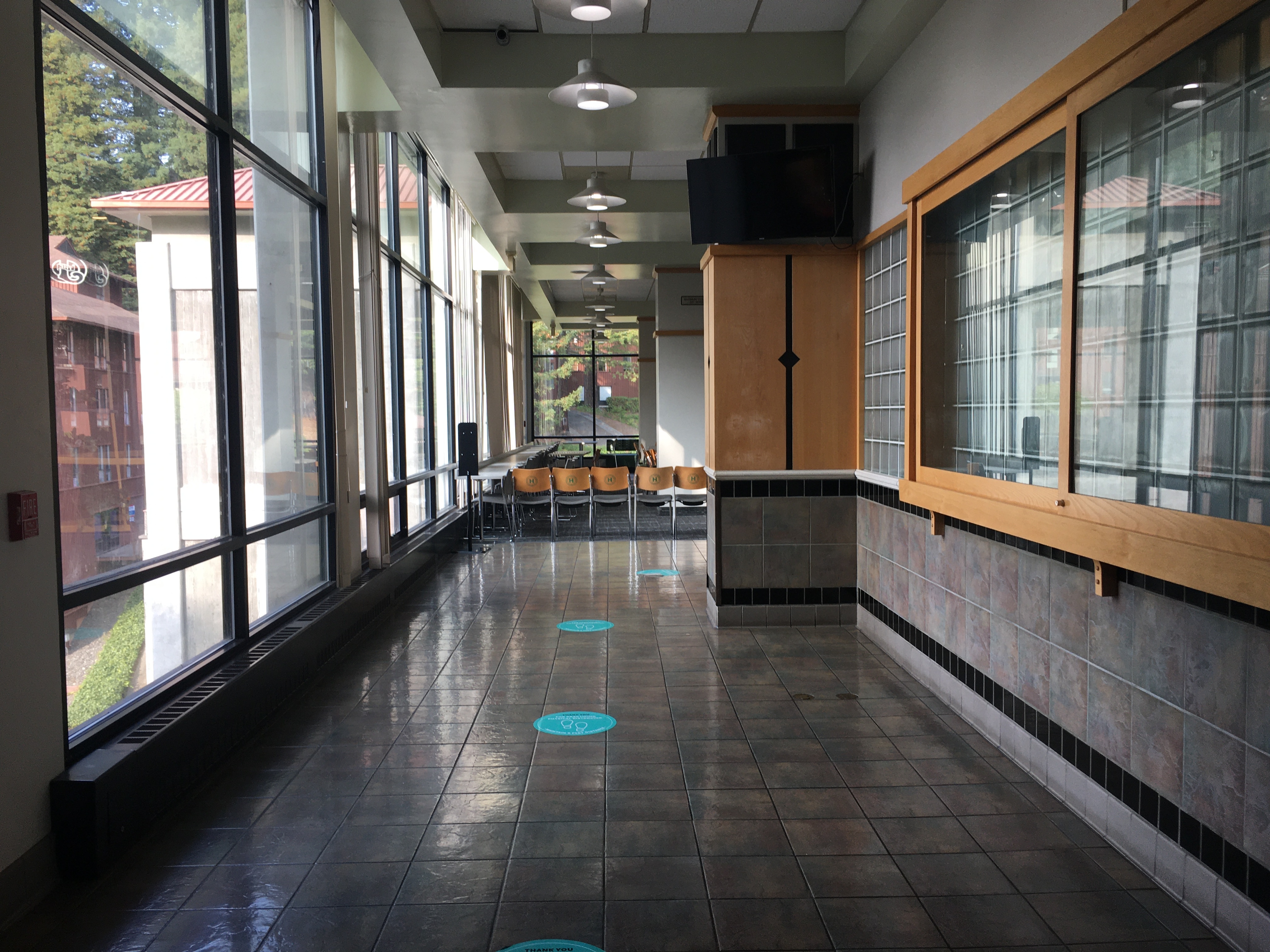
    With the J dining hall closed and grocery stores inducing anxiety, some students are relying on Humboldt State’s OhSNAP! pantry for food.

    OhSNAP! will remain open for the rest of the semester, serving students Wednesdays from 10 a.m. to noon and Thursdays from 1 to 3 p.m. on the bottom floor of the Jolly Giant Commons. OhSNAP! can also deliver food directly to you if you can’t make it to campus (email mira@humboldt.edu for more information).

  • Pigs Compost on Campus

    Pigs Compost on Campus

    A few weeks ago, two little piggies went wee-wee-wee all the way home to the Campus Center for Appropriate Technology. On-campus dining services like The J are working with CCAT by delivering their compost to feed the pig project. Instead of the food waste going to the bin, it can fill the bellies of the pigs.

    CCAT acquired the two baby kunekune pigs from Tule Fog Farm in an attempt to reduce Humboldt State’s organic carbon footprint.

    Ben Nguyen, the primary animal caretaker, farmer, project manager and a co-director of CCAT, explained that, depending on their nutrient demand, the pigs will eat as much or as little as they need in order to maintain healthy growth.

    “Usually what we pick up from The J is around 10 pounds of food a day,” Nguyen said.

    The kunekune pig is a small grazing pig that can survive on a low-calorie diet and can weigh anywhere from 150 to 400 pounds. Although different breeders may breed for a smaller size, the pigs from Tule Fog Farm average around 200 to 300 pounds, making them the ideal size for an on-campus composter.

    The pigs will probably be on campus at CCAT eating food waste for the next semester unless someone wishes to keep the project going through the summer and so-on, since Nguyen will be graduating in May.

    Some students are against keeping the pigs and are seeking to purchase the pigs and send them to a sanctuary. But for now, after the completion of the project, the pigs are arranged to be returned back to Tule Fog Farm.

    Before they were adopted by CCAT, Shail Pec-Crouse, Tule Fog Farm owner and farmer, introduced the pigs to a diverse diet. Tule Fog Farm pigs ate compost as a nutritious supplement to their natural grazing diet of fresh grass.

    “We take kitchen waste from a couple of local restaurants like Slice of Humboldt Pie and Los Bagels,” Pec-Crouse said.

    Pigs are omnivores and need a diverse diet consisting of grains, fats, protein and greens. This diverse diet makes them an excellent option for getting rid of food waste or any organic waste in general.

    According to Oxymem, a DuPont brand, when food waste is thrown in the trash and decays unnaturally among plastic and other non-biodegradable things in landfills, a toxic liquid called leachate is produced, which has a high ammonia concentration that isn’t easily biodegraded. Compost solves this problem by keeping biodegradable materials out of landfills so that it can continue its life cycle and be returned to the ground naturally.

    Robert Just, a local livestock veterinarian, described the relationship between human trash and pig diets as an evolutionary interaction. He explained that since humans and pigs have lived symbiotically for so long, their gut biomes may have adjusted to eating our over-ripe food waste.

    Pigs have digestive tracts that are unique to livestock animals, but are similar to the human gut. They have one simple stomach, just like people. Pigs are omnivores and need a diverse diet consisting of grains, fats, protein and greens. This diverse diet makes them an excellent option for getting rid of food waste or any organic waste in general.

    “Pigs aren’t indestructible though,” Just said. “And they are still susceptible to illness from molds and some fungus, but this can be easily avoided by cooking the food into a slop.”

    This project is one more step towards increasing sustainability on campus and problem-solving to reduce food waste.

  • Fill up that fridge

    Fill up that fridge

    By | Andre Hascall

    With the rise in cost of food, eating on campus isn’t cheap without an already expensive meal plan. This leaves off-campus students with the decision of where they will get their food.

    Alkaid Ramirez, who lives off campus, opted out of getting one of the HSU meal plans.

    “I’ll go to Winco if I can make the effort, but thats deep in Eureka,” Ramirez said.”But I’ll go to Safeway like twice a week.”

    Ramirez highlighted a big factor in choosing where to shop, fortunately for him he owns a vehicle. If you are restricted to the bus, zip car or any other forms of transportation in Humboldt County, getting to and from Eureka with a full fridge worth of groceries gets more difficult.

    With inexpensive grocery stores out of our immediate reach, on-campus dining provides a convenient chance to grab some food. Options like The J, The depot and Windows Cafe offer students prepared food. Whereas The Marketplace, and The Cupboard also have the option of picking up a few groceries.

    Malek Southall, first year oceanography student, has a meal plan so he enjoys most of his meals on campus.

    “I’ll usually eat at The J,” Southall said. “But The Depot is clutch.”

    Choosing The J to eat most of his meals, as it is the most inexpensive place on campus to eat, for those with or without J-points. Yet, the variety at The Depot is hard to beat.

    We know that the J is the cheapest place to eat, and if you’re looking for cheap groceries for home, WinCo seems to be the most cost-efficient.

    Fourth year student at HSU, Jocelyn Barber, recently went grocery shopping. Her choice for this trip was Safeway, since its closest to home.

    “That is the last time I am shopping at Safeway for the year,” Barber said. “I would have gotten double the food at WinCo.”

    Students agree that WinCo is a good place to shop if you want more food for the same price as some of the other grocery stores.

    “If we are talking percentages,” Ramirez said. “I’d say I get about 30 to 40 percent more food at WinCo.”