The Lumberjack


Students Serving The Cal Poly Humboldt Campus and Community Since 1929

Tag: Third Street Gallery

  • URPC Builds Budget, Seeks Student Feedback

    URPC Builds Budget, Seeks Student Feedback

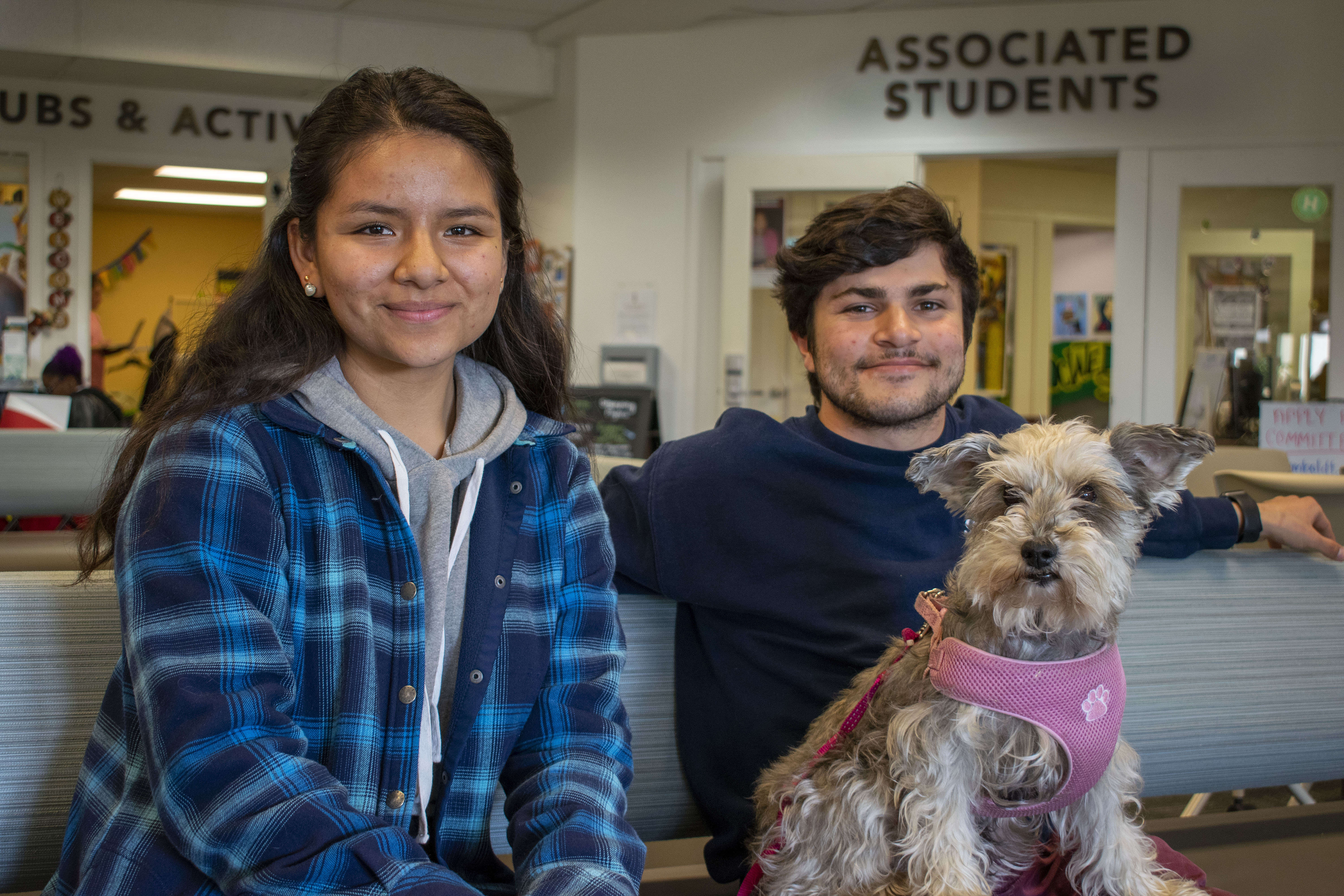
    Only four students attended the first University Resources and Planning Committee’s public budget forum, according to Associated Students President Yadira Cruz.

    Around 50 faculty, staff and community members were in attendance as well, according to Art Education Assistant Professor and URPC Co-Chair James Woglom.

    Woglom said the URPC’s presentation, which can be found online at budget.humboldt.edu, focused on the URPC’s work toward creating a scalable budget model, or a budget that can be altered periodically to represent changing values.

    “It ends up bringing more people into the process of decision-making, and thus hopefully reflecting more people’s feeling of what we want this organism to do,” Woglom said of the URPC’s new model.

    James Woglom, art education assistant professor and University Resources and Planning Committee co-chair, checking his laptop in the Humboldt State Univeristy library on Nov. 14. Woglom said the URPC has created a new scalable budget model that allows for more flexibilty and input from the HSU community. | Photo by James Wilde

    URPC has been meeting over the course of the semester to form a three-year budget for Humboldt State. Woglom said the first step for deciding where to allocate funds is to clarify which values HSU should prioritize.

    Besides the forum, the URPC is taking feedback online through an online submission form, a Google survey designed to scale which campus values are most important and a pie chart budget simulator that allows proposals of how HSU should divide funds. Woglom said he’d also be happy to take suggestions through direct emails.

    While Cruz said she appreciated the existence of the online feedback forms, she said they can be obscure due to budgetary jargon.

    “Although it’s available, it might not be accessible in that way,” Cruz said.

    The Google survey, which is not yet released, lists a series of California State University values and asks the respondent to rate how much they agree with each one.

    “It’s not saying that we want to devalue any of them, but it’s trying to get a quantitative sense of where the University’s priorities are in terms of allocation of resources based across a series of ideas,” Woglom said. “And then hopefully with that quantification we can make decisions based on where we can make things happen.”

    The URPC’s current projections show a $5.4 million budget gap by the 2021-2022 school year, which reflects the impact of reduced tuition due to declining enrollment. According to the presentation, every 100 students generate about $560,000 in tuition.

    The University Resources and Planning Committee pointed to declining tuition numbers as the cause of HSU’s current projected $5.4 million budget gap.

    Joseph Reed, a political science and economics double major and a student representative on the URPC, said the key challenge has been ramping down the budget with the declining student body.

    “It’s kind of been hard to keep this budget for about 8,000 students when we don’t have 8,000 students anymore,” Reed said.

    Cruz said the budget should focus on the students HSU has now, and not the students it had in the past.

    “Being in that cutting mindset is potentially jarring for morale. I mean, you’re coming from a space where you’re like, ‘Alright, what do we have to not do this year?’”

    James Woglom

    “I think every campus goes through these sorts of financial challenges, but I think how we move forward is centering students,” Cruz said.

    Reed said the URPC has no plans to cut whole departments. Instead, Reed said cuts are more likely to be smaller and broader across the board.

    “Every department is being affected, but each one has its own budget, so each one has its own certain amount that it’s being reduced by,” Reed said.

    Over the past three years, URPC reduced the budget by $11.5 million. However, Woglom emphasized a difference between past and future cuts due to the new scalable budget model.

    “[In the past] we’ve cut what we’ve determined to be at the fringe of the project of the University—so maybe not in direct agreement with the strategic plan of the University or the general values of the University,” Woglom said. “Being in that cutting mindset is potentially jarring for morale. I mean, you’re coming from a space where you’re like, ‘Alright, what do we have to not do this year?’”

    The University Resources and Planning Committee showed three possible enrollment and budget scenarios in its Nov. 7 public forum presentation.

    With the new model, Woglom said HSU can start with a specific budget number and then distribute it to the things HSU values most. Woglom said the budget can be continually changed, which allows HSU to scale back up or down if monetary realities change.

    “We don’t want to make hurried and necessary decisions every year,” Woglom said.

    The URPC uses Financial Information Reporting Management System codes, which are used in higher education to categorize expenses by their function, to compare HSU’s spending to other CSUs.

    FIRMS codes break down HSU’s spending into five categories: instruction ($56.6 million in the current budget), institutional support ($21.6 million), operations and maintenance of plant ($16.3 million), academic support ($15.6 million) and student services ($12 million). Each of these categories represent a FIRMS program, and the budget determines what percent of the total amount of funding goes to each category.

    Using these categories, the URPC also compares HSU’s spending to other CSUs. According to the presentation, spending at HSU in comparison to similar-sized campuses for the 2017-2018 school year was 17% higher at HSU for instruction, 24% higher for academic support, 3% higher for student services, 10% higher for institutional support and 1% higher for operations and maintenance of plant.

    The presentation also showed three possible scenarios for the future of enrollment and its effects on the budget. The best case scenario, called the growth scenario, shows a leveling off of the enrollment decline and a budget gap in the $4 million range by the 2021-2022 school year.

    The current scenario, upon which URPC’s projections are based, shows a continued decline that leads to the budget gap of $5.4 million. The worst-case scenario shows further decline and a budget gap of up to $7 million by the 2021-2022 school year.

    The URPC’s current budget plans are based on the middle scenario of a $5.4 million gap.

    Woglom said the URPC still has to figure out how to allocate its funding to keep current programs intact.

    Budget projections from the University Resources and Planning Committee’s Nov. 7 public forum presentation show a $5.4 million budget gap by the 2021-2022 school year.

    “It raises interesting questions about where you can move within that,” Woglom said.

    Just one day after the URPC’s public forum, HSU released a campus announcement detailing the process for filling staff vacancies during the current enrollment decline and budget deficit. The announcement said that while current staff positions will not be eliminated, positions deemed “non-critical” by the vice president of the relevant division won’t be backfilled when a person leaves that position.

    Woglom confirmed that announcement.

    “The intention of the University at this point is to work to determine where attrition will happen and backfill positions in that manner,” Woglom said.

    This backfiring process does not apply to faculty, according to the announcement.

    The URPC’s next and final public forum is scheduled for Dec. 3 at 11:30 a.m. in the Goodwin Forum, during which the public can review the URPC’s draft plan before it is sent to the University president for review. Woglom urges everyone to give their input.

    “Any ideas that people have that they’d like to share with us, the better our decision-making process can be,” Woglom said.

    “I think [student input is] a challenge in itself,” Cruz said. “But I think that just because it’s challenging doesn’t mean it shouldn’t be pursued.”
    Yadira Cruz

    Reed and Cruz said they don’t think two public forums are enough to gather sufficient student input.

    “I think overall we should be making a stronger effort to connect with students and get their overall opinions,” Reed said.

    Reed suggested that the URPC should seek to get input not just from some students, but from the majority of students. Cruz agreed.

    “I think that’s a challenge in itself,” Cruz said. “But I think that just because it’s challenging doesn’t mean it shouldn’t be pursued.”

  • Proposal to cut Third Street Gallery

    Proposal to cut Third Street Gallery

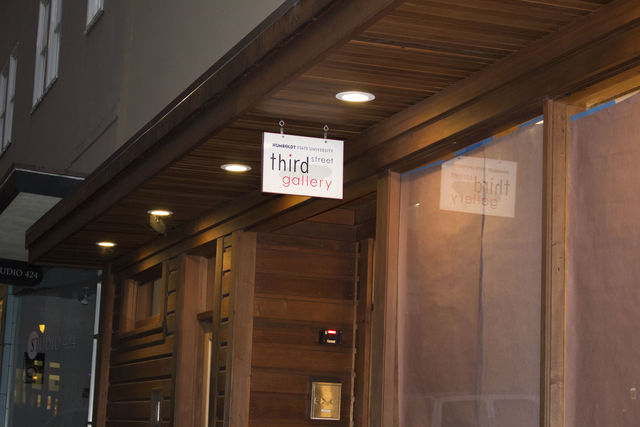
    Humboldt State University’s Third Street Gallery in Eureka may shut down in an effort to reduce the university’s spending budget. The proposal to close the gallery calls for $55,000 of the gallery’s budget to be reduced. That makes a third of the gallery’s whole budget and the remaining two thirds transfer to other gallery programs on campus.

    Jack Bentley is the Third Street Gallery director.

    “The proposal to close this gallery is actually very short-sighted,” Bentley said. “It misses the point of what the purpose of this gallery was and the inherited highly developed community expectation of what we do here.”

    The Third Street Gallery was founded in 1998 to provide students with real world, hands-on learning through work and internship opportunities. It’s also meant to give HSU opportunities to reaching out to the community.

    Pedro Uribe Godoy is an art major and works at the gallery.

    Godoy opposes the proposal to close the gallery and thinks it is “destructive” as it will cut out a venue for learning for current and future art students.

    “There’s a lot to learn here and for them [HSU administrators] to take it away and not expose new students to this line of work, I think, is very destructive,” Godoy said. “They are limiting students of what they’re gonna learn and what kind of avenues of work they can plug themselves into.”

    The gallery is supported by the university, revenue from art sales and public donations. The Third Street Gallery raised around $22,000 from both sales and donations during the first half of the current fiscal year.

    “It’s kinda messed up for the university to take away this gallery and undermine all the donors that have been donating for this gallery for so long,” Godoy said.

    Andrew Daniel is an art alumnus who graduated from HSU 16 years ago. As a student, he had his work shown in the gallery. Daniel wrote a letter to HSU administrators expressing his displeasure with the proposal to close the gallery.

    “The gallery brings a unique perspective to the community. It brings in work from out of the area,” Daniel said. “I don’t know if we’ll get those artworks if not for this gallery.”

    Over the years, Humboldt County has gained a reputation for being a haven for art and artists of all kinds. Besides student artists, local artists exhibit their artwork in the gallery too.

    “It’s such a valuable thing to our community,” Daniel said. “There are a lot of artists in our community that would just not even show their work if it didn’t show at that gallery. It’s such a unique venue.”

    In such a rural area, the Third Street Gallery provides students and the community access to different forms of art from different parts of the world.

    “We’re rather isolated. Here, people have access to art forms and new ideas that otherwise they won’t have,” Bentley said. “They would have to travel several hundred miles to either Portland or San Francisco to have that type of access.”

    The gallery host exhibitions for local artists and other visiting artists from outside the area. It also provides a venue for students and alumni artists to exhibit their work in a professional gallery off campus and in the community.

    “Student artists and alumni artists exhibit here where they have a much higher probability of coming into contact with the public than they would if they’re exhibiting their work on campus,” Bentley said.

    Living in a rural area like Humboldt, art students at HSU can find it difficult to find a job or an internship related to their major.

    Ann Valdes is an art student at HSU and also works in the Third Street Gallery.

    “Being in Humboldt, we’re so removed from a large art market. It’s really hard to get good solid work experience if we didn’t have programs like this,” Valdes said. “We’re learning all the lessons that we may not be able to learn if we’ve never worked in a gallery.”

    HSU prides itself on offering plenty of hands-on learning opportunities for its students. Students say HSU Third Street Gallery provides students with real world experience.

    “I’ve been learning valuable lessons here,” Godoy said. “There’s no more hands on than this. This is hands on.”

    Valdes thinks the proposal to close the gallery goes against how HSU advertises itself.

    “What this budget cut proposal intends almost goes against the way Humboldt State University advertises itself,” Valdes said. “For them to cut this program is almost undermining what Humboldt says it’s about.”

    HSU owns three art galleries. Reese Bullen Gallery and Goudi’ni Native American Arts Gallery are both located on campus, while HSU Third Street Gallery is located off campus in Eureka.

    Bentley thinks all of these galleries are important and serve important purposes. The most important purpose, he believes, is that the Third Street Gallery serves as community outreach.

    According to Bentley, the art department is planning on launching a new Bachelor of Fine Arts program in the future.

    “This gallery is the natural venue for the BFA exhibitions,” Bentley said. “Here, students will have the opportunity to gain more studio time.”

    Bernadette McConnell is another art student who works in the gallery. She opposes the proposal to close the gallery. McConnell thinks the proposal to close the gallery is ill-informed.

    “If it wasn’t for my job here at the Third Street Gallery, I wouldn’t be here at Humboldt State,” McConnell said. “If this place gets shuttered, I have no reason to be at Humboldt State. I will leave Humboldt.”

    Bentley has received many letters that oppose the proposal.

    “The letters I received are very supportive of the gallery,” Bentley said. “Letters from former students, community members who object the proposal very strongly.

    Every summer, the Third Street Gallery hosts an exhibition of work from HSU art graduates.

    All graduates who have a piece in the senior show get to show their work in the gallery. In the Third Street Gallery, students get exposure to the overall community off campus.

    “Every summer we have a show dedicated for graduating seniors from the art department. They get off campus public exposure that they otherwise wouldn’t get,” Bentley said. “If this gallery closes, those type of exhibitions will simply be on campus and not available to the broader community.”

    The proposal to close the gallery came as a surprise to Bentley. He learned about it by reading the list of proposed budget reductions.

    “There’s been no outreach by any of these communities to the gallery,” Bentley said. “I learned about it by opening the proposal. This is how I learned about it.”

    Godoy hopes the community comes together to help keep the gallery open as they did with the football program.

    “I’m hoping that the community does that for us too,” Godoy said. “Hopefully, it all comes together well and we all fight together for it, and I’m hoping that we can keep it alive with the help of the community.”