The Lumberjack


Students Serving The Cal Poly Humboldt Campus and Community Since 1929

Tag: Tips

  • Smoker discretion advised

    Smoker discretion advised

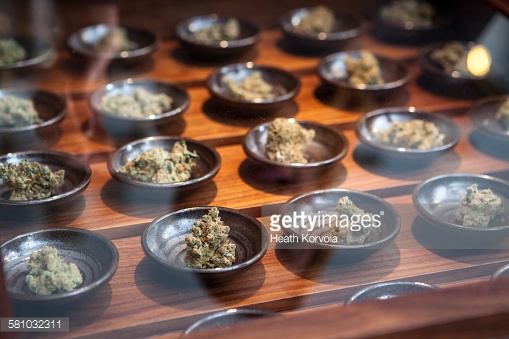
    Smoking marijuana recreationally is now legal in California. However, before you take your stash with you as you head out the door, take caution. Changes to marijuana legislature is happening on a state level, not a federal level. When it comes to which laws carry more weight, federal trumps state.

    California voters passed Proposition 64, also known as the Adult Use of Marijuana Act, to begin the process of governing the drug on Nov. 9, 2016. The legal sale and taxation of recreational weed took effect on Jan. 1, 2018.

    Smokers who believe they can just light up wherever they please should slow down and consider legal limitations.

    Smoking At School

    Public colleges are state-funded and federally funded. This means you’ll get into trouble if you bring your legal weed with you to school grounds, according to USA Today. In fact, most students are receiving frantic e-Memos from their school’s administration ensuring students who come back from winter break that weed is still not allowed on campus. How diligent campus safety is is another story. Try not to be to angry with your college campus as it needs money to function and runs the risk of having federal funding pulled completely. This is especially true if they allow their students to smoke marijuana freely and not abide by federal law.

    Smoking at Work

    In a nutshell, if you can’t show up to work drunk, you also can’t show up to work high. Whether one is safer than the other is not the question here. Both are considered the same level of being under the influence. Your boss still has every right to fire you if you show up under the influence, even if it is for medicinal purposes. A company can still deny you employment if you decide to fail their mandatory drug test, because you did not want to stop smoking. There is no legislation stating businesses should follow suit with state law and federal jobs will definitely not allow recreational use of marijuana.

    Smoking in Public Places or While Driving

    This is a similar story to work and school. Medical marijuana cards may have granted some freedom here, but smoking in public or while driving has always been a risk weed smokers take when they travel. Even though weed is open to all to smoke recreationally, not just those with a medical marijuana card, it should be kept at home for recreational use. According to Politifact, taking it on the road under the new law is like having an open bottle in your car. If you can’t drink in public, you shouldn’t be high in public. Both are disturbances of the peace or driving under the influence, violations that warrant a police citation. Just like driving with an open container, you’ll face probably face some trouble if you get pulled over if your weed is not sealed. Legal weed must be in a sealed container. If that container is not sealed, it must be locked away somewhere, such as the trunk of your car. With the legalization of marijuana comes extra attention. Law enforcement will be looking for marijuana violations to a greater extent, especially when it comes to driving under the influence, according to Shouse Law Group and California Vehicle Code.

    The law itself will change and adapt as the state and federal law differences sort themselves out over time. Practice smoking discretion before smoking as you please.
  • How to stay dry in Humboldt

    How to stay dry in Humboldt

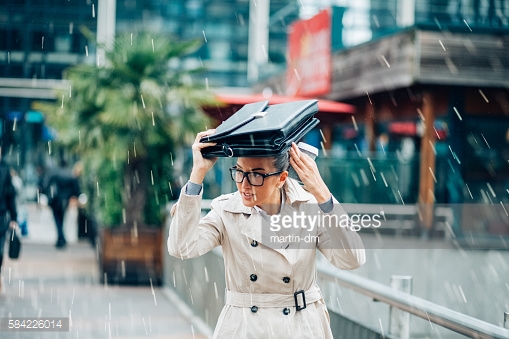
    The spring semester means rain season and it is likely to stay that way the whole semester. Here are some tips from my local prespective to stay dry in Humboldt.

    1. Get proper rain gear. It’s not fun walking from class to class sopping wet. There are many local stores that carry rain coats and shoes. Even the hardware store has cheap boots. Umbrellas are useful against horizontal rain, but don’t spend too much money on one if you’re prone to losing them.
    2. Keep extra socks in your backpack. Trust me, I regretted not doing this on my way to work when street puddles grew to ponds.
    3. Waterproof. If you don’t have the time or money for new shoes, you can buy a waterproofing spray at shoe stores to spray your old shoes and backpack.
    4. DampRid. Everything gets wet, even when it’s not raining. To prevent mold from growing in your residence, buy DampRid bins to absorb moisture. Put them in the closet, under the bed or in the bathroom. This can be purchased at the hardware store, Bed Bath & Beyond or online.
    5. Plan walkways creatively. It is possible to walk to classes without getting wet. Many buildings have awnings and some trails have trees with enough coverage from the rain. With creative planning, you can walk through buildings and the right pathways to get across campus without getting drenched.
    6. Don’t let the rain trap you inside. The benefit of rain, other than to water plant life, is an excuse to stay inside and lay under 20 blankets to stream the new season of The Magicians on Netflix like me. The outside world doesn’t cease to be as beautiful when it’s cold and wet out. Parks and trails are actually just as fun during the winter as they are in the summer. Rivers flow more and nature looks a little greener. So put on waterproof clothes you don’t mind getting muddy and go outside.


  • Don’t Trip, Just Hit the Road

    Don’t Trip, Just Hit the Road

    How to Navigate a Budget Oregon Road Trip

    By Kelly Bessem

    “On a roadtrip? Things rarely go as planned, but that’s part of the adventure,” said Sean Sesanto, a senior Humboldt State University student from Santa Cruz, Calif.

    Stormy roads carved into snow 12 feet tall, trespassed tent sites, and driving directions gone adrift. These unanticipated parts of my recent Oregon road trip made for moments of wariness but enlivened the memories. The key to appreciating bumps in the road is expecting the unexpected.

    “My only road trip preventions = time & money,” said Jenna Kelmser. Kelmser is an environmental science major at Humboldt State. The response reverberates the words of many students and potential road trippers.
    Planning a road trip to Oregon may sound difficult with time and money constraints. Once these are bypassed, obstacles such as car trouble or being generally unprepared may also present themselves.

    I’d never ventured Oregon before my Feb. 2017 trip. I let the aforementioned roadblocks prevent me from setting out despite being just south of Oregon’s border. I’d heard about Oregon’s natural wonders, culinary experiences, and breweries from friends and websites. It took me two years. My suggestion? Don’t wait to go. Oregon’s whimsical wanderings- hot springs, waterfalls, quirky cities- will not disappoint.

    Oregon is a welcoming expanse, with speed your only real limit. Use this Oregon road trip guide to prepare for the road and get out there right now.
    Money
    Total cost of my quintessential Oregon road trip? $280. My strategies:
    -Camp when not in a big city. State parks and national recreation areas are cheap options ($10-20). There’s plenty of free dispersed camping as well. CampgroundsOregon.com maps all of these and has helpful search filters. Just make sure to check the box “redo search when map is moved.”

    -Travel with others and divide the costs
    -Keep eating out and making food at a 50:50 split
    -Have drinks before going to the bars
    -Focus on free recreation possibilities
    -Find free or cheap firewood within your community

    Use a budget calculator to estimate your trip costs. Once you know your total, you can reign in regular spending. Destination photos are great motivators for sticking to this. OutdoorBlueprint.com breaks down road trip planning in a way that people of experience levels can appreciate. Access its budget planner from the “Read” section of the home page.

    Lambs ear plants flock the Valley of the Rogue SP Campground | Photo by Scott McCrary

    Time

    The week before the road trip, make a list of imminent tasks. Then match those tasks with a tentative completion day. It doesn’t have to be exact, but gives the brain a good idea of how to manage within the available time.

    Use TravelOregon.com to estimate travel and activity times. It has excellent graphics and trip ideas. Anything you find on Travel Oregon can be added to a Roadtrippers website account by clicking “add to my Oregon road trip”. Roadtrippers has a page for each thing added with locations, hours, and detailed reviews.

    Weather

    Travel Oregon made an Oregon Weather Compass (OregonWeatherCompass.com) that shows you where you can find sun, snow or rain anywhere in the state. The Oregon Department of Transportation (tripcheck.com) shows all road restrictions, closures, and weather hazards.

    Snowshoeing the Raven Ski Trail at Crater Lake NP | Photo by Scott McCrary

    Car

    -Carpool with others to avoid fatigue. Whether or not you can drive, you can help keep drivers awake.

    -Inspect your vehicle or get it inspected before taking off. This is always less costly and time consuming. Proper tire pressure and fluid levels are included in any car manual. Some auto shops offer a free check with simple servicing, such as an oil change. Others offers inspections for around $20. American Automobile Association (AAA) members get free inspections.

    -Know how to change a tire, jump a car battery, and put on snow chains. In Oregon there can be snow just over 1,000 feet elevation. Instructions are easy to find on YouTube.

    Directions

    -Save maps or directions detailed enough to use when service is lost. Download these to a phone or print them out.

    -Glance at directions beforehand if you are driving to avoid confusion.

    Snow towers over the road to the Steel Visitor Center at Crater Lake National Park | Photo by Scott McCrary

    Gear

    -Borrow gear from friends. Make sure to return it clean and in good condition.

    -Rent items that you don’t use often. (i.e. snowshoes). Humboldt State Center Activities is great for this.

    -Be prepared for the weather, and have a plan if items get wet (such as a laundromat).

    The Trip

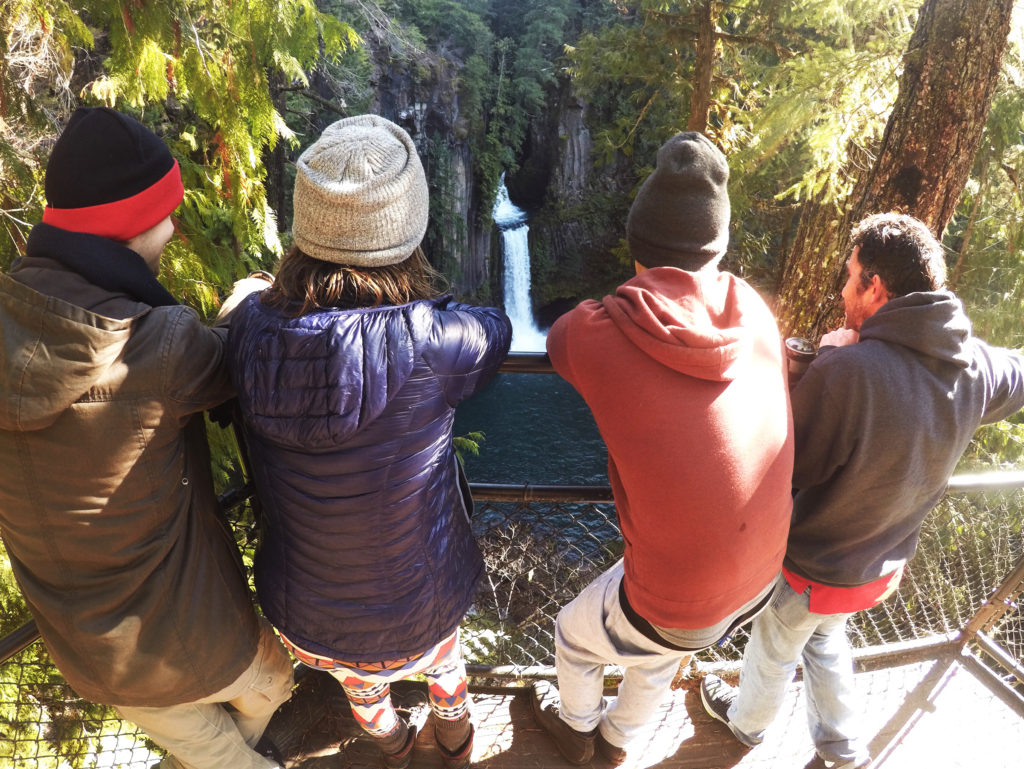
    How long did it take me to indulge in the Rogue River, Crater Lake, Umpqua Hot Springs, Toketee Falls, and Portland? Just three days.

    Night 1: Valley of the Rogue State Park Campground

    Day 1: Snowshoeing Crater Lake

    Night 2: BLM’s Susan Creek Campground – closed for winter

    Day 2: Umpqua Hot Springs, Toketee Falls, Portland nightlife

    Night 3: Airbnb in northeast Portland

    Day 3: Exploring Portland, Corvallis pit stop

    View an interactive map and detailed info for this trip.

    https://www.arcgis.com/apps/MapJournal/index.html?appid=ac21a912f5004a829e8c9ef608fafe83