The Lumberjack


Students Serving The Cal Poly Humboldt Campus and Community Since 1929

Tag: United States

  • What It’s Like Inside Pelican Bay Amid the Coronavirus Pandemic

    What It’s Like Inside Pelican Bay Amid the Coronavirus Pandemic

    A conversation with a College of the Redwoods student at Pelican Bay State Prison

    We now have more than 1.5 million people worldwide infected with COVID-19 and over 90,000 deaths. The United States has surpassed every other country in cases with just over 450,000. People are being told to socially distance themselves with six feet of space between others and isolate inside. But what about the millions who are incarcerated that don’t have that option? 

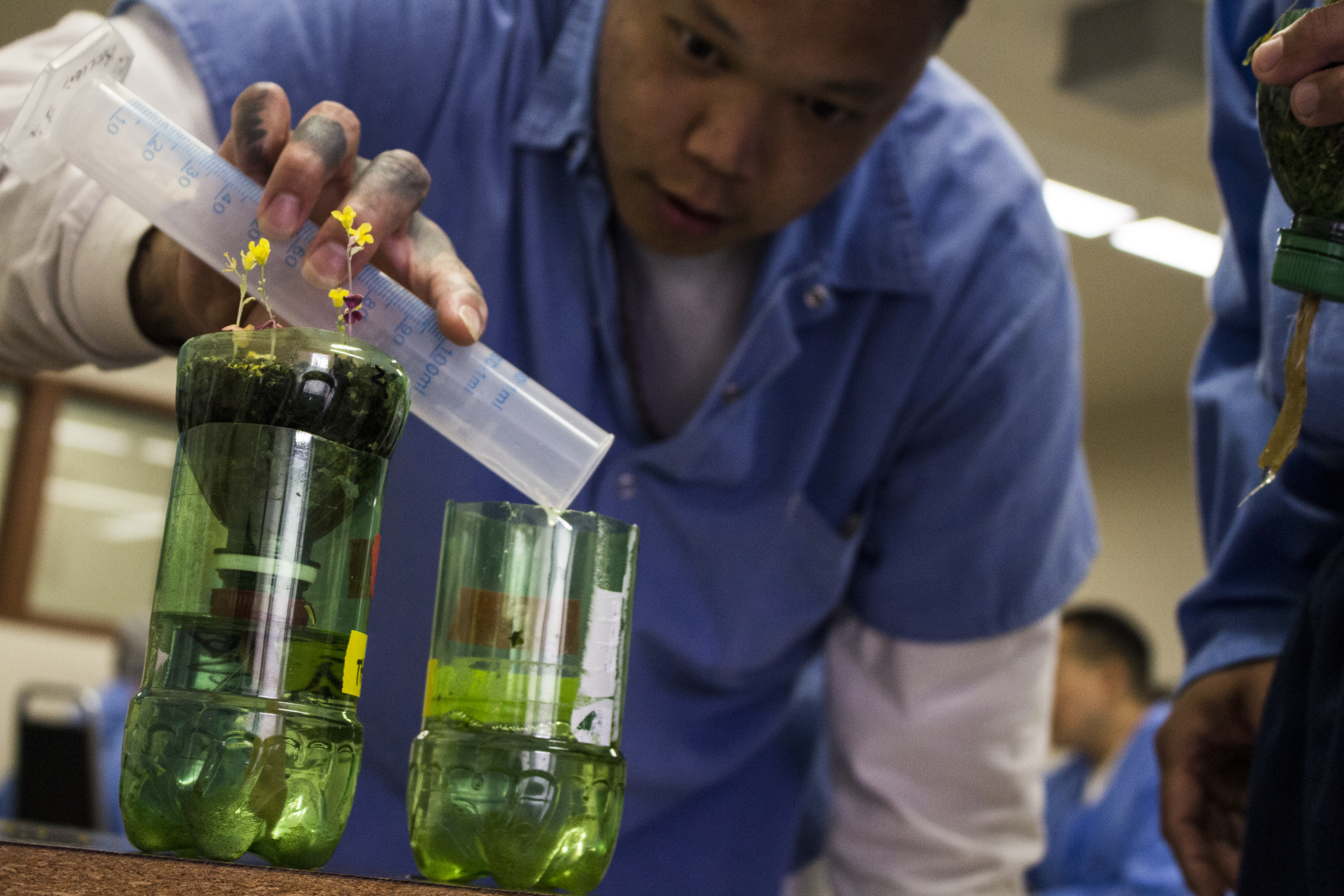
    Kunlyna Tauch is housed at Pelican Bay State Prison and is a student in the College of the Redwoods Pelican Bay Scholars Program at Pelican Bay State Prison. He is slated to graduate with his associate degree for transfer this summer. Tauch is also a student and contributor in Paul Critz’s audio journalism class, which produces Pelican Bay’s podcast “Pelican Bay: UNLOCKED.” Tauch has been a spokesperson of sorts for the recent programming at Pelican Bay and an advocate of the changes being made inside the supermax prison.

    Cases of the coronavirus have risen just over 1,300 throughout 100 federal prisons, thousands of jails and 1,700 state-run facilities nationwide. The Federal Bureau of Prisons says 138 inmates and 59 employees have tested positive and at least seven inmates have died, bringing the total to at least 32 COVID-19-related deaths inside the nation’s prisons and jails. 

    On March 31, California state prison officials announced they would be releasing 3,500 incarcerated individuals early to help free space in cramped prisons due to a possible coronavirus outbreak. Governor Gavin Newsom announced a halt in the transfer and intake of incarcerated individuals and youths into California’s 35 state prisons.

    According to the California Department of Corrections and Rehabilitation website, there are, as of April 9, 12 incarcerated persons at California Prison, Los Angeles County, 19 incarcerated persons at California Institution for Men in Chino, one incarcerated person at North Kern State Prison in Delano and one incarcerated person at Substance Abuse Training Facility in Corcoran who have tested positive for COVID-19. Seventy-one CDCR or California Correctional Health Care Services employees have tested positive for COVID-19 in 21 incarcerated facilities, and hundreds have called in sick for work.

    In the past five years there have been more programs in Pelican Bay than ever before and the culture inside is changing. After a lawsuit was awarded to the incarcerated individuals participating in the 2011 and 2013 hunger strikes and their advocates, one of the two solitary housing units was shut down and terms of isolation were limited to five years. This caused the prison to mitigate the effects of solitary confinement with programs like education and therapy. I spoke with Tauch on what it’s like in Pelican Bay State Prison as a college student amid the changes COVID-19 has brought to the infamous prison.

    Kunlyna Tauch looking upward in June of 2019. Tauch is slated to earn his associate degree for transfer through College of the Redwoods’ Pelican Bay Scholars program this semester. | Photo by T. William Wallin

    Tony Wallin: What’s it like in Pelican Bay State Prison right now and what are your concerns?

    Kunlya Tauch: First of all, CDCR stopped all visitation and there are no programs. So we’re doing like old prison time, right. Which is us in prison going to yard and trying to occupy ourselves with whatever we have, which is not that much. My concern is that people on the streets are so socially distant from each other they become callous of each other and become more segregated and more disconnected. But from what I am seeing on TV is a lot of good, which is making me happy. The little acts of kindness and videos of people on the street coming out, I love it. There’s actually a little silver lining out of this.

    TW: Yeah. There’s a lot of opportunity for positivity through all of this.

    KT: It’s hard to pass on those opportunities because it’s so in-your-face. 

    TW: What’s it like in there with programs shut down? What are you doing to keep busy?

    KT: College of the Redwoods has been the only program that is really working on shifting their whole business model to make it work for us. They are still running classes through correspondence and we’re getting hella work like every Friday. Our teachers are saying, ‘This is what we expect. Your next essay is due this date, send it in the mail,’ but because I have five classes I have enough work to sustain me, plus I have hella books I’ve got to get through. I am pretty occupied but it’s pretty restless in here, you know? People are constantly checking on their family, making sure they are well. They aren’t reading, they aren’t programming, they aren’t going anywhere, so their day consists of the phone and the yard. The yard schedule in itself [has changed], we aren’t seeing the regular people we used to see. They’re making it real limited, they’re not giving the day room. They literally made some new rule where only five cells in the day room at a time, which prohibits ourselves from doing what we want to do. It’s kinda stressful. It feels like we are taking a lot of steps back as far as prison goes. 

    TW: CDCR said they were going to send out more cleaning supplies to all prisons and make sure every prison has what they need. Are you seeing that?

    KT: That’s never been a problem. The cleanliness of the place isn’t a problem. Right now I have a personal friend who had some symptoms, they didn’t even test him and they just took him to quarantine and is on two weeks lockdown with no mail, no phone, no nothing. Just to see if he has it or not.

    TW: Where do they have the quarantine right now? What do they have blocked off?

    KT: They have one on A yard and one on B yard and it’s one section of one building and they’re basically in the SHU [secure housing unit]. They’re like kicking off drugs by themselves. That’s their treatment and I guess the nurses are going over, but I don’t know. I assume nurses are checking on them professionally. There’s too much of a shortage of testing, but one thing about medical is they are a separate entity than CDCR, so CDCR can’t dictate what they do.

    TW: Interesting. They operate differently? The warden doesn’t have a say on the medical side of things? 

    KT: No, medical community operates the medical community. All records are sealed and confidential. The prison has to accommodate that or else there’s a big lawsuit. I think CDCR concedes medical and there’s an agreement [between them]. According to the American government this is it and [CDCR] is only the California government, same with religion and same thing with tech. For some reason the tech, IT, here is their own entity and they suck. It takes like a month to transfer music onto our laptop [for the podcast]. It’s been stagnant. I’ve been feeling lethargic. I feel like they caged me back up and I’m really back in prison again. Pelican Bay was really doing good with their programs and everything running everyday and now it feels like this modified program where it feels like we’re just on lockdown. I feel like a lot of our minds aren’t being stimulated because a lot of us aren’t in those programs we are forced into or choose to be in.

    TW: Right. It feels like pre-2014?

    KT: Yes. Real shit. It feels like before and it feels like out of mind will cause more trouble. I am waiting for the ball to drop. I am waiting for something to happen. I’m almost mad that personally we’re on lockdown, but the whole fucking world is on lockdown and I can’t make more moves happen.

    TW: Yeah, the irony in all of this is everything is locked down globally. How is your morale and the overall morale in the prison? Are there still positive interactions?

    KT: I feel like we’re losing that. I feel like the tank is draining every single day. Guys that were motivated are losing that motivation. I see my college peers going like, ‘I don’t even feel like doing the work.’ But you don’t have that motivation no more because you’re not in front of the teacher anymore, you’re not engaging. You have questions but you can’t get an answer. I have a bleeding heart for my community in here, but it’s hard for me to help them because I have five courses and I have to study. We’re getting hella shit to read and it’s like, ‘I don’t have the time to worry about you guys because I have to get this out of the way first.’ Before all of this coronavirus I was approved to transfer to Lancaster [California State Prison, Los Angeles County]. That’s a level three. That was a big decision I had to make because that means I have to detach myself from this place I grew roots in. The process of this whole coronavirus—I’m back worrying about college and I can’t really be the catalyst to get my guys rallied up to do their work because I have to just worry about my work. So, I’ve been feeling like the morale is ‘Let’s see what happens while we are in this state of limbo,’ which is worse than staying stagnant because we’re losing the momentum, you know? We work on momentum on the programs that are on a level four yard. Without that momentum it’s like, ‘I’ll just watch Jerry Springer all day.”

    TW: It’s gotta be rough going from so many programs for the first time at Pelican Bay and then, in an instant, they’re gone. For those of you that are students at College of the Redwoods, can you study together?

    KT: Everything in person is shut down but we can do our own personal study groups, but we are divided. So, we only see our own dudes in our own yard and maybe another building and they’re across the fence so we can’t even have a study group out there. Also the COs [correctional officers] are really cracking down on what stuff we can bring out and they’re asking us, ‘Why were you bringing books and stuff out to the yard since programs are shut down?’ So we can’t even have that. So technically no, we can’t have a study group. We can have an impromptu one if there’s a cool CO that says it’s cool, we can sit out there.

  • Biden’s Recent Slip-up is Not His First

    Biden’s Recent Slip-up is Not His First

    The South Carolina gaffe is only his most recent in a series of slip-ups

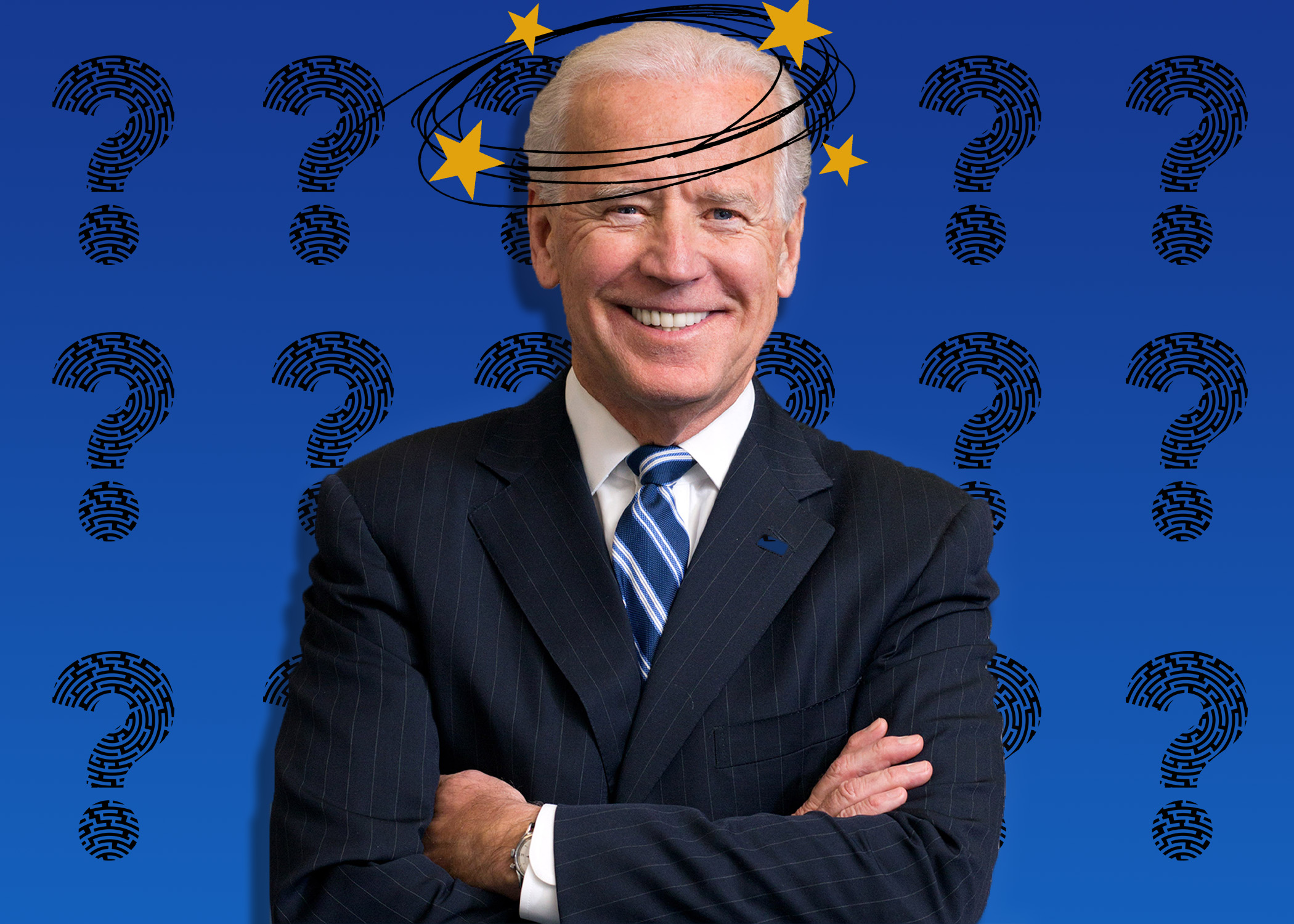
    In a speech given in South Carolina Feb. 24, Joe Biden asked for support in his campaign—but he may have forgotten what exactly he was campaigning for.

    “My name is Joe Biden, I’m a Democratic candidate for the United States Senate,” Biden said, a Democratic candidate for the United States presidency.

    This, however, was not the first time that Biden has slipped-up on the campaign trail. During the Nov. 20 Democratic debate in Atlanta, Georgia, The Guardian reported Biden said he was supported by the only African American woman to be elected to the Senate, Carol Moseley Braun.

    “We have this notion that if you’re poor, you cannot do it. Poor kids are just as bright and just as talented as white kids.”

    Joe Biden

    Senator Kamala Harris, who was on stage with him, had to chime in and remind him she was also an African American woman elected to the Senate.

    One of his most glaring slip-ups was during a town hall meeting in Iowa hosted by the Asian and Latino Coalition. According to a New York Times article, Biden was talking about education and challenging students.

    “We should challenge students in these schools to have advanced placement programs in these schools,” Biden said. “We have this notion that if you’re poor, you cannot do it. Poor kids are just as bright and just as talented as white kids.”

    He did attempt to amend his statement when he continued.

    “Wealthy kids, black kids, Asian kids, no, I really mean it,” Biden said.

    This isn’t the only gaffe that puts into question his views on race. On June 18, 2019, during a fundraiser event in New York, Biden recounted his time in the Senate in the 70s. Specifically, working with Mississippi Senator James Eastland and Georgia Senator Herman Talmadge, two senators who opposed civil rights and desegregation, according to CNN. He was comparing the Senate from that period to the Senate today.

    The big question regarding this most recent slip-up is whether or not it will affect his poll numbers that currently have him sitting in second place behind Bernie Sanders.

    “At least there was some civility. We got things done. We didn’t agree on much of anything. We got things done. We got it finished,” Biden said. “But today, you look at the other side and you’re the enemy. Not the opposition, the enemy. We don’t talk to each other anymore.”

    Kamala Harris spoke out again against Biden.

    “To coddle the reputations of segregationists, of people who, if they had their way, I would literally not be standing here as a member of the United States Senate, is, I think it’s just, it’s misinformed,” Harris said.

    Even before this election cycle, Biden has made questionable remarks regarding race. According to an article by CNN, when he started his 2008 presidential race, he referred to Barack Obama in a way that drew scrutiny from many people.

    “I mean, you got the first mainstream African American who is articulate and bright and clean and a nice-looking guy,” Biden said during an interview with the New York Observer.

    The big question regarding this most recent slip-up is whether or not it will affect his poll numbers that currently have him sitting in second place behind Bernie Sanders.

  • Mike Bloomberg is Democratic Trump

    Mike Bloomberg is Democratic Trump

    Mike Bloomberg is just another billionaire with outdated views looking for attention

    We’ve all seen the campaign ads. “Mike will get it done,” they profess. What exactly has he done? He’s had 64 sexual harassment cases brought against him. He’s expanded the infamously racist stop-and-frisk policy in New York. He’s spied on the Muslim community. And he has bought his way into the primary.

    Not to bring everything back to another bigoted New York billionaire who got bored with having too much money and went into politics, but Mike Bloomberg certainly does remind me of someone.

    Were it not for the mark on the ballot calling him a Democrat, people would assume based on his fiscal policy and social track record that he was at least a centrist-Independent, if not a conservative-Republican.

    Despite being a registered Republican from the beginning of his political career up until 2007, and an Independent until 2018, he chose to run as a Democrat. Presumably, to gain the support of both Republicans and party-line Democrats.

    He’s an authoritarian, plain and simple. Party isn’t the real issue here. He cares about power.

    Bloomberg has a long history of bigotry. While his predecessor, Rudy Giuliani, first implemented stop-and-frisk, it was under his watch that the program grew to the widespread excuse for police brutality and racial profiling.

    When it was brought up by critics that New York police officers were disproportionately targeting black and brown communities, he gave the rationale that, “That’s where all the crime was.” In addition, he justified having undercover officers stalk Muslim New Yorkers as preventative measures against another 9/11.

    “We had just lost 3,000 people at 9/11,” Bloomberg said in an interview with PBS Feb. 27. “Of course we’re supposed to do that.”

    If anything, Bloomberg is a more dangerous version of Trump. He’s smart. He knows that putting up a polished front and playing up the establishment card will make him look like the opposite of the current president.

    Aside from his dubious past, Bloomberg’s current policy proposals are anything but progressive. While his website claims that Bloomberg will defend equal rights for LGBTQ+ Americans, he has stated as recently as 2019 that he considers transgender individuals as just “some guy in a dress,” or “he, she, or it.”

    On his website, aside from a reference to overturning the military ban, he has nothing to say on transgender rights. By considering equal rights for the transgender community to be reaching too far, he betrays the entire LGBTQ+ community.

    Being progressive is about supporting the oppressed and the marginalized. No ally insults the people they claim to stand with behind their backs and considers the value of their identities negotiable.

    According to his website, his plan for climate change is to “restore America’s leadership in fighting the global climate crisis, propel the United States toward a 100% clean energy future, make environmental justice a national priority.” These promises are all incredibly vague, and his campaign has been silent on the specifics of how they’d achieve any those goals.

    General promises of somehow solving climate change aren’t going to help us. If we want this planet to be livable for ourselves, our children and our grandchildren, we need to take serious and quantifiable steps to ensure it. The science says we need ambitious action. All he offers are glossy advertisements.

    If anything, Bloomberg is a more dangerous version of Trump. He’s smart. He knows that putting up a polished front and playing up the establishment card will make him look like the opposite of the current president.

    I’m not afraid that he couldn’t defeat Trump in an election. If Bloomberg wins the Democratic primary, the general election won’t matter. It’s a self-serving billionaire in office either way.

  • Double Down on Double Standards

    Double Down on Double Standards

    Katie Hill’s resignation highlights sexual misconduct double standards in politics

    At least 25 women have come forward with allegations against President of the United States Donald Trump, some from as far back as 1970.

    Allegations of at least two improper relationships with former staff were made against Congresswoman Katie Hill.

    Trump remains in office. Meanwhile, conservative media ran explicit photos they received from Hill’s previous competition as part of a smear campaign, resulting in Hill’s resignation on Oct. 27.

    We don’t believe Hill to be a perpetrator. We believe Hill to be a victim of revenge porn and of the double standards of our current political and social climate.

    We are entering an era where the up and coming generation are products of a technologically advanced world. This generation will be the next to represent us in politics.

    The men who remain in office despite their sexual misconduct must step down. The justice system must not fail to reprimand those who spread revenge porn the way they’ve failed the women who have spoken up against them.

    There are men who have been removed from their positions or missed out on opportunities because of actual sexual misconduct.

    The difference between these men and Katie Hill is that they were removed because they were sexual predators. They played an active hand in sexual behavior that was not consensual, legal or both.

    Roy Moore, a republican who wanted to fill the Alabama Senate seat left open by Jeff Sessions, lost to democrat Doug Jones in a 2017 special election.

    Moore had four sexual misconduct allegations against him for soliciting sex from minors per Alabama state law and voters were still conflicted on which way to vote.

    This behavior is worth the lost seat. Moore was not fit to be in a position of power as a predator.

    Hill is dealing with allegations of affairs but not of sexual harassment. Though you might be able to identify those affairs as an act of misconduct, the difference between these actions is the severity of the issue and the difference between a malicious act and impropriety.

    Last year Congress passed a law that prohibits sexual relationships between lawmakers and their employees, putting Capitol Hill on par with the military and the private sector.

    Hill’s resignation is about much more than the potential of affairs. She was forced to leave because a couple disgusting men with malicious intentions decided to air her dirty laundry.

    Hill is 32 and therefore a part of the millennial generation. The generation that grew up with the world at their fingertips in the form of the internet and smartphones.

    Sending a risqué photo to someone you trust does come with consequences. Though you place trust in the person you are sending photos to, they still possess the ability to betray that trust and expose something you sent in an understandable private conversation.

    What it does not mean is that you should be ostracized for sending them. Those who stooped low enough to disrespect someone by leaking nudes should be the ones who are ostracized instead.

    The congressional responsibility of making vital decisions regarding people’s lives and welfare from anything to health care, taxes and governing laws are placed in the hands of simple people.

    Because they are representatives of the people, we expect the individuals voted into office to uphold moral and ethical values and decision making.

    Hill has broken no moral code or ethical principle by privately sending photos to someone. The only thing Hill is guilty of is feeling comfortable enough in her sexuality and her relationship at the time to send provocative photos.

    To treat her as if she has made some treacherous decision that suddenly makes her ill fit to hold office, is ludicrous and childish.

    It’s time to grow up and move past the double standards we place on women in politics.

  • Professor Ponders California’s Independent Future

    Professor Ponders California’s Independent Future

    Alison Holmes, Ph.D. spent her sabbatical researching whether California acts as its own nation

    California has the means to be its own nation. It’s big, it’s wealthy and it’s been disrupting the status quo by acting internationally.

    “California has been acting outside the box,” Humboldt State University Associate Professor and International Studies program leader Alison Holmes said. “They’ve been going and doing stuff with China, Mexico and Canada. It’s like, ‘Wait, you’re not supposed to do that. That’s not what international relations theory says, it’s not what the U.S. Constitution says, it’s not what all kinds of other rules suggest.’ So how are they doing that?”

    Holmes spent her sabbatical last school year researching California and talking with state officials and those the state has dealt with.

    In August, Holmes presented her research to the Center for California Studies at Sacramento State University in a presentation called, “California as a Nation-State: Innovative or Inevitable?”

    In her research, Holmes found that cities and industries within California may act internationally, but the state itself doesn’t typically act as its own nation.

    “We do things internationally but we don’t do them in a coordinated fashion,” Holmes said.

    Holmes grew up in Oklahoma, but she moved to the United Kingdom after volunteering in Belfast during college. Holmes lived in the United Kingdom for 25 years, where, among other things, she worked for and advised the Liberal Democrats and worked as the Deputy Head of Corporate Communication Strategy for the BBC.

    In 2005, Holmes completed her doctorate in London and then became a speechwriter for Ambassador Robert Tuttle.

    “When I worked for the ambassador, I became very interested in international relations and diplomacy,” Holmes said.

    California likes to think that it’s an innovator. We’re really big and proud about how we do stuff. And actually we’re not at the front of that innovation edge; a lot of other places in the world have been doing this for a long time.”

    Alison Holmes, Ph.D.

    When Holmes moved to California, she saw a perfect opportunity for research.

    “California makes an excellent case-study, because it is the fifth largest economy in the world,” Holmes said. “But it is a sub-national unit of a huge, hegemonic, vast, largest-nation power.

    Holmes said California’s international actions are part of a larger globalization trend.

    “What a lot of international relations theory will tell you is that globalization has meant a bunch of people who aren’t nation-states have started to do things on the international stage,” Holmes said.

    With this in mind, Holmes said that while California might be innovative for the United States, it isn’t elsewhere.

    “California likes to think that it’s an innovator,” Holmes said. “We’re really big and proud about how we do stuff. And actually we’re not at the front of that innovation edge; a lot of other places in the world have been doing this for a long time.”

    Holmes also said non-state entities acting internationally brings up questions about the very nature of sovereignty.

    “When does a sovereign not have sovereignty?” Holmes said. “At what point do state relations at the international level become a foreign policy? My point here is that our traditional ideas of sovereignty are ill-equipped to describe what we see in the real world.”

    Holmes says there are three future goals for California: the establishment of an agency focused on international policy, the honoring of tribal relations and the inclusion of tribes in international policy, and the coordination of city and county international efforts with state efforts.

    Holmes ended her research presentation with an urge to take advantage of California’s diversity across all of its communities.

    “That is the only way to create a robust local-global citizenship and to turn California’s state-nation vision of unity from diversity into a reality,” Holmes said.

    Locally, Holmes said Humboldt is more global than it might think. Holmes urged Humboldt residents to connect local actions with outside, global forces.

    “I worry that Humboldt is a little too proud of being the Lost Coast or being behind the Redwood Curtain,” Holmes said. “Privileging what they perceive to be the local over the global, to the point of seeking to disconnect from rather than engage with the world outside.”

    Holmes said ignoring global events has consequences.

    “If you don’t understand these things, you’re not really paying attention to what’s happening, how you can take advantage of that, how you can be a part of that and how it doesn’t have to roll over you like a steamroller,” Holmes said. “Because otherwise it will.”

    However, Holmes cautioned that connecting local issues with the rest of the globe doesn’t mean people should start blaming external forces for all local problems.

    “Trying to understand it is not the same as trying to find somebody else to blame,” Holmes said.

    Holmes suggested that freshmen coming to HSU would likely benefit from learning intercultural communication strategies that international studies students use.

    “There is culture shock,” Holmes said of new HSU students. “There is intercultural communication issues between the different groups of people who turn up here.”

    While HSU politics professor and international relations teacher Noah Zerbe said Holmes’ work goes beyond the scope of his expertise, he did agree with the importance of paying attention to the rest of the globe.

    “Stuff that happens globally affects us everywhere,” Zerbe said. “It affects us here as well.”

    California’s prowess has led some to believe that California should secede from the United States.

    Marcus Ruiz Evans, president of Yes California, the largest organization dedicated to California’s secession, said he believes California would be better off on its own.

    “The basic idea is that California is held back financially because it’s part of America,” Ruiz Evans said over the phone.

    “The basic idea is that California is held back financially because it’s part of America.”

    Marcus Ruiz Evans

    Ruiz Evans said Yes California and the #CalExit movement started back in 2011. Since then, it has seen significant growth, especially following the election of Donald Trump.

    However, Ruiz Evans said that the movement’s growth led to a divide in its supporters that left the movement momentarily stagnant.

    “With success came civil divorce,” Ruiz Evans said.

    Nevertheless, Ruiz Evans said he firmly believes California should secede. Ruiz Evans said that California, on its own, wouldn’t have to fight with the president or the rest of the country, wouldn’t have to fight with federal immigration laws and would save billions of dollars.

    Ruiz Evans also said California is held back politically and financially, and that he believes a split is only logical.

    “We think it’s inevitable,” Ruiz Evans said.

    Yet, when asked, Holmes put a damper on such enthusiasm.

    “I am not sure ‘doing it alone’ is ever a great idea,” Holmes said. “I think while California is rich by many standards, if they had to pay for all the things that the federal government currently does, our situation would change rapidly. California could go that route, but revolutions rarely end well or the way the instigators intended. Be careful what you wish for.”

  • Editorial: Impeachment Should Be Mandatory

    Editorial: Impeachment Should Be Mandatory

    Senate requires 2/3 majority to fully impeach and we hope they get it

    Speaker of the House Nancy Pelosi announced a formal impeachment investigation against President of the United States Donald Trump on Sept. 24. The motion to charge the president is long overdue and the Senate must not fail us when the time comes to remove Trump from office.

    The U.S. has been teased with impeachment since the Mueller report and the investigation into Russia’s interference with the 2016 presidential election, however, it took until now to initiate the formal process.

    This time, the abuse of power that pushed the democrats and Pelosi to act was a whistleblower complaint regarding a controversial phone call between Trump and Ukrianian President Volodymyr Zelensky from July.

    The White House released a manuscript on Sept. 25, laying out how Trump abused his position of presidential power by asking Zelensky to investigate former Vice President Joe Biden and his son Hunter Biden. At the time of the call, Trump was withholding millions of dollars worth of military assistance from Ukraine.

    This is a clear act of bribery; and asking a foreign power to dig up dirt for the sake of reelection is a clear abuse of power. But does it matter?

    In order to be impeached from office, according to Article 2 Section 4 of the constitution, “the president, vice president and all civil Officers of the United States, shall be removed from Office on Impeachment for, and Conviction of, Treason, Bribery, or other high Crimes and Misdemeanors.”

    The impeachment of a president is rare and has only happened twice in U.S. history. It’s important to understand that impeachment does not mean removal.

    The 17th President of the United States Andrew Johnson was impeached for removing an appointed official without the consent of Congress in Feb. 24, 1868. Johnson was acquitted based on a Senate vote.

    The 37th President of the United States Richard Nixon faced imminent impeachment but became the first president to resign in August 8, 1974. In a “you can’t fire me because I quit” fashion, Nixon left office before he could forcibly booted after the infamous Watergate Scandal where he facilitated political spying to aid with reelection.

    The 42nd President of the United States Bill Clinton was “impeached” but not necessarily removed. The House of Representatives impeached Clinton but just as with Johnson, the senate did not come to the necessary 2/3 majority agreement.

    Fast forward to 2019 and the recently exposed phone call.

    “…There’s a lot of talk about Biden’s son, that Biden stopped the persecution and a lot of people want to find out about that so whatever you can do with the Attorney General would be great,” Trump said in the phone call. “Biden went around bragging that he stopped the prosecution so if you can look into it… It sounds horrible to me.”

    This refers to Hunter Biden’s employment with Burisma Holdings, a Ukrianian gas company, back in May 2014. Trump states Joe Biden used his influence and wealth to persuade Ukraine to remove the prosecutor investigating Burisma and Biden’s son. Trump then says the prosecutor was replaced within hours of the request.

    The House of Representatives claims the phone call was a turning point for many Democrats, who, after reading the transcript, began to consider impeachment seriously.

    The House initially bet on the Mueller report to initiate an impeachment inquiry, but the report failed to surface any firm presidential wrongdoings. Additionally, Pelosi wanted to be mindful of the approaching 2020 election, making an effort to not popularize Trump’s platform or sway voters.

    The process seems to be moving along quickly, but the trial is postponed until security surrounding the whistleblower’s identity and safety is finalized.

    House Intelligence Committee Chairman Adam Shiff announced the whistleblower will testify “very soon.” Meanwhile, Schiff, House Foreign Affairs Chairman Eliot Engel and House Oversight Chairman Elijah Cummings issued Rudy Giuliani, Trump’s lawyer, a subpoena.

    “You [Giuliani] acted as an agent of the President in a scheme to advance his personal political interests by abusing the power of the Office of the President…” the subpoena said.

    The subpoena requires that Giuliani present “…communications, and other related documents, to the Committees in order to determine the full extent of this effort by the President and his Administration to press Ukraine to interfere in our 2020 presidential election” by Oct. 15.

    We can only hope the Senate will pull through this time and formally remove the 45th President of the United States from office.

  • Love knows no borders

    Love knows no borders

    The Realities of the US-Mexico Barrier

    By Kelly Bessem

    April 30, 2017 marked the fifth time the Door of Hope/Puerta de Esperanza was opened at the US-Mexico border near San Diego, Calif. to let family members from each country momentarily hug each other. This year six families were given three minutes each.

    This emotional event began in 2013 when Enrique Morones, founder of the social justice non-profit Border Angels, realized the child of one of his volunteers had never hugged her father.

    “This event isn’t political, it’s about the image of a daughter hugging her had for the first time,” Morones said.

    Kelly Bessem was able to see this historic event through a trip organized by the California Geographic Society Conference, which she attended through the Geography Department at Humboldt State.

    To find information on Border Angels and U.S.-Mexico immigration, visit http://www.borderangels.org