The Lumberjack


Students Serving The Cal Poly Humboldt Campus and Community Since 1929

Tag: vegan

  • Depressing Dishes: recipes for when you’re feeling down

    By Alexandra Berrocal

    I normally don’t like spinach because people typically serve it raw. Many people don’t like “creamed” spinach either. Try this recipe. It isn’t raw, or creamed. It is simple to make. It is also very nutritious because it includes soybean paste, which adds nutrients. According to a research paper called Effects of Doenjang, traditional Korean Soybean paste has anti-obesity, anti-diabetic, anti-cancer, and anti-inflammatory properties. Garlic is also known as a natural antibiotic. The blanching in the cooking process also leaves most of the nutrients intact, unlike the boiling process in other recipes. 

    Depressed people often don’t feel up to doing anything fun. It was my goal in publishing “I am the darkness”, my recent cookbook, to let people know they aren’t alone in their depression. And, if they want to cook a recipe along the way, well, that’s great too!  The tofu recipe is also easy to multiply in case you want to serve it to others. The tofu recipe, on the other hand, is a simple, tasty way to prepare tofu. Usually tofu is a bit bland, but the sauce counters this. It is a good way to add more protein to your diet. You can combine the spinach and the tofu into a simple meal, if you like.

    SOY SPINACH

    1 bunch spinach (or other greens)

    Salt

    1 tablespoon soybean paste

    1 minced clove garlic

    1 tablespoon sesame oil

    Toasted sesame seeds

    Wash spinach and remove dead leaves and roots. Blanch spinach for about 20 seconds in boiling water. Cool with cold running water. Gently squeeze to get out as much excess water as possible. Add soybean paste, garlic, and sesame oil. Mix it all by hand. Sprinkle some sesame seeds on top as garnish.

    PAN FRIED TOFU

    1 package medium firm tofu

    1 tablespoon avocado oil

    1 green onion

    4 teaspoons soy sauce

    2 teaspoons rice vinegar

    1 teaspoon sesame seeds

    1 teaspoon sugar

    Blot the tofu with paper towels. Cut the tofu block in half, then into slices.  Grease the pan with the oil. Place the tofu in the pan without overlapping or touching. Put the lid on the pan and cook for three minutes on high heat, or until crispy and golden brown on one side. Repeat on the other side.

    Thinly slice green onion, and combine all other ingredients in a bowl for the sauce. Enjoy!
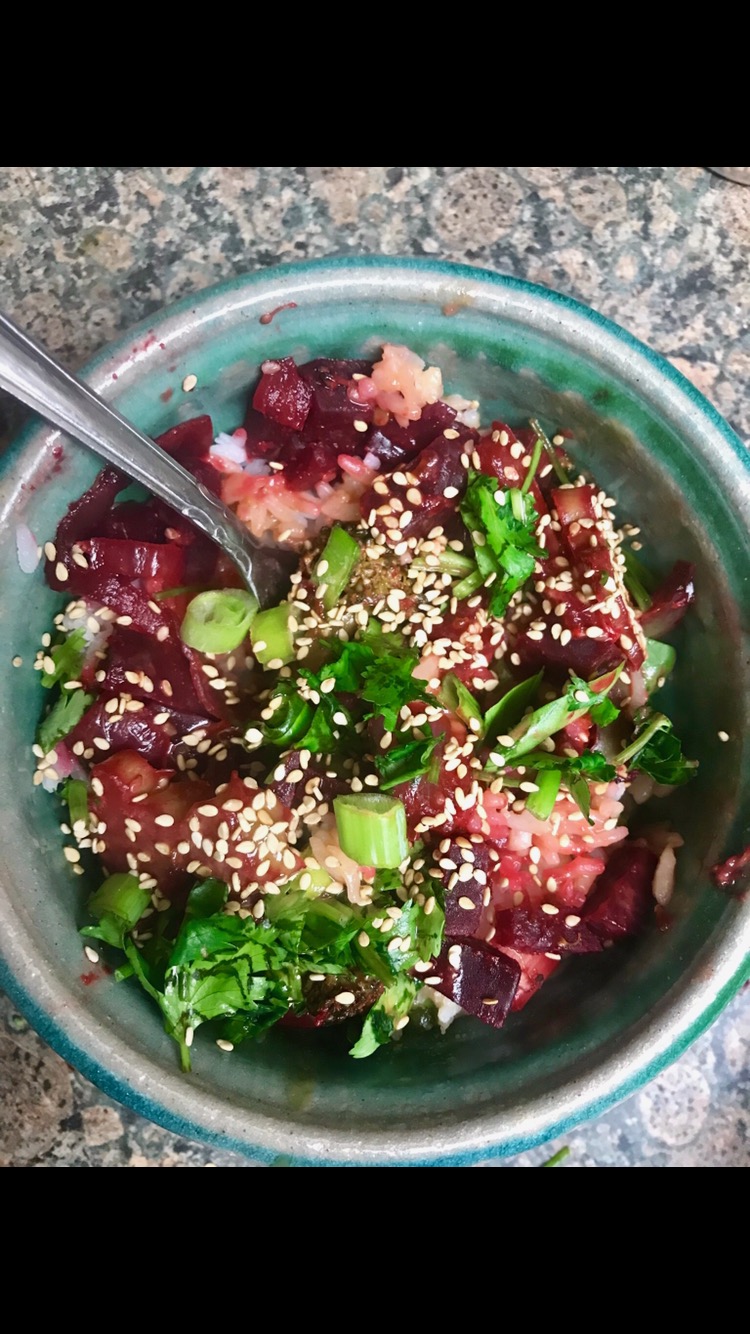
  • Drop the BEET

    Drop the BEET

    A simple vegan recipe to try this summer.

    Ingredients

    2 large beets

    1 purple onion

    5 cloves of garlic

    2 bell peppers (whatever color, I used green)

    Spinach

    Sesame oil

    Sesame seeds

    Red pepper flakes to taste

    Green onions, cilantro, and lime for aesthetic appeal (and taste!)

    For the Sauce

    ¼ c soy sauce

    ¼ c coconut milk

    3 tbsp peanut butter

    2 cloves garlic

    1 inch of ginger

    Squeeze of sriracha

    Squeeze of honey

    Sprinkle of black pepper

    Chef it up

    Mince your garlic, slice onions and peppers. Peel and dice beets.

    Pour 2-3 tbsp of sesame oil in a hot pan (coconut oil works well too)

    Add garlic, red pepper flakes, and onions, then fry until onions start to get soft. Next, the diced beets go in the pan with ¼ c of water.

    Cover and steam until beets are mostly cooked through (about 20 minutes, adding more water if needed)

    Now is a good time to make the peanut sauce: Put soy sauce, coconut milk, and peanut butter in a mason jar. Shake it up!! Add garlic, ginger, sriracha, honey, and black pepper. Shake it up some more!

    Refrigerate until thick and beets are cooked.

    At this point, add more red pepper flakes and sesame oil to the beets for more flavor.

    Then, throw in bell peppers and sesame seeds. Cook uncovered to the end (about 10 more minutes).

    If you want your spinach cooked, add it in now too!

    Serve cooked beets over spinach and rice. Drizzle peanut sauce generously. Garnish with sesame seeds, green onions, cilantro, and lime! Enjoy!!


  • My beef with killing the meat industry

    My beef with killing the meat industry

    Eliminating the meat industry would do more harm than good to our planet. The idea that animal agriculture is completely unethical and impractical is false.

    The media does a fine job of antagonizing the meat industry, and we all know about the documentaries that reveal the ugly truth behind factory farming, such as Food, Inc. But have you ever thought about what would happen if we put an end to animal agriculture all together?

    “Agriculture cannot be sustainable without animal agriculture,” said Dr. Frank Mitloehner, Animal Science professor at UC Davis. “That is something I’m sure of.”

    For instance, livestock grazing is used as a tool to stimulate soil production, which in turn removes carbon dioxide from the atmosphere. When herds trample through pastures, they oxygenate soil while pushing down seeds that ultimately promote healthy land restoration. Also, excrement produced along the way fertilizes soil. If managed correctly, livestock distribution can be beneficial to the environment.

    “Soils of the world must be part of any agenda to address climate change, as well as food and water security,” said Dr. Rattan Lal, professor of Soil Science at The Ohio State University.

    Animal parts that are not consumed, such as bones or fat, do not get wasted in the Netherlands. Renewable products from soaps to heart valve replacements are sourced from slaughtered pigs.

    The Dutch eat about a third of the pig “and the rest is exported to all kinds of countries in Europe and the rest of the world,” said Christien Meindertsma, a Dutch artist who is known for using raw materials in her work.

    The truth is that we need to reduce our inherited carbon footprint habits: transportation, dieting and consumerism. The global food production and consumption, namely beef, produce more greenhouse emissions than all of transportation combined. In addition, eating less meat could reduce the risk of heart disease and other health-related issues.

    In extreme cases of either a world full of meat eaters or vegetarians, moderation is the middle ground. Following one extreme over the other will not reduce global warming. We can start by agreeing that livestock is a crucial part of the agricultural system.