The Lumberjack


Students Serving The Cal Poly Humboldt Campus and Community Since 1929

Tag: We are still in

  • Humboldt State, we are still in

    Humboldt State, we are still in

    On June 1, President Trump announced his intent to withdraw the U.S. from the Paris Climate Agreement. Individuals all across the U.S. were left to determine how to respond to such an impactful decision.

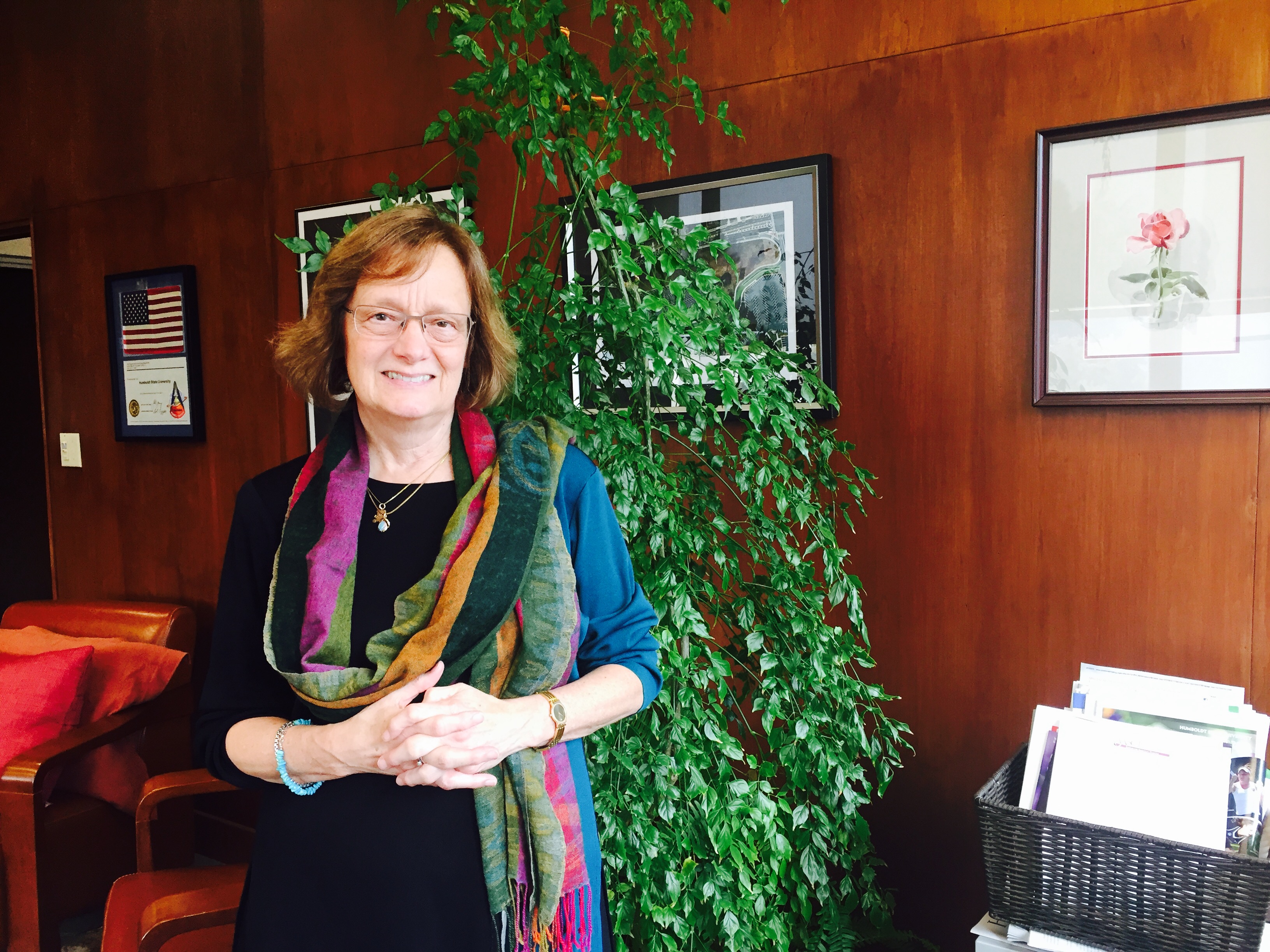
    Humboldt State President Lisa Rossbacher considered the potential impacts of the decision on the university.

    “One of my immediate reactions was how inconsistent that decision was with the values we have as a university,” said Rossbacher. “The values of Humboldt State and our commitment to environmental responsibility and sustainability, just realizing that disconnect between that decision and who we are as an institution.”

    Four days after Trump’s announcement, a coalition of mayors, governors, college and university leaders, as well as smaller businesses and investors, banded together and released a statement expressing their support for the climate action goals in the Paris Agreement.

    According to press release by “We Are Still In” the community will work to “…remain actively engaged with the international community as part of the global effort to hold warming to well below 2℃ and to accelerate the transition to a clean energy economy that will benefit our security, prosperity, and health.”

    Since its creation, Humboldt State has joined the “We Are Still In” community as one of the universities working to reduce our carbon emissions and decrease our environmental impact.

    President Rossbacher added Humboldt State University to the statement list soon after its inception. She began hearing about the We Are Still In community statement soon after President Trump’s announcement.

    Pres.R2.jpg
    President Lisa Rossbacher

    “I immediately started hearing rumblings about the combination of businesses, governments and universities forming a coalition to say, We Are Still In,” said Rossbacher. “It was probably through a publication called the Chronicle of Higher Education, that I saw something about how colleges and universities were starting to individually sign on to this. I found a link online and I went for it.”

    Rossbacher added the university to the list without a second thought, easily deciding that Humboldt State should belong to such a community.

    “The California State University system is incredibly supportive of sustainability and environmental responsibility,” said Rossbacher. “I didn’t hesitate for a second. I didn’t feel like I had to ask permission.”

    Of those listed on the statement, some believe Humboldt State University is doing more to improve their energy efficiency and sustainability than other universities listed.

    Brian Rossignol, a transfer student here at HSU, provides his perspective on our school’s environmental impact.

    “I went to San Diego State, City College, Grossmont, and Cuyamaca College, and this school by far is the most environmentally conscious campus, by far,” said Rossignol. “It’s not even close.”

    The Climate Action Plan proposes numerous advancements and adjustments meant to reduce the school’s environmental impact and reduce the HSU’s emissions.

    To view the complete Climate Action Plan go here:

    https://www2.humboldt.edu/sustainability/sites/default/files/climateActionPlan.pdf

    Another project that Humboldt State is currently involved in that aligns with the goals in the We Are Still In statement is the school’s collaboration with the Blue Lake Rancheria.

    “It’s got a solar microgrid and there are also biofuel backups. So that if the Blue Lake Rancheria were to be completely cut off from any other any energy source, the combination of alternative sources that they have would completely power, the facilities there,” said Rossbacher. “More importantly it’s a red cross emergency site and so it could be incredibly important if we had some regional disaster, like an earthquake.

    Students at Humboldt State are going outside into the community to work with the Schatz Research Center on the Blue Lake Rancheria collaboration.

    “The Schatz Research Center is doing a lot of amazing things that move us forward in renewable energy sources and away from fossil fuels, and of course there are opportunities for students to become involved in those projects,” said Rossbacher.

    The Humboldt State students are all informed of the school’s commitment to social and environmental awareness. Daniel Erb, a student in his fourth year at HSU has been able to watch the progress the school is making.

    “I think that HSU has definitely been doing a great job working toward reducing their carbon emissions and just overall environmental productivity has been really great,” said Erb. “Overall I think the environmental impact that HSU has been going for has really been landsliding, which is great.”

    With all of the new policies and plans the school is creating and implementing, those on campus should expect to see changes over the next few years.

    “I’ve talked to president Rossbacher about it and everything and she seems really into it,” said Erb. “So, hopefully everyone on the HSU campus can get into it.”

    “Hopefully,” said Erb.

     

  • We are still in

    We are still in

    Mayor, governors, college and university leaders, businesses and investors are coming together to declare that they will still support the Paris Climate Agreement to combat climate change. President Trump’s announcement to withdraw the U.S. from the Paris Climate Agreement was met with widespread criticism, and local and state governments are taking responsibility to decrease greenhouse gas emissions in response. Susan Ornelas, the mayor of the City of Arcata, gives her thoughts on this growing international community known as We Are Still In. BDSusanOrnelas.jpeg

    Q: When did you first hear of We Are Still In? Was there an envelope in the mail?

    A: No, I came across it on Facebook or the internet. I just saw that, and saw that mayors were signing on and I thought while looking at the Paris Accord, “Well the city of Arcata has internal documents that direct us to do these things already!” So it wasn’t a big decision to have to make, it was kind of like, “we’re in!” We’re already in, and I just thought about the citizens and that they would like to see the city of Arcata on this list. So I just contacted the city manager and Mark Andre (Director of Environmental Services) and said, “yeah, lets sign up, let’s get our name in there.”

    Q: How was it implemented? How did you get your name signed on?

    A: Well we just wrote a letter based on, we have kind of a legislative platform that if things come up that fit the platform that we already approved, the mayor could just send a letter. So I just sent a letter saying the City of Arcata is still in on the accord, and like I said, and internally I knew that our policies were already working towards these things so wasn’t too difficult to do.

    Q: What has the city and university done to contribute to the “We Are Still In” agreement?

    A: The city and the university are working well together right now which is a contribution in itself. We have a lot of good coordination and the university has made some strides I feel like. The city has made strides like years ago and we’re still making further strides into zero waste and understanding that…The university did the whole sustainability analysis of themselves…that whole effort of reducing waste, more sustainable systems, less carbon use, you know. I think as a society many of us are trying to reduce our carbon use. Transportation is one of the biggest challenges for this county.

    Q: Like moving to the autonomous car?

    A: Yeah that will help, although you really have to look at where you’re getting your electricity and is that a good source. Is that a carbon free source, is that non-polluting as much as possible. It’s good that solar has gotten as inexpensive as it has.

    Q: Is that probably going to become the norm at some point?

    A: “Yeah, and then do you know about the Community Choice Energy Program? That’s another thing the city of Arcata is involved in. The whole county is actually involved in this…. So the Community Choice Energy Program is that Humboldt County now runs or purchases its own energy. It’s still run through PG&E but it’s called Community Choice Energy…. But this also goes in with the whole Paris Climate Accord because the county now is choosing more renewable sources of energy and investing in local solar arrays and things like that. So that’s what called a Joint Powers Agreement, a J.P.A., which means the county and the cities have joined together and we all sit on a board, and we’re overseeing this Redwood Coast Energy authority purchasing now energy for the county, and we’re getting it a little cheaper, and we’re emphasizing renewables. So that’s another way that we’re working to sort of you know weave ourselves out of carbon. And then another thing that I would say that the City of Arcata does is we study some carbon sequestation in like marsh lands because that’s another good source of carbon sink. So the City of Arcata is investing in marsh lands now, working with the university, with students doing studies and things of carbon sequestration in marsh lands. That’s another thing that we’re interested in that we work towards. We see the value of them. I mean there used to be people would just drain marsh lands and farmed it, but we see the value in them for bird habitats for ecosystem diversity and…

    Q: Kind of like estuaries?

    A: Yeah kind of like estuaries. You know a marsh land, yeah.

    Q: In your opinion why do you think We Are Still In holds such significance for our community?

    A: Well you know I think because Arcatans really take pride in their environmental stances and they wanted to feel like they supported this. They didn’t want to just give this up after the whole country had, you know, promised to join and then we pulled out, and I think there’s something powerful about all these mayors getting together because the mayors are closer to the people and they’re joining forces and saying whatever is going on at this level we’re still doing this. We still believe that we want to make sure we leave something for our children and things like that. So I think the mayors are speaking more for the people and that’s also kind of heart warming but also powerful stance. I think people liked that too. I think it’s important and people want to feel that we’re not going backwards, you know, I think that would be depressing for people. There’s ways we’re feeling like were watching our society and we are going backwards. But with this particular thing with the mayors coming forward and you know, saying “no, we’re still in”, that at least didn’t go backwards for people.