The Lumberjack


Students Serving The Cal Poly Humboldt Campus and Community Since 1929

Month: September 2018

  • Humboldt County Sanctuary

    Humboldt County Sanctuary

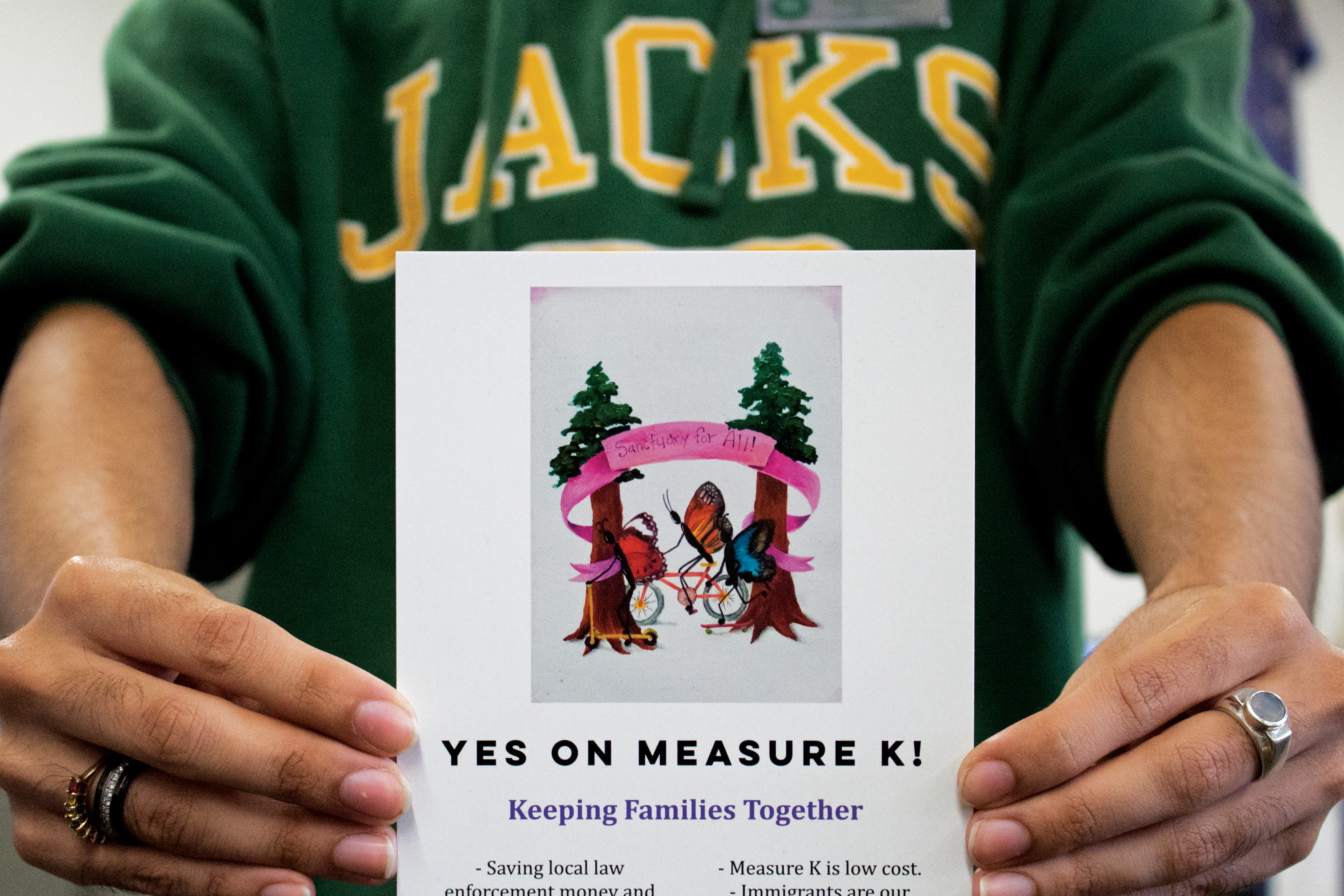
    Measure K aims to keep families together

    An elderly woman with dementia taken away from her family by U.S Immigration and Custom Enforcement and deported. A young mother in her late 30s swept away by ICE and taken to a prison in Bakersfield for nine months even in spite of being here since she was five years old, married to a U.S. citizen and raising two children born as U.S. citizens.

    Stories like these, where people are arrested for no other crime than lack of citizenship, are why Erik Kirk wrote local ballot Measure K.

    “Criminal law and immigration law should be separate,” Kirk said.

    Kirk, a lawyer, was asked by Centro Del Pueblo, a non-profit community service agency, to write a draft of an ordinance pertaining sanctuary for Humboldt county.

    A sanctuary ordinance would prohibit local law enforcement from assisting federal immigration authorities with detainment. Typically sanctuary ordinances apply to cities rather than counties.

    Kirk said Centro Del Pueblo proposed to the board of directors about making Humboldt county a sanctuary county, but they felt the board was unresponsive, so they asked him to write it for them.

    Measure K, on the November ballot, would make Humboldt County a sanctuary county along with 30 sanctuary jurisdictions around the nation. Kirk said the measurement would be an extension of an existing law, AB54, which is a statewide ordinance that prohibits law authorities from cooperating with ICE.

    “Our current laws are outdated and we need to change that,” Kirk said.

    Measure K would help law enforcement by encouraging crime reporting and cooperation from the undocumented community. Immigrants may be more likely to consistently take children to school and access health care and vital services, affecting the overall greater community.

    Kirk said the measurement will limit cooperation with ICE with just suspected immigration violation. The measurement will not in anyway prevent law enforcement with proceeding criminal provisions.

    The Times Standard reported the ordinance would cost hundred of thousands of dollars. Kirk said this is a number he has no idea how it was calculated.

    Sheriff William Honsal claimed he would have to track ICE deputies. Estimated tracking and reporting communications between ICE with new measurement would be between $85,000-$135,000. Kirk said this is false information.

    Kirk said the probation department has to do the same tracking and reporting of communication with ICE as they do with the sheriff, and their estimates were $1250-$2500.

    “I think the sheriff wants to deport whoever he wants and we think that isn’t right,” Kirk said.

    Kelsey Reed, a member of the Humboldt Green Party and Move to Amend coalition, said the measurement allows parents to decide where their kids go when they get deported. As the law stands now, when parents are deported they are no longer able to make decisions where their children end up. Kids usually get left at home alone or taken to foster care.

    “This is an overall humanity issue and several families have been destroyed because of ICE,” Reed said.

    Reed said this is the most radical sanctuary ordinance proposed in a county. Through the ordinance, ICE would be required to only make certain arrests in certain areas and that parents wouldn’t be able to get arrested in front of their children.

    Reverend Bryan Jessup is the minister of the Humboldt Unitarian Universalist Fellowship which is one of the faith based organizations to support Measure K. Jessup’s congregations have been a sanctuary since June of 2017 and is a safe place for people subject to abuse from ICE.

    Jessup said the congregation doesn’t want Humboldt County to be a part of what is going on around the country regarding immigration policy.

    “We would like to stand up for humanity, our people are willing to shelter immigrants,” Jessup said.

    Christi Molina, English senior, is a peer mentor at Scholars Without Borders who works closely with Centro Del Pueblo. Molina said the measurement would affect her personally because some of her family would be documented as immigrants.

    Molina said the students in the area are supportive of the measurement and that makes her hopeful of it passing. They know the measurement is against separation of family and keeping communities intact.

    “This is a way to not only keep family together but to respect human rights and culture,” Molina said.

    Humboldt State University’s Undocu Week, a week of events dedicated to “deconstructing misrepresentations of communities of color,” takes place Oct. 1 – Oct. 5.


  • Power to The People

    Power to The People

    HSU students encourage voter registration

    The National Voters Registration Drive was held Sept. 25 at the Humboldt State University quad to re-register voters, register students that had not be registered and to educate students on state and local measures for the upcoming Nov. 6 election.

    Associated Students Board Coordinator, Casey Park, has participated in four tabling events this year to advocate students on voting. The drive was another way to get students to be more active in voting. With an influx of students predominantly not from this area, many students are unaware of having to re-register to vote when moving to Humboldt County.

    “Have you moved?” Park said. “Because you then need to re-register.”

    One challenge Park has during the tabling event is getting students that are moving in and out of classes to stop and listen to re-registration tips.

    “The challenge is figuring out the flow of students, and which one phrase in a day will get people’s attention to stop and listen,” Park said.

    The League of Women Voters and the Party of Socialism and Liberation collaborated on the drive to register students. They helped students who needed to re-register for Humboldt County and to emphasized the importance of voting.

    Students that are not originally registered to vote in Humboldt County can still vote through mail and will be able to vote on state and local measures.

    Associated student member and environmental science major, Roxana Mostafavi, had just moved to Humboldt County from Los Angeles County this semester. Hearing Park speak about re-registering got her attention so she stopped to re-register.

    “We’re the younger generation, it’s our world, it’s our planet,” Mostafavi said. “I think we need to be more active.”

    Being active in events like the National Voter Registration day gives a push to those who tend to believe that their vote does not actually count.

    According to the League of Women Voters voter service director, Anne Hartline, the following months leading up to the upcoming ballot is of the most important times of the year.

    “When it comes time to vote, and your not registered, how can you make a difference?” Hartline said. “Our goal is to get at least one student that didn’t plan to vote, to go and make a difference by voting. I feel today we got many more than one.”

    There are two local measures that will be on the Nov. 6 ballot. The first, Measure K, would make Humboldt County a sanctuary county. Yes on K would prohibit local law enforcement agencies from cooperating with federal immigration officials. No on K is deciding against prohibiting local law enforcement agencies from cooperating with federal immigration officials.

    The other is Measure M, which regards the removal of the statue of William McKinley in Arcata plaza. No on M would grant the removal of the statue and yes on M would allow the statue to remain in the plaza.

    For more information on registration, voters rights, and measures call League of Women Voters of Humboldt County (707) 444-9252 or contact the Associated Students at HSU.


  • No rain on this Parade

    No rain on this Parade

    Redwood Pride Parade held at the Jefferson Center in Eureka

    Gray clouds overcast the skies of Humboldt County on Sept. 29. However, a rainbow was over Eureka, all thanks to the Humboldt Pride with a Purpose event.

    The day-long event started at 10 a.m. and continued until 4 p.m. at the Jefferson Community Center, offering many activities like making tie-dye shirts and getting in touch with local community shops and organizations.

    One of the organizations was the Redwood National and State Parks (RNSP) services. Interpretive Ranger Steven Krause was happy to be at the event.

    “Since 2016 we’ve (RNSP) been involved in the Pride with a Purpose event,” Krause said. “Personally, this is not my first pride event I’ve showed up to, I’m happy to be here.”

    Many who were attending were dressed in the colors of the rainbow, dancing and overall having a good time at the event. Ariel Stelljes, Humboldt State University student and piccolo player of the Marching Lumberjacks, was with her band members to show support of the LGBTQ community of Humboldt County.

    “We’re all dressed up very gay, and we’re super excited to play,” Stelljes said.

    At 4 p.m. over at 2nd and I St. many groups and organizations were present waving rainbow flags and playing music for all attending the parade including the Redwood National and State park float.

    Overall, it was a fun event, full of many people showing their love and support for the LGBTQ community of Humboldt County.

    Caroline Isaacs, a social actions committee member from the Temple Beth El Synagogue, showed up to march at the Pride parade to show support.

    “I think it’s extremely important to show support for the LGBTQ community of Humboldt County,” Isaacs said. “As Jews we know the struggles of being seen as outcasts by the community, we want to show the LGBTQ community that they’re not alone.”


  • Looking for lichens

    Looking for lichens

    Biology student puts classroom lessons to practical use  in the Arcata Community Forest

    Matthew Pedrotti, a senior biology major with an ecology and biodiversity emphasis, spends much of his free time on campus exploring the nearby Arcata Community Forest in order to locate and classify various plants.

    “Look at the lichen in its natural habitat,” Pedrotti said on a walk through the forest.

    Pedrotti said he is particularly fond of lichens, which is the union of a fungus and an algae.

    “I find them fascinating,” Pedrotti said. “They’re very diverse.”

    Pedrotti said he carries a hand lens in his pocket at all times.

    “I can’t leave home without it,” Pedrotti said.

    IMG_9921.jpg

    Matthew Pedrotti describes some of the vegetative features of lichens found on an alder twig in the Arcata Community Forest. Photo by Walter Hackett

    According to Pedrotti, he could spot with his naked eye at least three microlichens and at least two other macrolichens from an alder twig he found.

    “This alder twig is an example of how speciose [rich in species] lichens are in nature,” Pedrotti said. “Lichens are excellent ecosystem health indicators.”

    IMG_9925.JPG

    An alder twig displaying multiple species of lichens in the Arcata Community Forest. Photo by Walter Hackett

    “The black spots of this microlichen are actually sexually reproductive organs,” Pedrotti said.

    IMG_9932.JPG

    Matthew Pedrotti dissects a cotoneaster fruit to reveal seeds in the Arcata Community Forest. Photo by Walter Hackett

    Pedrotti said he thinks HSU is unique because it has an accessible community forest right next to campus. The forest provides plant specimens to examine such as cotoneaster fruit.

    “Fun fact, cotoneaster is highly related to apples and pears,” Pedrotti said.

    However, Pedrotti said that just because it’s called a fruit, it doesn’t mean that it is edible to humans.

    “Yeah, I would not eat these,” Pedrotti said.

  • A Groundtruthing Adventure

    A Groundtruthing Adventure

    Base Camp examines and documents environmental impacts of Caltrans ‘Last Chance Grade Project’

    Editor’s Note: This a special contribution from Kyra Skylark. The author attended this event as a student volunteer and has previously worked for the Lumberjack as a reporter and Science editor. The current Lumberjack photo editor, Nick Kemper also attended and shot photos for the group.

    Contributors Note: I attended this event as both a student volunteer and as a journalist, therefore some of my own personal views may be reflected in the story. -Kyra Skylark

    “I discovered the difference between reading about something and seeing,” Tom Wheeler said. “Seeing on a paper is different from seeing in person, in person the trees and the great biodiversity of that area really stood out.”

    Tom Wheeler, the executive director of the Environmental Protection Information Center was a group leader on EPIC’s 2018 annual Base Camp trip.

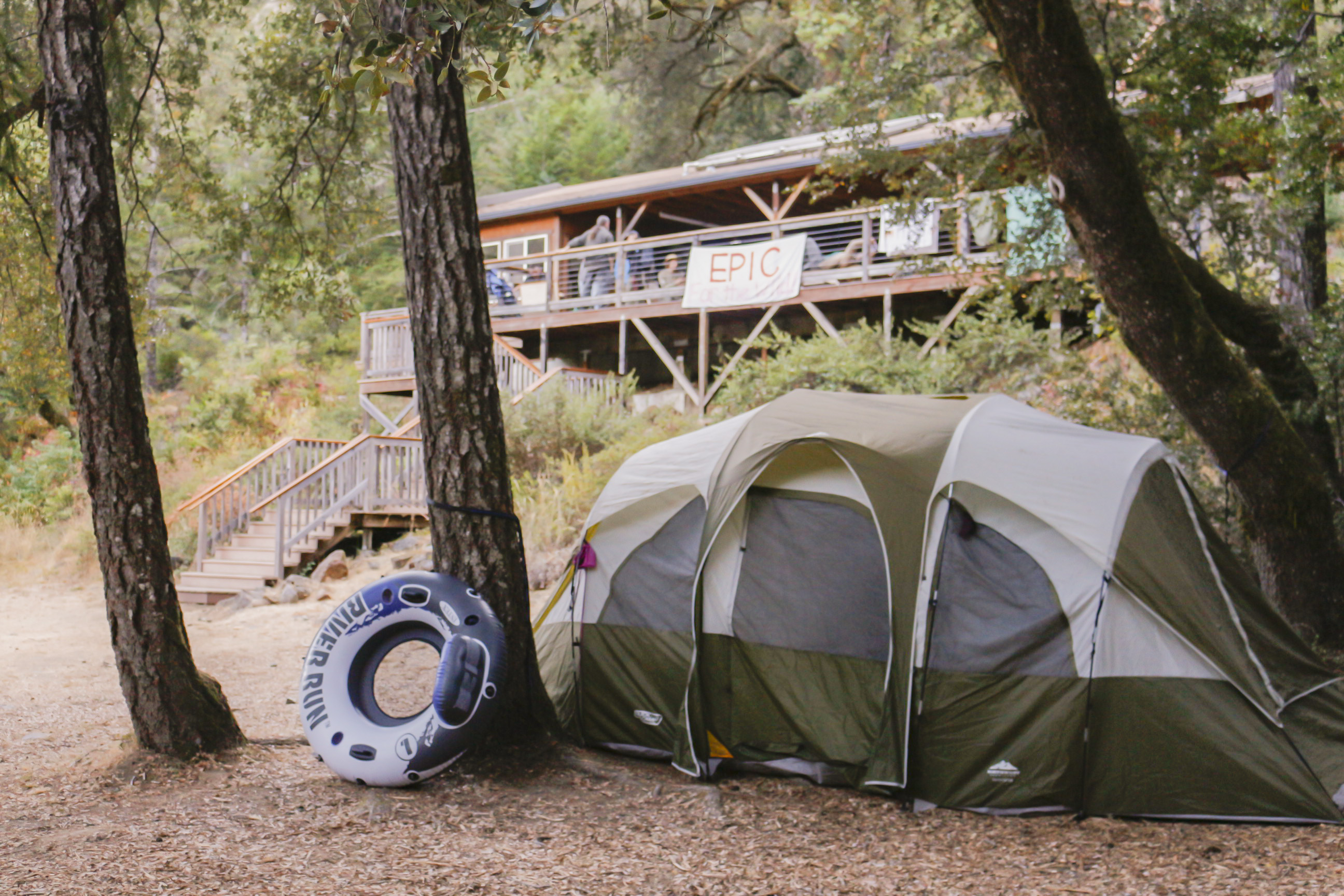
    Earlier this month EPIC hosted their second annual Base Camp at Rock Creek Ranch.

    Students and community members were invited to volunteer to help in examining and groundtruthing two of the Last Chance Grade Project alternatives.

    Groundtruthing is visiting a proposed project site to document what the project looks like through direct observation.

    Ariel Nelson, an Humboldt State University student majoring in environmental science and management with a focus in ecological restoration, attended EPIC’s 2018 Base Camp.

    “I was looking for more opportunities to gain field experience in regards to environmental work in general and it seemed like a cool camping trip as well, so I cleared up my weekend commitments and went for it,” Nelson said.

    The proposed Last Chance Grade Project is a highway development project in Del Norte county, 10 miles south of Crescent City.

    “The Last Chance Grade slide area of the 101 has experienced a lot of landslides over the last hundred years with some pretty catastrophic road failures, so Caltrans is looking at ways to redesign or move the road to get around this critical slide area,” Wheeler said. “Caltrans has determined that it needs to rethink the current road alignment because it is not safe and does not provide reliable transit between Del Norte and Humboldt counties.”

    EPIC’s Base Camp volunteer group examined and documented two of the six proposed alternatives for the Caltrans project.

    “We chose to examine alternatives A2 and L because relative to the other alternatives, these look like they may end up as the main proposed alternatives, so it was necessary for us to examine them and their proposed impacts,” Wheeler said.

    Lenore Ogbor, a retired special education elementary school teacher from New York City, happened to be within a few hours of the area just in time to go on EPIC’s Base Camp.

    “I didn’t know that the redwoods had such a shallow root system or that they spread horizontally and close to the surface holding each other up as a sort of interdependent system,” Ogbor said. “How putting a road 10 feet away from a redwood, while you may be trying to saving the tree, you’re still damaging the root system. I learned that the redwood trees help each other to stand up and then they are able to support all these different animals, trees, plants and the whole ecosystem within, as they are also cooperating with each other to stay vertical.”

    EPIC and the Base Camp group concluded that the L alternative was prefered over alternative A2. Alternative A2 would cut through three acres of old growth redwoods within the Del Norte Coast Redwoods State Park.

    Gabe Kim, an HSU film major and a videographer intern for EPIC, who went to EPIC’s Base Camp to document the trip was also amazed by the width of the trees.

    “It was cool seeing the 13 foot wide redwood trees [in alternative A2] and watching everyone documenting the area using avenza maps that as I documented through video,” Kim said. “It really got me thinking about how beautiful the scenery is and what we would be missing if the road was in fact built and all those redwoods were cut down.”

    Everyone seemed both awed and sad while walking through the old growth redwood forest of A2.

    “I’d never seen trees that big in my life,” Nelson said. “It was my favorite part because I was able to step into such an untouched landscape, but it was also devastating to realize if that alternative is chosen all those trees are going to be gone.”

    The Base Camp volunteers participated in different activities such as groundtruthing, map and compass orienteering, environmental policy overviews and know your rights trainings. Some individuals, like Lenore Ogbor, were only in the area to participate EPIC’s Base Camp and departed after the weekend was done.

    “All of these people gathered with a common interest, with different degrees of knowledge, but sharing in this passion,” Ogbor said. “There was a large range of ages and a good amount of the people there were students.”

    Many students in attendance are studying exactly what EPIC was teaching at Base Camp, and were able to apply their studies to the activities.

    “It was cool to come into it with an understanding of how environmental assessment works,” Nelson said.

    While some were excited to demonstrate and apply their knowledge, others were simply excited to share in everyone’s knowledge and joy.

    “Just watching and hearing the students, I could tell they were able to bring some of the stuff they’re learning in class alive right there and then,” Ogbor said. “The students had already learned some of what the group leaders were talking about, it wasn’t all brand new knowledge and their synapses were just click, click, click, clicking away. I’ve been a teacher for many years and I just love seeing that kind of spark and interest.”

    The gathering of students and community volunteers was the first step in the environmental assessment of the Last Chance Grade project. From here, EPIC and other organizations will continue to assess the different road alternatives creating additional opportunities for community members to be a part of this process.

    “A note to everyone in general, you do have an impact, you can change decisions just by putting yourself out there and getting involved any way that you can, every single person has a roll that they can play,” Nelson said.

  • Forest awakens with music

    Forest awakens with music

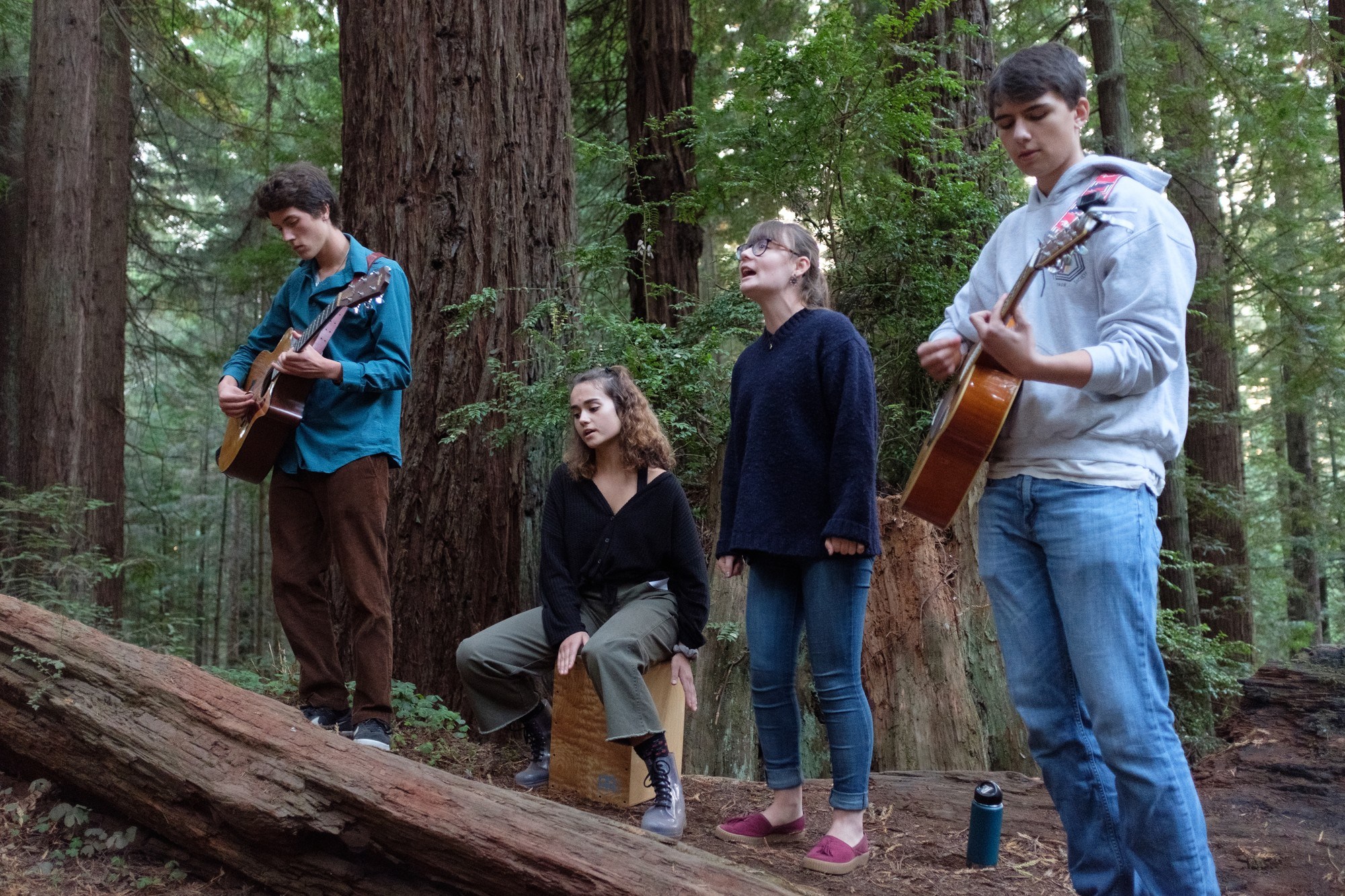
    Petty Education was formed only two weeks ago, and now they’re the closing performance for a community forest show smack dab in the middle of the forest.

    After the audience found their seats within the brush, the dead quiet forest became filled with sounds of the band’s guitars, drum and vocals.

    180923-173340.jpg
    The audience for the community forest show on Sept. 9 in Arcata, CA. | Photo by Michael Weber

    “Bringing music to the forest lets people appreciate it more,” Zelda Geren said, a member of Petty Education. “It’s open, natural and comforting.”

    Petty Education is one of the four bands that performed in Breakfast All Day Collective’s Community Forest Show in Redwood Park on Sept. 23.

    They performed in the show along with the singer duo Allison Kinney and Hannah Rosecrans and the bands Cowtown Serenaders and Bandemonium.

    The format of the show involves moving through four different locations in the forest where each band would play at. At the end of each performance, the audience gets up and moves to the next stop.

    180923-165956.jpg
    The audience for the community forest show on Sept. 9 in Arcata, CA make their way up to the next stop of the trail. This is one of the four stops that the audience will go through. | Photo by Michael Weber

    Jackie Stuber, an organizer from the Breakfast All Day Collective, said the show is based on people enjoying music in the outdoor environment.

    “It’s the forest,” Stuber said. “It brings people out.”

    This is the ninth installment of the community forest show, which started three years ago and Stuber said the turnout has been increasing.

    Stuber began the event by setting ground rules for respect towards the forest and other people. An audience of more than 50 people and musicians attended the show.

    The first to play on the musical march were Kinney and Rosecrans. They sang three duets for the audience.

    Next, the Cowtown Serenaders performed composed songs and musical poetry.

    The third to play was Bandemonium, an open ensemble made from artists in the community. They played modern songs including a mashup of two Eminem songs.

    Finally, Petty Education closed the show at the end of the walk. They are from the Arcata Arts Institute, Geren said, and wrote three songs to perform for the audience in the mere two weeks after their formation.

    “It’s a really magical idea to have music here,” singer Hannah Rosecrans said.

  • Confusion on the airwaves

    Confusion on the airwaves

    KHSU CAB members requested to halt further meetings

    Humboldt State University president, Lisa Rossbacher, has recently requested KHSU’s community advisory board cease further meetings until individual and private communication takes place.

    A community advisory board letter sent to Rossbacher on June 29 left her confused on the decisions made during their June meeting. The letter addressed to HSU administration states that the community advisory board voted a ‘no confidence’ towards general manager Peter Fretwell and have requested his termination.

    “I have become aware of confusion and disagreement about whether the advisory board’s action last June was intended to communicate feedback that the CAB had received from some members of the public or to reflect a formal vote of no confidence by the CAB itself in KHSU general manager Peter Fretwell,” Rossbacher wrote in a letter on Sep. 17.

    The minutes report, which is the written record of the meeting that took place, states under ‘New Business’: “Discussion of the CAB response to the community’s call for a vote of no confidence.”

    Frank Whitlatch, assistant vice president of marketing and communications at HSU, said Rossbacher is asking for clarity involving who made the decision at the meeting.

    Whitlatch said the initial reporting of the advisory group made a ‘no confidence’ vote on general manger, Peter Fretwell, but later on in the meeting the minutes said it was a community decision.

    “Did the board make the vote or the community?” Whitlatch said.

    Whitlatch said the story was incorrectly reported by Mad River Union and the Lost Coast Journal but since has been revised and that has furthered rumors suggesting Rossbacher has banned the community advisory board from meeting together.

    “They can meet if they want, they’re grown ups,” Whitlatch said. ‘The president just wants to speak individually to clear up confusion on the decision.

    To further tension between HSU administration and KHSU, the program, Thursday Night Talk, was recently cancelled by Fretwell when four community advisory board members were supposed to be guests.

    Whitlatch said Fretwell has the final say of all editorial content at KHSU, and it was his decision alone.

    There is a firewall blocking editorial content between KHSU and HSU management. Fretwell didn’t believe KHSU could be objective and report on itself.

    “I do not have the ability to call KHSU and tell them what to produce on the air,” Whitlatch said. “No administrator does.”

    KHSU development director David Reed was one of three staff members who attended the community advisory board June meeting. Reed said the last few months 25 to 100 people have showed up and 100 to 160 people in May, June, and July, a higher number than in the past.

    The meetings have been getting more community involvement since the firing of Katie Whiteside. Reed said three percent, about 120 out of the 3000 station’s donors have left along with four supporting brand or organization underwriters.

    “There was a lot of public comment at the meeting, it was an unusual one,” Reed said of the June meeting.

    Reed said he did not know about the vote confusion and it never occurred to him at the meeting. Ultimately it would have to be to the community advisory board to answer that question.

    A CSU revisory team has been looking at the operations of KHSU. Rossbacher requested in a July 19 letter to vice chancellor of California State University system Larry Mandel, asking advisory services to evaluate “operations, administration, oversight, review of accounts payable processes, communications among staff between KHSU and HSU, oversight FCCC broadcast station licenses, volunteer engagement and training processes and suggestions on whether voluntary compliance audits should be requested from the California Broadcasters Association,” at KHSU.

    “It’s hard to manage opinions at KHSU,” Whitlatch said. “Disagreements and opinions have been stifled.”


  • Fisheries hatches more than fish

    Fisheries hatches more than fish

    During the Great Depression a small college in Humboldt County built a fish hatchery. The hatchery’s popularity among students gave rise to a blossoming natural resources program.

    Today, Humboldt State is known for its natural resource and science programs, according to the California State University website. This wasn’t always the case.

    In Richard Ridenhour’s book “Natural resources at Humboldt State College: the first 30 years” the author wrote that in 1939 Humboldt State College had under 300 students and had no natural resource classes.

    After the construction of the campus fish hatchery in 1940 Humboldt State was the first college in the nation to have a fish hatchery on campus and that success and popularity of hatchery classes led to the expansion of other natural resource and science programs.

    Andrew Kinziger is the current chair of the Department of Fisheries Biology at Humboldt State. According to Kinziger there aren’t many universities that have a fish hatchery that can provide hands on instruction and experience.

    “It’s one of the keystone facilities for the university,” Kinziger said. “It’s a wonderful resource and we’re fortunate to have it.”

    Kinziger said that Fisheries department students and faculty interact with the hatchery on a daily basis.

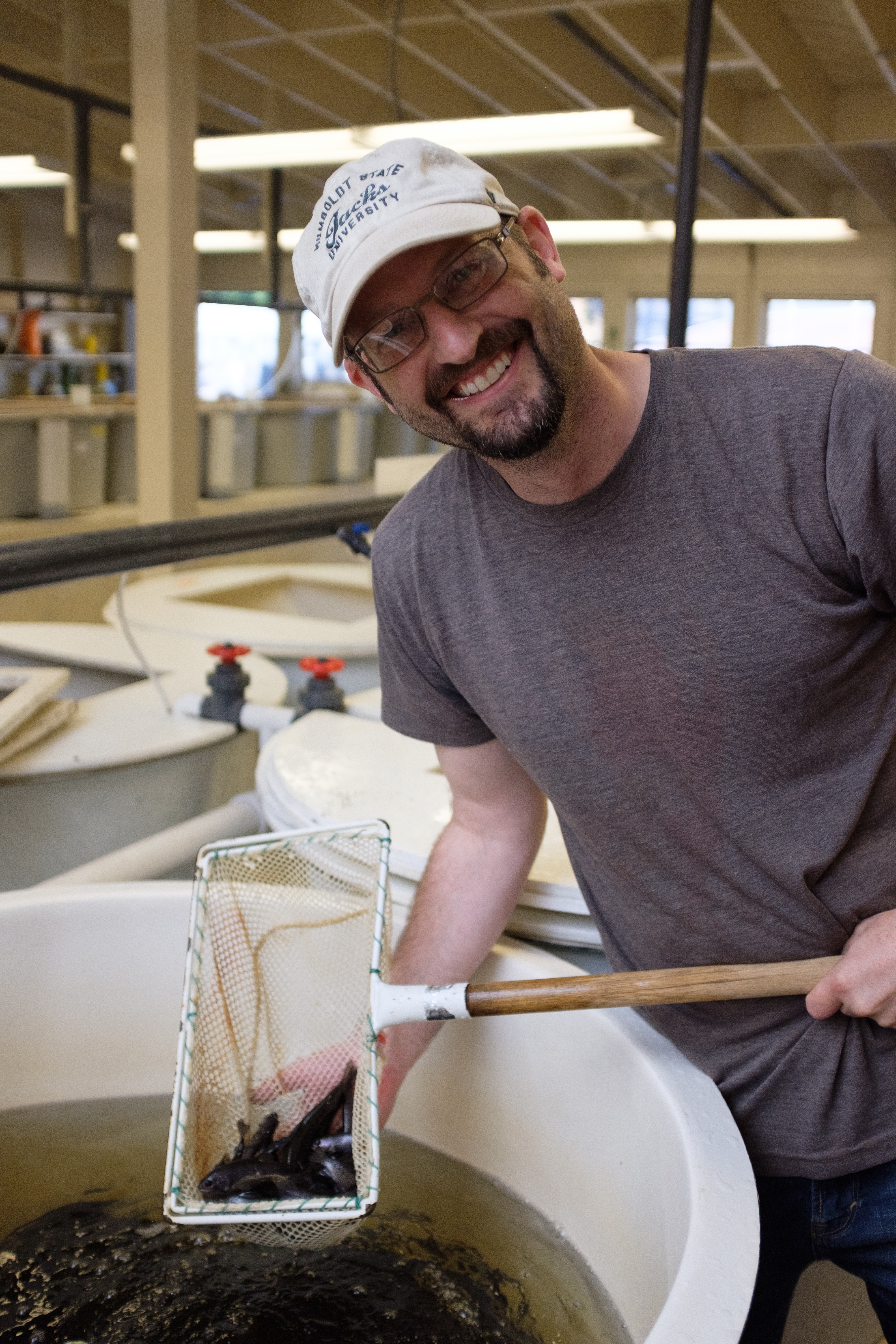
    Patrick Nero has been the hatchery manager at the facility for about 11 months. Nero said the hatchery raises native steelhead and native coastal cutthroat trout. According to Nero, fish from the hatchery are used purely for research and aren’t eaten or stocked.

    Nero said that the hatchery recently implemented an aquaponics project on the facility. Nero’s goal is to produce something valuable with water discharged from the fish system. The discharged water is full of fish by-product, including lots of nitrogen, and acts as a fertilizer.

    Currently the hatchery is growing lettuce, and marigold to transplant in other areas of the campus with discharged water from the hatchery.

    “We’re finding ways to use the discharge,” Nero said. “It’s been successful so far.”

    Michael Academia, a Fisheries Biology major, is a student employee at the hatchery and has worked there since April. Some of Academia’s responsibilities at the facility include feeding the fish, checking the water quality and back flushing the system, which involves pumping in fresh water to hatchery fish tanks.

    Academia said over the summer Nero had asked him to look into ways to work with the Humboldt Energy Independence Fund to improve the facility’s energy efficiency.

    According to the student run Humboldt Energy Independence Fund website their mission is to create a more sustainable campus by promoting energy independence. Notable projects from the organization include the solar panel array on top of Music A building and the relighting of the Redwood Bowl with efficient bulbs.

    The Humboldt Energy Independence Fund is funded with a small portion of student’s tuition each semester. According to their website, about $13 from each student per semester goes to the organization to be implemented on renewable energy projects on campus.

    Academia said initially he was looking at adding solar panels to the hatchery facility but students from the Humboldt Energy Independence Fund said that the hatchery’s energy costs were too high and that inefficient energy draws on the facility should be addressed first.

    This led Academia to look at alternative ways at maximizing facility energy efficiency. Academia worked with a Building Engineer from Facilities Management, Jeff Robison, to conduct an energy analysis on the facility.

    The analysis concluded that replacing dated facility equipment could reduce energy usage by 50 percent and save over $14,000 per year.

    Academia’s proposed project would replace the existing water pumps and electric motor system with new energy efficient models.

    Currently water flow control for the hatchery system is manually controlled and requires two pump motors to run at full capacity for 24 hours a day. The updated pump motors along with an intelligent variable control system, which will automatically control the flow of water through the system would cut energy usage roughly by half.

    “We’re trying to integrate more than fish,” Academia said.

    Academia’s project is in the beginning stages of the approval process by the Humboldt Energy Independence Fund. The organization is currently looking at the feasibility of the project to see if the project can be done.

    “We’re trying to be green pioneers of raising fish,” Academia said.

  • Program tackles STD stigmas

    Program tackles STD stigmas

    Peer to Peer addresses nationwide increase of STD rates 

    Helping to fight the cultural stigmas that surround the rise of sexually transmitted diseases and testing is the new program at Humboldt State University, Peer to Peer.

    Mira Friedman, lead of health education and medical clinic support services, started Peer to Peer as her Master’s program at HSU. Friedman said she started the program because she wanted to fulfill students’ needs and offer access to reproductive services.

    “There isn’t a lack of education in college but an inaccuracy in sex education,” Friedman said.

    The program is unique in that students get help provided by other students. There are four medically trained students who run Peer to Peer giving consultations as well as no hassle access to STD testing and birth control. The idea is, it is easier for students to seek help from their peers.

    According to St. Joseph Health, the United States hit an all-time high in sexually transmitted diseases and Humboldt County is no different. Over 2 million cases throughout the country according to Centers for Disease Control and Prevention.

    Public health nurse of the communicable disease program at the Department of Human and Health Services (DHHS), Hava Phillips, said Humboldt county is following both the national and statewide trend of increase in STD’s. The numbers across the board are all the same and differences between populated and rural makes no difference.

    “It’s something we are worried about,” Phillips said.

    The most common STD is Chlamydia. Not far behind is Gonorrhea and at a far distant third is Syphilis, which can pose the greatest health risk if left untreated because it has more potential to cause damage.

    According to Humboldt County Public Health syphilis in Humboldt county is up 172 percent. There have also been 665 reported cases of Chlamydia in Humboldt in 2017.

    According to the California Department of Public Health 218,728 cases of Chlamydia cases were reported in 2017 statewide. Over half of them were younger than the age of 25. Gonorrhea amounted to 75,372 cases with 33 percent younger than 25. Both diseases were the highest since the numbers began to get reported. Syphilis cases reached 13,719. This has been the highest since 1987.

    “Stigmas contribute discomfort for people to get tested,” Phillips said.

    The cultural stigmas surrounding STD’s and getting tested create extra dilemmas for people seeking services. Phillips said there is a huge need for educating people to get tested for STD’s and to treat it like anything else. Anyone sexually active is at risk of getting an STD just like someone breathing is at risk of getting the flu.

    “They need to be just another normal thing you get tested for,” Phillips said.

    There are lots of theories as to why there is an increase, but nothing concrete. The highest risks are unprotected sexual activity, individual anonymous sex and sex with multiple partners.

    Celene Lopez worked as a peer educator as an undergrad with Planned Parenthood before returning to HSU to earn her masters in counseling psychology. She knows the challenges posed on people who aren’t seeking help. On college campuses information is everywhere but in the general public it’s harder to be reminded.

    “Lots of people think they’ll just know if they have contracted an STD or not, and really they don’t know,” Lopez said, “the most common symptom is no symptom.”

    Both Chlamydia and Gonorrhea usually have no symptoms. People who have contracted these diseases go untreated and in turn spread them to more people. Lopez believes the increase of STD’s is because of services lacking education as well as lacking health care.

    “People don’t know where to go, they don’t know where to get help,” Lopez said.

    Lopez is also well aware of the cultural stigmas that surround STD’s which makes it difficult for people to feel comfortable enough to get tested. To combat these stigmas Lopez suggests creating safe environments for people to get confidential health care, like what Peer to Peer is doing.

    “We need to change the culture of sexual health,” Lopez said.

    This includes the demonizing of people for having sex and to show people there is no judgments. Easy access to resources, like Peer to Peer, helps minimize long waiting periods of being seen by health services and allows doctors to see patients who have symptoms.

    Lopez compares STD’s to the flu, we don’t shame people for getting the flu yet when it comes to STD’s people are shamed all the time.

    “People don’t know what to expect. They feel the stigma, they feel dirty, but we’re here because we care. No one is here to judge,” Lopez said.

    For questions or to book an appointment Peer Health Educators can be reached at 707-826-3146 or hsuphe@humboldt.edu.

    The Clinical Peer Health Educators office is located in RWC 127.


  • Rent repeal

    Rent repeal

    Party of socialism and liberation club host workshop on affordable housing proposition

    Nathaniel McGuigan, a Humboldt State University senior in biology and minister of communications for the HSU Party of Socialism and Liberation branch, invited special guest Gloria La Riva to Humboldt State University on Sept. 21 to direct a workshop on Proposition 10.

    “The party is growing and workshops like the one on Prop. 10 are for reaching out to community members,” McGuigan said.

    McGuigan said the reason for the workshop was to bring awareness of social issues to the growing working class because it affects them the most.

    Proposition 10 supports the Affordable Housing Act. According to the proposition, approval would restore the rights of communities in California to pass stronger rent control by repealing the Costa-Hawkins Rental Housing Act, a law that has given landlords and developers unlimited power.

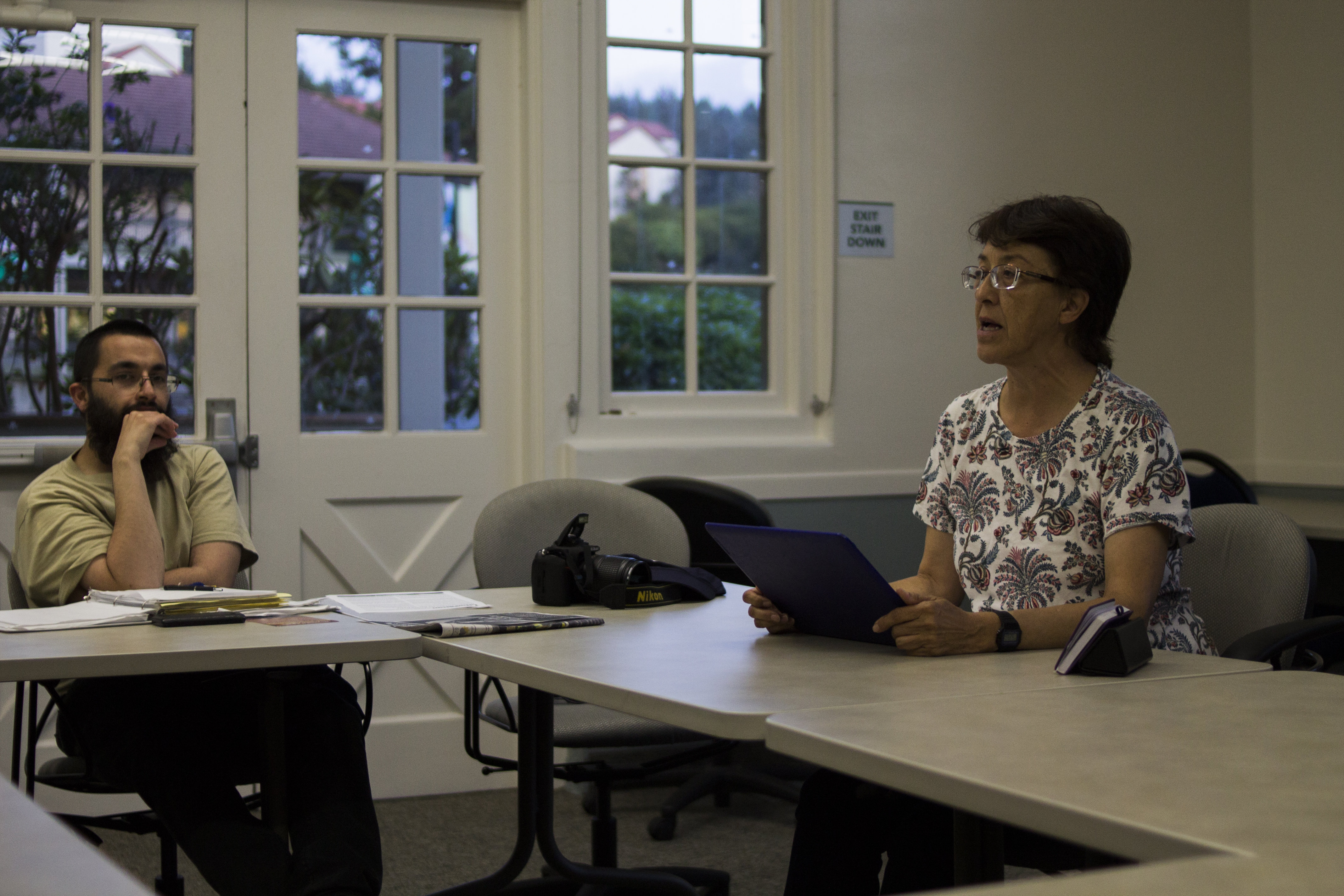
    Gloria La Riva, once a presidential candidate for the Party of Socialism and Liberation, directed the workshop on the rent control measure. Room 206 of Nelson Hall became homebase for socialist discussion on activism and renters rights.

    The workshop started five minutes late due to lack of attendance, but soon there were five sitting at the table’s rectangular set up which eventually filled to nine. Eight interested students and an eager La Riva, enough for a revolution.

    “No working class people can pay what landlords are wanting to charge,” La Riva said.

    In an hour and a half La Riva discussed the different laws pertaining landlords and renters that have been passed, personal experiences of travelling the world as an activist, and a brief history of rent control, not only in the United States but other countries as well. This isn’t your typical tedious history class though, it is filled with entertainment, compassion and challenges that don’t make normal media coverage.

    La Riva said people in power like city officials and councils don’t want rent control to pass. When she was running against Diane Feinstein for mayor of San Francisco in the 80s, Feinstein was promising vacancy control, which is regulation of rent levels and evictions of tenants. Feinstein never fulfilled her promise, La Riva said that was because Feinstein’s husband is a landlord with lots of properties, something typical with people in office.

    At some point a student asked La Riva why she was hopeful that this proposition would be successful when others in the past have failed.

    “We have to keep fighting. We have to keep doing,” La Riva said.

    The night went into heavy depth of socialism, the myths of socialism and what it means to be socialist. Under socialism everything is built by the workers, so everything that is done is for the collective of the community.

    In a capitalist society, La Riva said, “There is only a handful of people at the top who own everything while everyone below builds everything and stays poor.”

    At 7:30 the table opened up for free discussion to the students who were mostly political science majors. It was mainly McGuigan and english senior, Max Hosford, that took up the rhetoric regarding solutions.

    “Once I decided Humboldt was going to be my new home, that’s when I started getting more serious about politics and researching these issues,” Hosford said.

    Hosford offered recent books and political podcasts such as ‘revolutionary left radio’ for others to listen to that discuss the topics that were talked about at the workshop.

    “Propagate, agitate, educate,” Mcguigan said on plans for the future. This includes their interest in the November election by focusing local and bringing awareness to issues like the removal of the McKinley statue and turning Arcata into a sanctuary city.

    The flyers that McGuigan made advertising Proposition 10 brought awareness to political science senior, Owen Donnell. Donnell heard about the proposition but wasn’t really sure what it was. He knew if it was about rent control it would be beneficial.

    “With how hard and unaffordable rent is, some reform is needed,” Donnell said.

    Having members from the community become informed is why McGuigan wanted to have the workshop. McGuigan said being a part of PSL is solidification to his own consciousness.

    The night ended after the discussion on solutions and everyone exchanged numbers. New ideas were shared and many were informed with new open ways to look at not only rent control but government parties.

    “Everything is made from social production,” La Riva said, “but those that own everything are getting smaller and smaller.”

  • University Police Alert: Suspicious Individual

    University Police Alert: Suspicious Individual

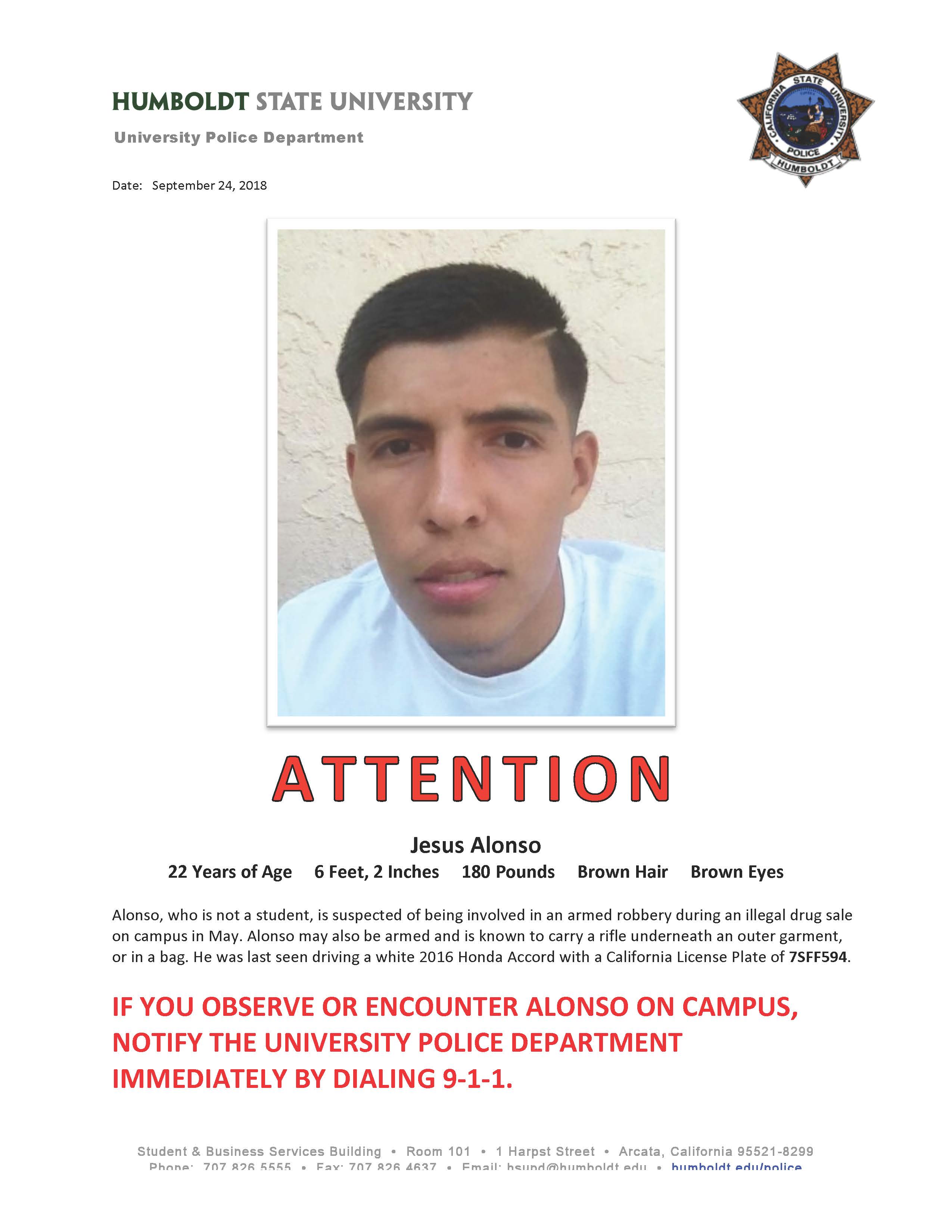
    University Police Department just released a campus-wide alert about 22-year-old Jesus Alonso. Alonso is suspected of being involved in an armed robbery in an illegal drug sale on campus.

    UPD also reported Alonso may be armed. Alonso was last seen on campus Saturday night, Sep. 22, and asked to leave, according to the alert.

    The alert is below:

    The University Police Department is advising the Humboldt State University community to be on the alert for a suspicious individual.

    In May 2018, 22-year-old Jesus Alonso, who is not an HSU student, is suspected of being involved in an armed robbery during an illegal drug sale on campus. A criminal investigation by University Police was conducted and forwarded to the Humboldt County District Attorney’s Office for review. However, criminal charges against Alonso were not filed, based primarily on a lack of admissible evidence.

    Last seen on campus Saturday night, he was asked to leave and has been warned that he is not allowed on campus.

    Alonso may also be armed and is known to carry a rifle underneath an outer garment, or in a bag.

    He is described as 6 feet, 2 inches, 180 pounds, with brown hair and brown eyes. He was last seen driving a white 2016 Honda Accord with a California license plate of 7SFF594.

    If you see or encounter Alonso on campus, please contact University Police immediately by dialing 911, calling (707) 826-5555 or extension 5555 from any campus phone.

    Safety tips from University Police:

    • Keep a safe distance from vehicles with occupants unknown to you.
    • If an unknown individual talks to you, do not hesitate to walk away or call for assistance.
    • Be aware of your surroundings at all times, on and off campus.
    • Immediately report any suspicious persons or activities to University Police.

    You may contact University Police at (707) 826-5555 or extension 5555 from any campus phone. In case of emergency, dial 911.


    This is a close up of the provided photo.

    Screen Shot 2018-09-24 at 4.55.23 PM

  • HSU Volleyball swept away by Sonoma State

    HSU Volleyball swept away by Sonoma State

    Sonoma State’s Seawolves dealt HSU Volleyball a tough 3-0 (25-15, 25-20, 25-10) loss at home Friday afternoon. The loss is the Lumberjacks fifth in a row and their fourth consecutive loss by shutout.

    “Such a backwards night for us,” said Jacks defensive specialist Odelia Ryan. “We’ve been saying we want to make progress each week and tonight we didn’t.”

    The Seawolves came out hot as they ran up an 8-0 lead over the Jacks. HSU was slow at the gate, but as the game progressed they found a rhythm that brought them back up to a sore of 8-11.

    “They didn’t make mistakes coming out,” Ryan said. “They made bad first touches better and got kills off of them, and we didn’t.”

    The second set was the most evenly fought set of the match, but that didn’t stop the Seawolves from opening hot with a 5-0 lead. The Jacks remained competitive, but the Seawolves 10 point lead called for a timeout by Jacks Head Coach Kelly Wood.

    With a new mindset the Jacks pulled five fast points to bring the set’s score to 14-19. HSU compiled a match high with a .108 hitting percentage in this set, but ultimately the Seawolves snapped back into a groove and put them away at 25-20.

    “We had great offense that set,” said middle blocker Emma Flewell. “It is just that nothing was happening at the same time. We would have good serve receive and couldn’t run the offense or vice versa.”

    Any momentum the Jacks compiled in the second set was extinguished in the 3rd. The Seawolves scored six of the first seven points in the match and ended on a 7-0 run to finish the night with a lopsided 25-10 victory.

    “They got lucky and caught us on a bad night,” said junior outside hitter Lauren Reid. “This loss is more of a mental failure, we can physically keep up with a team like this, it was just their night not ours.”

    Reid was a crucial part of the offense as she finished with seven of the Jacks 22 kills in the match, four of which she tallied in the first set.

    Sophomore setter Juliana Bertolucci set her teammates up throughout the night as she recorded 13 of the Jacks 18 assists. On the defensive end, sophomore middle blocker Hannah Cantrell led the way with four blocks and senior outside hitter Natalie Picone recorded 12 digs.

    “Different mindsets need to be on the same page next game,” said Reid. “We’re going to work on cohesiveness because we need to think for team plays and not individual ones.”

    The Green and Gold will have ample time to work out the kinks in their play before resuming conference play against Chico State on Friday, Sept. 28 at 7 p.m. at the Lumberjack Arena.

  • EDITORIAL: Check your prices not our backpacks

    EDITORIAL: Check your prices not our backpacks

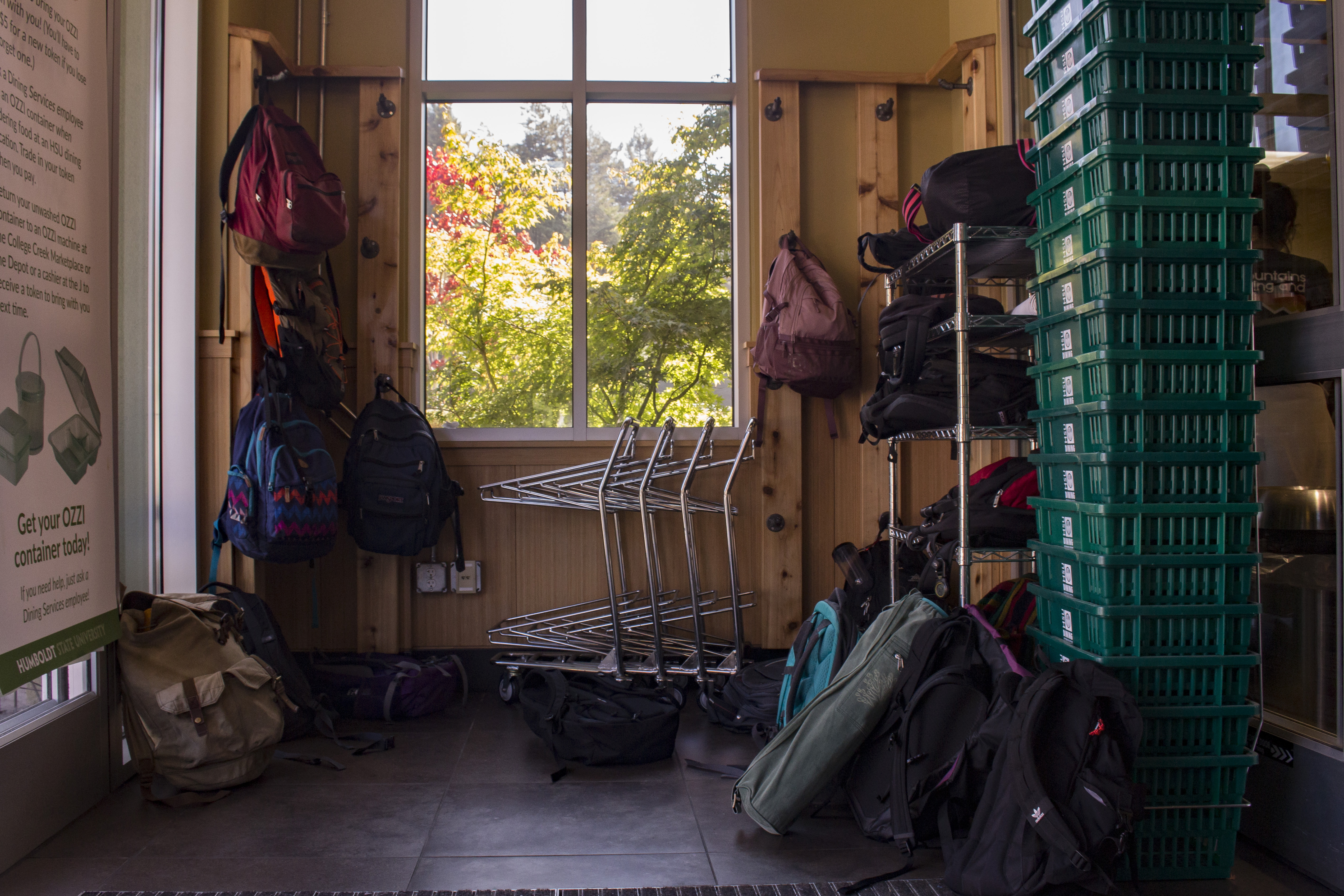
    The marketplace forces students to leave their backpacks at the door so they don’t steal. Meanwhile, they’re stealing your money by overpricing their merchandise.

    In addition to abolishing this stupid rule, it’s time this university lowers their prices on food and beverages and provides a convenient, healthy and cheaper option for students that struggle to pay the bills.

    “I just think it’s more convenient for the store rather than the students,” HSU psychology major Natalia Ruiz said. “They don’t want us stealing but they have our backpacks right next to the door. They don’t care. They just care what’s easy to them.”

    Racing right past the notion that they’re calling out students to be thieves with the backpack tactic, one has to wonder why the pricing is so high in the first place?

    Taking a look at the prices of some fairly common student favorites, there definitely seems to be a correlation with price gouging products that are useful to students.

    The very popular Guayakí Yerba Mate sells at the Marketplace for about $3.70 per bottle or can if you’re paying with your hard-earned cash. If you load money onto your C-point account you get a whopping five percent off that price which comes to a huge discount of $0.19 coming to just about $3.51 each. Wow. What a deal. (sarcasm)

    “There’s not many places for students to buy food on campus,” Ruiz said. “This is the only thing we got and they’re not really giving us an option to go somewhere cheaper.”

    That same bottle of Yerba Mate sells at Target for just $3. That’s 19 percent off of the Marketplace’s regular price, or 14 percent more of a discount than your C-card. Yerba Mate goes for only $2.50 at Texaco. That is a huge discount of about 32 percent from the Market’s regular price.

    The C-point price for Yerba Mate is obviously five percent better in price than the regular pricing. It’s not enough and the prices need to come down. Some naysayers may try to push meal plans into the discussion but not everyone can afford a meal plan.

    If you’re really down on your luck and a Kraft Easy Mac is the only warm meal you can afford, you better have at least $2.19 for it. The same Easy Mac sells in bulk at Costco for $0.82 per bowl. Walmart has them for around a buck each and surprisingly, target is the cheapest, at just $0.53 per bowl.

    If cereal is something you want, you better be prepared to fork up $7.09. Even with the highly touted J-card, you’re still spending $5.17 plus tax on a box of Cheerios. The same box goes for about $3 everywhere else.

    The backpack plan was instituted poorly by administration further showcasing their ineptitude in matters of decision making for student’s lives.

    According to an article in Fortune magazine, employees in the U.S are responsible for 43 percent of lost revenue. The $18 billion total loss is $2 billion more than what is shoplifted by the customers.

    So, instead of hiring a loss prevention employee, the Market now employs a person to stand at each doorway to tell students to leave their backpacks behind. They also managed to pay construction workers to build the useless backpack racks. Where else can the administration waste our money?

  • Jacks hopes remain high despite team’s early struggles

    Jacks hopes remain high despite team’s early struggles

    Over 4,000 students and community members showed to support Humboldt State football as the Lumberjacks took the field against their longtime rival, Western Oregon Wolves on Sept. 22 and fell 38-13.

    “Western Oregon is a solid team,” Jacks co-offensive coordinator Ryan McFadden said. “They made us work for every single yard we got.”

    Wolves quarterback Ty Currie had the recipe for success against the Jacks defense, using his pocket athleticism and ability to keep plays alive. With all the extra pocket time, Currie was able to keep his eyes downfield and finished with 334 passing yards.

    Jacks offense looked to match the quick start with freshman wide receiver Jaden Cumming’s 12 yard catch from sophomore quarterback Andrew Tingstad.

    However, the Jacks momentum down the field was quickly halted by penalties that wiped away any progress. The struggles continued, dooming the Jacks to a sluggish total gain of 82 yards in the first half.

    Jacks junior running back Isaiah Hall averaged four yards per carry but totaled just 56 yards. The offense secured only 14 first downs throughout all four quarters, going 7-16 on 3rd and 4th down conversion attempts.

    Penalties from the referees played an important part of the game for both teams. The Wolves saw most of the yellow flags with 14 penalties totaling a loss of 113 yards.

    On the Jacks side of the ball, safety Patrick Marzett was ejected in the second quarter when the refs deemed his hit on a Wolves receiver, late and unnecessary.

    “Almost isn’t good enough but I’m really proud of these dudes, they don’t quit,” Head coach Damaro Wheeler said.

    Western Oregon lead Humboldt State 38-0 as they entered the 4th quarter. With the game closing in on the Jacks, they dug deep into the playbook and called the newly famous trick play “The Philly Special”.

    The play had quarterback Tingstad walk up to the line snapping it directly to the running back where he then pitched it to senior wide receiver Gary O’Leary. O’Leary acted as he would run but quickly pulled up the ball and looked downfield for the uncovered Tingstad.

    “Gary’s pass was perfect, all I had to do is watch it fall into my hands,” Tingstad said. “It was money.”

    96 yards in 14 plays is easily the most impressive the offense looked all season.

    “After we scored that first one it was contagious,” O’Leary said. “That’s what happens when you score, people get going and come together.”

    The Jacks scored once more in the closing minutes with a 15-yard pass from Tingstad to freshman running back Christian Quirarte.

    With the offense not able to produce big plays and defense having trouble filling gaps, the Jacks have started out season with a 0-3 record for first time in 4 years.

    “Yeah we made mistakes,” Quarterback Andrew Tingstad said. “But we will continue to persevere, that’s what we do and there’s more coming, I guarantee you.”

    The Jacks head to SoCal this weekend as they play Azusa Pacific on Saturday, Sept. 29th at 6 pm. Listen live on ESPN 92.7 FM 1340 AM


    Final Results

    HSU WOU

    Total yards: 266 453

    Passing: 156 334

    Rushing: 110 119

    TOP 26:55 33:05


  • Football looks to bounce back

    Football looks to bounce back

    With 28 points on the scoreboard by halftime the Central Washington Wildcats stole the show from the Lumberjacks.

    Showing no mercy, the Wildcats completed its first shutout against the Jacks since 2007 with a final score of 49-0.

    Three Jacks quarterbacks hit the field in Yakima, Washington on Sept. 15. Starter Joey Sweeney and back ups Sohail Moshini and Andrew Tingstad only completed 10 out of 28 passes for a total of 116 yards and an interception.

    The Jacks offense struggled to finish drives as they failed to make it to the end zone on this day and the Jacks defense allowed the Wildcats to average 11 yards per rush.

    Although Wildcats quarterback Reilly Hennessey completed nine out 17 passes for 112 yards and three touchdowns, Jacks linebacker Moses Finau attempted to slow things down with an interception on the first drive of the second quarter.

    The defense tried their best to stop as many Wildcat completions as possible.

    Safety Adam Herrera finished with 10 tackles, followed by linebacker Isaiah Sires-Wils who finished with nine. Along with the tackles came a Jack sack from defensive lineman Latufeao Kolopeaua.

    The Jacks look to turn around their 0-2 overall, and 0-1 league record as they host the Western Oregon Wolves this Sept. 22 in the Redwood Bowl. Kickoff is at 6 p.m.


  • MOVIE REVIEW: Mandy

    Eight and a half percent of the population are red-green colorblind and will not be able to watch Panos Cosmatos’ latest film “Mandy”.

    This stylish, campy horror throwback primarily relies on unnatural red lighting with green flashes, humid amber lights, and ultramarine blue that blend in like watercolors.

    The color palette isn’t the only reason to watch this retro horror film, though. The real calling of this film is for those who are a fan of Nicolas Cage’s quiet moments and signature freak-outs.

    The story follows Red Miller (Nicolas Cage as the main character and color of this film), a lumberjack who lives in a secluded airy cabin with his artsy girlfriend Mandy (Andrea Riseborough).

    When an extreme religious cult leader Jeremiah (Linus Roache) finds Mandy, his desire for her is so strong that his cult kidnaps her. When Mandy refuses to be with him, he burns her alive in front of Red. Red will do anything and everything to seek his revenge on everyone responsible for Mandy’s murder.

    This movie has a slow quietness that lingers on its characters, suddenly followed by a loud guitar riff that strums in time with slow-motion shots. The score is a throwback to 80s midnight cult films like “Rock and Rule” and “Pink Floyd: The Wall.” The few animation scenes and some of the backgrounds are reminiscent of “Heavy Metal.”

    This movie has a lot of red to represent the warmth of love, desire and rage. The scenery has been edited to look like nebulous watercolors, with imagery that could represent LSD or an unearthly homeland.

    Everyone’s performance is fantastic. The cult and the motorcycle gang are insane and indulgent enough to question their humanity. Andrea Riseborough as Mandy is mysterious and ethereal. Nicolas Cage brings the tragedy and campiness to the movie. His freak-outs are laughable and satisfying on the extreme ways he comes down on everyone in his way. Want to see Nicolas Cage in a chainsaw duel? He fights a chainsaw with a longer chainsaw.

    “Mandy” is campy, but in a classy way that’s reminiscent of Danish auteur Nicolas Winding Refn (“Drive”, “The Neon Demon”). Interestingly, red and blue are the only colors Refn can see. Check out this stylish phantasmagoria at The Minor Theatre in Arcata.

  • NY Times right to grant anonymity

    NY Times right to grant anonymity

    Readership should consider placing trust in  journalism standards for anonymous sources

    Lack of transparency, bad reporting and a number of circumstances contribute to the public’s diminishing trust of the media.

    In spite of this, the New York Times ran a submitted piece from an anonymous senior government official vowing to “thwart” parts of President Donald Trump’s “agenda and worst inclinations.”

    By doing so the NY Times has asked its readership to put their trust in them and their vetting process for anonymous sources, and we think you should too.

    Granting Anonymity

    Granting a valuable source anonymity is not unheard of. Consider the most famous example of the Watergate scandal in the early 1970’s.

    Washington Post reporters Bob Woodward and Carl Bernstein relied on information from a source they called ‘Deep Throat’ after a break-in of the Watergate complex offices of the Democratic National Committee in Washington and the unfolding of events afterwards.

    Woodward and Bernstein protected ‘Deep Throat’ for 33 years until a Vanity Fair article revealed him to be Mike Felt, a former associate director for the FBI. The result of using an anonymous source with vital information eventually led to the resignation of former President Richard Nixon after exposing his administration’s inappropriate abuse of power.

    The Washington Post relied on the integrity of these reporters and the source as well as put their brand and reputation on the line based on the right of the public to know. News organizations must heavily weigh and debate the importance of the public’s right to know against the the individual harm to the source in revealing their identity.

    Alternatively, journalists have a responsibility to also consider the agenda of the source and their motives for requesting anonymity.

    Codes of Ethics

    This ethical dilemma is one journalists encounter consistently: the public’s right to know the truth versus a responsibility to minimize harm. Because of this, stated ethical practices and codes exist to guide the decision making process on reporting responsibly.

    The Society of Professional Journalists Code of Ethics lays out four main standards for ethical journalism: Seek Truth and Report It, Minimize Harm, Act Independently and Be Accountable and Transparent.

    Though minimizing harm can be applied in multiple ways to using an anonymous source, the SPJ outlines their anonymous source standards under the responsibility to seek truth and report it.

    The SPJ states: “Journalists should: Consider sources’ motives before promising anonymity. Reserve anonymity for sources who may face danger, retribution or other harm, and have information that cannot be obtained elsewhere.”

    Other publication style guides and organization standards for dealing with anonymous very closely mirror these values such as AP Style’s guidelines which stress that the material is in a position to have this factual information that is vital to the news report. For comparison, the SPJ website provides a list of journalism ethics codes from around the world.

    The NY Times Opinion Piece

    The opinion piece is a unique article under which anonymity has been granted. Different media organizations follow set codes or write their own and the New York Times does not necessarily have to adhere to the ones mention, but does have its own standards of ethics. Under the AP Style publishing the opinion would not be advised simply because it is not hard news.

    The New York Times prefaces the piece by stating publishing an anonymous op/ed is a “rare step.” They also opened up a form allowing readers to submit questions, comments and concerns about the piece where an editor answered some responses for clarification and transparency.

    The piece was published Sept. 5 and by Sept. 6 the NY Times published a story covering how Trump’s “almost entire cabinet and leadership team…pleaded not guilty” to plans to act against him.

    The article explicitly depicts the story unfolding as a result of publishing the letter as well as the exclusivity of knowledge of the author.

    “The author, whose identity is known to The Times editorial page department but was not shared with the reporters who cover the White House…” the article said. “Describes him or herself as one of many senior officials in the Trump administration who are “working diligently from within to frustrate parts of his agenda and his worst inclinations.”’

    The article comes at a time when the risk of using an anonymous source is often too big to take and it is worth noting the bold decision of the NY Times to move forward in doing so. Understanding the process they and other journalists go through should imply the weight and seriousness of what this high ranking government official had to say, even if it was presented under anonymity.

    Consider the process journalists are supposed to take when dealing with a dilemma of this nature. We believe this gives the author some credibility if the NY Times has risked their brand and reputation to give this source a platform against their own administration.

  • 44 years of chill

    44 years of chill

    North Country Fair celebrates 44th anniversary

    On a sunny Saturday afternoon, Jana Peters and Mike Wielgorcecki, with a drink in hand, enjoy the cool vibes of the North Country Fair, at the Arcata Plaza.

    “This is a pretty chill event,” Peters said. “I wished I brought more cash on me.”

    “We came from Santa Rosa,” Wielgorecki said. “There’s pretty good vibes here, it makes me want to live here.”

    Since 1974, the North Country Fair has been a year-round tradition, Sept. 22 and 23 marked the fair’s 44th anniversary.

    Various stands were set up for people to buy locally made items from food to beer, and clothing to ornaments.

    Topher Reynolds, owner of Copious Glass, set up a stand at the fair, selling glass marbles.

    “This is my fourth year attending the fair,” Reynolds said. “This is one of my favorite times of the year, the people are fantastic and we (Copious Glass) always make high sales here.”

    Aside from the food and music at the fair, a parade is also provided for those who attended. This year the fair held its annual All Species Parade on Saturday, and on Sunday a samba parade.

    Gregg Moore, band member of an alternative community brass band, Bandemonium, played the sousaphone at the parade.

    “Overall, it’s a super positive and playful environment at the fair,” Moore said. “We (Bandemonium) are playing for those animals who are making a comeback from extinction.”

    Many children’s eyes widened at the scale of some of the animatronics that were at the fair this year. While those who had a dancing itch got active during the Salsa Parade.

    “The scale of the fair is perfect for those who wander to Arcata, it’s very welcoming,” Reynolds said.


  • 17 going on 18

    17 going on 18

    But still no justice for David Josiah Lawson and his family

    On the 15th of every month for the past 17 months the advocacy organization Justice for Josiah, which is led by his mother Charmaine Lawson, holds a vigil in memory of David Josiah Lawson in the wake of his murder.

    This month the vigil was held at the Manila Community Center, adjacent to Josiah Lawson and his friends most cherished beach.

    “I chose this spot today because my son loved the beach,” Charmaine Lawson said. “I wanted to be in a place were my sons presences was often.”

    There were around 30 to 40 in attendance. Community members, Humboldt State University faculty members and family and friends of David Josiah Lawson gathered around to eat barbecue and listen to music.

    This did not detract from the seriousness of why people were gathered that day. Many wanted to talk about both the lack of transparency within the HSU administration and Arcata Police Department and overall trust in them.

    Sylvia DeeRoy, a local community member and HSU alumni, said she has had enough of HSU President Lisa Rossbacher and the HSU administration’s avoidance to answer questions they deem vital for family and friends of David Josiah Lawson, and other HSU alumni.

    “Ages have gone by,” Derooy said. “As an alumni (Rossbacher) doesn’t even care about me.”

    The vigil happened 25 days after the Aug. 20 roster release of the HSU’s predominantly African American student clubs to the Arcata Police Department. Many community members are unaware of this but those who are seem to take a deep frustration with the events that have transpired.

    Meg Stofsky a community advocate and member of the Justice for Josiah Movement, had words that seemed to resonate with many at the Vigil.

    “I thinks it’s racist as hell,” Stofsky said.

    Although there has been a deep mistrust of the HSU Administration and Arcata Police Department, many family and friends of Josiah say they appreciate the community support of those who know or didn’t know him.

    Berenice Roman, a student at College of the Redwoods and friend of Josiah, said that although she is frustrated and this situation is difficult, she is glad some in the community are concerned and willing to support them and Josiah.

    “It’s really cool that people in the community are mad about it, and are still coming to support Ms. Lawson and his friends,” Roman said. “It just makes us feel like we are not alone.”

    As the day drew on, the vigil turned its sights on the remembrance of the memory of David Josiah Lawson. Charmaine Lawson, aunt of Josiah Stacey, and friends Alex Foster and Karim Muhammad led the walk to Josiah and his friends’ favorite beach.

    Charmaine lead community members following the vigil and attendees chimed in harmony the ethos of these vigils and protest:

    “Justice for Josiah, long live D.J. and say his name, Josiah!”

    The procession winded down to the beach as their calls for justice echoed out into the humboldt-sphere. After, the vigil attendees gathered in a circle with their hands clasped together, which was formed around hearts with texts inside them that read, “Josiah” and “D.J.”

    Attendees were asked to go around and say something about Josiah that they remembered, or the reasons for why they were there that day.

    No one seemed to be able to get a word out without a semblance of confusion or sorrow.

    The vigil ended with the symbolic throwing of roses and petals into the ocean. Although this was supposed to be the most powerful image of the vigil Charmaine Lawson’s words seemed to transcend the moment.

    “I know he is not here in the physical but he’s here in spirit,” Lawson said. “I know he is shining and saying ‘Mom thank you, for not forgetting me and thank you strangers who are now family for being here and standing with my mom and our family.’”


  • Never too old for a Nerf fight

    Never too old for a Nerf fight

    A new community sport for all ages, blasters included

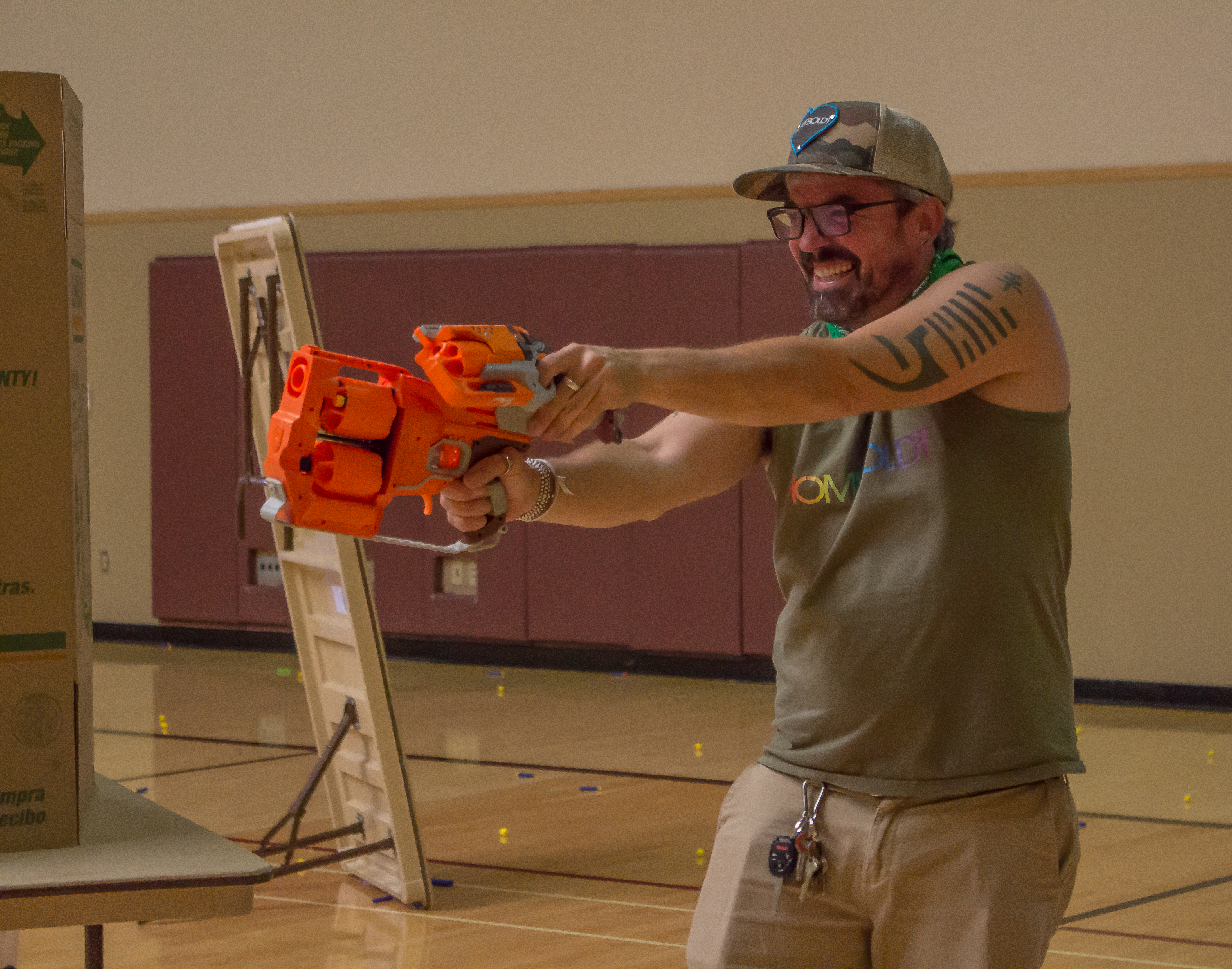
    For four hours on a Sunday morning, the Arcata Community Center was a war zone.

    Sounds of blasters and Nerf darts echoed through Arcata Community Center. Players ran for cover, slid behind tables and had a showdown in the center maze.

    Cloth Boxes stacked on tables with cloth lining the tables making them walls to deflect flying darts. Tables flipped onto their sides and ends acted as personal shields as courageous players pushed forward.

    Players were divided up into three teams and given a starting point on the outer edge of the gym. The Red, Green and Blue teams looked in awe at the new lineup of blasters provided for each color’s home base.

    Bases were stacked two tables high with 10 to 15 different blasters from Nerf pistols to heavy automatic electronic dart spitting machines. Foam darts littered the tables for easy run-back reloads.

    Players had to decide lightweight and compact for agility or heavy for more dart power. There were many combinations to choose from making each round strategic.

    Participant Tanner Via, a 13-year-old from Laurel Tree Charter School in Arcata, fixed a jammed dart in his blaster back by his base.

    “Green team is performing okay, we only have one win so far,” Via said. “This is my first time but the middle maze is where I like to be.”

    The madness was tamed with three main match styles.

    The classic single elimination: One hit anywhere on their blaster or body and players are out.

    Pistol blaster only match: Players run out with low ammo and a smaller blaster trying to use close range and stealth type attacks.

    And crowd favorite, King of the Hill. Players had to hold the center maze for a combination of minutes. The referee only counted seconds for a team if one or more members of that team was present in the middle and alive.

    Trevor Hammons, a counselor at Zane Middle School, said he brought his kids to meet up with some friends from school and jumped into the action.

    “If we’re in town we always go, we look forward to king of the hill,” Hammons said.

    Hammons said taking the maze, setting up and blasting everything that moves was the best strategy.

    The course didn’t always have an elaborate set up. Co-creators Patrick Sullivan and James Schaeffer started from humble beginnings. They were inspired by a bachelor party trip to Reno where they rented out a house and decided to bring Nerf blasters for all their friends that weekend.

    “We had a great time and when we got back we wanted to find a way to keep going,” Schaeffer said. “Started out in parks with friends but the rain came so we reached out to Mike Rice at the ACC and he was open to an event and it blew up from there.”

    Sullivan and Schaeffer are still active participants at events, taking turns playing mercenary for a team while the other keeps order and referees games. They are always trying new designs, courses, obstacles, new blasters and looking to video games for extra inspiration.

    “We both play strategy games, James knows how to set up interesting map designs, constantly trying to make things better,” Sullivan said. “Looking to the future we’re going to try more outdoor events, maybe even back at a local public park.”


  • Welcome back to the block

    Welcome back to the block

    Clubs host first block party on the plaza

    Hundreds of students gathered around the Arcata Plaza at the first Humboldt State University Block Party to enjoy free barbecue and live music as a way to kick off the new school year on Sept. 14.

    A long line wrapped around the plaza as the first 500 students awaited a free meal provided by the school including hamburgers, coleslaw and beverages.

    As an alternative to the Associated Students BBQ on the quad, AS along with Center Arts, Forever Humboldt and a few other organizations teamed up over the past year to organize this event as a way to familiarize new students with the town of Arcata. The event was held in the Arcata Plaza and many new students were able to check out what this city has to offer.

    Transfer student Amy Garcia enjoyed free food and the bustling crowds as she attended this event in downtown Arcata with her friends.

    “This is probably my third time actually being over here in this area,” Garcia said. “I love how it’s a really small community and the weather is awesome.”

    Many clubs and organizations on campus set up information tables in order to inform students about their services as well as handing out free stuff including pins, art, stickers, and flyers. By tabling, these clubs were in hopes of convincing more students to join.

    Live music was provided by The Chulita Vinyl Club and Calafia Armada as guests walked around enjoying the information tables, art, and food.

    Calafia Armada, a cumbia event collective based out of Oakland, drew a huge crowd as their upbeat songs inclined many to start dancing. Their lively performance was also accompanied by a short story they told about Queen Calafia, a fictional warrior queen California was named after.

    One of the many students attending, Matthew Bahloul enjoyed the live performance by Calafia Armada.

    “I was looking forward to the food and music,” Bahloul said, “The vibe is cool; I really enjoy live music.”

    In between all of the music, a raffle for prizes was held by Associated Students. Giveaway prizes including tickets to upcoming AS Presents and CenterArts shows were provided by the university. Other raffle prizes were provided by local businesses such as Mia Bella Cupcakes, Bubbles, and Humboldt Jiu-Jitsu.

    Both new and returning students enjoyed this event as it was a way to meet people and participate in a school related event without actually being on campus. Throwing the block party at the Arcata Plaza also allowed community members to enjoy the music and crowds, as well as learn more about the university itself.

    Ashley Arcega, a senior at HSU, sat in the plaza with a friend enjoying the Friday evening as the event wound down. Since this was the first time the university has thrown an event like this, she was excited to see what it was all about.

    “I think this event brings a sense of community,” Arcega said. “It brings all different kinds of people and students together which is really awesome.”

  • Missing Your Significant Other

    Missing Your Significant Other

    HSU students balance love lives and school, stress communication

    Long-distance relationships are a commitment students here at Humboldt State must face when leaving home, and in no way is it an easy thing to do. Having to believe in your individual future while putting time into a relationship can cause a divide in one’s heart.

    School and work schedules are a few obstacles senior kinesiology major Emma Gutierrez must face within her relationship of almost six years with former HSU running back Ja’Quan Gardener.

    Gardener, who in January left for an opportunity to be with the San Francisco 49ers, had to make a decision with Gutierrez to dictate their current relationship. They both knew that their conflicting schedules would be an issue, and a long-distance relationship can make it a challenge when communicating.

    “Communication is something that has to be there for us, being able to hear from that person day to day allows us to know that we’re always on each other’s mind,” Gutierrez said. “With that communication, it makes it so much easier to trust that person.”

    The hardest thing for two people who love each other is not being able to talk to that person. Senior cellular and molecular biology major Samantha Lee explained that you can not get mad over something that you can not control.

    “Texting long paragraphs and getting mad over something which in the end we cannot control is pointless,” Lee said. “You’re wanting to hear from that person all day and then end up fighting over whatever it might be. It only causes tension. It takes two to tango at the end of the day.”

    Lee is currently in a long-distance relationship with her partner Terrence Tam. She explained that finding the time to physically see each other is a challenge. The two of them trade off on a five-hour drive once a month to get that face-to-face connection.

    Former HSU student Jeanette Bargas had her own take on long-distance relationships.

    “Be prepared for anything, learn how to communicate,” Bargas said. “Knowing each other’s schedule can help on when it’s the best time to see each other.”

    Bargas was in a long-distance relationship with someone who lived Puerto Rico and they are unfortunately no longer together. She explained that before the distance it was just Eureka to Orange County and then the distance got further once her significant other left for Puerto Rico.

    “I remember just trying to keep my mind occupied and focused off the distance. Working full time at Disneyland helped me at times,” Bargas said. “Other times I would focus on my photography and becoming a better artist but like what happens to so many, the distance was causing to be too much.”

    For the students that are in long-distance relationships being occupied by either school or work, interacting with friends, and finding new interests are ways to cope with the thought of missing their significant other. Gutierrez and Gardner both have busy schedules. Gardener continues to focus on his career, and Gutierrez continues her path to graduation while taking care of their German Shepard, Lia.

    Lee and Tam keep their focus on their education and don’t let the distance factor become too much of a distraction.

    A long-distance relationship is a test of two people’s ability to trust and communicate. Without those two qualities, even in a non-distance relationship, there is no way for that relationship to blossom and grow.