The Lumberjack


Students Serving The Cal Poly Humboldt Campus and Community Since 1929

Year: 2018

  • Dorm-made kombucha is a thing

    Dorm-made kombucha is a thing

    A funky, moldy belch clings desperately to the humid air, evoking a similar funk to a brewery.

    Will Suiter, 18, is an amateur chemist and kombucha connoisseur. He makes kombucha in his HSU dorm room.

    Kombucha, as many of us Humboldt dwellers know, is a trendy probiotic drink brewed with the help of “symbiotic culture of bacteria and yeast” (SCOBY), similar to the “mother” found in apple cider vinegars.

    The SCOBY appears much like an agar found in a petri dish or perhaps a somewhat slender jellyfish. It houses millions of bacterial colonies that help cultivate kombucha, as well as protecting the elixir from “bad” bacteria that could contaminate it.

    The process itself is deceptively simple, but Suiter says that each nuance in flavor and carbonation is deliberately cultivated from many failed batches.

    “Kombucha is brewed just like wine or beer,” Suiter said. “But instead of just yeast, it’s brewed with bacteria that converts sugar into acid instead of alcohol”.

    Consumers can flavor the beverage any way they want during fermentation.

    “The base of it is essentially a sweet tea,” Suiter said. “Once it’s brewed in a large jar, I add flavorings like ginger, blackberry juice or lemon peels… and transfer it to bottles.”

    Once it’s in the bottles, Suiter lets the kombucha ferment a little bit longer, “which creates carbon dioxide that pressurizes the bottles and makes the kombucha fizzy.”

    Explosion is pretty common, which is due to over-filling the containers or an excess of carbonation when a batch has been fermented for too long.

    “Since I actually brew a lot of kombucha, I have several large glass jars I brew the base tea in so I can reduce risk of everything exploding,” Suiter said.

    The process itself requires several tools that just about anyone can pick up at their local hardware store.

    “Kombucha is really good for you,” Suiter said. “It has tons of vitamin B and probiotics from the bacteria we introduced, which are healthy for your gut.”

    The drink pairs well with a multitude of snacks.

    Suiter said his favorite meal is a “fat slice of pizza with a big glass of some sour kombucha.”

    So if you are in the mood to experience a rather funky new drink, help out your digestive system or follow a trend, maybe reach for a bottle of kombucha.

  • Affordable textbooks for an awesome cause

    Affordable textbooks for an awesome cause

    With a new semester comes a need for new textbooks and class texts. One club on campus, the Society for Women in Math and Sciences (SWiMS), is offering students an affordable book purchasing option.

    Carla Quintero, the president of SWiMS, explains the offer.

    “We are here selling used books which were donated by several people,” Quintero said. “We’re trying to raise money to fund our club’s events.”

    The society has high hopes their book sales will provide students with a much better alternative than the Humboldt State Bookstore or Amazon.

    “I think we can all agree that the bookstore is already overpriced,” Quintero said. “Most people try to find other sources, such as Amazon, to purchase their textbooks. We are selling our books at a fraction of an Amazon textbook price.”

    SWiMS will be using the money raised from book sales to create educational and community-building events for HSU.

    “SWiMS hosts several different events throughout the semester, one of them being Codernoon,” Quintero said. “We have computer science majors who are running this event and teaching people how to code in Python.”

    The club hosts Codernoon twice a week and offers refreshments to participants.

    “Through these workshops, we are trying to break the stigma that coding and computer science is a boys club,” Quintero said. “Coding is accessible and fun. Everyone should learn how to do it!”

    In addition to Codernoon, SWiMS will be using money from book sales to fund Crafternoons, which are crafting events that occur for two hours every other week.

    SWiMS provides participants with crafting materials and lessons on knitting and crocheting. They also offer a space for participants to interact with other majors and destress from their heavy workloads.

    Specifically for STEM majors, Crafternoon hopes to be a space for this group to interact with people outside of their majors. The purpose here is to create a community SWiMS is aiming to establish in their role of being a support group.

    One major event that SWiMS has been pushing to put on annually is a workshop called You Belong Here.

    “In this workshop, we try to inform STEM majors about imposter syndrome, stereotype threat and provide students with the tools to combat these things,” Quintero said. “With these tools, students can move through their respective fields feeling empowered and welcomed because everyone should have the same access to science and math.”

    Money raised from book sales will also be used to host You Belong Here in March.

    To Quintero, being apart of SWiMS means the world to her. As a woman of color in physics, it can be disheartening at times.

    “It can be hard to see yourself in a career when you don’t see anyone else like you in that career,” Quintero said. “The point of SWiMS is for everyone to realize that, while women’s population in the sciences may be small, they still are an important part of the scientific community.”

    Purchasing books from SWiMS will provide the club with the funding to continue their mission of supporting underrepresented groups in the sciences. These include women, people of color, LGBTQIA and other individuals in their scientific journey at HSU.

    Linh Pham is affiliated with Society for Women in Math and Sciences. 

  • This week in sports history

    This week in sports history

    The San Francisco 49ers beat the Cincinnati Bengals 26-21 in Super Bowl XVI on Jan. 24, 1982. This was the first of San Francisco’s five total Super Bowl championships that they would win in the next 15 years.

    The first ever college basketball game was played on Jan. 27, 1894. The University of Chicago beat Chicago YMCA 19-11.

    Jan. 30 will mark the 10-year anniversary of Jacks head
    football coach Rob Smith’s hiring. Smith has earned the conference’s
    Coach of the Year award four times and guided Humboldt State University to national
    recognition since being hired in 2008.

  • EDITORIAL: Understanding consent first

    EDITORIAL: Understanding consent first

    Sexual harassment can be difficult to understand and process on any level: as a victim, as an offender and even as a bystander. Treating sexual harassment allegations with discretion and well-researched judgment is vital. However, they must begin with an understanding that there is no clear interpretation for what defines consent.

    Movements such as #MeToo and #TimesUp that highlight sexual assault, misconduct and harassment in the entertainment industry are proving that awful behavior does not just happen to private citizens, but to public figures as well.

    What these movements should do is make conversations about sexual harassment and assault easier, as well as give victims the confidence and empowerment to speak up.

    What these movements should not do is create an opportunity for the media or the general public to interpret the definition of the word consent. Full consent is one big, sober y-e-s. The second any hesitation, discomfort or change of mind occurs, consent is lost. This should be the only way consent is observed in the face of any story, no matter how large or small. The most important thing to consider when assessing these situations at any level is that affirmative consent is not up for debate.

    After grasping this point, we can attempt to break down a situation and understand what happened. In the instance of comedian Aziz Ansari and his encounter with a woman anonymized as Grace, this is extremely important to understand. The feminist site Babe.net reported on Grace’s date with Ansari in a way that lumped him in with repeat offenders such as Harvey Weinstein and Roy Moore. Though his behavior was wrong, it is still worth noting that this man, unlike that of Weinstein or Moore, was allegedly unaware of his aggressive behavior. Ansari was not fully aware of his alleged wrongdoings after she had expressed it via text the next day. Readers can hate him, believe him, not believe him or react how they please. What they should not do is attack Grace for her decision to speak up. Her decision to speak up was warranted, because she felt that the date was terrible and therefore changed her mind. Nothing can change her firsthand experience that night.

    What can be done after understanding consent is to process Ansari’s decisions and pay attention to what he decides to do next as a self-proclaimed male feminist. What can also be done as a bystander is to know the difference between assault and harassment without believing that one is more okay than the other. Instead, try to find ways to minimize the opportunities of both offenses.

    Understanding the problem with Ansari’s behavior towards Grace involves his disregard for his celebrity status and the kind of influence he may have on others. The problem was that he needed a better understanding of affirmative consent. This is where there are clear differences between Ansari and Weinstein.

    Most of us are bystanders to these movements and celebrity allegations. As such, we have an obligation to seek out and recognize affirmative consent. Further, we need to intervene when others fail to acknowledge it. Practice good judgment when examining these situations only after understanding consent.

  • International students first few days in the U.S.

    International students first few days in the U.S.

    As the spring semester approached, Humboldt State University welcomed new foreign exchange students. Archana Nihalani from Pakistan and Gereon Ploenes from Germany are two of the new incoming students. Nihalani came from Hyderabad, a city located in the Sindh province of Pakistan, and Ploenes came from Nijmegen, a city in the Dutch province of Gelderland where he resides. Both had stories to tell about their first few days in the U.S. before the spring semester started.

    Nihalani thinks that people are too polite.

    Archana Nihalani from Pakistan. Photo by Ahmed Al Sakkaf

    “People here say thank you a lot and sorry a lot,” Nihalani said. “A lot of times and I’m not used for this.”

    Saying thank you and sorry too much is considered a very formal behavior in Pakistan, according to Nihalani. It may mean that a person has too many boundaries.

    “Here [U.S.], if you don’t say ‘thank you’ or ‘sorry,’ it’s rude,’ Nihalani said. “But there [Pakistan], it’s rude if you say ‘thank you’ and ‘sorry’ all the time, because it means that you’re being too much formal.”

    Nihalani described food to be her worst struggle. She thinks the food here is too plain and lacks flavor.

    “Food here is plain,” Nihalani said. “I’m not used to eating plain food with no flavors… it’s too plain. In Pakistan, we put so such spices in food, so many flavors.”

    Nihalani thinks that people here in the U.S. have more personal space than their counterparts in Pakistan. She also notices that people here are easily offended.

    “People here [U.S.] have so much personal space and there [Pakistan] we don’t have so much personal space,” Nihalani said. “Everything here offends people I don’t know why? They get offended very easily.”

    Ploenes from Germany residing in the Netherlands. Photo by Ahmed Al Sakkaf

    “The first impression I had of the U.S. [is] that it’s exactly like the movies,” Ploenes said. “The J cafeteria and how it works… it’s really like the High School Musical.”

    To save money on his flight, Ploenes flew to San Francisco International Airport and took the Greyhound bus to Arcata. He was surprised when a Greyhound worker asked him several times if he is carrying any guns in his oversized backpack.

    “The guy working in the Greyhound asked me five times if I carry guns in my big backpack,” Ploenes said. “It’s not normal to carry any guns in Europe. You’re not allowed to. But in America, guns are normal.”

    Ploenes was also surprised by the amount of “big cars” and pickups he found in the streets here.

    “I’m not used to seeing a lot of pickups and a lot of big cars. Why [do] people need these big cars?” Ploenes said.

    Ploenes noticed that the toilets here in the U.S uses a lot of water to flush and they have a lot more water in their bowls too.

    “Toilets are totally different here,” Pioenes said. “You use a lot of water to flush.”

    Both Ploenes and Nihalani think that people here are very kind.

    “I was surprised with how friendly the people are,” Ploenes said.

    “People are really nice here,” Nihalani said. “They’re very helpful.”


  • Jacks comeback falls short

    Jacks comeback falls short

    The Jacks men’s basketball team fell just short of a big comeback on Jan. 13 against the Cal State University at San Bernadino Coyotes at Lumberjack Arena. They lost the game 90-79 and fell to 6-12 overall and 3-9 in conference.

    Jacks junior guard Romario Wilson had a great night, scoring 24 points on a perfect 13-13 from the free throw line. Wilson and his teammates are working hard to improve everyday and he believes the team has what it takes to go on a run.

    “We can hang with the best of them,” Wilson said. It shows that we have the talent and the skill-sets to win big-time games. It’s all on us to go get it. We have 10 games left, and we’ve got to finish off strong so we can make a push to get into this tournament.”

    Despite the Jacks subpar record, they still have a chance to win their conference tournament and win an outright bid to the national tourney. Their play against some above average competition suggests they have the ability to make some real noise if they were to win a bid to the big dance.

    The Coyotes established a 47-21 lead with 2:58 left in the half and led 49-31 at the break, but the Jacks had a “never say die” attitude and came out strong in the second half. They cut the deficit to just 10 but the Coyotes kept coming, knocking down consecutive 3-pointers.

    Jacks head coach Steve Kinder was proud of his team for not giving up and staying in the game until the end.

    “Out of halftime I thought our guys responded extremely well,” Kinder said. “They showed some grit, they showed some guts, they showed some toughness and made two really good pushes in the second half. We’re proud of our Lumberjacks, but it just wasn’t enough for the victory.”

    Jacks junior guard Kameron Curl had 12 points but struggled from the 3-point-line shooting 2-10. Senior forward Davasyia Hagger added 10 points as did fellow senior, Austin Pomrehn. The Jacks performed at an elite level from the free-throw line, hitting 30-of-33 shots.

    The Jacks look to get back on track on Jan. 20 as they travel to face conference rival Chico State. Tip-off is set for 7:30 p.m.

  • Redwood Curtain is a diamond in the rough

    Redwood Curtain is a diamond in the rough

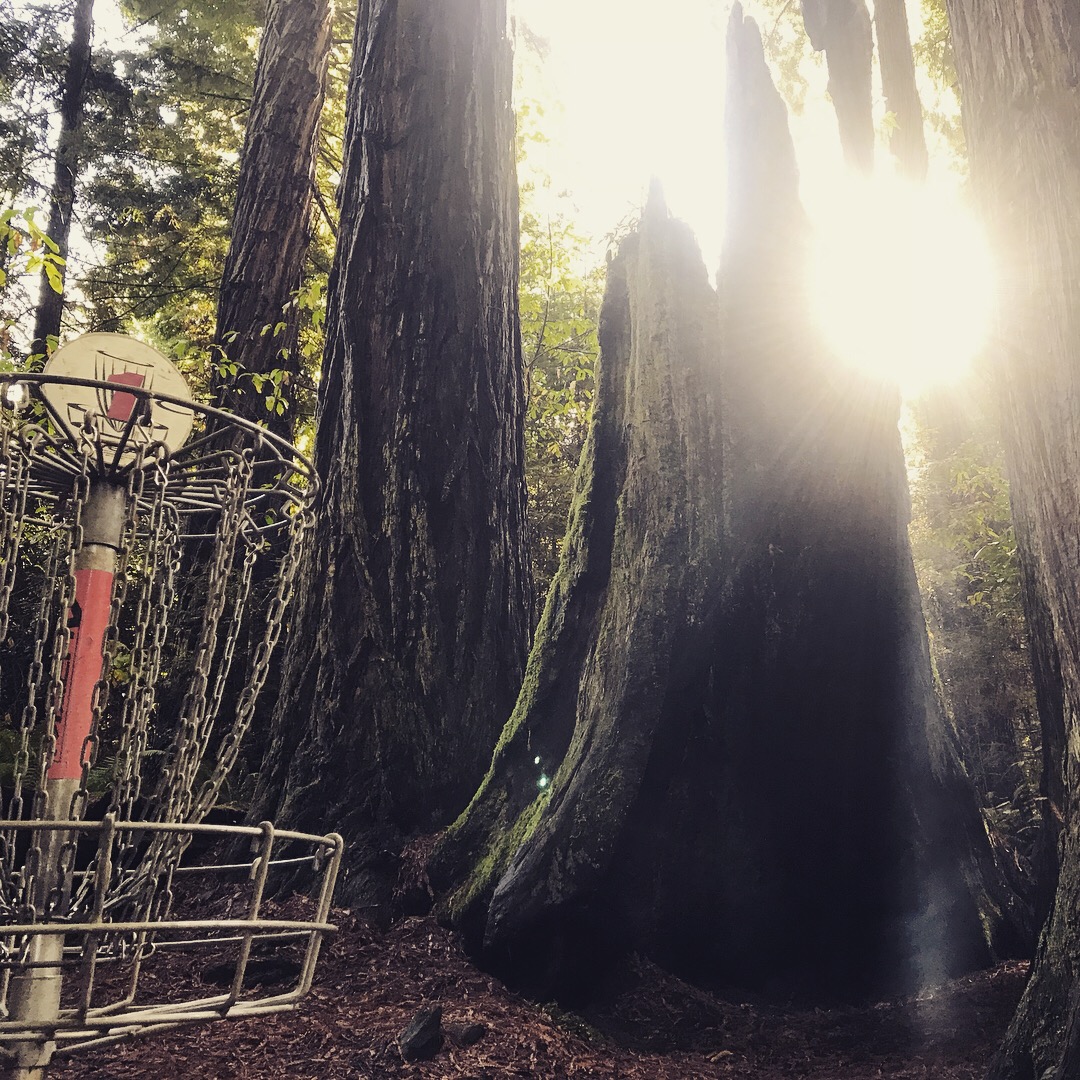
    Like a scene from Jurassic Park, huge prehistoric trees line the fairway of the Redwood Curtain Disc Golf Course, and getting lost in the thick forest was inevitable for Connor Evans and his dad on their first visit.

    “We didn’t have a map. We didn’t know the course at all. First time for him playing disc golf probably,” Evans said. “It was a shit show. It was a lot of fun. We got so lost, but that’s how The Curtain goes.”

    Evans is the president of the Disc Golf Club at Humboldt State University. Unlike most other universities, there is a disc golf course located right in the back of campus among the redwoods.

    “We’re a pretty diverse club,” Evans said. “We get a lot of different students, and The Curtain is our home course.”

    The Redwood Curtain, as it’s named, has been around for more than 30 years and is known for holes that thread their way through redwoods and ferns. With many narrow fairways and lots of trees for obstacles, many disc golfers agree that it is one of the more difficult courses to master in the world.

    The club tends to the course and makes sure it stays clean. HSU alum Wyatt Bettis is the team’s coach.

    “This course is unlike anything in the world,” Bettis said. “Its huge redwoods, trying to navigate through them, just the beauty, the ferns, it’s more of a beautiful course than anything. Whenever I think about playing disc golf, I imagine playing through the redwoods.”

    Disc golf, also referred to as frisbee golf, is rapidly evolving and becoming one of the most-played sports locally. There’s the Redwood Curtain course as well as College of the Redwoods, Manila, Mad River and Cooper’s Gulch.

    According to the HSU club team, The Curtain ranks above all others. It offers a high level of difficulty along with beautiful scenery that is unmatched.

    Dennis Hanson is the Disc Golf Club’s safety officer and has been playing the sport for eight years. He enjoys the local aspect of the Redwood Curtain and not having to go far to play a round.

    “We feel like its part of the school,” Hanson said. “We feel like it’s our course. So we try to take care of it, feel pride for it and keep it up to date.”

    For a course that is loved so much throughout the disc golf community, the Redwood Curtain remains a lesser-known accommodation that HSU provides for their students. Also, it’s good just to get out in nature to lower that end-of-semester stress.

    The disc golf team starts playing competitively against other universities this spring. Students interested in showing off their skills can contact Bettis or check out their practices on Sunday mornings at the Redwood Bowl.

    “It’s something that’s here in Arcata,” Hanson said. “You don’t have to go too far to play and it’s really local, which is why it’s so special to me.”

  • Sea levels rising in Humboldt County

    Sea levels rising in Humboldt County

    Jennifer Kalt of Humboldt Baykeeper released a community call-to-action through the Northeast Environmental Center in Feb. 2017 to discuss the need for preparation against sea level rise within the area. In the press release, she compares the California Coastal Commission Sea Level Rise Policy Guidance, adopted on Aug. 12, 2015, with the policy plans for the cities of Eureka and Arcata.

    The California Coastal Commission was established by voter initiative in 1972 and was made permanent by the California Coastal Act of 1976. Their goal is to protect and enhance California’s coast.

    Cristin Kenyon, a local Supervising Analyst with the California Coastal Commission, was able to explain some of the responsibilities of the organization.

    “So the Coastal Commission, we basically permit development in the coastal zone but we also certify local governments, policies and regulations as local coastal programs,” Kenyon said. “We can delegate jurisdiction to them so that within their jurisdiction they get to issue the coastal development permits, and we just serve an appeal function.”

    When the local governments are certified, it allows for them to control their own development of coastal areas. However, their decisions still have to be in accordance with the Coastal Commission’s regulations and must go through the proper channels to be approved. Analysts like Kenyon help to evaluate development applications and process them on to the Coastal Commision.

    “The Coastal Commission is the body that actually makes the decisions,” Kenyon said. “So I get applications for development, review them and write a staff report… recommending approval… denial or approval with conditions to the commission.”

    The Coastal Commission’s 2015 Sea Level Rise Guidance report was created as a set of interpretive guidelines and examples to help communities and governments prepare for sea level rise.

    They are not a set of regulations, but a well-compiled source of information provided by the “best available science” in order to help communities make more educated development and policy plans.

    In Kalt’s press release, she also discusses parts of the Coastal Commission’s 2015 Sea Level Rise Guidance report.

    “The Coastal Commission’s 2015 Sea Level Rise Guidance is based on the best available science, and forecasts sea level rise of 0.5m (1.6’) by 2050 and 1.5m (4.9’) by 2100,” Kalt writes.

    The Intergovernmental Panel on Climate Change (IPCC) came out with the most updated global scale assessment of sea level rise in 2013. These projections may be updated soon based on more recent information, according to Kenyon. But when the Coastal Commission’s 2015 Sea Level Rise Guidance came out, the 5th Assessment Report (AR5) was the most factual prediction. Because the IPCC altered the model inputs between AR4 and AR5, this model was the most updated. Additionally, the IPCC AR5 accounted for melting ice sheets as an increase in sea level rise.

    The IPPC 5th Assessment report concluded, “a rise in global average sea level by 10-39 in [26 to 98 cm] by the year 2100 [relative to mean sea level from 1985 to 2005] depending on the emissions scenario.”

    With different studies continuing to show an increase in sea level rise, more communities are working to establish plans and policies to prepare. In Kalt’s press release, she identifies the three basic strategies in preparing for sea level rise:

    1. Protection with higher levees, dikes or seawalls

    2. Adaptation by elevating structures, increasing setbacks along streams and floodplains, and restoring coastal wetlands to absorb wave energy

    3. Relocation of buildings and infrastructure, while prohibiting new development in areas at risk

    These main strategies are the base of most sea level rise planning projects. The Coastal Commision uses these adaptation strategies when assessing coastal resources.

    “It’s just going to be a really tricky situation along the coast of California, because there’s so much development in these vulnerable areas,” Kenyon said. “And with sea level rise there’s going to be even more areas that are highly vulnerable.”

    The Humboldt County coastline is particularly vulnerable, because in addition to the sea level rising, the ground beneath the area is sinking deeper due to tectonic subsidence.

    “We know that Humboldt Bay is subsiding, so the Humboldt Bay is actually going to be impacted greater than other places,” Kenyon said.

    Over the last couple years, Environmental Planner Aldaron Laird has been working on creating sea level rise risk assessments for the Humboldt Bay, the cities of Eureka, Arcata and other areas of Humboldt County. He has extensively researched the area and how it can be expected to respond to sea level rise considering our unique location and vulnerability to the rising waters.

    “Humboldt Bay has subsided from tectonic activity and the open ocean has expanded through thermal expansion,” Laird said. “With the two together, we have had the highest rate of sea level change on the entire west coast of the United States right here in Humboldt Bay.”

    Because we are in a higher risk area, Humboldt County as a whole have received state funding to help them prepare for sea levels rising. Laird has completed risk assessments to help the local governments determine how to best prepare.

    “The vulnerability assessments that have been completed are essentially an inventory of what is at risk and in what areas are they at risk, and when they may be impacted by sea level rise,” Laird said.

    Kant continues to summarize parts of Laird’s Sea Level Rise Vulnerability Assessment for Eureka in the press release.

    “Environmental planner Aldaron Laird recently completed Eureka’s Sea Level Rise Vulnerability Assessment, which found that by 2050, sewer lift stations, sewer lines, and the Murray Field airport will be the most at-risk public assets,” Kalt wrote. “By 2100, the Chevron Fuel Terminal, bulk cargo docks, drinking water and stormwater systems and contaminated sites will be most vulnerable.”

    Kalt then goes on to use Laird’s research as well as the Coastal Commission’s Guidance report to evaluate the policy plans made by the City of Eureka in their latest general plan update draft.

    “In mid-December, the City of Eureka’s staff unveiled draft sea level rise policies that recommend planning for only six inches of sea level rise by 2050—in defiance of Coastal Commission guidance,” Kalt wrote. “This approach is at odds with common-sense strategies to plan for the future and could result in costly damage by putting new development in areas vulnerable to flooding.”

    While it may be disheartening to read that the City of Eureka is not planning on following the guidance of the Coastal Commission, it is not the end of the policy debate. The general plan for Eureka is still in its draft form, but it is expected to be completed in the fall of 2018. Until it is fully completed, the public has a say in what is in the plan and can work to change the sea level rise preparation policies.

    Kristen Goetz is a senior planner with the City of Eureka working on the city’s General Plan Update.

    “There will be public hearings prior to the general plan update which will include the sea level rise goals and policies,” Goetz said. “Then there will be the process with the coastal commission, during which time there will be at least one public hearing and maybe more, depending on how that process goes with them.”

    “We’re looking at a planning horizon right now of 2040,” Goetz said. “So in 18ish more years, the planners who are with the city at that point in time are going to be doing another general plan update. They are going to be 20 years closer to that 2100 point in time and they will have a much better idea of what the forecasted levels are for sea level rise… and how they are going to affect the City of Eureka.”

    With Eureka planning for 2040, there is a chance the community may not be prepared to deal with the situation well. Unless something dramatic happens to demonstrate that sea levels are rising faster than already anticipated, the city plans to continue with their original plan.

    “If something happens between now and the next general plan update, for example, and sea level rise is increasing faster than what the studies are showing right now… then I think that the City of Eureka would speed up our review and our planning for the protection of infrastructure or retreat,” Goetz said.

    However, if you don’t want to wait for some random natural disaster that increases the rate of sea level rise there are simple things you can do as a member of the community to impact the policy around sea level rise. Almost a year ago Humboldt Baykeeper Jennifer Kalt wrote the press release asking the public to get involved, in which she urged community members listen to the science that is telling us our home is vulnerable.

    The time to get involved is now.

    The Humboldt Bay Sea level Rise Adaptation Planning Project was released in two phases the first in January of 2013 and then the second phase in February 2015, then Laird completed the assessments for the cities of Eureka and Arcata.

    Most recently Laird finished the assessment for Humboldt County, “the Humboldt Bay area plan that covers all the unincorporated area on Humboldt Bay,” said Laird. Laird just completed the Sea Level Rise Assessment for the rest of Humboldt County, planning to send the final assessment over to the Coastal Commission on Jan. 12, the document can be expected to be released to the public within the next week.

    With all of the risk assessments done and about to be available to the general public, community members now have more resources than ever to help determine how the area needs to prepare for sea level rise. It also means that the local governments will be working on new policies based off of the new information. Sea level rise is happening and it seems slow. But a prediction of 10-39 in. by 2100 could happen faster than we think. Further, accounting for six inches of sea level rise for the year 2040 may not be enough.

  • Star Wars: The Last Jedi against angry fans

    Star Wars: The Last Jedi against angry fans

    Star Wars: The Last Jedi was a fun, complex and beautiful movie. When I got home from the theater, I was confused when some of the posts on various sites said that it was the worst movie since the prequels. I haven’t seen the Star Wars prequels, so I didn’t know what they meant. There were a lot of complaints, but some are boiled down to a few key ideas.

    One of the main complaints on these sites involves millennials. The cast in the current movies are more diverse from the first Star Wars movies. According to Vox and Forbes, there is also a concern about The Last Jedi trying to push a political agenda. However, I couldn’t find definitive posts on Reddit backing that claim.

    The closest I found was a video of conservative radio host Alex Jones going off on how The Last Jedi was full of “lesbians” and “It’s the same story over and over again and it’s a formula. It’s state-sponsored. It’s brainwashing.”

    A more frequent concern about The Last Jedi was the disregard of any fan theories and interconnectedness in the story. Any questions about the main characters’ background, namely Rey and Finn, was dismissed as irrelevant. They shouldn’t have to prove that they were related to anyone important in the story in order to be worthy of the fight against evil. It showed that anyone in the vast universe can be important and special.

    Mark Hamill, who plays Luke Skywalker, even disagreed with director Rian Johnson about his character in movie saying, “He’s not my Luke Skywalker.”

    The Last Jedi showed a more pessimistic Skywalker, filled with regret. Skywalker was also mischievous and caring. It was a realistic development of the character.

    There were a lot of high expectations from fans. The director took numerous risks with the plot line of the story, some good and some flawed. Overall, it’s a decent movie.

  • Smoker discretion advised

    Smoker discretion advised

    Smoking marijuana recreationally is now legal in California. However, before you take your stash with you as you head out the door, take caution. Changes to marijuana legislature is happening on a state level, not a federal level. When it comes to which laws carry more weight, federal trumps state.

    California voters passed Proposition 64, also known as the Adult Use of Marijuana Act, to begin the process of governing the drug on Nov. 9, 2016. The legal sale and taxation of recreational weed took effect on Jan. 1, 2018.

    Smokers who believe they can just light up wherever they please should slow down and consider legal limitations.

    Smoking At School

    Public colleges are state-funded and federally funded. This means you’ll get into trouble if you bring your legal weed with you to school grounds, according to USA Today. In fact, most students are receiving frantic e-Memos from their school’s administration ensuring students who come back from winter break that weed is still not allowed on campus. How diligent campus safety is is another story. Try not to be to angry with your college campus as it needs money to function and runs the risk of having federal funding pulled completely. This is especially true if they allow their students to smoke marijuana freely and not abide by federal law.

    Smoking at Work

    In a nutshell, if you can’t show up to work drunk, you also can’t show up to work high. Whether one is safer than the other is not the question here. Both are considered the same level of being under the influence. Your boss still has every right to fire you if you show up under the influence, even if it is for medicinal purposes. A company can still deny you employment if you decide to fail their mandatory drug test, because you did not want to stop smoking. There is no legislation stating businesses should follow suit with state law and federal jobs will definitely not allow recreational use of marijuana.

    Smoking in Public Places or While Driving

    This is a similar story to work and school. Medical marijuana cards may have granted some freedom here, but smoking in public or while driving has always been a risk weed smokers take when they travel. Even though weed is open to all to smoke recreationally, not just those with a medical marijuana card, it should be kept at home for recreational use. According to Politifact, taking it on the road under the new law is like having an open bottle in your car. If you can’t drink in public, you shouldn’t be high in public. Both are disturbances of the peace or driving under the influence, violations that warrant a police citation. Just like driving with an open container, you’ll face probably face some trouble if you get pulled over if your weed is not sealed. Legal weed must be in a sealed container. If that container is not sealed, it must be locked away somewhere, such as the trunk of your car. With the legalization of marijuana comes extra attention. Law enforcement will be looking for marijuana violations to a greater extent, especially when it comes to driving under the influence, according to Shouse Law Group and California Vehicle Code.

    The law itself will change and adapt as the state and federal law differences sort themselves out over time. Practice smoking discretion before smoking as you please.

  • Proposal to cut Third Street Gallery

    Proposal to cut Third Street Gallery

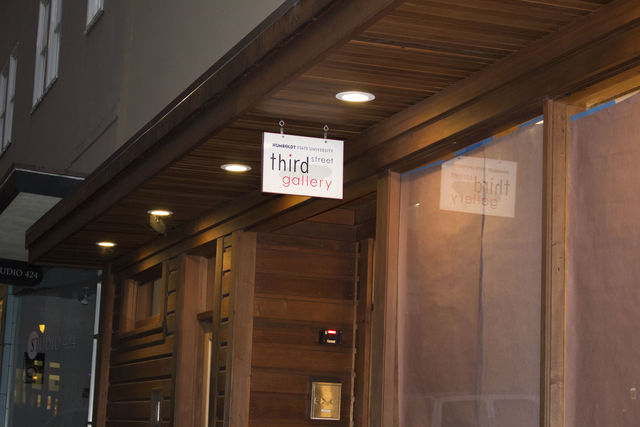
    Humboldt State University’s Third Street Gallery in Eureka may shut down in an effort to reduce the university’s spending budget. The proposal to close the gallery calls for $55,000 of the gallery’s budget to be reduced. That makes a third of the gallery’s whole budget and the remaining two thirds transfer to other gallery programs on campus.

    Jack Bentley is the Third Street Gallery director.

    “The proposal to close this gallery is actually very short-sighted,” Bentley said. “It misses the point of what the purpose of this gallery was and the inherited highly developed community expectation of what we do here.”

    The Third Street Gallery was founded in 1998 to provide students with real world, hands-on learning through work and internship opportunities. It’s also meant to give HSU opportunities to reaching out to the community.

    Pedro Uribe Godoy is an art major and works at the gallery.

    Godoy opposes the proposal to close the gallery and thinks it is “destructive” as it will cut out a venue for learning for current and future art students.

    “There’s a lot to learn here and for them [HSU administrators] to take it away and not expose new students to this line of work, I think, is very destructive,” Godoy said. “They are limiting students of what they’re gonna learn and what kind of avenues of work they can plug themselves into.”

    The gallery is supported by the university, revenue from art sales and public donations. The Third Street Gallery raised around $22,000 from both sales and donations during the first half of the current fiscal year.

    “It’s kinda messed up for the university to take away this gallery and undermine all the donors that have been donating for this gallery for so long,” Godoy said.

    Andrew Daniel is an art alumnus who graduated from HSU 16 years ago. As a student, he had his work shown in the gallery. Daniel wrote a letter to HSU administrators expressing his displeasure with the proposal to close the gallery.

    “The gallery brings a unique perspective to the community. It brings in work from out of the area,” Daniel said. “I don’t know if we’ll get those artworks if not for this gallery.”

    Over the years, Humboldt County has gained a reputation for being a haven for art and artists of all kinds. Besides student artists, local artists exhibit their artwork in the gallery too.

    “It’s such a valuable thing to our community,” Daniel said. “There are a lot of artists in our community that would just not even show their work if it didn’t show at that gallery. It’s such a unique venue.”

    In such a rural area, the Third Street Gallery provides students and the community access to different forms of art from different parts of the world.

    “We’re rather isolated. Here, people have access to art forms and new ideas that otherwise they won’t have,” Bentley said. “They would have to travel several hundred miles to either Portland or San Francisco to have that type of access.”

    The gallery host exhibitions for local artists and other visiting artists from outside the area. It also provides a venue for students and alumni artists to exhibit their work in a professional gallery off campus and in the community.

    “Student artists and alumni artists exhibit here where they have a much higher probability of coming into contact with the public than they would if they’re exhibiting their work on campus,” Bentley said.

    Living in a rural area like Humboldt, art students at HSU can find it difficult to find a job or an internship related to their major.

    Ann Valdes is an art student at HSU and also works in the Third Street Gallery.

    “Being in Humboldt, we’re so removed from a large art market. It’s really hard to get good solid work experience if we didn’t have programs like this,” Valdes said. “We’re learning all the lessons that we may not be able to learn if we’ve never worked in a gallery.”

    HSU prides itself on offering plenty of hands-on learning opportunities for its students. Students say HSU Third Street Gallery provides students with real world experience.

    “I’ve been learning valuable lessons here,” Godoy said. “There’s no more hands on than this. This is hands on.”

    Valdes thinks the proposal to close the gallery goes against how HSU advertises itself.

    “What this budget cut proposal intends almost goes against the way Humboldt State University advertises itself,” Valdes said. “For them to cut this program is almost undermining what Humboldt says it’s about.”

    HSU owns three art galleries. Reese Bullen Gallery and Goudi’ni Native American Arts Gallery are both located on campus, while HSU Third Street Gallery is located off campus in Eureka.

    Bentley thinks all of these galleries are important and serve important purposes. The most important purpose, he believes, is that the Third Street Gallery serves as community outreach.

    According to Bentley, the art department is planning on launching a new Bachelor of Fine Arts program in the future.

    “This gallery is the natural venue for the BFA exhibitions,” Bentley said. “Here, students will have the opportunity to gain more studio time.”

    Bernadette McConnell is another art student who works in the gallery. She opposes the proposal to close the gallery. McConnell thinks the proposal to close the gallery is ill-informed.

    “If it wasn’t for my job here at the Third Street Gallery, I wouldn’t be here at Humboldt State,” McConnell said. “If this place gets shuttered, I have no reason to be at Humboldt State. I will leave Humboldt.”

    Bentley has received many letters that oppose the proposal.

    “The letters I received are very supportive of the gallery,” Bentley said. “Letters from former students, community members who object the proposal very strongly.

    Every summer, the Third Street Gallery hosts an exhibition of work from HSU art graduates.

    All graduates who have a piece in the senior show get to show their work in the gallery. In the Third Street Gallery, students get exposure to the overall community off campus.

    “Every summer we have a show dedicated for graduating seniors from the art department. They get off campus public exposure that they otherwise wouldn’t get,” Bentley said. “If this gallery closes, those type of exhibitions will simply be on campus and not available to the broader community.”

    The proposal to close the gallery came as a surprise to Bentley. He learned about it by reading the list of proposed budget reductions.

    “There’s been no outreach by any of these communities to the gallery,” Bentley said. “I learned about it by opening the proposal. This is how I learned about it.”

    Godoy hopes the community comes together to help keep the gallery open as they did with the football program.

    “I’m hoping that the community does that for us too,” Godoy said. “Hopefully, it all comes together well and we all fight together for it, and I’m hoping that we can keep it alive with the help of the community.”

  • Endangered species lives in Arcata

    Endangered species lives in Arcata

    Did you know there are nine endangered species that live around Arcata? Every species is important for a habitat to thrive. The food chain is more like a food pyramid that every species has a specific role to maintain. Of course, some play larger roles than others.

    Some species play a crucial role in keeping the habitat healthy. These species are called keystone species. They are named after a keystone of an arch – without it, the structure would be unstable. Keystone species can be any species no matter the genus or size, as long as it plays a specific important role in helping the environment thrive. That is why it is important to maintain biodiversity in ecosystems, because each play an important part in letting the whole system thrive. Areas known as critical habitats represent zones of where a specific species thrives best and areas important to protect.

    The Point Arena mountain beaver is thought of as one of the most primitive living rodent species, because it has similar behavior and characteristics to some ancient mammalian species. They have been referred to as a living fossil.

    The Point Arena mountain beaver has no designated critical habitat, but they are known to survive along the Pacific coast of North America and thrive in moist forests. They survive mostly underground and tend to be more active at night than during the day. These beavers differ from normal beavers in that they are not aquatic, although they do swim. The most obvious and unique characteristic special to this type of beaver is its black color.

    Gregory Schmidt, biologist at Arcata’s U.S. Fish and Wildlife Service, was able to provide more detail on the Point Arena mountain beaver.

    “They’re pretty unique in that they can eat almost any plant, even poisonous ones,” Schmidt said. “They can survive on plants that would kill most other mammals. For example, poison hemlock.”

    Their bodies have a high tolerance for toxins and heavy metals in their bloodstream that allows them to consume a variety of poisonous plants. They require a large variety of different plant species considering they get most of their water from vegetation.

    “Habitat loss due to agriculture and urbanization are the two main threats to their long-time liability,” Schmidt said.

    Their reproduction rate has slowed immensely due to deforestation, causing loss of habitat and urbanization of the area. All the loud noises and human activity scares the beavers, causing them to run and hide, rather than mate and reproduce like they normally would.

    Another threat to the mountain beaver is livestock. Cattle farming threatens beavers, because they tend to crush the beaver burrows, which can be as deep as two feet underground.

    The Arcata Fish and Wildlife website says, “Activities that produce loud noise or ground vibration, such as directional boring, road or building construction, timber harvest, and mineral extraction, that are to occur in or near occupied mountain beaver habitat should be conducted outside of the mountain beaver breeding season.”

    They also say to carefully manage livestock grazing in areas near potential beaver burrows. The current population of the species is unknown, and they are more rare in urban habitats. Some places, such as the Arcata Marsh, ask visitors to report the sighting of any beaver in the area for research and statistical purposes.

    The Point Arena mountain beavers were placed on the endangered species list in 1991 and again in 1995, when a fire killed approximately 98 percent of their species. A recovery plan for the species was published in 1998. According to The UICN Red List of Endangered Species, their population was under five thousand individuals after the fire, but its current population ranges from ten thousand individuals to one million. It is still on the endangered species list under least concern.

    The Behren’s Silverspot Butterfly and the Lotis Blue Butterfly are both endangered species that live within the local Arcata habitat.

    The Behren’s Silverspot Butterfly: Speyeria zerene behrensii, has a yellow-brown color with black and silver dots. They live along the northwest pacific coast, extending to Mendocino County, areas south of Salt Point, and around some parts of Sonoma County. This species has been endangered since Dec. 5, 1997, but the latest recovery plan was approved by the U.S. Fish and Wildlife Services March 2016. Within the plan there are four main goals, “1. Protect habitat, 2. Determine ecological requirements, population constraints, and management needs, 3. Monitor population status and habitat, 4. Undertake public information and outreach programs.”

    Clint Pogue, Botanist from the U.S. Fish and Wildlife Services said, “Partially due to the rarity of the subspecies, the ecological role of Behren’s silverspot butterfly is poorly understood. However, butterflies are essential components of their natural communities by acting as pollinators.”

    This species is being threatened by overcollection, mass livestock grazing, and loss of habitat due to invasive plant species and human urbanization.

    “These butterflies play a vital role for conservationists, because the presence and trends of these butterflies help indicate health of the ecosystems and natural communities in which this subspecies is found,” said Pogue.

    The endangered Lotis Blue Butterfly: Lycaeides argyrognomon lotis, has been listed since June of 1976 and not much is known about this rare species.

    “The true distribution of the Lotis Blue Butterfly prior to European settlement of North America is not known, however records of the subspecies indicate that it had previously existed in Mendocino, Sonoma, and possibly Marin counties,” Pogue said. “The last detection of lotis blue was in Mendocino county in 1983.”

    Their bodies are small and blue, outlined slightly with black, and with a furry yellow border around its wings. It is thought that the Lotis Blue Butterfly thrives in wet bogs and around pine trees. However, specific details about the conditions in which this butterfly thrives have yet to be determined because the lack of knowledge of the plants consumed by them, particularly as caterpillars. Knowing what the caterpillars eat can help in finding a habitat. If researchers knew more about the lotis’ diet, scientists could better predict the surrounding conditions in which both the plant and butterfly thrive in.

    According to the U.S. Fish and Wildlife Service, the Lotis Blue Butterfly may be the rarest butterfly species in North America. Due to how little is known about the Lotis Blue Butterfly, the main threats to this population remain somewhat unknown as well. It is predicted its largest threats are drying climate, fires, and disturbances caused by urbanization and construction. The most important thing to do regarding the conservation of this species is to find a critical habitat for the species. When a habitat is found, it can be studied and protected to start the conservation of the species. The latest recovery plan for the Lotis Blue Butterfly was initiated in April 2016 and calls for identification of a crucial habitat for this butterfly species.

    There are six endangered species of plants listed on the U.S. Fish and Wildlife Service’s website specific to Arcata: The Kneeland Prairie penny-cress, the McDonald’s rock-cress, the Western Lily, the Beach Layia, the Menzies’ Wallflower, and the Howell’s Spineflower. Some plants play a huge part in maintaining a stable ecosystem. Many plant species are being affected by invasive species that often cause ecological damage because they out-compete native species. A highly invasive species that is located along the coastlines of Humboldt County is the European Beachgrass,

    Dr. Matt Johnson, Wildlife professor at Humboldt State University, said “The beachgrass totally takes over and grows as a thick dense grass that just out-competes everything else. Almost nothing else grows there.”

    The Kneeland Penny-cress: Noccaea fendleri, was listed under the Endangered Species Act in February 2000. The designated critical habitat for this species of plant spans across 74 acres of Humboldt County and they are estimated to have almost 9,000 individuals. The penny-cress is an herb related to mustard grass and it has white flowers that rest on skinny green stalks around three to five inches in height. The latest recovery plan was updated in April 2012.

    According to the U.S. Fish and Wildlife Services, the plant only grows on serpentine soils derived by certain rocks along the coast of Northern California. Characteristics of the soil make it almost impossible for species to grow, unless they have adapted to do so, like the Kneeland penny-cress.

    One of the largest threats to this species is loss of habitat due to construction. The habitat for this plant has been steadily in decline. A main goal in conservation efforts for the penny-cress calls for the restoration of serpentine soil to give the species somewhere to thrive. Other threats include overgrazing and wildfires. One roadblock for the conservation process is landowners. There has been trouble in the past getting permission from landowners to study and develop a conservation plan. The species was last surveyed in 2002 due to the landowners not allowing people to study the plant.

    Another local endangered species of the mustard family is the McDonald’s rockcress: Arabis macdonaldiana. This species has been endangered since Sep. 1978, and was first discovered in Mendocino County in 1902. One interesting characteristic of the McDonald’s rockcress is its lifespan, they can live to be 30-50 years old.

    This plant thrives in soil that from certain rocks as well. These soils tend to have high concentrations of nickel, copper, chromium, and iron. For this reason, they became threatened by mining industries. Nickel mining became a huge threat because it took the soils in which these plants thrive. This species also lacks a designated critical habitat and because of that, there is difficulty estimating their population.

    On top of all that, this is a rare species. This species’ recovery plan calls for protection of land where this specific species can thrive. This plan was last updated in 2013.

    The Western Lily is yet another endangered species without a specific known critical habitat. The Western Lily: Lilium occidentale, can grow to be five feet and has red and pink petals that bulb down over the flower.

    “Plants such as the Western Lily help stabilize soil and function within natural communities by providing nectar for insects and birds,” said Pogue. “For conservationists, Western Lily helps indicate areas of high ecological integrity.”

    They have been on the endangered species list since 1994, and their estimated population is around 7,500 individuals, with their largest population currently residing in Crescent City. Many scrubs and trees have begun to dominate their habitat making it impossible for the Western Lily to thrive in certain areas.

    “Western lilies occur in early successional bogs, poorly drained coastal scrub, and spruce forests within a few miles of the coast from south-central Oregon to just south of Eureka, CA,” said Pogue.

    Urban development and agriculture in our area have posed a threat to this lily as well. Cranberry agriculture has become one of its most significant threats. In 1991, unpermitted cranberry agriculture significantly destroyed populations around Brookings, Oregon. Overgrazing by livestock and wildlife also threaten the species and its population is estimated to remain in decline.

    Greg O’Connell, Co-chair of the North Coast Chapter of the California Native Plant Society, was able to speak on the issue of overgrazing.

    “One of the restoration efforts that have been done for the western lily was goat grazing,” said O’Connell.

    They were brought in to chew back shrubs to create open habitat again. The latest recovery plan, published in 1994, intends to protect areas in which the Western Lily thrives. The plan hopes to set up 20 populations of protected land with at least one thousand plants each.

    The Beach Layia: Layia carnosa, is a succulent that lives along the coast of northern California. This short, thick plant has small flowers that bloom white and yellow, flowering more in moist habitats. Not very much is known about the reproduction of these plants and their population numbers tend to fluctuate a lot throughout the year.

    The Humboldt Bay hosts the largest population, due to the area having the best quality conditions for this plant to thrive. There have been no official estimations regarding the species’ total population. One big threat to the beach layia is invasive species.

    Certain non-native plants, such as European beachgrass, dominate critical areas where the beach layia normally thrives. Construction and traffic on the beach also damage habitats where this species is supposed to thrive. The last update to its’ recovery plan was in 2012 and it calls for the protection of designated areas along the beach, and the elimination of invasive populations of species like European beachgrass.

    The Humboldt Bay Wallflower, or the Menzies’ Wallflower: Erysimum menziesii, thrives along the coast of northern California as well. This species was discovered in the late 1700s, and was listed as endangered in 1992. These plants tend to be short and have short lifespans as well. The wallflower dies after it releases its seed which contributes to their short life. It’s a member of the mustard family and has one subspecies specific to the Humboldt Bay.

    The Humboldt Bay wallflower is pollinated by local solidarity bees that do not live in a hive, instead they make burrows under the sand. The Humboldt Bay wallflower thrives in dune habitats, where the solidarity bees thrive as well.

    This subspecies is estimated to have 30 thousand individuals. Threats include invasive species, herbivore grazing, mining along the beach, and offroad vehicles. Studies show that the threats to the Humboldt Bay wallflower have decreased a decent amount, meaning this subspecies has a chance and it is making a comeback.

    The latest update to its recovery plan was in 2008 and calls for partnerships between California State Parks and other managements, so that organizations can work together to create more suitable habitats. This collaboration would plan for the management of invasive species, designated habitats, and a way to reduce the impact of deer predation.

    Howell’s spineflower: Chorizanthe howellii, is a member of the buckwheat family and is found within parts of Humboldt and Mendocino counties. This plant has a very distinct appearance, growing only to be one to four inches tall. The small plants have a spherical appearance similar to a dandelion, with spikey-looking flowers that are tan and light brown. The rounded flower spreads its seeds relying on passing animals, wind, and other things that the seeds can catch onto, land somewhere and grow. No official estimate for the population of this species has been established, but through studies the species’ population is believed to have had three million individuals in 2002.

    The main threat to Howell’s spineflower is the invasiveness of iceplant, Carpobrotus spp tend to thrive and take over areas where the spineflower should thrive. Other dangerous plants to this species include European beachgrass and burclover. Human disturbance has had a huge impact on their population as well. Small disturbance is good for the population because it can potentially help spread seeds, but larger disturbances often disrupt the habitat.

    Due to the impact of human disturbance, people tend to do more damage to the spineflower’s habitat. In 2011, the Howell’s spineflower recovery plan was updated. It calls for protection of important ecosystem in which the spineflower thrives, removal of invasive species, regulation on disturbances, and an accurate estimation of their remaining population.

    While it may seem like there are a larger amount of endangered species specifically within our small area but,recovery plans are set up and people are working to restore proper ecosystems; because of this, some of these species are making a comeback.

    Support for species through collaboration between parks, organizations, agriculture, and private owners, these species still have the ability to thrive. People need to know about the importance of biodiversity and its role in creating a healthy, sustainable ecosystem where more species can succeed. With recovery plans set in place, many of these species have the chance to repopulate. If humans go about it the right way, it doesn’t have to be too late for any of these unique species.

  • Persevere in education

    Persevere in education

    Take it from a two-time Humboldt State University drop out: do not give up. One of the greatest disservices college will do for you is force you to choose a major at an age you’re not even positive what your dating preferences are yet. At an age when you’ve had under a quarter of a century of life experience and maybe two jobs, if any, having to choose a major that will dictate your career for the rest of your life is downright unfair.

    So if you find yourself at the age of 21 or 22 still working through college courses, on your third major switch or not decalred, do not freak out.

    “Education is a journey, not a race,” is an adage students should familiarize themselves with sooner than later.

    Some will graduate high school, jump right into choosing an academic focus with no problems and move on in four to five years. They will achieve exactly what they expected, and this is perfectly okay. On the other end of the spectrum, it is perfectly okay to take six to eight years for students to find out what they excel at or are passionate about before finally achieving the grades that reflect that passion.

    I had to fail out of HSU twice to land myself at Citrus College in Glendora with the blank slate I needed to discover what I was good at. I had tried choosing business administration as a major. I had switched to communications and, for multiple outlying and personal reasons, still found myself moving home to Southern California in 2013 as a declared failure.

    Four years later, I am returning to HSU with two associate transfer degrees in communications and journalism and a passion. I have peers and colleagues who are way farther ahead on their academic journey than I am. But with my return, I bring recognition, expertise and a work ethic that took four extra years than the average student to develop. I am back, and I come with pride for the extra time and work I had to put in to get here at the ripe age of 26.

    My advice to other students struggling to find their way is to ask for help, utilize school resources and above all, know when you may need to take a break and do some soul searching. When you’re ready, jump back into college and let your studies help you find your way.

  • How to stay dry in Humboldt

    How to stay dry in Humboldt

    The spring semester means rain season and it is likely to stay that way the whole semester. Here are some tips from my local prespective to stay dry in Humboldt.

    1. Get proper rain gear. It’s not fun walking from class to class sopping wet. There are many local stores that carry rain coats and shoes. Even the hardware store has cheap boots. Umbrellas are useful against horizontal rain, but don’t spend too much money on one if you’re prone to losing them.
    2. Keep extra socks in your backpack. Trust me, I regretted not doing this on my way to work when street puddles grew to ponds.
    3. Waterproof. If you don’t have the time or money for new shoes, you can buy a waterproofing spray at shoe stores to spray your old shoes and backpack.
    4. DampRid. Everything gets wet, even when it’s not raining. To prevent mold from growing in your residence, buy DampRid bins to absorb moisture. Put them in the closet, under the bed or in the bathroom. This can be purchased at the hardware store, Bed Bath & Beyond or online.
    5. Plan walkways creatively. It is possible to walk to classes without getting wet. Many buildings have awnings and some trails have trees with enough coverage from the rain. With creative planning, you can walk through buildings and the right pathways to get across campus without getting drenched.
    6. Don’t let the rain trap you inside. The benefit of rain, other than to water plant life, is an excuse to stay inside and lay under 20 blankets to stream the new season of The Magicians on Netflix like me. The outside world doesn’t cease to be as beautiful when it’s cold and wet out. Parks and trails are actually just as fun during the winter as they are in the summer. Rivers flow more and nature looks a little greener. So put on waterproof clothes you don’t mind getting muddy and go outside.


  • Word on the Street: What students look forward to this semester

    Word on the Street: What students look forward to this semester

    Name: Dalvin Jamal-Milton

    Major: Psychology

    Standing: Sophomore

    “One thing that I’m looking forward to is this rugby season. Our rugby team looks pretty good this year, and I think we have some really good chemistry… we have all the means to do well.”

    ——

    Name: Seth Velasco

    Major: Kinesiology

    Standing: Freshman

    “I’m looking forward to starting off a little better than I did last semester now that I know what I’m doing. I struggled a bit in the beginning of last semester. Now that I know what I messed up on last semester, I can fix it.”

    ——

    Name: Rebecca Bantum

    Major: Psychology

    Standing: Freshman

    “I’m looking forward to taking different classes that I didn’t take in high school. Here in HSU, there’s a lot of options. I’m looking forward to pick what I want to take.”

    —–

    Name: Cailyn Lien

    Major: Cellular Biology

    Standing: Freshman

    “I’m looking forward to learning more stuff about my major. I’m probably going to start working at a blood bank and hospitals to learn more about human biology.”

    —–

    Name: Mei Shimizu

    Major: Child Development

    Standing: New transfer student from Japan

    “I’m excited to take classes about child development. This is what I wanted to learn from before.”

    —–

    Name: Akane Yajima

    Major: Francophone Studies

    Standing: New transfer student from Japan

    “I’m excited to learn about Francophone studies in the English language.”

  • Dunes Climate Ready Study gains ground

    Dunes Climate Ready Study gains ground

    In only the second half of the second year of the Dunes Climate Ready Study, the project is already providing researchers with interesting data. This projected five-year study is expected to provide a better understanding of sediment movement along the Eureka littoral cell, a 32-mile stretch of coastline from Little River north of McKinleyville, down to Centerville beach.

    Friends of the Dunes’ director Kim McFarland provided insight into how the project originated and what stage the study is at currently.

    McFarland explained how collecting topographical data in specific locations along the transect will allow researchers to map sand movement through the dunes under different vegetative conditions, and eventually determine how this affects dune structure.

    “They are able to put all of this [data] into a computer and see the actual contour of the dune and how it changes over time,” McFarland said.

    Andrea Pickart, a coastal ecologist with the U.S. Fish and Wildlife Service, and Ian Walker, a geomorphologist teaching at Arizona State University, are leading the Dunes Climate Ready Study.

    They wanted to do “a bigger picture study on dune restoration and the implications of that for climate change, climate variability impacts and resilience of the dune system to ongoing erosion and future sea level rise,” Walker said.

    Pickart and Walker started out by doing a few basic experiments on air flow and sand transport and how those maintain the dune systems. From there, they worked to get funding to expand their studies on dune restoration applying to multiple institutions in the hopes of starting a new in depth study.

    In 2015, the California State Coastal Conservancy awarded Friends of the Dunes a $249,000 grant to fund the first two years of the Dunes Climate Ready Study.

    “The objective was to better understand the effects of climate change and sea level rise on coastal dunes…to assess vulnerabilities arising from the impacts of sea level rise and assist the community in preparing for those impacts,” Pickart said.

    Originally, the main focus was to establish a monitoring system for the regional beach-dune environment. The first step was to determine the placement and setup close to 60 transects along the 32-mile stretch of coast.

    “We are taking these profiles of dunes all along that 32-mile stretch of dunes… we are taking topographic vegetation profiles,” Walker said. “It’s a way of looking at the beach and the foredune…just behind the foredune, the real land-ocean interface and seeing what kind of sand movements or sand exchange happens between the beach and the fordune.”

    At the end of the five-year study the data will be used as a model response to sea level rise under different circumstances.

    The first survey began on Jan. 4, 2016, and will continue for the duration of the study. Measuring the wind flow and sediment transport is one of the main focuses of the study, but examining how the native versus non-native plants interact with the dunes is also extremely important in order to understand the relationship between these two variables in the dunes environment.

    “There’s different components to this research, and one component of it is how native plants versus non-native plants affect the movement of sand from the beach into the foredune and then the backdune,” Pickart said.

    Invasive plants play an interesting role in altering the physical processes of wind flow and sediment transport. Foredunes produced from invasive vegetation are different than foredunes with native vegetation.

    “The primary non-native species we have here is a non-native beachgrass, which grows much more densely than our [California] native dune grass,” Pickart said. “But they are both grasses that trap sand and allow dunes to build.”

    Data from this study is still being collected and will be a part of the research over the next couple of years.

    “What we’ve seen to date is that after removing the over-stabilizing European beach grass, we have, in fact, observed that the sand budget has been reconnected between the beach and the backdune,” Pickart said.

    “In other words, we’re seeing movement of sand all along the beach and into the back dunes, and that was part of our hypothesis, that native plants would allow for more free movement of sand over the top of the foredune and into the backdune.”

    European beachgrass is the main inhibitor of sand movement. For this reason, Friends of the Dunes works to have volunteers remove the invasive species, allowing sand to move more freely between the beach and the foredune.

    The sands freedom will allow the translation of the foredune: “which is the movement of the foredune inland and up in elevation as sea level rises,” Walker said.

    “Basically, we know that the European beachgrass traps more sand. The experiment is whether having the native plants allow more sand to bypass is going to facilitate this inland translation of the foredune,” Pickart said.

    European beach grass, also known as Ammophila, is a main inhibitor of sand movement. Because of this, Friends of the Dunes works to have volunteers come and remove the invasive species allowing sand to move more freely between the beach and the foredune.

    Another branch of the study has been the creation and monitoring of two different adaptation sites. These sites are meant to help determine the desirable planting composition that allows for sand transport.

    “The experiment is whether having the native plants allow more sand to bypass is going to facilitate this inland translation of the foredune,” Pickart said.

    The sites are often used as to house smaller pilot studies to provide answers to some of the more specific detailed questions, for example, how grain size affects sand movement, the impacts of the upward migration of a foredune, how herbivory affects sand transport and multiple other experiments.

    There are many different collaborators such as the Wildlands Conservancy, students from the University of Victoria and HSU students and staff. The adaptation sites will continue to provide a wealth of information throughout the study, helping to answer specific questions on dune structure and sand movement.

    With the study still less than halfway into their five-year projection, there is still a lot of research to be done. But from the data seen so far, the Dunes Climate Ready Study has the potential to alter how researchers view dune restoration and the impacts of climate change.

    To learn more about the Dunes Climate Ready Study, you can visit the page dedicated to the study on the Friends of the Dunes site HERE! The page contains an archive of quarterly updates on the study if you are interested in learning more about it, or if you simply want to stay updated on the most recent research.

    If you would like to be apart of the dune restoration projects to combat native species and climate change visit the Friends of the Dunes volunteer page, HERE!

    This story was updated on Feb. 1, 2018 from its original publication on Jan. 15, 2018 per request by the author.

  • Talking about my snowflake generation

    Talking about my snowflake generation

    Right wingers love to call liberals “snowflakes,” a popular slang used to describe self-absorbed, thin-skinned millennials.

    For instance, you might be labeled a snowflake if you are easily offended by someone calling another person “gay” or “retarded.” This is true even if the words were not intended to be a direct slur against the LGBT community or people with disabilities, but rather an alternative way to describe someone or something as being stupid.

    “They’re only words,” comedian George Carlin said. “It’s the context that counts. It’s the user. It’s the intention behind the words that makes them good or bad. The words are completely neutral. The words are innocent. I get tired of people talking about bad words and bad language. Bullshit! It’s the context that makes them good or bad.”

    In his 1990 HBO special “Doin’ It Again,” Carlin continues his rational bit about euphemisms, or “words that conceal reality.”

    Though Carlin attempts to make sense about sugarcoating language to the point of total political correctness, derogatory expressions have been normalized for too long. This is especially true and accentuated in the days of the Trump administration.

    Herds of hateful Americans have come out of the woodwork to protest against leftist values since Donald Trump took office. Many of them reckon it is their time to shine following the presidency of Obama, especially Richard Spencer. They also feel empowered to be blatant assholes, which are validated by mutually intolerant values.

    It’s easy to call someone a snowflake, a narrow-minded redneck or what have you. We hear what we want to hear and impulsively strike with insults. It’s also easy to leave snide remarks about an entire community rather than understand why an individual is sticking up for marginalized people.

    While it’s not necessary to be constantly politically correct, try to understand why it’s not appropriate to undermine those defending marginalized people by just labeling them snowflakes. It’s a case-by-case issue that demands good judgement and respect.

  • Lady Jacks win big vs Coyotes

    Lady Jacks win big vs Coyotes

    The Jacks women’s basketball team took care of business Saturday night by dismantling the California State University, San Bernardino Coyotes 71-53 at the Lumberjack Arena.

    It was a slow start to the game as both teams struggled to score a bucket. The score was tied at 2-2 until just over five minutes of play.

    The Jacks’ twin sister duo of sophomore guards Tyra and Tyla Turner began to turn it on in the second quarter. Their teammates responded and HSU took a 13-point lead with 3:01 left on the clock, but the Coyotes closed out the first half on a 7-0 run to cut the deficit down to six points.

    HSU head coach Michelle Bento-Jackson was proud of her team for turning it up on the defensive side of the ball.

    “Their two leading scorers Parks and Knox were scoreless at halftime,” Jackson said. “So we felt like we did a darn good job on the defensive end. We never really got into a great flow offensively early on, which I’m sure was pretty boring for the fans.”

    The action picked up in the second half as the Coyotes came out strong with six unanswered points to tie it up at 27, but HSU took control of the game and finished the third quarter with a nine-point lead.

    The Jacks’ bench outscored the Coyotes 25-12 thanks largely in part to the play of junior guard Jovanah Arrington. She knocked down two three-pointers and had 14 points total.

    “I just came in with a mindset to be ultra aggressive,” Arrington said. “It sets a tone for the whole team when you do it as an individual and it gives us good looks on offense and good looks on defense.”

    The Jacks took charge of the game in the fourth quarter and built a commanding 22-point lead with 2:58 left to seal the deal.

    Jacks guard Tyla Turner finished the game with 15 points and a game-high five steals, while sister Tyra finished with 12 points and four assists. Senior forward Kindall Murie finished with 10 points and five boards.

    The result improved HSU to 9-8 overall and 8-4 in conference play, while CSUSB dropped to 6-10 overall and 4-8 in conference.

    The Jacks hit the road this week for a clash against conference rival Chico State on Saturday, Jan. 20. Tip-off is at 5:30 p.m..