The men’s basketball team defeated the California State University, Monterey Bay Otters 87-79 on Feb. 3, following their epic 82-75 overtime victory against California State University, East Bay on Feb 1.
The Jacks started the Saturday game off hot, as they began on a 10-2 run. However, they cooled down a bit and the game became a back-and-forth affair in the last three quarters.
Senior forward Davasyia Hagger led the Jacks in points with 20, while also putting up a double-double with 10 rebounds as well.
Other notable performances for the Jacks include junior guard Romario Wilson, who scored 17 points, and senior forward Justin Everett, who scored 13 points.
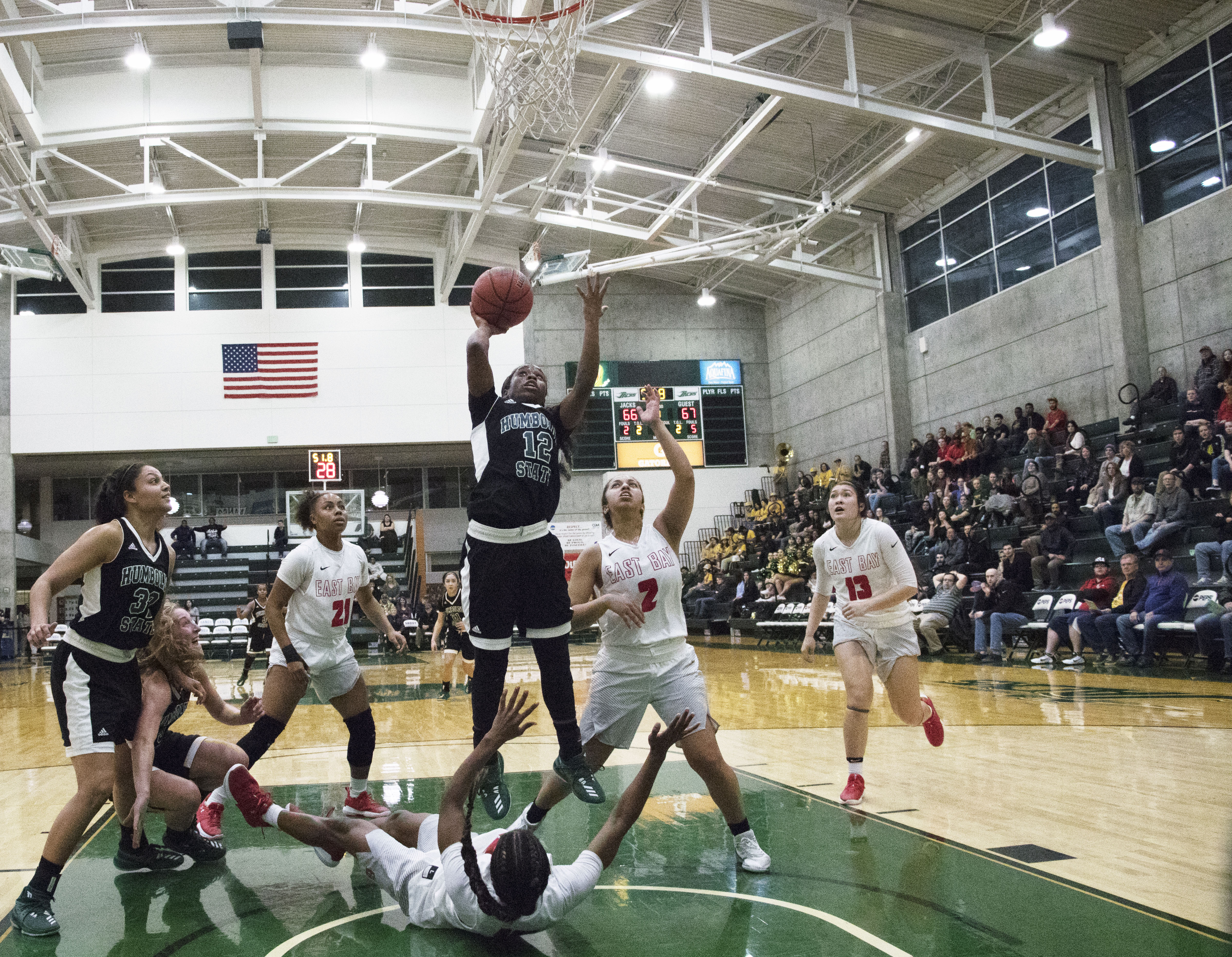
Romario Wilson picks up the ball for a layup in the second half of Humboldt State University’s 87-79 win over California State University, Monterey Bay on Feb. 3 in the Lumberjack Arena. Photo by Diego Linares.
“I liked how we executed the game plan,” Jacks head coach Steve Kinder said. “Especially defensively early, which led to some good stops, which led to some breakouts and high percentage shots in transition.”
The Jacks started off slow behind the three-point line, as they only shot 3-10 from there in the first half. They attempted four threes in the second half, and only made one.
“Three-point shooting was a high-alert issue at halftime,” Kinder said. “We certainly didn’t want to trade baskets or shoot threes up and down with this opponent.”
Despite their three-point woes, the Jacks had the advantage on the boards, as they out-rebounded Monterey Bay 45-38.
They also won the turnover battle, the Otters turning the ball over 15 times as opposed to the Jacks’ eight.
“That’s good basketball,” Kinder said, “especially for these Lumberjacks this season, being able to limit ourselves to four turnovers at half time.”
Monterey Bay certainly made it tough on the Lumberjacks, as they hit 14 of their 27 three-point attempts. The Otters average 27 threes per game, and they certainly showed that they could make it rain from deep.
The Otters were led by forward Josh Kollman. He had 16 points, while shooting 4-5 from beyond the arc, including two late threes that kept his team in the game until the end.
The win moves HSU to 8-15 overall, with a 5-12 record within the California Collegiate Athletic Association. In their first meeting earlier this year, the Jacks lost 67-62.
The Jacks have five games remaining before the CCAA tournament begins, starting with a game on the road against California State University, Stanislaus on Feb. 10.
Since its recent availability in Humboldt County, Uber has become an increasingly popular alternative to taking taxis. Although the San Francisco based company may provide some serious competition, the local cab companies don’t seem worried about it yet.
William Startare, 31, is a Eureka resident and the grandson of William Startare, who started City Cab Company. The Eureka based cab company is now owned by his uncles.
Startare is loyal to the family-owned company, but admits he uses both City Cab and Uber. He believes they both have their advantages. Startare says the Uber app is more user-friendly for younger people.
“It’s modern,” Startare said. “It’s the way we need information to be presented to us.”
One disadvantage to Uber, however, is it is not always available. On the other hand, Startare says City Cab might take longer, but they will always show up.
“Two days ago at 3:30 in the morning, I tried to get an Uber and there was none,” Startare said. “I called City Cab and they said 10 minutes.”
Jose Zaragoza, 34, was born in Mexico and has lived in Humboldt since he was six. Zaragoza has been driving for Uber for about seven months and is happy the service now exists in Humboldt.
With a wife, two children and a third on the way, Zaragoza says money from his primary job at Costco is not always enough. Driving for Uber helps him supplement his income without a time commitment.
“This is a job where you can pick your own hours,” Zaragoza said. “It brings extra income to the table. It helps.”
Zaragoza says lower rates, cleaner vehicles and the convenience of the app make Uber the better choice for customers.
“You can see where I am, where I’m going and how far I am from you,” Zaragoza said. “It’s all done with the simple touch of a button.”
Cedric Pearl, the owner of Plaza Cab, says Uber has not caused his company to take a hit financially so far. He believes the availability and consistency of rates make taxis a preferable choice for some customers.
“Their rates fluctuate based on demand,” Pearl said. “Our rates never change. You can call a taxi on New Year’s Eve and the price is the same as always.”
Another advantage of a taxi company is they are required to have commercial insurance, and drivers are required to undergo federal scan background checks and drug tests.
Despite some disadvantages Pearl sees with Uber, he is not opposed to people using the competition.
“Anything that keeps drunk drivers off the road is ok with me,” Pearl said.
Tattoo artists and enthusiasts looking for a good time flocked to the Blue Lake Casino last weekend for the ninth annual Inked Hearts Tattoo Expo. Hosted by Amy and Ted Marks from NorCal Tattoo in Arcata, the event featured multiple contests, pageants, local vendors and, of course, plenty of ink.
Gucci, a 35-year-old carpenter from Monterey, comes to Inked Hearts every year. Inked from head to toe, Gucci does not only come for the tattoos, but to see the friends.
“I love Inked Hearts,” Gucci said. “It’s nice because everyone gets to know each other. It’s getting better every year.”
Gucci’s skin sported the pieces which won best black and gray and the best back awards. The trophy was awarded to his artist Juan Gonzalez from Exclusive Ink in Salinas.
A man who calls himself Gucci shows off his Jackie Robinson tattoo, which won the “Best Black and Grey” award at the Inked Hearts Expo at Blue Lake Casino and Hotel Sapphire Palace on Feb. 4. Gucci’s tattoo was done by artist Juan Gonzalez. Photo by Megan Bender.
Other awards for the show included best leg, best traditional, best arm, best tribal and best in show. All winners received one-of-a-kind trophies crafted by local artist Ken Beidleman of the Kinetic Sculpture Lab.
Tattoos were not the only draw for attendees this year. Other events included the hot guy/hot girl contest, the Super Bully Bowl dog pageant and the “hot wings of death” challenge sponsored by Humboldt Hot Sauce.
During this entertaining spectacle, a group of eight contestants were required to choke down 12 spicy chicken wings in three minutes to compete for a $250 cash prize, a trophy and a $500 gift certificate from NorCal Tattoo.
Three sweaty, watery-eyed winners took to the challenge. NorCal Tattoo was kind enough to give them each a $500 gift certificate.
One winner, Bill McBroom, said he wasn’t in it for the money or the tattoos. He plans to give the gift certificate to his daughter.
“I got the trophy and the bragging rights,” McBroom said. Then, quoting a sign made for him, “Pain is temporary. Glory is forever.”
Fortuna resident, Nate Peake, 25, came to support McBroom, his girlfriend’s dad. He was very proud of his performance. Peake said he was also excited about the rest of the expo and was maybe planning to get a tattoo while he was there.
“A lot of phenominal artists are here,” Peake said.
Beyond providing eclectic events and a haven for tattoo heads, Inked Hearts helped to support the local economy. Ted Marks, owner of NorCal Tattoo and owner of the show, said the event helps support not only Blue Lake Casino and NorCal, but many other local businesses as well.
“It makes all the tattoo shops see a boom for the next couple of months,” Marks said. “The people who come spend their money in town, a lot of money gets poured back into the community.”
Marks said this was by far the biggest turnout for Inked Hearts and he was extremely pleased with this year’s event. He is already planning for the 10th anniversary in 2019. This event is important because tattooing means everything to him.
“It means I get to show what I love,” Marks said. “I get to show the culture that embraced me and didn’t judge me. Being a part of that fuels me and motivates me. I wouldn’t trade it for the world.”
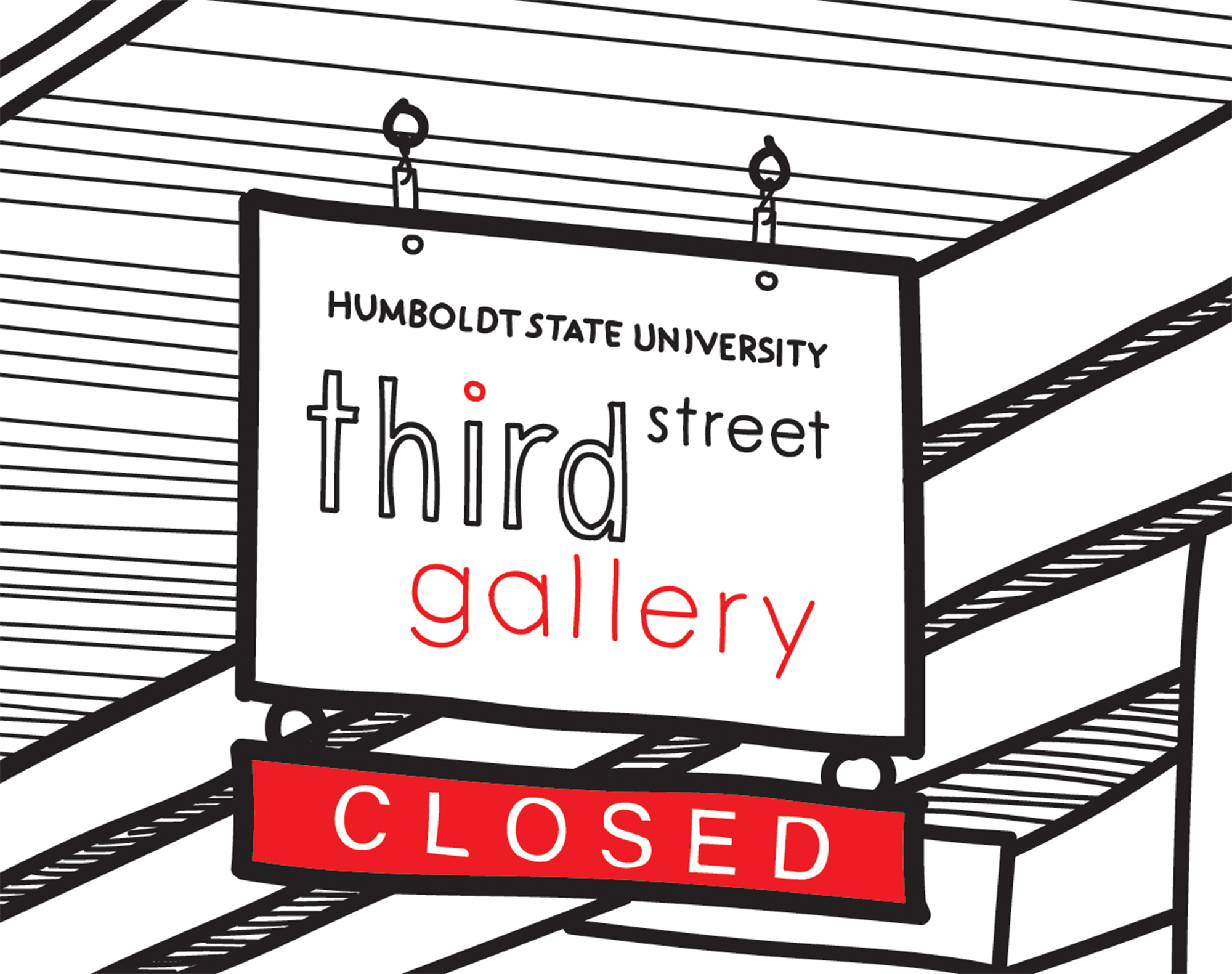
Humboldt State University must not pull funding and close the Third Street Gallery in Old Town Eureka, which has provided local art to the community for 20 years.
As reported in the Lumberjack, by Ahmed Al-Sakkaf on Jan. 16, Humboldt State must perform budget cuts that require slashing a third of the budget used to keep the gallery open.
The art gallery has been open and providing Humboldt State students with hands-on career experience on multiple levels. The gallery allows students the opportunity to curate exhibitions and work in professional settings, as well as organize and present art to the community.
The space is vital to giving students an idea of the business relationship they must facilitate early in their artistic or curating careers.
For a professional-in-training seeking to promote their works and talents into the community, galleries like Third Street Gallery are a vital stepping stone to professional work.
As stated on the HSU Art Galleries web page, this art gallery provides “students at all levels and disciplines” the opportunity to contribute “through internships, work-study jobs, student exhibitions, and interactions with featured international, national, and regional artists.”
Finishing school leaves students searching for jobs that hire based off previously acquired experience.
Unfortunately, studying for the career you want is almost never considered to meet the required experience standards. Without these opportunities, the budding Third Street Gallery art and exhibition curators must work even harder to land their first job or show.
According to The Working Artist, promoting art in a gallery is about who you know. Developing a relationship with a gallery is important to getting your foot in the door as an artist. Allowing the gallery to be lost as a resource to students would be the equivalent of ending a 20-year relationship with the community.
The university should explore and strongly consider other options on how to cut funds or seek budget cuts in other places. Even cutting back on what is provided on campus and putting more resources toward the Third Street Gallery would be more beneficial to aspiring artists and curators.
It can be argued that removing this gallery will just move the opportunity on campus, and there is no loss of hands-on work. However, removing student work from a venue accessible to the local community instead of the college community would be a giant disservice to artists and curators.
Subjecting this important, career-motivating venue to budget cuts and its inevitable closure is unacceptable.
As gallery director Jack Bentley said to the Lumberjack newspaper, the proposal to close the gallery would be “very short-sighted.”
Humboldt State University students were asked a single question regarding a controversy surrounding the Arcata community: the presence of the McKinley statue.
The Kerr Tower room is the hidden third floor of Founders Hall at Humboldt State University. According to a Feb. 4, 1971 news release, the Kerr family is from Maple Creek in Humboldt County. They donated $8,000 to HSU for the completion of the tower and the installation of a meditation and prayer room.
An HSU press release from Oct. 19, 1971 said that the Kerr Tower room in Founders Hall was completed as a spiritual sanctuary, a place of prayer and small gathering place.
Hal Greer is an oceanography professor at HSU and graduated from HSU in the early seventies. Greer remembers going up there to meditate and feeling the warmth and solitude taking away the pressures of graduate school.
“Twenty minutes of self-time in the comfort of a nice and quiet place replenished the energy required to keep up on my course load,” Greer said. “Kerr Tower was a spiritually comforting, neutralizing place.”
Jimmy Allen is another student from the seventies who utilized the tower.
“I didn’t meditate there,” Allen said. “Sometimes I would lay down and often times a female would come and snuggle.”
When Allen attended HSU, all of Founders Hall was left open. He and a friend took up residence in the open classrooms, which is where they lived during the spring semester of 1977.
Describing the social climate on campus at the time, Allen remembers walking into a Neo-Nazi meeting in the Green and Gold room in Founders Hall. At the time, the Green and Gold room was a study hall and a meeting room. No one seemed to mind Allen, who is black. He sat down and remained there studying throughout the entire meeting while no one bothered him.
Another person around campus who made use of the Kerr Tower room as a meditation place is Jesse Austin.
“Whenever I seemed to go there, no one else ever came up,” Austin said.
Austin’s wife Rita got him started in yoga and meditation in the tower room and sometimes they would bring candles up there.
Austin remembers having a psychic ability as a child and upon entering college at the age of 15, his psychic ability disappeared. Upon the birth of his first child, a daughter, his psychic ability returned.
Austin’s psychic power experiences in the Kerr Tower developed to become supernatural. He gives himself the title of Psychic Medium.
One time, the Austin’s brought back all of the past presidents of HSU into Kerr Tower.
The most memorable contacts with spirits were female professors from the original Humboldt Normal School, but one woman stood out. She lost her son over the cliff on Scenic Drive in Trinidad before there was a Highway 101.
“This one spirit was upset, but positive and extremely helpful,” said Austin. “The spirit was oriented towards teachers and was not interested in students.”
Austin emphasized the spirits were people, not ghosts, and she wanted HSU to reopen the tower room.
“I would like to see Kerr Tower reopened someday,” Austin said.
There is now a meditation room in the basement of the library. It is only open during lower floor business hours.
Waste Reduction and Resource Awareness Program’s Zero-Waste Conference is a reflection of the effort the community and students put toward goals of engaging, expanding, sharing and moving forward.
Shanti Belaustegui Pockell, an environmental studies major at Humboldt State University, is the education director for WRRAP on campus.
Belaustegui Pockell said WRRAP hopes to grow in the future by working more with students on campus, as well as other programs to form coalitions and strengthen relationships.
WRRAP is hosting the Zero-Waste Conference throughout the day on Friday, Feb. 9 and Saturday, Feb. 10.
Belaustegui Pokell said the event will focus on intersectionality, social justice issues and institutionalizing sustainability practices of evolving and shaping policy.
Multiple speakers will be attending the event to discuss community challenges.
Sofia Pereira, the mayor of Arcata, will speak on making Arcata a zero-waste city on Friday and Andre Villasenor, a United States Environmental Protection Agency Sustainable Management of Food program representative, will speak on institutionalizing sustainable materials.
Ceria Wilbur, an environmental science and management major at HSU, has been the zero-waste director at WRRAP for the past year.
The conference and banquet at 5:30 p.m. on Friday is new this year and works to extend the message of a sustainable future.
“It’s just a way for us to connect with our campus community, bring our peers together with a number of different inputs and experiences,” Wilbur said. “This year our theme is Beyond Barriers, Imagining a Zero-Waste Future.”
Community members are encouraged to attend the event. Vegetarian and vegan options will be available.
There are activities on Friday from 11:00 a.m. to 4:00 p.m. at the UC Quad that include crafting with Tinker Time and a clothing swap, along with demonstrations from the Campus Center for Appropriate Technology, or CCAT.
Tinker Time are local and on-campus programs that have workshops for gardening and crafting body care products.
Campus sustainability groups that are also participating in the zero-waste event are Green Campus, Humboldt Energy Independence Fund, with speakers from local officials, academic departments and the Office of Sustainability.
WRAAP will host the second half of the Zero-Waste Conference in the Kate Buchanan Room on Saturday, covering topics such as the role of compost in carbon sequestration, biomass and the Yurok tribe.
Jason Martinez, outreach coordinator for CCAT, will attend the Zero-Waste Conference.
“Help is always welcome at CCAT, and for folks that come through, there is a lot they can learn, a lot they can experience,” Martinez said.
Martinez is excited to introduce CCAT to students who don’t know about the house on campus.
“I love seeing how the projects get started, how they are going to see how CCAT continuously is growing,” Martinez said. “Whether it’s the physical space itself or just the people, I think that is the piece I love seeing.”
WRRAP’s Zero-Waste Conference is meant to bring together students, faculty and community members to discuss real issues the environment is facing due to human impact.
Nestled in a land forgotten by time and human impact lies Tolowa Dunes State Park near Crescent City.
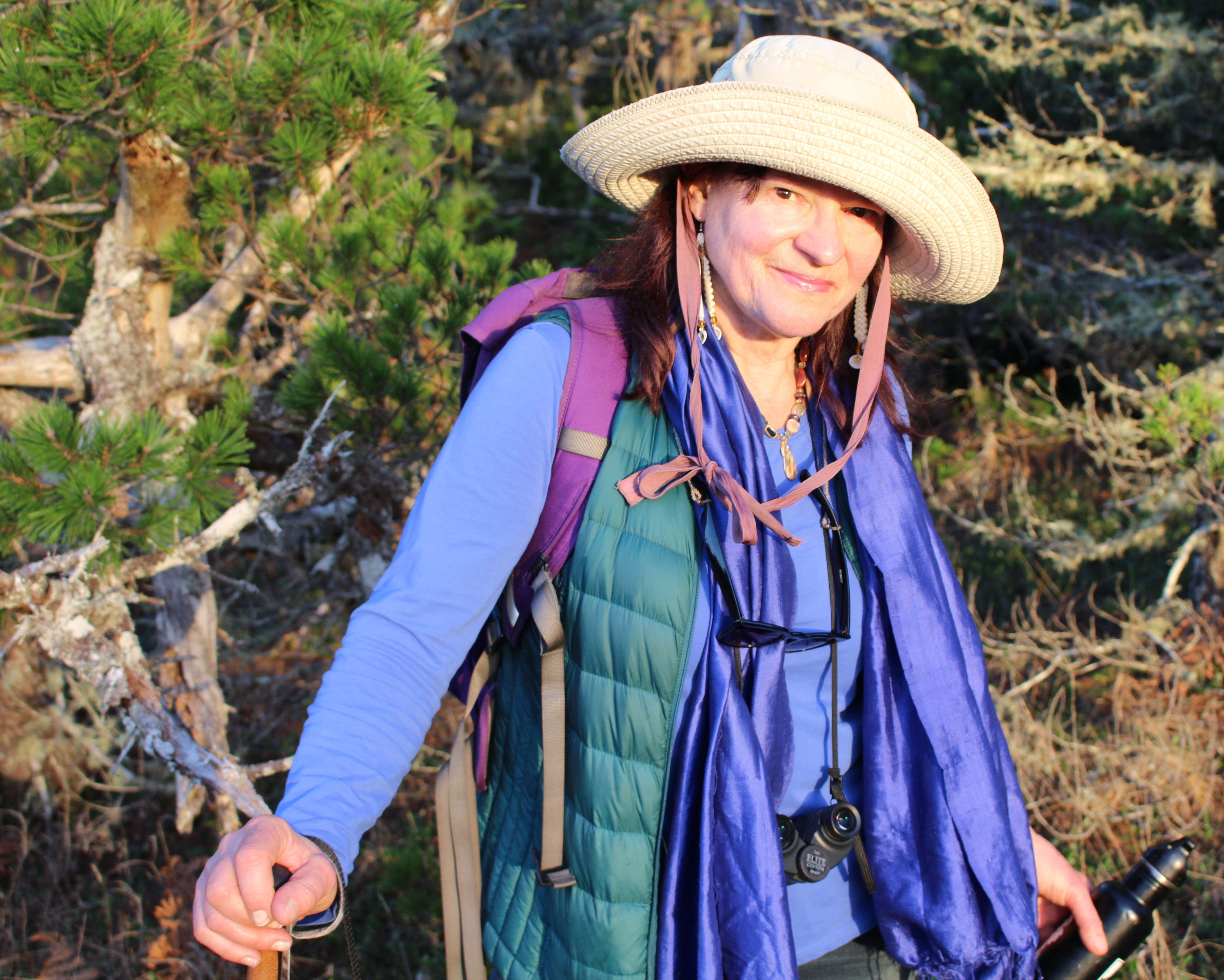
Sandra Jerabek helps manage Tolowa Coastal Dunes near Crescent City, Calif. Jerabek calls herself a “generalist naturalist” with 20 years of environmental work and says the discovery of Del Norte County was ideal.
“This was my perfect place, to be grounded, to really dig my roots into this place and learn all about it,” Jerabek said.
Jerabek and volunteers of the Tolowa Dunes Stewards help maintain the park. Jerabek founded the Tolowa Dunes Stewards and helps to manage the community member volunteers that work to restore the land.
Jerabek took a group from Friends of the Dunes on a walk through the Tolowa Coastal Dunes forest and lagoon on Feb. 5.
Cities cause humans to forget how remote areas next door can be. It is abrupt to arrive at Tolowa Dunes visitor center at 2591 Old Mill Road after a few turns from the city.
The first view is of open grassland towards the ocean, still some distance away. To the east is pine forest with sandy debris ground and low plant cover.
Tolowa Dunes State Park is only a short distance away by car, about an hour and a half drive north of Eureka. This 11,000 acre is the center where Tolowa Dee-ni’ people lived.
The once beautiful, free land and ancestral home to the Tolowa Dee-ni’ native people was transformed into ranch land as settlers chose harm and death. The Tolowa Dunes State Park is now free and open to all.
Friends of the Dunes sponsors dune walks at Tolowa Dunes near Crescent City. With over 60 miles of shore, water is always close at hand while walking through the forest.
The body of water to the east is called Lake Earl and the Pacific Ocean is further to the west.
Lake Earl Wildlife Area at Tolowa Dunes is a natural lagoon habitat filled by rain and runoff, a brackish marsh and an ocean mix when the sandbar washes out in winter.
With otters, hawks, porcupine and over 320 species of birds, this is just the place for binoculars. The area also holds 500 plant species and over 400 fungi, woodland and waterways.
Bicycling on the designated trail, horseback riding, hiking, canoeing, birding and simply enjoying nature are all wonderful things to do at Tolowa Dunes.
Humboldt State University held an open budget forum on Feb. 2 to discuss the threatening budget situation that could put the university in a potential crisis.
Shortly after the forum, HSU President Lisa Rossbacher sent a message to the campus community:
“In short, HSU’s budget situation has worsened over the course of this year due primarily to ongoing deficit spending in some areas, unfunded increases in salary and benefits, a continued decline in enrollment and projections based on the recent state budget for 2018-19 proposed by the governor,” Rossbacher said.
Rossbacher wanted students, faculty and staff to take away a few things from the budget forum.
First, a sense of the position that we’re in and the history of how we got here. Rossbacher wanted to make clear that it’s not anyone’s fault. This crisis has been ongoing from decisions made 10 to 30 years ago.
“I want people to understand the situation that we’re in, the importance of working as a community to address it and solve the problems now,” Rossbacher said. “All of us that were involved in the discussions and planning are acutely aware of the impact the decisions will have on people… employees, potentially on students.”
“We’re trying to do this with care and compassion,” Rossbacher said.
Beth Eschenbach is the chair of environmental resources and engineering. She doesn’t quite know how the budget cuts will affect her.
“I think everybody is afraid of saying what they’re really going to do,” Eschenbach said. “What I fear, they keep telling the academic side to save money, but the only way to save money is to teach fewer classes.”
Zack Pitnick, environmental studies major, is a senior at HSU. He was one of the three students that showed up to the budget forum.
Pitnick decided to come to the forum after hearing about it from his environmental studies professor. Pitnick wanted more of a student input in the discussion.
“There needs to be a lot more transparency and [student] involvement,” Pitnick said. “I think there still does need to be cuts to higher up faculty salary. If they are so focused on this budget deficit, that should be the first thing to start instead of the very last resort.”
Alex Enyedi, provost and vice president for Academic Affairs for Humboldt State, described the financial crisis in a nutshell.
“It’s a simple overspending of the budget, and the next steps are to identify and trim back where spending is too much,” Enyedi said. “For example, we’ve got certain areas where we’re deficit spending, so we need to stop the deficit spending and that will help us with our budget.”
Enyedi went on to say the problem is solvable, but it’s going to take combined efforts to solve.
“It’s not the students’ problem,” Enyedi said. “It’s the administration, the staff and faculty’s responsibility to figure this out and we’re on it. This is a high priority, [and] we don’t have sufficient reserved dollars to be able to keep on covering the deficit spending.”
For undergraduates Elizabeth Nguyen and Sean Thull, their past summer was spent staring at grass.
“We spent between two to four hours every three weeks, collecting data on Elymus mollis growth patterns at the Ma-l’el and Eel River foredunes,” Thull said.
Elymus, or American dune grass, is a native plant that can change the foredunes’ landscape.
Erik Jules, a professor in the Department of Biological Sciences, advised Elizabeth Nguyen, Sean Thull and Steven La Pointe on the project.
“Foredunes are dunes’ regions closest to the ocean. They often become eroded from crashing ocean waves or by wind,” Jules said. “U.S. Fish and Wildlife wants to keep foredunes from being eroded too fast and improve their resilience in the face of rising sea levels.”
GrowingElymus on foredunes is known to help the foredunes withstand heavy waves.
While Elymusgrowth at some of the region’s foredunes, such as Lanphere and Ma-le’l dunes, was healthy, Elymus grown at the Eel River foredunes suffered another fate.
“We wanted to know whether Elymus deaths were due to soil differences between these dunes and Lanphere dunes,” Thull said.
To answer this question, Nguyen, Thull and La Pointe observed the growth of Elymusfrom Lanphere dunes that were transplanted into Eel River and Ma-le’l soil.
HSU biology students Sean Thull (left) and Steven La Pointe collecting data on American dune grass growth at the Ma-le’l dunes. Photo and caption by Dr. Erik Jules.
A hundred Elymus were planted at each dune and an additional 41 plants were grown in the greenhouse.
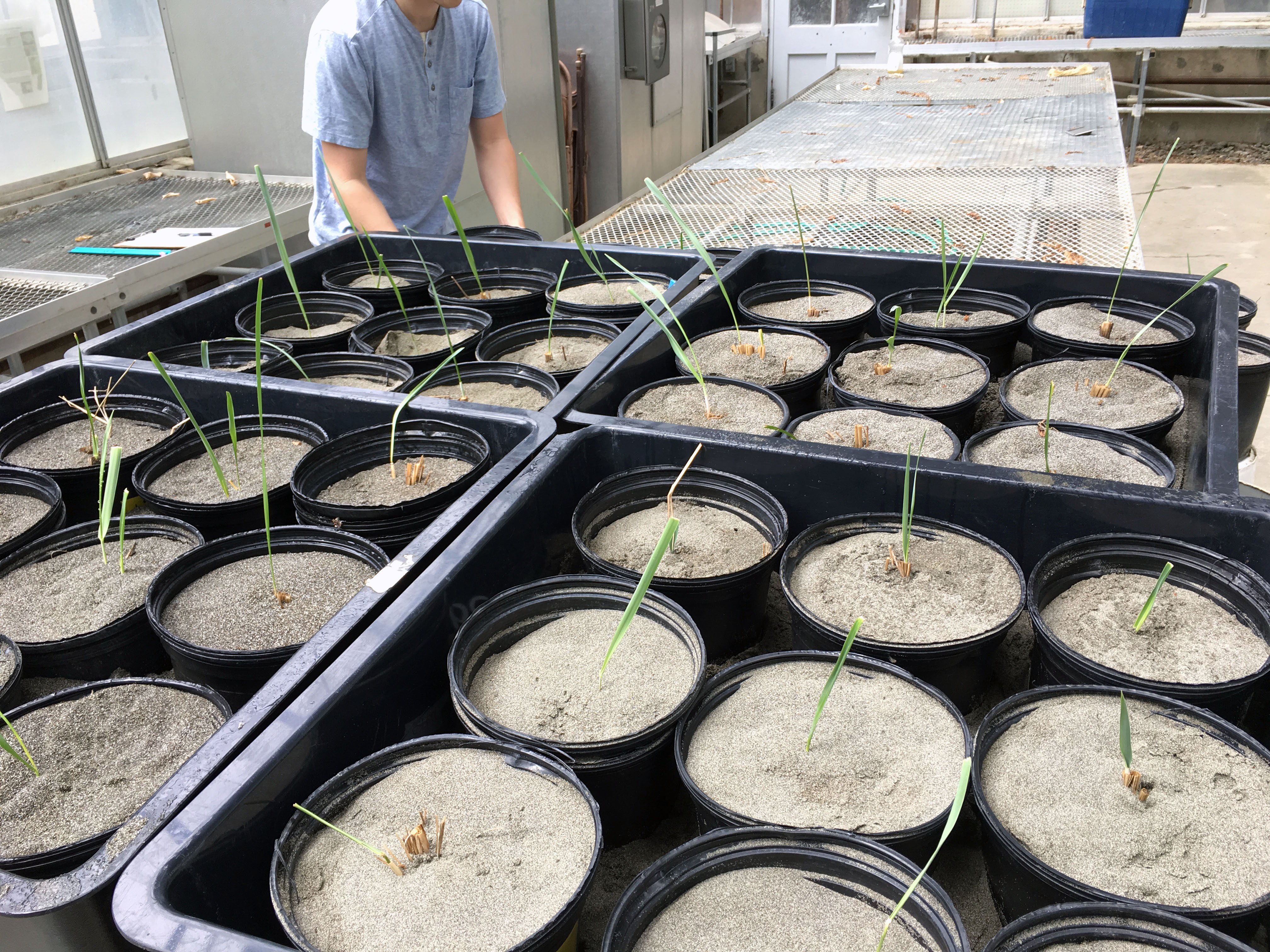
“In the greenhouse, we cut the Elymus down to their base, giving them the same start point,” Thull said. “We watered them three times a week, rotated them to evenly distribute the sunlight and measured their longest leaf lengths.”
While theElymus planted at Eel River had high mortality rates, the greenhouse Elymus grew strong. The longest leaf lengths in both soil types were not significantly different from each other.
“This showed that the soil at Ma-le’l and Eel River could supplement the plants just fine,” Thull said, “but something else in the environment is causing the plants to die.”
Unexpectedly, Elymus planted at Ma-le’l for this study also died.
“Because the Elymus in our experiment were planted at the same time that the winds at Ma-le’l was strong, this could have caused them to be buried by the sand and affected their growth,” Nguyen said.
“There were Elymus planted closer to the water, and planted when the winds were not as strong,” Thull said. “These plants were growing better comparing to our plants. If Elymus planting at Ma-le’l begins at the right season and Elymus is planted from the water inward, then maybe the plants could stabilize each other as they grow to alleviate the wind impacts.”
At the Eel River site, Nguyen and Thull found something different.
“We found rabbit scats in our Eel River’s Elymus plot,” Nguyen said. “Because there were lots of non-native, thick European beach grass near the plot, we think that the rabbits hide from predators in the beach grass, then come out to the Elymus plot to eat.”
A large patch of the invasive European beachgrass on the local dunes (left) adjacent to native dune mat vegetation (right). There is growing evidence that dense beachgrass patches harbor more rabbits, and that these rabbits then venture out to consume the native vegetation. Photo and caption by Dr. Erik Jules.
Nguyen and Thull’s observation made way for another project in Jules’ lab.
“Currently, I have a master student studying what rabbits eat out in the dunes and how that would impact the vegetation,” Jules said.
If rabbits are found to be the culprit of stunted Elymus’ growth, removing the invasive European beach grass from Eel River dunes could make them more prone to predators. This would cause the rabbit population at Eel River to decrease, giving Elymus a better chance to grow.
“Growing another plant species that could both restructure the dunes and deter the rabbits would be difficult,” Jules said. “Not many can tolerate the high salt soil of the dunes like Elymus.”
“Understanding how to help Elymus grow will usher in the growth of other native plants in the area, which could contribute to further dunes stabilization,” Nguyen said.
During this project, Thull and Nguyen gained the necessary skills to prepare them for a scientific career.
“We learned how to analyze our data with statistics and how to design an experiment based on what statistical methods should be employed,” Nguyen said.
“We’re also writing a report on this project,” Thull said, “and we’re learning that our experimental methodology are also used by professionals.”
Nguyen and Thull attributed their growth as researchers to Jules’ confidence in letting them work independently. This growth also transferred to their academic experience.
“We find the materials in our classes more exciting, because we see their applicability to our work,” Thull said. “This really makes us feel excited to eventually enter Ph.D programs.”
It was a nail-biter in the women’s rugby home opener against the University of California, Davis Mustangs on Feb. 3.
Humboldt State University found their fuel a little too late, as the Mustangs took home the victory 49-31.
The Mustangs scored the first three tries of the match. It was not until HSU switched their lineup that allowed them to answer back by scoring their first try.
“We had really good subs come in, and they had the fire in them, just from watching and seeing what was happening,” head coach Meredith Conrad-Forrest said. “They were able to respond to that and bring the rest of the team up.”
Thanks to the help of Libby Treu’s performance, the Jacks were able to bring the score within three tries just before the half, 27-12.
To keep their hopes high, they were looking to build off of their newfound momentum and carry into the second half. The Jacks were hoping not to repeat what happened in last week’s season opener, which was a last-minute loss to Stanford University.
“If that energy dies just a little bit, then everybody gets unmotivated and lazy,” said Celeste Valencia. “We really need that one person to keep everybody hyped up. That’s how you get the game going.”
Just as the second half began, the Jacks were able to score two more unanswered tries, bringing the score within three points, 27-24.
“It’s important to keep that energy up,” said Tiana Barron. “My priority now is getting it to my team, to make sure we score.”
Barron is trying out a new role this season: the fly-half position.
As the game progressed, the Mustangs were able to flip the momentum around and outrun the Lumberjacks, scoring four more tries.
Unfortunately, it was too late for a last-minute comeback, although the Lumberjacks were able to score one more try before the time expired.
The Lumberjacks are looking to earn their first victory in this weekend’s match-ups at College Creek Field on Feb. 10 and Feb. 11.
They face California State University, Chico and Stanford. Kick-offs are at 11:00 a.m.
Downtown Arcata music venue The Jam was filled with energy and excitement on Feb. 1. Two bands, Dimboi and NASA, both made up of Humboldt State students, performed at a free show for the community. Local residents and students crammed close together to support their peers, sip on cheap beer and enjoy some tunes.
This event was put on by the local production group, Your Arts and Music Syndicate, or YAMS. The Arcata-based group, headed by Leo Plummer, sponsors local and touring acts and tries to help expand the music scene in Humboldt County.
Connor West, a HSU music major and an affiliate of YAMS, says the group tries to put on shows that bring some variety to the community.
“Were the driving force for the local rock scene,” West said. “Arcata has a lot of funk and reggae.”
The show was opened by local DJ Venus Milk, real name Cherish Alicia, who is a student at College of the Redwoods. The following act was Dimboi, a three-piece band lead by HSU student Sean Bendon. The show was finished by the group NASA, made up of Michael Freire on guitar, Richard Moog on bass and Matthew Peters on drums.
Both bands were warmly received, clearly having a lot of support in the audience. Many people were there to see Dimboi. The trio had a somewhat dreamy and meloncholy sound, utilizing simple, punchy rhythms combined with dissonant tones.
Leader and creator of Dimboi, Bendon, originally from Missouri, says he has played shows at The Jam many times and enjoys playing music in Arcata.
“Its very supportive,” Bendon said. “Everyone is very open-minded.”
Dimboi on stage at The Jam on Feb. 2. Photo by Conner West.
Raquel Pena, a HSU kinesiology student with a passion for music, said she came out to see her friends Dimboi, but also knows the bass player in NASA. She really enjoyed her first experience with the second band.
“It’s my first time listening to them,” Pena said. “I like the danciness.”
NASA had a more energetic sound, combining garage and surf rock with a smear of punk. The growling vocals and fast-paced rhythms were enough to coax the crowd into dancing and even starting a mosh pit.
Members of the crowd kept cheering “Jerry! Jerry!” because of the Grateful Dead shirt drummer Peters was wearing.
NASA guitar player, Freire, is a HSU student who loves living and playing in Arcata.
“For such a small town, there’s such a good music scene,” Freire said. “And cool, easy going people.”
Bass guitar player Moog says it was his first time playing at The Jam and he really enjoyed it.
“Mistakes were made,” Moog said. “But I don’t think anyone noticed them.”
You can catch Moog’s other band, The Apollo Era, at The Jam on Feb. 15 for their album release party.
As for NASA, they don’t have another show booked right now, but Freire says there will be more to come.
“I want to play as many shows as we can,” Freire said. “Because I don’t know if we’ll all be around next semester.”
You now can register for classes on the go without having to wait to get to a computer. With the new Humboldt State mobile app, you can access your student center anywhere. Students can not only register for classes through this new app, but they can also check their grades and financial aid status too.
According to Bethany Rizzardi, chief information officer for ITS, the app has an annual cost of $50,000 and a one-time $25,000 initial setup and configuration fee.
The app adopted several modules including the student center, library, campus news, course catalogue, events calendar and a new interactive map. All of this and much more is just a touch away.
According to HSU Information Technology Services project coordinator, Billie Herman, ITS office did extensive research prior to implementing the mobile app. In this research, several mobile app vendors were reviewed.
“There were two vendors selected out of that research project,” Herman said. “There was Modo Labs and Greyhaller.”
The decision was then made to pick Modo Labs, a software company that creates mobile apps.
“There are nine other CSUs that have followed the same model and are using the same vendor,” Herman said.
This new HSU mobile app is free and available to anyone with a smartphone. You can download the app through the iPhone App Store or Android Google Play Store.
According to Herman, there’s around 1,000 unique visitors to the app so far.
Connor Callison is a HSU programmer who works on maintaining and developing the app. He created a new campus interactive map. The map can be found on the homepage of the app.
The app was first presented to students in both software engineering and database design classes last fall. Students in those classes tested the app and provided feedback to the programmers.
“[Computer science] students have pretty intricate knowledge of how apps works, [and] we figured they might be able to find some of the holes that we might have to deal with first,” Callison said. “They were our beta testers and we got some feedback from them that was helpful.”
“ITS likes to reach out and work with the CS students as much as possible,” Herman said. “We love to have a bridge, students brings such vitality and that new perspective.”
The launching of the app came as a part of an an initiative at ITS to make it easier for students to access campus services using their phones.
“We are trying to make the business of being a student very easy,” Herman said. “It’s hard to be a student as it is and it’s very nice to be able to easily navigate through all the process and procedures that you have to go through.”
The app is a work in progress. Programmers at ITS are still working to improve students’ mobile experience with the app. Users can send comments about the app by using the app feedback form found on the home page.
“This is our first step into this arena and we’re going to continue to evolve this as we get more feedback,” Herman said. “Give us a year and that app is going to sing.”
As the busy students of Humboldt State University get back into the swing of things, some students are in the unfortunate situation of being homeless.
While many think no actions have been taken, it is easy to notice the many construction projects that have popped up around town.
The one closest to campus is located on Foster Avenue. These buildings are beginning to catch attention.
According to Alyson Hunter, City of Arcata’s senior planner, this construction is part of a project known as the Sunset Terrace Apartments.
“The city had known the developer’s plans for the site long before construction started,” Hunter said.
Construction began in 2014 in several phases. The property developer, Kramer Investment Corp., posts pictures of the construction process on their website.
It is going to be a 142-unit apartment complex consisting of solely one bedroom and one bathroom units.
While Alex Hunt of Kramer Investment Corp. was unable to release more information, he said that the first phase was nearing completion.
“We’ll have to coordinate with PG&E to finish the first phase,” Hunt said.
At this point, rent prices are unknown, but residents of other properties managed by Kramer Investment Corp. say similar units go for around $700 per month.
Recent HSU graduate Nathaniel Matteson had been homeless for three months last semester.
“I was looking really hard and I could not find anything,” Matteson said. “It would have been really nice to have something like this as an option.”
Future students of HSU may not have to worry about housing as much as students are today, as this project is not the only one in the area. On Feb. 13, a city council meeting will be held to discuss further steps on what is known as The Village Student Housing Project.
According to City of Arcata’s website, it is proposed to house 800 beds specifically for students. It will be a multi-story complex at the end of I Street and St. Louis Road, which is across the freeway from campus.
These projects could make housing a smaller problem than it is among the students at HSU. As for now, the eventual completion and opening of the Sunset Terrace Apartments will decide whether homeless students will have some relief of trying to find a place to live.
The program is a cohort system of 24 students who want to focus on their studio artwork. The BFA program helps prepare students for a professional art career or graduate school.
The first group of BFA students will be juniors this fall, and will graduate in spring 2020. Applications are due this spring on Feb. 28.
Department chair of the HSU art history department Heather Madar says that this program has been in the making for a number of years.
“So at this point we are about to look at our first round of applications and have our first cohort,” Madar said. “Yeah, this is our first one and this is really exciting.”
The difference between the two degrees is the coursework. The BFA requires 70 units of art classes while the BA requires 54 units. With the BFA, students won’t have the ability to have a minor or a second major.
“It is a pathway to a degree that really focused in a whole lot of depth on their studio artwork making,” Madar said. “The BFA is seen in the field as a slightly more professionalized degree, so it gives them an additional credential if that is something that makes sense for their future career plan.”
Art major Ann Valdes has always put an importance on creativity. This year, Valdes is graduating without having the opportunity to be part of the BFA.
“I guess it just sucks for people who are in the transition and is between HSU not having a BFA and having a BFA,” Valdes said. “But in the future, I guess people will get to choose what they want.”
HSU students who are in their first two years can become part of the BFA degree by taking the required lower division coursework.
“We are not requiring them to declare which of the areas they are in,” Madar said. “It is a general BFA program, but generally most of them do identify with their previous coursework, what areas they really want to focus on, like ceramics, for example.”
Art major Kiya Rutherford enjoys making functional art, but likes painting things for an aesthetic reason – it allows her to express certain ideas.
“I think it’s pretty important, because I know a lot of people look for art programs,” Rutherford said, “but only go to certain schools if they have a Bachelor of Fine Arts rather than just art. I think it helps with grad school, too.”
Art major Kiya Rutherford working in the ceramics lab on Feb. 2. Photo by Bailey Tennery.
Valdes sees the BFA degree as an overdue improvement to Humboldt State’s art department.
“I think for the school to have a BFA is amazing,” Valdes said. “It makes HSU way more competitive.”
The tenured faculty will be involved in reviewing student applications. After reviewing the applications, they will have a meeting to decide who will be accepted.
Valdes considers the BFA degree as a positive addition to HSU, but it wasn’t the right program for her.
“Having a BA doesn’t mean you can’t be a fine artist, so it is a decision you have to make pretty early on,” said Valdes. “I feel like for me, that wasn’t really the best idea at the time, but I think it is great for people in the future, and that is great for HSU to have.”
The Feb. 28 application deadline was put together by Madar and the Office of Admissions to make it easier for transfer students to apply to the BFA program.
“This is not a better degree,” Madar said. “It is just a different degree and for different students, depending on what they are wanting to do with their college career.”
One of Arcata’s latest restaurants launched their soft opening on Feb. 1: The Burger Joint.
Owners Halleh Paymard and Will Hauser have a good thing going. The marquee above the front entrance grabs your attention. Once you’re hooked, you can’t help but scope the scene.
The front entrance of The Burger Joint in Arcata on Feb 2. Photo by Matthew Hable.
The decor has a warm industrial chic look. Once you step inside, the ordering counter, lined with about a dozen draft beers, pulls you in. Communal tables and a bustling open kitchen are apparent, too. The spacious patio is perfect for a burger and a beer on a sunny afternoon. As a bonus, two classic arcade games, Street Fighter III and BurgerTime, are located in the back of the restaurant.
Michelle Pipitone, mother-in-law of co-owner Hauser, is putting together handmade wreaths on the patio. Pipitone says the wreaths are just some of the adornments they plan on adding to the overall aesthetic of the restaurant.
Burger Joint employee Loren Palmisano suggests one their signature burgers.
“I recommend The Classic,” Palmisano said.
The Classic consists of a little over five ounces of grass-fed beef, Loleta cheddar cheese, bacon, lettuce, tomato and house sauce in between Beck’s Bakery buns. The order arrives with a side of coleslaw, as requested, in less than 10 minutes.
The burger was love at first bite. The juicy, medium-well patty is savory, accentuated by the buttery brioche-like buns. In addition, the vegetables were remarkably fresh. The freshness of the slaw was no exception, but it tasted more like a lightly dressed cabbage salad than your average slaw.
HSU alumni and lifelong vegetarian Ariana Hendren is impressed with the house-made veggie burger and her side of sweet potato fries.
“Compared to other veggie burgers I’ve eaten,” Hendren said, referring to the texture of the veggie patty, “it doesn’t feel like it’s about to fall apart.”
Paymard, who also owns T’s Cafe North in Arcata, looks forward to the grand opening, which will be announced to the public soon.
Burger Joint is located at 835 J Street in Arcata, right next to Dead Reckoning Tavern and behind North Coast Co-op. For more information, visit facebook.com/theburgerjointarcata.
Down by 12 points at halftime at Lumberjack Arena, HSU’s Lady Jacks made a second half comeback in their home game against Cal State East Bay on Feb. 1.
HSU junior Jovanah Arrington scored a three-pointer in overtime to win the game, putting the Jacks up 76-73.
“I just shot my same shot that I shoot every time,” Arrington said. “I knew the clock was going down so I had to get it up.”
East Bay dominated the first few minutes of the game with a 12-3 lead before the Jacks came back determined to put more points on the board. With enough drive, the Jacks regained their confidence to take more shots, until they fell back down at halftime with a score of 24-12.
“We have certain things that we try to do defensively as far as taking our opponents out of their strengths, so to speak,” HSU head coach Michelle Bento-Jackson said. “I thought we did a very poor job of that in the first half.”
With another gain of confidence after their halftime talk, the Jacks outscored the East Bay Pioneers in both the third and fourth quarters. The team nailed 15 free throws in the second half, and ended the game in a 69-69 tie, resulting in the first period of overtime.
HSU sophomore Tyla Turner led the Jacks with a total of 23 points, HSU junior Kindall Murie landed 13 points and Arrington helped with seven rebounds.
“We got a lot of contribution tonight from different players,” Bento-Jackson said. “I thought we stayed aggressive in transition.”
The Jacks walk away with an overall record of 12-9 and a conference record of 11-5.
It is all about having fun, getting exercise and making new friends.
HSU’s Recreational Sports Center offers six different intramural sports this semester, each with several leagues. Both soccer and basketball have three to six leagues, while sports including volleyball and dodgeball have two leagues.
Mark Manzon is a sophomore majoring in kinesiology. He has played basketball his whole life and wanted to join intramurals to get back on the court. He also wanted to escape the books every once in a while.
“I play in three different basketball leagues,” Monzon said. “‘A’ league is more competitive than ‘B’ league, but they are all fun.”
HSU junior Destiny Hill-Brekke enjoys the getaway from everyday life that playing in intramurals provides.
“Playing helps me relieve stress,” Brekke said. “You also get to meet new people and even play against great athletes, ones you wouldn’t expect.”
Brekke plays in a soccer, flag football and dodgeball league. She has been playing since the first semester of her sophomore year and enjoys them the more and more she participates.
“My favorite is definitely dodgeball,” Brekke said. “It makes me feel like a kid again. But, soccer, I have played my whole life, so that is also a favorite.”
Along with students, community members and HSU faculty are welcome to join intramural teams. Community members are asked to pay a $30 fee per semester, and faculty pay a $15 fee per semester.
The last day to sign up for this spring 2018 semester is Feb. 4 online at www.imleagues.com/humboldt. The leagues officially starts Feb. 11. Anyone is welcome to join any established team or there is an option to build your own new team at no cost.
“Unfortunately, I haven’t won any championships I’ve played in,” Manzon said, “but this semester, my team is taking it!”
NFL fans are one week away from the Super Bowl clash between the New England Patriots and the Philadelphia Eagles in what will mark the eighth time in 16 years that Patriots quarterback Tom Brady will be the starter in the big game.
It is time to end the debate: Tom Brady is the greatest quarterback in NFL history, and his case is only going to get stronger.
In the NFL, there are players who play over a decade without ever reaching the Super Bowl, let alone players who spend their entire careers chasing that beloved trophy.
Brady has been to eight now. At this point, his appearance in the game has become more of an expectation than a surprise.
The University of Michigan alumnus has accomplished unimaginable things during his time in the NFL: five Super Bowls, four Super Bowl MVPs, two regular season MVPs, 13 Pro Bowl selections and three first-team All-Pro selections.
Since taking over the starting quarterback job for the Patriots during week two of the 2001 season, Brady has never missed the playoffs (the Pats did not make the playoffs during the 2008 season when Brady suffered a torn ACL during week one).
In addition, Brady has appeared in each of the past seven AFC championship games and has gone to the Super Bowl in four of those years.
Up until last year, Brady seemed to be embedded under Joe Montana as the second best quarterback to ever play. But that was before his epic 25-point comeback over Matt Ryan and the Falcons, which was by far the largest comeback in Super Bowl history.
With his all-time leading fifth Super Bowl victory on the line, Brady’s Patriots were down 28-3 with two minutes and eight seconds left in the third quarter.
Brady, the former sixth-round pick, responded by turning in possibly his best performance ever by throwing for 466 yards (a Super Bowl record) and two touchdowns to shock the Falcons in overtime.
Last year’s game may have cemented Brady to be above the rest, but this year’s matchup with Philadelphia is shaping up to be a phenominal encore.
This season’s Eagles is perhaps the best team that Brady has faced in the Super Bowl so far, as they are the only team to face him with a top-five offense and defense.
While New England is a five-point favorite, many experts are predicting an Eagles upset due to their high-scoring offensive attack, led by quarterback Nick Foles, and the Eagles’ stout defense.
If the past is any indication, Brady will overcome this upcoming obstacle and win his sixth Super Bowl ring, which will end all discussions about who the greatest of all time is.
At this point, it’s not even a race, Brady is just running on his own.
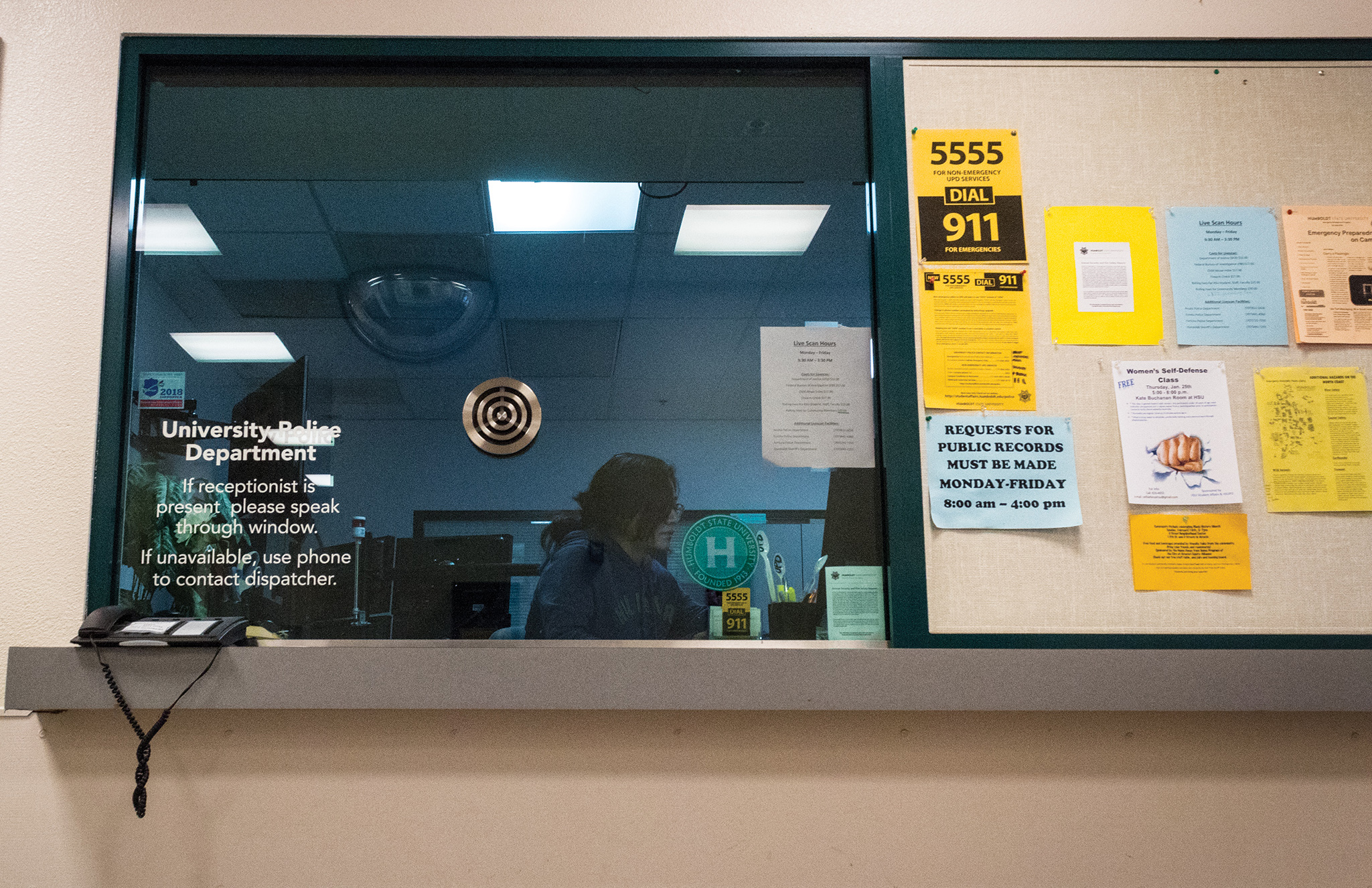
Objects get set down, forgotten and lost. Owners search high and low, their heads turn from side to side, frantically tracking down their lost objects. All lost and found items eventually end up in the University Police Department.
UPD evidence technician Zan Mendonca uses an ongoing online auction website called Property Room to sell the unclaimed property after being held for a period of three months.
“People bid like eBay, and then once they get their funds, they take a portion of it and send the check to us,” Mendonca said. “I think it is great. They have saved us a lot of money.”
Mendonca said that the check, which is received from Property Room, doesn’t normally come in a large amount, because there are not too many items of value that are turned into UPD.
“A lot of people think it goes to buy bullets and badges and stuff like that, but it actually goes back to the students, which is awesome,” Mendonca said.
Sandy Wieckowski, student financial services manager, explained that previously the money went to a HSU Short Term Student Loan Fund.
“At one time, the state told us, and the Chancellor’s Office said, you could either do it in short-term loans or in scholarships,” Wieckowski said. “We were putting some of it originally in the short-term loan fund, so we could give short-term loans, but we have enough money in short-term loans.”
According to Wieckowski, it was decided to switch the funds to HSU’s Emergency Scholarship about a year ago, with the reason being short term loans have to be paid back.
“If you truly have a financial crisis, a lot of the time, you can’t pay it back,” Wieckowski said. “Financial aid monitors that scholarship fund to help students out during desperate needs.”
Peggy Metzger, director of financial aid, works behind the scenes helping students. A small portion of lost and found money is put into a special scholarship. The money goes to students, but isn’t anything that students apply for.
“It’s basically sort of a little wiggle fund for me,” Metzger said. “Every once in a while, like for instance, say the scholarship is $500, but the interest is only in $427, but I want to give the student 500. I’ll take a little over from the fund, and shove it over so that the student gets the whole amount.”
Student Financial Services isn’t dismayed when they look at the lost and found money, because there’s not a substantial amount made from unclaimed lost and found money. It’s not like money gained from a Pell Grant.
“The caveat to claiming a lost property is that you cannot be an employee,” Mendonca said.
Mendonca always asks herself how this would look from a different perspective. How would it look if an employee dipped their hands in lost and found?
“They might get upset,” Mendonca said, “because they’re not legally able to claim it. Then I can say, oh, you know all this money that is brought back goes back to the Short Term Student Loan Fund.”
The money made from lost property no longer goes to the HSU Short Term Student Loan Fund. The change is a positive one, because it means more money is going to a separate fund to help students.
“It goes back to the students,” Mendonca said. “It usually takes the winds out of people’s sails, and what can you say? It is an awesome place for it to go.”
The Michigan State University board of trustees must follow suit of the USA Gymnastics Board and all resign.
Investigations into how Larry Nassar was allowed to prey on women at MSU for so long are being discussed.
In an epic and strong gesture of disregard for a sexual predator, the nation watched as Judge Rosemarie Aquilina looked Nassar in the eyes and tossed his letter to the side.
“And I want you to know, as much as it was my honor and privilege to hear the survivors, it is my honor and privilege to sentence you,” Aquilina said to Nassar at his hearing on Jan. 24.
However, Nassar is not the only perpetrator in this disgusting story.
Not soon after Nassar’s sentencing, MSU President Lou Anna Simon resigned. In her resignation letter on MSU’s website, she addresses the public’s need to find blame and knew the public would come for her. Though this is a small step, it is not enough.
In the hours following Simon’s resignation, U.S. senator from Michigan, Gary Peters, released a press release calling on Congress to start a formal investigation into MSU. On a state level, an investigation has begun. Bill Schuette is the attorney general for Michigan. In the NPR article, Schuette promised no individual at MSU is “off-limits.”
According to an NPR article discussing a MSU investigation, two days after Simon’s resignation, “the school’s athletic director announced his retirement. That same day, the entire board of USA Gymnastics said they too would resign.”
It should not matter if the board was not aware of his sexual harassment beforehand. Those responsible for running the college allowed this man to traumatize women for so long. The school’s Title IX complaint processes and procedures need to be re-evaluated. Those responsible for allowing this predator to exist and prey for so long should be weeded out from the school system, and Schuette must not stop until every one of those weeds are pulled.
Without further action against the school and those responsible, absolute justice for these 160 or more women is not fulfilled. Having full justice should come in two parts: lock up the predator and then go after his accessories to the crime.
MSU has done their students a great disservice and should be made an example of. There are likely students at other colleges suffering from rape culture that promotes silence and fear. An example should be made of MSU so other colleges follow suit in fixing a system that favors the predator and not the victim.
The showcase of the United States’ unique democratic system happened on Jan. 20. It marked the one-year anniversary of a reality TV star’s presidential inauguration. It also highlighted the country’s freedom of speech in the form of a nationwide women’s rights demonstration, as well as the beginning of a short-lived government shutdown.
Professor Stephanie Burkhalter, a political science professor at HSU who studies communication strategies between Congress and the president, provides more insights on the phenomena of government shutdowns.
What is a government shutdown?
A government shutdown occurs when the House of Representatives and the Senate cannot pass an appropriations bill — the technical name for a bill that funds the government agencies — that the president will sign.
Shutdowns are a uniquely U.S. government thing, because of our constitution, the filibuster rule and our two-party system. The two parties have become increasingly polarized on policy issues and more willing to have a shutdown if they cannot get the policy changes that they think are important.
What caused this previous government shutdown and why was it so short?
This answer depends on whom you ask. The consensus from mainstream media sources is that the Senate Democrats caused the shutdown by filibustering and demanding that the Senate markup — the official term for editing a bill — and debate an immigration bill that would create a pathway to citizenship for DACA recipients, known as “Dreamers.”
Senate Democrats agreed to fund the government through Feb. 8 in exchange for Senate Majority Leader Mitch McConnell’s promise that the Senate will take up an immigration bill in the next two weeks.
In this shutdown, Democrats were also able to negotiate six years of funding for the Children’s Health Insurance Program. House Republicans had not funded this program in their version of the permanent appropriations bill.
What does a shutdown say about the administration of President Trump?
From my understanding, President Trump was ready to make a deal on Jan. 19 to avoid a shutdown, but his advisers scuttled the deal, because they believed that this deal was not tough enough on immigration policy.
So, this shutdown says less about Trump and more about the partisan politics plaguing our nation’s capital.
What could happen around Feb. 8?
[On Feb. 8], the Senate will reconsider a permanent spending bill. If Democrats again decide to filibuster, another shutdown could occur if a deal cannot be reached between Republicans and Democrats on immigration policy.
Government employees, such as those who work in the National Park Service and the Bureau of Land Management, will not be paid.
——–
Eric Nelson, the manager of Humboldt Wildlife Refuge, an organization managed by U.S. Fish and Wildlife Service, detailed the obstacles a shutdown would impose on the refuge’s operations.
“In 2013, there was a shutdown that lasted 13 days, I believe,” Nelson said. “Probably the most challenging part of a shutdown is dealing with the uncertainty, and what it can do to schedules and scheduled work.”
Because shutdowns are often prevented at the last minute, preparing for them is difficult. Fortunately, most shutdowns occurred outside of the spring/summer restoration work season and did not pose big problems for the refuge’s projects.
If a shutdown occurs on Feb. 8, the refuge will be closed to most of the public. However, independent researchers working on the refuge will be allowed to continue their work, as long as they can access their research site without the help of a federal employee.
Nelson added that if the shutdown goes on for three to four weeks, the financial challenge of not getting paid will become an issue.
“Ironically, Congressional members do get paid during a shutdown,” Nelson said.
Burkhalter also recognizes that a shutdown’s impact is affected by its length.
“The effects of a shutdown are felt the longer it continues,” Burkhalter said. “Let’s hope that the Senate can make a deal on immigration policy, a permanent spending measure can be passed and we can feel secure that our government is funded through this fiscal year.”
On the potential of shutdowns that may occur beyond Feb. 8, Burkhalter said that they could happen again when Congress tries to pass appropriate measures.
“I would not be surprised if a few more shutdowns are headed our way in the next few years,” Burkhalter said.
This website uses cookies to improve your experience. We'll assume you're ok with this, but you can opt-out if you wish. Cookie settingsACCEPT
Privacy & Cookies Policy
Privacy Overview
This website uses cookies to improve your experience while you navigate through the website. Out of these cookies, the cookies that are categorized as necessary are stored on your browser as they are essential for the working of basic functionalities of the website. We also use third-party cookies that help us analyze and understand how you use this website. These cookies will be stored in your browser only with your consent. You also have the option to opt-out of these cookies. But opting out of some of these cookies may have an effect on your browsing experience.
Necessary cookies are absolutely essential for the website to function properly. This category only includes cookies that ensures basic functionalities and security features of the website. These cookies do not store any personal information.
Any cookies that may not be particularly necessary for the website to function and is used specifically to collect user personal data via analytics, ads, other embedded contents are termed as non-necessary cookies. It is mandatory to procure user consent prior to running these cookies on your website.