The Lumberjack


Students Serving The Cal Poly Humboldt Campus and Community Since 1929

Month: December 2021

  • Music plays through fall break

    Music plays through fall break

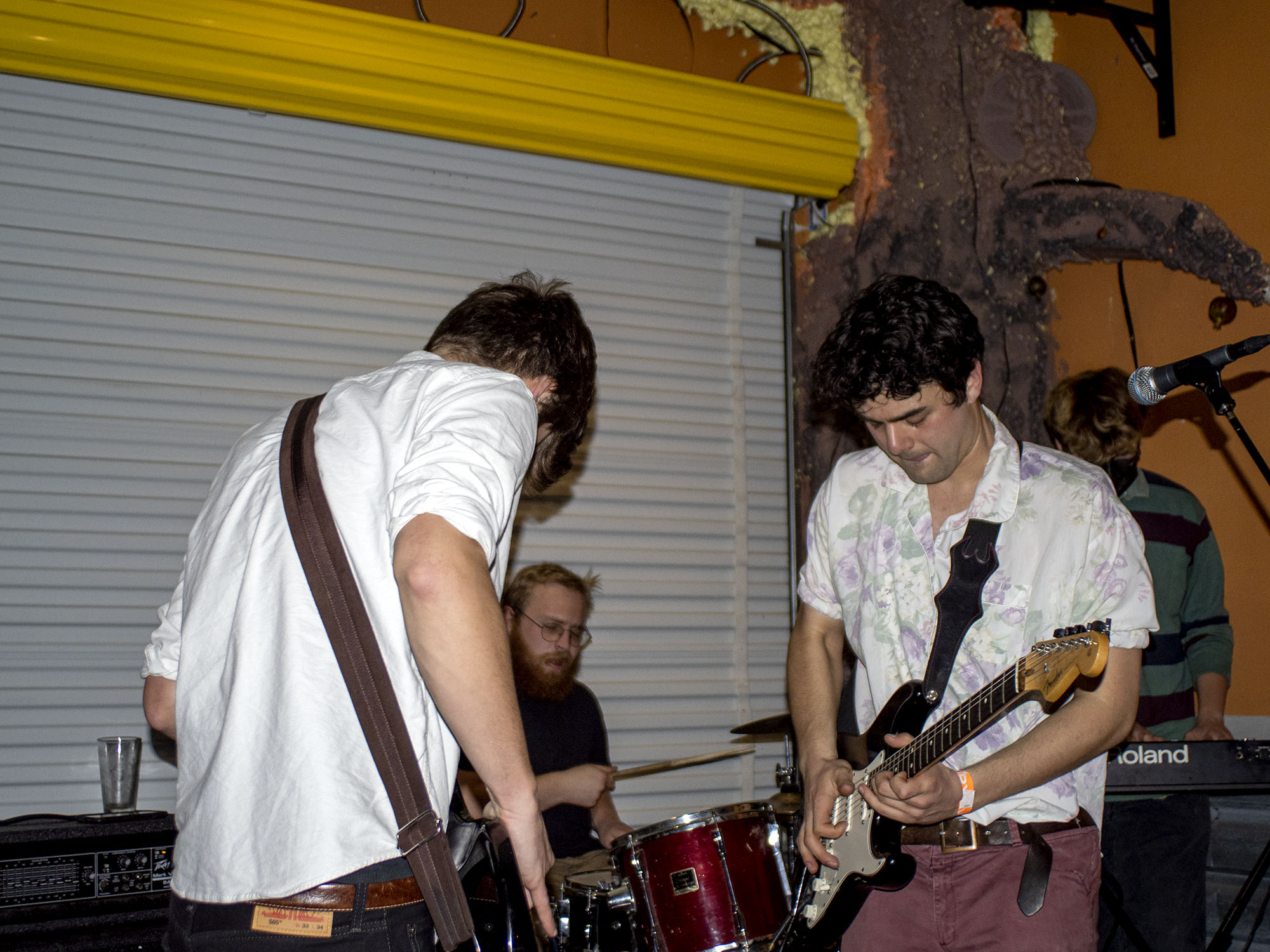
    Students took a break but local bands did not. The fall break music scene offered a variety of shows and genres. Venues hosted new wave post-punk, city pop, minimalist drone, psychedelic krautrock, and rural punk. Most shows saw a mix of touring bands and local staples.

    On Monday an indie rock show at Siren’s Song hosted local band Biomass and touring bands Chronophage and Behavior & Mayako XO. Luke Aronie plays for Biomass and can be found at any hardcore show in Humboldt. Aronie played the show and described the Humboldt music scene this week.

    “The local music scene this week was mostly quarantined, several prominent bands came down with Covid,” Aronie said. “I believe they’re all doing well though.”

    Kit Lamb, who also plays for Biomass, described their Morpheus sound for this night in particular. Biomass plays such a collective of sound that not one show carries the same sound as the other. The band what it feels each show, often based on the energy of the crowd. Lamb saw a decent crowd to draw from on Monday night.

    “From what I can tell there is a healthy amount of creative energy going around” Lamb said. “I was pleasantly surprised at the decent turnout to a Monday night show, and when college students are out of town,”

    On Friday, Nov. 20 Blondies saw a decent mosh turnout for a trashy show. Something Wicked and East Brothers kept the crowd’s energy up with some interactive moshing.

    On Nov 16 the Clam Digger Tavern hosted a show that had been postponed until it could safely navigate COVID-19 concerns. Ray Triana opened up the night’s show. Skye Freitas, as Cowboy Daddy, wooed the crowd with some experimental indie. Rottwyler came in with the rural punk sound trademark of Arcata. To finish, Morning Forever brought a dreamy sound all the way from LA.

  • Citizen scientists assist the HSU Wildlife Department in River Otter research

    Since 1999, the River otter demography study headed by HSU professor and wildlife researcher Jeff Black and various others has collected reports of river otter (Lontra canadensis) sightings from citizen scientists in Humboldt and surrounding counties. In their online survey, the study asks people who have seen river otters for a variety of information. This includes the location of the sighting, the type of habitat, the number of animals in the group (or “bevy”,) behavior, prey items, and whether there were any pups present. Most of the papers based on this data have zeroed in on demographics, but Black says that his recently-published paper focuses more on behavioral observations.

    The study is citizen science-based. It depends on information submitted by people who stumble upon otters in their natural habitat: along rivers or in coastal marine environments like estuaries and marshes. Researchers advertise by posting signs
    near otter habitats as well as promoting the study online. Black says that most submitted sightings from non-researchers or students come from those involved in outdoor recreation, like kayakers, surfers, and hikers. Given that not all sightings come from individuals with a strong scientific or wildlife background, the study has established criteria for what information it considers scientifically valid. A paper published by Black based on the study in 2009, “River Otter Monitoring by Citizen Science Volunteers in Northern California: Social Groups and Litter Size,” states that “records of pups were included only when observers commented on their size,” for example. This rule eliminated 27% of litter observations in an effort to ensure the accuracy of reports.

    “Some records would come in where for example they’d be describing a seal instead of an otter,” Black said.

    He described a record he once received which counted over one-hundred otters—which normally exist in much smaller groups—sighted at the location of a well-known seal hangout above Arcata.

    According to Black and the study’s website, the population of river otters can indicate the health of an entire ecosystem, making the information which is gathered extremely important.

    “It’s argued that when otters disappear from the habitat, there’s probably heavy pollution involved, which kills the fish, and then there’s nothing to eat for the otters,” said Black.

    The study has been monitoring northern California otter populations for over 20 years. Another paper which utilizes the study’s data, “Fifteen Years of River Otter Monitoring by Citizen-Science Volunteers in Northern California: Litter Size,” by Jeffrey M Black, Erin Wampole, and Jeanne E Mayer, states that “an average of 234 records was received per year, amounting to 3540 observations.”

    “All our limited evidence from our citizen science group indicates [populations are] stable,” said Black.

    The study is a very useful tool for researchers, especially as information on river otters in Northern California has historically been scarce, according to the study’s website. However, it’s only one of the methods utilized to study these creatures, and does not accurately catalogue every individual in the study area.

    “We thought from the citizen science records that maybe we had 24 otters living in Humboldt Bay. Through collecting scat and then extracting DNA from the individual otter that put that scat down, we found that there were 48 individual otters,” said Black.

    The study allows researchers to track trends in otter populations based on how many are seen each year, regardless of whether reports yield an accurate count. Those interested in submitting reports to the study can find the survey linked on the study’s website, https://wildlife.humboldt.edu/people/jeffblack/research/otter, or email otters@humboldt.edu.

    The study plans to keep collecting data for the foreseeable future.

    “I’ll be involved in it until I die,” said Black.

  • Student documentary, Homeless in Humboldt: In the time of COVID-19, debuts

    Student documentary, Homeless in Humboldt: In the time of COVID-19, debuts

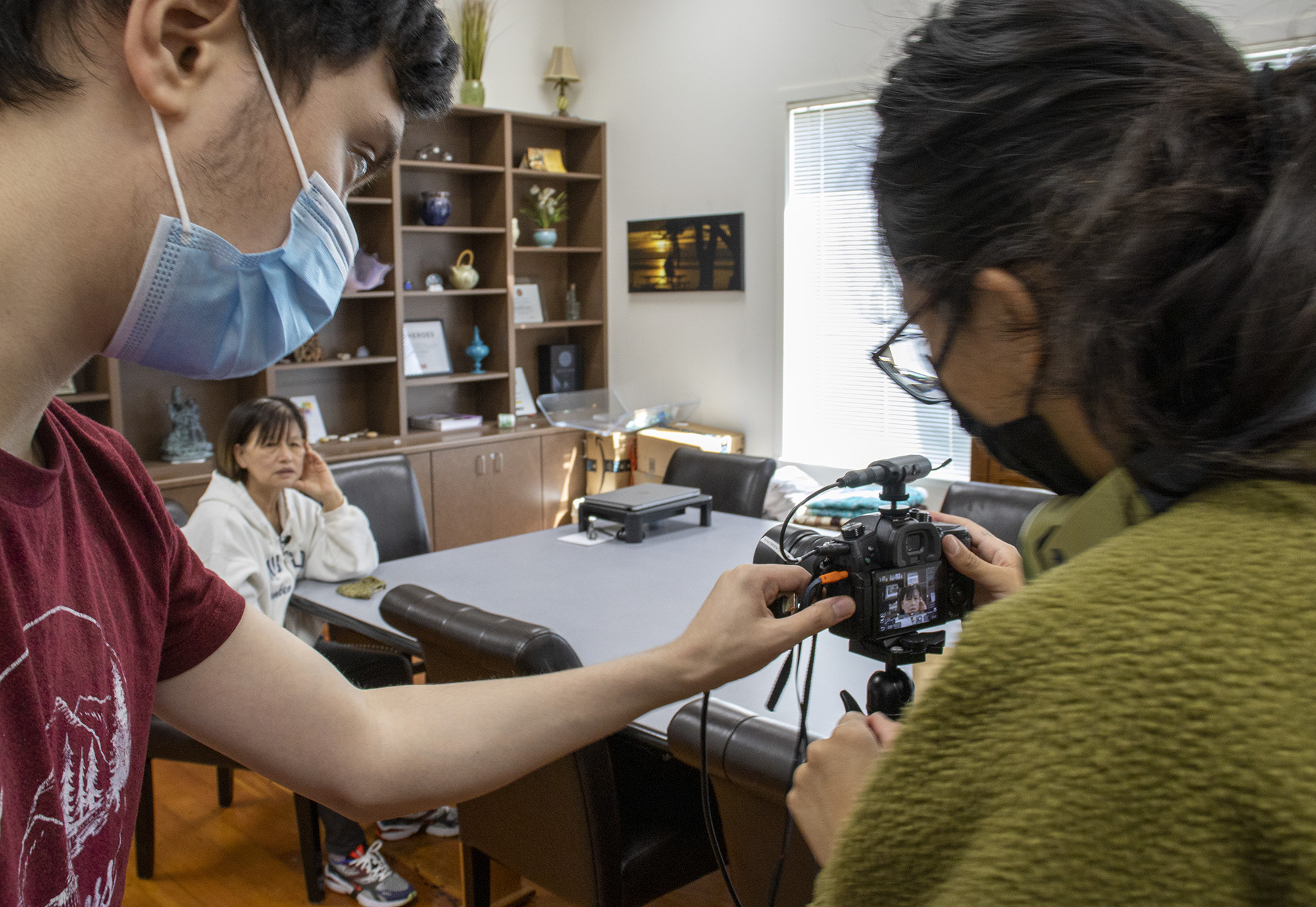
    Humboldt State students Gabe Kim, Valentina Dimas, Rachel Marty, and Skylar Gaven have released the film they’ve worked on since September of 2020. The multi-episode documentary follows the lives of Humboldt-area homeless men and women. The first episode was released Nov. 26.

    The pandemic created challenges for everyone. It harshly impacted unhoused communities as the nation was ill-prepared for a public health crisis at this scale. With learning opportunities and internships inhibited by the pandemic, students found their own opportunities. Through their lens, they were able to find compassion and perspective by engaging with the unhoused community in Humboldt. Gabe Kim worked as the project director and spearheaded the effort.

    “We often see people begging on the street or curled up in a ball and we just walk by and don’t give it much thought, but just stopping and smelling the roses, it’s really valuable,” Kim said.

    Initially, the time frame for production was undefined. The students became more invested and worked on the project through breaks. Through the pandemic, it was a challenge to just stay afloat, let alone make a documentary. Journalism professor Vicky Sama advised the students through the process.

    “You can’t do a documentary about homelessness by using Zoom,” Sama said. “The students had the extra challenge of trying to find subjects for the documentary while taking extra safety precautions so that they could also be on the streets and see the lived experiences of the homeless so they could tell the true stories.”

    The learning opportunities from making a documentary helped to prepare students for a career in a tangible way. They engaged with their community and built trust with individuals to create a powerful documentary. The student showed compassion and effort for the communities they are trying to uplift. Rachel Marty worked on the project as a videographer and producer and described it as an eye-opening experience.

    “Homelessness isn’t something most of us think about every day, but for some, it is a constant reality,” Marty said. “This project has been a chance to rebuild empathy and humanity in our community. This all starts with an understanding.”

    Journalism major Skylar Gaven, who worked as an editor, wants to show the public what homelessness in Humboldt county is like.

    “These are real people and I think that this whole process has been a great educational experience,” Gaven said. “They’re sharing their story, which is honestly very important because this could relate to any other homeless individual’s life. They’ve shown so much of what homelessness is like up here, and perhaps we can change the perspective of how people think of homelessness.”

    More information about the project and the first episode can be found on their website.

  • Home sweet home

    Home sweet home

    There’s no place like home.

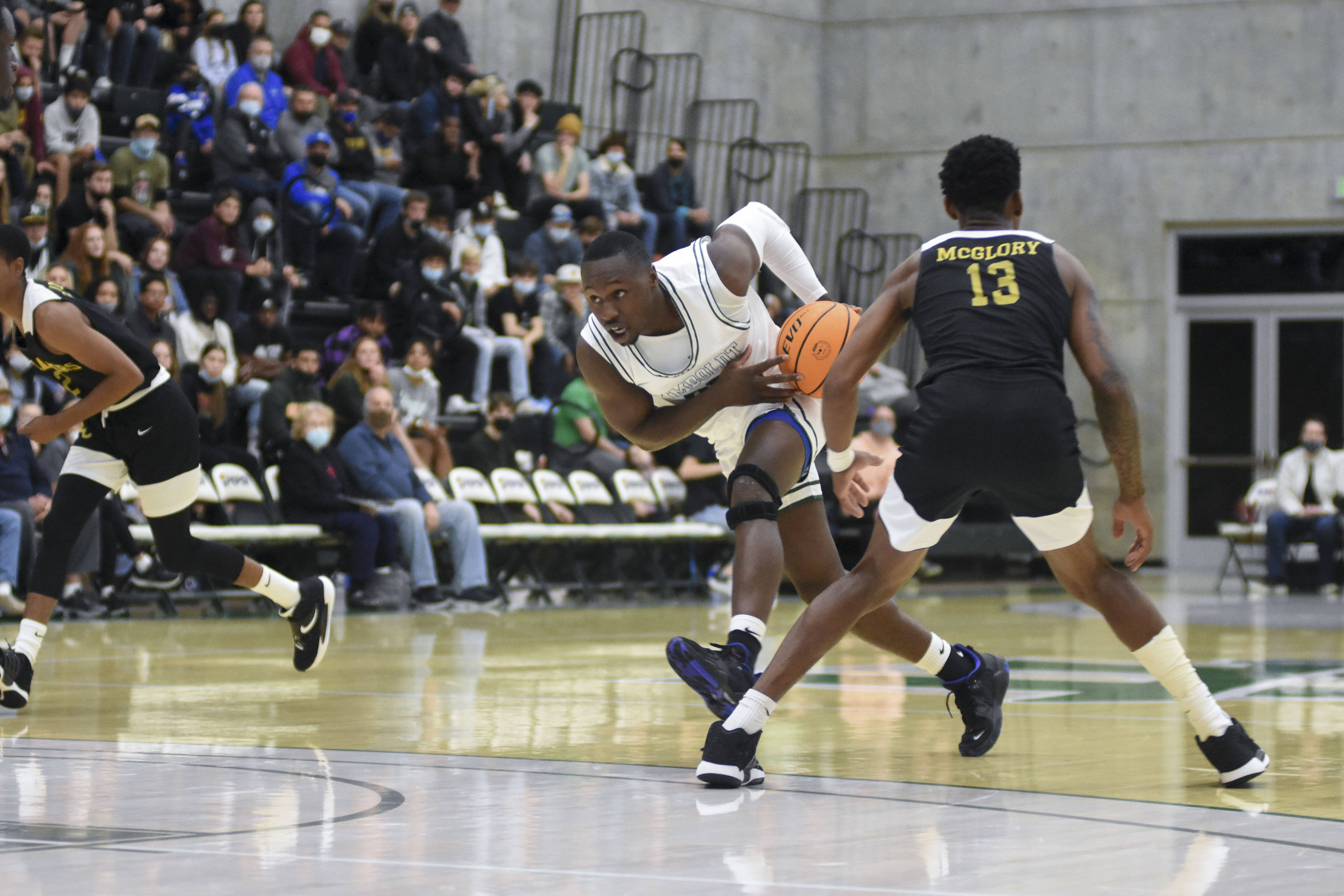
    That at least is the consensus among HSU men’s basketball head coach Tae Norwood and his squad, who finally got the opportunity to play a game in front of the Lumberjack faithful with their home opener against visiting Lincoln University on Saturday, Nov. 20. The game marked the first home event for the team since February of 2020, and an amped crowd of over 800 fans was treated to an instant classic, as the Lumberjacks closed a seven point deficit with just under three minutes remaining to defeat the Oaklanders 81-78.

    It’s also not every day that your first home game features an NBA hall-of-famer. Gary Payton, a 17-year veteran of the NBA best known for his time with the Seattle SuperSonics, roamed courtside for Lincoln.

    After the game, Payton said he was excited to compete with his young team against a difficult road crowd in order to battle test them.

    “I love it [the hostile road environment], that makes me even more pumped,” Payton said. “You want to be able to make the crowd quiet, and we had them quiet for a long time.”

    The win is the third straight victory so far in this young season in which the ‘Jacks have prevailed by only four points or less.

    “I’m gonna have to go call my cardiologist,” Lumberjack coach Tae Norwood said. “It’s our third game down to the wire. All credit to our guys, their resilience and just the competitiveness and the will to win the game and the will to never quit, it paid off for us.”

    The ‘Jacks led by as much as 17 in the first half before Lincoln closed the frame by going on a 25-8 run in the final seven minutes to enter halftime with a 40-38 lead. Lincoln led by as much as eight in the second half, but a 12-3 run closed the gap to one with 7:28 remaining. The Oaklanders brought the lead back to seven over the next five minutes, but a 3-pointer by senior Amari Green and a tip-in by transfer AJ Sims closed the deficit back to one. Sims proved to be key on the defensive side, drawing an offensive charge on Lincoln’s next possession to regain the ball. Jaden Edwards hit a jumper with just seven seconds remaining to give the Lumberjacks the lead for good, as the team improved to 3-0 with an 81-78 victory.

    Coach Norwood credited Sims’ drawing a charge as the highlight play of the evening.

    “AJ picked up two big time charges on the defensive end in that last four minute stand to give us back the ball,” Norwood said. “Those things aren’t sexy. They’re not the sexy play.”

    Jaden Edwards led the squad again with 22 points. Three other Lumberjacks scored in double digits, including 10 by Sims and Green and a season high 12 points for Thomas Melonja.

    Norwood and Sims both credited their team’s identity, which includes constant full-court pressure, as a driving factor in the victory.

    “We were trying to get stops,” the coach said. “I didn’t want to take the press off. I just thought, ‘this is who we are.’ Credit to them [Lincoln], they did a really good job of handling our press for 40 minutes.”

    “The press kinda does scare you,” Sims said. “The reason I can say that is because I deal with it every day in practice. Even the best guards, it can make you tumble up in there. Once we get about one or two steals, that energy keeps going and we want to keep attacking you, keeping the pressure on you.”

    For many players on the roster, as well as Norwood himself, Saturday’s game was also their first glimpse at the home crowd advantage that Lumberjack Arena can bring.

    “They were loud,” Norwood said. “Sometimes they were loud even when we were shooting free throws. If we get that excitement and that type of environment every game then we are going to be tough out every night at home.”

    Sims also agreed with his coach about the crowd’s energy.

    “I can honestly say that was probably the biggest, loudest supportive crowd I’ve ever played in,” Sims said. “They bring a lot of energy that makes you want to keep playing harder. Whether it was offensively or defensively, I felt they [the crowd] were a big part of us winning tonight.”

    Even Payton, who knows a thing or two about tough crowds, admitted how much they can impact a game if you let them get loud.

    “When you lose focus and you let a crowd get into it, you get rattled and then you pick up stuff,” Payton said. “They start running around doing everything, putting their hands on balls and we just didn’t accept it right.”

    “It was as good as advertised,” Norwood said. “This is an unbelievable environment that supports its basketball program, that loves this HSU brand.”
  • Safewords and shibari, the quad gets kinky

    Safewords and shibari, the quad gets kinky

    A group of students eagerly scribble their names on blue raffle tickets surrounding tables and a mattress draped with flower petals positioned in the quad on Wednesday Nov 17. The raffle prizes on display are not your usual baskets of baked goods or reusable water bottles, instead including a selection of dildos, bright pink fuzzy handcuffs, ball gags, vibrators, and even a jewel adorned butt plug.

    The Humboldt State women’s resource center put on their annual Kink The Quad event after being unable to put on a 2020 event due to the pandemic. Isabela Acosta, a sophomore art history major, is this year’s body politics and health educator for the resource center. Acosta helped coordinate the event and hopes it encourages discussions about consent culture on campus and education about safe sex.

    “People are weird with sex especially kinky sex and ropes, I see people get really guarded and that’s fine,” Acosta said. “It’s not everybody’s thing but it’s not something you should be ashamed of or make someone else feel shamed for it.”

    Acosta mentioned how this year’s Kink The Quad event has collaborated with other on-campus associations like CHECK-IT Violence Prevention and the Benjamin Graham Sex Research and Education Lab to table alongside the demonstration. Acosta put an emphasis on a bondage theme for this year with a focus on shibari – an ancient Japanese form of rope bondage.

    “I was worried about negative opinions and negative feedback but everyone was really excited, especially the staff I met with, they were all really looking forward to this event,” Acosta said.

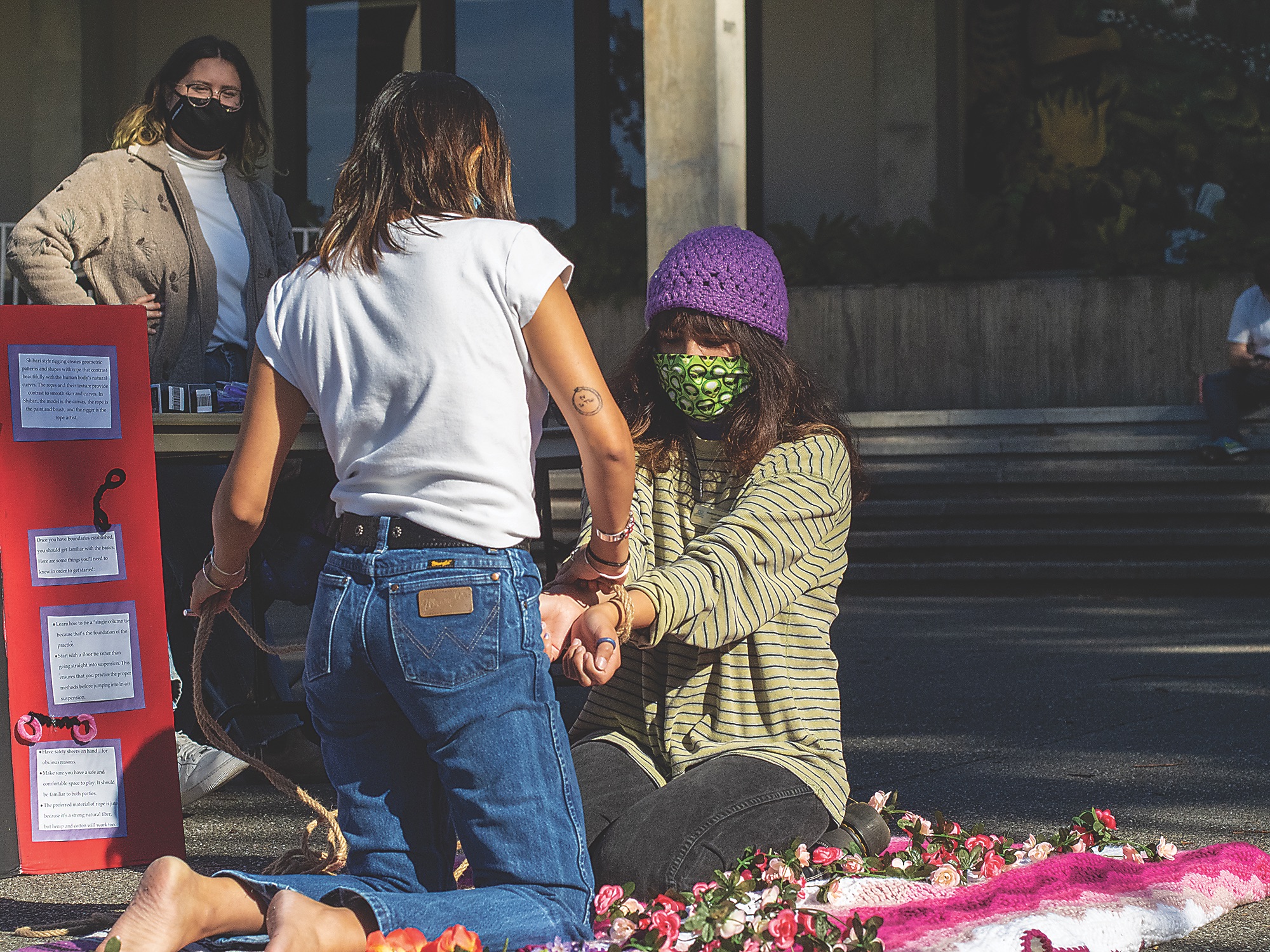
    The event included a sex toy raffle, all provided from Good Relations storefront in Eureka, free condoms and lube, CHECK-IT resource booklets, and a live shibari demonstration every hour until the event concluded. Acosta was leading the shibari demonstrations with fellow student staff members and even a student volunteer, art studio major Livia Stella Miller. The shibari demonstrations focused on the importance to use safewords during kinky sex for consent and comfort as well as tools for safety when participating in certain kinks, like scissors with bondage. Volunteers who were being tied up also did demonstrations using their safe word for breaks or to stop completely. ’Apple’ was the safe word for volunteers.

    “It was a little less itchy than I expected and really fun,” Miller said. “Kinks in particular revolve around a lot of power dynamics especially bondage so it’s important to know how to make your partner feel good and not bad, even in kinks that aren’t involved with power dynamics it’s just important to make people feel good.”

    CHECK-IT Violence Prevention was also tabling at the event and handing out booklets for supporting victims of dating violence and normalizing consent culture. CHECK-IT staff member Sophia Effa, a psychology major, was running the table and has been working with the program for around two years. Effa feels Kink The Quad has destigmatized the mentioning of kinks by just being present on campus for the student body.

    “I think it’s important because I feel like not a lot of people have access to education revolving around kinks that’s ethical and safe, so I think an organization on campus like the women’s resource center is really important for educating our students because not a lot of people have access to that,” Effa said.

    Hannah Craven, an HSU psychology major who showed up for the event and demonstration, was surprised to see how many students were also there and was glad to see education about harm reduction when using sex toys with a partner or initiating kinky sex.

    “I thought this was really interesting because its almost strange to me a school would have this,” Craven said. “In the past schools I’ve been to they have very much shied away from sex education especially in this way. It’s interactive and kink focused. I also feel like this is very inclusive to same sex partners which is nice because you know we were never really taught those things.”

    Kink the Quad is an annual event on campus every November but Acosta hopes to get more kink spaces on campus in the future while working with the women’s resource center.

    “There will definitely be more kinky events on campus in the future,” Acosta said. “I’m gonna try and plan something for the spring semester and see what happens.”

  • HSU Theatre returns

    After two years of no live performances due to COVID-19, the HSU Theatre Arts Department is returning with the musical comedy Something Rotten!, which opened on Broadway in 2015 with music by Karey and Wayne Kirkpatrick and a book by Karey Kirkpatrick and John O’Farrell. According to an email announcement:

    “Set in 1595, this hilarious show tells the story of Nick and Nigel Bottom, two brothers who are desperate to write a hit play but are stuck in the shadow of that Renaissance rock star known as “The Bard.” When a local soothsayer foretells that the future of theatre involves singing, dancing and acting at the same time, Nick and Nigel set out to write the world’s very first MUSICAL!”

    There are roles available for approximately 20 performers. Aspiring actors do not have to be in the theatre program, but must be at least 18 years old and have proof of vaccination or a negative COVID-19 test.

    “Those auditioning should prepare a monologue (maximum two minutes) and a song excerpt in English (maximum one minute) and come prepared to learn a short dance routine. Bring sheet music for the pianist (or pre-recorded accompaniment and portable speaker, etc.),” the email read.

    Auditions will take place in the Gist Hall Theatre on Sunday, Dec. 5 from 6 to 8pm and on Monday, Dec. 6 from 4 to 7pm. Callbacks will take place at 8pm on Dec. 6. Schedule an audition time by contacting stage manager Ian Aguilera at daa63@humboldt.edu.

  • Company cancels plans to build Josiah Lawson billboard

    Charmaine Lawson and Justice in Humboldt plans to raise money for a billboard located on Hwy 101 between Arcata and Eureka were cut short when the company in control of the billboard refused last-minute to accept their artwork due to its “negative opinion” on D.A. Maggie Flemming. Charmaine Lawson announced this via a post on the Justice for Josiah Facebook page on Nov. 8.

    “Censorship has delayed our project to broadcast our message to the public,” Charmaine Lawson said in the post.

    She said that for now, the money that has been raised for the billboard has been refunded back to her and Justice in Humboldt. They intend to use the funds for another billboard owned by another company or alternate published media to promote Justice In Humboldt.

    Justice in Humboldt is a new project to assist in holding County officials and institutions accountable for wrongdoings and incompetence.

    Originally, the project said on their website that they intended to strategically place the billboard on Hwy 101 between Arcata and Eureka then another along the freeway in Southern California. Their intention was to target students who return home from college to enjoy the holidays. Lawson and Justice in Humboldt hoped to prompt a discussion outside of Humboldt County as well as within the community.

    According to Justice in Humboldt, the billboard would advertise 3 points of importance. It would promote the Justice in Humboldt website, advertise the unresolved murder of David Josiah Lawson, and address the need for a Humboldt DA who fights for the rights of all equally.

    On Nov. 14 Charmaine Lawson went live on Facebook again to speak to the Justice for Josiah community.

    “I shouldn’t have to beg for justice for my child, but here i am begging for justice for my son,” Charmaine Lawson said. “Whoever is listening that can help me, I am pleading for help.”

    It’s been four and a half years since the untimely death of HSU student David Josiah Lawson. His family and friends, as well as advocates within the community have never given up hope in seeking justice for his death.

    Charmaine Lawson said on Facebook that if you made a donation towards the billboard and would like your money back or want to contribute your idea(s) on how the money should be used, please contact us at justiceinhumboldt@gmail.com.

  • Getting Polytechnical

    Over 130 students, faculty, staff, alumni, and community members tuned in to the polytechnic open forum last week. The forum provided an opportunity for students and faculty to come together and discuss perspectives. Participants came with varied feedback and concerns about the polytechnic change.

    Several graduate students came prepared with a statement and questions about the Polytechnic designation. Their concerns were about the polytechnic emphasis on Indigenous traditional ecologic knowledge (TEK). Provost Jenn Capps explained that Humboldt would be different from other polytechnics. Emphasis on unique location and relationships with TEK and CAHSS would set Humboldt apart from other polytechnic universities.

    “The focus is on making sure that we infuse concepts of sustainability traditional ecological knowledge, making sure that liberal arts and social sciences and humanities remain at the center of what we’re doing,” Capps said.

    The group of graduate students wanted to understand how the polytechnic transition will support, uplift, and provide funding for indigenous and sustainability programs. Concerns were for programs such as Native American Studies (NAS), the Indian Tribal & Educational Personnel Program (ITEPP), the Indian Natural Resources, Science and Engineering Program (INRSEP), the Food Sovereignty Lab, and Critical Race, Gender and Sexuality Studies (CRGS).

    “If TEK and Indigenous knowledge are integral to this transition, how is the university funding, staffing, and filling positions to aid these core programs?” the letter reads. “Where are the cluster hires and faculty positions for NAS and CRGS? Where are the funding initiatives that support Indigenous students and all students within these programs?”

    The forum did not have enough time to fully address these students’ questions or the letter.

    Graduate student Marlene Dusek spoke on behalf of the student group in the forum. Dusek pointed out NAS and TEK seem to be integral in the polytechnic transition, yet will not receive the same attention and funding as the new natural resources and STEM programs soon to be rolled out.

    “Native American studies and TEK is mentioned more than sustainability in the prospectus, where is the Native program state of the art remodel and buildings as a part of this plan?” Dusek asked during the forum. At the end of the forum, Dusek’s peers noted that these questions were still unanswered.

    Provost Capps explains why STEM-based programs are being propped up in this stage of the polytechnic transition.

    “In order for us to seek the designation, there were some programs that we needed to offer,” Capps said. “More engineering and technology programs, otherwise we wouldn’t be eligible for the designation, so we did. A large portion of the funding that we received was to support that.”

    The students and administration will continue to discuss these matters. In a separate interview, Capps discussed communicative efforts with students about polytechnic changes.

    “I suspect that a lot of [polytechnic] communications are going to faculty staff and community members, and not to students,” Capps said. “It makes me realize that we need to target specifically to students and perhaps do some open forum sessions.”

    Faculty member and attendee Daniel Barton spoke up about this being an opportunity to reflect on this school’s image. Barton challenged the mascot, and if it reflects Humboldt’s values.

    “Can we rethink whether we want to keep using a gendered symbol of colonial, natural resource extraction?” Barton said. “[Let’s] assemble something other than patriarchy. The lumberjack is gendered as a noun and as our mascot, violent colonialism, and exploitation of labor because that’s what the lumberjack symbolizes in a contemporary context.”

    A presenter responded that a logo change will be a further examined item. There are arguments in favor of both sides and will be covered in depth at an unspecified later time. Changes are happening university-wide, giving students and faculty opportune time to address the school’s image and values.