The Lumberjack


Students Serving The Cal Poly Humboldt Campus and Community Since 1929

Month: November 2022

  • Power does not come from the vote

    by Carlos Pedraza

    Another election and another vote for the soul of the country ends in a practical tie between Democrats and Republicans that hardly feels like a victory. In 2020, I canvassed for Bernie Sanders and was a believer in ‘voting blue no matter who.’ I was an election believer; I wanted to remove Trump and Republicans from power to stop the gutting of the EPA and welfare programs. But now I don’t see the point.

    While media pundits and people in my classes tell me of the dangers of Republican fascism and oppression, the question I want to ask people is, “What do you want?” 

    What I want is better welfare programs, but Democrats won’t pass those. Build Back Better was stopped by two Democratic senators, who went rogue by voting with Republicans. I want the working class to control its own fate. When the ruling rich raise rent and the cost of living while keeping wages low and conditions bad, the workers could challenge them through voting if a party spoke for them. But the Democrats are not and have never been a working class party. 

    Workers need to remember that our power comes not from a vote but in our numbers, words, and ability to strike. We got social security, minimum wage, and medicare not from virtuous moral politicians but from a militant working class movement organized through the parties and unions. 

    Our numbers will always be greater than the rich as capital is consolidated into fewer and fewer hands. We can demand power whenever we choose; we only need organization. In 2011 the Occupy movement was the first time in decades that wealth inequality became a political issue, but the energy died out without an organization to sustain it. Without a charismatic leader like Sanders or an economic crisis, working class issues are ignored. The only way to keep them in the political conversation is to have our own organization independent of the Democrats and Republicans.

    Anything you think you get from a Democratic government was won by a party that does not exist anymore. The party today is passive and only wants stability so capital can continue to profit; how they profit does not matter to Democrats. Democratic leaders like Pelosi and Schumer always advocate for compromise and moderation when we all know it is time for radical change. Just look at the cost of living; rent is high, food and gas prices are soaring. Why would voting for them again change anything? 

    This is why I can’t vote for Democrats anymore. Nothing changes, life gets harder and they don’t care. I had a lot of emotional energy invested in the Sanders campaign, and how that election played out was a big hit to my faith. I have heard people say to get back into the fight again, but I think elections are a dead end. 

    What about propositions? The way that they are written is meant to confuse the general public. How is a normal person supposed to know how to vote? I can’t spend hours reading 40 articles on props and tracking their supporters and funders. Our political system was made for rich landowners who did not have to work, and I think modern props reflect this. They were introduced as a progressive reform for direct democratic participation, but are now so confusing that they alienate working class voters.

    Politics does not have to begin and end at the ballot box. Participate in a union drive, join an organization independent of the two parties, most importantly develop a class consciousness. Class consciousness arises from experiences of working to pay off loans or rent. Think about how your boss and landlord profit from your labor, and who keeps the vast majority of the money you make. Talk to your co-workers and see how your interests align.

  • It’s your responsibility to vote

    by Cash Rion

    With the midterm elections ending and the votes being counted, many people are breathing sighs of relief that it’s over for the time being. It’s exhausting trying to keep up with the 24 hour news cycle and be informed about political candidates, I understand that. We see races that come down to choosing the lesser of two evils, and it feels like our vote doesn’t count. Why spend all this energy trying to be informed if it feels like we can’t make a difference?

    But voting is so incredibly important; the smaller the election, the more power your vote has! While national elections are determined by tens of thousands of votes, local elections sometimes determine the winner by single votes. The smaller the election, the smaller the voting population, and the more control you have over the issues. 

    Voter suppression efforts are alive and in full swing across the country. Use your vote for the disenfranchised; use your voting privilege to make things better. Republicans are so terrified of marginalized people voting that they are doing anything they can to silence their vote. If voting doesn’t matter, why are they trying so hard to stop it? It’s because Republicans know what we can accomplish with our hard-won voting rights. From gerrymandering to flat-out election denial and Jan. 6, Republicans are trying to call into question the validity of the electoral process.

    Voting is one of the most effective ways of making the views of the masses heard by those in power. By voting, you respect history and the sacrifices made by those who came before you, as well as activists today who continue to fight. If you believe ACAB, vote! Felons are another group who can’t vote, and a big reason for a lack of prison reform is that those who have experienced the issues are often banned from voting to change it. 

    Being informed is hard. Looking at four page ballots of names of people you’ve likely never heard of, for positions you don’t understand is daunting. But you don’t have to do it alone! Get your friends, roommates, family together and make an event out of it! Get snacks and some drinks for that salty and sugary brain energy. A word of advice? Always have a copper camel when you vote, but never have more than one copper camel when you vote! (Don’t know what that is? It’s a drink that can make voting more fun!)

    Split up the ballot: each person takes some names to research so as to not get overwhelmed, and the cheery atmosphere makes it not feel like a chore! Who knows, maybe you’ll find some particularly funny tidbits about candidates – my roommates and I discovered that one of the candidates on this past ballot has some choice poetry online! I think more candidates should write poetry, no matter how good or bad it is.

  • NASA Engineer Jessica Bowles-Martinez speaks to students on Humboldt campus

    NASA Engineer Jessica Bowles-Martinez speaks to students on Humboldt campus

    by August Linton

    Jessica Bowles-Martinez, an ex-NASA engineer and “systems engineer, aka science wrangler,” spoke to Cal Poly Humboldt students on Monday. About 20 attendees gathered in Science A 475, sipping coffee and hot chocolate as late-afternoon gray rainy light filtered through the windows.

    The seminar, “Wrangling Scientists and Engineers to Make Something Awesome – Systems Engineering” was put on by the CPH Physics Department. It focused on Bowles-Martinez’s role in various NASA projects, defining what a systems engineer’s role is in these exacting and large-scale endeavors. 

    After graduating high school in Fresno, California, Bowles-Martinez attended MIT where she majored in electrical engineering, computer science, and media studies.

    In her 13 years working at NASA’s Pasadena-based Jet Propulsion Laboratory (JPL) Bowles-Martinez was on the team for many high-profile projects. She worked on New Horizons, which was the first probe sent to explore Pluto up close, as well as the OPALS (Optical Payload for Lasercomm Science) laser data transfer project on the ISS. Her other projects include the Perseverance Mars rover and the Europa Clipper, which will fly by Jupiter’s fourth-largest satellite and assess it for markers of life. 

    As a systems engineer, Bowles-Martinez’s role on projects is to facilitate communication and collaboration between the science team, engineering team, and the team that actually builds the finished design. 

    “It’s not just checking the boxes, it’s about ‘does it all work together?’” she said. 

    There were many problems which the OPALS team had to contend with to ensure a successful outcome, according to Bowles-Martinez. The entire project, which was attached to the outside of the ISS, was a test of an experimental method of data transfer, which would add the capability to send high-res video from the station. The laser used on the module was potentially dangerous to the astronauts on board the ISS, so there needed to be extensive safety measures around its deployment. 

    “Because this laser is class 4, if an astronaut looked at it they would go blind. So we had to figure out how you make a system that will be safe enough to have it be on the space station and shoot this laser down to Earth; all the safety controls are there,” Bowles-Martinez said. “My job is to be in the middle of everyone on that type of stuff.”

    As a systems engineer on the Perseverance rover, Bowles-Martinez worked on the systems which brought the rover safely down from orbit onto the planet’s surface, as well as the systems which launched the Ingenuity Mars helicopter from the main body of the rover. 

    To physics and engineering students hoping for a career in NASA, Bowles-Martinez stressed the importance of internships and especially programming experience. 

    Systems engineering is a little-known field, but absolutely essential to every NASA endeavor. 

    “It’s a really intricate science dance, almost,” Bowles-Martinez said.

  • Personal Fave Mexican Places in HumCo

    by Steffi Puerto

    Growing up in the East Bay, specifically Oakland, I consider myself a foodie at heart. Food has always been significant to my identity, culture, relationships, and overall experience of enjoying life. My favorite memories have always been the ones where food has been involved. 

    I have lived in Humboldt County for a little over three years. Quickly, I was shocked to find out that the ethnic food here was hit or miss. I have spent a greater part of the last three years trying a variety of Mexican food that I enjoy best through my personal palate. 

    It seems like everyone has a variety of views on the best Mexican food in the area. Arcata residents who have come from every corner of California and even from out of state voice bold opinions of what they think is the best Mexican food. Some are valid, others should be reconsidered. 

    It’s one of my favorite questions to ask when I am hanging out with people, because I feel like I can get a good read on them based on their answers. Without a doubt, you’ll get a response like Rita’s or Hey Juans, which I personally would dismiss. Why would you actively participate in having olives, lettuce, and sour cream on your Mexican food? 

    So you might be wondering what Mexican food places I actually like. I have three excellent Mexican food trucks/restaurants that I would recommend to anyone who wants to enjoy some delicious food. 

    Let’s start off with Los Giles. It’s an Arcata classic. Personally, I hold Los Giles close to my heart because you can find them anywhere and everywhere. They satisfy your craving at local community or on-campus events, and even after a late night of drinking, outside Richard’s Goat. My go-to order usually consists of a California burrito de al pastor which is a burrito filled with sour cream, fries, pico de gallo, beans, rice, and the very sweet and savory al pastor. I also enjoy getting four tacos de carnitas con todo, which consists of diced onions, cilantro, and their green salsa and crispy carnitas. On the other hand, you can also never go wrong with an order of their famous steak fries: crinkle cut fries topped with sour cream, guacamole, pico de gallo, and cheese on top of their steak. Their food and ambiance are what make this place truly good. 

    Tacos del Gallo is a new gem that I discovered last spring. It’s a cute little black taco truck that parks outside of RMI outdoors right across from Eureka’s Broadway Theater. I personally love this place because it reminds me of the taco trucks from home. Thick grilled onions and slices of grilled jalapeños really add to the experience of enjoying my delicious street tacos. They also add a little bag of chips and homemade pico de gallo to really top it off. My go-to order would definitely have to be four tacos de al pastor with a delicious agua de tamarindo. They also have really good tortas, burritos, and a small yet delicious variety of agua frescas. The authenticity and friendliness of this food truck establishment are what truly make me enjoy my food. 

    Cocina Mariposa is another Eureka Mexican restaurant that I really enjoy visiting because they offer savory Michoacan style food and agua frescas of the day. They give you a side of bean dip and chips with your food. This location sits on the Eureka Municipal golf course. There’s the option to dine outdoors or inside as well as a to-go option. 

    I was introduced to this restaurant by my best friends who put me on to the place after hearing their various opinions and they were not wrong. I personally love to get al pastor street taco plate, a torta de carnitas, or a California burrito de al pastor. I enjoy that they offer an agua fresca of the day, because I know no matter which variety it is, it’ll be cold, refreshing, and sweet. I enjoy this place because it reminds me of summer: savory and vibrant flavors as well as enjoying it with the people I love the most. 

    Needless to say, these restaurants are my favorite in the county, because besides offering good food and service they are unique to themselves. I have enjoyed different aspects of food influences and vibe settings these places offer. It is what makes their establishments unique from one another. I would encourage anyone reading to try these restaurants out, by themselves or with a group of friends. Enjoy your food and the ambience of your company. Food is meant to be enjoyed and shared. 

    Los Giles 

    Follow them on Instagram @losgilestaqueria to stay up to date with their events

    Tacos del Gallo  

    1240 Broadway St, Eureka, CA 95501

    Monday – Saturday 10:00 am – 7:30 pm

    Cocina Mariposa 

    4750 Fairway Dr, Eureka, CA 95503

    Tuesday – Sunday 9:00 am – 6:00 pm

  • Cal Poly Humboldt Women’s Soccer Makes Playoffs For The First Time Since 2006

    Cal Poly Humboldt Women’s Soccer Makes Playoffs For The First Time Since 2006

    by Jake Knoeller

    It is a sunny fall afternoon on Thursday, Oct. 27; Coach Grant Landy is getting water dumped on him by his players as the final whistle sounds. His 400th win as a head coach is official.

    The 1-0 home victory over Chico State, along with other results around the league favoring Cal Poly Humboldt’s women’s soccer team, means they found a way in. They had clinched a spot in the playoffs on the final day of the season, and they would have a bigger game to play after the regular season for the first time since 2006.

    This matchup was never going to be an easy one for the Lumberjacks, with most of the game being very physical. It involved both teams keeping a balance of looking to get the first goal and go ahead, but also stay back enough to protect their net.

    In minute 65, Humboldt found their breakthrough. Forward Kylea Becker stepped up to take a corner kick from the right side, and the low ball into the box found the feet of Humboldt defender Megan Janikowski. Janikowski’s goal, her first of the season, was the difference between the teams in the end. 

    The cheers from the players and the crowd were deafening as the team rushed the field to celebrate after the final whistle. Coaches and athletic staff had their phones out checking the scores around the league to make sure they had made the playoffs for sure.

    “I remember we all ran together for a huge group hug and started chanting,” said defender Abby Borg. “The energy was electric and it was so fun to be a part of that historical moment.”

    When the news broke that the results had gone in Humboldt’s favor, Landy announced it to his players and the celebrations rang out. This playoff berth was something they worked tirelessly for. 

    “I’m so proud of the players for their effort today and for the entire season,” said Landy in an interview with Humboldt Athletics. “Today was a culmination of a lot of hard work, perseverance, and belief.”

    The women’s soccer team also managed to go undefeated at home this season, with a 6-0-3 record.

    After this win to finish off the regular season, the Jacks would travel to Chico for their playoff game. This matchup being a rematch was a result of seeding, with Chico finishing fourth and Humboldt finishing fifth. 

    The game in Chico was another tough battle for Humboldt, but this time they didn’t come out on top. A difficult second half had Humboldt trailing 1-0, when Grace Johnson got into the penalty area and found her teammate Jysabella Tolentino to level the score at 1-1.

    After conceding again in overtime, a 2-1 loss brought Humboldt’s season to a close.

    “On one hand, it was hard losing to a team we knew we could beat, we did it just days before. It was a bummer losing out so fast in the tournament,” said goalkeeper Carson Thomson-Terrel. “But on the flip side, I was so proud of everyone.”

    Although this meant the end to the season, the team’s strides forward this year were undeniable, and they are left with many positive memories.

    “I was really proud of how we responded to get the equalizing goal in the second half,” said Landy in an interview with Humboldt Athletics. “This team has been resilient all year and their work rate and belief was tremendous today.”

    Players have spoken about how Coach Landy influenced them in positive ways throughout the season. 

    “As a team, it is pretty obvious that Grant has really helped the program grow and improve,” said Thomson-Terrel. “He’s a great coach as well as a good mentor.”

    Borg just completed her first full season of conference play after tearing her ACL freshman year and credits Landy for helping her get back on track despite her injury. . 

    “He never counted me out and pushed me to be the best player that I can be,” said Borg. 

    An offseason of hard work awaits both Lumberjack soccer teams. There are a lot of promising starts to build on in 2023, and many things to be proud of. 

  • Inaugural Women’s Triathlon season wraps up

    by Dezmond Remington

    On Nov. 12, 2022, the Cal Poly Humboldt Women’s triathlon team competed in their first ever national championship in Tempe, Ariz, taking 12th out of 12 teams. It was a historic season to say the least; the first season ever for this team, the first time ever competing in triathlon for most of the athletes, and the first national championship for the program. 

    It was a hectic season, and will probably be the only season like it, according to head coach Kinsey Laine. 

    “I think it will look very different next season,” Laine said. “Some of the attitudes and characteristics of the team that we have now that I hope stay are bravery and the ‘yes’ attitudes that [the athletes] showed in terms of, ‘Oh, I’ve never tried this, but I’ll give it a try.’”

    An eager-to-learn attitude defined the season. No athletes on the team came from a pure triathlon background and everyone had things they needed to learn.  According to athlete Emilie Cates, expectations at first were low and kept rising. Over the course of the season, athletes learned skills such as proper swimming technique, using clipless pedals, or even just learning how to ride a road bike altogether. However, these experiences were not just individual gains. 

    “Just seeing the people around me and their growth is always helping [me] to learn more too,” Cates said. “You can learn off of each other. It’s just been an overall pretty positive experience.” 

    Teammate Elizabeth Odell shares this sentiment.

    “I think it’s kind of fun! I’m glad we’re, in a way, all in the same boat, kind of figuring it out together,” Odell said. “But also interesting to see because we have our strengths and most of us have one sport that we’re strong at and we give each other advice and teach each other about that sport we specialize in.”

    There were quite a few setbacks as well. Transportation to faraway competitions in Oregon, Missouri, and Colorado were very difficult to get to. Administrative holdups, such as requiring lifeguards at every practice involving open-water swimming, hindered the progression of the athletes. 

    At one competition, only one competitor from Cal Poly Humboldt finished the race after they were lapped by Division 1 athletes they were racing. Rules in the emerging sport of women’s triathlon are complex and oftentimes labyrinthine, such as a ru

    le about helmet placements during the transition between the bike and the run legs. It can be appealed, but if lost it’s a $50 fine and a disqualification from the race. 

    Even though Humboldt is a DII school, the team competed against DIII schools several times as well as some DI schools, ranked among the best in the nation. Against such competitors, defeat, while not guaranteed, is far more likely. 

    “It was cool to see just how fast people can be,” Odell said. “But I also had to take a step back and be like ‘OK, this is the…equivalent of learning how to mountain bike and then a couple months later trying to race UCI events’, but it definitely surprised me.”

    Despite all the woes, it will be a season looked back on fairly fondly. Cates recalled the night before the race in Missouri at their “safari cabin” and eating pasta out on the porch listening to Laine talk about her own past. Odell’s favorite part of the season was open-water swimming out in the bay. 

    “It’s super cool being out there because I used to think those people that go open water swimming in the bay are kind of crazy,” Odell said. “And now we’re out there doing it. And it was really fun…but also kind of scary with the jellyfish.”

    Nationals will be a proving ground for the team, who are excited to hopefully flesh out a season with many ups and downs with a resounding success. 

    “I’m really excited for that opportunity,” Laine said. “We have competed against the toughest teams in the country for our last two races. Just the chance for them to shine and show what they’ve done, and just be really proud of how far they’ve come.”

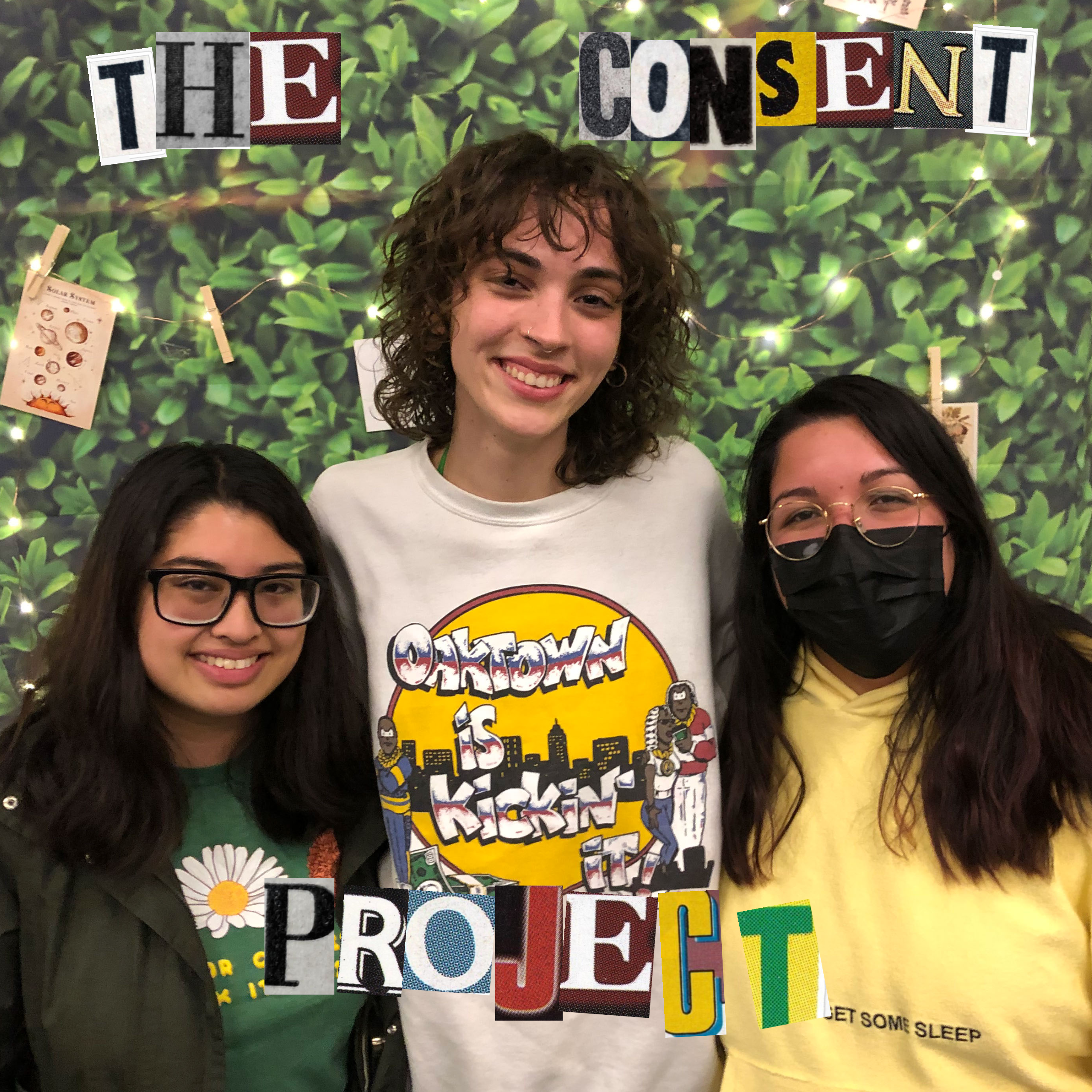
  • Cal Poly Humboldt Consent Project starts conversations

    Cal Poly Humboldt Consent Project starts conversations

    by Ione Dellos

    The tenth annual Consent Project was hosted by CHECK IT and Peer Health Education on Thursday, November 10th, to educate people about consent culture through interactive booths, art projects, and a survivor speak out. Turnout for the event was impressive considering that Peer Health had not gotten a chance to run the event since 2019 due to the pandemic. 

    As an option for those who wanted to attend the event but weren’t able to be there in person, there was an online art submissions option available. Those who were unable to attend were still given the opportunity to have their work displayed at the event if submitted before the deadline. 

    The Project had lots of fun and informative booths; attendees could learn more about consent, get connected with student resources like the Campus Advocacy Team, and even paint their own rock!

    Decorating a rock of your choosing wasn’t the only creative activity at the event. There was also a Jeans4Justice booth, where attendees could paint or draw on a pair of jeans that they had brought. 

    In the center of the Goodwin Forum, where the event was held, there was a collaborative mural. It was beautifully and carefully decorated, with flowers and foliage lining the walls. The attention to detail shone through in every corner of the room. 

    The main event was the survivor speak out, which started at 7pm. In a safe space, survivors were encouraged to speak out about situations on campus where their consent was violated, and how that can be potentially life-altering. 

    Out of respect to those who spoke, I will not include specifics of details shared, but it takes an immense amount of strength to tell one person your story, let alone a whole room full of people. 

    As a survivor, you can often feel guilty about what happened to you. You may feel that there was something that you could have done to prevent that from happening. Having a space like the Consent Project to explore those feelings with other survivors and be able to get in touch with resources like the Campus Advocacy Team is very important as it can be crucial to healing.

  • Cumming together on the quad

    Cumming together on the quad

    by Carlos Pedraza

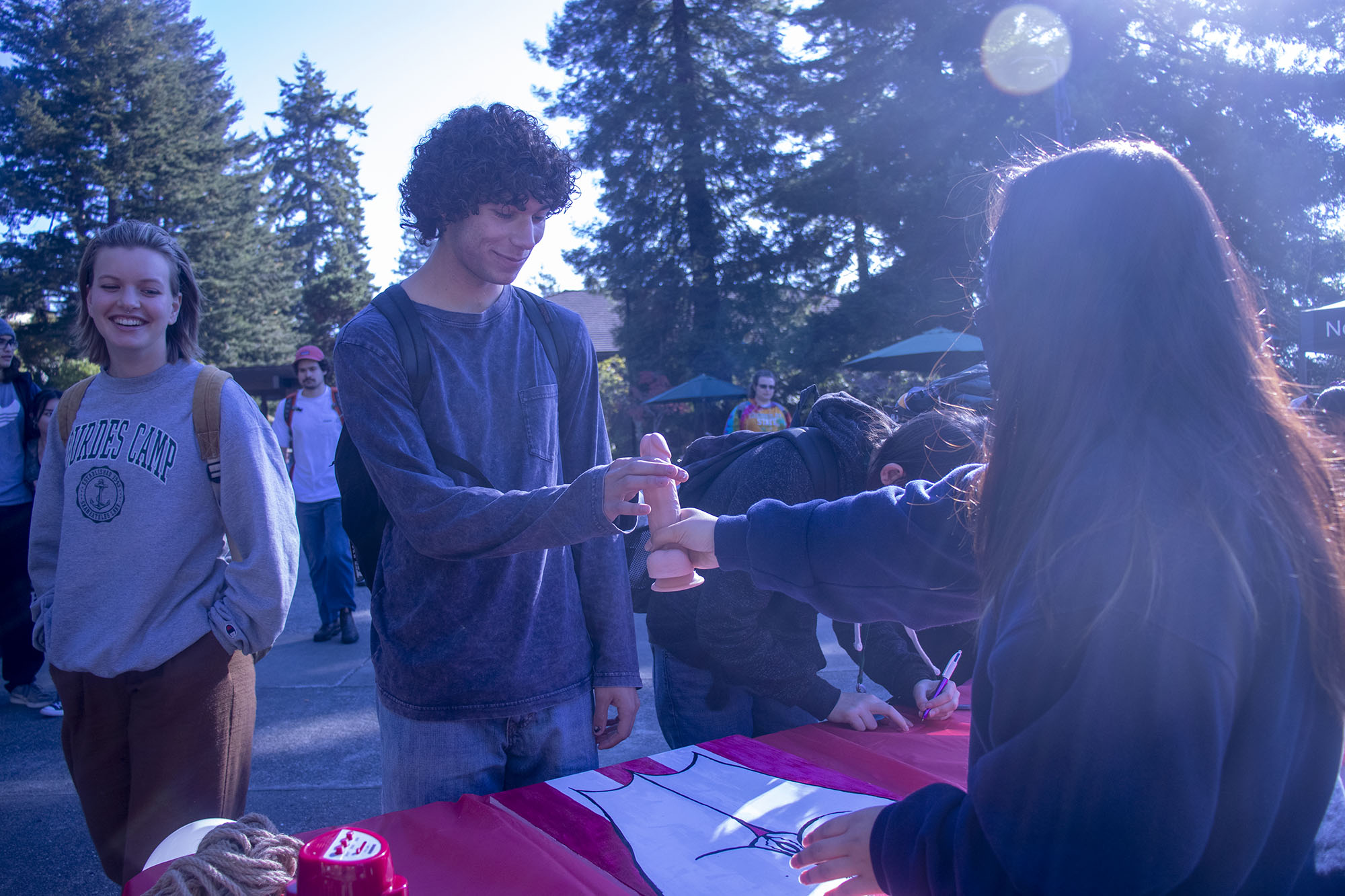
    Dildos, cock rings, and ropes, oh my! With the cooperation of the Peer Health Center, Check it, and Queer Humboldt, The Womens Resources Center hosted “Kink on the Quad” on Monday. Sex positivity was the theme of the event; it promoted open discussion of sexuality, sex education, and just plain sex, with an emphasis on violence prevention and LGTBQ+ identity. 

    There were mutiple sex-themed games for attendees, featuring pin the dildo, porn hole, and condom kerplunk. Students seemed distinctly unhesitant while holding a dildo to pin onto the image of a vagina, or when throwing bean bags into cardboard vaginas labeled with the names of popular porn categories.  

    Isabela Acosta, the Head Coordinator of Sex Health Body Politics at the WRC, did notice a difference between how students interact with the activities.  

    “Women are way more open to this,” Acosta said. “Men are so guarded and stuff.” 

    Tables covered with red table cloths had condoms, rows of sex toys and dildos pointed high in sky waiting to be grabbed. Acosta described how some students were very supportive, while others were weirded out by the dildos. Acosta wants students and people in general to be more open about sex. 

    “Just be comfortable,” Acosta said. “I know you’re having sex, we all do.” 

    Check-it and Students for Violence Sex Prevention were there to educate, not just about safe consensual sex, but also about preventing sexual violence. 

    Check-it focused on informing students on the 3D’s. The 3D’s are methods for helping someone get out of a harmful situation. They stand for “direct, delagate, and distract.” The groups saw the event as a way to open discussion on sexual violence.  

    “It opens the door for more in-depth conversation, for survivors to understand what consent is,” said the Students for Violence Sex Prevention team.

    Queer Humboldt hosted their own game to educate students on sexual identity. The game involved identifying celebrities, historical figures, and activists, along with their connection to the LGBTQ+ community. 

    “A lot of the time most people have no idea these figures are in the LGBT community,” said Avery Sidonia, a volunteer with Queer Humboldt. 

    Sidonia called the event awesome; she was excited for it since it combined fun and education in a way that got people interested. 

    “Kink on the Quad” ended with a raffle of sex toys. A huge, boisterous crowd gathered in anticipation of hearing their name and winning a free sex toy

  • Cal Poly Humboldt lab safety under scrutiny

    by Ollie Hancock

    From admin to student, everyone on campus has responsibility for the dangers of working with hazardous waste and materials. Spills, breaks, and general accidents are expected in any lab. No one can prevent a beaker from breaking, but the university should give students and employees the tools, equipment, and training to react appropriately. Instead, departments create patchwork standards without direction from the administration. A messy lab can indicate a campus-wide issue. 

    “I know that beakers break pretty often, and spills are common too. It’s eventful in there. I don’t think they filed reports for those or anything,” said Clara Lanesskog, a Cal Poly Humboldt student in a chemistry class. “We just clean it up and go on with the day.” 

    Beyond safety oversight and training in case of accidents, students need quality lab safety education. Lanesskog has seen classroom accidents escalate due to lack of risk management. Students see lab accidents frequently and don’t know how to report them.

    “Our instructor disappears a lot,” Lanesskog said. “So if we were to spill acid or something, we don’t know where to find him unless he came back.” This was the case when Lanesskog spilled acid on her leg during a lab.

    “You’re on a time limit, so you feel rushed. There’s not enough space for you to work. Everyone is bumping into each other, trying to rush, and that is how I ended up spilling,” Lanesskog said. She didn’t submit a report.

    “My professor wasn’t there, and he’s not usually there towards the end of our lab,” Lanesskog said. “Honestly, it didn’t seem like too big of a deal to me because other people have done it too.”

    On the University of California Santa Barbara EH&SS website there are public reports of every school chemistry accident and date, including near misses where no one was injured. Their transparency shows awareness and rigor regarding preventative measures. They treat each incident seriously, regardless of scale. At Humboldt, incidents have gone unreported. Only recently has the EH&SS reevaluated how professors are trained to react to incidents. According to our standard operating procedures, any incident should be reported in 24 hours. On Humboldt’s EH&SS website, there is no obvious link to the incident report form.

    Terrilyn Stoflet worked as a hazardous materials technician at Humboldt during the pandemic. In the course of their job, they often felt unsafe.

    “I don’t think we have a very good safety culture on campus,” Stoflet said. “It just never gets talked about until something bad happens.”

    They felt the campus didn’t have enough staff or administrative support to be accountable for environmental health and safety.

     In 2019, Humboldt underwent a Health and Safety audit as part of a CSU-wide investigation. The completed audit cited 21 violations, reflecting a lack of rigor in campus safety regulations. This campus is not alone. A state audit of the CSU system found that Sonoma State and Sacramento State also cited limited resources as explanation for their violations. The story was similar across CSU campuses; the state concluded that the CSU chancellor’s office was responsible. 

    “For over two decades, the University Audit has repeatedly recommended that the CSU Chancellor’s Office increase its oversight of employee and student health and safety training and inspections of laboratory equipment and workplace hazards,” read the audit report by state auditor Elaine Howle. 

    Training programs failed to check if all employees and students who handled hazardous materials and waste were certified. There was no record of which employees worked with hazardous materials, and in the stockroom, waste wasn’t consistently labeled. No self-assessments for safety were conducted in labs, and lab techs didn’t dispose of waste in a timely manner. The list of issues goes on. No serious incidents have occurred as a result, but the audit reveals a looming threat to the campus and community. 

    Sabrina Zink is the Environmental Health & Safety Services (EH&SS) coordinator and the only admin charged with attending to these issues. Zink says she was relieved when the audit brought attention to the problems.  After the audit in 2019, EH&SS planned to meet the regulations set by the CSU. Three years later, progress is unclear.

    “Before we just had a paper reporting system,” Zink said. “We worked out a new incident reporting process so we can keep track of if it was a training issue or operator error, or an issue with oversight. And reiterated to faculty that [incidents] do need to be reported.”

     Funding made available by the polytechnic transition along with an increase in the administration’s willingness to address these issues made way for some progress in Fall 2022. More administrative staff and on-the-ground technicians have since been hired by EH&SS. However, many solutions are still waiting to be rolled out. 

    “Now we have another coordinator in the EH&SS to help with implementing all the audit findings,” Zink said. “And we’re looking for another person for occupational safety to address incident follow up.” 

    After the 2019 audit of campus health and safety, the EH&SS office made a plan to introduce new training and support to address the violations found. Then, the COVID-19 pandemic shifted the EH&SS office’s priorities to managing the spread of the virus on campus. The small team was tasked with writing the trainings, mandates, and regulations that defined campus life for two years. Corrections to every-day safety policy based on the audit were left behind in the shuffle. EH&SS struggled, lacking the bandwidth and support to solve these issues on top of managing COVID-19 concerns.

    “A few years back, before this audit, I had been screaming from the mountain tops,” Zink said. “Please, someone take this seriously.”  

    Due to the fragmented nature of campus departments, there was no consistency in the content or frequency of safety training. The audit found no record of who is certified to handle hazardous materials and waste. Zink wrote trainings that were never assigned. New trainings will roll out in the spring 2023 semester, Zink says. 

     Aside from organizational problems, the campus has inadequate facilities that made some employees feel unsafe.

    “This shed, which is at facility management’s place, it’s unsafe,” Stofelt said. “What my partners and I have had to do in that shed is so stupid, and it’s dangerous. There’s a bunch of rat excrement everywhere.” Beside the rats, the shed itself has structural hazards. A set of detachable stairs leads to racks on the second level, where lab techs carry 15-gallon drums of chemicals and hazardous waste up and down.

    Hazardous waste jugs from various departments are processed in the shed, which is also full of personal protective equipment (PPE) and supplies for HAZMAT technicians. According to Zink, the shed is already outdated for campus needs. 

    “We need something more fit for our needs, especially as we grow and potentially would be generating more hazardous waste,” Zink said. “We’re going to need more space and something that doesn’t leak during the winter.” 

    There are plans to build a new shed, but no location has been chosen.

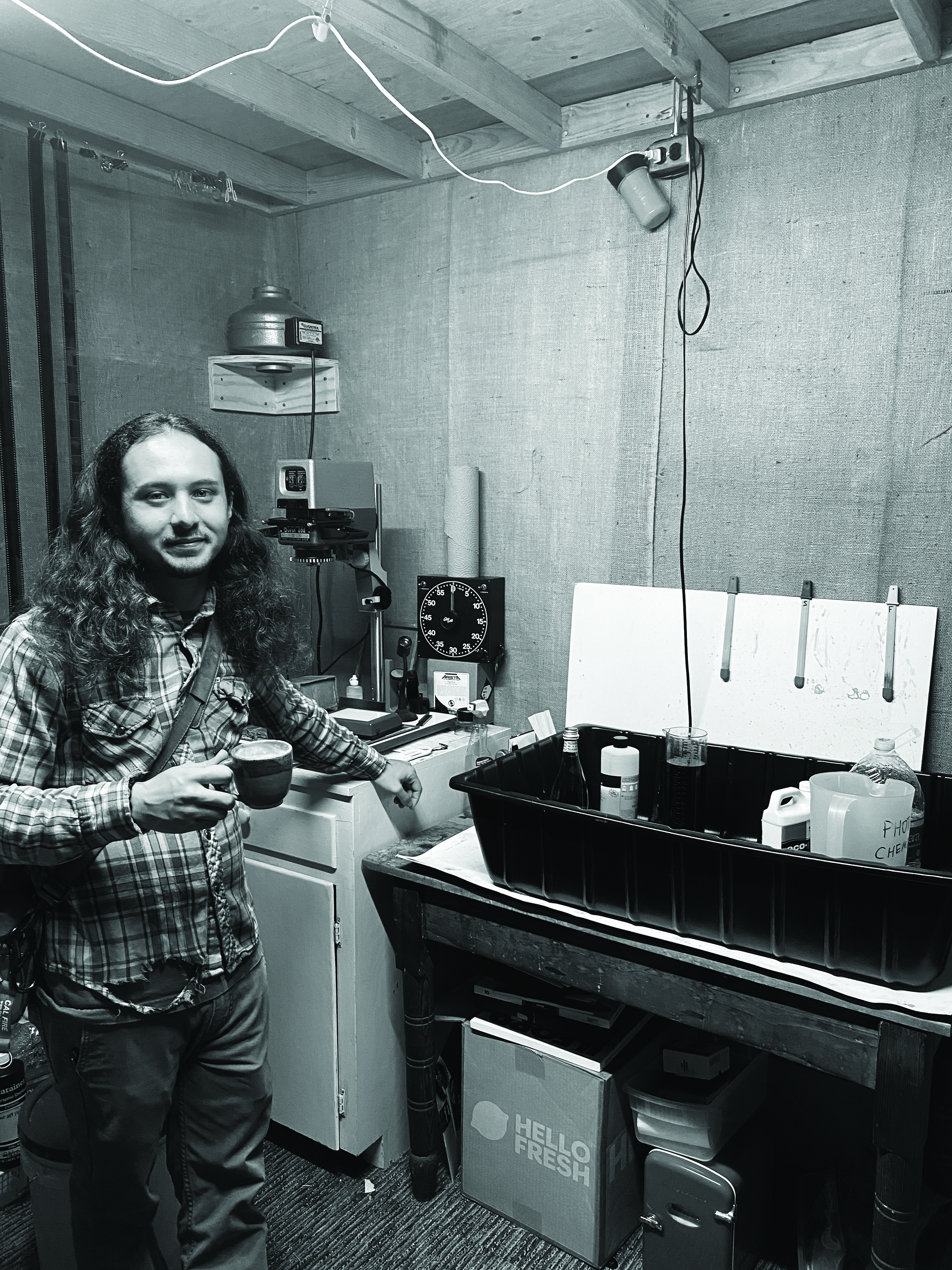
    Safety standards and regulations vary from department to department. This inconsistent system lets minor infractions slip through the cracks. Facilities often don’t relay the message to techs when bins need disposal. In the darkroom, bins of used chemicals sat full for weeks, nearly overflowing. 

    As the campus grows with polytechnic status and an emphasis on STEM classes, these issues will only grow. The EH&SS has made some progress toward addressing the issues brought up in the audit, but there is still much work to be done.

  • Cal Poly Humboldt softball alumni return to where it all started

    Cal Poly Humboldt softball alumni return to where it all started

    by Vanessa Saltos

    Ball is pitched. The crack of the bat echoes around the trees. The ball soars through the air and lands in the right center gap. Standing on second base is Izzy Starr clapping her hands and the crowd is cheering.

    “I honestly was kind of nervous, because that’s a hall of famer right there [alumni pitcher Lizzy Prescott], so I was a little nervous,” Starr said. “But I was just excited to be out there amongst all these awesome people, awesome players.” 

    On Oct. 8, the university had its annual Cal Poly Humboldt Softball Alumni Game. This event has been going on since the late 80s and it brings past and present Humboldt softball players together to play the sport they all love.

    Head Humboldt softball coach Shelli Sarchett explains that this event is about connecting the old with the new.

    “It’s really just connecting the old with the new and have a chance for the alumni to talk about their experiences, and the hardships, and the fun that they went through, and relate to the newcomers, and help them with their journey,” Sarchett said. 

    The game started at noon on the Humboldt softball field and went for nine innings. The teams were split with current CPH softball players on one team and alumni on the other. A total of about 25 alumni were in attendance, this is about half compared to years past. According to Coach Sarchett the Hall of Fame Dinner that is the night before typically has an impact on attendance. 

    “It really just depends on the year, I think next year will be different because next year the 2008 National Championship team will go in, so I think there will be more people that will come back,” Sarchett said. 

    For pitcher Emily McAdams, this is her first ever alumni game. She was from the graduating class of 2022. She felt an unsaid pressure due to her playing against her old teammates but enjoyed seeing everyone again. McAdams also had a chance to meet alumni for the first time. 

    “It was really cool cause I honestly didn’t really know any of them since I came here during COVID and I didn’t really know much about Humboldt before I committed here and played here,” McAdams said. “So it was really cool to be able to interact with them, and ask them when they played here and all of that, and just hear about their stories.”

    For Starr it was her second time playing in this event. This is her fourth year at the university. The event allowed her to reconnect with old teammates. 

     “I think my favorite moment was just seeing all my old teammates,” Starr said. “All three of them just made a huge impact on my life, and I just miss seeing them and getting to see them play.”

    The final score was CPH 18, alumni 3.

  • Humboldt International Film Festival hosts at Van Duzer Theatre

    by Lidia Grande-Ruiz

    The Humboldt International Film Festival (HIFF) team hosted a night of film sharing at the Van Duzer Theatre on November 3. The films were pulled from the HIFF archives and all have a common theme: discomfort and exploring it more through that feeling. 

    The films shown were “Simon” (2015, directed by Camille de Galbert), “Dancing with Scissors” (2019, directed by Steven Vander Meer), “Gone Sale” (2018, directed by Matt Meindel), “Aviary” (2021, directed by Lauryn Blottin), “Prey” (2018, directed by Jing Sun), and “The Quiet” (2019, directed by Radheya Jegatheva).

    “Change occurs at the point where it outweighs risks,” said Sarah Lasley, assistant film professor at CPH. “So when you are so uncomfortable that the fear of risks in change is no longer scary, we are kind of forced to make change.”

    Lasley continued to speak about the night. 

    “A lot of new wave films are intended to make the audience feel some kind of discomfort and these films occurred in a huge shift and change in sociopolitical climate,” Lasley said. “When you think about how that mixes in with discomfort, you know this idea on how discomfort outweighs risk, this change is occurring.”

    Students in the audience thought that the festival was cool and visually appealing. There were some who mentioned how certain films made them uncomfortable and freaked out, especially the film “Gone Sale,” which brings back memories of going to the mall but touches on consumerism. 

    “These nights are very successful nights because it is nice to see a variety of films coming to the school and the school has become a hub for all these international films,” said Ralph Valle, a film student and one of the co-directors of the film festival. “It is very honorable to be part of something like this. We get to distribute these films to a variety of people and it brings me joy because I get to see how people view life and movies that try to have some kind of message that they are trying to convey is pretty awesome to see.”

    All kinds of people, not just film majors, came together to see films that can resonate with everyone in some kind of way. The films emphasized that, while we may come from different backgrounds but we have one thing in common. We are impacted by what we see around us. From historical perspective to animation, at the end of the day, film brings us around and we discover at times not just people we never planned on meeting, but also a new side of ourselves.

  • Faculty union challenges TimelyMD

    by Tucker Caraway

    In the print version of this article, Dr. Loren Cannon was referred to as a psychotherapist. He should have been identified as the Cal Poly Humboldt CFA President.

    An Unfair Labor Charge has been filed against the Cal Poly Humboldt Board of Trustees on November 8th due to violations found in their contracting with Timely MD. The Public Employee Relations Board found the University in violation of government codes regarding the failure to notify Unions in contracting decisions. 

    The charge was originally filed back in October 2021 by the California Faculty Association after being made aware a contract was signed with Timely MD without their knowledge.

    “They signed this contract before meeting with CFA, the union that represents counselors, and that’s a big no-no. That’s the basis of our unfair labor practice charge,” said Loren Cannon, president of the Humboldt chapter of the California Faculty Association.

    Timely MD, also known as TimelyCare, is a Texas based counseling provider that works in conjunction with CAPS.  They provide 24/7 counseling support as well as individual counseling sessions during breaks and outside business hours. 

    “I’ve heard when you try to get an in person appointment, they refer you to TimelyCare,” said Chelsea Rios-Gomez, intern for Students for Quality Education. 

    TimelyCare has been available to Cal Poly Humboldt students since March 2022 after switching from the platform ProtoCall due to complaints of long wait times. 

    “If you’re in a mental health crisis, you don’t want to wait online. So they were looking to have something to improve that. But in doing so, they contracted with a company that isn’t just doing emergency counseling, they’re doing regular counseling, which is a union job,” Cannon said. 

    Outsourcing union jobs to out of state entities not only puts faculty at a disadvantage, but also poses a new risk to students engaging with TimelyCare. 

    “You will be finding good counselors. Not all of the counselors there are going to be bad.

    But there are some counselors, some faith based counselors, more specifically Christian counselors, who are perpetrating harm to our students,” said Rios-Gomez.

    Timely MD, while not a Christian organization,  offers faith based counseling services to Christian universities and has a working partnership with the Council for Christian Colleges and Universities. 

    “We’re outsourcing union jobs, and we’re also outsourcing responsibility for our students’ wellbeing,” Cannon said.

    Texas is a state with a reputation for anti LGBTQ+ policies and practices. Five years ago, Gavin Newsom Passed Assembly Bill 1887, which prohibits state-funded travel to Texas and 23 other states with discriminatory LGBTQ+ policies and practices. 

    “We can’t even fly to Texas for an academic conference because we’d be putting money in the Texas economy,” said Cannon. 

    Thanks to legal loopholes in state jurisdiction, students logging into TimelyCare who, for example, would want to file a Title IX lawsuit, would have to do so in Tarrant County, Texas.

    “The Council for Christian Colleges and Universities actively argues that religious colleges should be able to receive federal funding, and to be able to discriminate against LGBTQ+ students, basically saying they are not protected under title 9,” said Cannon. 

    Students for Quality Education, who work in coordination with the California Faculty Union, has been made aware of an array of discriminatory encounters on on the platform. 

    “It’s a lot of invalidating of trans identities and queerness in terms of pushing Christinaity in that way,” said Rios-Gomez.

    When it comes to addressing the needs of the Cal Poly Humboldt community, Cannon said it’s important for unions to be involved in contracting these services, so CAPS can find vetted counselors that actually understand the needs of the community they’re involved in. 

    “What is the most important thing is to value the people doing the important work on our campus,” Cannon said. 

    As of November 8th, the Board of Trustees has 20 days to respond to the complaint charges by proving they didn’t violate labor laws and union members rights. 

    “The fact that it went forward from that initial step is that the people at the PERB must think that our charge has merit, and I’m not a lawyer, but it’s pretty cut and dry without talking to us and without negotiating it,” Cannon said.

  • Humboldt college merch should be affordable for students

    by Alina Ferguson

    Cal Poly Humboldt, while having relatively affordable tuition and options for scholarships and financial aid, is still robbing its students blind with the cost of apparel, food and general items at campus stores.

    One of the ways the school robs its students is apparel. For students it costs an arm and a leg. The hoodies and tees on sale at campus stores are much too expensive for most students’ budgets. Students should be paying discounted prices for their items, as many struggle just to get by. Most students have a heavy course load, debts from tuition and living costs, and not a lot of time for work. 

    The school should be able to offer apparel to students if not for free, then at a much reduced cost. Consider all the other ways they are finding to screw us out of our money, all the options they have taken off the meal plan. Quick side rant, it used to be possible to get two milkshakes on one meal plan. Sounds unbelievable, huh? The school has stopped offering a myriad of items for their meal exchanges, limiting the amount of options students now have for the meals that are covered in the amount that they have already paid. 

    Students wearing merch are a sort of free advertisement for the school, like a sponsorship deal. Typically sponsorships include some sort of incentive, like free apparel to compensate the wearer for representing the brand.

    Since we, the students, are already paying tuition, living costs, and the cost for food, we are not getting anything for free. For representing, or sponsoring the school, we should at least get some free merch as with most sponsorships.

    This is not necessarily exclusive to Cal Poly Humboldt, as many schools charge students for apparel. The fact that students are being charged is not so much the issue, rather how much we are getting charged. It would be more tolerable if Cal Poly Humboldt offered merch for students at a reduced cost. 

    The simple answer or solution to this “non-issue” as many see it: don’t buy apparel. If it is too much money, you don’t have to buy it. But it is nice to be able to rep your school, to walk down the street flaunting that you attend a Cal Poly. I pay to go here, I’m smart enough to. It’s a nice feeling. The school should “pay it forward” and discount merch for students.

  • Native film showcase brings culture to Eureka Theater

    Native film showcase brings culture to Eureka Theater

    by August Linton

    A great, warm sense of community filled the Eureka Theater during the Da’Luk Native Film Showcase on Saturday. Native American youth, their families and community members gathered to watch short films on Indigenous life in Humboldt, produced by participants in the Voices From the Center and Weaving Culture into Wellness short film projects. These set out to document Native American people’s experiences and ways they found meaning and health by giving them the tools and assistance to set them to video.

    The critically-acclaimed 2022 short documentary “Long Line of Ladies” was also shown. It follows one Humboldt County family’s revitalization of the Karuk Ihuk ceremony, a traditional rite of passage for young women that had not been practiced in generations. 

    Da’Luk Youth Program Coordinator Vincent Feliz opened the event with information about how the program serves Indigenous youth. This division of the Northern California Indian Development Council (NCIDC) focuses on engaging youth with culturally rooted lessons and activities in Humboldt and Del Norte counties. 

    Da’Luk means ‘words and talking’ in Wiyot, a meaning that Feliz feels speaks to the ultimate purpose of the program: to connect youth to each other and ready them to participate in their community.

    The NCIDC offers mental health, anti-discrimination, and educational support to Indigenous youth, and has recently completed several mural projects in Eureka and Arcata.

    At the film showcase, community member Julian Lang also spoke about how language can build community.

    “Look for your language, that’s really important to understanding who you are as a human being; who you are as a tribe, a group, a village,” Lang said. “Not to heal but to reconnect your brain…your soul to where it’s supposed to be connected.”

    Lang then performed an opening song/prayer for the event, which he encouraged others to sing along to if they knew the words. The final descending note rang off the high ceilings with many voices.

    The Voices from the Center film project focused on native youth and elders as the subjects, consisting of many short films ranging from one minute to around five.

    One film documented the experience of building a Yurok plank house, including the healing experience of residing in a traditional Indigenous space. A brief film taught viewers to count to ten in Karuck, using acorns as visuals, while another film explored one woman’s passion for making and wearing regalia, such as bark skirts and deer-skin dresses.

    COVID-19 isolation gave one of the filmmakers, Celinda Gonzales, more time to engage in traditional practices such as beadwork. Her film compares the strength and resilience of her community with how new plants grow out of the burn scar of wildfires. 

    “You see these flowers, the trees coming back, the grasses coming back, you see beauty in the midst of that,” said Gonzales. “With COVID, even though we were all separated out, there was still beauty in that…I had more time at home, I was weaving more, talking to family more.”

    Robbie Lara’s film was about her connection with the plants in the garden she cultivates, and her realization that plants have souls like any other creature. She spoke of her gratitude to the plants for nourishing her and encouraged the audience to keep gardens.

    “It came to me that while I’m passing by all these trees and all this greenery, why can’t I give that my attention,” Lara said. “What I hope that the video does is help you have a relationship with the plant world.” 

    A second collection of short films was shown, produced by the United Indian Health Services’ Weaving Culture into Wellness project. Facilitator Jude Marshall said he started the project after traditional cultural practices improved his health. It was made possible with funding from UIHS and from the Rural Indian Health Board’s program to reduce chronic diseases in Native communities.

    Ernie Albers Jr. starred in a film about the gym that he runs, Lifted Arcata. He described his ‘human-specific’ approach to working out. This means incorporating postures and motions which he said mirror those used in traditional lifestyles.

    Another film in this collection focused on food sovereignty. Liz Lewis  shows the process of making salmon head soup, and speaks on the role of food in reclaiming one’s culture. She uses salmon fished locally by Native people and peppers from the UIHS’ Potawot Community Garden.

    “Not everyone may be able to do all the practices that we used to do, but cooking is a great way to be connected [to your culture,]” Lewis said. 

    In Willard Carlson’s film, he recounts his experiences fighting for river access and fishing rights in the 70s. 

    “We never ever want to give up our cultural identity and where we came from,” Carlson said. “I feel good, optimistic about our future…coming into this inheritance is very special.” 

    These documentaries eloquently showed how deeply supportive and connected the community around their production was through food, song, and stories.

    Daniel Aipa, the Native Hawaiian producer of the Weaving Culture into Wellness films, believes in the power of spreading Indigenous stories.

    “When you tell one story …it becomes 50 or 100 different stories, depending on what you take from it,” Aipa said. “And that’s Native culture. Our oral history is everything to us.”

    “Long Line of Ladies” was shown next, following the Allen family, their spiritual family, and their preparations for Ahtyirahm “Ahty” Allen’s Ihuk coming of age ceremony. The Ihuk is performed for Karuk young women once they have their first period, and was revived in 1995 after a long dormancy. 

    “There’s points [in life] where we all come together, and that’s something that Native people have lost,” said Pimm Tripp-Allen. “This is the kind of thing that we’re supposed to be doing for our young people.”

    The family lives in McKinleyville, and many scenes are set in familiar Humboldt locations, such as the walking path across the Mad River trestle bridge. The documentary has been shown at Sundance, SXSW, and other film festivals. It is available to stream through the end of November on New York Times Op Docs, a platform for independent short films. 

    The family felt at ease among the home crowd attendees, and opened up about funny and personal experiences they’d had during production. 

    “We’re talking to you guys a little different than we talk to other communities,” said Alme Allen. “Because we’re back home, and you’re our people.”

  • Cheer team builds pyramids, team spirit

    Cheer team builds pyramids, team spirit

    by Dezmond Remington

    The Cal Poly Humboldt Cheer team is a club team, both traveling to compete in cheer competitions and cheering at sports events on campus. Co-captain Kristi Hernandez has been with the team for three years, and competes as a main base. She’s been cheering since she was 12 years old, and says the best part is definitely the sense of competition.

    “It’s hard. You’re really nervous because you know your parents, your friends, your family, the other team you’re competing against, [they’re] probably watching you,” Hernandez said. “And the minute you step on the stage, for me, I completely forget there’s an audience. I zone out, and the only thing that’s on the mat are me, my team, and the judges. You don’t really see anything offstage either because of how bright the lights are. It’s a two minute and 30 second routine… it feels like a second, it happens so fast.”

    And it is the team that keeps the experience fun and morale high. Hernandez said her favorite memory was at a cheer camp over the summer, where they practiced with squads from other schools that are much larger than Humboldt’s squad of ten. At the end of the camp, they managed to perform just as well as the larger schools.

    “I was just really proud of everybody because I knew all of us went home with bruises and a lot of happiness and a lot of jokes,” Hernandez said. “A lot of everything. It was great.”

    Freshman flyer Jaellian Waite-Kerns feels similarly. She started cheering in seventh grade after her mother, who also cheered, introduced her to it, and she fell in love with the sport instantly. 

    “[My favorite part] is that teammate camaraderie, just the way the team interacts,” Waite-Kerns said. “It’s very different from team to team. No two teams are the same. Every year, it’s a completely different social structure. It’s always really great. Even if everyone is against you, you always have like ten people in your corner.”

    One of the most important aspects of cheering is the fact that it’s performative and subjective, but when on the sidelines the goal is oftentimes to raise people’s spirits when the team is losing.

    “It feels dope to be a cheerleader and know you’re still lifting up people’s spirits and whatnot,” Waite-Kerns said. “Even if someone’s losing, it’s still lit because you’re still happy and it helps other people.”

    Cheer is not without its detractors, who argue that it isn’t a sport. Many of the athletes on the cheer team have strong opinions about this. 

    “There’s so much conditioning we do and working out and the time it takes to even build a routine and having to hit a stunt– whatever the routine is, you have to hit it and its consistency,” Hernandez said. “We do the same thing a lot of sports do for conditioning: a lot of weightlifting, a lot of running, a lot of getting used to using our bodies [quickly], lifting things– well, people in this case. I mean, we work out just as hard as you guys do. And if you don’t believe it, you should probably consider practice.”

  • Rooted and Rising puts Black voices onstage

    Rooted and Rising puts Black voices onstage

    by Sophia Escudero

    In five years at Cal Poly Humboldt, lecturer Dionna Ndlovu had not seen a single production written by a Black playwright. On Monday, Oct. 24, she will direct one. 

    Rooted and Rising is a series of staged readings produced by CDOR and the Umoja Center for Pan African Student Excellence in collaboration with the Theatre Arts Department, beginning this semester with a reading of “Twilight: Los Angeles, 1992” by Anna Deavere Smith. Each work, including this one, will be one written by a Black writer.

    “The staged reading series will happen twice a year, once in the fall, once in the spring,” Ndlovu said. “It’s a collaboration between multiple departments, faculty, staff, students, and community members.” 

    A staged reading differs from a play in that there is not a set or full costumes. Traditionally, the cast reads off scripts, and there is minimal stage movement, allowing for a lower investment of time and energy while still creating theater. Ndlovu was personally drawn to theater by listening to and participating in staged readings.

    “When I looked at our season, I noticed we didn’t have one staged reading, and we didn’t have use of our second stage space, which is our studio theater,” Ndlovu said. “It creates an opportunity for students who are maybe looking for more performance opportunities, for faculty and staff who want to participate, at low stakes.”

    To Ndlovu, another important aspect of the staged reading format is that it is often followed by a talkback between the audience and the cast and crew. This work, she believes, is part of an important dialogue to be had in the Humboldt community. 

    “Twilight: Los Angeles, 1992” is a series of monologues about the 1992 Los Angeles Uprising, a six-day series of riots. The conflict was born from the acquittal of four police officers in the beating of Rodney King, the killing of 15-year-old Latasha Harlins by a Korean convenience store owner, and years of racial tensions, particularly between the Black and Korean communities. When the riots ended, 63 people were dead, 2,383 more were injured, and over 12,000 had been arrested. All of the monologues are derived from real interviews with people who were involved or directly affected, their words translated directly to the page. 

    Performer Jennifer Be, born in LA county, is very aware of the history behind the show. 

    “I did some research on what the production was going to be, and saw that it was something I could contribute to,” Be said. “It showcases so many perspectives and experiences after the riots, that felt like something I wanted to contribute to and be a part of.” 

    The cast is composed of eight actors, including Ndlovu, of various races, ethnicities, genders, and ages. Casting was entirely open— some actors are students, others members of the greater Humboldt community. Every performer delivers several monologues, each one from a different person’s perspective. 

    “I’m reading four folks, and they all have very contrasting backgrounds,” Be said. “They’re all from different socioeconomic experiences, and what sort of their purpose was during that time was very contrasting as well. There’s such a juxtaposition, that’s really fun, but the most important thing is that there’s something relatable about everyone’s experience.” 

    Several performers had not had any previous experience with theater. Performer Elijah Moore had not acted before, but found himself intrigued by a casting call flyer and joined the production. He says he’s proud of the opportunity to present such powerful monologues on a crucial topic. 

    “It’s groundbreaking work, of course,” Moore said. “The written word is very important, and I think highlighting the massacres and the terrible things that happened during the riots is really important to understand that police brutality is really a thing. Being able to highlight those topics in a performance is really cool.” 

    Patricia Iwok, also new to performance, found the experience to be educational as well. She had never heard about the Los Angeles Uprising before, and feels that she has learned a lot from her involvement. She particularly appreciated the staged reading format. 

    “I feel like it’s the most stress-free experience, like it’s really nice,” Iwok said. “Just reading lines, experiencing what we’re reading, I feel like that’s cool. It’s something new, something exciting.” 

    Fellow performer Binta Wright finds Rooted and Rising to be incredibly significant for Humboldt’s Black community, and an important step forward for representation locally. 

    “To be part of something like this where we are is unprecedented,” Wright said. “Humboldt has never had a focus on Black works, and stage readings have been just as scarce. It’s refreshing and I’m excited that there will be more presence of Black playwrights and stories told in theater here at Cal Poly in the near future.”

    “Twilight: Los Angeles 1992” will be performed at 7 pm Oct. 24 in the JVD Studio Theater, and is free to attend and open to everyone. The reading will be followed by a talkback with the audience.

  • Sea level rise threatens Humboldt, local government stalls

    Sea level rise threatens Humboldt, local government stalls

    by August Linton

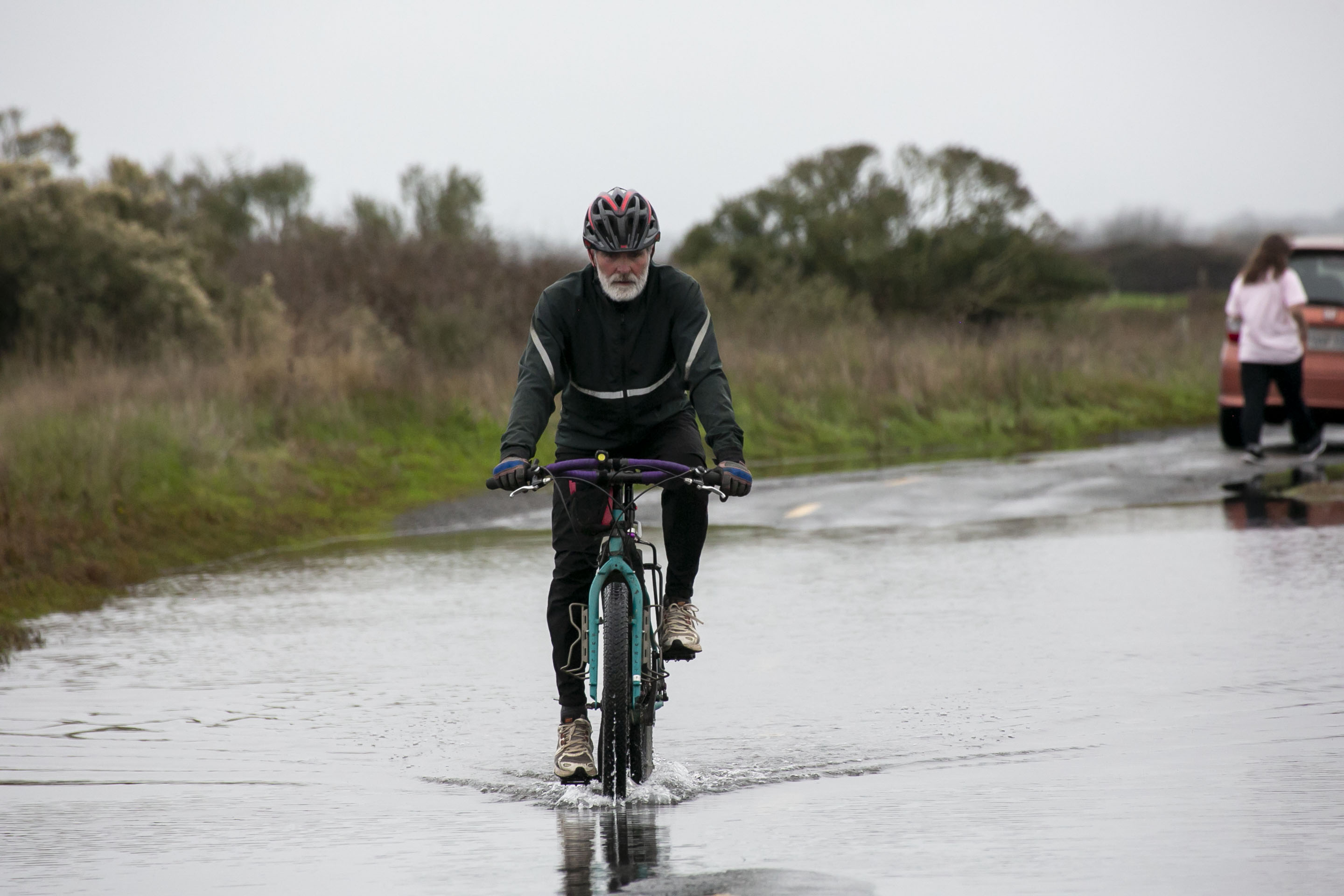
    The edges of Humboldt Bay are on the verge of being overrun by the sea. It laps at the boundaries of Highway 101, surrounds the Arcata Marsh, and sneaks around the corners of low-lying industrial areas in Eureka. 

    SINKING SHORELINE

    Humboldt’s location at the end of the Cascadia Subduction Zone makes the area more vulnerable to sea level rise than any other location on the California coast. Due to its position in a very active tectonic area and the specific activity of the surrounding plates, the Humboldt County region is steadily sinking, or subsiding. 

    The Humboldt Bay Vertical Reference System Working Group is a research group focused on identifying geology’s role in Humboldt Bay sea level rise. In a 2017 report, they found that land subsidence contributes to sea level rise 2 to 3 times more in Humboldt County than anywhere else in California. Of the 18 inch rise in sea levels that has occurred locally in the past century, an estimated 50% is due to tectonic subsidence.

    “The ocean isn’t rising any faster off of our coast than it is down in San Francisco, but we have subsidence that the rest of California doesn’t have,” said environmental planning consultant Aldaron Laird. 

    Laird has been an essential part of local sea level rise risk assessment and adaptation planning over the last decade, consulting with Humboldt County and various local districts. 

    ADAPTATION PLANNING

    Humboldt County has commissioned many reports which assess the risk that sea level rise poses to infrastructure and communities. These contextualize what different levels of sea level rise will mean, and suggest possible adaptation measures. However, the reports do not implement the adaptation measures.

    The most recent grant-funded project to tackle this issue concluded in 2019, yet none of the recommendations from that, or any other report, have been implemented. 

    An area that the reports do not touch on is the potential for industrial contamination in the bay as sea level rise reaches new areas.

    In her career as an environmental advocate, Jennifer Kalt has observed the local government’s lackluster reaction to the threat of sea level rise for years. 

    “What I have seen as a repeating theme is a lot of local jurisdictions getting grant money to develop plans and then there isn’t a plan,” said Kalt. “It’s a little depressing to see so much planning lead to nothing.”

    Michael Richardson is a supervising planner of long range planning in the Humboldt County Planning and Building Department, which is responsible for sea level rise adaptation planning. He said that the county would like to decide on terms of collaboration with other local jurisdictions before they plan to implement any sea level rise adaptation measures. Simply put, they don’t have immediate plans to do anything specific.

    “There would be a different process to go forward with getting the cities and the county on the same page and whatever agreements need to be made,” said Richardson. “What that plan looks like is what we’re still figuring out.”

    Kalt doesn’t think that the pace at which the government is moving on this issue will make a difference in time. In addition to protecting residential areas, she said that their focus should be on relocating key infrastructure. 

    “I’m concerned that a lot of the agencies that need to address these problems, there’s not a lot of political will to do what needs to be done,” said Kalt.

    There are many organizations with an interest in adapting Humboldt Bay to meet the challenge of sea level rise. The Coastal Commission, CalTrans, Humboldt County, local city governments, and even the state government of California all hold potential responsibility for the threatened areas. Kalt doesn’t see any of them doing anything to prepare.

    “It’s a Humboldt County pastime to finger-point,” said Kalt.

    A recent report released as part of the county’s Humboldt Bay Sea Level Rise Regional Planning Feasibility Study extensively details what theoretical responsibility a variety of local, state, and federal jurisdictions would have to combat sea level rise, but does not lay out a plan for collaboration. A further report is expected to be published before the end of 2022, recommending a strategy for collaboration.

    If nothing is done to adapt to the changing coastline, life around Humboldt Bay will look very different in 50 years. Infrastructure-rich areas will be reclaimed by the tide, and local government and utilities companies alike will have to find ways to work with the new bay. It is also worth considering that any adaptation measures will likely take significant time and resources to complete given their cost and scale.

    KING SALMON

    One of the first areas in Humboldt to be substantially impacted by sea level rise is the unincorporated community of King Salmon. This oceanside community is located across from the mouth of Humboldt Bay just south of Eureka, exposing it to the full brunt of tidal forces. Sunbleached houses, mobile homes, and a few small businesses line canals. It is located only 3 feet above sea level. 

    In early January 2022, there was a flooding event in King Salmon caused by king tides coinciding with the rain and high winds from a storm. Photos depict residents kayaking down the street or wading shin-deep in water. Little structural damage was done, but it was obvious that King Salmon is at extreme risk as sea levels continue to rise. 

    Parts of the community are only accessible via a single bridge on King Salmon avenue. Any tide which overtook this could leave residents with no method of escape. In a 2022 Humboldt County Civil Grand Jury report, this is predicted to occur within 3 feet of sea level rise, possible as soon as 2070.

    INFRASTRUCTURE

    Other significant infrastructure endangered by the amount of sea level rise listed in the report include PG&E’s Humboldt Bay Power Plant (HBPP) complex, Highway 101 as it traverses the bay, and water and electrical transmission lines. Several sites contaminated with industrial waste will also be reached by tides at this level.. 

    According to a report authored by Laird, 1.6 feet of sea level rise, possible by 2040, will put King Salmon underwater during king tides. Sea level rise of 3.3 feet, predicted to occur by 2065, will cause the tides to overtake most of the area daily. 

    According to Laird, the most pressing threat to King Salmon is whether utilities will continue to be available to its residents. “It only takes one utility to stop providing service and you wouldn’t be able to live there anymore,” he said. 

    PG&E’s Humboldt Bay Generating Station, located in King Salmon, supplies power to around 67,000 people. It is predicted to be threatened by king tides by 2065. The plant will have to be relocated or otherwise protected from the tides in the near future if it is to continue supplying power to Humboldt County.

    The Humboldt Bay Independent Spent Fuel Storage Installation, a nuclear waste storage facility, is located on the HBPP campus. It houses the spent fuel from the Bay Generating Station’s nuclear predecessor. There are currently no plans to relocate the spent nuclear fuel stored there.

    HERE AND NOW

    Participants in the Humboldt Baykeeper’s King Tides Photo Initiative have found evidence of high water levels affecting Humboldt County here and now. Founded in 2004, Humboldt Baykeeper is an advocacy organization which focuses on preserving coastal resources around the bay. They monitor levels of contaminants present in the bay, assess new industrial developments, and catalog the effects of sea level rise. 

    The King Tides Photo Initiative encourages members of the community to document areas inundated by high tide levels. In many of  these photos, residential areas around the bay are actively being overrun by the sea. Some of the images aggregated on Baykeeper’s Facebook page show the Highway 255 bridge over Mad River Slough nearly overtopped, Jackson Ranch Road in the Arcata Bottoms covered with water, and waves crashing over a parking lot at the Arcata Marsh.

    The Highway 101 corridor is one of the areas where tidal inundation is starkly visible. Despite the bay’s encroachment, there are ongoing plans to extend the Humboldt Bay Trail along that same strip to reach Eureka. 

    DIKED SHORELINE

    Humboldt County and the Eel River Delta are uniquely vulnerable to sea level rise. The historical legacy of diking the shoreline in order to create more usable land has led to a large concentration of critical infrastructure in former salt marsh lands, according to Laird.

    A large portion of Humboldt County’s critical infrastructure is concentrated in former salt marsh lands. This land is made accessible and flood-proofed by a system of dikes which will not stand up to sea level rise.

    “Highway 101, Highway 255, municipal water lines, wastewater treatment lines, natural gas lines, optical fiber lines; all of this infrastructure is built on that former tideland which is prevented from saltwater inundation only by the diked shoreline,” said Laird. 

    The location of this infrastructure in former tidelands means that a breach in any one dike could result in the entire area being flooded. “We don’t have to wait for sea level rise to see the impacts of reclaiming the diked former tidelands,” said Laird. 

    Even if every dike around the bay holds against today’s water levels, they will be overtopped by 2 to 3 feet of sea level rise by 2040 at the earliest, and 2060 at the latest. Additionally, there is no bay-wide district in charge of maintaining the dikes. Instead, over 100 shoreline parcels are individually managed by local jurisdictions. 

    It costs millions of dollars to rebuild even one mile of diked shoreline, and the raw materials to rebuild are not readily available in the quantities that would be needed.

    “If we can’t address these and do anything about it, I think the first thing that’s going to happen is the dikes…they’re going to fail,” said Laird. “They’re going to breach and the bay is going to reclaim the 7 to 9 thousand acres of tide lands that used to be part of it. It’s the areas that we gobbled up from the bay over a century ago, those are the ones that are most vulnerable.”
  • The Campus Collector 

    The Campus Collector 

    by Alana Hackman

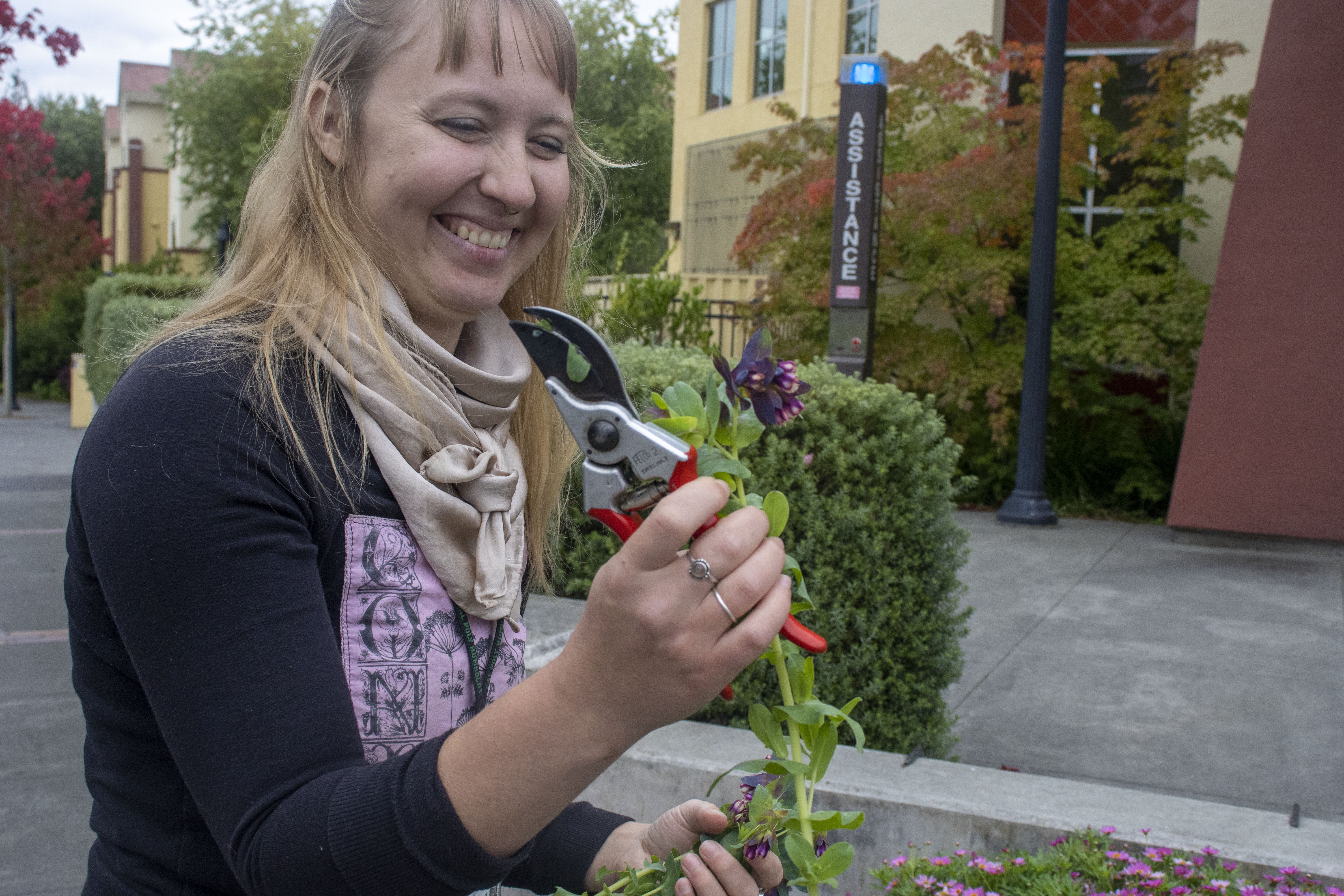
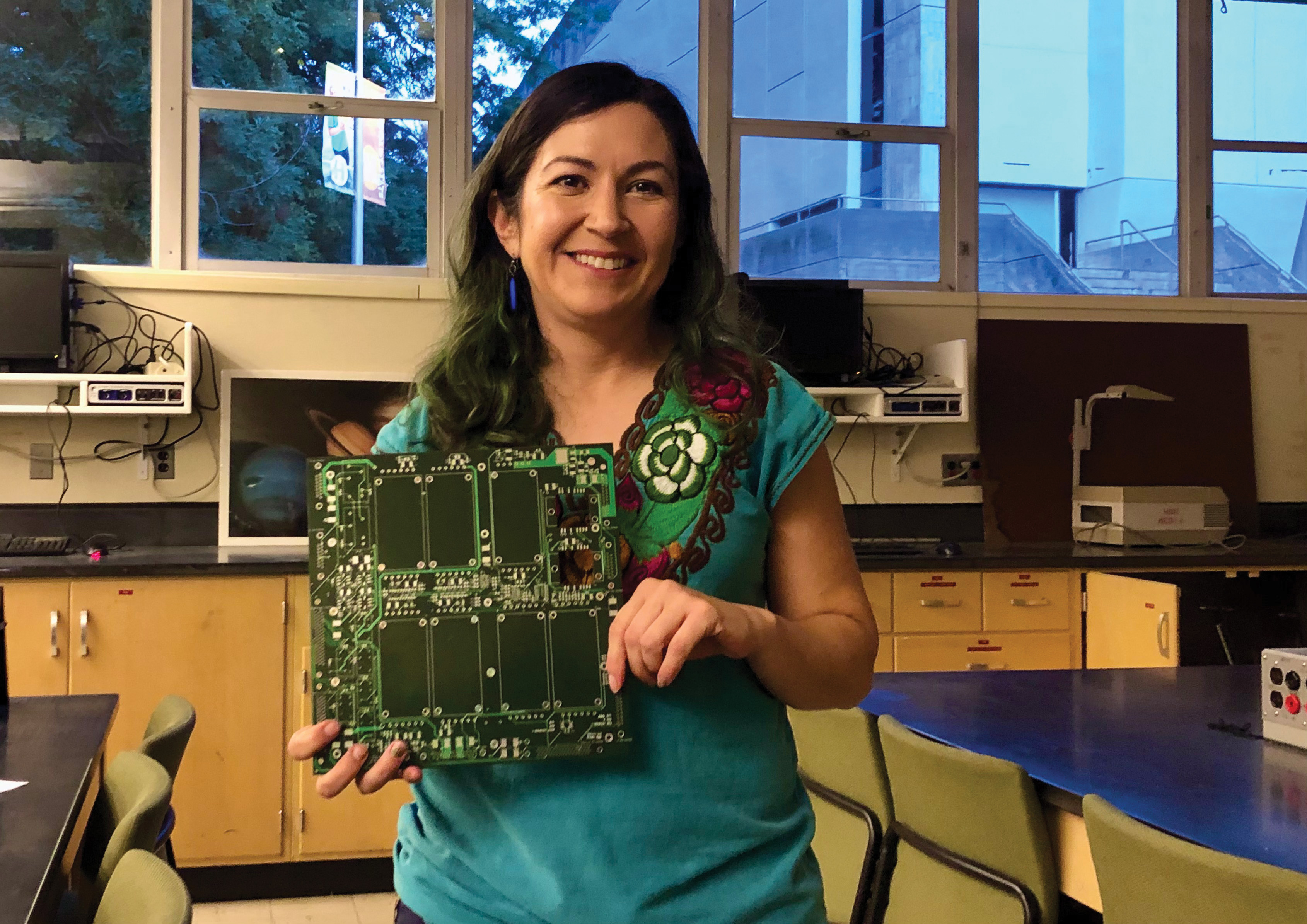
    Sunday mornings, you’ll find most college students tucked away in their beds catching up on sleep, or maybe packing away their notes for a long day at the library.  Nearly every Sunday morning you can find Heather Davis perusing campus bushes and trees; wielding red Felco pruners, or “snips” as she likes to call them, in one hand and a clump of wrinkly brown paper grocery bags in the other. 

    Davis isn’t going on a big grocery trip or planning to do any landscaping, rather she is harvesting plant specimens around campus for botany majors and BOT 350 (Plant Taxonomy) students. Davis is the plant collector for Dr. Oscar Vargas’s Plant Taxonomy class this year. 

    “The labs are Monday, Tuesday, Wednesday, and Thursday,” said Davis. “So I usually collect Sunday for Monday and Tuesday labs and then I collect Tuesday for Wednesday and Thursday labs. 

    With over 120 students enrolled in plant taxonomy this semester, Davis has her hands full nearly every week. On top of being a botany student herself, the Tulsa, Oklahoma native is balancing her two children with the 16 units she’s taking this semester. She made her way to Humboldt county nearly a decade ago in the pursuit of organic farming and decided to start studying for her degree in botany in 2019.

    “I was really interested in organic farming and more natural practices, everything in the Midwest is super mono-cropped and sprayed and really gnarly,” said Davis. “A friend was here in Willow Creek working for a farmer and they were like you should come check it out and like, be a part of the community here so we came out here and worked for that farmer for two seasons.”  

    Davis’s passion for plant collecting shows. She comes to Science D nearly every Sunday around 9:30 a.m, bringing along her infectious smile and a bright blue stainless steel mug decorated with an artistic owl sticker. There are dried leaves carefully placed in the back of her iPhone case, and she sports a black long sleeve shirt printed with various weeds and flowers as her uniform of choice. 

    Davis usually begins her collection process by making her way into the Plant Taxonomy storage room located in room 153 in Science D, to prepare large clear bins with moist paper towels for collection storage. The room has rows of labeled jars filled with dried leaves, stems, and clippings. Some are simple masking tape categories, but there are also some printed skulls and crossbones, warning handlers of the plant’s poisonous properties. 

    Davis was inspired by her previous botany professors to pursue this job, Dr. Oscar Vargas and Stefani Brandt. She was especially interested after taking the plant taxonomy lab for herself.

    “Both of them are amazing instructors, they were super inspiring, Stephanie especially,” said Davis. “I was like ‘aw I wanna be a part of this but I didn’t realize there was a plant collector until they offered the job up to the students in the class”

    Davis isn’t afraid to dive headfirst into her collecting job, she haphazardly snips away different flowers and shrubs surrounding the Natural Resources building and College Creek Marketplace. She climbs trees to collect specific branches and tastes the tart huckleberries around campus before collecting them for storage. Most of her collecting is done on campus, but she sometimes can make her way up to Trinidad for specific specimens.

    “I collect all over the place,” said Davis. “Campus mostly cause there’s a lot of really awesome plants already growing here but there’s a few like invasive or cultivars that they need for the lab, so I’ll end up going to the marsh or sometimes random people’s yards around town, a little reconnaissance.”

    Davis appreciates this position for allowing her to explore the nooks and crannies on campus and doesn’t seem to mind the business it brings into her already hectic schedule of being a mom and student in STEM.

    “I think it’s really cool to walk around campus and see how many plants are here. Before I started the position I was like ‘it’s going to be so hard to find all these plants, like campus is all Rhododendrons,’ said Davis. “Then I started walking around and these plants are everywhere, it’s so cool to be like ‘Oh Hey I didn’t see you before.’” 

    Davis also mentioned sharing her love of plants with her children as well.

    “My kids get involved, if you come in here you’ll definitely see them walking around with giant plants, said Davis. “They really love it, they’re inspired by science so it’s really fun to bring them in, they can look at the microscopes and see all the jarred plant specimens in the prep room and stuff.”

    Davis is the embodiment of finding joy in your career. Her bubbly personality and vast knowledge of native plants, grasses, and even weeds is hard to ignore in any conversation with her. She’s become an expert at balancing work and play in her jam packed schedule.

    “It’s definitely a ton of work being a botany major or a stem major in general but it’s so worth it,” said Davis. “I think it’s really cool to see that there’s plant collecting happening, and that there are these really fun jobs that you can do on campus and I’m inspired and love it.”

  • She Kills Monsters: not a Nat 20

    She Kills Monsters: not a Nat 20

    by August Linton

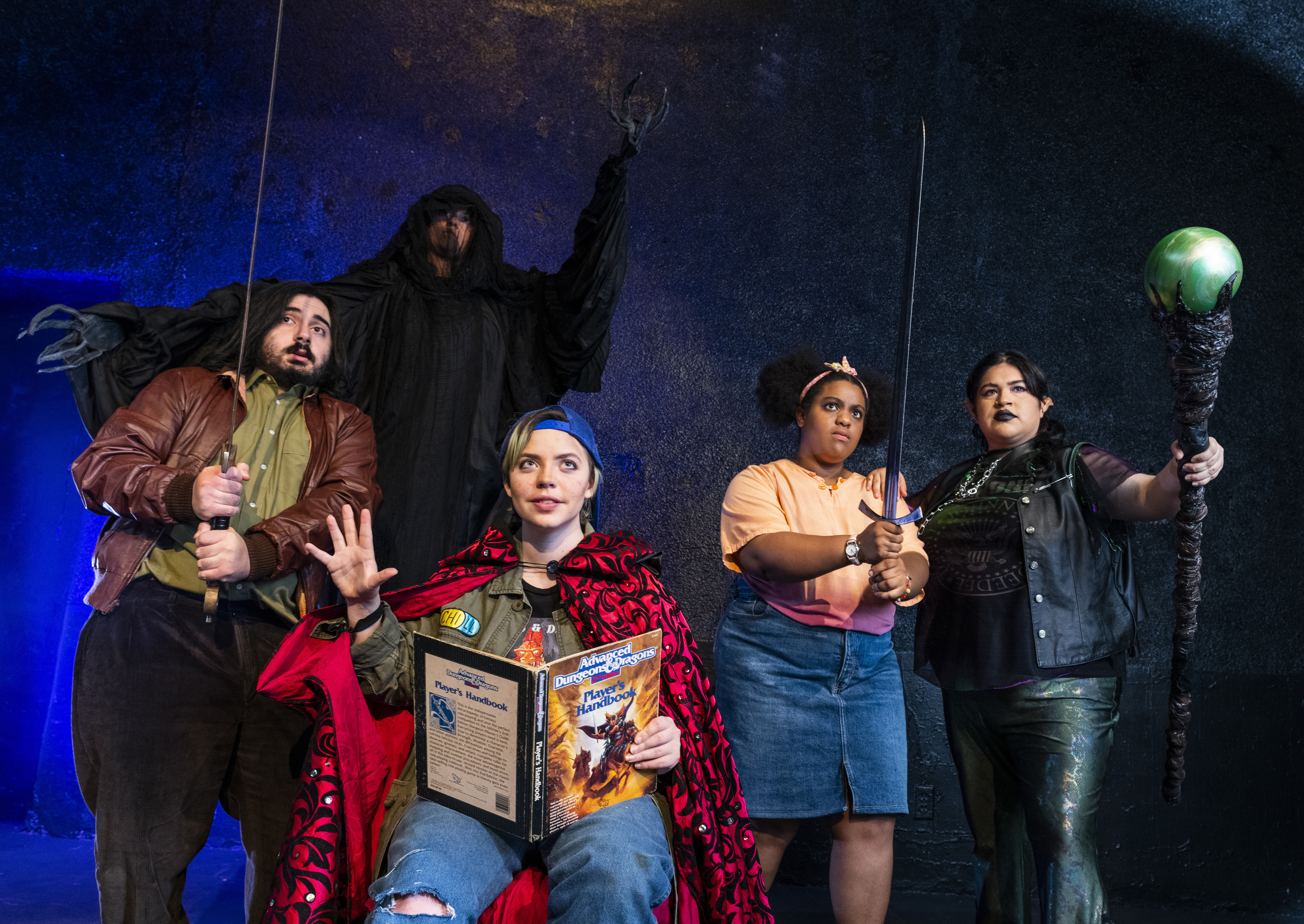
    In the hours before I attended the opening night of She Kills Monsters, I was excited. Live theater has been absent from my life, and the chance to see people perform a play was one I relished. But I didn’t enjoy this production for many reasons, mostly stemming from an amateurish air, and a lack of sensitivity in its queer representation.

    Certain elements of the show’s queerness were successful. The relationship between Tillius the Paladin (Geneva Bell) and Lilith the Demon Queen (Kyrstie Obiso) and their real-world counterparts was surprising and wonderful in its intimacy. As someone who was a nerdy gay teenager, I saw myself in their fear, their yearning. It affected me to see a gay kiss on stage— I hadn’t before. Queerness often intersects with desire to escape into fantasy, and I saw that genuinely represented in She Kills Monsters.

    The decision to cast one of the succubus villains, Evil Tommy (played by Oliver David) as a gay man felt strange considering the role this character occupies. The character is regularly called Evil Tina and played by a female actress. I found myself uncomfortable and struggling with cognitive dissonance as an obviously queer-coded character bullied, screamed slurs at, and borderline sexually harassed another character. 

    The stage combat, too, left me wanting something more. It’s evident that the cast spent blood, sweat, and tears on choreographing and practicing the show’s many fights, but many stretched my suspension of disbelief. Swords swung three feet from their targets, while victims lowered themselves to the ground rather than falling. A show with such a focus on its fights deserved better.

    The production design, however, impressed me and greatly increased my enjoyment of the show. The boss monster props especially charmed and impressed me. The undulating fabric-covered frame of the gelatinous cube, intensely staring papier mache orb of the beholder, and numerous large dragon heads of the final boss fight wow and amaze in cinematic fashion. 

    Other elements of the production seemed unfinished or fell flat, including sometimes jarring sound design and inconsistent costuming. This gave She Kills Monsters a distinctly high school play feel, despite the myriad uses of the word fuck. 

    The age of She Kills Monsters as a script showed in its dialogue and in its ideology. Released in 2011 and set in 1995, it has many elements and jokes which fell flat. Why does the main character Agnes (Miah Carter) treat her sister’s gayness with disbelief and fear? The politics of dating and marriage in Agnes and Miles’ (Stephan Chittenden) relationship also felt dated, and weirdly emphasized. And what was with that joke about Miles touching his girlfriend’s younger sister?

    Despite this, Bell and Obiso as Tilly and Lilith were two standouts, bringing a wide variety of attitudes to their characters in both the real world and the dream world. The character of the Great Mage Steve (Maverick Cheney) deserves a special shout out for being a consistent source of laughs every time he flopped onto the stage to be killed in yet another gruesome way. Vera (Elena German) also very much embodied the role of high school guidance counselor, and drew laughs with her creative use of a rolling chair. However, much of the ensemble’s acting didn’t impress me, lacking physicality and emotion. She Kills Monsters has an emotional core of loss and drama that felt smothered by the production’s issues.

    At the end of the show, about a quarter of the audience stood up, attempting to trigger a standing ovation. It didn’t happen.

  • Ferndale locals open community darkroom

    Ferndale locals open community darkroom

    by Jack Hallinan

    Artists Ryan Farmer and Samm Melton plan to fill the void of community-accessible darkrooms in Humboldt County with a photography studio based out of Ferndale. Their goal is to provide a space which will serve as both an educational and communal studio for photographers working with film, as well as a rentable darkroom for independent artists.

    “We know that it’s not going to be perfect for everything, but it is going to be a spot that people can learn,” said Farmer as he navigated the space. “We can do classes, we can talk about the concepts of everything, and then if somebody has their own personal projects or product photography, any sort of thing that they need a studio space, they can rent it out.” 

     The studio will be based out of the garage in the Main Street building that Farmer and Melton currently work out of. While the space is limited, the artists aim to meet the demands of the local photography community. The facility will contain a small studio, a gallery and a darkroom.

    For artists working within the medium of analog photography in Humboldt County, resources such as studio spaces and film supply stores have been scarce. Working with film photography necessitates the use of a darkroom, a space which requires complete darkness, ventilation, and the use of film processing chemicals, factors which make it extremely difficult for photographers to practice their art at home independently. 

    While there is an on-campus photography lab and darkroom at Cal Poly Humboldt, these resources are accessible only to students enrolled in photography classes. This has historically served as one of the only functioning analog photography studios in the county.

    Another major focus for Farmer and Melton is sustainability. The chemicals that are used for film development, such as developer, are not environmentally friendly, and they hope to reduce their environmental footprint by exploring more sustainable methods of film processing. 

    “There’s a lot of potential in creating developers that are plant-based, as well as using things like coffee grounds to break down developers,” Farmer said. “Where we’re located thankfully has a lot of water at the end of the Eel River Valley, and a community of ecologically minded people that are supporting us, whether that be providing the wood to make box cameras, or the gardens to grow plants for chemistry. With analog photography comes a large bit of waste, and we know that it’s important to think of the future and lower that footprint.” 

    Farmer and Melton are taking both locals and traveling artists into account when establishing prices for use of the darkroom.

     “We’ve talked about offering the ability to be a part of a membership that will provide a significant discount on the hourly rentals of the darkroom space, or for people that are passing through the area to be able to just rent it out as a one-time deal,” Farmer said. “So it not only supports local people that wanna use it regularly, but people that are passing through and have a use for either a professional studio or the darkroom.” 

    Farmer and Melton hope to have their darkroom available to the public in the coming months. In the meantime, they are providing film processing and scanning services, including color film, through their personal studio located in the Mind’s Eye Coffee Lounge on Main Street.

  • Ren Faire: Be There or Be Squire

    Ren Faire: Be There or Be Squire

    by Ione Dellos

    The Medieval Festival of Courage graced the Blue Lake Horse Arena this weekend with shining knights, horseback archery, axe throwing, and of course, a reason to don your frilliest skirt. A good ren faire is a wonderful occasion to dress up, dance around to medieval music, and beef up your collection of linen shirts. The event was put on by the Coastal Grove Charter School Parent Organization.

    The knights looked very impressive in their shimmering suits of armor, adorned with chainmail and plumes sprouting from their helmets. I was originally under the impression that they would be attempting to knock each other off of their horses, but “full-contact jousting” is apparently the knights attempting to break each other’s lances. Watching the jousting was still very entertaining, and I briefly felt like I was in the 1500’s and could catch the bubonic plague at any moment. 

    Now I understand why peasants would watch medieval sporting events with such fervor! Observing two men ride towards each other with long, dangerous sticks on horseback is an invigorating affair to witness. The horses had beautiful, luscious coats that were adorned with colorful capes sporting the knights’ coats of arms, and had braided manes in fantastical patterns. 

    Theodore Duquette, one of the knights that participated in Sunday’s events, has been jousting for over twenty-two years. He goes by the stage name Sir Theodore, and his eternal opponent in all matches was the nefarious Sir Tyler. Sir Theodore first dislocated his shoulder falling off a horse, and says he’s since repeated the injury over 26 times during the course of one year. His right arm is shorter than his left arm due to the process it took to rebuild his shoulder, where the surgeons over-tightened his muscles to keep his arm together so he could continue jousting. 

    To get the perspective of what it’s like to work the Faire and not be able to enjoy it as an attendee, I asked some stall merchants how their weekend had been. 

    Sarah Borok, who worked at an apple cider stand, still had cider from the presses dripping off of her hands when we talked. This is her eighth year working for events like the Medieval Festival of Courage. 

    “We are [overwhelmed],” Borok said. “Yesterday was pretty bad, we came home and we were all hoarse. It was crazy!” 

    Medieval vittles available at the Faire included caramel apples, elotes, and various whimsical meats roasted on a large dragon-shaped grill. Including snacks such as “Dragon on a Stick,” and “Beast on a Stick,” these were sold to benefit the Coastal Grove Charter School Parent Organization.

    The Society for Creative Anachronism had also set up a tent at the Faire, showcasing recreation and craftsmanship of pre-seventeenth century skills and culture. 

    According to their website, SCA is “an inclusive community pursuing research and re-creation of pre-seventeenth century skills, arts, combat and culture.” 

    Evin Skidmore, a local SCA member, showed me around their tent, which was adorned with various works of craftsmanship and art. He showed a gauntlet that was gifted to him back when he first became involved with SCA, and told me that the most important part about the group is to keep showing up even when you feel intimidated.

    “It can be a little overwhelming and intimidating when you first get started, but you just have to show up!” Skidmore said.

    Despite how dusty it was, I would say that I had a pretty good time at the Ren Faire. My main qualm is that it did not seem very accessible for disabled people, and the lines for water were very long to stand in. The ground around the Blue Lake Horse Arena was also very uneven, which would make it very difficult to navigate in a wheelchair.

  • Close-knit friends

    Close-knit friends

    by Victoria Olsen

    Tucked away on the second floor of the library, students gather with plastic needles and metalhooks to partake in the weekly Cal Poly Humboldt knitting group, Close-Knit Friends. This is the group’s first year back since the COVID-19 shutdown in 2020. The group was founded by Katrina Maynez, who started knitting in middle school and has enjoyed it ever since. 

    “I love doing different crafts and such, and so I really wanted to have a space where people could be creative and have that time to really be themselves and just relax and destress,” Maynez said. 

    Knitting needles and crochet hooks as well as yarn are all provided. They also provide “how-to” books and a bunch of other books with pattern ideas and ways to knit or crochet different items. 

    You are also welcome to bring your own supplies and projects if you have them.  

    Haleigh Singleton was one of many people at this event, but one of the few crocheters.

    “I taught myself during COVID, and then I’m kind of relearning as we speak,” Singleton said, intently focused on her project. 

    Close-Knit Friends welcomes all skill-levels of knitters and crocheters. If you are a pro, you are more than welcome to come by and relax with everyone. Or if you are interested in learning, they are more than happy to get you started. 

    Julien Jones’s first time ever knitting was a week prior, and they’d already made tremendous progress on their project. 

    Emma Lowe was one of the other few crocheters among the group and was working on a fairly elaborate cardigan.

    “I love crocheting, and I came last week and they taught me how to knit, so that was really cool,” Lowe said. 

    There were a variety of skill levels. Some had been at this for years, others a few months, some a week or so, and others were in the process of learning.  

    If you are interested in knitting or crocheting projects and also interested in volunteering, Y.E.S. provides a knitting group every Wednesday from 12-12:50 pm. in the library basement, Suite 1. There they work on projects such as scarves, gloves, socks, hats, etc to donate. 

    If you are feeling crafty and happen to have a free afternoon on Mondays check out “Close-Knit Friends” in the Makerspace on the second floor of the Library in room 205. They meet every Monday from 3-5 pm. 

  • Passionate environmental educator Brooke Schryver dies at 25

    Passionate environmental educator Brooke Schryver dies at 25

    by August Linton

    Brooke Schryver, a beloved environmental educator, photographer, and Cal Poly Humboldt student, died on Sunday, May 29, 2022 while hiking the Lost Coast trail. She was 25 years old.

    Schryver was a bright spot in the lives of the people who knew her. She loved guiding people to share in her love of nature, and planned to work in environmental education and interpretation once she finished her degrees in Anthropology and Environmental Science & Management at CPH. 

    “She was enthused about the natural world to where her excitement was contagious,” said fellow backcountry wilderness ranger Johnathon Macias. 

    Schryver’s long-time best friend and boyfriend Andew Weisner remembers how all-encompassing her love for nature was.

    “Except for invasive plant species,” he said. “She didn’t like those very much.” 

    Macias said that Schryver’s excitement about the world and her job as a nature educator helped him get out of his shell. One of Schryver’s greatest and most well-known talents was sharing her joy with other people. 

    Yosemite National Park is where she hoped to work, interpreting and protecting the natural world and reveling in its beauty. 

    Schryver channeled her connection with the natural world into art through her photography. She loved taking pictures since she was small, shooting with a family member’s old camera. Weisner remembers that she “always had a camera in her hands.” She was known to constantly borrow anyone’s phone with a better camera than hers to take pictures. Her photos can be found on her Instagram, @b_photohappy.

    Poetry was another passion for Schryver, it helped her to process her emotions. She wrote small accompanying poems for some of her published photography.

    Schryver’s personality was strong and infectiously joyous. Many who knew her mention her long-held magpie-like habit of collecting shiny objects, and admire her willingness to voice her many strong opinions. 

    “She did everything she did without judgment,” said Weisner. 

    Schryver was an involved and vibrant member of every community she chose to be a part of. During her time at West Valley Community College, she founded their Park Management Club. She also was heavily involved in volunteer work at Humboldt and elsewhere: she went to Y.E.S. events, worked at creek cleanups, and regularly gave her time to friends in need. 

    CPH Student Emily Chao commented on Schryver’s online obituary: “Brooke was my eyes. She gave me my independence.”

    Heidi McFarland, one of Schryver’s professors at West Valley College, also commented: “After our family lost our home to the CZU fire…[she] helped us work on our property to clear trees, and sift through the rubble – of course looking for shiny things.”

    Many remember her willingness to help, always with gentleness and a smile. She was an environmental steward, an outdoor leader, and a mentor.

    Schryver’s legacy is one of powerful, pure love for nature education, and for nature itself. She wanted to make our world a better place, and dedicated both her heart and her time to that cause.