HIFF steals the spotlight in another show-stopping debut
By Julia Kelm and Ariana Wilson
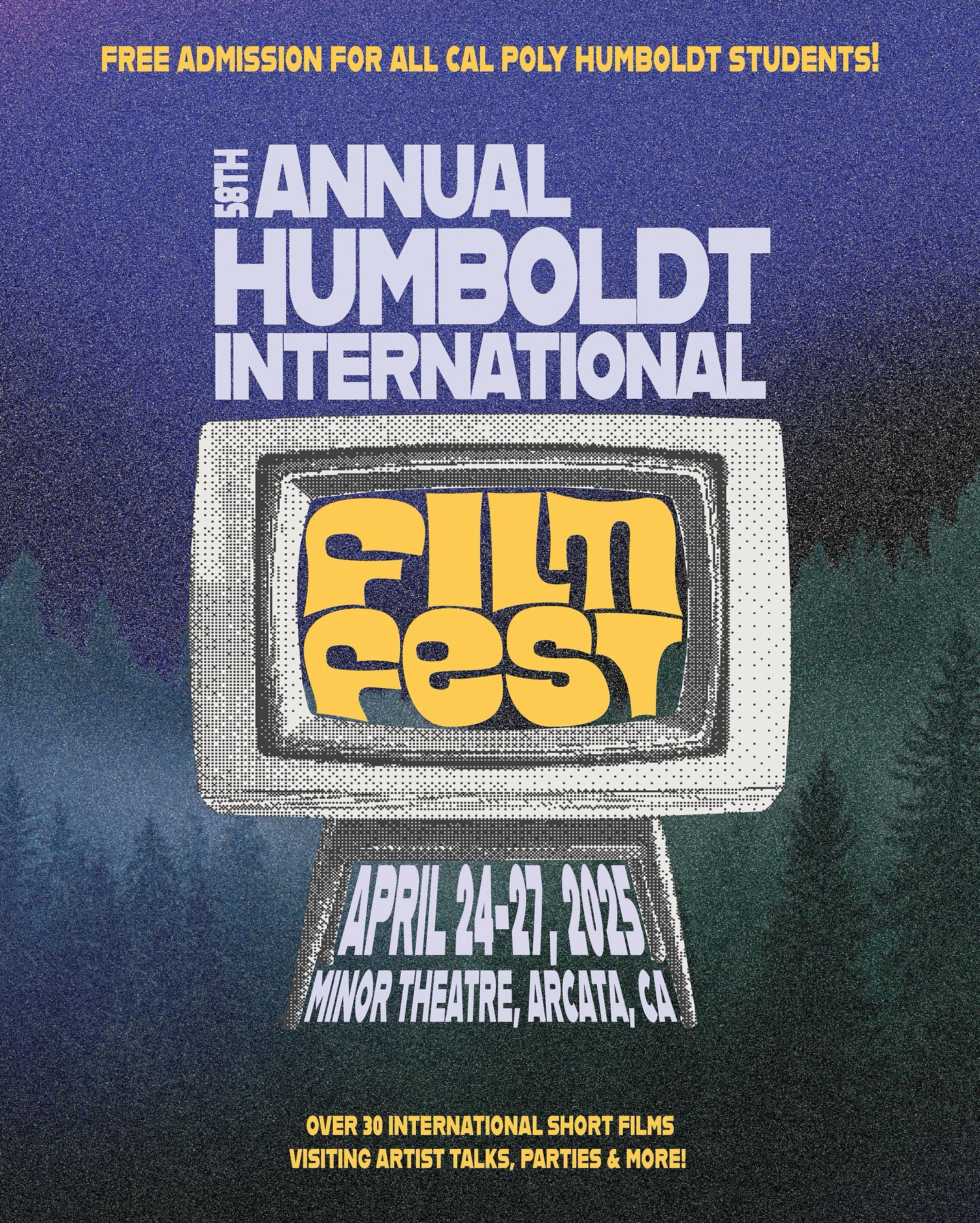
The Humboldt International Film Festival (HIFF) has entertained audiences since 1967, showcasing a wide range of independent and alternative short films, hosted by Arcata’s Minor Theatre.
Cal Poly Humboldt has been inviting filmmakers from all over the world to enter their short films into the festival since its beginning, making it the longest-running student-run film festival in the world.
Films were previewed and judged by Cal Poly Humboldt student volunteers and HIFF club members from Sept. to March. Once film submissions are closed, finalists are narrowed down until finally being deliberated upon by the co-directors, Adrian Anderson, Zoe Reed and Jett Supler, as well as faculty advisor Nicola Waugh.
Thanks to them, we get to see these marvelous independent films on the silver screen, where we otherwise may have never gotten to see them.
The festival lasted four days, starting on Thursday, April 24, and ending on Sunday, April 27.
Each day of the festival featured a different film style, excluding Sunday, which consisted of the award-winning films of various categories. First was narrative, then documentary, animation and ending with the best of fest films.
A standout film featured on Friday was Sunchong, directed by Yoontaek Hong. A 14-minute film from the U.S. that follows an 89-year-old Korean immigrant who volunteers at a senior center and reflects on his life’s journey with his beloved late wife.
Sunchong stood out for its message of never taking the people we love for granted. Even though it’s painful to mourn our loved ones who have passed away, it’s still worth it to love and to be loved. In the end, our memories and love are all we will ever truly have to ourselves.
Sunday’s Best of Fest was a sold out event as people from all over the world gathered to pay homage to the effort and art of independent film. If you didn’t get a chance to see it for yourself, the best animated film award went to Father’s Letters, directed by Alexey Evstigneev. The use of paper elements, and traditional mediums like pastels and pencil elevate the captivating collage style.
Father’s Letters is set in 1934 and follows a young girl and her imprisoned father, Professor Vangengheim through the letters they shared over the remainder of his life at the Gulag Archipelago. Elya’s father sends flowers and spins the tale of his imprisonment as an expedition to preserve the innocence of her childhood, shielding her from the reality of the Stalin regime.
Reg flags blow in the wind as hundreds of people flood the streets. Elya runs alongside the crowd, her small stature weaving swiftly through the legs of the much larger adults.
Elya sends a care package with winter boots, a dictionary and other books. Behind barbed wire, her father gets caught outside of his cell writing a letter to Elya — his last letter to his daughter. His effort to escape is no use and he is executed in the yard, feet covered in old boots.
The community of independent film is unlike anything you can experience at a box office opener. Film festivals recognize films like polished souls, and audiences walk into the theater acknowledging the respect and care essential to coexist in the space.
Film is a beautiful art form that can be made in so many alternative ways. It’s rare we see experimental film styles on the big screen.
Getting to see an independent film — something that never quite gets the recognition it deserves — was an amazing experience. If you missed this year’s festival, don’t fret, as there will be another year to experience this always unique theater-going experience.
Julia is a journalism major at Cal Poly Humboldt. She loves film and is a regular on Letterboxd. To quote Robin Williams in her all-time favorite movie, Dead Poets Society, “The powerful play goes on and you may contribute a verse. What will your verse be?”
Ariana Wilson is a junior majoring in journalism and minoring in scientific diving. She intends to merge her passion for the environment and conservation with her love of journalism as a science writer in the future. This semester’s goal: write one story per section.
Leave a Reply