There’s something dangerous dangling in the trees of the G11 parking lot, marked off by a few measly signs and a g-string worth of caution tape.
That’s right — I’m talking about that damn branch that has been hanging on by a thread over by the campus apartments, directly over like, at least five parking spots. As if those aren’t already a hard commodity to come by.
This thing has been just aimlessly left to blow in the Humboldt breeze — dare I say, heavy gust — since Feb. 26. I know because I was there when some guy reported it to a parking enforcement officer, as if she was gonna do something helpful about it. Lo and behold, a makeshift barricade appeared a little while later and they called it a day. They haven’t done a thing about it since — I guess we’re all just waiting to see it drop one day, and hoping no one is there on a particularly windy day to get hurt.
My thing is, don’t we have some kind of maintenance person for the trees on campus? Like, I guess we don’t if they haven’t taken care of it. You would think at a school in the middle of the forest, we would have some kind of solution past the point of barring it off, right?
I don’t know what it is about this damn branch that bothers me so much — I don’t drive so I’m not affected by parking, I’m not necessarily scared I’m the one that’s gonna get hit by it. I think I’m more so irritated that it’s just another thing that can be added to a list of shit that’s potentially hazardous to students that has been brushed off and barely dealt with. Of all the issues Cal Poly Humboldt has, this one is so small — and the fact that they won’t just handle it grinds my gears. Anyway, look out overhead for any incoming tree parts and stay safe out there.
Jasmin Shirazian is the curly-haired head copyeditor and social media manager for The Lumberjack. She is a TV show enthusiast, cat lover and higher education reporter for CalMatters.
I know that it will come again, over and over again
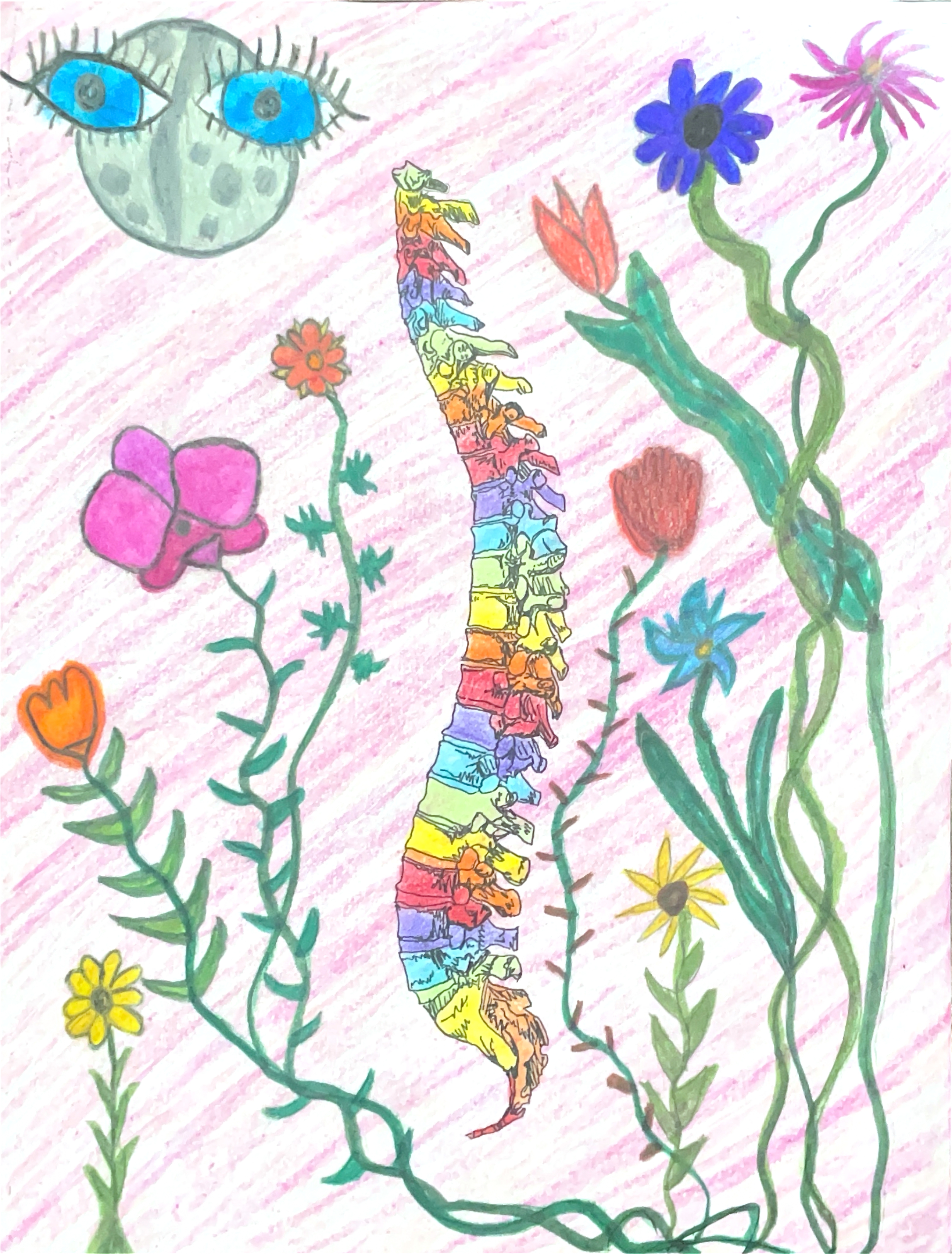
So, for now, I must hear those who love
For I know I’m not alone in this experience
Emma Wilson is a journalism public relations concentration major with an environmental ethics minor. Wilson enjoys learning about every inch of the world and making collages in her free time.
The species that made a girl start swimming with the fishies.
By Ariana Wilson
We stopped at a rest stop in Washington for the first time in what felt like a million years. Little did I know, that last stop of our cross-country roadtrip would alter my brain chemistry so much that it’d inspire a story in the Lumberjack.
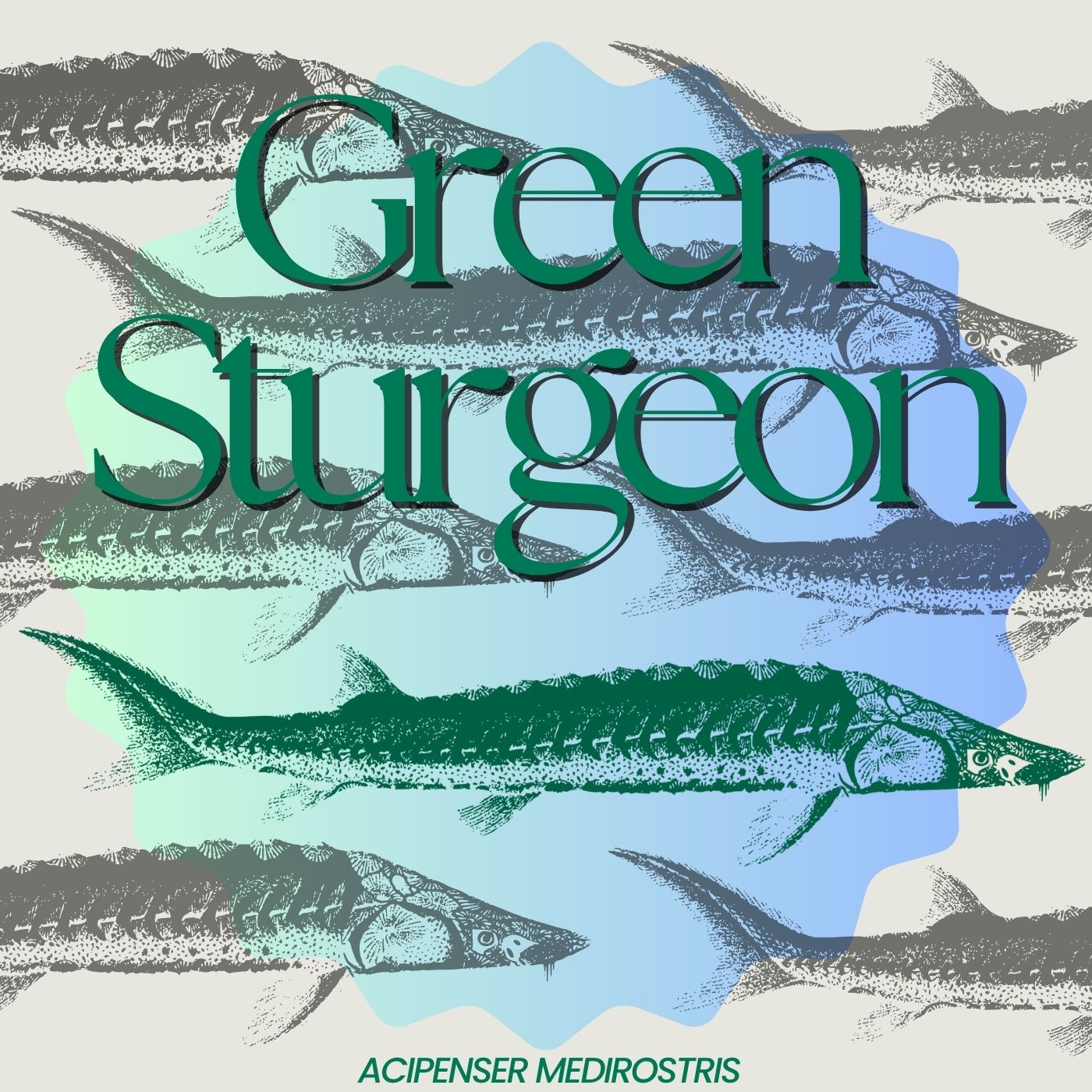
The green sturgeon.
I was convinced that this fish could have swallowed me whole, and you would have been hard-pressed to change my mind that this magnificent fish was not, in fact, a shark. Looking back on my youth, this could also be the origin for my love for the ocean and scuba diving. Green sturgeon are anadromous fish meaning, like me, they can live or dive in both fresh and saltwater.
Twenty-seven species of sturgeon can be found in the Northern Hemisphere, with two that migrate along the west coast: the green sturgeon and the white sturgeon. The green sturgeon was first discovered in the San Francisco Bay in 1857. The white sturgeon was first scientifically observed in California in 1967.
These fish are gentle giants, taking time to reach sexual maturity around age 15 and living up to 60 to 70 years old. If you’re lucky, you may see an occasional green sturgeon in Humboldt County. Students in the fisheries and wildlife department are currently conducting research on their presence and activity in our local waters.
These fish are often compared to sharks. While the two do share similar features, alas, sturgeon have some key differences — their lack of teeth, the ability to use their flexible “lips” to suck up food, and their skeleton which is composed of cartilage and a series of external plates called scutes, to name a few. Throughout their complex lives, green sturgeon will spawn multiple times and return to their home rivers every three to five years.
Green sturgeon’s numbers have been rapidly declining due to anthropogenic harvest and destruction of spawning habitat. This prevents the reproduction of their offspring from leaving the rivers they are spawned in to explore the wide expanse of the ocean. With researchers and grants, Humboldt students can be active participants in sturgeon’s increasing population in Northern California.
Ariana Wilson is an incoming senior staring down her last year of undergrad. As a journalist and budding scientist borrowing words from Einstein, “The important thing is to never stop questioning.” With that, I am oFISHally done with this semester.
Sarah Zareen Nakhoda, a third year Cal Poly Humboldt environmental education major from the South Bay Area unwinds at the end of her busy days with the help of her sketch pad and some cannabis.
This is when she gets in the perfect mindspace to create her unique vibrant, bedazzled and bold pieces. From custom lyric books to redwood fashionista fairies and bejeweled lampshades, she proudly donates 100% of proceeds from her art to help aid Palestinian families.
Coming from a creative and artistic family, Nakhoda got her start in sketching in high school, when she would create darker, emo inspired art that reflected the place in life she was in.
Once she came to college, she began to feel happier and her art reflected that, as almost all of her pieces are vibrant and some, if not most, are bedazzled.
“It’s a way for me to express myself — I’m not really that good at writing, but a picture says a thousand words,” Nakhoda said.
Nakhoda donates proceeds directly to Palestinian families’ Gofundme’s she finds via social media.
Her motivation for donating 100% of proceeds was her way of turning her passion and as a way to give back. She understands that with the economic state of the world right now, it may be hard for most people, especially fellow students to support and donate financially. She has been able to find a fulfilling balance, turning her passion into a way to make a meaningful impact. Despite not profiting financially, she explains it doesn’t feel like a loss, but a privilege to be able to use her talent and creativity to help others.
“Art can show people’s feelings in ways that writing can’t,” Nakhoda said. “I think it’s really cool to see all this street art fighting for what’s right.”
She plans to keep creating and encourages anyone to reach out if interested in supporting her art and this cause. This summer she is more than willing to take commissions of any vibe or color scheme. She works with any budget and is willing to ship within the U.S.
Contact @artbyszn4palestin333 on Instagram for commission inquiries.
Kimberly Alexsandra Madrigal is a 3rd year Journalism major from Fresno, CA who enjoys spring, wired earphones, unemployed friend activities and lavender matcha.
Cal Poly Humboldt’s proximity to the ocean and on-campus resources like the fish hatchery and Telonicher Marine Lab make it an ideal place to study aquatic organisms. Biology graduate student Lucas Kebow is unraveling the evolutionary history of a local fish species through a lens of embracing queer perspectives in science.
“The tubesnout is not the most important economically, but they’re interesting in the sense that there is so little information on them,” Kebow said. “They’re also a huge food source for a bunch of the animals we have here [in Humboldt Bay]. They’re super important for other animals’ diets and they nest on kelp and eelgrass, which is in decline.”
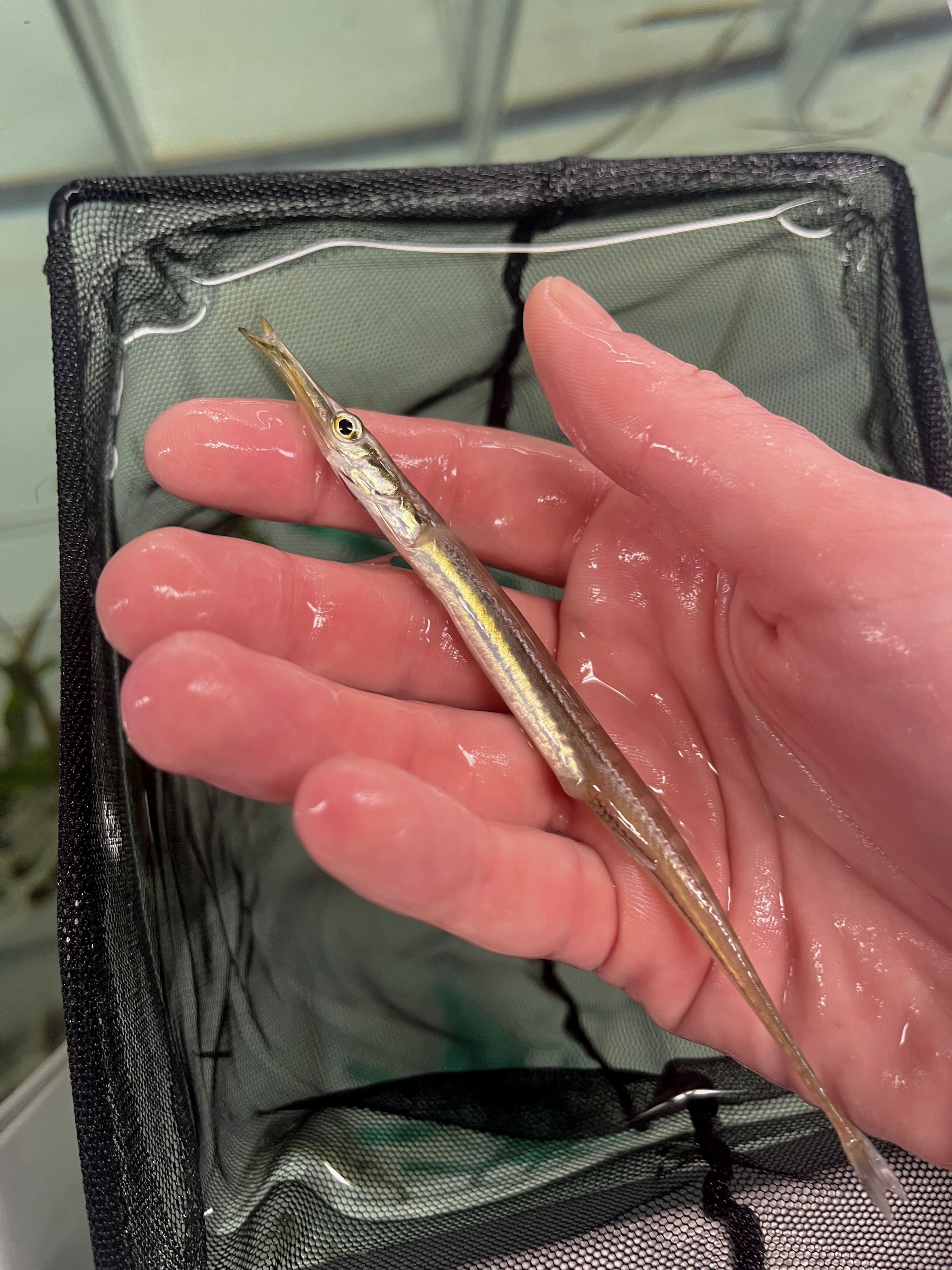
Despite their low intelligence and small size, tube snouts have notably complex behavioral tendencies. The male fish not only creates the nest, but also guards it like a stay-at-home dad. They act hostile toward invaders, although they are so tiny that it is not a very effective defense. The female fish lays her eggs and then moves on, not investing in the eggs’ development or safety.
Historically in science, species that don’t fit heteronormative standards have been sidelined, especially with behavioral studies, as researchers often project their own personal biases onto what they are studying. The world of aquatic biology is full of exceptions to the dominant narratives of gender and sex, from male seahorses giving birth, to hermaphrodite slugs or sex-changing clownfish.
“A lot of the queer folks I know find these particular topics interesting,” Kebow said. “It sort of illuminates the natural diversity of evolution and how things have evolved and continue to evolve in animal populations.”
In addition to a sidelining of non-heteronormative behavior, there is a historical trend of overemphasizing competition in ecological studies.
“You can think of everything as a competition or you can think of everything as just kind of happening by chance,” Kebow said. “Of course, evolutionary drivers are very important, and competition is important. But, I think there’s a lot to be said about just accepting nature as it is and meeting it halfway instead of trying to force competitiveness onto it.”
Photo by Jess Carey | The sticky glue-like substance that the tubesnout uses to build its nests on plants is called spaggin.
He also noted that fish are notoriously difficult to study due to being underwater and difficult to access. In future projects, he hopes to fill in gaps in our understanding of diverse behaviors and life histories in fish and other organisms.
“I think queer voices are really important in the sciences to expand our horizons,” Kebow said. “To have different views on what the hell is going on that’s not just so single-mindedly focused on one perspective.”
The tubesnout is a sister species of the stickleback, another ray-finned fish that is very well-studied. The stickleback is a type genus, a phenomenon in biology where a particular species is used as a reference point for other related organisms. There is an extensive understanding of stickleback development, evolutionary history and genetics.
Unlike the stickleback, the lack of information on tubesnout’s biology and evolutionary history leaves a lot of unanswered questions. Despite being incredibly common — with a native range from Baja, California up to Alaska — little is understood about their anatomy and behavior.
The tubesnout makes a nest and lays eggs by secreting glue from its kidneys onto a host kelp. However, the mechanisms of this glue production are not completely understood and not universally shared throughout all relatives of the stickleback.
“It’s a little unclear whether [tubesnouts] separately evolved the characteristic to create the glue, or if it’s from a shared ancestor and was lost a couple of times,” Kebow said.
He explained that since genes for glue production have been identified in the stickleback, he is able to develop genetic probes that will indicate whether or not the same genes are present in the tubesnouts. Kebow is also developing a concise anatomical survey of the tubesnout, which is challenging due to the fish’s small size. He is constructing the first scientific drawings of the species’ anatomy by dissecting male and female fish of different age groups.
“The more you know about a species, the better you can conserve what is important to that ecosystem,” Kebow said.
Jess Carey is a senior at Cal Poly Humboldt, majoring in ecology and minoring in journalism. They are passionate about telling stories that are inspiring to the community, branching their interests in science, music, and storytelling.
This information is from the Cal Poly Humboldt Police Department daily media logs. These reports are edited for clarity.
Sunday, April 20
4:49 p.m. – Medical Aid
The Reporting Party states his friend ingested something, unknown if it was marijuana. The subject is a 20-year-old male with a dry throat. An officer and medical responded and the subject was not transported.
Monday, April 21
3:09 p.m. – Suspicious Person
Report of a male subject who appears to be under the influence and laying down on the ground outside of Van Duzer Theater. Subject is a 70-year-old white man with gray hair, last seen wearing a purple t-shirt and jeans. An officer responded and interviewed the subject.
Wednesday, April 23
2:38 p.m. – Vandalism
Report of graffiti on the north elevator at Jolly Giant Commons, “FUCK BMER7” etched on the right side.
Thursday, April 24
5:50 p.m. – Suspicious Circumstances
RA reports they found two concerning notes on the room door of a Redwood Residence Hall, threatening the residents. Residential Learning Communities spoke to the residents of the room.
Monday, April 28
6:08 p.m. – Suspicious Circumstances
Report of three subjects next to the ravine on the Jolly Giant Trail with airsoft guns, wearing all black clothing and vests. The Reporting Party states that they were on her property and APD was notified.
Tuesday, April 29
3:55 p.m. – Non-Injury Traffic Accident
Vehicle vs golf cart, no injuries.
Wednesday, April 30
12:28 p.m. – Animal Call
The Reporting Party was walking past the College Creek Marketplace and was bitten by a dog. The owner was on scene when the incident occurred.
Thursday, May 1
11:46 a.m. – Miscellaneous
The Reporting Party overheard their roommate in Cypress calling them names and talking bad about them. RP would like to speak to an officer regarding the roommate issue.
No matter where you were, you could hear the organizer’s calls. Union members held signs and chanted as they marched along the Cal Poly Humboldt campus boundary, backed by a chorus of car horns from passersby sympathetic to their cause.
On May 1, International Workers Day, members from the California State University Employees Union (CSUEU) held a series of demonstrations at California State University (CSU) campuses across the state in order to protest proposed budget cuts to the CSU system, and to hold the Chancellor’s Office accountable for past agreements made to workers.
The promises in question included adequate funding to the CSU system and reinstating the Salary Steps Program, which would involve employees receiving pay raises based on how much time they spend working in the system.
An anonymous union member at the march explained why they were protesting.
“At the moment, a person who’s been in the system for 27 years is getting paid the same amount as a person who just started,” they said. “And [the union] doesn’t think that’s fair.”
The CSUEU contract states that the program will be reinstated in October, unless the CSU general budget fund falls below $227 million. In the 2025-26 fiscal plan governor Gavin Newsom outlined a 7.95% cut to the CSU system. Moving forward, universities will receive a $252.3 budget.
Does this mean the program is in the clear? Not quite.
The budget proposal still has many uncertainties; it’s only in its first draft, so as it goes through legislators and lobbyists the amount of money allocated could change. Also, federal funding cuts could impact the budget heavily, especially considering the ongoing DEI investigation at Cal Poly Humboldt.
Phil Bradley, member of the Teamsters Union, spoke on these budget cuts and solidarity for the unions.
“We’re here showing solidarity for our fellow union members,” Bradley said, “We’re sending a message to the chancellor’s office and the governor that we need our contracts to be honored and creative accounting does not negate the agreements we’ve come to. We’d also like the csu to be fully funded and we’re opposing the 7.9% cuts that have been proposed.”
The CSUEU covers over 16,000 CSU support staff, including administrative and academic support, custodial services and student assistants. They provide collective bargaining services in which union leaders meet with CSU administrators to agree on contracts that they feel adequately represent their members and provide the services they’re owed.
“It’s crucial to have unions protecting workers,” said sophomore student employee Kiera Sladen. “Without that, you’d have pure unfettered capitalism and exploitation of the workers.”
Barley isn’t just the grooviest guy around, he’s also an untraditional reporter, photographer, and-of course the photo editor!
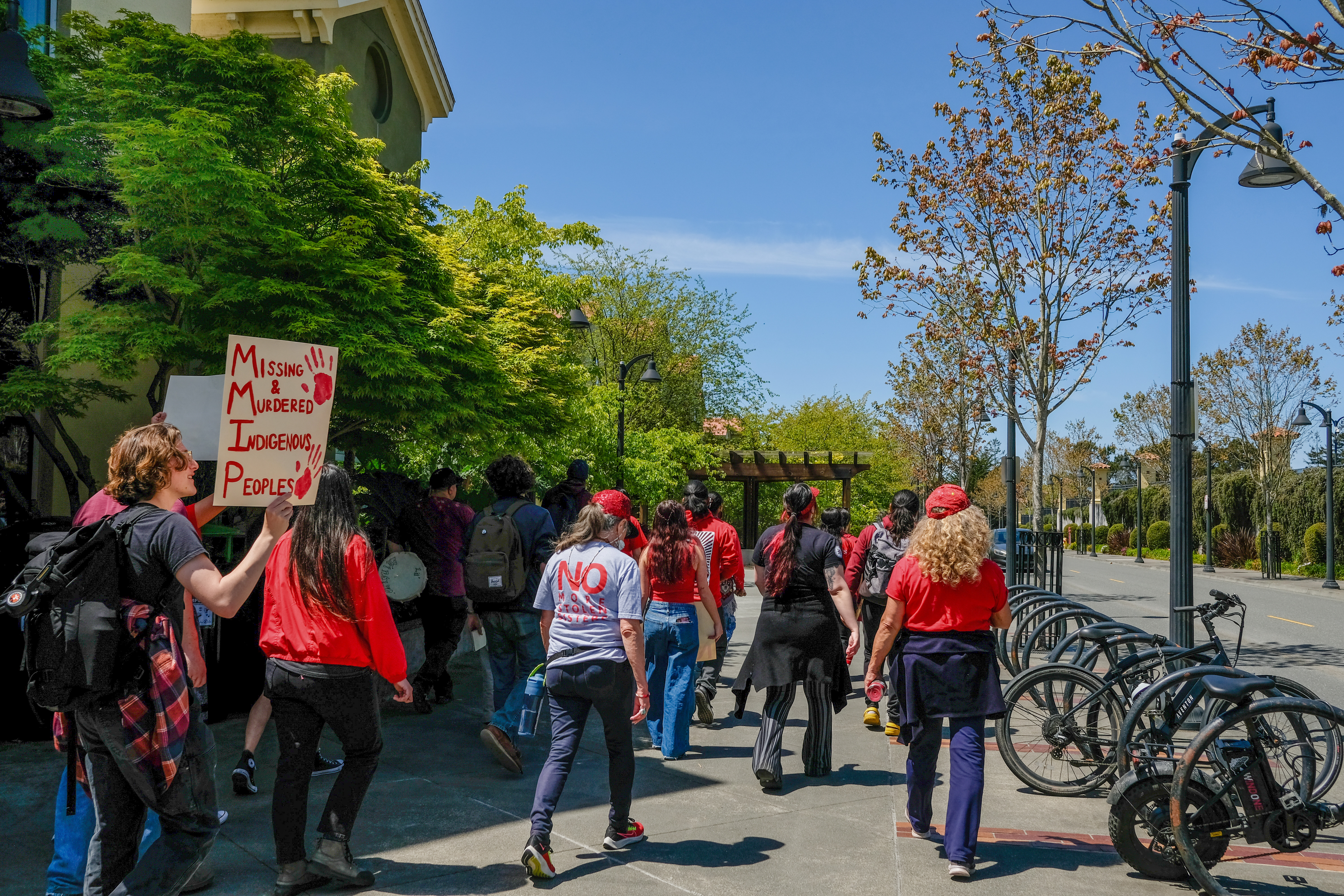
About two dozen people dressed in red marched through campus and sang traditional Indigenous songs. Some held signs and others were drumming with the spirits — all demanded change. The march was held on May 5, the national Missing and Murdered Indigenous Women and People (MMIWP) day of awareness. It began and ended at the Brero House, went through the SAC quad and down LK Wood Boulevard.
“We have a crisis in our Indigenous communities of women, children, men, elders, [and] Two-Spirit people going missing,” Student organizer Covin Sigala said. “That’s causing harm. It’s not a recent event — it’s been going on since colonization began.”
According to the U.S. Department of Justice, one in three Native women will be assaulted in their lifetimes. On some reservations women are murdered at a rate 10 times above the national average.
“We’re walking for awareness,” Maudesty Merino, one of the organizers for the event, said. “[We] walk to carry their spirits and walk with them. We’re also raising awareness for the Violence Against Women Act.”
Photo by Evauna Grant | Protestor holds a sign during the march at the corner of Harpst and Roscow near the Marketplace on campus.
The Violence Against Women Act (VAWA) is a law that addresses sexual assault, domestic violence, stalking and dating violence directed towards women. The VAWA has several special provisions for Indigenous women due to disproportionate rates of abuse on reservations, as well as hesitation from the federal government to prosecute these cases due to jurisdiction disputes.
The VAWA has had five amendments addressing violence against Indigenous women since it was enacted in 1994. One amendment from 2013 affirmed Tribal courts’ right to prosecute non-Indigenous peoples who commit these crimes on reservations.
The Violence Against Women Reauthorization Act of 2021 reauthorizes VAWA grants-which go towards strengthening the courts’ capabilities to prosecute offenders, and survivor support networks. It also calls for the end of impunity against people who come onto reservations and commit sexual crimes. It also addresses the need to support Native Alaskan Tribes who were previously excluded.
“Even with these acts and laws over the years we continue to see more and more missing and murdered Indigenous peoples,” said tribal forestry student Evauna Grant. “The injustice of our people goes unnoticed and is a main reason why we do the awareness march.”
A marcher described the march as a day to honor lost community members with song, to carry the spirits with them and bring those energies out; they discussed how everyone has a song to sing. Some of the songs were passed down from generation to generation, and some were just simply from the person’s heart.
The marchers chanted and sang under the shade of a tree along LK Wood Boulevard. At one point when they stopped, the wind rattled the trees and released a flock of chirping birds. The songs shook the Earth with resounding passion. After finding a caterpillar on one of the singers’ hats, someone shouted something very apt.
“We’re waking up a lot of spirits today.”
Barley isn’t just the grooviest guy around, he’s also an untraditional reporter, photographer, and — of course the photo editor!
The Union Street sidewalk between the Kinesiology and Behavioral and Social Science buildings is a well-trodden path at Cal Poly Humboldt. Whether it’s their first or hundredth commute, students often divert their gazes to the fenced-off aquatic compound beside them, many having little idea of its purpose.
This is the university’s fish hatchery, a remarkable piece of infrastructure rarely seen on college campuses. The hatchery was constructed to serve the school’s equally unique fisheries curriculum. It acts as a small-scale representation of the wider ecological and aquacultural breeding programs that occur in commercial and government fisheries.
Hatchery Manager Patrick Nero explained that this hatchery leans toward a conservation-based model, aimed to raise native species of fish that can be released into the wild to bolster populations.
“There’s a lot of uncertainty with the climate and our biological systems coming up in the future, and we need this next generation to be able to help us,” Nero said. “[Students] need to be able to do what they can to mitigate the damage that we’re doing.”
Among these species are the Northern California steelhead trout and its close relative, the coastal cutthroat trout, who are both listed as endangered under the Endangered Species Act. Versions of these fish that are bred in controlled environments like hatcheries may not receive the same protections under the act as their wild counterparts, but these programs still serve as a safety net for the ecosystems they contribute to.
“I want them to value the resource that we have, and appreciate nature,” Nero said. “But also to know that not everything is under human control.”
The first stop upon entering the hatchery is the spawning room, which features dozens of small tanks connected to a central filtration system. The occupancy of these tanks varies throughout the year, and currently the room only houses one group of newborn steelhead that are each just larger than a human thumbnail.
The back door of the spawning room leads to the larger outdoor section of the hatchery visible from the street. A wooden shade structure covers an elongated concrete raceway that loosely resembles a river. Here, adult steelhead and cutthroat are released to swim more freely until student researchers facilitate spawning by gently squeezing sperm out from males and mixing them with females’ eggs. Fisheries majors are taught other common practices with these adult subjects, such as marking, tagging, anesthetizing and even surgical procedures for those who need them.
Despite the hatchery appearing tailored to a very specific field of study, it offers resources for scholars well beyond the fisheries program. Fellow students in the College of Natural Resources and Sciences frequently conduct research in the compound, and even non-STEM undergrads are welcome to find project material in the outdoor ponds.
Understanding fisheries can build foundational knowledge of government policy, business in the private sector and indigenous food sovereignty depending on which hatcheries are looked at. The one on campus is an especially calming and romantic spot for the arts and humanities.
Sharing a department, fisheries and wildlife management have close ties both academically and physically.
“We’ve had non-fisheries majors do independent research and their own studies here at the fish hatchery,” Nero said. “So the opportunities are not exclusive for fisheries majors,
and you get a good view of the game pens from our side of the fence as well.”
Perhaps the most striking features of the hatchery are the circular pools that occupy most of the yard. Juvenile trout are placed here to swim against a constant rotational current that will ensure healthy development and proper water quality. Up until a few months ago, the excess nutrients and waste from the pools were collected in a large man-made pond in the back, which gave rise to explosive duckweed growth on its surface. The duckweed has since been removed and the pond is now home to several orange koi.
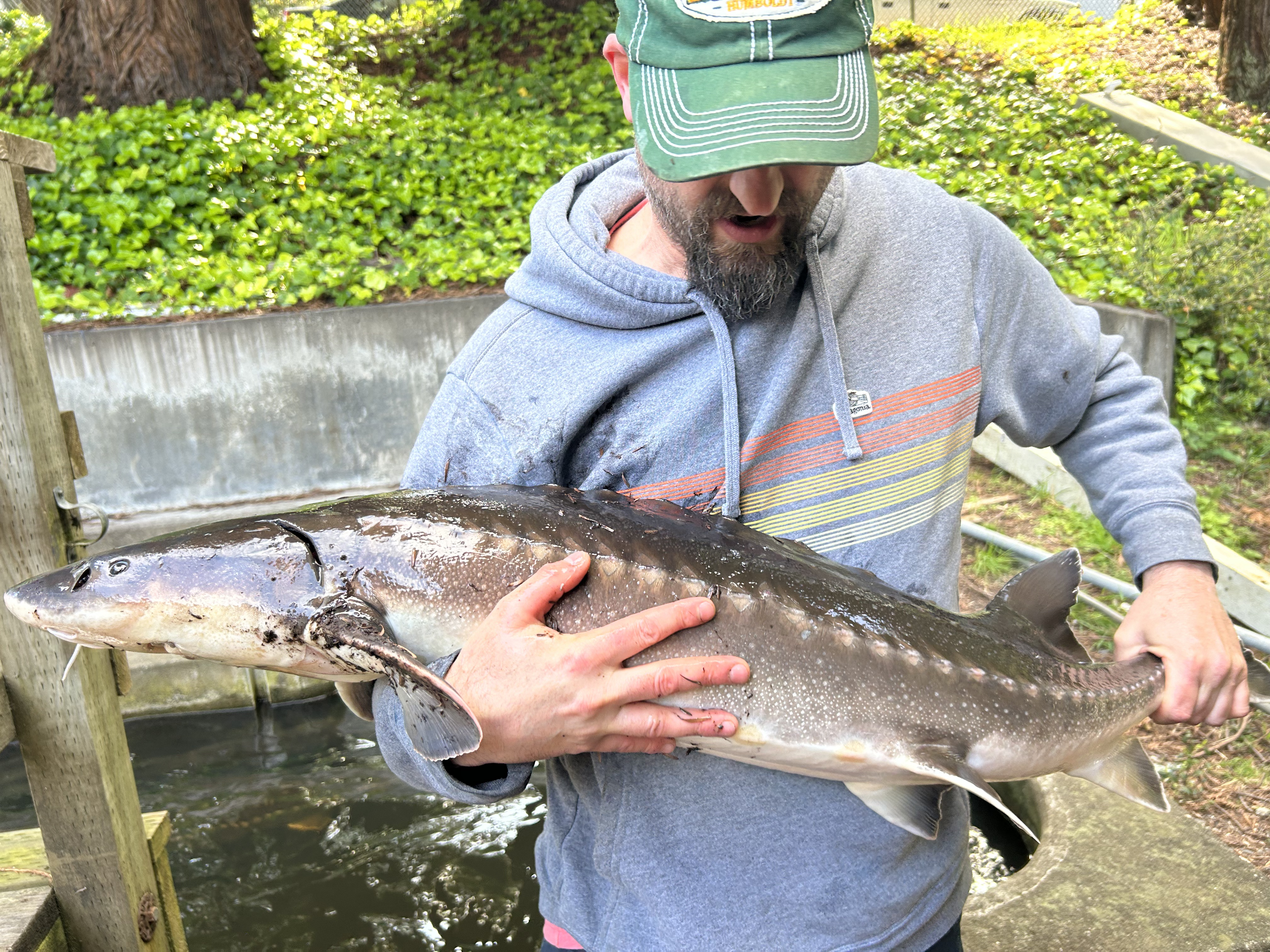
The few fish visible from the outer sidewalk emerge as giant shark-like silhouettes from a dark rectangular pool. These are white sturgeons, which the university acquired from a local caviar farm and repurposed for student research. Nero easily caught each of the fish held at the hatchery for display in this article, but struggled to contain the immense tail strength of these bottom-feeding behemoths. These fish are only about a third of the way along their 15 to 20-year journey toward sexual maturity.
Aside from its professional and academic applications, the fish hatchery proves itself a source of inspiration and wonder to those curious enough to inquire about it. Nero expressed his desire for ordinary folk to feel welcome to explore the hatchery freely whenever they walk by.
“The doors are open Monday through Friday for visitors. Anybody who’s interested, come on in through the front doors,” Nero said. “It’s a beautiful part on campus where you can stroll through, admire the fish, ask questions and scratch your curiosity button.”
Nick is a sophomore minoring in journalism who reports on happenings of all sorts. As a wildlife major, he enjoys nature-related pieces. On his off days, you can find him taking a hike behind campus or collecting shiny stuff on the beach.
You could hear it all — every chord, footstep and 2-step. The room was a living, breathing organism. Music and conversation surrounded the crowd while kids danced around without a care in the world. It was raucous, it was loud, it was unique.
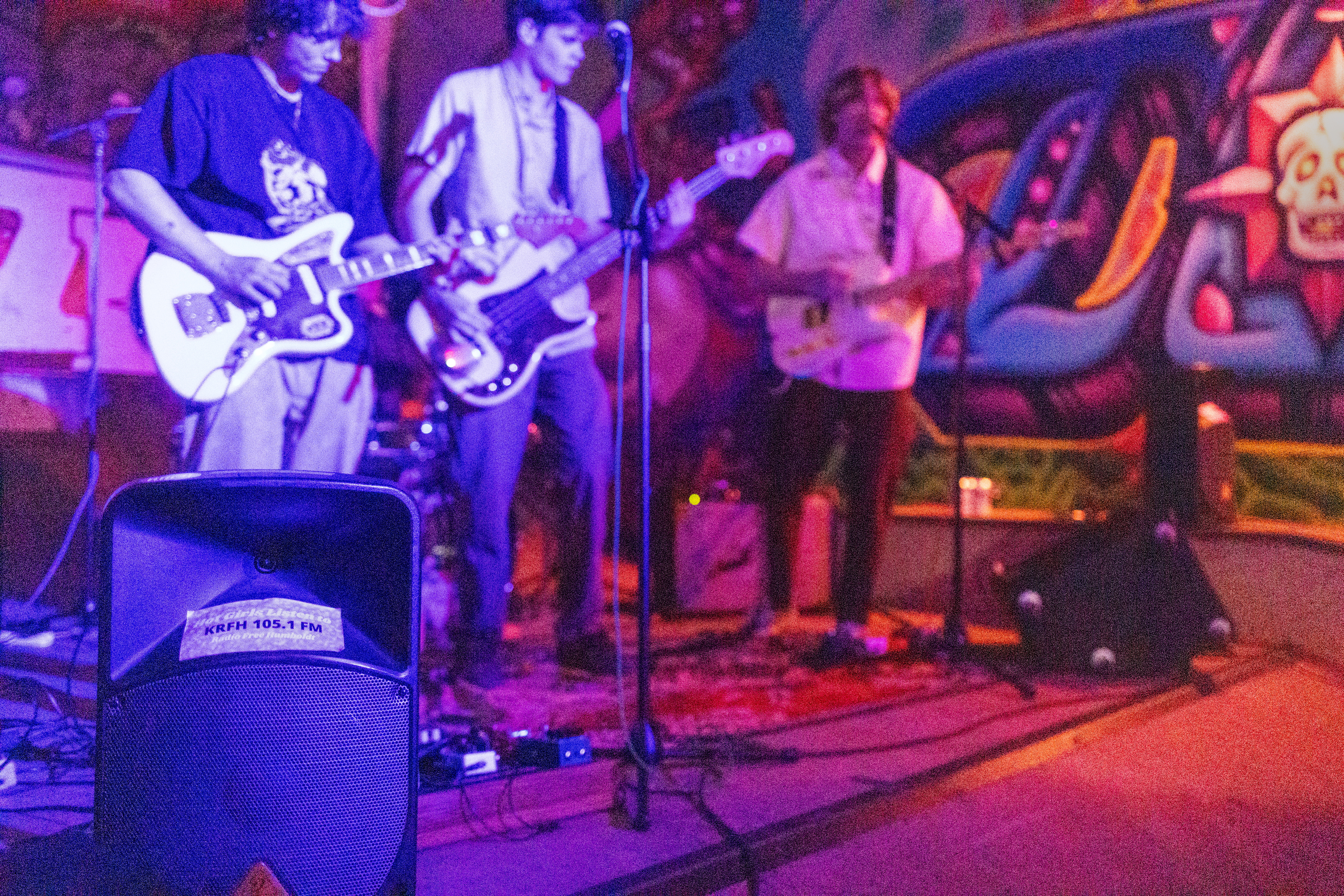
On May 3, KRFH, Cal Poly Humboldt’s student-run radio station, held Lixxapalooza, a celebration for local bands and musicians at Rampart Skatepark in Arcata. The event was fully planned by students and highlighted student musicians. Lixxapalooza is a live music festival held every semester by Local LIXX, the weekly live broadcast arm of KRFH. The festival aims to raise funds for the station and encourage the DIY music community.
June Morris, a.k.a DJ Princess Tornado, spoke on the care and time that goes into Lixxapalooza.
“I mean, every lixxapalooza is an event that’s like three months in the planning, you know?” Princess Tornado said. “I feel like that’s honestly hard to come by when it comes to shows up here, a lot of it’s very like, ‘let’s throw a show at what time?’ ‘What time next week?’ ‘Well, yeah, let’s do it.’ ‘Oh, this man can’t make it.’ ‘Oh, yeah, I guess you have to revise the flyer.’ But we get to put a lot more time and effort into it, which I think is great.”
The night began with a bang with DJ NOLO, soon followed by local band Public Diary — each song providing a melancholic tribute to human existence. The stage was a small ramp and plateau in front of murals of Ren and Stimpy, Skelator and a large tag reading HVOC. Two quarter pipes nearly reached the ceiling on either side of the room. Stairs led to a balcony where several local artists were selling their work, including Blake Knapp and Your Local Worm Dealer.
Rampart is covered in memories, the floors were speckled but smooth, and any open wall space was adorned with graffiti murals or stickers. The bathrooms were a similar case, an open canvas to the folks who carry paint pens.
Local band Pickpocket, consisting of Cal Poly students Luke Shanafelt, Colby Palmer, Andy Garvin and Jesse Sammel, performed with such ferocity that they ruptured their amp.
Some bands performed single-word songs, some played psychedelic guitar. Each band and artist flowed perfectly into the next. After sets from a myriad of local bands, the miraculous DJ Princess Tornado took the stage, followed by DJ L30. Local artists were given the stage they deserved, there’s nothing else like it.
“It’s something that’s unique to here,” DJ Milkman, a KRFH DJ, said. “There are only seven student-run radio stations in the country — we’re one of those, which is awesome.”
At times it can all seem so overwhelming to step out and allow yourself to enjoy life — to break the drudge of assignments, errands and obligations. Taking a moment to relax can feel daunting. It’s easier to fall into a soulless routine rather than take a moment to breathe, to run in a circle and support your community.
Never take community music for granted. There is an undeniable sense of freedom when there’s a good crowd, a real community and something worth supporting. What a time to be alive.
Barley isn’t just the grooviest guy around, he’s also an untraditional reporter, photographer, and-of course the photo editor!
Last year on April 22, dozens of Cal Poly Humboldt students and community members occupied Siemens Hall in support of Palestine for eight days. These eight days resulted in a notable shift in opinion about administration and perspectives on campus activism. The following took place during this occupation.
April 22, 2024
A group of students organized a sit-in in Siemens Hall at 4 p.m. — they brought games, books and art supplies and planned to host a Seder.
At 4:15 p.m., UPD entered the building and asked the students to leave. The students continued to protest and UPD evacuated non-participants out of the building. The students began to lock doors and entrances to the building, except for the door leading to the quad. They constructed barricades in front of doors with chairs, desks and other items in Siemens Hall.
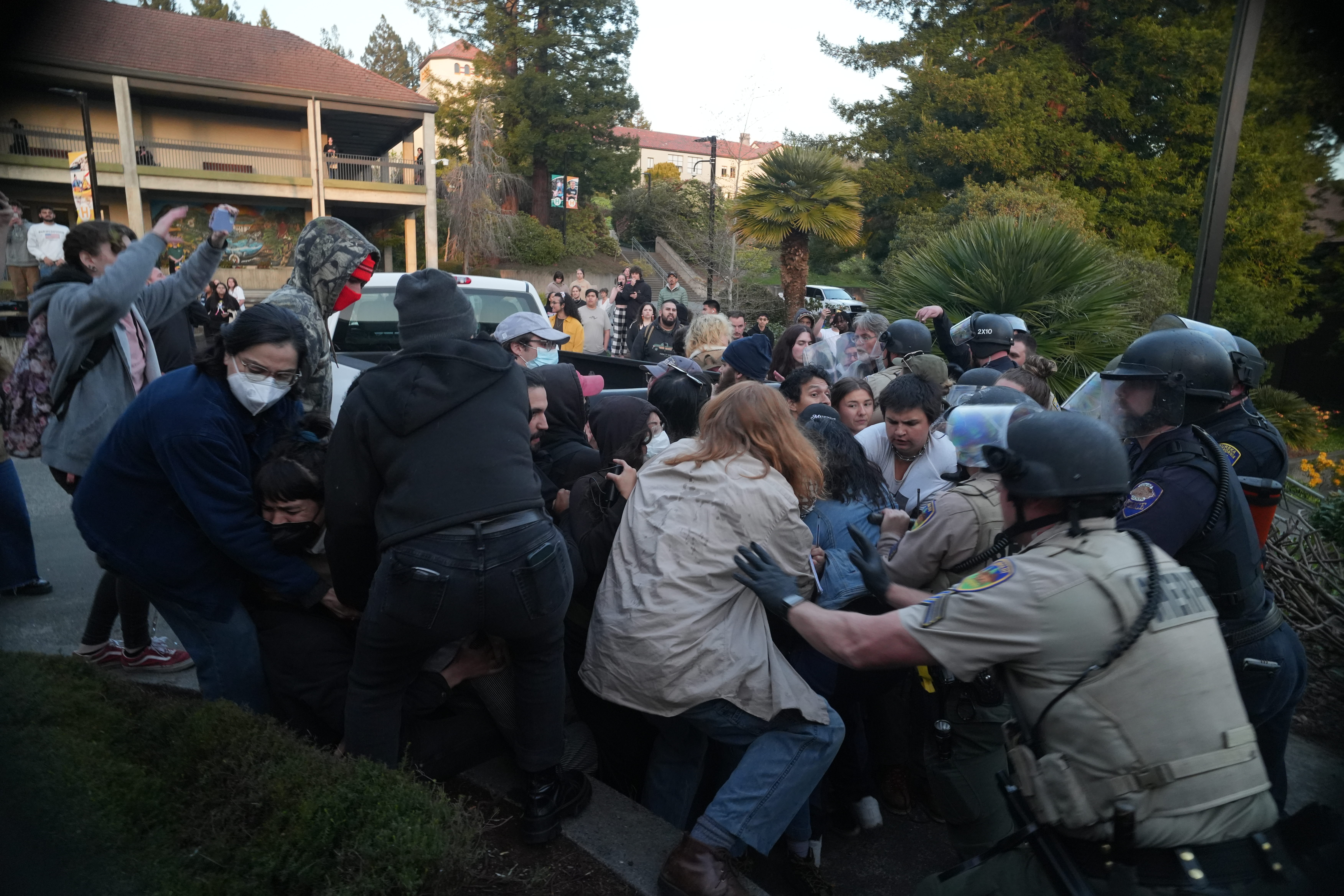
At 5:00 p.m., officers arrived in riot gear and attempted to remove the protestors from the building. The scene drew hundreds of spectators and people started joining in the protest. An alert was initially sent out at 5:57 p.m. of the university closing Siemens Hall for the night, but that status changed to the entire campus being closed until April 24, 2024 by 8:53 p.m. By 10:50 p.m., law enforcement left the area and the protesters inside the building opened the doors. Dozens of outside protestors flooded into the building.
April 23, 2024
Students and community members continued to occupy Siemens Hall and the surrounding area, including the Gutswurrak Student Activity Center (GSAC) quad. Signs and chalk decorations covered the area, and several local bands performed in front of the GSAC. The protestors released a set of demands to the university calling for them to:
-Disclose all ties to Israel
-Cut all ties to Israeli universities
-Divert from companies with ties to Israel
-Drop all charges against protestors and cease the use of law enforcement against them
-Publicly call for a ceasefire and end to the occupation of Palestine
Students, faculty and community members delivered supplies to the protestors in Siemens Hall and a Mutual Aid Kitchen was set up in front of the Siemens Hall main entrance.
April 24, 2024
From 12 to 4 p.m., the California Faculty Association (CFA) hosted a teach-in in the GSAC quad where multiple faculty members spoke and led workshops for an audience of students, faculty and community members.
At 2:12 p.m., a Humboldt Alert was sent out over email announcing the campus to be closed through April 28, 2024.
April 25, 2024
An open forum was hosted between protestors and Provost Jenn Capps and Dean of Students Mitch Mitchell at 4 p.m. in the Goodwin Forum of Nelson Hall. Other admin, such as Dean Jeff Crane, also made appearances.
The University Senate released a Sense of the Faculty Resolution on a Vote of No Confidence in President Tom Jackson, citing Jackson and former Chief of Staff Mark Johnson’s mishandling of the protest and inappropriate use of law enforcement resulting in the injury of students and faculty.
April 26, 2024
At 10:28 a.m., the university released an email response to the protestors’ demands and distributed physical copies of the response on campus. In the email, the university reported that they have no direct ties to Israeli universities and they would continue to uphold the Time, Place and Manner Policy and enforce consequences for violations of university policy and laws. The university also stated that they don’t have any direct investments in defense companies or securities issued by Israeli companies, organizations or defense firms.
“Our estimates put the potential indirect investment in the areas that are asked about at less than 1% of the investment portfolio of more than $51 million,” the email read.
At 12:28 p.m., the university sent out a Humboldt Alert announcing the closure of campus for the rest of the semester and the continuation of remote work and instruction.
At 1:49 p.m., the university sent an email to the campus body opening a check-out option for protestors from 2 to 4 p.m., presenting an option to vacate campus without immediate arrest.
“Voluntary participation in this check-out process WILL be considered as a mitigating factor in University conduct processes and may reduce the severity of sanctions imposed,” the email read.
At 5:20 p.m., protestors opened one of the entrances to Siemens Hall to allow the public to walk inside and document the state of the building.
The same day, the University Senate published a Sense of the Senate Resolution On A Call for a Permanent Ceasefire in Gaza.
At 6:20 p.m., a local rabbi along with students and community members welcomed Shabbat in the GSAC quad in solidarity with the protestors.
April 27, 2024
The university sent out a Humboldt Alert announcing the hard closure of campus at 12:35 p.m., specifying that individuals are prohibited from entering or being on campus without authorization from the UPD. At 1:45 p.m., construction workers placed cement blockades at three main entry points to campus, including the Library Circle.
At 6:30 p.m., protestors and community members hosted a group march and protest, starting at the Arcata Plaza and ending at the Library Circle cement blockades.
April 29, 2024
At 2:15 p.m., the CFA organized a march from the Arcata Plaza to the Library Circle, then ended at the lawn in front of the main Cal Poly Humboldt sign off of 14th St.
Another march from the plaza to the Library Circle happened at 7 p.m., with a Seder being hosted for a group of around 200 people. The group slowly dwindled over time, but protestors remained in the area until around 4 a.m.
At 10 p.m., two UPD officers started driving a police vehicle up to the main barricades set up by protestors near the campus library and the GSAC quad. The vehicle played a recorded message from Chief of University Police Peter Cress announcing the protest as an unlawful assembly. The message warned protestors that they had 15 minutes to disperse or risk being faced with rubber bullets and chemical agents. The message continued to play at each of the barricades for around 5 hours.
April 30, 2024
At 2:50 a.m., hundreds of officers in riot gear from agencies in Humboldt County to San Francisco and Redding began breaking down barricades and entering the occupied area. A group of protestors sat in a circle in the quad with their arms linked together. Officers gradually closed in on the area and some began arresting protestors in the circle. 32 protesters were arrested, including a faculty member and a journalist.
A Humboldt Alert was sent out at 3:00 a.m. ordering students living on campus to shelter-in-place.
Those detained were processed for arrest in front of Gist Hall and sent on buses and vans to the county jail in Eureka.
A Humboldt Alert was sent out by 6:56 a.m. declaring that law enforcement secured the campus and order had been restored to Cal Poly Humboldt. A few protestors were charged, and many were released around 12 p.m.
For further information about the pro-Palestine protest and occupation in April 2024, visit our full comprehensive timeline on our website:
What started off as a jam sesh between close friends during the COVID-19 lockdown turned into the resurgence of the infamous Titlow raves — possibly the coolest underground festival scene, at least in Humboldt County. Their last and biggest event to date in October 2024 had four stages, over 40 artists and over 1,300 people in attendance.
Collin Wick is the founder of Eclectic farms, Humboldt County’s main collective combining art, music, cannabis and community.
Wick has been around music his whole life and enjoys being involved in multiple projects. After touring around Europe and South America, he returned to Humboldt County and started his cannabis cultivation farm, Eclectic Farms.
During the pandemic, he began to have jam sessions for those who lived on the farm. As restrictions were lifted, there were still hardly any gigs, which led him to open up his home to more artists to share their craft.
Post-pandemic, more and more people would come to these jam sessions. As they expanded, they then began to put DJs outside onto the deck to give them a separate section to shine while still keeping the original intimate jam session going on inside.
As these events grew bigger, so did different areas along the property as they opened up different sections of the house, which then evolved into building stages and spaces for interactive art.
At these unique and one-of-a-kind raves, you could find both local and international musicians, DJs, performers and artists. This collective has birthed music groups like Makenu, and held space for up and coming artists, such as KRFH’s DJ Princess Tornado. Some performances they had have been aerial and silk dancers, fire dancers and live glassblowing and painting.
“Being able to connect so many people and have everybody really love the vibe, to do that has really been special for me,” Wick said. “It gives a lot of meaning to be able to actually connect people and provide an experience that’s really enlivening.”
Now, they are working with visual artists to create a 360 visual tube greenhouse, constructing a medical attention area to ensure safety of patrons at their larger events and collaborating with Humboldt Comedy to host a space that will allow attendees to enjoy live comedians in between music and dancing.
June 14, July 12, Aug 9, Sept. 27 and Oct. 25 are upcoming event dates for this year. Volunteers, musicians, artists and performers are welcome to contact them for more information on how to collaborate.
Kimberly Alexsandra Madrigal is a 3rd year Journalism major from Fresno, CA who enjoys spring, wired earphones, unemployed friend activities and lavender matcha.
Are you overwhelmed by the stressors of the 21st century? Maybe jaded by the mundanity of scientific understanding? Or, perhaps, numbed by the security of modern medicine? Fortune favors you, my faithful compatriot! On Saturday, May 3, a collection of student-led clubs organized Cal Poly Humboldt’s inaugural Renaissance Faire in the university’s football stadium.
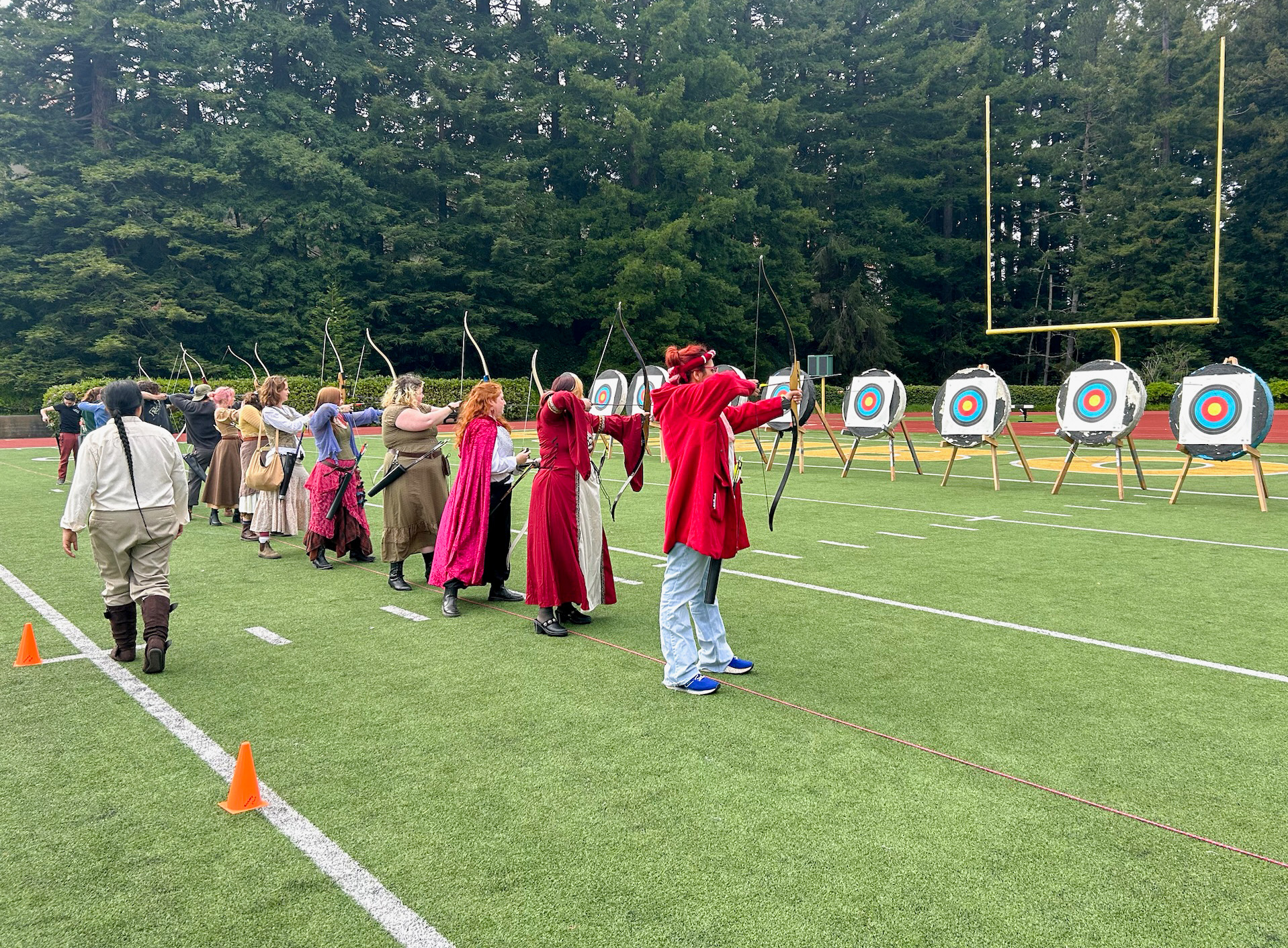
The event was spearheaded by the Archery Club, who put together the faire’s premiere attraction of good old medieval target practice. The club laid plans for a faire at the end of last semester, with ideas having circulated even further back. Their coordination came to fruition just in time for an end-of-the-year extravaganza. Guests delighted in slinging arrows at the club’s giant targets after some safety instruction and were supplied with quality longbows, quivers and wrist and finger guards.
Archery Club Captain Juli Suzukawa expressed their gratitude for the tight-knit community the club provides them.
“It’s a really safe space for me. I’ve been in the club since my freshman year and I’m a grad student now, so it’s been a while,” Suzukawa said. “I feel like it’s a space where people can be themselves and be comfortable.”
Attendees were encouraged to show up and show out in their best medieval attire with a $1 discount on admission. Outfits ranged from traditional frocks and corsets to elf ears, wizard hats and dagger hairpins. A few swordsmen brought model blades to the gathering, and a small training circle quickly convened where stances and techniques were exchanged.
Musketeers well-versed in the art of the foil also made an appearance from the Fencing Club. Riley Chestein, the club’s volunteer coach, explained the fencers’ objective for the day.
“We’re using today as kind of a casual practice. [We’re] doing some practice — we call them assaults,” Chestein said. “That way people have something to watch, we get some practice in; it’s a win-win situation.”
Other festivities on the field included juggling, hula hoops hoisted into the sky and un-lit fire pole spinning by the Humboldt Circus. An impressive dance performance by Ballet Folklorico de Humboldt, as well as heated bouts of tug-of-war occurred throughout the day.
The university’s chemistry club, Free Radicals, workshopped the most spectacular reactions they could stage for an extensive alchemy display.
“Usually we do it in the lab, so I had to find certain demos that the school would approve safety-wise,” Club President Andrew Jenkins Cruz said.
Jenkins Cruz presented several magic tricks, including color changing liquids and a gummy bear sacrificed to the fire in hot potassium chloride, a substance used in rocket fuel. The result was a firework-like display of light and smoke, all contained within a test tube.
Great revelry was had by all, with spirits high and mirth aplenty. As the evening drew to an end, the new experiences of the day left attendees hopeful that this gathering may become a new Cal Poly Humboldt tradition.
Nick and Ursula are devoted town criers for the Humboldt academy. They are part-time minstrels of the lute and harp respectively, and dabble in swordplay and sorcery.
Pride and Prejudice (2005) is celebrating its 20th anniversary and I’m so incandescently happy.
By Julia Kelm
Pride and Prejudice is based on the classic novel by Jane Austen that came out in 1813. It’s a love story set in the English gentry during the Georgian era.
The story mainly follows Elizabeth Bennet — Keira Knightley — a rather outspoken and self-assured woman for the era, as she faces extreme pressure from her parents to marry.
However, upon being introduced to the stern, yet handsome upper-class Mr. Darcy — Matthew Macfadyen — sparks fly instantly. Despite their animosity, there is obvious chemistry between the two. Over time, their relationship blossoms from enemies into lovers.
There was a showing of the film at 5:00 p.m. at the Minor Theater on May 1 to celebrate the anniversary. I was unable to procure myself a ticket, regrettably, so I had to settle for streaming the film on Netflix.
I wish I could’ve seen this film on the big screen, even though I have probably seen it about 100 times before. Although, you won’t hear me complain about seeing it for the 101st time.
I know it’s annoying and kinda ignorant to say I wish I lived in another time, but GOD DAMN! This movie makes me long for the English countryside, the ball and to be courted. Just for a night is all I ask — surely that’s a reasonable request?
Although the theater-going experience is undeniably the best way to watch a movie, I think a similar sentiment can be said for watching movies with your friends. Obviously, in public, I wouldn’t cry out every line of this film aloud like scripture. My living room, on the other hand, is another story.
I think the best way anyone can enjoy any movie is with friends and loved ones. Any movie I’ve watched myself, I’ve forced my friends to watch, too. That’s just my love language, I guess.
The acting and cinematography are unmistakably fantastic. If you’ve seen this film as many times as I have, you are likely aware of the iconic hand flex scene. Hardly a word is spoken in this scene, yet you completely understand the rising tension and romantic dynamic between Elizabeth and Darcy. I wish I could frame this scene and put it on my wall for an eternity — that’s how immaculate it is to witness.
Not to mention the ballroom scene where Darcy requests Elizabeth to dance. After bickering for a moment, the camera pans to make it appear that Darcy and Elizabeth are dancing completely alone, signifying that they only have eyes for one another. If that isn’t cinema, I don’t know what is.
Regardless of whether you were able to see Pride and Prejudice in theaters or not, it’s an unforgettable experience — and definitely worth seeing, again, again and again.
Julia is a journalism major at Cal Poly Humboldt. She loves film and is a regular on Letterboxd. To quote Robin Williams in her all-time favorite movie, Dead Poets Society, “The powerful play goes on and you may contribute a verse. What will your verse be?”
The rare, sunny spring or winter day in Humboldt county — of course it happens when I’m either feeling my worst or at my busiest. To stay inside and feel guilty about missing out on much needed vitamin D, to go outside and feel guilty about not doing work or to ignore my body — what’s a girl to do?
I have a love-hate relationship with those random winter days that make it over 60 degrees. I’m usually at least three months deep into my regularly scheduled clinical depression cycle — without a doubt influenced by the 4 p.m. sunsets and heavy Humboldt rainfall — and I am absolutely not in the mood to be guilt-tripped by the fact that I know the sun doesn’t come out often. In my heart, I know it would be good for me; it’s probably exactly what I’d need to feel better, actually. I don’t know what to tell you — being logical about it isn’t really gonna do anything, obviously.
Then, after all my homework for the spring semester has already started piling up and I’m running out of time to turn stuff in, here comes the fucking sun — or whatever it is the Beatles said. Now it’s like shit, why would I stay inside and do work when it’s literally river season? The sunny days aren’t really promised until July, so while they’re a little more frequent, I can’t be sure the entirety of next week won’t be cloudy as shit. I’m already burnt out and justifying not doing my work — the sun makes it way too easy to do more of that.
An endless cycle of “what if?” until the end of the semester, every semester. I wonder if it’ll end when I’m done and graduated, but I’m pretty sure it won’t. C’est la vie.
Jasmin Shirazian is the copy editor of The Lumberjack and an avid consumer of TV. She loves her cat, family, friends, clothes and traveling in the middle of the school year.
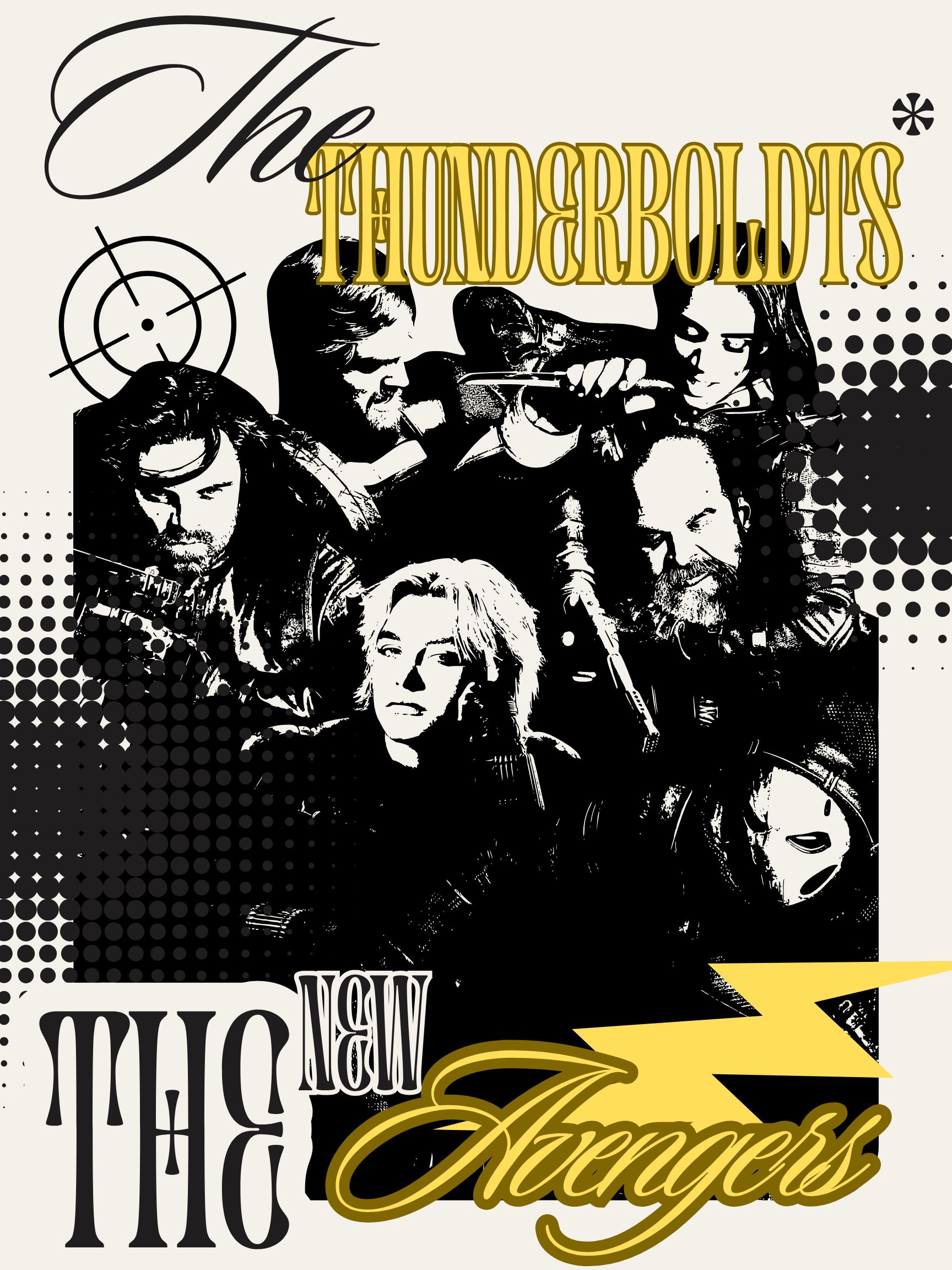
Marvel Studios The Thunderbolts* made its way to theaters worldwide this past weekend and the reviews are in — Marvel is back. With a Rotten Tomato score of 87% and an audience score of 94% The Thunderbolts* is proving to be a movie people love. I can attest — it’s pretty good.
Following up on several different Marvel Cinematic Universe properties including Black Widow, The Falcon and the Winter Soldier, and Ant-Man and the Wasp to name a few, The Thunderbolts* follows a rag-tag team of “losers” banding together to try and stop a cataclysmic event in — where else? — New York City.
While I don’t fully agree with the streets saying this is “the best MCU movie since Endgame,” I will say I think it’s definitely in the conversation for top three. I think this is the result of a couple of different factors, most of which I feel the MCU has been lacking in as of late.
One of which is their recent overhaul effort to push more quality than quantity. Since the creation of Disney+, the MCU has been shoveling out movie after movie and show after show, maximizing storytelling and minimizing output. I don’t believe “superhero fatigue” is a real thing as many others do. I think audiences just know what quality feels like and get worn out when these companies shell out mid movies and shows.
I say that to say, The Thunderbolts* did not feel like one of those movies. From the trailers, to the promotions, to the acting, to the themes, The Thunderbolts* stands apart from recent MCU movies unequivocally.
As mentioned, I’d really like to talk about the acting in this movie. I believe that each and every person in this movie gave a stellar performance. While I do feel as though the dialogue was a bit stale at times and not everyone had enough screen time — which is bound to happen with teamup movies if I’m being honest — each actor gave a performance that shined in its own light. And, while I don’t want to single out one particular character, I think it’d be a disservice to not mention Florence Pugh’s performance as Yelena Belova in this movie.
Without giving away too much, we see Yelena — and others — struggle with issues of depression and loneliness in this movie in ways that honestly hit way closer to home than I would’ve thought. Pugh is continuing to prove she is more than capable of carrying the mantle of Black Widow in the MCU, and I can’t wait to see her in Avengers: Doomsday.
All in all, grab your friends, head to the Broadway Cinema and go have fun watching The Thunderbolts*. I give this movie a 7.3/10.
Kaylon Coleman is a junior journalism major with a concentration in news and a minor in Psychology and Communications. He is the Social Media Assistant Manager for LJ. He is also the president of the Black Student Union at CPH, social media coordinator for the Umoja Center, and a part-time radio DJ.
A little over two years ago, a schizophrenia diagnosis changed my life after a traumatizing psychosis episode. I was in my second semester at Cal Poly Humboldt when my onset hit, and it was the most terrifying experience of my life. Timely intervention and care helped me get back to reality. I had to leave school that semester and finish from home, but I made my way back up to Humboldt the following semester. Since then, I’ve been working on The Lumberjack, in broadcasting for over a year, won a couple of awards for my student publication work and I’m about to graduate with my journalism degree. I’m extremely proud of myself and what I’ve accomplished while fighting a mental battle every day. Schizophrenia can seriously impact someone’s life — and I’m no exception — but through support and treatment, it can be managed.
My support system has saved my life. I wouldn’t be here without my selfless father, my caring mother, my encouraging sister and my thoughtful boyfriend. I also can’t forget my professors and peers here at Cal Poly Humboldt who have all helped me get to where I am now.
Getting to this point has also taken a lot of work on my part. Finding the right mix of medications and attending therapy religiously has helped me stabilize and maintain a functional baseline. I’m incredibly grateful for modern medicine, but it has taken some time and patience to figure out which combination works best for me. Therapy is also a part of treatment that works over time and requires consistency. I understand and appreciate that I am in a fortunate position to have what I need available to me, as not everyone with schizophrenia — or bipolar, hello mania! — has access to proper, let alone consistent, treatment, but it shouldn’t be that way. I believe everyone who struggles with mental illness deserves adequate care.
During my psychosis, I didn’t think I would make it out of the hospital, or even make it back to college to finish my degree. Going through my episode and receiving my diagnosis brought along a slew of challenges, but also gave me the opportunity to develop my emotional skills. I’ve become more resilient, adaptable and grounded in these two years post-episode. I’m not glad for what I went through, but I’m happy where I am now.
Savana Robinson is a senior journalism major and a multimedia journalist and producer at Redwood News. She loves motorcycles, cats and video games.
This website uses cookies to improve your experience. We'll assume you're ok with this, but you can opt-out if you wish. Cookie settingsACCEPT
Privacy & Cookies Policy
Privacy Overview
This website uses cookies to improve your experience while you navigate through the website. Out of these cookies, the cookies that are categorized as necessary are stored on your browser as they are essential for the working of basic functionalities of the website. We also use third-party cookies that help us analyze and understand how you use this website. These cookies will be stored in your browser only with your consent. You also have the option to opt-out of these cookies. But opting out of some of these cookies may have an effect on your browsing experience.
Necessary cookies are absolutely essential for the website to function properly. This category only includes cookies that ensures basic functionalities and security features of the website. These cookies do not store any personal information.
Any cookies that may not be particularly necessary for the website to function and is used specifically to collect user personal data via analytics, ads, other embedded contents are termed as non-necessary cookies. It is mandatory to procure user consent prior to running these cookies on your website.