The Lumberjack


Students Serving The Cal Poly Humboldt Campus and Community Since 1929

Month: September 2025

  • Reel Talk with Julia

    Reel Talk with Julia

    Humboldt County is an underrated classic, full of emotion, care, and love for Humboldt county 

    by Julia Kelm

    Humboldt County is a film about a medical student, Peter — played by Jeremy Stong — who is about to graduate into his residency. However, after he’s failed by his father who is also his professor, he ends up sleeping with an actress, Bogart — played by Fairuza Balk — who then takes him to Humboldt County on a whim. 

    Peter, shy and timid, quickly finds himself out of his element upon meeting Bogart’s eccentric friends and family, who just so happen to be pot farmers. Peter, panicked by his soon-discovered fish-out-of-water circumstance, asks to be taken home. However, due to various reasons, Peter is forced to stay until he realizes he doesn’t want to leave anymore. 

    My only issues were related to the pacing. There are a few moments where the film reveals information out of nowhere. Then you’re not given enough time to react before the story moves on to something else. Characters are written well, but again, certain elements of their characters don’t get enough time to shine. But, I enjoyed this film overall and rate it a 3.5 out of 5 Julia’s. 

    Regardless, it’s surprisingly sweet and poignant for a film that was advertised as a stoner flick. The journey Peter finds himself on and the connections he has within this wacky group of people feel so relatable and human. 

    I don’t want to spoil details, but Peter and the character he befriends, Max, share a very interesting relationship as they compare their lives to one another. Both of them were raised with different philosophies. There’s a sense of jealousy from both of them as they yearn for each other’s lives. The connections between characters is probably the strongest attribute of this film. 

    Every character introduced, small or large, all feel like real life — especially when the people you’re seeing on screen are so similar to who you know or have met in Arcata.

    Humboldt County was indeed filmed in Humboldt, specifically in locations including here in Arcata, Blue Lake, Eureka, the College of the Redwoods, and Luffenholtz Beach in Trinidad. So, not only does this movie feel real, it feels like home.

    If you’re interested in watching Humboldt County, it’s currently available on Tubi, my favorite streaming platform, because it’s completely free. 

    Julia is a journalism major, and is the life and arts editor for the paper. She loves film and is a regular on Letterboxd. She also enjoys going on walks in the forest, and taking pictures to relax. If you have a movie you want her to review, email her at jk328@humboldt.edu.

  • AstroloTea for the week of Sept. 24

    AstroloTea for the week of Sept. 24

    by Serah Blackstone-Fredericks

    So, we have made it through the eclipse portal and are in a new era of being.

    As someone who has been working with and engaging with plants for many years, I find most joy in getting to know plants in great detail. As your resident mercurial being of calm and chaos, I invite you to see how you are feeling. 

    This week, we have just transitioned into Libra after our second eclipse of the month, which was in Virgo on Sunday, Sept. 21. Maybe you said something to someone you need to simmer on before you circle back to apologize or try to fix anything. Pause is the best remedy, especially when you feel the urgency to overcorrect or apologize. An apology can only really land if it is sincere.

    So, here we are, with Monday gifting us with a new season: Libra, which encompasses  romance, transitional weather and illuminates how our relationships are or are not working, and how we may be in or out of balance. I am enjoying my most magnificent hermit-girl era, which includes seeing as few people as possible, with respect to the energetics of a hermetic, Virgo year. If you are going to have some lush, enjoyable, romantic times, Libra season offers that lush venusian warmth which makes anyone able to swoon.

    Questions we could simmer on are: 

    How do you offer diplomacy in your life?

    Are you leaning too heavily in one direction, closing yourself off to other people’s perspectives?

    In what ways can you offer resolve to a situation or feeling that might have come up during the last couple of weeks that is compassionate, kind, and open?

    How can you engage more with your community and still protect your peace?

    What is coming up for you this week? What do you notice?

    For water signs Cancer, Scorpio, and Pisces (sun, moon, rising):

    This week is a really good week to stay hydrated. Watch your time around community and notice when you feel tired. If you need to, take a moment of pause away from the crowd. Stay in bed more just because your body calls for it. Rest is your friend this week.

    Good tea herbs this week would be: chamomile, red raspberry leaf and hibiscus. If your nerves are shot, roots such as ginger, astragalus and ashwagandha can ground you and settle your tummy too.

    For earth signs Taurus, Virgo, and Capricorn (sun, moon, rising):

    This is a good week to tether to the earth. We are in a transitional axis and the sun has officially shifted in the sky. The greenery looks and feels different and how we engage with it as the days start to get shorter feels a bit different too. Shifting from earth — Virgo — to air — Libra — may feel supportive or it may feel a bit jarring. Invite in a gentleness this week with plenty of time to rest and transition from places.

    Good tea herbs this week would be: lemon balm, skullcap, catnip, and valerian — the latter of which must be used with care. If you feel like you need some rooting, dandelion and burdock are good choices.

    For fire signs Aries, Leo, and Sagittarius (sun, moon, rising):

    The energy of summer is waning and I imagine you want to capture it and do all the things. Pace yourself and your fire as we exit eclipse season. Nurture it with some quality time dedicated to the season shift and to slowing down so you don’t burn out. If you find yourself moving way too fast, take a walk near a body of water. Even a pond will do.

    Good tea herbs this week would be: tulsi, nettle, yarrow, passion flower, blue vervain and rose.

    For air signs Gemini, Libra, and Aquarius (sun, moon, rising):

    Okay, my swift moving air sign friends, it is time to start to decrease the acceleration and enjoy the magic of an air sign season. The chatter may be up and you may have many brilliant things to say with verbosity and be mindful and intentional with your words. Don’t be less you; be mindful and watch how much airtime you are taking with your friends who enjoy listening to your word magic.

    Good tea herbs this week would be: gotu kola, milky oats, lavender, lemon balm and tulsi. A birthday herb blend for Libra’s would be rose and tulsi, a personal favorite. And happy birthday season!

    Happy Libra season!

    Gemini out,

    Disclaimer: All of these herbs are merely suggestions. You can enjoy them individually, or mix and match. If mixing, let your nose tell you what will be good. I find any blends beyond 3-4 herbs tend to become less delicious, especially if you are new to making tea blends.

    Supporting our local herbal ecosystem and voting with our dollars is where things count. A challenge about herbalism can be access, and we are beyond lucky to have two stores available to us in our area. Arcata is home to Moonrise Herbs while Humboldt Herbals provides in Eureka, and both are excellent. Support these stores so they can support your nervous system in return.

    Serah Blackstone-Fredericks is a cross-disciplinary anthropology major, minoring in arts in health and narrative medicine. A writer, musician, and mother, she weaves together her studies with creative practices like gardening, cooking, fermenting, and natural dye experiments. Her work explores the ways culture, storytelling, and connection shape how we live and heal. Feel free to connect with her at sb625@humboldt.edu

  • Shifting Seasons: My Fight with Blight

    by Serah Blackstone-Fredericks

    Rain, thunderstorms, lightning and more sun — just like that, it’s warm in Arcata again. The gardeners — myself included — are dealing with a pesky fungus called blight, which has been plaguing Humboldt gardens all summer.

    Blight is a fungal disease that both wilts and discolors plants. It’s been the bane of one corner of my garden, where my very healthy cucumbers and delicata squash were affected. There are many ways to treat it, and the only one I was semi-curious about was spraying old milk directly onto the affected plants. I wish I could say that I tried it out and have something to share about its success rate, but alas, I did not find the desire or time to have my yard smell like spoiled milk.

    If you’re wondering what’s good to grow now, I recommend sowing things you like to eat. I had an experimental phase where I sowed some new and familiar items, but all in a mindful consideration of what I eat. This mindfulness did backfire this summer in particular, as I found myself with much less available to harvest right now.

    This week, the official calendar fall arrived, and with it my tomatoes and lemon cucumbers all ripened at once. I used to garden closely with the cycles of the moon, and although I love that rhythm, I don’t currently have the time as a student to embody the kind of slowness I seek to cultivate in my life.

    Although gardening with the moon offers your plants more of an opportunity to grow well, there can be a pressure created in making certain you are getting to certain tasks by certain days. That level of pressure as someone who is not yet retired started to build up a bit more stress than my body could hold.

    Graphic by Serah Blackstone-Fredericks.

    In terms of this time of year, it is an excellent time to sow garlic, root vegetables like carrots, beets, turnips,  radishes and bok choy.

    It was an odd year for squash, so next year, I might suggest growing a couple more varieties such as Delicata, Romanesco, and Pattypan — which I forgot to grow. My pumpkin did not ever make it, although it initially looked quite healthy, and will be something to try again for next summer.

    Plant garlic now to harvest in the spring. Wait until it cools a bit more for lettuce. This week through Sept. 26 is a good time to plant vining plants and flowers.

    I invite you to try a new hobby this season — or return to an old one — and notice the rest it offers you.

    If you have questions, feel free to write to me directly at sb625@humboldt.edu. And if you use Instagram, you’ll find a post with a QR code where you can send in your gardening curiosities.

  •  Arcata celebrates 51st annual North Country Fair

     Arcata celebrates 51st annual North Country Fair

    by Mia Costales

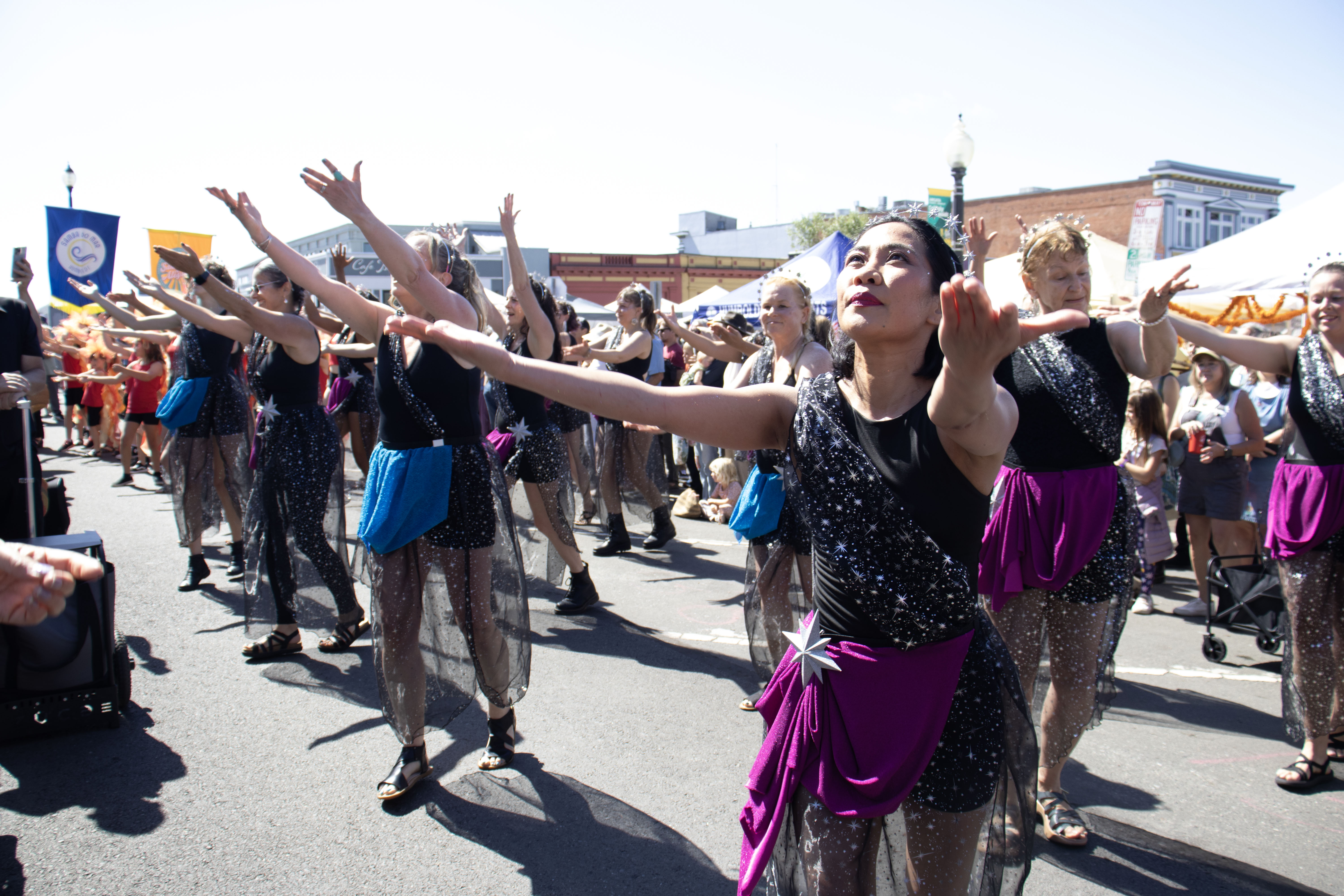
    The rumble of drums echoed throughout the square — the deep boom gave the already living organism that is the North Country Fair a pulsing heartbeat. A sea of Samba dancers draped in sparkling fabric twirled by the onlookers, swaying their hips and waving their arms to the beat. Booths wrapped all around the Arcata square. Some were filled with homemade pottery, baked goods and paintings, while others handed out political pamphlets, hot dogs and bouquets of flowers. Arcata locals, families and Cal Poly Humboldt students wandered around the square as the festivities rang on around them. 

    This past weekend marked the 51st annual North Country Fair. On Sept. 20 and 21, local vendors, bands, performers and community members took to the Arcata Plaza to celebrate Arcata’s lively community and participate in a weekend of zero waste. The North Country Fair is a Humboldt County tradition, spanning back to 1974 and typically takes place the third weekend of September. In 2007, a group of community organizers dubbed, the “Same Old People,” banded together to form an official non-profit group and dedicate themselves to upholding the original spirit of the first North Country Fair in 1974. The Same Old People have been committed to organizing the event ever since. 

    Director Alex Ozaki-McNeill worked with co-director Jessy Preciado and the Same Old People several months in advance to execute this year’s fair.

    “Our theme this year was ‘Rise Up’ and is captured beautifully by artist Lynn Jones of Lynnoleum on our poster,” Ozaki-McNeill said. “The theme is chosen more than six months before the event, and it has felt more and more appropriate this year. The board of directors, affectionately called the “Same Old People” felt that it conveyed a similar message to ‘resist’ but in a more positive, uplifting way. The idea was that together, we rise up, as a community, hand in hand.”

    One of the defining factors of the North Country Fair is its commitment to zero waste. Attendees are encouraged to bring their own plates, cups and utensils or use the reusable cutlery provided by the fair. Plastic bus tubs were dispersed throughout the square to serve as  dumping grounds for any dirty dishes. The fair relies on volunteers to monitor waste stations and direct people to the correct waste bins. Walking and biking to the event were also encouraged over driving to decrease emissions.  

    Breann Burgess, a Cal Poly Humboldt environmental student and Humboldt local, shared that this year’s fair was even more packed than in previous years.

    “As an environmental education and interpretation major, I loved the booths based around our local non-profits like Redwood Rising and Environmental Protection [because] I could network and meet people,” Burgess said. “I love seeing the community come together for events like this and I love how much local artists are showcased at the North Country Fair.” 

    The All Species Parade and the Samba Parade were the pinnacle of the fair, drawing in people from all corners of Arcata and its surrounding areas. The All Species Parade, which took place on Sat., Sept. 20, embraced Arcata’s unique connection to our fauna and encouraged those participating in the parade to dress up as their favorite animal. On Sun., Sept. 21, the annual Samba Parade was the highlight, featuring Samba de Alegria and Samba do Mar Humboldt.

    Another highlight of the North Country Fair is its family friendly activities. Several booths catered to children and families with activities such as face painting, games and even a DIY fort building station complete with cardboard boxes and markers. 

    “It is a fantastic time for really eclectic local artisan goods, new good music you’ve never heard about, happy uplifting people and vibrations,” Kol Wannigman, a North Country Fair security personnel, said. “Good food, good fun and happy family vibes.”

    The North Country Fair is a quintessentially Humboldt event and it is deeply ingrained in the fabric of our quirky community. Thanks to a couple eccentric people back in the 70s, hundreds of Arcata locals can proudly say that they’ve experienced the love and community that is the North Country fair.

    “To steal [or] paraphrase from another artist, Catlin Blair, “The North Country Fair feels like a giant hug from the community,”” Ozaki-McNeill said. “This quote lives rent free in my head. And again with the theme of this year, it is incredibly meaningful to help pull off a large scale event that uplifts artists and makers in our community and that together we ‘rise up.’”

    Mia is a journalism major and the Editor in Chief of The Lumberjack. She hopes to give a platform to underrepresented communities through her writing and provide the public with thoughtful and informed stories. In her free time she enjoys cooking, reading and playing the violin. Contact her at mdc140@humboldt.edu.

  • Kickin’ it with College Colors Day

    Kickin’ it with College Colors Day

    by Ryan Diaz

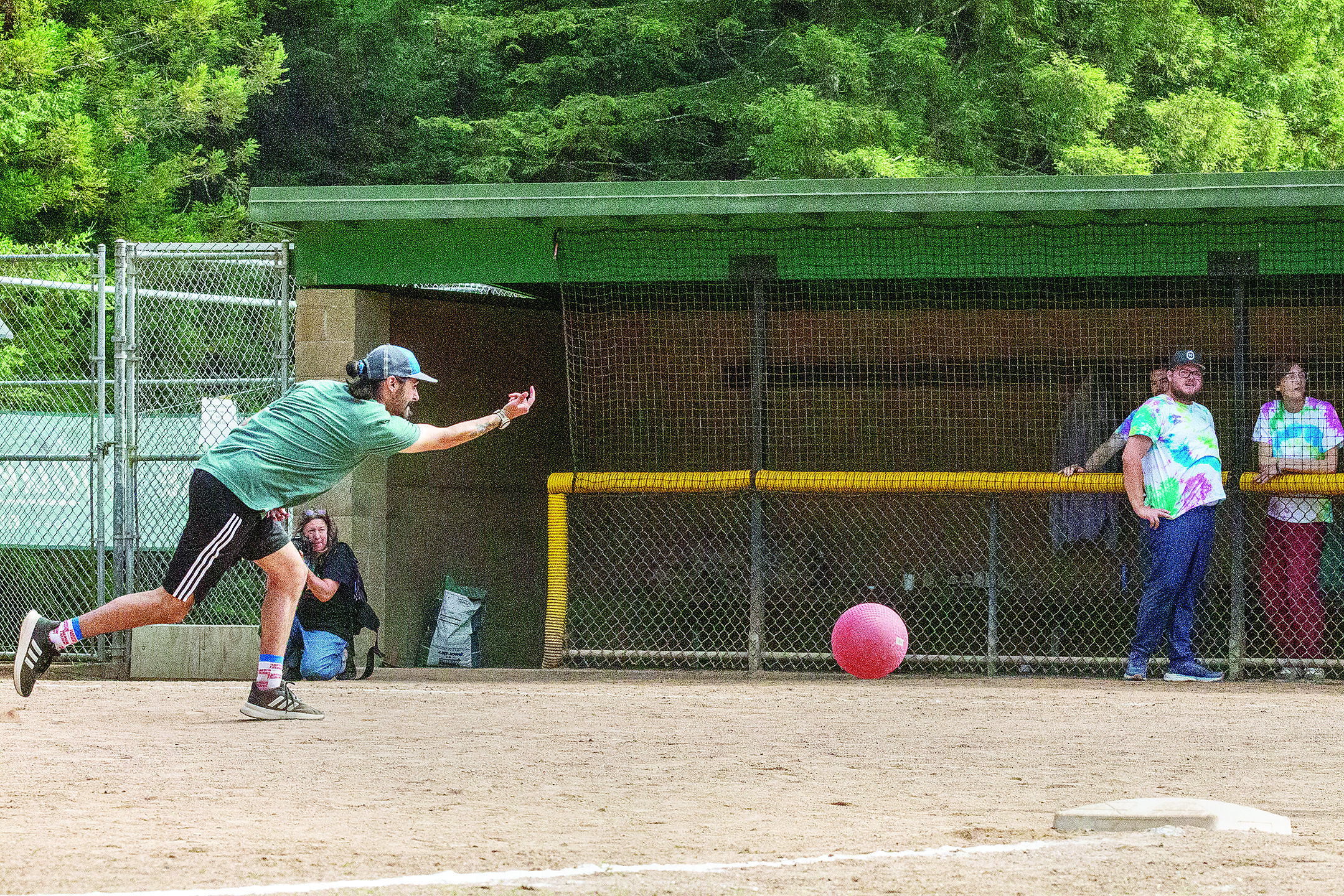
    The sunshine beamed down on students and staff while the smell of freshly cut grass ruminated in the air. The annual College Colors Day took place on the upper playing field and a mix of alumni, students and faculty convened in the space. The tunes of KRFH student radio filled the crowd with excitement as the kickball game ensued on Friday, Sept. 19.

    College Colors Day is an annual celebration of school spirit and pride, and features a variety of activities. This year included a kickball tournament, soccer, face painting, music and complimentary food. 

    Jessica Etter is the events coordinator in the president’s office at Cal Poly Humboldt. Etter ran point on setting up the event, with the goal of more student engagement and connection. 

    “In the past, the kickball tournament drew mostly staff and faculty teams,” Etter said. “We listened to feedback and were excited to see much more alumni and student involvement this year, especially with the Jack Attack student kickball team that made it all the way to the championship.”

    Viktor Coonrod is a freshman majoring in engineering and attended his first-ever College Colors Day. He explored the event, navigated his way through the festivities and embraced the college spirit. Viktor said that as a freshman, there are many ways to make friends at this event. 

    Senior Carlos Regalado suggested that freshmen get involved with the local community by joining student organizations or participating in school events. 

    “This event is really awesome and fun, you can meet a bunch of different people on campus, and if it grows, it’ll be awesome,” Regalado said. “You can find your family here.”

    The kickball tournament found a different team this year, with a student-led team. On the student side, Ink Sarco, a freshman marine biology major, joined the team this year.

    “It’s really good to come together and build a sense of community,” Sarco said. “Meeting people that you typically wouldn’t talk to on a day-to-day basis.”

    Ian Avants is a junior computer science major and one of Sarco’s teammates. An event for a variety of different ages, this kickball tournament brought together the community in unique ways and tied together school spirit in a green and gold bow. 

    “Everyone is here just to have fun. It’s high energy, and just a fun way to spend your afternoon,” Avants said.

    Jorge Pelayo is the SPF purchasing coordinator at the executive business services support at Cal Poly Humboldt and participated on a staff and faculty team. This is his first year at Humboldt and his first College Colors Day. 

    “I think it’s important to make those connections so it feels like [the students] are not going through anything by themselves, help each other, listen to each other, and push each other along,” Pelayo said.

    Ryan Diaz is a senior at Cal Poly Humboldt and a second-semester reporter with an ambition to work in the public relations field after graduation. He is also a DJ on 105.1 FM KRFH and krfh.net, hosting a weekly show on Thursday from 7-8 P.M.

  • Fish of the Week: the chinook salmon

    Fish of the Week: the chinook salmon

    Oncorhynchus tshawytscha: the fish king of the “Beaver State”

    by  Ariana Wilson
    This week, we welcome an out-of-state finned friend from the North — Oregon’s state fish, the chinook salmon. The most significant and valuable species of Pacific salmon, with its common name originating from the Chinookan peoples. Known by many other names, including king salmon, quinnat salmon, spring salmon, blackmouth, and tyee salmon.

    These salt and freshwater dwellers are native to the North Pacific Ocean and the river systems of western North America, from California to Alaska, as well as rivers in Asia, from northern Japan to northeast Siberia. After hatching, these salmon typically spend one to eight years in the ocean before returning to their home rivers to spawn. Chinook salmon spawn in larger and deeper waters compared to other salmon species and can be found on their spawning nests from September to December.

    Last year’s historic dam removal project on the Klamath River has resulted in a flourishing population of chinook salmon in Oregon’s river basin. The last time chinook salmon were seen in the Klamath was in 1912, over 100 years ago.

    According to the National Oceanic and Atmospheric Administration, the chinook salmon population along the California coast is experiencing a decline due to overfishing, habitat loss in freshwater and estuarine areas, hydropower developments, unfavorable ocean conditions, and various hatchery practices.

    For sport anglers, a large chinook salmon is a prized catch.These fish are known for their nutritional value, although some populations of chinook salmon are endangered, many others remain secure. The species has not yet been assessed for the International Union for Conservation of Nature Red List. 

    Ari is a senior journalism major and the science editor this semester, with an adoration for the environment and conservation. She is currently pursuing her scientific diving certification and plans to meld her journalistic passions with scientific research in the future. For any science inquiries, please contact ajw167@humboldt.edu.

  • How safe is your bike?

    How safe is your bike?

    by Bodhi Haugen

    EDIT: Content in this article was edited for accuracy.

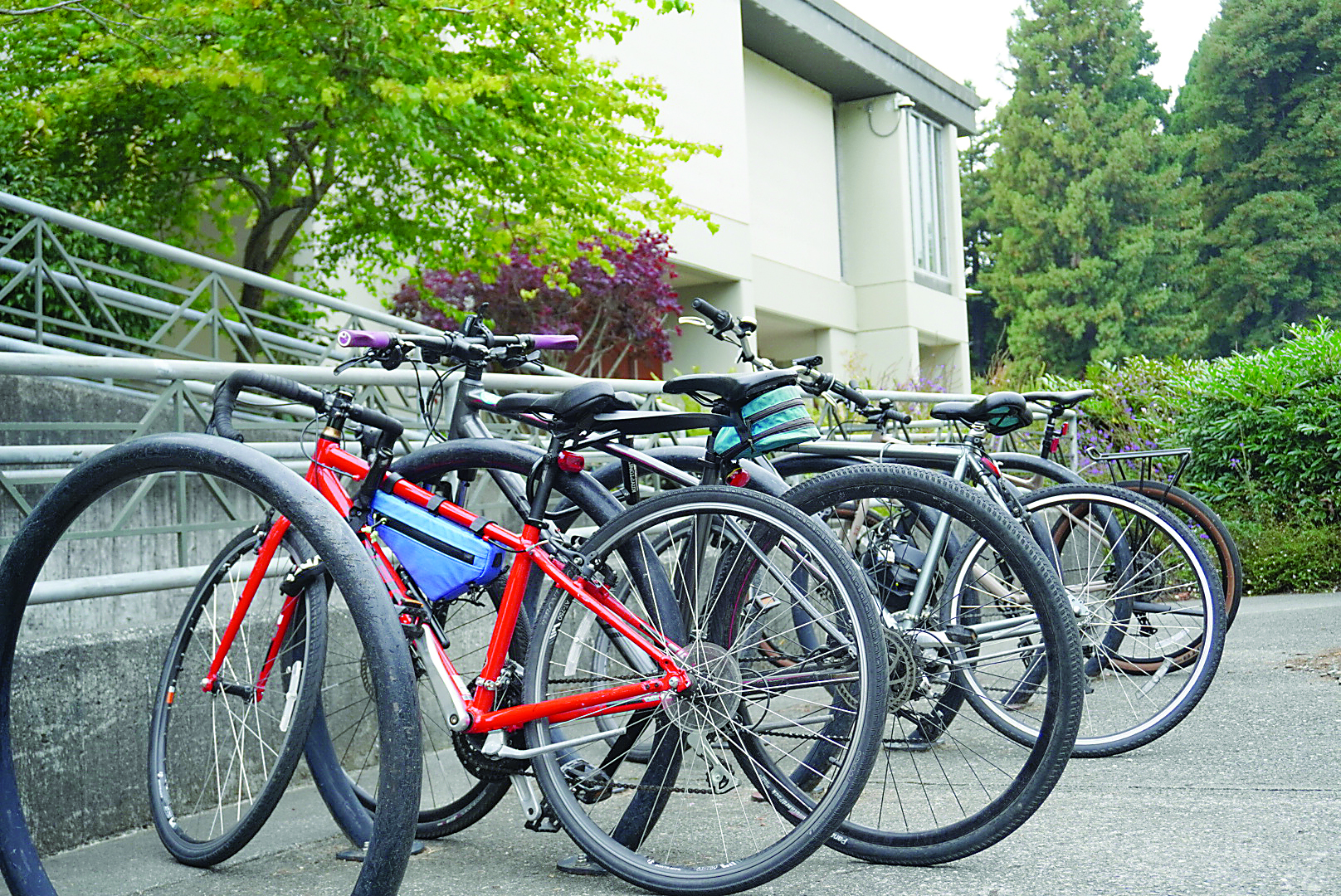
    Bicycles are one of the most common modes of transportation to and from Cal Poly Humboldt. As the semester progresses, proper bike safety becomes increasingly important to prevent theft on campus.

    Chief Greg Allen of the University Police Department (UPD) provided data regarding bike registration and recovery efforts. As of Sept. 15, a total of 99 bicycles have been registered with the University Police Department (UPD), with 18 thefts reported since January. Of the stolen bikes, four have been successfully recovered, and four individuals have been arrested in connection with the thefts.

    This means that roughly 22% of stolen bikes have been retrieved over the past nine months. Students need to know where and when they’re leaving their bikes to avoid losing not just their property, but potentially their main mode of transportation.

    Sage Fowler, a psychology major at Cal Poly Humboldt, had her bike stolen on the first day of school. She parked it in front of the library using a vinyl-coated steel locking cable near surveillance cameras. Her bike was not yet registered with UPD.

    “I just locked it up in front of the library,” Fowler said. “It hadn’t been very long — it had only been a few hours — and then I came back and it just vanished.”

    When thefts increase, the University Police collaborate with APD to locate stolen bicycles. The exchange of registration details and suspect information between agencies plays a key role in identifying patterns and preventing future incidents.

    To help prevent theft, UPD offers free U-locks to students who register their bikes with UPD. This initiative provides a stronger deterrent than typical cable locks and contributes to overall campus safety.

    Another effective strategy is parking bikes near CCTV surveillance cameras.

    “Bike racks across campus are monitored by CCTV cameras, providing broad coverage of storage areas, pedestrian pathways, and surrounding access points,” Allen said in an email on Sept. 15. “Camera placement helps deter theft, enhancing the overall safety of the campus community.”

    However, not all bike racks are under camera surveillance. It’s important for students to park their bicycles in visible, well-monitored areas and check on them regularly with a proper lock.

    Investing in a U-lock is one of the most effective deterrents against bike theft. Locking a bike correctly while securing the frame as well as both wheels with a U-lock and cable can make it significantly harder for thieves to steal parts or the entire bike.

    Taking the initiative to keep your ride safe can give you peace of mind, both on and off campus.

    Bodhi Haugen is a journalism major and writer for the Lumberjack at CalPoly Humboldt. Bodhi is on KRFH and enjoys  reading, writing, photography, and art. You can reach him at bgh27@humboldt.edu.

  • How to stay safe on a skunky campus

    How to stay safe on a skunky campus

    by Nick Escalada

    Ask any campus-dwelling Cal Poly Humboldt student what kind of wildlife they spot at night, and nine answers out of ten will be none other than the humble striped skunk. Mephitis mephitis is a common sight across North America, easily identified by their bushy tails and distinct white V-shaped stripe along their backs. These nocturnal omnivores primarily feed on insects, but have been known to diversify toward eating vegetable plants and small reptiles, amphibians, mammals, and aquatic invertebrates.

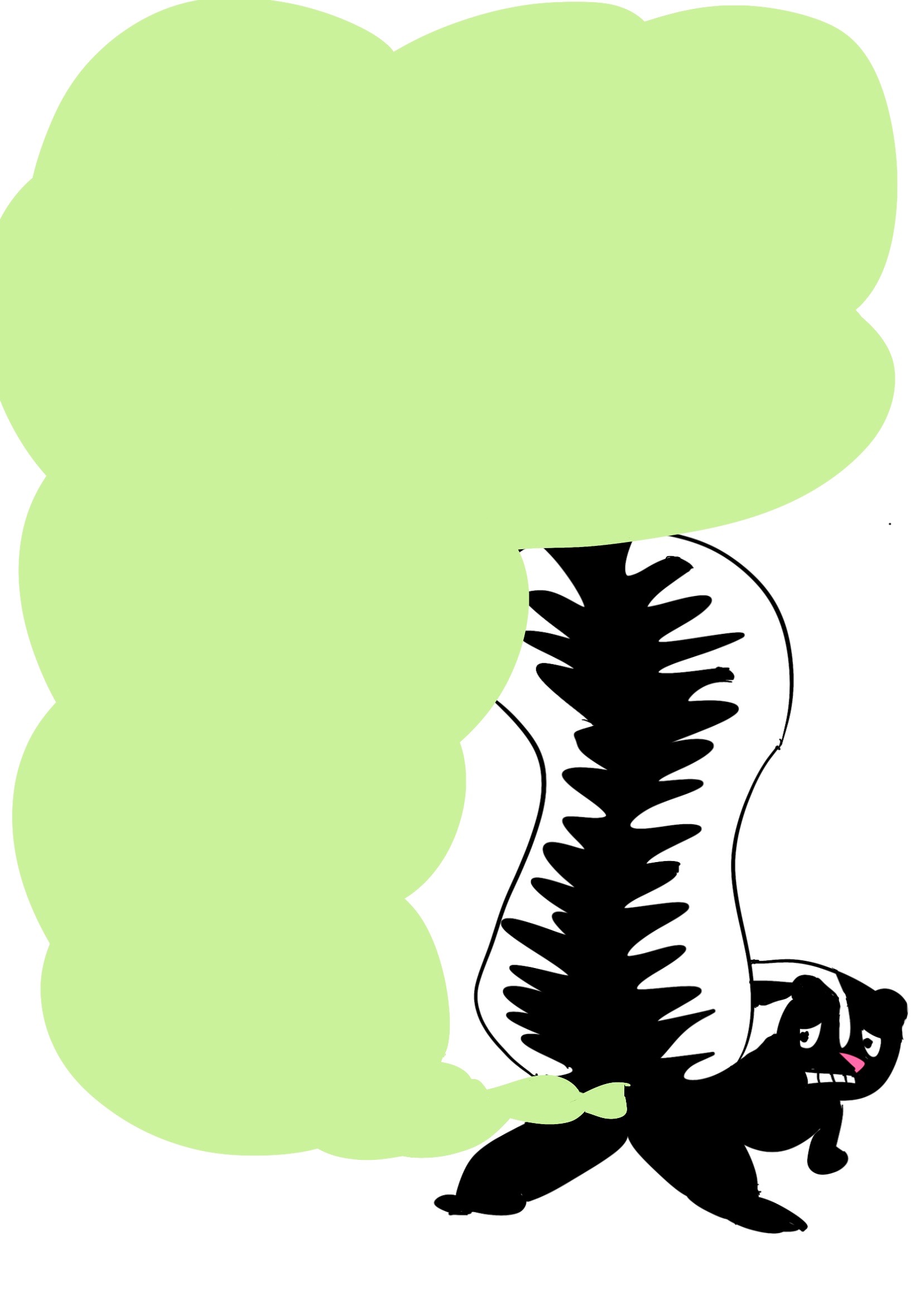
    Of course, the biggest cause for human concern within these animals is their ability to spray foul-smelling musk from their posterior scent glands when threatened. This tactic is a last-resort defense mechanism a skunk will likely only employ if you’re going out of your way to push its buttons. However, the forest-adjacent spaces across campus and greater Arcata see a lot of overlap with the home ranges of local skunks, so Humboldt students are at slightly greater risk of coming face-to-face with a skunk’s caboose.

    The best way to avoid a skunk spray dowsing is to avoid an encounter altogether. Keep your night hikes in the Community Forest to a minimum, and stick to well-lit, paved pathways after dark. While technically carnivorous, skunks aren’t known to pick fights with animals larger or equal in size, so you shouldn’t worry about getting chased down.

    The worst thing to do in a run-in is making the skunk feel like it’s backed into a corner. In cases where this somehow happens by accident, it might hiss or stomp before turning its back to you and raising its tail. Treat this less as a panic signal and more as a generous warning. The skunk will not spray a drop unless you give it reason to, so remove yourself calmly and slowly to avoid escalation.

    You’ve read this far, so you’re probably still afraid of getting stinky. The only safety-related point to remember when getting sprayed is to close your eyes, as the oily musk can cause a burning sensation with direct contact. In regards to treating that putrid odor, perhaps you’ve heard of the tomato paste bath method. While this isn’t mere myth, it’s far from the neatest and most cost-effective way to remove the stench.

    Skunk smell is characterized mostly by the sulfur-based thiols in the musk, which can be neutralized through oxidation. You should attempt this first by showering with deodorizing soap and oil-dissolving shampoo. If this doesn’t work — it probably won’t for a direct hit — soak for half an hour in a baking soda bath, and treat your stained clothes with a baking soda and hydrogen peroxide solution.

    Skunks have developed a stigma among people for their one unflattering ability, but the extent of fear attached to the family seems unwarranted. Like most misunderstood nocturnal hunters, skunks are more afraid of people than we are of them, and peaceful coexistence with our woodland neighbors is possible if we see them for who they are.

    Nick is the news editor at The Lumberjack, and studies wildlife and journalism with the goal of spreading his love of nature through media. A famous recluse, he is rarely seen at social functions, but you might dig him up in a SAC lounge beanbag chair. Chat with him at ne53@humboldt.edu!

  • Redistricting, bad for California, worse for fascism

    Redistricting, bad for California, worse for fascism

    by Barley Lewis-McCabe

    You have to do something, we all do — but look at Stephen Colbert; something is the worst thing you can do. Something could be cause for some gullible asshole to come knock on your door and throw you in the back of a van. Something will make you an enemy of the state, what could be more dangerous than Something? Nothing.

    There isn’t a day that goes by in our country where the effects of the Trump Administration’s ever progressing fascist blueprint aren’t felt in our most vulnerable communities, and there’s no sign of it stopping. Why would they give up? From their perspective, it couldn’t be going better. Now, that’s not to say there isn’t pushback against the ICE Gestapo, or nationwide protests, but for a movement to work it needs consistent pressure on the forces that encroach on us. We just haven’t seen enough of what we need in these last eight months. 

    Let’s look at what kickstarted Newsom’s good spirited power grab. Back in July, Texas republicans drew up a new district map — one that would alter five democrat-leaning districts to result in a likely loss for five democratically elected senators. Districts are demographic boundaries for where people live, and the people who live there elect someone to the house of representatives. Gerrymandering is the legal process where a party in power redraws those districts so they feature a higher ratio of people who support their party to people who don’t, giving them more power in the House of Representatives.  

    Here’s something to consider: Gavin Newsom is a slimy, politicking bastard who doesn’t primarily work to serve the people of California. He works to fuel his own ego and lusts for attention and presidential ambitions… but what politician doesn’t. The thing that sets our fair governor apart is his methods of doing this. Newsom fucking hates any and all republicans. But this hatred — and quite possibly warped moral compass — pointing in the right direction for once, leads to some great things, like when he defied the law and started marrying gay couples as mayor of San Francisco.

    Newsom’s compulsions make him one of the strongest opponents to the Trump Regime. He has thrown as many punches as he’s taken, such as restricting ICE agents from entering schools and hospitals without a warrant. His gerrymandering to nullify Texas’ gerrymandering is another example. 

    The Trump regime is only gerrymandering and attempting to suppress voters because they know chamber control from an opposing party could put an end to their hoop dreams. But, we have to remember the “opposing party” is still one of empty promises and virtue signaling. 

    The democratic party leadership lost sight of the people long ago and decided to support the forces of global evil, all while they planned their own parades and called themselves the last defenders of the American populace. Still, they drunk text about how they just need one more small donation before midnight. Believe it or not, they could create some real change. They might just be on the verge of death rattling some pushback before a kinder group of people take their place.

    Here’s what I think — redraw ‘em! I think every state should redraw their maps to kick out their fascist representatives. I think it’s a horrible disfigurement of our constitution and a gross overstep of power, but what do we have to lose? 

    The worst case scenario is already here; life in our country is worse than we could’ve imagined in 2016. We have to do something to put an end to the infection of fascism in our government. 

    So, please show up this November. I say, vote for the redistricting, remove representation for your fellow statesman. Just know what you’re doing, and hope it was worth it. 

    Barley is the photo editor and an untraditional reporter who focuses on social change and stories with a real human impact. If you’d like to reach him for whatever reason email bl258@humboldt.edu 

  • Cal Poly Humboldt is sending mixed messages on sustainability

    by Peter Nielsen

    In the past few days, I, like any Cal Poly student, have received several messages in my university email. Of those, two in particular stuck out to me.

    The first was an email from the Office of Sustainability on campus, a message both plain and plaintive: Would I take a brief survey regarding the sustainability of the university? Since I wasn’t doing anything important other than checking my email, I did what I felt was responsible and gave it a moment of my time.

    As I recall, the survey asked for me to explain my knowledge of the sustainability programs on campus, my feelings on them, and my understanding of the concept of sustainability in general. I felt generally confident in answering the questions; after all, any Humboldt student would surely have some awareness of the “green” initiatives, from the food composted diligently by workers in The J to roving RA’s urging residents to turn off electronics not in use and save a few watts. And, of course, it’s often said that Humboldt County as a whole has a community that encourages sustainable practices and products. From paper coffee cups to public transportation, electric vehicles to the many varieties of locally sourced, small-batch cannabis. The Humboldt community seems to have a good relationship with the university, or, failing that, at least similar goals in sustainability. My coworker, pushing 50, often cycles to work — about nine miles from his house in Eureka — along what I’m told is a relatively new bike path. On campus, you’d be hard-pressed to find a spot to sit that’s more than twenty feet or so from a recycling bin, or to walk to class without a cyclist whizzing past you. Cal Poly Humboldt, it could be said, is sustainable. 

    Considering all this, it came as almost a shock to receive the second email that caught my attention this week: an email from OpenAI, straight into my university-assigned inbox, inviting me to join a workspace for “ChatGPT EDU” called — you guessed it — “Cal Poly Humboldt.” Whatever could this mean? In the contemporary discourse on artificial intelligence, it’s often said — and often believed — that AI uses a lot of water. This is somewhat true; cooling systems used in data centers that process users’ AI requests and prompts use massive amounts of freshwater. Yes, 70% of the Earth is covered by water; however, only 3% of the world’s water is freshwater. It’s estimated by the United Nations Environmental Report that close to two-thirds of the world’s population will experience a water shortage at least one month out of every year, with that number increasing in the near future. The report states that water use should be “’Decoupled’ from economic growth by developing policies… to reduce or maintain consumption.” Generative AI specifically has also markedly raised the water usage of many artificial intelligence companies. 

    Less discussed, yet still relevant, is AI’s electricity usage — data centers are projected to reach 12% of the US’s total electricity consumption by the year 2028, according to the 2024 United States Data Center Energy Usage Report. The amount of electricity and water used to create, maintain and operate data centers continues to rise, without any associated rise in sustainable methods or technologies to offset this increased usage. AI, it could be said, is not sustainable.

    So, wait; if Cal Poly Humboldt is sustainable, why is it encouraging students to use AI?

    I’ve had several teachers spanning critical thinking with computers to native american studies, showing in their classes how Google AI summaries, Large Language Models and yes, even ChatGPT, are decidedly incorrect or misinformed in a variety of situations. Every course syllabus I read during my first week of classes included a clause prohibiting the use of artificial intelligence for coursework and assignments. What I initially saw as the university’s stance on AI, that it shouldn’t be used in an academic setting, is being contradicted by this invitation, this encouragement to use AI. It flies in the face of the sustainable vision mentioned on Cal Poly Humboldt’s website, claiming: “We are proud of our longstanding commitment to environmental and social responsibility.”

    It would seem to me that there is no pride in that commitment. I certainly can’t take any pride in it, given the circumstances. I would go so far as to say that at this moment, that commitment has been broken. In my opinion, AI has no place at a college that wants to call itself sustainable.

    Where does that leave us? The survey asked me if, while applying to colleges, Cal Poly Humboldt’s drive for sustainability was a factor in my decision to attend. I answered yes. When it came down to it, choosing the right college was choosing a place I could grow into the kind of person that enacts positive change in the world. Humboldt certainly seemed like the place to do just that — and I believe it still can be. I hope that the university, as it continues to grow and change — just like its students are proud to do — can return to and honor its stated ideals, so that we may all take pride in a campus committed to sustainability. 

    Peter Nielsen (he/him/any) is a freshman at Cal Poly Humboldt and an avid writer and poet. He is double majoring in Theatre and Computer Science. He is deeply passionate about environmental and humanistic topics.

  • Jasmin’s Corner

    Jasmin’s Corner

    Missing your ex could make you miss the next

    by Jasmin Shirazian

    Dear Jasmin,

    I still have feelings for my ex. They made me happier than anyone else has. We grew apart after they graduated, and we decided to go our separate ways so we could end on a better note. It’s been almost a year, and they’re still on my mind. We didn’t have a bad breakup, would it be crazy to try again with them?

    Ahh, the good old ex. Either your greatest enemy or a warm memory — even both at times. In your case, it seems like you might be stuck in the latter. Not a place I’d recommend being trapped in for too long, for your own sake.

    I think a break up that ends really well is, like, kind of worse than one that blows up super dramatically with a ton of fall out. Obviously, ideally, you want to end on good terms and you’re technically supposed to break up with your partner before you totally resent them, but then you can end up in a situation where you miss them. When it ends poorly, at least when you miss them, you can think of all the times they pissed you off, ruined your mood — all the beautiful, bad parts that make it easy to move on. Ending on a good note makes it way harder to go no-contact and makes it way easier to linger on the good times. 

    I honestly can’t stand when people break up because of anything other than a real desire to end the relationship. Like, you still love the person, and now you’re just stuck thinking about them and what might have been? So, you’re subconsciously closed off to new relationships and any new person that might have been a good partner. An awful experience for everyone involved. 

    Anyway, do I think you should get back with your ex? In theory, yes, especially if you can find a way to close the distance. But, if you’re saying the two of you grew apart, but you miss them, then I think you might be the only person stuck in those roots. A harsh truth to this situation might be realizing that only one of you may have been outgrowing the relationship. It seems like it’s your turn to leave that pot, too. 

    If you don’t try, you’ll be stuck wondering what if. Worst case scenario, I think it’s better to embarrass yourself and face potential rejection than to be left fixated on your past relationship. Best case scenario, you try again and you either realize how much you actually did grow apart, or maybe you get lucky and you grow into each other again. Either way, you have to find a way to move past your past. 

    xoxo,

    Jasmin

  • Local seniors protest world affairs

    Local seniors protest world affairs

    by Will Bishop

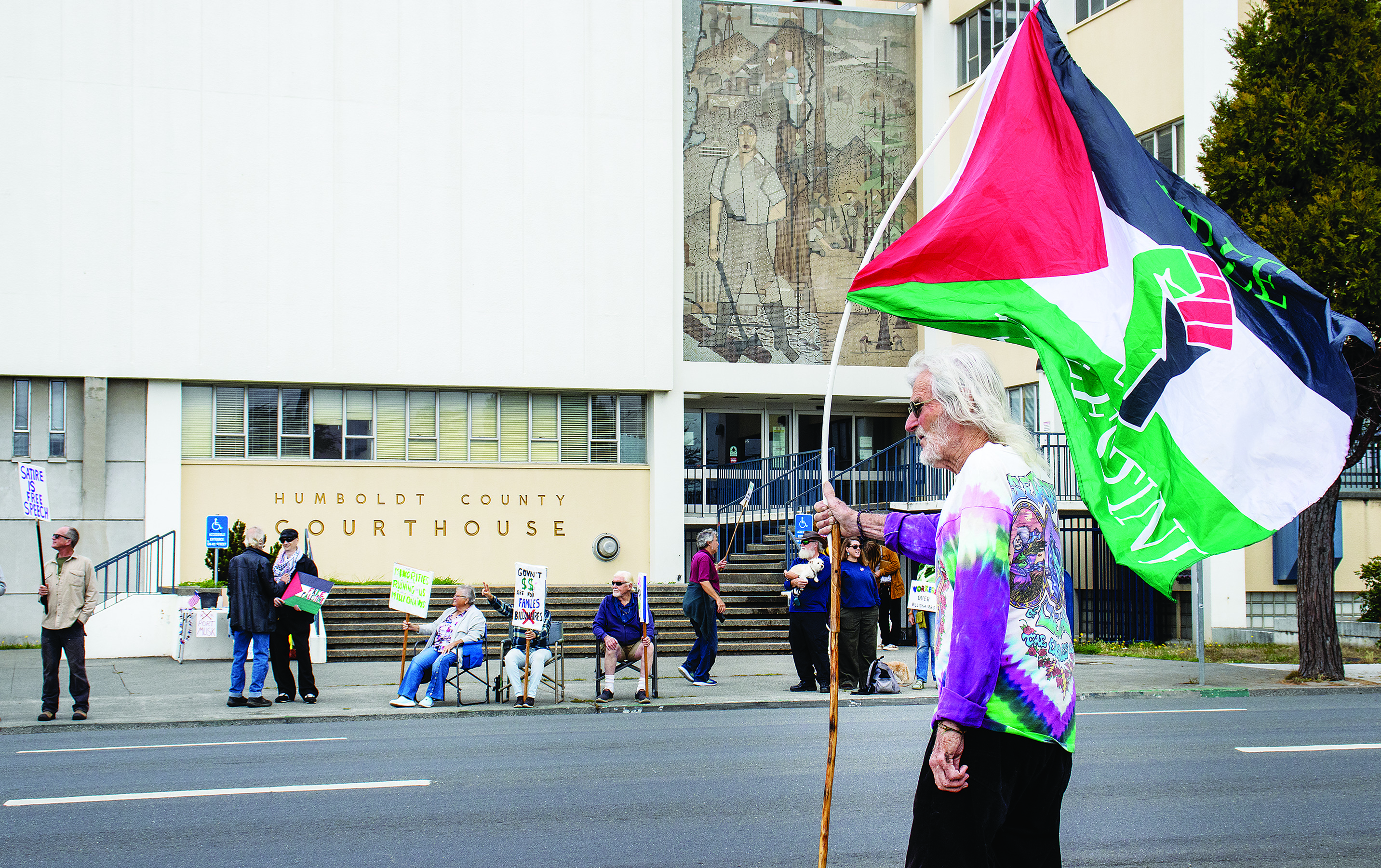
    Near the beginning of summer in June, crowds estimated to be in the thousands gathered in Eureka as part of the national No Kings protest campaign. Now, as summer comes to a close, a small but dedicated group of locals still remain, many of whom started long before June. Turnout for this Saturday’s demonstration was modest, but the dedication on display was very clear.

    Felicity Barstow, one of the protestors present, called for persistent action even in the face of apathy and adversity.

    “We’ve been here almost every Saturday since March, this isn’t just today’s effort — it’s an every day, every minute effort,” Barstow said, seated directly beneath the courthouse flagpole. “It’s really sad what’s happening here. We’re losing our freedoms and people are scared.”

    In the wake of Charlie Kirk’s assassination, some expressed their hesitance to appear for this weekend’s gathering. 

    “I’ve been protesting now since earlier this year and today was the first day I felt really anxious to be here,” said Stephanie Schultz, a class of ‘79 Humboldt State University alum who majored in psychology and minored in art history. 

    Amidst a national atmosphere of worsening political violence, it’s become difficult to keep such anxieties in check. Still, Schultz emphasized the importance of showing up and standing for a de-escalation in political tension. 

    “Our president is not a leader, he is not unifying us,” Schultz said. “We need to calm down the noise level and the conflict between various groups.”

    The causes on display were diverse, with many drawing attention to broader more fundamental issues with American society and foreign policy. While the protest was primarily geared toward rallying against the Trump administration, several could be seen holding signs or flags emblazoned with “Free Palestine” — as well as one large banner for Black Lives Matter. 

    “I’m here to combat fascism, both in this country and abroad,” said James Schultz, son of Stephanie Schultz. “As an Arab American who has been concerned about Palestine for many years, I was worried it was gonna get to this point. And as far as this country -– last ten years I’ve been saying we would get to this point with corporate oligarchy, with freedom of speech being taken away.”

    Notably, James Schultz was one of very few people in the crowd who wasn’t of a much older demographic. The crowd consisted almost exclusively of grey-haired older folk, with essentially no young people in attendance.

    “It’s mostly old people, there’s not even a handful of young, twenties, thirties,” said Lightning Larkin, his Free Palestine flag swirling in the air overhead. “They should be out here like they were in the sixties — it was all young people, and now it’s old.” 

    Nonetheless, Larkin was encouraged by the turnout.

    The event organizer for this particular gathering, a woman who goes by KT, expressed her frustration at the complacency seen among progressive communities. 

    “There’s been a lot of apathy, and a lot of people just, ‘oh this isn’t bothering me,’ especially in Humboldt because we’re in a bubble,” KT said. “And so L.A. is almost like a whole other country to a lot of folks, but our state got invaded. And that just breaks my heart.”

    These protests occur every Saturday from 12 p.m. until 2 p.m. outside of the Humboldt County Superior Court on the corner of Fifth Street and I Street in Eureka.

    Bio: Will Bishop is a Cal Poly Humboldt journalism major. He is prone to writing essays about things that bother him, and fictional works about things that also bother him but in different ways. A highly bothered individual, and a lover of cinema, music, and large trees/rocks. He can often be found in the woods, dancing to bring down the sky.

  • The history of accessibility at Humboldt

    The history of accessibility at Humboldt

    by Sadie Shields

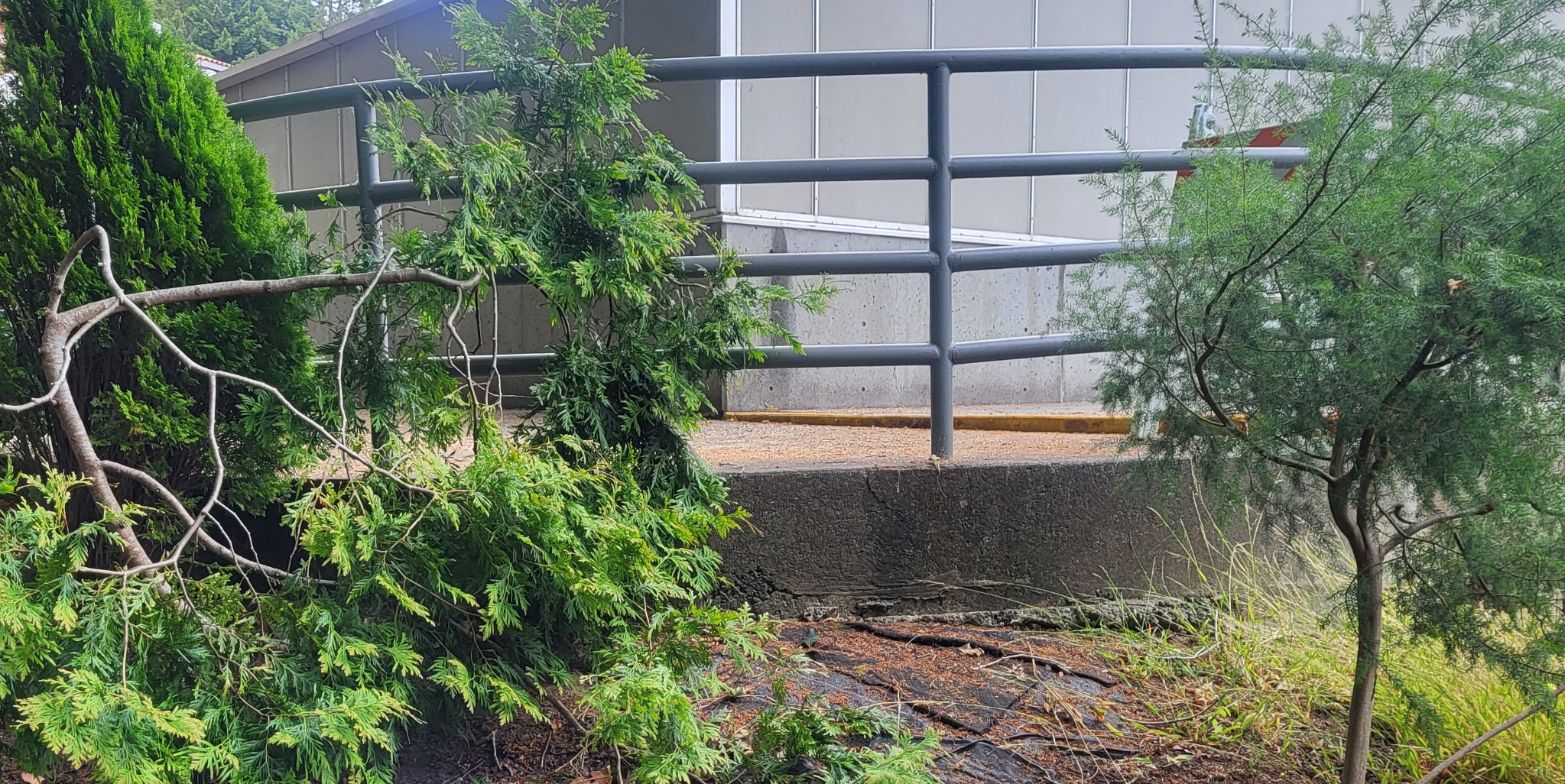
    Over the past 20 years, accessibility on the Cal Poly Humboldt campus has changed. From a new route on Dennis K. Walker Greenhouse to the new all-gender restroom at Jenkins Hall, different kinds of accessible infrastructure can be seen around campus everyday. Yet faculty, students and community members still address issues of accesibility on campus.

    Cal Poly Humboldt is listening to concerns about accessibility raised by students, faculty and community members. Mike Fischer, acting vice president for administration and finance, assured the campus community that admin is addressing student concerns. 

    “We know that accessibility concerns have been raised by our students, faculty and community members, and I want you to know that these voices are being heard.” Fischer said. “[There’s] encouraging news about the progress we’re making at Cal Poly Humboldt to ensure our campus is accessible to everyone in our community.”

    Through the Committee for Accessibility and Accommodation Compliance (CAAC), Humboldt is working to make sure to remove those barriers created by accessibility issues and promote inclusivity where everyone can belong and participate.

    Fisher also talks about how the hills create a difficult landscape to create accessibility around campus.

    “It’s hard to rely solely on the exterior to be able to navigate north, south and those particular areas [of Founders Hall, University Center, Science Buildings and the BSS Building], so one thing about getting to this level from that level is accessing the elevators in buildings,” Fisher said. “This is a small little thing, but it is pretty significant in the amount of effort and time it truly takes. Previously, there was a trip hazard and a barrier of about an inch and a half where concrete sank over time.”

    While the local geography poses a challenge, Cal Poly Humboldt plans to make the largest coordinated accessibility effort in its history. The university has already fixed at least 300 trip hazards across campus in their latest summer inspection. The fixed sidewalks included the west entrance to Siemens Hall, where the accessibility tour began. They have also installed 26 accessible drinking fountains around campus, completed 10 major projects which involved fixing sidewalks, doorways and doors, and updated 2,800 documents, 135 videos and 46 podcasts for digital accessibility. 

    The Campus Disability Resource Center wait times for getting an appointment for the first steps into receiving accommodations wait time from four to six weeks to one to two weeks. Cal Poly Humboldt also had four drivers for two shuttles this semester, which makes the wait time less for those who use the disability shuttle. The CDRC also was able to prepare all returning student accommodation paperwork by the first week of classes. Humboldt is finalizing the updated ADA Transition Plan, expanding accessible parking and shuttle services and planning a Disability Awareness Day to strengthen dialogue throughout our community.

    “We know that trust is earned through action, not words,” Fischer said. “Thanks to the dedication of our students, staff and faculty working alongside CAAC, we’re creating real change toward a campus where every person can participate fully and equitably.”

    Sadie is a junior Communications Major, Journalism minor at Cal Poly Humboldt who has an interest in covering and taking photos for sports and wildlife journalism, and a slight interest in breaking news. She can be reached at sls331@humboldt.edu

  • New plans, old business

    by Nico Patakidis

    During an Associated Students (A.S.) meeting on Sept. 19, faculty and students shared their plans for the future of Cal Poly Humboldt, touching on topics ranging from the future of student dining services to protocols for ICE activity on campus. Senior Executive Director Todd Larsen gave a presentation about Humboldt’s Chartswell partnership agreement. Vice President of Enrollment Management & Student Success Chrissy Holliday shared a board report regarding what Cal Poly Humboldt’s response would look like if ICE ever paid the campus a visit. Old business in regard to the previously proposed A.S. grants were also revisited. 

    Chartswell and student dining

    Chartswell is the contract foodservice management that partners with the university to organize dining services and provide funds related to dining on campus. One topic discussed in the presentation was offering EBT use on-campus at the College Creek Marketplace as well as the Giant’s Cupboard. These changes are planned to come into effect this December. 

    Another part of the Chartswell agreement is to spend $100,000 each year in a partnership with Sysco to give food and other items to OhSnap! to distribute. However, the agreement has changed to give $85,000 to OhSnap! for them to spend the money themselves at places other than Sysco, in order to stretch the money further and provide even more to students. 

    Funds in the Chartswell agreement are also set aside for renovations and new equipment, such as the new boba and ramen restaurant in The Depot. Larsen said that these funds will be used in the future to renovate The J dining hall, potentially adding accessibility accommodations, a new gluten-avoidant section and an all-day breakfast station. Plans are not finalized, however, as they are looking towards renovations being made in the summer of 2027. 

    “We’ve got about 2 million to hopefully do a little bit of work in The J the next couple of years,” Larsen said. “We want to refresh it, see what we can do.” 

    ICE protocol

    During Holliday’s ICE board report, she shared that faculty and staff would be under no obligation to speak to ICE agents or share the location of where students may be. While ICE may appear on campus, they may only pull students from class should they have a judicially signed warrant to do so. 

    Holliday said that the university will not do any more than what is requested on a warrant. Due to Measure K, which prevents law enforcement from working with ICE, UPD is also unable to assist unless an ICE officer is assaulted. Holliday said that campus leadership is also having discussions about setting up signage and establishing perimeters that are considered safe zones for students to go should ICE presence appear on campus. Scholars Without Borders currently has a room on the second floor in the Balabanis House for students to go in these situations and also offers Cal Poly Humboldt-specific red cards that list rights and instructions for students. 

    “I think it’s kind of to provide some reassurance to the students that this is an area that is safe for you,” said Ayan Cabot, the Executive Vice President of Associated Students.

    In the previous A.S. meeting, Administration and Finance Vice President Nate Heron proposed new on-campus and off-campus grants. While the grants were previously not approved, in this meeting, the board discussed new revisions made to them. The main changes made were wording changes to clarity information, as well as more detailed rubrics. The revised grants have been approved by the board, and are available for students to apply. 

    A.S. is looking to get more involved with the student body on-campus and engage with Cal Poly Humboldt’s community. Mary Angelie Mangubat, the A.S. Officer of External Affairs, discussed giving in-class presentations to connect and inform students about the student organization. 

    “Who are my leaders who are setting the tone and setting the example [that are] thinking about me?” Mangubat said after giving a model presentation that would be shared to students in class. “Thats how I want y’all to kind of perceive this rather than our titles.” 

    Nico is a sophomore journalism major with an interest in covering local government and political affairs. In his free time he enjoys hanging out and can be reached at np211@humboldt.edu.

  • Improvement or Inaccesible?

    by Barley Lewis-Mccabe

    Telonicher House, the building the Department of Communications has resided for over 40 years, is to be demolished or removed in the near future. Facilities management confirmed via email that open green space will take its place, and that the controversy around its inaccessibility did not contribute to the decision to remove it.

    Due to its lack of ramps or elevators, the stair-reliant Telonicher House has been ground zero for a push for more adequate accessibility on campus. Communications Lecturer Aaron Donaldson spoke about his experience of having to work in the inaccessible Telonicher House and the culture of inaccessibility at the university. 

    “I study ableist rhetoric, and when I came here I hit a headwind,” Donaldson said.  “I’ve worked at Telonicher House, and there was no elevator and no ramp. I had to climb 14 stairs every time I wanted to print.” 

    There’s currently no timeline on the destruction of Telonicher House, but faculty of the department of communications are expecting to be relocated to Harry Griffith Hall, once the engineering department is moved to the new engineering and technology building next year.

    The development of the aforementioned engineering building, as well as general campus construction, has also brought an unexpected headwind of inaccessibility. Geospatial Science Professor Jim Graham spoke on the importance of continuing campus development while not sweeping accessibility under the bus. 

    “We want to encourage construction, particularly when it’s removing barriers,” Graham said. “But it needs to be done in a way that there’s other accessible paths — and those are identified and that’s not happening.”

    Graham soon after identified a series of obstructions of accessible areas created by the construction projects: the large mound of dirt in front of the library, the trailers blocking two accessible parking spaces next to the wildlife building, the parking lot behind forestry and natural resources now being official use only. This cuts off access to the handicapped parking, and the accessible parking spaces in front of Harry Griffith Hall end up behind a cyclone fence amongst other obstacles.

    He then discussed the issue of islands of accessibility, which is where new buildings are built with accessibility in mind without a pathway to access them. 

    Jenkins hall is an example of this: the interior is relatively accessible, equipped with elevators and ramps. But, the only way to get inside is to go up a small flight of stairs, or take a shuttle around campus to enter from the north side. 

    Graham also described how the new Hinarr Hu Moulik dorms also function as an island of accessibility. 

    “It looks like it’s got some accessibility things and not some, but the buses were only running until 7 p.m. when it opened, and so people who had classes till 8 p.m. couldn’t get to it,” Graham said. “The shuttles are absolutely critical for our campus until we get those pathways accessible.”

    Mike Fischer, acting Vice President of Administration and Finance, responded to these issues. 

    “While construction projects are sometimes disruptive by nature, we fully understand how critical accessibility is for every member of our campus community,” Fischer said.We are aware of the issue of the dirt piles caused at the library and have informed our teams about the importance of maintaining accessible paths. We only close accessible parking spaces as a last resort, and only when there are no other options available.”

    Aaron Donaldson talked about his issue with administration finding band-aid solutions instead of addressing the root cause of the issue,

    “They have a thing where, if you bring them a fire, they put out that fire,” Donaldson said. “They don’t see that the campus is soaked in gasoline. They need to go get rid of all the gasoline. They need to find all the things that could burst into flames.”

    Barley is the photo editor and an untraditional reporter who focuses on social change and stories with a real human impact. If you’d like to reach him for whatever reason email bl258@humboldt.edu

  • Fall club fair draws crowd to the quad

    Fall club fair draws crowd to the quad

    by Carmen Ruiz Fernandez

    Students crowded around tables as music drifted through the University Quad on Sept. 11, where club leaders promoted their organizations at this semester’s Club Fair. 

    With more than 100 active clubs each semester, from academic associations to cultural organizations and hobby groups, the fair showcased a wide range of opportunities available to students. 

    According to Clubs and Student Activities Coordinator at the Office of Student Life Mary Lisa Wood, the objective of the Club Fair is to encourage all new and incoming students to explore the programs they offer.

    “Students staying in school and completing their degree are really impacted by the sense of community and belonging that they feel on our campus when joining a club,” Wood said. “We’ve had students come back and say some of their lifelong friends were people they meet through the clubs that they’ve joined”

    Clubs this semester spanned sports, religion, music, art, culture and leisure activities. The majority of them featured activities and projects designed to spark student creativity and introduce students to new interests.

      One of the standouts was Danza Azteca, a cultural organization that focuses on sharing indigenous dance through demonstrations. Their goal is to bring their traditions and medicine closer to the student body and community in Humboldt. 

    Another remarkable club was the audio recording club, which provides a space for students who want to practice recording their instrument or even their band. They take pride in being the only club that has a studio accessible to students, where they can record and produce music, or just to learn more about audio equipment in general.

    “I think students really appreciate having a free space to record their music or practice recording using an actual on-campus studio,” Gavin Kingsley, treasurer of the audio recording club, said. “I think it’s very valuable for musicians or audio engineers to have the space to do that.”

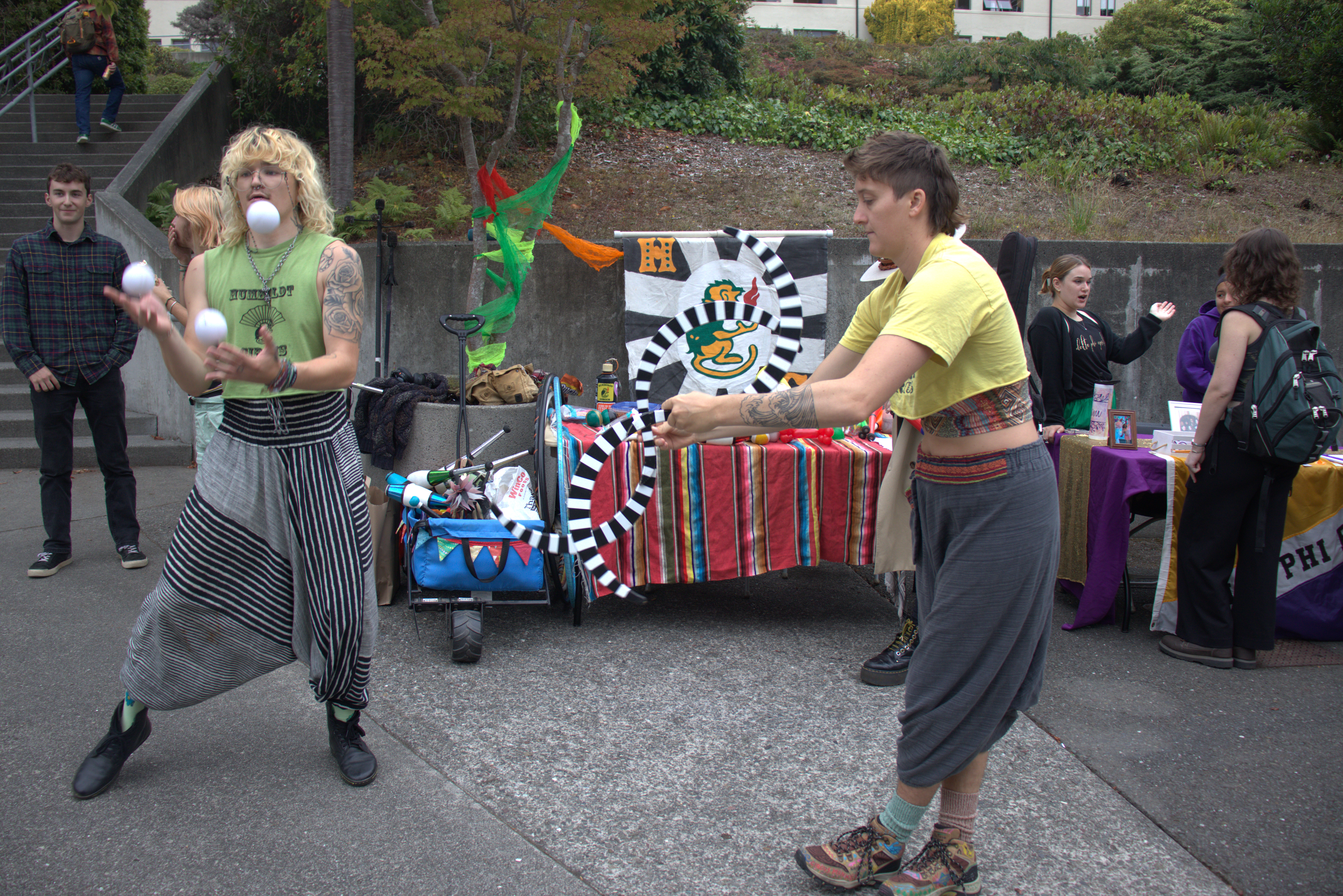
    Also standing out for its creativity was the circus club. They describe themselves as the most colorful club on campus, a place to let go and be your full silly, goofy self without restrictions or hold-backs. Cal Parr, a member of the group, explained how the club’s weekly ‘playtime’ helps students de-stress and reset.

    “A lot of students really need a break from the very structured academic mindset, which I feel like play time, which is what we do every Friday, is really about taking away that stress,” Parr said. “It helps to just give yourself a breath of fresh air from that. That really helps the student community, just like, have a good time and enjoy being here.” 

    Daniel Gibson, a freshman mechanical engineering major, highlighted the importance of joining clubs and social activities during college years, as he believes it’s a great way to find community and make friends with shared interests.

    “I definitely think being in a club makes you feel a lot more interconnected with everybody,” Gibson said. “Because if you’re just here on surface level, and you’re not really intertwined with any of the people, you don’t really feel like you’re meant to be here. But if you’re in a club, you have a group of friends that have the same interests as you, and I think it’s super cool that there’s an opportunity to find that here.” 

  • Humboldt mourns loss of senior environmental studies major

    A university email alerted campus of the passing of student Nicholas Reed, a senior environmental studies major and member of the environmental studies club. The message notifying students was sent out Sept. 16 and included resources for those impacted by the loss. Reed was a deeply involved member of the community and was admired by students and faculty alike. 

    “Dear Campus Community,

    We are saddened to share news of the loss of student Nicholas Reed. Nicholas’ death is a loss for the Cal Poly Humboldt community, and our thoughts are with all of those who are close to him. 

    Nicholas was a senior Environmental Studies major and an active member of the campus Environmental Studies Club. Nicholas was known for his huge heart, his kindness, and his ability to connect with anyone through genuine conversation. He cared deeply about people, the Earth, and the importance of community. Passionate about marine ecosystems, he came to California with the hope of helping to save kelp.

    Nicholas recently shared his enthusiasm for just and communal food systems, participating in land stewardship at the Rou Dalagurr Food Sovereignty Lab, where he expressed joy in the work, pride in his contributions, and excitement to engage further with the community.

    Nicholas was a joyful presence in and out of the classroom. He regularly attended campus gatherings, eager to connect with others, and is remembered by his professors as a thoughtful, compassionate student, and by all who knew him for his warmth, generosity, and spirit of connection,” the email read. 

    Students seeking support can reach out to Counseling and Psychological Services (CAPS) at caps@humboldt.edu or (707) 826-3236. They can also access Telehealth support at any time through TimelyCare’s “TalkNow” feature. Faculty and staff can receive confidential support through the Employee Assistance Program, available 24 hours a day, seven days a week through Empathia.

  • Test Your Transit: Can you last a Week Without Driving?

    Test Your Transit: Can you last a Week Without Driving?

    by Miranda Ricks

    From Sept. 29 until Oct. 5, Cal Poly Humboldt students are invited to join the Week Without Driving challenge, a national event that encourages participants to spend an entire week without getting behind the wheel. The challenge was started in 2021 by Anna Zivarts, Director of the Disability Mobility Initiative. It aims to spotlight the barriers faced by non-drivers in a largely car-centric society.

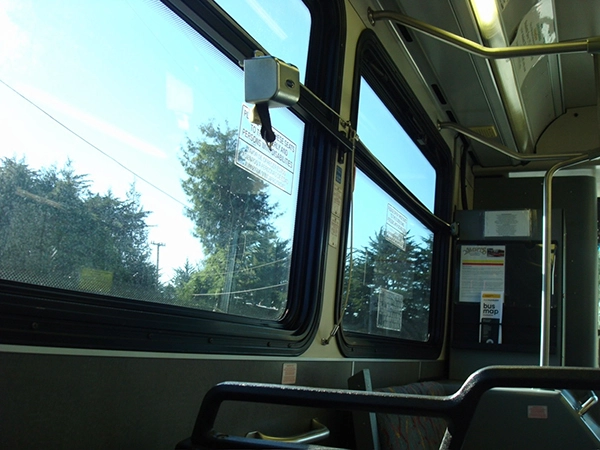
    Arcata is generally appreciated by students for its free and often dependable public transportation. Many Humboldt residents already live car-free and use bikes, skateboards or the University Jack Pass program, which grants free, unlimited access to local bus lines. 

    “When I was living on campus, I walked literally everywhere,” Elsa Williams, a sophomore at Cal Poly Humboldt, said. “I used the overpass, I would walk into town, but everything was on campus, so I didn’t have to leave a lot.” 

    Williams has lived in Arcata without a car for over a year. After moving off-campus, her walking lifestyle transitioned to bus routes and carpooling. 

    “I come from Sacramento, and I also didn’t have a car there, and it was basically the same thing,” Williams said. “I had to figure out how the [public transit] worked, and then it took me everywhere.”

    Alternative transportation methods are especially favored for students amidst frustrations with limited parking options on campus. But even in a small town, the Week Without Driving challenge may reveal more serious questions about accessibility. Steep hills, narrow sidewalks and unpredictable weather can create obstacles for anyone, especially for students and faculty with mobility disabilities.

    “I really like having my car, because I basically never left campus last year,” Freddie Dasigner, a sophomore journalism major who brought his car up to Humboldt for the new semester, said.

    Dasigner recounted how navigating town on foot with an injury was near-impossible.

    “When I hurt my ankle, I was trying to walk everywhere on crutches,” Dasigner said. 

    Participants with cars are encouraged to explore non-driving methods to accomplish their typical daily routines. Whether it’s utilizing bus routes, walking, biking or carpooling, participants should try not to drive or ask someone else to drive them, unless it’s essential to their usual routine.Whether you already live car-free or are just curious about the setbacks of Arcata’s accessibility, the Week Without Driving is a chance to rethink mobility and see how our campus and community can improve for everyone.

    Miranda is a reader, writer, movie-goer, radio DJ and lover of all things pop culture. She is a senior journalism major with a concentration in public relations and the station manager of KRFH. She hopes to represent the local music scene through her writing for the Lumberjack.

  • Spagna prepares to step down for new president

    Spagna prepares to step down for new president

    by Nick Escalada 
    After a half-year delay, a successor to Cal Poly Humboldt’s Interim President Michael Spagna has been selected. Dr. Richard A. Carvajal from Valdosta State University in Georgia will be transferring to Arcata for the spring 2026 semester.

    Hailing from California State University, Dominguez Hills as provost and vice president of Academic Affairs, Spagna assumed Humboldt’s presidential office in 2024 upon Tom Jackson’s controversy-backed resignation. Since then, he has overseen the university’s continuing transformation into a polytechnic, welcoming in new campus infrastructure and academic programs.

    “[Carvajal] starts on January 20, so the beginning of the spring semester,” Spagna said. “I’m looking forward to that, because it allows me to have some closure with the campus of what my work has been about.”

    Administration postponed their selection from March to this semester after no favorable candidates were found. According to Spagna, Dr. Carvajal caught their attention for the nine years he served at a university that went through seven presidents in the previous eight years.

    “That’s not a way to build a university,” Spagna said. “I am completely confident he will bring a level of stability and longevity to this university that will really guide it through the next several years.”

    With much of the state’s $458 million grant yet to manifest on campus, Carvajal has a lot of growth to facilitate in the near future. Several construction projects remain incomplete, and officials maintain their ambitious goal to double the current student population to 12,000 by 2035. Despite this, Spagna holds faith that his successor will realize the full potential of this historic investment.

    “He is not, from my discussion with him, coming in with an agenda of, ‘I want to start this, this and this,’” Spagna said. “Instead, he wants to make sure that there really is self-actualization of this university, getting to understand student needs, the faculty and staff needs. And I will tell you, he’s very committed to shared governance and co-creation of things that the community really needs going forward.”

    Valdosta State has produced several leading teams in NCAA division II athletics. As a member of the Cal State system that is currently gutting programs across its schools, Cal Poly Humboldt’s attraction to Carvajal was partially owed to the success propagated under his leadership.

    “Athletics is the front porch to the university,” Spagna said. “I couldn’t be prouder of our student athletes, because they have the best retention graduation numbers, and they’re also what I call ‘glue students.’ They know teamwork and they work with peers who are non-athletes.”

    In the wake of President Jackson’s stepping down following his response to the pro-Palestine occupation of campus, concerns linger about a new president’s capacity to regulate student activism in an appropriate manner.

    “I think that he embraces that activism should be a part of the education process, and I think that it’s been under attack nationwide,” Spagna said. “But I’ve been really impressed with what this university has done over the last year or two to maintain its activism roots, but at the same time, be force for good where we can respect one another.”

    At such a high administrative role, the president’s duties are fairly divorced from the on-the-ground student activities they influence so heavily. Spagna has advised Carvajal to take caution toward opportunities that will pull him away from campus, and instead focus on connecting with his constituents.

    “You need to physically walk on campus,” Spagna said. “You need to be in student clubs, you need to be at activities. I went to a student honors recital in the fall, and students were so overjoyed that the president was in their presence. This is something that should be normalized. This should be something that always happens.”

    With three academic months left in office, Spagna’s presidency seems to be leaving as quickly as it came. As Carvajal bids his own farewells in the deep South, Humboldt’s latest leader promises the institution remains in good hands.

    “I’ll say this for the hundredth time: you’re going to love this person,” Spagna said. “He’s really committed. I could tell within a minute he’s a kindred spirit. He really cares about the things that matter, and he’s going to be phenomenal here.”

    Nick is the news editor at The Lumberjack, and studies wildlife and journalism with the goal of spreading his love of nature through media. A famous recluse, he is rarely seen at social functions, but you might dig him up in a SAC lounge beanbag chair. Chat with him at ne53@humboldt.edu!

  • Red and blue do not make green, California 2026 governor candidate visiting campus this week

    Red and blue do not make green, California 2026 governor candidate visiting campus this week

    by Lily Zwirzina

    This Friday, Rudolph “Butch” Ware, a candidate for the 2026 gubernatorial election, will be coming to speak at Cal Poly Humboldt. 

     Amidst a polarized political climate, Ware represents one of many U.S. parties beyond the two primary options. A number of Americans are familiar with the Green party, one of the more established independent groups. They arose in the late eighties out of increasing public demand for environmental and social protections. 

    Ware currently teaches African and Islamic history at University of California, Santa Barbara. During the people’s assembly, he will detail why — as an academic — he felt compelled to run for office.

     The People’s Assembly will be happening on the second floor of the Marketplace from 5:30 p.m. until 7 p.m. on Friday, Sept. 19. The event will also be livestreamed. If you would like to learn more contact @greenparty_humco on Instagram, or email the local chapter at greenpartyhumco@gmail.com

    Lily Zwirzina is a senior majoring in Environmental Science with a focus in Ecology and a Spanish minor. She leads the Environmental Studies (ENST) club as the vice president; off-campus she works with the North Coast Progressive Alliance (NCPA) and

  • Revisiting Voices of Van Life

    Revisiting Voices of Van Life

    by Bodhi Haugen
    During the height of midterms, an eviction notice was sent to multiple people sleeping in their vehicles on campus due to what administrators called, “unsanitary and unsafe conditions.” On Oct. 31, 2023, a decision enforced by university officials altered the lives of students overnight parking and disrupted a small community.

    Previously, students living out of their vehicles were allowed to sleep overnight in various campus parking lots. Some current and new van lifers still attend Cal Poly Humboldt, though their routines have since changed.

    “It used to be kind of like, it didn’t really feel like I’m a nomad, because I just had a home base. It’s like my house was on campus,” said Derek Beatty, a mechanical engineering senior. “Now, I don’t really feel like I have that anymore.”

    Despite the restrictions, incoming Humboldt students remain curious about trying a home on wheels. The lifestyle still has its upsides: financial freedom from rent and utilities, mobility and continuous access to personal belongings on-the-go.

    Ryan Crabtree, a wildlife major and junior transfer student moved to Humboldt having had issues getting accepted into a room for rent. 

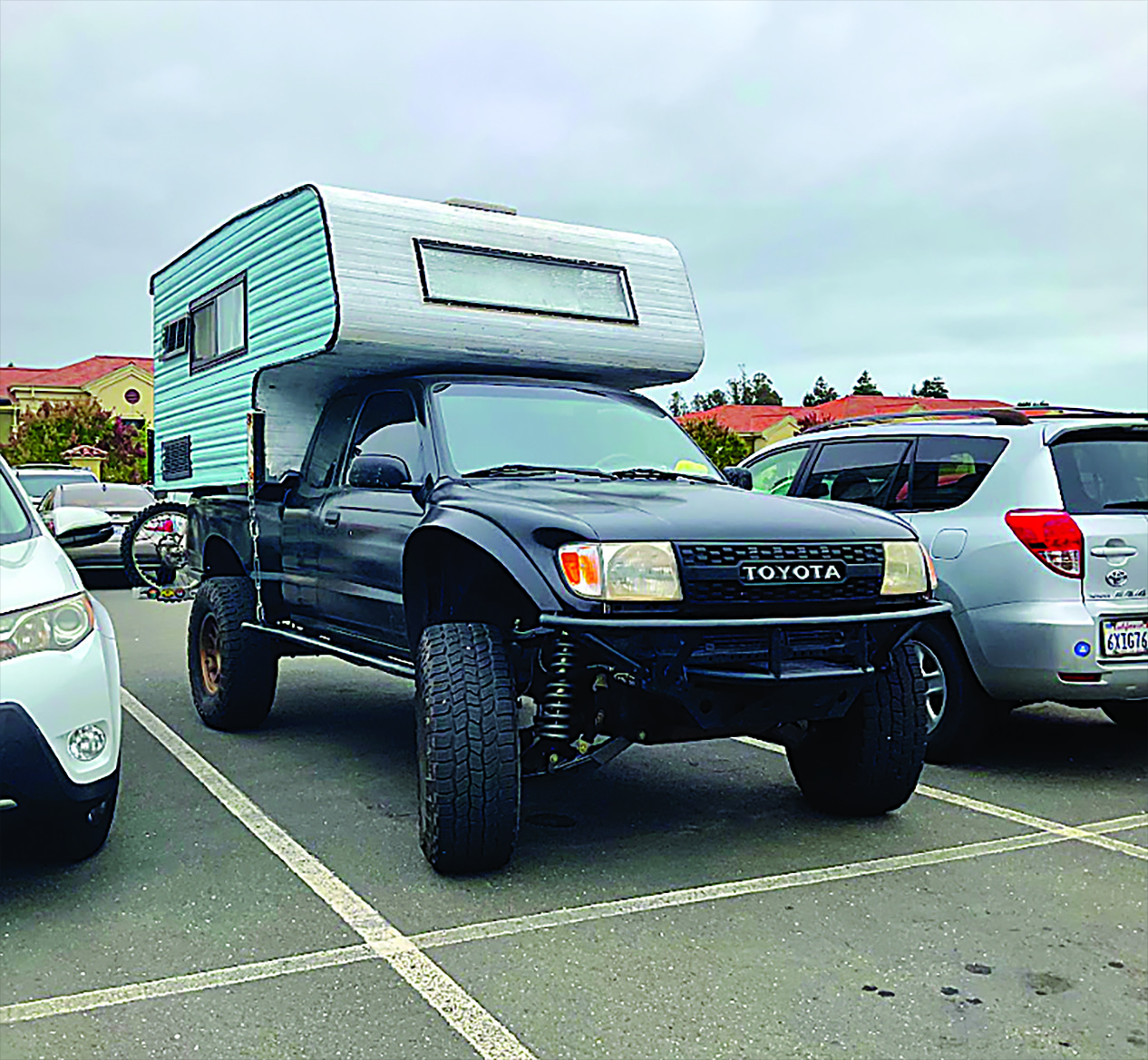
    “I was too concerned about not having housing at all,” Crabtree said. “So, I bought a cab-over camper, put it on my truck that I already had, and said, ‘I’m going to figure this out in this direction.’” 

    Beatty has been taking advantage of some of van life’s luxuries around Humboldt County. Having a consistent sense of home wherever you go has its own set of advantages regarding schedules and comfort. 

    “I can go to cool places and still be just as comfortable as I am all the time,” Beatty said. “If I go to someone’s house and they’re not ready or something, I don’t really mind waiting because I’m still home, which is nice. And saving money on rent is, you know, huge.”

    The university currently has no plans to lift the overnight parking ban on campus. However, van lifers are advocating for a policy shift that includes designated parking spaces, a communal kitchen and on-site restroom access.

    “It would be so huge, if they just had a designated parking area with five to 10 spots, you know, that’s not hard for them to do,” Betty said. “It would be huge for all the people dealing with this. It’s not that many people.”

    Current van lifers hope to rebuild a tight-knit on-campus community like the one that existed before the eviction. The van life culture at Humboldt continues on, with students supporting one another and finding joy in the freedom the lifestyle offers.

  • Lumberjacks Fall in Straight Sets to Dominican

    by Luke Shanafelt
    The Lumberjacks suffered a tough three-set loss to Dominican University on Saturday, Sept. 13. With final scores of 25-17, 25-18 and 25-14, Dominican held the Jacks under 20 points in every set.

    Middle blocker Isabella Hartwig transitioned to the opposite hitter position and performed well, recording five kills. Fellow middle blockers Phoebe Bland and Rahni Greene also made strong contributions at the net. Greene posted a 0.214 hitting percentage, while Bland led with a 0.300.

    When the Jacks were getting a good pass in-system, the balls were going down. However, despite strong efforts from the middle blockers, the Jacks struggled to consistently put the ball away. The team finished with a 0.053 hitting percentage, compared to Dominican’s 0.193.

    The Jacks have some growing pains to work through as staff adjust to the new team. Joining the staff this season is volunteer coach Braeden Ferrone, who played at Orange Coast College under legendary coach Travis Turner. Ferrone said the team is still working to find the right lineup, especially while not yet at full strength. 

    “There’s some work to be done, and we hope to see some progress in the next few games,” Ferrone said. 

    Be on the lookout for upcoming volleyball games. The Jacks play Cal State Los Angeles at home on Thursday, Sept. 18 at 7 p.m. and Cal Poly Pomona at home on Saturday, Sept. 20 at 2 p.m. 

    Luke is a senior journalism transfer from SoCal who enjoys video editing, music journalism and man on the street interviews.