by Nick Escalada
Ask any campus-dwelling Cal Poly Humboldt student what kind of wildlife they spot at night, and nine answers out of ten will be none other than the humble striped skunk. Mephitis mephitis is a common sight across North America, easily identified by their bushy tails and distinct white V-shaped stripe along their backs. These nocturnal omnivores primarily feed on insects, but have been known to diversify toward eating vegetable plants and small reptiles, amphibians, mammals, and aquatic invertebrates.
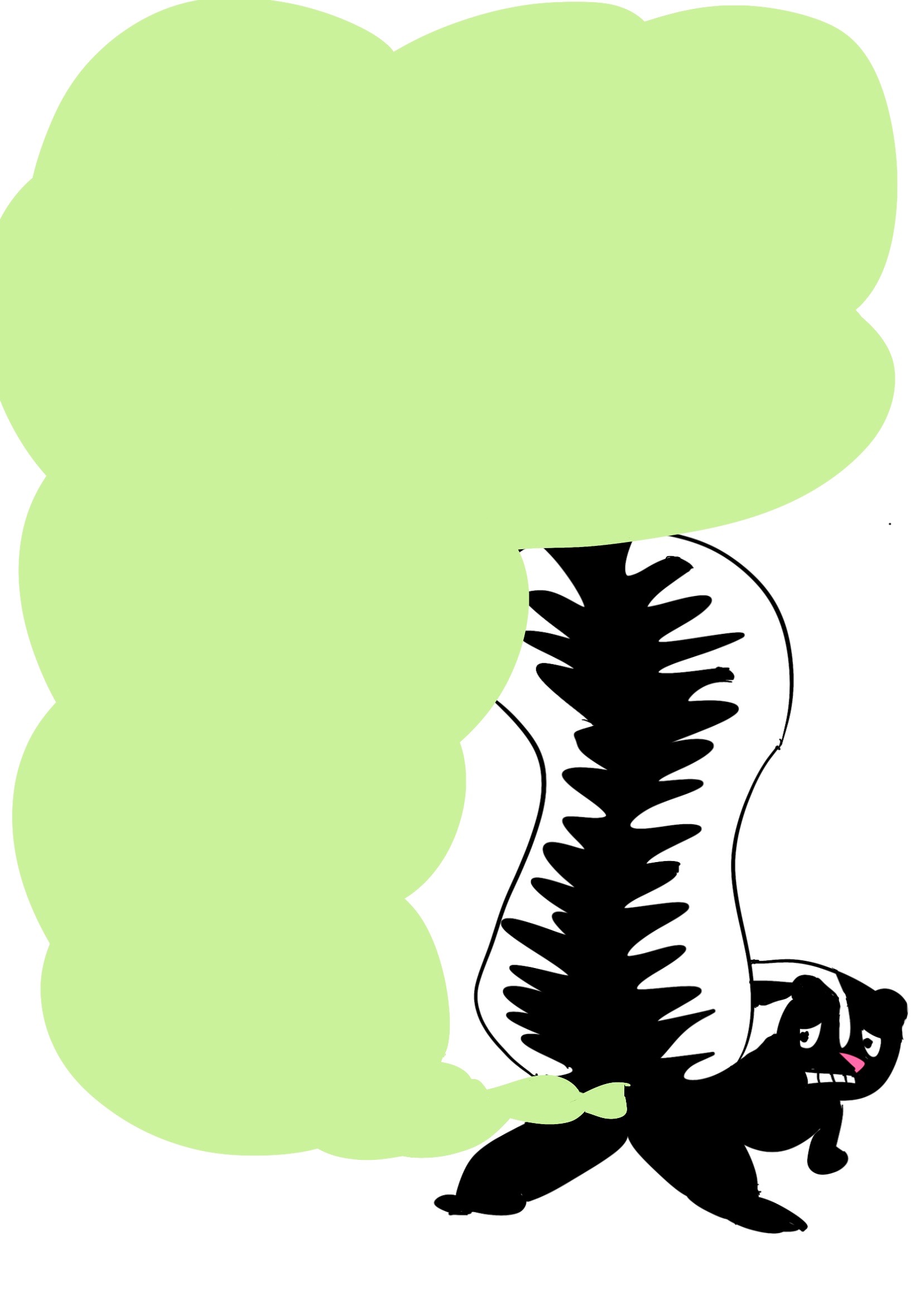
Of course, the biggest cause for human concern within these animals is their ability to spray foul-smelling musk from their posterior scent glands when threatened. This tactic is a last-resort defense mechanism a skunk will likely only employ if you’re going out of your way to push its buttons. However, the forest-adjacent spaces across campus and greater Arcata see a lot of overlap with the home ranges of local skunks, so Humboldt students are at slightly greater risk of coming face-to-face with a skunk’s caboose.
The best way to avoid a skunk spray dowsing is to avoid an encounter altogether. Keep your night hikes in the Community Forest to a minimum, and stick to well-lit, paved pathways after dark. While technically carnivorous, skunks aren’t known to pick fights with animals larger or equal in size, so you shouldn’t worry about getting chased down.
The worst thing to do in a run-in is making the skunk feel like it’s backed into a corner. In cases where this somehow happens by accident, it might hiss or stomp before turning its back to you and raising its tail. Treat this less as a panic signal and more as a generous warning. The skunk will not spray a drop unless you give it reason to, so remove yourself calmly and slowly to avoid escalation.
You’ve read this far, so you’re probably still afraid of getting stinky. The only safety-related point to remember when getting sprayed is to close your eyes, as the oily musk can cause a burning sensation with direct contact. In regards to treating that putrid odor, perhaps you’ve heard of the tomato paste bath method. While this isn’t mere myth, it’s far from the neatest and most cost-effective way to remove the stench.
Skunk smell is characterized mostly by the sulfur-based thiols in the musk, which can be neutralized through oxidation. You should attempt this first by showering with deodorizing soap and oil-dissolving shampoo. If this doesn’t work — it probably won’t for a direct hit — soak for half an hour in a baking soda bath, and treat your stained clothes with a baking soda and hydrogen peroxide solution.
Skunks have developed a stigma among people for their one unflattering ability, but the extent of fear attached to the family seems unwarranted. Like most misunderstood nocturnal hunters, skunks are more afraid of people than we are of them, and peaceful coexistence with our woodland neighbors is possible if we see them for who they are.
Nick is the news editor at The Lumberjack, and studies wildlife and journalism with the goal of spreading his love of nature through media. A famous recluse, he is rarely seen at social functions, but you might dig him up in a SAC lounge beanbag chair. Chat with him at ne53@humboldt.edu!
Leave a Reply