The Muraenidae and November’s Coral Bleaching Awareness Month
by Ariana Wilson
November marks the beginning of Coral Bleaching Awareness Month. Organizations, conservationists and lovers of oceans and coral amplify the voice of the vast oceans to raise awareness about coral bleaching. Coral bleaching occurs when the organisms that give reefs life and color die due to rising ocean temperatures. Their white color is a ‘sign of surrender’ from the sea that humans need to take seriously.
“As ocean temperatures rise, corals face increasing stress that can lead to bleaching and loss of biodiversity,” Chair for Coral Reef and Ocean Health at the Harte Research Institute at Texas A&M Keisha Bahr said. “By raising awareness, we can inspire action to reduce human impacts and protect these vital ecosystems that support marine life and coastal resilience.”
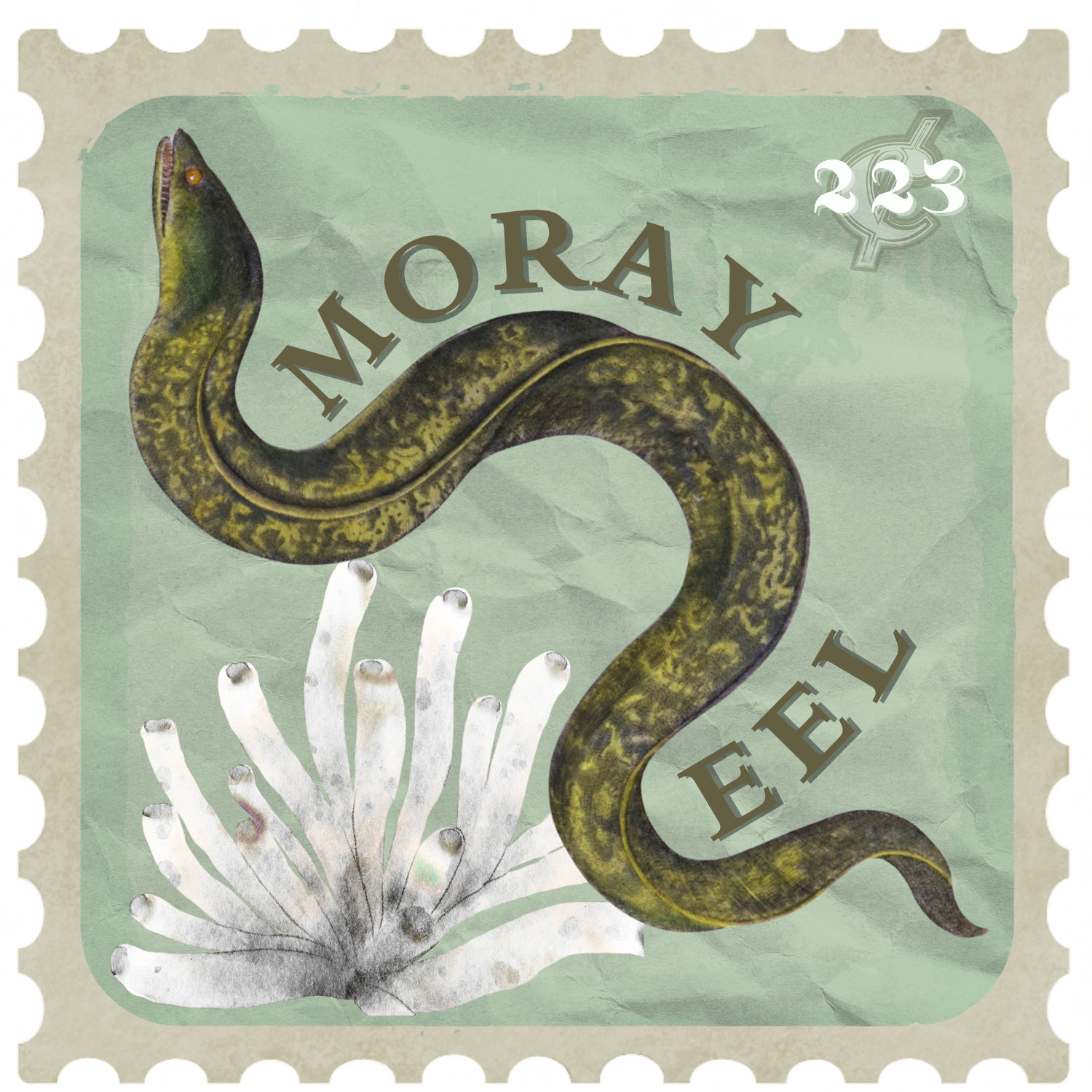
A frequent visitor to some of these affected coral reefs is the Moray Eel. These elusive creatures call the shadows and crevices their home. There are over 200 different species of moray eel from shallow shores to deep seabeds, in both tropical and temperate marine environments. These apex predators are oviparous, meaning they lay eggs that hatch outside the womb, only mating when there is enough food and a stable habitat. Contrary to popular belief, not all eels are electric, but a bite from one of these fish is likely to cause infection due to the bacteria in their teeth. That being said, morays are not generally aggressive towards humans.
Though most moray species are not endangered, with green and giant moray are listed as species of “least concern,” the coral reefs they depend on are under threat from climate change, pollution and overfishing. To take action and help combat your own footprint against coral bleaching, consider adopting a coral, practicing safe and responsible diving and snorkeling, using reef-safe sunscreen, recycling and properly disposing of waste.
Ari is a senior journalism major and the science editor this semester, with an adoration for the environment and conservation. She is currently pursuing her scientific diving certification and plans to meld her journalistic passions with scientific research in the future. For any science inquiries, please contact ajw167@humboldt.edu.
Leave a Reply