by Nick Escalada
Following the demolition of the mold-riddled Campus Apartments, Cal Poly Humboldt’s administration has released broad plans for the future of the now vacant slope by the College Creek parking lot. Aside from a new Student Health building planned to start construction in spring 2027, the university intends to introduce a community of hardy native plants to populate the tract of grass, with a large patch of California poppies already creeping in. This development has opened the way for discussion about plant life across the entire campus, with an enduring point of concern being a large presence of non-native flora.
Prior to the establishment of the Humboldt State Normal School in 1913, the campus was a clear-cut logging site devoid of most vegetation. The area has since been filled with decorative plants and trees from different regions of California and the wider world, and visibly differ from the second-growth conifer forest that still borders them.
The lack of canopied trees on campus allow for the introduction of angiosperms and shrubs that require more sunlight. Many of the flowering plants present are generalist varieties that can survive practically anywhere in the world. However, the Humboldt coast receives substantially fewer sunlight periods annually than southern and inland regions, so these species are unable to fully flourish outside the summer months.
Other introduced plants have a directly negative effect on their native neighbors, earning themselves the title of invasive species. The eucalyptus trees between the Cypress dorms and Founders Hall sport aggressive root systems that can suffocate the rhizome systems of nearby trees, along with having highly flammable bark and toxic leaves that threaten wildlife. The english ivy and cottoneaster dotting campus are resilient and quick to propagate, while native lookalikes like himalayan blackberry can interbreed with their indigenous counterparts and permanently alter genetic diversity.
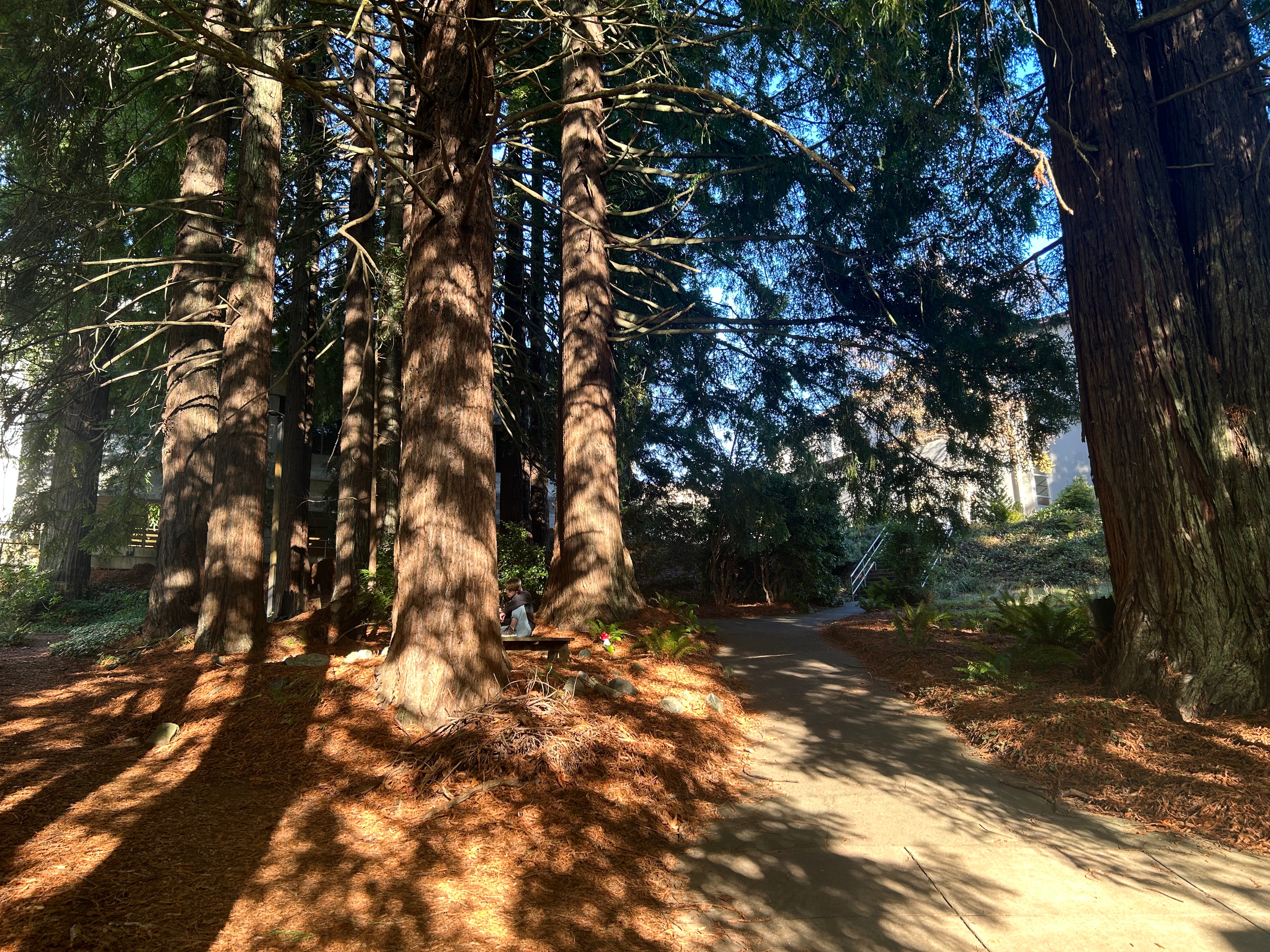
In line with the landscaping plan for the empty hill, the university could benefit by allowing the surrounding forest ecosystem to return to its property. Coast redwoods, grand and douglass firs and sitka spruce conifers found in the Arcata Community Forest could provide cover for the array of underbrush genera that grow below. The shade would also preserve the low ambient temperature and moisture brought by the bay’s marine layer, enshrouding the school in the unique north coast climate it prides itself on. An environment fit for fruits and herbs like elderberry, black huckleberry, sorrel and skunk cabbage could supplement the popular foraging culture among students.
Cal Poly Humboldt’s current natural landscape could be characterized by a generic hodgepodge of common garden plants. But walking a few minutes toward the hills gives a glimpse of what once was and what still could be.
Nick is the news editor at The Lumberjack, and studies wildlife and journalism with the goal of spreading his love of nature through media. A famous recluse, he is rarely seen at social functions, but you might dig him up in a SAC lounge beanbag chair. Chat with him at ne53@humboldt.edu!

Leave a Reply