The Lumberjack


Students Serving The Cal Poly Humboldt Campus and Community Since 1929

Category: Opinion

  • The Jerry Garcia Effect

    The Jerry Garcia Effect

    by Barley Lewis-McCabe

    We’ve all seen him — you stop into Wildberries to briefly grab some lunch and you see the ragged hair and black t-shirt standing in front of the bulk foods. Maybe you stop into Pacific Paradise and see him walk out with an overflowing bag. You’re going down the road feeling fine; then, there’s a whiff of cigarettes and hot dog breath. He’s in us all: Jerry Garcia. 

    If you live in Humboldt, you’ve surely heard the Grateful Dead, even if you only knew it as that weird song playing in a coffee shop that just doesn’t end.

    Jerry Garcia was the unofficial frontman of the Grateful Dead, and no doubt you’ve seen one of the memorials to him; a photo in the window of Humboldt Glassblowers or a shrine to him in the window of Tomo, maybe even as an apostle in a painting at Arcata Pizza and Deli. But, Jerry’s presence goes beyond print on paper and canvas — chances are, you’ve seen his disciples out and about. 

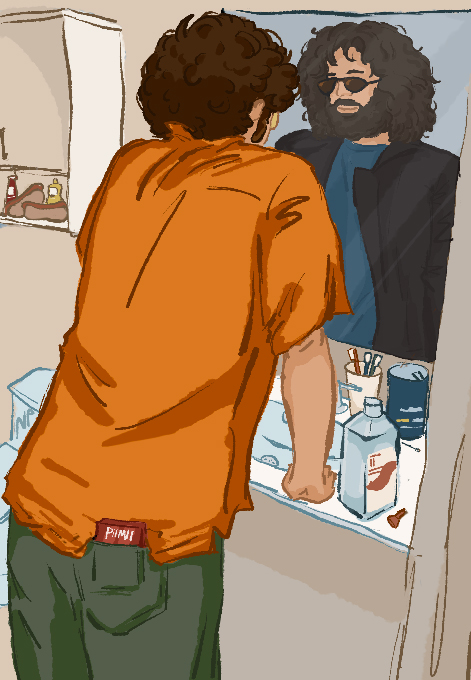
    Any man who settles down in Humboldt could inevitably start to look like Jerry Garcia. They let their beard grow, and over time, it slowly occupies more and more of the space on their head, all while their hair spreads out in any which direction creating the distinct silhouette. They let the smoke sit on their body, they shower less and let themselves live naturally — but they always wash their hands, because washing your hands is cool. Their eyebrows become bushier, the IPA belly gets bigger by the day and soon enough, he looks in the mirror and sees Garcia himself. 

    In 1995, Jerry Garcia was found dead with a smile on his face. He was a man who often struggled with the demons that frequently come with great creativity. He self-medicated and allowed those feelings to overwhelm him. I’m sure some of the men who’ve been consumed by the Jerry Garcia effect have experienced similar struggles.

    That’s why the Grateful Dead grows like a tie-dyed fungus in between two ears, cultivating in bodies sometimes filled with pain and grief, absorbing and turning the strife into something new. 

      It’s not bad to turn into Jerry; it’s just men growing into a new period of their lives. It’s a stage of leisure, and evidence of good nights and good meals. In our culture of wrinkle-preventing straws and frozen plastic bodies, a man who’s succumbed to the Jerry Garcia Effect might not fit the traditional beauty standard. But what’s more beautiful than a life well-lived being obvious when you see a stranger?

    A man could look like Jerry Garcia when he lets himself fall victim to unhealthy habits, or he could look like Jerry when he lets himself relax. When he turns down The Golden Road to Unlimited Devotion, when he settles down and becomes comfortable in his own skin, when he lets loose and just exists not to exist, but to live! We could all be so lucky to embody the man himself. 

    Barley is the photo editor and an untraditional reporter who focuses on social change and stories with a real human impact. If you’d like to reach him for whatever reason email bl258@humboldt.edu.

  • LJ editorial team halloween costumes 

    LJ editorial team halloween costumes 

    by The Lumberjack team

    Sexy costumes:

    Jimmy Buffett (RIP) – Embody the spirit of the greatest man to ever live, the mayor of Margaritaville himself: Jimmy Buffett. Wear a Hawaiian shirt, a few buttons open, some shorts and a flip-flop or two. It’s not just about what you wear, but how you act. Chill out all night and make sure your drink never stays empty for too long. Come Monday, your head may hurt, your feet could stink and you won’t love Jesus, but you’ll be the coolest guy around. 

    Diet Coke Nothing’s hotter than an ice cold Diet Coke fresh from the fridge. Fancy silver outfit with red highlights — #bombdotcom. I know what you’re saying — “oh that’s just a can of soda,” or “wah, this feeds into our late stage capitalistic object idolatry, don’t support an evil corporation.” Yeah, well. You ever had a diet coke? Pretty good, huh? Why don’t you pop the tab and see what’s inside.

    Silent Hill Nurse – A lotta sexy, a lotta scary. Generic white nurse dress, some gauze, some dirt and red food coloring splattered. Leave holes for the eyes! 

    Couple costumes: 

    Rango and Beans – A tale as old as time — you need an easy couples costume that your boyfriend will think is cool enough to commit to. What’s cooler than an aspiring actor turned wild west outlaw, who also happens to be a lizard? I think nothing. All you need is an old-timey looking grey dress and some baby bangs. Get your partner a Hawaiian shirt and some cowboy boots and you guys are ready to save the town of Dirt — or blackout at a houseshow, your call. 

    Islanders from Love Island 2025 – Two hot new bombshells have entered the Villa! Since Halloween in college has devolved into an excuse to dress slutty and act debaucherous on the weekend, why not cut out the middleman of attaching something novel to your outfit? Swimshorts, a bikini, excellent genetics and a couple of empty craniums are all you’ll need and more! 

    Beavis and Butt head – “Uh, huh huh huh,” – Butt Head… “Heh, heh” -Beavis. Want to annoy everyone at your Halloween party? Beavis and Butt head are the perfect excuse to be low effort and ragebait the huzz. 

    Scary Costumes:

    Jigsaw – Suit. Red bowtie. Face paint. Buttons for eyes or black contacts. Tricycle. Let’s play a game. The mask can stay on for all I care.

    Biblically accurate angel – A little more of an artsy costume — if you were one of those kids that spent the entire class period drawing a hyperrealistic eye, this one’s for you! Draw a bunch of eyes all over your face, throw on a white dress with a white shawl and go scare the local kids. Extra points if you can secure some wings on short notice.

    Pyramid Head – Put a big triangle on your head, show off that body and become the manifestation of one man’s inner guilt and shame. Don’t forget to make yourself ambiguously dirty. What’s that all over your skin? Who knows!

    Funny: 

    Bob from One Battle After Another – Putting together this costume is really easy. All you need is a flannel bath robe, grey shirt and sweat pants, a pair of thick black sunglasses and a beanie. The more sweat and grease they’re covered in, the better. Plus, if you need another excuse to smoke pot all night, this is it.

    Sheldon Plankton – The ideal costume for any man under six-feet-tall. A gross green outfit — perhaps a bodysuit — and some weird little antennae on the top of your head, and perhaps an eyepatch to sell the look. Bring a scheming attitude and stuff your little sleeves full of tricks to acquire the secret formula! 

    Worm God Robert F. Kennedy – Embrace the worm within. Destroy your voice, ruin your friendships, vax shame everyone around you. Feel the worm in your brain and let it guide you. Only requires some sort of pink tube for you to exist inside of and an immense lack of respect for your vocal cords. Don’t be a sheep. Be a Worm God.

  • What could be better than a lumberjack?

    What could be better than a lumberjack?

    by Jess Carey

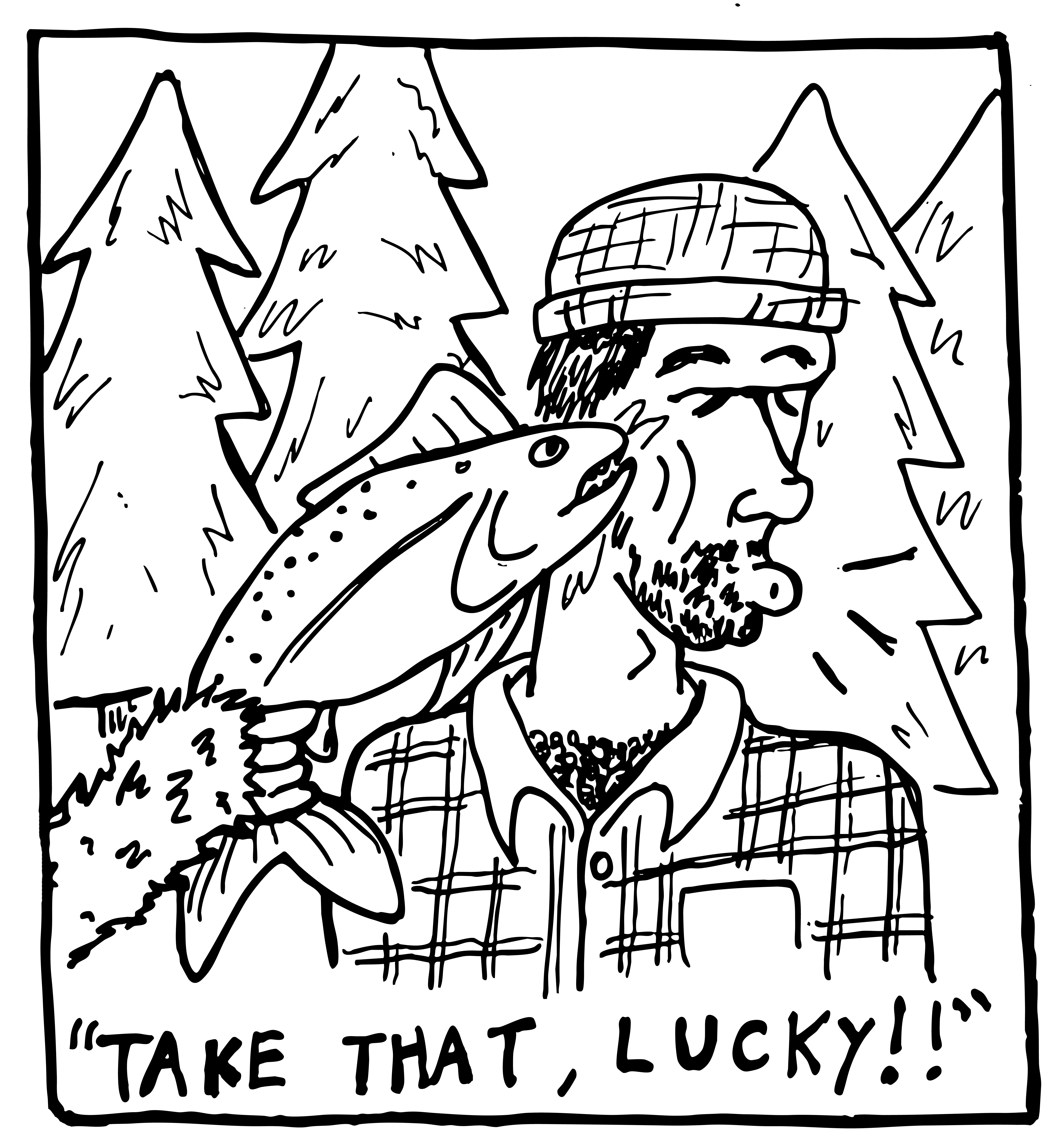
    Food. Medicine. Cyclic beings whose strength is unmatched. Resilient and ancient, they nourish and inspire us. They are the salmon, and they could be the savior of our university’s identity. Salmon represent strength, renewal and a reciprocal relationship with the land — a stark contrast to the lumberjack’s vibe of colonization and destruction. 

    With their hooked jaws, jagged teeth and dense muscular bodies, salmon are perhaps the strongest and most resilient of fish. The Chinook and Coho are the largest species in both literal size and population in Californian waters. The fish spend one to seven years in ocean waters before migrating back to where they came from to spawn at the end of their lives – ensuring the cycle continues. Guided by a mysterious innate sense of direction, some swim hundreds of miles back home. Defying gravity and currents, they fight their way up mountains. 

    Salmon are not only historically and culturally significant to the North Coast, they also are the darlings of recent conversations around river restoration. Since the undamming of the Klamath River, salmon are returning to areas that they have not seen in almost one hundred years. Conversations around salmon are a hot topic and are making national news as their threatened populations enjoy small wins due to widespread conservation efforts. 

    The problem of the lumberjack image has been discussed in our paper several times. We have an opportunity to step away from celebrating the dark legacy of the timber rush and its accompanying violent heritage. The hypocrisy of the lumberjack as our mascot is evident as the university administration continues to insist on their commitment to fostering an environment of whatever sounds the most politically correct without actually being accountable. 

    On Cal Poly Humboldt’s website, the first part of the Purpose and Vision for the institution reads; “We will be the premier center for the interdisciplinary study of the environment, climate crisis and resilience to climate change, and the conservation of ecological systems and natural resources.” Does a lumberjack fit these values? Many logging companies today, even locally, are still the subject of controversy. Practices like clear-cutting and unsustainable harvesting continue to proliferate. 

    No other university has a salmon mascot — several have lumberjacks. Humboldt Salmon has a nice ring to it, I think. Sports teams could be branded as fighting salmon. We could say that our opponents were smoked! Salmon rolls off the tongue much better than lumberjack. Try saying it yourself. This novel move would set our community apart, cementing our values of environmental responsibility and community into our identity. If we can change our name, we can change our mascot.

    Jess Carey is a botanist, musician, and friend. They enjoy pondering the sky, running around, and making a scene. They are a senior studying ecology with a journalism minor. Reach them by email at jc876@humboldt.edu with comments or story ideas.

  • Reel Talk with Julia

    Reel Talk with Julia

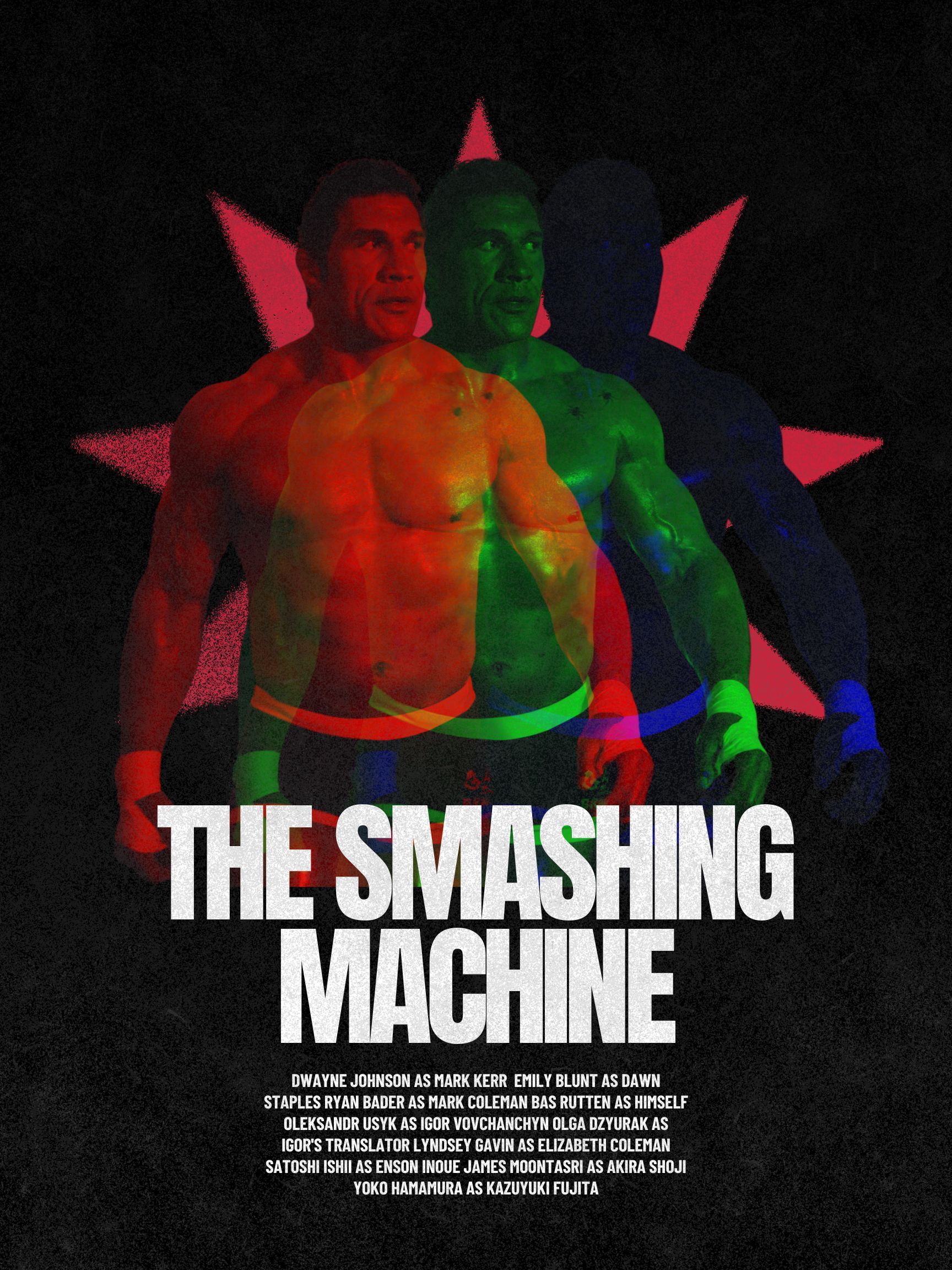
    The Smashing Machine is a film for someone, but not me

    by Julia Kelm

    The Smashing Machine is a film starring Dwayne Johnson, directed by Benny Safdie, who may be recognized from his Oscar-nominated film Uncut Gems. The film follows the true story of the legendary mixed martial arts and Ultimate Fighting Championship (UFC) fighter Mark Kerr.

    In all honesty, I think the best part of seeing this film at The Minor Theater in Arcata was the Chicago-style hot dog they were serving. 

    Unfortunately, there isn’t a lot to say about this film. The plot is a raging bore, falling into the usual biopic tropes, and does nothing unexpected or interesting for the 2-hour runtime of the film. 

    You can’t help but want to compare The Smashing Machine to Sean Durkin’s The Iron Claw, which is also a film that centers around a true story and professional fighting. Where The Smashing Machine fails and The Iron Claw succeeds is mainly to do with emotional value and a genuinely interesting and heartbreaking story. The Smashing Machine is boring based solely on the fact that Kerr’s life simply does not translate into the plot of a good film. 

    With that said, I think Johnson does a fine job of portraying the retired UFC fighter. However, it’s hard to applaud him that much since he was a professional wrestler for World Wrestling Entertainment (WWE). The viewer doesn’t need to stretch their imagination far to believe The Rock can fight. 

    I think the only thing I liked about this film was Emily Blunt’s performance as Dawn Staples, Kerr’s unstable girlfriend. Maybe I haven’t seen enough Blunt films, but I’m sort of used to Blunt playing the type A, mundane, motherly characters — it was a pleasant change of scenery to see her get a little crazy. 

    I am aware that I am dragging this film through the mud right now, but I do think there’s a specific crowd for this film. I’ll list off a few reasons why you might want to see this film.

    If you’re interested in the story of an athlete’s fall from greatness and dealing with loss, you may want to see this film.

     That perspective was brought to my attention by my sister, who participates in the women’s rowing team at Cal Poly Humboldt. Although she also found the film lackluster, it was relatable. There’s a part in the film where Kerr, after losing a fight, seems to keep it together with a stern face. However, once he is alone in the locker room, he breaks down and sobs. This is likely a relatable feeling to many athletes after training and putting so much energy into something just to fail. 

    I also think this movie would be a good one to see with your dad. I can think of countless nights where I’m back at home with my dad, playing the painful game of, ‘What are we going to watch tonight?’ It’s either something I like: film-bro shit. Or something my dad likes: an old man shoots a gun. Both parties are never satisfied in this situation. I think Smashing Machine provides a safe middle ground for this specific situation.

    I wouldn’t personally waste money seeing this in a theater, unless either of those previously stated reasons applies to you specifically. This movie will be forgotten in a few months, unless it gets nominated for an Oscar. If that’s the case, you’ll be hearing one long sigh from me in the future.

    Julia is a journalism major, and is the life and arts editor for the paper. She loves film and is a regular on Letterboxd. She also enjoys going on walks in the forest, and taking pictures to relax. If you have a movie you want her to review, email her at jk328@humboldt.edu.

  • Retired at 21, the journey has just begun

    Retired at 21, the journey has just begun

    by Ariana Wilson

    Competition was like breathing; anything that could be ‘won’ became a challenge, a game. The ease with which I became an athlete seemed predestined. It was always more than just a game, though. The ball rolling down the roof in the backyard became a game of passing back and forth, no partner needed. Months later — the roof no longer a sufficient practice partner — I asked my sister to play with me so I could practice with a touch more rigor. Our backyard sessions became the origin of her own love of the sport.

    One more minute was never enough, and everywhere I went became an opportunity for guerilla practice strategies. Setting and passing with balled up sweatshirts, any object became a volleyball if I was determined enough. 

    Minutes of technical discipline accumulated and became months of mental and physical training. In the blink of an eye, my childhood was lost to a sport I once loved.

    My entire identity was consumed by my love of a sport. As an unsure girl whose world was changing, I found solace in setting up and taking down the net; in the practice that happened in between, in the repetition ad nauseum, just to improve by one touch. The rhythm of familiarity was a welcome distraction from confronting my adolescence and the reality that a person was developing underneath the athlete.

    As I look back and forth between my first love and the rest of my adult life, I feel content for the first time in years. Leaving something you love by choice is never easy. Leaving a sport knowing you were physically equipped to compete but could not, in good conscience, subject yourself to another season under underqualified and callous leadership is devastating. 

    “You are a person a lot longer than you are an athlete,” Laurie Creighton, my high school volleyball coach, often reminded her teams. 

    Her guidance and support, among many others, have been invaluable to me. Their words of wisdom adorn the memories I covet of the years I fell in love with volleyball, of contributing to something bigger than myself.

    Since 2013, every fall on my calendar was occupied with daily two-hour practices, games twice a week and tournaments on weekends. In my later years of competition, mental toughness and watching game film took precedence over hours on the court. Our bodies committed to memorizing the countless rotations and plays so, to sharpen our skill, studying our opponents became homework alongside our high school and college course work. 

    One day, I put pen to paper in an attempt to meet myself through my writing. The pages became my confidant as I reflected on the people who saw beyond a volleyball player — and took time to cultivate in me, an unwavering character. It was only after my first journal entry that I realized that the bulk of my developmental years coincided with a sport that’s success is dependent on mistakes. The delivery of criticism and encouragement from coaches, mentors, family and friends became my internal monologue. I was blessed with coaches in my early years who saw my potential, on and off the court, who nurtured what I could be regardless of what I became. 

    The people you allow to lead your life possess great responsibility. It is within your power to decide who you allow to occupy that position. In the lens of the world, leaving my college volleyball team did not create a ripple effect enough to start any significant change for humanity, but I am a better person for it. Shedding the expectations and constant criticism allowed me to explore the root of my love of sports.

    Settling into this new life has been slow, but worth the emotional ache. I am confronted by my potential at every decision I make and yet I remember that, in comparison, I rob myself of presence. Presence in this season, in this moment and in the gratitude I have for the collection of moments that brought me here. Humboldt County, California of all places.

    This is my first year as a former student athlete, but in lieu of the absence of collegiate athletics, I have transitioned into a season of personal curriculum and competition. My syllabus consists of falling in love with the things that made me want to play volleyball in the first place. Being an athlete, competing and pushing myself beyond my perceived limits.

    I am starting fresh at 22, pursuing my childhood dream of being a marine biologist through scientific diving on the North Coast, trying surfing for the first time, honing my dedication and discipline through climbing, playing the guitar and writing as a way of self discovery.

    Loving something is special and worthy, but using it as an identifier has limited my capacity for imagination. I have more future than past and I am a person a lot longer than I am the hobbies and passions that formed me. 

    Ari is a senior journalism major and the science editor this semester with an adoration for the environment and conservation. She plans to meld her journalistic passions with scientific research in the future.

  • FASHION < IDENTITY: D.I.Y. For A Reason

    by LIVI E. Lyman

    Do. It. Yourself. This is all the rage, right? Hyperindependence has always been the ultimate American value. Our society consists of Baby Boomers , Generation X , Millennials and Generation Z . Knowing how to be better, we must know who and what has come before us; we have an influential history still living. 

    D.I.Y Fashion directly relates to politics as well. Generational values shift drastically as our political climate rages and societal norms and acceptances shift, bringing about new environments created from what we may have lacked in our childhood. From the career-focused and “how does this look to everyone else” mindset of our lovely Baby Boomers, to the Gen Xers shifting societal norms to more hyper-independence, promoting “You can do anything,” to Millennials, broadcasting morals people commonly shared — or disagreed with, with the saying, “Anyone can do anything.” Which brings me to my generation, Gen Z — never knowing a world without deep connectivity and internet access, redefining hyperindependence once again. 

    What combats D.I.Y culture is the rise of fast fashion. The industry pushes this sense of constant upkeep, this turnover rate of clothing, brands and designs that we constantly feel like we need to update, conflicting with this coming-age-of-sustainability. Sustainable fashion comes from its ethical production, eco-friendly materials, repurposing what is already there through thrifting and reducing waste and emissions. 

    People can find ways to be fashionable and sustainable by reusing, thrifting and upcycling. From the resale platforms like Poshmark and Depop, to thrift shops like Youthability or Miranda’s Rescue, to the Redwood Acres flea market and friends’ clothing swaps, it starts with affordability, leads to accessibility and creates an eco-friendly alternative to fast fashion. D.I.Y fashion also reduces waste. The growing popularity of D.I.Y and secondhand fashion is pushing our beloved clothing companies to change their practices — the power of the people has the potential to change the fashion industry. 

    Companies are now switching to eco-friendly materials, ethical labor practices and reducing their carbon footprint on the front page of their website — reminding us within every advertisement. This includes brands like Patagonia, Eileen Fisher, MUD jeans and many more. 

    But it’s one thing to claim sustainability, it’s another to put it into practice. Greenwashing is commonly used in brands like Lululemon, Nike and SHEIN, often misleading consumers to believe their purchases are more ethical than they are. Thrifting has the edge on sustainability, with its possibility to create something new out of something that is already there! 

    I am calling everyone who has read this far to get the catch: we are overconsuming on so many levels that it has been built into our system before our systems were active. The key to a conscious consumer — whether you are thrifting, buying something new or upcycling — is to buy what you need and use your creativity and eco-consciousness to rediscover and reuse what you already have. Break the pattern now and cut out a new one. Do. It. Yourself. 

    LIVI E. Lyman is a business marketing senior at Cal Poly Humboldt, combining the arts they fell in love with, writing and fashion. Email them at @oel6@humboldt.edu to get a fit pic at the monthly photoshoot, where photos will be used in a collage alongside future fashion columns. 

  • Reel Talk with Julia

    Reel Talk with Julia

     One Battle After Another is secretly a love letter to Arcata

    by Julia Kelm

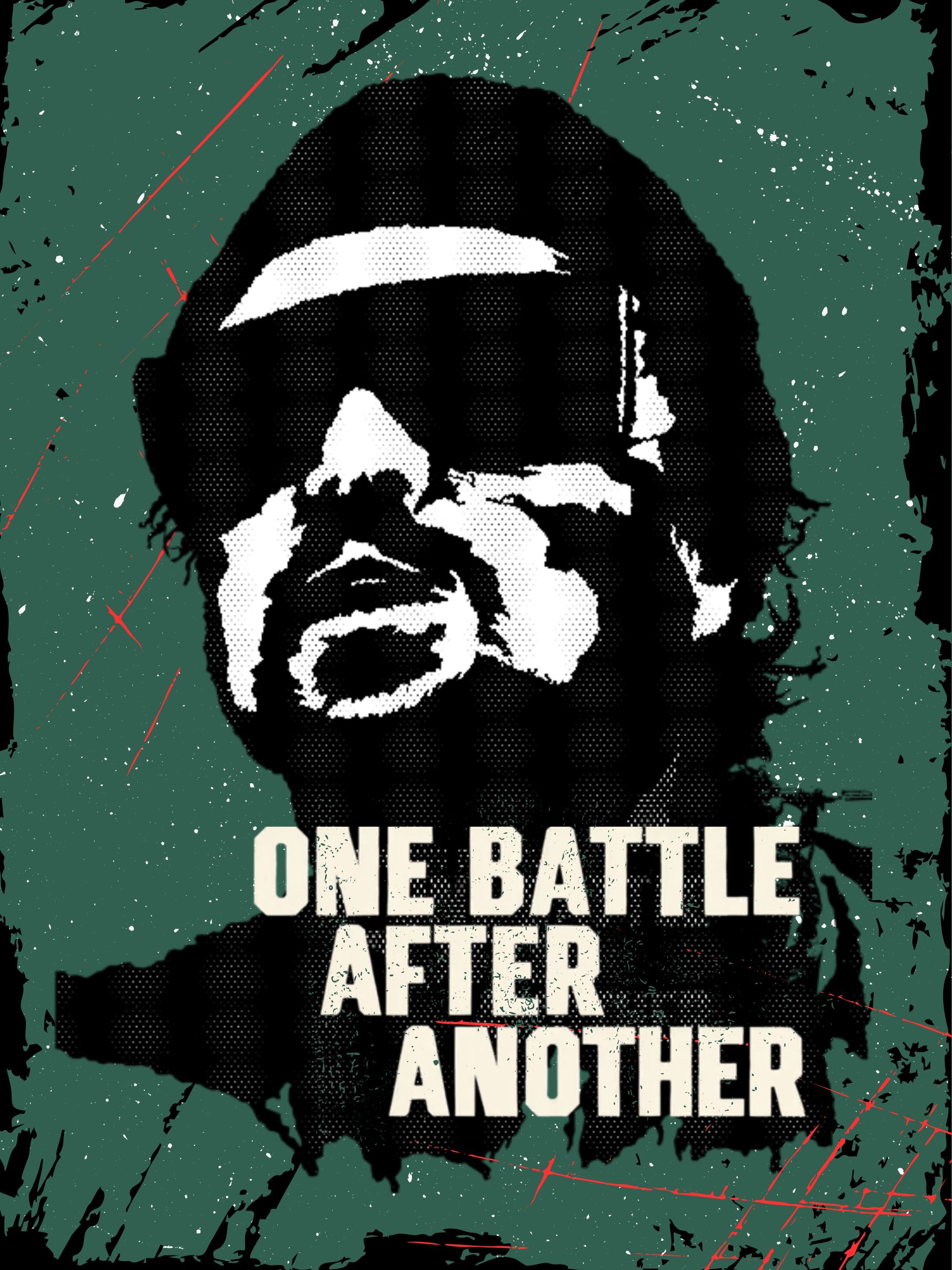
    The latest film from Oscar-winning director Paul Thomas Anderson One Battle After Another hit theaters on Sept. 26. The film follows ex-revolutionaries reuniting to rescue the daughter of one of their crew members, as an old enemy resurfaces to take them out. 

    The protagonist, who adopted the name Bob after going into hiding, is played by Leonardo DiCaprio. DiCaprio is the stoned-out, paranoid ex-revolutionist, delivering the role with realism and unexpected humor.

    Panicked after getting a call, Bob spends the film trying to find his daughter before the nefarious white supremacist Colonel Lockjaw — played by Sean Penn — captures her. Penn’s performance was also brilliant and politically timely. Penn plays the role of a sinister monster so effortlessly that it feels genuine — he has this certain specific walk he does, which is somehow  simultaneously incredibly intimidating and hilarious. You just have to watch it to know what I mean. I think I’ll forever be creeped out by Penn in every movie he’s in going forward.

    Benicio del Toro plays Sensei Sergio, an extremely distinct and cool supporting role. Del Toro balances out the character dynamic as the chill, unbothered sensei. As DiCaprio runs around, tweaking out to every perceived obstacle, Sergio just calmly goes about his business. 

    Beyond the cast, this film also features what I would consider cinematically the greatest car chase sequences I have ever seen. Although the runtime of this film is about three hours, the car chase alone is worth the screentime it takes up.

    This film has important and pressing messaging, such as the mass deportation of immigrants and white supremacist hold on our culture and government. I think the plot being centered around revolution and de-glamorization with age is interesting and a lot to unpack. Bob sort of reflects the general audience in a way — tired and scared. Willa, Bob’s daughter, could represent a more hopeful future. 

    My only gripe with the film is that it’s a tad too long; the beginning sequence featuring characters from the past could have been shortened. The last 15 minutes also could’ve been completely cut, and the final message would have been the same. I could definitely see someone with a short attention span walking out, or falling asleep before the ‘real’ story even began. All and all, I made it through and think I’m better for it — as One Battle After Another has firmly made me a Paul Thomas Anderson fan.

    Besides the cast and plot, there was something that made this film so special. That being, seeing it here in Humboldt. One Battle After Another was filmed in a few different locations across Humboldt County. This included Eureka, Arcata and some residential areas in Cutten. Specific sites include Murphy’s Market in Cutten, Eureka High School, the Northtown area of Arcata — including Raliberto’s Taco Shop — and the forested Sequoia Park.

    The beloved Raliberto’s restaurant is even named aloud in the film, causing theater goers to whisper amongst each other excitedly and even clap and cheer a little. There were also loud gasps when DiCaprio ran into the Murphys’ bathroom. 

    This movie is a blockbuster, multimillion-dollar film with Leonardo Di-fuckin-Caprio in it, seen all around the world. Then, here in our little town and nowhere else, people are cheering for a random taco shop. To me, this really puts into perspective how important and amazing this is for our community. 

    So, if you still haven’t seen this whirlwind of a film, please, I beg you, please do while you’re here! Because you’ll likely never get a theater experience quite like that ever again.

    Julia is a journalism major, and is the life and arts editor for the paper. She loves film and is a regular on Letterboxd. She also enjoys going on walks in the forest, and taking pictures to relax. If you have a movie you want her to review, email her at jk328@humboldt.edu.

  • Getting Killed Album Review: Glock of Geese

    Getting Killed Album Review: Glock of Geese

    by Will Bishop

    Once, ten thousand years ago, when I was a very small child living in the rolling grassy hills of Loleta, I saw a flock of geese passing overhead. Delighted, enthused, filled with the kind of special joy only someone existing in the liminal space between being just born and the wayward era of toddlerism — I cried out, “Gee, gee!” Then, when the geese were gone from my side, I lamented, “No mo’ gee.” This was one of the first documented cases of me being happy, and one of the first documented cases of me being sad. This joy and this sadness — this particular kind of joy, of soaring euphoria and boundless optimism, of seeing birds and having no fucking idea what they are but delighting in their unbounded freedom — their patterned triangular synchronicity against a stark white sky. This particular kind of sadness, of loving something you’ve never known, and being crushed when it leaves you. This is what Getting Killed feels like.

    Getting Killed is the fourth studio album, their third under Partisan Records, from Brooklyn based rock band Geese — a band that’s been on a meteoric rise following the breakout successes of their own 3D Country, and frontman Cameron Winter’s debut solo LP Heavy Metal. A rarified modern example of a genuinely explosive rock band — their recent free concert in Brooklyn Banker’s Anchor filled the streets with hundreds in attendance. They exist as living proof that there is, in fact, a future and a place for innovative rock music in the current landscape. Not a tribute act, not a taxidermied emotionless golem sent to vengefully remind people that this genre once held the highest seat of power in the music kingdom. Not a shadow, but a new light. The flash of a gun, rather than the bloodied aftermath.

    Barrelling out the gate with the chaotic meandering screed Trinidad, Cameron Winter describes a person in shambles. A perilous being too far gone to recover, reducing themself to a final act of extremity, There’s a BOMB IN MY CAR!” Winter screams. Much of the album is about a lost and nebulous love — for a person, for a world, for a way of life, it’s almost interchangeable. It’s about reactions to pain, coping, creating meaning. 

    Things we feel forced to do, corners we’re backed into, solutions we scramble to create. Lose your ears, use your eyes, lose your eyes, use — oh hell, who cares anymore. It’s about breaking free, no matter the cost. He refers to his wife, and his husband. The protagonist isn’t one person, more an archetype of modern ennui. A saint that’s lost its patience. A living reaction to a society where each of us are forced to negotiate perpetually with a cold and indifferent face. Where your sorrows are not seen, and it feels like all you can do is break down and burn.

    Winter is a lyricist who takes you deep down. With a baritone like a diving bell and writing like that of the world’s happiest suicidal man, “Like a sailor in a big green boat, like a sailor in a big green coat. You can be free.” He has the unique ability to sink you very slowly to the most sunless reaches of the ocean. You can scarcely feel the pressure build until you’re surrounded by a swarm of layered harmonies, clanging percussion, and a single unchanging guitar line like a rope back to the surface – as seen in tracks like Husbands. Then, by some inverted miracle, you’re hurled back to the surface and beyond. The Spear of Longinus thrown into the heart of god. The woozy gospel of title track Getting Killed akin to getting the bends halfway through the Earth’s ozone layer. “I can’t even hear myself talk, I’m trying to talk over everybody in the world.”

    It’s an album that contains the sounds of the past, conjuring to mind components of classic bands like Television, but not as some reanimated and zombified gestalt. Rather, it is as if the pieces have been reborn and forced to wander the modern world. By the grace of some divine thread finding their way back together, as if pushed by the isolating tendencies of their new environment, forever changed, yet always together. When I first heard Cobra, dancing alone in the night on a dark path, I felt for a brief moment that everything was completely as it should be. Everything in life turned to water and I was just one thing in a great stream, listening to a song I had heard a million times for the very first time. I was happy and I was sad. One single, lonely thing under a sky we all share. United in loneliness, getting killed every day and getting back up again. Someday, everything explodes. “Here I come.”

    Will Bishop is a Cal Poly Humboldt journalism major. He is prone to writing essays about things that bother him, and fictional works about things that also bother him but in different ways. A highly bothered individual, and a lover of cinema, music, and large trees/rocks, he can often be found in the woods, dancing to bring down the sky.

  • Karaoke GOATs of The Goat

    Karaoke GOATs of The Goat

    by Will Bishop

    Distant billowing walls of fog roll gently in the distance as I enter the warm glow of Richards’ Goat Tavern & Tea Room. I’m early and the place is sparsely populated. The goats are more satanic than usual, and little skeleton guys hang from various lighting fixtures. As they say, “at The Goat it’s all about the goats.” No one has actually said that, but I just did, so now someone does. I am here with a purpose – an impossible task. One that might be considered by some to be completely unnecessary, dumb or pointless. But those people are haters, and tonight is all about silencing the haters. Tonight is Thursday night, karaoke night, one of two weekly occurrences hosted by The Goat, and I am here to review it.

    Holy Diver by Seana: An early and obvious highlight courtesy of one of The Goat’s elite performers. Dressed in a pink tutu and wielding a guitar made out of cardboard, fabric and dreams – Seana delivers a blistering operatic falsetto rendition of Dio’s classic metal masterwork. Like a warbling siren at the edge of a raging sea, it sounds absolutely unhinged — a transportive and transfixing experience. For a brief moment, as Seana wails and shreds her cloth axe, you can imagine her high on a mountainside, commanding legions of the damned with a voice that could cut stone.

    Exit Music (For a Film) by Sway: As the moody dystopian atmosphere of Ok Computer casts a pall of late nineties branded existential fear on the room, Sway jests, “So somber, I guess this is important,” and like, yeah, Sway — it’s Radiohead. It’s obviously the most serious and important music ever for people who are like, way serious and mega important and who ponder the greatest and coolest questions of the universe. Sway requests more reverb – an exciting choice. As he tries to accomplish the unaccomplishable goal of being Thom Yorke, he hits various walls and runs out of air in his pipes leading to a fascinating phenomenon. Something I have coined, “The Laugh of Galactic Terror.” The reverb elevates what is simply laughter at one’s own inability to be Thom Yorke to something much higher and more sinister and pretty epic.

    Unsteady by E: This was just really extremely good, like god damn E. I don’t know this song. I don’t even like it honestly, but the man has the voice of an angel. His voice sounds like a pure force of light and goodness shining against the darkness of a cruel world. His voice is like a beam emerging from deep space that could heal anything in its path. His voice sounds like the archnemesis of, “The Laugh of Galactic Terror.”

    United States of Whatever by Cash: An immediate followup to E’s stirring performance, Cash arrived charged with E’s light, gently crooning the lyrics to Unsteady. Wearing sunglasses, a baseball cap and shoes that look like the bastard offspring of Crocs and slides — I’m not up on Croc culture, maybe those exist now. Cash claims to have never heard this song in his life; he knew all of the words. Cash is a punk rock icon and one of humanity’s greatest warriors. At least, that’s how I felt until later in the evening when he returned to the stage to perform Radioactive by Imagine Dragons, which is an unforgivable sin and docks him four “humanity’s greatest warrior” points. It’s Kendrick at the VMAs all over again. Why must my heroes always betray me?

    For more stirring performances from these stars and beyond, come on down to Richards’ Goat Tavern & Tea Room every Thursday and Sunday from 8:30 p.m. to 1:00 a.m. Also, be over 21.

    Will Bishop is a Cal Poly Humboldt journalism major. He is prone to writing essays about things that bother him, and fictional works about things that also bother him but in different ways. A highly bothered individual, and a lover of cinema, music, and large trees/rocks, he can often be found in the woods, dancing to bring down the sky.

  • Apple Music > Spotify

    Apple Music > Spotify

    by Noah Pond

    The age old debate: Lebron or Jordan, gay son or thot daughter, Apple Music or Spotify? These are questions our ancestors spent millennia trying to figure out, but I am here today to give you an answer. 

    It’s Apple Music and it always has been. It’s just better; it’s simple and easy to navigate while having better sound quality than its competitors. 

    My homies will hand me their phones and be like, ‘queue a song.’ I look down and can’t tell what it is I’m looking at — or even where the search bar is. Why is there a search bar on every page and why are there so many damn words? I am becoming overwhelmed. And why do you keep showing me your AI curated playlist titled Gym Milk Biotic Slay. Like WTF is that? Apple Music is so tasteful, with playlist names like For you or Favorites Mix — they tell you everything you need to know. 

    Looking at the two apps side-by-side, they are pretty similar. But, morally, one may be better than the other. Last year, Spotify donated $150,000 to Trump’s inauguration day which they wrote off by saying they would have done that for either political party. Then, more recently in June, Spotify CEO Daniel Ek announced that he’d led a funding round of nearly $700 million for a European defense firm Helsing according to the LA Times. That money went straight to AI integrated fighter drones.

    Then there’s always the argument for all the artists who pulled their work from Spotify because they don’t align with their views. I’m talkin’ artists like Neil Young who removed his work during covid and more recently Deerhoof, Fontaines D.C. and King Gizzard & the Lizard Wizard. You’re telling me you’d rather support the military industrial complex and listen to Joe Rogan than listen to Harvest Moon guilt free? 

    Apple Music is better, and it sounds better too. Up until recently, Spotify users could only get “very high” as an audio quality setting which is approximately 320kbit/s. On the other hand, basically every single song on Apple Music is available for lossless streaming, which is an uncompressed format very similar to a CD. But Dolby Atmos is really the crown jewel. It is hi-res lossless, which delivers an even better sound quality than CDs.

    Next time you throw on your headphones to bump your silly AI playlists, remember you could just donate some money to Trump and the military industrial complex directly instead of having your low quality tunes do the dirty work for you. 

    Noah Pond is a senior at Cal Poly Humboldt and the layout editor of the Lumberjack. He doesn’t write as much as he used to so enjoy it when he does. 

  • Spotify > Apple Music

    Spotify > Apple Music

    by Kaylon Coleman

    Before I start this review, I think I have to make it clear that as of late, Spotify has gone under fire for their former CEO’s involvement in AI weapons investments. While I enjoy the platform, I do NOT support the actions reflected by the CEO and this review will solely be based on the app itself. With that out of the way, let’s get to the meat and potatoes. 

    Now some would say, ‘Kaylon, isn’t starting a review by thrashing the side you’re supporting the equivalent to shooting yourself in the foot?’ But I think those people fail to realize the conviction coursing through my veins when it comes to this matter and my belief that Spotify truly trumps Apple Music all day, every day, even yesterday.

    But first, I’d like to regale you all with a tale. See, I’m not just coming on here unabashedly crowning Spotify without having first paid my dues to Apple Music. I, like many users who are ushered into using Apple Music, was introduced via a family plan. And I was rocking with it at the time, I won’t lie. That is, until my mom cancelled the plan one day, forcing me to buy my own. But to my shock and dismay, would you believe that when I was back all my playlists were gone? Years of music down the drain in a single cancellation.

    Thus began my Spotify journey. I can wholeheartedly say that in terms of app features and compatibility, Spotify simply takes the cake. Where do I even begin? From the hyper-personalized playlists, to the user friendly layout and of course the lovable, charming DJ X — who I actually had the pleasure of meeting this past weekend. Spotify just has so much more to offer.

    One big argument I feel I must bring up though is the paywall. Personally, I find it ridiculous that you have to pay to even access Apple Music. Spotify at least has a free streaming option for those broke college students who just want to listen to some music on their way to class. 

    Now you might be saying to yourself, ‘Oh but the audio quality on Apple Music makes it all worth it.’ And to that, I’d say you’re really going zero for two. As of Sept. 10, Spotify finally brought the long awaited lossless audio feature to the platform, so tough toenails.

    And, of course, how could I do a review without mentioning the highly anticipated annual Spotify Wrapped. I swear, I know more people who celebrate Spotify Wrapped day than Christmas. It should have its own day on the calendar at this point. The individualization of every person’s music taste but joint community in sharing it — there’s nothing like it; definitely not Apple Music wrapped.

    So, next time you throw on your headphones to play some music on your way to class, relish in the fact that your Early Day Yearning Mix was built specifically for YOU. And no bland, generic, one trick app can take that away.

    Kaylon Coleman is a senior journalism major with a concentration in news and a minor in communications. He is the opinion editor for LJ. He is also the vice president of the Black Student Union at CPH, Marketing and Communications lead for the Umoja Center and a part-time radio DJ and merch manager for KRFH. If you have a movie you want him to review, email him at kc403@humboldt.edu

  • Miranda’s guide to show etiquette in Humboldt

    Miranda’s guide to show etiquette in Humboldt

    by Miranda Ricks

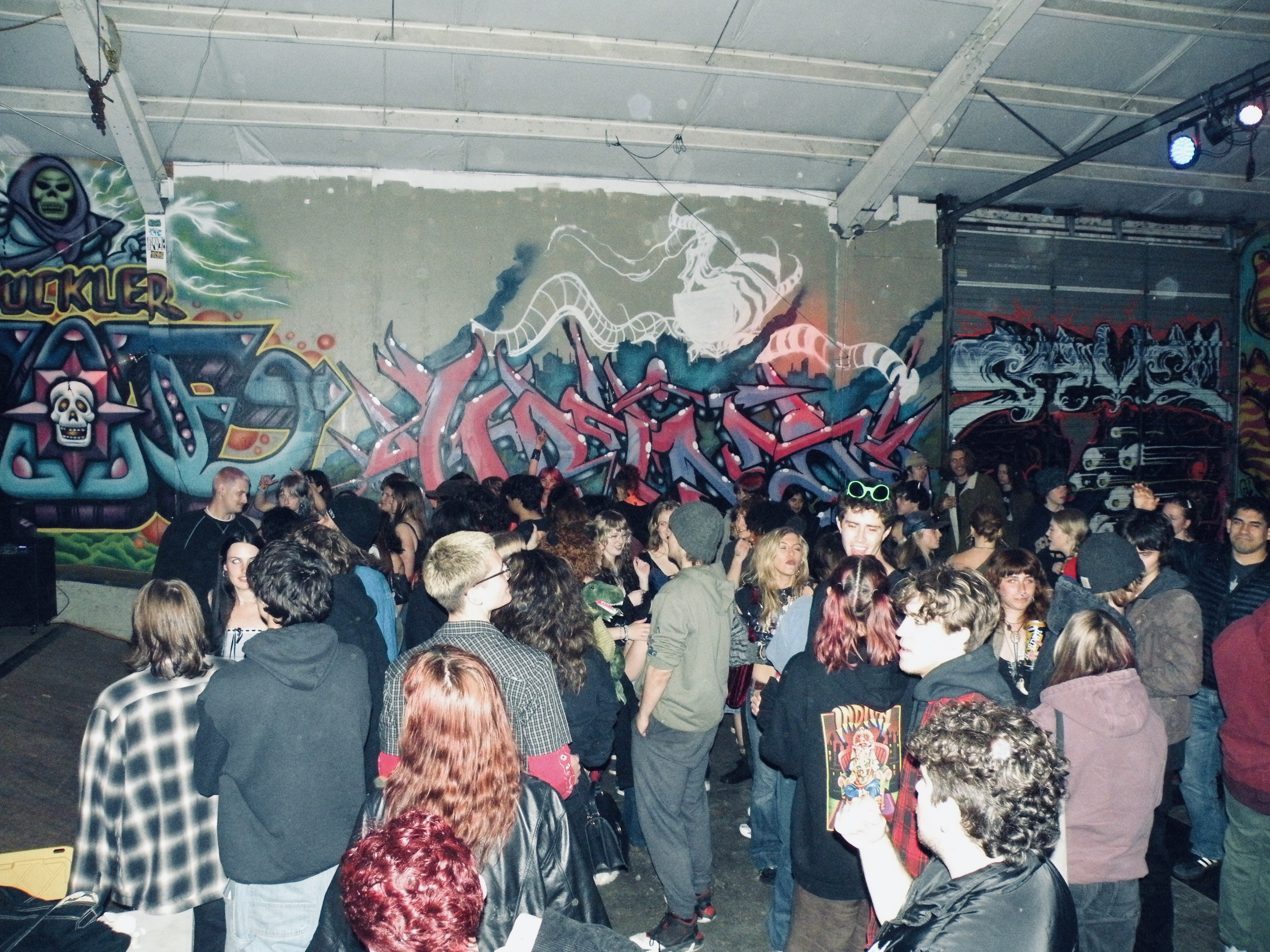
    Have you ever gotten FOMO — aka, fear of missing out — from the sound of bass thumping from a house on a foggy night or longed to be a part of the crowd of people funneling into a tiny venue on the plaza? Going to local shows is more than just rolling in late and grabbing a drink. It’s about community, respect and good vibes. Humboldt’s music scene is something special and it thrives when people show up to participate.

    Whether you’re a first-year looking for your niche or a returning student trying to branch out, here’s how to do it right.

    Start by checking out flyers around town. Cafes, campus bulletin boards and the windows outside People’s Records are full of them. Follow local musicians and venues on Instagram for updates. And never underestimate word of mouth — ask around, and you’ll probably hear about something cool happening soon.

    Know your ride situation beforehand. If you’re planning to drink or use, be responsible — walk, carpool, call a cab or have a designated driver to get you home.

    Before you head out, do a little digging. Where’s the venue? Is it a bar? A D.I.Y collective? Someone’s house? Is it a sober space, or are substances allowed? Whatever the location, respect the space and the people hosting it.

    What’s the genre? Humboldt has everything from punk to folk to electronic dance music. Pregame with your best judgment, and maybe don’t get sloppy at a chill acoustic set.

    Does the show cost money? Sometimes there’s a sliding scale or the acronym NOTAFLOF, meaning, “No One Turned Away For Lack Of Funds.” That’s part of what makes this scene inclusive, especially in a town full of broke college kids. But if you can pay, do. Even five dollars helps support the bands, gear and venue.

    The best way to prepare for local shows is to go to them. Seriously, just go! It’s a fun way to engage with the creative community that surrounds campus. You can bring a friend, but don’t be afraid to fly solo. Remember that everyone there already shares a common interest: music!

    At the show, feel free to dance, whether it’s slow swaying or hopping into the moshpit. If someone falls, pick them up. Not sure how to act? Just read the room and follow the vibe. If someone looks uncomfortable, check in. Consent always applies, even in loud venues.

    If you’re there to chill, hang back. Let people who want to dance get close to the front. Be aware of people’s space, especially in a crowded venue.

    Be mindful of the equipment. Don’t touch or lean on amps, cables or instruments. And definitely don’t leave your drink near them.

    During set breaks, take a breather, hydrate and chat with someone new. Substance use is a personal choice, but here’s my tip: this is a small town, so if you get rowdy, people will notice. Carry Narcan if you can and look out for each other. Community care is at the core of Humboldt’s scene.

    Try not to leave right when the music ends. If it’s a house show, help clean up. Don’t leave behind trash or broken glass. If you see the host, thank them. And finally, spread the word. If you had a good time, post about it and tag the bands. Tell your friends, invite them to the next one. Support doesn’t stop at the door. It lives in your enthusiasm and continued presence in the scene.

    You don’t need to be “cool” or connected to belong here. Just be kind, be curious and keep showing up. That’s how music communities grow and guess what? You’re already invited!

    Miranda is a reader, writer, movie-goer, radio DJ and lover of all things pop culture. She is a senior journalism major with a concentration in public relations and the station manager of KRFH. She hopes to represent the local music scene through her writing for the Lumberjack. Contact her at mrr135@humboldt.edu.

  • Why did your favorite bands leave Spotify?

    Why did your favorite bands leave Spotify?

    Ethical issues with big streaming

    by Jess Carey

    Sylvan Esso, King Gizzard and the Lizard Wizard, Deerhoof and hundreds more artists recently removed their music from Spotify. This industry-wide trend represents a culmination of years of artist’s frustration with the company’s ethics. Many pointed to Spotify CEO Daniel Ek’s recent $700 million investment in an AI powered weapons company as the tipping point in a long list of qualms. 

    “We don’t want our music killing people. We don’t want our successes tied to AI battle tech,” Deerhoof posted in a statement on their Instagram. 

    “Can we put pressure on these Dr. Evil tech bros to do better? Join us on another platform,” King Gizzard and the Lizard Wizard said in a series of Instagram stories.

    In addition to the company’s profits directly funding violence, Spotify has long been accused of taking advantage of artists and devaluing the role of the creator. Spotify has over 700 million subscribers and is the largest streaming platform in the world by a landslide, generating an annual profit of around $6 billion. Despite this, the company has the lowest average royalty payouts to artists out of all the major competing platforms — paying .003 to .005 cents per stream. In order for an artist to make one month of minimum wage for $15 at 40 hours a week, it would take 238,000 monthly streams. 

    Artists on major labels are often able to negotiate higher payouts than smaller artists. Spotify also allows labels to purchase algorithm boosts — meaning that the bands that are big can get bigger faster, as their songs are more likely to play. This preferential streaming also takes effect when you shuffle a playlist. The algorithm will play more popular songs first and is not a true shuffle.

    Spotify has also been creating AI-generated artists, with music they cook up in-house, in a move that directs streams away from real artists to save even more money. They slip these tracks in with others on algorithm-generated playlists and radio genres such as jazz and ambient, which listeners sometimes keep to the background and might not notice. It’s easy to spot these artists once you become aware of their existence. Often they will have suspiciously AI-generated album art, no artist bio and suspiciously lifeless music.

    The Union of Musicians and Allied Workers  (UMAW) has long been bringing music industry professionals together to protest Spotify. Their campaign, “Justice at Spotify,” has led successful protests in many major cities. One of their key demands is one cent per stream for all artists. A “Death to Spotify” community event at a library sold out in Oakland, and new chapters are popping up all around the world as people and artists come together to dream up alternatives.

    In September, Daniel Ek stepped down from CEO to a new role as executive chairman,  seemingly in response to the controversial spotlight. Sonderstrom and Norstrom — a duo of middle-age bespeckled white men who look about as similar as their names sound — are replacing him as co-CEOs. This little show of a leadership shuffle is not as much of a solution as systemic change would be; a tech bro is still a tech bro.

    Streaming music fundamentally changes the experience of music listening. When artists create albums, there is an intention behind the order of the songs, cover art and even the packaging of the album. This is all lost when our habits shift to letting Spotify’s algorithms take over as nameless songs shuffle into infinity in the background. Of course, there is nothing wrong with a good playlist and algorithms can certainly be helpful with discovering new music. But I find that the experience of wandering curiously through the record store is much more satisfying than scrolling through my Discover Weekly ever was.

    In a world where widening wealth gaps and the growth of AI threatens everyone’s autonomy, as droves of bullshit content are constantly shoved down our throats, one wonders how to cultivate a more authentic experience of art consumption. Apple Music, YouTube Music and other streaming platforms all have similar ties to big tech. Streaming certainly has benefits, like connecting users to music from all over the world and throughout history easily. I don’t personally feel like I can or should get away from it completely, but I do want to remember that there are other ways to participate in music enjoyment that don’t directly fund violence and the growth of AI.

    How do you listen to music? Personally, I have found a combination of Youtube, CDs, tapes, records and Bandcamp to be the ticket. I buy albums on Bandcamp from artists I follow when I can. I stream music on Youtube when I am looking to study new artists and genres, and I play my tapes and records at home and CDs in the car. I love the click of a cassette deck, being able to read all the tracks on a cd case and the hiss of a vinyl player. Physical media is fun and tangible — and has much higher audio quality. Buying music directly from artists you love is a much better way to support them as it becomes more and more difficult to survive as an artist.

    We cannot allow our art consumption to become commodified and usurped for the benefit of big tech and for the proliferation of violence. Shining a light on ethical issues with streaming tech presents an opportunity to think critically and embrace music listening with a renewed intentionality and sense of responsibility. 

    Jess Carey loves writing about music, nature, and community! They are a senior, studying ecology with a journalism minor. Reach them by email at jc876@humboldt.edu with comments or story ideas!

  • Motown, Soultown, and Your-town

    Motown, Soultown, and Your-town

    Why you should listen to more Motown Music

    by Devin Bowen

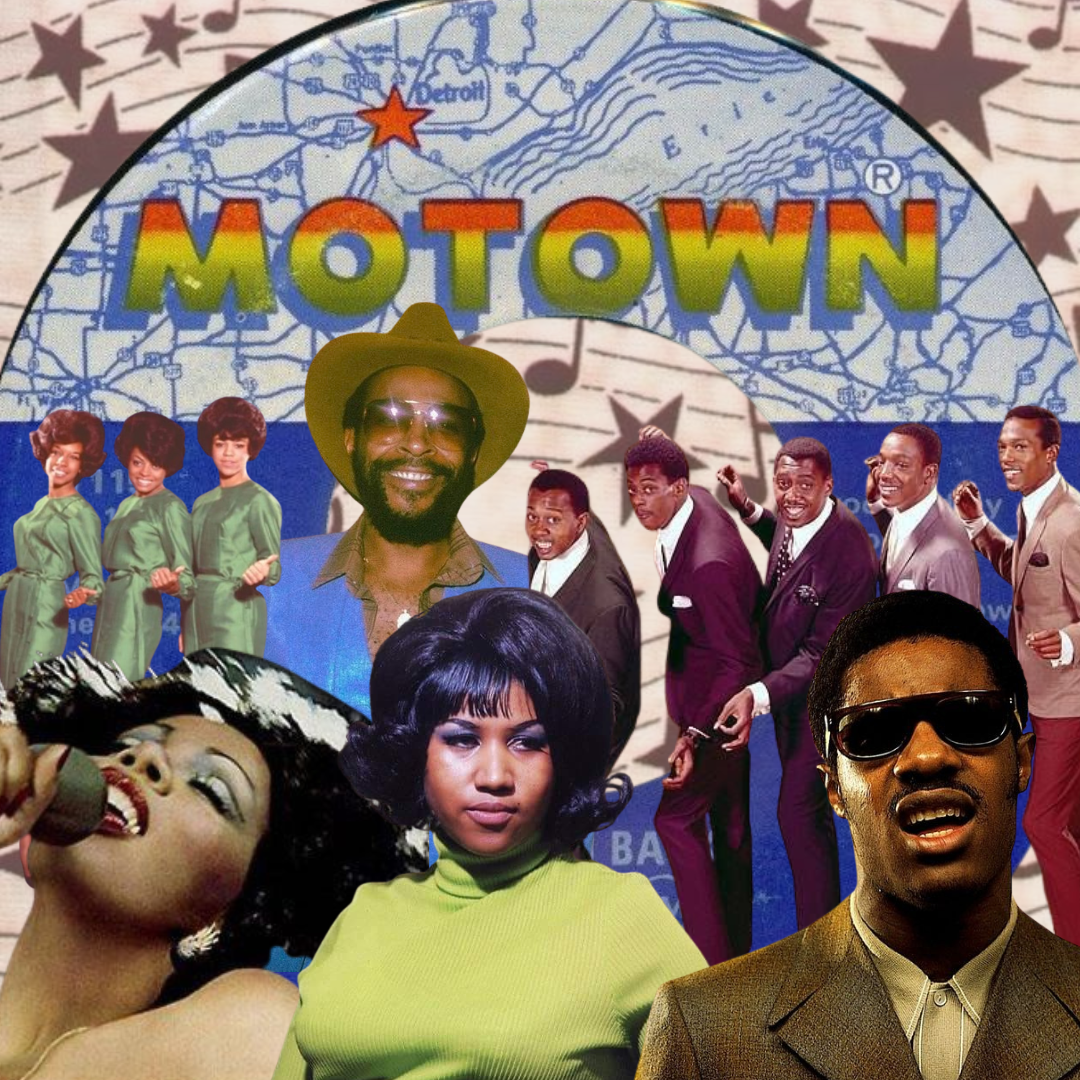
    Motown Records was founded in Detroit, Mich., by Berry Gordy in 1959, and it would go on to alter the music industry forever. Famous, recognizable artists like Marvin Gaye, Stevie Wonder and Diana Ross helped pave the way for the Motown,  soul and R&B genre as we know it today. 

    I’m a true believer that what you listen to can add an emotional connection to who you are. In my adolescence, I was easily drawn to wanting to change the world, and how I expressed that passion was with music. I was an angry, moody punk teenager listening to bands like Minor Threat, Dead Kennedys and Bad Brains until I had a brain-altering experience with a particular album. Marvin Gaye’s album, What’s Going On completely flipped my world. The shock and awe I felt — I was covered in goosebumps from how amazing this album was. Gaye sang with so much passion in his lyrics. It was everything I was searching for in terms of my beliefs, emotions, and love. 

    Soon after that moment, I continued my journey to listen to more Motown and soul-based music. Five years later, I still feel the same way for Motown every time it blesses my ears. So, why should this genre and record label be added to that daily rotation on your playlist? Well, it truly does have that deep soul to soul connection that is missing in different music genres. The yearning, the funk, the passion — this is soul music. Motown really does have an artist or album for every occasion. Feeling freaky-funk? Spin Marvin Gaye’s, I Want You, or when you’re feeling like you want to have soft motivation? Spin Stevie Wonder’s, Music of My Mind. This genre will always be there for any emotional roller coaster you could be going through.

    So just like Stevie Wonder, Motown and soul music will truly knock you off your feet. 

    Devin Bowen is a journalism major and also the social media manager for the student run radio station, KRFH. She admires collecting vinyl records and exploring new artists. They hope to spread new experiences and influence a different perspective with music and culture through The Lumberjack. Contact them at dlb155@humboldt.edu.

  • I used to say no to Hamilton, now I’m a non-stop fan

    I used to say no to Hamilton, now I’m a non-stop fan

    Reel Talk with Julia

    by Julia Kelm

    About three weeks ago, I was lucky enough to see the 10-year anniversary showing of Hamilton at the Broadway Cinema in Eureka. The crowd was like none other — the back row sang beautifully — surprisingly — along to every song and other members of the audience raised their glasses to freedom. It was a perfect night, but it was only about a year ago that I would sooner jump into the freezing Delaware River than sit down to watch Hamilton

    Yes, it’s true; I used to despise Hamilton, but I assure you I had valid reasons. It all started around 2016 when Hamilton began to hit the mainstream. I was either 13 or 14-years-old, entering my freshman year of high school. For lack of a better term, I went to a very small, weird charter school. To put small in comparison to your average public school, my graduation class was around 25 people, and that was the largest class to have graduated when I attended. However, the largest and most active part of my old school was the theater department. So imagine high school, but everyone you knew was a theater kid — that was my life!

    When Hamilton came out, it was inescapable. Every break between periods, lunch and carpools on the way to and back from school. Hamilton — Hamilton — HAMILTON. It drove me insane, so I began to despise it, and musical theater in general — which I’m still trying to heal from. 

    Now you might be wondering, ‘Julia, if you had such a vitriolic reaction to Hamilton for so long, what got you to change your mind?’ I’m so glad you asked, friend. 

    My best friend would play Hamilton for me, I would hear Hamilton on the radio and even my sister, who used to dislike Hamilton much like me, tried to show me the light. Alas, still no, I could not bear to hear another second. That is, until I attended a voice recital at this very school, I decided to give Hamilton one more shot.

    It was around October of last year that I heard the most beautiful cover of the song Burn sung in music building B. Faith Byington, a student choir singer, has one of the greatest student voices I have ever heard live. Her performance of that single song brought me to tears and full-body chills. In that moment, the words, ‘I finally get it,’ echoed in my mind. Since then, I have healed and I see Hamilton for the masterpiece it truly is.

    I suppose the moral of the story here is that it’s never too late to change. You don’t have to be a hater; you can learn to love again, just like me.

    Julia is a journalism major, and is the life and arts editor for the paper. She loves film and is a regular on Letterboxd. She also enjoys going on walks in the forest, and taking pictures to relax. If you have a movie you want her to review, email her at jk328@humboldt.edu.

  • Karaoke GOATs of The Goat

    by Will Bishop

    Distant billowing walls of fog roll gently in the distance as I enter the warm glow of Richards’ Goat Tavern & Tea Room. I’m early and the place is sparsely populated. The goats are more satanic than usual, and little skeleton guys hang from various lighting fixtures. As they say, “at The Goat it’s all about the goats.” No one has actually said that, but I just did, so now someone does. I am here with a purpose – an impossible task. One that might be considered by some to be completely unnecessary, dumb or pointless. But those people are haters, and tonight is all about silencing the haters. Tonight is Thursday night, karaoke night, one of two weekly occurrences hosted by The Goat, and I am here to review it.

    Holy Diver by Seana: An early and obvious highlight courtesy of one of The Goat’s elite performers. Dressed in a pink tutu and wielding a guitar made out of cardboard, fabric and dreams – Seana delivers a blistering operatic falsetto rendition of Dio’s classic metal masterwork. Like a warbling siren at the edge of a raging sea, it sounds absolutely unhinged — a transportive and transfixing experience. For a brief moment, as Seana wails and shreds her cloth axe, you can imagine her high on a mountainside, commanding legions of the damned with a voice that could cut stone.

    Exit Music (For a Film) by Sway: As the moody dystopian atmosphere of Ok Computer casts a pall of late nineties branded existential fear on the room, Sway jests, “So somber, I guess this is important,” and like, yeah, Sway — it’s Radiohead. It’s obviously the most serious and important music ever for people who are like, way serious and mega important and who ponder the greatest and coolest questions of the universe. Sway requests more reverb – an exciting choice. As he tries to accomplish the unaccomplishable goal of being Thom Yorke, he hits various walls and runs out of air in his pipes leading to a fascinating phenomenon. Something I have coined, “The Laugh of Galactic Terror.” The reverb elevates from what is simply laughter at one’s own inability to be Thom Yorke to something much higher and more sinister and pretty epic.

    Unsteady by E: This was just really extremely good, like god damn E. I don’t know this song. I don’t even like it honestly, but the man has the voice of an angel. His voice sounds like a pure force of light and goodness shining against the darkness of a cruel world. His voice is like a beam emerging from deep space that could heal anything in its path. His voice sounds like the archnemesis of, “The Laugh of Galactic Terror.”

    United States of Whatever by Cash: An immediate followup to E’s stirring performance, Cash arrived charged with E’s light, gently crooning the lyrics to Unsteady. Wearing sunglasses, a baseball cap and shoes that look like the bastard offspring of Crocs and slides — I’m not up on Croc culture, maybe those exist now. Cash claims to have never heard this song in his life; he knew all of the words. Cash is a punk rock icon and one of humanity’s greatest warriors. At least, that’s how I felt until later in the evening when he returned to the stage to perform Radioactive by Imagine Dragons, which is an unforgivable sin and docks him four “humanity’s greatest warrior” points. It’s Kendrick at the VMAs all over again. Why must my heroes always betray me?

    For more stirring performances from these stars and beyond, come on down to Richards’ Goat Tavern & Tea Room every Thursday and Sunday from 8:30 p.m. to 1:00 a.m. Also, be over 21.

    Will Bishop is a Cal Poly Humboldt journalism major. He is prone to writing essays about things that bother him, and fictional works about things that also bother him but in different ways. A highly bothered individual, and a lover of cinema, music, and large trees/rocks, he can often be found in the woods, dancing to bring down the sky.

  • Reel Talk with Julia

    Reel Talk with Julia

    Humboldt County is an underrated classic, full of emotion, care, and love for Humboldt county 

    by Julia Kelm

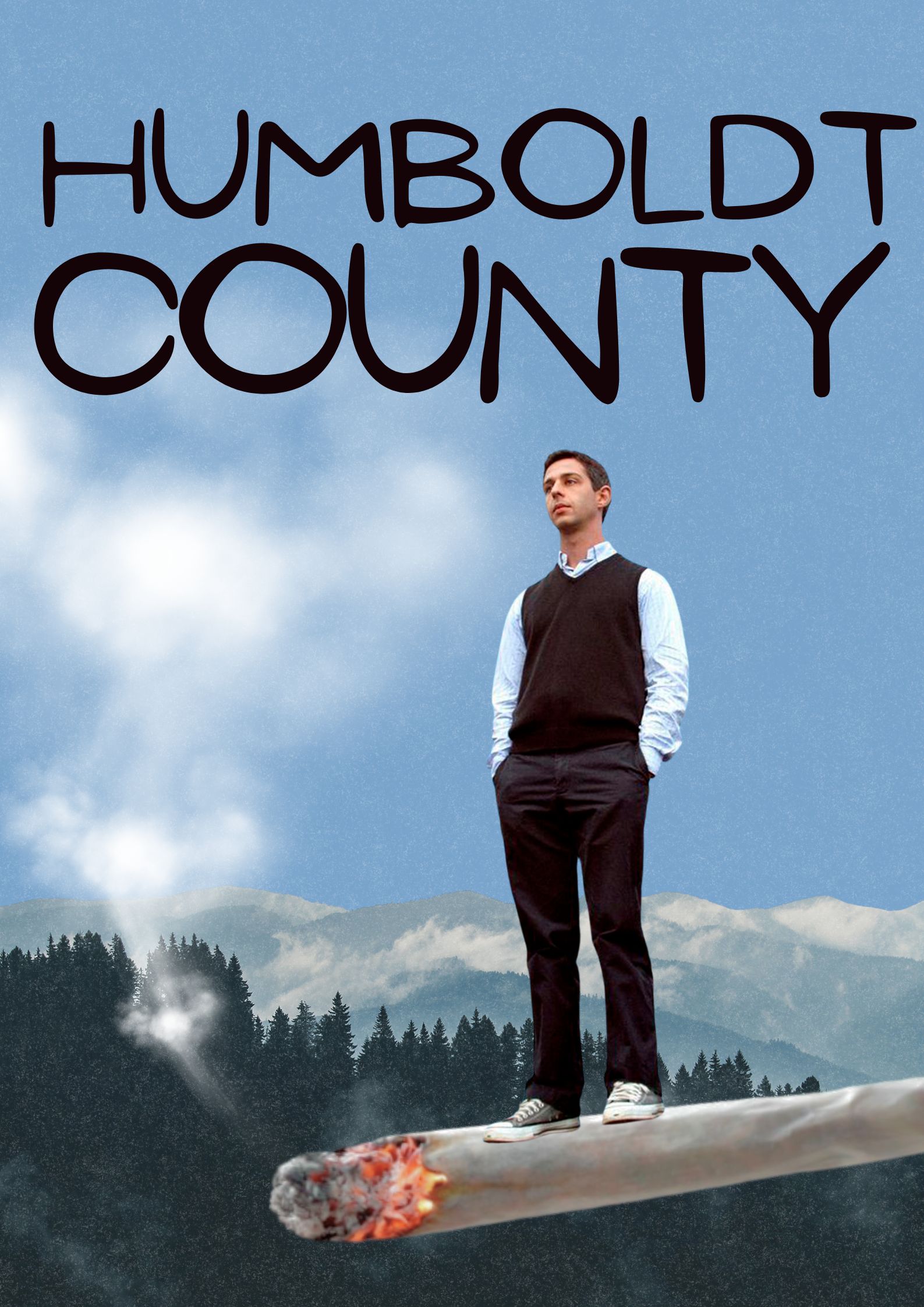
    Humboldt County is a film about a medical student, Peter — played by Jeremy Stong — who is about to graduate into his residency. However, after he’s failed by his father who is also his professor, he ends up sleeping with an actress, Bogart — played by Fairuza Balk — who then takes him to Humboldt County on a whim. 

    Peter, shy and timid, quickly finds himself out of his element upon meeting Bogart’s eccentric friends and family, who just so happen to be pot farmers. Peter, panicked by his soon-discovered fish-out-of-water circumstance, asks to be taken home. However, due to various reasons, Peter is forced to stay until he realizes he doesn’t want to leave anymore. 

    My only issues were related to the pacing. There are a few moments where the film reveals information out of nowhere. Then you’re not given enough time to react before the story moves on to something else. Characters are written well, but again, certain elements of their characters don’t get enough time to shine. But, I enjoyed this film overall and rate it a 3.5 out of 5 Julia’s. 

    Regardless, it’s surprisingly sweet and poignant for a film that was advertised as a stoner flick. The journey Peter finds himself on and the connections he has within this wacky group of people feel so relatable and human. 

    I don’t want to spoil details, but Peter and the character he befriends, Max, share a very interesting relationship as they compare their lives to one another. Both of them were raised with different philosophies. There’s a sense of jealousy from both of them as they yearn for each other’s lives. The connections between characters is probably the strongest attribute of this film. 

    Every character introduced, small or large, all feel like real life — especially when the people you’re seeing on screen are so similar to who you know or have met in Arcata.

    Humboldt County was indeed filmed in Humboldt, specifically in locations including here in Arcata, Blue Lake, Eureka, the College of the Redwoods, and Luffenholtz Beach in Trinidad. So, not only does this movie feel real, it feels like home.

    If you’re interested in watching Humboldt County, it’s currently available on Tubi, my favorite streaming platform, because it’s completely free. 

    Julia is a journalism major, and is the life and arts editor for the paper. She loves film and is a regular on Letterboxd. She also enjoys going on walks in the forest, and taking pictures to relax. If you have a movie you want her to review, email her at jk328@humboldt.edu.

  • Shifting Seasons: My Fight with Blight

    by Serah Blackstone-Fredericks

    Rain, thunderstorms, lightning and more sun — just like that, it’s warm in Arcata again. The gardeners — myself included — are dealing with a pesky fungus called blight, which has been plaguing Humboldt gardens all summer.

    Blight is a fungal disease that both wilts and discolors plants. It’s been the bane of one corner of my garden, where my very healthy cucumbers and delicata squash were affected. There are many ways to treat it, and the only one I was semi-curious about was spraying old milk directly onto the affected plants. I wish I could say that I tried it out and have something to share about its success rate, but alas, I did not find the desire or time to have my yard smell like spoiled milk.

    If you’re wondering what’s good to grow now, I recommend sowing things you like to eat. I had an experimental phase where I sowed some new and familiar items, but all in a mindful consideration of what I eat. This mindfulness did backfire this summer in particular, as I found myself with much less available to harvest right now.

    This week, the official calendar fall arrived, and with it my tomatoes and lemon cucumbers all ripened at once. I used to garden closely with the cycles of the moon, and although I love that rhythm, I don’t currently have the time as a student to embody the kind of slowness I seek to cultivate in my life.

    Although gardening with the moon offers your plants more of an opportunity to grow well, there can be a pressure created in making certain you are getting to certain tasks by certain days. That level of pressure as someone who is not yet retired started to build up a bit more stress than my body could hold.

    Graphic by Serah Blackstone-Fredericks.

    In terms of this time of year, it is an excellent time to sow garlic, root vegetables like carrots, beets, turnips,  radishes and bok choy.

    It was an odd year for squash, so next year, I might suggest growing a couple more varieties such as Delicata, Romanesco, and Pattypan — which I forgot to grow. My pumpkin did not ever make it, although it initially looked quite healthy, and will be something to try again for next summer.

    Plant garlic now to harvest in the spring. Wait until it cools a bit more for lettuce. This week through Sept. 26 is a good time to plant vining plants and flowers.

    I invite you to try a new hobby this season — or return to an old one — and notice the rest it offers you.

    If you have questions, feel free to write to me directly at sb625@humboldt.edu. And if you use Instagram, you’ll find a post with a QR code where you can send in your gardening curiosities.

  • Redistricting, bad for California, worse for fascism

    Redistricting, bad for California, worse for fascism

    by Barley Lewis-McCabe

    You have to do something, we all do — but look at Stephen Colbert; something is the worst thing you can do. Something could be cause for some gullible asshole to come knock on your door and throw you in the back of a van. Something will make you an enemy of the state, what could be more dangerous than Something? Nothing.

    There isn’t a day that goes by in our country where the effects of the Trump Administration’s ever progressing fascist blueprint aren’t felt in our most vulnerable communities, and there’s no sign of it stopping. Why would they give up? From their perspective, it couldn’t be going better. Now, that’s not to say there isn’t pushback against the ICE Gestapo, or nationwide protests, but for a movement to work it needs consistent pressure on the forces that encroach on us. We just haven’t seen enough of what we need in these last eight months. 

    Let’s look at what kickstarted Newsom’s good spirited power grab. Back in July, Texas republicans drew up a new district map — one that would alter five democrat-leaning districts to result in a likely loss for five democratically elected senators. Districts are demographic boundaries for where people live, and the people who live there elect someone to the house of representatives. Gerrymandering is the legal process where a party in power redraws those districts so they feature a higher ratio of people who support their party to people who don’t, giving them more power in the House of Representatives.  

    Here’s something to consider: Gavin Newsom is a slimy, politicking bastard who doesn’t primarily work to serve the people of California. He works to fuel his own ego and lusts for attention and presidential ambitions… but what politician doesn’t. The thing that sets our fair governor apart is his methods of doing this. Newsom fucking hates any and all republicans. But this hatred — and quite possibly warped moral compass — pointing in the right direction for once, leads to some great things, like when he defied the law and started marrying gay couples as mayor of San Francisco.

    Newsom’s compulsions make him one of the strongest opponents to the Trump Regime. He has thrown as many punches as he’s taken, such as restricting ICE agents from entering schools and hospitals without a warrant. His gerrymandering to nullify Texas’ gerrymandering is another example. 

    The Trump regime is only gerrymandering and attempting to suppress voters because they know chamber control from an opposing party could put an end to their hoop dreams. But, we have to remember the “opposing party” is still one of empty promises and virtue signaling. 

    The democratic party leadership lost sight of the people long ago and decided to support the forces of global evil, all while they planned their own parades and called themselves the last defenders of the American populace. Still, they drunk text about how they just need one more small donation before midnight. Believe it or not, they could create some real change. They might just be on the verge of death rattling some pushback before a kinder group of people take their place.

    Here’s what I think — redraw ‘em! I think every state should redraw their maps to kick out their fascist representatives. I think it’s a horrible disfigurement of our constitution and a gross overstep of power, but what do we have to lose? 

    The worst case scenario is already here; life in our country is worse than we could’ve imagined in 2016. We have to do something to put an end to the infection of fascism in our government. 

    So, please show up this November. I say, vote for the redistricting, remove representation for your fellow statesman. Just know what you’re doing, and hope it was worth it. 

    Barley is the photo editor and an untraditional reporter who focuses on social change and stories with a real human impact. If you’d like to reach him for whatever reason email bl258@humboldt.edu 

  • Cal Poly Humboldt is sending mixed messages on sustainability

    by Peter Nielsen

    In the past few days, I, like any Cal Poly student, have received several messages in my university email. Of those, two in particular stuck out to me.

    The first was an email from the Office of Sustainability on campus, a message both plain and plaintive: Would I take a brief survey regarding the sustainability of the university? Since I wasn’t doing anything important other than checking my email, I did what I felt was responsible and gave it a moment of my time.

    As I recall, the survey asked for me to explain my knowledge of the sustainability programs on campus, my feelings on them, and my understanding of the concept of sustainability in general. I felt generally confident in answering the questions; after all, any Humboldt student would surely have some awareness of the “green” initiatives, from the food composted diligently by workers in The J to roving RA’s urging residents to turn off electronics not in use and save a few watts. And, of course, it’s often said that Humboldt County as a whole has a community that encourages sustainable practices and products. From paper coffee cups to public transportation, electric vehicles to the many varieties of locally sourced, small-batch cannabis. The Humboldt community seems to have a good relationship with the university, or, failing that, at least similar goals in sustainability. My coworker, pushing 50, often cycles to work — about nine miles from his house in Eureka — along what I’m told is a relatively new bike path. On campus, you’d be hard-pressed to find a spot to sit that’s more than twenty feet or so from a recycling bin, or to walk to class without a cyclist whizzing past you. Cal Poly Humboldt, it could be said, is sustainable. 

    Considering all this, it came as almost a shock to receive the second email that caught my attention this week: an email from OpenAI, straight into my university-assigned inbox, inviting me to join a workspace for “ChatGPT EDU” called — you guessed it — “Cal Poly Humboldt.” Whatever could this mean? In the contemporary discourse on artificial intelligence, it’s often said — and often believed — that AI uses a lot of water. This is somewhat true; cooling systems used in data centers that process users’ AI requests and prompts use massive amounts of freshwater. Yes, 70% of the Earth is covered by water; however, only 3% of the world’s water is freshwater. It’s estimated by the United Nations Environmental Report that close to two-thirds of the world’s population will experience a water shortage at least one month out of every year, with that number increasing in the near future. The report states that water use should be “’Decoupled’ from economic growth by developing policies… to reduce or maintain consumption.” Generative AI specifically has also markedly raised the water usage of many artificial intelligence companies. 

    Less discussed, yet still relevant, is AI’s electricity usage — data centers are projected to reach 12% of the US’s total electricity consumption by the year 2028, according to the 2024 United States Data Center Energy Usage Report. The amount of electricity and water used to create, maintain and operate data centers continues to rise, without any associated rise in sustainable methods or technologies to offset this increased usage. AI, it could be said, is not sustainable.

    So, wait; if Cal Poly Humboldt is sustainable, why is it encouraging students to use AI?

    I’ve had several teachers spanning critical thinking with computers to native american studies, showing in their classes how Google AI summaries, Large Language Models and yes, even ChatGPT, are decidedly incorrect or misinformed in a variety of situations. Every course syllabus I read during my first week of classes included a clause prohibiting the use of artificial intelligence for coursework and assignments. What I initially saw as the university’s stance on AI, that it shouldn’t be used in an academic setting, is being contradicted by this invitation, this encouragement to use AI. It flies in the face of the sustainable vision mentioned on Cal Poly Humboldt’s website, claiming: “We are proud of our longstanding commitment to environmental and social responsibility.”

    It would seem to me that there is no pride in that commitment. I certainly can’t take any pride in it, given the circumstances. I would go so far as to say that at this moment, that commitment has been broken. In my opinion, AI has no place at a college that wants to call itself sustainable.

    Where does that leave us? The survey asked me if, while applying to colleges, Cal Poly Humboldt’s drive for sustainability was a factor in my decision to attend. I answered yes. When it came down to it, choosing the right college was choosing a place I could grow into the kind of person that enacts positive change in the world. Humboldt certainly seemed like the place to do just that — and I believe it still can be. I hope that the university, as it continues to grow and change — just like its students are proud to do — can return to and honor its stated ideals, so that we may all take pride in a campus committed to sustainability. 

    Peter Nielsen (he/him/any) is a freshman at Cal Poly Humboldt and an avid writer and poet. He is double majoring in Theatre and Computer Science. He is deeply passionate about environmental and humanistic topics.

  • Jasmin’s Corner

    Jasmin’s Corner

    Missing your ex could make you miss the next

    by Jasmin Shirazian

    Dear Jasmin,

    I still have feelings for my ex. They made me happier than anyone else has. We grew apart after they graduated, and we decided to go our separate ways so we could end on a better note. It’s been almost a year, and they’re still on my mind. We didn’t have a bad breakup, would it be crazy to try again with them?

    Ahh, the good old ex. Either your greatest enemy or a warm memory — even both at times. In your case, it seems like you might be stuck in the latter. Not a place I’d recommend being trapped in for too long, for your own sake.

    I think a break up that ends really well is, like, kind of worse than one that blows up super dramatically with a ton of fall out. Obviously, ideally, you want to end on good terms and you’re technically supposed to break up with your partner before you totally resent them, but then you can end up in a situation where you miss them. When it ends poorly, at least when you miss them, you can think of all the times they pissed you off, ruined your mood — all the beautiful, bad parts that make it easy to move on. Ending on a good note makes it way harder to go no-contact and makes it way easier to linger on the good times. 

    I honestly can’t stand when people break up because of anything other than a real desire to end the relationship. Like, you still love the person, and now you’re just stuck thinking about them and what might have been? So, you’re subconsciously closed off to new relationships and any new person that might have been a good partner. An awful experience for everyone involved. 

    Anyway, do I think you should get back with your ex? In theory, yes, especially if you can find a way to close the distance. But, if you’re saying the two of you grew apart, but you miss them, then I think you might be the only person stuck in those roots. A harsh truth to this situation might be realizing that only one of you may have been outgrowing the relationship. It seems like it’s your turn to leave that pot, too. 

    If you don’t try, you’ll be stuck wondering what if. Worst case scenario, I think it’s better to embarrass yourself and face potential rejection than to be left fixated on your past relationship. Best case scenario, you try again and you either realize how much you actually did grow apart, or maybe you get lucky and you grow into each other again. Either way, you have to find a way to move past your past. 

    xoxo,

    Jasmin