The Lumberjack


Students Serving The Cal Poly Humboldt Campus and Community Since 1929

Category: Opinion

  • Severance season two served

    Severance season two served

    By Kaylon Coleman

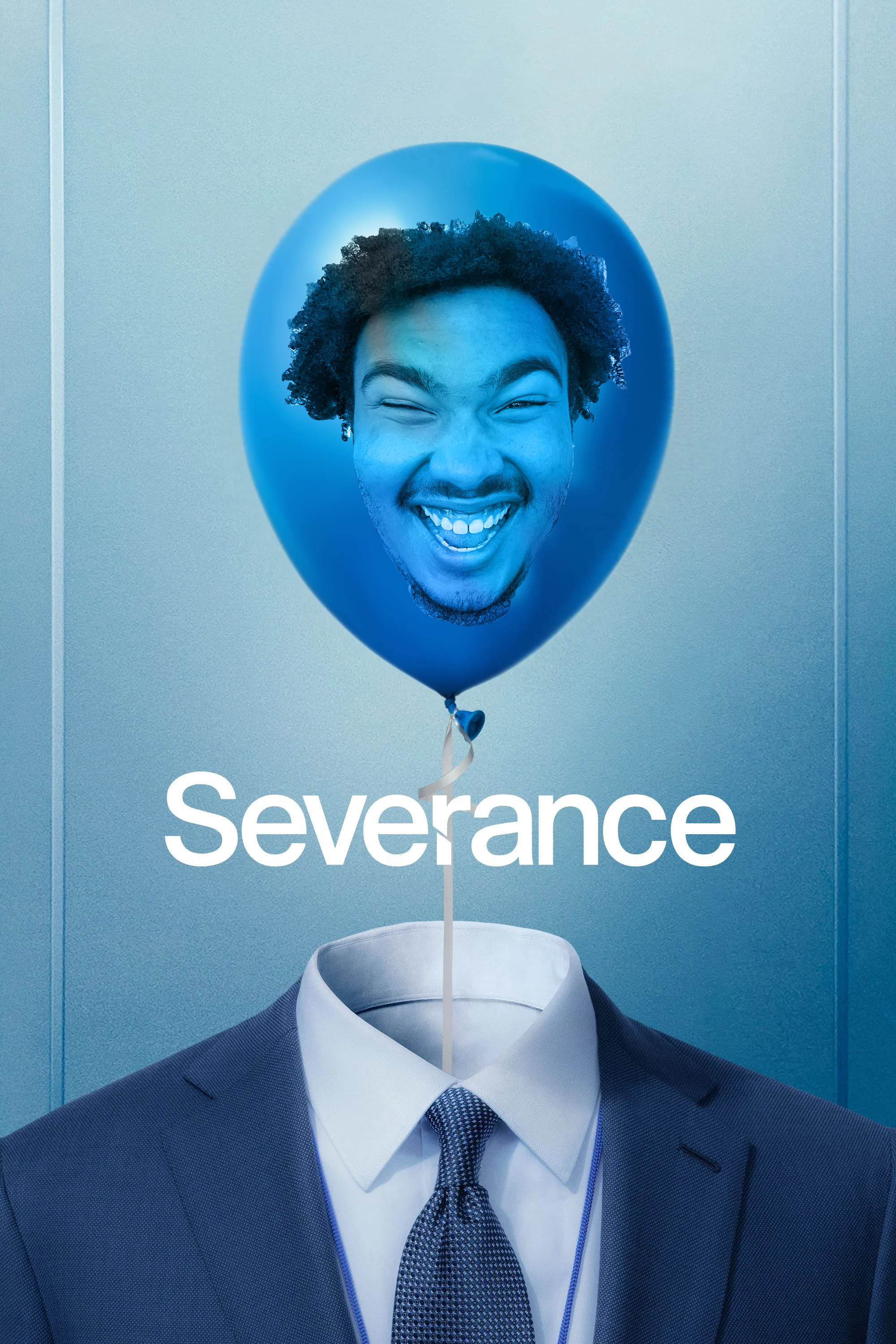
    Let me start this article off by saying if you’re in need of a new TV show to obsess over, Severance is your route. The sci-fi thriller just wrapped up its second season, and I can say confidently on the record — it’s an award-winning season. The stellar performances, excellent cinematography and amazing storytelling are just a part of what separates Severance from other shows out right now.

    I consider myself lucky because I started Severance relatively recently, so I didn’t have to endure a 3-year wait for season two to drop like most. It was a show that always had a place in my watch list. It looked interesting, I just never had the incentive to watch or get Apple TV. All that changed when season two premiered and I started to see buzz surrounding the show everywhere. Now I’ve caught up, joined the subreddit, and became a fanatic spreading the good word.

    There’s not a lot to do up here in Humboldt so when I encounter a series that makes me eager to go home and watch it, it adds that much spice into my life. And so, to give the finale some time to breathe and room for people to catch up, I’m going to talk about the things I love about Severance. Minor spoiler warning regarding the show in general, but I’ll try and keep things light. 

    Theme

    I believe the theme of Severance is rooted in three key elements — mystery, philosophy and love. I don’t know if any of you were fans of Gravity Falls, but the mystery aspect of this show reminds me so much of that series. I can’t remember another time when the community behind a show invested so much time trying to decipher mysteries and formulate theories. I love when a show can bring a collection of people together like that. 

    The philosophical aspect of the show probably has to be my favorite. The premise of the show, more or less, is that people who choose to work for the “severed” floor of Lumon Industries have a chip implanted in their brain. This chip ensures that for the eight hours that they’re at work, their “innie” takes over with a completely different sense of self, doing whatever has been tasked upon them by Lumon with no recollection of the life of the “outie” and vice versa. Many ethical questions are raised within the show itself. Would you work for a company where you had no idea what kind of work you were doing if it provided a check? What defines a person? Is it the mind, or the body, or neither? How do you create meaning in your life?

    But this is also where the love element comes into play, as I feel like it’s the strongest driving factor for each of our main characters in their department, Macrodata Refinement (MDR). There’s a plotline where a character named Dylan George’s innie self starts falling in love with his outie’s wife. There’s another plotline this season where the main character(s), Mark’s outie and innie both have a relationship with a different person. How do you handle a situation like that? These are just a few of the ideologies that make up the theme of Severance in my eyes. 

    The Little Things

    I mentioned the cinematography and attention to detail earlier, and that’s because the show truly utilizes that skill set when crafting their shots. Season two opens up with what is nearly a two-minute-long running sequence in which we see Adam Scott, who portrays Mark, jetting up and down the intricate labyrinth that is the severed floor. The scene is spliced together to imitate one take, and utilizes techniques such as CGI, a bolt arm — a camera with very precise movements — and practical movements to create a scene that can’t be truly captured through an explanation in the paper. 

    Another aspect of the show I find phenomenal is the sound. I’m not just talking about the theme, which is absolutely insane, but more so the sound production overall. An example of the attention to detail when it comes to using sounds in the show is their use of elevator sounds as the MDR employees enter the severed floor. Without explicitly giving away any possible spoilers, just pay attention to the ding the elevator gives or doesn’t give as you progress through the show, and what that may mean.

    The Acting

    There are so many different aspects I could go deeper into. The directing by Ben Stiller, plot, set design — literally everything about Severance. But, as there’s only so much room in the paper, I think I need to talk about the performances. 

    Each character in this show does an outstanding job at acting. I love media where we get to see the same actor portraying multiple characters, and that’s essentially a lot of Severance. Each actor does this magnificently. For example, the watchers get to see Mark shift from a lowly, depressed, desperate individual yearning for an escape from his mind, to a more cheery, vibrant character. Even the characters who don’t have an innie stand out in their performances, such as Tramell Tillman who plays Mr. Milchick, a verbose frontman for the severed floor.

    All in all, I believe that we’re truly going through a renaissance of television right now. With so many great shows coming out currently — Invincible, Daredevil, White Lotus, Paradise, etc.  —- the time to jump into a new show is now. And if I may, I’d like to say with this new season, Severance has solidified its place in the all-time best T.V. series competition. No ifs, ands, or buts.

    Kaylon Coleman is a junior journalism major with a concentration in news and a minor in Psychology and Communications. He is the Social Media Assistant Manager for LJ. He is also the president of the Black Student Union at CPH, social media coordinator for the Umoja Center, and a part-time radio DJ.
  • Reel Talk with Julia

    Reel Talk with Julia

    Look Back: follow your passions and watch animated films

    By Julia Kelm

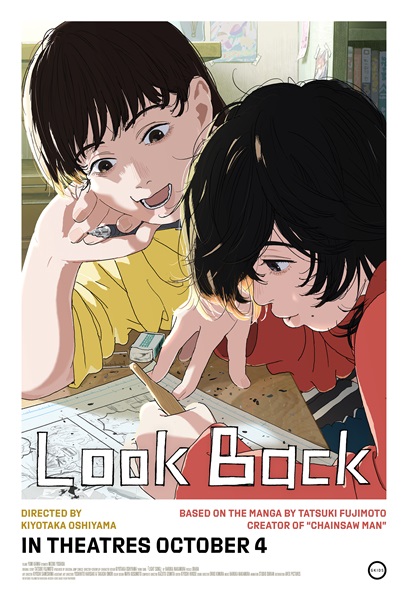
    Look Back, by Tatsuki Fujimoto, is a 2024 animated film adapted from a web manga by the same name. The film is a coming-of-age story, observing Ayumu Fujino, a young, ambitious — and perhaps a tad vain — elementary school student.

    I technically watched this film for the first time a while ago, a few weeks before the Oscars — which was totally snubbed in the best of animation and foreign film categories, by the way. It struck a chord with me then, and I felt compelled to write about it for a few reasons.

    One reason is that the story of this film is an important and relatable one — not just to artists or writers, but to anyone who is devoted to achieving a goal and pursuing their passions. I thought, “Well, that sounds like a lot of college students I know — why not write about it for a school publication?”

    The second reason is that I think animation is a medium looked down upon too often. Shining light on a film that a lot of people might have missed last year — a short, digestible one at that — would be a good place to start when it comes to the nay-sayers of anime and animation. 

    Keep in mind that this film is an anime, so you do have the choice of watching it subtitled or voice-dubbed in English. Some would say watching anime subbed is the only — and best — way to go because it’s usually considered that the original voice acting performance is better. However, I personally prefer dubbed performances because I just catch more — so I say, to each their own. Just don’t tell the anime purists.  

    The plot of the film follows Fujino, a talented manga artist who draws cartoons for her school paper. She is greatly praised by her classmates, friends and teachers who read her work. One day, her teacher asks if Fujino can give one of her strips to another student, Kyomoto.

    Kyomoto has extreme anxiety and hardly ever shows up to school because of it. Fujino is reluctant to give her a spot, but eventually gives in.

    To Fujino’s surprise, in the next issue of the school newspaper, she discovers that Kyomoto is an amazing artist — and a much better artist than herself at that.

    In retaliation, Fujino throws herself into her work, forcing herself to improve her art, even if it means alienating her friends and family to get better.

    Fujino tries relentlessly to get better, but eventually gives up altogether. It’s not until much later that she comes face-to-face with Kyomoto, the person who simultaneously is the reason Fujino worked harder than ever before, and why she gave up on her talent.

    However, to her surprise, Kyomoto admits to Fujino that she’s her biggest fan and was the reason she started putting her drawings into the paper in the first place. 

    This film continues to show how these girls grow and adapt, turning into the people they want  — and need — to be. Their lives intertwine like some sort of predetermined destiny.

    Fujino and Kyomoto’s relationship is the heart of this film. As the story continues, you get the impression that they both have this drive to be the very best at what they do, though they can’t quite get there without one another. 

    Talent and passion can only get you so far in the world. If you don’t have someone encouraging you during the bad days, it’s a lot easier to give up.

    While this movie does take a violent turn in the last half, which adds a sad layer to the film. I find that the twist drives home this idea of the girls’ connectedness and makes the viewer contemplate the choices they’ve made in order to be where they are today.

    So, if you have a little extra free time this week, maybe between eating lunch in The Depot, walking to class or procrastinating on that assignment that was due yesterday, I highly recommend Look Back. It’s streaming on Amazon Prime and will only take an hour of your time. 

    Julia is a journalism major at Cal Poly Humboldt. She loves film and is a regular on Letterboxd. To quote Robin Williams in her all-time favorite movie, Dead Poets Society, “The powerful play goes on and you may contribute a verse. What will your verse be?”

  • Leaving the nest

    Leaving the nest

    By Mia Costales

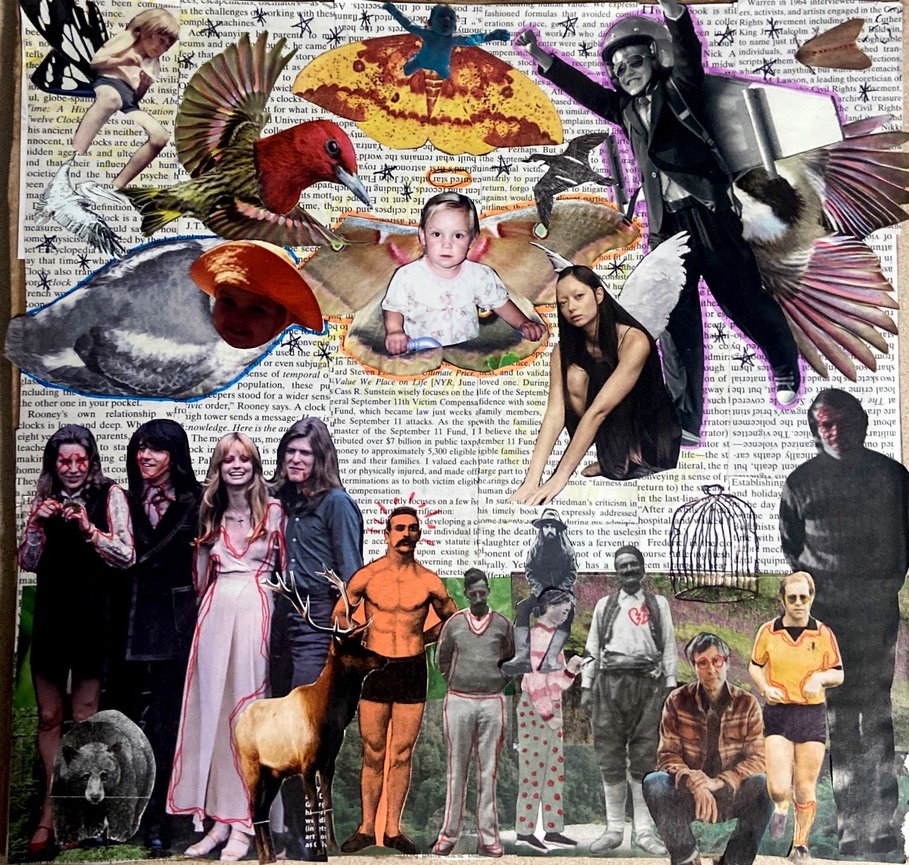
    Towering above me 
    as I shrank into the carpet
    was a giant woman 
    wearing a crown of gold

    Her stare pierced my skin
    and her clothes were worn
    bearing the marks of her life 
    both young and old

    She forced a half-smile
    and knelt down to my level
    softly kissing the feathers 
    that grew from my arms

    Then her smile slowly faded 
    and her kisses turned to tears
    as she turned her back to me
    Revealing her scars

    Her expression grew angry
    and her voice turned stern
    She boomed “Never grow up,”
    like the crack of a whip

    “For if you do grow up, 
    I fear I must warn you,
    there may come a time
    when your wings get clipped.”

    Mia Costales is a senior journalism major and the Life & Arts Editor for The Lumberjack. With a background in music performance, she hopes to combine her love of music and the arts with her passion for localized news and activism to bring thoughtful and informed stories to the public.

  • No mason jar? No, thank you.

    No mason jar? No, thank you.

    It’s time to revive the reusable jar program at the library cafe

    By Ursula Newman

    Humboldt has a long history of environmentally friendly initiatives, with sustainable waste management being a priority at the University. In the spring of 2016, the university supported the national campaign, Kill the Cup, that aimed to end the use of disposable cups and promote reusable coffee cups. After that campaign, the Waste Reduction and Resource Awareness Program (WRAAP), Zero Waste Humboldt and Cal Poly Dining services opted to start selling mason jars. The program was then tracked in a research project in partnership with the Technology and the Environment (Engr308) class, the Sustainability Office and Dining Services. The research from Engr308 can be found on Appropedia.org, under HSU Mason Jar Analysis. The project analyzed the effects of mason jars and disposables, going over monetary costs, carbon dioxide emission and embedded energy, or the energy used to make a product. It was found that within just a few uses, the environmental impact of the mason jar was less than if a user had used paper or plastic cups on those occasions.  

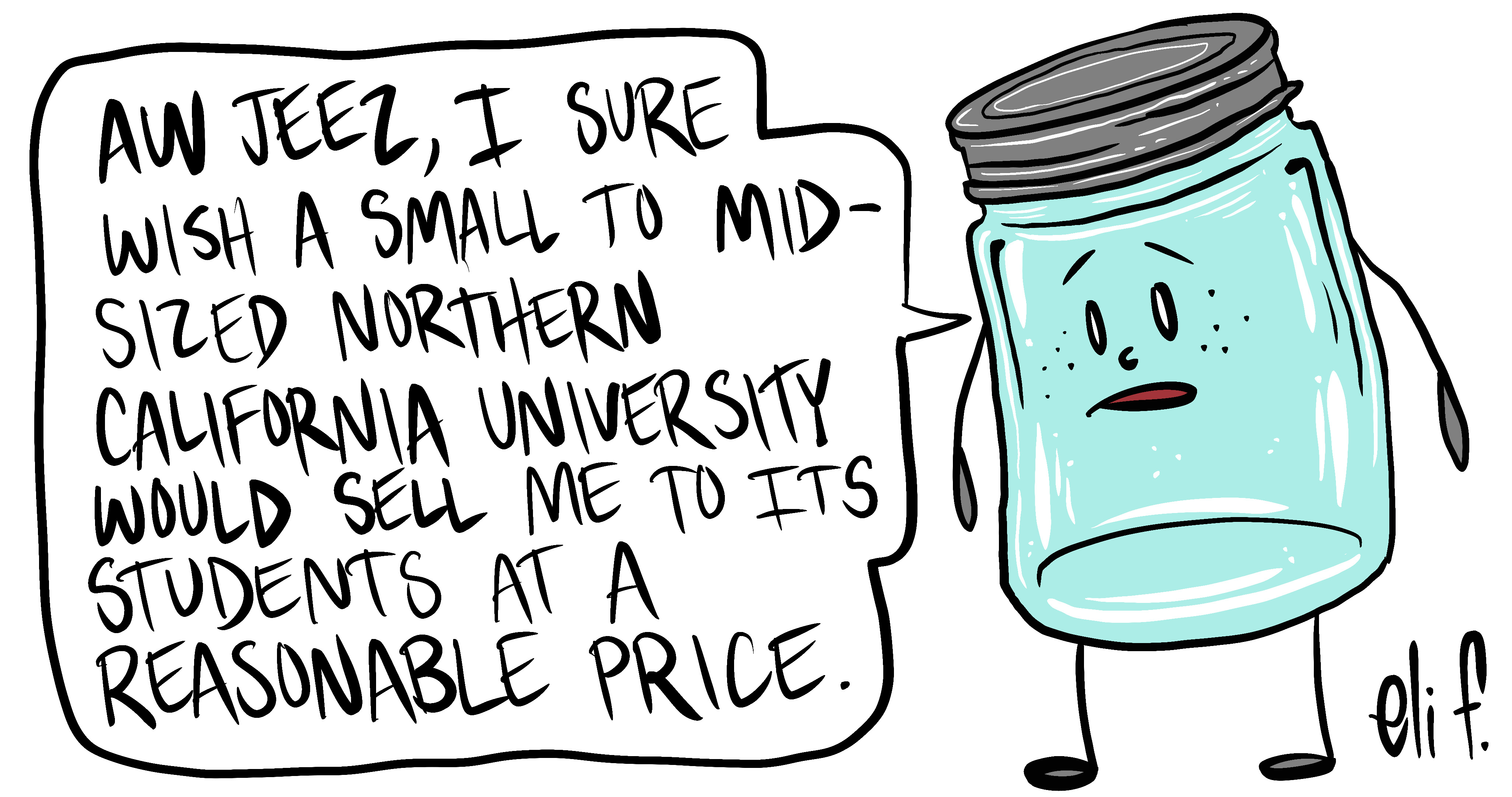
    I miss the good old days of the library cafe when you could purchase a mason jar with a lid to-go. At some point, the mason jar program disappeared. I say we bring it back, or something similar to the OZZI boxes for to-go items. 

    The affordable price of $0.75 made it a no-brainer for me to get a mason jar. Growing up in Humboldt going to Arcata High, I loved going to the library to do homework, and order a chai tea in a mason jar. The jars were purchased by the palette for about $0.59 per jar, and so even with the low price of $0.75, they generated $0.16 profit.

    The Library Cafe is a part of Humboldt Dining, which has several sustainability initiatives such as a composting program, the reusable OZZI boxes, and a certification from the Green Restaurant Association. On their website, they explain that the Green Restaurant Association evaluates several categories — waste and recycling, and disposables are included in that evaluation. The university puts good effort into sustainability, which leads me to wonder why there is no reusable cup option available for purchase at the Cafe — talk about a missed marketing opportunity. 

    In March of 2023, I brought it up to the Humboldt Dining retail director Kyle McEdward over email, and he was open to bringing the program back, but wondered if there was a more eco-friendly alternative. His concern was that the glass used in mason jars is not technically recyclable, and wanted to avoid introducing more products into the waste stream.

    I had not thought about it like that, as I would never recycle a mason jar unless it broke, which does not happen easily. Mason jars can withstand high temperatures for canning, and so they are a little harder to melt down. However, it seems they can still be recycled. The company Berlin Packaging sells mason jars online, and states that while the lids may not be recyclable, the clear glass can be recycled with no problem. 

    The versatility of a mason jar is endless. For students, it’s a practical way to store food and drinks, use as a vase or hold literally anything you can think of. I love mason jars, but my main goal is to encourage students to use a reusable cup. If priced affordably, I believe many people would purchase a reusable option on the spot, similar to what is sold at the campus store. Maybe the university could implement a reusable cup program, and an option exists from the company that the university currently gets its OZZI boxes from. Next time you stop at the Library Cafe, make sure to bring your own cup and take advantage of the discount. But what is the reason for having no cup option for purchase? I see a profitable and sustainable opportunity for the cafe, and a chance to bring back a beneficial program that students and faculty formulated almost ten years ago.

    Ursula Newman is a journalism major and Humboldt local. You can find her all over town doing all kinds of things, and talking to all sorts of people.

  • Reel Talk with Julia

    Reel Talk with Julia

    Ground control to Mickey 17, this space oddity is great!

    By Julia Kelm

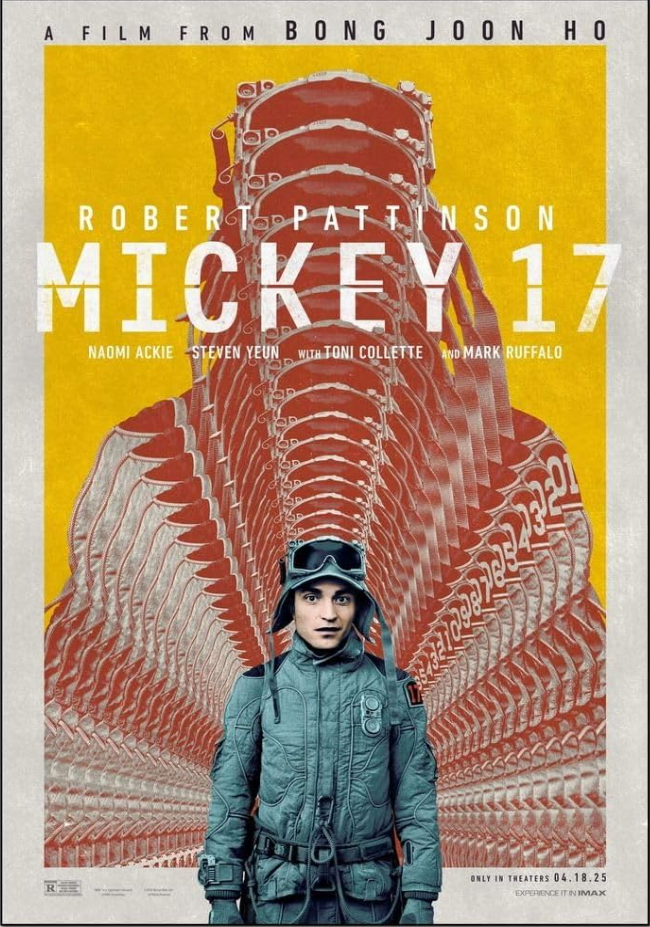
    Mickey 17 (2025) is a quirky sci-fi story based on the 2022 novel Mickey7 by Edward Ashton. The film follows the unlikely protagonist Mickey Barnes, played by Robert Pattinson, as he finds himself in strange circumstances, forced to flee Earth due to owing an obscene amount of money to a mafia boss.

    To escape Earth quickly, Mickey decides to sign up for a space program where he becomes what is called an “expendable.” In this program, he is basically asked to die for a living — however, he always wakes up a few hours later after being reprinted. One day after surviving a near-death experience, he comes face to face with himself.

    I saw this with a group of friends in Arcata, and we were sorta a mixed bag in how we felt about the film. I, however, enjoyed it quite a bit.

    Pattinson’s performance unquestionably shines in this film. I don’t know what has gotten into Pattinson that’s got him doing a weird little accent/voice in his recent movies like this one and The Boy and the Heron (2023), but I am here for it!

    This film also brings up some interesting philosophical and political thinking points. 

    What does it mean to die if you know you’re gonna just wake up again? Would you still fear death, or is it scary every time? If cloning technology like this existed, how would the government use it? All questions were answered to some degree, in a surprisingly poignant way.

    Bong Joon Ho is essentially the ruling king of cinematography that centers class consciousness and wealth redistribution — “Eat the Rich” cinematography in Layman’s terms. I would say Mickey 17 and Joon Ho’s earlier work in Parasite (2019), and especially Snowpiercer (2013), demonstrate that point.

    Mickey 17 and Snowpiercer are particularly comparable since both films are based on sci-fi novels and have a theme of a lower class overtaking the oppressive upper class. If you liked Mickey 17, try Snowpiercer for your next movie night!

    Naomi Ackie also proves herself to be a great supporting actress as Nasha Mickey’s significant other. This was my first time seeing Ackie in anything besides Star Wars: The Rise of Skywalker (2019), so I didn’t really have any expectations for her performance, but she really stood out to me in this film. I hope to see more of her in movies to come.

    Steven Yeun and Mark Ruffalo were also great, but I’ve seen enough from them in quirky sci-fi to expect a great performance from both — exemplified with Yeun in Nope (2022) and Ruffalo in Poor Things (2023).

    To conclude, go see Mickey 17 before it leaves theaters, it’s a fun watch you won’t forget anytime soon.

    Julia is a journalism major at Cal Poly Humboldt. She loves film and is a regular on Letterboxd. To quote Robin Williams in her all-time favorite movie, Dead Poets Society, “The powerful play goes on and you may contribute a verse. What will your verse be?”

  • Jack off, Squatch on. Change our mascot

    Jack off, Squatch on. Change our mascot

    We need to leave our problematic mascot behind and embrace local legends

    By Jess Carey

    Mascots are a staple of American college culture. Easily reproducible and widely circulated, mascots are a quick and easy way to publicize and create connections. If a picture is worth a thousand words, then the images we choose to represent ourselves should be intentional reflections of our values. A mascot change would steer us away from celebrating colonialist narratives. Sasquatch, or Bigfoot, is a beloved local legend whose image would better represent the values of the campus and community at large.

    The redwood logging industry and its lumberjacks built Humboldt County as we know it. From the 1800’s onwards, settlers poured into the North Coast seeking fortune from the new red gold. The redwoods with their unparalleled height and size presented an irresistible opportunity for exploitation. A dark undertone of violence and exploitation took root simultaneously with the influx of settlers to the region, and left brutal scars on this land and in the memories of its people.

    The Native American Health Commission has a list of over 100 documented violent incidents in the greater Humboldt region alone between 1850 and 1870, with an estimated death toll of 2,278-3,816 documented individuals. The few survivors of the Tuluwat Island massacre in particular were forcibly relocated to Klamath and other reservations, while their land was desecrated and its resources were squeezed out like water from a sponge. Alongside blatant genocide, the forests were decimated, with only 5% of the original old-growth redwood trees remaining standing today. The same individuals who perpetrated a genocide and destroyed old-growth forests are those whose legacy we have chosen to represent our campus.

    Lucky the Lumberjack has deep roots in campus history, and this paper itself. Humboldt State Teachers College was renamed Humboldt State College in 1935. The lumberjack mascot was adopted the next year. Our paper has been dubbed The Lumberjack since 1929. Lucky continues to be one of the first images that comes to mind when people think about the campus. T-shirts and plastic stickers of muscly, hairy, white men wearing red flannel are mailed out all over the country to prospective students. A cardboard cutout outside the campus store is clad in suspendered denim with one leathered boot on a redwood log and an axe in hand. An animated foam and plastic caricature dances at competitions and events, the grotesquely cartoonish image of a colonizer and usurper fabricated into a costume, prancing on land that was stolen and soaked in blood.

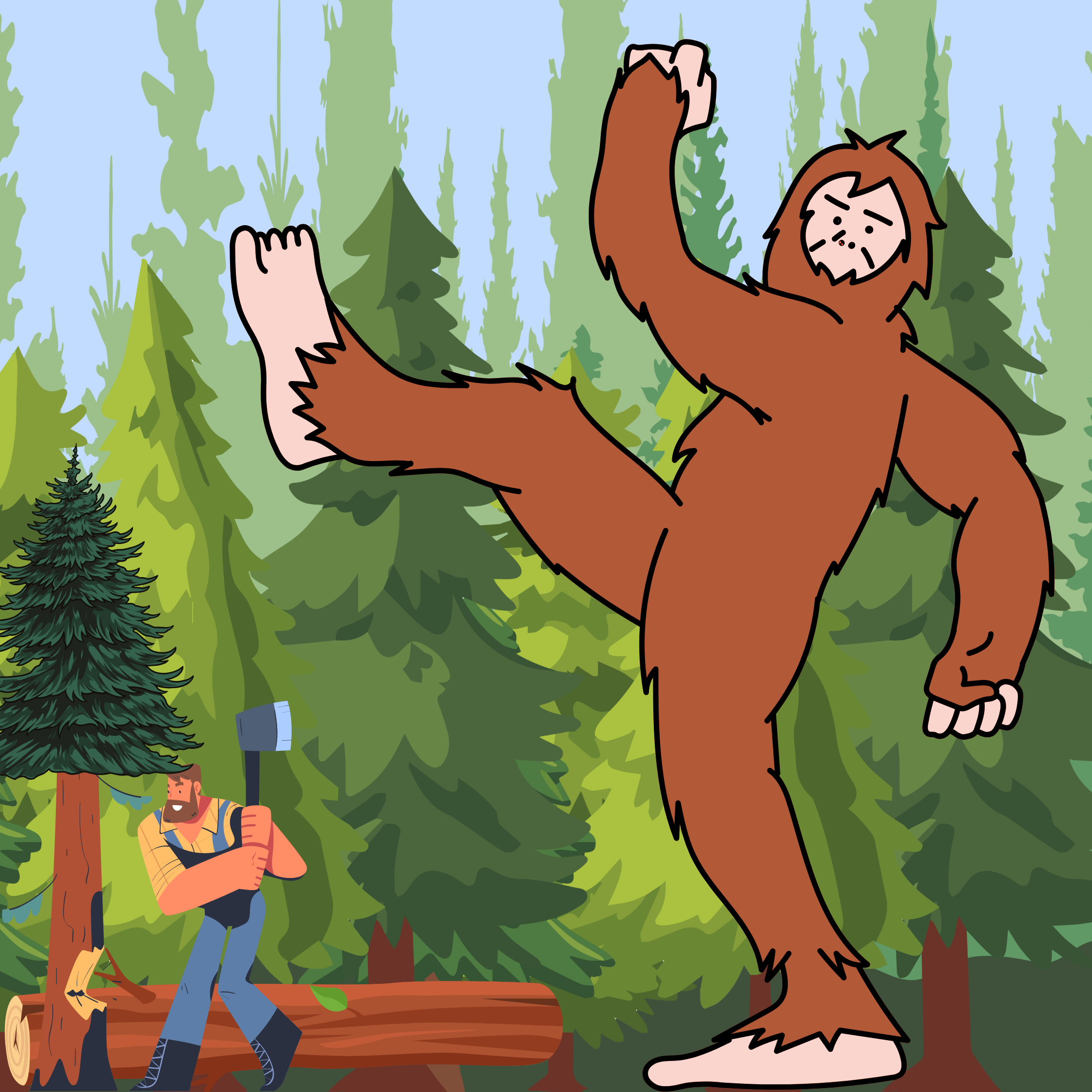
    Consider Sasquatch as an alternative. The word Sasquatch arises from the term sasq-ets, which means wild-man or hairy man in the Salish languages of Native peoples from the Pacific Northwest. The image of Sasquatch celebrates the folklore of Northern California. The common term “Bigfoot” originated locally in a 1958 article in the Humboldt Times describing intriguing large footprints found along the Trinity River. The infamous 1967 Patterson-Gimlin film was recorded just north of Humboldt County at Bluff Creek, a tributary of the Klamath River. The nearby town of Willow Creek is the self-proclaimed “Bigfoot Capital of the World.” The image of an aloof hairy giant with outspread arms, mid-stride and confident, turning to face the camera over its shoulder remains an iconic part of local culture.

    While several other major American colleges have lumberjack mascots, no one has Sasquatch. Our campus is uniquely located in the heart of Bigfoot’s territory, and Sasquatch’s story and legend inspire whimsy and a connection with nature. This novel move would set Cal Poly Humboldt apart and better reflect our values of sustainability, connection with nature, and accountability. Making the shift to Sasquatch as our mascot would foster a more relatable campus culture while celebrating our land and its stories, solidifying our identity, and unifying our community.

    Jess Carey is a senior at Cal Poly Humboldt, majoring in biology and double minoring in botany and journalism, and the science editor for The Lumberjack. They are passionate about telling stories that are relevant to the community, branching their interests in science, music, and the arts.

  • Finding joy and employment in the art industry

    Finding joy and employment in the art industry

    By Griffin Mancuso

    I have only been angry once after being told art was a fruitless pursuit. I was sitting in a square classroom decorated with prints of the U.S. Constitution, previous presidents, and the U.S. flag. At the front of the classroom was my 8th grade history teacher, who would practice his golf swings while we worked and was not as good at hiding his republican beliefs as he thought he was — he was also a bit of a hater.

    He decided to go on a 10-minute lecture about how pursuing art as a career isn’t worth the effort and won’t make you enough money to live off of, even if you do get a job. Not practical, he said.

    Eight years later, I am at a California College Media Association awards banquet in Long Beach. I am wearing a gaudy southern dress shirt and I am watching the projector screen at the front of the room as some of the best journalists in the state are recognized for their efforts.

    “First place [for best illustration], Cal Poly Humboldt’s The Lumberjack!” the host announced.

    I completely lose my strength and start laughing, slumped against the table as the image of my burly bear lumberjack wearing red fishnets is displayed for the entire state to see. Practical? Maybe not. But I have never heard so much laughter from the audience in all three years I’ve attended that conference.

    The Situation with Oversaturation

    Us artists have probably heard countless times that the art industry is “oversaturated” and that finding success to the point of earning a comfortable living wage is nearly impossible, or just comes down to dumb luck. However, the Bureau of Labor Statistics (BLS) reports that art and design occupations are projected to grow at about the same rate as other occupations from 2023 to 2033. About 87,900 openings are projected each year, and the median annual salary in May 2023 was $51,660. This statistic, of course, doesn’t include freelance artists who have ascended beyond the bounds of corporate work.

    The BLS reports that the top three careers that are facing decline in the next 10 years aren’t even art-related. Word processor and typist jobs are predicted to decline by 38% from 2023-2033, roof bolting and mining jobs will decline by 32% and telephone operator jobs will drop by 26.4%.

    Of course, there are far more than 87,900 artists in the U.S. The BLS’s data also applies to a wide range of occupations like interior designers, art directors and even florists. If you look into more specific positions like graphic designers, the numbers are a little less hopeful. Some positions are going to be highly competitive — who hasn’t wanted to be a storyboard artist at one point? — but saturation in the art industry isn’t equally distributed. 

    The Need for a Niche

    My cunty lumberjack taught me a valuable lesson about finding success in art — you have to like what you’re doing, and you have to find your niche. There’s a reason fursuit makers are swimming in their pool of gold coins like Scrooge McDuck. If you force yourself to cater to a market you’re not that passionate about, you are going to be miserable and it is going to show in your work. If it did work, we’d all be making fursuits.

    One of the perks of working in art is that almost every facet of society needs it. An artist designed the McDonald’s logo, an artist created those weird sparkly Humboldt crosswalks in Arcata and an artist designed the packaging of your cough drops you’ve been inhaling for the last week. Your “niche” can be as niche as it gets, even if it doesn’t sound that cool when people ask you what you do for work.

    I will forever encourage artists to explore different areas of the art industry because they may unexpectedly find their new passion. Someone needs their album covers designed, someone needs a visual director for the new line of Kanha edibles, and for me, someone needed a top fold design for a Valentine’s Day newspaper. If you can’t find a job that you’re really interested in, you can create your own. There are plenty of people who make a living off of selling their own products and commissions, and there’s an immense joy to be found in seeing people wearing or using your art.

    That obviously doesn’t mean you have to abandon your current art pursuits, but it may not be the thing that’s making you a living wage. And who says you only have to have one job? That being said, please girlboss responsibly.

    Make Your Own Luck

    Like most jobs, getting into art isn’t going to be easy. Finding your speciality and building a portfolio is a skill in and of itself and will require a lot of research, perseverance, and trial and error. Unfortunately, sometimes it is pure dumb luck. I had no idea there was a market among college students for sexy, burly lumberjacks in crop tops and booty shorts, but luck in this industry isn’t fully based on chance. It’s determined by what you believe you’re capable of and if you’re willing to take your ridiculous ideas to the moon. That one fit of creative passion you got at 3 a.m. may become a pivotal point in your career.

    Above all, find something that drives you and don’t let go of that. If you’re like me, maybe it’s to spite your 8th grade history teacher. Maybe it’s buying that cabin in the woods and smoking a pipe while you paint the forest landscape. Maybe it’s just to make a comfortable living in this capitalist landscape. Let that motivation propel you forward as you keep searching for your place in this ever changing industry. It may just lead you to something unexpected.

    Griffin Mancuso is a journalism major and one of the managing editors of The Lumberjack. He has written stories for every category in the paper, but particularly enjoys writing human-centric stories. He has also freelanced for the North Coast Journal and News Decoder.

  • Genrephobia is a disservice to you

    Genrephobia is a disservice to you

    By Kaylon Coleman

    There’s a good chance that nine out of the ten of you who read that headline immediately thought about country music, and with good reason too. I feel like almost everyone has a genre of music they don’t generally listen to, which is fine. But let me ask you this, how many people actually give a genre a chance before cutting it off?

    This quandary stems from my problem with generalizations as a whole. I believe that generalizations perpetuate certain ideologies that may or may not be true about a certain concept or population. And while this principle extends to way more than just personal preference of music genres — which is a whole other can of worms — I want to talk specifically about how not opening yourself up to new music, because of your own generalizations, may be doing you harm.

    Now don’t get me wrong, I believe if you try something out and it isn’t your cup of tea, more power to you. I respect it – you gave it a chance. But, if you’ve heard a few rap songs, or a country song or two, and immediately decided that you weren’t gonna listen to the whole genre, I think you’re doing yourself a disservice.

    An example of an artist that I didn’t quite grasp until recently was ian. I didn’t get the hype at first, I thought he was a white boy who was using rap as a gateway into the music industry similar to how Post Malone did. But after Lil Yachty’s performance of Hate Me at my recent trip to the Tyler, The Creator concert, it finally clicked for me. That wasn’t my first time hearing the song. It wasn’t even my first time hearing it live, but this time I finally got the hype. Since then, I’ve given ian another chance, and I can say that I thoroughly enjoy some of his music, and even changed my perspective on him as a person.

    There are so many ways that you can expand your music taste, even here in Humboldt. Tuning into 105.1 KRFH at any given time opens you up to a variety of different tastes and sounds from your local college students. Stopping by People’s Records in the plaza and utilizing one of their listening booths is another way to expand your music taste. 

    Music is so expansive, and that’s what I love about it. With a nearly never-ending amount of music to choose from, there’s something out there for anyone and everyone to enjoy. That’s why when I hear someone say, “I don’t like this genre” or “I only listen to this one specific thing” and they haven’t tried to venture outside of that, I feel like they’re missing out on potential hidden gems. I don’t like country, but there are some country songs that I absolutely love like Chris Stapleton’s Tennessee Whiskey (especially the T-Pain cover) and I’m Gonna Miss Her by Brad Paisley.

    I want to extend this point by saying that if you find yourself only listening to one genre of music, I implore you to venture outside your comfort zone. You’re closing yourself off from a near-infinite pool of songs to listen to.

    My point being, before you make the decision on whether or not you like or dislike a whole genre, open yourself up to more than a couple songs. It might not change your opinion on the genre as a whole, but you may actually find some songs you enjoy.

    Kaylon Coleman is a junior journalism major with a concentration in news and a minor in Psychology and Communications. He is the Social Media Assistant Manager for LJ. He is also the president of the Black Student Union at CPH, social media coordinator for the Umoja Center, and a part-time radio DJ.
  • Bridge the gender listening gap

    Bridge the gender listening gap

    Break up with your boyfriend, his Spotify Wrapped was only men

    By Mia Costales

    There’s a well-known saying that goes, “The eyes are the window to the soul,” and I’m here to tell you that’s bullshit — it’s your playlists. I’m a firm believer that the music you listen to is a direct reflection of who you are as a person, the perfect glimpse into your soul. Sure, a Tinder profile or Instagram page can provide you with a preview of what you’re getting yourself into. In Humboldt it’s mostly just some guy posing with a dead fish, some guy gently caressing a guitar, or what have you. But once you’ve tapped into arguably the most crucial information — someone’s music taste — that’s when you’ll know if he’s a keeper. Chris Brown, Jason Aldean, Drake and not a single woman to be found? GIRL, RUN!

    According to Spotify’s 2023 listening data reported by everynoise.com, 31.9% of female listeners streamed female or mixed-gender artists, while only 19.2% of male listeners streamed female or mixed-gender artists. This statistic is disappointing to say the least, especially when there are so many prominent female artists topping the charts. Artists like Chappell Roan, Sabrina Carpenter and Billie Eilish consistently placed in the top ten of Billboard’s 2024 Hot 100. So why is it so hard for men to listen to women artists? Senior kinesiology major Nick Weil chalked it up to prevalent misogyny within the scene.  

    “Men should diversify their music taste,” Weil said. “A lot of male-dominated music is misogynistic and upholds those values and the patriarchy, which is really disappointing. There is so much to explore in the world of music and women have been crucial to the development of it, and so not listening to female artists is like shooting yourself in the foot.”

    Starting at the source is the only way to level out the gender listening gap. So many local music scenes are grossly inaccessible for women, and especially queer women and women of color. While Arcata’s scene may be better than most, we still have a long way to go. Practically every femme has a similar story of feeling unsafe or unwelcomed in their local music scene, and it’s up to the men and masc-presenting people to create a non-hostile environment that not only accepts femme-produced art, but celebrates it. However, it is also up to femmes to allow themselves to take up space, even if it makes people uncomfortable. It’s up to us to not take no for an answer and advocate for female voices in spaces where they’ve been historically suppressed. 

    Stream more female artists. Go to your local record shop and buy their albums. Support women at shows. Listen to your local femme DJs on the radio. I implore you to step outside of your comfort zone and consume femme-produced art, because the biggest red flag is a man who doesn’t listen to women. 

    “I think that it’s important for us all to challenge ourselves to listen to more underrepresented artists,” Alexis Roberts, a junior music major, said. “I’d challenge us all to find a new female composer, rockstar, blues player, jazz artist today. Because everyone’s voices should be heard and a lot of these voices have been stifled historically. Listen to more POC, queer, disabled and femme sections of all genres.”

    Mia Costales is a senior journalism major and the Life & Arts Editor for The Lumberjack. With a background in music performance, she hopes to combine her love of music and the arts with her passion for localized news and activism to bring thoughtful and informed stories to the public. 

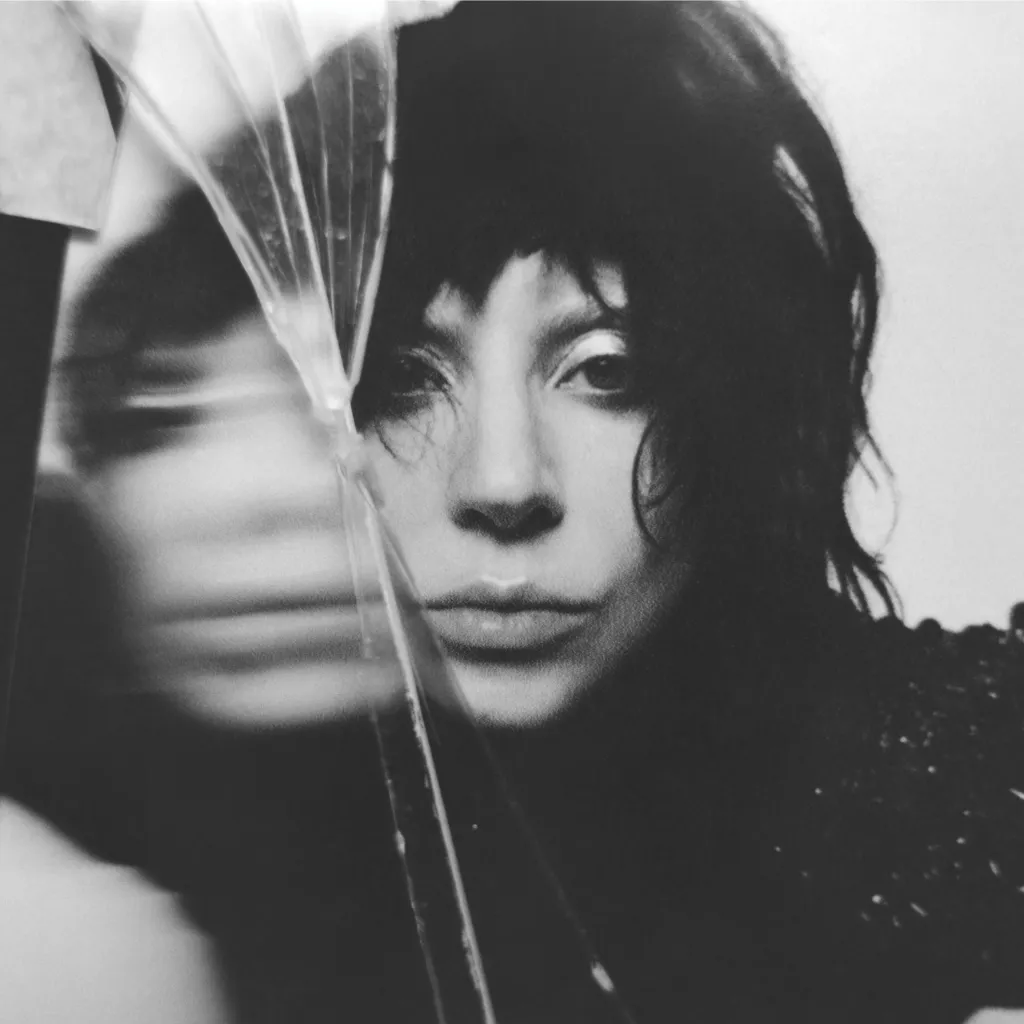
  • Lady Gaga better have a good legal team, because Mayhem sounds a lot like the album of the year

    Lady Gaga better have a good legal team, because Mayhem sounds a lot like the album of the year

    A comprehensive review of Lady Gaga’s seventh studio album that had me levitating off the ground

    By Julia Kelm

    Mayhem (2025) is Lady Gaga’s long-awaited seventh studio album. Gaga returns to her dark dance pop roots, making little monsters relieve their childhood from a new, more mature perspective.

    I have been a fan of Lady Gaga since I was 13, obsessed with her music and her as an ethereal being. I own all her albums on vinyl (besides Mayhem), and can probably guess any of her songs within the first 5 seconds of them playing. So I hope that’s enough credentials for me to be considered a true “little monster.”

    Here’s my track-by-track opinions:

    1. Disease: 

    This is what started it all. It’s dark, it’s sexy, it’s bangin’, dare I say perfect? I think Disease is probably my number one for this album in the amount of times I have this on repeat. The chorus just sent me to another plane of existence. She really is the queen of pop (Sorry Madonna, you had your moment.)

    1. Abracadabra:

    When Gaga says her name in a song, you know you’re witnessing peak. Abracadabra to me feels like it could’ve been a track on The Fame Monster (2009), which I feel like Gaga fans have been begging for, for years (excluding, of course, Artpop act 2.)

    1. Garden Of Eden:

    Another steller, perfect Gaga song to add to this album. Gaga can craft a hook and chorus like no other, I swear to fuck. When she sings, “I could be your girlfriend for the weekend. You could be my boyfriend for the night,” my soul left my body in the most heavenly way, and my feet floated off the ground. And relive a truly religious experience every time I turn it on as I walk around campus.

    1. Perfect Celebrity:

    This song makes me wanna drive a car off the bridge that connects Arcata to Eureka, in how crazy and alive I feel when I listen to this song. The rock-esque instrumentals in this track is a nice little switch-up from the heavy dance pop we heard in the previous three songs.

    1. Vanish Into You:

    I’m pretty sure I levitated listening to this song too. I’m sorry if you were expecting a more objective review, but if you weren’t having a holy experience listening to this album, then you probably aren’t reading this review anyways.

    1. Killah (feat. Gesaffelstein):

    The opening to Killah is what pure ecstasy sounds like. The little guitar riff that sounds like the guitar in Need You Tonight by INXS makes me so happy. The general harking back to 90s and 80s influential musicians is just great, and I need more. MORE!

    1. Zombieboy:

    Okay disco vibes, say less. Zombieboy’s opening also reminds me of Hollaback Girl (2004) by Gwen Stefani, which I didn’t realize I needed until I heard this. I can feel the TikTok trends to this song in my bones, wait and see.

    1. LoveDrug: 

    I yearn for the club when LoveDrug starts playing. I need twirling room, and at least two gin and tonics inside me, and then I think I’ll finally experience true happiness. I’ve been too stressed, I need to dance to Gaga now or I might explode.

    1. How Bad Do U Want Me:

    I heard someone say this song sounded like Taylor Swift, and now I can’t unhear it. Which I have to admit, ruined the song for me slightly. Regardless, I’m gonna call this a banger and move on, because Gaga can do no wrong.

    1. Don’t Call Tonight:

    For me this is a tad skippable, but it’s still Lady Gaga, so I won’t say it’s bad, because she’s never made a bad song. It just doesn’t stand out to me when compared to all the hot liquid gold that this album is swimming in. 

    1. Shadow Of A Man:

    I think Michael Jackson was somehow resurrected for this song to be made, because it sounds just like something he would’ve made in his prime. When Gaga sings, “ ‘Cause I won’t be used for my love and left out to cry” in that fast tempo, I absolutely lose my mind. Dare I say…banger?

    1. The Beast:

    This is the one song on this album I don’t really care for. Something about it feels like a song that would play in a shitty Wattpad movie sex scene. It’s campy, and fun though, so again, I won’t say it’s bad. Just not my favorite, and I probably will not listen to it as often as I do the rest of this album. 

    1. Blade Of  Grass:

    Gaga’s solo ballad for this album is quite good, although I wish it felt a little more like Speechless, off of The Fame Monster. Although I still had a good time with this track, it’s just not on repeat for me at the moment. 

    1. Die With A Smile:

    I love this song so much… as a stand alone track. I sorta wish Blade Of  Grass was what ended this album for me, but I’m not angry that it’s here either. Regardless, it’s a good song and not a terrible way to close out this stellar album.

    Julia is a journalism major at Cal Poly Humboldt. She loves film and is a regular on Letterboxd. To quote Robin Williams in her all-time favorite movie, Dead Poets Society, “The powerful play goes on and you may contribute a verse. What will your verse be?”

  • More than beer, trucks and propaganda

    More than beer, trucks and propaganda

    In defense of country, the most misunderstood music genre

    By Barley Lewis-McCabe

    Unlike most genres, country music has a very specific, unsavory reputation. In the modern day it’s associated with right-wing propaganda, Bud Lite, electric guitars, and the worst guy you know playing Toby Keith on TouchTunes jukeboxes. But it wasn’t always like this. Country music got its start with Jimmie Rodgers, a dirt poor brakeman who started playing music at a young age when he was taught blues guitar techniques by black railroad workers.

    His biggest musical influences came from the traditionally black music genres gospel and folk. His adoption of them led to his distinct playing style and vocalization — such as the yodel which was adopted and essentially created the genre known as country music. In 1924, at the age of 27 he was diagnosed with tuberculosis as a result of his work on the railroads. It was then that he decided to focus more on his music.

    Rodger’s work would directly inspire the likes of Hank Williams, Roy Acuff, and folks like Merle Haggard and Bob Dylan later down the line. Country was the music of poor folks in the south. It wasn’t seen as the monolith it is today, and through the honkey tonk-age up until the era of Elvis, country music was associated with dirt and grime over rhinestones and shine.

    The change in country music was visible in the 60s, when the genre was essentially split into two groups: Bakersfield sound — an evolution of honkey-tonk that focused heavily on a central beat with drums and eclectic guitars — and the Nashville sound, favored at the Grand Ole Opry, which used more refined string instruments and would oftentimes carry the beliefs of the Nashville establishment. One fueled by the success of the Opry to above all else make money. 

    In the south, country became more visibly right-wing with a series of pro-Vietnam war songs becoming chart toppers, and country music being used as a central fixture in both Richard Nixon and radical segregationist George Wallace’s 1968 presidential campaigns. 

    George Wallace was the first major politician to capitalize on country music’s burgeoning popularity, bringing out country performers to play at his rallies in order to attract people, and connecting his campaign intrinsically to the genre. According to an NPR article, Wallace once assured an aide that country music would help him win the election.

    “The people who like country music will vote for me,” Wallace said.

    Wallace would inevitably lose the election to Nixon, but he attracted a large block of middle class southern white voters, whom Nixon won over in 1972. Nixon adopted country music just as much as the genre adopted him. The 1968 anti-hippie song Okie From Muskogee by Merle Haggard became the unofficial theme song for the Nixon campaign. 

    At the same time, a more left-wing folk revival was at its height, in part due to country artists like Johnny Cash’s embrace of the subculture. While the 70s saw right wing prominence in country music, there were also some great non-political songs by artists like Jerry Reed (my personal favorite), John Denver and Kenny Rogers. But country had begun to lose sight of what originally made it so special — its authentic connection to the music. In my opinion, a lot of prominent country musicians today just hopped on the bandwagon in order to make money, not because they care about the genre. This is why country gets such a bad rap, poser cowboys who don’t know what they’re doing. Waylon Jennings talked about this shift in the song Are you sure Hank done it this way, a critique of the rhinestone-heavy culture.

        Country music’s bad association comes prominently from a lack of understanding in what the genre is, and could be. So if you will, open your mind and try something new. 

    Here are some country artists I personally recommend: Dick Curless, Hank Williams, The Highwaymen, John Prine, Willie Nelson, Blaze Foley, Glenn Campbell, Ferlin Husky, Don Williams, C.W. McCall, Jimmy Buffett, George Jones, Buck Owens, Linda Rondstadt, Chet Atkins, Marty Robbins, Roger Miller, Billy Strings, Nick Shoulders, Tyler Childers, Dale Hollow, Old Crow Medicine Show, Sturgill Simpson, Sierra Ferrell and Willi Carlisle.

    Barley is a freshman journalism major, Photojournalist, and untraditional reporter, they like to cover interesting stories that center on social change, and human impact.

  • I didn’t enjoy Captain America: Brave New World and I’m tired of pretending I did

    I didn’t enjoy Captain America: Brave New World and I’m tired of pretending I did

    By Kaylon Coleman

    Before I start off this review, I want it to be known that I am a huge Marvel Cinematic Universe fan. I have kept up with all the movies, all the shows — except for What If…? — and have participated in and won multiple MCU-related trivia competitions. So when I say Captain America: Brave New World is incredibly bland, it’s coming from someone who’s been around the block. I’ll admit that I even beefed with someone in the Instagram comment section about what a letdown this movie was. Now don’t get me wrong, bland doesn’t necessarily mean bad. That title is reserved for movies like Thor: Love and Thunder and The Marvels. And while not an upright dumpster fire of a movie, I still left Brave New World disappointed — and, actually, a little peeved off. 

    Going into this movie, I had already seen its “rotten score” on Rotten Tomatoes via the critics. I really didn’t want to believe them and wanted to be met with a spectacle that reflected the feeling and atmosphere I got from the trailers. But alas, Marvel has once again let me down by meeting my subpar expectations.

    To start off, however, I’d like to highlight a couple of the things I did like about this movie. Carl Lumbly’s portrayal of Isaiah Bradley was incredible in my opinion. His relatively short screen time made each appearance on the screen that much more impactful. He genuinely tugged on my heartstrings and I feel like his performance is worthy of an award of some kind. 

    I love Anthony Mackie — it was great to see him take on the role of Captain America on the big screen, and in Black History Month, no less. Chris Evans left some pretty big shoes to fill, but what’s great about Mackie’s performance is that he isn’t trying to be Chris Evans’ Captain America. He’s embodying his own version of the character, which I feel was reflected pretty well in the film as well.

    Lastly, the onscreen chemistry between Danny Ramirez — who plays Joaquin Torres, the new Falcon — and Anthony Mackie was fun to see. I’m still trying to care for Joaquin as a character, but this movie was a step in the right direction. It was also fun seeing Harrison Ford in the MCU. 

    Now that that’s out of the way, let’s get into the multitude of reasons why this movie let me down. Minor spoilers ahead. 

    Right from the jump, we’re greeted with what is probably the most cliché and irritating way to give an exposition dump in my opinion — a news segment where the anchors talk about events that have happened in the past. This trope is just so unoriginal and bland, and when I see it, it makes me think that either the writers don’t trust their audience enough to know the context of the movie they’re walking into, or they just don’t care to keep up with all the movies and TV series writers are pumping out.

    I also feel like the movie was leading up to nothing. The whole movie follows Sam as he tries to uncover the mystery of who was behind the attempted assassination of the president, and framing of Isaiah Bradley, which viewers may or may not have already known was the Leader going into the movie. So, by the time Sam figures his plan out and the Leader is arrested, we’re left with one last act in the movie where we figure out what the Leader was truly up to, which was creating Red Hulk. The only problem is everyone also knew Red Hulk was going to be in the movie. So if you’re structuring your movie as a mystery thriller where the true intentions of the bad guy aren’t revealed until the very end, but we already knew what the plan was, how does that entice and intrigue the audience?

    Not to mention, Red Hulk got a grand total of probably five minutes of screen time, and who knows when we’ll see him again. It took over a decade and a half for them to follow up on the Leader, and four years for them to follow up on the Falcon and the Winter Soldier series/The Celestial from the Eternals.

    There are a couple more minor details that just didn’t sit right with me, but the last major one was how there was no faith in this movie from Marvel Studios, which plays into a bigger theme overall. A repeated pattern I’m noticing from the studio is they like to bank on previous projects or people — a.k.a. nostalgia factor — to try and curry favor with the audience. Why reveal that Liv Tyler would reprise her role as Betty if it were for a split second? Why show that Red Hulk was in the movie if the whole plot leads up to their reveal? All these properties coming out such as Secret Invasion or this movie are being described as having “Winter Soldier vibes,” (which is arguably one of the best MCU movies to date), when in reality the studio sets insanely high expectations, just for them to fall flat footed trying to replicate that same magic, leaving their audiences disappointed.

    The general consensus for the movie seems to be that people are enjoying it, and if you’re one of those people, I’m happy to hear that, in all honesty. It puts more steam under Marvel’s coals. I just hope to see more heart in future MCU projects. Hopefully The Thunderbolts will satiate my expectations.

    Kaylon Coleman is a junior journalism major with a concentration in news and a minor in Psychology and Communications. He is the Social Media Assistant Manager for LJ. He is also the president of the Black Student Union at CPH, social media coordinator for the Umoja Center, and a part-time radio DJ.
  • As big as the what…? An in-depth breakdown of the Superbowl Halftime Show

    As big as the what…? An in-depth breakdown of the Superbowl Halftime Show

    By Kaylon Coleman

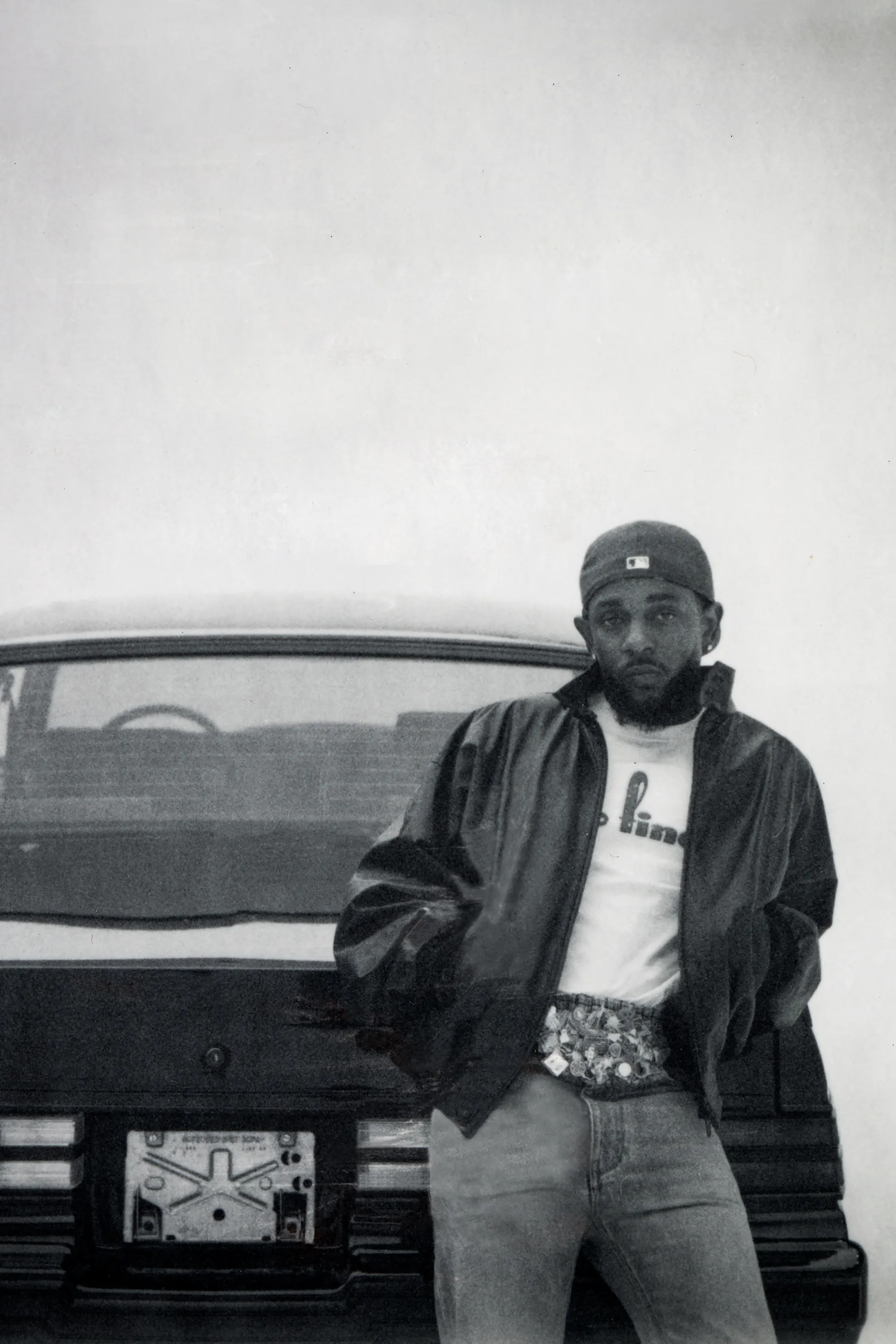
    If you were up to what a majority of Americans were up to Feb. 9, you watched the hopes of a Chiefs three-peat crash and burn miracuously, leading to an Eagles Superbowl win. I’m personally over the moon knowing I can tell my grandkids one day that the Chiefs didn’t completely dominate the league in my college years. Along with a spectacular game for us Chief haters, what I really want to talk about is the Kendrick halftime show and all the hidden implications, details and inferences we can take away from it.

    To kickoff, we’re introduced to Samuel Jackson as “Uncle Sam,” — which I didn’t know I needed ‘til I saw. I believe this is supposed to be the same Uncle Sam featured in Kendrick Lamar’s To Pimp a Butterfly, which was used to represent the government, racism and corruption. Sam talks about the “great American game,” which could correlate back to football and the Super Bowl, but I think is meant to represent a box of sorts, in which you must play by the rules or face the consequences.

    Kendrick starts his performance with a snippet of an unreleased song from his new album GNX. He concludes the snippet saying “The revolution about to be televised, you pick the right time but the wrong guy.” This leads us into his new song Squabble Up. That is, until Uncle Sam interrupts once again, this time exclaiming “Too Loud, too reckless, too … ghetto,” asking Lamar if he really knows how to play “the game” and, if so, to tighten up. This is commentary on how — in my experience — Black people are told to fit into the standards set by the white patriarchy. Uncle Sam is criticizing Kendrick’s performance by telling him it’s unruly, and implores him to perform the “proper” way.

    We then see Kendrick and background dancers form the American flag with Kendrick standing solely in the middle, dividing the flag. Kendrick uses this imagery to show a country divided.

    Kendrick then takes us back with a couple of his old songs including Humble, DNA and Euphoria before leading us into a rendition of Man at the Garden. We are shown men behind Kendrick all dressed in white, 16 to be exact. I believe these figures symbolize each friend Kendrick has lost growing up, a total of 16. 

    Uncle Sam interrupts once again, claiming that Kendrick has cheated the system by bringing his homeboys up with him – the “old cultural cheat code,” so he asks the “scorekeeper,” to deduct one life for seemingly beating the system. The “cultural cheat code” that Uncle Sam is referring to follows a long pattern of history in America: When someone from the culture is boosted to the position of an icon, leader and someone who brings people together, the “scorekeeper” deducts one life. Martin Luther King, Fred Hampton and Malcolm X are a few examples. The “cultural cheat code” is that we as a people are stronger together, which is a no-go. We’re left to interpret who the “scorekeeper” is in this scenario, but I find it interesting that Uncle Sam looks right at the camera when delivering this message. 

    We’re then taken into peekaboo along with a pump fake of Not Like Us, with Kendrick claiming he’ll think about it because, “you know they love to sue,” a nod to how Drake decided to sue UMG for defamation and harassment due to the success of the song. Kendrick decides to slow it down instead, prompting Uncle Sam to say he’s lost his damn mind. We’re then introduced to SZA — the first of Drake’s exes to be brought on stage — as the duo delivers a fabulous performance of Luther and All the Stars 

    At this time, we see the background performers start to unify once again, symbolizing a reunited America. This along with the performance delights Uncle Sam. “That’s what I’m talking about, that’s what America wants, nice and calm.” He then says “You’re almost there, don’t mess this…” before being cut off by Kendrick’s Not Like Us — for real this time.

    Kendrick then delivers the most powerful part of his performance, laying it all out on display summing up the entire performance.

     “It’s a cultural divide, Imma get it on the floor, 40 acres and a mule this is bigger than the music, yeah they tried to rig the game but they can’t fake influence.” 

    What Kendrick is referring to here is the promise of 40 acres and a mule to formerly enslaved African Americans after the Civil War, which for many families was never fulfilled — the promise was bigger than the prize. The “game” was set up against African Americans, by means of racism, segregation — the list goes on. But even though the “game” was set up in such a way that people of color weren’t built to succeed in this country, white people can’t fake  — or deny — the influence.

    Kendrick also calls back to his song Wesley’s Theory off To Pimp a Butterfly, in which Uncle Sam asks the same question. 

    “What you want you? A house or a car? Forty acres and a mule, a piano, a guitar? Anything, see, my name is Uncle Sam, I’m your dog.”

    We’re then taken into Not Like Us finally and I can say I was genuinely shocked to see Kendrick say Drake likes them young. For anyone saying being hateful doesn’t prosper, just remember Kendrick won five Grammys and a Superbowl performance off of a diss track. 

    During the performance, we get a cameo from Serena Williams — the second of Drake’s exes to come out —  doing the Crip Walk to Not Like Us. While I believe this is definitely a shot at Drake considering the history between the two and Drake’s recent obsession with Serena, even revealing in his 100 gb music drop last year that his song Too Good with Rihanna was about the tennis player, this also provides commentary on the controversy that Serena faced when performing the same dance during the Olympics. Everyone supports Serena when she fits into the box that people have set for her, playing tennis and being formal, but once she expresses herself in a way that contradicts that image, she is ridiculed and criticized, which is what Kendrick is trying to say.

    We then get one last cameo from DJ Mustard himself, while Kendrick switches to his last song tv off. Once Kendrick’s performance is over we see flashing lights on the stage saying “Game Over,” which wraps Kendrick’s thematic message up in a nice little bow, as now that he’s shed light on the “Great American Game,” it’s game over – turn his tv off.

    Any way you slice it, there are definitely a lot more clues to dissect from Kendrick’s halftime performance, but one thing is definite — Kendrick is the G.O.A.T, end of story.

    Kaylon Coleman is a junior journalism major with a concentration in news and a minor in Psychology and Communications. He is the Social Media Assistant Manager for LJ. He is also the president of the Black Student Union at CPH, social media coordinator for the Umoja Center, and a part-time radio DJ.
  • Once again, the Oscars snub my favorite films

    Once again, the Oscars snub my favorite films

    By Julia Kelm

    Oscar nominations were announced in the early morning of Jan. 23. It was the first thing I saw once I opened my eyes and unlocked my phone.

    Then, almost immediately, I found myself rolling them at the predictable — yet disappointing — selections for the 97th Academy Awards.

    There are a few things that I’m happy about, but as per usual, I’m mostly mad that all the Oscar-baity, forgettable-whatever films made nominations, while other more deserving films in my book did not. 

    Feel free to throw tomatoes at me if at any moment you disagree with me. For instance, I think adapted scripts based on pre-existing popular media don’t deserve the best picture spot.

    I know this is not a popular opinion, but I think original scripts intended for the silver screen are superior and deserve the highest Academy Award over adaptations of pre-existing stories.

    Don’t get me wrong, I do think Wicked (2024) and Dune: Part Two (2024) deserve nominations such as best visual effects, best costuming, or best actor, just not best picture.

    I would’ve replaced those best picture nominations with original stories like Sing Sing (2024) or Challengers (2024).

    Since I’ve now brought up Challengers (2024), I just want to mention how pissed off I am that Luca Guadagnino received ZERO nominations for both Challengers and Queer (2024).

    Challengers was my favorite film of last year, as it surprised me by how good it was. It should have at least received a nomination for best original soundtrack, and at most a nomination for best original screenplay. 

    Instead, The Brutalist (2024) gets 10 nominations, despite using AI to create aspects of the film. 

    Personally, I think it should’ve been disqualified when that was revealed, but alas, I do not control the academy, no matter how hard I try to blow them up with my mind.

    I’m not even going to say much about the dumpster fire that got 13 nominations. If you know, you know.

    Moving on from my gripes, which I could honestly go on and on about, I am relatively happy about the best actress and actor nominees. Fingers crossed that Demi Moore wins her first Oscar, and I don’t care who wins best actor as long as it’s not Adrien Brody.

    Also, the animated films nominations were all great choices! I didn’t know the Academy had it in them to not put Moana 2 (2024), but they pulled it off.

    Also, Conan O’Brien is hosting the Oscars, which is something I literally jumped up with joy over when I heard the news (I hate you, Jimmy Kimmel).

    Regardless of my opinions, I will be tuning in on March 2 at 4:00 PM PST — this is essentially my Superbowl, considering I hate sports. 

    Julia is a journalism major at Cal Poly Humboldt. She loves film and is a regular on Letterboxd. To quote Robin Williams in her all-time favorite movie, Dead Poets Society, “The powerful play goes on and you may contribute a verse. What will your verse be?”

  • Bush is back – why Gen Z is choosing to go au naturel and embrace autonomy

    Bush is back – why Gen Z is choosing to go au naturel and embrace autonomy

    By Mia Costales

    Say goodbye to hot wax, lasers and razors. Forget spending hours in the shower trying to get that perfect landing strip — you can finally stop shaving your bikini line raw everytime you want to wear a bathing suit. Instead, allow me to present: full bush in a bikini, the newest TikTok trend amongst Gen-Z creators. 

    The trending phrase started after TikTok creator, Sujindah, uploaded a video of them chanting “full bush in a bikini” with increasing excitement. They went on to explain that they were radicalized by an Etsy review of a woman sporting a ‘full bush’ in a bikini. The video currently has over 15 million views and has sparked a new pubic hair trend in Gen-Z favoring a more au-naturel look. 

    This trend has presumably picked up some traction in response to Trump’s return to office, in an attempt to advocate for bodily autonomy and subvert traditional beauty standards. Brooke Stafford, a junior geology student at Cal Poly Humboldt, weighed in on this trend.

    “The times I did shave, it was never for me. It was always as a service to whoever I was with. I don’t think I fully understood that I wasn’t doing it for me, and when I did, I stopped shaving,” Stafford said. “I think shaving culture is quite harmful. Hair is there for a reason and removing it can potentially cause negative health effects.” 

    Stafford also attributed her decision to keep her hair to her belief that you shouldn’t conform to your partner’s preferences.   

    “I also think it’s slightly strange that some people have a preference for hairless partners. Humans naturally have hair and to have an issue with that is, in my opinion, questionable,” Stafford said. “Not shaving has been awesome, it has helped me accept who I am, not who others want me to be.” 

    A prominent reason in feminist circles for keeping body hair is the refusal to participate in harmful patriarchal practices, such as the infantilization of women. Many feminist scholars have theorized that pornography plays a large part in pubic hair trends and helps determine what an attractive, sexually desirable woman looks like at a specific moment in time. Unfortunately, there is a disturbing correlation between sexually desirable traits in a woman and that of prepubescent children, namely submission, higher-pitched voices, and hairlessness. 

    “If the choice to remove body hair is to serve the needs and expectations of anyone else except for the individual’s choice, then it can contribute to ideas like infantilization,” Paul Michael Leonardo Atienza, assistant professor in the department of critical race, gender & sexuality studies said. “Infantilization relates to seeing a person like a child, unable to make their own responsible choices about their bodies. To be sex-positive, we must value all the different forms of bodies in the world, and reflect on how our wants and desires are informed through systems that police and surveil each other.” 

    However, we are starting to see this beauty standard get turned on its head as the decision to keep body hair is getting more and more popular. In a recent poll by Substack author, Jessica Defino, 50 percent of men out of over 14,000 people reported to have no preference for their partner’s pubic hair. Over 71 percent of men reported that they had never been turned off by their partner’s pubic hair. While these percentages may be an assurance to let it grow, most have stopped shaving for themselves.  

    “I used to hate my body hair because I was taught from a young age that it was bad to have body hair, especially while I was swimming competitively,” Valeria Reggi, a senior environmental science major said. “The pandemic hit and cut the last few months of my season short and I decided I was gonna see how long my shit could grow.. It’s also helped me out a lot in exploring my gender fluidity. I learned that I actually didn’t hate my body hair, it was just everyone else that did.” 

  • Intrusive brain

    By Emma Wilson

    Often when love shines

    the clouds cover the sun

    and a storm defines

    but most of the time I live in the fun

    I get in my head 

    but all the time we love 

    I’m reminded that we are the bread 

    sticking together to make sure all is met 

    when the intrusive brain takes away 

    I try to breathe away and remember to set 

    we will be here and sway 

    I’m grateful for everything don’t get me wrong

    my brain just tends to get ahead of the game

    but in this game it is long

    and I’m to blame

  • Shock and awe: How Trump uses fascism to poison democracy and what we can do about it

    Shock and awe: How Trump uses fascism to poison democracy and what we can do about it

    By Griffin Mancuso

    My regular coping skill when faced with a potential looming dictatorship is to keep moving forward and find joy in the little things, but I can’t seem to escape reminders of that orange fuckwad. My dog sport club scrambled to buy all the equipment we might need for this year before the tariffs kicked in, my doctor stockpiled my medication just in case and my dad received emails trying to scare people into quitting their federal job.

    I haven’t felt this level of despair since I was a teenager loaded up on Zoloft. Fear clings in the air like an overpowering Febreze air freshener. Everyone is overwhelmed and afraid. 

    The devil works hard, but fascism works harder. We must remain vigilant and strike a balance between staying informed and not letting Trump’s “shock and awe” tactic overpower us.

    Trump’s Use of The Shock Doctrine

    Naomi Klein explains in her book, The Shock Doctrine: The Rise of Disaster Capitalism, how political figures use times of crisis to push unpopular policies promoting corporate interests and leaving marginalized groups too overwhelmed to organize and resist. While some critics believe the book makes assumptions and oversimplifications of capitalism and its impacts, this idea of economic “shock therapy” mirrors Trump’s onslaught of executive orders.

    Within his first couple weeks of office, he signed dozens upon dozens of executive orders, which impacted everything from access to gender-affirming care, immigration and citizenship, climate change, medical research, and more. In other words, throwing shit at the wall and seeing what sticks. Executive orders, along with memos and proclamations, are ways for the president to shape government policy without going through the legislative process. 

    Executive orders are not laws, and they cannot be enforced in the same ways as laws. However, they do encourage change in the way federal employees interact with the public, resulting in inconsistent enforcement and further confusion. Executive orders also cannot be overturned or require approval from Congress. However, Congress can block some executive orders if they are considered to be unconstitutional or outside the president’s authority.

    Power in Paranoia

    Historically, fascism caters to the dominant cultural group and sells them the idea of victimhood and supposed loss. Trump tells his followers — many of them white, fundamentalist Christians — that immigrants, queer people, and liberalism are a threat to their way of life. By selling the narrative of oppression, he is able to foster a collective rage and fear against an imaginary enemy. The Jan. 6 riots at the Capitol are a result of this method. While he is generally a stupid, bumbling oaf, he’s unfortunately somehow managed to create a charismatic persona that allows him to sell the false promises of fascism.


    Fascism cannot be sustained by one person or one oligarchy, but relies on the establishment of a panopticon. Citizens become their own enforcers, and citizens then behave as if they’re always being watched. On Jan. 22, federal employees received an email from the Trump administration requiring them to report any secret Diversity, Equity, and Inclusion (DEI) initiatives in their agencies, or face potential consequences. DEI offices in federal agencies exist to prevent discrimination in the hiring process and in the workplace, provide accommodations, host trainings, and more. Their services benefit everyone from LGBTQ+ employees to veterans. Fascism’s reliance on fear extends not only through the general public, but the employees within its government. With the removal of DEI in federal agencies, many Trump voters will realize that they were not a part of the dominant cultural group that Trump was catering to. They will be left in the dust.

    How to Resist and Persist

    Fascism has caused a lot of harm throughout history, but many fascist regimes have also fallen. We must continue to look out for one another, know our legal rights when interacting with federal employees and law enforcement, and promote the truth in the face of consequence. Truth is the foundation of democracy, and we need the truth in order to live as independent citizens.

    It is nearly impossible for one person to keep track of all of the legislative changes happening right now, which is why it’s so important to share this burden with your community. Keep tabs on a handful of issues you really care about and exchange information with others. Take advantage of the resources available on campus, such as the Queer Resource Center or El Centro.

    No one should expect you to find a silver lining right now. You don’t need to remain optimistic in the face of fascism, but you need to remain alert and prepared. It’s okay to feel upset or distraught or full of unadulterated rage. You can remain alert of all the what-ifs while still taking care of yourself. Apathy and passivity may seem like the easier option, but that is the poison to progress. Keep going and stay safe. There are people around the world cheering us on.

    Griffin Mancuso is a journalism major and managing editor for The Lumberjack. He has written for every category in the paper and is an award-winning graphic designer. His goals with his writing are uplifting marginalized communities, keeping the public informed, and helping people see the light at the end of the tunnel.

  • We must do away with Groundhog Day

    We must do away with Groundhog Day

    By Eli Farrington

    Since the birth of our nation, the United States of America has made one mistake after another, in what I like to view as a grand symphony of fuck-ups and bullshit. With each new cycle around the sun, I look back and think to myself, ‘Wow, what a truly horrible year. There’s no way the next one could get any worse!’ And every year, I eat those words. 

    So this year, as the beginning of 2025 ushers in a new era of darkness, I have come to the conclusion that there must be a reason that all this terrible shit keeps happening — some sort of divine power that’s controlling it all, some sort of unseen force pulling the strings from behind the curtains. This force of darkness, this conduit of evil, this sinister vessel of untamed power and ungodly wickedness, is Groundhog Day. 

    No matter what direction that grubby little fucker looks when he pokes his dumb little head out of his hole, something bad ends up happening. So, why the hell does it even matter whether or not we’re getting six more weeks of winter if the planet’s just gonna keep getting warmer? If you ask me, a groundhog predicting the weather makes about as much sense as a sewer rat betting on the Superbowl, but hey, I’m just a journalism major at a school for potheads. What do I know?

    America is a total shit show, the planet is dying, and there are a million other batshit crazy things going on in the world, but apparently Groundhog Day is sacred and we must celebrate it every year without fail. MAKE IT MAKE SENSE. I firmly believe that our country’s obsession with Groundhog Day is unhealthy, and that the holiday itself is foolish, dimwitted, and downright nonsensical. If you don’t believe me, here is a list of facts to show you just how incredibly bonkers it really is. 

    First and foremost, this year marks the 11th anniversary of former New York Mayor Bill “Butterfingers” De Blasio dropping, AND KILLING, Staten Island Chuck, who was New York’s official “groundhog meteorologist” at the time. Yes, this actually happened, yes the groundhog really died, and yes, that was actually its job title. Apparently, the Staten Island Zoo even tried to sweep the whole thing under the rug, which created a huge scandal. Don’t believe me? Look it up. 

    Still not convinced? Well, try this one on for size. Groundhog Day is more than just a quirky piece of American Folklore. It was brought to America in the 1700s by Germans who settled in Pennsylvania. The official Groundhog Forecaster, a Pennsylvanian groundhog by the name of Punxsutawney Phil, is allegedly 138 years old, and according to his “inner circle” — which is basically just a bunch of guys in top hats — the secret to his immortality is a magical punch known as the “elixir of life.” Give me a fucking break. I predict six more weeks of bullshit in the forecast.  

    Here’s another one for you. Punxsutawney Phil’s full name is “Punxsutawney Phil, Seer of Seers, Sage of Sages, Prognosticator of Prognosticators, and Weather Prophet Extraordinary.” I swear, if I were an alien and I came down to earth on Feb. 2, I would think that Punxsutawney Phil was America’s God. The ancient Greek god of weather was the mighty Zeus. The best we could come up with was a goddamn woodchuck from Pennsylvania. I hate it here. 

    If none of this convinced you that Groundhog day is a dumb holiday, then let’s take a look at it from a statistical standpoint. Punxsutawney Phil has an accuracy rating of only 35%, which means that you would literally have a better chance of predicting the weather by flipping a coin. 

    We’ve got bigger fish to fry, America. I’m all for fun traditions, but this is straight-up ridiculous. Leave the groundhogs in the ground, and the weather in the sky.

    Eli Farrington is a highly intelligent human life form working as the opinion editor for The Lumberjack. In his free time, he enjoys analyzing the complexities of the human condition. His passion for journalism knows no boundaries and exceeds time and space itself. 

  • Yes way José – We need a TJ’s 

    Yes way José – We need a TJ’s 

    By Noah Pond

    Ahhh, Trader Joe’s. What wouldn’t I do to have one here in Humboldt? Can you afford the food that you buy here in Arcata and Eureka? I cannot. Money isn’t necessarily the easiest thing to come by as a full-time student, but that doesn’t mean you shouldn’t be able to get delicious grub-grub for affordable prices.

    Trader Joe’s is ridiculously good for so many reasons. It has cheap frozen meals that are actually so buss and are ready in just minutes. I know most of you are not tryna come home after a long day at school or work, make rice for 30 minutes and then fry it with veggies or chicken for another 15-ish minutes. You could just buy a bag of that stuff from TJ’s for $2.99 — like, what? Some of you are spending so much on a different kind of bag when you could have a whole damn meal for three bucks.

    Not to mention the liquor section goes dumb — like a 6-pack of IPA for $5.99 is insane. That’s a dollar a beer. That’s the way beer was intended to be. At Safeway, which is where I see most of you loading up on booze on Friday and Saturday nights, a 6-pack costs $12.99. What if you want some shots? You stand at the alcohol aisle for like 8 minutes trying to figure out what the cheapest vodka is and you just settle on a 750ml bottle of Tito’s like always and pay $18. On the other hand, if you went to TJ’s, you could get the same size bottle 10 times distilled for only $9.99.

    I feel like I should be getting paid to write this because this jawn is sounding like an ad. My point is Trader Joe’s is blowing the other stores out of the water with their prices. 

    Another thing TJ’s does that no other grocery store can do is product mashing and entertaining package designs. They make things that you never knew could go together, and these fusions go together better than you ever could have imagined. The pickle-in-a-chip potato chips, pizza ranch salad kit, and their crispy potato & poblano pepper tacos are just a few great examples. 

    Also, think of how many job opportunities it would create up here. I have two roommates running all around Arcata and Eureka right now passing out resumes with no luck. 

    I know that Trader Joe’s is not the best company, and like any other major corporation they cut corners. But how can you get those sweet, sweet deals without a little rat shit in your wine? 

    The options in Arcata are The North Coast Co-op, Wildberries, and Safeway. The Co-op is lit, dude. If I was rolling in dough, I would go there constantly. Sadly, that is not the case, so I only drop in for the occasional sandwich when I’m feeling frisky. Wildberries is cool, I guess. Their breakfast sandwiches are pretty convenient, but it’s just as expensive as the Co-op, and don’t try to steal from them or you could probably be assaulted by a manager, which has happened before as reported by The Lumberjack in Feb. 2023. That leaves Safeway, which I know all you mofos are stealing from, so that makes it the cheapest option. At the Co-op and Wildberries, there is a little bit of a sense of community with all the nice dread-headed white people. I remember going to Trader Joe’s as a kid and looking all over the whole damn store for the little monkey or whatever other stuffed animal they had hidden. Getting the kids involved probably makes such a difference for the parents when shopping. 

    I don’t think union busting or denying the rules the labor board has laid down are right, but I also don’t have money to shop locally everytime I shop, and I know a lot of you are in the same boat. Trader Joe’s would take some pressure off my pockets at least while I’m in college. I have the whole rest of my life to shop locally and spend $20 on a half-pound of steak whilst I march around in my Birkenstock Bostons. 

    Noah Pond is a junior at Cal Poly Humboldt and the managing editor of the Lumberjack. In his free time enjoys fine wine, his skateboard, and discovering new ways the world works never seen before.

  • Trader Joe’s is a quirky, personable veil of lies

    Trader Joe’s is a quirky, personable veil of lies

    By Griffin Mancuso

    Trader Joe’s appears to encapsulate everything the average Humboldtian wants — a variety of produce, healthy foods and snacks, dozens of vegetarian alternatives, cheap booze, casual conversation with hot cashiers — all at an astonishingly low price. Everything down to the hand-drawn labels makes the store feel like a local farmer’s market, but that is what makes it so dangerous. Trader Joe’s quirky, laid-back aesthetic lulls you into a false sense of security and makes you forget that shopping there is no different than a Safeway or an Albertsons.

    Everyone and their grandmother wants a Trader Joe’s in Humboldt. At one point, that hope was so strong that the student body believed a satirical Dumberjack article claiming a Trader Joe’s was opening in the Depot. I once chose to extend a road trip by two hours just to stop in Redding and get food from Trader Joe’s. I love $4 wine as much as the next guy, but having a Trader Joe’s in Humboldt would ultimately leave destruction in its wake.

    We all know how large companies monopolize local markets and squeeze local businesses out of the picture. After the pandemic, this problem has only been exacerbated and many local businesses were forced to shut down or lay off workers. Stores in Arcata vanish soon after they arrive due to not being able to keep up with rent costs.

    As a result, if Trader Joe’s comes into the picture, local grocery stores like the North Coast Co-op and Eureka Whole Foods will be slowly suffocated. The allure of affordable chicken wraps and multigrain chips will result in the loss of jobs and access to locally-sourced produce. We will lose the places that add character to Humboldt and help connect us with our community. With apathetic billionaires soon to be in charge of our country, I’m not keen on giving large corporations more of my money.

    Beyond the oversaturation of grocery store chains, it is impossible to buy cheap food products without corners being cut. One of Trader Joe’s cheapest options for alcohol is their famous Charles Shaw wine, known as the “Two Buck Chuck” — although it is no longer $2. Bronco Wine has been able to keep production costs low with the location of their vineyards, using cheaper bottles and cartons, making a whopping 90 million gallons of wine a year, and fully automating the harvesting process with machines. 

    Selling wine at such a low price only reveals more questions and concerns about liveable wages for employees and where other cuts are being made. Large-scale wine production leaves more chance for potential contaminants in the wine, such as animal matter. 

    In response to these concerns, former CEO and creator of Two Buck Chuck Fred Franzia told CNBC, “If you worry about things like that, you shouldn’t eat anything, you shouldn’t drink anything. When the wine’s fermenting, they’re going to eliminate anything that’s possibly there.” 

    This apathetic and vague response does not reassure me about the possible presence of bird shit in my wine, or the ethics of the company in general. You’ll be getting what you pay for.

    This apathy is also present in Trader Joe’s company ethics as a whole. Last year, Trader Joe’s along with several large corporations like Amazon, Starbucks, and SpaceX sought to have the National Labor Relations Board declared unconstitutional. The NLRB is an independent federal agency that seeks to protect workers in the private sector and address unfair labor practices. Is the frozen orange chicken worth supporting union busting?

    I am well aware of how expensive shopping at local businesses is. My trips to my local co-op are infrequent and slightly painful for my wallet. It’s not realistic to only shop local, but even an occasional trip can contribute to our local economy. More importantly, your money will be going to people who live here and care about our community enough to deal with the hassle of owning a grocery store.

    Any potential benefits of a Trader Joe’s are not guaranteed and risk many people losing their jobs and businesses. The cost of items at local grocery stores reflects the care and effort of everyone involved. The money spent at a Trader Joe’s will just funnel up to Theo Albrecht Jr. and his family, who have a net worth of $14.2 billion. They do not need your money, and we do not need a Trader Joe’s.

    There is no ethical consumption under capitalism, but that doesn’t mean we shouldn’t try. The 597 Trader Joe’s locations will still be waiting for you when you travel out of town. Our local grocery stores only have one location, maybe a few if they’re lucky, so we should try to appreciate what they have to offer. They have an inherent knowledge of our community and you can take comfort in knowing who your money is going to. You can enjoy browsing through local produce and food products that you won’t find anywhere else. Trader Joe’s can’t replace that. 

    If you really want to shop at a grocery store with ethical issues and evil owners, you don’t have to look very far.

    Griffin Mancuso is a journalism major and managing editor for The Lumberjack. He has written stories for every category in the paper, but particularly enjoys writing human-centric stories. He has also freelanced for the North Coast Journal and News Decoder.

  • People in Arcata suck at using stop signs

    People in Arcata suck at using stop signs

    By Noah Pond

    You ever pull up to a stop sign in Arcata and it just feels like a four-way duel from an old western movie? You got like three other cars and no one really knows what’s going on.

    It’s a mix of a couple of things; First off Humboldt County was ranked first in worst counties for drunk driving fatalities in a study done by an east coast law firm published by ABC 7 KRCR. Secondly, the studies show you mf’s suck at driving. 

    There are three types of drivers in Arcata: 

    The ones who use the stop signs properly, who are extremely chill — like, shout out to you for knowing the rules of the road and obeying them. You come to a complete stop and wait the extra 5 seconds before you get on with your day. I applaud you.

    Then, you have the bruhs who do not stop. Like, literally will just roll through the jawn no matter how many people stopped before them — this may be due to the third type of person. I saw one of these people hit a biker at the Sunset Ave nine-way stop a couple months ago and bro just kept rolling, as they do. The biker was fine, but got up quickly and cussed out the driver. 

    The third type are the ones who stop until every other person has gone through the intersection. I think these people might be the worst of the bunch. You’ll stop and they will already be stopped and so you wave them on and then they wave you on back. You kinda just slowly roll past them in confusion. How high do you have to be to just chill at a stop sign all day? From my analysis, these people are mostly locals and Subaru Outback drivers. 

    Earlier this week, I was driving up G St. and stopped at the 11th St. stop sign, as one does. I came to a complete stop as a pedestrian stepped out into the crosswalk and I suddenly realized it was a blind woman with a service dog — sadly, I was the only one who seemed to realize this. Everyone else did one of those three things that drivers in Arcata do so well. She stopped like four or five steps into the crosswalk and pointed across the street in the direction she was trying to cross. 

    These types of people make driving through town an absolute challenge, and it really shouldn’t be. There is a stop sign damn near every other block in Arcata, but I guess all you city slickers are just used to stop lights. 

    If you have ever driven in Arcata, you know you’re gonna have to use a damn stop sign — they’re everywhere. The question is, how will you choose to use it? Which kind of Arcata stop sign user are you? I hope you think of this article the next time you pull up to a stop sign and act accordingly. 

  • Evolving into a new form 

    Evolving into a new form 

    by Emma Wilson

    Beginning at the end 

    From a complicated messy storm 

    I begin to bend 

    My forever pondering mind 

    From east to west 

    Controlled by an everlasting grind 

    I must never think I’m the best 

    For I’m just a little spec in the ash 

    Born at the beginning of the century 

    I begin to fear of the last bash 

    We are now forming exponentially

    That forms as I hear the world roar

    Through and through the dead 

    Feeling decomposed isn’t a bore 

    I get caught in the existential dread

    Living to feel wild and free 

    Forced to be content

    I break out of the sea 

    And become one with the cement

    Through hope and love 

    I find myself uncomfortable 

    Facing the realities of a sticky glove 

    I often struggle 

    To find the meaning behind it all

    Within those I surround myself with

    I know for sure it will fall

    But I must listen to the myth

    Through all this time 

    I begin to wonder 

    With a flip of a dime

    Through the roars of thunder 

    And tears which told  

    I learn to go with the flow

    With endless water our earth can hold 

    Learning how the world can grow

    While questioning the never endless mold

    Hearing the truth of corporate oath 

    Makes my stomach churn 

    In the end, I must lay within my outgrowth

    For in the end, I must lay and learn 

    That I am whole

    And steady

    Instead of being blind like a mole 

    I am forever ready

    to live within this chaos 

    And to be ok with the beast that’s steady

    Within the wrath of loss 

  • State of Affairs

    State of Affairs

    Redefining success: The college journey that changed my perspective

    This past week, I found myself cleaning up my room in an attempt to avoid working on the massive amount of homework I have to finish before the end of the semester. I ended up coming across a letter that I had forgotten about that was tucked away in my desk drawer. The letter was part of an assignment in a seminar class I took my first semester at Humboldt almost 8 years ago. The assignment was simple; write down your goals for the semester, five years from now and ten years from now. 

    I wrote that 8 years ago. In all honesty, it was difficult to look at what I thought my life was going to look like when I was 18 and what my life is at 26. If my life went exactly like I had hoped, I would have graduated several years ago, become a licensed engineer, got engaged, and  already bought a house. Instead, I am in a completely different major, I am with a different partner, and have lived in the same apartment for 7 years. 

    The college experience has been rough for me. It has involved failed classes, a major change, a two-year break from school, and a stint at College of the Redwoods. For a long time, I felt like a failure. I was stuck in a cycle of feeling like I had disappointed my family and I carried a lot of shame around my inability to be a college graduate. It felt like every time I opened up Instagram, I was watching an old friend from high school graduate or accomplish things that I envisioned for myself.

    I was obsessed with obtaining my goals and thought that you had to get to them by any means necessary. I remember reading a quote by Ralph Waldo Emerson in high school and thinking how wrong it was — “It’s not the destination, It’s the journey.” I thought that it was pointless to go on the journey if you did not reach where you wanted to go. By this definition, I have not lived a successful life.

    I realized during this process that my definition of what makes someone successful and living a fulfilled life has shifted. While I have yet to reach many of the goals I set for myself and left some of them behind, I am so happy that I have gone on this journey to be where I am today. I have gotten to attend Democratic Party Conferences, participate in Model United Nations, and met so many wonderful people throughout my time in college. I never would have thought I would be writing for a newspaper, but I somehow stumbled into that opportunity too.

    My college journey has not been easy. I refuse to sugarcoat my challenges because it diminishes my story. I want you all to know that the struggles you may be going through during your schooling and your early adult years do not define you. I had started to think I would never graduate from college, but in three weeks I get to officially cross that off the list. 

    As many of us look to the new year and begin to think about what we want to accomplish, do not be afraid to change your goals or put some on hold. We are at a time in our lives where our problems can seem insurmountable, but one of the important lessons I learned through my struggles with school is that we are often more capable than we give ourselves credit for. We all go through various challenges and hardships and we should not diminish those as we seek to become the people we want to be. Your college life is about learning how to confront some of these challenges and that no one is expected to be perfect. 

    Do not be afraid to make mistakes. Success is subjective, so allow yourself to enjoy the journey. 

    Jordan is a senior political science major and the president of the Politics Club. With a keen interest in current affairs and a passion for informed debate, Jordan brings a well-rounded perspective to their opinion column. Through their studies and leadership, Jordan is dedicated to exploring the complexities of political issues and fostering meaningful discussion.