The Lumberjack


Students Serving The Cal Poly Humboldt Campus and Community Since 1929

Tag: black liberation month

  • Basketball hosts Black Out Night

    Basketball hosts Black Out Night

    by Angel Barker

    Students lined the Redwood Bowl Plaza for food, music, games and a performance on Feb. 24 for the Black Out Basketball pre-game rally. Organized by the Umoja Center for Pan African Student Excellence, it was a celebration of Cal Poly Humboldt’s Black faculty and staff.

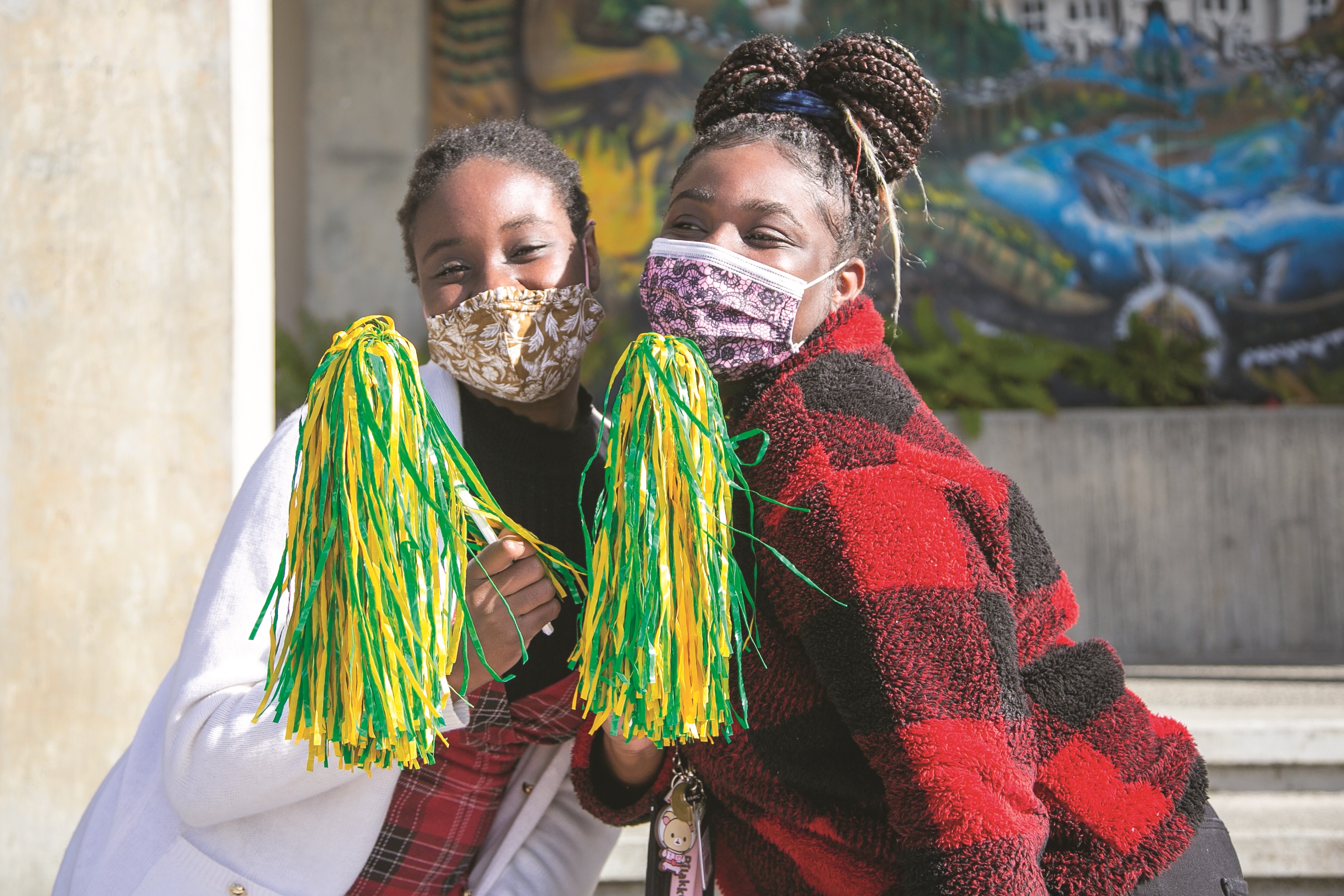
    Photo by Angel Barker | From left: students Demi Ogunwo, Joy Mehn, Douglas Smith, and Gloria Thompson at the Black Out Rally on Feb. 24 that took place at the Redwood Bowl Plaza.

    The celebration was not just for the faculty and staff, but for the black student community. Douglas Smith, coordinator of the Umoja Center and masters student in English, was a critical part in making the event successful.

    “It means a chance to have community,” Smith said. “A chance for Cal Poly Humboldt to support our Black student community like we would in society.”

    The Umoja Center’s mission is to support the pan-African student community. Lots of students were in attendance for the pre-game tailgate, to support and celebrate community and the campus.

    “I came out to support the game and the celebration that’s going on right now,” said Joy Mehn, a political science major.

    The center is very important to Mehn.

    “To me the center means family,” Mehn said. “So many good friends are in the Umoja Center. It is a place to just relax and come together.”

    Gloria Thompson, a child development major, was attending the rally to celebrate Black excellence. Thompson found her people at the Umoja Center.

    “I was a student at home dealing with a toxic family,” Thompson said. “I found my community and family there [the center].”

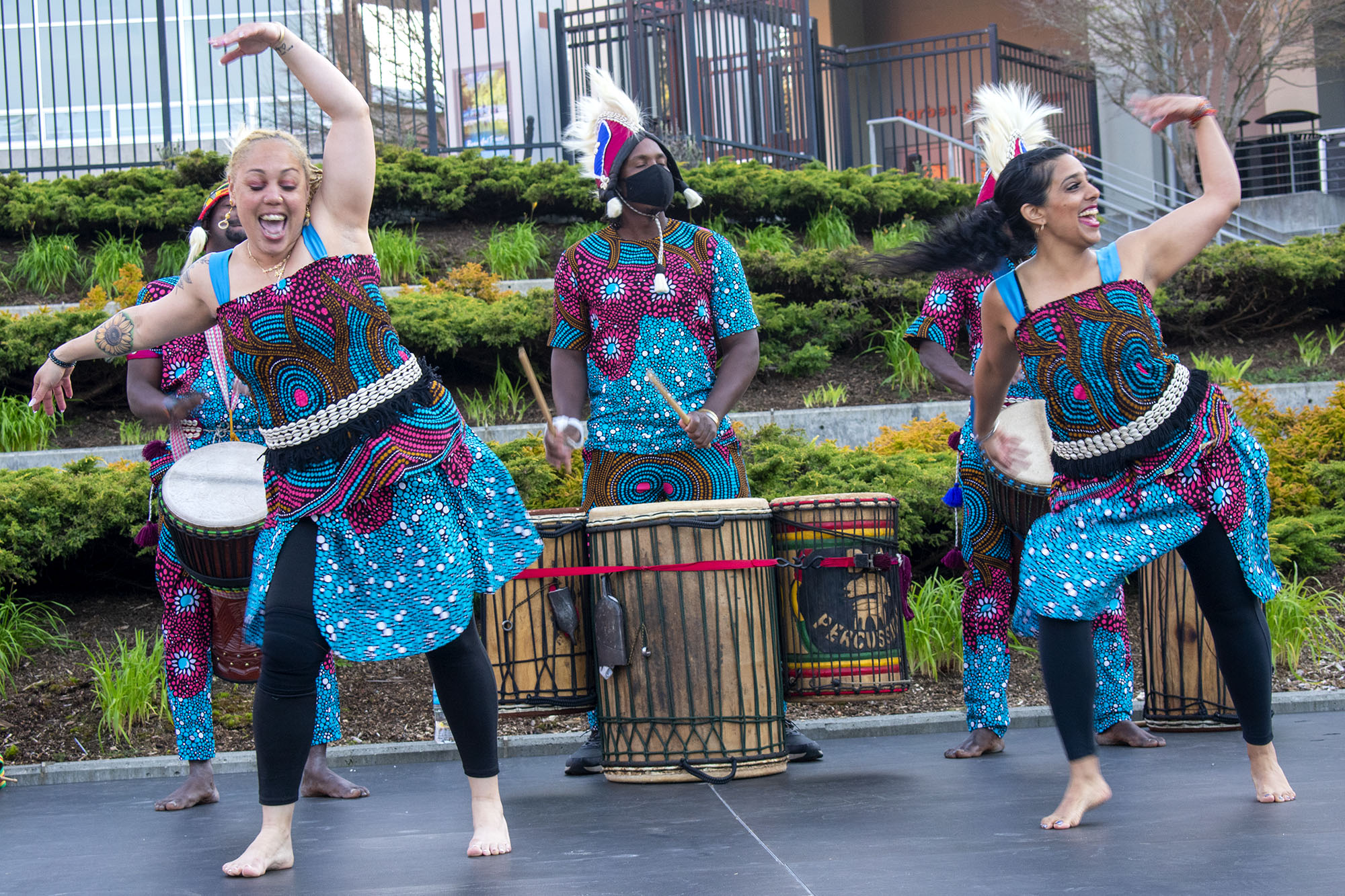
    Photo by Angel Barker | Drummer Bongo Sidibe and dancer Joti Singh perform at Blackout Rally on Feb 24.

    The rally featured Southern food and a drum and dance performance by the Duniya Dance and Drum Company. The San Francisco-based company was formed in 2007 to create dance and music.

    Before the men’s basketball game, a video was played in honor of Black History Month and featured student athletes and what the month means to them and who they look up to.

    All throughout the men’s game, free t-shirts were given to every person featuring the hashtag #LoveIsTheNewBlack and Black Out Game 2022. During half time of the men’s game, many of Cal Poly Humboldt’s Black faculty and staff were honored with flowers and a gift bag. The drummers from Duniya Dance and Drum Company were also in attendance and helped hype up the crowd with their music.

    Thursday Feb. 24 was just one of the days to celebrate the Black community on the Cal Poly Humboldt campus.

    “It is to celebrate school spirit, hang out and enjoy each other,” Smith said. “To enjoy good food and Black culture.”

  • Community speaks on Black History Month

    Community speaks on Black History Month

    by Ollie Hancock

    35 to 40 community members gathered in the Arcata Plaza to speak about Black History Month on Feb. 17. A flyer, created by community organizer and artist Nikki Valencia, urged people to come out and show that their allyship wasn’t seasonal or conditional. When Valencia spoke in the plaza, they noted they did not feel that support.

    “This is the perfect time to center Black marginalized folks, but that energy is not here,” Valencia said. “Black History Month is about more than educating. It means nothing if you know Black people are struggling and do nothing about it.”

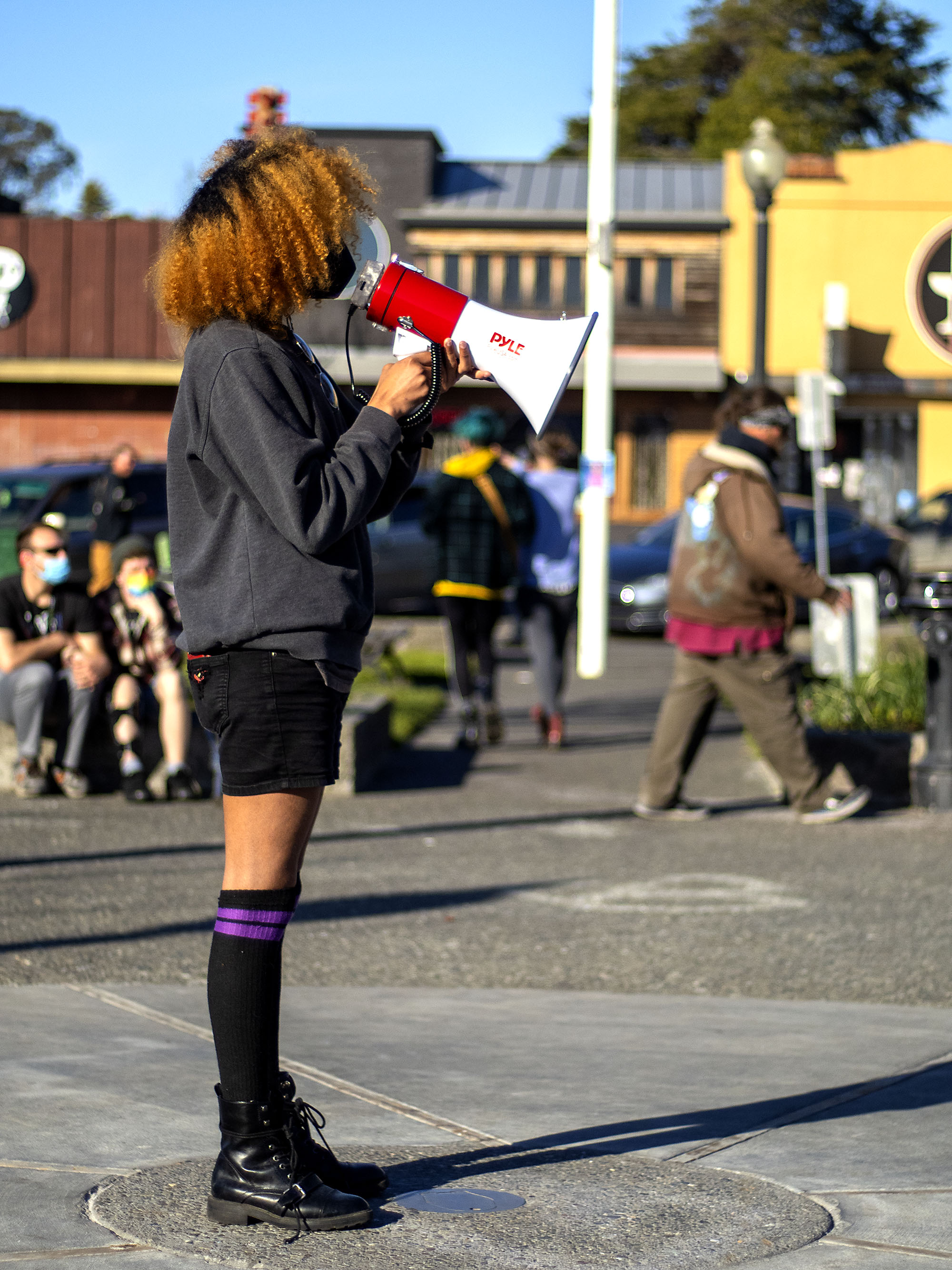
    Photo by Morgan Hancock | Steve Bell leads protesters in a chant at the Black History Month protest on the Arcata Plaza Feb. 17.

    Marlon Andrew Jones II, who works at Cal Poly Humboldt, spoke at the gathering. He said the voices supporting Black communities are never loud enough. Jones said that students, faculty, and admin need to listen to their communities if they want to support Black people.

    “If you’re a white person and you’re listening to this and it’s making you uncomfortable, it’s supposed to,” Jones said. “You’re not supposed to be comfortable, because there is a community that has lived in discomfort for so long.”

    In Jones’ speech, he urged empathy from white members of the community. The lived experience of Black Americans can be traumatic. Jones believes that white people need to do more than be accountable, they need to love their Black neighbors.

    “Love is an action, and that’s what the Black community needs,” Jones said. “We need people to love us enough to take action and make a difference. Sometimes you don’t know what someone is going through, but you can hold their hand through it.”

    Photo by Morgan Hancock | Raquel Bell speaks about the importance of valuing Black women at the Black History Month protest held on Feb. 17 in the Arcata, Ca. plaza.

    Raquel Bell is a local student who spoke on the importance of valuing Black women. Black women exist at intersections of systemic struggles and deserve love and support. Bell said that when Black women are uplifted, so is the society around them.

    “If you want change, first you need to love the Black woman,” Bell said. “Once her needs are met, you know everyone’s needs are met. Once you love a Black woman you change the world. The Black woman is strong, she is beautiful, she is me.”

  • Umoja Center hosts Black History Month Art Exhibit

    Umoja Center hosts Black History Month Art Exhibit

    by Lex Valtenbergs

    Student-made poster boards detailing the lives and legacies of Black artists and activists filled the Gold and Green Room in Founders Hall during the Black History Month Art Exhibit hosted by the Umoja Center on Feb. 17.

    The exhibit was an opportunity for Cal Poly Humboldt’s Black students to express themselves and celebrate their African heritage, much as their forebears did before them in a self-determined push to resist the injustices of slavery, segregation and ongoing oppression.

    “It is a creative way to show our unity and stand for everyone who identifies as Black,” said Demi Ogunwo, a Masters student at Cal Poly Humboldt and Charter President of the National Society of Black Engineers. “It’s a lot of activists, a lot of people who broke out of the norm of oppression to make a name for themselves.”

    Photo by Abraham Navarro | Asia Anderson, a Cal Poly Humboldt chemistry senior stands next to a photo of her great aunt Marion Anderson.

    Biochemistry senior Asia Anderson comes from a line of radical Black women who defied the norm during their lifetimes. She made a poster board about her late great aunt Marian Anderson, a renowned Black opera singer. It was a popular exhibit among the attending students.

    “I don’t sing worth beans, but I do chemistry,” Anderson said. “I still think about her strength and not letting a ‘no’ close doors. That was passed down through the line of women in my family.”

    Jovie Garcia-Diaz, a senior majoring in Environmental Engineering, was a student attendee at the exhibit. Her favorite poster board detailed the appropriation of Black culture in popular social media culture.

    “That’s something that I see a lot on social media that stands out to me,” Garcia-Diaz said. “People who aren’t Black get praised and get popular for [appropriated elements from Black culture.]”

    Cal Poly Humboldt students and faculty alike visited the exhibit as the evening went on. Frank Herrera happens to be both. He is a student pursuing a Masters degree in Business Administration and the Coordinator of the Social Justice, Equity, and Inclusion Center on campus.

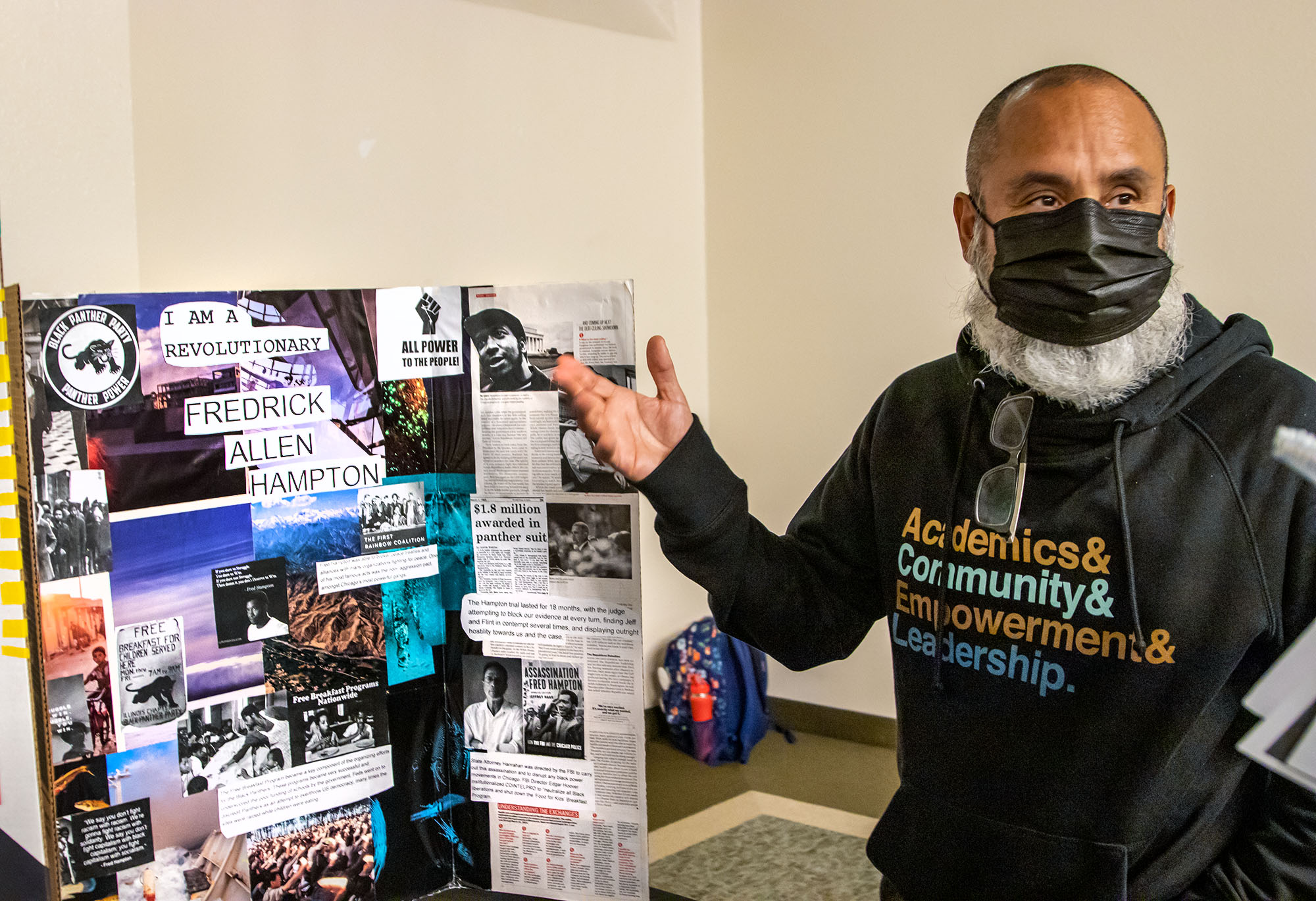
    A collage poster board about the life of Fredrick Allen Hampton, former Chairman of the Black Panthers, stood out to Herrera. Herrera was alive in the final years of the Black Panthers’ existence before it dissolved.

    “I had met folks who were involved, I just remember the guys in leather jackets and the energy,” Herrera said. ”It’s amazing what they were doing, the bravery and courage they had during the time.”

    Photo by Abraham Navarro | Students look at posters of black leaders and events in history during the Black History Expo in the Green and Gold room in Founder’s Hall on Feb. 17.

    According to Ogunwo, the art exhibit in general characterized three of the seven guiding principles of the Nguzu Saba, or African heritage, that the Umoja Center stands They are Kuumba (creativity), Umoja (unity) and Kujichagulia (self-determination).

    “The pillars reinforce what we stand for and how we want people to see us,” Ogunwo said.

    Anderson feels a deep connection to her great aunt and to her heritage that empowers her. To her, the exhibit was a chance for Black students to see themselves in the trailblazers before them.

    “They weren’t the first,” Anderson said. “You’re not going to be the last. It feels good because one day, those boards are going to be about you.”

  • Black chemists celebrate diversity at Umoja Center event

    by August Linton

    Claps and cheers echoed through Founders Hall 118 during the Umoja Center’s Black Excellence in STEM event, probably far more than had graced the room in quite a while. Many HSU community members filled out the seats, just as their enthusiasm and passion filled the room.

    Dr. Kim White, Cal Poly Humboldt professor of chemistry, hosted the event at the request of Umoja Center for Pan African Academic Excellence.

    After an indigenous land acknowledgement, she began by paying homage to several Black scientists under whom she studied. One of these was Dr. Loyd Noel Ferguson, the first Black person to earn a PhD in chemistry from UC Berkeley.

    “He was the original backyard chemist, he synthesized moth repellent and stain removers in his backyard in Oakland when he was growing up,” White said. “He also used his academic talent not only to propel his own career but also to create opportunities for others.”

    She also spoke fondly about Dr. Phillip Crews, a UC Santa Cruz professor of chemistry known for his involvement in diversity programs.

    “Phil instilled in me a strong desire to use my privilege for the benefit of others… seeing him use his strengths to lift up others was pretty fundamental in the trajectory of my career,” White said.

    Dr. Chris Harmon, another member of Cal Poly Humboldt’s chemistry department, spoke next. He spoke on the importance of acknowledging and celebrating the growing diversity within science.

    “It matters where you come from, it matters what language you grew up speaking, and absolutely the color of your skin matters, Harmon said. “When I got into chemistry, one of the things that I loved was all of these rich, beautiful colors that you would see in the lab… if we celebrate the colors of the chemicals why can’t we celebrate the colors of the chemists?”

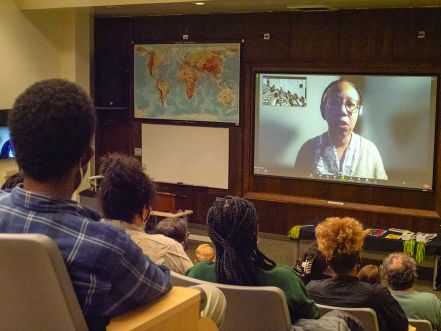
    Photo by Morgan Hancock | Dr. Kensha Clark speaks to students of her work in chemistry via Zoom at Founders Hall on Feb 11

    Harmon introduced Dr. Kensha Clark, a highly celebrated and accomplished Black chemist currently teaching at the University of Memphis.

    After brief technical problems, she appeared on the projector screen, Zooming in to the event.

    Clark discussed her work, both as a private sector chemist with Chevron and as an academic. Her current fields of interest include molecular electronics, solar energy conversion, and small molecule activation, among others.

    In her lab, she makes sure that students of all backgrounds feel welcome.

    “I think [our diversity] makes our science all the better,” Clark said.

    When she was a student, however, Clark felt that her interest in science was quashed. She described only being encouraged to become a writer or an artist, all the while never wavering from her passion for science.

    Even though strong familial support allowed her to achieve her dream, Clark is still faced with a shocking lack of diversity in her field.

    “By default, you are the representative of your people,” Clark said. “It makes it exciting when one sees up-and-coming scientists of color.”

    Photo by Morgan Hancock | Asia Anderson explains her research into membrane protein isolation on Feb 11.

    Cal Poly Humboldt student Asia Anderson took the stage after Clark, to a joyous round of applause from the audience. A transfer student from College of the Redwoods, Anderson is obviously beloved to the campus community.

    She spoke about the community and support that she has found while studying chemistry at Cal Poly Humboldt, and how her mother’s going back to school to study English inspired her.

    “I feel like every step of the way I’ve had this ushering of peers around me… I will also be the first person in my family to graduate from college,” Anderson said.

    Anderson’s research during her undergraduate degree at Cal Poly Humboldt has been in the targeted extraction of membrane proteins. She said that the proteins’ sensitivity to light means that further study could illuminate ways to use these proteins for targeted medication delivery.

    After graduation, Anderson will study to receive a graduate degree at UC Santa Cruz.

    The Umoja center hosted this event in collaboration with NSBE, the National Society of Black Engineers. Demi Ogunwo is a masters student in Cal Poly Humboldt’s Energy Technology and Policy Program, and spoke at the event as the president of the school’s NSBE chapter.

    “NSBE offers a platform for students to network and get mentored by … Black professionals,” Ogunwo said. “It’s not for engineers alone, it’s for all STEM students.”

    NSBE is a community focused on supporting Black scientists, whether academically or professionally. They will be hosting a social hangout for students potentially interested in joining this Friday Feb. 18, from 1 pm to 3 pm in the University Upper Quad.

  • Defining Black History Month

    Defining Black History Month

    by August Linton

    To Zephie Harvey, Black History Month is an acknowledgment of the depth and value of Black heritage and culture.

    “Black History month means looking back at my heritage and knowing where we came from,” said Harvey.

    Photo by Abraham Navarro | Cal Poly Humboldt student Zephie Harvey

    However, they also say that it should serve as a reminder of the inequities that Black people still face. Black History Month is also about the history being made right now. Harvey points out that there are many areas in which Black people have only recently been allowed to exist.

    “It’s 2022 and we’re still having firsts for things,” they said.

    Like many people of color and especially Black people living in Humboldt County, Harvey felt a bit isolated before finding community resources like the Umoja Center.

    “I’m from an area that’s very heavily populated with Black people so it’s hard finding that community here,” Harvey said.

    Harvey is a dance major here at CPH, and will be performing in the “Evening of Dance” show later this semester.

    To Nicole Rahman-Garnier, Black History Month means celebrating the accomplishments of Black people.

    Photo by Abraham Navarro | Cal Poly Humboldt graduate student Nicole Rahman-Garnier

    “In the last couple of years, that script has kind of flipped and we’ve been able to more celebrate the triumphs rather than focus on the tribulations that we’ve faced,” Rahman-Garnier said. “It’s a little more of a positive notation of what it means to be Black, what things that we’ve done.”

    As for her experience in Humboldt, Rahman-Garnier says that becoming a student has connected her to the Black community here. “It’s changed over time, when I first moved here it was hard to find a place,” she said.

    “It’s weird being [a Black person] in the sciences because that’s not something that you see a lot here. That’s something that I’m kind of working on changing right now too, not only for the campus culture but for Humboldt culture in general,” said Rahman-Garnier.

    Rahman-Garnier is a grad student at CPH studying the morphology of fish olfactory organs.

    Gloria Thompson and Joi Mehn table in the Quad for CPH’s Umoja Center for Pan African Student Excellence.

    To Mehn, Black History Month means simply “celebrating Black people.”

    The events that the center is holding over the course of this month represent different facets of that celebration. Among others, these include an event highlighting Black achievements in STEM, a Black history expo, an African diaspora celebration, and regular “Kuumba: Dance for Creativity” classes every Saturday.

    Photo by Abraham Navarro | Cal Poly Humboldt student Gloria Thompson

    Everyone is welcome and encouraged to attend.

    “Not holding a Pan African identity does not disqualify anyone from participation in any events or programs, we value cultural exchange and invite people from other backgrounds to ground with us,” said the Center’s website.

    Thompson said that her experience being Black in Humboldt has been “Interesting, but I’ve been finding my people, and that connection is really important.”

  • Growing Up in the Shadow of Malcolm X

    Growing Up in the Shadow of Malcolm X

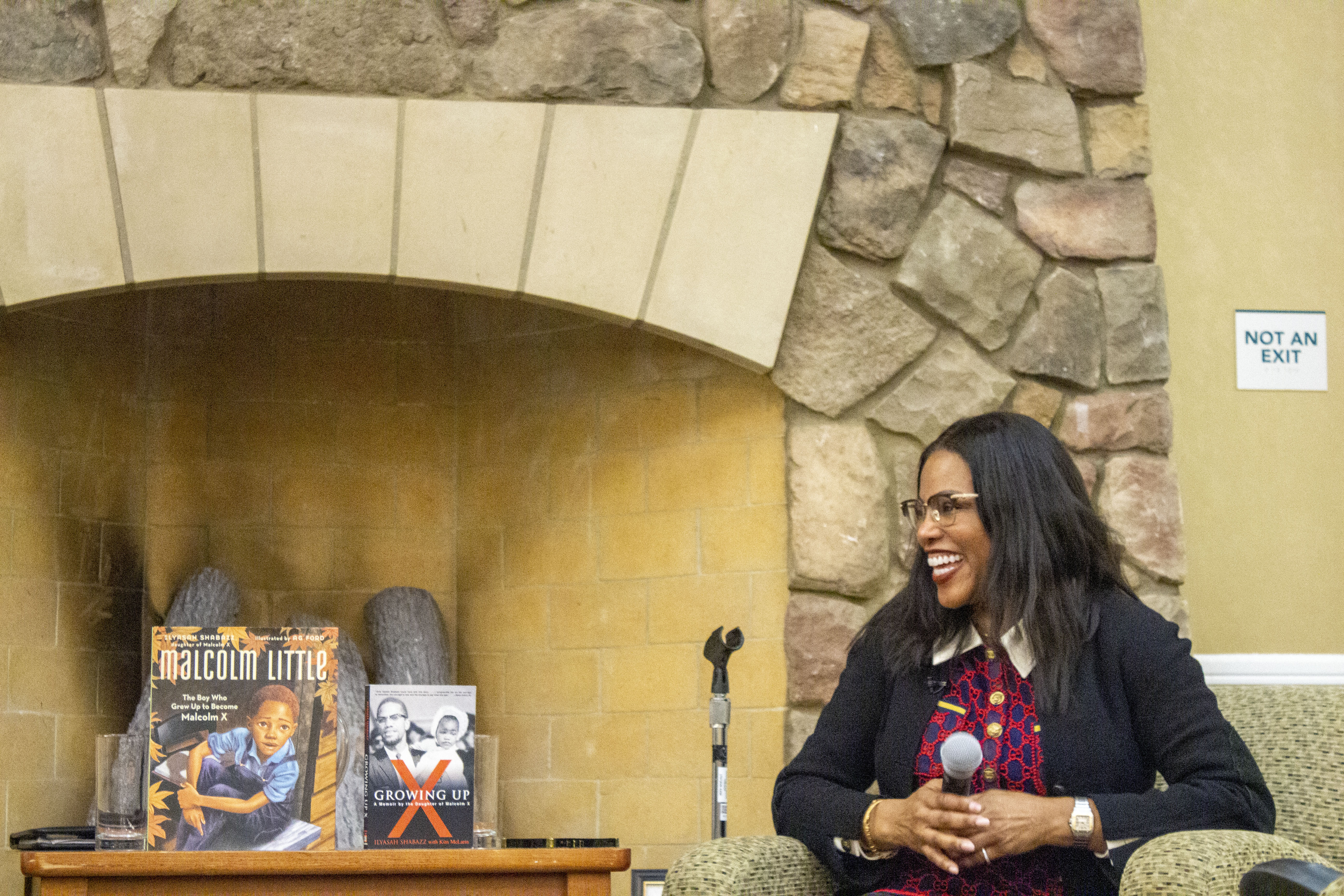
    Ilyasah Shabazz discussed her background with loving energy on Feb. 12

    Ilyasah Shabazz, one of six daughters of Betty Shabazz and Malcolm X, came to Humboldt State University Feb. 12 to discuss her book, “Growing Up X.”

    Despite the title, the book is not about Malcolm X. Rather, it surrounds the lessons and experiences that of Shabazz as she grew up living in her father’s radical legacy.

    “One of the benefits of being my parents’ child is that I grew up with a lot of love,” Shabazz said. “It’s really what drives my work because I realized there are a lot of young people who realize they are not worthy of love, or worthy of a quality education, or worthy of all of these things that life is supposed to provide us.”

    Shabazz dedicated her career to sharing the importance behind love and support being provided at a young age.

    In an exclusive interview with The Lumberjack, Shabazz emphasized the importance of love and humanity and the awareness that people are a reflection of one another.

    “In high school, I was at a prep school and not too far down the street was a group home, so we would go and tutor these young people,” Shabazz said. “I was tutoring them in math and then I started realizing that they didn’t have love—that there was no self love.”

    Shabazz dedicated her career to sharing the importance behind love and support being provided at a young age. She began advocating for the younger generation and their educational opportunities.

    “As I got older, I started realizing that it was really important for me that young people understood that they were worthy of love—that they were worthy of a quality education,” Shabazz said. “Because our education curriculum is not inclusive of historical facts, it makes young people feel that they are not worthy.”

    Shabazz felt inspired to write books because she wanted to change how children saw themselves portrayed in history. She specifically wanted to change the narrative of Black history and liberation for children.

    “That’s why I write my books,” Shabazz said. “So that children could open up a book, learn some history—learn good history—and then see a reflection of themselves in the story.”

    Her family’s legacy and the lessons shaped Shabazz into the person she has become today. An activist who has dedicated her life to working and representing the younger generations.

    “It’s about recognizing the humanity in everyone,” Shabazz said. “That we’re all brothers and sisters in the fatherhood or family of God or the creator. That we’re interconnected just because we’re human beings. Just imagine how much better life could be if we didn’t have to fight for someone to stop pressing us or, you know, committing these criminal acts on us and seeing them for as they are.”

  • Let’s Make Media Coverage Equal, Always

    Let’s Make Media Coverage Equal, Always

    Emphasizing equity and integrity in the media February and beyond

    Humboldt State University celebrates Black Liberation Month, which promotes black excellence and achievement, every February.

    People of color are often covered by the media for achievement in athletics and entertainment, but rarely for academia, volunteer work or simple successes unless they’re a trailblazer in their field. More often than not, Blacks face the most discrimination in media.

    At HSU, Black Liberation month emphasizes the great achievements and progress in the Black community—but these often fall out of the public eye once February is over. This is a failure—the celebration of the Black community should extend through the year and into perpetuity. At The Lumberjack, we acknowledge the lack of representation blighting the mainstream media and our own newsroom. We strive to break the toxic cycle of misinformation and misinterpretation and promote the achievements of the Black community at HSU.

    “Blacks represent 37 percent of criminals shown in the news, but constitute 26 percent of those arrested on criminal charges. In contrast, news media portray whites as criminals 28 percent of the time, when FBI crime reports show they make up 77 percent of crime suspects.”

    Travis L. Dixon

    Modern media organizations filter the truths of the world, a behavior that has a significant impact on their audience. The way we absorb news depends on the way it’s delivered. Emphasizing equity and integrity in the media February and beyond

    The study, “A Dangerous Distortion of our Families,” by Travis L. Dixon, Ph.D from the University of Illinois, looked into media coverage from local and national media outlets and found they often warped the reality of Black families to fit the narrative of the big screen.

    “Blacks represent 37 percent of criminals shown in the news, but constitute 26 percent of those arrested on criminal charges,” Dixon wrote. “In contrast, news media portray whites as criminals 28 percent of the time, when FBI crime reports show they make up 77 percent of crime suspects.”

    The study, sponsored by The Washington Post, found that at best, media outlets promoted racially biased portrayals and myths that pathologize black families and idealize white families with respect to poverty and crime.

    At worst, the study found that media outlets amplified those inaccurate depictions for political and financial gain. They said such reporting reinforces debunked narratives that justify police brutality or promote economic policies that hurt not just Black families, but all families.

    Throughout February, throughout the year, into the next decade and into forever, we shall strive to accurately report on and represent the lives and achievements of the Black community at HSU. We commit ourselves to journalistic accuracy and integrity. We commit ourselves to the celebration of the liberation of our oppressed communities and we commit to support them on their path to self-realization.

  • Dr. Cornel West Headlines Black Liberation Month at HSU

    Dr. Cornel West Headlines Black Liberation Month at HSU

    Philosopher, activist and intellectual Dr. Cornel West visiting Humboldt State University

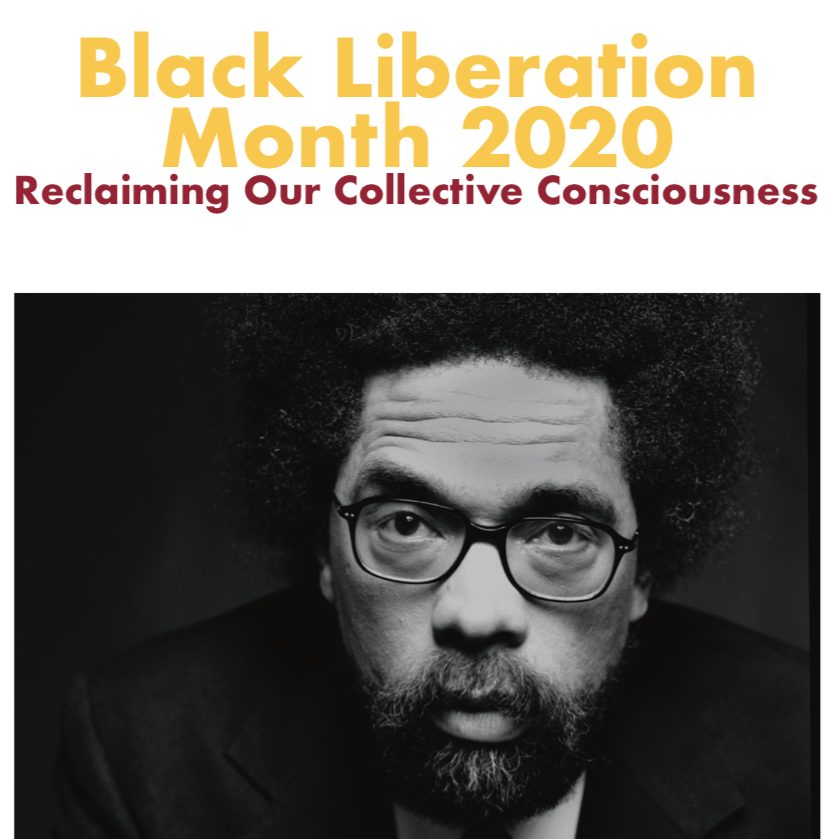
    Dr. Cornel West will be at Humboldt State University Friday, Feb. 7 to celebrate Black Liberation Month as the keynote speaker of a series of events.

    West advocates for race, gender and class equality. West’s social and political activism goes back to his days at John F. Kennedy high school where he marched for civil rights and protested against the lack of diversity and black studies classes offered at the school.

    West went on to become class president of his high school before attending both Harvard and Princeton Universities. He is known for infusing the world with academic inference, intelligence and philosophical reflection.

    The event is hosted by HSU’s African American Center for Academic Excellence and HSU Brothers United.

    West’s lecture will focus on topics from his 1993 book, “Race Matters.” Doors open at 6:00 p.m. and the lecture begins at 7:00 p.m. in the Kate Buchanan Room.

    The first 100 students through the door with an ID will receive a free copy of “Race Matters.” Additional copies can be found at Northtown Books at 947 H St. in Arcata.

    Tickets are free and available at the University Center Ticket Office at HSU, which can be reached at (707) 826-3928.

  • Press Release: Let’s Talk About Mass Incarceration

    Press Release: Let’s Talk About Mass Incarceration

    A press release from the HSU Formerly Incarcerated Students Club

    Full press release:

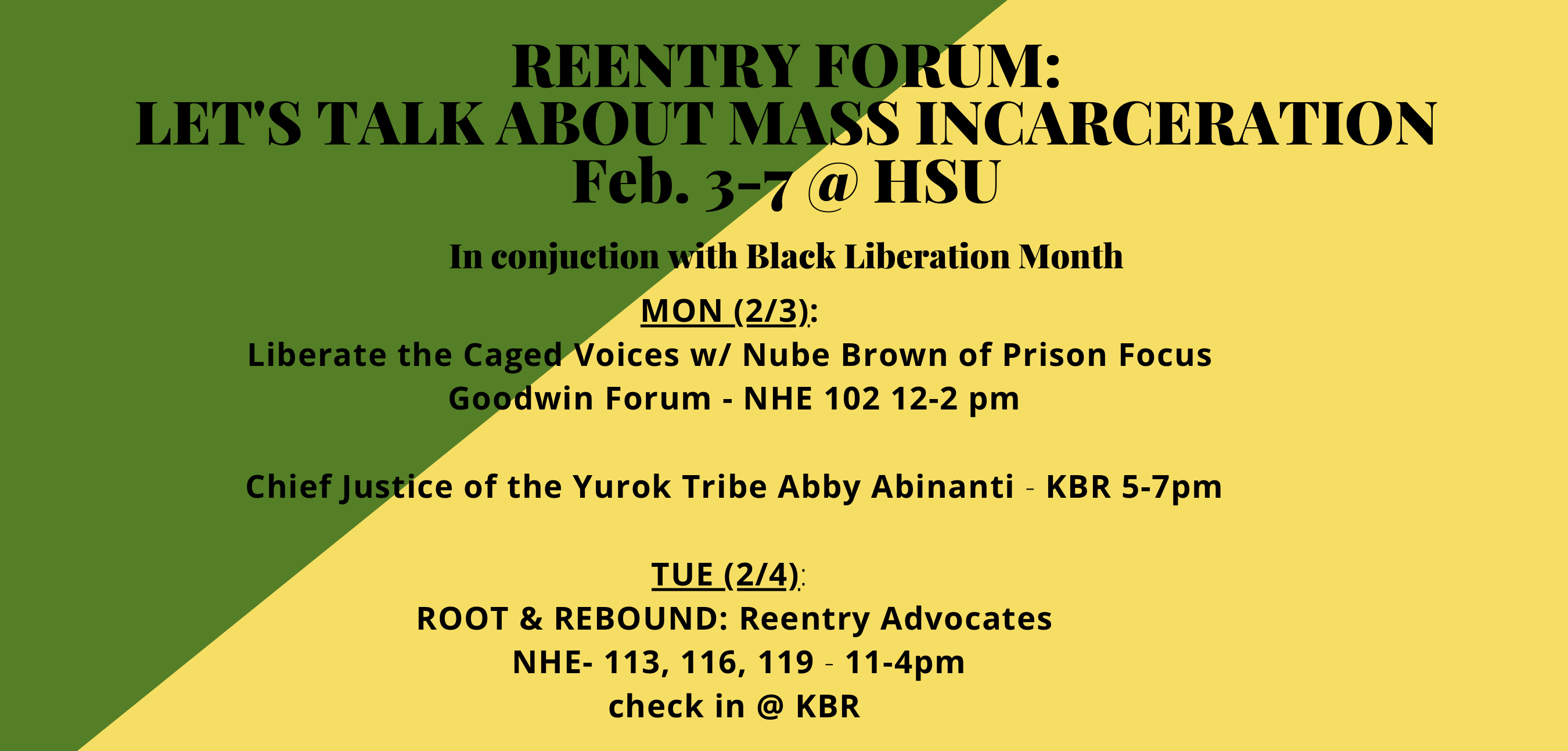
    Humboldt State University’s ​Formerly Incarcerated Student’s Club​ and ​Student Legal Lounge​ in conjunction with Clubs and Activities, Black Liberation Month and Associated Students will host a week long event titled ​Reentry Forum: Let’s Talk About Mass Incarceration​. The event will be from ​Feb. 3-7​ at ​Humboldt State University​ with nearly two events a day. Our goal is to provide support for students and community members who have been impacted by the criminal justice system. This event will provide education around transforming the system, inform our university and community on the pervasiveness of the criminal punishment system in our everyday lives, and build support in reversing the school to prison pipeline. Attendees will receive resources pertaining to record expungement, child custody, licensing, and other tools that help folks with the re-entry process.

    Schedule: Feb.3-7

    Day 1: February 3, 2020 [Monday]

    ❏ Nube Brown​, Liberate the Caged Voices; 12-2 p.m. ​@Goodwin Forum (NHE 102) ❏ Judge Abby Abinanti​, Chief Justice of the Yurok Tribe; 5-7 p.m. ​@KBR

    Day 2: February 4, 2020 [Tuesday]

    ❏ Root and Rebound​ (Training/Clinic); 11-1 a.m./p.m., 2-4 p.m. ​@KBR

    Day 3: February 5, 2020 [Wednesday]

    ❏ Tory Eagles​, Pelican Bay Scholars Program Director/ ​William Feather​, Ukiah Inmate

    Scholars Program Director talk about scholars programs in locked facilities; 12-2 p.m.

    @​Goodwin Forum (NHE 102)

    ❏ Jimmy Santiago Baca​, Chicano-American Poet & Writer from New Mexico; 5-7 p.m.

    @KBR

    Day 4: February 6, 2020 [Thursday]

    PANEL DISCUSSION: ​@Green and Gold Room (FH 166)

    ❏ Andrew Winn ​(Project Rebound Sacramento), ​Joseph Osario​ (Anti-Recidivism Coalition), Mike Bishop (Children and Family Services Counselor), ​Mark Taylor (Anti-Recidivism Coalition), ​Jason Bell​ ( Project Rebound Director San Francisco), Mike Bishop (Children and Family Services Counselor) Working in Re-Entry Panel Discussion; 5-7 p.m.

    ❏ Joshua Meisel​, (Moderator) Working in Re-Entry Panel Discussion; 5-7 p.m.

    Day 5: February 6, 2020 [Friday]

    ❏ Movie: 13th; 11 a.m. ​@ Siemens Hall 108

    ❏ Collaboration; AACAE Presents: ​Cornel West @ KBR

    For more information or concerns contact fisc@humboldt.edu