Ever seen a classmate who seems to be in two places at once?
They could be a track star, master of teleportation, hologram – or more simply, a twin.
The chances of being an identical twin are three or four in 1000, but what are the odds of both twins going to the same college, or more specifically, a small university tucked away in the redwood forest of Northern California?
Without a school-wide survey asking about twins, it’s hard to say, but there are at least a few pairs of identical twins right here on campus.
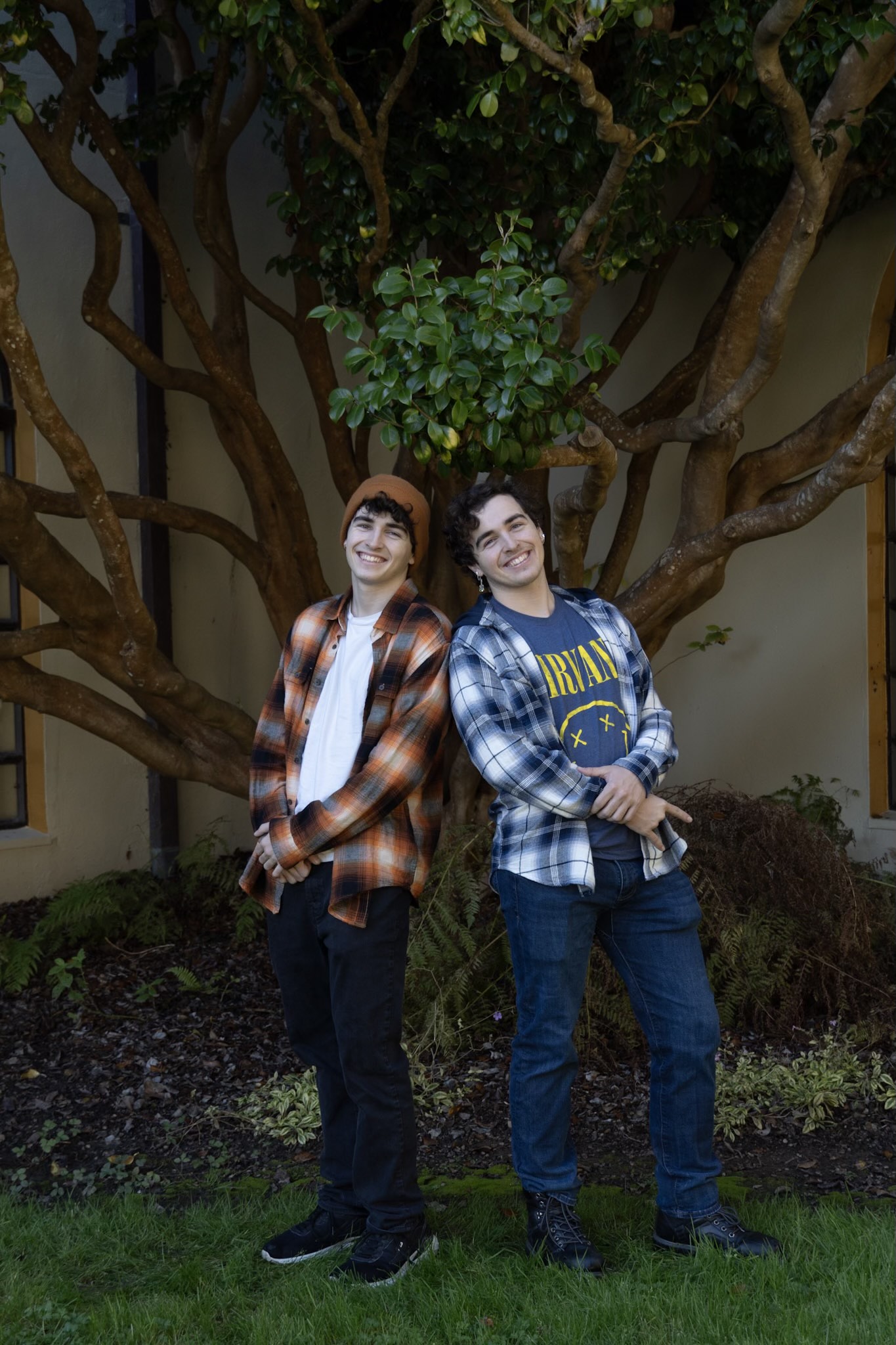
Marley and Wiley Thrift are a pair of sophomore computer science majors who grew up in Humboldt, and didn’t think much about going to the same college.
“Both of our parents work here, it was an easy choice to go to Humboldt,” Wiley Thrift said. “Our dad works in computer science, so that’s kind of where we got the inspiration from.”
According to Wiley, the difference between being twins in highschool and college is mostly the size of campus and the larger population. It doesn’t always come up in conversation at first, so there will always be confusion.
“If I see somebody that Marley knows on campus and they wave to me, I usually just wave back but I don’t know the person,” Wiley Thrift said. “If they try to talk to me, I’ll say ‘I’m not Marley,’ and it’s a little awkward, but it’s kind of funny too because I know it’s happened before, and I know what’s happening.”
Hunter and Tanner Circe are seniors majoring in environmental studies who also grew up in Humboldt and went to highschool in Mckinleyville.
“It’s easy to have a built-in roommate… because neither of us really had the desire to live with other people,” Tanner Circe said. “It just kind of made sense.”
“We also rent from our parents in Arcata, so It’s a convenient reason to go to Cal Poly [Humboldt],” Hunter Circe said.
The Circes have a similar experience to the Thrifts, describing the same situation of people approaching the wrong twin.
“It’s like talking to a lot more strangers because he knows them,” Hunter Circe said. “This is our experience, it’s not unique [to us].”
“You’re walking by and people will just look, and you know you’re getting the look like, ‘Oh, they’re twins,’” Tanner Circe said.
In many ways, the media has portrayed twins to be a certain way and check certain boxes. This causes a constant flow of stereotypical questions from peers.
“I’m tired of, ‘Is one of you evil? Do you feel each other’s pain?’ It’s just so silly to me,” Hunter Circe said. “People like to put us in like ‘box A’ and ‘box B’. Like, ‘he’s the artsy one,’ or ‘he’s the sporty one…’ Why does there have to be ‘the one?’”
“We’re siblings who look the same,” Tanner Circe said. “Its’ unique but… a little bit mystified on TV and stuff.”
At the end of the day, twins are just like any other siblings, but the same age.
“I think it’s a lot more similar to normal siblings than people realize,” Tanner Circe said. “[People think] it’s this mystical thing, but really, I think it’s just from growing up together.”
For all these siblings, the future is still unwritten. 18 days is the longest time the Thrifts have spent apart, but they plan on extending that time next semester, with many miles in between.
Both Marley Thrift and Tanner Circe have plans to travel abroad while their twins stay in California.
“Being a twin’s great, you should try it,” Marley Thrift said.
Shit’s mad fun – really gets you filled with those OG childhood emotions. Skipping makes you feel like you’re on your way to recess in third grade, about to go undefeated in four-square or tear up the monkey bars.
I know that you’re in college, you’re an adult, and if we were all skipping around campus, it would look ridiculous.
You see, when we grew up, we gave up the playful activity of skipping for a more serious exercise: running. The thing about running is the impact. It’s impossible to avoid because the knee acts as a hinge for the leg, creating a negative impact on the knee and patella. The impact is part of the reason a lot of the running shoes we see coming out these days have insanely thick outsoles and almost look like Balenciagas. What if I told you skipping is better than running?
Researchers at two universities in North Carolina conducted an experiment and found that the peak force of impact is 30% greater in those who run compared to those who skip. Additionally, up to 79% of runners reported that they suffer some kind of injury every year.
I’m someone who has dislocated my knee on multiple occasions, but skipping takes an immense amount of stress off of your knees. If you have knee problems, skipping is the way to go. However, if you have any issues going on with your calves or ankles, you may find some pressure in those areas while skipping.
I just can’t wait until it starts to warm up again, I’ll be skipping everywhere. Just imagine – the warm sun gently toasting your skin while you and your pals skip cheerfully across the beach, skip to the river to skip rocks, or maybe even skip to the lou… skipping could be the move. Not to mention, it is not much harder to skip than walk, yet you get to travel at close to running speeds.
I’m not saying that you should skip to class with your backpack on like a grade schooler, although that would be a riot. I’m saying skip around once in a while. Have some fun with your friends, take some airy leaps and bounds on your way to the farmers market or on your little hikes in the forest. You will thank me and come skipping back, because skipping is just so much fun.
Despite the fact I had only had two drinks throughout the entire night, I very quickly felt unwell and more drunk than I have ever been in my entire life. The fact is, if you are roofied, you often have very little time between drinking and realizing that you are not well. It comes on quickly and you may find someone promising to “help you.” I realized then I had been roofied. The scariest part about that night is I don’t remember half of it.
What exactly is a roofie though? Roofies, or being roofied, is the slang term for the date rape drug called Rohypnol, officially known as flunitrazepam. Easily popped into and dissolved in drinks, the sedative causes memory loss, drowsiness, and sometimes even the loss of consciousness. Only one tablet can impair you for up to 8-12 hours. Combined with alcohol, it makes for an intensified effect.
As cliche as it sounds, don’t ever leave your drink unattended. Sometimes, you need to be even more careful of those around you that are your so-called friends. It’s not that I didn’t not trust who I was with – I had my friends and dormmates with me, but we had been party hopping on Halloween night, drinking and accepting drinks from wherever they came from. Truth is, I still have no idea how I got roofied. This wasn’t a blackout just from too much alcohol, this was a new experience clearly resembling the effects of being roofied.
Staying safe while out on the town starts with prevention. Consider bringing cup covers next time you go out partying. Cup covers prevent someone from getting the opportunity to slip pills, powders, or other substances into your drink without you knowing. I understand you may feel silly pulling out something that resembles a condom for your cup but remember, self defense begins with prevention. The Check Your Drink CYD test strips are another way to prevent being roofied. This is an easy-to-use rapid drink spiking test that detects ketamine, rohypnol, and GHB from only a few drops of your drink.
It’s not like this experience has deterred me away from drinking or the occasional partying, especially now that the drinking I’m doing is legal. However, it has made me think to just be a little more careful and aware of my surroundings because of what can happen.
If I can bring awareness and prevention methods to just one person, I’d be happy with that. Nobody deserves to have their drink tampered with and potentially taken advantage of.
This year marks a milestone for some Cal Poly Humboldt students: their first time voting in a presidential election. Besides potential presidential candidates, the ballot will include important propositions, like Proposition 1, a state-wide measure regarding funding within the mental health system.
Polls open for California’s Presidential Primary Election on March 5 and vote-by-mail ballots have already begun mailing out. To participate in any election, voters must be registered in their state. In California, that means registering no later than 15 days beforehand.
In order to vote in the primaries, the last day to register is Feb. 20. As a California resident, voting registration can be filed online at registertovote.ca.gov or by mail.
Paper applications can be found at County Registration Offices, Department of Motor Vehicles, public libraries, government offices and select post offices. Paperwork should be sent to the mailing address: Secretary of State Elections Division 1500 11th Street, 5th Floor Sacramento, CA 95814.
If registered with a political party, that party’s political candidates will show up on the ballot. To update party affiliations, a new registration form will need to be submitted.
16 and 17-year-olds are eligible to pre-register to vote and will automatically be registered upon turning 18.
Alongside the new wave of voters across the nation is a new wave of Humboldt County residents. To vote locally, or in the case of an address change, an updated registration form must be completed. Luckily, the process is quick and easy.
For more information visit the Cal Poly Humboldt legal lounge website for voting (studentlegallounge.humboldt.edu/voting) or call (800) 345-VOTE (8683).
There is a whimsical quality to seeing a movie in the theater. 2023 was a year with many thought-provoking and conversation-starting films like “Killers of the Flower Moon” and “Barbie.” I rarely go to theaters now, but as an enjoyer of Studio Ghibli films, I had to see “The Boy and the Heron” with the classic theater experience. There is no better place to get the classic theater experience than the Broadway Cinema in Eureka.
Like any chain theater, the neon sign on the front had not been replaced in a very long time, leaving only the Y glowing in the dusk. The lobby was filled with the sharp smell of popcorn and the carpets were dull and faded where people had walked. While lacking in staff and attendees, the theater still had its charm in the form of large star lights on the ceiling and orange neon accents around the snack table.
I settled into my cushy chair just in time for the film to start. “The Boy and the Heron” was enough to bring famed Ghibli director Hayao Miyazaki out of retirement, so I had high expectations.
Before I continue, a minor spoiler alert for this movie.
The movie begins with the piercing sound of air raid sirens against a gray backdrop of houses, placing us in World War II-era Japan. We meet our protagonist, a young boy named Mahito living in Tokyo, who loses his mother in a hospital fire on that night. Years later, Mahito’s father marries his late wife’s sister Natsuko and moves them to the countryside.
While trying to adjust to his new life and the loss of his mother, Mahito encounters a strange talking heron who tells him his mother is alive and needs to be rescued from another world. The heron, a mischievous creature who we soon discover is not a heron at all, also traps Natsuko in this alternate world, forcing Mahito to track down the heron and travel to the other world.
The film tackles themes of family, loss and escapism that mirror Miyazaki’s own experiences. Like many of his films, it is a coming-of-age story that requires the protagonist to embrace fantasy to grow, then let go of it in order to move forward. The parallel world Mahito travels to acts not as a purgatory, but rather as a gateway to many alternative universes. This world contains wild creatures ranging from giant man-eating parakeets to small white blobs called the warawara, which eventually ascend to the human world to be born as human babies.
Along his journey, he meets younger versions of the people in his life, including one of the old women living in the countryside house with him and his family. There are so many layers to the world of “The Boy and the Heron”that it feels like a mix of a child playing pretend and a ƒvivid dream.
The magical wonder of the film didn’t stop at the screen. I’m not sure how it got into the theater, but a small sparrow briefly joined us. It fluttered around the ceiling, adding a bit of immersive surround sound, and the audience couldn’t help chuckling when it settled in front of the projector, leaving a giant bird-shaped silhouette on the screen. It didn’t linger long, but just enough to make me wonder about the irony of its appearance.
No matter the quality of the story, a Studio Ghibli film never disappoints in the animation category. The characters, while simple in design, move fluidly against meticulously painted backgrounds. Studio Ghibli is famous for preserving the art of hand-drawn animation and drawing on physical media, which helps preserve the detail in the backgrounds. Any use of 3D animation only enhances the magical effects throughout the film, and it is impossible to tell where the hand-drawn animation starts and the 3D animation ends.
The story itself is complex and the world doesn’t always make sense, but I think it’s meant to be that way. Like most other Ghibli films, the story moves at a leisurely pace and then rapidly picks up the pace in the final act. It is one of Miyazaki’s more esoteric films, which may not appeal to everyone. The meaning behind some of the recurring motifs like birds and fire are up to interpretation, which impacts what each viewer will take away from the film.
“The Boy and the Heron”is an individualized experience that doesn’t fully reveal all its secrets. There are story elements that are never explained and blurs between dreams and reality. To fully enjoy the film, viewers will have to put that aside and inhabit the mind of a curious child.
While not my favorite Ghibli film, I greatly enjoyed my experience watching it at Broadway. As I left, feeling dazed from the visual explosion at the end of the film, two staff members stood near the exit wondering how the bird got inside and where it flew off to. I like to think the bird wanted to appreciate Miyazaki’s work.
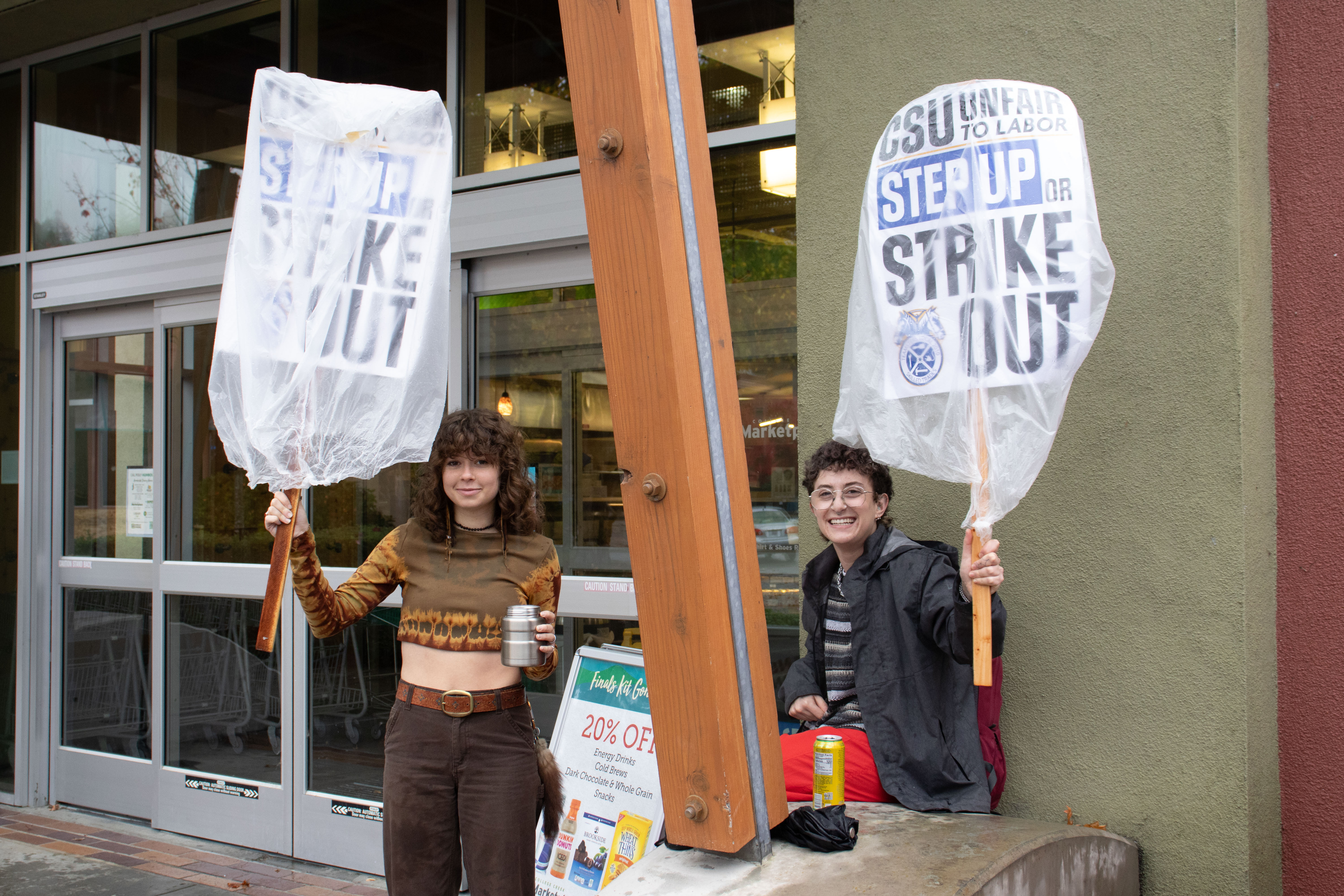
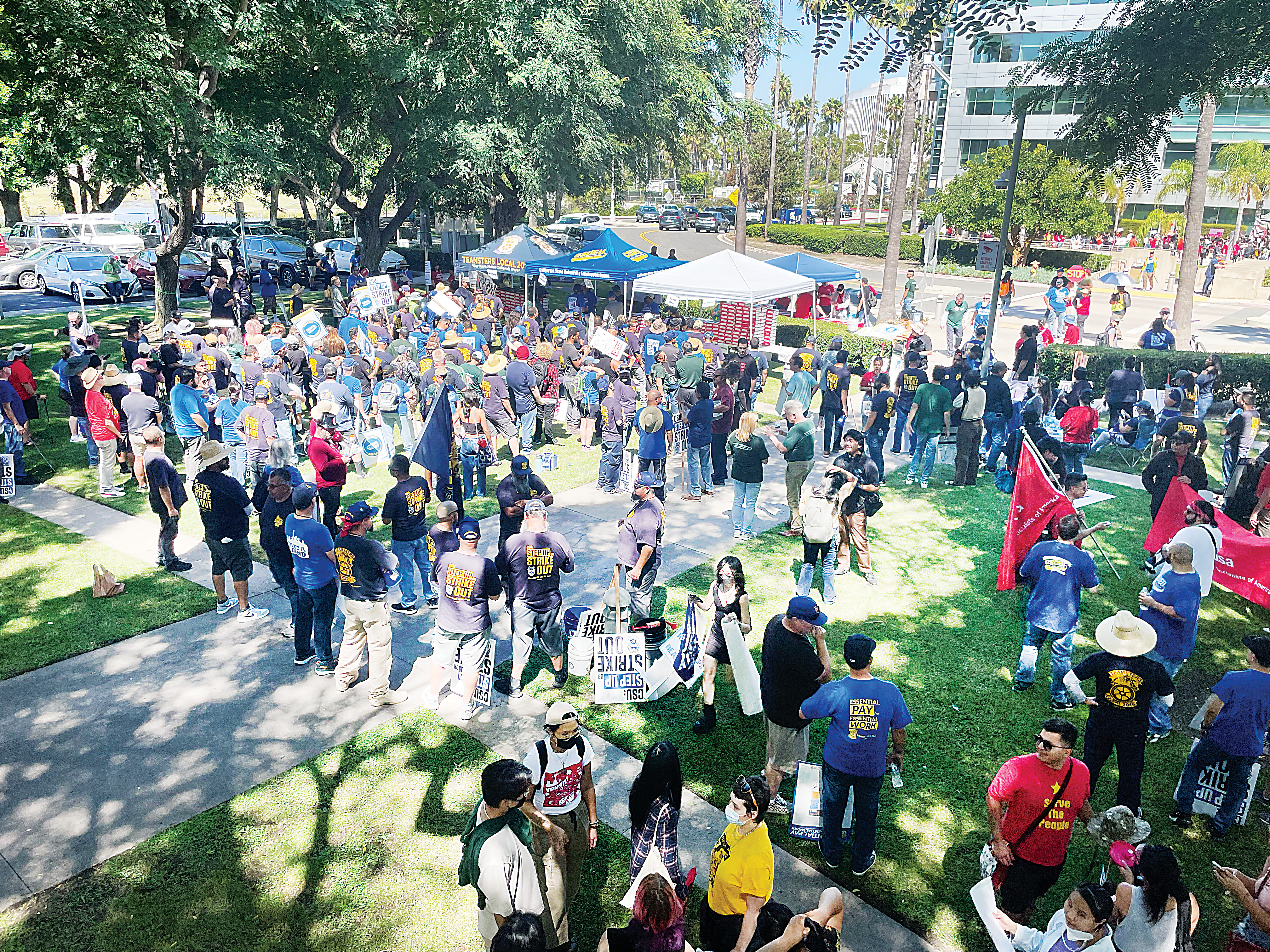
After over a year of negotiations with the California State University (CSU) Chancellor’s Office, the California Faculty Association (CFA), which represents lecturers, professors, counselors, coaches and librarians, and Teamsters Local 2010, which represents skilled laborers such as locksmiths, plumbers, painters, etc., have decided to strike during the second week of classes Jan. 22-26.
This will be the second strike for the Teamsters following their day-long strike across the CSU system on November 14, 2023. As for the CFA, this is their second strike as well, following their series of strikes across select CSU campuses in December 2023.
Goals for Strike
Teamsters such as Housing Locksmith Phillip Bradley and the CFA hope that the combined strike will bring the CSU back to the bargaining table.
“If you don’t have classes, you’re not going to have students-and if you don’t have students, you don’t have much of a university,” Bradley said. “So honestly, we’re hoping that the threat of [a week without classes] will get us back to the negotiating table, but the ultimate goal of this is to get some fair labor contracts.”
The CFA in particular is fighting for better aspects in their contracts, such as paid leave for parents, lactation rooms, safer bathroom options and as CFA President Marisol Ruiz highlights as the most important, a wage increase that can compete with the recent 8% increase in inflation.
“The end goal for us is to get our 12% [wage increase] that we deserve,” Ruiz said. “[The 5% wage increase that the Chancellor’s office is offering] is behind inflation and would mean that we’re getting a pay cut. Are you seeing the gas prices? Have you seen the PG&E bill? Have you seen the food prices? [The Chancellor’s Office] is cutting our salary because it doesn’t keep up with inflation, so we’re doing the same work for less pay.”
The CSU has previously stated that they lack the funds to accommodate the 12% pay increase. However, Ruiz questions that the CSU lacks the funds, as evidenced by the salaries of the CSU presidents and chancellors, as well as pay increases they receive.
“If [the CSU system] didn’t have the money, why did the Board of Trustees allow [new CSU Chancellor] Mildred Garcia to [receive] almost a million dollars for her salary?” Ruiz said. “For me, [the Board of Trustees are] not making good decisions. They’re using our taxpayer dollars, our student’s money, to give the rich more, and it’s not trickling down to us, the workers – the ones on the front lines with the students.”
Potential Impact of the CFA-Teamster Strike on Campus
Besides classes being canceled, there are more potential and expected impacts on the campus community at large. CFA Faculty Rights Chair and member of the state-wide bargaining team for the CFA, Loren Cannon, explains the extent of the strike for faculty besides lecturers temporarily trading their markers for picket signs.
“We cannot do any other work,” Cannon said. “There’s no halfway to strike. If somebody said, ‘Hey, I’m not going to teach my classes, but I’m going to answer my students’ emails,’ – we can’t do that. We can be reprimanded. We can be disciplined. We can lose our jobs. So, the laws about striking, it’s gotta be an all-or-nothing.”
During the week of the strike, the Teamsters and the CFA will be picketing across campus, notably on LK Wood and 14th Street. Ruiz encourages students to support by joining the line throughout the week and hopes that the actions can be a teaching moment.
“[The CFA and Teamsters are] modeling,” Ruiz said. “We don’t know what industry [the students are] going to be in, but in any industry, they’re going to have to join a union to protect their wages.”
Bradley wants to make it clear that the Teamsters’ strike isn’t to attack Humboldt but to send a message to the CSU at large.
“This strike is not about protesting Humboldt,” Bradley said. “All this is about our collective bargaining with the Chancellor’s Office and the CSU system as a whole. We’ve got good managers and supervisors at Humboldt who have been very respectful and very supportive, and have been going above and beyond.”
With the Teamsters on strike, there will likely be much deeper impacts on the campus. Bradley explains that the university will likely need to hire outside contractors to keep the basic functions of the campus moving.
“We have to assume [the university is] arranging to bring in contractors or [other skilled laborers] that cover for leaks or [other repairs],” Bradley said. “But, we all have to go through extensive background checks before we’re hired because, you know, we work around students. And contractors cost more, outsourcing rarely results in long-term savings.”
On top of the CSU Teamsters being on strike, other Teamsters belonging to other companies and groups will not be crossing the picket line out of solidarity.
“It’s a good strike because it’s a [Teamster] sanctioned strike,” Bradley said. “That means all of the other Teamsters won’t cross that line. Food deliveries won’t happen [such as Sysco Foods, which delivers much of the campus dining food]. UPS also won’t deliver. Any other Teamster-related service won’t cross that line. It will probably halt or delay construction on the new buildings [as those Teamsters are also affiliated with those projects.]”
Despite Sysco Foods not delivering for the campus next week, Assistant Retail Director Carlos Castillo assures that Dining services has prepared for the strike and there will be no expected food shortages.
“All units are ordering heavy this week in order to get through all of next week,” Castillo said. “So that way, there are no food shortages for the week.” What About Those That Can’t Afford to Strike?
As much as some faculty members would like to strike alongside their colleagues, some simply aren’t able to, as the financial hit of losing pay while on strike would be too much for them. Child Development Professor Larisa Callaway-Cole is trying to find a balance between supporting the action and meeting the needs of her family.
“I have spent significant time thinking about my position with the strike and have come to the following decision for myself,” Callaway-Cole wrote in an email to her students. “I cannot afford to strike. I am a new single mom, which has come with a significant increase in costs that I am learning to balance. If I were to strike for a whole week, I would not be able to pay all of my bills. That being said, I would like to show solidarity with my union, and will be striking on Friday, January 26.”
Why Strike Now?
Cannon clarifies that he feels the strike could have been avoided if the Chancellor’s Office were negotiating fairly.
“We weren’t getting anywhere at the negotiation table,” Cannon said. “From my perspective, it just seemed like they weren’t ready to negotiate with us at all. The strike could have been called off if they had brought us something that made sense that we could work with, but I think they just want to act like there’s no union here at all. We said, ‘All right, then the strike is going on.’ This may be the largest strike in the history of higher education.”
Cannon highlights the importance of the unions standing in solidarity together and taking action towards the CSU system.
“The CSU does not work without faculty. The CSU does not work without the Teamsters,” Cannon said. “If we don’t make a stand, it’s just going to get worse. It’s going to get worse for faculty members, and it’s going to get worse for students.”
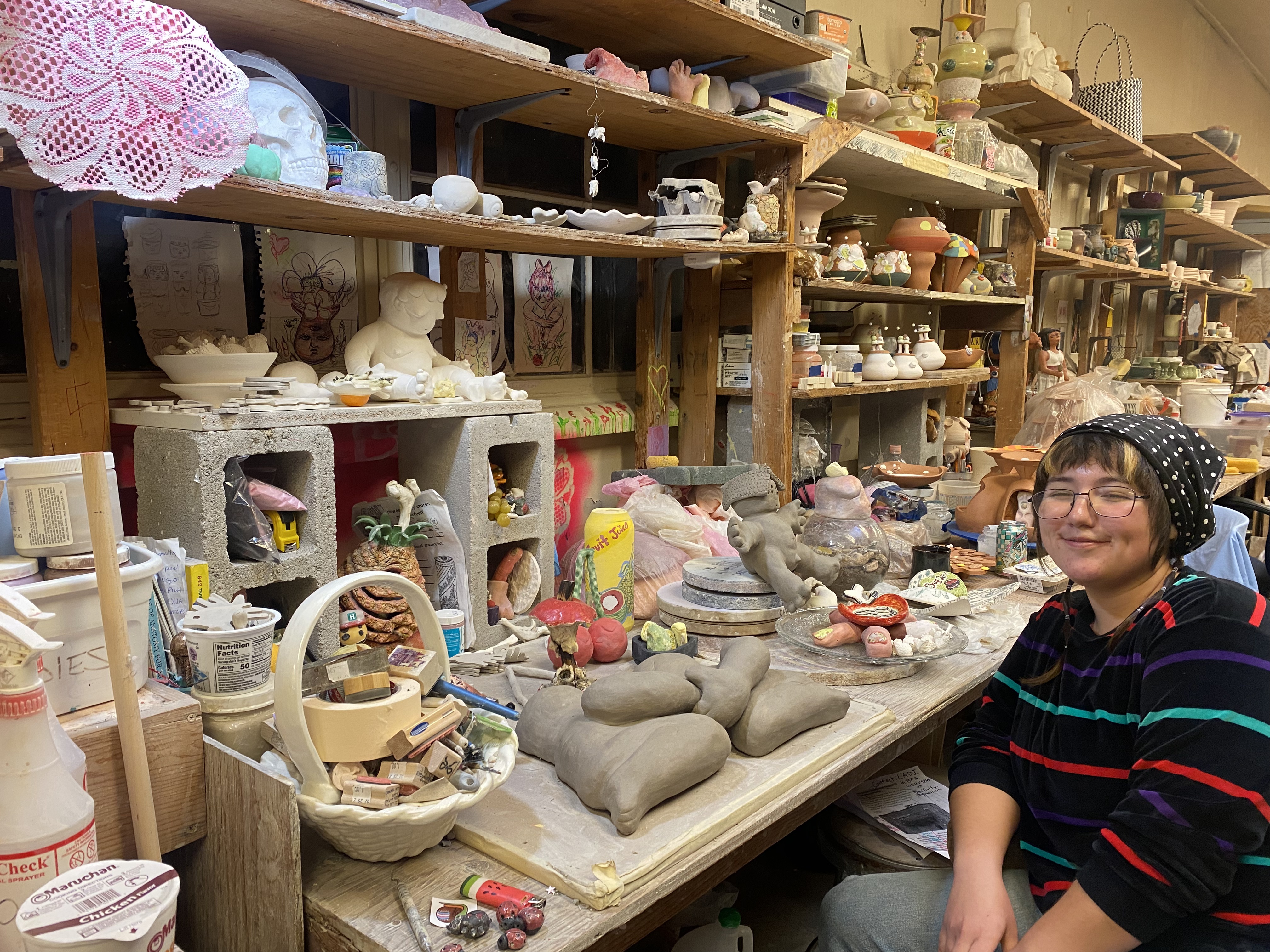
Tucked away in the narrow hallway-like room of the BFA studio located in Cal Poly Humboldt’s ceramic lab, or better known as The Laundry, you’ll find a crowded corner of a workspace.
Littered with anatomical clay body parts, a cinder block shrine of fake grapes, a clay pineapple with a bone sticking out of the top and many more tinkering tools like tape measures and lighters. Behind this workspace, you’ll find Ladi Ladines working away on their latest creation.
The Lake Elsinore native graduated from Cal Poly Humboldt with a stack of accolades last year. Starting with their Bachelor’s in Fine Art, minor in Art History and finishing off the list with a certification in museum and gallery practices. They’re prolonging their stay in the redwoods to finish out a ceramics extended education program.
They came up to Humboldt in 2019, but art had always been a foundational building block in their life since they can remember.
“I’ve always been an artist since before I could talk, walk or whatever,” Ladines said. “Everyone told me, ‘You’re an artist!’ so I just kept going with it — I see the world in a very visual way and it’s how I process everything, so it just felt like the right thing to do.”
Their most recent work on display was an interactive sculpture labeled “The Mess Nest” that was shown through October and November at the The Morris Graves Museum of Art in Eureka, California. The piece was a part of the 27th annual “Junque Art” exhibition that included art made from all recycled material, but the origin of the nest came way before the exhibit.
Ladines had been thinking about the concept of a “nest” for over two semesters before the idea finally came to them on a reflective day at the beach.
“I was feeling pretty down in a rut and lost in my art process,” Ladines said. “I saw this tree that was tipped over – it was a huge tree, and the roots were just flourishing and it took my breath away. It was at that moment I just wanted to make something, even just an ounce of that feeling – of having my breath taken away, feeling at peace with myself.”
They came home that following evening and began their creative process for the nest. The piece itself is a place to let those physical items that hold so much emotional baggage and weight in our daily lives go.
Photo courtesy of Ladi Ladines | The Mess Nest
“I had a box of emotional baggage trash under my bed. You know, old love letters and things that are just sort of triggering, and I went home that day, I got that box out and just dumped it out on the floor, and I lived with it on the floor for a good week,” Ladines said.“ I lived with it until the triggers weren’t triggering me anymore, and I felt like these are the pieces that I want to tie to the branches of my nest.”
Soon after, the nest spiraled into what it is today, after Ladines’ neighbor asked to add pictures they were hoping to get rid of to the nest. Ladines soon found themselves posting fliers on craigslist, LEX and even on campus urging the community to share their items of emotional baggage to the piece.
“I found myself asking everyone around me and making posts online and reaching out towards people that I would have never really got to connect with in that way,” Ladines said. “I found out a lot of people have boxes under their beds that they aren’t confronting and that they would like a space to do that, so that’s how the nest was born.
The nest is an ongoing interactive piece that now lives in the Redwood Art Association in Eureka. Ladines encourages the community to continue donating to the nest. Ladines has had quite an impact on the art community and has had many installations displayed across Humboldt County since residing here.
“I never have an end goal in mind, I let the thing flourish by itself. And it really snowballed this time into something that I would do again, like I would love to continue this project and find new spaces for it and reinforce the branches,” Ladines said.
Ladines previous art installations have included contributions to the 2022 Eureka Street Art Festival, The Morris Graves Cal Poly Humboldt Senior exhibit, as well as the Senior Art exhibit at the Reese Bullen Gallery.
Ladines served as a gallery intern under the Reese Bullen Gallery’s director, Brittany Britton, during their undergrad, later serving as a gallery assistant. Britton mentions how the galleries on campus serve as a learning lesson to students involved to really explore how their works will be viewed outside of a personal studio space.
“It seems like Ladi for their part has really taken that to heart, and has been really developing a deeper interest in exhibition art,” Britton said.
Ladines art plays with bright playful colors and lots of child-like wonder. Ceramic bones and fruit, their specialty, inspired their instagram handle, @bonefruity. They work with a wide variety of mediums and really try to hone in on creating community and home behind their artwork.
A few materials used to make the nest included a friend’s childhood blanket, a pair of bedsheets that triggered Ladines’ trypophobia and overall things they find attractive throughout their daily life. Whether that’s trash, an abandoned school desk on the side of a road they used in a previous installation or abandoned cardboard boxes.
“I do play with all kinds of materials, and by this I feel like I’m grounding myself in my reality, just by seeing how all of these different things interact with each other. Whether that’s wood and plaster, or jello,” Ladines said. “I’m working on some big jello projects.”
Ladines’ is constantly pushing their comfort zone when it comes to the process of their art. Their art process explores the relationship with our nervous systems and how things make us feel.
Photo courtesy of Ladi Ladines | Pary City mixed media on panel.Photo courtesy of Ladi ladines | Bone App Teeth
They’ve used three live cockroaches (named Sarah, Jessica and Parker) in a ceramic piece shown at the 2023 California Conference for the Advancement of Ceramic Art. Ladines explains this was a way to really explore their limits as an artist as cockroaches are something that always was a fear for them. Ladines said the cockroaches helped them work through trauma and are now a symbol of resiliency.
“It was me trying to desensitize myself to the heebie-jeebies you get when you see a roach or a bug. I ended up keeping them as pets for like over a year, and they became my studio buddies. I learned to love them and get over that initial sensation of being scared of them – that was a really wild experience. I love those roaches and am now thinking about getting a spider, cause I’m really scared of spiders.”
Through this process of testing their limits within their art work Landines has made beautiful community connections with their art , the nest especially. In their time spent at the The Morris Graves Museum and Redwood Art Association they’ve seen individuals come back to contribute to the nest, and even embraced with strangers that were grateful for the ability to add to the nest.
“The last day that it was on display at Morris Graves, there was a woman who came in hot with this ceramic pot, and just slammed it into the center, and I was like ‘yeah!,’” Landines said. “I had no idea who she was or anything, and she just looked at me, embraced me and was just telling me her lore. I cried a little bit, she cried a little bit. My tension about my piece was made and it just felt so fulfilling.”
Britton especially adores Ladines’ efforts to really incorporate the local community into their artwork and creative visions, even after their graduation.
“They’ve really done the hard work to embed themselves here in the community and become part of it, versus maybe just leaving as a student, like you get your degree and you take off,” Britton said. “But, they seem invested in helping embolden and strengthen the art community here in Humboldt.”
The nest will be on display at the Redwood Art Association through Dec. 15. Ladines still encourages materials and emotional baggage to be added to the piece during its stay. Ladines emphasized whatever is added to the nest is about what the giver wants to let go of, not what they want personally as the artist.
“My ultimate intention is just wanting to embrace people and myself, and that’s hard. Comfort is a big one – and acceptance. I’m not a perfectionist, I like things that are a little funky,” Ladines said. “I like to be playful with my colors. I hope that that comes through as love, and for people to also accept those qualities within their own work.”
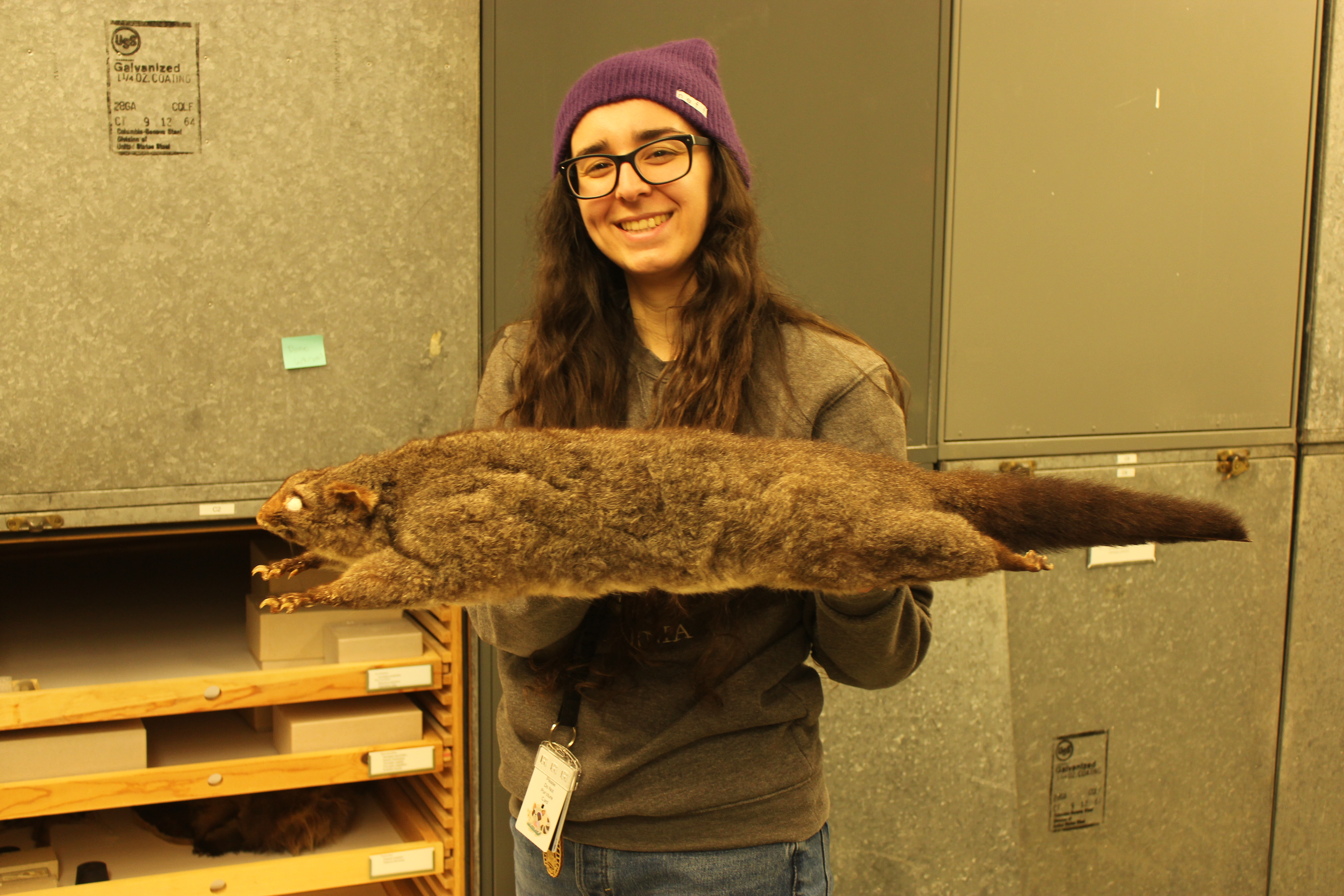
In the depths of The Science C building, the Vertebrae Museum is home to carefully preserved specimens to help students understand the diversity and evolution of mammals.
Dr. Silvia Pavan, a professor at Cal Poly Humboldt and museum curator for the Vertebrae Museum, moved to Humboldt County in Jan. 2022.
“I teach mammalogy, which is a popular course a lot of students take in the natural science programs,” Pavan said. “Mammalogy is a class offered that covers lectures and labs. In the lectures, we cover general aspects of mammals, starting with the characteristics of mammals, origin and evolution of mammals. That’s the first part of the three main blocks along the semester.”
The second block is functional morphology, a branch of biology that deals with the form and structure of organisms and their features. These include integument (hairs, glands and nerves), movement, acquiring and processing food, environmental adaptations mammals have to live in different habitats and communication.
Finally, in the third part of mammalogy, the lecture covers more ecology, social systems and living in groups. In the mammalogy class, Pavan also talks about conservation and museum science. This includes what they do with museum specimens, and how museum specimens can inform us about diversity, evolution, conservation, ecology and aspects of mammals.
Photo by Emma Wilson | Ovis canadens also known as a bighorn sheep skull located in the vertebrate museum.Photo by Emma Wilson | Preserved monkey in a jar of alcohol.
Digitalization and making data available online is one goal curators like Pavan are organizing. At the museum, guests can look at which species they have a tissue sample of that could be used to assess DNA sequence and what tissue collections they have. This is going to be part of the database as well so the scientific community can use the museum’s collection.
“That’s what we are doing now. I think that’s the main thing for the museum, we are trying to make our collections broadly used for everybody,” Pavan said.
The vertebrae museum is also home to a colony of dermestid beetles. These are tiny little insects that feed on dead animal tissue and clean flesh to the core of the bone.
“When we prepare a specimen, and you get the flesh, it’s a way of getting the flesh out; they eat the flesh and they leave the bones,” Pavan said. “The beetle’s way of living off the bones and having the skeleton ready for being analyzed.”
Alyssa Semerdjian, the collections manager for the Vertebrae Museum, maintains the specimens and helps volunteers get their foot in the door.
Anyone can volunteer at the Vertebrae Museum on Friday, from 12 p.m. to 5 p.m. If someone wants to come work on something, Semerdjian can show them how to apply.
“If someone wants to come work on something, I’ll be the person that’s here to get them started and stuff,” Semerdjian said. “If they’ve never done it before, I’ll be the person to walk them through it. My job is general upkeep and database work,”
Semerdjian explains why mammalogy (study of mammals) and ornithology (study of birds) classes are important. Classes like these teach students about looking at details in a way that you don’t think about. This is true for anything where you’re looking at really fine-scale features.
“For birds, specifically, going into that class, the birds are brown, and they fly around. Then as you start to see them, you see that there’s so much more, there’s so much diversity and you can’t go back to thinking that they’re all the same once you’ve seen that they’re different,” Semerdjian said. “Even within that, there’s a couple of things when you look at a bird, you want to look for — big wing, bar, size, shape, whatever — there’s like a list of features and it really taught me to zoom in on those features. You can see the bird for a second and it flies away, and just from having glanced at it, you can figure it out.”
Having the skill of knowing what features to look for and how to apply them is useful in a lot of different contexts. If you can do that for one category, you can do that for any category. You just need to learn what features to focus on. There are some transferable skills like paying attention to the small details.
Knowing about the diversity that’s out there is important. There are people who didn’t know about some of the local species the university had until they checked out mammalogy. The really difficult mammals to find are some rare or endangered ones that people just don’t know about until they’re taught through these courses.
“If you want to do research or go into wildlife, taxonomy is important and is a big deal. In a lot of research fields, it ties into evolution and branches off into so many different niche fields that people can go into,” Semerdjian said.
Pricilla Ceja, a graduate student at the university, is in the biological science graduate program and is a TA for the mammalogy class with Silvia Pavan for the first time this semester.
One goal Ceja hopes for in the future of mammalogy classes is to have more animal fieldwork. In zoology, there isn’t much to do with animals other than invertebrates. For bigger mammals, there isn’t really any way to see these mammals up close and alive.
“People in my class say, ‘Oh, how come there aren’t live specimens?’ And I’m like, well, there’s no one to take care of them, there is no one to catch them and then there’s nowhere to put them,” Ceja said. “There’s just no room for people to bring in space. There’s just not enough resources for live mammals.”
Ceja wants the Vertebrae Museum to be recognized more at the university because they constantly need volunteers.
Anyone who finds dead animals that were hit by cars or found deceased can bring them into the museum for research and volunteers.
“You’re going to see all the weird little stuff we have. I’m surprised by every lab too. Like I didn’t know we had a fucking wolf!,” Ceja said. “I was like what the heck is this? That is so cool.”
15 in 100,000 people have Type 1 Diabetes. That amount makes up 1.3 million people in the United States alone. Cal Poly Humboldt students have recently come together to create a safe space for those with Type 1 Diabetes and their friends and family to meet and be able to share their journeys with each other. The Diabetes Link is a newer organization that helps campuses set up chapters of their own to help empower and support college students at their schools. November is Diabetes Awareness Month, and is important to empowerment and taking time to celebrate those who have to struggle in their day-to-day life in ways people wouldn’t typically think about.
Diabetes Type 1 is a disease that targets your pancreas. Diabetic people cannot produce their own insulin enzymes. Someone with diabetes must monitor their blood sugar, and inject insulin or glucagon to raise or lower their blood sugar when needed. It is a constant that someone has to monitor at all times for the rest of their life.
Students Nat Allen, Zach Sherman and Niz Kears, who all have Type 1, came together to start the Cal Poly Humboldt chapter, and have hosted two meetings this school year. One was a pizza social for everyone to meet each other and start building connections, and the second was a dessert night where everyone brainstormed ideas they had to help provide more education and knowledge to the campus.
Nat Allen, one of the founders of the chapter and a sophomore in biology, has had Type 1 for 13 years. She acknowledges how important having a community is to having diabetes. Allen strives to be what she needed when she was diagnosed: a role model.
“I wanted to help start the Diabetes Link because having a community of other diabetics is super important to me,” Allen said. “I have had diabetes for almost 13 years and being able to talk to other diabetics has always been something that helps me.”
Allen says that it is important to talk about diabetes and not keep it as an unknown. Talking about it helps destigmatize and makes others more comfortable with their diagnosis. November celebrates those with this diagnosis, and helps spread awareness to the disease.
“Talking to others that truly understand the disease makes me feel seen, and allows me to talk about struggles that no one else would understand,” Allen said. “When I was first diagnosed, my parents made sure that I got to meet a lot of other diabetics to show me that diabetes would not stop me from doing anything.”
Noah King, a sophomore studio art major, has been going to all of the meetings and is glad to have a space on campus for himself and others. He was diagnosed with Type 1 at a young age, and hasn’t had many opportunities to connect with other people with diabetes.
“Growing up with diabetes, I found myself without resources or people that truly understood what was happening with me,” King said. “I found it incredibly rare to meet other Type 1 Diabetics, so I wanted to help start this because of that struggle.”
King wants to do what he can to help those with a similar experience to his, and help others know they aren’t alone. His goal is to keep growing the chapter and have a place with lots of support.
Zach Sherman, a sophomore environmental resources engineering major, got a late diagnosis at the age of 16, and he expresses how hard that was because he felt like he was too old to go to any groups or camps that were offered. He is one of the founders of this chapter and is happy to be a part of something bigger that supports him.
“I think one of the hardest things about having diabetes for me is the feeling that I am going through it alone,” Sherman said. “I knew I could handle my diagnosis and wanted to prove that I was capable of taking care of myself, alone, independently, just me.”
Sherman did not grow up with a large group of people who also had Type 1 around him. He only had one person that he could talk to about it. It was hard for him to talk to anyone else about it because he hasn’t had people around that have been able to understand what he was going through and how he felt.
“I never really knew what I was missing out on, so when Niz reached out to me about getting this club off the ground, I was excited but skeptical,” Sherman said. “However, just a few meetings later, I have already learned so much from everyone there.”
“My hope is that the chapter starts with our group and continues to grow organically over the years,” King said. “I want there to be a place to go to get support, understanding and resilience to handle the rigors of life and school while living with this condition.”
If anyone who has Type 1 wants to get involved with their club, whether or not they themselves have diabetes, check out their page on Instagram at @cph_diabeteslink for information on when meetings are.
Reflecting on the journey to reach this point in my life is mind-boggling. This journey started when my mother was five years old. My grandmother fearlessly guided her and her six older brothers to the basement while bombs dropped a few blocks away post-World War II in England. Shortly after, they embarked on a transatlantic voyage to Canada and settled in New Hampshire. I chose to find higher learning by moving away from the bustling East Coast to lay roots in the West.
As I approach graduation next month, I will be the first generation in my family to graduate from college. This idea never crossed my mind until I attended last week’s week-long event celebrating first-generation students hosted by the TRiO Upward Bound and Educational Opportunity Program(EOP).
Students and teachers shared various experiences and stories about what shaped their journeys through higher education, including the unique hurdles of navigating the educational system with determination and resilience. From family support to overcoming language barriers, the stories spoke of triumphs, setbacks and, ultimately, the pursuit of a better life for themselves and their loved ones.
Unraveling the influences
Growing up in poverty alongside my father and older brother, our family faced numerous challenges. However, my mother was determined to instill in us the value of education. Despite working long hours, our parents ensured that my brother and I had access to opportunities. In pursuit of his dream to become a doctor, my brother went to a prep school, which came with a considerable financial burden for my mother.
However, my brother veered off course after high school. Instead, he traveled the country on the quest for a different type of education. While his enticing lifestyle was tempting, I couldn’t let my mother down the same way.
Charlie Perez, an engineering major, talked about his self-discovery and resilience between frequent moving and language barriers within his family. Growing up in a Spanish-speaking household while attending English-speaking schools presented unique challenges for Charlie. The resulting sense of isolation and disconnection affected his academic performance and harbored a dislike for English literature.
Assistant Professor and Public Relations professor Jessie Cretser-Hartenstein’s father played a pivotal role by instilling two fundamental values: honesty and higher education.
Her brothers also served as inspirations, each following their unique paths towards college, creating an environment where educational aspirations thrived. With her family’s support, Hartenstein met a mentor who offered invaluable guidance, contributing to her academic success and personal growth.
Pressure to Succeed
Spanning the past 19 years, I have navigated higher education, transferring from College of the Redwoods and eventually to Cal Poly Humboldt.
However, it is notable that I only recently took the step to register with the student disability center a year ago. Driven by a determination to reach the academic finish line alone, I hindered my completion.
I could have also capitalized on the resources offered to seek out grants and lightened my debt if I had been more proactive in seizing those chances. With these realizations, I see how important seeking assistance and support is.
During an art workshop, students sketched their educational journey. To illustrate this, the Administrative Support Assistant of the EOP, Xelha Puc, incorporated wind next to a tree to symbolize burnout, imposter syndrome (fake it till you make it) and isolation.
“I feel like for me being first gen, you feel a lot of pressure, being the like first, and sometimes you don’t know how to navigate certain things within the education system,” Puc said.
Hartenstein reflected on her challenges during her educational pursuits, including imposter syndrome and the lack of guidance. Although these obstacles threatened to derail her college journey, she prevailed.
Keys to Success
On the roadtoward my personal and academic goals, I am fortunate to have an exceptional community that consistently shows me persistent love and support. Their presence in my life has been essential and the driving force behind my achievements. Reaching the finish line has only been possible with their encouragement.
“So, the first thing I learned was [to surround] myself around people who actually care about me, and how to identify people who are temporary and just want to take from you,” Perez said. “This helps me out with determining my learning group.”
Additionally, Perez highlighted how the COVID-19 pandemic demonstrated the importance of self-reliance and individual strength. He realized that having a clear sense of purpose, or a compelling “why?” helped him overcome challenges and pursue his passions.
Perez noted taking fun courses and engaging in community-building activities builds a sense of companionship, and students can connect with their peers and discover shared interests.
Hartenstein highlighted the importance of mentors, including professors, advisors, and professionals in the industry who provide crucial guidance and support.
“… if you don’t have self-confidence, and you have impostor syndrome, just work on building confidence,” Hartenstein said. “I started this sort of game with myself many years ago, where I have to have three things on my gratitude list every day, at least once a day. And those three things are one thing about myself, one thing about the world outside of me, and nowadays, it’s one thing about my partner or my family, or whoever I’m with.”
Untapped Potential
The experiences of first-generation college students are a testament to determination, resilience and perseverance in pursuing a brighter future.
“My family went through all of this, to transfer from Mexico to California, for me just to stop here?” Perez said. ‘No – the story continues.”
Each story draws inspiration, encouraging others to embrace their identities, seek support and conquer the barriers in their way. They embody the untapped potential for growth and success in every individual.
“Most of us have impostor syndrome, and we’re just faking it,” Hartenstein said. “Don’t tell anyone, but it’s true.”
Their stories are a powerful reminder of the transformative power of educational aspirations, shaping a better tomorrow for themselves and others.
“Address your deep wounds. They’re the cause of a lot of suffering that may keep on relapsing in your life, but they also are the things that hold the biggest treasure,” Perez said.
Once a year for about 15 years, the dorms would crawl with firefighters. It was a summer ritual. Dozens of firefighters, housing staff and paramedics would come to campus and practice the techniques they would use to save countless lives in the event of a fire. That’s not happening anymore.
The university canceled a “special services” contract with the Arcata Fire Department (AFD) that covered everything from those trainings, to campus outreach with students, to having a fire engine on standby at College Colors Day. Everything that wasn’t an emergency call was covered under the label of “special services,” and was paid for by a yearly $37,000 contract. The special services provided will cease Nov. 18, and the university was refunded $23,000.
The cancellation occurred after a false fire alarm at Founder’s Hall in August. AFD billed the university $100 after the false alarm caused them to send a fire truck. Arcata Fire Chief Justin McDonald said the false alarm billing was a new practice that applies to everywhere in Arcata, not just the university.
“It is district wide,” McDonald said. “[We’re] trying to cut down on calls that don’t need to happen. A false alarm takes away a fire engine from being available to respond to an actual emergency or a public assistance-type call. Because the alarm comes in, we have to treat it like a real event, like there’s smoke in the building. You can’t go ‘oh, that could be a false alarm’ and then wait for someone to call it in. That’s not how we do it. We have to treat it like it is.”
In a comment from the Marketing and Communications department, the main cause stated is the risk of running up tens of thousands of dollars in false alarm fees. McDonald thinks that’s unrealistic for several reasons. Every building on campus is treated as its own separate system, with its own alarms and quirks. Although the false alarm fee gradually rises to $500 after enough false alarms, McDonald said he calculated it would take 28 false alarms on the same building for that to happen. McDonald said it only counts as a false alarm if there’s no reason for the alarm to go off. If it senses smoke when there is indeed smoke (albeit no fire), that doesn’t count as a false alarm.
Tawny Fleming, the director of the Contracts and Procurements department, declined to comment. Vice President for Administration and Finance Sherie Gordon did not return requests for comment.
“If we hit $500 in a false alarm fee, you’re not fixing your alarm system,” McDonald said. “It’s having a problem. We’re trying to cut down on malfunction… if we have five alarms in a building, something’s going on. We would work with the Facilities Management and the State Fire Marshal’s office to get the alarm system fixed well before we’ve hit tens of thousands of dollars in false alarm fees… we’ve tried to make sure we’re treating them fairly.”
Another reason the university decided to cancel the contract according to their statement was because they felt that many of the services paid for had not been provided to campus for years. McDonald agrees, though he blames the pandemic for that.
“Campus was shut down, so they’re not wrong,” McDonald said. “We still provided the service we could, but for a while, there was nobody on campus and buildings were locked because they were sterilized and we honored their wishes of not being on campus.”
McDonald said it was too early to properly predict the effects the special services cancellation will have on students, though he does worry about fire readiness among students and how people might respond in an emergency.
“Where things could potentially go awry… it would be when the university says, ‘Hey, we need to do this training for the residence halls’, or ‘law enforcement needs to do their annual active shooter training,’” McDonald said. “Well, now that’s something we’re going to have to look at, in my mind. That’s something they would now have to pay a fee for instead of having it under the services contract. I don’t see it having an adverse effect immediately. But, if we don’t do interagency training with Housing and the UPD and Facilities Management, that’s going to have a long-term effect on how all the players interact in an emergency.”
Though the end of the special services contract will make connecting with students harder, McDonald said AFD was committed to trying to keep students as safe as possible.
“Fire prevention doesn’t rest,” McDonald said. “Especially when you have college students in residence halls or apartment buildings… we’ll do our best to continue to reach out to students, because there’s a lot of them out here between Humboldt and College of the Redwoods.”
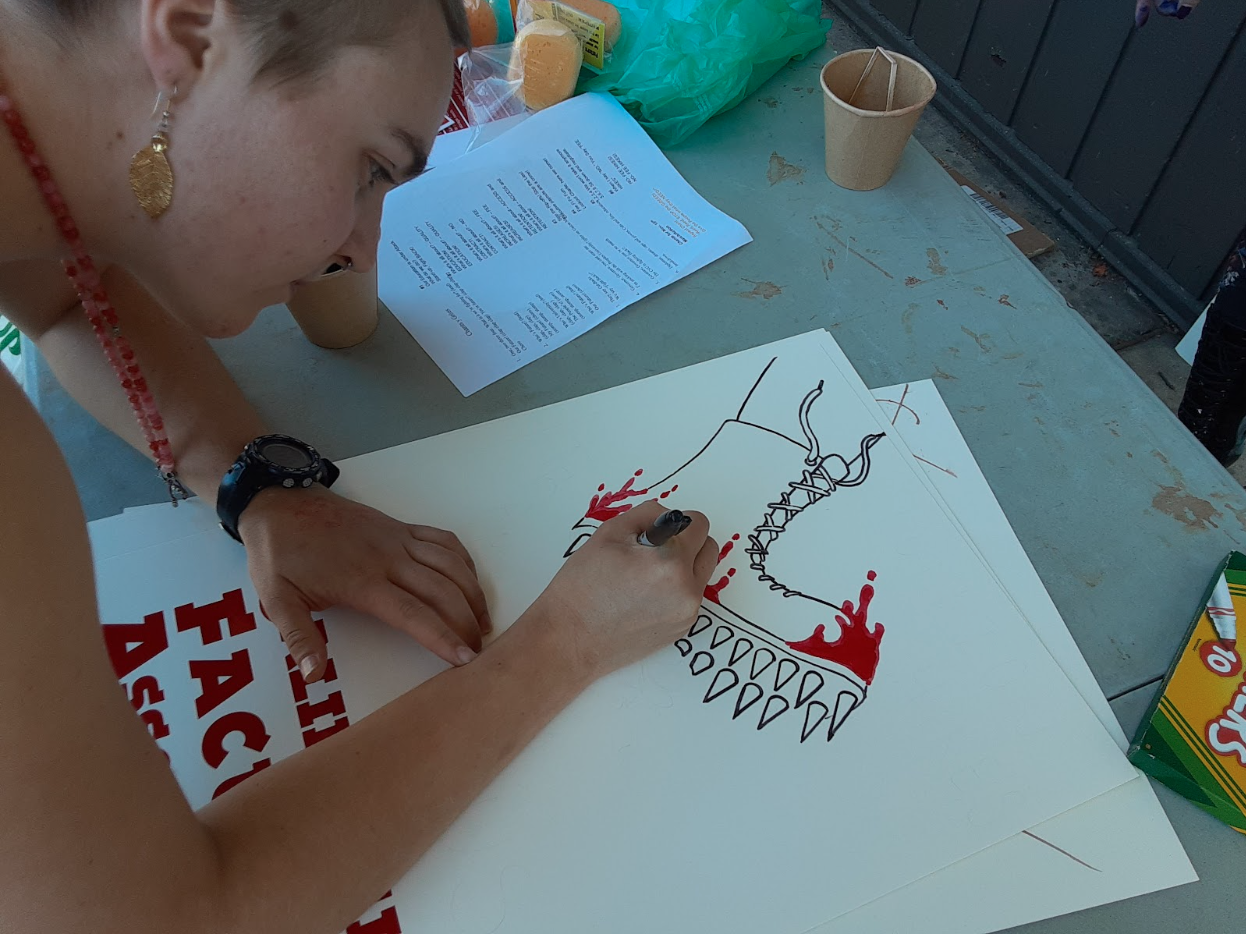
At midday on Thursday Oct. 5, a student hunched over a table, drawing a spiked boot splattered with blood, the front of Art B plastered with posters behind her. Phrases like, “Don’t make students your ATM,” and “Shame on you, CSU,” stood in stark contrast with the dark wall. A clear voice rang across the quad below, calling out to passersby. The air buzzed with the day’s unusual heat, becoming charged with urgent words and the smell of free coffee, drawing the eyes and noses of students to three folding tables, specifically the people behind them.
These were organizers from the California Faculty Association – the labor union for CSU faculty – and the Students for Quality Education, a student-led organization for education rights across the CSU system. They were there in response to the CSU Board of Trustees’ vote to raise tuition. This demonstration was also intended to promote the CFA’s upcoming rally on Oct. 19, where they plan to protest further. People were encouraged to enjoy refreshments, grab union merch and help make posters. Among the organizers present was Humboldt CFA President Marisol Ruiz.
“We’re forgetting that this is a public university, publicly funded. It’s not a private institution and we need to stop treating it like a private institution,” said Ruiz.
Ruiz explained that the CFA’s goals are a halt on tuition hikes as well as better pay and working conditions for faculty. This protest comes on the heels of long-standing grievances regarding what the CFA says is inequitable pay for faculty. According to Ruiz, the CSU has the money to fund education and pay its employees fairly without the need for tuition hikes, yet has strayed from the path of education as a public good.
A board bearing the words, “How Much Do You Owe?” was propped up against a planter in front of the tables. Students had scrawled their answers, the numbers going as high as $100,000.
Also present behind the tables was SQE chapter head Mary Mangubat. According to Mangubat, outreach by the SQE has been quite successful this semester at getting people engaged, because the tuition hike affects not only students but the entire CSU ecosystem.
“When they hear our admin makes a million a year, but students are in 100k debt,” said Mangubat. “They’re gonna want to be involved.”
SQE was founded in 2008 as part of the CFA and holds weekly meetings Fridays at 4 p.m. in Nelson Hall. Mangubat described them as fighting for an equitable, accessible education that is free from discrimination and debt.
Making a poster at one of the tables was Erika Ospenson, an environmental science and management major. Ospenson only found out about the outcome of the Board’s vote that morning from a friend in SQE and is now left with doubts about the cost of her education. She plans on attending the rally on Oct. 19 and is interested in getting more involved with SQE.
“Something I learned today is that I will get halfway through a degree and then not know if I can actually finish it because of the tuition hikes,” said Ospenson. “I’m already barely making ends meet and [only] able to pay my rent in a rent-controlled situation.”
The tuition hike has rattled the CSU system here and across California, but chapter president Ruiz believes that students and faculty are in this together.
Faced with a deficit of more than $500,000, the Associated Students (A.S.) met Friday to make huge cuts to student programs. The Womxn’s Resource Center saw a large cut of $25,850, Diverse Male Scholar Initiative was reduced by $29,340 and Recreational Sports Clubs were cut by 50%, now left with $15,000. Those were three of the over 20 funded program cuts that were approved.
It was a misty Friday morning in Arcata, specifically in Gist Hall room 218, where fewer than 20 people met in person to discuss the budget reform for funded student groups on campus. The meeting was called to session at 10:03am. Tensions were high and budget cuts were higher.
A $500,000 deficit heightened the tensions between A.S. and core funded student groups on campus. With thousands lower in enrollment numbers than originally projected by the university, it has left a sour taste in the mouths of everyone whose budget was about to be cut by thousands of dollars.
Associated Students Administrative Vice President (AVP) Andres Olmos facilitated the discussion for the necessary cuts of the budget. He stated that because of lack of funds, they are essentially starting from the ground up with the bare minimum of only wages for student workers, which would still leave them over budget. The revenue is much less than predicted in the spring due to the high enrollment projections made by the university.
Olmos acknowledged that it was important to A.S. that student workers were able to keep their jobs, and that the main priority was keeping each budget at least at their current wages only so students could continue to survive.
The approved 2023-2024 funded student programs budget sat at $1,278,717, and because of the lack of funding they needed to get to $750,000. Over 20 student groups like cultural centers, service organizations, and more, saw cuts that ranged anywhere from $2,500 to $186,498. Some individual budgets were getting cut entirely because they have trust funds that they can survive on for the year; others were biting their nails to try and get more than just enough to pay student workers.
The original revenue number was $786,000. Using A.S. reserve funds the number would have been $865,000. The financial office told A.S. to get to $750,000, meaning the total number of funds cut were $528,717.
The Eric Rofes Queer Multicultural Resource Center (ERC) approved budget for the 2023-2024 school year was $42,500 and was reduced today to $30,000 after exchanges between Ascher Marks, the fiscal director for the ERC and AVP Olmos.
“We still need to work over the winter and spring break,” Marks said over Zoom.
“Like I have stated to other organizations,” Olmos said, “you guys might have to reconsider working through winter break and summer break, so I apologize for that.”
“We cannot really consider that because our bills don’t stop during winter and summer break,” Marks responded. “We need to be working over the breaks because this is our job and how we make money.” In the end, the ERC’s budget was reduced by $12,500.
Some organizations still have enough to sustain for the year, like the Waste Reduction Resource Awareness Program (WRAPP). The Program was cut by $9,200 leaving them below the A.S. recommendation of only wages, yet they remain optimistic.
“We are so excited to have $44,000,” Ella Moore, Rose Co-Director said. “It means we are going to be able to pay our employees and [have] a little wiggle room for basic operations.”
A more in depth story will be printed this week on Wednesday, October 4.
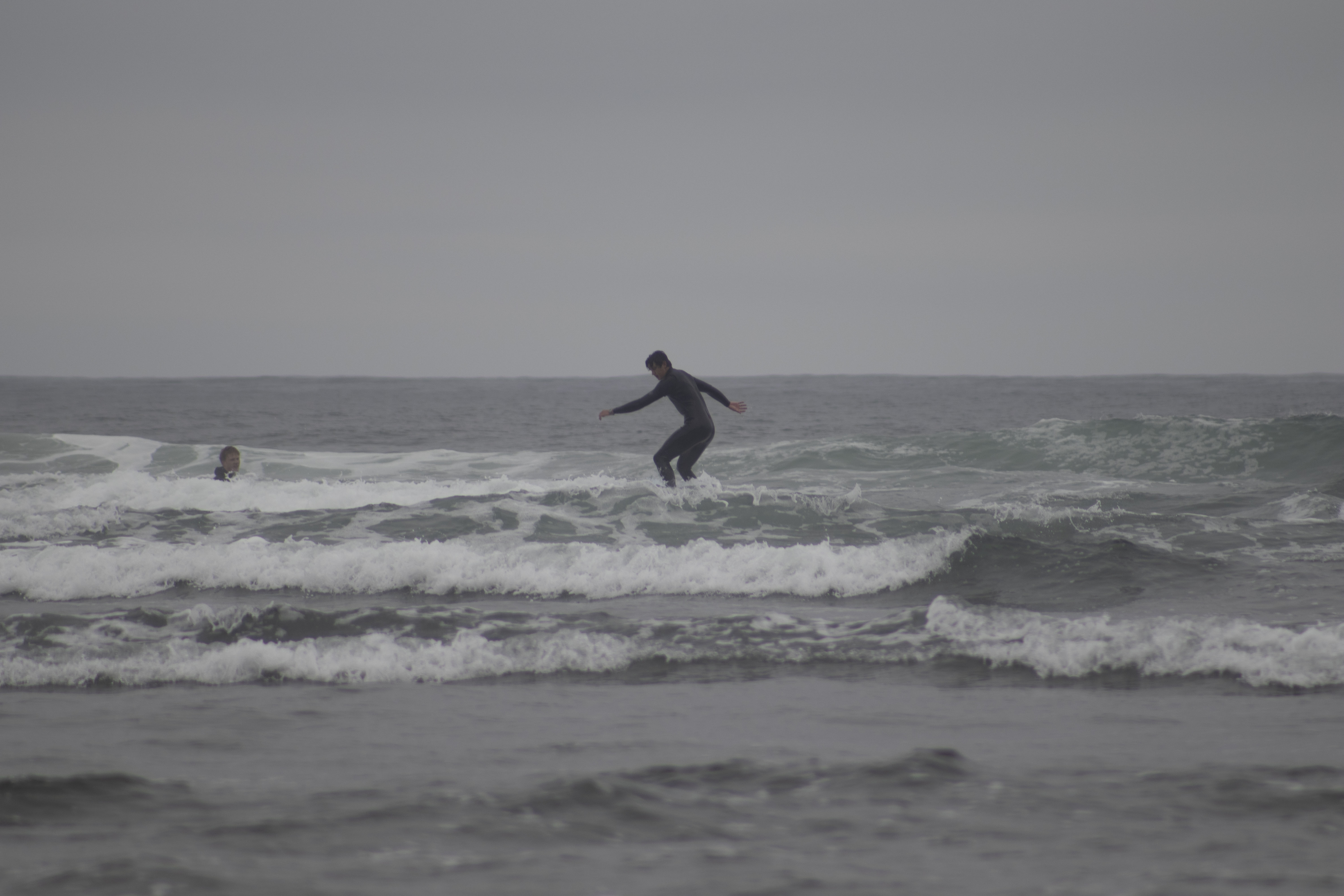
It was an overcast morning at Moonstone Beach in Trinidad, California on the morning of Sept. 17. A group of Cal Poly Humboldt students ran out into the waves, surfboards under their arms and wetsuits on their bodies. For some, it was their first time surfing. For others, it was just one of many sessions. All of the students had signed up for the surf class through Center Activities, which also offers classes in climbing, backpacking, kayaking and more.
The intro surfing class on Sept. 17 was Hannah Doran’s first surf lesson. At the beginning of the class break, she emerged from the water with a wide grin on her face and her hand displaying a shaka sign. Doran has previously surfed in New Hampshire, Maine and Scotland. Doran is a junior at Cal Poly Humboldt majoring in oceanography with a diving minor.
“Surfing is cool and Humboldt’s the place to surf,” Doran said. “I’m having a great time.”
She was most excited about getting more comfortable in the water, the Pacific specifically. She was also stoked to get solid advice from good instructors. Plus, $40 for five hours of instruction is a great price.
Grady Hechd was the assistant instructor for the class. He has been working at Center Activities on campus since Feb. 2022.
“It’s really rewarding watching people that have never surfed before get out there and watching them learn,” Hechd said. “It kind of clicks for some people.”
Chris Isola, an environmental science transfer student, had gone surfing six times in Humboldt before the Sept. 17 class, but it was his first lesson. Throughout the lesson, Isola caught several waves with a smile.
Alumna and lead instructor, Annalisa Rush, has been teaching surf lessons for over 25 years.
“[The best part of the job is] sharing the joy of being on the ocean and watching people get super stoked on the thrill,” Rush said.
Into The Deep, a student film-makers showcase, was put on by the Cal Poly Humboldt Art + Film department on Sept. 15 at the John Van Duzer theater. The showcase included a diverse collection of 19 creative short films.
Since the fall of 2022, film students have been preparing to make the dive head-first ‘Into The Deep’ with their films for this showcase. Each student film-maker took an exclusive journey of self-discovery to create these one of a kind films, and that was made apparent by the depth in each and every film.
“‘Into the Deep’ is more than just a theme,” read the program handed out at the showcase. “It’s a guiding principle. It encourages us to venture beyond the surface and embrace the uncharted territories of storytelling,”
With a total screen time of around 80 minutes, viewers were taken on a voyage down a deep, and at times dark, college-core rabbit hole. Bouncing between experimental films like ‘Momento Mori,” directed by Wren Kosinski, narratives like “Shrimp Film,” directed by Solomon Winter, and documentaries like “Camino,” directed by Nat Cruz, each piece was completely different from the one before.
Film production professors Dr. Michelle Cartier and Dave Jannetta attended the event and expressed the joy they felt during the showcase.
“This was the most solid showcase I’ve seen in a minute,” Cartier said.
He recalled how big the event used to be pre-pandemic, and how good it felt to see a room full of people celebrating student film-makers.
“We’re incredibly proud of the work they’re doing as artists,” Jannetta said. “I want students to make work they’re proud of.”
Whether viewers were giggling at Humboldt public bathroom reviews, learning about fisheries and sustainable fishing practices, deep in thought from spoken word and interpretive movement, or questioning their sanity as the films became increasingly unhinged, this showcase proved that Cal Poly Humboldt students are filled to the brim with imagination and creativity.
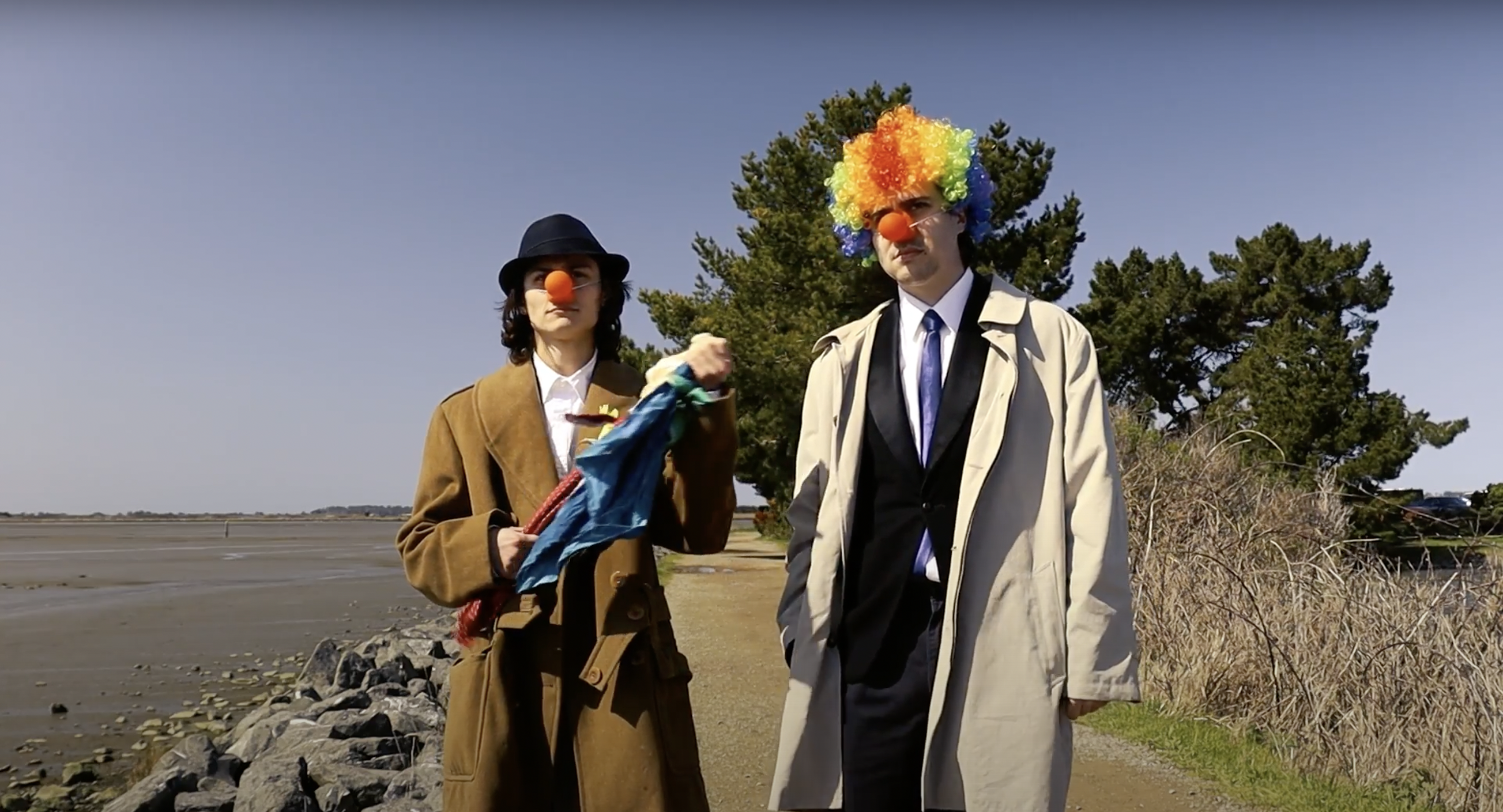
John Farley, a film major in his fourth year, directed the three and a half minute film “Circus Peanuts.”This was a memorable satire mafia film that played at the beginning of the show. The film involved local mobster clowns pushing circus peanuts, and a mafia boss dealing with a snitch in their peanut ring.
“It was quite a rush to see something I worked on displayed on the big screen,” Farley said. “Sitting next to my crew who helped with the making of this, we were probably laughing the hardest.”
Farley ran into a bit of trouble behind the scenes. After a whole day of filming, the original footage for the film was deleted. What viewers saw at the showcase, was actually the second attempt.
“I felt so defeated, but luckily we were able to rally the troops to get another crack at it,” Farley said. “We got together the following week and shot the entire film in one day. It was fast paced, but an absolute blast getting what we needed to get between scenes and locations. When the actors can’t keep a straight face during a scene and end up breaking character, it is a reassuring feeling that what I’m making will turn out funny.”
At one point in the latter half of the night, it seemed like films began bleeding into one another and causing a sense of chaos that made viewers question their sense of time. This chaos was apparent as viewers would begin to give an applause just to realize the film wasn’t over.
Eventually, realization struck the audience that these pieces were all a part of the larger puzzle: “Teen High School Movie: The Show: The Broadcast,” directed by Mara Lifquist. This film could be described as “Black Mirror” esque, and that is a compliment not to take lightly. This narrative film was around 14 minutes and contained satire commercials, frequent call backs and impressive horror effects. Between laughter and fear was a dissociation from reality that prompted a yearning to watch the film again.
At the end of the night, viewers left the John Van Duzer theater feeling inspired, touched and possibly disoriented.
Hundreds of miles from Humboldt county in Long Beach, dozens of people are rallying against the decisions of the Chancellor’s and the Board of Trustees that hold the fate of our communities’ future outside of the headquarters of the California State University (CSU).
What the CFA is fighting for
The California Faculty Association (CFA) is one of six CSU Unions present across the 23 campuses. The CFA focuses their support on staff that work directly with students such as lecturers, coaches, and counselors.
The other unions are the CSU Employees Union (CSUEU) who support staff that provide essential services to students such as those in admin, the Union of American Physicians and Dentists, Teamsters Local 2010 that supports skilled trade workers such as painters and carpenters, the student union UAW 4123 and finally, the Academic Professionals of California (APC) which provides support to campus staff that work with students outside of the classroom such as financial aid and residence life.
Currently, the unions are collectively bargaining, and they are fighting for many of the same things. The CFA is campaigning on two main fronts, better wages and financial compensation, as well as better workloads and support to faculty
Wages
The CFA is asking for a 12% general salary increase. Cal Poly Pomona CFA member and associate professor of Political Science Marc Scarcelli reasons that although a 12% increase may seem like a lot, it’s essential to keep wages fair as the inflation rates increased 8% since the last bargaining session between the CFA and the CSU.
“If your wage increases don’t keep up with inflation, your wages are actually going down,” said Scarcelli, “and so if you think about it, we have to threaten the strike just to break even if we’re not actually fighting for more. We’re fighting just to break even. We [got a 3% pay raise] at a time when inflation was over 8%. What we got is effectively a pay cut.”
The CFA is also hoping to raise the salary floor for lecturers. Chief Steward of the Humboldt APC Chapter Tania Marin-Zeldin feels that this proposal is needed to help faculty with their standard of living.
“To hear that some of our members have two jobs because they can’t afford to have a decent living and provide for their families, that’s the sad part,” Said Marin-Zeldin. “We shouldn’t have to have two jobs. We shouldn’t have to be barely living, paycheck to paycheck.”
Freshman Evaluator and Union Representative of the APC Sierra Farmer hopes that having more competitive wages could help with retention of workers within the CSU system. She explains that because of what feels like unfair wages, many CSU workers, including alumni, leave because they can’t live comfortably with the wages provided.
“We lose good employees in the Cal State system,” Said Farmer. “We have lower wages than the UC’s and the community colleges. So we lose really good people to the other systems all the time because they don’t make a living wage.”
Another financial goal to increase fair wages and combat inflation resulting in pay cuts, is the unions fighting for yearly step-raises within the CSU system.
Better support for staff and faculty
To also help with retention rates for faculty and staff, especially counselors, Professor and CFA President of the Humboldt Chapter Marisol Ruiz notes that better policies surrounding tenure and more long-term contracts can help with the feeling of stability for employees.
“We want [counselors] to get three year contracts,” said Ruiz. “When you’re in a [year-long contract], you’re in a precarious situation. You don’t know if you’re getting your job back or not, so people sometimes don’t want to stay. We’ve had a hard time getting good counselors to stay. We need to offer them better [contracts], where they will be more likely to stay due to better conditions.”
On top of contracts, the unions want there to be more fair workloads for faculty, as well as better ratios between students and faculty. Ruiz remarks on the importance of a healthy ratio between students and faculty.
“We want to give [students] more attention,” said Ruiz. “We want to lower class sizes, and focus on [student’s work]. But the [CSU] just wants to cram everybody in. The more care that we have for our students, the better they will do in their classes and the more effective they will be as [learners] and we want that. ”
Beyond workloads and wages, the unions are also wanting to ensure more gender equity on campuses by providing bathrooms and changing facilities that people can feel safe with no matter their gender. They also want better paid parental leave and more lactation stations for parents across campuses.
Process of Union Bargaining and Current State of Negotiations
Every few years, each of the unions on the CSU campuses reopen their contracts with the CSU to bargain. This year’s cycle is unique as it was delayed due to COVID, and instead of bargaining in a staggered way, every union is negotiating their contracts at once. As of the writing of this article, every union aside from the CFA is still at the bargaining table. The CFA has declared an impasse with the CSU since they did not come anywhere close to an agreement, and has moved onto the fact-finding stage. Faculty Rights Chair for the CFA Humboldt Chapter and Lecturer in the Philosophy Department Loren Cannon explains the process
“Fact finding is where [the CFA] and [the CSU] produce information and argumentation as to why our proposals are good. [The CSU] will probably try to produce information that says, ‘Oh, we just can’t afford it.’ [The CFA] will produce information that says, ‘well, actually, you can.’ We could go back to bargaining somewhere in the middle here, but if we don’t have any agreement at that point, there might be collective action.”
If the mediation following the fact finding stage again fails, the union can then vote on to take action, such as a strike. If the CFA does decide to strike, it will likely be in early November as of the time of writing this article. Scarcelli notes that a few within the CFA are looking forward to a chance to strike.
“In terms of willingness to strike, I talked to a lot of my colleagues and honestly, they’re not just willing, they’re eager,” said Scarcelli. “Colleagues all over the place are chomping at the bit like, ‘when do we get to strike,’ because they’re pissed. They’re just furious. You know, when our incomes are effectively going down. And then we keep seeing that they give appalling raises to university presidents and the Chancellor.”
CSU Response
In a video message and written statement from interim Chancellor Jolene Koester, she affirmed that the CSU is committed to fair pay and compensation for faculty and staff. The CSU has proposed a salary step structure for faculty and staff in the CSU’s to reach 12% over three years, however the increase will be 5% in the first year. The CFA has rejected this and declared impasse following the offer. The CSU leadership say they will be challenged to meet the proposals of the CFA and other unions throughout the CSU.
CFA flyer
Why Faculty are Fighting
With the CSU rejecting some of the union’s requests, many within the union are becoming more frustrated, especially with the wages that the CSU higher-ups and presidents are making. Ruiz notes that on average, after the average CSU president’s salary and allowances for their car and housing, they generate more income than the governor of California.
“I do not think it is acceptable for us to have a housing allowance for anybody who’s making $300,000. it’s not right, when our students are homeless and are living in cars, and we don’t even pay a living wage to lecturers,” said Ruiz. “ How [is the CSU] getting all this money for car allowances? How are you getting a housing allowance? How are [CSU presidents] being provided for? And our students are not? Your job is not as important as the governor of California, let’s put back the money where it needs to go.”
Farmer also notes that her yearly wage barely compares to Humboldt President Jacskon’s yearly housing allowance
Overall, the unions and their members such as Scarcelli are working towards better compensation and working environments to continue supporting students in their journey of creating a better future for themselves.
“We do what we do because we love education,” said Scarcelli. “We love our students. It would pain me to skip classes, but I will, and I find most students are very receptive to our cause.”
Torn between two worlds, junior dual-sport athlete Emilia Long came to Cal Poly Humboldt and was able to have her cake and eat it too. Long is from Port Angeles, Washington and has been playing basketball and soccer since she was around 6 years old. She was introduced to the two sports through her older siblings.
“My older siblings also played soccer and basketball, and I kind of just followed in their footsteps,” Long said.
Before committing to Cal Poly Humboldt, she played at Peninsula College, a junior college in her hometown. During her time at Peninsula, her team won the Northwest Athletic Conference Championships for soccer and she was named North Region Conference Defensive Player of the year for basketball. When taking the next step of transferring, Long’s Peninsula College coaches were in communication with Cal Poly Humboldt’s women’s head soccer coach Grant Landy and women’s head basketball coach Michelle Bento-Jackson. Long shared that she was talking to other colleges as well during her transferring process, but it was mostly about one sport. That’s when it became clear to Long that Humboldt was the place for her.
“I think [it] mainly was the opportunity to play both sports, that was a big thing for me, because for me I couldn’t really choose which sport I liked better,” Long said. “At my [junior college], I was able to play both as well, and then from there I just didn’t really know which route I wanted to take. Then when they said that I would be able to play both, that’s when it really caught my eye.”
What caught both coaches Landy and Bento-Jackson’s eyes was her competitive and hard-working attitude. Landy said that she is a great teammate, very humble and supportive. Bento-Jackson’s response also aligned with this.
“Emilia is a terrific addition to our athletic department as a whole. She is such a wonderful person and a great teammate,” Bento-Jackson said. “Anyone and everyone who meets Emilia has nothing but positive things to say about her. She has a very pleasant spirit about her, along with a good balance between being a great competitor and a sweetheart of a person.”
Photo courtesy of Max Tepper | Cal Poly Humboldt women’s soccer celebrating a goal on Sept. 7.
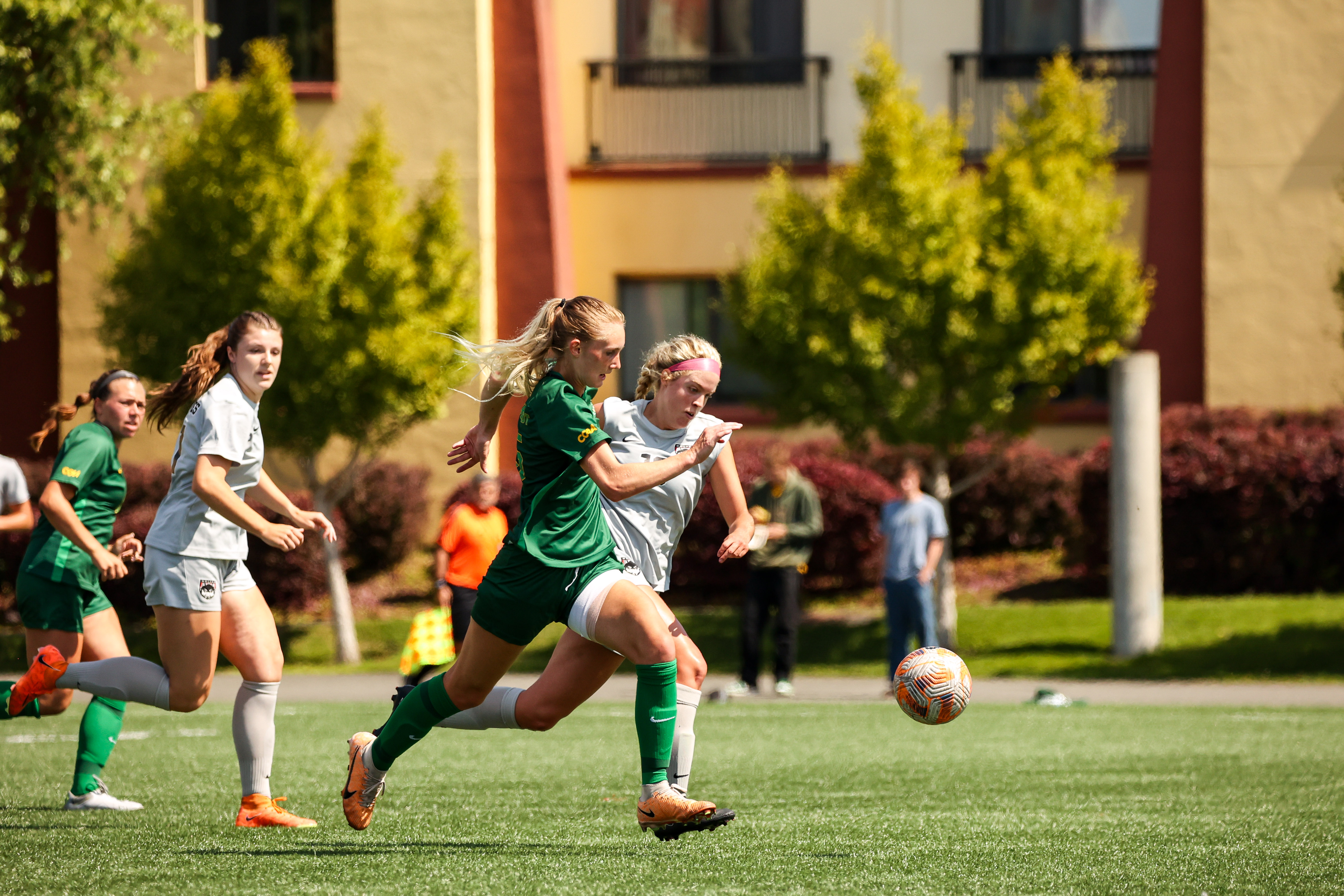
Due to it being the fall season, Long is committed to working with the soccer team at the moment and she has already made history during her time there. The team’s mantra is “stay hungry,” and Long emulated exactly that on Sept. 2. It was a homecoming for Long and she was able to make history in front of her family. She scored four goals against Seattle Pacific, being the first Lumberjack in program history to do so. This led the Jack’s to a 4-3 victory over the Falcons – their first ever win against the Falcons – and earned her the title of CCAA Offensive Player of the Week for Aug. 31-Sept. 3.
“I am really competitive, and I just wanted to win the game, that was all that was in my mind,” Long said.
For Long, her approach to the game is to play fast, hard and give 100% effort. Landy further explained that she likes to get to the goal and create chances for other players and herself. With basketball, coach Bento-Jackson expressed that she has the ability to attack the basket and is a strong defender.
“She’s tough and always finds a way to get the job done,” Bento-Jackson said.
The women’s soccer team is currently undefeated with a record of 5-0-1. When asked what is different about the Jack’s this year, Coach Landy said the chemistry between the team is electric.
“The team is gaining more confidence with each other and trusting their teammates. We are deeper this year in all positions,” Landy said. “They have a sharp competitive edge which has shown itself so far in practice and games.”
Women’s soccer is having their first conference game at home against Sonoma State Sept. 23 at 3 p.m. Women’s basketball is listed to start their season on Oct. 29, so once soccer season ends for Long, you will be able to see her in action on the court.
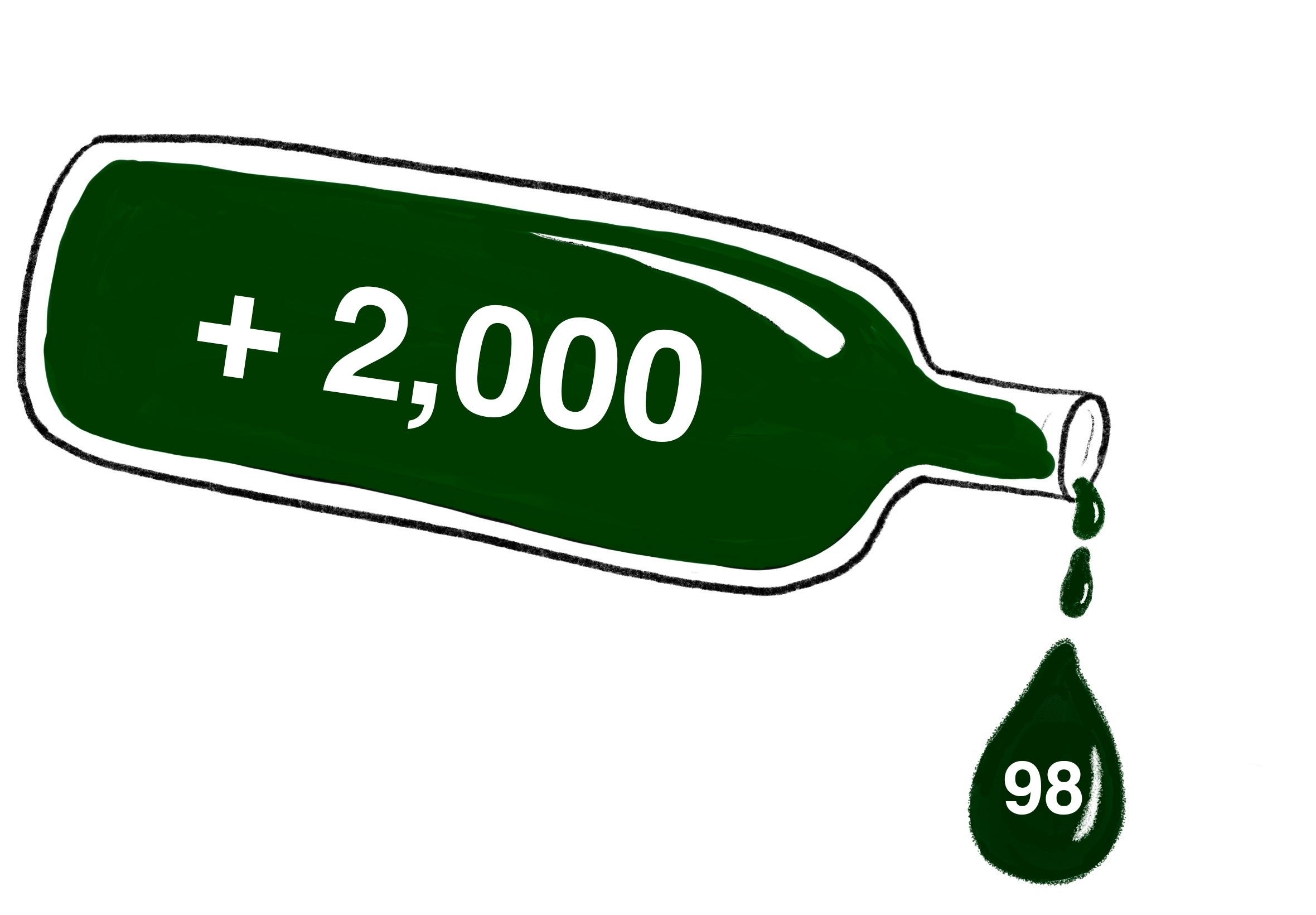
Back in March, the university projected over 2,000 more students for the Fall 2023 semester than from the Fall 2022 semester; in reality, there are only 98 more students enrolled this fall.
On March 7th, the University Resources and Planning Committee (URPC) had an Open Forum to discuss budget recommendations and feedback. In that forum enrollment for fall was projected to increase by about 2,000 students to have around 7,449 total students. However the current data from the university’s Institutional Research, Analytics, and Reporting shows only 5,964 total enrolled students. This difference is meager compared to last fall when total enrollment was 5,866.
Of the nearly 6,000 students in attendance, there are 959 new freshmen undergraduates and 758 transfer undergraduates. These are preliminary totals, as final enrollment data will be available after the add/drop deadlines on September 18th.
According to the university website, “Cal Poly Humboldt would expect to see enrollment increase 50% within three years and 100% within seven years.” At current growth of enrollment rates, it appears unlikely for the university to meet this goal.
Citing a hectic start to the semester, Chrissy Holliday, Vice President for Enrollment Management and Student Success, could not comment on the low enrollment numbers and advised the Lumberjack to talk to university Communications Officers.
Although there is growth, it is attributed to the university’s transition to becoming California’s third polytechnic campus. This transition promised $433 million of one-time funding and $25 million in ongoing base support, a name change, a host of new majors and hundreds of new on-campus dorm rooms. While new majors like cannabis studies (BA) and applied fire science and management (BS) have been added for the first time this fall, additional on-campus housing has not yet been achieved.
“The University expects this to be its second consecutive year of fall semester growth, and that is something to celebrate. Given the fact many colleges and universities in California and across the nation continue to suffer enrollment losses,” Grant Scott-Goforth, the university’s Communications Specialist said. Cal Poly Humboldt aims to bring enrollment up to 7,000 students by Fall of next year.
The expansion of Cal Poly Humboldt is inevitable. At least two satellite properties west of highway 101 have been purchased by the university and the ‘Craftsman’s Mall’ project promises 800 new beds in the coming years.
“The Student Housing Project now in construction is expected to be completed in Fall 2025, with others rolling out in the coming years,” Scott-Goforth said.
Although there is a lack of growth in enrollment, the university is still suffering. In the spring semester of 2023, an already understaffed University Police Department had to provide shuttle service to students housed in hotel rooms miles north from campus, while student-led housing protests ignited in the quad in the early part of the semester. Growing pains were felt by students and faculty alike. It’s apparent that the university is under strain from the exponential growth it’s undertaking, however this has not caught the school off guard.
“Leadership knew that the first application cycle as a polytechnic would be different, and that it would take some time to develop the right infrastructure to capitalize on the increased admissions interest in the institution,” Scott-Goforth said.
All this to say, welcome home to all of the new Lumberjacks and a warm (probably overcast) welcome back to the seasoned ‘jackers of Cal Poly Humboldt.
Spring break was an eventful one for the Cal Poly Humboldt softball team. After winning a non-conference series 3-1 at home against Central Washington University, they then hosted Dominican University of California in a non-conference doubleheader on Wednesday, winning 5-0 and 8-0.
This led them into the important conference series this past weekend at home against San Francisco State. It didn’t get off to a good start for Humboldt as they lost both games by one run on Friday.
“I think everyone knew we should have beaten that team the first two games,” said pitcher Alyssa Smokey.
There was undoubtedly a different energy in the air on Saturday afternoon, as the Lumberjacks knew the pressure was on them to redeem themselves.
“I think everyone’s energy changed the morning we walked in, everyone was more focused,” said Smokey.
The Jacks came out much stronger, putting on a show and winning 9-3 and 11-1 to split the season series.
In the first game, Shelby Shanks had two runs and two hits, while Katlyn Gifford had two hits and two RBI. Smokey led Humboldt’s hitting with three hits and took home the pitching win. In the second game, Shanks and Gifford had three RBI each, Micaela Harris scored three runs, and Ciera Pyle had three runs and two hits. Gaige Garcia took home the pitching win.
“The senior leadership definitely had an impact on us winning because after the games on Friday, our seniors kind of talked to us,” said catcher and outfielder Julia Rivera. “They focused on the positives of it rather than the negatives, which I think is a big thing with our team.”
Rivera also mentioned how the team played to have fun on Saturday rather than to win, and this helped them play their game the unique Humboldt way.
“If you can trust your teammates off the field, then your relationship on the field is gonna be totally magnified in a way,” said Rivera. “Compared to the rest of the CCAA, we’re different in a good way.”
The team’s resilience they have shown as of late is something that has been built in and taught by their coaches.
“This year has thrown us a lot of curveballs,” said head coach Shelli Sarchett. “We talk about it often as taking those curveballs and making them your pitch.”
Smokey was named CCAA player of the week on Tuesday after an impressive statline over the last few games.
“It’s an honor, like there’s a lot of good girls out there and I’ve played against some of the best,” said Smokey. “I couldn’t have done it without the rest of my team.”
Sarchett mentioned Smokey’s continuing high effort in practice as a factor in her recent performances.
“She’s been really pushing herself and it’s starting to come into fruition for her and for us,” said Sarchett.
A series away from home against Sonoma State, the team ranked first in the conference, approaches for the Lumberjacks on Friday and Saturday at Seawolf Softball Field in Rohnert Park. Humboldt plays Friday at 1 P.M. and 3 P.M. and Saturday at 12 P.M. and 2 P.M..
“I think Sonoma isn’t gonna really know what’s coming in because we’ve worked hard to get to where we are now,” said Rivera. “Sonoma’s gonna be good competition but it’s also gonna be a learning experience for us to pick up on how the top teams play and how we can mimic them in certain ways.”
Humboldt is currently ranked eighth out of ten after having to play some very tough teams in the conference so far, and they are looked at as the underdog in this game. However, this gives them a nothing-to-lose mentality that can take teams a long way.
“When you play with that mindset, it really encourages you to have fun,” said Rivera.
Art Wardynski has lost almost all of his adult family members in the past few years, most recently his mother. He reached out to Counseling and Psychological Services (CAPS) for support, and was only offered a telehealth appointment with TimelyMD.
This wasn’t acceptable to him. As a queer person, Wardynski wasn’t comfortable with the fact that TimelyMD is a Texas-based company, or that they offer faith-based therapy as an option for universities.
“When I’m already going through such a vulnerable time in my life, I don’t want to risk being discriminated against,” Wardynski said. “They told me that my only option was to go through TimelyCare, and that is not an option for me.”
After the death of his mother, on whose insurance he was dependent, Wardynski wasn’t sure if he had the ability to access off-campus healthcare, either. In the meantime, he’s just been trying to finish the school year.
“I feel like I’m just chipping away at energy that I don’t even have,” Wardynski said.
He isn’t alone in his concerns. Many queer students have voiced fears about the safety of the service, according to Landon White, Outreach Director for CPH’s Eric Rofes Multicultural Queer Resource Center (ERC).
TimelyMD is an online mental health company which markets itself to universities as a stopgap and after-hours counseling service. CPH has contracted with the company, it says to provide students with after-hours healthcare.
TimelyMD’s location in Texas, a state that is currently considering over 50 bills which limit the rights of transgender people, is one of the main issues that White has with Humboldt’s use of it.
Other than the objection to university dollars going into Texas, the likelihood of being paired with a non Queer-affirming therapist is too high for many students’ comfort. Even in the relative haven of trans rights that is California, many therapists are transphobic, according to trans students.
“There are other telehealth organizations out there,” White said. “We need accessible mental health services that don’t come at the cost of forcing Queer and BIPOC students to play roulette.”
The ERC advocates for the university to employ more CAPS counselors, especially those familiar with Queer and BIPOC issues. That would take competitive pay, job security, and outreach, said White. They also point out that the accessibility of telehealth is definitely a good thing, but don’t think that TimelyCare is a good option.
The use of online therapy services as replacement for in-person treatment by CAPS forces students into a situation that many are not comfortable with, should they need mental healthcare.
An open letter to the Associated Students, signed by campus groups including the Students for Quality Education (SQE), Queer Student Union, Black Student Union, and clubs such as the Mycology Club and Critical Race, Gender, and Sexuality (CRGS) Club, took a direct stance against TimelyMD. They asked AS to support the campaign against the service, something the body has not yet done.
Student Allison Miranda also feels uncomfortable going to TimelyCare for mental health support due to her and her family’s Queer identities.
“I need support. My tuition is paying for Timely,” Miranda said. “But I know that… LGBT+ students haven’t felt supported by them.”
Miranda is a transfer student from College of the Redwoods, and said that she feels comparatively unsupported at Humboldt.
“They [CR] had three different people, licensed therapists, who were trained in addiction counseling and all this stuff,” Miranda said. “Coming to HSU I expected an equivalent, if not better, experience. [Not having therapy] has impacted my studies.”
Two diesel engines churn out over 1000 horsepower into the frigid waters of the Humboldt Bay just after 8am on April 22. On-board, a small team of students, professors and crew members enjoy the calm waters of the Woodley Island Marina before entering the rolling Pacific. Though 49 years old, Cal Poly Humboldt’s science vessel, The Coral Sea, has gone through many rounds of facelifts over the years and is nearly unrecognizable from her original form of 1974. With the 2008 refitting of two new diesel engines letting out a steady hum into the misty Pacific air and a recent paint job displaying ‘Cal Poly Humboldt’ in perfect white text on the forward bow of the ship, the old girl looks and sounds like a much younger yacht.
Before exiting Humboldt Bay’s enterprising mess of wave-dissipating concrete blocks, Captain Jim Long kills the engines. Oceanography students donning hard hats carefully deploy a long fishnet and heavy metal trawling doors.
The Coral Sea’s wild years have been long left in her wake. She was bought by the then-named ‘Humboldt State University’ in 1998. Though obediently committed to science now, echoes of her wild years can be found around the boat. Kept behind a metal door on the port side of the deck, a paper copy of a 2017 article in the North Coast Journal titled: Past Lives of the Coral Sea details the vessel’s younger and more wild years.
One time owner of the boat, Ronald Markowski, used the boat in the 1980’s as a, “floating headquarters from which he radioed instructions to a team of pilots coming in from the Bahamas,” Sam Armanino writes in The North Coast Journal. Those pilots were pawns in a much larger scheme which smuggled cocaine and marijuana from Colombia into Florida and eventually, the greater United States. Eventually, these unlawful escapades would lead to a 45 year sentence for Markowski and the seizure of the CoralSea by The DEA. The long arm of the law would later use the Coral Sea in an operation coined: The Albatross Sting, which saw the yacht rigged with audio and video recording equipment. The operation hinged on the cooperation of former Markowski associate, Frank Brady, who would lead to the downfall of the sting when the DEA discovered he had, “continued to smuggle cocaine under their noses,” Armanino writes in the NCJ.
Decades beyond her drug-days, now associated with Trinidad’s Telonicher Marine Lab, the Coral Sea’s massive a-frame arm, with a capacity for 5,000lbs, guides in the students’ systematically laid out fishnet released ten minutes prior. Today, Oceanography 260 students are out on the last of their cruises for the spring semester, focused on marine biology.
Adjacent to modern flat screen navigation monitors, student Maddy Ho is filling out a worksheet tallying the living organism totals (hand counted by the students) that were caught in the first trawl of the day. Top of the list shows: 138 Dungeness crab, 147 shrimp, 27 ctenophores, or comb jellies.
Photo by Alex Anderson | Oceanography student Miriam Cima holds up squid that was caught using one of the R/V Coral Sea sampling nets.
“We do four cruises per semester,” Ho explains. “Biological, geological, chemical and physical.”
Powering three miles out into the open ocean, the Coral Sea was finally home again, riding growing waves. Those not quite at-home made good on Captain Jim Long’s advice given at 8:00 a.m. before leaving the marina.
“If you’re going to get sick – it goes over the side. Try to do it on the downwind side,” Long said.
As a couple of students stood queasy on the starboard side of the sturdy yacht, Trinity Abercrombie explained the critical role the Coral Sea plays in education.
“I don’t think that I would be into this major as much as I am if it weren’t so hands-on. The Coral Sea is definitely a hands-on experience and you get to be in the field working as soon as you join the major.” Abercrobie said before adding, “ It gives you a perspective on your future – like what you’re actually going to be doing in the field later on.”
In between exercises carried out by students of oceanography 260, a small team of students conducted the first series of measurements as part of their year-long senior project. One member of this team, Simon Kurciski, served six years in the Navy, completing many long submarine missions. His longest stint below the surface, Kurciski said, was 51 days. Now though, Kurciski’s time at sea serves a much different purpose.
Photo by Alex Anderson
Photo by Alex Anderson
Photo by Alex Anderson
Photo by Alex Anderson
Photo by Alex Anderson | Dr. Christine Cass handing over a Sculpin that was retreived from a sampling net to oceanography student Dayana Yuolho-Garcia (left).
Photo by Alex Anderson |CPH Oceanography professor Dr. Christine Cass counting and identifying species with students on the deck.
Photo by Alex Anderson | A group of OCN495 student’s gather samples for an ongoing capstone project that will be continuing through Fall 2023.
Photo by Alex Anderson
“We are comparing the effect of different photosynthesizers in the water on the chemistry of the water surrounding them,” said Kurciski. “Specifically we are looking at the effects that eelgrass in Humboldt Bay and kelp up in Trinidad have on perimeters like acidity, dissolved oxygen, total carbons, CO2.”
Kurciski and his team methodically gather water samples from two meters below the surface, then transfer the water into empty beer bottles. The amber tint of the bottles coupled with mercuric chloride added by Marcos Moreno gives the researchers a time capsule of sorts. The tint blocks light from further affecting the biological material.
“The reason we are adding these chemicals is to essentially stop the biological processes,” Moreno explains.
While the sampling is conducted exclusively off of the California coastline, Kurciski emphasizes that the results will reflect the real world implications of human-caused climate change. One test result that specifically interests Kurciski is the samples’ pH.
“Since the industrial revolution the ocean has increased in acidity by around 30%. That’s huge. We’re already living in an ecosystem that has been dramatically altered by humans in every way,” says Kurciski. “We’re trying to catch up and understand the effect of the changes that we’ve already brought.”
“The sad thing about climate change -and broadly, human-caused changes- is that a lot of the change is already locked in… deep ocean water circulates very slowly,” said Kurciski. “The oldest deep ocean water can be up to 1000 years old – in the Pacific. That extra carbon that we’ve put in there – that isn’t going anywhere.”
The future of the Coral Sea will again be determined in-part by an arm of the US government – though this time it’s not the DEA. Instead, hawk-eyed regulators in California will play a large role in the Coral Sea’s future.
“The CA air quality resources board is mandating that we replace all of our engines – we have five engines,” Long explains from the ornate bridge of the ship. He’s been working on the Coral Sea for fifteen years, serving as captain for three. “We’re looking at a half million to a million just for new engines by 2025. And then we still have an old boat. So we are trying to decide what to do to go forward. There’s going to be some big changes coming.” Importantly, Long assured, “The Coral Sea is not going anywhere.”
Prospective Dean of Students candidates made their intentions heard through forums and Q+A sessions held on March 7 and March 8.
One candidate, Ryan Griswold, was recently the Dean of California Maritime Academy, leaving the position in July 2022.
Griswold expresses a passion for working with students across institutions, especially at Cal Poly Humboldt.
“In terms of connections with the student population, I’m not going to say that this is different for me than a lot of institutions, because my passion for working with students really is universal. That’s not to say that the population isn’t different here,” Griswold said. “Every campus has its own demographics.”
Griswold recounted a story about a previous institution he worked at, where he and student volunteers came together to help students around finals using what he says is his love language: food.
“I have this tradition wherever I work, I like to find a way to incorporate food into things. We would get one of the industrial kitchens on campus, and we would bake banana bread for six, eight, or nine hours,” Griswold said. “Then we would take 200 loaves of banana bread and give it out to students at about 11 o’clock around finals.”
Other candidate Micah Mitchell is currently the Assistant Dean of Students and Case manager for Winston Salem State University.
Mitchell emphasized that to build that relationship, faculty must listen to student voices to understand how they are impacted by admin decisions.
“[Myself and other leadership are] doing stuff, we’re changing stuff, and trying to support stuff,” Mitchell said. “But if I’m not knowledgeable of what [the students] are going through, it’s gonna be hard for me to effectively support you.”
Mitchell also showed concern over the impending growth of the student population, and if campus resources can match the needs of those students. He is also conscious of overloading the current staff with the stress of supporting more students.
“The growth is great,” Mitchell said. “But going too fast is dangerous. Do we have the institutional support to support the changes? Because if not, we’ll have this influx of students, then have an influx over the inability and strain our system. So how can we grow and sustain and maintain at the same time…we can’t expect the same staff to expand and do more work with regard to doing that. So I think it’s about…people getting the resources and figuring out how we can successfully support the growth.”
Student and Indian Tribal and Educational Personnel Program (ITEPP) representative Mazacuauhtli Burrola wants whichever candidate that gets the job to integrate themselves into the campus community. Burrola wants to see this through the future DOS being open with their communication; by setting up methods to hear student voices such as dropboxes and a phone number to the dean of students publicly displayed on campus.
“You want to be our DOS, then you better move into my fricking house,” Burrola said. “You better be standing there in the quad. This is not a game. Our lives are at stake here, our futures.”
Cal Poly Humboldt film students screened their films at the Film III Showcase on Feb. 21 at the Van Duzer Theatre. Featuring five short films that students worked on during the 2022 Fall semester, the event served as a chance for students to showcase their work to the campus community.
With guidance from instructor Sarah Lasley, students wrote and directed the films in the showcase last semester. Lasley remarked that past semesters presented difficulties, with students not having access to practical experience. However, the students’ ambition particularly inspires her.
“The students are so talented, so it’s been exciting because they all have these huge ambitions,” Lasley said.
Spanning numerous genres, the films exhibit students’ artistic vision through their timely dialogue, emotional music, and methodical cinematography.
Richard Schild’s comedy “Monster & Me” features an obnoxious roommate who just so happens to be a red-eyed cryptid. A suit-clad protagonist follows and is in turn pursued by mysterious beings in Matthew Mason’s ethereal thriller “Woman in Gold.” A satirical documentary depicts an ambitious and chaotic Bigfoot-hunting YouTuber in Mara Lifquist’s “The Search.” Daniel Delgado spins a comedic depiction of chaotic friendship in his coming-of-age film “Bad Hombres.” A horrific demon-like creature lurks in the depths of a young person’s home in Izzy Starr’s “Where Will You Hide?” The lineup undoubtedly had viewers chuckling, hiding, and looking on with intrigue; all within an hour’s time.
A still from Matthew Mason’s “Woman in Gold.”
Beyond giving students the chance to look back at their hard work, Lasley mentioned the importance of students gaining the sometimes anxiety-ridden experience of screening their work to a broader audience. Delgado commented on the nerves that can come up from such an experience.
“It’s cool, but also overwhelming because I have never done [the showcase] before,” Delgado said. “But it’s cool, it does feel a little rewarding.”
A soon-to-be graduate from the film program, Delgado remarked at the experience of working with and screening the film alongside fellow student directors, how they all bring their personalities to their work. “[We all] see the world differently and that reflects in our films,” Delgado said. “So it’s just cool to collaborate with people like that. I think we all inspire each other, and that gets us excited for what we do.”
As film students get that experience, the campus community meanwhile gets to see the artwork that students have created. Through the showcase, Lasley hopes that students in the film program and beyond can see the possibilities of what can be created.
“It’s one of those moments where I feel like you’re watching people exceed their own expectations of themselves in a way,” Lasley said. “And that’s my favorite. That’s why I teach, to show people that they’re bigger than they think.”
Students whose films were featured are currently working on new productions for final film projects, which will be featured in the Fall 2023 showcase later this year.
This website uses cookies to improve your experience. We'll assume you're ok with this, but you can opt-out if you wish. Cookie settingsACCEPT
Privacy & Cookies Policy
Privacy Overview
This website uses cookies to improve your experience while you navigate through the website. Out of these cookies, the cookies that are categorized as necessary are stored on your browser as they are essential for the working of basic functionalities of the website. We also use third-party cookies that help us analyze and understand how you use this website. These cookies will be stored in your browser only with your consent. You also have the option to opt-out of these cookies. But opting out of some of these cookies may have an effect on your browsing experience.
Necessary cookies are absolutely essential for the website to function properly. This category only includes cookies that ensures basic functionalities and security features of the website. These cookies do not store any personal information.
Any cookies that may not be particularly necessary for the website to function and is used specifically to collect user personal data via analytics, ads, other embedded contents are termed as non-necessary cookies. It is mandatory to procure user consent prior to running these cookies on your website.