The Lumberjack


Students Serving The Cal Poly Humboldt Campus and Community Since 1929

Tag: California power outages

  • Fires Still Burn as PG&E Implements Mass Outages

    Fires Still Burn as PG&E Implements Mass Outages

    Largest intentional blackout in California history keeps millions without power while the state burns

    Over two million people across Northern California were without power on Sunday. Pacific Gas & Electric is working to restore power, but the company has scheduled another Public Power Safety Shutoff, this time for Tuesday morning.

    Despite the shutoffs, fires are burning across the state. The Kincade Fire, a 66,000 acre fire in northern Sonoma County, was only 5% contained as of Monday at 3 p.m. Located just northwest of Santa Rosa, the Kincade Fire has forced more than 180,000 people to evacuate, including the towns of Windsor and Healdsburg. 

    There are no casualties or missing persons reported as of yet, but 80,000 structures are at risk. Firefighters from as far south as Pasadena and as far north as Oregon have reported to the scene to try and stop the fire from pushing west across Highway 101. 

    PG&E’s shutoff is an unprecedented intentional blackout, and is the largest intentional blackout in history, according to the Los Angeles Times. The utility’s goal is to prevent high winds—which have reached upwards of 100 miles per hour in some parts of Sonoma County—from sparking wildfires.

    In a PG&E press conference on Saturday, CEO and President of the utility company—but not the entire corporation—Andy Vesey said the company’s goal is safety. 

    “Right now we have a big, historic event coming at us,” Vesey said. “We have two and a half million customers being impacted. There’s a real threat to public safety and that’s why we’re doing this.”

    Yet, across the nation, media outlets are questioning PG&E’s shutoffs. 

    Articles from Time, The Nation and ProPublica have claimed that PG&E’s shutoffs may not actually reduce wildfire risk. The shutoffs could prevent debris from sparking fires from electrical wires, but that is not the only cause of wildfires. Abraham Lustgarten for ProPublica points to cigarettes, barbecues, generators (which are used extensively during shutoffs) and cars as other common fire starters.

    “The blackouts solved nothing, of course,” Lustgarten wrote. “De-energizing the electrical grid is a bludgeon: imprecise, with enormous potential for collateral damage as people deal with a darkened world. It doesn’t even eliminate fire risk.”

    To Lustgarten’s point, a structure fire on the east side of the Arcata Plaza erupted Sunday afternoon, likely caused by a generator at the Big Blue Cafe, according to reporting by the Times Standard. While firefighters contained the blaze and no injuries were reported, initial estimates for the damages are as high as $2 million.

    “It’s more than just climate change. It’s about the failure of capitalism to address climate change. It’s about decades of mismanagement. It’s a story about greed.”

    Gavin Newsom, California Governor

    In some instances, it seems the shut offs weren’t implemented in time to prevent electrical lines from sparking fires. PG&E admitted that it registered a failed jumper cable at one of its transmission towers near the possible ignition point of the Kincade Fire right before the fire began. The area of the fire was set for a Public Safety Power Shutoff, but it didn’t begin until 28 minutes after the fire started.

    The outages have pressed some government officials to speak out against the corporation and its tactics. California Governor Gavin Newsom called out PG&E for greed and mismanagement in a press conference on Thursday. 

    “It’s more than just climate change,” Newsom said. “It’s about the failure of capitalism to address climate change. It’s about decades of mismanagement. It’s a story about greed.”

    Vermont Senator and presidential candidate Bernie Sanders tweeted that it was time to think about public ownership of utilities.

    Amidst the outages, PG&E’s stock has plummeted to all-time lows. On Saturday, Governor Newsom encouraged Warren Buffet’s Berkshire Hathaway to buy PG&E. 

    In the Saturday press conference, Vesey declined to entertain questions about PG&E’s tainted image. Vesey said those discussions can come later as they will focus on the public’s safety for now. 

    “No matter how much we focus on the past, it will not help us at all today or tomorrow,” Vesey said. “We take lessons learned, we take actions, we put in our programs and we work responsibly.”

    For now, California is under a statewide declaration of emergency by Governor Newsom, who has promised to hold PG&E accountable.

    “We will hold them to an account that they’ve never been held to in the past,” Newsom said in a press conference. “We will do everything in our power to restructure PG&E so it is a completely different entity when they get out of bankruptcy by June 30th of next year.”
  • Next Outage Could Hit Humboldt As Early As Tuesday

    Next Outage Could Hit Humboldt As Early As Tuesday

    Although areas of Humboldt County have the “all clear” for power restoration, another PSPS may be scheduled for Tuesday morning

    Parts of Humboldt have been given the “all clear” to begin line inspections and restorations for the current Public Safety Power Shutoff.

    “PG&E notified Humboldt County Office of Emergency Services (OES) that portions of Humboldt County have been given the “All clear” for the weather event and will begin the restoration process as soon as conditions allow,” the latest update from the Humboldt County Office of Emergency Services said.

    However, PG&E has also notified the county that another PSPS event may affect Humboldt as early as Tuesday morning.

    “PG&E also notified OES that another weather event is scheduled for Tuesday 10-29-19 at 6 a.m. which will also result in a possible Public Safety Power Shutoff (PSPS),” the update said.

    OES says it expects “a small window of time” between the two shutoffs, and urges residents to use the time to once again prepare to have no power.

    “As always, this information from PG&E is subject to change,” the update said. “Updates will be provided as soon as they become available.”

  • Power to Go Out Between 9 and 11 p.m.

    Power to Go Out Between 9 and 11 p.m.

    PSPS update delays outage by 4 hours due to changing weather conditions

    The power will now go out in Humboldt between 9 p.m. and 11 p.m. due to shifts in the weather, according to a Humboldt County Administrative Office update.

    “These delays in the power shut off are in part because PG&E is trying to limit the time that customers are impacted,” the update said.

    PG&E increased the number of accounts within the scope of its latest Public Safety Power Shutoff today from 850,000 to 940,000. Since many accounts provide power to multiple customers, PG&E estimates that over two million people are within the PSPS scope.

    PG&E expects to give the “all clear” for the windy weather event by 4 p.m. Sunday for Humboldt. However, the update clarifies that that is not when power will be restored.

    “The weather “All clear” time is the time when PG&E personnel can begin inspecting the lines,” the update said. “It can take up to 48 daylight hours from the weather “All clear” time until power is restored because any damage found during the inspection will need to be repaired prior to power restoration.”

    In a PG&E press conference at their headquarters in San Francisco, PSPS Incident Commander Mark Quinlan emphasized that the restoration will take different amounts of time for different areas as PG&E works to patrol 31,000 miles of lines. 

    “The restoration time is a sequence as well,” Quinlan said. “It doesn’t mean that every customer is going to be out for 48 hours. It means that we’re going to begin restoration activities at the times that I mentioned, and we believe we will incrementally restore everyone all the way up and not have anyone out past 48 hours.”

  • Blackout Preparation

    Blackout Preparation

    Our first PSPS was a wakeup call, now it’s time to go into the next blackout more ready than ever

    In early October, Humboldt County residents trailed around the block at gas stations hoping to fill up their tanks and stripped local grocery stores of food, water and battery operated lights. The Public Safety Power Shutoff made us realize how often we take electricity for granted, and how we use power for most of our daily activities. Simple tasks like cooking, cleaning, eating, working and watching television all require some form of electricity.

    Some locals were fortunate enough to have gas-operated stoves to make and warm food, but most of the LJ staff didn’t. Many of us rent apartments or live on campus and have electric stoves, so something as simple as warming a can of beans was nearly impossible.

    With the lights out, it felt like we time traveled back to the 1800s. The usual ways of entertainment were off the table, and when we went shopping in preparation most of us didn’t consider buying board games or downloading movies to a laptop. When it came down to sitting in a dark room with nothing to do we made a pact that the next time we would be better prepared.

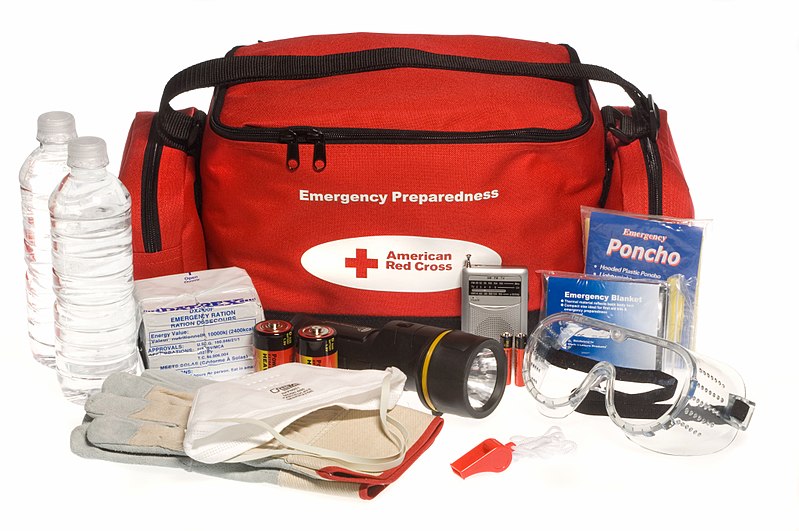
    Having a bag prepped for extreme situations could be lifesaving, and with a little forward thinking, your bag could be ready in minutes.

    Here some items we think you should grab from the store or make sure you have before the power outage:

    • Flashlights and batteries. An obvious choice, but oil or battery-operated lanterns work great, too.
    • Candles and matches/lighters. This is Humboldt, so we wouldn’t be surprised if most people had a lighter on hand or nearby, but if you don’t you should look into easy means of lighting candles (or that oil lamp) to have some light once the sun goes down.
    • Cash and gasoline. When the electricity is down, systems are down. This generally means that stores –if open– can’t take cards because they have no way of charging them. This can also include gas stations. We recommend filling up and taking out some cash just in case you need to buy something or drive during the blackout.
    • Water. You need a minimum of one gallon of water per day per person. We recommend having even more and making an effort to conserve. During the initial PSPS, the City of Arcata urged residents to minimize sewer use and conserve water to the best of their ability. That’s a good rule of thumb, and especially smart if the power outage last longer than before. 
    • Ice. You’ll need lots of ice if you’re interested in trying to save any of the food that was already in your fridge or freezer. We also recommend moving expensive perishables to the freezer and using gallon baggies filled with water as makeshift ice packs to help keep food cold. A cooler filled with ice is also a great option. If you have the money and the storage space, buying a cooler for emergencies like these and any future camping trips could really come in handy.
    • First Aid kit. You may already have one hanging around. If so, check the the kit to make sure it’s well-stocked and move it to a central place in your home. Communicate the new location with any family or roommates so it’s accessible for any who may need it.
    • Canned goods. Think of foods you wouldn’t mind eating cold. There’s no need to buy something that will make you gag when you’re trying to stay fed.
    • Fruit. Apples, bananas and oranges are just a few options. Fruit doesn’t need to be refrigerated and it can help keep your blood sugar up as well as making sure you have some daily fiber, potassium and vitamin C.
    • Non-perishable snacks. Crackers and chips make an easy snacks but they don’t replace an actual meal. If you have means of warming up water, we recommend grabbing some potato flakes and pasta to keep that stomach from grumbling.
    • A French press and some pre-ground coffee. If you’re a coffee drinker then we would highly recommend grinding some coffee today. Your future self will thank you. Thankfully a French press doesn’t require electricity, but it does require hot water. If you have an electric stove, instant coffee may be your best bet to get that caffeine fix.
    • Beef jerky and granola bars. For all you meat eaters, jerky is a great way to keep your protein levels up if you despise cold beans. Granola bars are also great. They’re convenient and versatile, and depending on the bar, they can be a good source of fiber and protein.
    • Applesauce, puddings and fruit cups. Your pick. But if the power’s out for a while you might get sick of Saltines and canned corn. To keep your mood up, give yourself a treat with a chocolate pudding, or enjoy a sweet, but semi-healthy snack with an applesauce or fruit cup.
    • Playing cards and boardgames. Whether it’s just you or a group, a deck of cards could most definitely come in handy. Playing cards or boardgames is a great way to pass the time. We recommend a regular deck of cards to start before moving into heavier, emotional games like Uno or Monopoly that could take a toll on your relationships.
    • Sleeping bags and blankets. It may not be the coldest time of the year, but if you’re used to having your electric heat on, then you’re in for a wake up call. Sleeping bags and blankets, as well as sweats, long socks, hoodies and beanies will help you stay warm while your heater can’t. It’s also good practice if you’re looking for ways to lower that pesky PG&E bill.
    • An emergency radio. If you’re lucky, you’ll never need to use one, but having a weather radio on hand can be lifesaving. Radios can help you find hot coffee, hot food, shelter or even a place to charge your phone. Some weather radios even double-up as lights and backup chargers.
    • Portable chargers. These are a great investment. We recommend having one fully charged at all times. If anything happens you can make sure your phone doesn’t lose its battery. If cell towers are active or have backup generators during a blackout, having enough phone battery to call family or friends to keep them updated or ask for updates can be essential.

    While all of these items are helpful and important, it’s vital to try and stay calm when the outage hits. Extreme situations can cause mass chaos, and it often becomes more dangerous and stressful than it needs to be. Check our website for updates, sign up for Humboldt County alerts to stay in the know and remember to only call 9-1-1 in emergency situations.

  • Power Outage Update: 850,000 PG&E Customers Could Be Affected

    Power Outage Update: 850,000 PG&E Customers Could Be Affected

    The upcoming blackout is expected to affect 36 counties across Northern California and last longer than before

    The extreme weather at the heart of the upcoming Public Safety Power Shutoff is expected to begin Saturday early evening and last until midday Monday, according to Pacific Gas and Electric.

    Despite original calculations that included only 32 counties and 640,000 PG&E customers, new information from the utility estimates the shutdown could impact 850,000 customers and possibly affect 36 counties across Northern California.

    PG&E Corporate Spokesperson Deanna Contreras confirmed the updated calculations in a phone interview.

    “This time there are some distribution lines that are in the PSPS scope,” Contreras said. “Whereas last time the PSPS was in transmission lines coming from outside of Humboldt that provide power here.”

    Contreras emphasized that she wanted customers to understand the reasoning behind the shut-offs.

    “I want people to understand why we’re doing this,” Contreras said. “It’s not just because it’s windy. I want people to understand that this is because there are serious wildfire risks during these weather events.”

    Contreras’ tone matched that of the latest PG&E press release.

    “The weather event could be the most powerful in California in decades,” PG&E’s statement said. “With widespread dry Northeast winds between 45-60 miles per hour and peak gusts of 60-70 mph in the higher elevations.”

    According to Contreras, PG&E is working to minimize the shutoffs and is already working on a restoration plan for when the weather subsides. Contreras said the utility giant has requested help from other energy companies to speed inspections and repairs.

    “These crews are expected to be staged and briefed on the restoration plan by Sunday evening,” Contreras said. “If weather progresses as expected, restoration could begin in some portions of the affected area as early as Monday afternoon.”

    In response to the likely shutdown, Humboldt State will close campus from 9 a.m. Saturday through the end of Monday, Oct. 28, and encourages faculty and staff to grab belongings from offices and classrooms before buildings lock for the weekend.

    During the outage HSU Dining Services will offer free meals at the J after 5 p.m. Saturday through Monday evening for staff and students that bring their HSU identification. To help prepare residents for the PSPS, Humboldt County Office of Emergency Services also posted a list of nine power outage tips to its Facebook.

    “Have food for 2-3 days on hand that doesn’t require refrigeration and can be cooked on a camp stove or outdoor grill,” OES said in its post. “Remember though, never use a camp stove indoors.”


    The PG&E press release is copied below:

    Pacific Gas and Electric Company (PG&E) today said it continues to monitor a potentially powerful and widespread dry, hot and windy weather event expected to begin impacting the service area Saturday between 6 and 10 p.m. and lasting until midday Monday.

    PG&E will need to turn off power for safety several hours before the potentially damaging winds arrive. It’s important to note that as this weather system sweeps from north to south over a period of two days, PG&E customers across Northern and Central Californiawill feel the effects of hot, dry winds at different times, which means outage times will vary, as well.

    The potential Public Safety Power Shutoff (PSPS) is expected to affect approximately 850,000 customers and may impact portions of 36 counties across portions of Humboldt, the Sierra foothills, Western Sacramento Valley, North Bay, and across the greater Bay area, Monterey Bay and northern Central Coast on Saturday, Oct. 26. Customers in the southern-most portion of PG&E’s service area in Kern County could have power shut off for safety on Sunday, Oct. 27.

    Predictive data models indicate the weather event could be the most powerful in California in decades, with widespread dry Northeast winds between 45-60 miles per hour (mph) and peak gusts of 60-70 mph in the higher elevations.

    Winds of this magnitude pose a higher risk of damage and sparks on the electric system and rapid wildfire spread. The fire risk is even higher because vegetation on the ground has been dried out by recent wind events.

    Given the forecast and conditions, PG&E is advising its customers of the potential for a widespread PSPS lasting several days, intended to prevent a catastrophic wildfire. As this intense weather event approaches the service area in the next 24 hours, PG&E’s forecasts will offer sharper detail, noting that the scope may continue to change on the number of customers who will be affected.

    This article was updated at 5:15 p.m. Friday.

  • Power Outage: Prepare for Up to 4 Days Without Electricity

    Power Outage: Prepare for Up to 4 Days Without Electricity

    Once again, PG&E did not initially include all of Humboldt in its outage prediction. But according to OES, all of Humboldt County will be affected.

    Due to possible extreme weather conditions and fire risk, all of Humboldt County is expected to lose power when Pacific Gas and Electric implements a Public Safety Power Shutoff early Saturday afternoon.

    “The latest information from PG&E is that all of Humboldt County is now in scope for this PSPS power outage,” a Humboldt County Office of Emergency Services Facebook post said on Thursday evening.

    PG&E began notifying specific customers of the possible outage on Thursday evening and will continue to do so. The utility also told OES that their online address look-up tool wasn’t up to date as of Thursday night, but will be updated soon.

    According to a post from the Humboldt County Government’s website, the outage is expected to last longer than the previous, which was only 28-hours, and residents should prepare to be without electricity for up to four days. The county also said the length of the outage and estimated time power could return is completely up to PG&E.

    OES also made a post with nine tips for preparing for the outage. The list is copied below.

    Are you prepared in the event the PSPS affects Humboldt County? There is still time to gather supplies and take steps to be ready if the power shuts off.

    Here are some tips to help you get prepared.

    1. Have food for 2-3 days on hand that doesn’t require refrigeration and can be cooked on a camp stove or outdoor grill. Remember though, never use a camp stove indoors.

    2. Have 1 gallon of water, per day, per person for drinking and cleaning.

    3. Have flashlights, battery operated lanterns or candles in a convenient location. Remember, if you are using candles, never leave them unattended, within reach of children, and keep them away from flammable items.

    4. Keep your refrigerated items cold by freezing water bottles. When the power goes out, transfer the frozen bottles around items in your fridge to help keep them cold. You can also transfer items to the freezer once the power is out to keep them cold. Remember to only open your fridge when absolutely necessary and make it quick. Don’t open your fridge to check to see if it’s cold.

    5. If you are getting close to needing a refill on prescriptions, do it soon.

    6. Fuel up your vehicle.

    7. Have cash on hand. When we lose power retailers may lose the ability to run debit and credit cards.

    8. Remember to check on your neighbors. We are all in this together and we strengthen our community by pulling together.

    9. Sign up for Humboldt Alert, Humboldt county’s emergency notification system. We will send out notification alerting you to any emergency that may affect you, not just a PSPS event. Click our link at the top of our Facebook page or visit Humboldtgov.org/alerts to sign up today.

    For more information on preparedness, visit Ready.gov.

    This story is ongoing and will be updated. For more information go to PG&E’s website or use their address lookup tool.

  • Potential Power Outage, Again

    Potential Power Outage, Again

    From the Humboldt County Sheriff’s Office:

    Due to an expected severe wind event anticipated to occur around 10 pm Saturday night, Pacific Gas & Electric (PG&E) notified the county this afternoon that it will de-energize some power lines in Humboldt County as part of the utility’s Public Safety Power Shutoff (PSPS) program. At this time, PG&E expects that 2,188 customer connections in Humboldt County will be affected. Electricity is expected to be turned off for those PG&E customers Saturday evening, possibly several hours before the wind increases.

    This PSPS event is expected to last longer than the roughly 24-hour event earlier this month, which means residents who are affected may have electricity shut off for a longer period of time. The Humboldt County Sheriff’s Office of Emergency Services (Sheriff’s OES) will provide updated information from the utility as it becomes available.

    The length of the outage and estimated time of restoral [sic] is entirely up to PG&E. For information about PSPS or to sign up for alerts, go to http://www.prepareforpowerdown.com or call 1-877-9000-PGE.

    PG&E expects to issue maps later today that show the anticipated affected areas. The Humboldt County Sheriff’s Office of Emergency Services (Sheriff’s OES) will provide those maps and any information regarding affected areas as it becomes available. If the shutoff is isolated in Humboldt County, or includes distribution lines in our area, ground inspection may take longer than the aerial inspection completed after the Oct. 9th shutoff before restoration can begin.

    The overall PSPS is expected to affect 32 California counties and approximately 640,000 customer connections. As conditions may continue to change and the scope of this event may be expanded, the county recommends that all county residents be prepared for an extended power outage beginning Saturday night.

  • 6 Alternative Heat Sources

    6 Alternative Heat Sources

    Ways to get ‘lit’ and keep warm with no power

    Humboldt County residents put their survival skills to the test as Pacific Gas & Electric, California’s primary utility, shut down power across Northern California last week. The outage served as a wake-up call for those ill-prepared for disasters and emergency situations.

    Heat is an essential element of our daily lives, something to prioritize. With the approaching winter season it’s important to know alternative options to keep warm. Below are seven ways you can warm up without electricity:

    1. Hand warmers. Iron hand warmers are a perfect source of heat for smaller body parts. Hand warmers are great for heating up numb fingers or toes, but even more useful for pets. Small packs of warmth are a good heat source for small critters and reptiles that normally need electric heating mats.

    2. Alternative heaters. Heaters are a modern day convenience but are limited due to using electricity. A more affordable, makeshift space heater can be made with a few cheap items that you probably have laying around your home. This heater requires tea light candles, two bricks and a terra-cotta pot. Construction is simple and consists of a few lit candles underneath an upside-down pot, that rests on top of the two bricks. The heat from the candles emanates through the top of the pot and warms up the spaces.

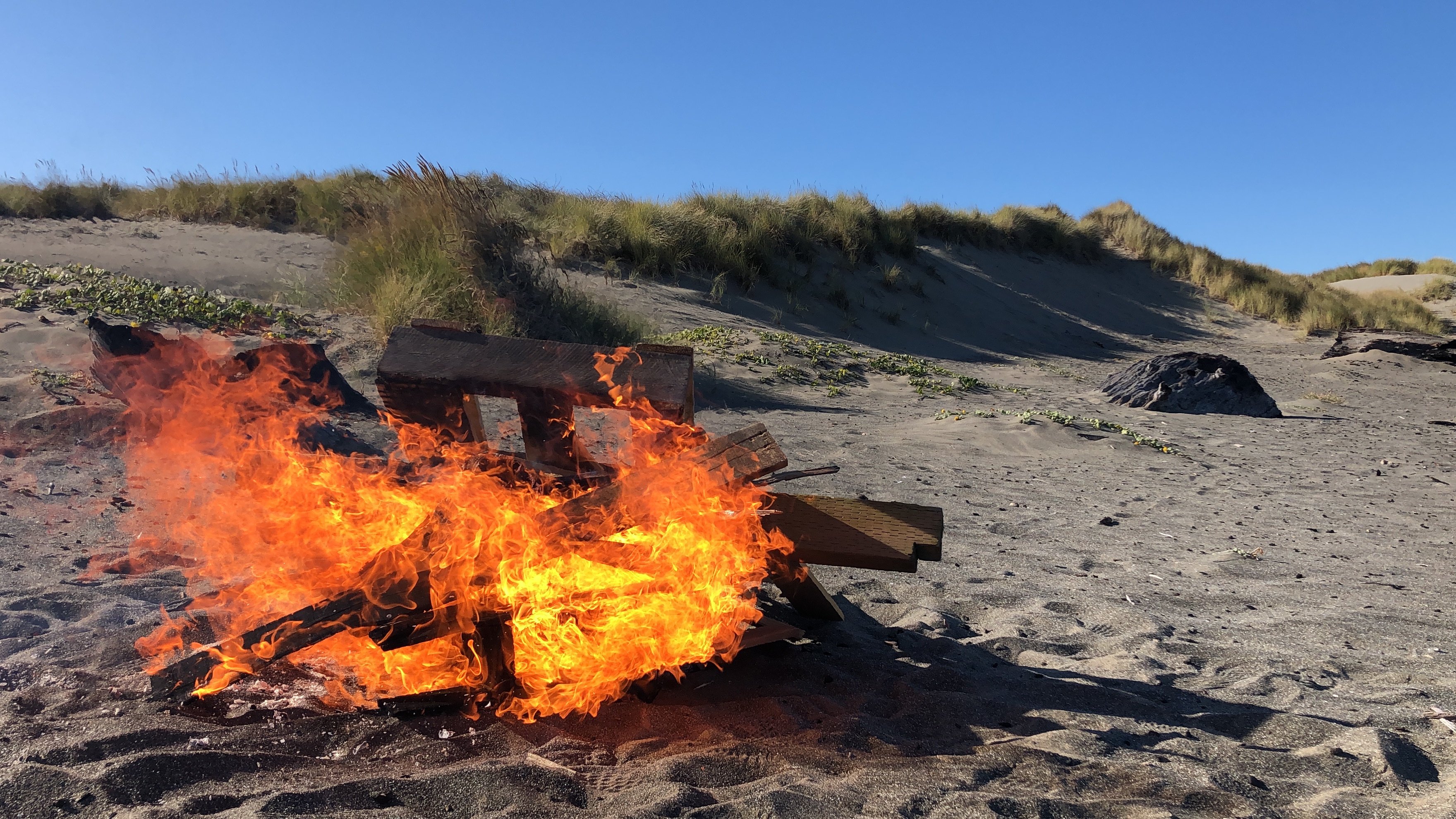
    3. Fires. If you have a fireplace or an outdoor fire pit, use it! Making fires during power outages can be entertaining and helpful. Fire is mesmerizing, but dangerous so always be sure chimneys are clean and chutes are functioning before starting a fire in your home. Clean out debris and sweep the surrounding areas of your outdoor fire pit if you plan on using it outside or for light.

    4. Hot water. If you’re unable to create fire but have a functioning gas stove, make heat with water. Boil water for a cup of tea or a can of food. Warming yourself up from the inside-out helps ease any muscle tension and stress. Boiling water to fill hot water pouches is another easy way to heat the body.

    5. Exercise. Getting your heart rate going works up a sweat and warms the body. A quick sprint or jumping jacks in place flexes the muscles and circulates blood, keeping you warm.

    6. Bundle up. Layering clothing or wrapping yourself in a blanket is the easiest way to warm up. Most of your body heat comes from your head, so adding a beanie or a scarf helps installation. Lastly, thick socks helps keep feet from freezing.

  • Blackouts Blow

    Blackouts Blow

    Dry vegetation and high winds were a major factor in PG&E shutoff

    The morning of Oct. 8, Humboldt County residents were notified that Pacific Gas & Electric may shut off power county-wide. HSU students and faculty began rapidly preparing for the possible outages, but some wondered what forced the utility giant to turn off the power.

    Leading up to the blackout, rumors spread as people speculated why PG&E decided shutting off power was the best option, and others wondered how long the outage could last. It seemed there was a lack of communication, as only some local professionals seemed to know the details.

    On the night of Oct. 9, HSU Facilities and Management employee Brian Wheeler was responsible for filling up HSU’s generator. The diesel generator was the only thing standing between powerless students and the cold, dark night.

    Wheeler said he had heard about an algorithm PG&E made to inform them when to shut off the power. This was confirmed by Megan McFarland, a spokesperson for the company. McFarland said no single factor drives a Public Safety Power Shutoff since each situation is unique.

    PG&E carefully reviews many criteria when determining if power should be turned off for safety. These factors generally include, but are not limited to:

      • A Red Flag Warning declared by the National Weather Service.
      • Low humidity levels, generally 20% and below.
      • Forecasted sustained winds above 25 mph and wind gusts in excess of approximately 45 mph, depending on location and site-specific conditions such as temperature, terrain and local climate.
      • Condition of dry fuel on the ground and live vegetation (moisture content).
      • On-the-ground, real-time observations from PG&E’s Wildfire Safety Operations Center and observations from PG&E field crews.

    To get a better grasp on the situation and its factors, The Lumberjack contacted the Woodley Island National Oceanic and Aeronautic Administration. Meteorologist Jeff Tonkin understood the specifics and why PG&E could be forced to make such a decision, but believed that Humboldt County wasn’t initially a part of the plan for a reason.

    “PG&E shuts down based on wind speed if it is projected to cause a disruption or a failure,” Tonkin said. “Locally in Eureka, the power wasn’t shut down because of local high winds. We’re just collateral damage.”

    Tonkin said NOAA had meetings with PG&E meteorologists in the past, but PG&E doesn’t consult NOAA for weather information. While getting in contact with one of PG&E’s scientists would likely be key to understanding why the power was shutoff officially, Deanna Contreras, another PG&E spokesperson, answered the call instead.

    Contreras said, for this particular shutoff, the weather patterns were somewhat unique and widespread. Many forecasters compared the conditions to the devastating conditions from October 2017.

    In response to the rapidly changing environmental conditions in our state, beginning with this year’s wildfire season, PG&E expanded its Public Safety Power Shutoff program to include all electric lines that pass through high fire-threat areas – both distribution and transmission.

    Cotreras said there weren’t any PG&E meteorologists available but had plenty of details about PG&E’s weather system.

    “Beyond PSPS information, weather geeks will find a lot to love about the new weather page,” Contreras said. “With PG&E’s weather map at your fingertips you’ll be able to check humidity, precipitation, temperatures, wind speeds and wind gusts across 70,000 square miles of Northern and Central California.”

    Contreras said the page offers a seven-day regional forecast. PG&E’s Wildfire Safety Operations Center team monitors all these conditions and evaluates whether to proactively turn off electric power lines, in the interest of public safety, if extreme fire danger conditions are forecasted.

    McFarland said a lot of PG&E employees live and work in regions that are affected by the shutoff and that she understands how frustrating it is to have the power turned off. She said the decision was not made lightly.

    “We want customers to know that although you may not live or work in a high fire-threat area,” McFarland said, “Your power may be shut off if the line serving your community relies upon a line that runs through an area experiencing extreme fire danger conditions.”

  • Why Humboldt Went Dark

    Why Humboldt Went Dark

    Understanding the Public Power Safety Shutoff

    PG&E cut power to more than 700,000 homes and businesses across Northern California, including Humboldt County, beginning early the morning of Oct. 9.

    State officials have criticized PG&E, including Governor Gavin Newsom.

    “This is not, from my perspective, a climate story as much as a story about greed and mismanagement over the course of decades,” Newsom said in a press conference on Thursday.

    Humboldt County residents had less than 24 hours of notice, as PG&E’s initial warnings did not include Humboldt as an affected county.

    PG&E sent warnings out to customers for some time about possible outages, but few were prepared for such a sudden total power shut down.

    The shutoff came as a new last-resort tactic by PG&E called a “Public Safety Power Shutoff.”

    The California Public Utilities Commission issued a resolution in May, supporting PSPS tactics to prevent wildfires like the Camp Fire, a wildfire that tore through Butte County, Calif. in November of last year.

    “Clearly something needs to be done. There are lines breaking and they’re causing fires.”

    Jeffrey Kane

    The Camp Fire burned over 153 thousand acres, destroyed over 18,000 homes and killed 85 people, making it the deadliest and most destructive wildfire in California history.

    California state investigators determined poorly-maintained electrical lines as the cause of the fire. PG&E was thus made responsible for the fire, and faced potential liabilities of $30 billion dollars. In January, PG&E filed for bankruptcy.

    PG&E and U.S. District Judge William Alsup have since gone back and forth over the details of PG&E’s restructuring plans to repair the aging electrical lines. According to PG&E Spokesperson Megan McFarland, the utility has been working on a variety of operations.

    “Our ongoing and expanded efforts include further enhancing vegetation management around power lines, conducting accelerated safety inspections of electric infrastructure in high fire-threat areas, and hardening our electric system,” McFarland said in an email.

    Businesses around Humboldt reported tens of thousands of dollars in losses in sales and spoiled foods.

    According to a filing to U.S. District Judge William Alsup, PG&E only made it through about a third of the tree trimming work it had planned this year due to an employee shortage.

    Humboldt State University Associate Professor of Fire Ecology and Fuels Management Jeffrey Kane said PG&E and the rest of the state are going to have to learn to manage vegetation to reduce the risk of wildfires.

    “Clearly something needs to be done,” Kane said. “There are lines breaking and they’re causing fires.”

    While Kane did not know the details of PG&E’s lines and practices, he said keeping vegetation away from transmission lines will require continual maintenance.

    In the long-term, one model for PG&E’s future might come from San Diego Gas & Electric, as suggested by reporting in the Los Angeles Times. After a 2007 fire, SDG&E spent over $1 billion burying and insulating lines. SDG&E also sectioned off areas into separate micro-grids, so that shut offs could be more targeted and less widespread.

    However, both of those practices will take time and money. Until then, PG&E will implement outages like the one triggered last week by a National Weather Service Red Flag Warning of high winds and low humidity.

    The outage hit over 700,000 customers across California. In Humboldt, a late notice meant residents had only about 12 hours to prepare for what was predicted to be a three-to-five day outage.

    While the outage only lasted about 24 hours in Humboldt, the outage caused widespread closures and the activation of the Humboldt County Emergency Operations Center.

    Businesses around Humboldt reported tens of thousands of dollars in losses in sales and spoiled foods.

    A news release from the Eureka Police Department noted a 26% increase in dispatches during the outage, but attributed the increase to nearly 40 false alarms. The five traffic collisions and three burglaries both fell within normal ranges, according to the release.

    Office of Emergency Services Administrative Officer Sean Quincey said he was proud of the way the county responded and supported one another through the outage, which he said is essential in any emergency in Humboldt.

    “Humboldt County is isolated,” Quincey said over the phone. “It’ll take time to get resources up here. Until then we need to support each other, and I was happy to see that happened.”

    Arcata City Manager Karen Diemer shared a similar outlook over the phone.

    “Humboldt County is isolated. It’ll take time to get resources up here. Until then we need to support each other…”

    Sean Quincey

    “I saw a lot of residents helping other residents and making sure that their neighbors were safe,” Diemer said. “So the resiliency of our community is strong.”

    Unlike Humboldt, Quincey said some communities farther south received 48 hours notice—which, ideally, Humboldt will have in the future. McFarland echoed that statement.

    “Our goal, dependent on weather, is to send customer alerts at 48 hours, 24 hours and just prior to shutting off power,” McFarland said.

    Just before the outage, there were efforts at the Humboldt Bay Generating Plant to provide electricity for at least part of Humboldt County. But McFarland said HBGS doesn’t have the capabilities to operate when disconnected from the grid.

    However, McFarland suggested that HBGS may be able to provide energy to Humboldt in future emergencies.

    “PG&E does have an engineering study underway to evaluate what plant modifications would be required to add that capability,” McFarland said. “Including changes that may be required to the existing air permit to allow HBGS to operate over the range necessary when disconnected from the grid.”

    The outage ultimately served as a wake-up call for the county.

    “We’ve learned that this is something that we need to be more prepared for,” Quincey said.

    In a press conference held at the PG&E headquarters in San Francisco on Oct. 10, PG&E CEO Bill Johnson apologized for the outage and for failures in their website, maps and call centers.

    “To put it simply, we were not adequately prepared to support the operational event.”

    Bill Johnson, PG&E CEO

    “To put it simply, we were not adequately prepared to support the operational event,” Johnson said.

    As for the future of PSPS events, Johnson said PG&E is working to prevent outages from becoming the new normal. However, Johnson made the statement with a caveat.

    “Given the risk to public safety, there’s a desire to have zero spark during conditions like the ones we had over the last several days,” Johnson said. “We will very likely have to make this kind of decision again in the future.”


    Corrections: A previous version of this article listed the Camp Fire’s acreage in the millions, not the thousands.

  • Outage Hits Local Businesses

    Outage Hits Local Businesses

    Humboldt businesses take stock of losses from county-wide power outage

    Local businesses scrambled to recover from two days of frantic sales and attempts at saving perishable foods on Oct. 10.

    North Coast Co-Op General Manager Melanie Bettenhausen said she had been up for most of the previous 36 hours.

    When the Co-Op learned of the outages, Bettenhausen said they had to choose between trying to store and preserve perishables, or trying to sell them off as quickly as possible.

    They chose the latter and marked down all perishables at 50% off.

    “And that resulted in madness in our stores,” Bettenhausen said.

    Bettenhausen said more customers visited the Co-Op than on even their busiest days. Bettenhausen thanked the community for coming and helping salvage some of their losses. Nevertheless, their losses were significant.

    “My best guess is somewhere between $25,000 and $30,000, because we were able to mark down and sell some products,” Bettenhausen said.

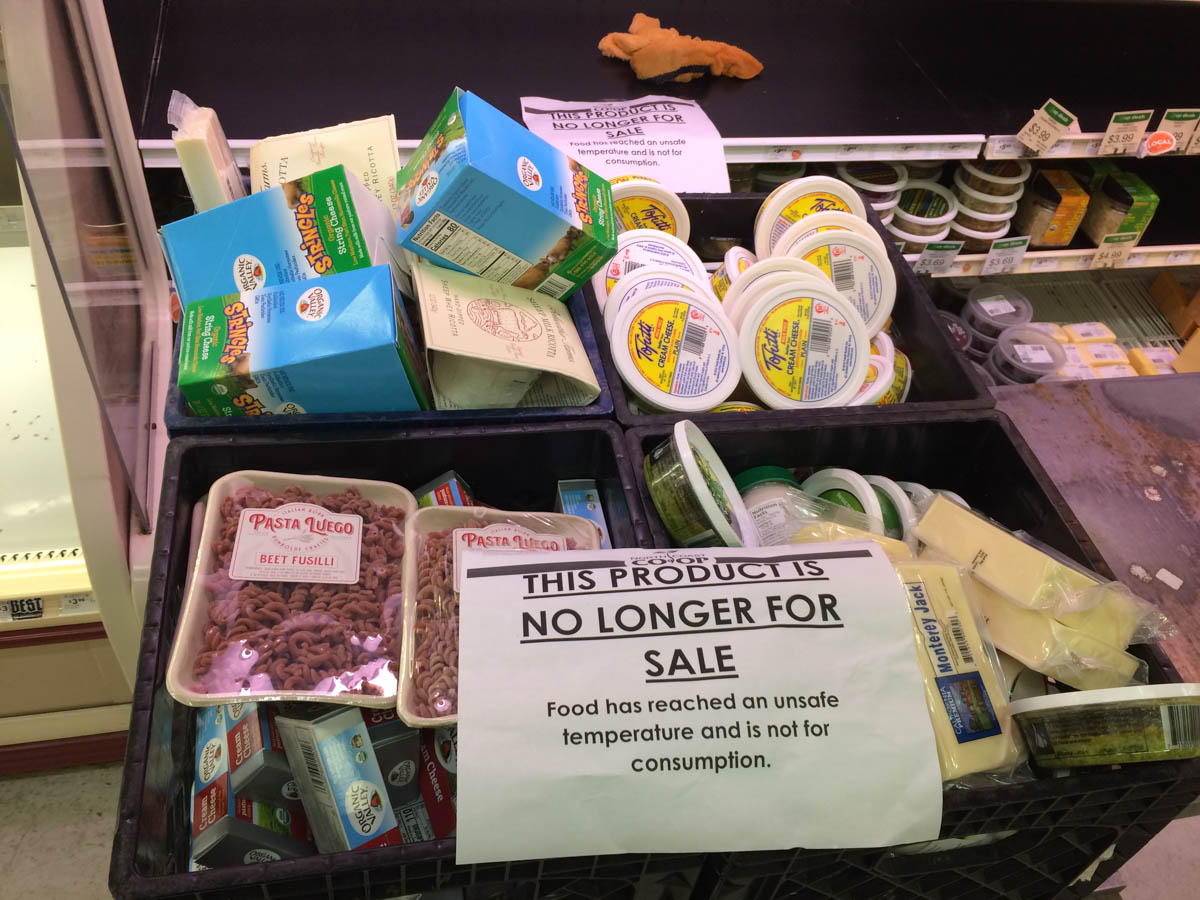
    On Oct. 10 the Co-Op was documenting tens of thousands of dollars of perishable items that had to be thrown away, as temperatures rose outside of legal limits.

    Bettenhausen estimated a dozen shopping carts full of items were tossed just from the dairy section at their Eureka store.

    North Coast General Manager estimates losses between $25,000 and $30,000. | Photo by James Wilde

    Conrad Coelho, the store manager of Murphy’s Market in Westwood, shared similar experiences.

    “It was very busy,” Coelho said. “The busiest we’ve ever been since we opened in 2010.”

    Coelho said lines inside stores stretched down aisles on Wednesday as customers waited 30 to 40 minutes to check out. While Coelho couldn’t give a number on their sales, he predicted significant losses from the frozen section.

    Wildberries Marketplace President and owner Phil Ricord said the store experienced a rush of customers before the outage.

    “Around 5 p.m. on Tuesday we got slammed big-time with customers buying canned foods and candles and stuff like that,” Ricord said.

    Due to aging electrical infrastructure, Wildberries does not have a backup generator, and did not open on Wednesday. Instead, employees stored perishables in cold boxes, where they were able to maintain cold enough temperatures to save most of their foods.

    Ricord did say that some produce was lost, and the sales lost from the Oct. 9 closure would be significant.

    “We probably lost about $40,000 in sales,” Ricord said.

    Gas stations also saw rushes the night of Oct. 8, with several gas stations running out of gas by the next day.

    Any stores with ice quickly sold out as residents tried to keep their perishables cool. When local radio station KHUM broadcast that Murphy’s Markets in Westwood and Sunny Brae had received shipments of ice, customers rushed the stores, creating lines outside at the ice chests.

    Arcata City Manager Karen Diemer echoed the statements by local businesses. Diemer praised “heroic efforts” by community members to purchase and salvage perishable foods, but did acknowledge the overall loss.

    “I think we had a real economic loss in our restaurant and retail establishments throughout the city,” Diemer said over the phone. “But at this point it’s too early to really have any totals or numbers.”

  • HSU Students Cope With Power Outages

    HSU Students Cope With Power Outages

    While students enjoy the time off of classes, outages act as wake up for emergency preparedness

    Humboldt State University students are coping with the mass power outages that hit Humboldt just after midnight.

    Kinesiology freshman Malik Bobino, who sat in the afternoon sun by the library circle, spent the day hiking. Nevertheless, Bobino said the outage was stressful. 

    “It’s just dead,” Bobino said of campus. “It’s like Mad Max.”

    Bobino said that campus Wi-Fi is largely off, although he has been able to get signals in a few small areas. 

    Zoology freshman Jeanette Carini said she has mostly lounged around in the dorms. 

    “I slept a lot because there wasn’t much to do,” Carini said.

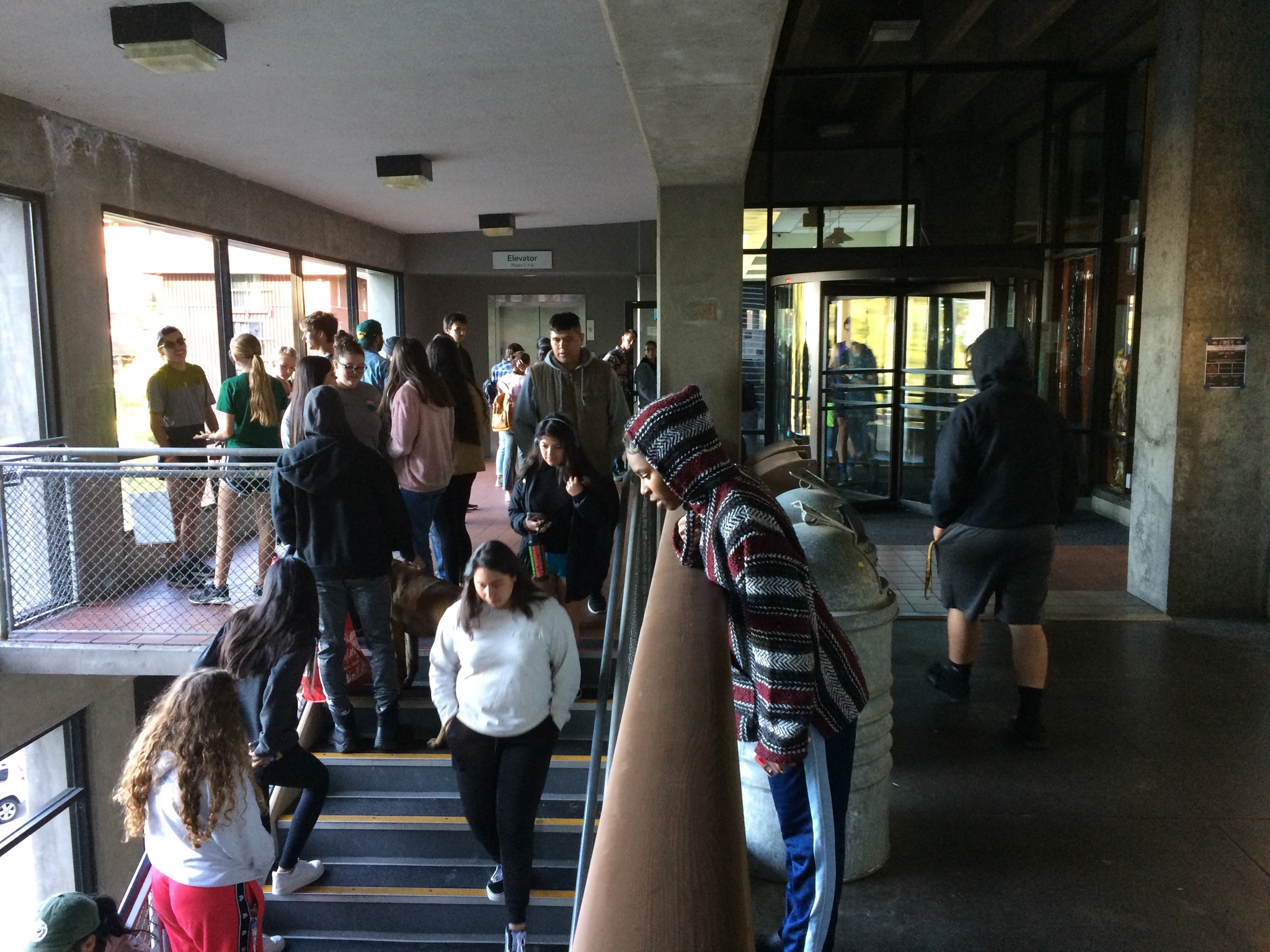
    The view of Humboldt State University from 14th Street. | File photo by Lauren Shea

    While Carini spent time catching up on lost sleep, Wildlife freshman Max Manson said the time off school is relieving.

    “It’s nice not having classes today,” Manson said.

    However, Manson also confirmed that, aside from the door keycard locks, all power to the dorms it shut off. Hot water is not available in the dorms, as electric water heaters are off as well. 

    Manson and Carini both noted that food has been hard to come by, as the lines to the J stretch out the doors and down the stairs. 

    As the PG&E outage affecting over 800,000 California customers enters its first official night, no definite date is set for the return of electricity. 

    HSU student Max Blaettler said they slept in until 3 p.m. and went to the J at 4 p.m., where they enjoyed a free barbecue dinner. 

    “It was alright,” Blaettler said. “And it was free.”

    As the PG&E outage affecting over 800,000 California customers enters its first official night, no definite date is set for the return of electricity. 

    However, reporting by Lost Coast Outpost has suggested that power could return as early as tomorrow, if high winds die down and PG&E finds no damage to transmission lines. 

    At HSU, students said they have already learned prepare better for next time. 

    “Next time we’ll stock up,” Manson said. 

    “Definitely have supplies,” Bobino said. “Like back-up chargers.”