The Lumberjack


Students Serving The Cal Poly Humboldt Campus and Community Since 1929

Tag: covid-19 pandemic

  • Lifted mask mandate polarizes student opinions

    Lifted mask mandate polarizes student opinions

    By Eddie Carpenter

    On March 14, face mask requirements were lifted on Humboldt’s campus as a way to transition back to normal operations. This has created polarizing views towards how students and staff going maskless might affect the local community. Some students have chosen to ditch the masks while others still embrace them.

    Photo by Eddie Carpenter | Dillon Harp still wears his mask in solidarity with his peers.

    Local musician Dillon Harp expressed how one’s personal choice can affect the community as a whole.

    “As an African-American and knowing that my family has elders in it…the mask is just really there to protect others,” Harp said. “Obviously the mask can let particles in like more so than let particles out…Wearing your mask is really just about kind of looking out for the community for me. I ain’t really unmasking anytime soon. If we can all come together a little and see some of the basic logic behind protecting each other, our elderly family members- I think we can all help out and just keep the mask on a little longer.”

    Carlos Ochoa-Silvas, a rangeland resource major, expressed how masks gave him skin problems.

    “Wear a mask if you have symptoms of anything or if you feel like you’re not a hundred-percent,” Ochoa-Silvas said. “When I heard about it, I was mostly excited just because I didn’t like wearing the mask. I kept breaking out underneath and it was really irritating my skin.”

    Political science major Lake McLeod believes that Humboldt’s recent transition could not come at a better time than this.

    “Personally, I agreed with it. I think that eventually, we do have to kind of return to some kind of sense of normalcy,” McLeod said. “You know after two years of being masked…and the cases are down, so I feel like at this point we should learn to live with COVID like we do [with] the flu.”

    English and CRGS major Mireille Roman thinks of wearing a mask as an act of solidarity.

    “I would say that because it’s not a mandate now, it’s kind of become a personal choice to what you want to do with it,” Roman said. “But your personal choice still impacts people at the end of the day. I think the best way that my professor put it was like ‘I’m going to stand in solidarity with people who can’t take off their masks.’ Because there’s people who [are saying] ‘I’m perfectly healthy. I’m vaccinated. I’m good.’ Yeah, but just because you’re fine doesn’t mean that other people are going to be in a position to do so as well… but I think it really dictates the environment of a classroom when the professor chooses to wear a mask or not. Until the numbers are better and just nationally we’re more responsive to this, I’m probably going to keep wearing my mask.”

    Between March 15 and March 22, Humboldt County Public Health reported 72 new COVID-19 cases with 2 new hospitalizations.
  • Administration calls professor’s accusations into question

    by Liam Gwynn

    Dr. Christopher Aberson came forward to the Lumberjack with a story about how he was symptomatic and asked to teach online but was denied the opportunity and asked to teach in person instead. Provost Jenn Capps responded to these accusations after Aberson’s story was released. Capps claims that a majority of the time teachers are allowed to change modality, however, they have to meet certain requirements.

    According to Capps, a professor seeking a modality change has to be verifiably ill and then has to seek approval from their department head to change modality. In cases like Aberson’s where the department head is the one asking, they have to seek approval from Capps directly. Capps couldn’t speak on Aberson’s case specifically due to confidentiality reasons, yet she was able to speak on similar hypothetical situations.

    “I’d say eighty percent of the time a request for a change is being granted, when it’s not being granted, it’s because perhaps a person is operating off of being afraid or they are like ‘something could happen therefore I don’t want to teach in person I’m just going to shift my course online and I’ll let you know when I wanna come back,’” Capps said. “Well, that’s not somebody who is sick and that’s not the agreement that was made with the students.”

    Aberson never tested positive for COVID-19 but he did claim he was symptomatic. In times where COVID-19 takes up the majority of the conversation, people are still getting sick with other illnesses and it can be confusing when symptoms of one illness overlap with COVID-19 symptoms. According to Capps and school policy, just coming in contact with COVID-19 is not enough to warrant staying home or teaching online.

    “For students, faculty, and staff our current policy is that if you are vaccinated and you come into contact with somebody with COVID and you’re masked and vaccinated, that doesn’t mean that anything needs to change,” said Capps, continuing. “What you need to do is continue about your work and life and monitor and keep doing wellness checks, and if you start to experience symptoms then you get tested and isolate.”

    Strangely enough, that is what Aberson was trying to do according to his accounts of the event. He came into contact with COVID-19, started feeling symptoms, and then requested a modality change. Aberson was under the impression that his request was possibly denied due to him being outspoken against different school policies. When asked about whether this was a genuine possibility, Capps firmly denied any bias in the deciding process.

    “Oh of course not, that would be all kinds of wrong,” Capps said. “It’s just really centering on a couple of things, making sure the student gets the instructional experience that they desired and making sure that faculty and staff and student health is protected.”

  • Symptomatic and want to teach online? Steer clear of Cal Poly Humboldt

    by Liam Gywnn

    Dr. Christopher Aberson came into contact with COVID-19 the weekend before he was supposed to teach. He requested the school let him teach over zoom and his request was denied. The school would not let him switch his modality despite the Omicron surge and the numerous COVID-19 cases reported on campus.

    “I was told I was not authorized to change modality. After several emails, clarification came that I could not move online. I have symptoms. I am well enough to teach. Not allowed to,” said Dr. Aberson.

    Dr. Aberson is the Professor of Psychology at Cal Poly Humboldt and came into contact with the virus after one of his son’s friends tested positive. He claims that this issue is larger than his individual case.

    “My issue with the surge has and continues to be that faculty who agreed to teach in person are not being allowed to change to online. Faculty agreed to teach in person at times when it seemed we had gotten over the hump and were headed toward a better situation,” said Dr. Aberson in an email, he continued. “In both the fall and spring semesters, as I understand it, most requests to change to online were denied. Both semesters began during surges.”

    Dr. Aberson has been outspoken about a number of issues on campus and believes that could be playing into why he wasn’t allowed to teach online.

    “I have been outspoken about under-compensation of chair duties — it is a full-time job but during the summer and other off times, we are grossly under-compensated for our time. Also, campus safety and working conditions during both the delta and omicron surges,” said Dr. Aberson.

    The California Faculty Association (CFA) negotiated a Memorandum of Understanding (MOU) with campus administration regarding teaching during COVID-19. The document was signed by CFA and Cal Poly Humboldt management. Dr. Aberson presented a passage from the MOU that explicitly supports his position.

    “During the time that an employee may be waiting for an appointment or for testing results every effort should be made for them to be able to work remotely,” states the MOU.

    Prior to Dr. Aberson’s situation, the CFA had already made an official statement addressing the administration and their lack of leniency.

    “No faculty member should be forced to work in conditions that put themselves or their loved ones at risk, especially when there are alternatives,” states a press release provided by the CFA.

    CFA Humboldt president Loren Cannon still supports this idea and thinks the administration needs to be more flexible in situations like Dr. Aberson’s.

    “We have urged that Administration approve all such requests for temporary, or sometimes permanent change in modality,” said Cannon.

    Cannon acknowledges that for some cases transitioning to online can be difficult, however for many other classes transitioning online for a week or two is relatively easy.

    “I believe that at this time, as we still are not ‘in the clear’ of this incredible health crisis, we need to trust each other and make decisions that recognize the complexity of individual context,” said Cannon.

    Leadership has yet to make an official statement regarding the MOU breach and has also failed to respond to our request for an interview.

  • The vaccine rollout creates more controversy

    The vaccine rollout creates more controversy

    Following the tireless debate that we began to witness in March over wearing masks and the continued misuse of the social distancing mandates, we should not be surprised that continuing to adhere to these guidelines post-vaccination is questionable to some.

    Yes, according to the Center for Disease Control, the Pfizer-BioNTech vaccine is 95% effective, but that doesn’t mean you should throw away social distancing measures just yet. Although it is highly effective, the vaccine is not perfect and health care professionals remain uncomfortable with “returning to normal” after the first couple rounds of vaccines have been distributed. Dr. Michael Saag, professor of medicine at the University of Alabama, compared the pandemic to a wildfire, saying the vaccines take fuel out of the fire.

    The small chance of getting COVID-19 after receiving the vaccination continues to grow as cases are still on the surge within many counties, especially Humboldt. On Jan. 26, in a virtual meeting of the Humboldt County Board of Supervisors, they indicated that although the state has lifted stay-at-home orders, Humboldt County is still in the purple tier and is expected to stay there for several weeks.

    In a new model released by the CDC, we see that around 60% of new COVID-19 cases have been linked to asymptomatic spread. The concern of scientists is that those who have been vaccinated could potentially still have the ability to spread the virus, even if they are not likely to get sick themselves. The common misconception is that once you are vaccinated, you are immune to the virus, but there is not enough evidence that suggests this to be true.

    “If they were asymptomatic but equally contagious, then that’s going to have quite an impact on the epidemic,” said Richard Menzies, an epidemiologist who directs the McGill International TB Centre in light of the new CDC model addressing asymptomatic spread. Dr. David Ho, a virologist working on developing monoclonal antibody therapies for COVID-19 at Columbia University added that it sometimes takes up to one month, or slightly longer, for protective immunity to set in after vaccination.

    It is especially important during this time that those who’ve been vaccinated continue to wear a mask and adhere to social distancing guidelines. As we move through the following weeks, to ensure the effectiveness of newer vaccinations, those who are already vaccinated have an important role.

    Since vaccine distribution began in the U.S. on Dec. 4, the CDC’s daily data tracker shows that we have administered more than 30 million doses as of Monday, Feb. 1. In order to achieve herd immunity through vaccinations, experts believe 75-80% of the population or more would have to be vaccinated.

    Vaccinations are massively important in combating COVID-19, but simply administering doses to the public is not going to be enough in ending the pandemic. The best way to ensure that we are doing our part for our community is to continue adhering to mandatory state guidelines: wear a mask, wash your hands and keep your distance.

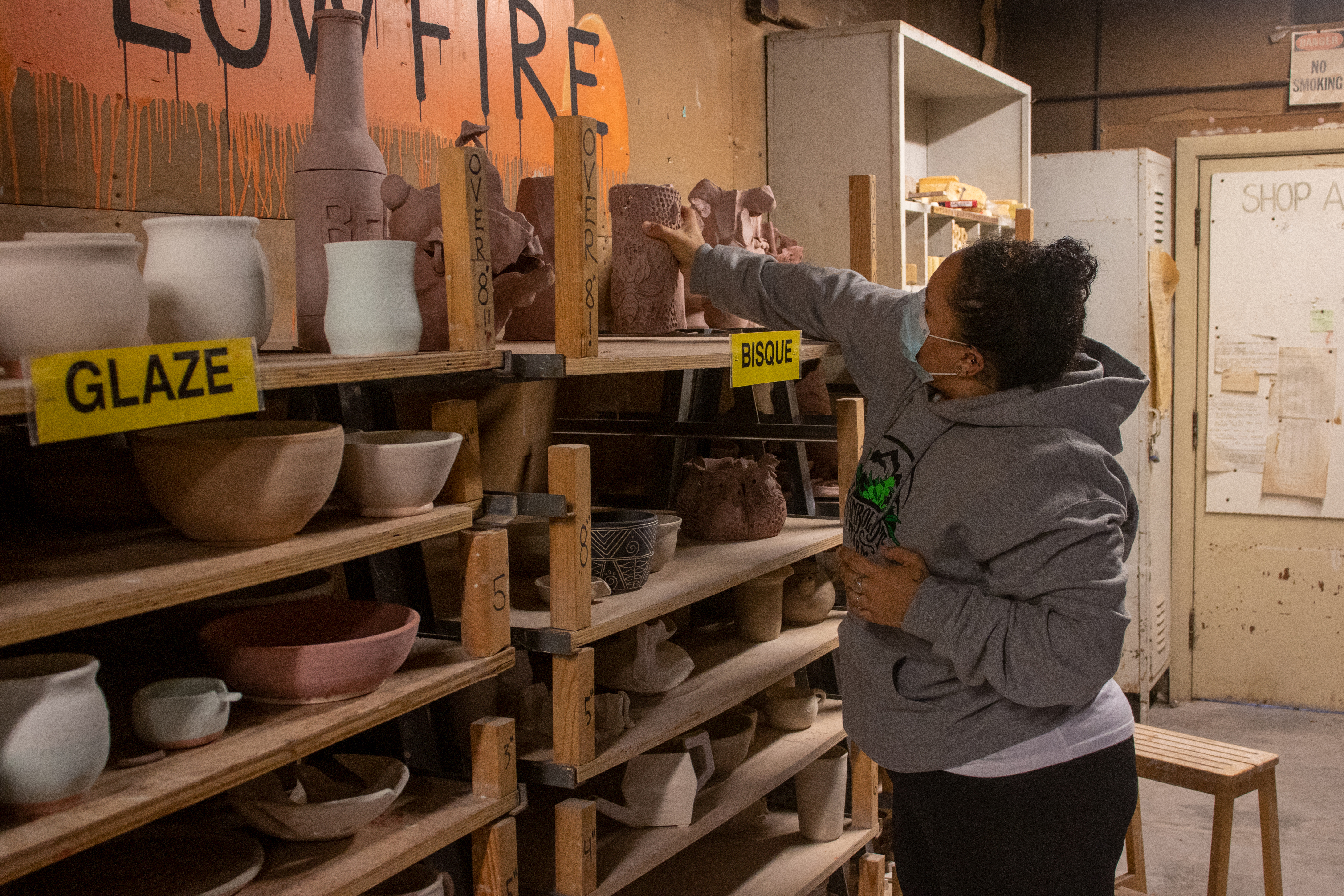
  • The HSU ceramics department fires back up

    The HSU ceramics department fires back up

    Experienced ceramics students are back in the lab this semester

    Following a graceless transition to online learning in the spring, ceramics students are receiving a drastically improved experience this semester.

    When the COVID-19 pandemic first went into effect, forcing students to finish the spring semester from home, ceramics students were among those who drew the shortest stick.

    According to Ryan Hurst, who has been teaching ceramics at HSU for nine years, when classes were moved online, the hands-on experience that students signed up for was no longer possible. They were instead tasked with drawing up sketches, studying research and development and critiquing other artists’ works.

    “It wasn’t ideal,” Hurst said.

    This semester has been a continuous adjustment according to Hurst. Gaining access to the building as well as the proper equipment to record demonstrations over the summer was an uphill battle.

    “I didn’t get either of those things until two weeks before it started up, so the plan kind of went out the window,” Hurst said. “I’d reformulated plans leading up to the end of the summer and some are working and some aren’t, but it’s a crazy adjustment.”

    At the start of the fall semester, each student was given a kit to take home, including basic ceramics tools and the clay they would receive in a normal semester. Beginning ceramics students will be creating almost entirely from home this semester, because of the new lab capacity put in place by COVID-19 protocols. Meanwhile, intermediate and advanced level students are granted some access to the building, with portfolio development students receiving first priority.

    “They have paid their dues and deserve the last moments of their academic career to do as much as time allotted them,” Hurst said.

    Jenna Santangelo is a former student and now lab technician for the ceramics department. After six years of classes, this is Santangelo’s first year as a staff-member. According to her, the beginning students are able to accomplish almost all that’s required of them in a normal semester from the comfort of their homes, assuming they possess the space.

    “Working at home is possible,” Santangelo said. “But it’s pretty messy and a lot of people don’t really have the space necessary for it.”

    Melissa Martin is a graduate psychology major with an emphasis in academic research. She takes ceramics as a therapeutic ritual each time she’s nearing the end of a chapter in her education. This semester, she’s preparing to close the final chapter as she puts the polishing touches on her thesis. Taking the beginning ceramics course this semester and not having access to a lab has changed the way Martin approaches her projects.

    “I think that you’re a little bit more restricted of how much work you can actually do,” Martin said. “I also was a very avid wheel thrower, so that’s also been a real big challenge. Now I’m doing a lot of hand building stuff so I really have to hone in on different skills.”

    One thing not included in the kits the university handed out to ceramics students this semester was a proper kick wheel for throwing pottery.

    “The kick wheels are, I think, like 400 pounds,” Santangelo said. “Which isn’t really feasible for most students to move.”

    Despite the disappointments and also experiencing challenges with creating a comfortable workspace at home, Martin is remaining optimistic.

    “We’re just learning how to be resilient in this world. We’re still trying to accommodate the best that we can,” Martin said. “But it is still a challenge and we’re still learning little bit by little bit, each time.”

    Maximus Landon is brand new to the ceramics program this semester. Landon took the class in hopes it would help them enjoy school again. Unfortunately, the barriers introduced by the online format have taken away from some of the enjoyment.

    “Because I’m really new to all of this, I’m not entirely sure what exactly I’m doing,” Landon said. “I’m not sure if I’m scoring things wrong and I’m not sure if I make this dent too large if it’s just going to have the entire side fall off, so it’s a lot of trial and error by myself and it’s not very fun for my anxiety.”

    Likewise, Hurst has been very anxious this semester about the safety of his students and the quality of their education.

    “It’s definitely not an ideal thing,” Hurst said. “But a lot of students have just been really happy to still be able to work with clay, even if it is at home.”

  • Plans to study abroad in the Czech Republic during COVID-19

    Plans to study abroad in the Czech Republic during COVID-19

    Journalism student looking to study abroad is questioning her decision

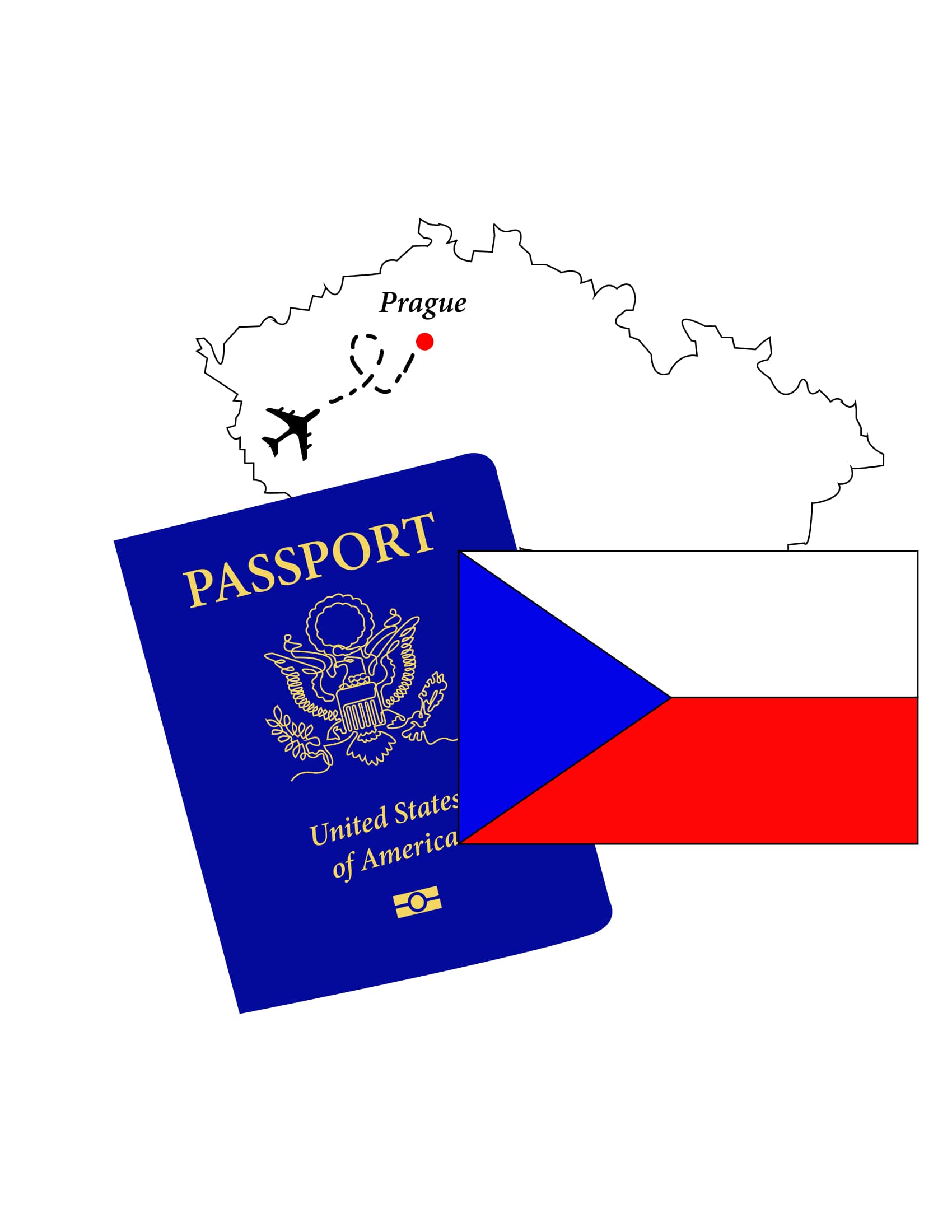
    My study abroad program in Prague, Czech Republic, takes place next semester.

    I speak in the present tense because it has not been canceled or postponed. The program is still set to happen. With this information, I keep asking myself, if the European Union miraculously opens up to the United States by Dec. and I am given the ability to travel to Prague, would I go?

    Well, yeah, most likely.

    However, there’s a lot to take into account.

    The program takes place from Feb. 2, 2021, to May 22, 2021.

    I bought my plane ticket back in April 2020 when it was ridiculously cheap, so there’s that going for me.

    I got my passport in Jan. which was super exciting. I would need to start getting my documents together to obtain my visa by Jan. 2021.

    There’s a lot of planning involved in something that is very uncertain.

    I’ve been having a lot of conflicting thoughts about studying abroad during COVID-19. Would I feel safe flying on a plane for 20 hours to get to Europe? What if there was another global shutdown while I was overseas? Would I be satisfied with my classes and internship being online? If I didn’t go, would this be one of the biggest regrets of my life?

    I’ve been so careful since March. I have been wearing my mask correctly, I’m constantly washing my hands, using hand sanitizer, keeping my distance, and I’m staying at home unless getting groceries or working. I’ve following all the rules here, why would it be any different there?

    Airlines have been taking the extra mile to deeply cleanse and sanitize the cabins, as well as limiting the number of people being put on an airplane. Would this still happen in 2021 for an international flight? I really don’t know.

    Upon arrival, I’m fully aware that I would have to self-quarantine for two weeks. Although self-quarantining sucks and is extremely boring, it would be absolutely necessary and worth it because I’d be living there for four months anyways.

    Now, another question would be, why would I travel across the world just to take some online classes for a few months. The experience! Being in a different country, experiencing the culture and of course eating the food. There wouldn’t be another time in my life that I’d have the chance to temporarily live in another country to go to school. It’s an opportunity unlike any other.

    Why would some students travel back to Humboldt State University just to take online classes? For the town, the environment, to get away from home, or even to just be here.

    If there was another global shutdown, I think I’d be okay being in the Czech Republic considering the U.S., specifically California, hasn’t been doing so great with the shelter in place order anyways. Would I technically be safer? I mean, maybe. The Czech Republic as a country has a smaller population than California and a lower rate of positive cases. So, yeah, it’s a possibility I could be safer.

    The program is being very transparent and answering a lot of questions that students like me had been having for the past four months. The information being provided has to do with the possibility of online internships, whether or not obtaining my visa is still worth it, how refunds would be issued, and even safety protocols for housing and such.

    I feel as though, as long as I am not being irresponsible and acting like an ignorant American tourist, it would be okay.

    I would just be wearing my mask (correctly) and minding my own business.

    However, this is only if the EU lifts the U.S. travel ban, which may not happen anytime soon.

    To je zivot?

  • All aboard the plague ship

    All aboard the plague ship

    Reopening the school in any capacity must have been the worst idea possible. There was not enough preparation for letting students come back to Humboldt State University. While it is understandable that every student has their own reasons for living on campus, the risks are high. HSU President Tom Jackson made it clear that suspending move-in dates and face-to-face instruction until a later date was prejudice and not necessary.

    With cases spiking in recent days, the community is at risk. In a press release from the Humboldt County Joint Information Center, people between 20 and 29 have the highest percentage of new COVID-19 cases locally. Young adults are becoming the primary carriers of COVID-19 and are spreading it unknowingly.

    Humboldt County Health Alert recently rose to a Level 3, which means “High Risk- Many cases with conditions for community spread, with many undetected cases likely. Limit everyday activities to increase safety.”

    Opening up the university to a thousand students in a single week is like pouring salt on a fresh wound. Although Arcata is open to tourism for the economic stimulation, the town was not ready for it. When Arcata first opened back up to the locals, the cases were low and stable. Then tourism started to pick up. Travel has put the community in danger and is a contributing factor for the rise in cases.

    There is a large elderly and retiree population in Arcata and surrounding communities, like Eureka and McKinleyville. Humboldt County Public Health Officer Dr. Teresa Frankovich stated that the transmission can, in time, contribute to increased exposure for older individuals who are of higher risk of serious disease and even death.

    Letting a large amount of students move in during the middle of a pandemic in a small town was not a good judgment call. The protocols and guidelines put in place by HSU can go wrong in various ways.

    While the single occupancy rooms for student housing were supposed to be a way to shelter in place, there are common areas that the students will share with their housemates such as the living room, kitchen and bathrooms. On the Humboldt State Campus Ready website, it was vaguely mentioned that these common areas will be limited and if violations persist, they will be restricted. But with student housing employees matching one to every hundred students, the likelihood of knowing these violations are occurring are nearly impossible.

    With five students and one faculty member having tested positive, HSU has made COVID-19 testing mandatory for student residents throughout the semester. However, the Student Health Center states on the Campus Ready website that testing will be done “in a limited capacity due to a nationwide shortage of tests.”

    Regarding limited face-to-face instruction, the administration is putting the responsibility on the students to ensure they stay healthy. If a student were to test positive for COVID-19 while at HSU, it would be their fault for not following the guidelines to satisfaction, instead of the university’s for being open. The best way to keep students safe is to not have contact with other students. That risk became a reality when a thousand new, incoming students decided to move on campus.

    Dr. Frankovich and President Jackson should not have agreed to open the campus in the first place back in June. There had to have been consideration of the possible influx of cases during the summer months with tourism. Not to mention, fall and winter months correspond with the influenza season. Incoming students will not just be battling COVID-19 but also the flu, the symptoms of which are almost identical.

    There were a lot of important individuals that conversed in making these decisions. Unfortunately, the people being put at risk obviously weren’t a part of the conversation.

  • Our Societal Structure is Slipping

    Our Societal Structure is Slipping

    With the pressures of the pandemic mounting, people are stuck with an impossible choice

    On Friday, May 1, around 100 people gathered in front of the Humboldt County Courthouse to demand the reopening of businesses deemed non-essential by the government. With signs like “Every Business Is Essential,” it is clear that the protesters are not being properly supported during this time of crisis.

    The government’s attempts to mitigate the spread of the virus have been controversial with over a million reported cases so far. Social distancing is the most effective measure we can take to prevent unnecessary deaths since the swab test is inaccurate and limited at the moment. Unfortunately, mandatory lockdowns and halts to employment in order to support social distancing efforts have left many without jobs and a way to earn a steady, livable wage.

    “This crisis is really illustrating both the violence of inequality and also the need for another economic system.”

    Thomas Piketty

    Everyone has a wide range of debts, rents and other expenses to pay for during this time. If we want to prevent the spread of the virus we need to support disenfranchised workers, not force them back into unsafe working conditions. With 59% of Americans living paycheck to paycheck, for those keeping track at home, the percentage cuts for units is not reasonable to expect them to be able to handle all of their expenses with a one-time stimulus check of $1,200. The writer of the book “Capital in the Twenty-First Century” and economist Thomas Piketty believes that a pandemic like this holds the potential to change dominant narratives about how we should organize our society and build our economy.

    “This crisis is really illustrating both the violence of inequality and also the need for another economic system,” said Piketty.

    The Americans most impacted by the pandemic are going to be the poorest, most vulnerable members of our society. For as long as our country has existed, so has the divide in quality of life, poverty, and access to government assistance in times of crisis.

    We need a societal structure that values every life.

    Due to our country’s reliance on employer-based healthcare, every company that is forced to lay off its workers in this necessary time of crisis is creating large swaths of vulnerable, uninsured people. The natural response is to want to go back to work and blame the government for taking away your insurance and employment so you can continue to provide for yourself and your loved ones. The only problem is that we have a virus on our hands, so one is forced to either ignore the dangers of returning to work or slowly drain themselves financially as the dues of existing in our society add up. This is not a fair choice nor a choice we should have to make.

    This is our societal structure functioning as it was designed to. When healthcare is tied to employment and to wealth, we are nudged into believing our right to exist is tied to employment and to wealth. When certain marginalized groups are underemployed or possess less wealth, our system is tacitly stating that those groups are worthless.

    We need a societal structure that values every life. That means universal healthcare, education, job guarantees, housing and access to technology. Without universal healthcare, there isn’t a solid system for distributing care during a pandemic, and the right to one’s own life is decided by socioeconomic status. Without job guarantees, people are set adrift during emergencies, not knowing if they will be able to get back to work after it’s all over. Without universal housing, a pandemic can leave many unsure if they will have a roof over their head in a month’s time. Without access to technology, some will lose education, jobs, communication with the outside world and entertainment to occupy the time.

    But more than all these things, we need a structure that prioritizes us. If everything starts falling apart because of one pandemic, maybe it wasn’t the most stable structure to begin with. An economy that does better when its workers die is like a car that goes up in value when it kills the passenger. The structure should exist to support you. This pandemic is exposing our economic structure for what it has always been. A burden that crushes the marginalized and the vulnerable. A $1,200 check, a rent freeze and a free face mask are only small band-aids on a gushing head wound. Normal, everyday life is why everything is falling apart in the first place.

    All we can do is build a system that protects every person within it and values life from the ground up. A system that lets numbers of people die will die along with them. It is a system bound to fail.

  • Birthday Celebrations during Social Distancing

    Birthday Celebrations during Social Distancing

    The pandemic forces people to re-imagine their birthday plans

    When it comes to a birthday, you’d expect a party, a night out, a small get together with friends and family, or maybe a chill day at home. Unfortunately, with social distancing still in order, celebrating alone is the closest option to a party.

    Because social distancing is still in order, many have had to accept the fact that their big birthday plans aren’t going to happen anytime soon. Without the streamers and drinking games, people have found ways to remain somewhat festive on their special day. While some have taken to Zoom for video chat parties, others have spent their day with their fellow quarantine pals.

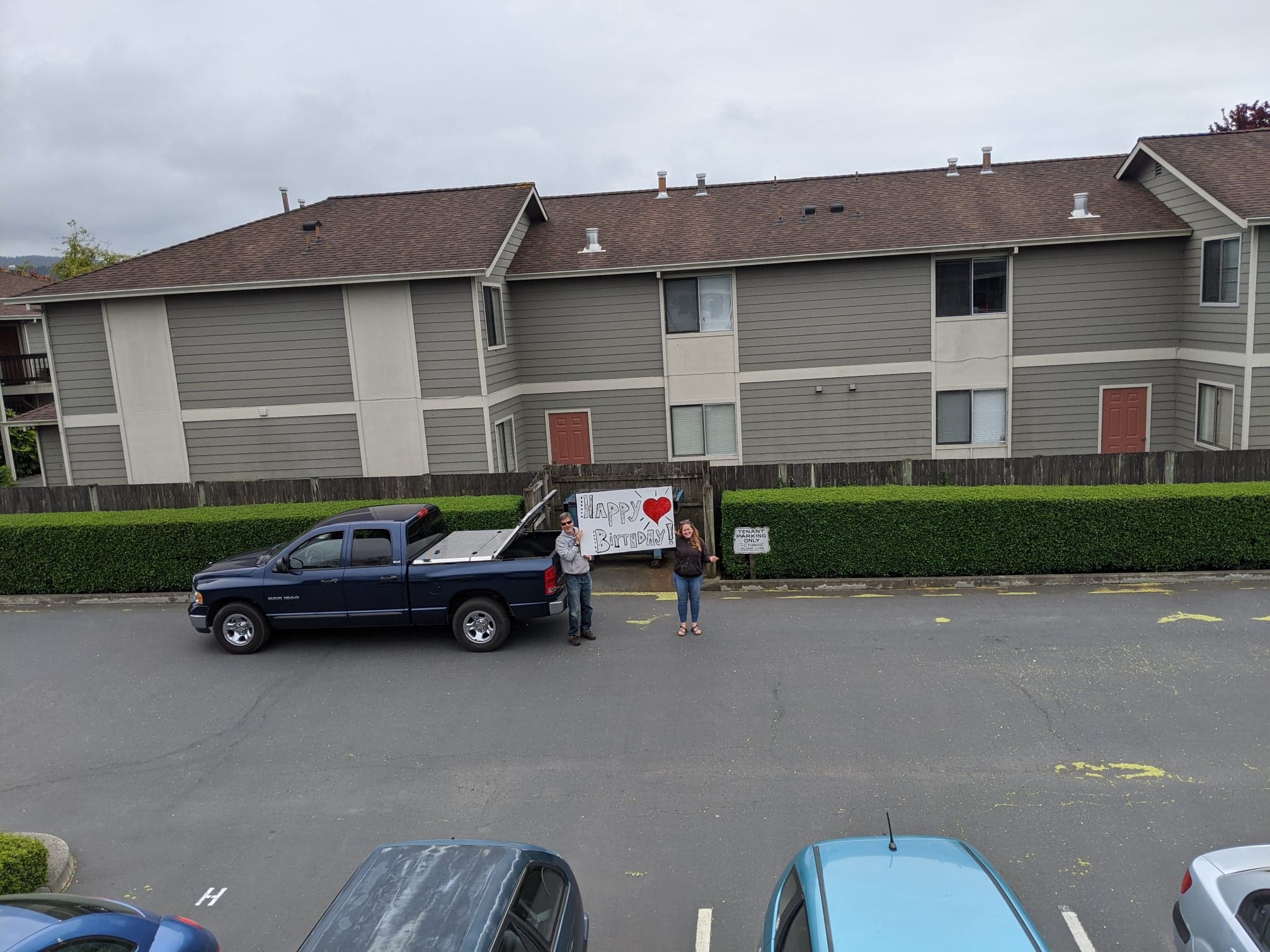
    Tracy French’s, a Humboldt State University alumna from the geology department, birthday was on April 30. French celebrated it with her two good friends, who are also alumni, and have birthdays that same week.

    “My birthday was on April 30,” French said. “It’s one day after a friend’s birthday, and the day before another friend’s birthday.”

    The three had originally planned for a big get together, and reserved the Arcata Common Hall for a huge party. With entertainment and plenty of drinks to go around, it would’ve been one heck of a birthday bash.

    “We were planning on getting a live band called ‘Old Dog’ at the Arcata Common Hall,” French said. “I went to Facebook and invited over 150 people, but that got cancelled.”

    Instead, French spent her day enjoying the warm sun in her backyard along with her friends.

    HSU psychology major, Shelley Magallanes, was hoping to have a night full of fun back home in Los Angeles for their 21st birthday. With social distancing likely to be in order, Magallanes had to cancel their original plans.

    “Because I’m turning 21 I was planning to have a big thing with friends,” Magallanes said. “We’d go into LA and go clubbing.”

    “I had plans to go to the bar with some pals on my 21st to see what it was all about. I had planned to have 30+ people invited to my birthday.”

    Bryan Gambrel

    Magallanes plans to return home around June, but with their big plans ruined by COVID-19 they’re preparing for the second best thing, spending it with the people they love most.

    “I’ll probably end up spending it with my family,” Magallanes said. “Maybe go swimming and eat some cake.”

    Bryan Gambrel, a junior at HSU, originally planned his celebration to be like any other 21st birthday, going out for a drink — legally.

    “I had plans to go to the bar with some pals on my 21st to see what it was all about,” Gambrel said. “I had planned to have 30+ people invited to my birthday.”

    Because of social distancing, going out was a no-go. Regardless, he was happy to celebrate his birthday with a small gathering of close friends and some quality-time with his mother.

    “The most memorable thing was having my mom and I build a garden bed out of spare wood palettes I’ve collected. It was a fun, crafty project,” Gambrel said. “While it was much smaller than I was hoping for, it was very memorable.”

    For those celebrating birthdays during this time, something as simple as a phone call or a video-chat can make all the difference. Drinking with roommates and creating fun games, or even sitting out on a nice sunny day can make this year’s birthday a bit more pleasant. No matter how you decide to celebrate, stay safe and it will definitely be a birthday to remember.

  • Happy Thoughts and Hot Liquids Won’t Save Us

    Happy Thoughts and Hot Liquids Won’t Save Us

    A reminder of the few things we know that help prevent the spread of COVID-19

    I received a text from a housemate recently recommending we all drink hot liquids and think happy thoughts to get us through the COVID-19 pandemic. Sadly, happy thoughts and hot liquids won’t save us.

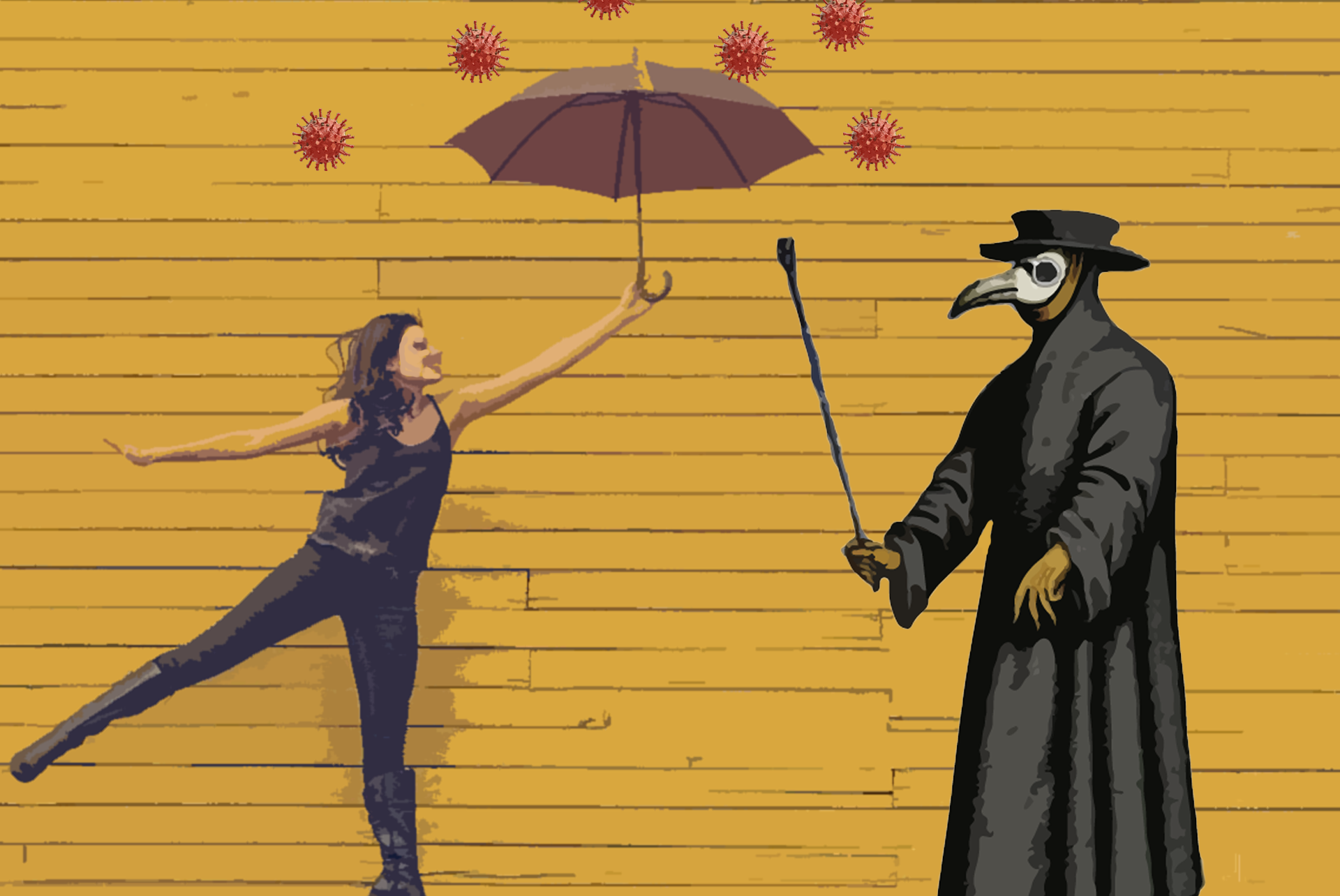
    In the midst of a pandemic, it makes sense that people will seek home remedies—they can give you actionable measures to take to try to inoculate yourself against COVID-19. But peddling bunk medicine like a medieval plague doctor only makes things worse.

    Random herbs, hot liquids and happy thoughts do nothing against COVID-19 (neither does weed). What can help stop the spread of COVID-19 are these much less sexy things you’ve probably already heard, adapted from the Centers for Disease Control and Prevention:

    • Social distancing. Hang out with yourself for a while. The crushing introspection may seem scary, but who knows, maybe you could learn something about yourself. The CDC gives suggestions on how to cope in this stressful time.
    • Frequent hygiene. Wash your hands with soap and water for at least 20 seconds. Sanitize doorknobs in your home. Sanitize your debit or credit card if you’re grocery shopping. You might even go so far as to ask to scan your own groceries at the checkout stand.
    • Don’t touch your face. According to disease expert Michael Osterholm, the virus behind COVID-19 chills out in the throat and lungs, and it likes to get in your body through your eyes, nose and mouth. Your hands provide an Uber ride for the virus straight into your system.
    • Also, cover your face. The CDC have shifted course and now recommend people cover their face with a cloth mask in public, especially in high-risk areas like grocery stores or pharmacies. If you have a sewing machine, here’s how to make your own mask. If you don’t have a sewing machine, the CDC provides a video on its site on how to make a mask out of any old cloth and a couple rubber bands.
    • Keep your body healthy. Eating a well-balanced diet, getting enough sleep and exercising all maintain a healthy immune system.
    • Find a new hobby. Don’t allow depression to set in from all the time spent indoors. Netflix is nice, but it’s not a hobby. Try reading, painting, knot-tying or bread-making. Blogger Matt Gilligan compiled a list of 19 inexpensive hobbies for self-quarantining.
    • Connect with your friends and family. Don’t gather with people in person. (No group hugs.) Instead, take advantage of your phone and call up your friends and family. For a more socially stimulating experience, use FaceTime or Zoom to have a video chat. Invite all your pals and make it a virtual party. If you happen to be posted up in a house with a friend, try to hang out with them rather than hiding away in your room.

    We have no cure for COVID-19. A vaccine, by all accounts, remains a long way off. If you end up with the coronavirus, we only have treatments that can relieve symptoms as suggested by the Mayo Clinic, like Tylenol, cough syrups, rest and fluid intake.

    I’m no stranger to distrusting authority or being suspicious of science—I grew up in Southern Humboldt and wasn’t vaccinated until I was a teenager. But for the sake of yourself and the rest of the world, put your suspicions aside and have a little faith in the only proven measures we know against COVID-19.

  • Online Learning Isn’t for Me

    Online Learning Isn’t for Me

    Online classes don’t feel like real learning and stifle student motivation

    Spring semester has turned into one of the worst semesters of my life, and online classes aren’t helping.

    Don’t get me wrong, online classes are nice to clear up some room in your schedule for work or other classes. They are still classes and shouldn’t be forgotten. I’ve taken at least one—but no more than two—online classes per semester.

    But online classes usually have a set schedule. Something like: discussion posts due Monday, comments due Wednesday and a quiz every Friday, plus a project like an essay or media presentation due at some point in the semester. Online classes that start at the beginning of the semester allow both the professor and students to be prepared for the whole semester.

    Online classes that start in the middle of the semester? Yeah, those aren’t for me. They’re also not what I paid for.

    None of us know what is going on right now and we’re all taking it day by day, but when your professors start to panic, you start to panic. Some professors know what they’re doing and let you know everything right away, while others don’t know what to do or don’t know how to use Zoom or record online lectures.

    It took me a minute to learn how to use Zoom, and although I appreciate the service and enjoy seeing my classmates’ faces, it’s awkward. It’s just a big FaceTime where your professor is trying to make the education worth your money. And just like in an everyday classroom, not everyone talks in the Zoom sessions. Zoom sessions always seem to glitch and are mostly only useful for group discussions, critiques and presentations.

    We’ve all lost motivation, and quite frankly, it doesn’t even feel as if we’re in school anymore.

    I learn better on paper and in person. I realize a lot of work is done on computers and submitted on Canvas, but being in a classroom and taking notes while a professor is lecturing is how something sticks in my head. There are too many distractions at home that I can’t get away from that just make it even harder to learn.

    Social media tells me that a lot of people feel the same way. Even though we get to be home and work at our own pace, most of the time being at home just makes us not want to work.

    We’ve all lost motivation, and quite frankly, it doesn’t even feel as if we’re in school anymore. Having to remind myself is getting pretty annoying.

    With all of this said, I know we should probably be grateful we’re still getting some kind of education. This is my last semester of college, and although I’m not a fan of how it’s ending, I’m grateful I won’t have to take any more online classes.

  • A Rundown of All The Emails HSU Has Sent Students

    A Rundown of All The Emails HSU Has Sent Students

    Since March 15 HSU has sent out over a dozen emails on their response to COVID-19

    Here is a summary of emails Humboldt State University has sent out since March 15.

    March 17: HSU informed students of its efforts to supply students with reliable laptops from the library as well as internet access for students without a reliable connection. HSU provided a list of locations where the university’s Eduroam Wi-Fi connection is strongest, as well as a list of services that are providing free Wi-Fi services during the COVID-19 crisis.

    March 19: HSU informed students of Humboldt County’s shelter in place order. HSU confirmed that essential employees would be asked to continue to work on campus, and all others would work by teleconferencing. In a second email on the same day, HSU confirmed rumors that commencement, originally planned for May 16, would be canceled. HSU asked in a now-closed Google form for creative alternatives to celebrate graduation.

    March 21: HSU released a more detailed email regarding its policies related to essential employees and payroll. Positions listed as essential included public safety, information technology, the library, University Center, health center, Oh SNAP!, residence life, dining, facilities management, research continuity, business services, payroll and mail distribution. HSU announced that its payroll department would be working on creating digital timesheets for employees working from home and that emergency pay would not be in effect as it was during the blackouts of the fall 2019 semester.

    March 23: HSU revealed its guidelines on returning to campus. HSU asked students returning to Humboldt from areas with community spread or international destinations to self isolate for at least 14 days before returning to campus. HSU also advised students who are feeling ill to contact the Student Health Center at (707) 826-3146 before visiting the center.

    March 24: HSU asked that students who live in on-campus housing and were on any of these three flights to contact Housing and Residence Life at (707) 826-3451:

    • March 16: United flight #5827 from Los Angeles Airport to Arcata
    • March 18: Delta flight #4124 from Seattle, Washington to Medford, Oregon
    • March 18: United flight #5555 from San Francisco Airport to Arcata

    March 26: HSU announced that the library would close on Friday Mar. 27 in response to the ongoing COVID-19 situation.

    March 27: HSU extended the deadline for changing the grading mode of classes to May 9. HSU said it’s looking into expanding the number of courses that can be switched to credit/no credit, as well as lifting restrictions on the number of courses that can be taken as credit/no credit.

    March 30: HSU announced the closure of Siemens Hall’s computer labs and the University Center to reduce transmission of COVID-19.

  • How to Sew Your Own Face Mask

    How to Sew Your Own Face Mask

    A step-by-step guide to making face masks

    Although N95 face masks are the only masks proven to protect against COVID-19, companies and people across the nation are rushing to their sewing machines to help produce protection for frontline healthcare workers.

    New York City Governor Andrew Cuomo asked companies to shift their operations to make face masks and ventilators at a press briefing March 20.

    “I’ll fund a new business if you can make these products,” Cuomo said. “I’m trying to make these products. If you are in this line of work, we need masks. If you are making clothing, figure out if you can make masks. I’ll fund it.”

    Deaconess, an Indiana healthcare provider, has also asked the public for help to produce masks. They released a video tutorial in which they show how to sew a surgical face mask that complies with the Centers for Disease Controls and Prevention guidelines.

    Hand-sewn masks compliant with CDC guidelines are permitted to be used by healthcare workers, but the masks are still considered a last resort by the CDC.

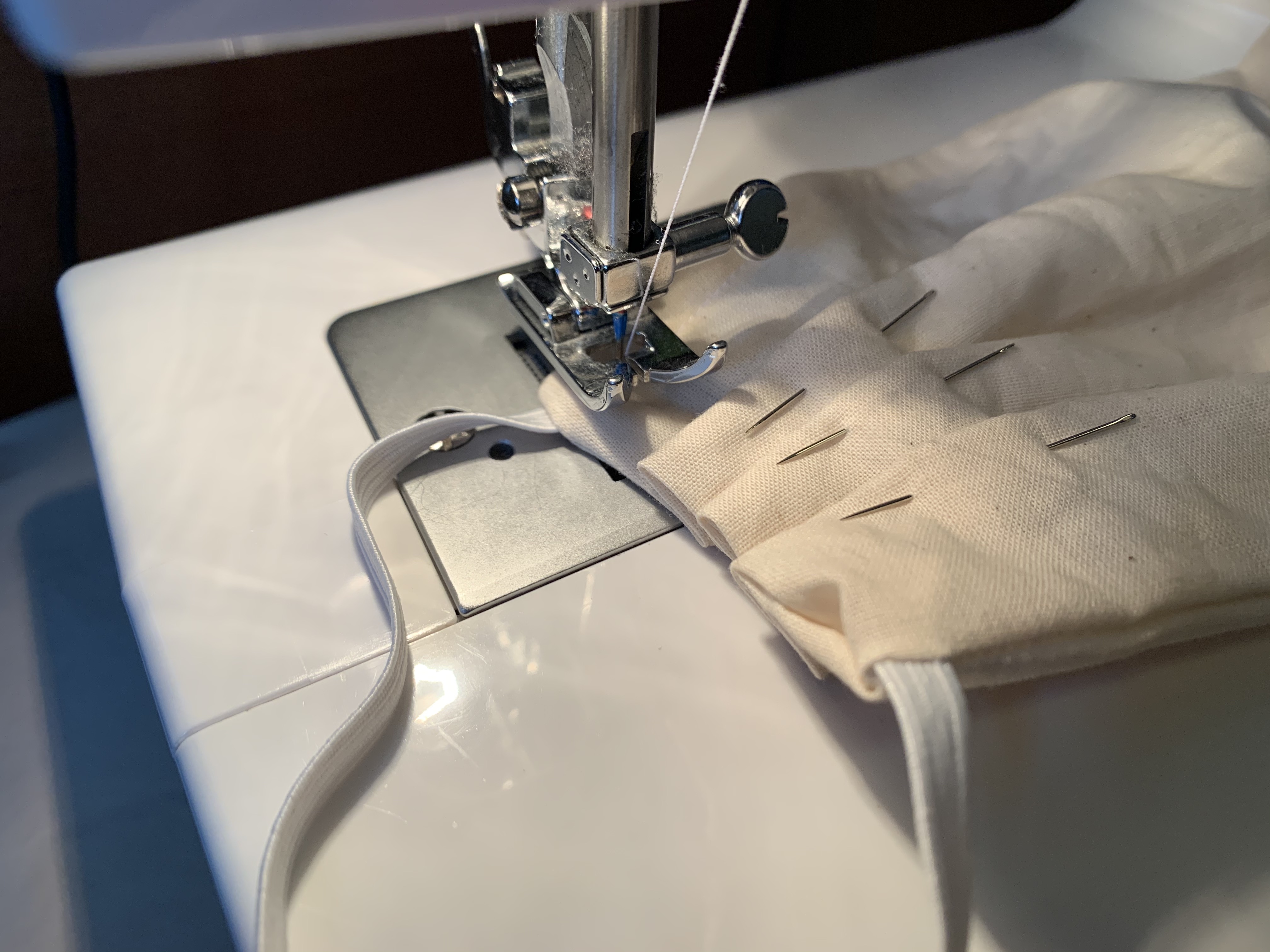
    Considering the dire circumstances, a homemade mask is better than no protection at all. Here’s how to hand sew a face mask (all photos by Rachel Marty):

    Materials needed:

    • Two pieces of 7-inch elastic
    • Two sheets of 9-inch by 6-inch tightly woven and recently-purchased cotton
    • A sewing machine
    1. Pin the two sheets of cotton fabric together and start sewing around the perimeter, leaving a quarter of an inch for the edge.
    2. At every corner, stop and place the end of the elastic in between the seam, making sure you place the straps horizontally on the 6-inch sides. The straps should go behind the ears, not vertically, or the straps will rest above your mouth and chin.
    3. Make sure to leave your perimeter undone. Leave an inch or two so you can turn it inside out.
    4. Turn inside out.
    5. Make three tucks on each side of the mask and pin them in place. Make sure they are going in the same direction on each side.
    6. Again, sew around the perimeter of the mask, leaving a quarter of an inch on the edge. Repeat twice to make sure it’s secure.
    7. And you’re done!
  • Associated Students Elections Delayed Due to COVID-19

    Associated Students Elections Delayed Due to COVID-19

    Associated Students Board of Directors redesigns spring elections

    The Associated Students Board of Directors motioned to push their voting period for their upcoming elections back two weeks and expand the period from three to five days, now April 27 through May 1.

    The March 27 AS Board meeting held through Zoom included the extension of the filing period for AS candidates to April 16 and several other amendments to the upcoming elections. Elections Commissioner Cassaundra Caudillo said postponing the election could be beneficial.

    “It allows for professional staff and the Elections Commission to promote elections a bit longer, so that way we raise our chances of having candidates for each position,” Caudillo said. “Because at the moment, we don’t have a candidate for every position. Not only that, but it also allows students themselves to have an additional two weeks to apply for candidacy.”

    “In general, postponing elections for two weeks allows everyone to have a fair and equitable chance at running.”

    Cassaundra Caudillo, AS Elections Commissioner and Public Relations Officer

    AS Executive Director Jenessa Lund said students expressed interest running in this election who haven’t had the opportunity to take the necessary steps to sign up before the office closed.

    “In general, postponing elections for two weeks allows everyone to have a fair and equitable chance at running—keeping in mind the situation we’re all in and how much added stress we’ve all been faced with as students and as human beings,” Caudillo said.

    While minimum residency and unit load qualifications are still in place, candidates are no longer required to appear in person to obtain their nomination materials, as the AS office has closed its doors. Students can find everything they need under the “Elections!” tab on the AS website.

    Students are also no longer required to supply petitions with 150 student signatures. The candidate quad talk will be replaced with one-minute videos of candidates reading their speeches that will be shared on AS social media. Requirements of wet signatures from candidates will be swapped with a Google forum, and the candidate orientations will now be held over Zoom on April 16 and 17.

    The AS Board is willing to review and consider reimbursing any campaign supplies that can no longer be distributed.

    AS President Lizbeth Cano-Sanchez described the value of joining AS in a separate interview with The Lumberjack.

    “Education is power, and in AS you can put your education to practice, because there’s a lot of things that correlate with it,” Cano-Sanchez said. “It helps you develop yourself, and at the same time, we’re students serving students and that’s really important.”

  • Myths and Truths of Surgical Face Masks

    Myths and Truths of Surgical Face Masks

    Mirage of safety causes mask supply to plummet and xenophobia to reemerge

    The emergence of everyday people using surgical masks amidst the COVID-19 pandemic has caused mass misinformation and the perpetuation of xenophobic ideas.

    Myth: Surgical masks make you immune to COVID-19

    Typically found on hospital workers and sick personnel as a safety barrier, surgical masks are almost regarded as invincibility devices, protecting the body from outside pollutants and threats. The implied purpose of surgical masks is to protect patients from the secretions of a doctor’s mouth or nose during surgical procedures or to protect doctors and nurses from infected patients. Either way, a basic surgical mask prevents the exchange of bodily fluids, not air particles. Surgical masks are often mistaken as invincible shields against all viruses and bacteria.

    Surgical masks show no evidence of prohibiting the inhalation or contraction of the virus that causes COVID-19. The COVID-19 virus particles are too minuscule to be stopped by a surgical mask barrier. According to the Centers for Disease Control and Prevention, “most facemasks do not effectively filter small particles from the air and do not prevent leakage around the edge of the mask when the user inhales.” In no way do surgical masks prevent or obstruct contaminated air.

    While surgical face masks are virtually pointless against COVID-19, N95 filtering facepiece respirators are different. These masks are personally fitted to the face and “filter out at least 95% of very small (0.3 micron) particles, capable of filtering out bacteria and virus particles,” according to the CDC. These masks are typically worn by hospital and treatment personnel that come in direct contact with infected patients. N95 masks prevent the inhalation of micro-particles.

    Truth: Surgical and N95 masks are running low

    Due to the personal fitting of each N95 mask, they begin to degrade overtime depending on their usage, storage and environment. The assigned expiration date and high demand due to the current pandemic has resulted in an unexpected shortage in supply. Doctors are now reusing their masks, but they risk contamination due to degrading components affecting the protection and performance of the mask. Government administrations are requesting N95 donations as well as demanding some occupations to give up their assigned mask for medical workers.

    While N95 masks are needed most, surgical masks are running low as well. Infected patients wearing masks benefit surrounding parties by limiting exposure of emitted particles into the air. The pandemic panic has misinformed the public to go buy surgical masks when patients and medical workers need them most.

    Myth: DIY masks provide reliable protection

    YouTube and social media platforms are advertising do-it-yourself face mask tutorials in response to the shortage in surgical mask supply. The misinformation has continued as people attempt to protect themselves with faulty protection materials. Bras and bonnets to sandals and plain cloths are being cut and trimmed to replicate surgical face masks. But, as previously mentioned, surgical face masks provide no protection against COVID-19 virus particles. Any alteration of store-bought or recycled material will have the same, if not less, protection against COVID-19 than a surgical mask.

    Truth: Mask usage has reignited xenophobic ideas

    Surgical masks provide zero protection from contracting COVID-19, but they have effectively reignited xenophobia. It’s completely normal for the mind to want to assign a face to an infected COVID-19 individual or picture what a threat would look like out of caution. Assuming someone wearing a face mask has the virus and extending that assumption past the mask, to their race or ethnicity, is disgusting, racist profiling. In a time of crisis, people should be exercising neighborly behavior and picking one another up, not perpetuating racist, profile-based assumptions on others in an attempt to accuse others of the chaos. It’s unproductive and invasive.