The Lumberjack


Students Serving The Cal Poly Humboldt Campus and Community Since 1929

Tag: Elise Fero

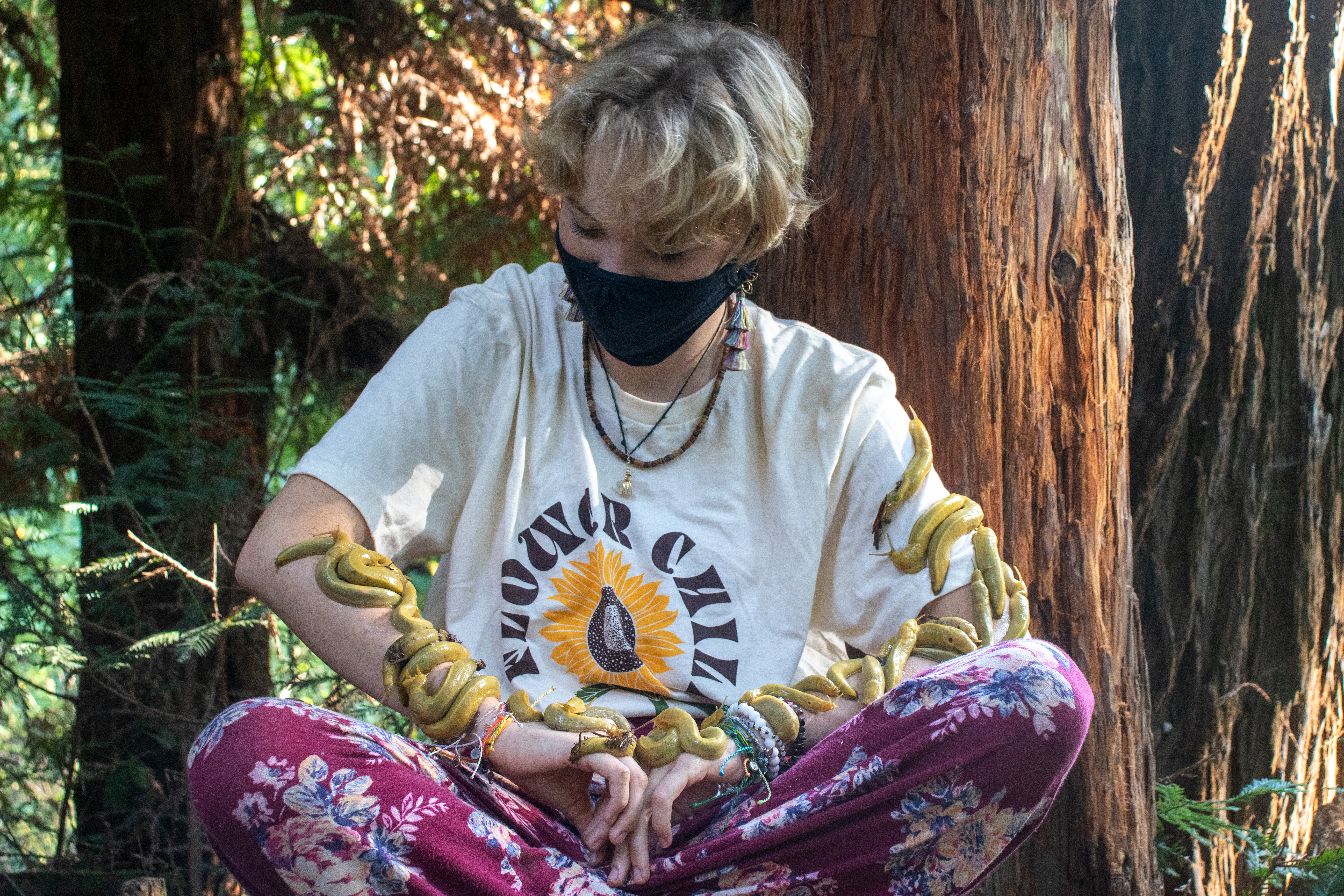
  • 5 of the Best Places to Find the Beloved Banana Slug

    Finding these fellas may seem easy, but when you want to find a ton of friends, there are specific places to go. This is your ticket to finding the most majestic creatures you’ve ever seen. This is your journey to find banana slugs.

    1. Blackberry bushes are your number one place. These wonderful fruit bushes don’t just give a tasty treat to us, but to the slugs as well! These cuties love to hang out around the bushes and eat the berries, or just take a nap! Feel free to feed them blackberries if you hold them and they’ll become your best friend! There are many blackberry bushes on the trails behind the HSU campus, and the slugs are friendly to kind students.
    2. Skunk Cabbage. I went on a random adventure and came across a large field of skunk cabbage. It was INFESTED with slugs! I spotted hundreds and hundreds. It was a sight to see, and I only wish Van Gogh had painted this scene. These slugs are vibrant creatures, but love to hide under leaves. Look around! You’ll begin to spot them easily.
    3. Redwood tree nooks are one of their favorite spots. They love hiding in the forest in any nooks and crannies they can find. Often, if there are holes or burrows in trees, you’ll find them. Luckily, redwoods surround Humboldt County, so opportunities for finding one of these fellas are plentiful.
    4. Redwood National Park, just an hour from campus, is an easy place to find banana slugs, but you have to look a little harder if it’s too cold. These creatures love to dance in the rain and slime over mushrooms, but get cold just like you or me!
    5. Of course, your own backyard is one of the best places to find these munchers. They love to eat your garden vegetables, and who blames them? Your tomatoes and lettuce are delish! Remember to be kind if you are removing these creatures. They are simply living off the land!
  • Does a new presidency bring new environmental hope?

    Does a new presidency bring new environmental hope?

    A new presidency brings new beginnings, but what does that mean for the environment?

    Professor Nicola Walters has taught environmental policies for the last three semesters at HSU.

    “Right now the big focus is on the executive orders that have been signed in addition to Biden announcing our rejoining the Paris Climate Agreement,” Walters said.

    When Biden and Harris ran for the presidency against former President Donald Trump, they made clear that Biden had a plan for the environment with the Biden Plan.

    Biden’s official website expressed what the plan entails, similar to the Green New Deal.

    The Biden Plan includes zero emissions by 2050, working with the world toward change, confronting polluters who harm communities of low income or of color, and leave no workers behind.

    Not only that, but within his first few days of presidency he also revoked the permit for the Keystone XL pipeline, which is a big deal for environmentalists. This was the beginning of efforts made toward climate change.

    “We’re past the tipping point for taking care of a lot of our habitats and thinking about what would actually maintain the survival for humans on this planet,” Walters said.

    Biden also plans to reverse actions President Trump made against the environment regulations, including to “place a temporary moratorium on oil and gas leasing in the Arctic National Wildlife Refuge,” according to NPR.

    But the Biden and Harris team have made very clear they won’t be ending or putting a ban on fracking, something that progressives have been pushing for.

    Biden has made the announcement that by 2050, his zero emission plan will have led the U.S to achieve a 100% clean energy economy and reach net-zero emissions, a very difficult task as is. But according to UN climate data the 1.5 degrees Celsius limit requires a faster curb in emissions with 45% cut within the decade. Biden also now has control of large polluters like the military, policy toward large corporations, and more which all have large impacts on the environment as well. Will his plan be enough?

    “If we’re thinking about environmentalism on a global level, every single step that is taken to protect an animal species or to protect a habitat is therefore connected to our global health and is necessary at this point if we have any hope at all of reversing the trends of global greenhouse emissions, of the climate change that we are now experiencing at such a catastrophic level,” Walters said.

    “One thing that is central to our area is the removal of the northern spotted owl from the endangered species list,” Walters said about President Trump’s actions of removing 3.4 million acres of land from the federal protections.

    With new plans for the environment, it’s important to hold the new team accountable.

    “I don’t think [Biden is] as environmentally conscious as more far left or more liberal leaning people would like him to be,” Aaron Larkins, second year political science major, said.

    Like Walters, Larkins believes action is critical, but just our leaders won’t be enough.

    “We only get one Earth, we only get one shot at keeping the planet healthy,” Larkins said. “The more we start killing off plants and animals, I mean it’s only so long before we’re the only things left, or we’re not even left.”

    While a new presidency brings new expectations and hope, it’s important to remember they are no cure all.

    “I believe that it’s really important that we not get too fixated on what Biden and Harris are going to do on a federal level,” Walters said. “We have to be involved with that on the state and local level so it’s not just one person attempting to change the shape of environment policy but rather we have investment and involvement all the way down to our local levels.”

    Like Walters said, we cannot just depend on a team of people to create a global change. Some believe it’s a step in the right direction, others believe it’s not enough. So what are students at Humboldt State to do? Walters believes it’s HSU’s job to educate and make the students aware.

    “A lot of times it’s important that we don’t allow us to be sort of enticed by the dream of what this administration will deliver to us but make sure we aren’t masking the realities of what’s happening on the ground,” Walters said.

  • Hot gossip: Banana slug Edition

    Hot gossip: Banana slug Edition

    In my eyes the world is yellow and full of slime, but guess what? I love it! Welcome to the official fangirl column for banana slugs. Who knew this even existed?

    Here’s the hottest gossip of the slug world. Prepare yourself for some hot hot tea.

    The Slug Queen Deidre has been accused of interacting with a snake, having a near death experience but survived. She was awarded a badge of survival. Congratulations. Bow down to the slug queen!

    Jen and Thomas Slugs were found eating blackberries after curfew! Scandalous! Luckily they were not seen by predators and only by the slug guards.

    Gabe and Anthony Slugs were found to have helped write an article in the Lumberjack Newspaper with humans! Dun dun duhhhhhh!

    Skylar and Justin Slugs just announced their discovery of a new food: it’s called a banana peel and they were scared of it at first when a human dropped it, but eventually tasted it. These chefs are now introducing the recipes to restaurants around Northern California! Bon Appetit!

    Dakota, Elliott, and Sophia slugs were caught skydiving off a redwood with leaves as parachutes. The slugs below watched as these adventurers made history.

    Dobby and Becca Slugs discovered a human who liked to say hello and moved them out of the way of walking humans. Oh wait! I am that human.

    Poppy, Gabrielle, Whitney, Matt, Elizabeth and Kiera Slugs were all found on the same log having a photoshoot. They are on the cover of Slug Weekly.

    Brianne, Sam, Joseph and Ian Slugs were seen out at the beach enjoying the sun but didn’t go to the salt water. What a fun day!

    That’s it folks, the hottest slug gossip for the week. Tune in next week for more banana slug tea! But not actual tea because that’s disgusting and cruel and well, very slimy.

  • The dangers behind marine debris

    The dangers behind marine debris

    Along the coast, you can free your feet in the sand and enjoy the beautiful sounds of the ocean. But enter the water and you, like many marine creatures, may find yourself entangled in fishing gear or waste plastic.

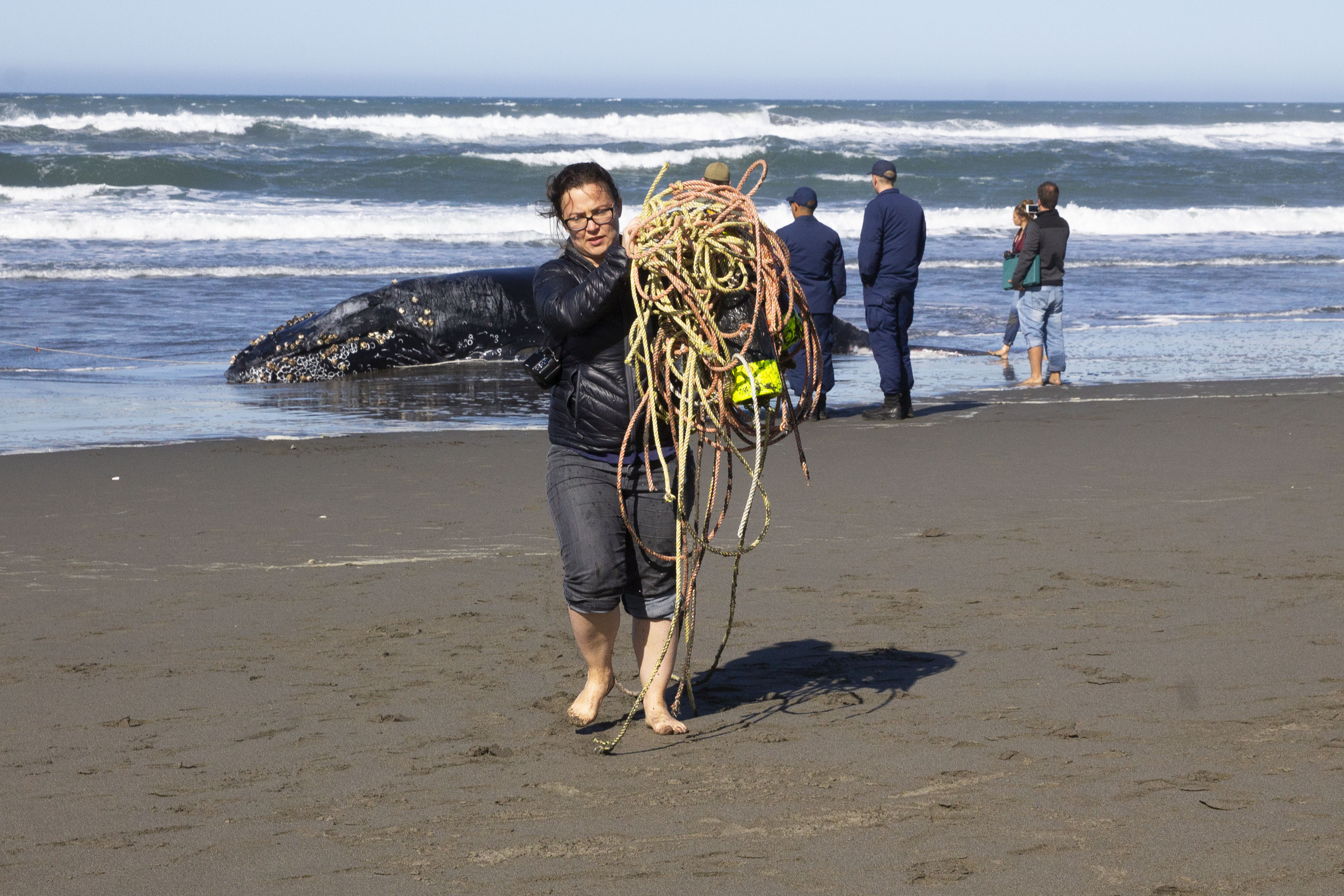
    As many may remember, a whale near Crescent City was found tangled in fishing equipment on shore. Two of HSU’s very own Marine Mammal Program went down to help. Despite efforts, the whale was unable to make it.

    This experience is like many others globally.

    According to NOAA Fisheries’ website, “Entangled animals may drown or starve because they are restricted by fishing gear, or they may suffer physical trauma and infections from the gear cutting into their flesh.”

    The reason this is such a killer? Fishing gear counts for the largest percentage of plastic in the oceans.

    Sea Shepherd Global wrote on their website, “Approximately 46% of the 79 thousand tons of ocean plastic in the Great Pacific Garbage Patch is made up of fishing nets, some as large as football fields, according to the study published in March 2018 in Scientific Reports, which shocked the researchers themselves who expected the percentage to be closer to 20%.”

    Ghost nets are nets that have stranded from their boats and continue catching marine life, tangling them and often creating mass bundles of nets.

    On Humboldt State’s Marine Debris webpage, a study they mention called “A Comparison of Plastic and Plankton in the North Pacific Central Gyre” by C.J Moorea, S.L Moorea, M.K Leecaster, and S.B Weisberg, explains that “in the North Pacific Gyre the mass of plastic out-weighted the mass of plankton (small marine organisms) by six times, despite the fact that the number of individual organisms was five times higher than the number of plastic pieces.”

    But it gets worse.

    “The same study found that 98% of plastics found were polypropylene/monofilament line (fishing lines), thin films and unidentified plastic fragments,” The HSU Marine Biology website says.

    “Lost/broken fishing gear such as netting and fishing string can entangle and kill large marine life such as sea turtles, dolphins, sharks, etc.,” Anna Caro, a third-year marine biology major at HSU, said in an email. “Most get trapped and struggle to escape, which usually makes the entanglement worse killing the marine life.”

    This means that while there is a demand for seafood, there is a risk of fishing gear becoming lost and potentially causing harm.

    “Scientists have still struggled to figure out the extent of the microplastics problem. Microplastics are being eaten by marine life and poisoning them, but not only is it terrible for the fish it is terrible for anything eating the fish including humans,” Caro said.

    Caro was able to learn more regarding marine debris through education at HSU in biology seminars and classes.

    Humboldt State also works closely with NOAA Fisheries to keep the oceans healthy and research them. Students can work with the Office of Response and Restoration’s Marine Debris Program to reduce waste and learn how to keep the oceans clean.

    Pacific Northwest Regional Coordinator Andrew Mason from NOAA expressed the issues of marine debris, especially fishing gear. Not only is this a marine loss, but an economic loss as well.

    350 species found entangled in marine debris, including all 7 species of sea turtle, 27.4% of seabird, and 39.8% of marine mammals, according to Mason.

    “It’s reaIly only these moments where we have our large sea life that are tangled up and it really brings awareness to the issue… it’s heartbreaking,” Mason said.

    Mason says that the problem itself stems from humans and extends beyond just lost fishing gear.

    “The scope of the issue is global, and for people to understand not just what they do on a boat, but it’s all of the waste we generate,” he said.

    But the issue can be worked on, and hopefully fixed. People can participate in cleaning events, as well as picking up debris if it is safe for them to do so.

    If debris is too large, like a ghost net, you can call the Department of Fish and Wildlife and inform them of the debris so it can be professionally handled. As well, if you find an entangled animal, call for help instead of handling it alone, as you or the animal may get hurt.

    But just picking up trash isn’t enough.

    “Stop use of single-use plastics and find ways to reuse our waste, recycling should not be the first choice since many plastics do not get recycled,” Caro said. It starts with striving for a zero-waste lifestyle and being aware of your waste and trying to find uses for it before trashing it.”

    NOAA also funds grants to clean up the marine debris.

    “Removal is treating a symptom, prevention is treating the root cause,” Mason said.

    For Mason, education is the key, providing people the sources to understand how to properly use fishing equipment as well as giving the general public information about how to discard their waste correctly.

    “The number one best way to address this problem and to help is to prevent these items from ending up in our marine environment,” Mason said.

    Education can teach people who may not live directly in contact with the ocean how they are affecting the ocean.

    “The ocean is key to our way of life and messing with the ecosystem can have unexpected impacts we are not yet fully aware of,” said Caro.

    “Everything is connected,” Mason said. “Everything we do has an impact.”
  • HSU students work towards improving the future

    Students with science and nature-based majors are motivated to make change

    First-year students at Humboldt State University made it a goal to continue learning in an online environment. Each of the following students are pursuing a science-based major with determination to impact the future.

    Sabiha Bentanzos is majoring in forestry with an emphasis on wildland fire management.

    “I actually want to become a wildland firefighter,” Bentanzos wrote in an email. “I want to persevere in the forest as much as I can and save lives while I’m at it.”

    While becoming a wildland firefighter doesn’t require a degree, Bentanzos wanted to attend HSU to prove female capability in a male dominated field.

    “I also want to prove to myself and others that a female can get a degree in a male-dominated field like forestry,” Bentanzos said.

    In science class, Bentanzo was assigned a poster group project. The project restored her passion for forestry and has been her favorite assignment of the semester.

    “I have a passion for fire awareness and safety and doing the project reignited my passion,” said Bentanzos.

    Tori Bernal was a wildlife major when she first attended HSU. She’s completed multiple projects both interactive and hands-on, despite being 100 percent online. Despite her love for veterinary work and rehabilitation, she switched to be a forestry major after taking a botany course and spending time in the forest here in Arcata.

    “I grew and tested cyanobacteria in water from the Klamath River from the safety of my dorm,” Bernal said over email. “I realized majoring in forestry would be a better fit for my long term interests… I actually fell in love with it.”

    In the midst of a pandemic, Bernal discovered her true interest and what she truly wanted to get her degree in.

    “I am not 100 percent sure what I am looking to get out of my degree. I am not even sure what I want to do career-wise,” said Bernal. “But I know that the forestry program will help me to explore my interests and options in the coming years.”

    After originally being a wildlife major, Lake McLeod made the switch to a political science major. Lake McLeod is majoring in political science to create change. He wants to become a civil rights attorney and go to Berkley for law school after HSU.

    “The science would kind of be the psychology of people, kind of learning how people identify with their own political views and how people act and react to certain things,” McLeod said. “Especially with everything going on right now, I decided to switch to political science because I want to kind of be more in that realm and help people with civil rights and equal rights especially.”

    Regardless of the instruction state utilized at HSU, 2020 has motivated students to hone their skills and interests in hopes of making an impact in the future.

  • 8 of the best local places to safely visit

    Local destinations around HSU to get your adventure on during the pandemic

    (Photos by Elise Fero)

    Trust me as someone who has had COVID-19, it’s better to be in quarantine than to catch the virus and be isolated alone. So what do you do with your spare time? If you have any sort of adventurous spirit, this is the list for you. In no particular order, here is eight of the best places to go to while attending Humboldt State University.

    1. Redwood National and State Parks

    On a cold day in Redwood National Park, the forest is filled with sounds of rain hitting leaves of every individual plant

    While this is a farther location 29 miles north of campus, it’s absolutely worth the drive. This is one of the coolest and most beautiful places I’ve ever been. The area has multiple hiking trails, beaches, a canyon of ferns, and of course, the world’s tallest tree, Hyperion. If you like National Parks, go scratch this one off your list. Not only is it breathtaking, but it’s also where parts of Jurassic Park and Star Wars were filmed. It crosses between Humboldt and Del Norte Counties and protects 45 percent of the remaining coastal redwood trees. This location is an endless adventure that you can return to and still find something new.

    2. College Cove

    Waves crash against rocks where anemone and starfish live at College Cove as people walk dogs and throw frisbees in September

    College Cove is located in Trinidad about 13 miles away from campus. This location has brilliant blue water surrounded by forested boulders. Visitors walk on the beach, and some surf. You’ll also find a plethora of dogs! There are tiny pools of water where anemone and starfish live. Lots of studying to do? Bring your work here. Homework with a view while listening to the sound of waves is unmatched.

    Melanie Guillen is a freshman film major who finds serenity at College Cove.

    “I’m not really a beach person but it’s more secluded than the others,” said Guillen. “I like it.”

    3. Clam Beach

    The sun sets and the tide leaves seafoam scattered across Clam beach on Sept. 24

    This beach is closest to campus and only a short drive headed north, toward McKinleyville. The sand is soft and warm, perfect for finding sand dollars. Watch for jellyfish washed on the shore, that goes for most beaches. While it’s not surrounded by trees, looking back behind you is the forest and beautiful fog. This area is also phenomenal for sunsets and changes in the tide.

    Freshman wildlife major James Lara said he loves Clam Beach for the picturesque views.

    “I like the little dunes it has, it’s pretty cool. It’s very pretty for stargazing,” said Lara. “The water’s pretty low so you can go pretty far into the waves and be safe.”

    4. Arcata Community Forest

    If you want to explore the forest, this location is a lovely place to start. You can find loads of mushrooms. I even found a mushroom in the shape of a heart! Remember to always research and double check when foraging. The forest hosts large trees, tall and wide. There are multiple paths to take, great areas to jog or bike. There’s often people around, but you can find a little oasis within your path. At the top is Redwood Park with a friendly playground and picnic area.

    5. Moonstone Beach

    This beach looks straight out of a fairytale. Located in Trinidad, this beach is on the scenic coast and has a boardwalk. The beach is the perfect local vacation spot. The views are breathtaking, and a large stream of water flows through the sand, leaving a perfect wading area and play space for children. The beach is dog friendly, as well. Sunsets are magical, the waves are great for surfing and there are restaurants nearby. A perfect combination!

    6. Agate Beach

    Waves bring new stones in as people search for the perfect agate at Agate Beach

    Another location in Trinidad, Agate beach is located at Patrick’s Point State Park and has a campground for those interested. You do have to pay $8 for day-use but it’s well worth the expense. This beach is exactly what the name says. You’ll find people looking through all the pebbles on the beach, and you should, too! It’s also a spot to watch wildlife and be completely engulfed by nature. You shouldn’t swim here, but you can take long walks on the beach. It’s a beautiful area, and not too crazy busy. Take some time for yourself, bring a picnic basket and have a good beach day.

    7. Avenue of the Giants

    Of all of the listed locations, this is the farthest from campus at 40 miles north in Humboldt Redwoods State Park. If the name didn’t intrigue you, the description will. Imagine every post you see on Instagram or Pinterest with a van in the middle of the road surrounded by extremely tall trees, I know you know the ones I’m talking about. Those are here. The redwoods surround the road, looking like a magical pathway through 31 miles of epic perfection. Some of the trees are over 300 feet tall, and one tree is almost 1,000 years old!

    8. Forest paths around HSU

    Plants hang over a cliff to show their roots and reach for the sun underneath redwood trees allow the paths around HSU

    If you don’t drive, no worry! Stick to the paths that are connected to campus. You can find all sorts of mushrooms, ferns and creeks. This area is easy to access and absolutely beautiful. Students are usually the only people exploring, but sometimes you’ll see someone else jogging. The area is perfect for walking your pet, biking, running, or just enjoying the views. This is also the spot where I have been able to find the most banana slugs. They love blackberry bushes!

    Undeclared freshman Natalie Barber laughed with her friends, Guillen and Nicole Velazquez, about going on spontaneous adventures on the paths around HSU.

    “One day you’ll be like you guys wanna go hiking? Yeah okay! Let me get my bag ready,” said Barber.

  • Students for Quality Education statewide Abolitionist Meeting

    Students from different CSU locations demanded changes and ideas on how to accomplish them

    Hosted on Zoom Fri., Nov. 13 by Faith Garcia from California State University San Marcos, SQE held a statewide abolitionist meeting.

    The meeting consisted of 65 students from different locations within the CSU system. The meeting began by going over the Key Principles of Freire to discuss popular education, including learning from social realities to make actual change, the importance of respect and dialogue and actually committing to change.

    Adela Gutierrez-Diaz, a CSU student leader, expressed the need to be aware of an injustice and the call to action.

    “Start with issues that carry fear, anger, sorrow, hope,” said Gutierrez-Diaz.

    The discussion examined how to build a new future, to make a difference and accept that emotions will come into play. For this reason, dialogue is even more important and needs to stay open and available.

    “Everyone can learn from each other,” Gutierrez-Diaz said. “Folks have different perspectives rather than more knowledge.”

    Students should search for solutions considering both fact and emotion, as well as reflecting on what had occurred and what could be learned and made better.

    “Use what you learn to change the world because we truly have no choice at this point,” Gutierrez-Diaz said.

    The discussion began with things students had seen from police within their own lives, or through others, and why they hated them.

    They shared instances of mistreatment of the LGBTQ+ community, watching family being unfairly treated or killed, or the way police profile and target communities differently.

    “They treat people like they’re straight up above everyone,” said Andy Aleman-Alvarez from CSU Los Angeles.

    This led to other issues, such as problems within their own communities. Many expressed homelessness as a main problem. Arcata and the HSU community also consistently struggle with homelessness.

    Students mentioned getting School Resource Officer’s out of schools, the access to healthcare and its expenses, prison and unfair treatment, and student debt.

    “I already have debt for my graduate degree,” said Silvia Angulo from CSU Los Angeles.

    Students were not just speaking about issues but finding ways to address problems and plan to do something about it, talking specifically about the risks associated with being outspoken.

    “You need to be willing to lose something,” said Louise Barros from CSU Stanislaus.

    Reforming institutions founded on white supremacy was a heavily discussed topic. The goal moving forward is creating alternative systems and finding other ways for the people to do it themselves.

    “Power can come from all of us supporting one another,” said Nia de Jesus from CSU Stanislaus.

    Led again by Guterriez-Diaz, students engaged in group grounding exercises to calm down after the discussion. Instructed to put their feet on the ground, relax their jaw. loosen their shoulders and breathe in peace, breathe out justice.

    “These conversations can make you very tense very fast,” Guterriez-Diaz said.

    After the grounding exercise, three breakout rooms were created where students could reach out to the Campus Contact, CSU Board of Trustees or State and Local Governments. Contact information and scripts were provided to aid students, as well as access to graphics that could be posted on their social media.

  • HSU creates election coping resources for students

    Post election assistance for those that feel anxious about the future of the country

    From educational campaigns across social media to election dialogues, Humboldt State University provides students with resources despite the difficulty of being virtual. Check It! and Associated Students are working to give students the counseling and services they need.

    Students can also learn ways to keep themselves and others safe while taking part in community action. Faculty from Native American studies, history and environmental law will host a panel to discuss the history of elections, social change movements and impacts.

    “Our purpose and our responsibility is here to educate students about the importance of voting and why to vote, and then providing them the space if and when they need to or want to decompress,” said Kresl.

    Dean of Students Eboni Turnbow sent an email to students Oct. 30 to remind and students of HSU’s resources for the election.

    “We encourage our students to exercise their First Amendment rights in a safe and healthy way,” Turnbow said in an email. “For some this is on social media, others through dialogue with family and friends, and others through community action. Despite your preferred outlet, we want to help you be prepared.”

    Two election follow ups by Counseling and Psych Services, Associated Students, and the Dean of Students Office will meet on Nov. 4 at 5 p.m. and Nov. 12 at noon to discuss anxiety and fear following the election.

    El Centro, the LatinX center will discuss the elections this Fri., Nov. 6 at 3 p.m. as well.

    HSU also created the HSU Votes website to give students resources and information regarding voting and to give students resources while social distancing.

    “No matter which way this goes, there is going to be stress and anxiety and anger on both and on either side, not exclusively because of the outcome but because of the whole process,” said HSU Student Life Coordinator Molly Kresl.

    CAPS has drop-in hours on Wednesday and a crisis hotline for students who are experiencing any emotions post election, or if they just need to talk.

    Additionally, a virtual tool-kit has been created for students that provides information about self care, difficult dialogues, election education, resources and how to navigate emotions and stress during and after elections.

    “At the core of it is for students to know that we see them, we recognize them, and we value them,” said Kresl.

    HSU has recommended, not mandated, faculty to limit assignments if they can, check in with students and provide resources within their class. HSU recommended groups and organizations exercise activities this week to provide support to students.

    “Remember, feeling overwhelmed is human and natural, so using these vital resources is important to self-care,” Turnbow said in the email.

    Despite the election results, students are reminded that their vote matters, and HSU will be ready to support them in any way they feel and react.

    Wrenna Williams is a forestry and restoration major who is taking a gap year due to COVID-19. Williams voted and expressed the anxiety that followed, but won’t use HSU’s services due to it being strictly available for students currently enrolled.

    “Especially if I was living on campus still, I would totally go use those services. They’re great,” said Williams.

    Carlos Ochoa-Silvas, a freshman at HSU, mailed in his voting ballots a few weeks ago and expressed concern toward the election, the aftermath and riots. He said he would think about reaching out to HSU’s services if he felt too anxious.

    “I definitely think that it’s important for people who are more sensitive about the topic or people who want to express how they feel with the community and see other people’s views,” Ochoa-Silvas said.

  • Music Department returns to rehearsals

    Band, symphony and orchestras proceed with in-person instruction this semester

    While the world remains in lockdown, music lives on. Students attending Humboldt State University have returned to in-person music classes where they can rehearse without the complications of connecting online.

    Professor Dan Aldag teaches two classes face-to-face, jazz orchestra and jazz combo. Although students have returned, he says the jazz orchestra isn’t entirely in-person.

    “We’re doing a reduced instrumentation of what we would normally do,” Aldag said.

    The transition from 17 people to nine resulted in a significant difference in musical quality. Music depends strongly on how many people and which instruments are present. Changing those factors can change the orchestra’s sound entirely.

    With such limited numbers, students and professors alike miss social aspects of classes.

    “I miss the folks that aren’t here,” Aldag said. “The nature of the jazz orchestra is that a lot of people play in it multiple semesters and multiple years, and so it feels like we’ve got people missing.”

    Like the rest of HSU, in-person orchestra have restrictions and precautions like wearing masks, covering horn instruments and taking breaks outside to let air refresh.

    “We’re used to having two straight hours of rehearsal and instead we go for 30 minutes then take a 15 minute break, and then another 30, and another 15 minute break so rehearsals feel a little choppy,” Aldag said.

    Less rehearsal time for students can negatively affect their performance. Since student musicians had their time cut short last semester, finding the time and space to practice has been a challenge for students.

    Kayla Rodenburg, a senior at HSU, hasn’t had an opportunity to practice and felt out of tune with her instrument.

    “We haven’t had the time to practice, so me going back now I’m really rusty,” Rodenburg said.

    Rodenburg is in the Humboldt Symphony and practices in person with her string trio. She’s still getting the hang of learning music online, especially with the symphony only meeting once weekly.

    “During COVID, it’s pretty different because we have to go online and record quick tracks so we can have everybody playing,” Rodenburg said. “The winds and brass and everyone that plays an instrument that you have to blow through, we can’t practice with them in person.”

    Music is strongly dependent on the people surrounding you as you play, and it’s harder to learn music without hearing the other musicians. Those in the Symphony who cannot join in-person join through a Zoom meeting.

    “There used to be more from the community, but a lot of them are more elderly and maybe they just don’t want to be in person right now,” Rodenburg said. “It’s a few of us but we make it work.”

    Joel Costello, HSU freshman, plays in the HSU Jazz Band twice weekly. Students meet when they’re part of a song that’s being rehearsed, however, with in-person instruction coming to an end in early Nov., that likely won’t last long.

    “It’d be cool if the school could find a way for there to still be in-person wind ensembles,” Costello said.

    Outside of group rehearsals, Costello currently practices in his dorm room. He said he felt noisy at first, but eventually realized he didn’t have any other choice.

    “Practice rooms is just too much of a hassle with pandemic requirements,” Costello said.

    The practice rooms are only open in certain buildings a few times a week, and students are struggling to get enough individual rehearsal done.

    Musicians are operating in a different reality, practicing music in dorm halls that are silent from a lack of students, little time to play with other students, limited ways to learn new music and a lack of community between musicians.

    “All in all, I think everybody is doing the best with the hand that we’ve been dealt,” Aldag said. “Hopefully we’ll be back to normal sooner rather than later.”

  • HSU Prepares for more public safety power shutoffs

    HSU Prepares for more public safety power shutoffs

    King Salmon Power Plant promotes grid stability

    California has again warned residents of the potential and likely chances of Public Safety Power Shutoffs. With a larger range of the state being on fire this fall, more residents have been left without power in the midst of a pandemic.

    After the 2019 school year was impacted by power outages, HSU immediately sprung into action working toward a plan to improve the issue for students. While they couldn’t have predicted a pandemic would occur at the same time, they’ve created a plan to put into effect during these occurrences.

    Associate Vice President for Student Success Stephen St. Onge said HSU students would likely not even realize a power outage had occurred due to their new equipment. Since last year, housing has purchased two generators.

    “One is over $6,000 and it will power the JGC building, Cypress, the Canyon, and Sunset and Redwood,” St. Onge said. They also bought a portable generator to power College Creek.

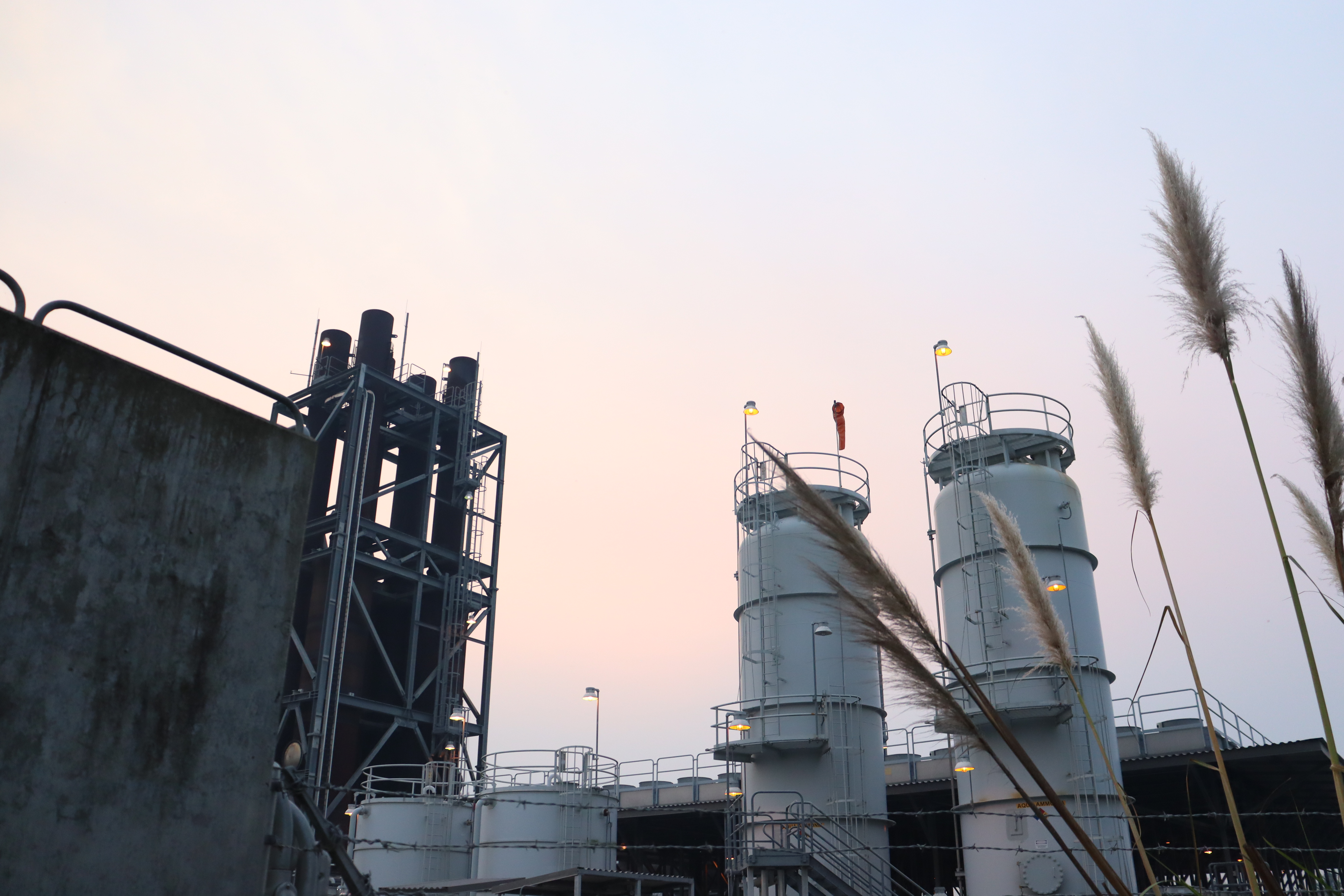
    As well as the generators, the King Salmon Powerplant, based in Eureka, is now operating and handling Humboldt County’s future PSPS events. Cris Koczera is the emergency Coordinator for HSU’s Risk Management and Safety Services.

    “If we got notice of an impending PSPS right now, this year unlike last year, PG&E has been able to provide typically at least 48 hours of advance notice,” Koczera said. With this extra time, the school has been able to prepare more.

    “We already had one PSPS and there was no campus disruption because of the King Salmon Plant,” St. Onge said. “We had the generators ready to go – we were prepared this time.”

    This solves many of the problems that concerned students last year. Campus should function as normal this semester, without limited food, power and the need for students to leave their dorms to receive access. Even the elevators should be running for students who cannot rely on stairs.

    “We have since – knock on wood – solved those issues,” St. Onge said.

    In the instance the King Salmon Plant does not work and students live in an area uncovered by the new generators, HSU has another plan prepared.

    “We do have open spaces in other buildings, so we might consider if there’s a need to reopen up the JGC like before or relocating students temporarily to other spaces as well,” St. Onge said. “So we have those Plan C’s in place, as well.”

    Due to the COVID-19 pandemic, Koczera said the school would be reaching out to health officials to help determine the safest way to move students into one area.

    “We would be reaching out to public health to find a safe, viable way to still provide those levels of support and services,” Koczera said.

    So, while students have been preparing themselves to return to the University, HSU has been preparing for ways to help the student body through these issues.

    “It’s important for students to know that as an outcome of last year’s PSPSs, there’s been a group of folks, housing facilities, management, that have been working really hard,” St. Onge said. “We are prepared.”

    “Our commitment to supporting their educational work on campus is a serious commitment that we take,” St. Onge said.

    “The goal of the University has always been to get to a point where these PSPS events or rolling blackouts have the least amount of impact possible on our campus and on our students and on our ability to continue through the educational process,” said Koczera.

  • How the Redwoods are Battling Climate Change

    How the Redwoods are Battling Climate Change

    While the rest of the planet suffers, what will become of the Redwood Forests?

    While climate change continues to cause destruction around the globe, scientists are finding hope in a local tree: The Giant Redwood, or Sequoiadendron giganteum.

    The trees are currently in the midst of a growth spurt, producing more wood in the past century than any other time in their lives, according to Save The Redwoods League, a nonprofit organization who protect and restore the California redwood forests. Researchers from Humboldt State University, UC Berkeley, Natureserve, United States Geological Survey and Colorado State University are working alongside Save The Redwoods League to understand the growing trees and how they will continue to respond to climate change.

    The Save The Redwoods League and HSU published findings concerning the impact of climate change in the recent research paper Aboveground biomass dynamics and growth efficiency of Sequoia sempervirens forests. They found that within the redwood forests, there are massive amounts of carbon sequestration. “Sequoia forests may be the most effective to [sequester carbon], because they accumulate more above ground biomass than any other vegetation, sustain higher rates of productivity than any other forest, and protect biomass produced via superlative fire- and decay-resistance.”

    Carbon sequestration is “the capture and secure storage of carbon that would otherwise be emitted to, or remain, in the atmosphere,” according to Encyclopedia of Energy, 2004. This means carbon is trapped in forests, soil, or oceans for long periods of time instead of entering the atmosphere. It can be done naturally or artificially, and is becoming a researched effort to delay global warming which is caused by increase of greenhouse gases, such as carbon dioxide.

    This is why scientists are so interested in the natural carbon sequestration of the redwood forests. While this seems to be good news, there is still much research to be done.

    NASA scientists have started to create a global map of where carbon is being stored, and how much carbon is being released through deforestation. The redwood forest is only a tiny part of that map.

    Humboldt State University Professor Steve Sillett has worked on the research with Save the Redwoods League.

    “Redwoods can do little to fight climate change as they occupy a TINY proportion of the landscape,” Sillett said in an email. “Even though they are impressive in many respects, too little of the landscape is covered by them to make much difference at the global scale.”

    While the redwoods alone cannot create a global change, scientists are continuing to research the storage of carbon in forests and what this means for the future of the planet.

  • HSU student celebrates life post quarantine

    HSU student celebrates life post quarantine

    Elise Fero recounts her experiences after 10 days of isolating in her dorm

    Isolation felt like home, not the home you want to be in, the home you’re stuck with until life gives you an opportunity for change. I spent days journaling and staring out the screen door at a single pinecone stuck between the boards of the porch I wasn’t allowed to step foot on.

    After ten days, I finally received the call informing me it could be my last day in isolation. My first thought, ‘well shucks I just ordered groceries.’

    As excited as I was, something inside me was terrified to leave. Most of my anxiety surrounding COVID-19 had disappeared. I was recovering fast and my parents, friends and boyfriend all tested negative, but I was experiencing a new kind of anxiety. Life after COVID-19.

    My life had suddenly become full of consequences I had no control of. I watched friends lose opportunities because they were required to quarantine after spending time with me. I feared the current science could be wrong, that my release could be lethal. I was consumed by an overwhelming fear that someone could’ve died because of me. Yet selfishly, all I wanted was to be set free.

    When I was cleared for release, I let out a sigh of relief and broke out into tears and uncontrollable laughter. The second the call was over, I opened the door and felt the cool air rush past me without the filter of a screen standing between us for the first time in over a week. The simple act of stepping outside was an indescribable joy I’ve never felt before. I was finally able to pick up the pinecone that had stared at me for so long.

    During those ten days in isolation, I’d planned exactly what I’d do when I was released. My list consisted of finding a dog to pet, reuniting with an army of banana slugs and going to the beach.

    I was determined to return to the coffee shop where I had received the bad news that I tested positive for COVID-19. That first sip of coffee tasted like the conclusion to my horror.

    I’ve never felt closer to nature than that day, on the beach and in the forest. The same day, I was reunited with my best friends the banana slugs.

    For the next week, I spent as much time as possible outside. I abandoned my introverted tendencies and greeted everyone I saw. It was an awakening. For the first time, I experienced the world without taking it for granted.

    Coronavirus was not just unpleasant, it was living out the nightmare the world warned us to fear and facing the possibility of dying alone. The experience robbed me of all my comforts and left me deserted. Watching others claim that my illness was a lie and that they would never catch it. To be honest, I never thought I would either.

    This virus is not prejudiced. It will try to kill anyone given the chance. Doctors pour their lives into patients who may not live to see tomorrow. Family members are forced to say goodbye, praying it’s not for the last time. Survivors are absorbed in guilt after watching others die from the virus they passed on. It never leaves your mind, the fact that you could’ve been a statistic on the list of those who passed.

    For those who experience this virus, I share my story to provide you comfort. I was lucky to have survived. Not everyone is. I always had it in the back of my mind that others in isolation spend their final days alone.

    I thank the universe this wasn’t my fate and for giving me more time to share my story and grow from it.

  • How the wildfires of California are impacting Arcata

    How the wildfires of California are impacting Arcata

    What life is like as climate change begins to worsen

    Waking up in Arcata, CA on Sept. 9, 2020 was similar to an apocalyptic movie. The sky was as orange as street lamps. Cars had their brights on and were dusted in ash. Air quality numbers began to rise.

    Air quality states how polluted the air is to the public, measured by the air quality index, or AQI.

    AQI levels range from good to hazardous, based on numbers from 0-500. As the number rises, the health risks worsen. Any number above 500 is considered beyond hazardous.

    As wildfires continue to rage across California, the air quality has been majorly impacted. California has seen AQI’s above 500 during this wildfire season. In Arcata, despite being 100+ miles away from the nearest wildfire, the skies that were once full of fog are now full of smoke.

    According to AirNow, a site that tracks AQI around the globe, by 12 a.m. on Sept. 11 Arcata had hit a peak AQI of 269.

    The AQI states that air quality above 201 is considered very unhealthy and above 301 is considered hazardous: “Health warnings of emergency conditions. The entire population is more likely to be affected.”

    The HSU campus closed due to the condition of the air. Students were told outdoor activities could not be moved inside due to COVID-19. “Air quality has worsened to very unhealthy levels since Thursday,” said Humboldt State University in an email to its students. “Please note those levels may fluctuate throughout the day.”

    They also warned students to stay indoors with closed windows, use a portable air purifier if possible and wear a mask that filters air rather than just cloth if they must go outside.

    Despite being advised to wear a mask for filtration, most students are wearing cloth masks. HSU freshman, Dev Lebhar, wore a gas mask when they went outside. They had two other gas masks and two respiratory masks in their dorm.

    “The combination of the respiratory disease and the smoke outside means if your lungs get damaged by the smoke and you get COVID, you’re in big trouble,” Lebhar said.

    They claimed they haven’t felt any effects from the smoke, but do struggle to breathe while wearing the gas mask due to its layered filtration.

    According to the CDC, going out in such unsafe conditions can result in similar symptoms to COVID-19, like cough and difficulty breathing. It can be especially bad for those in high risk groups. Other side effects can result in stinging eyes and throat, increased heartbeat, chest pain, irritate respiratory systems and worsen existing heart and lung diseases. Wildfire smoke can even make you more prone to catching the virus COVID-19.

    According to Berkeley Earth, a nonprofit organization on environmental science, China experiences some of the worst air quality, claiming “on bad days the health effects of air pollution are comparable to the harm done smoking three packs per day (60 cigarettes) by every man, woman, and child.” A typical day in China is equivalent to 2.4 cigarettes. “1 cigarette is equivalent to an air pollution of 22 μg/m3 for one day.”

    On September 11 Arcata’s average AQI was 243, according to AirNow. That means the average air quality if you were breathing it all day was about equal to smoking 8.7 cigarettes. These hazardous conditions exist all across California, including areas like Arcata that aren’t necessarily close to a fire.

    The best way to protect yourself is to stay inside. Any exposure to the smoke can damage your health, especially if large amounts of time are spent outside or if you have other existing health conditions.

  • Humboldt State Students Voice Concerns Over Racial Casting

    Humboldt State Students Voice Concerns Over Racial Casting

    Students come forth after witnessing and experiencing racial typecasting within Humboldt State’s Theater Department.

    While COVID-19 leaves the world silent, Humboldt State University theater students are trying to raise their voices and create change. Reports of racial typecasting and the wrong types of inclusivity began to surface and the students decided to work together to create a better program for future students.

    “We’ve definitely had issues in terms of racial casting,” said senior theatre major Jaiden Clark. Clark is President of Alpha Psi Omega, a theater based fraternity at HSU.

    “The higher ups in the department and the faculty try to be inclusive in the wrong ways,” said Clark.

    Part of the issue was the selection of shows. According to Clark, there is a volunteer committee where students and faculty pick which shows will be done. Although it is voluntary, Clark mentioned in a few cases of shows being catered to people who are in the committee.

    “Anyone needs to be able to have a say,” said Clark. “I think it would cool to have a more democratic system.”

    HSU senior AJ Hempstead, a double major in theatre and religious studies, has faced discrimination when accepting roles for shows.

    “People are trying to be more inclusive, especially at HSU, I get more roles,” said Hempstead. “I was offered a role because of my acting level but also because they needed someone with a specific skin color.”

    “I would really like to see shows where it doesn’t matter the race or gender of the actor playing the role,” said Clark.

    Clark and Hempstead both agreed they wanted to see more shows being chosen that had characters that could be played by anyone, so the audience is sent a more equal message.

    “Colorblind casting is not actually a thing, there’s no such thing as colorblind anything because people are going to see.”

    Jaiden Clark

    “What are they doing, what messages are being sent here and where are those messages coming from,” said Hempstead.

    Hempstead wants the audience to look at what was represented onstage and think about the decisions that were made with casting, rather than produce shows that had to have a certain type of person.

    “Colorblind casting is not actually a thing, there’s no such thing as colorblind anything because people are going to see,” said Clark. He noted the faculty needs to be more color-conscious instead.

    Hempstead’s idea for improvement involved wanting to see a more active teacher assistants program where higher level students could help teach other students along with professors.

    “Teachers aren’t the enemy in any of this that’s happening,” Hempstead said. “We want to work with them as much as possible. We empowered our students, we empowered our community and that didn’t mean taking power from them. I see that power struggle.”

    Clark agrees with Hempstead, believing that open discussion can alleviate feeling uncomfortably and create progress.

    “It’s a really important time for people to talk about what worked and what they liked and what made them uncomfortable and what shouldn’t be done again,” said Clark. “When change is needed in the theatre industry, you have to start in universities. If we are behind Broadway, then we have to catch up because our people are just the people who aren’t there yet.”

    Associate Professor and Theatre Program Leader Troy Lescher responded to the rumored racial typecasting in an email. He asked for clarification if it were about racial representation onstage.

    “These processes are imperfect and are very prone to mistakes. Theatre is also a living art that relies on human storytellers,” Lescher said in an email. “Race, gender, age, physical attributes and vocal qualities are among dozens of casting considerations that impact representation onstage.”

    In response to what HSU is doing to ensure racial typecasting will not continue, Lescher said he would listen to a student if they felt racially typecast and would try to find an alternative learning opportunity for them with the director.

    “Afterward, I would bring this matter to the Season Selection Committee (which is composed of faculty, staff, and students) so that we could collectively work to strengthen our process,” Lescher said in an email.

    Lescher acknowledged the challenge of racial representation in casting and believes the program is guilty of not following through.

    “I believe there have been instances when our program has not exercised the cultural competence necessary to best support our students and their learning,” Lescher said in an email. “Critical awareness of and cultural sensitivity to matters of representation are important to our program and we continue to learn and to strengthen.”