The Lumberjack


Students Serving The Cal Poly Humboldt Campus and Community Since 1929

Tag: epidemic

  • Reading “Big Sur” in Shelter-in-Place While Going to Big Sur

    Reading “Big Sur” in Shelter-in-Place While Going to Big Sur

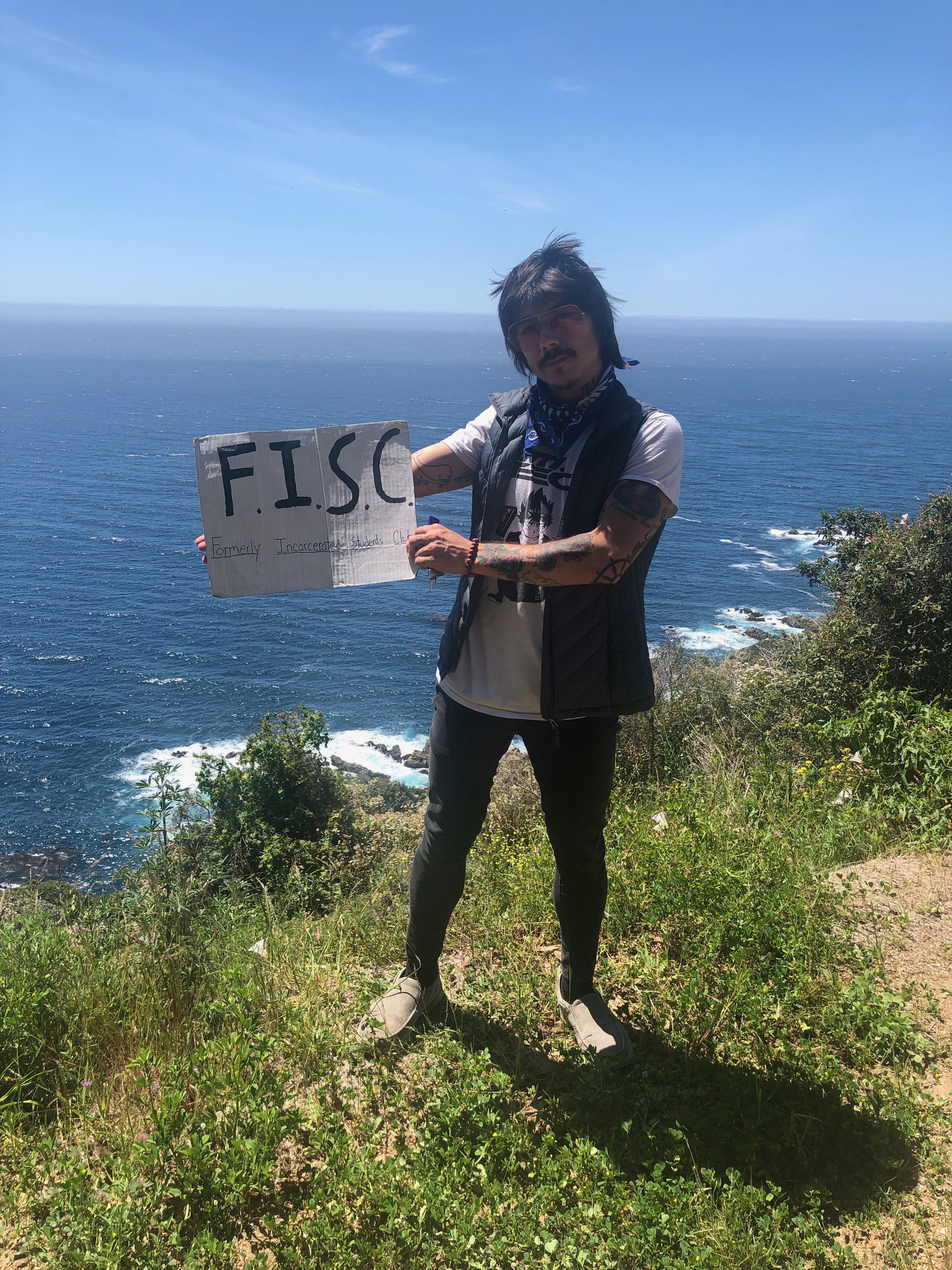
    A reflection from a former Lumberjack news editor

    When the entire world is going mad and cities are in disarray and the economy is through the tubes and the government is ordering the people to stay indoors and keep distant from human contact and all the unknowns and uncertainties and precariousness are causing anxieties and confusion and insane isolated thinking, then the only logical solution is to search for the magnificent eternal golden light in Big Sur where Jack Kerouac lost his illumination and was succumbed to mad mad maddening disillusion and deterioration of mind.

    Amidst a global pandemic and forced isolation (both for curving the spread of the disease and government say-so) Kerouac’s “Big Sur” may seem like an unlikely companion during cabin fever tendencies but he nails the coffin of loneliness surrounded by madness…and we are swimming in madness in 2020 and social distancing is causing us loneliness…he may be known for traveling on the road but the majority of his writing deals with the personal struggle of the unrevealed and intangible and intrapersonal relationships with exile and aloneness.

    It was time to go back to find some sanity while the whole world was ravaging in chaos.

    Last week I received a card from my obaasan written in shaky cursive:

    “I’m not myself now/can’t think much things now…” Her youngest son died in the middle of all this virus business and the experience of losing her youngest before her own passing into the next existence and not being able to perform a proper Japanese funeral has weighed a heavy heart on my nearly 90-year-old reincarnation of the bodhisattva Quan Yin. The letter is marked from Monterey, my hometown, just a couple dozen miles from Big Sur, which I am currently in the thick of. Whereas Kerouac fell into his madness, I was born into mine…and it was time to go back to find some sanity while the whole world was ravaging in chaos.

    Passing San Jose on the 280 at rush hour, or what normally is, and we stop not one time and I am convinced there is a God in heaven and miracles exist and coincidences mean something more than just what they don’t.

    A pitter patter of rain began to fall as my partner and I sped away from our Arcata apartment and headed down the curvy empty roads of the 101 en route to console an ailing mother from 6 feet away. My paint-scratched and hood-dented Volkswagen happily ate the white lines through redwood country, wineries, extending bridges and golden rolling hills full of deer and foxes and chirping birds. With everyone staying in doors, the urbanized are becoming again what Gary Snyder calls “wild.” Only 10 cars on the Golden Gate Bridge and all of the city, void of the Tenderloin, which sidewalks are unseen due to the amount of popup tents and stretched out tarps and rucksacks rolling in the gutters. Passing San Jose on the 280 at rush hour, or what normally is, and we stop not one time and I am convinced there is a God in heaven and miracles exist and coincidences mean something more than just what they don’t. Seven hours and not a minute more since we left Humboldt County the magnificent sand dunes of my childhood explode into view as the sun sinks behind cannery row, the fisherman’s wharf and into the pacific.

    We knock on the windowpane glass without warning. My obaasan, 4-foot-5 in frame in blue uwabaki and nearly all white thick Hokkaido curls reminiscent of the ancient Ainu people of our ancestors opens the door white as a ghost. We appear as road warriors traveling to find oil but she is happy nonetheless to see her most handsomest grandson and granddaughter in law (I know this because she tells us so in a faint whisper of grief). She is nearly silent and full of half smiles and sad lonely eyes staring off into a point in space I am unable to see. There is nothing more difficult than to deny a Japanese grandmother’s invitation of hot food and conversation… but these are harrowing times and one must put down their foot for the betterment of others… especially kindhearted compassionate grandmothers who want nothing more than to fill bellies and tell stories.

    Without being able to hug her or get close enough for her to hear me hurt my soul but the space we shared amidst all the craziness going on filled my heart with such joy that I could feel the sanity I had lost while sheltering in place replenish.

    We part for the night with three bows and head to Big Sur first thing in the morning. We were supposed to spread the ashes of my uncle but bureaucracies have slowed down (who would have thought possible they could move even slower) and checks clearing takes longer and so we had no urn and only mandatory intention of flying down the beautifully rugged pacific coast cliffs hugging the Santa Lucia Mountains to the east and infinite deep neon blue waters crashing west. All parks are closed and scattered hikers from who-knows-where park along the highway to hike in. We stop at Bixby Creek of Kerouac’s “Big Sur” but it is not the same for all the turnoffs are filled with parked cars and tourists and selfies… or maybe it is the same because on his last hitchhiking adventure up from Big Sur to Monterey 1,000-2,000 cars passed him by and he was no longer able to relate. We ate lunch beneath the shade of an oak tree 100 feet above the water and 15 miles from the hot springs. We were by ourselves with the lonely wails of the sea and the roaring of the waves and the ghostly spirits of Kerouac and my uncle.

    On our way out of town we said goodbye to my grandmother. She stood behind the screen door as we stood in the sun with bandanas and masks wrapped around our faces. She was in a cheerier mood and her energy level was heightened. She wore full smiles behind her grief and talked about the chaos of the world being unbalanced. Without being able to hug her or get close enough for her to hear me hurt my soul but the space we shared amidst all the craziness going on filled my heart with such joy that I could feel the sanity I had lost while sheltering in place replenish. Kerouac pronounces, “The more ups and downs, the more joy I feel. The greater the fear, the greater the happiness I feel,” and I believe it to be important we share the same intimacies while we are submerged in the unknown dangers of threats and hazards.
  • Letter to the Editor: This Bus Driver Misses Students and Faculty

    Letter to the Editor: This Bus Driver Misses Students and Faculty

    A note from a local bus driver longing for a crowded bus again


    This is a letter to The Lumberjack from local bus driver Mark Condes. The letter has been edited only for grammar and punctuation.

    I drive a bus around Arcata, California. I frequent the Library Circle and the 14th Street & B intersection. Lately, on very infrequent occasions, I drop off an HSU student at one or the other. But this has been dwindling down to rare moments. I’m writing this because I just wanted to say that I miss all the students and faculty who have been my passengers for over a year now.
    .
    I miss making the rounds on LK Wood down to Camp Curtis, rolling out to Sunny Brae for my three stops there, the long drive down to Greenview Market to pick up the handful of students and a professor in that little corner of Arcata, and out to the Valley West loop where we scoop up the largest busload of students along Alliance and Foster streets, packing them in like sardines, as we like to say, with a call out to the back of the bus, “Do we have room for just ONE more?”
    .
    I’m a lucky person lately because I’m still working, still driving all over town. During these times, we only run what’s called the ‘Orange’ route. No more Red, no more Gold, just a mashup of both.
    .
    Truth be told, I feel a bit unlucky also. While we still pickup a handful of Townies going about their ‘Essential Needs’ business, nothing replaces all the bustling energy, the fantastic smiles, the mix of voices of my student riders.
    .
    I suppose I’m getting to the point, or heart, of the matter… ‘My’ student riders.
    Maybe I’m just a softie. I know I’m not some old lonely guy grasping at any human interaction, desperate for some validity that I still exist and matter. But yeah, I suppose I’ve formed an attachment at some level. Perhaps it’s a mix of all things that make me who I am, that have allowed me to feel some level of connection with the younger people heading off to HSU and their open road to the future.
    I have had the pleasure of watching my own kid go through the same process and life experience of college, and that was just a few years ago. I’m sure there’s a relationship here also.
    .
    While I ride around, one large circle each hour… hour-after-hour, I will often feel that tinge of loss, that nudge of sadness as I reflect on how alive this lumbering conveyance once felt, and now how hollow and empty it’s become.
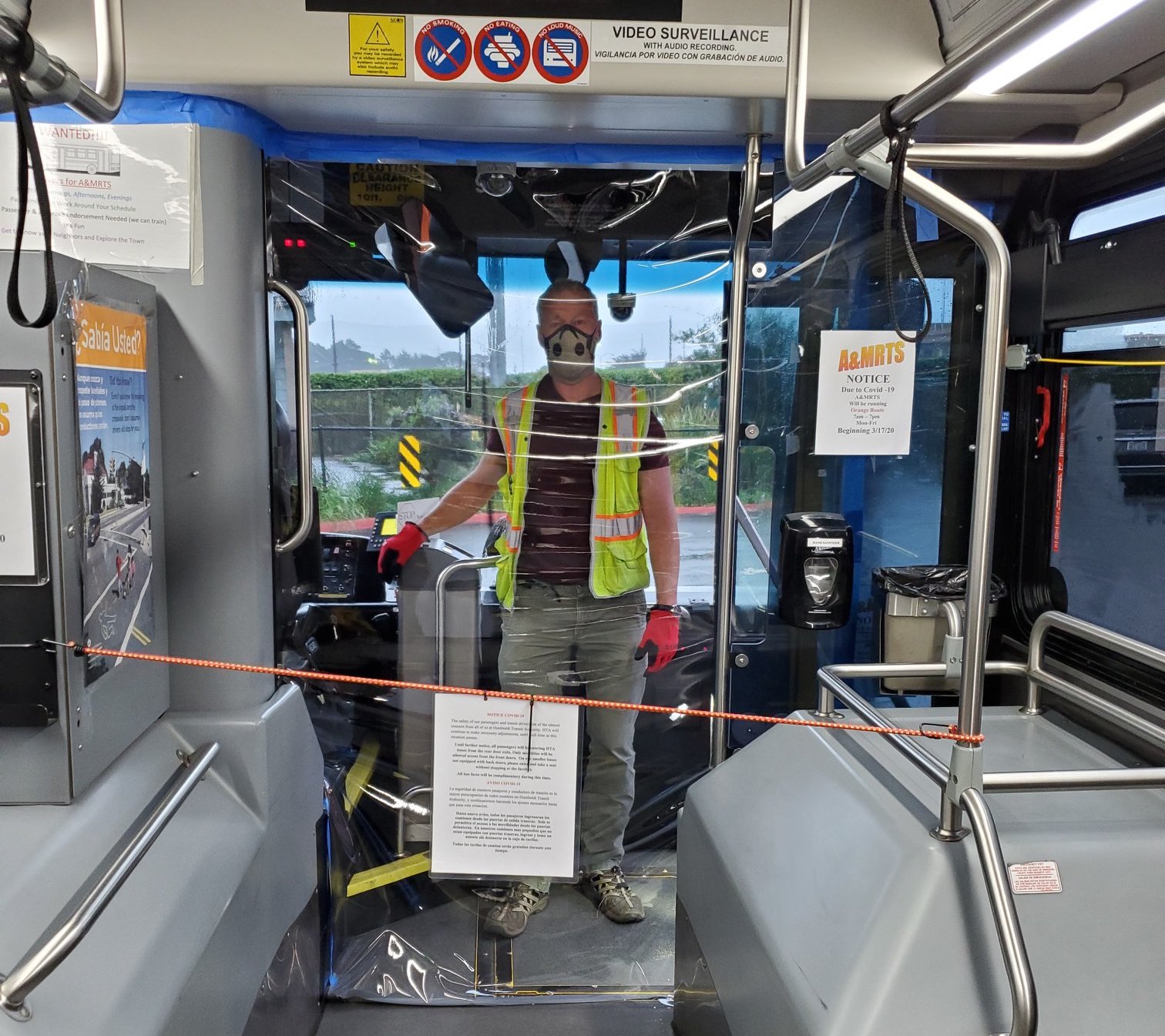
    And then there’s that other factor, an anomaly I hope… the separation of driver from passengers via a vinyl wall. So impersonal, a clear Berlin Wall, if I may.
    .
    As I arrive at each stop, in particular the ones where I would pick up students, I still pause while glancing out in the distance. I find myself looking for those waving arms, that transition from a walk to a full-bore run, as a student realizes they may miss their bus ride to school. I grew to know a number of them well enough that I could only grin and patiently wait for them to arrive, panting, fumbling for their student ID to swipe once they clambered up inside. 
    .
    I realize school will return to business in the future, and students will once again ride the bus. Yet, as with so many derailed aspects of our lives currently, there’s no firm date on when that will take place.
    .
    So I drive. I still take in those sweeping views as I top Union Street on my way to the Parkway Apartments, coax the bus up steep grades, and round the circle at the HSU Library. And when I pick up a familiar student, I still take off my sunglasses, pull down my mask, and with a smile call out through my plastic membrane, “Good Morning!”
    .
    From time-to-time as I roll through town, I catch a glimpse of a former, frequent student rider or professor, who no longer rides the bus. 
    In those transitory moments, we may glance each other’s way at just the right instant. As recognition unfolds, so do the smiles, the nods, the waving of the hands, and I am granted a brief respite from the isolation imposed upon me by this COVID-19 experience.
    .
    While I am grateful to still be working, still driving, I am even more grateful for all the friendly smiles, the greetings, the eye-rolls, headshakes, and laughter over my bad jokes and puns, that I experienced these past semesters. I wonder how ‘My’ students are doing, how they are faring during these trying times… I care.
    .
    I look forward to life resuming in a more normal manner, and the days of a busload of students once again bringing their energy, excitement, and friendliness through the doors.
    I honk and wave whenever I see students in graduation caps and gowns getting their pictures taken by the gates of the university. I shake off that bit of sadness and drive on.

  • Lessons from When the Spanish Flu Hit Humboldt in 1918

    Lessons from When the Spanish Flu Hit Humboldt in 1918

    Looking to the past to learn about the present pandemic

    There’s a saying that goes something like, “In order to prevent future mistakes, we should look to the past for guidance.” While this current pandemic may be new to all of us, humans have gone through this before. Some of the more recent pandemics include the SARS virus, the H1N1 virus, Ebola and HIV.

    The term pandemic is defined as something “occurring over a wide geographic area and affecting an exceptionally high proportion of the population.” Obviously, the current COVID-19 virus fits into this category. While some of the aforementioned pandemics did not enact a devastating, history-altering toll on Humboldt County, another pandemic did.

    From 1918 to 1920, the Spanish flu swept across America, resulting in an estimated 675,000 deaths according to the U.S. Department of Health and Human Services. The first official report of the Spanish flu in California was reported Sept. 27, 1918, just two weeks after an outbreak on the East Coast. By November 1918, the total cases throughout the state hit about 115,000—overwhelming doctors and government officials from north to south.

    One of three doctors that helped Spanish flu patients in the Ferndale area.

    Although Humboldt County sits in an isolated area protected by the “Redwood Curtain,” the area was soon amassed in its own troubles combatting the illness. Humboldt County had a population of about 37,000 people with Eureka holding around 12,000. The Spanish flu resulted in around 200 deaths (although it is thought to be much higher) and thousands grew ill.

    In 2012, Humboldt State alumnus and McKinleyville native Jeff Benedetti-Coomber wrote a detailed history of the impact the Spanish flu had on Humboldt County. For it, he was awarded the Charles R. Barnum History Award by HSU’s history department. For his research he scoured through old newspaper clippings for primary source documentation. He read academic analysis on how the Spanish flu affected the entire nation and he cited Matina Kilkenny, a researcher and local author for the Humboldt Historical Society who also wrote about the impacts the Spanish flu had on Humboldt County.

    What prompted Benedetti-Coomber to focus on the Spanish flu was its lack of local research. As his peers decided to look into European history, he decided to focus his attention on the effects locally.

    “I was walking through the graveyard in Arcata and noticed a family of graves, not necessarily related to the [Spanish] influenza but it got me thinking about what effects the flu may have had because it was around the same time,” he told me over the phone from his place in Los Angeles. “Once I started researching it I saw how it did affect the county and I was pretty amazed.”

    Benedetti-Coomber’s senior thesis, titled “Death In the Redwoods: The Effects of the Spanish Influenza on Humboldt County,” spans 30 pages and breaks down how each town dealt with the outbreak. He highlights what preventative measures seem to have worked and where officials, the public and the media went wrong and what they got right.

    “It’s just like today when you tell people to do something and they kind of resist. A lot of people had that with the Spanish influenza and it was a reason a lot of people died, because they didn’t take it seriously.”

    Jeff Benedetti-Coomber

    Some of the highlights from his research that still stand out to him are how Eureka initially closed all schools, which flooded the streets with children. They soon changed their minds and brought the kids back into the school to try to quarantine the children. Another nugget of research that sticks out in his mind has to do with masks and the public’s initial reluctance to wear them.

    “It’s just like today,” Benedetti-Coomber said, “when you tell people to do something and they kind of resist. A lot of people had that with the Spanish influenza and it was a reason a lot of people died, because they didn’t take it seriously.”

    When the Spanish flu hit Humboldt, the United States was in the middle of World War I and young men from Humboldt were signing up to join the war effort. There were war rallies and large gatherings of people throughout the towns in Humboldt in the fall of 1918 as the Spanish flu began to creep in.

    “Although the Great War was still the main focus in Humboldt County, more and more citizens were beginning to take notice of the spreading pandemic,” Benedetti-Coomber wrote.

    Some of the newspapers in Humboldt at that time seem to have downplayed the seriousness of the Spanish flu. Benedetti-Coomber points to an ad that was in the Humboldt Standard by Vicks VapoRub that was “disguised as an article… and it assured readers that the [Spanish flu] was ‘Nothing new simply the Old Grippe and la Grippe that was the epidemic in 1889-90.’”

    Benedetti-Coomber wrote that it is believed the Spanish flu was brought to Humboldt County by locals traveling to other parts of the state to help care for sick family members and then returning before symptoms started to show. By mid-October 1918, reports of the Spanish flu were starting to pop up in the local newspapers.

    “The Humboldt Times also reported that there were roughly 150 cases in Eureka by [Oct. 22] and hospitals were short staffed. Doctors were so busy they did not have the time to report new cases or treat the majority of their patients.”

    Jeff Benedetti-Coomber

    “The Humboldt Times and Humboldt Standard newspapers offered daily accounts of what was happening,” he said, adding that they also seemed to not care about the Spanish flu at first.

    On Oct. 12, 1918, four cases were reported in the Humboldt Times and those infected were quarantined in a “‘safe house’” on 8th Street where they could be quarantined and cared for,” Benedetti-Coomber wrote.

    At first, the mayor of Eureka downplayed the danger to the public, but two days later, five more people were infected. By Oct. 22, 1918 there would be more than 150 cases and one death.

    “According to the Humboldt Times, Mrs. Garber Dahle was the first person in Humboldt County to die from the deadly virus,” Benedetti-Coomber wrote. “The Humboldt Times also reported that there were roughly 150 cases in Eureka by [Oct. 22] and hospitals were short staffed. Doctors were so busy they did not have the time to report new cases or treat the majority of their patients.”

    Action to combat the Spanish flu across the county began to take root. Arcata was the first town to pass a requirement that all residents had to wear a mask while out in public, and by Nov. 7, 1918, the entire county was required to do so. Emergency hospitals were soon established across the county with some residents offering up their homes for the infected.

    Arcata escaped the pandemic with only four deaths, but the same can’t be said for Eureka and especially for the logging camps in the remote areas of the county. The number of cases grew in the urban areas, and by Oct. 23, 1918, the logging camps were left to fend for themselves.

    “Logging camps and small towns were informed by the newspapers and from local physicians that they would have to face the Spanish Influenza on their own as all of the county hospitals were completely full,” Benedetti-Coomber wrote while citing a Humboldt Times article titled “Influenza Increases Alarmingly in Two Days.”

    Young women wearing masks in Humboldt County.

    But one logging camp was able to escape the pandemic with no cases at all. In her article, “Missing Faces,” Matina Kilkenny reported how Carl Munther set up a quarantine system for his workers who decided to go into town. (Kilkenny’s article has a number of great photographs of life in Humboldt County during the Spanish flu.)

    “Munther required every person returning to camp… to stay four days in a tent he’d pitched some distance from the workers’ cabin,” Kilkenny wrote, adding that the returning workers were also required to work and eat separately from their peers. “Thanks to their boss, very few men chose to leave the Barrel Company camp and not one case of influenza occurred there.”

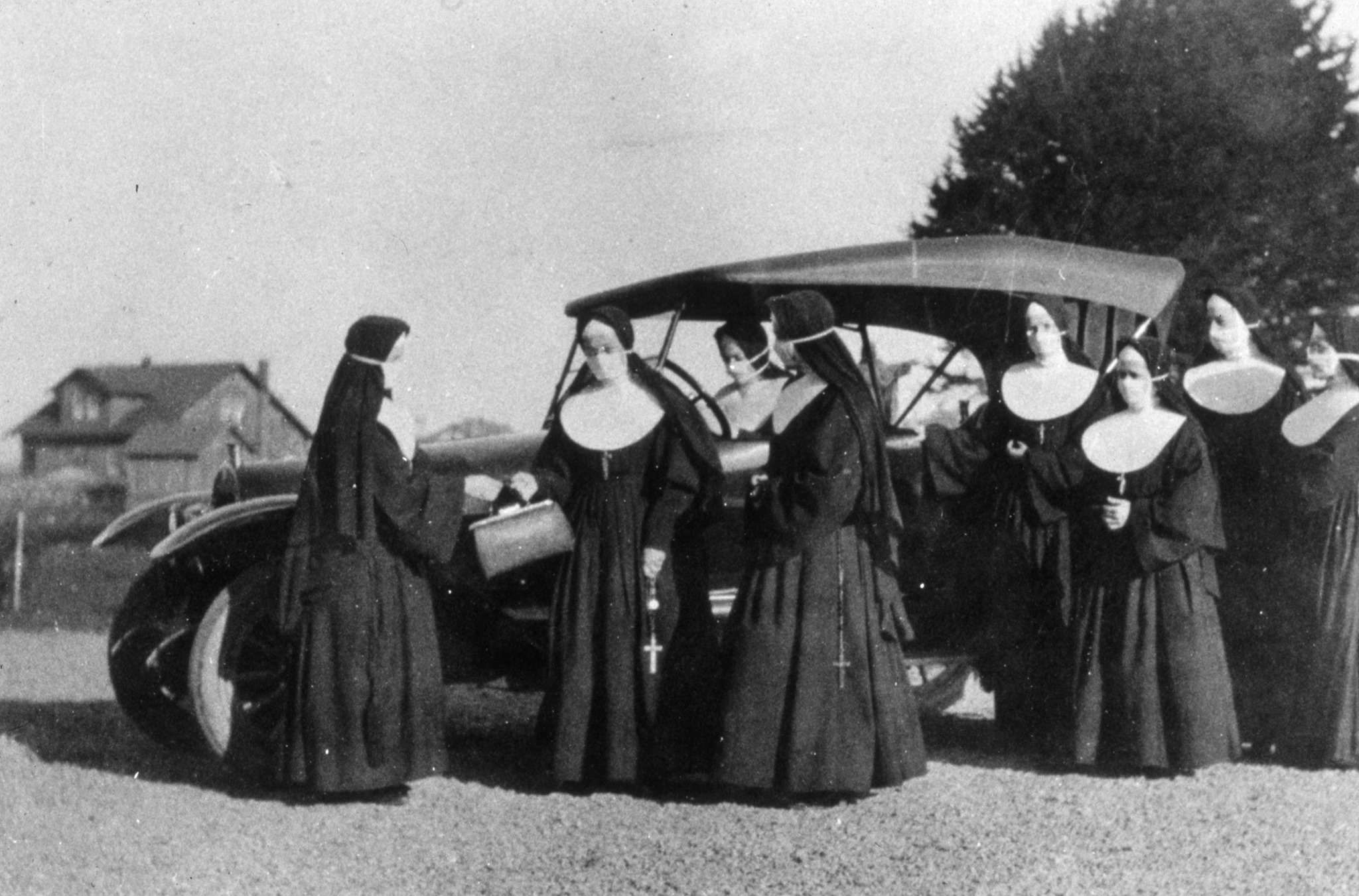
    Sisters of St. Joseph wearing masks during the Spanish flu. The sisters helped many patients in Humboldt from 1918-1920.

    Throughout her research, Kilkenny was able to find where a number of hospitals were set up across Humboldt. There was a Red Cross Hospital in Korbel, Arcata, Blue Lake and Eureka. Kilkenny also came across an interview between a member of the Sisters of St. Joseph of Orange in Eureka and a man named Brad Geagly. Kilkenny wrote the following:

    “[Mother Bernard] sent [the Sisters] out in twos, in cars provided by the Red Cross. She armed each Sister with a kit containing camphor and sweet oil, castor oil, and mustard plasters. Into the homes… the sisters came, arriving at seven o’clock and leaving at the end of a 12-hour shift, to be replaced by two other Sisters. They would attend first to the adults….They would bathe the delirious victims completely, rubbing their chests deeply with the camphorated oil. Mustard plasters would be applied, and then the sisters would wrap the sick tightly in whatever woolen material they could find; then they would tend the children. Once they had been bathed and medicated, the sisters turned to washing linens or cleaning house. They fed their charges warmed milk and broth prepared from the food furnished by the Red Cross.”

    Kilkenny noted that, generally, it was the poor who were admitted into the hospitals, while the more well-off were cared for in their homes. Because of this the actual tally for those infected and the deaths attributed to the Spanish flu is unknown. Kilkenny also points out how the Native American tribes were hit hard by the Spanish Flu as well.

    “Of the [11] Native Americans whose deaths are on record at the County Courthouse, five were from Table Bluff, two from Hoopa, one from Miranda, one from Orleans, one from Requa, and one was a laborer at Korbel,” Kilkenny wrote. She also noted evidence that many Native Americans often refused treatment by White settlers around this time period.

    Kilkenny was also able to find county death records from that time and noted that between Sept. 1, 1918 and April 1919, 175 Humboldt residents died with 91 of them between the ages of 20 and 40.

    And so what can we learn from this history?

    There is evidence that social distancing works by the example set by Carl Munther at his logging camp and how travel throughout the state can spread the virus. We can see how hospitals were eventually inundated with those infected with the Spanish flu and how staff were stretched thin. We can also see how it is important to get ahead of a pandemic and try to prepare as much as possible.

    Humboldt County seems to be doing just that. They have recently distributed around 30,000 pieces of personal protective equipment to first responders and medical staff across the county. Humboldt State chipped in and prepared 1,250 COVID-19 test kits. Also, as I’m sure you are aware, we are in a “shelter in place” order that was enacted to help stop the spread of the virus and to give medical staff the ability to fight the virus without being overwhelmed.

    Towns across Humboldt are also doing their part to help prevent an outbreak. Trinidad passed a moratorium on all short-term rentals and added some pretty forceful consequences to anyone who breaks it.

    “Over the course of the meeting, council members added some teeth to the resolution with language saying that a single violation may result in the City revoking a proprietor’s short-term rental license for up to a year,” the Lost Coast Outpost’s Ryan Burns recently reported, adding that the county may consider a similar measure.

    A stained glass piece by Humboldt artist Colleen Clifford.

    As this thing progresses, we are all going to have to make some sacrifices, but we’ll get through it. Help out the elderly and the immunocompromised if you can. Help out each other by not going out or attending pretty much any gathering of any number of people.

    Let’s all work together — but at least six apart — to help “flatten the curve.”

  • Myths and Truths of Surgical Face Masks

    Myths and Truths of Surgical Face Masks

    Mirage of safety causes mask supply to plummet and xenophobia to reemerge

    The emergence of everyday people using surgical masks amidst the COVID-19 pandemic has caused mass misinformation and the perpetuation of xenophobic ideas.

    Myth: Surgical masks make you immune to COVID-19

    Typically found on hospital workers and sick personnel as a safety barrier, surgical masks are almost regarded as invincibility devices, protecting the body from outside pollutants and threats. The implied purpose of surgical masks is to protect patients from the secretions of a doctor’s mouth or nose during surgical procedures or to protect doctors and nurses from infected patients. Either way, a basic surgical mask prevents the exchange of bodily fluids, not air particles. Surgical masks are often mistaken as invincible shields against all viruses and bacteria.

    Surgical masks show no evidence of prohibiting the inhalation or contraction of the virus that causes COVID-19. The COVID-19 virus particles are too minuscule to be stopped by a surgical mask barrier. According to the Centers for Disease Control and Prevention, “most facemasks do not effectively filter small particles from the air and do not prevent leakage around the edge of the mask when the user inhales.” In no way do surgical masks prevent or obstruct contaminated air.

    While surgical face masks are virtually pointless against COVID-19, N95 filtering facepiece respirators are different. These masks are personally fitted to the face and “filter out at least 95% of very small (0.3 micron) particles, capable of filtering out bacteria and virus particles,” according to the CDC. These masks are typically worn by hospital and treatment personnel that come in direct contact with infected patients. N95 masks prevent the inhalation of micro-particles.

    Truth: Surgical and N95 masks are running low

    Due to the personal fitting of each N95 mask, they begin to degrade overtime depending on their usage, storage and environment. The assigned expiration date and high demand due to the current pandemic has resulted in an unexpected shortage in supply. Doctors are now reusing their masks, but they risk contamination due to degrading components affecting the protection and performance of the mask. Government administrations are requesting N95 donations as well as demanding some occupations to give up their assigned mask for medical workers.

    While N95 masks are needed most, surgical masks are running low as well. Infected patients wearing masks benefit surrounding parties by limiting exposure of emitted particles into the air. The pandemic panic has misinformed the public to go buy surgical masks when patients and medical workers need them most.

    Myth: DIY masks provide reliable protection

    YouTube and social media platforms are advertising do-it-yourself face mask tutorials in response to the shortage in surgical mask supply. The misinformation has continued as people attempt to protect themselves with faulty protection materials. Bras and bonnets to sandals and plain cloths are being cut and trimmed to replicate surgical face masks. But, as previously mentioned, surgical face masks provide no protection against COVID-19 virus particles. Any alteration of store-bought or recycled material will have the same, if not less, protection against COVID-19 than a surgical mask.

    Truth: Mask usage has reignited xenophobic ideas

    Surgical masks provide zero protection from contracting COVID-19, but they have effectively reignited xenophobia. It’s completely normal for the mind to want to assign a face to an infected COVID-19 individual or picture what a threat would look like out of caution. Assuming someone wearing a face mask has the virus and extending that assumption past the mask, to their race or ethnicity, is disgusting, racist profiling. In a time of crisis, people should be exercising neighborly behavior and picking one another up, not perpetuating racist, profile-based assumptions on others in an attempt to accuse others of the chaos. It’s unproductive and invasive.

  • Updated: Summarizing HSU’s COVID-19 Updates

    Updated: Summarizing HSU’s COVID-19 Updates

    All classes to go online for the rest of the semester and other plans, plus a translation

    Humboldt State University informed its students March 12 through email that classes would be going online following spring break. Concerns of spreading COVID-19 led the California State University system to suspend face-to-face instruction. HSU initially said it would be shifting to online classes March 26 until at least April 17. But in a March 17 message from President Tom Jackson, HSU announced classes would be taught online for the rest of the semester.

    Jackson’s message said all exams, labs, field trips and in-person meetings are canceled. HSU encouraged students living on-campus to return home if possible. However, HSU promised it would not displace students living on campus.

    Other notes from Jackson’s message included: non-essential student employees will work from home. Campus will close to the general public. Most of campus will close, with the exception of the Student Health Center, the University Center and the library, all of which will remain open with reduced staff. Finally, HSU said it will review alternatives to celebrate commencement.

    HSU has also launched a web page with resources for working from home. HSU plans to provide laptops for students without computers and internet hotspots for students with no internet at home. Programs like the Adobe Creative Cloud Suite and SPSS are expected to be available on HSU’s remotely accessible virtual lab and for downloads to personal computers. Multiple phone and internet companies have also agreed to waive late fees, not cutoff service and open up internet hotspots.

    HSU began updating students and staff through emails starting Feb. 24, when it informed them of the single case of COVID-19 confirmed in Humboldt County. They continued to provide updates weekly on how HSU would be handling a potential pandemic. The week before students were meant to head home or hunker down in Humboldt, HSU ramped up its online communications.

    HSU suspended all international and non-essential domestic travel March 10 for the remainder of the spring semester. In a March 11 email, they defined essential domestic travel as travel for academic credits that are necessary for graduation and cannot be postponed or substituted.

    Through several emails on March 11 and March 12, HSU canceled all instruction from March 23-25 to allow faculty to prepare for online classes. HSU then canceled all intercollegiate and club sports.

    HSU canceled non-essential events on and off campus March 13. Essential events—following HSU’s previous definition of essential—are any events done for academic credit necessary to meet a graduation requirement that cannot be postponed or substituted.

    On March 15, HSU noted the closure of local K-12 schools, and how that may affect staff and faculty. HSU later advised faculty aged 65 and older, or those with underlying health issues that make them more vulnerable to COVID-19, do not come to campus. HSU will arrange telecommuting for adaptable positions, but anyone not able to work remotely will be placed on administrative leave at their current rate of pay and for their normally scheduled work hours.

    Find all HSU COVID-19 updates here.


    Humboldt State University President Tom Jackson’s March 17 Message to Campus:

    Message from President Tom Jackson on Plans for the Semester

    Dear Campus Community: Over the last week, I have had the privilege of observing the amazing work of so many people in their efforts to assist others. The work by all of you to not only protect yourself, but to care for your family and our students is beyond remarkable. We are a very caring Lumberjack Family and I thank you.

    Things are changing rapidly and these updates are subject to change based on the fluidity of this situation. Every day, nearly every hour it seems, we are asked to pivot and address a new challenge in our efforts to reduce the spread of COVID-19. Our guiding light remains the health and safety of our Lumberjack Family while also helping our students to progress in their education. At times these efforts may appear in conflict, but they are not. At the root of all we do is our humanity and our underlying willingness to do what must be done.

    The time has come for HSU to implement a number of additional contingency plans and bolster our COVID-19 precautions. While there are no known active COVID-19 cases in our County at this time, and there have been none on campus, these additional precautions are consistent with recent federal and state health directives. In short, we must now do more to protect the health and safety of our campus and local communities.

    HSU will operate virtually through the end of the semester.

    1. Beginning today, we will shift as quickly as possible to virtual operations. Non-essential employees, including student staff, are to work remotely (telecommute) once they have received direction from their supervisor. Please continue to work with your supervisor on your work assignments and technology support needs.
    2. It is important we reduce the number of people on campus. We encourage students who can return to a home off-campus to do so. We will not displace students who are facing housing insecurities or homelessness. More information will follow.
    3. From Monday to Wednesday, March 23-25, the faculty will prepare for a complete shift to virtual instruction by Thursday, March 26. All professional development and preparation activities will now occur remotely. For the remainder of Spring 2020, all instruction is to be virtual and the primary operational state of campus is to be virtual. There will be no face to face meetings, events, instruction, exams, instructional labs, field trips, live performances, or small group seminars.
    4. We have closed all access to campus facilities to the general public.
    5. Most campus facilities will be closed to the campus community, including all sports and recreation facilities. We have also suspended all intramural and recreational activities for students. Any services remaining open for students – such as the library, student health center, and university center – will be operating with reduced staffing and must implement social distancing.
    6. As a campus we must continue to carefully practice social distancing techniques for those essential individuals who remain on campus, including students in our residence halls who truly have no other place to reside, and the food services and other staff who are supporting those students.
    7. Lastly, and sadly, we must review other ways to celebrate degree recipients instead of the traditional Commencement. We are a very creative campus and we will find alternative ways to celebrate our students’ success.

    There are many questions to be answered, and we will do our best to answer them in a timely way. We will share more information soon as we prepare campus to shift to virtual operations.

    We are resilient. From the Marching Lumberjacks doing what they do, to alumni making a difference in the world, to hiking in the Redwoods, to kayaking in the great Pacific ocean, we are Humboldt. This pandemic is challenging us but it will not break us. We are Humboldt, and while we may be socially distant for now we remain close at heart.

    Thank you for all that you are doing. I ask you to be flexible and understanding as we work together to protect the health and safety of the campus community. You are appreciated.

    Respectfully,

    Tom Jackson, Jr.
    President


    El Mensaje en Español:

    Mensaje del Rector Tom Jackson sobre los planes para el semestre

    Estimada comunidad universitaria, durante la última semana he tenido el privilegio de observar el increíble trabajo y esfuerzo de tantas personas que quieren ayudar a otros. El trabajo de todos ustedes, no sólo para protegerse, sino que también para cuidar a su familia y a nuestros estudiantes es notable. Somos una familia muy cariñosa de leñadores y se los agradezco.

    Las cosas están cambiando rápidamente debido a la fluidez de la situación. Todos los días, parece que casi cada hora, se nos pide que viremos y abordemos un nuevo desafío en nuestros esfuerzos para reducir la propagación del COVID-19. Nuestra luz guía sigue siendo la salud y seguridad de nuestra familia de leñadores y, al mismo tiempo, el apoyo necesario para que nuestros estudiantes progresen en su educación. A veces, estos esfuerzos pueden aparecer en conflicto, pero no lo están. La raíz de todo lo que hacemos está nuestra humanidad y en nuestra voluntad fundamental de hacer lo que sea necesario.

    Ha llegado el momento de implementar en HSU una serie de planes de contingencia adicionales para reforzar nuestras precauciones acerca del COVID-19. Si bien no hay casos activos conocidos del COVID-19 en nuestro Condado en este momento, y no ha habido ninguno en el campus, estas precauciones adicionales son consistentes con las recientes políticas de salud de nivel federal y estatal. En resumen, ahora debemos profundizar nuestros esfuerzos para proteger la salud y seguridad de nuestro campus y comunidades locales.

    HSU va a funcionar virtualmente hasta el fin del semestre.

    1. A partir de hoy, pasaremos lo más rápido posible a operar virtualmente. Los empleados no esenciales, incluyendo el personal estudiantil, deben trabajar de forma remota (teletrabajo) una vez que hayan recibido instrucciones de sus supervisores. Por favor continuar trabajando con su supervisor en sus tareas de trabajo y apoyo técnico.
    • Es importante que reduzcamos la cantidad de personas en el campus. Alentamos a los estudiantes que puedan regresar a sus hogares fuera del campus que lo hagan. No desplazaremos a los estudiantes con inseguridad de vivienda o falta de vivienda. Proveeremos más información sobre este tema.
    • Del lunes 23 al miércoles 25 de marzo, los profesores se prepararán para un cambio completo a la instrucción virtual, a comenzar el jueves 26 de marzo. Ahora todas las actividades de capacitación profesional y preparación se realizarán de forma remota. Durante el resto de la primavera del 2020, toda la instrucción será virtual y todo el campus funcionará de forma virtual. No habrá reuniones presenciales, eventos, instrucción, exámenes, laboratorios, excursiones, presentaciones en vivo, o seminarios de grupos pequeños.
    • Hemos suspendido todo acceso público a las instalaciones del campus.
    • La mayoría de las instalaciones del campus estarán cerradas a la comunidad del campus, incluyendo todas las instalaciones deportivas y recreativas. También hemos suspendido todas las actividades extracurriculares y recreativas de los estudiantes. Cualquier servicio que permanezca abierto para los estudiantes, como la biblioteca, el Centro de Salud Estudiantil y el Centro Universitario, funcionará con un personal reducido y se deben implementar distanciamiento social.
    • Como campus, debemos continuar practicando cuidadosamente técnicas de distanciamiento social. Esto se aplica a aquellas personas en roles esenciales que permanecen en el campus, incluyendo a los estudiantes en las residencias universitarias que realmente no tienen otro lugar donde ir, y proveedores de servicios de comida y otro personal que apoya a estos estudiantes.
    • Por último, y lamentablemente, debemos explorar otras formas de celebrar a los nuevos licenciados ya que no podrán tener una ceremonia de graduación tradicional. Somos un campus muy creativo y encontraremos formas alternativas de celebrar el éxito de nuestros estudiantes.

    Hay muchas preguntas por responder y haremos todo lo posible para responderlas de manera oportuna. Compartiremos más información pronto, a medida que preparemos el campus para cambiar a operaciones virtuales.

    Somos resistentes. Desde la banda de los “Marching Lumberjacks” que hacen lo que saben hacer, y los egresados que hacen una diferencia en el mundo, y las caminatas en los bosques de los gigantes rojos, hasta el paseo en kayak en el gran océano Pacífico, somos Humboldt. Esta pandemia nos desafía, pero no nos romperá. Somos Humboldt y aunque es posible que estemos socialmente distantes por ahora, seguimos estando cerca en el corazón.

    Gracias por todo lo que están haciendo. Les pido que sean flexible y comprensivas/os mientras trabajamos juntos para proteger la salud y seguridad de nuestra comunidad universitaria. Todos son apreciados. 

    Respetuosamente,

    Tom Jackson, Jr.
    Rector

  • Students Stressed and Frustrated Going into Somber Spring Break

    Students Stressed and Frustrated Going into Somber Spring Break

    Students react to in-person class cancellations due to global pandemic

    As spring break arrived and the COVID-19 pandemic continued its tear across the globe, many Humboldt State University students wondered what to do as HSU canceled face-to-face instruction until at least April 17. Some students stuck around while others went home. The pandemic, directly or not, has affected all students.

    “I feel like it’s a very serious outbreak and people need to take it seriously. I do think it’s getting blown out of proportion in some ways and people are panicking before they need to, but it’s just something I’m kind of trying to roll with, essentially.”

    Ashley Bailey, molecular biology major

    Ashley Bailey, a junior molecular biology major, planned to travel home. She admitted feeling stressed.

    “I feel like it’s a very serious outbreak and people need to take it seriously,” Bailey said. “I do think it’s getting blown out of proportion in some ways and people are panicking before they need to, but it’s just something I’m kind of trying to roll with, essentially.”

    Kiera Price, a junior journalism major, also said she would travel home. She thought both academic and national leaders should be more vigilant.

    “I feel like instead of limiting social interaction, they should do more to prepare for it,” Price said. “Like, for example, the fact that there isn’t more of a stricter way to limit survivors from coming in.”

    Price recognized there isn’t a lot to be done, but still expressed a longing for something more.

    Tim Arceneaux, a senior English major, looked forward to staying in Humboldt. With a sigh, Arceneaux said he understood the measures taken by HSU.

    “I think the precautions that the University is taking here and all around the country make sense, but at the same time, I find them to be really frustrating,” Arceneaux said. “I hope that this issue will bring the global community together and allow people to realize the importance of universal healthcare.”

    Arceneaux said there was one key thing HSU could do to mitigate the spread of the novel coronavirus.

    “They could try to alert students more about the health resources on campus,” Arceneaux said. “Because I feel like at this point, it’s almost an inevitability that someone is going to contract the coronavirus, and I’m not sure exactly what health resources are going to be available to students that contract the disease.”

    Norbert Rodriguez, a junior film major, had planned to travel to Southern California to visit family, but decided to stick around once the coronavirus broke out. He said he thought HSU took too long to respond to the pandemic compared to other universities.

    “At the moment, there aren’t any test kits [in Humboldt], so there’s really no way of knowing that there are any confirmed cases,” Rodriguez said. “I feel like it should’ve been a bit more proactive.”

    Editor’s note: St. Joseph and Redwood Memorial Hospitals have set up screening tents for patients with COVID-19 symptoms.

  • Updated: HSU Suspends Classes After Spring Break, Also Cancels Sports and Large Events

    Updated: HSU Suspends Classes After Spring Break, Also Cancels Sports and Large Events

    Classes will be taught remotely starting March 26

    Latest press release from HSU:

    • All classes are canceled on March 23-25.
    • Classes will be taught in alternative modes starting March 26 to April 17.
    • The campus will remain open and all student services will be available.

    Humboldt State University will suspend face-to-face instruction and move to alternative modes of instruction on March 26. This will follow the regularly scheduled Spring Break and an extended three-day faculty preparation and development period (March 23-25) during which instruction is canceled. Based on the parameters set forth by the CSU system, this suspension of face-to-face instruction is temporary and currently scheduled to remain in place through April 17. 

    The schedule and agendas for three days (March 23-25) of mandatory faculty preparation and development is forthcoming. Lecturer faculty will receive a stipend for participation. 

    The schedule and agendas for three days (March 23-25) of mandatory faculty preparation and development is forthcoming. Lecturer faculty will receive a stipend for participation. 

    Alternative modes of instruction will include use of Canvas, Zoom, and other instructional technologies. For more information on preparing to use alternative modes of instruction please see the Keep Teaching website

    Students: Please look for email and Canvas-based communications from your instructors about plans for individual courses. Please also see the FAQ page on the HSU COVID-19 web page: https://covid19.humboldt.edu/faqs for general information. 

    The decision is intended to mitigate spread of coronavirus (COVID-19), and is based on current guidelines from the CSU system, Office of the Governor, as well as local and state health officials. It was made following consultation and meetings of the academic department Chairs, Deans, Provost and Chair of the University Senate. 

    The decision was not made lightly. The goal of these changes is to minimize the need to gather in large groups or spend prolonged time in close proximity in spaces such as classrooms.

    The University remains open. Residence halls, dining, student support services, health, counseling, disability services and other related offices remain fully available in support of all students. Students who need computers, Wi-Fi, or other technological support can continue to use the Library and computer lab spaces on campus. A social distancing policy is likely to be in place on campus following Spring Break. More information on HSU’s social distancing policy is forthcoming. All staff are expected to report to work. Student employees should return to their normal work as scheduled following Spring Break unless alternative arrangements are made with their supervisors.

    There is currently no community spread of COVID-19 in Humboldt County. There have been no cases of COVID-19 on campus. Because information about the virus is changing rapidly, please check your humboldt.edu email and HSU’s COVID-19 websitefrequently during the break for announcements from HSU and California State University system.

    Don’t forget there are basic steps you can take to protect yourself and help prevent the spread of COVID-19

    • Stay home if you are sick or have a fever. 
    • Wash your hands frequently and avoid touching your face and eyes, nose, mouth.
    • Routinely clean your home, particularly high touch surfaces like doorknobs.
    • Consider limiting attendance at optional large gatherings because this is where colds, flu, and other respiratory viral infections are spread.

    It’s important to remember to treat each other with care, respect, and empathy as the virus continues to disrupt daily life. 

    Please know that support and health and wellbeing services are available on campus. Students who would like to talk with a counselor can contact Counseling & Psychological Services in Student Health & Counseling at 707.826.3236 anytime. Staff or faculty seeking additional support may call the Employee Assistance Program at 707.443.7358.

    Old press release:

    Humboldt State University acknowledges its important role in the North Coast in bringing thought-leaders, visitors, artists, musicians, and entertainers to campus and the local community. In an effort to mitigate the possible spread of COVID-19, HSU continues to assess the impact of hosting large events on campus.

    There is no one response that works for all events. HSU understands that each event is different.

    HSU leadership, consistent with CSU guidelines and guidance from local health officials, continues to assess events and their relationship to HSU’s core mission. This ongoing assessment looks at event outcomes and whether postponement or other alternative modalities (such as virtual) can be used, participants’ ability to travel, participants’ relationship to high-risk areas or populations, local health standards, size of the event, fiscal and opportunity costs related to the event, and any other unique campus contexts that warrant consideration.

    Subject to change, effective Saturday, March 14 until Friday, April 17 all on-campus large events (greater than 150 attendees) are suspended. Event planners will be asked to cancel, postpone, or use an alternative modality (virtual). Events after April 17 will continue to be assessed on a case-by-case basis, with additional information and campus decisions made as more information becomes available. 

    All HSU-sponsored athletic events are scheduled to continue. However, based on strong guidance from CCAA, events will now be “fan-less,” meaning there should be no fans at the events and only essential personnel are permitted for the event.

    The campus continues to assess the most appropriate guidelines for smaller events, and will communicate new guidelines when available.

    This is a difficult decision, but the University asks the community and event planners to support these efforts in trying to reduce the spread of COVID-19.

    • Please consider staying in Humboldt during Spring Break.
    • If you leave during Spring Break, plan carefully about where you travel.
    • After Spring Break, classes, assignments, and exams are cancelled on March 23-24.
    • Instruction resumes as normal on March 25.
    • Stay home if you are sick or have a fever. 
    • Wash your hands frequently and avoid touching your face and eyes, nose, mouth.
    • Routinely clean your home, particularly high touch surfaces like doorknobs.
    • Consider limiting attendance at optional large gatherings because this is where colds, flu, and other respiratory viral infections are spread.

  • First Case of Coronavirus Confirmed in Humboldt

    First Case of Coronavirus Confirmed in Humboldt

    Press release from Humboldt County Department of Health and Human Services Public Health Branch

    Press release:

    The Humboldt County Department of Health & Human Services Public Health Branch has received confirmation from the California Department of Public Health and the U.S. Centers for Disease Control and Prevention (CDC) of one case of COVID-19 in a Humboldt County resident. A close contact who has symptoms is being tested as well.

    This marks the first confirmed case of the novel coronavirus in Humboldt County. Presently, the ill individuals are doing well and self-isolating at home, while being monitored for symptoms by the Public Health Communicable Disease Surveillance and Control Unit.

    Close contacts of these individuals will also be quarantined at home and monitored for symptoms by Public Health staff. With the amount of foreign travel by county residents, including travel to China, it is not surprising that a case has emerged locally. Additional cases may occur either in returning travelers or their close contacts.

    “It’s important to remember that the risk to the general public remains low at this time,” said Humboldt County Health Officer Dr. Teresa Frankovich. “Despite the fact that Humboldt County now has a confirmed case of COVID-19, there is no evidence to suggest that novel coronavirus is circulating in the community at large.”

    Frankovich added that transmission in the U.S. to date has been among close contacts and not among the general public.

    Public Health suggests the following precautions to prevent the spread of COVID-19 and all infectious diseases, including common illnesses like colds and flu:

    • Stay home when you are sick
    • If you have a fever, stay home or go home if you are already at work or school, and stay home for at least 24 hours after you no longer have a fever (without the use of fever-reducing medicine).
    • Wash your hands frequently and particularly before eating or drinking.
    • Promote good hand hygiene in your home by educating household members and making sure soap, hand sanitizers, and tissues are available.
    • Avoid touching your face, particularly your eyes, nose and mouth.
    • Encourage proper cough etiquette. Cough or sneeze into a tissue, sleeve or arm. Do not use your hands.
    • Perform routine surface cleaning, particularly for items which are frequently touched such as doorknobs, handles, remotes, keyboards and other commonly shared surfaces.

    The county’s Communicable Disease Surveillance and Control Unit will continue to provide updated information about COVID-19 to health care providers, hospitals and schools, as well as the general public.

    The county’s Communicable Disease Surveillance and Control Unit will continue to provide updated information about COVID-19 to health care providers, hospitals and schools, as well as the general public.

    For updated information about COVID-19, please continue to check the https://www.cdc.gov/coronavirus/.

    If you are ill and in need of medical care and have been in China within the previous two weeks or have been in contact with an individual who has COVID-19, please contact your health care provider or emergency department before presenting for care. Arrangements will be made to have you evaluated in the safest manner possible for health care staff and other patients.

  • Staying healthy during the flu season

    Staying healthy during the flu season

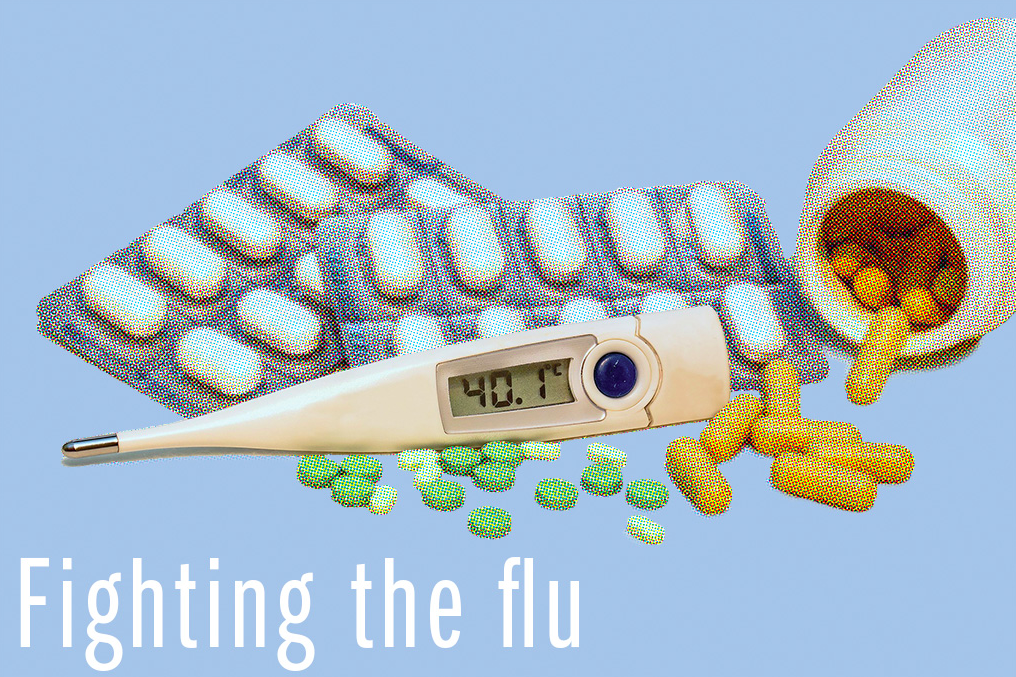
    Flu season has begun and the California Department of Public Health provides weekly reports of the epidemic. In CDPH’s third weekly report, all Californians are encouraged to get themselves vaccinated as soon as possible.

    An email sent by the CDPH stated, “CDPH is concerned about the severity of influenza and the impact of influenza on the health of people of all ages.”

    The CDPH went on to inform individuals by asking anyone suffering from the flu to avoid going into emergency rooms unless symptoms become more severe.

    The CDHP lists a variety of symptoms that people need to be aware of. These include:

    • Fast breathing or trouble breathing
    • Chest pain or pressure
    • Abdominal pain or severe vomiting
    • Not being able to eat or drink enough fluids
    • Being confused or not walking normally
    • Having symptoms that improve but then return with a fever and worse cough
    • Appearing dehydrated

    For anyone who is suffering from these symptoms, the CDPH encourages you to get in touch with health care services or seek emergency care as soon as possible.

    Students at HSU looking for a place to get vaccinated can visit Student Health and Wellbeing Services for free flu vaccinations. Vaccinations are only offered from October through January.

    Residents who are not HSU students can also visit the Humboldt County Department of Health and Human Services clinic in Eureka.

    On their website, they inform residents that “the cost of the flu shot is $17, although no one will be turned away for inability to pay.”

    The Center for Disease Control and Prevention offers people methods on how they can prevent themselves from contracting the flu: “Wash your hands often with soap and water. If soap and water are not available, use an alcohol-based hand rub”.

    The CDC also recommends cleaning and disinfecting surfaces and objects. In addition, avoid touching your eyes, nose and mouth. For more information to prevent spreading or getting the flu, visit the CDC’s website.

    The ongoing flu epidemic is being regarded as the worst in decades. The CDC reports that in the third week of the year, doctor visits for flu-like symptoms increased in the United States to 6.6 percent, higher than the national baseline of 2.2 percent. The number of pediatric deaths is 37.

    “It is not too late to be vaccinated,” the California Department of Public Health said. “CDPH recommends that everyone 6 months of age and older be vaccinated each year.”