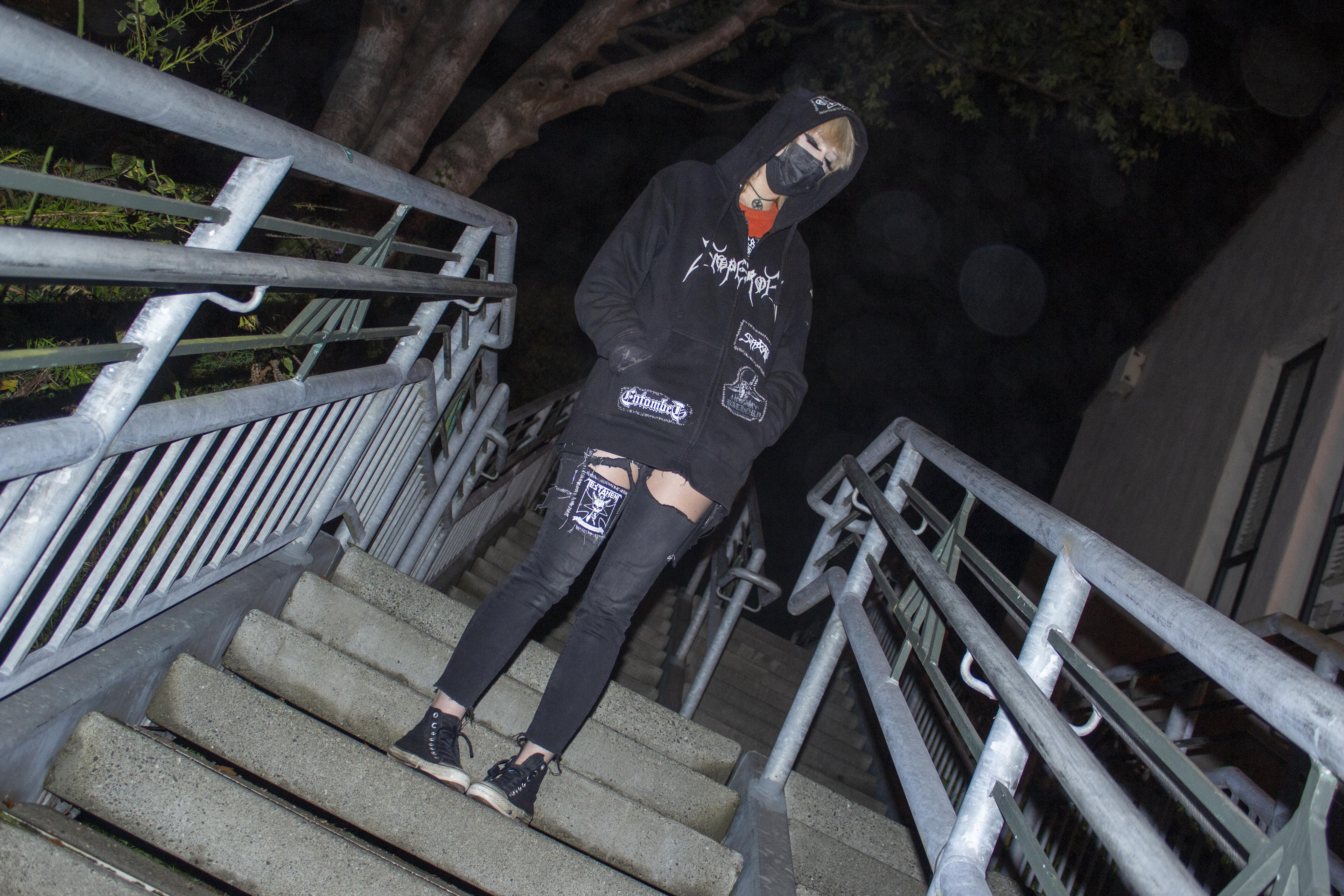
About half of Xoë Sioux’s wardrobe is covered in scraps of fabric, plastered with the names and logos of various bands and bits of art.
“The whole thing about punk is to dress your own way, how you want to look and not fit into society’s views of you, and so a big part of it is like creating your own clothes,” Sioux said.
Wearing patches on their clothes identifies Sioux to other members of their subculture.
“Other punk kids, or metal kids, or anybody in the subgenre- if they see it and they appreciate it, then that makes me happy,” Sioux said.
According to Sioux, the history of decorating clothes with patches dates back to the origin of punk itself in the 70’s and 80’s.
“People were creating patches for all the bands that they liked, like The Clash, Discharge, Sex Pistols unfortunately,” Sioux said. “They started stitching them onto their clothes to create a statement.”
Patches also serve as free advertising for the bands they represent. Nat Cardos, who came up in the southern California punk scene and now plays in several local bands, explains the process.
“You have these punks who buy your patches at your show that you make yourself,” said Cardos. “When they sew them on people will see them, and be like, oh, what’s that band.”
In addition to the aesthetic value they add, patches also help extend the longevity of garments. When the original fabric gives way, a patch can allow one to continue wearing the item of clothing for years to come. Many punks have taken to using more durable dental floss to secure their patches rather than sewing thread.
“I like the look of it, and they stay together way better in my opinion,” Sioux said. “And they make me smell good because I smell like mint.”
Sioux’s favorite patch is from a band called Bathory, her favorite band of all time. The band took inspiration from the Countess Elizabeth Báthory de Ecsed of the former Kingdom of Hungary, who was infamously convicted of torturing and killing hundreds of girls and women, in what some say was an effort to retain her youth. The patch, in classic alternative style, depicts a disembodied goat head above the band’s name in gothic script.
For the people that wear them, patch jackets can be a chronicle, the time and place where each patch was attached forever sewn into the fabric. Cardos recalls exactly what their first patch was as it is still on one of their jackets.
“I bought it online, and you’re probably going to have to censor this, but it says: ‘fuck all crooked cops, may their corpses rot,’” Cardos said. “It’s my favorite patch I own.”
Cardos says that patch-making is an integral part of the DIY subculture within punk. In addition to buying patches that bands sell as merch, most also make some of their own patches. There is no set method.
“A lot of people make them using either screen-printing ink and canvas, or a lot of people also will just use sharpie if they have a light enough fabric for it,” said Cardos.
Sioux has some guidelines for others looking to get into wearing patches.
“It’s really fun to dress weirdly, and dress out of the norm, and patches make you look really cool,” Sioux said. “But I definitely highly recommend listening to the music that you’re putting onto your clothes, nobody likes a poser.”
Martin Wong’s lost art reemerges to bring awareness to a new generation
Designer street style brand Supreme’s new collection highlights the life and art of Martin Wong.
Wong, who embodied creativity, empathy and empowerment, lost his battle against an AIDS diagnosis in August of 1999, but his artwork continues to inspire and act as socio-political commentary after his death.
Wong attended Humboldt State University in 1964, enrolling himself in every available art class before focusing his studies in ceramics. After graduating, Wong left the comfortable walls of university-life to influence the art scene and bring widespread awareness to minority groups often overshadowed by society.
Wong’s family, friends and supporters partnered together on a collaborative collection with Supreme showcasing Wong’s lost works.
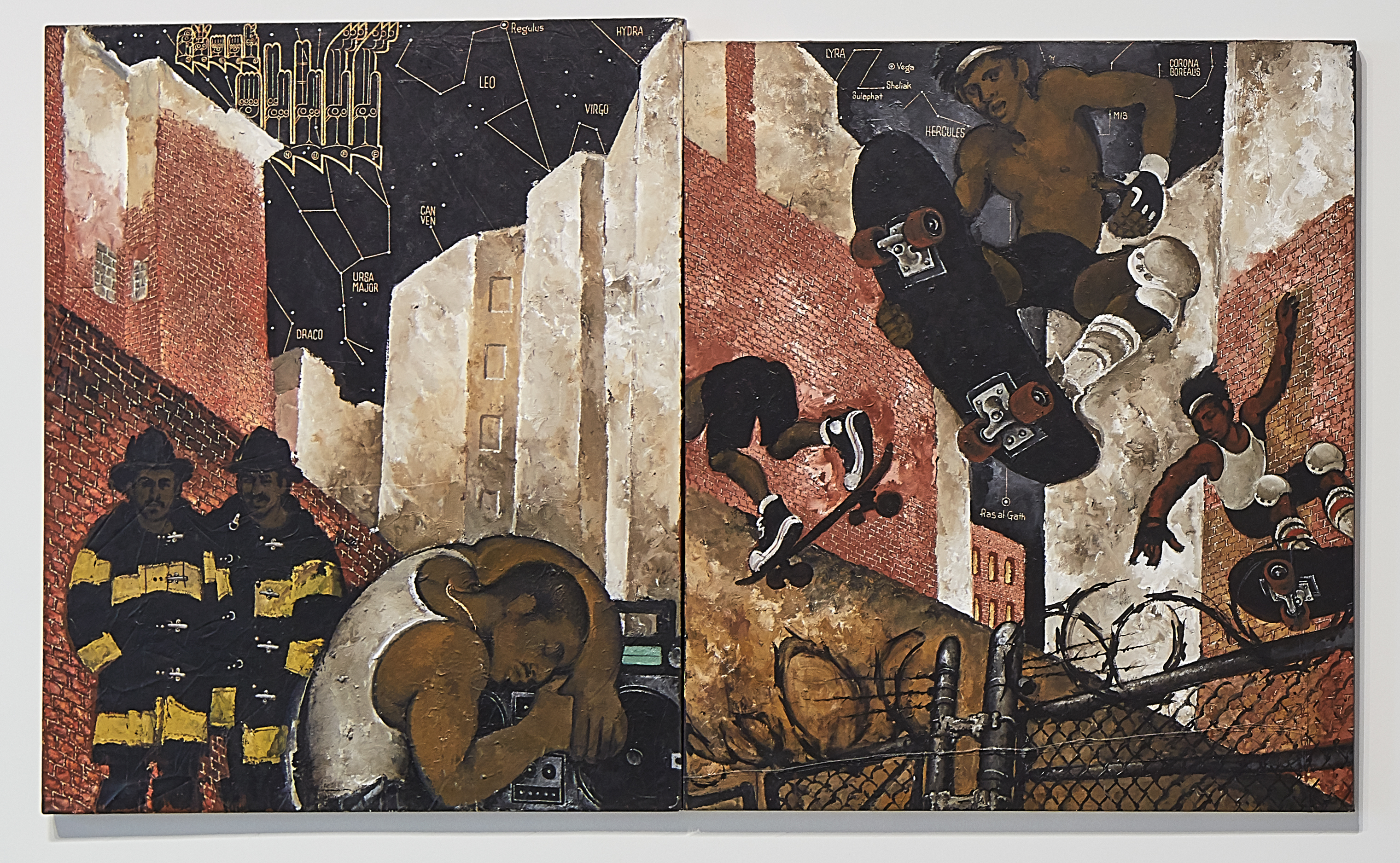
“Tell My Troubles to the Eight Ball (Eureka)” 1978-81 | Courtesy of the Estate of Martin Wong and P·P·O·W, New York
Example from the Fall/Winter 2019 Supreme clothing line featuring Martin Wong’s work.
Example of the Fall/Winter 2019 Supreme clothing line featuring Martin Wong’s work.
Example of the Fall/Winter 2019 Supreme clothing line featuring Martin Wong’s work.
Anneliis Beadnell, Senior Director and Director of Estates at P.P.O.W Gallery, a contemporary art gallery in New York that represents Wong and his work, explains Wong’s appeal to Supreme.
“Over a year ago the artistKAWS, who is a good collector and friend of P.P.O.W, approached us to see if the Estate of Martin Wong would be interested in supporting a collaboration between Martin Wong’s work and Supreme,” Beadnell said. “The Estate was supportive, Martin’s circle of friends were encouraging and the collaboration felt right on many levels.”
The collaboration, as well as the overwhelming support towards the partnership of artist and brand, reinforces the importance of Wong’s legacy, advocacy and support represented through his artwork.
“Since Martin was interested in cultures that lived on the fringe of society, or outside the realm of the ‘art world,’ we felt that this collaboration would be successful in bringing his imagery into a new demographic.”
Anneliis Beadnell
“Through Supreme’s platform, a new generation who may not have had access to the works through visiting galleries or museums, will have a new way to enter into his work,” Beadnell said. “Since Martin was interested in cultures that lived on the fringe of society, or outside the realm of the ‘art world,’ we felt that this collaboration would be successful in bringing his imagery into a new demographic.”
Like most of Wong’s art, the graphics showcase political and sometimes controversial subjects. Elements of poverty, misfortune and ruin bring attention to the unfair and inhumane treatment of minority groups. Encapsulating inclusion and representation was Wong’s strong suit.
The ability to take those underrepresented into the spotlight ripples throughout his work. Idolizing the “unprofessional” and disrespected street artists allowed for new perspectives to emerge not only in Wong’s works, but in the art world in general.
“In his lifetime, Martin gathered one of the largest graffiti collections in the world,” Beadnell said. “Martin turned to his friendship with the graffiti [artists] for collaboration and inspiration in his own works, which often took them as the subjects of various paintings.”
According to Beadnell, Wong also created several paintings with skateboarders as the primary subjects, like “Sweet ‘Enuff,” a 1987 painting which is in the collection of the de Young Museum in San Francisco.
Capturing moments ignored by mainstream society gifted Wong the ability to cast a new light on the struggles and discrepancies in subcultures, raising widespread awareness in the art world.
“Big Heat” 1988. | Courtesy of the Estate of Martin Wong and P·P·O·W, New York
“Sharp Paints A Picture” 1997-98. | Courtesy of the Estate of Martin Wong and P·P·O·W, New York
Iglesia Pentacostal 1986. | Courtesy of the Estate of Martin Wong and P·P·O·W, New York
Amigos 19xx. | Courtesy of the Estate of Martin Wong and P·P·O·W, New York
“Malicious Mischief” 1997-98. | Courtesy of the Estate of Martin Wong and P·P·O·W, New York
This type of socio-political activism is still growing today, but there is a need for inclusion of identity and culture regardless of differences. Beadnell emphasized this and said the goal of the collaboration with Supreme was to reinforce those ideals with younger generations.
“Wanting to extend his demographic outside of the ‘art world’ speaks to wanting to continue his legacy of influence and inspiration as an artist,” Beadnell said. “There is a strong youth culture that follows Supreme and the collaboration with Martin’s work may open a door for those that purchase the items and want to learn about Martin Wong’s contribution to our visual history and culture.”
Wong’s work revolutionized the stigmas that dismissed groups from society, specifically focusing on the disadvantaged and underrepresented. From sexual orientation and economic standing to uncontrollable impairments, capturing the essence of groups often labeled insignificant or unworthy earned Wong his title of an activist and a visionary.
“Being that Martin was a gay Asian American, we hope this level of visibility will inspire others, that may have shared histories and identities, to look to Martin as a point of inspiration.”
Anneliis Beadnell
“Martin’s paintings connect to the denizens of the Loisaida, the crumbling tenement bricks and urban landscapes, the places where creative subculture thrived and since has been erased by gentrification,” Beadnell said. “The iconography that emerged through Martin’s depiction of the Lower East Side, of closed storefronts, firemen, ASL symbols, constellations and flaming eight balls became graphic points of interest for the line.”
The re-emergence of previously destroyed creative outlets allows the newer generation access to the extinguished memories and documentation of the past. The revamped accessibility stems with the hope of generating more activism for the future.
December 1 is World AIDS Day, recognizing and bringing awareness to the pandemic caused by HIV and mourning those who have died from the disease.
“Being that Martin was a gay Asian American, we hope this level of visibility will inspire others, that may have shared histories and identities, to look to Martin as a point of inspiration,” Beadnell said.
Humboldt State professors and lecturers stunt their favorite fits
We’ve talked to students on campus about their fashion statements. But what about teachers?
Opinions Editor Delaney Duarte asked some professors and lecturers on campus to show us their favorite looks, tell us their hobbies and give some insight into their dream jobs.
Jessica Rismiller
Psychology Lecturer
Originally from: Cincinnati, Ohio
Clothes: Sweater is from Tj Maxx, skirt is from Hot Knots in Arcata, Scarf is from North Coast Co-op and boots are from Nordstrom Rack.
If Rismiller wasn’t teaching, she would work in the field of applied behavioral analysis providing behavioral intervention services for individuals with developmental disabilities and their families/supporters.
Hobbies: Running, hanging out with her dog, meditation, ceramics, hiking/camping and traveling.
Jessica Rismiller. | Photo by Delaney Duarte
Marlon Sherman
Native American Studies Professor and Department Chair
Originally from: Pine Ridge Reservation in South Dakota
Clothes: Shoes were purchased at a shoe store in Eureka, shirt from a store in Santa Cruz, pants from San Francisco and undershirt from a store in Boulder, Colorado.
If Sherman wasn’t teaching he would pick up the guitar again or find a boy band to sing in.
Hobbies: Sleeping on the couch, writing a chapter in a book he is working on.
Marlon Sherman. | Photo by Delaney Duarte
Nikola Hobbel
English Education and Poststructural Analyses
Originally from: Westberlin, Germany
Clothes: Purchased dress in London on a summer vacation, shoes bought online from Ninewest, ring is from Sol to Sol in Arcata, earrings are by Gilbert Castro from Arcata Artisans.
If Hobbel wasn’t teaching she would be a librarian or work in a kitchen because she likes to cook.
Hobbies: Hiking, going to the beach and hunting for agates.
Nikola Hobbel. | Photo by Delaney Duarte
William Gannett
Physics Lecturer
Originally from: Portland, Oregon
Clothes: Flannel is from Lands End, jeans are Levi’s, shoes were purchased at Nordstrom Rack and he bought his watch online.
If Gannet wasn’t teaching he would be doing physics research or try and be a National Geographic photographer.
Hobbies: Wildlife photography, and hiking with his wife and son.
William Gannet. | Photo by Delaney Duarte
Michelle Cartier
Film Professor
Originally from: Burbank, California
Clothes: Pants and shoes are from Zappos, shirt from men’s section of H&M, belt was a gift and hat is from AMPT Skate Shop.
If Cartier wasn’t teaching she would be a poet or filmmaker.
Hobbies: Traveling, eating, writing and being on the local roller derby team.
Michelle Cartier. | Photo by Delaney Duarte
Ryder Dschdia
History Lecturer
Originally from: Santa Cruz, California
Clothes: Shoes are from Plaza Shoe Shop in Arcata, shirt is from JackThreads, pants are from Kohl’s, tie was a gift from his sister and coat was a gift from his brother.
If Dschdia wasn’t teaching he would be working in the food industry or become a professional photographer or reporter.
Hobbies: Rock climbing, disc golfing, cycling and hiking. Dschdia also likes playing Dungeons and Dragons on his switch, PC and console.
Ryder Dschdia. | Photo by Delaney Duarte
Ross MacKinney
Communications Lecturer
Originally from: Washington D.C.
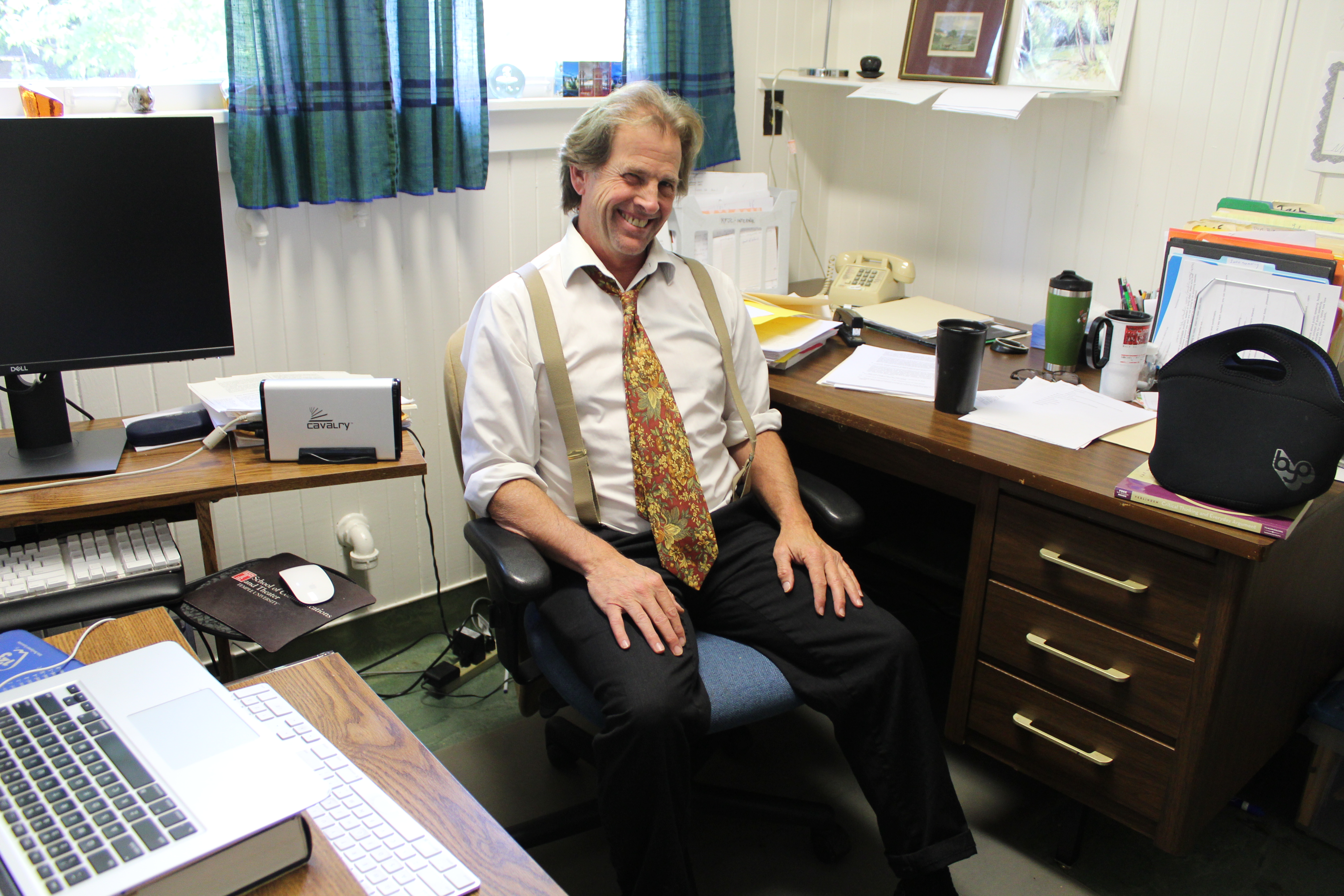
Clothes: Tie and suspenders found while thrift shopping, pants are from Costco, shoes are from Abraxas Shoes and Leather in Eureka and his shirt was a gift from his son.
If MacKinney wasn’t teaching he would be a professional storyteller.
Secondhand stores and DIY costumes make great options for spooky season
Any secondhand store can acknowledge that people don’t wear costumes for just one night, they recycle and reuse the pieces for other occasions and sometimes even the next year’s Halloween.
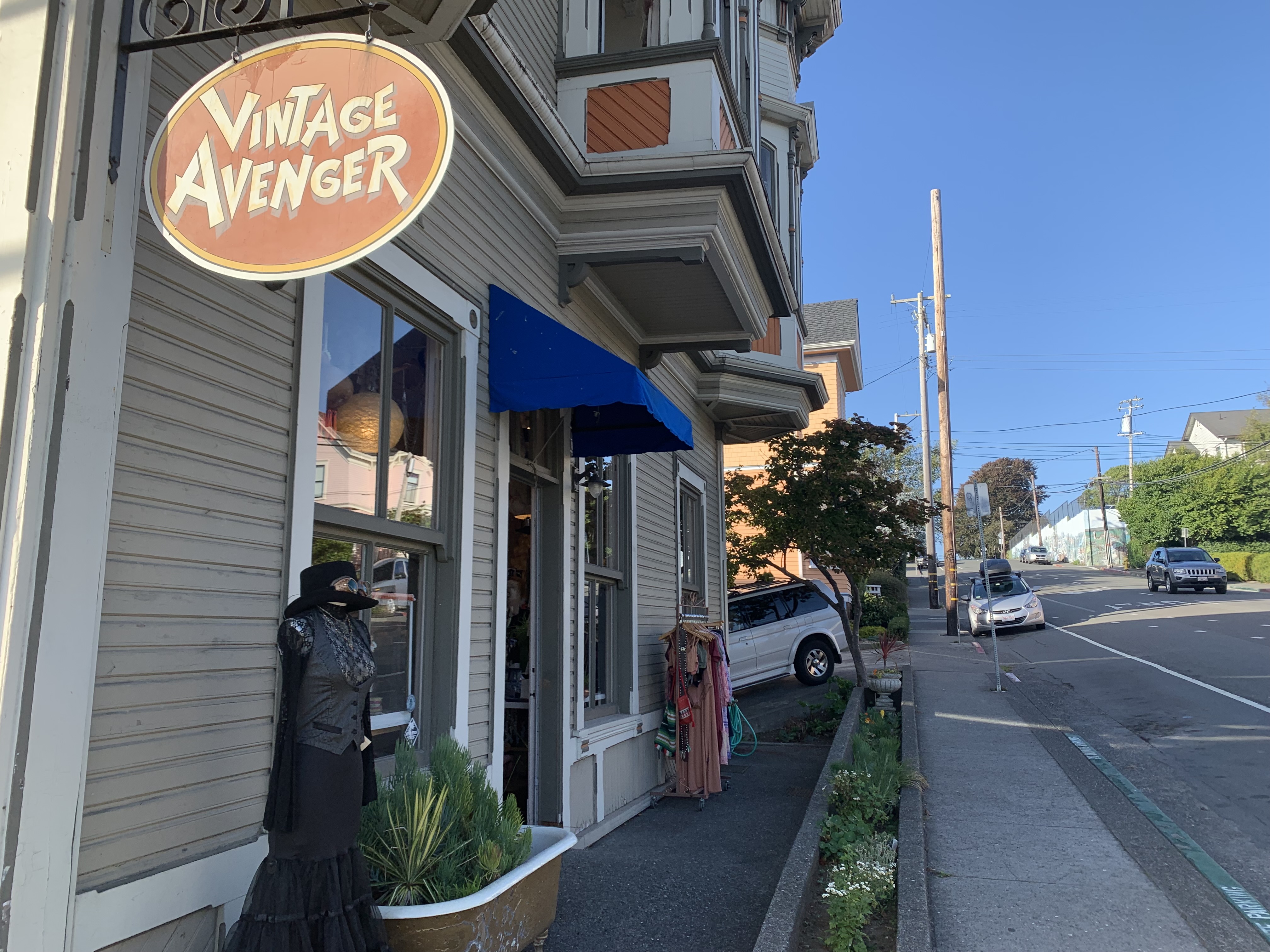
At the intersection of 11th and H Streets in downtown Arcata sits Vintage Avenger. This vintage boutique sells primarily secondhand items. Walking into the shop, you may be surprised to see some of the treasures hidden within.
Behind the counter sits the owner, Nancy Tobin, who says that people in Humboldt like their costumes to be more unique than the plastic packages you may get from a superstore.
“People don’t really like ready made costumes anymore,” Tobin said. “They kinda like pieces they can wear, like ethically sourced items you can wear for other occasions, not just specifically for a costume.”
Vintage Avenger can be your first stop in finding a costume for Halloween. They have some items you can wear as everyday fashion, too. | Photo by Rachel Marty
Ready made costumes, the ones packaged in plastic and sold in stores, are generally designed to match and work together as a unit. This makes the individual pieces of the outfits harder to reuse and style with other items.
“We try to be as much into recycling as we can,” Tobin said. “Anything gold, silver, sparkly sells fast.”
Vintage Avenger’s racks are stuffed with up-cycled pieces, fur coats and exotic dresses, and the racks tie in to the extravagant patterns that decorate the walls of the store.
Tobin said her concept of up-cycling costumes causes her to arrange the store accordingly and make decorative pieces visible to the daily shopper.
Humboldt State student Jennyfer Bonfil said her costume this year will be mixed of up-cycled materials and new purchases.
“I am going to be a DIY version of Mother Nature,” Bonfil said. “I shopped at Forever 21 online and SCRAP [Humboldt] for my costume.”
Another college student, Rose Meyers says she made an effort to not go shopping this year.
“I’m going to be one of the PowerPuff girls with my roommates,” Meyers said. “And we’re making [the costumes] ourselves.”
Shopping locally is great way to support the community and local economy, but online shopping is another option to look for costumes if you intend to buy. Ordering online can be perfect for simple basics such as blank t-shirts and tank tops that you may need to build your DIY costume, but you can often find entire pieces if you look for them.
When buying online, be cautious about sizing and cheaply made items. Also make sure to consider the shipping cost and time factors. In general, companies can send items within five to seven days, but if you need something expedited, expect shipping cost to increase for one to two day shipping.
While cost can be a priority, especially for college students, make sure you’re purchasing from reliable places. Sometimes you can get lucky and find something that closely resembles a more expensive version of pieces found in-stores, but understand that there are drawbacks to cheap costs and cheap clothing.
With Halloween just over a week away, now is the time to get those costumes together. So shop around, check out a few local shops, make something out of clothes you already own to lessen the stress on the environment and your wallet, or buy online for a (possibly) quick fix. Whichever you choose, remember to respect people and cultures, be safe and have fun.
Did streetwear fashion brand Bstroy take tragedy too far?
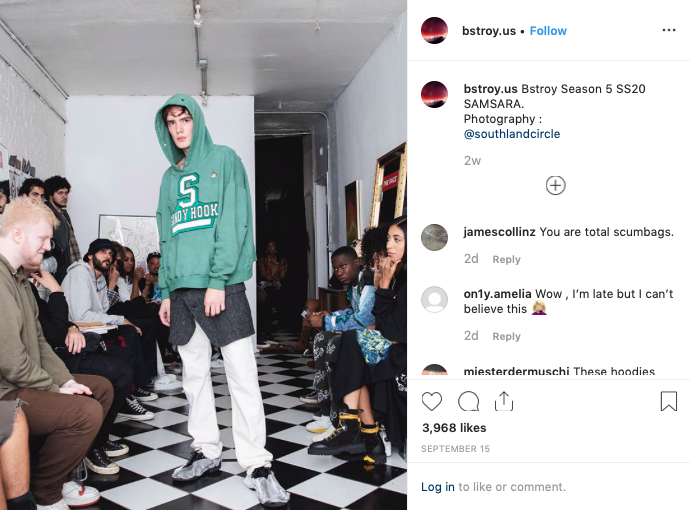
Earlier this month at New York’s Fashion Week, streetwear brand Bstroy sparked controversy after unveiling a line of clothing inspired by school shootings.
Founders of Bstroy and Atlanta based designers Brick Owens and Dieter Grams presented hoodies riddled with bullet holes and emblazoned with names of schools where mass shooting took place: Sandy Hook, Columbine, Virginia Tech and Marjory Stoneman Douglas.
Bstroy’s Instagram page shares the brands description, a “Neo-Native Menswear Design House.” Owens and Grams have come under scrutiny and have defended their creations as a form of art and expression.
After some of the backlash, Owens took to Instagram in an attempt to explain.
“Sometimes life can be painfully ironic,” Owens wrote. “Like the irony of dying violently in a place you consider to be a safe, controlled environment, like school. We are reminded all the time of life’s fragility, shortness, and unpredictability yet we are also reminded of its infinite potential.”
Grams and Owens sent a statement to TIME, the New York Times, the Cut and the Washington Post claiming their brand simply used its platform to shed light on important issues.
“We wanted to make a comment on gun violence and the type of gun violence that needs preventative attention and what its origins are,” the statement read. “While also empowering the survivors of tragedy through storytelling in the clothes. Arts job is to wring emotion out, what we do with it after is subjective and on us.”
Fred Guttenburg’s Twitter response.
However, not everyone views the act in an artistic light. Family members of victims took to social media to share their views. Fred Guttenburg, whose daughter Jamie Guttenburg was killed by the gunman at the Marjory Stoneman Douglas shooting, went to Twitter to express his disgust.
“Under what scenario could somebody think this was a good idea?” Guttenburg wrote. “This has me so upset. If any of my followers [know] anybody involved with this clothing line, please ask them to stop it immediately.”
Shawn Sherlock, whose niece Gina Rose Montalto was also a victim at the Stoneman Douglas shooting, posted a tweet in response as well.
“My 14-year-old fashionista niece was murdered in Parkland,” Sherlock wrote. “She was a professional illustrator and aspired to be clothing designer like you. You should be ashamed of taking advantage of her death to make [money].”
Some HSU students noted that if Bstroy were to donate some of their proceeds, they could be more likely to accept the creators’ stance.
Screengrab of Sherlock’s tweet in response to Bstroy’s hoodies.
Journalism major Israel Landes said he found Owens’ explanation insincere, seeing it more as Owens defending his artistic choice and saying he thought there were ways to make it clear they were making a statement.
“If at the event, fashion show, maybe just a quick announcement, ‘Hey we’re doing this to represent whatever group, whatever victims, whoever’s being affected by these shootings,’” Landes said. “He could if he wanted to go the extra mile and say ‘Hey you know we are donating X number of the proceeds to families of the victims.’”
Mari Agaton, an art history major, agreed with the charity aspect lightening the grim connotation of the hoodies.
“Coming as an artistic statement, if the proceeds were donated to the families I could buy into it better,” Agaton said.
Owens and Grams met on MySpace while they were both living in Atlanta, and while they initially planned to have the sweaters be only for NYFW, they have stated they’re now considering putting them up for sale.
HSU students pick rad fits to start the fall semester
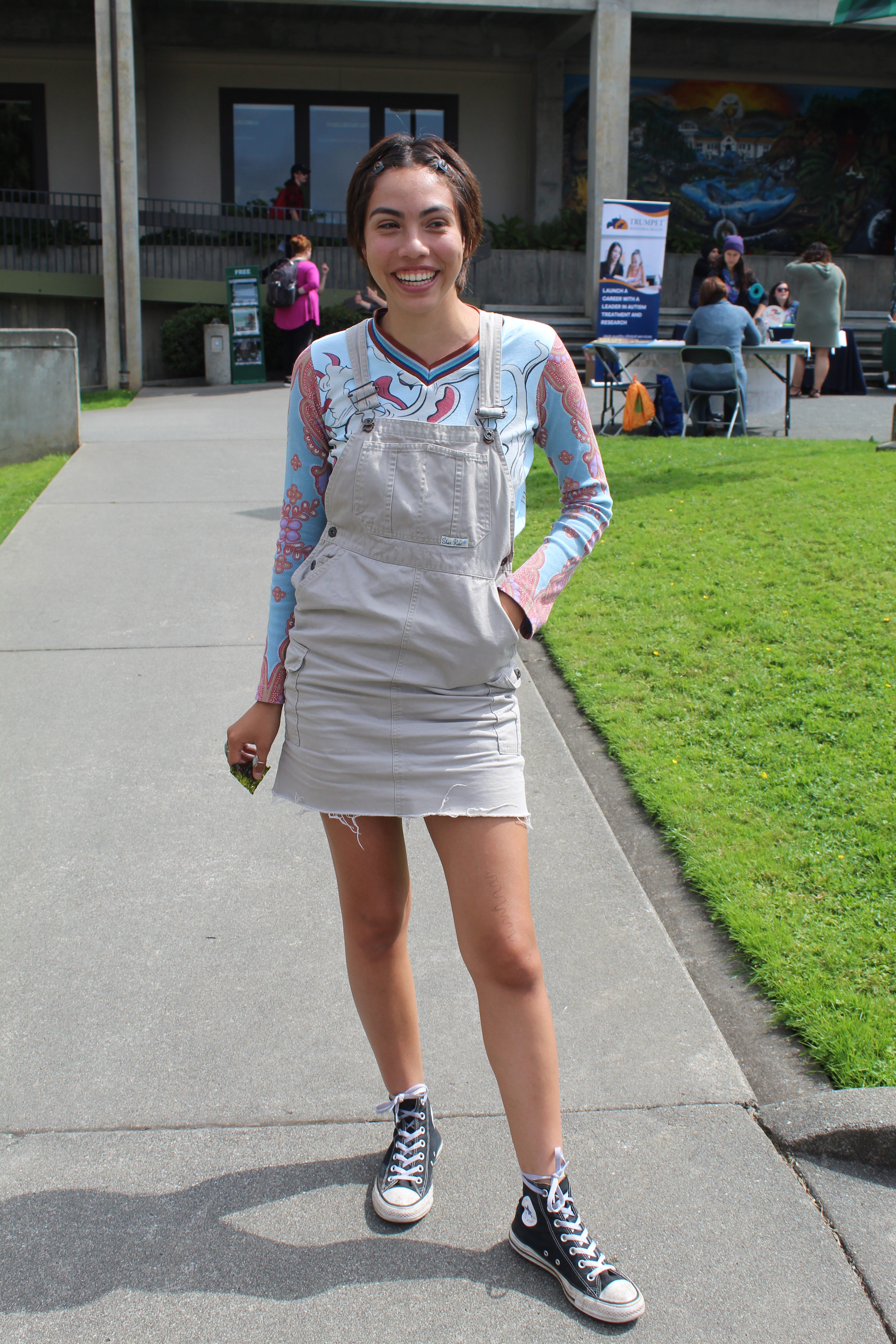
Students wear interesting outfits to class everyday. Their outfits are often noticed, but rarely talked about. For those that are into fashion, we often try different styles or search for new clothes that represent our personality. The Lumberjack acknowledged a variety of students around campus wearing fashionable outfits during the first two weeks of school. HSU doesn’t disappoint when it comes to making rad fashion statements.
Jaime Cocking rocking an edgy, yet groovy look. Most of her clothing is thrifted. Her top is from Miranda’s Rescue and she cropped it herself. Her pants are from a friend’s dad who works at Cents, the shoes are from the Van’s store and she tops off the outfit with some sunglasses from Forever 21. Cocking says she tries to style a lot of her clothes like this because it makes her feel good and confident. She thinks this outfit is ‘very her’ to match her personality.
Sophomore Ethan Villalta struts his snazzy fit out in the quad. He got his jacket second-hand from his dad and the hat is a hand-me-down from his grandpa. He snagged the pants from the Dickie’s store and he bought the shoes at Vans. He feels this look is pretty casual and it was his first appearance in this outfit so he was pretty excited to show it off.
Brianna Myrick, a first year student at HSU, catches everyone’s eyes with her summery vibes. Myrick got her top from Brandy Melville, her skirt from Urban Outfitters, her shoes from Journey’s and she hand made her jewelry. She feels like this is an easy going outfit but she hates wearing tight clothing so she wouldn’t consider this her favorite outfit.
HSU senior Joseph Shanahan sits back, chill as ever, in his fit. His sweater is a hand-me-down from his uncle. He found his undershirt in a laundry room and cut it himself to make it more his style. Shanahan’s jeans were thrifted and he bought his sandals from REI Garage. He likes to dress comfortable and is always ready for any sudden weather changes.
Freshman Gabby Garza struts her comfy-yet-cute look to kick off her first year in college. Her shirt is from Brandy Melville, pants are from Avatar Imports, shoes are Fila Disruptor II’s and her necklace is from Forever 21. She wanted to feel comfy at school but still have style, and according to Garza, the looser the clothes, the comfier you’ll feel!
Robert Gonzalez, a first year student at HSU, kicks off his first of many college years with rad outfit. Gonzalez’s jacket is from Forever 21. Turtleneck and backpack are from Zara, jeans were thrifted and his Doc Martins are from Urban Outfitters. He feels confident in this outfit knowing other people like what he is wearing.
Sandra Zepeda, a junior at HSU, shows off her groovy outfit on campus. Her top is second-hand from a friend, the jacket was thrifted, she found the skirt at a Goodwill in Southern California and she bought the shoes online from T.U.K, an online retailer specializing in punk-rock fashion shoes. She feels confident in this outfit and according to Zepeda, this is the ‘Sandra Vibe’.
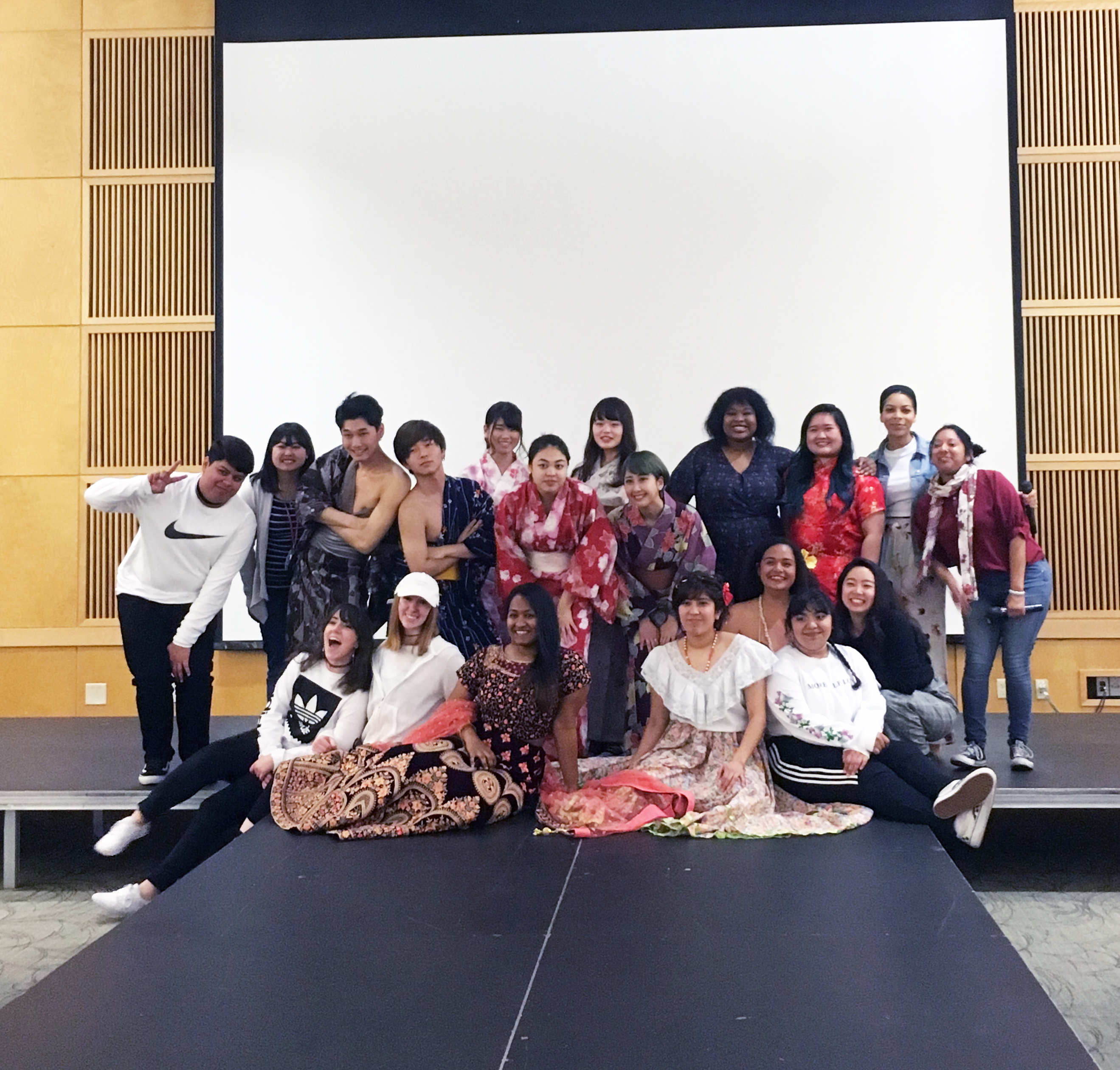
Participants were invited to come dressed to represent their own cultural background or other cultures that interested them. Seven countries and cultures were represented with attire from China, India, Japan, Mexico, West Africa and Hawaii, as well as culturally significant and traditional dances from Mexico, Hawaii and Korea.
Guests were greeted by Global Connections Club member and secretary Amanda Madden for the International Fashion Show at the Kate Buchanan Room on April 4. Her introductory speech highlighted the importance of inclusion and disregarding preconceived notions.
“It is important that we sit here and keep in mind that this is a safe space,” Madden said. “We need to ignore cultural assumptions and preconceived notions regarding culture and tradition.”
Representing her culture in dance and fashion was Humboldt State sophomore and Global Connections Club member Mikayla Kia, 20, dancing Hula ‘Aauna from Hawaii.
“We just really wanted to put on another big event from the Global Connections Club for all the students involved, just before everyone leaves to go back home,” Kia said. “A lot of students are here with the IELI program from Japan, but it’s really sad because we just found out the program is getting cut after 30 years, and so this is the last group of students we get to host.”
The IELI, or Intensive English Language Institute, was a foreign exchange program aimed to assist exchange students from 11 countries in acclimating to American culture and education, as well as becoming proficient in the English language. After HSU’s financial crisis was brought to light, the administration decided that defunding this program would help allocate funds to other exchange and international programs.
“Even though it is really sad that this is the last group of IELI students, I feel like we are going out with a bang and they are all representing Japan today on the runway,” Kia said.
Models on the runway strutted their stuff to the beat of legendary drag queen RuPaul’s hit single “Supermodel,” before stopping to talk about the cultural and familial significance behind their dress and presenting a brief powerpoint about the history.
In addition to the fashion show, some models also took the opportunity to perform traditional or traditionally-inspired dances representative of their cultures.
Anastina Steiber, Danny Flores, Caroline Mora and Dom Richards, members of the Global Connections Club, performed K-Pop-themed choreography to the song “As if It’s Your Last” by Korean girl group BLACKPINK. The group spent several weeks cultivating and rehearsing the choreography, which they debuted at HSU’s Lunar New Year celebration. They were inspired to do so by their love for dance and Korean culture.
“We actually first performed this at this year’s Lunar New Year celebration on Feb. 16,” Steiber said, “and there weren’t too many people there so it wasn’t that intimidating, but today there were more people and the runway was pretty unnerving to dance on.”
“I’m so sweaty, but that was awesome!” Richards said. “We all did so great, no obvious mistakes.”
Mexico was also represented in dance by Daniel Gomez, 22, who performed an incredible rendition of the Jarabe in his fifth time at the International Fashion show.
“I’ve been doing this since I’ve gotten here in 2013,” Gomez said. “I’m a dance minor here at Humboldt, and it’s pretty cool that Folklorico is taught here, but the program is definitely underfunded even though a lot of people are passionate about it.”
This website uses cookies to improve your experience. We'll assume you're ok with this, but you can opt-out if you wish. Cookie settingsACCEPT
Privacy & Cookies Policy
Privacy Overview
This website uses cookies to improve your experience while you navigate through the website. Out of these cookies, the cookies that are categorized as necessary are stored on your browser as they are essential for the working of basic functionalities of the website. We also use third-party cookies that help us analyze and understand how you use this website. These cookies will be stored in your browser only with your consent. You also have the option to opt-out of these cookies. But opting out of some of these cookies may have an effect on your browsing experience.
Necessary cookies are absolutely essential for the website to function properly. This category only includes cookies that ensures basic functionalities and security features of the website. These cookies do not store any personal information.
Any cookies that may not be particularly necessary for the website to function and is used specifically to collect user personal data via analytics, ads, other embedded contents are termed as non-necessary cookies. It is mandatory to procure user consent prior to running these cookies on your website.