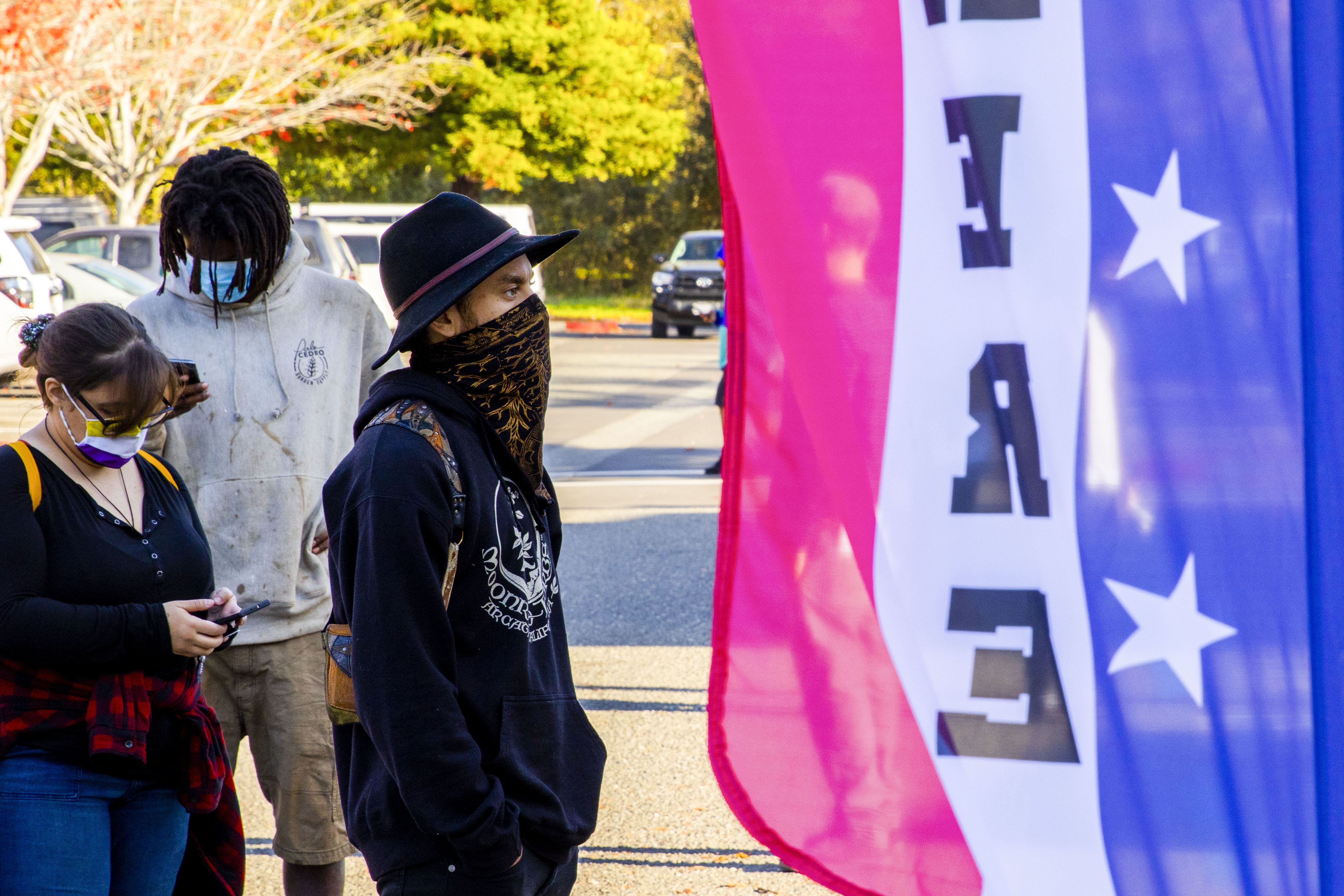
With campus’s shift to almost pure online learning since the spring semester of 2020, new and concerning problems have arisen for the transgender population of HSU.
“Don’t feel gaslighted into thinking this is the best you get,” AM Hueber, member and HSU undergraduate, said for transgender students at HSU.
Canvas and Zoom class spaces, compared to in-person classes, often have a more painstaking process of correction towards the offender. These struggles join the decades-long “whisper culture” on campus regarding where safe spaces and faculty members for transgender students reside.
Inspired by HSU student and AS Board Member Roman Sotomayor, in a presentation he held the fall semester of last year, the task force began as a small group of impassioned students and professors alike driven to change the social climate and resource accessibility for their trans peers. Now under the formal name of the Transgender, Nonbinary, and Gender Non-Conforming Task Force, members have begun the steps in helping facilitate and provide for the goals of this already over 30 members strong organization.
Hueber hopes to see the many plans coming out of the group come into fruition along with the future of a strong physical space presence after the effects of the COVID-19 pandemic are over. They expressed that the university has a long road ahead if it hopes to regain its 2012 title of being “one of the most LGBT+ inclusive universities in California.”
Jenn Capps, Provost in Academic Affairs, expressed how the group has already begun to host faculty training for many of the departments at HSU. Many members of faculty were willing and wanting to learn how to provide properly for their transgender student but often lacked the knowledge and know-how to do so. Other resources the group is currently working to provide include the possibility of legal name-change workshops, trans support hotlines, advocacy reach teams, and a database of trans literature accessible to all students.
“At HSU we aspire to be an open and welcoming space for our students. Specifically for transgender, nonbinary, and gender non-conforming students. You are important and this is important and near and dear to my heart,” Capps said with a nod of agreement from fellow member Elias Pence.
“You are not alone,” Pence said. “We are everywhere. We are students, we’re staff, and we are faculty.”
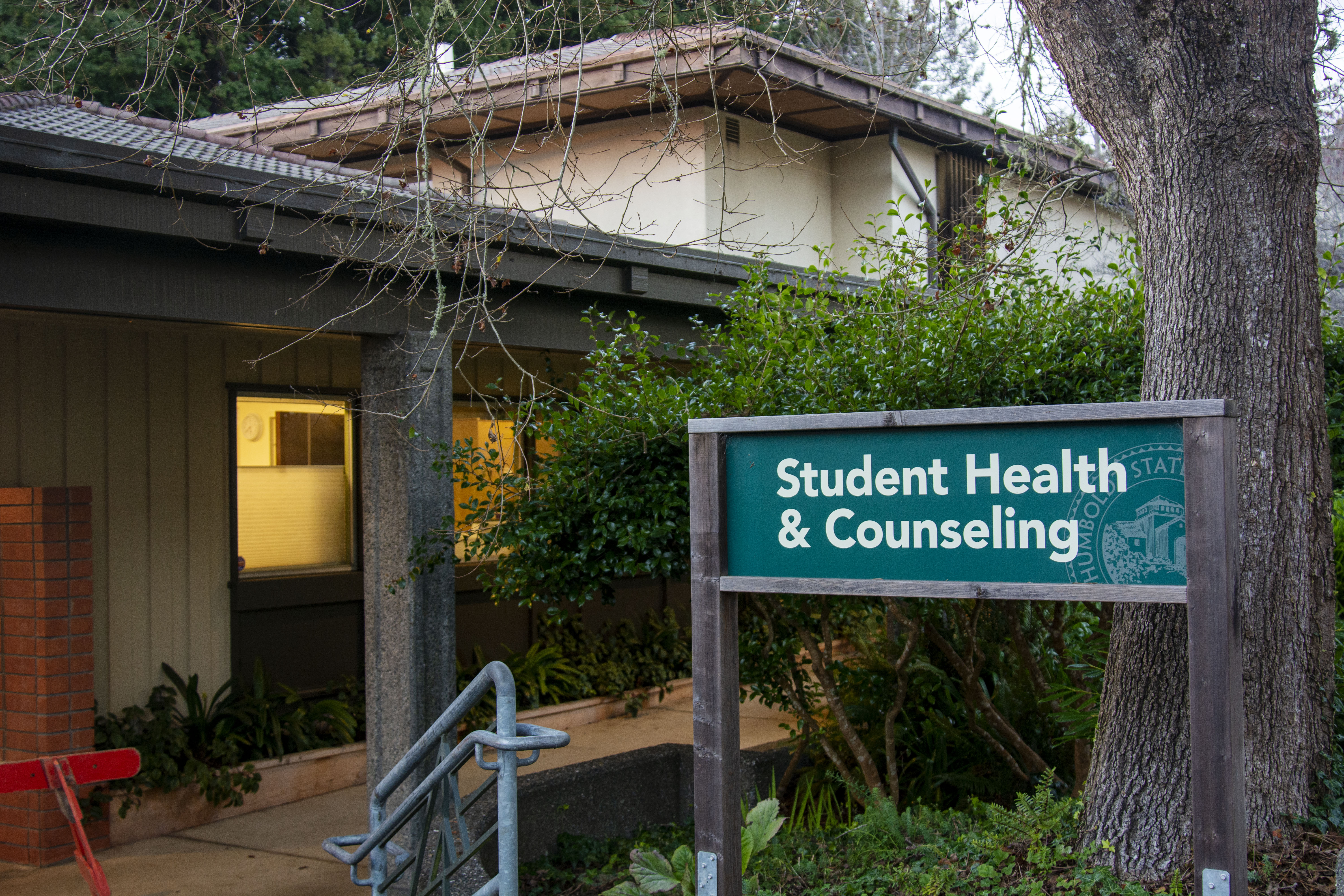
Move-in day is Feb 19, and the Student Health Center is preparing to test the many students returning to campus after winter break. Due to the sharp rise of COVID-19 cases in California at the end of 2020, the school pushed back the date for students to return to their dorms. Now, hundreds of students from all over are returning to HSU and the Student Health Center is getting ready to test all of them, particularly if the planned return to limited face-to-face classes begins in the fall semester.
According to HSU spokesperson Grant Scott-Goforth, the school has been testing constantly to keep an eye on campus COVID-19 cases.
“They have been administering a few hundred tests per week, but that’s expected to go up as students move back and face-to-face classes commence,” Scott-Goforth said. “The Health Center has conducted a total of 5,013 tests since they began testing.”
All this comes not long after a new strain of the virus, which is more contagious, was first reported in Humboldt County. While Humboldt had been lucky enough to have relatively low rates of positive cases, those numbers have steadily increased and pushed the county into the highest restrictive COVID tier. This comes at a time when many still do not qualify for vaccines and those who do have difficulty getting them.
HSU is anticipating about 350 students which may increase the number of positive significantly. According to Scott-Goforth the positivity rate on campus is relatively low.
“The positivity rate is 1.3% among students, and has increased slightly since testing began,” Scott-Goforth said. “For comparison, the positivity rate for Humboldt County is 4.03% and statewide it’s 6.9%.”
Continued lockdown means the negative effects on students’ mental health are likely to continue as well. According to Student Health Operations Coordinator Elizabeth McCallion. The counseling office is maintaining several programs made to help students deal with stress and to socialize with other students on campus.
“We have two support groups that students moving back on campus would particularly benefit from,” McCallion said. “The first is Breaking Isolation, which is focused on finding support, connection, and understanding in this time of social distancing. The second is the living on-campus support group, which is a great group for building community with others living on campus.”
The links to both support groups can be found on the Counseling web page.
Despite the risks and challenges of living on campus during the pandemic, many students remain hopeful that the school will provide adequate safety precautions to keep them from getting sick or helping them if they do with quarantine rooms and medical care. HSU student America Hernandez thinks the school is doing a decent job at keeping students safe.
“I do think they are doing a good job,” Hernandez said. “Since they require COVID tests to move in and encourage self-evaluation of symptoms.”
Students look toward an uncertain future while factoring in the past four years.
Students at Humboldt State University took the steps to cast their ballots in the 2020 presidential election.
For some, like Alejandra Sanchez, it was the first election she could vote in. Sanchez, a criminology major, was not optimistic about what a second term for President Trump would mean.
“Being a woman and being brown, four more years…four more years would not be the best for me,” Sanchez said.
Sanchez felt especially disappointed in the Democratic party candidates. She believed the Democratic party could have done better.
“In my eyes, we were settling for Biden,” Sanchez said. “It’s just like horrible and slightly less horrible, either way you vote it’s not that great. I’m sure there will be little differences that do help.”
The 2020 election painted Biden as a candidate voters settled for, or defensively voted for in strong dissent of a reelection.
Maia Nguyen, a wildlife major, believed Biden is not the strongest or most ideal Democratic party candidate. In comparison to Trump, Biden offers more promising initiatives like environmental advocacy.
“We definitely settled for him as democrats, but I would feel better with him as a president,” said Nguyen. “Someone who takes clean energy and the environment more seriously than Trump does.”
While Nguyen was not old enough to vote in 2016, she made sure to cast her vote early for the 2020 election. Nguyen emphasized how the past presidential term has been difficult to witness.
“As a wildlife major, it meant a lot of disappointment overall,” Nguyen said. “You can see terrible things happening and people not listening to scientists. Just a disappointment overall, I would say.”
On the subject of the 2020 election, Nguyen looked at how future presidents would affect her fields of study. She mentioned the discrediting effects a less science focused presidency could bring.
“Honestly, I’ve been thinking about that a lot, and I would say that it would be harder in my field,” said Nguyen. “Our funding comes from government funding so if we had pushback, my work would be affected, and a lot of pushback for us because people wouldn’t want to work with scientists.”
Tayler Reedy, a child development major, voted in 2016 but felt a personal need to vote in the 2020 election and defend communities Trump harms.
“Well for me personally, with everything that Trump has done with immigration and everything he has said, as someone who is a bisexual woman and person of color it’s a little scary to see how he treated everyone in those categories,” Reedy said.
Reedy echoed the overarching assumption that a vote for Biden was simply a defensive vote against a Trump reelection.
“I feel like Biden is more accepting of people like that. He’s not my favorite,” Reedy said. “I was more about Elizabeth Warren at the time, but I feel like he’ll do a better job than Trump.”
California polls close at 8 p.m., with the state historically leaning Democratic. While initial election results may be called on Nov. 3, the New York Times states that approximately nine of the 50 states will have final results in by noon the day after the election.
Spring semester that consisted of conference calls with teachers while relaxing at home crazed returning students overwhelmed by large lesson plans and a full workload.
Nicole Matonak, a zoology major at Humboldt State University, manages a part-time job at the Marine Lab and five classes worth of homework.
“There are times where I wish I wasn’t working so I could focus on school stuff,” Matonak said. “It feels like there is not enough hours in the day for everything I need to do.”
Matonak’s methods of getting homework done on time revolve around scheduling out the week in advance. She’s made a habit of setting time aside to relax. Matonak is taking a yoga class this semester and has been trying to do other exercises to reduce stress.
“Lately when I feel like I am zoning out,” Matonak said. “I try to stretch and practice headstands and I feel like it gets my blood flowing.”
Matonak lives in Humboldt County and relies on surrounding outside nature to exercise or study without distractions.
“Charging my iPad, my notebook and my computer and taking it to the beach and studying in my car,” Matonak said. “I think that’s been the best way for me to work and not have distractions.”
Mikayla Nicholas is an art education major at HSU and is taking upper-level art courses.
“I knew that some of the art classes would be high-end, project-wise,” Nicholas said. “But I didn’t really expect the level to still be this high online.”
Being overwhelmed by the work in her classes and miscommunication with professors, Nicholas finds relaxation by baking bread.
“I enjoy baking and cooking as something to do that’s easy and stress-free,” Nicholas said.
For students overwhelmed by stress, Liza Auerbach Ph.D. has your back. Auerbach is a clinical psychologist with the HSU Counseling and Psychological Services program.
Auerbach suggests students learn their rhythms of productivity and dedicate that time to accomplishing tasks.
“I am a big believer in psychological inertia and momentum,” Auerbach said. “The longer that we are not doing something the harder it is to get started.”
Auerbach also recommends students falling behind in classes contact professors and be forward with concerns, instead of struggling alone or giving up altogether.
“If the stress of what’s going on in the world and in our own minds is interfering with our ability to perform,” Auerbach said. “Reach out and let them know.”
Students struggling can also call CAPS during business hours to schedule a one on one therapy session, included in the cost of your student fees.
CAPS is open by phone from 8:30 a.m – noon and 1:00 p.m-4:30 p.m.
Humboldt State University students unsure how to feel about visiting football team
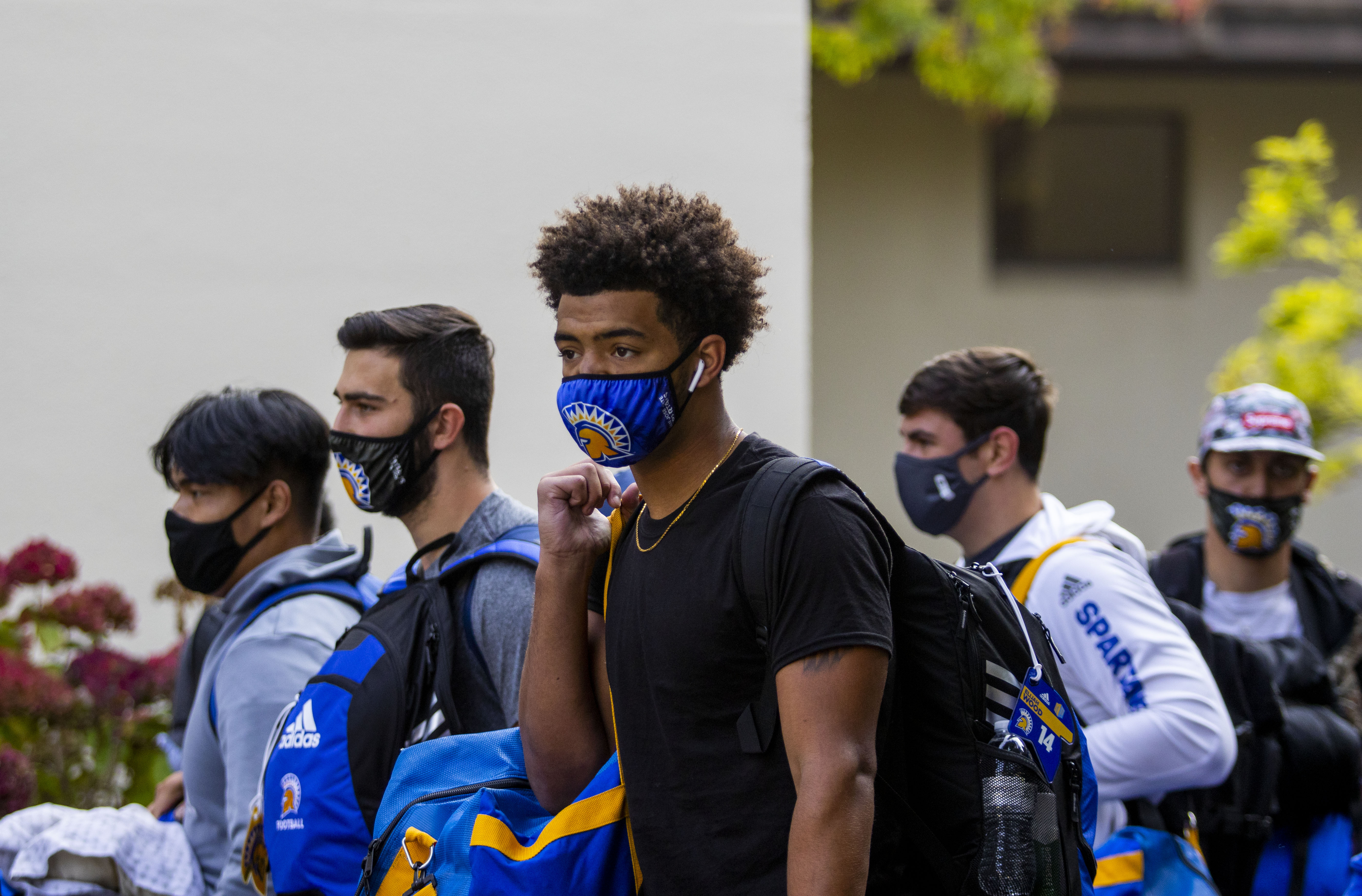
In a campus wide email sent out on Oct. 1, Humboldt State University informed the student body that the San Jose State University’s football team, the Spartans, would be staying on campus to train for their upcoming 2020 season.
The Spartans are currently unable to practice at their own stadium due to a combination of stadium construction and COVID-19 regulations within Santa Clara County that prevent the practice of contact sports for reduced infection.
The email stated that “approximately 141 players, coaches, and staff will stay in HSU residence halls that have previously been unused this semester. The halls are separate from anywhere that HSU students are currently living on campus,” with students on campus stating that they were staying at the Redwood Hall dorms.
SJSU has pledged to cover the costs of the used athletic facilities, housing and testing for the team. HSU emphasized the separation of the team from students, stating that contact with students will be minimal.
HSU students are still coming to terms with the news. Hours after the initial email, students are reacting with mixed opinions and fears of future California State University’s coming to Humboldt.
Kezia Letzin, a zoology major, and Nastya Yudinova, an exercise science grad student, welcomed the news. Hoping the SJSU football team can bring a sense of community during these tough times.
“Honestly, I don’t care,” Yudinova said. “If we’re not using the field, ‘why not help them?’ It’s nice to know that we are still a community.”
Letzin also agreed, saying the field went largely unused due to the current pandemic and it made sense to allow another team to utilize it.
Freddie Rosen, another zoology major, and Nicole Vazquez, a studio art major, and Melania Guillen, a film major, were less than pleased with the news. Rosen believes it was a terrible idea, already finding fault in HSU’s claim the football team would be held separately and away from students.
“It isn’t fair that they are using facilities that we don’t even have access to,” Rosen said. “They said that they were going to be away from students, when they are in Redwood Hall, which is where everybody is.”
For Velazquez, the main issue surrounded the lack of transparency from HSU administration, something she thought students should have had a say in.
“It was sprung upon us so suddenly,” Velasquez said. “I know that it’s not our decision as students, but we paid money to go here and this wasn’t in the plan.”
Guillen felt the administration is unfairly treating HSU students by prioritizing another school and their athletics before their students.
“It’s kinda unfair,” said Guillen. “We are all up here doing our best, and it’s unfair to see another school come onto our campus and be prioritized in a way that we could.”
HSU has stated that the initial plan is to host the team for one week, but without concrete certainty on a scheduled timeline, the team’s stay could be longer.
San Jose State’s football team steals on-campus resources from student body
***Editor’s note: SJSU football program was tested in congruence with Mountain West conference guidelines***
Humboldt State University’s administration continues to ignore the health and well-being of paying students and surrounding community members by selfishly prioritizing university funding and money opportunities.
On Oct. 2, San Jose State University’s football team arrived at HSU to utilize the field and training facilities. The team of 141 players, coaches and staff members are expected to social bubble, strictly quarantine with one another, on campus in Redwood Hall. Redwood Hall stands in the middle of campus, between the Student Health Center and the Depot, making it an unavoidable place for students on campus to pass by.
In addition, HSU students were notified via school wide email of the university deal less than 24 hours prior to SJSU’s arrival.
First and foremost, this deal did not involve the approval from either county’s public health officers. Since March, HSU has maintained a relatively low COVID-19 case count with only 11 confirmed cases. SJSU falls within Santa Clara County, and as of Oct. 6, has 50 confirmed cases.
The team is expected to self-patrol and monitor their own health. They will be tested once a week throughout their stay at HSU, which directly violated SJSU’s athletic conference guidelines provided by Mountain West.
The Mountain West Conference demands athletes be tested three times a week. If a test comes back positive, further testing is done to confirm the positivity. SJSU brought their own testing equipment, however, the heightened risk of contracting the virus extends beyond the student body and permeates into the town of Arcata.
There has been no confirmation of how long SJSU’s stay will be. Hearsay declares a week, but pictures of arriving Spartan football players holding flatscreen TV’s and luggages of equipment says otherwise.
Student facilities will cater to SJSU during their stay, closing off access to the Redwood Bowl from HSU athletes and students while also extending the Student Recreation Center hours beyond usual scheduling. A ‘no access’ sign currently hangs outside the gate entrance of the Redwood Bowl, HSU claims the sign is to contain SJSU’s football team and limit cross infection.
HSU students have been repeatedly denied access to on-campus resources, classes, labs, studios and housing since the beginning of the pandemic. However, SJSU was able to rent out the Redwood bowl, SRC and on-campus housing facilities and resources immediately. HSU is renting out campus resources we either don’t have or refuse to offer to students.
Administration stated that SJSU will be paying for all facilities, housing and resources being used during their stay. However, current resources occupied by SJSU at this time are paid for by student fees. Students believe the funds should be redistributed back to their accounts for a fair way to compensate for the loss of access.
It’s clear that this decision to move SJSU to HSU was made last minute and without the permission or acknowledgement of HSU students. HSU administration has proven time and time again that the students’ safety isn’t a top priority. The motivation to cut out students from participating in their own university outweighs the value of students altogether.
HSU continues to treat our campus like it’s closed or empty, forgetting an entire student body population of 6400 people.
HSU student shares their experience of sexual assault from a non-student member within their club.
Title IX is a federal law protecting students from facing discrimination within any federally funded academic institution. Title IX prioritizes the significance of equal treatment of students, however, flaws in the investigation process leave some students feeling abandoned.
David Hickcox is the Title IX coordinator at HSU. When the Title IX office conducts an investigation into a sexual assault, they’re required to remain impartial through the process.
“I think it’s human nature to want to assume that every person bringing a report is telling the truth,” Hickcox said. “In some cases, it’s pretty clear cut that the person accused is responsible for that behavior, but I can’t rush to judgment. I can’t start treating that person unfairly and not giving them access to advice.”
In a Title IX investigation, an investigator will be assigned to conduct interviews with the parties involved and witnesses willing to cooperate. They will also gather any relevant documentary evidence they can, including text messages, social media posts are collected. The investigator will then present the evidence to both parties, allowing for any questions, before writing up a report with their findings.
Prior to 2019, Title IX investigations were entirely done on paper by a single investigator. A CSU-wide policy change requires that all students be given access to a live-hearing, with the opportunity to question and respond to evidence used in the investigation before a finding is made.
In the case of non-students who participate in campus activities like rec-sports and clubs, the Title IX office has almost no jurisdiction as they’re only able to investigate students or staff members.
“I can’t compel a member of the community to come on the campus and talk to me and give me an interview statement,” Hickcox said. “I can with a student, because guess what, I can put a hold on your student account and you won’t be able to progress in your degree.”
An HSU student-member came forward, wishing to remain anonymous. They shared their experience of being sexually assaulted by a non-student club member and demanded accountability and reform within club policy to exclude non-student members from joining.
“I read through a couple of cases where it was pretty clear that the students had lost faith in the process, because it was taking so long.”
David Hickcox
Hickcox hasn’t found there to be a disproportionate number of sexual-misconduct cases coming from the clubs department, and doesn’t believe non-student members should be excluded.C
“I think that might be a bit like the sledgehammer on the fly,” Hickcox said. “But I think we could definitely target that behavior.”
Through auditing cases, Hickcox discovered the office wasn’t properly following through with several victims. He took his concerns to the HSU Chief of Staff.
“I read through a couple of cases where it was pretty clear that the students had lost faith in the process, because it was taking so long,” Hickcox said.
California State University executive order 1068 allows for non-students to become non-voting members of clubs on campus, provided they constitute less than 20 percent of each club.
Molly Kresl is the office of student life coordinator and oversees the clubs department. Kresel says this is a prevalent issue that’s been happening at the CSU level for a while now, claiming non-student members pose a higher risk.
“It is because of push back from student groups who rely on their alumni and community members to support their events and outreach that we permit the 20 percent max non-student membership,” Kresl said.
It’s ultimately up to each club to allow or not allow non-students to become members. Kresl works with clubs to put together plans of action to address problematic non-student members. Students can obtain a no-contact-order against another student or non-student.
Under CSU executive order 1095, all campuses are required to have a survivors advocate – a person to whom students can confidentially report sexual-assault, without any obligation to report to the University.
Rather than hire a single advocate to work from within HSU, the University has been contracting the local North Coast Rape Crisis Team. The NCRCT provides victims with a 24-hour hotline, one-on-one counseling and general advocacy.
Paula Arrowsmith-Jones is the community outreach coordinator of the NCRCT. Her job is to hear, believe and support victims of sexualized-violence.
“Our services are available to any person of any age or gender,” Arrowsmith-Jones said. “Who has ever in their lifetime been impacted by some form of sexualized-violence.”
HSU’s Title IX office has recently been granted two new full-time positions, tripling the size of their department and expanding their opportunities to stop, remedy and prevent sexual misconduct on campus.
“No one should ever have to go through the betrayal and violation that an assault invokes,” Anonymous said. “It’s not just physical – it’s also an overt psychological trespass that forces you to question the entire relationship you thought you had with the person who assaulted you. It’s a form of injustice on the interpersonal level, a trickle-down of our society’s attitude and response toward sexual assault, and it needs to be addressed.”
Humboldt Domestic Violence Services
24-hour crisis line: (707) 443-6042
North Coast Rape Crisis Team
24-hour crisis line – (707) 445-2881
Humboldt County Mental Health
720 Wood Street, Eureka, CA 24-hour crisis line – (707) 445-7715
An inside look at how Humboldt State students’ are staying busy with pandemic hobbies.
Just because life has begun to resemble a sci-fi movie, doesn’t mean students aren’t having fun. Abiding by COVID-19 protocol, students are cooped-up indoors more than usual. While video games, Netflix and sleeping becoming more common in the household, others have chosen instead to spend their time creatively.
Rebekka N. Lopez, a music education major at Humboldt State University, was the drum major for the Marching Lumberjacks in the spring. When classes were brought online and health-guidelines were put in place, the Marching Jacks’ season was cut short and they remain on the bench this semester. Undeterred, Lopez continues to practice through quarantine.
“That’s what I did almost every day this quarantine,” Lopez.
Lopez enjoys practicing as a hobby and intends to pursue a professional career in music. Recenty, she’s been learning to play new instruments.
“I play a couple, I play the flute and the saxophone mostly and, I’m still learning other instruments like ukulele, guitar, clarinet and piano,” Lopez said. “It’s my job to know even more than that so I’ve got a long way to go,” Lopez said.
Hobbies are not only great outlets for self-expression, they can also make it easier to co-exist with the anxious attitude of the difficult times we live in. HSU psychology major Madelynne J. Avila uses some of the extra time she has during quarantine to practice singing.
“For me personally, singing has always been an outlet for you know relieving stress and just kinda getting my mind off of whatever may be going on right now,” Avila said.
Along with singing, Avila also enjoys volunteering. In the spring, before quarantine, she volunteered at her local animal shelter and at a local wildlife rehabilitation hospital. Once quarantine started, volunteer opportunities were no longer available. She was able to transfer into the education department at Lindsay Wildlife Experience and continues helping those in need.
“Volunteering has been something that I’ve really wanted to do for a while, and really kinda just go all into it,” said Avila.
Jared Schroter, a sophomore at HSU, is an Eagle Scout with the Boy Scouts of America, the highest rank earned by completing various tasks and demonstrating expert survival skills. Schroter is also a leader in the Venture Scouts program, composed of male and female scouts between the ages of 14 and 21.
“I started to make a crew when I was 18 because I aged out of Boy Scouts,” Schroter said.
As the president of crew 200, Schroter continues to plan and hold meetings over Zoom, keeping him more or less occupied most days. Schroter also enjoys outside activities like golf to fill in gaps during the day.
“I’m horrible at golfing but I’ve become somewhat decent at it now,” Schroter said.
Being stuck inside for long periods of time is not healthy, so for students willing to follow social-distancing guidelines, like anthropology student Scarlet Chapman, they can still experience the joy of nature.
“I’ve been getting out a lot, spending a lot of time in nature,” Chapman said. “Been trying to put my phone down more.”
One of Chapman’s new quarantine hobbies is drying flowers. She got inspired to spend her time more creatively when she saw friends posting their hobbies on social media.
“I saw a lot of gardening on Instagram,” said Chapman. “And I was like ‘oh that looks fun’, so I’ve been adding to my garden outside,” Chapman said.
Quarantine can be an opportunity for personal growth for those willing to work for it. Finding the silver lining and keeping yourself on track will help repel negativity and boost morale.
“Just to know that even during quarantine you’ve improved on something or you’ve like gotten better at a certain skill, I think that’s really great for personal morale and you can only get so much from watching a show,” Lopez said.
Students come forth after witnessing and experiencing racial typecasting within Humboldt State’s Theater Department.
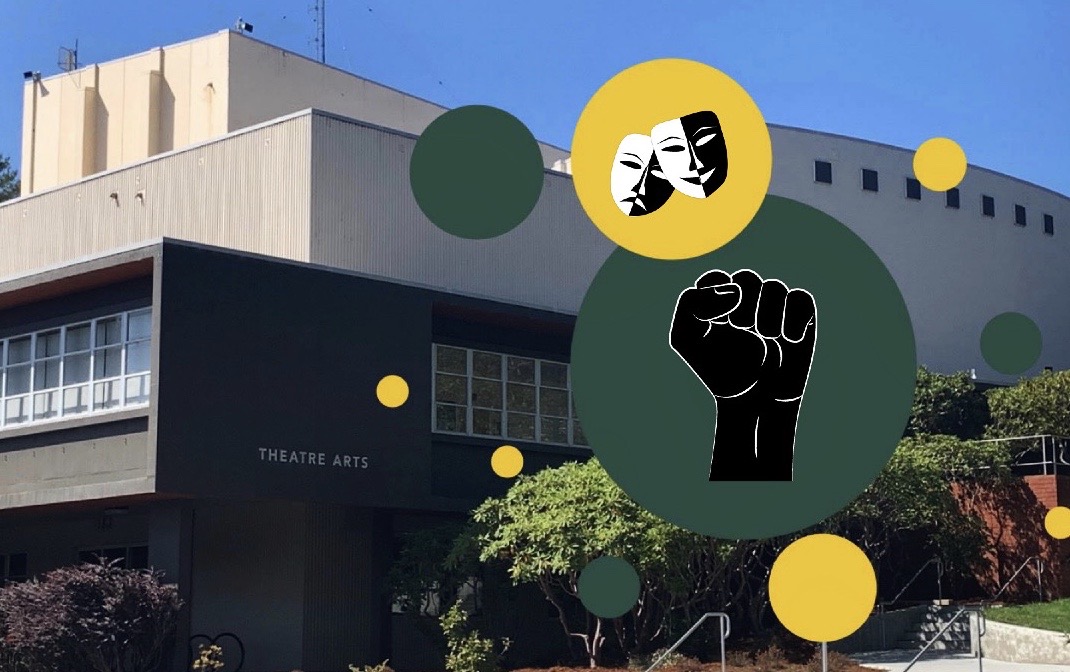
While COVID-19 leaves the world silent, Humboldt State University theater students are trying to raise their voices and create change. Reports of racial typecasting and the wrong types of inclusivity began to surface and the students decided to work together to create a better program for future students.
“We’ve definitely had issues in terms of racial casting,” said senior theatre major Jaiden Clark. Clark is President of Alpha Psi Omega, a theater based fraternity at HSU.
“The higher ups in the department and the faculty try to be inclusive in the wrong ways,” said Clark.
Part of the issue was the selection of shows. According to Clark, there is a volunteer committee where students and faculty pick which shows will be done. Although it is voluntary, Clark mentioned in a few cases of shows being catered to people who are in the committee.
“Anyone needs to be able to have a say,” said Clark. “I think it would cool to have a more democratic system.”
HSU senior AJ Hempstead, a double major in theatre and religious studies, has faced discrimination when accepting roles for shows.
“People are trying to be more inclusive, especially at HSU, I get more roles,” said Hempstead. “I was offered a role because of my acting level but also because they needed someone with a specific skin color.”
“I would really like to see shows where it doesn’t matter the race or gender of the actor playing the role,” said Clark.
Clark and Hempstead both agreed they wanted to see more shows being chosen that had characters that could be played by anyone, so the audience is sent a more equal message.
“Colorblind casting is not actually a thing, there’s no such thing as colorblind anything because people are going to see.”
Jaiden Clark
“What are they doing, what messages are being sent here and where are those messages coming from,” said Hempstead.
Hempstead wants the audience to look at what was represented onstage and think about the decisions that were made with casting, rather than produce shows that had to have a certain type of person.
“Colorblind casting is not actually a thing, there’s no such thing as colorblind anything because people are going to see,” said Clark. He noted the faculty needs to be more color-conscious instead.
Hempstead’s idea for improvement involved wanting to see a more active teacher assistants program where higher level students could help teach other students along with professors.
“Teachers aren’t the enemy in any of this that’s happening,” Hempstead said. “We want to work with them as much as possible. We empowered our students, we empowered our community and that didn’t mean taking power from them. I see that power struggle.”
Clark agrees with Hempstead, believing that open discussion can alleviate feeling uncomfortably and create progress.
“It’s a really important time for people to talk about what worked and what they liked and what made them uncomfortable and what shouldn’t be done again,” said Clark. “When change is needed in the theatre industry, you have to start in universities. If we are behind Broadway, then we have to catch up because our people are just the people who aren’t there yet.”
Associate Professor and Theatre Program Leader Troy Lescher responded to the rumored racial typecasting in an email. He asked for clarification if it were about racial representation onstage.
“These processes are imperfect and are very prone to mistakes. Theatre is also a living art that relies on human storytellers,” Lescher said in an email. “Race, gender, age, physical attributes and vocal qualities are among dozens of casting considerations that impact representation onstage.”
In response to what HSU is doing to ensure racial typecasting will not continue, Lescher said he would listen to a student if they felt racially typecast and would try to find an alternative learning opportunity for them with the director.
“Afterward, I would bring this matter to the Season Selection Committee (which is composed of faculty, staff, and students) so that we could collectively work to strengthen our process,” Lescher said in an email.
Lescher acknowledged the challenge of racial representation in casting and believes the program is guilty of not following through.
“I believe there have been instances when our program has not exercised the cultural competence necessary to best support our students and their learning,” Lescher said in an email. “Critical awareness of and cultural sensitivity to matters of representation are important to our program and we continue to learn and to strengthen.”
Q&A between Lumberjack reporter, Elsie Fero, and Leader of Theatre Troy Lescher.
Actions are being taken to bring about change in a country dominated by racism and police brutality
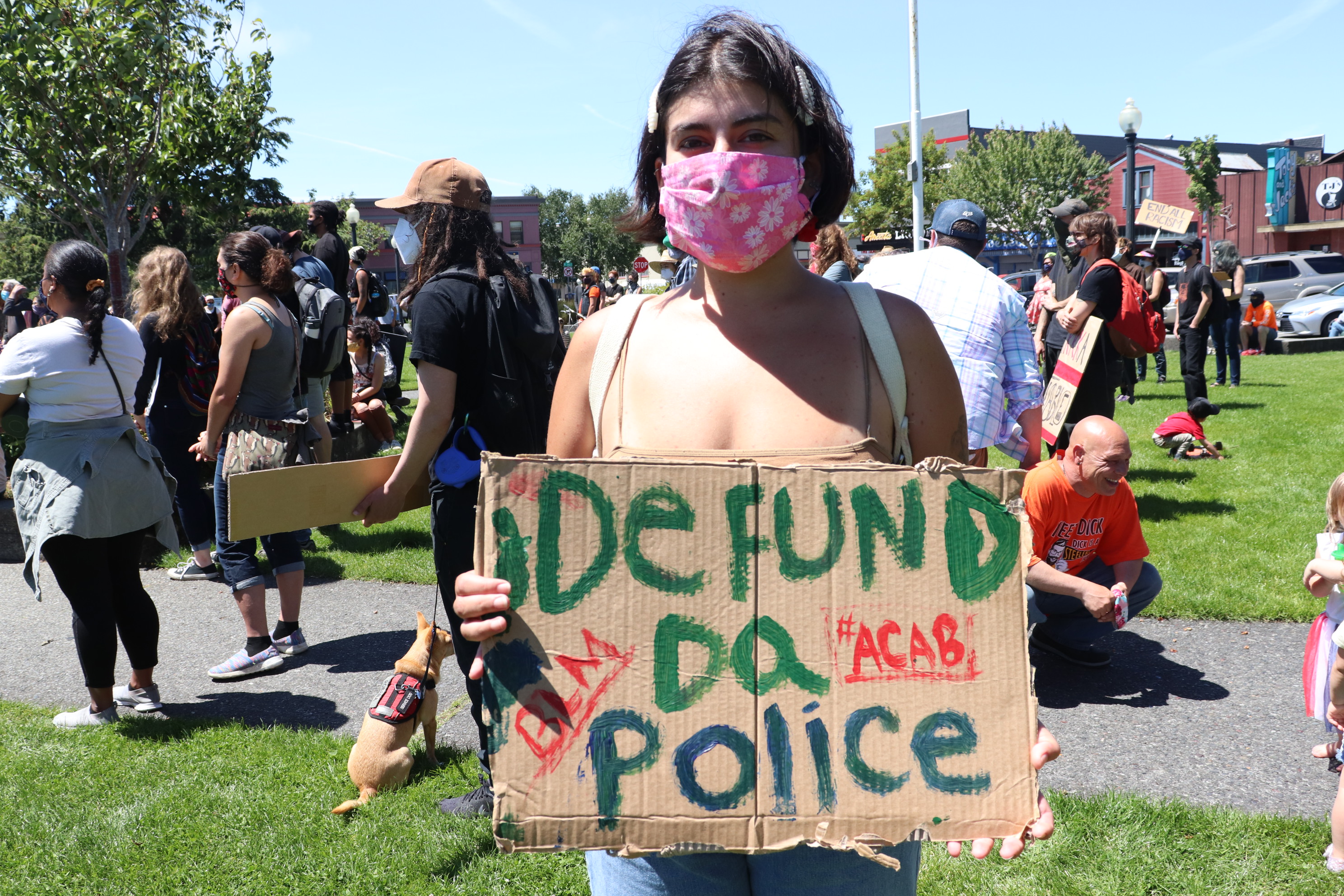
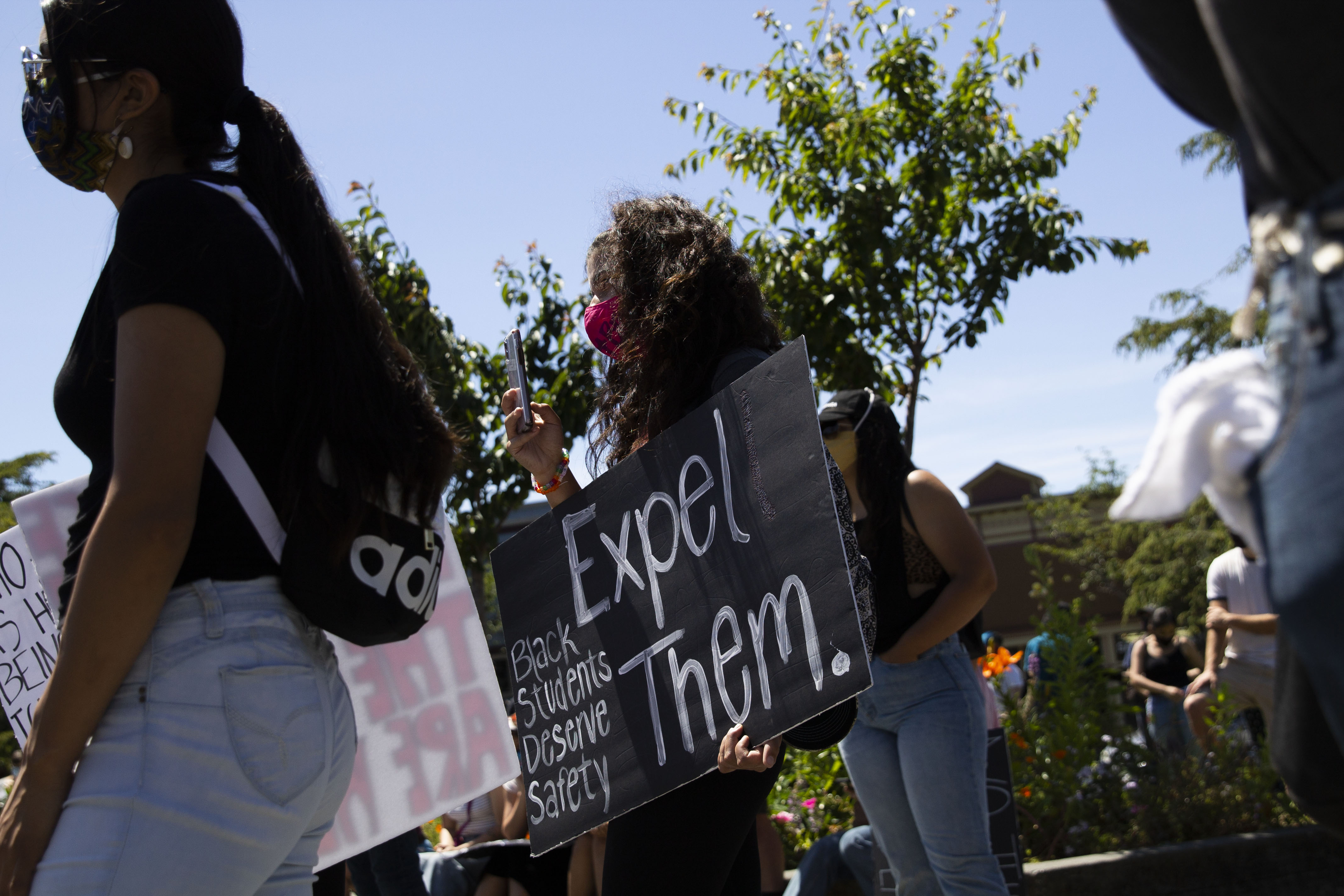
Fueled by the Josiah Lawson case and the George Floyd murder, Humboldt State University students are taking to the internet and the streets in protest of systemic racism. Students and community members alike are actively displaying their pent-up anger and fear surrounding being marginalized.
Kiara Mixon, a fourth-year psychology student, has been trying to educate herself and those around her about what’s going on. Namely, she has been sharing different resources with people who are unaware of the Black Lives Matter movement and watching documentaries about racism to get a deeper insight into it.
While she hasn’t really been going out in the streets and protesting, she has still seen both sides of the movement.
“I see people who are of color protesting and, truthfully, it means a lot that those people are standing up when it’s an issue for them as well,” Mixon said. “But I’ve also had people who aren’t really speaking up or haven’t said anything or don’t really have a personal opinion on the matter and that makes me a little bit uncomfortable because you never know where they’re standing.”
Senior psychology major Edwin Rosales has become more outspoken and animated in the wake of the revamped BLM movement. He lives with his mother’s side of the family and has gone back and forth with them about everything going on.
“After talking with them, it’s kind of difficult to talk to them about it because they’re very, you know, still in the olden ways and are very ignorant about it,” Rosales said. “So, I’ve had to be outspoken about it and be like ‘You know what? You’re not understanding the cause’ or having to explain to them what it is.”
Rosales has carried his new-found, forthright persona around racism into the land of social media as well.
“I never really posted about that stuff,” Rosales said. “I’m not helping if I don’t say anything, and so if I am posting about something, maybe someone will read it and maybe someone will help in some way.”
Julianne Blandford is a senior majoring in child development. She is feeling a lot of mixed emotions in the midst of the string of racist events that have occurred from the George Floyd murder to the leaked video of three HSU students making racist taunts toward Black people. She is attending protests and doing everything she can to move the conversation about racism along.
“It is my time to sit down and listen and also stand up for those who can’t speak,” Blandford said.
Blandford recognizes her own status but also wants to work with those who are being suppressed.
“I’m seeing it as an opportunity to continue to create change, create a more peaceful place to live, create new systems that aren’t founded upon racism, and a world where no-one has to live in fear,” Blandford said.
“We need to redistribute resources and really build communities.”
Dr. Ramona J.J. Bell
Dr. Ramona J.J. Bell, a critical race and gender studies professor, believes that there are a number of factors to look at that are feeding into a racist America.
“We’re a country where we put so much money into our military, but there’s people without health care, so we concentrate on, you know, defending the country,” Bell said. “But we have to reconfigure and reimagine what that really means to defend the country, to defend America.”
Bell emphasized the importance of unifying communities in a country where the opposite is happening at the hands of the police.
“We need to redistribute resources and really build communities,” Bell said. “When you are killing black folks in communities and the police are killing us, that’s not building our community — that’s killing our community. So we have to look at ways in which we can build America because our country was built off the backs of Black people, particularly during the Holocaust of enslavement.”
Bell recognized a need for change in America when it comes to race and embraced the protests that have spawned from it.
“We have to revisit America’s notion of belonging and we have to revisit race in America,” Bell said. “There’s never been a real conversation about race and racism in America. And I think the protests going on all over the country, all over the world are telling us something’s wrong and it needs to be fixed.”
More than anything, Bell emphasized that we are all in this fight together, no matter the color of your skin.
“That’s part of the fight. That’s part of the struggle to get people to understand that Black lives matter,” Bell said. “It’s about letting us be free to live lives like America has promised.”
Two Humboldt State University Students are Suspended from Campus Organizations
A video depicting three Humboldt State University students using the N-word multiple times and bullying a student’s skin was posted to Instagram. HSU’s administration released an official statement suspending two of the students from participating in their campus organizations.
The video was posted to an Instagram account run by HSU student, Victoria,“Vicky,” Ah-You. She posted the video June 3, the day it was sent to her from a friend, who preferred to remain anonymous. Ah-You stated that the video was recorded prior to her post and hesitated when originally sent it.
“I can’t reveal my source but a friend of mine sent it[the video] to me to use my platform to speak. She was too afraid to use her own platform,” Ah-You said. “I believe the video was made at the end of 2019 but it was never spoke on because people felt uncomfortable.”
Ah-You’s intention behind posting the video was to expose the behavior occurring towards people of color in Humboldt County.
“I released the video because I am tired of being silent myself and I know a lot of my brothers and sisters, Black and of color, out here at Humboldt University are afraid as well,” Ah-You said. “So I released the video to make a solid statement that we won’t stand for it no longer.”
Marley Peri, William Blohm and Vincenzo Jardino were the students shown in the racist video. Peri and Blohm participated in extracurricular activities, such as HSU Spirit Squad and the Chi Phi fraternity. Both were suspended from further participation.
After the video was posted, Peri and Blohm deleted their social media accounts after being tagged and identified as the people responsible for the racist behavior.
“If I’m being honest, I understand why the students took down their social media accounts. It caused a lot of outrage,” Ah-You said. “They received a lot of threats and I didn’t put that out there for them to receive threats. I put that out there for them to be checked. I think it was very cowardly to take down their accounts because if you’re going to make a creative video stating those racial slurs, you should be willing to stand behind it and stand on it.”
Ah-You stated that Peri posted an apology on Twitter but believes that’s not enough. Ah-You and her friends have also reached out to HSU Spirit Squad and Chi Phi fraternity but got no response from them either.
The current consequences for the students is suspension from campus activities. Ah-You believes the students deserve harsher punishment. She feels that HSU needs to do more to show their support to their students of color.
“Their actions send a statement out loud whether they know it or not. They do not stand with us in solidarity and they do not support my Black brothers and sisters out here.”
Victoria Ah-You
“If you’re asking me if I think the students should be expelled, I do,” Ah-You said. “This is not the first rodeo. I don’t know these students but I can understand a mistake but just as my Brown brothers and sisters and my Black community has to stand behind our mistakes, they need to stand behind theirs too.”
Ah-You is disappointed in HSU administration’s efforts to combat the social media post. She believes the current handling of the situation is not enough and doesn’t justify the severity of pain this video has caused the community.
“Their actions send a statement out loud whether they know it or not. They do not stand with us in solidarity and they do not support my Black brothers and sisters out here,” Ah-You said. “It’s been an ongoing issue. This video is just part of it. It’s been going on forever. I’ve been out here going on seven years and it’s just been going.”
HSU Vice President of Enrollment Management Dr. Jason Meriwether commented on the issue stating that the recent response from the student body and Arcata community is acknowledged by administration especially due to the current Black Lives Matter movement happening within our country. However with the investigation still ongoing, not much can be said.
“I understand the deep sense of hurt and pain caused by racist systems, language, and behaviors,” Meriwether said in an email. “Our students and campus community feels this right now due to the current national landscape, the very real history of racism, and even more from having this happen within our campus community. I cannot address the specifics of the current investigation or ongoing conduct process beyond the statement.”
Currently, the two students remain suspended from campus organizations. Micaela Harris, an HSU student athlete, unhappy with the current consequences, organized a petition on Change.org demanding the students be expelled from school. A week after the petition was created, more than 21,000 people have signed. That’s more than double the size of HSU’s student body.
“The goal behind it[the petition] is to show HSU that this type of behavior should not ever be tolerated,” Harris said in an email. “High schools are expelling their students for doing the same thing, yet a university isn’t? Humboldt is one of the cheaper universities to go to so this means it is extremely diverse. It should be a safe place for students of color and this type of behavior should not be tolerated.”
Meriwether has confirmed that HSU administrators are aware of the petition and are taking it into account with the ongoing investigation.
HSU AS President Jeremiah Finley responded to the recent incident, acknowledging the petition and expressing his outrage and sympathy with fellow HSU students who feel the suspension is not enough of a consequence.
“I would say I’m outraged as well, and their outrage is valid,” Finley said in an email. “As the Leader of the Student union, I often try to understand the diverse opinions of our students before inserting my own, but so for me, it is clear from the outcry and petition going around that the vast majority of students will not tolerate this type of behavior here at HSU.”
Finley elaborated on the enhanced responsibility and duty of students who partake in extracurricular campus activities and organizations, stating that students are held to high standards when they choose to participate.
“Students in organizations around campus are held to a higher standard,” Finley said in an email. “From clubs to our Greek Orgs, sports teams and Associated Students. Still, these students and their situation exceed the internal workings of their organization, and the final outcome needs to be resolved at the HSU level.”
Finley believes that the responsibility of the Spirit Squad and Chi Phi fraternity is to keep their participants and members in check. Such as monitoring their behavior and attitude towards others, as it not only represents their organization and its values but HSU’s as well, both on and off campus.
“The responsibility that falls on them[HSU organizations] is not condoning it in any way, as well as ensuring that the atmosphere they have doesn’t make it possible for that type of behavior to occur,” Finley said in an email. “Finally calling out any type of microaggressions and racist remarks where they can.”
Both HSU Spirit Squad and the Chi Phi fraternity failed to respond to requests to make a comment.
The recent social media frenzy has also stirred up racial tensions happening within HSU and the Arcata community, specifically the memory of the Josiah Lawson case. Protests, public demonstrations and marches have been the community’s response to the exposure of the racist behavior.
Mock election prepares HSU students for local issues on ballot
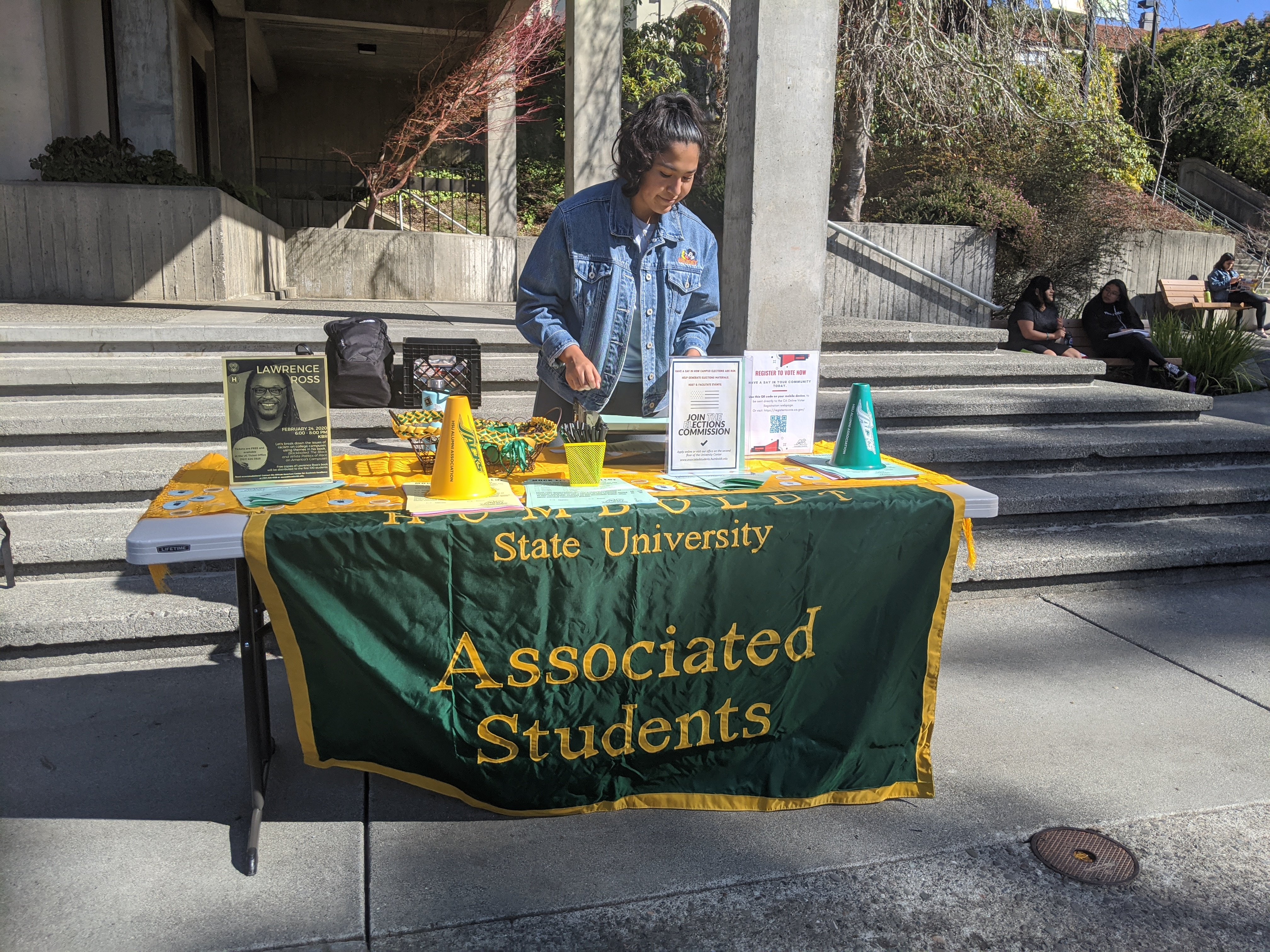
Humboldt State University’s Associated Students held a mock election with the help of the Politics Club Feb. 24 in the University Center Quad. On the ballot were candidates for both the Democratic and Republican primaries, as well as local election measures.
“We’re gathering data from the student population about what would happen if we held the election today,” Legislative Vice President of Associated Students Jeremiah Finley said.
The mock election gave students the opportunity to take a closer look at which candidates were on the ballot. When the results are released, students can gain a new insight into the perspectives of other students.
“Some of the measures that were posted—I was like, ‘What is this?’”
Tashenea Young
“We’re trying to make sure our students at HSU are more educated about the decisions that they’re making,” Finley said. “This will give the students the opportunity to go back in and really investigate.”
Tashenea Young is a computer science and math education major who felt more informed about the upcoming election because she participated in the mock elections.
“Some of the measures that were posted—I was like, ‘What is this?’” Young said.
Young said mock elections like the one on Monday are a step in the right direction for helping to inform the student body, but events like the mock election need more publicity to reach more people.
“It’s better than nothing,” Young said.
Real measures weren’t the only questions on the ballot. It also included a mock referendum on fluoridated water.
Paul Hilton, an HSU politics major and member of the Politics Club, helped organize the mock election. He was curious about how students would vote concerning fluoride. He said that although there wouldn’t be a referendum on fluoridated water on the ballot in March, it was close to being on the ballot in November.
“It was a step away from Arcata putting it on the Arcata ballot,” Hilton said. “After a whole lot of community city hall meetings and discussions, it was a 3-2 vote to not put it on the ballot.”
Hilton hoped the mock election would help professors as well as students.
“One of the questions was, ‘What day of the week is worst for you when it comes to nighttime deadlines?’” Hilton said. “So, one of those actually has informative results that we’ll tally up that might be able to go to professors.”
Although Hilton was glad for the mock election, he thought there was room for improvement. The ballots were printed on colored paper and didn’t resemble voting material. Hilton said this may have discouraged potential voters.
“People are more likely to pick up a pamphlet,” Hilton said. “If I was just going by, I’d be like, ‘What’s this kid’s construction paper kind of stuff just hanging out? I’m not interested in this.’”
California votes Tuesday, March 3. Associated Students are now more experienced for their real elections, and students can take more knowledge on local issues to the polls.
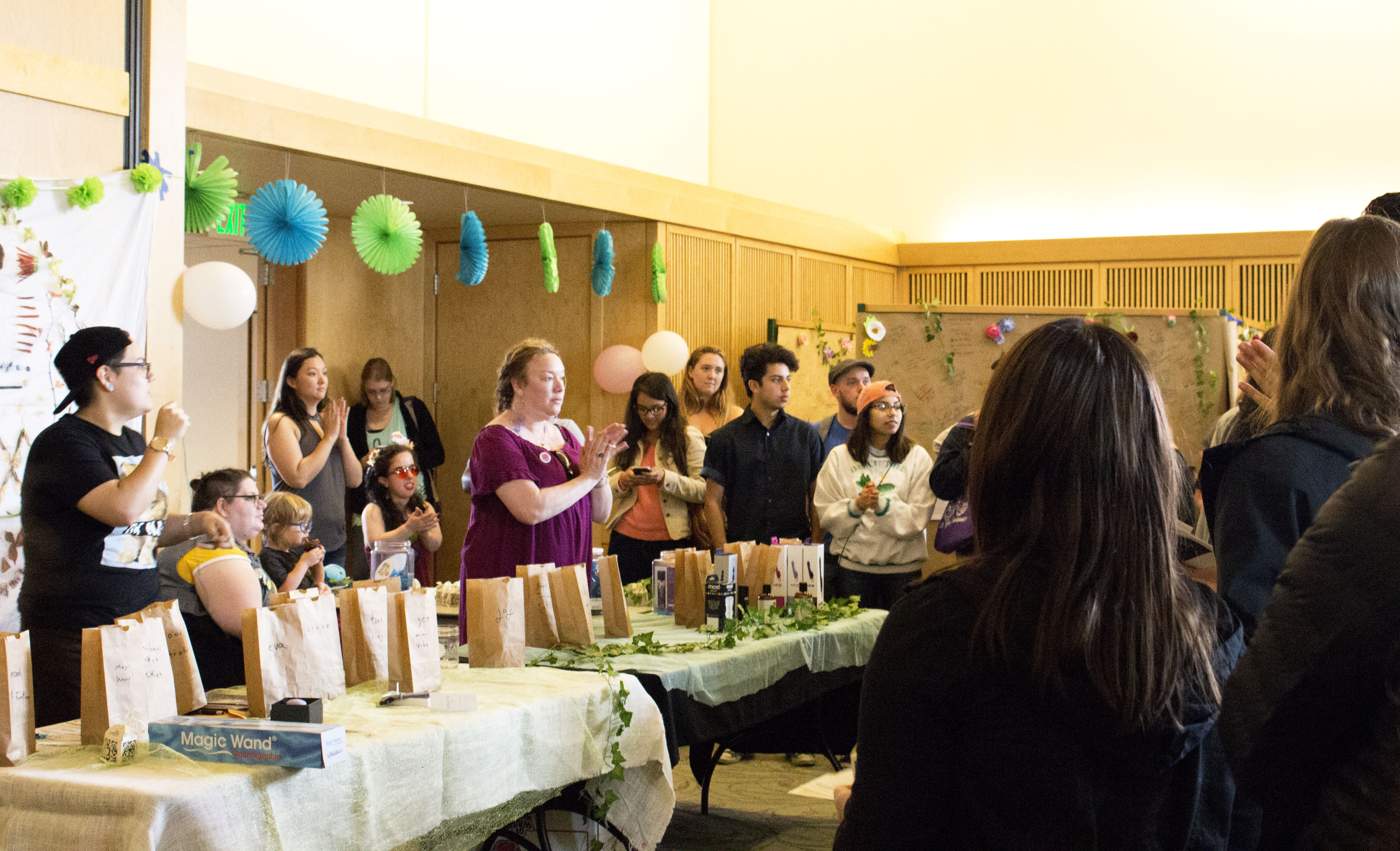
Sexland is a yearly event at HSU hosted by the Peer Health Education Program. On April 22 at the Kate Buchanan Room, the HSU community gathered at the sexual health event. This years theme was Garden of Hedon which centered around self definition and identity. Tables of HSU clubs and community resources filled the edges of the KBR such as HSU’s Check It, the North Coast Rape Crisis Team, Planned Parenthood representatives, and even HSU’s Botany Club.
Peer Health Educators planned a sex toy raffle giveaway, games and free food.
Peer Health Educators explaining the differences in sex toys for the raffle | Photo by Sarahi Apaez
HSU students taking pictures inside of the ball pit. | Photo by Sarahi Apaez
Jason Valez, Travis Ioncaric and Mason Trevino, workers and volunteers of Planned Parenthood. | Photo by Sarahi Apaez
Bridget Ocampo, Peer Health Educator and Melissa Salazar a volunteer explain the zines created by Peer Health Educators. | Photo by Sarahi Apaez
Raymond Yu getting his picture taken with the sex toy he won in the giveaway. | Photo by Sarahi Apaez
Condoms laid out on every table along with floral designs | Photo by Sarahi Apaez
Peer Health Educator giving information about massages and giving away free coconut oil. | Photo by Sarahi Apaez
Bridget Ocampo, Peer Health Educator showing a sex toy for the raffle. | Photo by Sarahi Apaez
Students writing consent based questions they would ask their partner(s) and safe words | Photo by Sarahi Apaez
After the passing of Proposition 64 last November, there has been a lot of talk about what it will mean for the legalization of marijuana. We asked some students on campus their thoughts on what it might mean.
Jelo Ramirez – Visiting Student from Norco Community College
“I think the more it becomes legal the more we have to respect other people’s boundaries.”
Clay Smeback – Junior Communications Major
“I personally am not that affected by it because I don’t smoke, but I think it might help in local environment, since illegal grows have no regulations.”
Anna Kowalczyk – Senior Wildlife Major
“I don’t think it means a lot as long as people are people respectful about it.”
Ariel Nelson – Junior Environmental Science Major
“For me it’s an opportunity for more regulation of the weed industry, so the cultivation practices will be better for the land. Also it makes it more accessible.”
This website uses cookies to improve your experience. We'll assume you're ok with this, but you can opt-out if you wish. Cookie settingsACCEPT
Privacy & Cookies Policy
Privacy Overview
This website uses cookies to improve your experience while you navigate through the website. Out of these cookies, the cookies that are categorized as necessary are stored on your browser as they are essential for the working of basic functionalities of the website. We also use third-party cookies that help us analyze and understand how you use this website. These cookies will be stored in your browser only with your consent. You also have the option to opt-out of these cookies. But opting out of some of these cookies may have an effect on your browsing experience.
Necessary cookies are absolutely essential for the website to function properly. This category only includes cookies that ensures basic functionalities and security features of the website. These cookies do not store any personal information.
Any cookies that may not be particularly necessary for the website to function and is used specifically to collect user personal data via analytics, ads, other embedded contents are termed as non-necessary cookies. It is mandatory to procure user consent prior to running these cookies on your website.