The Lumberjack


Students Serving The Cal Poly Humboldt Campus and Community Since 1929

Tag: Humboldt County

  • Sports Schedule Week of 9/02

    Complied by Marielle Winuk

    Sept. 3

    Women’s Volleyball

    Cal Poly Humboldt vs. Northwest Nazarene

    Location: Lumberjack Arena

    Time: 4:00 p.m.

    Date: Sept. 3

    Sept. 4 

    Women’s Volleyball 

    Cal Poly Humboldt vs. Dominican

    Location: Lumberjack Arena 

    Time: 5:00 p.m.

    Date: Sept. 4

    Sept. 5

    Women’s Volleyball

    Cal Poly Humboldt vs. Jessup 

    Location: Lumberjack Arena 

    Time: 3:00 p.m.

    Date: Sept. 5

    Sept. 10

    Women’s Soccer

    Cal Poly Humboldt vs. UCCS

    Location: College Creek Field 

    Time: 3:00 p.m.

    Date: Sept. 10

    Women’s Volleyball

    Cal Poly Humboldt vs. Stanislaus State 

    Location: Lumberjack Arena 

    Time: 5:00 p.m.

    Date: Sept. 10


    Sept. 12

    Women’s Volleyball 

    Cal Poly Humboldt vs. Chico State 

    Location: Lumberjack Arena 

    Time: 1:00 p.m.

    Date: Sept. 12

  • Humboldt’s giant change to the cupboard: SNAP benefits

    Humboldt’s giant change to the cupboard: SNAP benefits

    Bodhi Haugen

    Cal Poly Humboldt (CPH) sent out an email on Aug. 2, letting students know that the Giant’s Cupboard will begin accepting Supplemental Nutrition Assistance Program (SNAP) benefits. With many students facing financial difficulties, expanded on-campus payment options encourage students to eat regularly and stay fueled throughout the day.

    CPH said in the email that they are working on accepting SNAP at the College Creek Marketplace. Applications have also been submitted for the 101 Express Cafe and Market at the Hinarr Hu Moulik housing complex.

    The Giant’s Cupboard is open from 5 p.m. to 11 p.m. Monday through Friday. Because the Giant’s Cupboard opens in the evening, expanding SNAP acceptance to additional locations will improve student access to food throughout the day.

    Sarandon Kamrud, a senior and kinesiology major at CPH says she wasn’t going to the Giant’s Cupboard at all but is compelled to go more because her SNAP benefits are accepted there.

    Sebastian James, a sophomore communications major at CPH, uses the Giant’s Cupboard daily.

    “I go to the Cupboard probably every day, to be honest,” James said. “The accessibility to come any time of the day, especially late at night to get a snack, because the dining hall is closed early on certain days.”

    Jonathan Dutra, a junior psychology major at CPH, emphasized the importance of expanding access to SNAP benefits for students who previously could not use them on campus and looks forward to more locations doing the same.

    “I think it’s great. I think that it’s very important for people to be using their EBT benefits at a place, specifically in college, where everybody needs a little help,” Dutra said.

    One of CPH’s goals is to make food more accessible. If students are interested in applying for SNAP benefits, they can do so through the CalFresh website. Students can also receive help with the application by emailing OhSnap! for an appointment.

    Bodhi is a reporter and news editor for the Lumberjack. You can reach him at bgh27@humboldt.edu

  • UPD Byte

    UPD Byte

    Compiled by Bodhi Haugen

    This information is from Cal Poly Humboldt Police Department daily media logs. These reports are edited for clarity.

    Wednesday, Aug. 26

    7:28 p.m. – Drug Activity

    Reports of 7 people smoking marijuana on Granite Ave. near the bridge and forest entrance. When officers arrived, nobody was actively smoking.

    3:01 p.m. – Suspicious Circumstances

    Two older males were seen looking at someone’s daughter. This was the second time they were seen looking that day.

    Thursday, Aug. 27

    11:38 p.m. – Patrol Check

    Caller reported movement inside Pepperwood Hall as well as lights turning on and off. The building should have been unoccupied and nobody was found inside.

    8:02 p.m. – Unknown Problem

    Caller reported smoke coming from Pepperwood Hall, the caller was unsure if it was smoke or steam. When on the scene, it was determined to be steam.

    Saturday, Aug. 29

    1:00 a.m. – Patrol Check

    Reports of someone urinating from the second floor balcony of Harry Griffith Hall at night. 

    Sunday, Aug. 30

    7:53 p.m. – Patrol Check

    Reports of a campfire started in the Arcata Community Forest on East Park Rd.

  • Once the Clock Starts, There is no Time Out

    Once the Clock Starts, There is no Time Out

    By Alba Galvan

    After months of speculation, College Athletes were granted 5 year eligibility, eliminating all redshirt waivers. The National Collegiate Athletic Association (NCAA), that governs college athletics divisions 1 and 2 have changed their eligibility rules. Student-athletes are now automatically on a five-year clock once they start college or turn 19 as of Aug. 5, 2026. 

    Before, schools were able to apply for NCAA redshirt waivers that helped student-athletes recover a lost season of competition after sitting out due to either medical hardships, a season of competition, or delayed enrollment extensions. With the new changes in the NCAA, redshirt waivers will be permanently eliminated after Aug. 31 for fall sports, and Sept. 30 for spring sports. An athlete’s five-years now runs uninterrupted regardless of injury or non-participation. 

    Amanda Nelson, deputy athletics director and senior women’s sports administrator, shares how Cal Poly Humboldt has limited scholarships, and teams have a set budget where they distribute that for student-athletes to build the best teams. With students now having access to a fifth year to play sports, this could make less space for incoming students to get a scholarship. 

    “Similar to COVID, we saw the same thing where students stayed an extra year, and so there’s this lag; there are just less spots in college athletics,” Nelson said. “I mean, that’s really how this is going to boil down. There’s going to be less positions in the country in college athletics. It’s more competitive.”

    Under the new NCAA five-year eligibility rule, student-athletes have the opportunity to extend their college careers by pacing their undergraduate bachelor’s degree or enrolling in a one-year graduation program. Academic advisors for student-athletes Daniel Gallardo and Brian Bianucci recommend that student-athletes initially plan for four years, to allow them the flexibility for potential extensions. 

    “Plan for four years, and then it’s easier to stretch it out than it is to try to recondense. If you start off with a five-year plan, because some of them want to do it,” Gallardo said. “Then something happens physically and it changes, or they realize like four years is all I want to do, things like that.” 

    Mia Roberts, a senior business marketing major, has debated going back to school for a fifth year after hearing about the new NCAA rules change. Roberts missed some of her season because of an injury and did not file for a redshirt waiver.   

    “I should have graduated in three years, but I extended it out to four because I want to be here for the four years of eligibility,” Roberts said. “So now that my degree is pretty stretched, I can go into the MBA program. It’s like a one-calendar-year program, so I’ll have classes in the summer, fall and spring. I’d get it done in my fifth year, so I’d be able to use my fifth year and get a master’s in that time frame, so it’s kind of convenient for me.”

    With deadlines closing in, the Cal Poly Humboldt athletic department is helping coaches and athletes adjust to the new NCAA changes while trying to get waivers in by the cutoff dates. 

    “The NCAA is shifting a lot right now, so we’re seeing a lot of confusion out there. Our student-athletes are amazing, and they’re listening, and they’re learning, and they’re trying to navigate through this, which is no small thing,” Nelson said. “I’m incredibly impressed at what they’re doing and advocating for themselves. It’s definitely going to change how a lot of things function, we’re all here for it as we learn about it.” 

    Alba Galvan is a junior journalism major and opinion editor for the Lumberjack. She enjoys listening to people’s opinions with an open mind. You can reach her at agg83@humboldt.edu.

  • What is an El Niño and how can we stay safe?

    What is an El Niño and how can we stay safe?

    By Sadie Shields

    El Niño may mean little boy, but it’s anything but a tiny weather occurrence. El Niño occurs when the temperature of the pacific ocean becomes warmer than average, adding more precipitation into the air creating larger storms. El Niño can happen year round but it’s more noticeable in the later seasons.

    While Humboldt County is known for rain, these storms are quite strong and create safety concerns, especially since we live so close to the coast. Safety is one of the most important aspects people should consider before and when the storms do hit. Being prepared can help people know what to do during dangerous weather and also prevent people from putting themselves in unsafe situations.

    Humboldt Weather Station Lead Meteorologist Matthew Kidwel said El Niño’s happens when, “A specific area in the equatorial Pacific warms up and then changes the weather patterns out in the central pacific, which also translates to a changing weather pattern in Northern America, ” Kidwel said. “Instead of the normal, more typical storm track that goes through Northern California or the Pacific Northwest, it will push the storm track farther south, which can bring warmer storms.”

     Sasha Tcholakov, a senior in psychology, feels highly unprepared for what to do if the storms were to hit.

    “Honestly I have no idea what to do during a major storm, I haven’t gotten much information, from what I’ve seen about resources or local emergency procedures I am not sure what would make me feel more prepared. It’s not like they can gather everyone to do an announcement but at least an email would be nice”.

    Klarissa Uribe, a marine biology senior, suggests ways in which Cal Poly Humboldt can improve on giving information to students. 

    Uribe Suggests, “Possibly a what to do/bug out bag or a storm skit guide. This would help not only myself but students who don’t know exactly what to take in an emergency. Evacuation sites could be explained more on where to go in case of a tsunami or major floods.”

    Kidwell also stated some safety tips as El Niño approaches. He advised students to pay attention to the forecast and avoid walking under trees during the windiest parts of the day. He also warns about driving through flood zone areas such as the Arcata Bottoms and near King Salmon.

    “If the water is coming from the ocean during flooding, it can be really bad to drive your car through it,” Kidwell said. “You never want to drive through flooded roads unless you know how deep the water is, and usually you don’t.”

    Sadie is a reporter who has an interest in covering and taking photos for sports and science. She can be reached at sls331@humboldt.edu.

  • Humboldt pins down new wrestling coach

    Humboldt pins down new wrestling coach

    By Marielle Winuk

    Cal Poly Humboldt welcomes Anthony Mancini as the new head wrestling coach. Mancini formerly coached the Gators at San Francisco State University after working as the assistant coach of the Puerto Rico national team at the U23 World Wrestling Championship. He also coached Team Philippines at both the U20 and U23 World Championships. From his international coaching experiences, he learned the importance of staying organized. 

    “There’s a lot of moving parts within a program, whether it’s managing your roster, managing your athletes, or looking at traveling, moving as a team, and being ready to be successful,” Mancini said. 

    If you haven’t been to a Humboldt wrestling match, Mancini describes his athletes as “guys who want to go out and get after it and put on a good show for the fans. And if you’re not familiar with what that would look like, it just means wrestling hard.” 

    Mancini knows there are very few options for wrestlers to go pro. Therefore, his coaching philosophy is centered on personal growth and integrating the skills developed for wrestling into the athletes daily lives. 

    “If we can continue to challenge ourselves to make a hard choice in every aspect of our lives, by the time you get done with your four or five years here, you’re going to be ready to succeed in whatever field you see fit,” Mancini said. 

    Mancini also recognizes the challenges of adapting the athletes to a new program. “Wiith change, there’s always friction,” Mancini said. He is going to rely on previous members of the program like Nathan Aguilar to help integrate the athletes and make the transition smoother. Aguilar wrestled for Humboldt last year and ranked #16 in NCAA DII 141 weight class. Mancini also looks forward to connecting with his athletes on a personal level to help reach their individual goals in the program. 

    To make sure you’re prepared, here are two chants you can pull out at the wrestling match. If the ref puts his fist up, it signals stalling, something you can yell at the match. This means a wrestler is avoiding combat, running away or failing to make an aggressive attempt to score. Secondly, a takedown is worth three points and it’s a wrestling audience favorite to yell three the moment an offensive wrestler brings their opponent down to the mat and gains control. 

    Marielle is the layout editor and a senior with an interest in politics and sports. She can be contacted at mmw146@humboldt.edu

  • Getting Scammed Sucks

    Getting Scammed Sucks

    The state of housing scams in Humboldt County

    By Winter Music

    After two years living on the beautiful Humboldt campus sharing a dorm room with strangers and experiencing back pain from the mattresses, I chose to start looking for off-campus housing. Who would think a cozy town like Arcata would be plagued by scammers? But then again, what else can you expect from random websites like Craigslist or Facebook Marketplace. Getting bait and switched from a listing on the Humboldt.edu rental listings resources was a different level of upsetting.

    I spent about a month believing that I would soon get my own apartment. Panicked by the thought of losing a good housing opportunity, I forgot to be cautious. I sent the down payment and we scheduled a time to meet when I realized that someone was living in, what I thought was, my apartment. I had a sinking feeling I had taken risks I didn’t need to by sending deposit money before meeting the “landlord” in person. I didn’t make sure that the way I sent money could be cancelled, and I didn’t walk away when I first had doubts. When I went to the house, the “landlord” had dropped off the face of the planet. Suddenly, all the worries and concerns I had started to make more sense. I freaked out when I realized how bad the mistake I had just made was, but the damage had been done. I learned the hard way that small towns like Arcata can scam you just like everywhere else.

    While that website I got scammed on has been removed and replaced by a list of reputable rental companies, it’s important to know that scammers can find their way into places you might not expect. So when you take the leap, and move from campus into your own place, be sure to never send over any money until you’ve been to the location in person, met the landlord and signed documents.

    Winter Music, Copy Editor, wlm38@humboldt.edu

  • The People vs Rick Toledo

    By Barley Lewis-Mccabe

    Since March, suspended senior and high-profile student activist Rick Toledo has been fighting two battles. One with University Administration over his academic future, and the other with the Humboldt County District Attorney over a 10-second, non-violent altercation with an Administrator.

    On Feb 27, Cal Poly Humboldt students, and community members, staged a 14-hour sit-in in Nelson Hall East. Protesters demanded the university divest from mutual funds associated with Israel and the military-industrial complex, and advocate for Teamsters Local 2010 – a union representing skilled-trades workers across the CSU system – in their ongoing labor dispute and for no students to face disciplinary charges stemming from involvement in a protest that prior week. Students quickly held a support rally outside the building; supporters would smuggle in supplies for the protestors inside Goodwin Forum.

    Associate Director of the Gutswurrak Student Activities Center Michael Moore was standing at the entrance to Goodwin Forum to try to prevent students from entering. Three protestors walked up to the door with brown shopping bags full of food and water when Moore approached them and tried to stop them from getting inside. Toledo stood in front of Moore with his arms angled down and to the side and said, 

    “Don’t worry he won’t do anything.” 

    The six words Toledo said to the protestors became the justification for Toledo’s felony conspiracy charge.

    Moore was uninjured, but in his declaration for a workplace violence restraining order, wrote: “I am reasonably concerned for my safety… given that Mr. Toledo so brazenly assaulted me in broad daylight, in front of so many people.”

    Moore later called the UPD non-emergency line to report false imprisonment, assault and battery. Moore connected with Officer Bridgette Faulk – who began and ended her investigation by interviewing Moore over the phone. 

    On Friday, March 6 at 1 a.m. Toledo was arrested by UPD at his home and released on bail the following Sunday morning. On March 19 UPD carried out a search warrant seizing Toledo’s electronic devices to search for evidence of him communicating with other protestors. UPD was searching for evidence of trespassing, vandalism, assault and battery or any further indication of conspiracy via Toledo directly discussing his interaction with Michael Moore.

    Toledo’s defense attorney Matthew Kellegrew argues that due to the non-violent nature of the incident, Toledo’s felony charges were the result of flawed police work. 

    “Toledo’s alleged act of battery/false imprisonment was brief and maintained no injuries to either party. The alleged contact between the parties was incidental in nature… [Faulk] erroneously identified this act as a felony when, by its own description, it is a misdemeanor,”  Kellegrew said. 

    The defense further argues that since the conspiracy charge was dropped and the original felony charges lack justification, the university should return Toledo’s property.

    “It simply cannot be reasonable as a matter of public policy, that an officer with less than one year of experience and with no meaningful training beyond the minimum qualifying standards can identify a complex multi participant criminal conspiracy of the nature described over the phone without asking a single follow up question of the complaining witness that might have supported this theory or conducting any further investigation of any kind,” Kellegrew said.

    The prosecution argues that Kellegrew’s requests “conflate distinct remedies and standards, misstates the governing framework, and falls on factual premises.”

    When asked for comment, Faulk deferred to university Marketing and Communications, News and Information Director Aileen Yoo said, “The case is in the DA’s hands and the university doesn’t have anything further to add.”

    The Lumberjack was unsuccessful in reaching Moore or Deputy Attorney General Dave Watson. 

    Toledo will have a Jury trial on Monday, Aug 31. 

    Barley is the opinionated opinion editor and an untraditional reporter who focuses on social change and stories with a real human impact. If you’d like to reach him for whatever reason email bl258@humboldt.edu

  • Friday Night Market

    Friday Night Market

    By Barley Lewis-McCabe

    “There’s nothing to do in Arcata!” 

    To the relief of bored community members and students alike, the Arcata nightlife is receiving a weekly boom for the next three weeks in the Friday Night Market. The plaza will be lined with artist stalls and food trucks alike for an event that brings out the best in our community! The Friday Night Markets will be held from 5:30-8:30 p.m., the event is free to enter and all ages.

    The first Friday Night Market welcomed back students and celebrated the uniqueness of our community. We even had an appearance from local celebrity and frequent burning man guest, El Pulpo Magnifico, a 28 foot tall kinetic octopus sculpture equipped with fire breathing tentacles! At the first Market on Friday Aug. 21 the plaza was packed with folks living in the moment, celebrating life itself, dancing with a giant octopus and eating delicious food.

    Barley is the good-timing Editor In Chief of The Lumberjack, as well as a jack of all trades news writer. Contact him for any reason at bl258@humboldt.edu
  • Do You Believe in My New Band Believe?

    Do You Believe in My New Band Believe?

    By Will Bishop

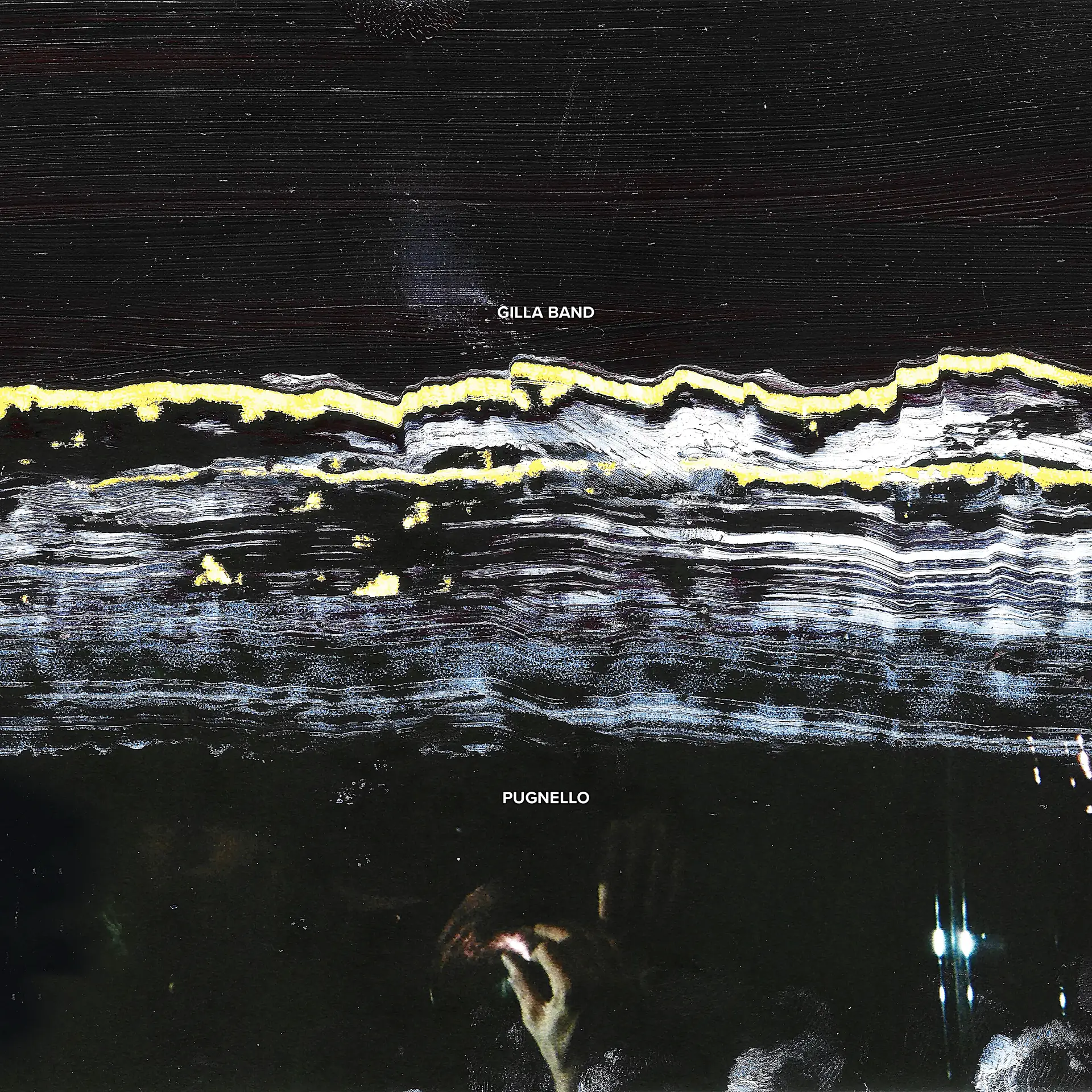
    The foundations of My New Band Believe and their titular debut album came to Cameron Picton in a fever dream while under the throes of food poisoning, far away from home in a Chinese hotel room while on tour with his previous band, black midi. The name, and a handful of other phrases, became stuck in his mind, eventually coalescing into the project some years later. The music and songwriting very much reflect this, rife with surrealist imagery and lavish sonic cacophony, filled with euphoric highs and long dark tunnels.

    Love Story, the first track released off the album, initially reads as a gentle musing on domestic life refracted through little moments. “You sing along to your favourite songs. But you don’t know the words. So you make up your own.” Then a harsh aura builds in the string section, giving way to frightful and nightmarish imagery. “A mеtal spike from the sky. Precisе and poisoned. Somehow avoided me.”


    Hopeful and optimistic phrases are spoken like a mantra, beguiling you into peering deeper beyond the shimmering surface. The ostinato — a musical pattern that is consistently  repeated at the same pitch throughout a composition — of Target Practice telling you over and over again “Don’t cry, you deserve this,” has a soothing, almost therapeutic quality — until you start to wonder what exactly it’s telling you that you deserve. The verses reveal a world of pain. The narrator tells you that you deserve what you have given, promising you desecration beyond death.

    The towering Heart of Darkness pushes the album’s shapeshifting approach to its furthest extreme. Playful flamenco guitars fill your ears with bright color as the unease of its lyricism mounts. “Open up, I have come too far to run. My, my, my, what have you done?” Picton breathes, pulling back dark clouds with a moment of musical bliss only to reveal night has fallen beyond the veil as you circle a black drain in the sky that spits you back out, eventually lowering you down on the feather of an angel’s wilting wing.

    For all its musical virtuosity, My New Band Believe is often reserved, as if hiding in the thorny bramble of its instrumentation. If you follow the vine of a blackberry bush down its ever winding path, counting every overlap, every splintering, every leaf, then it is a complex thing indeed. But, it is internally inaccessible, only offering its outward appearance and the fruits held on its distant edges. It does not offer its innermost complexities, rather, it leverages them into an impenetrable fortress. A yaegaki, fences within fences. But, the album is at its best when it’s letting you in. At times, it can look so impossible. Thorn bushes made of nylon string. Like a non-euclidean horse with legs melting long and tangling together. Then, suddenly, its aestivating worm appendages unswirl, its sinewy muscles tighten back to life, exploding into a triumphant gallop. In those moments, you will believe Cameron Picton can fly. “Speak of the dragon and the dragon shall appear at last.”

    Will Bishop is a Cal Poly Humboldt journalism major. He is prone to writing essays about things that bother him, and fictional works about things that also bother him but in different ways. A highly bothered individual, and a lover of cinema, music, and large trees/rocks. He can often be found in the woods, dancing to bring down the sky.

  • UPD Bytes

    Compiled by Bodhi Haugen

    This information is from Cal Poly Humboldt Police Department daily media logs. These reports are edited for clarity.

    Thursday, April 23

    10:53 p.m. – Suspicious Circumstances

    A caller reported a beeping brown box labeled John Deere or Antennex near the College Creek soccer field gate.

    11:43 p.m. – Animal Call

    A missing black tabby cat with short hair slipped out of the Residence Hall dorm and is at-large.

    Friday, April 24

    9:53 p.m. – Disturbance

    A potentially intoxicated suspect came to return a book at a Bookstore near the plaza, but when he couldn’t, he became upset, threw the book at the caller, yelled and walked out. 

    Saturday, April 25

    6:31 p.m. – Traffic Accident, Non-Injury

    Hit-and-run near Creekview Residence Halls on Granite Avenue. The damage was not reported as permanent.

    Sunday, April 26

    12:58 a.m. – Medical Aid

    An ambulance was requested for a student with potential alcohol poisoning. The caller was transferred to Cal Disposition.

    Monday, April 27

    9:17 a.m. – Suspicious Circumstances

    A suspicious male in a limo was following a woman while she was walking outside of campus.

  • Humboldt Calls Curtains for 59th Film Festival

    Humboldt Calls Curtains for 59th Film Festival

    By Julia Kelm and Ariana Wilson

    Laughter and chatter reverberated through the air as Cal Poly Humboldt film majors and cinema enthusiasts piled into the Minor Theatre. From April 23 to 26, the venue served as the heartbeat of the 59th annual Humboldt International Film Festival.

    The festival hosted 39 short films that featured a variety of visual and narrative genres. However, on the last day of the festival, the content featured their ‘best of fest.’ Seven films were voted the pinnacle in their respective categories by a panel of three guest judges.

    Cal Poly Humboldt’s College of Art, Humanities and Social Sciences Dean, Jeff Crane, spoke about how the festival was a long-standing tradition that helped create a space for students and the community to view and create art. 

    “[We’re] reminding the community that universities are much more than just STEM programs,” Crane said. “The arts provide an important service and broaden the way we think about and understand the world; develop empathy.” 

    Film provides a medium for tough subject matter to be discussed in a more approachable format. Many of the films at the festival spotlight heavy topics, such as domestic violence, death, aging and care, intergenerational trauma, climate change and artificial intelligence. 

    Danica Frey, senior film major and co-director of the award-winning local film, The Void, dealt with intense topics. The film approached topics like parental trauma and learning to heal one’s inner child — a powerful message that was fortunately able to be platformed.

    “It’s very surreal to be a student filmmaker and see your film on the big screen with all of these other established filmmakers,” Frey said. “It just feels very validating… you’re actually making steps into the industry.”

    Humboldt’s isolated location as one of the most northern universities in California creates surprising opportunities for students that could be harder to come by in areas with more saturation in their chosen career fields. 

    “It’s been very rewarding to come here as opposed to a bigger school. You get a lot more personal connections and feedback,” Frey said. “It’s a much more unique look at filmmaking.”

    Frey’s co-director and producer, Sara Ortega, a senior film major doubling in communication, has been a part of the film program and festival since 2024. However, it wasn’t until last year that she applied to be co-director of the festival. 

    “The reason why I had gotten in was because I really wanted to have a relationship with the advisor, because she’s a producer, and that’s what I’m aiming for,” JUMP Ortega said. “I want to be a film producer, so I knew that working with [the film advisor], I would learn a lot more — which did happen, thankfully.”

    Both Frey and Ortega expressed how beneficial the festival was for them, and hope the event will continue for many years to come.

    “This festival is growing more and more every year,” Ortega said. “The more people attend, the bigger it can get, and the more opportunity it brings to not just the [local] community, but also to the film community.”

    Julia is a journalism major and the co-EIC of the paper. She loves film and is a regular on Letterboxd. She also enjoys going on walks in the forest and taking pictures to relax. If you have a movie you’d like her to review, please email her at jk328@humboldt.edu.

    Ari is a senior journalism major and co-EIC this semester, with a deep passion for the environment and conservation. As a scientific diver, she plans to combine journalism with research and conservation work. For inquiries, contact ajw167@humboldt.edu.

  • Free-Diving Feats Meet Survival Needs in Humboldt

    Free-Diving Feats Meet Survival Needs in Humboldt

    By Ariana Wilson

    If you look closely, you may see bubbles underneath the dark, murky water in the Jetty. Chances are, they belong to members of the small but mighty free-diving and spearfishing community off our North Coast. 

    Jiovanni Flores, senior wildlife major with an emphasis in fisheries, ecology and scientific diving, was inspired by the scientific diving program. Humboldt equips students with every skill needed to go from never dipping a toe in the ocean to identifying species on a transect.

    Flores’ understanding of the ocean and its ecosystem has propelled him toward becoming a California Department of Fish and Wildlife game warden.

    “[Spearfishing is] very ethical; we’re not fishing and actively putting microfilament in the ocean, you’re physically down there getting a fish,” Flores said. “We do have a lot of rivers, estuaries, the big Humboldt Bay, a lot of outflowing from freshwater, [which] ruins the visibility instantly, especially with the currents. It’s pretty unpredictable.”

    For aspiring freedivers, holding their breath is an essential skill and a muscle that must be exercised to dive deeper and stay underwater longer. Before turning blue in the face, divers need to know how to read the forecast and determine when to go out, so their chances of seeing anything are good when they’re suited up and ready.

    James Cooper, a junior recreational administration major and scientific diver has turned his general fascination with spearfishing into a lifestyle and a source of sustenance. 

    “I didn’t think about the lifestyle when I started; it was kind of just like a side hobby,” Cooper said. “I’ll go out camping and bring my gun and, hopefully, I eat dinner that night. You got to be able to push yourself to get meals.”

    In addition to his scientific diver certification, Cooper earned his dive master certification this spring and is pursuing his instructor certification this summer on Catalina Island, where master divers and scientific divers receive their official certifications. 

    “They talk about in the dive program all the time, you learn how to dive here, you could dive anywhere,” Cooper said. “You’re not going to find visibility this bad constantly anywhere else.”

    Having an emergency action plan could be the difference between life and death. Identifying an emergency contact and a baseline protocol in case something goes wrong can eliminate unnecessary injuries and unsafe practices in an unforgiving environment like the Lost Coast.

    “Don’t dive by yourself,” Flores said. “Know the area, know the people that are in that area. For instance, in Trinidad, get to know like the boaters, the people who fish.”

    When spring rolls around and the swell is calm, the freedivers emerge. JUMP There is a steep barrier to entry into freediving and spearfishing for a reason. Divers carry a spear gun or pole spear while managing buddy awareness, air consumption and patient pursuit of their prey. Conditions on the North Coast are inconsistent, and even veteran divers find it difficult to predict Trinidad visibility.

    “You also get extremely close with people because of how uncomfortable it is to get into it,” Cooper said. “Crawling into a wetsuit that’s freezing cold, it’s super early and your buddies are right next to you going through the same bullshit — but you guys are both doing it together, just embracing the suck of it, for the love of the game.”

    Ari is a senior journalism major and co-EIC this semester, with a deep passion for the environment and conservation. As a scientific diver, she plans to combine journalism with research and conservation work. For inquiries, contact ajw167@humboldt.edu.

  • Toyon 72 Launch

    Toyon 72 Launch

    By Jacqueline Zuniga

    The Toyon Multilingual Literary Magazine held a launch party April 22 in the Great Hall to highlight one of the university’s longest running student publications and brought students, faculty and contributors together for an afternoon of readings and celebration of the 72nd issue. The event featured published work, student run presentations, free copies of the new issue and Palestinian desserts. Toyon advisor Marcos Hernandez said the publication carries a long legacy on campus, dating back to 1954. 

    “Toyon has been printing [literature] since 1954,” Hernandez said. “As a legacy publication in Humboldt, Toyon’s pages reflect a rich history of art and social activism on-campus.”

     He pointed to the magazines’ connection to documenting movements such as the counterculture in the 60s, the student-led anti-war movement in the 70s and local multicultural organizing efforts through the years. More recently, the magazine has featured the global movement in solidarity with Palestine. He emphasized that Toyon not only serves as a literary outlet, but also is a space for students from all majors to publish their creative work.

    This year’s issue centered on “sumud,” a Palestinian noun meaning steadfastness, perseverance or persistence in the face of adversity. Guest editor Jamilia Hashem said she helped shape this year’s theme by working with the editorial team to help encompass and embody what sumud means.

    Hashem was involved in last year’s issue, which led her to be invited back with a bigger role as guest editor. Hashem said that this issue is meant to reflect the ongoing commitment to raising awareness about Palestine and other issues rather than a singular movement.

    She worked with the other guest editor, Dr. Abdulaziz Akila, to shape the theme of this issue from the perspective of two Palestinians. They focused on both personal and collective experiences to reflect ongoing struggles. She also said Toyon connects different social issues and shows how storytelling is part of activism through journalism.

    “This isn’t just a performative piece of standing with Palestine,” Hashem said. “We really want to keep carrying this message forward.”

    Attendees shared their reactions to the event. Neveah Salinas, a sophomore majoring in elementary education, described the experience as impactful and educational. 

    “It was very nice to hear all the different pieces,” Salinas said. “It was for sure eye-opening.” 

    Salinas added that the readings helped her better understand the issues happening in Palestine. She encouraged others to attend future events because of the sense of community present during the event. 

    The launch of Toyon 72 showed how student writing and art can bring multiple communities together. Through readings and presentations, attendees celebrated the magazine’s commitment to social issues and creativity. 

    Jacqueline is a journalism major, a news manager for KRFH and she aspires to be a sports journalist one day.

  • Editorial Goodbyes

    Editorial Goodbyes

    Julia Kelm: We did it, Joe (Ari) — we were the EIC’s of The Lumberjack! I can say with certainty that The Lumberjack has been the best part of my college experience, and the best part of my life for the past 2-years. I often have trouble living in the moment; fear of missing out or not appreciating the present enough is constantly rattling in my brain. Because of this, I end up feeling like I’m floating through life, but I’ve never felt more passionate, creative, and alive since I joined this fuck-ass — affectionate — paper. As I transition into real-life, I hope I never lose this feeling. I love everyone on this editorial team more than words on paper can describe. Signing out, love Julie Kelp.

    Ariana Wilson: This semester has been the swiftest kick out of the nest. It seems like just yesterday, I was driving the short nine hour drive South from Washington State to build a life in Humboldt, a place I didn’t even know existed. The Lost Coast is where I found my voice and developed a deeper love for diving, the ocean and conservation. I have always thought of this place as an extension of the Pacific Northwest, and even though I am graduating and moving on, there will always be a piece of me here. I am proud to be a part of The Lumberjack’s legacy and to have met some of the most formative people in my life. To my fellow journalists and friends, I have yet to recognize the fullness of my gratitude for you. 

    Jasmin Shirazian: I can’t believe my time at The Lumberjack is actually wrapping up. I have accomplished so much through this paper, from forever friendships to serious career steps. I am forever grateful for the experiences I’ve had on this paper and all I have learned both as a journalist and as an ever-evolving woman. There is no other department at Cal Poly Humboldt that shines a light to the journalism department, and I am honored to be a part of that small but mighty community. I am a Lumberjack. We are The Lumberjack. I’ll miss The Lumberjack. Goodbye from your favorite award-winning, curly-headed, column-writing copy editor. Xoxo, Jasmin. 

    Kaylon Coleman: Words can’t serve to show how truly monumental The Lumberjack has been for me. Aside from some much needed career development before embarking into real life, this paper has offered me so much more than I could’ve hoped. To the lifelong friends I’ve made, working from noon to night every week in the newsroom — thank you. To any person who may’ve picked up one of my articles, whether it be Severance, to passion, to washing your hands — thank you. For providing me an outlet to dish out all my experiences, reflections and reviews — thank you LJ. The Lumberjack will forever remain within my heart and mind and I owe all my future journalistic endeavours to this paper. We are The Lumberjack.  

    Nick Escalada: For the past three semesters, I’ve had the honor of reporting and editing for one of California’s most acclaimed print publications, as well as the pleasure of sharing a newsroom with some of California’s kindest and funniest 20-something-year-olds. Much has transpired on our little campus in that time, and we were there to cover it all. As I depart from the paper to finish my wildlife degree, I reflect on all journalism has done for me and all I’ve tried to do with it. I only hope to grow in my skills and impact on whatever outlet I write for next.

    Noah Pond: For the past five semesters, The Lumberjack has been my pride and joy. I have nothing but love for this publication and I am going to miss it every day. I will miss all of my fellow editors and reporters, and I am so damn grateful I had the pleasure to be a part of LJ. 

    Nico Patakidis: What a pleasure it’s been to be the photo editor. Sometimes when I’m falling asleep on Tuesday night, and even Wednesday morning, I see the Photoshop user interface when I close my eyes. “Dodge, burn. Image, image adjustments, curves. Convert to profile, CMYK. Filter, sharpen, unsharp mask. Channels, black plate, image, image adjustments, brightness/contrast…” I whisper to myself, as if counting sheep. I’ve found the perfect candidate to pass the burden honor of photo editor to; someone that I’m confident will do excellent work. Now, I’ll be the Life & Arts section editor, and I couldn’t be more excited to see how our new photo editor ensures that each wonderful story is accompanied by a beautiful photo. 

    Luke Shanafelt: It’s been two years at Humboldt; full of trials, tribulation, Jedi mind tricks and fun. I couldn’t ask for a better team to write these silly little newspapers. Goodbye everybody, if you need me I’ll be at the beach, probably chilling or low-key relaxing. 

    Ursula Newman: Farewell for now, faithful readers! I’ll be returning next spring for the last time, after a brief baby-birthing hiatus. My love for journalism is rooted in my love for this area and my appreciation for well-researched writing. As a reporter, you can chase new interests, speak to the experts and share the interesting parts. I strongly encourage anyone who’s even a little curious about journalism to give the paper a try, especially students in STEM fields. It’s a great way to explore your studies while getting your work published. Serving as science editor this semester reminded me how valuable and fun it is to have a diverse team with diverse interests. Good luck to my buddies keeping it going! Much love, Ursula.

    Eli Farrington: The Lumberjack has been the candle that guided my way through college for the past five semesters, and now the flame has reached the end of the wick. This glorious outlet for everything that our beautiful community showcases has been more than my home away from home. It has given me something to look forward to every Tuesday — even when times were tough, even when I felt like giving up, even when the future looked bleaker than the sands of a vast desert plane. It has given me a group of friends that feels more like a family than anything else has during my long and winding tenure here at Cal Poly Humboldt. Growing up, I was always one of those kids with a lot of passions and interests. I bounced from one hobby to another, and I never really stuck with anything long enough to truly fall in love with it. I sure am glad I stuck with this. Thanks LJ. Love, Eli. 

    Barley Lewis-McCabe: I’ve enjoyed my time as the opinion editor very much, but saying I’m excited to take the reins as editor in chief next semester would be a gross understatement. I’ve had the pleasure of working with some of the most talented, creative and passionate journalists in the world, and I promise that I’ll keep the tradition going strong, and work with our incoming team of hot blooded news-hounds to bring our paper to a new level! The Lumberjack is a living, breathing, record of our campus and its history — because of that, we aren’t afraid to adapt to the world we inherit. It’s a new day for The Lumberjack. We’re going to do what seems impossible, and become even better!

  • Mummy is Mortifying, Michael is Mesmerizing

    Mummy is Mortifying, Michael is Mesmerizing

    By Kaylon Coleman

    “In many ways, the work of a critic is easy. We risk very little, yet enjoy a position over those who offer up their work and their selves to our judgment,” renowned London based food critic – Anton Ego said in Ratatouille. “We thrive on negative criticism, which is fun to write and to read. But the bitter truth we critics must face is that, in the grand scheme of things, the average piece of junk is probably more meaningful than our criticism designating it so.”

    Both Lee Cronin’s The Mummy (LCTM) and Michael premiered this month with scathing reviews from critics ranging from The New York Times to The Associated Press. At time of writing, LCTM scores a 47% on the Tomatometer and Michael scores a 39%. To that I say: screw what the critics think. I know how that may sound coming from the mouth of a critic, but I’m not from the New York Times — I’m just a humble man sharing my thoughts on a public forum. I implore you to use your own judgment before jumping to conclusions. With that being said, both LCTM and Michael surprised, delighted and exceeded my expectations.

    I believe if you hated Michael, you also hate whimsy and joy. There’s plenty of  things wrong with the biopic, I’ll admit it. It’s relatively bland as far as biopics go, there’s no mention of Janet Jackson, it glosses over a lot of topics and the pacing is a bit fast. All valid criticisms, all valid contention points. Is it the best biopic out there? No. But the heart behind the project is what drew me in. 

     Jaafar Jackson does an exemplary job of bringing his uncle to life in the film. Aside from O’Shea Jackson Jr. playing young Ice Cube in the N.W.A. biopic, I can’t think of another instance where a celebrity’s relative has gotten to depict them onscreen – or at least, I haven’t seen any. Jackson brings such a passion to the role that I don’t think anyone else could achieve if they weren’t so directly related. Along with the production from the Jackson brothers, it felt as though this movie served more as a love letter to Michael Jackson wrapped in a bow of nostalgia than a traditional biopic — and I’m all for it. 

    I tried to contain myself during the movie, but Broadway Cinema unfortunately faced the brunt of my excitement. When Who’s Lovin’ You came on I nearly turned the theater into a personal karaoke session. The movie had me invested the whole way through. I’m hopeful for part two, especially since they added the “His Story Continues” line at the end of the film after positive screen testing. The movie did feel as if it ended abruptly though; even with a potential part two, I don’t think 30 more minutes of movie could’ve hurt.

    Colman Domingo also killed his performance as Joseph Jackson. He has officially entered the niche of black actors who portrayed their villain roles so well people still hate them in real life, like Richard T. Jones in Why Did I Get Married or Blair Underwood in Madea’s Family Reunion. Nia Long played her role well, per usual, but I wish they gave her more to do as Michael’s mom. I feel as though Michael and Joseph were the only characters to have any real depth explored within the film. I give Michael four out of five stars.

    Now, let’s talk about the mummy. I’ll be the first to admit I was hating on LCTM before it came out, but it was actually pretty good. I haven’t watched any previous Mummy movies — except for some clips from the Tom Cruise one — so it’s safe to say I walked in with some preconceived notions. I was so ready to tear this film to pieces, but what originated as cynicism quickly turned to intrigue. 

    The film follows a family reeling from the disappearance of their daughter in Cairo. Years later, she is found and returned to them, but as a mere shell of who she used to be. Almost immediately, I was locked in to the film. Shoutout journalist representations in movies — yes, I’m biased. 

    LCTM does something that most modern horror movies have failed to do for me: it made me feel something other than boredom.  *Cough, cough* Black Phone 2 *cough, cough* Undertone. I was squirming, I was jaw-dropped, I was shocked. This is definitely one of the most gruesome movies I’ve ever seen. I can’t say I was necessarily scared, but this is how you terrify. I think what reels me into horror films is how authentic the characters can be given the circumstances they’re facing.

    What I enjoy about this film is how realistic the family dynamic is. Each actor brings something different to the role, but in a way that presents itself as a family reeling from the disappearance and reappearance of their child before the supernatural elements come into full effect. The visuals were also appealing and added to my overall enjoyment. I did start to tune out near the end, as it started to feel a bit gimmicky, but overall, I give the movie a four and a half out of five.

    So, if you’re debating where to spend your money on a $5-movie-Tuesday, go to Michael if you want a fun time that’ll leave you mesmerized and go to LCTM if you want a frightening time that’ll leave you mortified.

    Kaylon Coleman is a senior journalism major with a concentration in news and a minor in communications. He is the Life & Arts editor for LJ, Marketing and Communications lead for the Umoja Center and a part-time radio DJ and merch manager for KRFH. He can be reached at kc403@humboldt.edu 

  • Wren’s Whimsical Window: The Artist’s Plight

    Wren’s Whimsical Window: The Artist’s Plight

    By Wren Salazar

    Somewhere in a field of tall golden grass, a pendulum swings, one made from brass. Above the brass swaying, a platform does emerge. It hangs the pendulum, while an overseer looks, and sits on the verge. The Artist is here, master of the swing. Always here, time after time, painting the world is the purpose of their being.

    The pendulum sways from side to side, making great leaps as history abides. The rise and fall of nations great. Empires flow like the tide, always succumbing to fate. The Artist watches, timeless in their gaze. They watch everything, while time goes by in phases. Sat in the reflection of brass so clear, faces of people cry, tear after tear. For only on one side does this pendulum show the cruelest of fates, a world full of woe.

    The Artist’s plight, you see, is one in us all, held so dear. It only looks down when misery is near. So, the Artist sees not the joy and the smiles of countless faces, but only hate and empty, desolate places. The world the Artist has painted is not all bad. There’s joy anywhere you look, even in just a small fad. So, do what you like and paint your world. Don’t only look down when misery is near.

    Experience what you can, and leave what you must. There’s more in this world than what’s been left to rust.

    Wren is an artist and story writer looking to add some whimsy and curiosity to those around her. A lover of all things, Wren seeks to help others around her with advice or humor. She can be reached at ws81@humboldt.edu.

  • Destigmatizing Sexual Health at Sexland 

    Destigmatizing Sexual Health at Sexland 

    By Alba Galvan 

    As they walked into the Kate Buchanan Room, students were greeted by two volunteers handing out raffle tickets for the annual Sexland event hosted by Peer Health Education on April 16, with prizes ranging from dildos, to vibrators, to nipple pasties and more. 

    Sexland featured booths where students could ask health educators questions and learn how to use barrier methods like condoms to prevent sexually transmitted infections or pregnancy. Students were also provided with free resources like plan B and condoms, and were educated about topics like STIs, sex and vaginas. 

    “It’s a space for students to come in and get resources and support they need, also just destigmatize it, it’s also just fun,” said sophomore kinesiology major and Peer Health Educator  Delano Savage. “People like to come by, and we have lots of people bid on our raffles. I think we had like 500 students last year — it’s definitely Peer Health Education’s big event of the year.” 

    The event aimed to destigmatize topics that might be considered sensitive or taboo to some students, and created a safe space for those who had any questions or concerns.  

    “I think learning about sex is really important, especially in college. A lot of things happen, and I think that sex is something that is so shameful amongst teenagers, especially in this generation, when we’re trying to find ourselves and find who we are as people,” said sophomore psychology major Violet Kiki. “I think that the fact that we can all come together and learn this together and not be ashamed and not be embarrassed, that’s really great.” 

    Peer Health educator Malloy Fitzsimmons, a junior wildlife major, wants students to learn about sexual health in a judgment-free space. 

    “I don’t believe in things that are taboo,” Fitzsimmons said. “I truly believe that knowledge is power, and the more that we give people information, the more sound decisions they can make for themselves. Sexuality and how you choose to engage in that is such a diverse field. I just want to be able to equip everyone to engage in it the way that’s safest for them.”

    Sophomore English major Ileana Novoa notes how important it is to have an open discussion about sexual education. 

    “I’m someone who really believes in sexual education and sexual liberation as well, and I don’t think these are topics that should be kept hush and hidden. I think these are topics we should be talking about so that people can have safe and educated sex,” Novoa said.

    Alba is a journalism major and reporter for The LumberJack and El Lenador. She’s very passionate about sharing and listening to different opinions and loves self-expression. Contact her at: agg83@humboldt.edu 

  • Photographing for Impact 

    Photographing for Impact 

    By Sadie Shields 

    In the world of wildlife photography, Krisztina Scheef approaches the art with the mindset of patience, ethics and education over the pursuit of aiming for the perfect shot.

    Appearing as the Keynote Speaker for Godwit Days on Saturday April 18, Scheef discussed how she built her career in wildlife photography across the globe while also mentoring and encouraging young photographers to advocate for conservation. 

    Her interest in photography began with a broader love of nature. Over time, her passion evolved into a career centered around sharing these photography experiences with others.

    “I want to share with people who might or might not be able to see it themselves,” Scheef said.

    Scheef believes that wildlife photography has the power to shape the way people view the environment and encourage them to protect it. 

    “The more you see and fall in love with nature, the more protective you’re gonna get,” Scheef said.

    In addition to having her photos featured in many magazines, Scheef mentors young women through Girls Who Click, a nonprofit focused on increasing representation in nature photography. 

    Through workshops and the mentorship program, Scheef works with students to develop both the technical skills and understanding of ethical practices required to be a wildlife photographer.

    Ethics play a critical role in the work Scheef creates. She serves on the ethics committee for the North American Nature Photography Association, where she promotes responsible wildlife photography.

    “We are playing in their home, in their world, “Scheef said. “We need to be ethical and nice to them.”

    One of the most common mistakes beginners make is expecting immediate results. New photographers often assume they will capture multiple high quality images without understanding animal behavior or the time required to hone their skills. Scheef points out how important it is to learn how animals behave, and how to approach without disturbing the wildlife they are photographing. Scheef discourages chasing animals, disturbing nests or using repeated playback calls to attract birds.

    “These are things that can stress the animal,” Scheef said, noting that such behavior can disrupt feeding patterns and leave young birds vulnerable.

    While capturing a strong image can take days or hours, the process itself is part of the reward.

    For Scheef, some of the most meaningful moments come not from her work, but from teaching others. Watching young photographers become successful and develop an appreciation for wildlife is one of the most rewarding parts of her career.

    “Seeing in their eyes… ‘I got a good photo,’” Scheef said. “Those are rewarding moments.”

    Sadie is a junior communications major, journalism minor at Cal Poly Humboldt who has an interest in covering and taking photos for sports and wildlife journalism, and a slight interest in breaking news. She can be reached at sls331@humboldt.edu.

  • Printing a new Perspective: A Nicole Kita Feature Story

    Printing a new Perspective: A Nicole Kita Feature Story

    By Bodhi Haugen

    Engulfed by layers of ink and the symbolic storytelling of audiobooks, Nicole Kita creates her prints one press at a time. Kita is a lecturer at both Cal Poly Humboldt and College of the Redwoods.

    She expresses herself across a wide range of media, including ceramics, drawing, painting, installation and, her favorite: Printmaking. For her, art is both a process of learning and a way of connecting with others and herself.

    Kita was born in Ontario, Canada, but later moved to Florida around the age of eight where she spent the remainder of her youth. As a child, she wanted to be an artist, but faced resistance at home.

    “My parents really don’t appreciate the arts and didn’t want me to go into any kind of art field. They’re just very worried, of course, about financial stability for their children, and I wasn’t allowed to take any art classes until I was a senior in high school,” Kita said. “I feel like I got a late start in a lot of ways, but I think it helped change their mind a little bit after doing a portfolio review with a local college that essentially offered me a full scholarship.”

    Kita completed her Bachelor of Fine Arts degree in Florida in 2004. She worked as an elementary school art teacher before moving to Boston, landing a job as a printmaking technician at the School of the Museum of Fine Arts.

    “I’ve been really fortunate with a lot of opportunities,” Kita said. “But, things got pretty rocky after grad school.”

    Making a career-defining decision, Kita chose to leave her teaching job and move to Chicago during the Great Recession in 2009, a time when it was more difficult than ever to find work.

    “I was in a really good job at the time, but I had left because I wanted to move to Chicago,” Kita said. “It was just in the transition where I was not aware of what was fully happening in just the financial world.” 

    She eventually found work in a commercial screen-printing studio called Crosshair Chicago, where she developed skills that would later shape her artistic practice. But, after a snowy April in Chicago, Kita was ready for a change and moved to Humboldt County in 2013.

    In Humboldt, Kita spent nine years working at The Studio, a nonprofit organization in Eureka that supports artists with disabilities. Her experience at The Studio played a crucial role in how she approaches art.

    “I think artwork is very hard work, but working with all the artists at The Studio helped re-establish and reinvigorate that people are finding joy and therapy in making art, and it doesn’t have to be so mentally taxing at every juncture,” Kita said. 

    Kita later transitioned toward a community-based arts and cultural organization, the Ink People in Eureka.

    Kita’s style has been ever-changing. She previously worked more figuratively and with geometric shapes, but has recently focused on animal portraits. While working on a pig portrait, she listened to audiobooks such as Lord of the Flies and Animal Farm, drawing literary connections to her work. Audiobooks play a vital role in her process, allowing her to focus and learn while she creates.

    A recurring design in Kita’s portfolio is a bear paw shape, inspired by an artist residency she attended in Ohio. She enjoys creating work with a visual language that holds meaning.

    Kylie Anderson, an environmental studies major and art minor at Cal Poly Humboldt, has taken Kita’s classes before.

    “Kita has been an incredible instructor and guide for me throughout my years in the printmaking studio,” Anderson said. “She is such a wealth of knowledge, and I’m very grateful to have had her as a teacher for as long as I have.”

    Sadi Finch, a studio art major at Humboldt, has had the opportunity to work as a teacher’s assistant for Kita.

    “I’ve gotten to work with and get to know Kita over the past few semesters. Her passion and keen attention to this fine art practice is contagious,” Finch said. “It’s inspiring to have an instructor who encourages compositional thought, is energetic about learning new processes, and is unabashed to share and show what they are excited about.”

    Kita encourages students to take advantage of art classes at Humboldt, regardless of their major.

    “I think it’s such an important part of your educational development to start thinking with these creative practices,” Kita said.

    For Kita, art is not just a career; it’s been a journey shaped by risks, valuable lessons and community. Through her work and teaching, she invites others to discover that same sense of possibility.

    Bodhi Haugen is a journalism major and writer for the Lumberjack at CalPoly Humboldt. Bodhis on KRFH and enjoys reading, writing, photography, and art. You can reach him at bgh27@humboldt.edu.

  • The Power of Passion

    The Power of Passion

    By: Kaylon Coleman

    If there’s one thing that incites happiness within me and inspires me to be a better person, it’s witnessing passion flowing through someone else. Passion is beautiful; it’s so raw and true, you can’t fake it — you know it when you see it. It shows up in a myriad of ways: the homie that’s so geeked about their favorite show that they’ll talk your ear off about it any chance they get, or the friend that loves their craft so much that you can see them light up when asked about it.

    I’m talking about that spark — that’s what I love; someone caring so deeply and so enthusiastically about something in a society that constantly pushes nonchalant and apathetic attitudes. Which is why I say, please persist. Do what you love — do what you’re passionate about. This world is so unrelenting; it’s unforgiving and it feeds off of tarnishing your love for something. As we grow older, the weight of life’s responsibilities become more and more prevalent. With that, we may not have as much time to rock climb or make beats or knit, especially if there’s no money being made in the process. But, doing what you love is what fuels your soul.

    They say if you do what you love, you’ll never work a day in your life, but I think there’s more to that. I love journalism. It’s a passion of mine that I’ve decided to pursue it as my career. But, there’s definitely work involved. I have to deal with a lot of doubt, especially self-doubt. I have to deal with the naysayers who say journalism is a dying industry. I’ve faced constant heartbreaking rejections, and I haven’t even graduated yet. But, I’m confident in my decision because I believe passion equals purpose.

    My whole life, I’ve been told to do what makes me happy, not what makes me money — and I hold that message dear. Living in a capitalistic society, I get it; people want security, they want a wage that’s livable. It might spawn from my optimistic nature, but I believe the money will come. Maybe not right away, but I’d rather scrape by doing what I love than be trapped doing what I don’t. That is why I implore you to keep your passions alive. Even if your passion isn’t what you want to do career wise, it’ll be the thing that keeps you going and keeps you grounded. Never forget: you were born to win!

    Kaylon Coleman is a senior journalism major with a concentration in news and a minor in communications. He is the Life & Arts editor for LJ, Marketing and Communications lead for the Umoja Center and a part-time radio DJ and merch manager for KRFH. If you have a topic you want him to discuss, email him at kc403@humboldt.edu.

  • Tracking down record breaking performances 

    Tracking down record breaking performances 

    By Alexis Blue

    At the conclusion of Cal Poly Humboldt’s indoor track and field season, three Lumberjacks received U.S. Track & Field and Cross Country Coaches Association All-West Region honors. The three honorees include women’s track and field athlete Isabel Perez-Zoghbi in the 800-meter and mile, as well as two men’s track and field athletes, Joseph Gonzalez for shot put and Michael Payan for pole vault.

    In addition to receiving All-West Region honors, Payan and Gonzalez have carved their names into Humboldt’s record books by breaking school records in their distinguished events.

    Sophomore Payan broke his own school record in pole vault with a winning clearance of 5.35 meters at the Wildcat Invitational, hosted by California State University, Chico, on March 14.


    “I broke [the school record] at Chico Invitational, and it was a very exciting moment,’” Payan said. “Going into that meet, I knew that I was going to be on bigger sticks. I ended up getting on this fat pole… [thinking], ‘okay, my form is going to be rancid, because I do not trust this pole — it’s way too big for me.’ The first time I planted on it, I just kept clearing bars, and it felt insane.”

    Payan said that while breaking the school record again felt surreal, he remains focused on pushing himself and is excited to see what else he can do.

    “My biggest accomplishment this season has not been [setting personal records]… I think my biggest accomplishment is getting on bigger poles,” Payan said. “I’m pushing my biggest pole from last year, and I’m pushing it really easy.” 

    Coming off a record-breaking freshman season and a strong start to his sophomore year, Payan hopes to continue getting on bigger poles and challenging himself in new ways.

    “I think my mindset has been focused on just improving the little things in my form and technique,” Payan said. “I really want to be better at channeling pressure and adrenaline.” 

    Junior Gonzalez smashed a 33-year-old standing school record with a winning shot put event of 16.35 meters at the Humboldt Invitational on March 28. Gonzalez elaborated on the accomplishment and explained that recording his personal record (PR) while breaking the school record has been his favorite moment of the season so far.  

    “[My] biggest accomplishment from this season thus far is [breaking] the school record. I also hit the National Provisional Mark for shot put,” Gonzalez said. “I threw 17.01 [meters], which was a big PR for me. It was almost a two-foot PR, and it was my last throw. It was insane.”

    Gonzalez delivered a winning shot put mark of 17.01 meters and also placed second in the discus at 47.18 meters, nearly the eighth-best throw in program history. His shot put mark was not only the new program record, but a Division II qualifying provisional mark. 

    Gonzalez added that though their track and field season is long, his eyes are set on nationals. 

    “We have a long season — as soon as we get back from summer, we’re already going. We’re training because we have an indoor season and an outdoor season. So, just managing those little injuries has been difficult,” Gonzalez said. “I’d say nationals is my biggest goal… but besides that, PR-ing is a very nice feeling. I can’t really compare it to anything else.”

    Men’s track and field will compete at the California Collegiate Athletic Association Championships April 30-May 2 at California State University, San Marcos. Those who qualify for nationals will compete at the National Collegiate Athletic Association Division II Outdoor Championships on May 21- 23.  

    Alexis Blue is a senior at Cal Poly Humboldt, majoring in journalism – public relations and minoring in writing. In her free time, you’ll probably find her drinking coffee, watching sunsets, collecting shells on the beach and playing soccer.

  • Where the water bottles at?

    Where the water bottles at?

    By Jacqueline Zuniga

    Students who have ever purchased anything from the vending machines on campus may have noticed that there are no water bottles being sold.

     The university began phasing out plastic water bottles in 2011 after students ran a successful environmental campaign. According to Melissa Hutsell, Communications Specialist for Marketing and Communications at Cal Poly Humboldt, students participated in a grassroots initiative called Take Back the Tap, which pushed campus leaders to eliminate the use of plastic water bottles. This made Cal Poly Humboldt one of the first public universities in the nation to do so. In 2018, the California State University system adopted a policy to eliminate the sale of plastic bottles, straws and bags across all of its campuses. With the phasing out of bottles, the installation of water bottle filling stations increased.

    “Before this, the university sold as many as 80,000 single-use plastic water bottles annually,” Hutsell said. “The goal was always to make water more accessible to students by encouraging reusable containers for free water filling.” 

    The university has received recognition for reducing plastic use and was awarded a Plastics Reduction Partner certification from the National Wildlife Federation in 2024. Additionally, the Post Landfill Action Network recognized the university with a bronze Zero Waste Certification, ranking it third out of the top 10 Zero-Waste campuses in 2023. 

    Waterfill stations are located throughout campus, and more are being added as facilities staff work to upgrade drinking fountains over the next two years. For students without reusable bottles, free water bottles are sometimes given away at campus events by teams such as Housing and Residential Life and Dining Services. Reusable bottles are also sold at campus retail locations. The university’s new water bottle policy seems to be receiving positive feedback from the campus community. 

    “Generally, we’ve found that most people have expressed gratitude and inspiration, stating that they appreciate this effort and are excited by these kinds of initiatives from the university,” Hutsell said. 

    While the university reports positive feedback, some students don’t have many positive things to say about the policy. Ava Hernandez, a second year student, states that the lack of bottled water can be frustrating.

    “I think it’s kind of annoying that they’re not in the vending machines, especially when I used to live on campus,” Hernandez said. “I know that water from the fountains isn’t always the cleanest, and buying something like a Brita isn’t the most affordable option for some people. I wish water were available to buy in vending machines.” 

    Katelyn Lemos, a second-year psychology student, thinks that because of how much she has to walk, there should be more water.

    “I feel like there should be vending machines with water on campus, especially with the amount of stairs and hills everywhere,” Lemos said.

    Stores on campus, like The Depot, College Creek Market Place and The Cupboard do have aluminum and glass bottles as options, though they can be out of the way for some students.

    “I do think metal water bottles are a good alternative,” Hernandez said.

    Lemos, on the other hand, believes the restriction to reusables is still a step too far.

    “I think the aluminum waters are okay. I understand it’s for recycling, but they make the water taste like pennies,” Lemos said. 

    As the university continues to emphasize sustainability and reduce plastic use, the absence of water bottles in vending machines remains a topic of debate among students. 

    Jacqueline is a journalism major, a news manager for KRFH and she aspires to be a sports journalist one day